Previously published by Trellis

By Jim Giles

Key Takeaways:

  • Impact accounting uses “valuation factors” to convert enviornmental metrics into dollar numbers.
  • Proponents say it provides common ground in discussions between different business functions.
  • Everpure is rolling out an impact accounting dashboard.

Around three years ago, Charles Giancarlo, CEO of data platform Pure Storage, came back from Davos and asked his sustainability team to look into an idea he’d encountered at the meeting: Impact accounting, a method for integrating emissions and other externalities into company balance sheets.

The idea had been slowly picking up adherents in Europe for around a decade, but Pure Storage, which rebranded this month to Everpure, would go on to become the first U.S. company to join the Value Balancing Alliance (VBA), a group of 30 or so companies developing the approach. Trellis checked in last week with Everpure and the VBA for an update.

How does impact accounting work?

At the heart of the approach are a set of “valuation factors,” developed by third-party experts, that are used to convert activity data for emissions, water use, air pollution and other externalities into dollar figures that can be integrated into balance sheets. In the case of emissions, for example, the VBA uses $220 per ton of carbon dioxide equivalent, a figure based on the estimated social impact of rising greenhouse gases levels.

At Everpure, one long-term goal is to have cost centers be aware of the dollar impact of relevant externalities. After an initial focus on identifying and collecting the most material data, the team is now rolling out a dashboard containing several years of impact accounting numbers.

“It’s catered to different personas,” explained Adrienne Uphoff, Everpure’s ESG regulations and impact accounting manager. Finance was an initial use case, with product managers also on the roadmap. “You can compare it to financial numbers to really understand the impact intensity.”

What value does the approach bring?

“The essence of impact accounting is that you’re translating all these different metrics in the sustainability space into the language the decision makers understand,” said Christian Heller, the VBA’s CEO. “Everyone understands what you’re talking about, and you get a sense of the magnitude of your impact and the risks and opportunities.”

This has allowed Everpure to calculate what Uphoff called the “environmental costs of goods sold” and to estimate the impact of circular strategies, such as refurbishing hardware. The analysis reveals “impact savings across the full value chain across five different environmental topics all in a single dollar unit,” she said.

Analyses like that can then be shared with customers and used to distinguish Everpure from competitors. “The long-term winners in this space are going to be those that can perform against sustainability goals,” said Kathy Mulvany, Everpure’s global head of sustainability. “Impact accounting gives us a way to bring comparability, so companies can understand how they’re truly stacking up.”

What does it take to implement impact accounting?

A great deal of technical work goes into creating valuation factors, but the system is designed so that outside experts create the numbers and hand them to sustainability professionals for use. Still, not every company will have the in-house environmental data that is also needed. Many companies have been collecting emissions data for five years or more, for example, but detailed datasets for water use are less common.

Internal teams also need to be familiar with the concepts. “One of the key learnings from our impact accounting implementation is that the socialization curve is longer than you expect,” said Uphoff. “Attaching monetary values on externalities introduces new metrics and mental models, and that can naturally make people a little nervous at first. It takes time and dialogue for teams to build confidence in how to interpret this new lens on performance.”

What’s next?

In the early days of impact accounting, companies and consultancies worked independently on different methodologies. Now that work is coalescing, said Heller. The International Standards Organization is expected to start work on a standard this summer, he added, and the VBA, working with the Capitals Coalition, another nonprofit, is having conversations with the IFRS Foundation, which creates international financial reporting standards.

The approach may also be integrated into mandatory disclosure standards. Heller noted that the European Union’s Corporate Sustainability Reporting Directive mentions the potential benefits of companies putting a dollar figure on some environmental impacts. “It’s the next evolutionary step of any kind of sustainability disclosure regulations,” he said.

Continue reading here.

Learn what business leaders are doing today to mitigate the climate crisis. Subscribe to Trellis Briefing.

Cascale recently engaged the next generation of sustainability leaders through a guest lecture at Columbia University in New York City.

The session was delivered as part of the university’s “Consumerism and Sustainability” course and brought together 37 graduate students from across Columbia’s sustainability management, international relations, human rights, and business programs.

Invited by lecturer Michelle Gabriel, Cascale’s editorial director Kaley Roshitsh explored how effective communication plays a critical role in advancing systems change across the sustainability landscape. The lecture highlighted how clear, credible messaging supports collaboration and progress not only within Cascale but across the broader industry ecosystem.

During the presentation, students received an introduction to the Higg Index, exclusively available on Worldly, which is the leading framework for measuring environmental and social performance across the consumer goods value chain. The interactive presentation covered the breadth of Cascale’s work, including decarbonization efforts, public affairs engagement, stakeholder collaboration, and initiatives such as Better Buying that support responsible purchasing practices.

The lecture also connected these industry topics with practical career insights. Drawing on experience in sustainable fashion journalism and communications, Roshitsh addressed how emerging professionals can pursue purpose-driven careers while avoiding common challenges in sustainability storytelling and reporting. Using her past experiences covering sustainability at WWD, she highlighted common greenwashing risks including a lack of public-facing commitments, fleeting supplier relations, and flagrant claims on materials and performance, among others.

Students showed strong interest in accessing Cascale resources and learning how the Higg Index tools can support academic work, particularly in lifecycle assessment (LCA) coursework. Several questions focused on industry challenges such as overproduction, the role of artificial intelligence, and how students and early-career professionals can engage more directly with sustainability tools and data.

Following the lecture, Cascale representatives also discussed opportunities for deeper collaboration with academic institutions. Conversations included the potential for integrating the Higg Index and related sustainability frameworks into university curricula, as well as helping equip students with practical knowledge and tools relevant to industry needs.

As with recent Cascale speaking engagements at Parsons (part of the New School), the University of Oregon, Berkeley College, ASU FIDM, and Ohio State University, this latest engagement reflects a growing demand from universities and young professionals for standardized tools, data, and collaboration. By connecting academia with practical industry frameworks, Cascale continues to support the development of future leaders.

Sofidel 60th anniversary logo

Porcari (Lucca), March 11, 2026 /3BL/ – Sofidel, one of the world’s leading paper manufacturers producing tissue for hygienic and household use, known in Italy and across Europe for its Regina brand, has finalized the details of the expansion plan announced last October to further strengthen its production capacity in the United States.

The expansion will take place at the company’s integrated facility in Inola, Oklahoma.

The plan includes the construction of a new building to house the previously announced 75,000 tonnes per year Valmet Through-Air-Drying (TAD) tissue machine, along with the installation of converting lines with matching capacity for the production of finished goods. The project also includes the expansion of the pulp and parent reel warehouse, and the construction of a fully automated finished goods warehouse – developed using E80 technology – with 100,000 pallet positions. The new buildings will cover a total area of approximately 1,000,000 square feet (90,000 square meters).

The total investment amounts to $775 million, and the machine start up is scheduled for the second quarter of 2028.

“The new TAD machine we will install at our Inola, Oklahoma facility will further strengthen our production footprint and expand the availability of premium tissue products in the United States, enhancing our ability to meet growing customer demand, particularly in the South,” said Luigi Lazzareschi, Sofidel Group CEO. “Once again in Inola, thanks to the collaboration of our stakeholders, we have found the right conditions to invest and continue to grow. This is a significant investment, an important way to ‘open’ the year of our 60th anniversary with a determined industrial outlook toward the future”.

The new facility will also feature state of the art internal logistics. An automatic system using LGVs (Laser Guided Vehicles) will transport parent reels from the paper machine to the warehouse, and an automated loading system will be connected directly to the finished goods automated warehouse. The choice of TAD technology directly addresses the growing demand in a dynamic North American market that is increasingly oriented – also in the Private Label segment – toward premium products.

This operation adds to Sofidel’s recent major investments in the United States, including the acquisition of the tissue division of Clearwater Paper Corporation (four facilities in North Carolina, Idaho, Nevada, and Illinois), the acquisition of four Royal Paper facilities in Arizona and South Carolina, and the expansion of the Duluth, Minnesota facility. It also mirrors the recent project in Circleville, Ohio, where a new building was constructed to house a 70,000 tonnes per year Valmet DCT 200 tissue machine, which started up in September 2025.

Today, Sofidel Group operates 14 production sites across 11 states – Idaho, Nevada, Arizona, Oklahoma, Minnesota, Illinois, Mississippi, Florida, Ohio, South Carolina, and North Carolina – and maintains a corporate office in Horsham, Pennsylvania.

In just over ten years, Sofidel Group has become the fourth largest tissue producer in the North American market, which today accounts for 50% of Sofidel’s total revenue, and where it holds a leadership position in the Private Label segment.

Sofidel Group 

The Sofidel Group, headquartered in Porcari (Lucca, Italy), is one of the leading manufacturers of paper for hygienic and household use worldwide. Established in 1966, the Group is active in 13 countries, 12 in Europe and the United States (12 States), with over 9,500 employees and a production capacity of 1,983,000 metric tons per year. In 2024, the Group had Net Sales of 3.225 billion Euros. “Regina”, its most well-known brand, is present on almost all the reference markets. Other brands include: Sopalin, Le Trèfle, Hakle, Softis, Nalys, Cosynel, KittenSoft, Nicky and Papernet. 

www.sofidel.com

March 11, 2026 /3BL/ – “The volatility in cocoa prices must end. Market prices are rapidly plunging towards levels that are known by all market actors to be unsustainable for cocoa farmers and their families.

“With many families reliant on cocoa as their primary source of income, the real-life impacts of declining cocoa prices could lead to less food on the table and poorer access to education, healthcare, and decent housing. Past progress on household income could also be eroded.

“Traders, chocolate, and retail businesses should work with governments and commit to long-term contracts with cooperatives and their members. Commitments and sustainability programs must recognize the human right to a living income and commit to supporting prices that contribute to a living income regardless of declines in market price.

“There is a fairer way of doing business that does not solely rely on price being established by supply and demand. Businesses and governments must choose to work together, some businesses already do, but many more must.

“Furthermore, Fairtrade encourages commercial partners ensure cocoa farmers receive, as a minimum, the Fairtrade Minimum Price that acts a safety net during market downturns allowing farmers to cover the cost of production, and the Fairtrade Premium that can be used to support social, economic, or environmental projects of their choice.

“We welcome the growing number of commercial partnerships with cooperatives in our Fairtrade Living Income Program.”

With nearly 40% of carbon emissions coming from the built environment, the construction industry is building and renovating more and more sustainably. With innovative solutions and new construction methods, we have a whole new vocabulary that this podcast is going to decipher for you!

Additives and other construction chemicals help to improve the performance of materials and solutions by giving them additional properties, such as mechanical resistance, impermeability, durability, and easy implementation. This market, estimated to be worth €100 billion globally, is in constant growth. What role does it play in reducing the carbon footprint of buildings today and in the future? Let’s find out. 

Listen here, C…for Construction chemicals, a Saint-Gobain Podcast

About Saint-Gobain

Worldwide leader in light and sustainable construction, Saint-Gobain designs, manufactures and distributes materials and services adapted to the residential, non-residential and infrastructure markets. Its integrated and innovative solutions provide sustainability, performance and well-being for its customers. The Group is guided by its purpose, “MAKING THE WORLD A BETTER HOME”.

€46.5 billion in sales in 2025
162,000 employees, locations in 80 countries
Committed to achieving net zero carbon emissions by 2050

For more information about Saint-Gobain, visit www.saint-gobain.com and follow us on X @saintgobain

With nearly 40% of carbon emissions coming from the built environment, the construction industry is building and renovating more and more sustainably. With innovative solutions and new construction methods, we have a whole new vocabulary that this podcast is going to decipher for you!

Additives and other construction chemicals help to improve the performance of materials and solutions by giving them additional properties, such as mechanical resistance, impermeability, durability, and easy implementation. This market, estimated to be worth €100 billion globally, is in constant growth. What role does it play in reducing the carbon footprint of buildings today and in the future? Let’s find out. 

Listen here, C…for Construction chemicals, a Saint-Gobain Podcast

About Saint-Gobain

Worldwide leader in light and sustainable construction, Saint-Gobain designs, manufactures and distributes materials and services adapted to the residential, non-residential and infrastructure markets. Its integrated and innovative solutions provide sustainability, performance and well-being for its customers. The Group is guided by its purpose, “MAKING THE WORLD A BETTER HOME”.

€46.5 billion in sales in 2025
162,000 employees, locations in 80 countries
Committed to achieving net zero carbon emissions by 2050

For more information about Saint-Gobain, visit www.saint-gobain.com and follow us on X @saintgobain

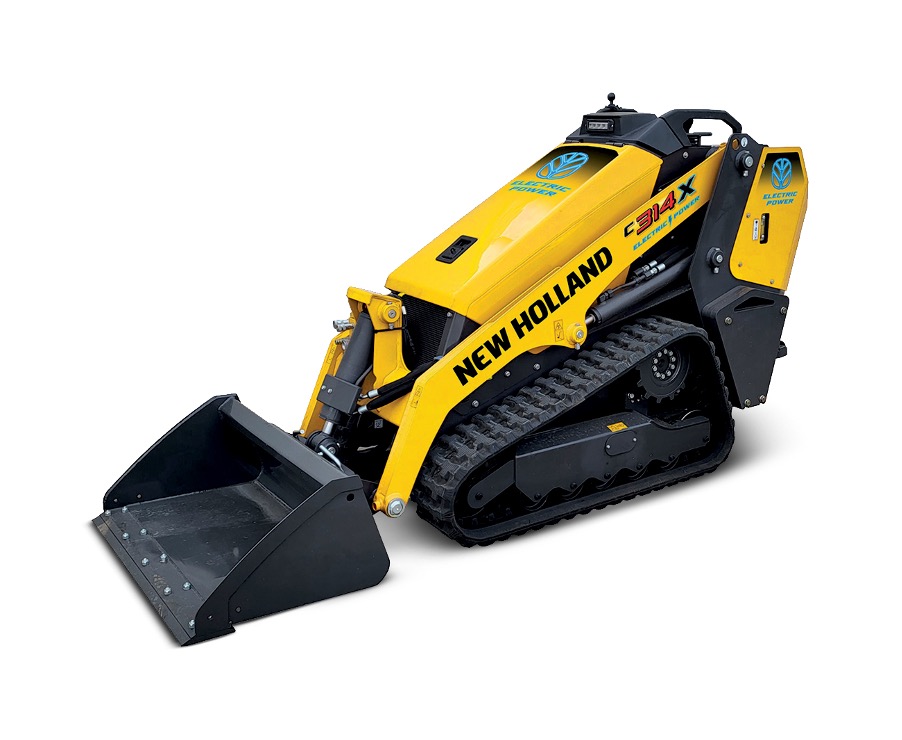
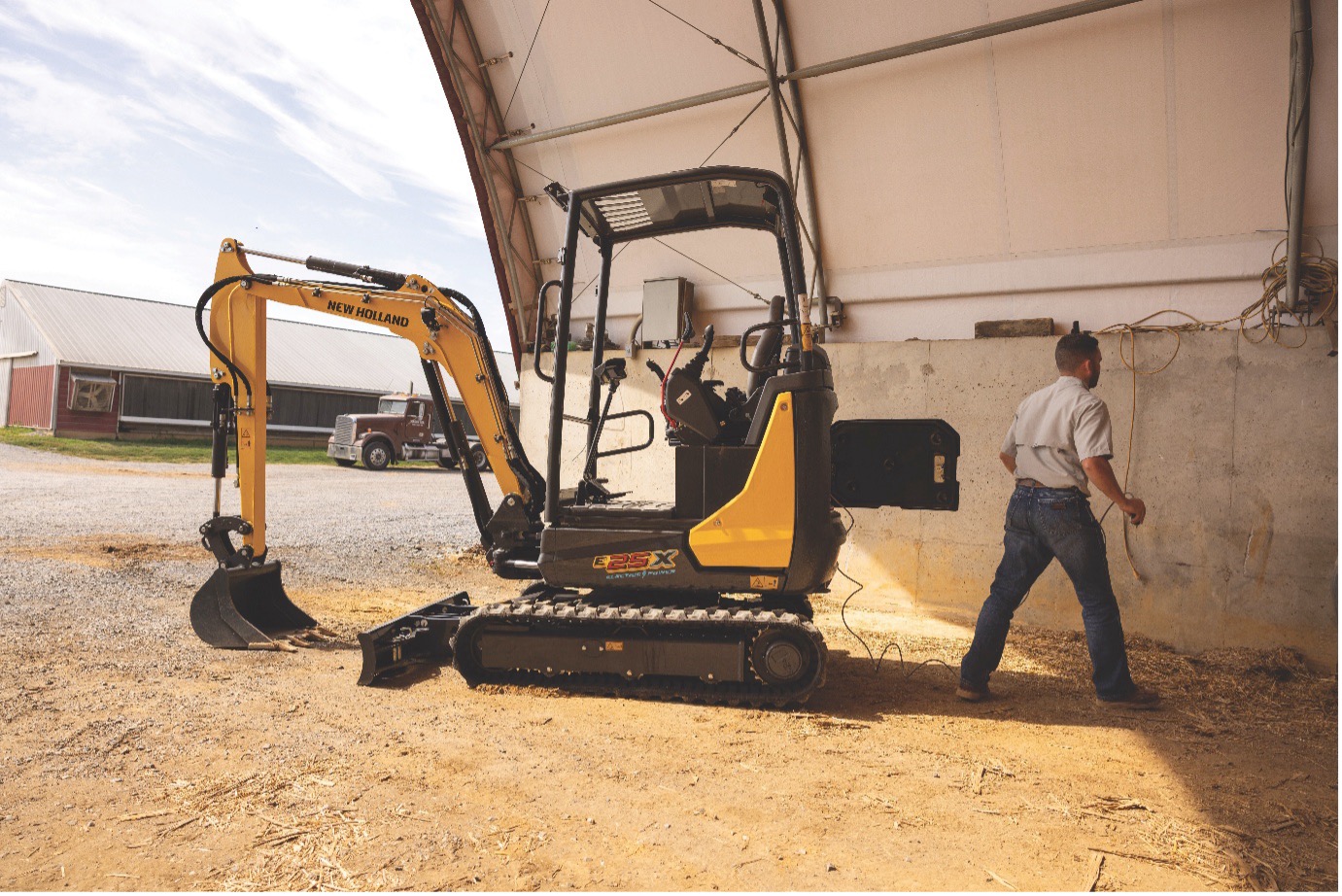
New Holland Construction, a CNH brand, is expanding its electric equipment portfolio to meet customer needs and ever-changing jobsite demands with the launch of the E25X Electric Mini Excavator and the C314X Electric Mini Track Loader.  The machines were launched in North America, offering contractors two new options for jobsites requiring zero on-site emissions, minimal noise and reduced overall maintenance.

Mini Track Loader

“We designed the E25X and C314X, so customers don’t have to rethink their workflow. These solutions eliminate obstacles related to emissions and noise that contractors often face, enabling them to take on a broader range of projects,” says Jake Sickels, product marketing manager for New Holland Construction North America.

In spaces with environmental restrictions, like retail construction, plumbing and interior construction, and even demolition, the E25X and C314X demonstrate clear use case value and can even help develop new opportunities for contractors. For example, grocery or big-box retailers installing refrigeration systems cannot conduct construction during normal business hours without interrupting customer flow due to ventilation issues from diesel-powered equipment. With these electric machines, contractors can operate quietly during the day without the smell of smoke from diesel, and businesses can stay open during construction. The benefits extend beyond air quality. Electric machines significantly reduce noise pollution, making them ideal for use around active schools, municipalities, livestock facilities and residential areas. Maintenance near playgrounds can take place without interrupting classroom schedules. Emergency water main repairs in urban neighborhoods can be completed overnight without the loud rumble of equipment.

E25X Electric Mini Excavator

Read the full story here.

New Holland Construction, a CNH brand, is expanding its electric equipment portfolio to meet customer needs and ever-changing jobsite demands with the launch of the E25X Electric Mini Excavator and the C314X Electric Mini Track Loader.  The machines were launched in North America, offering contractors two new options for jobsites requiring zero on-site emissions, minimal noise and reduced overall maintenance.

Mini Track Loader

“We designed the E25X and C314X, so customers don’t have to rethink their workflow. These solutions eliminate obstacles related to emissions and noise that contractors often face, enabling them to take on a broader range of projects,” says Jake Sickels, product marketing manager for New Holland Construction North America.

In spaces with environmental restrictions, like retail construction, plumbing and interior construction, and even demolition, the E25X and C314X demonstrate clear use case value and can even help develop new opportunities for contractors. For example, grocery or big-box retailers installing refrigeration systems cannot conduct construction during normal business hours without interrupting customer flow due to ventilation issues from diesel-powered equipment. With these electric machines, contractors can operate quietly during the day without the smell of smoke from diesel, and businesses can stay open during construction. The benefits extend beyond air quality. Electric machines significantly reduce noise pollution, making them ideal for use around active schools, municipalities, livestock facilities and residential areas. Maintenance near playgrounds can take place without interrupting classroom schedules. Emergency water main repairs in urban neighborhoods can be completed overnight without the loud rumble of equipment.

E25X Electric Mini Excavator

Read the full story here.

SWORDS, Ireland, March 11, 2026 /3BL/ – Trane Technologies (NYSE:TT), a global climate innovator, has been named to Corporate Knights’ inaugural list of the USA’s 25 Most Sustainable Corporations. The ranking recognizes the top‑performing companies among nearly 1,500 eligible U.S. firms, evaluated across three key performance indicators: sustainable revenue, sustainable revenue momentum, and sustainable investment.

“Being recognized among the nation’s most sustainable companies is a testament to the dedication of our people to boldly challenge what’s possible for a sustainable world,” said Mauro Atalla, Senior Vice President and Chief Technology and Sustainability Officer, Trane Technologies. “This honor reinforces the strength of our sustainability strategy and our dedication to delivering solutions that create a more resilient, energy‑efficient future.”

Trane Technologies is dedicated to developing industry-leading climate solutions for customers worldwide, including innovative, energy-efficient products and solutions that help customers achieve their sustainability goals while improving their bottom line by reducing energy use, carbon emissions, and operational costs.

The company is widely recognized as a leader in sustainability, integrating sustainable practices into the company’s core strategy and throughout its global operations as it progresses toward its 2030 Sustainability Commitments. From 2019 through the most recently reported 2024 data, the company has reduced customer carbon emissions by 237 million metric tons, on track to meet its Gigaton Challenge goal of reducing one gigaton (or one billion metric tons) of customer carbon emissions by 2030. Additional data on progress towards the company’s Gigaton Challenge goal will be released with the 2025 Sustainability Report in May 2026.

Trane Technologies is also acknowledged for its industry-leading transparency, credibility, and accountability, having recently received several additional recognitions for climate action including being named to Corporate Knights 2026 Carbon Clean list, securing a spot on CDP’s annual ‘A List’ for climate change for the fourth year in a row and being recognized by the U.S. Department of Energy (DOE) for achieving its energy savings goal as a partner in the Better Plants Challenge.

###

About Trane Technologies
Trane Technologies is a global climate innovator. Through our strategic brands Trane® and Thermo King®, and our portfolio of environmentally responsible products and services, we bring efficient and sustainable climate solutions to buildings, homes and transportation. For more on Trane Technologies, visit www.tranetechnologies.com.

SWORDS, Ireland, March 11, 2026 /3BL/ – Trane Technologies (NYSE:TT), a global climate innovator, has been named to Corporate Knights’ inaugural list of the USA’s 25 Most Sustainable Corporations. The ranking recognizes the top‑performing companies among nearly 1,500 eligible U.S. firms, evaluated across three key performance indicators: sustainable revenue, sustainable revenue momentum, and sustainable investment.

“Being recognized among the nation’s most sustainable companies is a testament to the dedication of our people to boldly challenge what’s possible for a sustainable world,” said Mauro Atalla, Senior Vice President and Chief Technology and Sustainability Officer, Trane Technologies. “This honor reinforces the strength of our sustainability strategy and our dedication to delivering solutions that create a more resilient, energy‑efficient future.”

Trane Technologies is dedicated to developing industry-leading climate solutions for customers worldwide, including innovative, energy-efficient products and solutions that help customers achieve their sustainability goals while improving their bottom line by reducing energy use, carbon emissions, and operational costs.

The company is widely recognized as a leader in sustainability, integrating sustainable practices into the company’s core strategy and throughout its global operations as it progresses toward its 2030 Sustainability Commitments. From 2019 through the most recently reported 2024 data, the company has reduced customer carbon emissions by 237 million metric tons, on track to meet its Gigaton Challenge goal of reducing one gigaton (or one billion metric tons) of customer carbon emissions by 2030. Additional data on progress towards the company’s Gigaton Challenge goal will be released with the 2025 Sustainability Report in May 2026.

Trane Technologies is also acknowledged for its industry-leading transparency, credibility, and accountability, having recently received several additional recognitions for climate action including being named to Corporate Knights 2026 Carbon Clean list, securing a spot on CDP’s annual ‘A List’ for climate change for the fourth year in a row and being recognized by the U.S. Department of Energy (DOE) for achieving its energy savings goal as a partner in the Better Plants Challenge.

###

About Trane Technologies
Trane Technologies is a global climate innovator. Through our strategic brands Trane® and Thermo King®, and our portfolio of environmentally responsible products and services, we bring efficient and sustainable climate solutions to buildings, homes and transportation. For more on Trane Technologies, visit www.tranetechnologies.com.

Privacy Overview

This website uses cookies so that we can provide you with the best user experience possible. Cookie information is stored in your browser and performs functions such as recognising you when you return to our website and helping our team to understand which sections of the website you find most interesting and useful.