
Month: May 2026
Lieutenant General (Ret.) Michael H. “Mike” Shields built a distinguished 34‑year career in the U.S. Army before bringing his operational insight and strategic leadership to CACI. Today, he serves as senior vice president of Advanced Technology for Mission Adoption, helping accelerate next‑generation technologies that support the nation’s most critical missions.
Since joining the Army in 1985, Shields has served in a wide range of challenging command assignments to include the 3rd Battalion, 504th Parachute Infantry Regiment and most notably the 172nd Stryker Brigade Combat Team in Iraq, which received the Valorous Unit Award for extraordinary heroism in military operations against an armed enemy. The 172nd SBCT was extended during redeployment and served one of the longest combat tours of the war. He later went on to serve as commanding general, United States Army Alaska.
Shields has served in several key strategy and policy positions within the Joint Staff including assistant deputy director for European NATO Russian and African Policy and director of the National Joint Operations and Intelligence Center in the NMCC. In 2010, he was assigned as the deputy director for Operations and Intelligence for the Joint Improvised Explosive Device Defeat Organization. He returned from Afghanistan in 2012 to serve on the Joint Staff as the director of the Pakistan Afghanistan Coordination Cell. His final role in the Department of War was as director of the Joint Improvised‑Threat Defeat Organization (Defense Threat Reduction Agency).
Throughout his military career, Shields worked extensively in joint environments and high‑risk missions, gaining deep expertise in threat analysis, rapid innovation, and operational integration. These experiences shaped his understanding of how emerging technologies can be fielded effectively to support warfighters in dynamic environments.
Shields joined CACI in May 2019. In his role on the strategy team, he supports strategic planning to ensure advanced technologies are aligned to customer mission needs and are successfully integrated into operational use.
Shields was drawn by CACI’s strong heritage supporting intelligence community and defense missions and its growing portfolio of mission‑critical technologies. He recognized CACI’s commitment to developing advanced capabilities that directly support warfighters and national security priorities, an alignment that allowed him to continue his service in a new capacity.
His Army career instilled in him a mission‑first mindset, a deep appreciation for collaboration, and a commitment to delivering capabilities quickly and effectively. His experience directing Joint Improvised-Threat Defeat Organization (JIDO) — an organization tasked with rapid innovation and agile operational support — informs his approach to accelerating technology pipelines, strengthening cross‑functional collaboration, and ensuring solutions are truly mission‑ready.
While transitioning from military to civilian leadership, Shields found CACI’s culture strongly aligned to the values he lived throughout his service. The company’s innovative environment enables Shields and other veterans to leverage their experience, contribute directly to national defense priorities, and help shape the next generation of technology for those in uniform.
From leading soldiers on the ground to guiding national‑level threat‑defeat initiatives and now advancing transformative technologies at CACI, Shields has devoted his career to protecting U.S. warfighters and strengthening national security. His path reflects a lifelong dedication to mission, innovation, and service – values he continues to carry forward every day at CACI.
CACI offers careers for veterans that are as dynamic as they are. Explore opportunities to continue your mission with CACI.
About CACI
CACI International Inc (NYSE: CACI) is a national security company with 27,000 talented employees who are Ever Vigilant in expanding the limits of national security. We ensure our customers’ success by delivering differentiated technology and distinctive expertise to accelerate innovation, drive speed and efficiency, and rapidly anticipate and eliminate threats. Our culture drives our success and earns us recognition as a Fortune World’s Most Admired Company. We are members of the Fortune 500™, the Russell 1000 Index, and the S&P MidCap 400 Index. For more information, visit us at caci.com.
Corporate Communications and Media:
Lauren Presti
Executive Director, External Communications
(703) 434-5037, lauren.presti@caci.com
SANTA ROSA, Calif., May 29, 2026 /3BL/ – Keysight Technologies, Inc. (NYSE: KEYS) released its 2025 Corporate Social Responsibility (CSR) Progress Report, highlighting the company’s recent achievements across ethical business and governance, environmental sustainability, and positive social impact. The progress report, with its accompanying 2025 CSR Data Report, encompasses Keysight’s CSR performance in fiscal year 2025 and includes operations worldwide. The CSR Data Report includes disclosures prepared with reference to the Global Reporting Initiative (GRI) revised universal topic standards and aligned to the Sustainability Accounting Standards Board (SASB) frameworks, as well as additional human capital metrics not included in the mentioned frameworks.
Progress toward environmental goals
Driven by sustained investment in responsible innovation, Keysight made steady progress toward its goal to achieve net zero greenhouse gas emissions by 2040, including science-based targets, and interim measures. In fiscal year 2025, energy efficiency initiatives delivered an estimated 6,160 MWh in energy conservation and more than 1,740 metric tons of CO₂e in annual emissions savings, while the company extended responsible practices across its global supply chain.
Strengthened community investment
Keysight bolstered its social impact, exceeding its goals by investing more than $319 million in communities and engaging over 3.5 million students through STEM education initiatives, reinforcing its commitment to empowering the next generation of innovators.
Governance and ethics oversight
Strong governance practices were reinforced through active board‑level oversight. A 100% completion rate for Standards of Business Conduct training supported a culture of integrity. Enhanced materiality, assurance, and transparency strengthened preparedness for evolving global disclosure requirements, while the company met its goal for zero material negative impacts to the income statement from CSR-related efforts.
Advancing a sustainable future
Alongside ongoing global recognition for its leadership in sustainability and responsible business practices, the 2025 CSR Progress and Data Reports highlight a year of accomplishments. These reports provide clear insight into how Keysight is contributing to a more connected, secure, and sustainable world.
Satish Dhanasekaran, President and Chief Executive Officer, Keysight, said: “I am proud of the progress we have achieved through integrity led leadership, measurable sustainability advancement, and meaningful impact across communities worldwide. As we look ahead, we remain firmly committed to delivering purposeful technologies that create lasting value and contribute to a more resilient future.”
Resources
- 2025 CSR Progress Report
- 2025 CSR Data Report
- Keysight CSR Website
- Keysight CSR Resources Hub
- Keysight CSR News, Awards, and Recognitions
About Keysight Technologies
At Keysight (NYSE: KEYS), we inspire and empower innovators to bring world-changing technologies to life. As an S&P 500 company, we’re delivering market-leading design, emulation, and test solutions to help engineers develop and deploy faster, with less risk, throughout the entire product life cycle. We’re a global innovation partner enabling customers in communications, industrial automation, aerospace and defense, automotive, semiconductor, and general electronics markets to accelerate innovation to connect and secure the world. Learn more at Keysight Newsroom and www.keysight.com.
Contacts
Andrea Mueller, Americas
andrea.mueller@keysight.com
Jenny Gallacher, Europe
jenny.gallacher@keysight.com
Fusako Dohi, Asia
fusako_dohi@keysight.com
Scaling textile-to-textile recycling requires overcoming persistent barriers related to fiber quality, feedstock consistency, and commercial adoption. As expectations around sustainability performance continue to rise, companies are also under increasing pressure to deliver circular solutions backed by credible, measurable impact.
A Cascale Corporate member since 2020, Recover recognized that advancing circularity would require material innovation supported by trusted data, consistent measurement, and collaboration across the value chain. By combining fiber innovation with industry-aligned tools such as the Higg Index, Recover is working to scale recycled cotton while strengthening its ability to measure and benchmark performance over time.
Top Takeaways
- Recover is scaling textile-to-textile recycling by pairing recycled fiber innovation with standardized sustainability measurement through the Higg Index.
- Recover uses Higg FEM, Higg FSLM, and Higg MSI to benchmark environmental and social performance, improve reporting consistency, reduce audit duplication, and strengthen transparency with brand partners.
- From 2024 to 2025, Recover reported measurable improvements across its production hubs, including Higg FSLM scores averaging above 92% and gains in water management, emissions reduction, and employee engagement.
- Collaboration across the value chain — including with Primark — alongside supportive policy frameworks like EPR, is helping move circular materials from innovation to commercially scalable solutions.
“Scaling circularity requires more than innovation in materials alone,” said Orsolya Janossy, senior sustainability manager, Recover. “It depends on combining technical solutions with credible measurement, strong partnerships, and the systems that enable progress at scale. Using tools like the Higg Index alongside collaboration across the value chain helps us turn circularity from ambition into action.”
To achieve this goal, Recover developed a mechanical recycling process that transforms post-industrial and post-consumer textile waste into recycled cotton fiber for use in new products, most notably apparel, accessories, and home textiles. Its approach combines three reinforcing strategies.
Fiber Innovation
Recover’s recycling process is designed to help preserve fiber quality and performance, supporting the integration of recycled cotton into commercial applications. Through its work with brands and value chain partners, Recover is helping demonstrate how circular materials can move from innovation to market-ready products at scale.
Sustainable Policy
Recover views supporting policy, including Extended Producer Responsibility (EPR), as critical to building the infrastructure needed to scale circularity. Stronger collection systems, more reliable feedstock supply, and investment in recycling capacity can help create the conditions needed for recycled materials to become more widely available and commercially viable.
Data-Driven Performance
Recover uses the Higg Index as part of its approach to measuring and improving social and environmental sustainability performance across its facilities. Through the Higg Facility Environmental Module (Higg FEM) and Higg Facility Social & Labor Module (Higg FSLM), Recover applies a structured assessment framework to identify gaps, prioritize actions, and track progress year over year.
Using the Higg Facility Tools also gives Recover a consistent way to measure sustainability performance across its operations and value chain. This common methodology supports more reliable data, clearer internal and external reporting, and more meaningful benchmarking against industry peers.
For Recover, verified Higg Index assessments also support stronger customer relationships. By using a framework recognized by major global brands, Recover can help reduce duplicative audits, lower the overall audit burden, and build trust with partners through greater transparency and shared sustainability goals.
Recover also uses the Higg Materials Sustainability Index (Higg MSI), helping integrate recycled materials into product-level impact assessment.
By integrating the Higg Index into its operations, Recover has strengthened its ability to measure, benchmark, and improve performance over time. From 2024 to 2025, Recover reported improvements across both Higg FSLM and Higg FEM assessments across its three production hubs* reflecting:
- Improved Higg FSLM performance across Recover’s production hubs, with an average score above 92 percent.
- A 6.9 percent increase at the Bangladesh hub, driven by improvements in employee engagement and management systems.
- A 3.5 percent increase at the Spain hub, supported by progress in health and safety and management systems.
- A first-year Higg FSLM score for the Vietnam hub that was in line with Recover’s other hubs, reflecting strong and adaptable social policies.
- Improved Higg FEM performance across Recover’s production hubs.
- A 5 percent increase at the Bangladesh hub, driven by stronger water and wastewater management.
- A 2 percent increase at the Spain hub, mainly due to reduced air emissions.
- A 1 percent increase at the Vietnam hub, linked to environmental management systems, air emissions, and chemicals.
* Aggregate averages were calculated across the three hubs; only Bangladesh data is externally verified, while the remaining facilities conducted self-assessments.
Demonstrating Impact
Recover seeks to demonstrate the viability of textile-to-textile recycled cotton as a solution that can help reduce waste and support lower-impact material inputs. Consistent measurement helps Recover benchmark performance, plan for continuous improvement, and strengthen credibility with customers and partners.
Its collaboration with Primark, also a Cascale Corporate member, was highlighted in Cascale’s “Source of Good” podcast and shows how brand partnerships can help move circular materials into commercial products and support shared solutions at scale.
Recover’s use of the Higg Index also demonstrates how a common measurement foundation can support more consistent insights, reduce duplication, and enable more confident decision-making. As circularity moves from ambition to implementation, this combination of innovation, benchmarking, and collaboration can help accelerate progress across the apparel and textile value chain.
When L&M Hair Studio opened its doors in Portland, it was built on more than a small business idea, it was a response to a need. Owner Melody saw a clear gap in the industry for textured hair services and took a leap of faith during the uncertainty of the pandemic to create something meaningful, not just for herself, but for others.
That vision quickly grew into something bigger.
Through KeyBank’s Key4Women program, Melody discovered an opportunity that would change the trajectory of her business: a small business pitch competition. Encouraged to go for it, she entered with a bold idea, to launch a Texture Hair Academy that would create career pathways in an underserved segment of the beauty industry.
Winning the competition became a turning point.
With KeyBank’s support, the academy came to life, offering training cohorts and opening doors for aspiring professionals. Today, the impact reaches far beyond the salon chair. Participants have gone from uncertainty about meeting basic needs to building stable, thriving lives.
The partnership between KeyBank and L&M Hair Studio demonstrates what’s possible when access, opportunity, and belief come together, helping small businesses grow, and in turn, uplift entire communities.
CLEVELAND, May 29, 2026 /3BL/ – KeyBank Community Development Lending and Investment (CDLI), a national leader in affordable housing finance, today announced a key hire and new leadership appointments to further strengthen and scale its equity syndications platform.
Naomi See has joined CDLI as a senior banker on the business development and investor relations team, enhancing the platform’s ability to deepen institutional investor relationships and accelerate capital formation. She reports to Christina Knuckles, Head of Equity Syndications and Fund Management, and is based in Seattle.
See will focus on raising capital and supporting the sourcing, structuring, and syndication of investments across low-income housing tax credits and state credits. She will work closely with acquisitions, fund management, and originations teams to align investor demand with a growing pipeline of opportunities.
Celia Smoot has been promoted to Head of Equity Originations, where she will lead investment strategies and execution, supporting continued growth of the firm’s affordable housing equity pipeline. A highly respected leader in the affordable housing industry, Smoot has more than two decades of experience in LIHTC investing, fund structuring, and community development finance, and she is known for her ability to execute complex transactions and drive scalable investment strategies.
“These additions reflect our continued investment in building a best-in-class equity syndication platform,” said Robert Likes, President of KeyBank CDLI. “We are strengthening our capabilities across acquisitions, syndication, and distribution to better serve our clients and investor partners and build on our position as one of the nation’s leading affordable housing lenders, recently ranked second by Affordable Housing Finance.”
These announcements build on a series of recent strategic leadership investments across the platform. In March 2026, Christina Knuckles was promoted to Head of Equity Syndications and Fund Management, recognizing her strong leadership, experience, technical expertise, collaboration, and steady approach. She has been instrumental in shaping the platform’s growth and is leading the team as it continues to scale and evolve.
CDLI previously announced the appointment of Jon Burckin as a Senior Banker in Equity Distribution in July 2025, further expanding the platform’s ability to grow investor coverage and distribution capabilities.
Together, these investments underscore KeyBank’s commitment to building one of the industry’s most integrated and high-performing equity syndication platforms, spanning acquisitions, fund management, syndication, and investor distribution.
About KeyBank Community Development Lending and Investment
KeyBank Community Development Lending and Investment (CDLI) finances projects that stabilize and revitalize communities across all 50 states. As one of the top affordable housing capital providers in the country, KeyBank’s platform brings together construction, acquisition, bridge-to-re-syndication, and preservation loans, as well as lines of credit, Agency, Private Placements and HUD permanent mortgage executions, and equity investments for low-income housing projects, particularly Low-Income Housing Tax Credit (LIHTC) financing. KeyBank has earned 11 consecutive “Outstanding” ratings on its Community Reinvestment Act (CRA) exam from the Office of the Comptroller of the Currency—making it the first U.S. national bank among the 25 largest to achieve this distinction since the CRA’s passage in 1977.
About KeyCorp
KeyCorp’s roots trace back more than 200 years to Albany, New York. Headquartered in Cleveland, Ohio, Key is one of the nation’s largest bank-based financial services companies, with assets of approximately $189 billion at March 31, 2026.
Key provides deposit, lending, cash management, and investment services to individuals and businesses in 15 states under the name KeyBank National Association through a network of approximately 950 branches and approximately 1,200 ATMs. Key also provides a broad range of sophisticated corporate and investment banking products, such as merger and acquisition advice, public and private debt and equity, syndications, and derivatives to middle market companies in selected industries throughout the United States under the KeyBanc Capital Markets trade name. For more information, visit https://www.key.com/. KeyBank is Member FDIC.
###
Contact:
Laura Mimura
216-471-2883
Laura_J_Mimura@KeyBank.com
Key Media Newsroom:
CLEVELAND, May 29, 2026 /3BL/ – KeyBank Community Development Lending and Investment (CDLI), a national leader in affordable housing finance, today announced a key hire and new leadership appointments to further strengthen and scale its equity syndications platform.
Naomi See has joined CDLI as a senior banker on the business development and investor relations team, enhancing the platform’s ability to deepen institutional investor relationships and accelerate capital formation. She reports to Christina Knuckles, Head of Equity Syndications and Fund Management, and is based in Seattle.
See will focus on raising capital and supporting the sourcing, structuring, and syndication of investments across low-income housing tax credits and state credits. She will work closely with acquisitions, fund management, and originations teams to align investor demand with a growing pipeline of opportunities.
Celia Smoot has been promoted to Head of Equity Originations, where she will lead investment strategies and execution, supporting continued growth of the firm’s affordable housing equity pipeline. A highly respected leader in the affordable housing industry, Smoot has more than two decades of experience in LIHTC investing, fund structuring, and community development finance, and she is known for her ability to execute complex transactions and drive scalable investment strategies.
“These additions reflect our continued investment in building a best-in-class equity syndication platform,” said Robert Likes, President of KeyBank CDLI. “We are strengthening our capabilities across acquisitions, syndication, and distribution to better serve our clients and investor partners and build on our position as one of the nation’s leading affordable housing lenders, recently ranked second by Affordable Housing Finance.”
These announcements build on a series of recent strategic leadership investments across the platform. In March 2026, Christina Knuckles was promoted to Head of Equity Syndications and Fund Management, recognizing her strong leadership, experience, technical expertise, collaboration, and steady approach. She has been instrumental in shaping the platform’s growth and is leading the team as it continues to scale and evolve.
CDLI previously announced the appointment of Jon Burckin as a Senior Banker in Equity Distribution in July 2025, further expanding the platform’s ability to grow investor coverage and distribution capabilities.
Together, these investments underscore KeyBank’s commitment to building one of the industry’s most integrated and high-performing equity syndication platforms, spanning acquisitions, fund management, syndication, and investor distribution.
About KeyBank Community Development Lending and Investment
KeyBank Community Development Lending and Investment (CDLI) finances projects that stabilize and revitalize communities across all 50 states. As one of the top affordable housing capital providers in the country, KeyBank’s platform brings together construction, acquisition, bridge-to-re-syndication, and preservation loans, as well as lines of credit, Agency, Private Placements and HUD permanent mortgage executions, and equity investments for low-income housing projects, particularly Low-Income Housing Tax Credit (LIHTC) financing. KeyBank has earned 11 consecutive “Outstanding” ratings on its Community Reinvestment Act (CRA) exam from the Office of the Comptroller of the Currency—making it the first U.S. national bank among the 25 largest to achieve this distinction since the CRA’s passage in 1977.
About KeyCorp
KeyCorp’s roots trace back more than 200 years to Albany, New York. Headquartered in Cleveland, Ohio, Key is one of the nation’s largest bank-based financial services companies, with assets of approximately $189 billion at March 31, 2026.
Key provides deposit, lending, cash management, and investment services to individuals and businesses in 15 states under the name KeyBank National Association through a network of approximately 950 branches and approximately 1,200 ATMs. Key also provides a broad range of sophisticated corporate and investment banking products, such as merger and acquisition advice, public and private debt and equity, syndications, and derivatives to middle market companies in selected industries throughout the United States under the KeyBanc Capital Markets trade name. For more information, visit https://www.key.com/. KeyBank is Member FDIC.
###
Contact:
Laura Mimura
216-471-2883
Laura_J_Mimura@KeyBank.com
Key Media Newsroom:
April was Earth Month, a time to reflect on how we care for our planet and the role each of us plays in building a more sustainable future.
For Aurélie Dufour, Europe Sustainability Regulation Lead for Yum!’s Global Sustainability team, this work connects closely to Yum!’s focus on regenerative, nature-positive agriculture. She leads sustainability regulation and governance across Europe, translating complex requirements into clear priorities for Yum!’s brands and markets, helping embed sustainability into how the business grows.
What stands out most to Aurélie is Yum!’s collaborative approach. By working with farmers, suppliers and partners, our teams are helping advance more resilient agricultural practices and healthier ecosystems. She also brings teams together through cross-brand forums that drive alignment and progress across Europe.
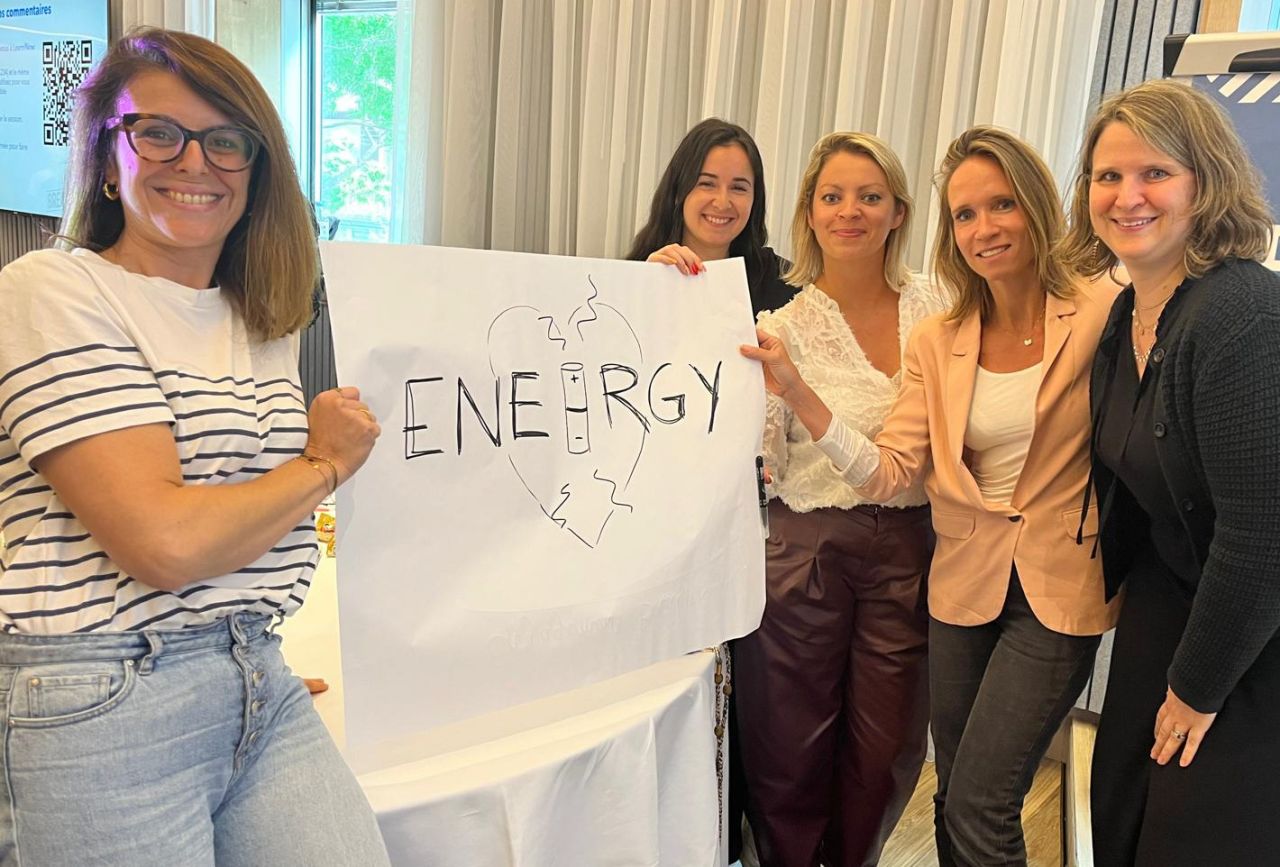
At Yum!, we lead with Smart, Heart and Courage. Aurélie brings Smart to life by shaping forward-looking strategies that build resilience across our value chain.