
Author: sHq_LoGiNz
PARSIPPANY, N.J., September 1, 2026 /3BL/ — PBF Energy Inc. (NYSE: PBF) today published its 2025 Sustainability Data Supplement, presenting three years of environmental, safety, workforce, and governance performance data (2023–2025) across the company’s refining operations, reported in alignment with the SASB Oil & Gas – Refining & Marketing standard.
Among the year-over-year highlights, gross Scope 1 and 2 greenhouse gas emissions declined for a third consecutive year. Hazardous waste generated also dropped in 2025, and the share of hazardous waste recycled rose from the prior year. Water-related non-compliance incidents continued a downward trend. The company also increased the share of its Renewable Volume Obligation met through production in 2025, and reported zero employee or contractor fatalities for the third consecutive year.
The supplement also reports data on air quality, water management, workforce health and safety, board composition, workforce demographics, and refining operations using PBF Energy’s operational control boundary, giving stakeholders a full picture of performance trends across the portfolio, including areas that moved in the other direction year over year.
The full 2025 Sustainability Data Supplement is available here. Questions about the report’s metrics or methodology can be directed to sustainability@pbfenergy.com.
About PBF Energy Inc.
PBF Energy Inc. (NYSE: PBF) is one of the largest independent refiners in North America, operating, through its subsidiaries, oil refineries and related facilities in California, Delaware, Louisiana, New Jersey, and Ohio. Our mission is to operate our facilities in a safe, reliable and environmentally responsible manner, provide employees with a safe and rewarding workplace, become a positive influence in the communities where we do business, and provide superior returns to our investors.
WASHINGTON–(BUSINESS WIRE)–Global Water Challenge (GWC) and Cargill announced today the expansion of their Cargill Currents partnership into Bolivia, Colombia, Costa Rica and Türkiye. Launched by GWC and Cargill in 2021, Cargill Currents is a joint initiative that works in partnership with communities, governments and local organizations to help address the water challenges facing each region. As part of a global partnership, these new country activities join ongoing programming underway in B
NEW YORK, September 1, 2026 /3BL/ – Sustainability consulting and research firm Governance & Accountability Institute (G&A) and nonprofit advocacy organization Ceres released joint research examining the first voluntary corporate reports on climate risk submitted under California’s Climate-Related Financial Risk Act (SB 261). This research on new rules from California – one of the world’s largest economies – comes as state-level climate disclosure takes on a larger role in the absence of U.S. federal mandates.
The research analyzes 154 voluntary disclosures under SB 261 as of early May 2026. Entities operating in California submitted these reports voluntarily amid legal challenges to the law. “Companies’ decision to report before it is mandatory to do so offers a signal of continued momentum toward more comprehensive climate-risk disclosure,” said Annie Roberts, SVP, Climate Consulting, G&A Institute.
The paper, “Trends in Climate Risk Reporting: Lessons From Initial Voluntary Corporate Reports under California’s SB 261,” documents a wide range of approaches to identifying, assessing, and managing climate risk.
Key Findings from SB 261 Voluntary Reports
The findings establish an initial baseline for understanding how corporate climate risk reporting is developing ahead of mandatory compliance. As a resource for companies preparing for SB 261 reporting cycles, the results show that disclosure quality can vary dramatically. The authors identified gaps in the rigor and ambition of climate risk management; for example, nearly all early reporters identify physical and transition risks, but only 12% mention a formal transition plan and 12% quantify the financial impacts of climate-related risks. This result shows how companies technically can meet the minimum disclosure requirement while producing disclosures that fall short of what investors actually need.
“The first SB 261 reports make clear that the market has moved beyond the question of whether companies will disclose climate risk,” said Steven Rothstein, Chief Program Officer at Ceres. “The most important question for investors is how useful those disclosures are—and whether they connect climate risks to financial impacts, business strategy, and concrete transition plans.”
In another finding, 92% of early reporters disclosed board-level oversight of climate-related issues, though governance structure alone did not guarantee substantive climate action or disclosure quality.
“CARB’s minimum requirements are an important starting point, but the strongest disclosures demonstrate that companies can—and increasingly need to—go further,” said Roberts. “For investors, decision-useful disclosure means understanding not only what climate risks a company faces, but how those risks could affect its financial performance and how management plans to respond.”
Where companies demonstrate more leadership is in their preparation of GHG emissions inventories, in many cases including Scope 3 emissions. While companies are not required to disclose emissions under SB 261, some of the same companies will be subject to SB 253, which requires Scopes 1-2 reporting beginning in November 2026 and Scope 3 reporting in 2027.
Wider Benefits of SB 261 Research
In conducting this research, G&A translated the CARB disclosure checklist into outputs related to the structure of TCFD and IFRS S2 and created measurable indicators for each one. They developed an AI analysis tool to extract specific data points from each individual report submitted to CARB’s public docket and manually reviewed data points against the individual report. Together, G&A and Ceres drew on their knowledge of corporate and investor perspectives to provide context and interpret the results. Ultimately, the research yielded a set of indicators that can be used to assess future SB 261 submissions.
In addition, the paper presents case studies of leading disclosure practices, providing practical examples for organizations seeking to strengthen their disclosures.
Looking Forward
Climate disclosure practices can scale quickly once reporting frameworks become embedded in regulatory and voluntary expectations. G&A’s long-range research on trends in corporate sustainability disclosure shows just how quickly: in G&A’s flagship Sustainability Reporting in Focus research, among Russell 1000 companies, TCFD alignment rose from just 4% in 2019 to 60% in 2023. As California’s climate-related disclosure requirements become more established, we would expect a similar trajectory – perhaps even faster, given their mandatory nature.
The report is available through G&A’s research hub and Ceres’ reports page.
About G&A Institute, Inc.
Founded in 2006, Governance & Accountability Institute (G&A) is a New York–based sustainability consulting and research firm with deep advisory experience supporting corporate leaders and investors in integrating sustainability into governance, risk, enterprise performance, and evolving regulatory and stakeholder expectations.
Backed by rigorous disclosure research and one of the industry’s most comprehensive benchmarking databases, we deliver insight that strengthens transparency, enhances competitiveness, and drives measurable return on investment.
G&A has published numerous research papers, issue briefs, and quick reference guides covering global sustainability reporting regulations and frameworks, including the CSRD, ISSB standards, and other emerging mandates.
For more information, visit G&A Institute.
Media Contact:
Louis D. Coppola, CEO & Co-Founder
Governance & Accountability Institute, Inc.
Tel 646.430.8230 ext 14
Email lcoppola@ga-institute.com
About Ceres
Ceres is a nonprofit advocacy organization working to accelerate the transition to a cleaner, more just, and resilient economy. With data-driven research and expert analysis, we inspire investors and companies to act on the world’s sustainability challenges and advocate for market and policy solutions. Together, our efforts transform industries, unlock new business opportunities, and foster innovation and job growth — proving that sustainability is the bottom line.
For more information, visit ceres.org.
Media Contact:
Diane May, Senior Communications Manager
Accelerator for Sustainable Capital Markets, Ceres
Tel 617.247.0700
Email: dmay@ceres.org
PORTLAND, Ore., September 1, 2026 /3BL/ – The Global Electronics Council® (GEC), an independent international nonprofit working to accelerate markets for sustainable electronic technology, today issued a call for expressions of interest from qualified individuals interested in serving on its Board of Directors.
GEC is seeking engaged leaders who can bring diverse expertise, perspectives, and independent judgment to the organization’s governance and long-term direction. Serving on the GEC Board offers a leadership opportunity to help shape an influential organization working to grow the market for sustainable electronics. Prospective Directors can learn more about the role in GEC’s Board of Directors Prospective Director Information Guide, which was also launched this morning.
GEC’s Board is critical in shaping its work at the intersection of sustainability, technology, procurement, criteria development, and market acceleration. Directors serve GEC’s mission and exercise independent judgment in the best interests of the organization. Board leadership will also guide GEC’s continued impact through EPEAT®, its global Type I ecolabel that empowers institutional purchasers to lessen their negative environmental and social impacts via electronics procurement.
The organization welcomes qualified authorities from all sectors and countries to express their interest, particularly those with experience in finance, procurement, sustainability, circularity, supply chain management, electronics, global market development, stakeholder engagement, public policy, conformity assessment, nonprofit governance, academia, and other fields related to GEC’s work.
Serving on the GEC Board offers experienced subject experts an opportunity to leverage their expertise in support of the organization’s globally impactful mission from a position of strategic leadership, governance, and organizational stewardship. New Directors typically begin by serving on a standing committee, with opportunities over time to take on Committee Chair or Board Officer roles.
GEC is seeking self-expressions of interest from individuals with experience and shared ambition to advance GEC’s continued growth and success. Prospective candidates should complete the online Expression of Interest form and provide a current resume or CV, along with an optional cover letter.
Expressions of interest will be accepted through September 23, 2026.
About the Global Electronics Council
The Global Electronics Council (GEC) envisions a world with only sustainable electronic technology that enhances the well-being of people and planet. Our mission is to accelerate the transformation of markets toward prioritizing the most sustainable electronic products and services.
As stewards of the EPEAT ecolabel, we set global standards for electronics that empower brands, their value chains, and their buyers to achieve ambitious sustainability goals. Through our thought leadership, advocacy, and EPEAT ecolabel, GEC is helping to reshape the electronics industry into a driving force for environmental preservation and global well-being.
EPEAT is a leading global ecolabel that enables manufacturers to meet strict, third-party-verified standards while providing transparency for buyers.
Since its launch in 2006, procurement professionals have reported purchases of more than 3.2 billion EPEAT products, generating cost savings exceeding $39 billion USD and reducing greenhouse gas emissions by more than 370 million metric tonnes.
Media Contact
Erik Fessler
Senior Manager, Global Communications
Global Electronics Council
Direct Line: +1 (971) 380-4088
U.S. Eastern Time Zone
efessler@gec.org
MetLife and MetLife Foundation’s giving and volunteerism help strengthen the resilience of the communities we serve. This work complements our environmental stewardship efforts, forming a cohesive approach to helping communities thrive in multiple ways.
Driving Economic Mobility Through Grantmaking
MetLife Foundation contributes significantly to communities, with over $1 billion in giving since its inception in 1976. The Foundation seeks to drive inclusive economic mobility by addressing the needs of people with low income around the world, making grants across three strategic giving portfolios:
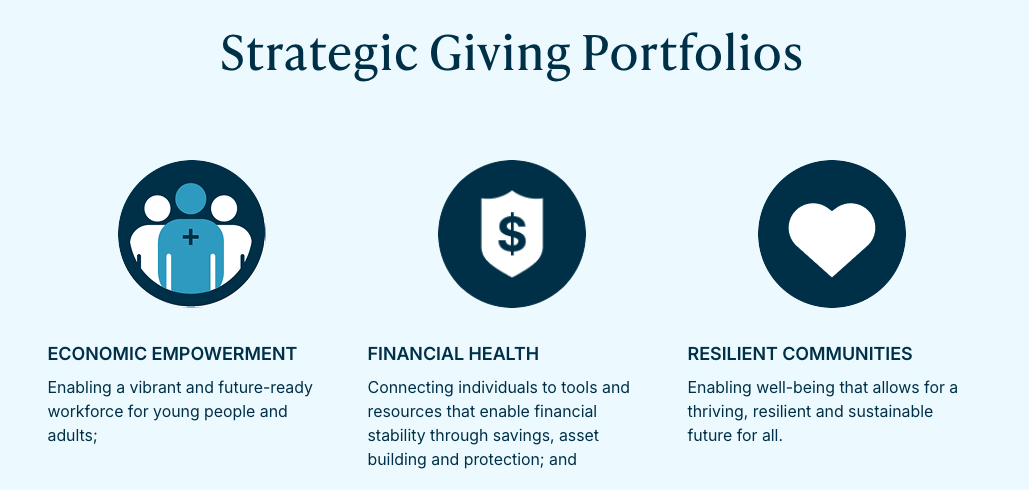
Examples of grants in 2025 include:
- Sesame Workshop: Deliver a global emotional well-being initiative that equips young children and families with skills to understand and manage emotions, while helping providers identify signs of serious mental health challenges;
- Sponsors for Educational Opportunity: Support the Growing Emerging Talent in Insurance Initiative to address the early-career talent and knowledge gaps in the U.S. insurance industry by equipping high-achieving undergraduates who need support with building essential skills and knowledge for insurance careers and wealth-building;
- Entrepreneurial Training for Innovative Communities: Implement an 18‑month entrepreneurship program delivered via a partner organization that provides early‑stage founders in Japan with capacity building, mentorship, consultation and tailored support to strengthen their business capabilities; and
- King’s Trust: Support young people in the U.K. to build their confidence and skills and get ready for work. The charity’s foundational programs help those facing complex challenges and who have left education to develop the fundamentals—such as communications, working with others and resilience—so they can progress into positive outcomes.
In 2025, MetLife Foundation made $31.5 million in total grants globally. Fundación MetLife México and MetLife Korea Foundation—both celebrating their 20th anniversaries—contributed $1.4 million collectively.
MetLife and MetLife Foundation are harnessing the global momentum around soccer to create safe spaces for play and expand opportunity for youth sports. The Foundation’s partnership with the U.S. Soccer Foundation advances community health, wellness and youth development through:
- Soccer Will: Transforming Health: Creating mini‑pitches in under‑resourced communities and hosting local engagement events;
- Yes, Coach!: Expanding the pipeline of trained coach‑mentors nationwide;
- Soccer for Success After School: Empowering youth through structured physical activity, education and mentorship; and
- Just Ball: Providing inclusive, accessible neighborhood leagues that promote connection and participation.
In addition, MetLife Foundation’s partnerships include:
- The Place Institute: Paint Your Court is a regional initiative revitalizing community soccer spaces through public art, participatory design and community‑led activation. Initial grants focused on courts in Mexico with plans to expand in Chile, Brazil, Colombia and Uruguay. These efforts will revitalize public spaces, strengthen communities and promote physical, mental and social well-being.
- FIFA Global Citizen Education Fund: As a founding donor to the Fund, MetLife Foundation is helping expand access to quality education and sports by supporting grassroots organizations focused on improving learning outcomes for children. The Foundation’s collaboration is in addition to MetLife’s three-year partnership with Global Citizen to provide financial support, employee volunteerism and global reach to drive transformative initiatives in education and economic empowerment.

Disaster Relief
MetLife, MetLife Foundation and our employees support disaster response around the globe. MetLife Foundation is a member of the American Red Cross Disaster Responder program and contributes to the CARE Humanitarian Surge Fund, which helps communities with disaster preparedness and immediate disaster response.
In 2025, MetLife Foundation provided disaster relief immediately following the California wildfires, devastating Texas floods and other widespread storms in the U.S. These included employee donation match programs with the American Red Cross and Team Rubicon, an organization that mobilizes veterans to help people affected by humanitarian crises. MetLife Foundation also donated to World Central Kitchen, an organization that provides fresh meals to people in need during disasters.
In addition to grantmaking from MetLife Foundation, MetLife addresses disaster recovery through our products and services. In the U.S., MetLife Legal Plans offers free attorney document review and consultation to Legal Plans customers’ employees who are impacted by natural disasters, whether or not the employees are enrolled in the plan.
The American Red Cross honored MetLife Foundation as a 2025 Disaster Relief Hero for demonstrating exceptional humanitarian leadership in the face of devastating disasters.
Protecting Nature and Biodiversity
Community resilience often is impacted by the health of the natural environment and ecosystems in which we live. MetLife’s commitment to environmental stewardship and responsible resource management includes initiatives that protect and enhance biodiversity and healthy ecosystems. Our beehive programs in the U.S. support pollinators and offer employee engagement opportunities around biodiversity. In Australia, MetLife renewed our partnership with the Botanic Gardens of Sydney, supporting the organization’s Rainforest Seed Conservation Project, a research project focused on preserving rainforest seeds and addressing the impacts of climate change.
MetLife aspires to plant 5 million trees around the world by 2030, prioritizing areas vulnerable to natural disasters. MetLife and MetLife Foundation support tree planting through financial support to large-scale reforestation programs in national and state forests, distributing trees to homeowners in communities impacted by disasters and sponsoring employee volunteer planting projects globally.
MetLife and MetLife Foundation have planted 2.9 million trees since 2020.
We also use tree-planting projects to educate and celebrate our people, customers and the community. MetLife plants a tree for each new hire across the globe and, in the U.S. and select markets in Asia, we honor full-time employees by planting a tree to commemorate their service anniversaries. We may also plant trees for product sales or for customers opting into paperless communications in certain markets. Through MetLife Legacy Trees™, we plant a tree in honor of each loved one for whom MetLife has paid a Group Life Insurance benefit.1
MetLife and MIM also originate investments that support biodiversity and healthy ecosystems.
MetLife School Forest Established in Korea
In support of our aspiration to plant 5 million trees by 2030, MetLife helps establish school forests in Korea, where children in urban centers can see, touch and learn about nature. The latest school forest was established with the support of the MetLife Korea Foundation at an elementary school in the market’s capital, Seoul.
MetLife employee volunteers helped plant more than 1,000 trees and endangered plants to establish the forest, including Korean native plants, such as Busan tail grass and the Misun tree. The forest also features a tree bark and ring observation platform, insect hotel and mushroom cultivation trees.

Employee Volunteering
Volunteering is a core part of MetLife’s commitment to building resilient, thriving communities around the world. Employees across regions contribute their time and talents throughout the year, supporting a wide range of community needs and purpose‑driven initiatives. Employees engage in activities spanning mentoring, coaching, education, environmental action, financial wellness and food security, along with skills‑based and pro bono projects that leverage their professional expertise.
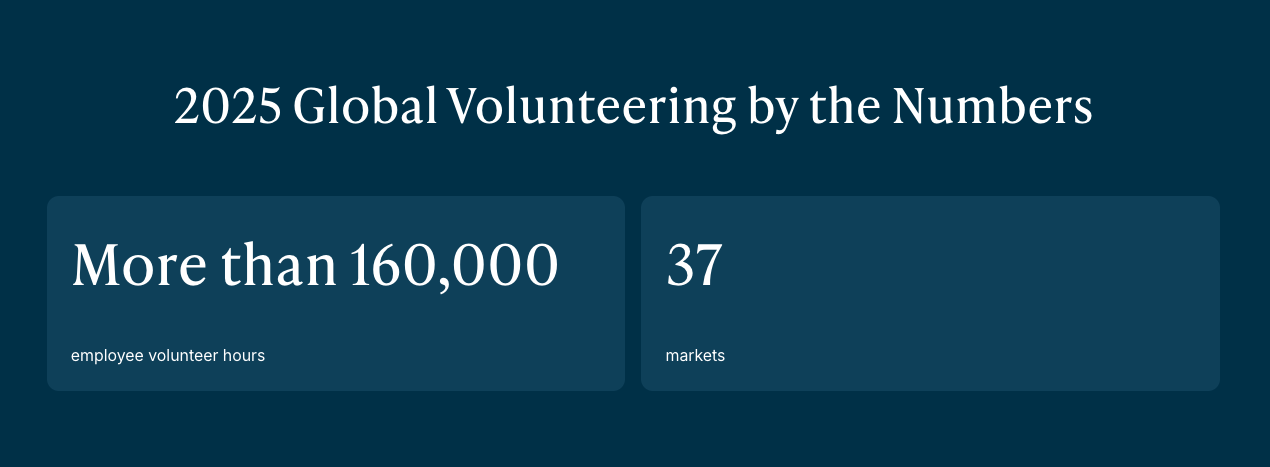
Key global highlights include:
- Signature Days of Service: Our global engagement opportunity that unites employees during key moments of the year to address pressing community issues. In 2025, these efforts included advancing financial literacy, partnering with community networks and creating family‑friendly volunteering experiences, and involved partnerships with our MOMENTUM Networks.
- Skills For Impact Program: This program allowed employees to apply their business skills to help nonprofits strengthen their financial, data and operational capabilities. These one‑day engagements create practical solutions that enhance nonprofit effectiveness and community impact.
- Environmental stewardship: Through Our Green Impact, MetLife’s voluntary environmental employee engagement program, employees participate in on‑site and virtual environmental activities, such as litter clean-ups, tree planting and volunteer Green Teams. In addition, for the fourth consecutive year, employees collaborated with the UC Berkeley Haas School of Business Cleantech to Market program, helping graduate student teams accelerate the commercialization of climate‑focused technologies.

Read more about how we are strengthening our communities in MetLife’s 2025 Sustainability Report.
1 MetLife Legacy Trees™ is available in the U.S. and Nepal.
Whirlpool Corporation has been named to Seramount’s 2026 100 Best Companies list and achieved Pinnacle status on the 2026 Talent and Inclusion Index, reflecting its commitment to an inclusive, family-friendly workplace that aligns with the company’s mission of improving life at home.
Whirlpool Corporation has received two workplace honors from Seramount, a strategic professional services and research firm. These honors include a place on the organization’s 2026 100 Best Companies list and Pinnacle status on its 2026 Talent and Inclusion Index.
Seramount’s 100 Best Companies list recognizes organizations setting the standard for inclusive, family-friendly workplace benefits and policies that support working parents and caregivers. Now in its more than 40-year history, the list highlights workplace practices that help employees and their families thrive.
The 2026 Talent and Inclusion Index from Seramount evaluates organizations’ practices across key areas including workforce representation, recruitment, retention, advancement and company culture. Whirlpool Corporation has participated in the index for the last nine years, and this status reflects the company’s strength in attracting, developing and retaining top talent.
“Being recognized by Seramount reflects our continued commitment to creating a workplace where people feel valued, included and empowered to grow.”
“Being recognized by Seramount reflects our continued commitment to creating a workplace where people feel valued, included and empowered to grow,” said Carey Martin, Whirlpool Corporation executive vice president and chief human resources officer. “We invest in our people at every stage of their career, helping build the workforce we need for the future while setting a strong standard for our industry.”
Whirlpool Corporation supports employees at every stage of their life, offering benefits like paid parental and caregiver leave, time off, health and wellness resources, and opportunities to grow professionally. This focus stems from the core belief that supporting employees and their families is aligned with the company’s long-standing mission of improving life at home.
Whirlpool Corporation’s iconic brand portfolio includes Whirlpool, KitchenAid, JennAir, Maytag, Amana, Brastemp, Consul, and InSinkErator. Approximately 80 percent of the major appliances the company sells in the U.S. are produced in the U.S., supported by more than 20,000 U.S. employees, including 14,000 manufacturing workers across 10 U.S. plants.
Seramount’s 2026 100 Best Companies list and Talent and Inclusion Index recognize organizations based on comprehensive evaluations of workplace culture, benefits, and employee support. The assessment benchmarks companies on key drivers of success, including recruitment, retention, advancement, and inclusive culture, to measure their progress in fostering equitable and family-friendly environments.
View original content here.
For small business owners, launching a website is a streamlined process until they hit a technical and often tedious step: manually configuring DNS records to connect their domain. GoDaddy today announced a new feature in its Airo AI Builder that automatically connects domains managed through Cloudflare, eliminating the manual DNS setup that previously required users to copy and paste technical records between two platforms.
Airo AI Builder now detects the domain provider, pre-fills the required records, and completes the setup to save everyone time.
Before this update, connecting a Cloudflare-managed domain meant switching between the Airo AI Builder and Cloudflare dashboards, locating DNS records and manually re-entering each one — CNAME, A, AAAA and TXT records — without a typo or missed entry. A single mistake could keep a site from going live, and even an error-free setup could take 15 minutes or more.
The new Domain Connect feature cuts that to a few clicks. When a user adds a Cloudflare-managed domain, Airo AI Builder now:
- Detects that the domain uses Cloudflare nameservers
- Displays a “Connect automatically” button in domain settings
- Securely redirects users to Cloudflare with the DNS records already filled in
- Applies all DNS records instantly after user approval
- Returns users to Airo AI Builder with the domain fully connected
“Syncing an external domain used to be one of the most frustrating steps in getting online,” said Bhala Dalvi, vice president of engineering at GoDaddy. “We tapped into the power of Airo to help streamline this step, so customers can get their websites up and running in just a few minutes.”
The feature is available now to all Airo AI Builder users at no additional cost. It currently supports domains managed through Cloudflare, with automatic connection for additional domain providers to follow.
To learn more about Airo AI Builder, visit godaddy.com/airo.
About GoDaddy
GoDaddy, the world’s largest domain name registrar, helps millions of entrepreneurs globally start, grow, and scale their businesses. People come to GoDaddy to name their idea, build a website and logo, sell their products and services and accept payments. Airo™, the company’s agentic operating system for small businesses, helps entrepreneurs get their idea online, run their business day-to-day, and grow through an integrated identity, presence and commerce experience. GoDaddy’s expert guides are available 24/7 to provide assistance. To learn more about the company, visit www.GoDaddy.com.
In this episode, host Beatrice Bizzaro (HPC Italy, Inogen Alliance Global Water Working Group Lead) is joined by Alex Perryman from Antea Group UK, Arularasu K from Chola MS Risk in India and Michalis Lellis from Baden Consulting in Switzerland to explore how organisations are approaching water-related infrastructure resilience as climate conditions become less predictable.
The discussion spans flooding, drought and water scarcity, intense rainfall, glacier melt and slope instability, and examines how these risks are changing the assumptions that infrastructure owners and planners use to design and protect critical assets.
Listen Now
Time Stamps
- 00:00:02 – Introduction: Water infrastructure resilience in a changing climate
- 00:01:21 – UK water risk: Flooding, scarcity and water stewardship
- 00:02:55 – India: Extreme rainfall and urban flooding
- 00:03:25 – Switzerland: Rainfall, glacier melt and infrastructure resilience
- 00:04:41 – Rethinking historical design assumptions and stationarity
- 00:06:04 – Nature-based solutions, sponge cities and stronger regulation
- 00:07:11 – Cascading risks across interconnected infrastructure systems
- 00:09:07 – Surface water, river and coastal flood risk in the UK
- 00:12:11 – Building long-term, holistic resilience
- 00:13:46 – Critical infrastructure vulnerabilities and connected systems
- 00:17:02 – Lessons from failures, drainage limits and fragmented governance
- 00:20:27 – Flood modelling, AI and nature-based innovation
- 00:22:38 – Digital twins, data sharing and smart dam management
- 00:24:39 – Multinational resilience planning and local priorities
- 00:27:47 – Learning across regions: Netherlands, Asia and the UK
- 00:30:45 – India: Digital twins, satellite data and sponge cities
- 00:31:59 – The business case for resilience and supply-chain risk
- 00:34:11 – Switzerland: Long-term planning and local knowledge
- 00:35:17 – Future trends: AI forecasting, climate scenarios and pre-event planning
- 00:38:32 – Closing reflections and future outlook
Guest Quotes
Alex Perryman:
“So I’d say in the UK we’re talking about the whole spectrum, like too much water, too little water and everything in between and the quality of it, the availability of it, how efficiently we use it and how we reuse it even as a resource.”
Michalis Lellis:
“Climate conditions are changing and infrastructure that was once considered resilient may no longer provide the same level of protection in the future.”
Seventeen hemodialysis machines have completed a journey of thousands of miles from Vancouver Island, Canada, to Ghana, where they are helping expand access to lifesaving kidney care for patients across the country’s northern regions.
Working with Canadian-Ghanaian charity Ghana Medical Help (GMH), DP World supported the trans-Atlantic shipment of the dialysis equipment from British Columbia to Ghana. The machines, donated by Island Health, arrived at the Port of Tema this spring and have since been distributed to hospitals serving communities across Northern Ghana.
The initiative is valued at approximately GH¢7.53 million and will significantly expand the region’s capacity to provide dialysis treatment closer to where patients live. The 17 Fresenius 5008 dialysis machines will support new or expanded dialysis services at four hospitals: the Upper West Regional Hospital in Wa, St. Theresa’s Catholic Hospital in Nandom, War Memorial Hospital in Navrongo and Builsa North Municipal Hospital in Sandema.
Breaking Down Geographic Barriers to Kidney Care
For patients with kidney failure, proximity to treatment can be critical. In parts of Northern Ghana, limited dialysis capacity has historically forced patients to travel long distances to receive care.
In Nandom, for example, some patients have had to wake as early as 1 a.m. to travel to Wa for a dialysis session before making the journey home. According to hospital officials cited by Ghanaian national media, approximately 40% of dialysis patients traveling to the regional hospital in Wa have come from the Nandom area.
The newly delivered equipment is designed to help change that reality by bringing additional treatment capacity directly into underserved communities.
“The barrier now is location, and that is what we are here to break,” Dr. Dominic Akaateba, Country Director and Co-Founder of Ghana Medical Help, told Ghanaian news outlet MyJoyOnline.
The project extends beyond delivering equipment. Ghana Medical Help is also working to build local capacity to operate and maintain the machines. In August, the organization brought together clinical engineers for specialized training on troubleshooting, repairs and preventive maintenance, helping hospitals build the technical expertise needed to keep the equipment operating over the long term.
Logistics That Makes an Impact
Getting 17 sophisticated medical machines from Vancouver Island to hospitals in Northern Ghana required coordination across organizations and continents.
Island Health donated the dialysis machines, while the Potter family provided funding to support the international shipment. DP World contributed its logistics capabilities to help move the equipment across the Atlantic, supporting Ghana Medical Help as it navigated the complex journey from Canada to Ghana.
Doug Smith, CEO of DP World in Canada, said: “At DP World, we see logistics as more than moving goods from one place to another — it is about connecting people with what they need to thrive. We are proud to have supported Ghana Medical Help in delivering this critical equipment and helping expand access to lifesaving care for communities in Northern Ghana.”
The collaboration demonstrates how global supply chains can become a force for positive social impact. The same expertise and networks that move everyday goods around the world can also help medical equipment and humanitarian supplies reach communities where they can make a lasting difference.
Building Stronger Communities Through Global Connections
For Ghana Medical Help, the arrival of the equipment represents the culmination of a major international effort — and the beginning of expanded kidney care for communities across Northern Ghana.
Rather than a one-time equipment donation, the organization is focused on strengthening local healthcare systems for the long term through training, infrastructure, and local ownership. The new machines are expected to increase treatment capacity while reducing the time, cost, and physical burden associated with traveling long distances for dialysis.
For DP World, supporting the shipment reflects a broader commitment to using its global reach and logistics expertise to help strengthen the communities connected by its network.
When logistics connects the right resources with the people who need them most, the impact can extend far beyond the supply chain — helping create healthier, more resilient communities around the world.
Learn more about Ghana Medical Help’s Acute Kidney Care project and its impact in Northern Ghana