
Month: July 2026
Climate risk is compounding — and this week’s news suggests the response is compounding with it. The financial toll of a warming world is no longer confined to disaster headlines; it’s showing up in concrete forms like insurance repricing, sovereign debt, and central bank stability reports. Capital, regulation, and technology are scaling to meet it, as evidenced by multilateral banks moving more money, three continents advancing disclosure and carbon rules in a single week, and artificial intelligence (AI) proving useful in systems already at work.
As Justin Worland argues in TIME, the main danger doesn’t lie in any single climate event, but rather in simultaneity. Insurers in Florida and California are raising prices or exiting, unable to defer losses the way equity investors can. The Bank of England’s July 2026 Financial Stability Report flagged climate change as a driver of sovereign debt, and the International Monetary Fund (IMF) has warned of an “impossible trilemma” made up of disasters forcing more borrowing, heavier debt crowding out adaptation spending, and under-prepared economies facing higher default risk. The Bank has separately floated a “climate Minsky moment,” where markets reprice risk all at once.
In response to unprecedented climate risk, capital is moving at scale. Ten multilateral development banks delivered a record $163 billion in climate finance last year, reports Sustainability Online — up 19% overall and 21% for low- and middle-income countries. The Green Climate Fund is quadrupling its own lending capacity through a revised balance-sheet approach, unlocking an additional $4 billion, according to ESG Today. This is despite the U.S. walking away from the Fund earlier this year, leaving other backers to fill the gap.
Regulatory momentum ramped up on three continents in a single week. South Korea’s Financial Services Commission has proposed a roadmap that would require its largest KOSPI-listed firms, assets above roughly $20 billion, to begin ISSB-aligned reporting in 2028, per Corporate Disclosures. Canada opened comment on a draft finance taxonomy that would create an “Abatement” category rewarding oil and gas producers for cutting emissions from existing assets, reports ESG Today. And the European Commission proposed overhauling its Emissions Trading System (ETS) toward a 90% cut by 2040, tying free allowances to companies’ decarbonization roadmaps, per Carbon Herald.
In other news, AI is moving from promise to practice. Robert Eccles, SASB’s founding chairman, and Columbia University’s Shivaram Rajgopal put four large language models to work mapping ExxonMobil’s disclosed risks to specific financial line items. They write in Harvard Business Review that a 100-hour manual analysis took roughly an hour with AI assistance. The UN’s International Methane Emissions Observatory has applied the same logic to emissions monitoring: its AI-assisted alert system now screens over 1.3 million satellite measurements across 30 instruments, letting a small team verify 12 to 15 times more data than before, reports Sustainability Magazine.
Finally, G&A’s latest brief unpacks the latest progress by the Taskforce on Inequality and Social-related Financial Disclosures, which is developing a new TCFD-style framework for the “S” in ESG. Our brief proves useful reading for how disclosure obligations can go beyond climate and nature. For companies navigating that expansion, G&A’s advisory services cover the reporting frameworks driving it.
Elsewhere in this issue: CSO headcount at U.S. public companies fell for the first time in 15 years, most S&P 500 firms with climate targets aren’t cutting emissions, and a federal judge blocked California’s packaging “truth in labeling” law.
This is just the introduction of G&A’s Sustainability Highlights newsletter this week. Click here to view the full issue.
As previously seen on the CSRHub blog.
By Bahar Gidwani
Many sustainability reporting teams have asked us at CSRHub: “Which sustainability systems and regulations should we consider?” This is a tough question to answer — even with all the data we have at our disposal. Whether or not to share data under a given schema depends on factors such as:
- How much additional work would you need to do to comply?
- Would other teams such as accounting or legal need to support you?
- Does a particular regulatory regime apply to your industry and geography?
- Do you expect to continue reporting under a given regime, in the future?
We believe that an ideal way to research this issue is to examine how your peers behave. What regulations are they supporting? Which are they putting off until later?
Thanks to data from Corporate Register, the world’s most complete repository of information on sustainability reporting, CSRHub can deliver this information in just a few minutes for just $200. If your company has published a GRI report in 2025, you will be covered in our latest Corporate Register update. All of your peers who issued a GRI report will be in this data set, too. You can then find out who has reported under systems such as:
- AA1000 (one of the most-often used assurance approaches).
- ESRS — the new European Sustainability Reporting Standards.
- IIRC — the International Integrated Reporting Framework.
- IFRS 1 — the minimum level of reporting under the Conceptual Framework for Financial Reporting from the International Accounting Standards Board.
- IFRS 2 — a more extensive set of requirements from the International Accounting Standards Board.
- TCFD (the data on climate required by the Task Force on Climate-Related Financial Disclosures, the TCFD has been superseded by the new IFRS 2 but companies continue to report against the TCFD framework because it is straightforward and meaningful).
- SASB — the Sustainability Accounting Standards Board materiality measure.
- SDGs — the United Nations’ Sustainable Development Goals.
- TNFD — the data on natural development required by the Task Force on Climate-Related Financial Disclosures.
You can study your company and ten peers by going to the CSRHub Benchmark Report page. Put your company in at the top left as the “focus company.” Fill in the peers you want to compare to underneath on the left. Each time you enter a company name, our system will tell you if it is fully or partially rated and how many data sources we have that mention it.
Go to the right side and check the “Extract” button for Corporate Register. You’ll now see if there is or is not Corporate Register information for each of your peers. Adjust the list to suit your needs. This basic report will cost only $200. Turn off other Benchmark sections if you don’t think you need them, or get things like a detailed ratings comparison across your peer group (this would add another $1,500 to the total).
Put in your email and credit card info. CSRHub’s system will generate both a PDF and a PowerPoint version of your comparison report and send them to your email address. You can share these reports internally and help other groups in your firm understand why you feel a particular regulation is important or can be skipped for now.
This is a quick and affordable answer to a complicated question. We hope it will move your discussion forward. If you need more detailed info, let us know. We have ratings information from more than 1,000 sources on more than 60,000 entities. We should be able to help you find answers to almost any sustainability reporting question.
Bahar Gidwani is CTO and Co-founder of CSRHub. He has built and run large technology-based businesses for many years. Bahar holds a CFA, worked on Wall Street with Kidder, Peabody, and with McKinsey & Co. Bahar has consulted to a number of major companies and currently serves on the board of several software and Web companies. He has an MBA from Harvard Business School and an undergraduate degree in physics and astronomy. He plays bridge, races sailboats, and is based in New York City.
About CSRHub
CSRHub provides access to the world’s largest corporate social responsibility and sustainability database, powered by expert consensus sustainability ratings, information, and tools. Clients use CSRHub’s decisive data platform for global benchmarking, supply and value chain risk assessment and compliance readiness solutions. Founded in 2007, CSRHub covers nearly 60,000 public and private companies, and provides ESG performance scores on 42,000 companies from 134 industries in 158 countries. Our Big Data platform uses algorithms to aggregate, normalize and weight ESG metrics from 1,000 sources to produce a strong consensus signal on corporate sustainability performance. Interested in learning more about CSRHub?
Originally published on CVS Health Company Newsroom
WOONSOCKET, R.I., July 28, 2026 /3BL/ – CVS Health® (NYSE: CVS) — highlighted its continued investments in improving the health of communities across Massachusetts, spanning affordable housing, collaborations with local nonprofit organizations and free health services. Together, these efforts are helping expand access to care, resources and support for individuals and families throughout the state.
Health Starts at Home: Investing in Affordable Housing Across Massachusetts
CVS Health has invested more than $83 million in affordable housing across Massachusetts, helping create or preserve and renovate more than 3,517 affordable units throughout the Commonwealth. These investments support families, older adults and individuals across a range of communities, from Worcester to Boston’s Jamaica Plain neighborhood to Salem, Attleboro and Foxborough, helping ensure more residents have access to safe, stable and affordable places to call home.
“When people have a safe and supportive place to live, everything else becomes possible,” said Keli Savage, Vice President, Head of Real Estate & Impact Investments, CVS Health. “Through our ongoing investments in affordable housing we’re helping build a healthier future for Massachusetts residents and the communities they call home.”
Recent notable Massachusetts housing investments include:
- Worcester Boys Club in Worchester, Massachusetts – CVS Health’s $10 million investment in the property is supporting the historic adaptive reuse and new construction of the former Worcester Boys Club, providing 80 affordable units for older adults ages 55+, including five units set aside for households referred by the Massachusetts Department of Mental Health.
- Blessed Sacrament in Jamaica Plain, Boston – With nearly half of Boston renters reporting being cost-burdened, CVS Health is proud to have invested over $16 million towards the transformation of Blessed Sacrament in Jamaica Plain into 55 affordable homes for families across a range of incomes. The development will also include a community space operated by the Hyde Square Task Force, offering arts programs and youth services for residents and neighbors. Once complete, the revitalized 71,000-square-foot site—vacant since 2004—will serve as a vibrant cultural anchor for the Latin Quarter.
Supporting Access to Nutritious, Medically Tailored Meals Through Community Servings
Since 2021, CVS Health has collaborated with Community Servings, a Boston-based nonprofit that prepares and delivers medically tailored meals to individuals and families managing serious illnesses across Massachusetts and Rhode Island. Community Servings’ evidence-based model delivers scratch-cooked, medically appropriate meals, along with medical nutrition therapy, directly to the homes of those who are too ill to shop or cook for themselves.
With research consistently demonstrating that medically tailored meal programs are known to reduce healthcare costs and improve health outcomes, CVS Health’s longstanding support has helped Community Servings expand its reach, deliver more meals and provide nutrition counseling to clients navigating conditions such as cancer, diabetes and heart disease.
Expanding Access to Care Throughout Greater Boston
CVS Health and the CVS Health Foundation are helping expand access to preventive care and health services across Greater Boston through Project Health® and by supporting the Massachusetts General Hospital Mobile Health Unit.
- Through CVS Health Project Health®, free health screenings are offered at select CVS Pharmacy locations and community events across Greater Boston. Screenings include blood pressure, cholesterol, blood glucose and body mass index (BMI), giving participants a snapshot of key health indicators and connecting them with follow-up care when needed. Since launching, Project Health has provided thousands of free screenings across the Greater Boston area.
- The CVS Health Foundation awarded a grant to launch the Driving Equity and Maternal Health (DREAMH) program at Mass General Brigham, which includes funding for a Mobile Postpartum Care Unit. The mobile unit makes it possible for people who recently gave birth and are at high risk for complications during the postpartum period to receive convenient, no-cost monitoring and support.
“The most meaningful impact happens when we listen and learn in our communities, and work alongside trusted local organizations to improve health outcomes,” said Jenny McColloch, Chief Sustainability Officer and Vice President of Community Impact, CVS Health. “Across Massachusetts, we’re proud to collaborate with community leaders and organizations to connect people to the resources, support and opportunities they need to create healthier communities.”
CVS Health’s investments across Massachusetts reflect a shared belief that healthier communities are built together. More information on the company’s annual impact in Massachusetts can be found in CVS Health’s Massachusetts Economic Impact Report.
###
About CVS Health
CVS Health is a leading health solutions company simplifying health care one person, one family and one community at a time. As of March 31, 2026, the Company had approximately 9,000 retail pharmacy locations, more than 1,000 walk-in and primary care medical clinics and a leading pharmacy benefits manager with approximately 88 million plan members. The Company also serves an estimated more than 37 million people through a broad range of health insurance products and related services. The Company’s integrated model uses personalized, technology driven services to connect people to simply better health, increasing access to quality care, delivering better outcomes, and lowering overall costs.
Media contact
Rebecca Ferrick
FerrickR@CVSHealth.com
Originally published in GoDaddy’s 2025 Global Stakeholder Impact Report
Employee Wellbeing
Employee health and wellbeing are fundamental to our success.
When employees feel their best, they bring their best, and we work to create an environment that supports that. We make our employees’ health, wellbeing, safety, and security a top priority because a thriving team is the heart of everything we do.
Benefits
At GoDaddy we are proud of our benefit offerings, and we work to make our benefits easier to understand and navigate by streamlining enrollment and improving how employees access key options. We also focus on making our programs more visible so employees can confidently choose what works for them.
Here are just a few ways we’re supporting our employees and their families16:
- Backup Dependent Care: Access to 10 backup care visits per plan year to ease the stress of last-minute caregiving needs.
- Adoption Assistance: Up to $10,000 per adoption to help with adoption costs, legal fees, and other eligible expenses.
- Surrogacy Reimbursement: Up to $10,000 per surrogacy with a lifetime maximum of $20,000 to help cover eligible expenses not covered by medical insurance.
- Daycare Discounts & Subsidies: A 10% discount plus a 10% subsidy for fees with our daycare partners.
- Parental Leave: Paid leave to allow parents time to bond with their new additions. Flexible scheduling options may also be available when returning to work.
- Prescription Drug Savings Program: A new offering that helps find savings solutions for high prescription drug costs.
- Kashable: A new payroll-deduction option that provides access to responsible, low-cost personal loans to support financial wellbeing.
GoDaddy’s Wellbeing Focus
The wellbeing of our employees is a key focus for GoDaddy. Here’s how we show it17:
- Global Wellness Days: Four dedicated days each year to unplug and focus on their own wellbeing.
- Mental Health Management Program: We partner with Lyra Health to offer confidential support for employees. Employees and those who live with them can access in-person appointments, video chats, therapy, coaching, and self-care apps to navigate stress, anxiety, and more.
- Wellbeing App: Starting in 2025, those enrolled in one of our UnitedHealthcare plans have access to Calm Health, a mental health app with tools for sleep, meditation, and mindfulness.
- Noom: A platform offering a personalized approach to weight management and wellbeing. Beginning in 2025, Noom also provides an option to expand access to certain weight loss medications for employees who clinically qualify, helping support holistic health in a cost-conscious way.
Security & Resilience
People & Culture Our Global Safety, Security, and Intelligence (GSSI) Team helps maintain a safe, productive, and resilient environment for our employees, guests, and visitors across our global operations. At GoDaddy, we treat security as a shared responsibility, and we continuously strengthen our approach to reflect evolving risks and employee needs.
Employees have access to safety, security, and facility-related support through phone, email, and Slack. A dedicated intranet page provides clear, regularly updated guidance on global security practices, security standards and technology, business resilience, and safety policies, so employees know where to turn for information and support.
Employee Safety & Emergency Response
The GSSI Team is focused on keeping employees safe whether they are working from home, in one of our facilities, or traveling. By combining employee input, site-level insights, and global monitoring tools, we can quickly identify potential disruptions and coordinate timely, appropriate responses.
Our GSSI Team uses a tiered communication approach based on risk level and partners with People Operations, Communications, and Legal Teams to support clear, coordinated action. This cross-functional collaboration helps us proactively monitor situations and respond to issues that could impact our people or facilities.
To further support employee safety while traveling, we integrate with our travel platform to provide automated risk assessments, including country-specific guidance and access to 24/7 Global Security Operations Center support. We are also expanding training programs to equip employees with practical skills and resources to help keep themselves and their teammates safe while traveling.
INCIDENT RESPONSE GUIDEBOOK
In early 2026, we launched Incident Response Guidebooks, digital, QR code-based resources that are customized for each office and posted in common areas and meeting rooms. The guidebooks provide clear, step-by-step guidance for emergencies, including natural disasters, medical situations, power outages, and fire incidents, along with officespecific emergency contacts and evacuation routes.
SUPPORTING EMPLOYEES THROUGH HARDSHIP
Supporting one another is part of who we are at GoDaddy. Through the Tomorrow Fund, we provide financial assistance to employees worldwide facing unexpected hardship or natural disasters, helping cover essential needs. In 2025, four grants were provided.

16 This information is accurate for regular U.S. full time employees only, unless otherwise specified. Benefits will vary by region.
17 This information is accurate for regular U.S. full time employees only, unless otherwise specified. Benefits will vary by region.
Learn more about GoDaddy’s 2025 Global Stakeholder Impact Report.
About this Report
The GoDaddy 2025 Global Stakeholder Impact Report details our progress toward our corporate sustainability goals, strategies, and initiatives in support of our overarching purpose and values. Unless otherwise noted, this report reflects our corporate sustainability performance across our global operations covering the fiscal year period from January 1 to December 31, 2025. To demonstrate our commitment to transparent communication regarding our sustainability progress, we routinely share updates through our website and our annual reporting. We welcome your questions, comments, and feedback on this report by contacting ESG@GoDaddy.com.
This report references the Global Reporting Initiative Standards, includes select Sustainability Accounting Standards Board metrics for the Internet Media and Services sector, and the Task Force on Climate Related Financial Disclosures. We also disclose our contributions and progress toward priority UN SDGs. For additional information on how we align with these frameworks and key indicators demonstrating our sustainability performance, please refer to the Frameworks & Metrics section.
About GoDaddy
GoDaddy, the world’s largest domain name registrar, helps millions of entrepreneurs globally start, grow, and scale their businesses. People come to GoDaddy to name their idea, build a website and logo, sell their products and services and accept payments. GoDaddy Airo®, the company’s AI-powered experience, makes growing a small business faster and easier by helping them to get their idea online in minutes, drive traffic and boost sales. GoDaddy’s expert guides are available 24/7 to provide assistance. To learn more about the company, visit www.GoDaddy.com.
Originally published in GoDaddy’s 2025 Global Stakeholder Impact Report
Employee Wellbeing
Employee health and wellbeing are fundamental to our success.
When employees feel their best, they bring their best, and we work to create an environment that supports that. We make our employees’ health, wellbeing, safety, and security a top priority because a thriving team is the heart of everything we do.
Benefits
At GoDaddy we are proud of our benefit offerings, and we work to make our benefits easier to understand and navigate by streamlining enrollment and improving how employees access key options. We also focus on making our programs more visible so employees can confidently choose what works for them.
Here are just a few ways we’re supporting our employees and their families16:
- Backup Dependent Care: Access to 10 backup care visits per plan year to ease the stress of last-minute caregiving needs.
- Adoption Assistance: Up to $10,000 per adoption to help with adoption costs, legal fees, and other eligible expenses.
- Surrogacy Reimbursement: Up to $10,000 per surrogacy with a lifetime maximum of $20,000 to help cover eligible expenses not covered by medical insurance.
- Daycare Discounts & Subsidies: A 10% discount plus a 10% subsidy for fees with our daycare partners.
- Parental Leave: Paid leave to allow parents time to bond with their new additions. Flexible scheduling options may also be available when returning to work.
- Prescription Drug Savings Program: A new offering that helps find savings solutions for high prescription drug costs.
- Kashable: A new payroll-deduction option that provides access to responsible, low-cost personal loans to support financial wellbeing.
GoDaddy’s Wellbeing Focus
The wellbeing of our employees is a key focus for GoDaddy. Here’s how we show it17:
- Global Wellness Days: Four dedicated days each year to unplug and focus on their own wellbeing.
- Mental Health Management Program: We partner with Lyra Health to offer confidential support for employees. Employees and those who live with them can access in-person appointments, video chats, therapy, coaching, and self-care apps to navigate stress, anxiety, and more.
- Wellbeing App: Starting in 2025, those enrolled in one of our UnitedHealthcare plans have access to Calm Health, a mental health app with tools for sleep, meditation, and mindfulness.
- Noom: A platform offering a personalized approach to weight management and wellbeing. Beginning in 2025, Noom also provides an option to expand access to certain weight loss medications for employees who clinically qualify, helping support holistic health in a cost-conscious way.
Security & Resilience
People & Culture Our Global Safety, Security, and Intelligence (GSSI) Team helps maintain a safe, productive, and resilient environment for our employees, guests, and visitors across our global operations. At GoDaddy, we treat security as a shared responsibility, and we continuously strengthen our approach to reflect evolving risks and employee needs.
Employees have access to safety, security, and facility-related support through phone, email, and Slack. A dedicated intranet page provides clear, regularly updated guidance on global security practices, security standards and technology, business resilience, and safety policies, so employees know where to turn for information and support.
Employee Safety & Emergency Response
The GSSI Team is focused on keeping employees safe whether they are working from home, in one of our facilities, or traveling. By combining employee input, site-level insights, and global monitoring tools, we can quickly identify potential disruptions and coordinate timely, appropriate responses.
Our GSSI Team uses a tiered communication approach based on risk level and partners with People Operations, Communications, and Legal Teams to support clear, coordinated action. This cross-functional collaboration helps us proactively monitor situations and respond to issues that could impact our people or facilities.
To further support employee safety while traveling, we integrate with our travel platform to provide automated risk assessments, including country-specific guidance and access to 24/7 Global Security Operations Center support. We are also expanding training programs to equip employees with practical skills and resources to help keep themselves and their teammates safe while traveling.
INCIDENT RESPONSE GUIDEBOOK
In early 2026, we launched Incident Response Guidebooks, digital, QR code-based resources that are customized for each office and posted in common areas and meeting rooms. The guidebooks provide clear, step-by-step guidance for emergencies, including natural disasters, medical situations, power outages, and fire incidents, along with officespecific emergency contacts and evacuation routes.
SUPPORTING EMPLOYEES THROUGH HARDSHIP
Supporting one another is part of who we are at GoDaddy. Through the Tomorrow Fund, we provide financial assistance to employees worldwide facing unexpected hardship or natural disasters, helping cover essential needs. In 2025, four grants were provided.
16 This information is accurate for regular U.S. full time employees only, unless otherwise specified. Benefits will vary by region.
17 This information is accurate for regular U.S. full time employees only, unless otherwise specified. Benefits will vary by region.
Learn more about GoDaddy’s 2025 Global Stakeholder Impact Report.
About this Report
The GoDaddy 2025 Global Stakeholder Impact Report details our progress toward our corporate sustainability goals, strategies, and initiatives in support of our overarching purpose and values. Unless otherwise noted, this report reflects our corporate sustainability performance across our global operations covering the fiscal year period from January 1 to December 31, 2025. To demonstrate our commitment to transparent communication regarding our sustainability progress, we routinely share updates through our website and our annual reporting. We welcome your questions, comments, and feedback on this report by contacting ESG@GoDaddy.com.
This report references the Global Reporting Initiative Standards, includes select Sustainability Accounting Standards Board metrics for the Internet Media and Services sector, and the Task Force on Climate Related Financial Disclosures. We also disclose our contributions and progress toward priority UN SDGs. For additional information on how we align with these frameworks and key indicators demonstrating our sustainability performance, please refer to the Frameworks & Metrics section.
About GoDaddy
GoDaddy, the world’s largest domain name registrar, helps millions of entrepreneurs globally start, grow, and scale their businesses. People come to GoDaddy to name their idea, build a website and logo, sell their products and services and accept payments. GoDaddy Airo®, the company’s AI-powered experience, makes growing a small business faster and easier by helping them to get their idea online in minutes, drive traffic and boost sales. GoDaddy’s expert guides are available 24/7 to provide assistance. To learn more about the company, visit www.GoDaddy.com.
Delivering Our Best for Every Patient
Advancing equal access for all patients — regardless of demographic or social status — is central to DaVita’s unwavering pursuit of a healthier tomorrow.
In the 2025 Community Care report, DaVita shared 2025 accomplishments, including:
- Empowering our front-line teammates by providing an optional training aimed at deepening understanding of the diverse cultures and perspectives of the patients we serve. Our leaders may also access data dashboards that feature stratified clinical outcome metrics, which can be provided upon request.
- Introducing innovative, person-centered tools to enhance the assessment of patient modality interests. These tools aim to improve home dialysis accessibility by identifying potential barriers and providing ongoing support to optimize kidney health outcomes.
- Dedicating meaningful time to listening and understanding gaps in care and clinical outcomes for our patients, including within Native American communities. These insights continue to guide our focus on addressing social drivers of health, informing projects and initiatives that benefit DaVita’s broader patient population.
- Establishing a Transplant Equal Access Program with the goal of markedly improving waitlist and transplant outcomes for our lowestincome and most medically vulnerable patients. This year we continued to expand our Transplant Liaison initiative, a clinical program that facilitates collaboration between dialysis care teams, transplant centers and patients. Transplant liaisons are trained community health workers who provide culturally responsive support, helping to close gaps in access for patients who have stalled in the transplant journey or are facing significant barriers, including those affected by social drivers of health.
DaVita’s strategy to achieve equitable access to care for all patients spans three focus areas:
- Creating awareness, identifying bias and understanding the data and patient insights to develop and scale interventions.
- Addressing barriers to access with intentional, sustainable, root cause focused interventions that can have a meaningful impact at the local and national level.
- Creating ripples accelerated through meaningful collaborations across the kidney and larger health care communities to share learnings and amplify impact.
Read more in DaVita’s 2025 Community Care Report
Delivering Our Best for Every Patient
Advancing equal access for all patients — regardless of demographic or social status — is central to DaVita’s unwavering pursuit of a healthier tomorrow.
In the 2025 Community Care report, DaVita shared 2025 accomplishments, including:
- Empowering our front-line teammates by providing an optional training aimed at deepening understanding of the diverse cultures and perspectives of the patients we serve. Our leaders may also access data dashboards that feature stratified clinical outcome metrics, which can be provided upon request.
- Introducing innovative, person-centered tools to enhance the assessment of patient modality interests. These tools aim to improve home dialysis accessibility by identifying potential barriers and providing ongoing support to optimize kidney health outcomes.
- Dedicating meaningful time to listening and understanding gaps in care and clinical outcomes for our patients, including within Native American communities. These insights continue to guide our focus on addressing social drivers of health, informing projects and initiatives that benefit DaVita’s broader patient population.
- Establishing a Transplant Equal Access Program with the goal of markedly improving waitlist and transplant outcomes for our lowestincome and most medically vulnerable patients. This year we continued to expand our Transplant Liaison initiative, a clinical program that facilitates collaboration between dialysis care teams, transplant centers and patients. Transplant liaisons are trained community health workers who provide culturally responsive support, helping to close gaps in access for patients who have stalled in the transplant journey or are facing significant barriers, including those affected by social drivers of health.
DaVita’s strategy to achieve equitable access to care for all patients spans three focus areas:
- Creating awareness, identifying bias and understanding the data and patient insights to develop and scale interventions.
- Addressing barriers to access with intentional, sustainable, root cause focused interventions that can have a meaningful impact at the local and national level.
- Creating ripples accelerated through meaningful collaborations across the kidney and larger health care communities to share learnings and amplify impact.
Read more in DaVita’s 2025 Community Care Report
Key Takeaways
Summer brings unique workplace safety challenges that require organizations to adapt their Environment, Health, and Safety (EHS) programs. From extreme heat and severe weather to wildfire smoke, outdoor hazards, and increased travel, seasonal conditions can create new risks for both indoor and outdoor workers. Taking a proactive approach helps organizations reduce incidents, improve preparedness, and keep employees safe throughout the summer months.
Effective summer workplace safety programs address heat stress prevention, severe weather preparedness, air quality concerns, outdoor hazards, and practical ways to keep employees engaged in EHS throughout the busiest season of the year.
Summer Weather and Workplace Safety
Summer can feel like a carefree vacation after a tumultuous spring or long winter. However, summer also brings some of the year’s most unpredictable weather events. Employers should prepare for heavy rain, flooding, hurricanes, tornadoes, lighting, high winds, extreme heat, and, in many regions, wildfires and poor air quality from wildfire smoke. Being mindful of the changing weather conditions and encouraging your employees to research the weather before they head outdoors is essential .
“The peak ‘tornado season’ for the Southern Plains (e.g., Texas, Oklahoma, and Kansas) is from May into early June. On the Gulf coast, it is early in the spring. In the northern Plains and upper Midwest (North and South Dakota, Nebraska, Iowa, Minnesota), tornado season spans June and July. But remember, tornadoes can happen at any time of year. Tornadoes can also happen at any time of day or night, but “most tornadoes occur between 4–9 pm” according to NOAA the national severe storms laboratory.
Ensure your workforce understands emergency weather procedures, where to shelter in place and how to communicate between team members. Do they know the difference between a tornado watch (this can be issued over large swaths of regions or states as a precautionary state), and a tornado warning (this means ACT NOW and take shelter because a tornado has been spotted!)?
Summer is increasingly bringing /get-ahead-of-summer-ehs-hazards wildfire smoke and poor air quality to regions across North America, even hundreds of miles from active fires. Outdoor work during smoke events can increase exposure to fine particulate matter, creating respiratory and cardiovascular risks. Organizations should monitor local Air Quality Index (AQI) forecasts, adjust outdoor work schedules when possible, and ensure workers understand when respiratory protection or other controls may be necessary.
Other natural disasters or severe weather to watch for include flash floods, wildfires, earthquakes, and hurricanes near the end of summer in the south. Lightning storms, extreme wind events, and localized flooding can also develop with little warning in many regions. Each of these weather hazards requires different emergency procedures, communication plans, evacuation routes, and stop-work criteria. Some are more unpredictable while others have more advance warning. Your teams should be prepared for any severe weather or natural disaster event in the regions where they are working byunderstanding the dangers and how to protect themselves and their teams.
It’s important to stress the adage, “Better safe than sorry,” and double-check that every employee is prepared for changing weather. One great way to do this is to discuss the coming week’s forecast and let employees know they can take extra time to ensure their own safety while driving or doing other outdoor activities, as well as emphasizing the importance of having the right outerwear, gloves, footwear, and personal protective equipment (PPE) for the job.
Summer is also a good time to review emergency communication procedures, weather alert systems, and business continuity plans to ensure employees know exactly how to respond before severe weather strikes.
Read Personal Protective Equipment: A Primer to stay current on all things PPE.
Heat Stress Prevention for Outdoor and Indoor Workers
In every region, summer turns up the temperature. Heat waves and extreme temperatures can occur throughout the summer months, creating dangerous work situations. Most of the time, this occurs on job sites outdoors but your workforce should also be aware that there are possible indoor situations that can lead to heat stress. Warehouses, manufacturing facilities, confined spaces, mechanical rooms, and buildings without adequate cooling can all become hazardous during periods of extreme heat. Workers wearing heavy PPE may also experience increased heat strain because protective clothing limits the body’s ability to cool itself. In addition, lone workers are especially vulnerable with no one on-site to watch out for them.
Signs of heat stress or heat exhaustion include:
- Dizziness or nausea
- Headache
- Heavy sweating
- Pale skin
- Elevated body temperature
- Weakness and fatigue
- Confusion
Early warning signs should never be ignored. Recognizing symptoms quickly and encouraging workers to report concerns before they become emergencies can prevent serious heat-related illnesses. Supervisors should also monitor employees for behavioral changes, confusion, or unusual fatigue that may indicate heat-related illness.
In hot, humid working conditions, a worker’s body temperature can quickly elevate to up to 106 degrees or higher within minutes. If not treated, heat stress can lead to heat stroke, with loss of consciousness, seizures, and possibly death. Train your team to watch for the initial symptoms of heat-related illnesses, act early by removing any tight clothing and applying cooling measures such as cold water/towels and fans and call 911 for emergency situations.
To minimize or prevent heat-related risks this summer, follow these tips :
- Download the Heat Index safety app from OSHA
- Reduce sun exposure. Long periods outdoors increase the risk of sunburn, heat illness, eye damage, and long-term skin cancer. Encourage employees to wear SPF 30+ sunscreen (and reapply every two hours), UV-protective clothing, sunglasses, and wide-brim hats whenever appropriate for the work being performed.Take breaks in the shad
- Drink plenty of water or sports drinks with electrolytes
- Avoid caffeine and alcohol (you can lose more fluids from these)
- Wear lightweight, loose-fitting clothin
- Schedule physically demanding work during cooler parts of the day whenever possible
- Encourage frequent hydration before workers feel thirsty
- Watch for fatigue, which can increase mistakes and injury risks during prolonged heat exposure
- Provide cooling stations or shaded recovery areas
- Adjust work/rest schedules during extreme heat events
- Train supervisors to recognize early warning signs of heat illness
Outdoor Workplace Hazards During Summer Risks
There’s just no way around it—summer brings out the creepy crawlies. Make sure your workforce knows about the local dangers including environmental factors like bugs, reptiles or even larger predators like cougars. If you have employees who travel to go into the field, they may not be familiar with local dangers. Make location-specific guidance easily available so employees understand regional wildlife, poisonous plants, insects, standing water hazards, and other environmental risks before beginning work.
Here is a small sampling of what our own teams have encountered over the years:
- Ticks (Lyme disease, infected bite locations)
- Stray dogs and rabid animals
- Bears and other predatory wildlife
- Bees, wasps and Asian giant hornets (“murder hornets”)
- Poisonous spiders (black widow, brown recluse)
- Poisonous snakes (rattlesnakes, cottonmouth, copperhead)
- Poisonous plants (poison ivy, oak, sumac, wild parsnip)
- Other bugs such as chiggers, fire ants, scorpions, mosquitos
Who’s ready to go into the great outdoors this summer after this list? With enough awareness and proper protection, your team is better equipped to safely meet with whatever summer brings their way.
Preventing Summer Distractions and Fatigue at Work
One more EHS factor that may be often overlooked in the summer is mental focus and its potential effect on safety and performance in the workplace. It might not be driven by poor mental health, which can manifest in the winter, but in fact, the opposite—employees are excited about summer vacations, longer daylight hours, nice weather, and holidays like Memorial Day, the 4th of July, and Labor Day.
Summer often brings longer workdays, vacations, family activities, and disrupted sleep schedules, all of which can contribute to fatigue. Fatigue affects reaction time, decision-making, and situational awareness, increasing the likelihood of workplace incidents.
This “summer slide” mindset can cause less focus on day-to-day tasks. Combined with fatigue and increased travel, it can significantly increase safety risks. It’s a good idea to check in on safety and ensure employees are in a present mindset, especially when performing tasks that require full attention.
It’s no coincidence that there are more driving accidents in the summer than in other seasons, according to the IIHS (Insurance Institute for Highway Safety), with more cars on the road for summer road trips. Construction activity also increases during summer months, creating additional roadway hazards for employees who drive as part of their jobs. Organizations should remind workers to slow down in work zones, avoid distracted driving, allow additional travel time, and remain alert for pedestrians, cyclists, and children who are out of school.
How to Refresh Your Summer EHS Program
As summer conditions change, it’s a good time to review your EHS program. Consider checking whether you’ve:
- Updated heat illness prevention procedures
- Reviewed severe weather and emergency response plans
- Prepared for wildfire smoke or poor air quality events
- Inspected cooling equipment, PPE, and hydration stations
- Provided refresher training on heat stress warning signs
- Reviewed driving safety expectations for employees who travel
- Updated field work guidance for local environmental hazards
- Confirmed emergency contact and communication procedures
Seasonal awareness campaigns can also reinforce safety beyond the workplace, helping protect employees and their families. Water safety, proper food handling during outdoor events, hydration, responsible alcohol consumption, and the dangers of leaving children or pets unattended in vehicles during hot weather are all timely reminders that demonstrate a broader commitment to employee wellbeing.
Whether through toolbox talks, safety stand-downs, short safety moments before shifts, or EHS awareness events, keeping seasonal topics fresh throughout the summer helps strengthen safety culture and encourages employees to remain vigilant.
Preparing Your Workplace for Summer Safety
Summer presents a unique combination of environmental, weather-related, and human factors that can increase workplace risk. By preparing employees for extreme heat, severe weather, poor air quality, outdoor hazards, fatigue, and seasonal distractions, organizations can reduce incidents and strengthen their overall safety culture. A few proactive conversations today can help prevent serious injuries throughout the season and make a meaningful difference in helping employees stay safe both on and off the job.
Need help improving your EHS culture? Learn more about our health and safety consulting services.
By Danny Tseng
What you should know:
- Smart meters (e.g., gas and water) and other IoT devices need wide-area connectivity and multi-year battery life, where power consumption is the No. 1 design constraint driving product differentiation and selection.
- The Qualcomm E51 4G Modem-RF (QIM225) is purpose-built for LPWA IoT and ranks among the industry’s most power-efficient chipsets, supporting both eMTC (Cat-M1) and NB-IoT (Cat-NB2).
- In lab testing, the Qualcomm E51 4G Modem-RF delivers over 20% improved power efficiency compared to a leading, widely deployed competing chipset under defined conditions across PSM, low-power and active modes.
Intelligently connecting virtually everything around us is the vision that drives our work at Qualcomm Technologies, and it’s why we deliver a broad portfolio of purpose-built processing and connectivity solutions to meet the needs of diverse industries.
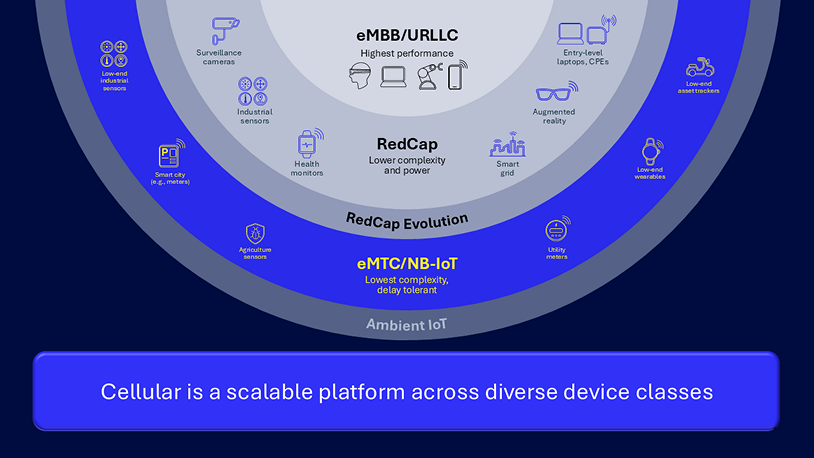
A key focus area is low-power, wide-area (LPWA) connectivity designed for massive IoT deployments, where deep coverage and multi-year battery life are must-haves. This is where 3GPP-standardized LPWA technologies, narrowband IoT (NB-IoT) and enhanced machine-type communication (eMTC) aim to provide secure, globally interoperable connectivity for sensors, meters, trackers and other low-complexity IoT devices designed to operate for years on a single battery charge.
Power consumption drives differentiation and device selection
For most LPWA IoT applications, power consumption is often the primary design constraint: devices must deliver reliable coverage while having multi-year battery life, so every microamp counts in both low-power and active modes. Lower power extends operating life and reduces maintenance visits—cutting total cost of ownership (TCO)—and it can also enable smaller device form factors by requiring a smaller battery, improving overall aesthetics and sustainability.
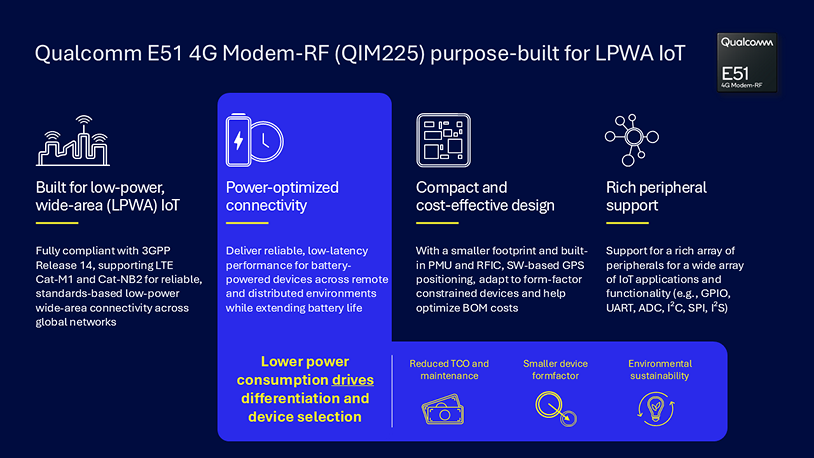
That’s why the Qualcomm E51 4G Modem-RF leads in LPWA IoT, purpose-built to support both LTE Cat-M1 and Cat-NB2 with advanced power efficiency. It is developed to pair optimized power consumption with a compact, cost-effective design and rich peripheral support—helping customers build smaller, longer-lasting devices without compromising features.
Proven power efficiency: Qualcomm E51 4G Modem-RF vs. competitors
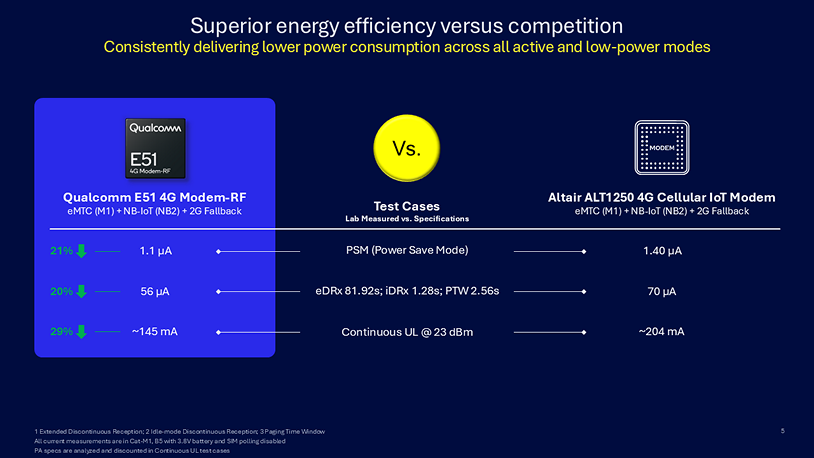
To quantify the advantage of Qualcomm E51 4G Modem-RF, we measured its power consumption in our lab across different power modes and representative use cases — then benchmarked those results against one of the most deployed eMTC and NB-IoT dual-mode chipsets, the Altair ALT1250.
Power measurements in sleep and active modes
Figure 3 below shows a comparison of the measured results of E51 versus ALT1250’s published specifications. The takeaway is clear: E51 delivers >20% power savings across all power modes, from ultra-low-power modes such as power save mode (PSM) to active transmit/receive states.
A closer look at the power performance curves
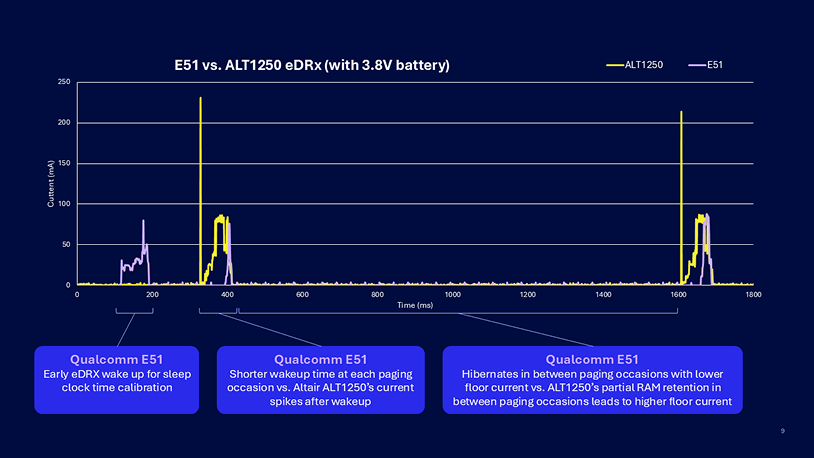
In extended discontinuous reception (eDRx) mode, the power profile is defined by both the baseline sleep current and the periodic paging wakeups. A closer look at the curves shows E51 implements power optimizations to reduce total energy in these low-power states — delivering 33% lower deep-sleep current and a more efficient wakeup mechanism with 67% shorter paging wakeup time. The result is smaller current spikes, which reduces overall battery draw while maintaining network reachability.
Real-world battery life simulations for IoT use cases
To go beyond lab measurements, we also ran system-level simulations based on our lab-measured power data to model end-to-end modem behavior in real-life operating profiles. These simulations translate sleep, wake, attach and transmit events into expected battery draw over time — showing how E51 can support battery life required by targeted use cases. In this study, we looked at the power profiles for three different low-power, wide-area use cases and their battery life requirements, including smart meters, remote sensors and asset trackers.
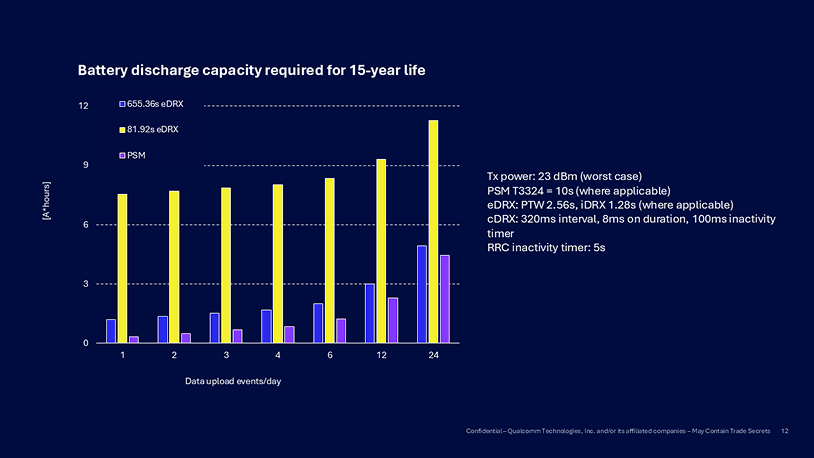
- Smart meters: Water and gas meters typically have no main power, so they run on batteries and require ultra-long life — often 15+ years — with infrequent data transmission. For gas meters, paging monitoring is the primary battery drain, so the device commonly operates in eDRX; our simulation shows E51 reaching 15-year battery life with 7.5–11 Ah batteries, depending on the number of uplink transmissions per day. Similarly for water meters, the same 15-year target can be achieved with 0.3–4.5 Ah batteries, primarily by relying on PSM.
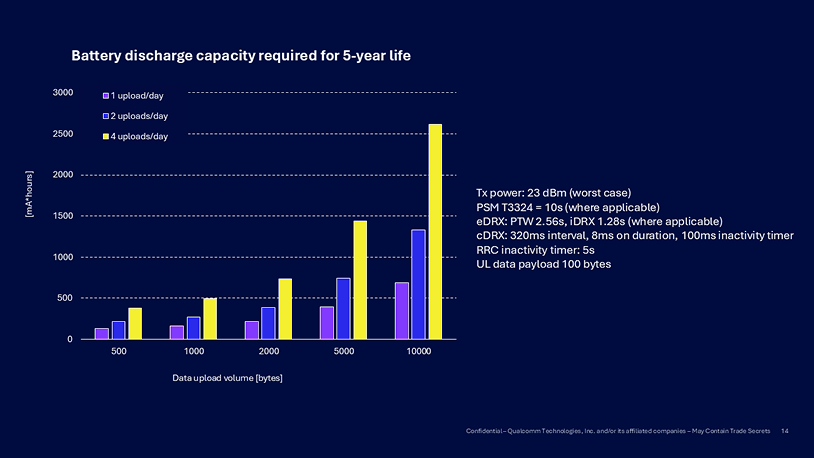
- Remote sensors: In applications ranging from weather stations and agricultural sensors to grid-monitoring devices, the typical battery life target is up to five years of operation on a compact battery. With PSM and sending infrequent, one-way data uploads, the E51 can achieve this target with as little as 0.2–2.6 Ah of battery capacity, depending on payload size and reporting frequency. This is designed to support smaller device formfactors and can help reduce maintenance needs and total cost of ownership for large-scale remote deployments.
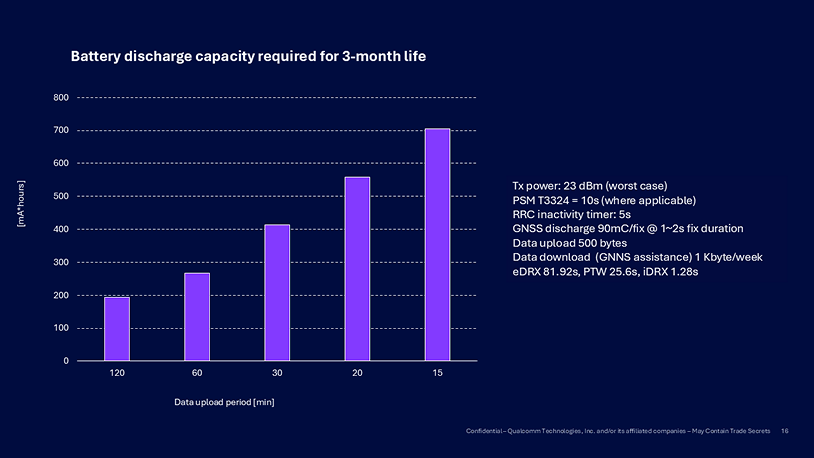
- Asset trackers: These devices operate in challenging conditions, continuously uploading location data via GNSS, monitoring temperature, humidity, ambient light and motion through multiple onboard sensors, all while running in power-efficient eDRX mode. Despite this workload, the E51 can achieve up to three months of battery life on just 0.2–0.7 Ah of battery capacity, depending on upload frequency.
Advancing massive IoT with ultra-low-power connectivity
At Qualcomm, high-performance wide-area connectivity and ultra-low-power design are part of our DNA. This is the foundation needed for delivering cutting-edge products like the Qualcomm E51 4G Modem-RF. Engineered for LPWA use cases, it helps devices run longer on a single battery charge, connect more reliably, and scale deployments more cost-effectively. We’re excited to help power what’s next in IoT, and we’ll continue to share updates as the ecosystem advances toward the vision of connecting virtually everything.
Go Deeper
How does the Qualcomm E51 4G Modem-RF achieve its power efficiency advantage?
We engineered the E51 to implement power optimizations that reduce total energy, resulting in smaller current spikes, reduced overall battery draw and maintained network reachability across PSM, eDRX and active modes. Our lab measurements showcased it delivers >20% better power efficiency than one of the most widely deployed eMTC and NB-IoT dual-mode chipsets on the market.
Explore the Qualcomm E51 4G Modem-RF
Are there more LPWA use cases and power efficiency insights beyond what’s covered here?
Beyond smart meters, remote sensors and asset trackers, the LPWA IoT landscape continues to expand — and so does our work of pushing the boundaries of power-efficient connectivity. We’ll continue sharing new benchmarks, use case coverage and ecosystem updates as the industry advances toward the vision of connecting virtually everything.
Sign up for Qualcomm IoT Connection newsletter to stay up to date