(All financial figures in United States dollars unless otherwise stated)

VANCOUVER, BC, April 29, 2026 /PRNewswire/ – OceanaGold Corporation (TSX: OGC) (NYSE: OGC) (“OceanaGold” or the “Company”) is pleased to publish its annual Sustainability Report for the year ended December 31, 2025. The report outlines OceanaGold’s sustainability performance and progress across safety, health, people and culture, community and social performance, environment, tailings management, and climate.

Gerard Bond, President and Chief Executive Officer of OceanaGold, said “In 2025 we delivered another year of meaningful progress across our sustainability priorities, while continuing to safely and responsibly deliver gold production. Embedding sustainability into how we operate is fundamental to creating and protecting value for all stakeholders. Significant improvements in our safety performance, strong community and economic contributions, and progress on decarbonization reflect the focus and commitment of our teams across the business.”

2025 Sustainability Performance Highlights

  • Maintained MSCI “AA” ESG rating for the third consecutive year
  • No workplace fatalities or life‑altering injuries during the year, and a 36% reduction in Total Recordable Injury Frequency Rate compared to 2024
  • Supported local economies and community development, spending $110M with nearly 800 local suppliers while contributing $10M to community projects
  • 38% reduction in GHG emissions1 over the last 3 years, with an aspiration of 30% absolute reduction in Greenhouse Gas emissions by 2030
  • Averaging 60% water re‑used or recycled across operating mine sites, and an updated water performance standard and site water management plans for all operating mine sites

The Company appointed David Bickerton as Executive Vice President and Chief Sustainability Officer (CSO) effective April 1, 2026. David brings a deep understanding of OceanaGold’s business, culture and Company objectives to this critical role. David joined OceanaGold in 2011 and has held a broad range of roles across the business, most recently as Asset President of Didipio Mine in the Philippines.

1.

OceanaGold sources the equivalent of 100% renewable energy, through the purchase of Renewable Energy Certificates (RECs).

This year is the release of the Company’s first annual mandatory IFRS S2 Climate-related Disclosure, which provides information about the Company’s approach and annual progress of climate-related governance, strategy, risk management and metrics and targets.

Links to OceanaGold’s 2025 sustainability‑related reports

About OceanaGold

OceanaGold is a global intermediate gold and copper producer committed to safely and responsibly maximizing the generation of Free Cash Flow from our operations and delivering strong returns for our shareholders. We have a portfolio of four operating mines: the wholly-owned Haile Gold Mine in the United States of America; the wholly-owned Macraes and Waihi operations in New Zealand; and the 80%-owned Didipio Mine in the Philippines.

OceanaGold Logo (CNW Group/OceanaGold Corporation)

Cision View original content to download multimedia:https://www.prnewswire.com/news-releases/oceanagold-releases-2025-sustainability-report-302757857.html

SOURCE OceanaGold Corporation

ATLANTA, April 29, 2026 /3BL/ – As global food systems face mounting pressure from conflict, climate shocks and rising hunger, new and ongoing wars are driving up fertilizer costs and pushing food prices higher worldwide. Against this backdrop, a new CARE report Why Food Loss & Waste Technologies Scale or Fail, released today, finds that reducing food loss and waste is one of the most effective—and often overlooked—solutions to strengthen food security and resilience for millions of smallholder farmers, especially women.

High food prices are hitting hardest in countries already grappling with hunger and conflict, where smallholder farmers, especially women, have the least buffer to absorb rising costs and the impact of disrupted supply chains. As fertilizer prices climb and access becomes more limited, many farmers will have lower yields, thus deepening food insecurity and putting additional strain on already vulnerable communities.

The CARE report shows that while over 30% of food produced globally is lost or wasted, solutions to reduce these losses already exist, but too often fail to reach scale. “The women at the center of our food systems are already innovating, organizing, and investing in solutions,” says Ann Vaughan, CARE’s Associate Vice President for Resilient Futures. “What’s missing is the financing and market infrastructure to let those solutions reach scale. When we close that gap, we don’t just reduce waste — we build more resilient food systems from the ground up.”

Global food systems are under increasing stress. Hunger has risen for six consecutive years, while conflict and extreme weather events continue to disrupt production and supply chains. At the same time, nearly $1 trillion worth of food is lost or wasted every year, enough to feed over a billion people. Food losses and waste are also drivers of malnutrition, not just hunger.

The foods most frequently lost or wasted are nutrient-dense perishables: vegetables, fruits, eggs, milk and animal-source foods that women and young children often struggle to access and afford. Smallholder farmers—who produce much of the world’s food—are among the hardest hit. Women, who make up around 40% of the global agricultural labor force, bear a disproportionate burden, yet remain the most excluded from accessing technologies, finance, and markets.

CARE’s research across 21 countries shows that practical solutions—such as solar drying, improved food storage, small-scale processing, and circular economy approaches that turn waste into inputs—can significantly reduce food loss, increase incomes, and improve nutrition.

However, the report finds that technologies alone are not enough. Many initiatives fail because they do not account for the realities of smallholder farmers, particularly women. “What works is not just the technology, but the systems built around it,” says Emily Janoch, Associate Vice President for Program Strategy and Innovation at CARE. “Solutions scale when they reduce women’s time burden, create viable business opportunities, ensure reliable market demand, and provide financing.”

Biodigesters, one of the solutions highlighted in the report, are large, sealed containers where microorganisms break down organic material, including farm waste, through a natural process. They not only reduce dependency on imported fertilizers, but also power a cookstove with natural gas, thus dramatically improving indoor air quality and reducing the need for cutting forest wood.

Prior to using a biodigester, Norma Hernández, a smallholder farmer in a CARE project in Honduras, wondered how much she could save on fertilizer for her garden and farm. After the biodigester was installed, she reduced fertilizer spending and experienced direct health benefits.

“We noticed something amazing in the health of my children and in my own. We no longer breathe smoke, and there’s no more soot on my stove; now everything is very clean, says Hernandez. “The stove helps me save time, so I’m not rushed anymore. I can spend more time with my children and help them with their schoolwork.”

Examples of impactful solutions highlighted in the report include:

  • Solar drying, a method that reduces post-harvest-spoilage. When linked to guaranteed buyers, it unlocks market demand.
  • Hermetic storage, an air-tight, moisture-free method that preserves grain commodities and prevents molds and insects. It can be accessed through community savings groups.
  • Biodigesters and biochar turn agricultural waste into valuable inputs.
  • Biodigesters use microorganisms to break down organic waste, producing biogas for cooking or energy and nutrient-rich fertilizer. Biochar converts crop residues into a stable, carbon-rich soil amendment that improves fertility, water retention, and long-term carbon storage.
  • Women-led processing businesses that increase incomes and reduce losses.

The report underscores that solutions that work for women must be co-designed with their input. Women do up to half of post-harvest work but are less likely to adopt technologies if they’re not designed with women in mind and due to barriers such as limited access to land, credit, and decision-making power. When these barriers are addressed—through inclusive design, financing, and support systems—adoption increases and impacts are sustained.

With food systems facing escalating risks, CARE’s message to donors, governments, and the private sector is clear. “Donors should fund a full spectrum of interventions and not just technologies,” says Vaughan. “Governments can prioritize post-harvest solutions and improve data and standards. Private companies can lead on innovation by co-design solutions with women farmers, offer flexible financing, and commit to reliable purchasing agreements.”

The report’s authors say these solutions are “no-regret investments” because they deliver immediate benefits for farmers while building long-term resilience against future shocks. “Right now, we are seeing the far-reaching effects of disrupted supply chains,” says Elly Kaganzi, CARE’s Director of Global Agriculture, Livelihoods and Market Systems, “Rising fuel prices increases food cost and force families to make tough choices. We can mitigate this by investing in scalable solutions that reduce food loss and waste.”

CARE is committed to scaling solutions that work including training 500,000 farmers in reducing food waste and loss, expanding women-led enterprises, and improving access to finance for smallholders. As global crises intensify, the report makes clear that reducing food loss and waste is not optional but an essential step in mitigating hunger and averting future food crises.

For media inquiries, please email usa.media@care.org

  • Hyundai Motor Group announces a multi-year partnership on hydrogen mobility solutions with the Georgia Institute of Technology
  • Partnership includes Hyundai Motor North America donating four NEXO fuel cell electric SUVs and Hyundai Motor Group donating a hydrogen electrolyzer project exclusively for campus use
  • New initiative brings NEXO hydrogen fuel cell SUVs and fueling infrastructure to campus, advancing research, workforce development, and zero-emissions logistics
  • The NEXO SUVs will support both campus operations and interdisciplinary research across engineering, sustainability, energy systems, and public policy

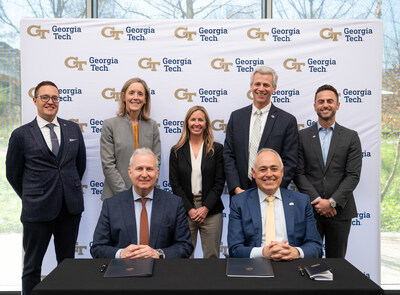
SEOUL and ATLANTA, April 29, 2026 /PRNewswire/ — Hyundai Motor Group (the Group) and the Georgia Institute of Technology (Georgia Tech) have announced an expansion of their growing collaboration to advance hydrogen-powered transportation, deepen applied research and education, and accelerate the use of zero-emissions vehicles in Georgia.

Building upon a multi-faceted relationship, the Group and Georgia Tech are bringing hydrogen fuel cell vehicles and fueling infrastructure to campus—turning Georgia Tech into one of the nation’s most prominent campus-based examples for hydrogen mobility.

“Hyundai Motor Group is proud to strengthen our collaboration with Georgia Tech as we work together to accelerate the future of clean mobility. Georgia Tech’s leadership in innovation and its commitment to developing the next generation of problem-solvers make it a natural partner in advancing technologies. By combining the university’s excellent research with Hyundai’s global experience, we are creating the foundation for real-world solutions that will help drive the energy transition and inspire future mobility leaders.”Ken Ramírez, Executive Vice President and Head of Global Energy and Hydrogen Business at Hyundai Motor Group. Ken Ramírez is also a Georgia Tech alumnus, class of 1991, and currently a member of the Georgia Tech Advisory Board.

“It’s very fulfilling to donate a handful of our NEXO fuel cell SUVs as part of our expanding relationship with Georgia Tech. Hydrogen-powered NEXO fuel cell vehicles will immediately serve to expand the clean mobility footprint on campus while providing real-world experiences with the cutting edge of zero-emissions transportation technology.”Randy Parker, President and CEO, Hyundai Motor North America

“Georgia Tech has a long history of working with industry to move breakthrough technologies from the lab into the real world. By expanding our work with Hyundai, we’re advancing hydrogen research, reducing emissions on our campus, and strengthening Georgia’s role in the future of clean mobility.” Ángel Cabrera, President of the Georgia Institute of Technology

How the Partnership Drives Hydrogen Innovation and Research

The partnership includes the donation of four Hyundai NEXO fuel cell electric SUVs by Hyundai Motor North America and a hydrogen electrolyzer project, which will be installed at Georgia Tech’s North Avenue Research Area (NARA), positioning Georgia Tech as one of the most visible real-world testbeds for hydrogen mobility in the U.S.

The vehicles and infrastructure will support campus operations and interdisciplinary research. Key areas of focus include:

  • Engineering: Exploring hydrogen-based systems and mobility solutions.
  • Sustainability: Assessing the environmental benefits of hydrogen technologies.
  • Energy systems: Understanding the integration of hydrogen fuel cells into current infrastructure.
  • Public policy: Evaluating the regulatory and social implications of hydrogen adoption.

This initiative connects Georgia Tech’s research enterprise with campus operations, using the university as a living laboratory for clean transportation technologies. Faculty and students will study:

  • Real-world performance of hydrogen technology
  • Infrastructure requirements for large-scale deployment
  • Environmental impacts of hydrogen energy systems

Insights gathered from this initiative aim to inform and accelerate the widespread use of hydrogen technology in campuses, fleets, cities, and freight corridors. The initiative also supports Georgia Tech’s strategic plan which includes the goal of expanding the use of zero-emissions vehicles powered by sustainable energy sources.

Why Is the Partnership with Georgia Tech Key to Hyundai Motor Group’s Vision?

The collaboration between the Group and Georgia Tech is a testament to the power of aligning academic expertise with corporate innovation. Beyond hydrogen energy, the partnership aims to advance innovation in the areas of:

  • Autonomous driving
  • Electric vehicle (EV) batteries
  • Charging infrastructure
  • Materials science
  • Cybersecurity

In addition, the Group’s presence in Georgia underscores its commitment to the region. Georgia is not only home to the Hyundai Motor Group Metaplant America (HMGMA) but also serves as a hub for zero-emission transportation through HTWO Logistics, a clean logistics partnership that operates Hyundai XCIENT fuel cell heavy-duty trucks in logistics operations near Savannah. The collaboration with Georgia Tech builds on this regional foundation, reinforcing the link between education, research, and the Group’s long-term goal of achieving carbon neutrality by 2045.

What’s Next for the Partnership? 

The partnership between the Group and Georgia Tech represents more than an investment in research — it’s a shared effort to lead the next generation of mobility advancements. By creating an ecosystem for collaboration, innovation, and education, the Group aims to further clean mobility research, generate workforce talent, and position Georgia as a national leader in hydrogen and zero-emissions transportation.

Additional announcements regarding this partnership’s research projects, educational programs, and vehicle deployment are expected in the coming months.

About Georgia Tech
The Georgia Institute of Technology, or Georgia Tech, is one of the top public research universities in the U.S., developing leaders who advance technology and improve the human condition. The Institute offers business, computing, design, engineering, liberal arts, and sciences degrees, as well as professional development and K-12 programs for fostering success at every stage of life. Its more than 57,000 undergraduate and graduate students represent 54 U.S. states and territories and more than 146 countries. They study at the main campus in Atlanta, at instructional sites around the world, and through distance and online learning.

As a leading technological university, Georgia Tech is an engine of economic development for Georgia, the Southeast, and the nation, conducting more than $1 billion in research annually for government, industry, and society.

About Hyundai Motor Group
Hyundai Motor Group is a global enterprise that has created a value chain based on mobility, steel, and construction, as well as logistics, finance, IT, and service. With about 250,000 employees worldwide, the Group’s mobility brands include Hyundai, Kia, and Genesis. Armed with creative thinking, cooperative communication, and the will to take on any challenges, we strive to create a better future for all. 

More information about Hyundai Motor Group can be found at: http://www.hyundaimotorgroup.com or Newsroom: Media Hub by Hyundai, Kia Global Media Center (kianewscenter.com), Genesis Newsroom

Disclaimer: Hyundai Motor Group believes the information contained herein to be accurate at the time of release. However, the company may upload new or updated information if required and assumes that it is not liable for the accuracy of any information interpreted and used by the reader.


Cision View original content to download multimedia:https://www.prnewswire.com/news-releases/hyundai-motor-group-and-georgia-tech-sign-mou-to-further-collaborate-on-hydrogen-mobility-development-302756387.html

SOURCE Hyundai Motor America

Learn how AI is being used in farming to eliminate pesticides in the U.S. food supply

SEATTLE, April 29, 2026 /PRNewswire/ —

BACKGROUND:
Fresh fruits and vegetables are essential to a healthy diet. However, much of the produce grown in the United States has tested positive for pesticides, even after washing. Farmers use herbicides and pesticides on crops to protect them from weed and insect infestation, but chemicals are now in the food supply. The Environmental Working Group’s (EWG) 2026 Shopper’s Guide to Pesticides in Produce compiled data from pesticide residue testing conducted by the United States Department of Agriculture (USDA), covering more than 50,000 samples of 47 types of fruits and vegetables. It found that 96% of the “Dirty Dozen” fruits and vegetables tested positive for pesticides, with spinach topping the list. Others included strawberries, apples and potatoes.

Experience the full interactive Multichannel News Release here: https://www.multivu.com/carbon-robotics/9391051-en-nvidia-and-carbon-robotics-revolutionizing-agriculture-with-ai-and-robotics

So, what can be done to limit the consumption of these chemicals? AI now offers farmers a way to eliminate herbicides and pesticides entirely.

  • Carbon Robotics is revolutionizing agriculture with AI and robotics to reduce costs and increase yields. Amid labor challenges, rising input costs, and increasing concerns about herbicide use, growers worldwide are seeking smarter, more efficient ways to farm. Carbon Robotics addresses these needs by delivering advanced AI robotic laser weeders and tractor autonomy that drives efficiencies to the global community. Leveraging the full-stack of NVIDIA hardware and software, Carbon Robotics’ LaserWeeding technology targets the weed’s growth center with a laser, disrupting cellular growth and preventing regrowth. Each of our LaserWeeder machines has 24 NVIDIA GPUs onboard, allowing it to analyze thousands of plant images per second in real time. We currently use the NVIDIA RTX 4000, with an upgrade to the more powerful RTX Pro 4000 planned for later this year. Our autonomous tractor attachment, the Carbon ATK, uses a different NVIDIA chip called the Jetson Orin — a compact, energy-efficient processor purpose-built for robots and self-driving machines.
  • We use two key pieces of NVIDIA software that make our AI run faster. The first, CUDA, lets our software tap into the full power of NVIDIA’s processors — think of it as the engine that lets us crunch enormous amounts of data quickly. The second, cuDNN, is a specialized add-on built on top of CUDA that’s specifically optimized for AI and machine learning tasks, helping our models identify and target weeds with greater speed and accuracy.

The benefits are significant. This technology does not disrupt the soil like mechanical weeding can do. For consumers, this results in healthier fresh vegetables and herbs that are not sprayed with chemical herbicides, for both organic and conventionally farmed produce. For the environment, this eliminates chemical herbicides from the soil and prevents runoff of these chemicals into our rivers and lakes. For farmers, this results in lower costs and higher crop yields, quality and consistency.

In this segment, Carbon Robotics founder and CEO Paul Mikesell explains how AI is revolutionizing the farming industry and keeping our food free of pesticides.

For more information, please visit: https://carbonrobotics.com/

MORE ABOUT PAUL MIKESELL:
Paul Mikesell is the founder and CEO of Carbon Robotics in Seattle, Washington. Prior to Carbon, Paul was responsible for scaling Uber’s backend systems, opening the Seattle engineering office, and later focusing on Deep Learning and Autonomy. Paul also co-founded Isilon Systems, a distributed storage company, in 2001. Isilon went public in 2006 and was acquired by EMC for $2.5 billion in 2010. Paul holds a bachelor’s degree in computer science from the University of Washington.

Produced for: Carbon Robotics & NVIDIA

Cision View original content:https://www.prnewswire.com/news-releases/carbon-robotics–nvidia—from-farm-to-fork-how-ai-is-transforming-food-safety-302757467.html

SOURCE NVIDIA and Carbon Robotics

Learn how AI is being used in farming to eliminate pesticides in the U.S. food supply

SEATTLE, April 29, 2026 /PRNewswire/ —

BACKGROUND:
Fresh fruits and vegetables are essential to a healthy diet. However, much of the produce grown in the United States has tested positive for pesticides, even after washing. Farmers use herbicides and pesticides on crops to protect them from weed and insect infestation, but chemicals are now in the food supply. The Environmental Working Group’s (EWG) 2026 Shopper’s Guide to Pesticides in Produce compiled data from pesticide residue testing conducted by the United States Department of Agriculture (USDA), covering more than 50,000 samples of 47 types of fruits and vegetables. It found that 96% of the “Dirty Dozen” fruits and vegetables tested positive for pesticides, with spinach topping the list. Others included strawberries, apples and potatoes.

Experience the full interactive Multichannel News Release here: https://www.multivu.com/carbon-robotics/9391051-en-nvidia-and-carbon-robotics-revolutionizing-agriculture-with-ai-and-robotics

So, what can be done to limit the consumption of these chemicals? AI now offers farmers a way to eliminate herbicides and pesticides entirely.

  • Carbon Robotics is revolutionizing agriculture with AI and robotics to reduce costs and increase yields. Amid labor challenges, rising input costs, and increasing concerns about herbicide use, growers worldwide are seeking smarter, more efficient ways to farm. Carbon Robotics addresses these needs by delivering advanced AI robotic laser weeders and tractor autonomy that drives efficiencies to the global community. Leveraging the full-stack of NVIDIA hardware and software, Carbon Robotics’ LaserWeeding technology targets the weed’s growth center with a laser, disrupting cellular growth and preventing regrowth. Each of our LaserWeeder machines has 24 NVIDIA GPUs onboard, allowing it to analyze thousands of plant images per second in real time. We currently use the NVIDIA RTX 4000, with an upgrade to the more powerful RTX Pro 4000 planned for later this year. Our autonomous tractor attachment, the Carbon ATK, uses a different NVIDIA chip called the Jetson Orin — a compact, energy-efficient processor purpose-built for robots and self-driving machines.
  • We use two key pieces of NVIDIA software that make our AI run faster. The first, CUDA, lets our software tap into the full power of NVIDIA’s processors — think of it as the engine that lets us crunch enormous amounts of data quickly. The second, cuDNN, is a specialized add-on built on top of CUDA that’s specifically optimized for AI and machine learning tasks, helping our models identify and target weeds with greater speed and accuracy.

The benefits are significant. This technology does not disrupt the soil like mechanical weeding can do. For consumers, this results in healthier fresh vegetables and herbs that are not sprayed with chemical herbicides, for both organic and conventionally farmed produce. For the environment, this eliminates chemical herbicides from the soil and prevents runoff of these chemicals into our rivers and lakes. For farmers, this results in lower costs and higher crop yields, quality and consistency.

In this segment, Carbon Robotics founder and CEO Paul Mikesell explains how AI is revolutionizing the farming industry and keeping our food free of pesticides.

For more information, please visit: https://carbonrobotics.com/

MORE ABOUT PAUL MIKESELL:
Paul Mikesell is the founder and CEO of Carbon Robotics in Seattle, Washington. Prior to Carbon, Paul was responsible for scaling Uber’s backend systems, opening the Seattle engineering office, and later focusing on Deep Learning and Autonomy. Paul also co-founded Isilon Systems, a distributed storage company, in 2001. Isilon went public in 2006 and was acquired by EMC for $2.5 billion in 2010. Paul holds a bachelor’s degree in computer science from the University of Washington.

Produced for: Carbon Robotics & NVIDIA

Cision View original content:https://www.prnewswire.com/news-releases/carbon-robotics–nvidia—from-farm-to-fork-how-ai-is-transforming-food-safety-302757467.html

SOURCE NVIDIA and Carbon Robotics

Learn how AI is being used in farming to eliminate pesticides in the U.S. food supply

SEATTLE, April 29, 2026 /PRNewswire/ —

BACKGROUND:
Fresh fruits and vegetables are essential to a healthy diet. However, much of the produce grown in the United States has tested positive for pesticides, even after washing. Farmers use herbicides and pesticides on crops to protect them from weed and insect infestation, but chemicals are now in the food supply. The Environmental Working Group’s (EWG) 2026 Shopper’s Guide to Pesticides in Produce compiled data from pesticide residue testing conducted by the United States Department of Agriculture (USDA), covering more than 50,000 samples of 47 types of fruits and vegetables. It found that 96% of the “Dirty Dozen” fruits and vegetables tested positive for pesticides, with spinach topping the list. Others included strawberries, apples and potatoes.

Experience the full interactive Multichannel News Release here: https://www.multivu.com/carbon-robotics/9391051-en-nvidia-and-carbon-robotics-revolutionizing-agriculture-with-ai-and-robotics

So, what can be done to limit the consumption of these chemicals? AI now offers farmers a way to eliminate herbicides and pesticides entirely.

  • Carbon Robotics is revolutionizing agriculture with AI and robotics to reduce costs and increase yields. Amid labor challenges, rising input costs, and increasing concerns about herbicide use, growers worldwide are seeking smarter, more efficient ways to farm. Carbon Robotics addresses these needs by delivering advanced AI robotic laser weeders and tractor autonomy that drives efficiencies to the global community. Leveraging the full-stack of NVIDIA hardware and software, Carbon Robotics’ LaserWeeding technology targets the weed’s growth center with a laser, disrupting cellular growth and preventing regrowth. Each of our LaserWeeder machines has 24 NVIDIA GPUs onboard, allowing it to analyze thousands of plant images per second in real time. We currently use the NVIDIA RTX 4000, with an upgrade to the more powerful RTX Pro 4000 planned for later this year. Our autonomous tractor attachment, the Carbon ATK, uses a different NVIDIA chip called the Jetson Orin — a compact, energy-efficient processor purpose-built for robots and self-driving machines.
  • We use two key pieces of NVIDIA software that make our AI run faster. The first, CUDA, lets our software tap into the full power of NVIDIA’s processors — think of it as the engine that lets us crunch enormous amounts of data quickly. The second, cuDNN, is a specialized add-on built on top of CUDA that’s specifically optimized for AI and machine learning tasks, helping our models identify and target weeds with greater speed and accuracy.

The benefits are significant. This technology does not disrupt the soil like mechanical weeding can do. For consumers, this results in healthier fresh vegetables and herbs that are not sprayed with chemical herbicides, for both organic and conventionally farmed produce. For the environment, this eliminates chemical herbicides from the soil and prevents runoff of these chemicals into our rivers and lakes. For farmers, this results in lower costs and higher crop yields, quality and consistency.

In this segment, Carbon Robotics founder and CEO Paul Mikesell explains how AI is revolutionizing the farming industry and keeping our food free of pesticides.

For more information, please visit: https://carbonrobotics.com/

MORE ABOUT PAUL MIKESELL:
Paul Mikesell is the founder and CEO of Carbon Robotics in Seattle, Washington. Prior to Carbon, Paul was responsible for scaling Uber’s backend systems, opening the Seattle engineering office, and later focusing on Deep Learning and Autonomy. Paul also co-founded Isilon Systems, a distributed storage company, in 2001. Isilon went public in 2006 and was acquired by EMC for $2.5 billion in 2010. Paul holds a bachelor’s degree in computer science from the University of Washington.

Produced for: Carbon Robotics & NVIDIA

Cision View original content:https://www.prnewswire.com/news-releases/carbon-robotics–nvidia—from-farm-to-fork-how-ai-is-transforming-food-safety-302757467.html

SOURCE NVIDIA and Carbon Robotics

by Virginie le Barbu, Executive Director of Global Sustainability, International Markets, Lenovo 

Earth Day is often a moment for reflection. For me, it is also a reminder that the sustainability conversation has entered a new phase.

Across the channel, there is no shortage of ambition. Where partners were once focused on where to begin, they are now making commitments, setting targets, and embedding sustainability into long-term plans. The harder question now is execution: turning commitments into operations, credible data, and customer value.

That matters more than ever because sustainability is no longer sitting on the sidelines of business strategy. It is increasingly shaping how customers evaluate partners, where they see differentiation, and which solutions they trust to deliver long-term value.

In other words, the gap between commitment and execution is becoming a commercial issue.

From commitment to execution

The challenge today is operationalizing sustainability.

For many, friction starts with the basics. There are too many frameworks, too many reporting expectations, and not enough consistency in what good looks like across markets. Many partners are still trying to establish a baseline, collect reliable data, and decide which actions will matter most to customers. Smaller teams feel that pressure especially acutely.

There is also a business reality behind all of this. Sustainability competes with other priorities for time, budget, and attention. If partners cannot see the path from action to customer value, progress slows.

This is the gap the Lenovo 360 Circle community was designed to address. We saw partners working on the same challenges in silos, often rebuilding from scratch. What they needed was a faster way to learn, a common language, and a clearer view of what to prioritize.

Today, the community includes more than 800 partners across 67 countries, representing more than 3,200 local entities and 44% of Lenovo’s channel revenue. Its value goes beyond scale. It’s the ability to align around shared outcomes, practical playbooks, and a common view of how sustainability can support both impact and growth.

What we’ve learned together

One of the clearest lessons has been that partners do not need more theory. They need reusable examples, simple tools, stronger reporting readiness, and clearer proof points they can take into customer conversations.

We have also learned that the conversation has matured. Early on, the question was why sustainability mattered. Today, the discussion is much more practical: how to implement it, how to measure it credibly, and how to build it into go-to-market motions.

That shift has been valuable for Lenovo, too. Partner feedback is helping us refine how we think about data, solution design, and customer demand. Lenovo 360 Circle has become a feedback loop that keeps our sustainability strategy grounded in what is usable and scalable in the market.

From strategy to commercial impact

What I find most encouraging right now is that more partners are treating sustainability as a growth lever, not just a reporting requirement. They are using it to strengthen trust, differentiate with customers, and open new revenue opportunities.

We see that most clearly in areas like circular IT and energy-efficient infrastructure. Circular models such as take-back, refurbishment, reuse, and as-a-service can extend asset life, improve supply resilience, and create new value for both partners and customers. Energy efficiency is becoming equally important as customers look for ways to manage rising power demand and operating costs.

This is where sustainability becomes tangible. It moves from aspiration into proof points, measurable outcomes, and repeatable offers.

Lenovo’s role is to help make that tangible for partners. That means connecting technology, data, and go-to-market execution so partners can bring sustainability directly into customer conversations with confidence. As AI adoption grows, so does demand for compute, energy, governance, and transparency. We are already seeing customers ask tougher questions about energy use, data privacy, explainability, and accountability. That raises the bar for the channel. It also creates an opportunity for partners who can connect responsible AI, efficient infrastructure, and credible sustainability reporting in a way customers can trust.

Turning momentum into action

This June, we will bring our community together again at the Lenovo 360 Circle Summit.

Moments like this are where sustainability moves from strategy to execution, turning measurement, economic signals, and co-innovation into actions that scale. It’s an opportunity for partners to align on what to measure, how to make the business value visible, and where to invest to drive both growth and impact.

Partners can expect a practical, high-energy forum to align on what to measure, how to make the economics visible, and where to invest so we can design business models that grow the business while accelerating real-world outcomes.

The goal is simple: partners leave not just inspired, but equipped with practical frameworks, clearer priorities, and new ways to accelerate outcomes across their products, services, and ecosystems.

The partners that will win are the ones that can turn sustainability into measurable impact and clear ROI for their customers, whether that’s lower energy use, extended asset life, or more transparent reporting.

At Lenovo, our focus is to make that easier to deliver through the right technology, the right data, and a partner ecosystem built to move together.


Registered partners can learn more about Lenovo 360 Circle and Lenovo 360 partner framework by visiting Lenovo Partner Hub. 

by Virginie le Barbu, Executive Director of Global Sustainability, International Markets, Lenovo 

Earth Day is often a moment for reflection. For me, it is also a reminder that the sustainability conversation has entered a new phase.

Across the channel, there is no shortage of ambition. Where partners were once focused on where to begin, they are now making commitments, setting targets, and embedding sustainability into long-term plans. The harder question now is execution: turning commitments into operations, credible data, and customer value.

That matters more than ever because sustainability is no longer sitting on the sidelines of business strategy. It is increasingly shaping how customers evaluate partners, where they see differentiation, and which solutions they trust to deliver long-term value.

In other words, the gap between commitment and execution is becoming a commercial issue.

From commitment to execution

The challenge today is operationalizing sustainability.

For many, friction starts with the basics. There are too many frameworks, too many reporting expectations, and not enough consistency in what good looks like across markets. Many partners are still trying to establish a baseline, collect reliable data, and decide which actions will matter most to customers. Smaller teams feel that pressure especially acutely.

There is also a business reality behind all of this. Sustainability competes with other priorities for time, budget, and attention. If partners cannot see the path from action to customer value, progress slows.

This is the gap the Lenovo 360 Circle community was designed to address. We saw partners working on the same challenges in silos, often rebuilding from scratch. What they needed was a faster way to learn, a common language, and a clearer view of what to prioritize.

Today, the community includes more than 800 partners across 67 countries, representing more than 3,200 local entities and 44% of Lenovo’s channel revenue. Its value goes beyond scale. It’s the ability to align around shared outcomes, practical playbooks, and a common view of how sustainability can support both impact and growth.

What we’ve learned together

One of the clearest lessons has been that partners do not need more theory. They need reusable examples, simple tools, stronger reporting readiness, and clearer proof points they can take into customer conversations.

We have also learned that the conversation has matured. Early on, the question was why sustainability mattered. Today, the discussion is much more practical: how to implement it, how to measure it credibly, and how to build it into go-to-market motions.

That shift has been valuable for Lenovo, too. Partner feedback is helping us refine how we think about data, solution design, and customer demand. Lenovo 360 Circle has become a feedback loop that keeps our sustainability strategy grounded in what is usable and scalable in the market.

From strategy to commercial impact

What I find most encouraging right now is that more partners are treating sustainability as a growth lever, not just a reporting requirement. They are using it to strengthen trust, differentiate with customers, and open new revenue opportunities.

We see that most clearly in areas like circular IT and energy-efficient infrastructure. Circular models such as take-back, refurbishment, reuse, and as-a-service can extend asset life, improve supply resilience, and create new value for both partners and customers. Energy efficiency is becoming equally important as customers look for ways to manage rising power demand and operating costs.

This is where sustainability becomes tangible. It moves from aspiration into proof points, measurable outcomes, and repeatable offers.

Lenovo’s role is to help make that tangible for partners. That means connecting technology, data, and go-to-market execution so partners can bring sustainability directly into customer conversations with confidence. As AI adoption grows, so does demand for compute, energy, governance, and transparency. We are already seeing customers ask tougher questions about energy use, data privacy, explainability, and accountability. That raises the bar for the channel. It also creates an opportunity for partners who can connect responsible AI, efficient infrastructure, and credible sustainability reporting in a way customers can trust.

Turning momentum into action

This June, we will bring our community together again at the Lenovo 360 Circle Summit.

Moments like this are where sustainability moves from strategy to execution, turning measurement, economic signals, and co-innovation into actions that scale. It’s an opportunity for partners to align on what to measure, how to make the business value visible, and where to invest to drive both growth and impact.

Partners can expect a practical, high-energy forum to align on what to measure, how to make the economics visible, and where to invest so we can design business models that grow the business while accelerating real-world outcomes.

The goal is simple: partners leave not just inspired, but equipped with practical frameworks, clearer priorities, and new ways to accelerate outcomes across their products, services, and ecosystems.

The partners that will win are the ones that can turn sustainability into measurable impact and clear ROI for their customers, whether that’s lower energy use, extended asset life, or more transparent reporting.

At Lenovo, our focus is to make that easier to deliver through the right technology, the right data, and a partner ecosystem built to move together.


Registered partners can learn more about Lenovo 360 Circle and Lenovo 360 partner framework by visiting Lenovo Partner Hub. 

by Virginie le Barbu, Executive Director of Global Sustainability, International Markets, Lenovo 

Earth Day is often a moment for reflection. For me, it is also a reminder that the sustainability conversation has entered a new phase.

Across the channel, there is no shortage of ambition. Where partners were once focused on where to begin, they are now making commitments, setting targets, and embedding sustainability into long-term plans. The harder question now is execution: turning commitments into operations, credible data, and customer value.

That matters more than ever because sustainability is no longer sitting on the sidelines of business strategy. It is increasingly shaping how customers evaluate partners, where they see differentiation, and which solutions they trust to deliver long-term value.

In other words, the gap between commitment and execution is becoming a commercial issue.

From commitment to execution

The challenge today is operationalizing sustainability.

For many, friction starts with the basics. There are too many frameworks, too many reporting expectations, and not enough consistency in what good looks like across markets. Many partners are still trying to establish a baseline, collect reliable data, and decide which actions will matter most to customers. Smaller teams feel that pressure especially acutely.

There is also a business reality behind all of this. Sustainability competes with other priorities for time, budget, and attention. If partners cannot see the path from action to customer value, progress slows.

This is the gap the Lenovo 360 Circle community was designed to address. We saw partners working on the same challenges in silos, often rebuilding from scratch. What they needed was a faster way to learn, a common language, and a clearer view of what to prioritize.

Today, the community includes more than 800 partners across 67 countries, representing more than 3,200 local entities and 44% of Lenovo’s channel revenue. Its value goes beyond scale. It’s the ability to align around shared outcomes, practical playbooks, and a common view of how sustainability can support both impact and growth.

What we’ve learned together

One of the clearest lessons has been that partners do not need more theory. They need reusable examples, simple tools, stronger reporting readiness, and clearer proof points they can take into customer conversations.

We have also learned that the conversation has matured. Early on, the question was why sustainability mattered. Today, the discussion is much more practical: how to implement it, how to measure it credibly, and how to build it into go-to-market motions.

That shift has been valuable for Lenovo, too. Partner feedback is helping us refine how we think about data, solution design, and customer demand. Lenovo 360 Circle has become a feedback loop that keeps our sustainability strategy grounded in what is usable and scalable in the market.

From strategy to commercial impact

What I find most encouraging right now is that more partners are treating sustainability as a growth lever, not just a reporting requirement. They are using it to strengthen trust, differentiate with customers, and open new revenue opportunities.

We see that most clearly in areas like circular IT and energy-efficient infrastructure. Circular models such as take-back, refurbishment, reuse, and as-a-service can extend asset life, improve supply resilience, and create new value for both partners and customers. Energy efficiency is becoming equally important as customers look for ways to manage rising power demand and operating costs.

This is where sustainability becomes tangible. It moves from aspiration into proof points, measurable outcomes, and repeatable offers.

Lenovo’s role is to help make that tangible for partners. That means connecting technology, data, and go-to-market execution so partners can bring sustainability directly into customer conversations with confidence. As AI adoption grows, so does demand for compute, energy, governance, and transparency. We are already seeing customers ask tougher questions about energy use, data privacy, explainability, and accountability. That raises the bar for the channel. It also creates an opportunity for partners who can connect responsible AI, efficient infrastructure, and credible sustainability reporting in a way customers can trust.

Turning momentum into action

This June, we will bring our community together again at the Lenovo 360 Circle Summit.

Moments like this are where sustainability moves from strategy to execution, turning measurement, economic signals, and co-innovation into actions that scale. It’s an opportunity for partners to align on what to measure, how to make the business value visible, and where to invest to drive both growth and impact.

Partners can expect a practical, high-energy forum to align on what to measure, how to make the economics visible, and where to invest so we can design business models that grow the business while accelerating real-world outcomes.

The goal is simple: partners leave not just inspired, but equipped with practical frameworks, clearer priorities, and new ways to accelerate outcomes across their products, services, and ecosystems.

The partners that will win are the ones that can turn sustainability into measurable impact and clear ROI for their customers, whether that’s lower energy use, extended asset life, or more transparent reporting.

At Lenovo, our focus is to make that easier to deliver through the right technology, the right data, and a partner ecosystem built to move together.


Registered partners can learn more about Lenovo 360 Circle and Lenovo 360 partner framework by visiting Lenovo Partner Hub. 

Seasoned Leader to Drive Strategic Partnerships, Innovation and Growth

COLUMBIA, Md., April 29, 2026 /PRNewswire/ — Standard Energy Solutions (SES) is excited to officially announce the promotion of Bobby Young. Bobby Young has been elevated to the position of Chief Investment Officer (CIO), a key leadership role within the organization.

Chief Executive Officer, Steve Welsh, stated “For the last several year, SES has been implementing its long-term vision to expand energy solutions and services for our customers through the addition of battery storage, EV charging and digital load control systems. As the energy industry and consumer needs evolve, SES is taking the next step to accelerate our strategic plan by expanding whole-home service offerings with HVAC, roofing, stand-alone battery storage, hydrogen fuel cells and flexible project financing. The transition of Mr. Young into the role of CIO is a critical piece related to the success of that plan.”

After a 25-year career in multiple, high-level managerial positions with regional and national construction firms, Young joined the company in 2015. This was immediately following the acquisition of the Standard Energy Solutions brand from its parent company, Standard Solar. After coming onboard, his initial focus was driving the requisite financial transition, but his involvement soon morphed into the critical operations role as Chief Operations Officer. During his 10-year tenure in that position, the company successfully scaled an operational structure that has seen 300%+ compounded annual growth in revenues and profitability. In addition, SES was successful in building a culture of continuous improvement, industry-leading quality and a proud employee-centric organization.

“I am truly honored to step into the role of Chief Investment Officer while continuing my responsibilities as Chief Financial Officer, a dual capacity that will allow us to strategically accelerate Standard Energy Solutions’ long-term vision,” said Bobby Young. “This expanded role is a testament to our commitment to pioneering a clean, sustainable, and secure energy future by identifying key partnerships, acquisitions, and technological advancements that will directly benefit the communities we serve.”

As Chief Information Officer, Bobby will be specifically tasked with a series of critical responsibilities designed to propel the organization forward. His role will extensively involve the process of identifying potential opportunities and conducting thorough analyses of these opportunities. These opportunities will encompass areas such as forging impactful strategic partnerships with other entities and organizations, as well as exploring possibilities for strategic corporate acquisitions that align with our long-term objectives. Additionally, Bobby’s purview will extend to recognizing and evaluating potential technological advancements that can be adopted or developed to enhance our capabilities. Furthermore, he will dedicate significant efforts to uncover and assess prospects for enhancing operational efficiencies throughout our systems and processes, aiming for optimal performance and resource utilization. All of these vital activities and strategic explorations are fundamentally designed to contribute significantly to the advancement of our strategic mission. This mission is centered on the ambitious and essential endeavor of creating a future where energy is clean, sustainable, and secure. The mission is critical for safeguarding against material price fluctuations, service disruptions and system vulnerabilities. The primary beneficiaries and target of this expansive mission are the countless families residing throughout the specific DC/Maryland/Virginia metropolitan region, for whom a reliable, environmentally responsible, and safe energy supply is paramount.

Bobby will also continue to fully retain his current role as the Chief Financial Officer. In this executive capacity, he will further continue to be responsible for the crucial task of providing invaluable leadership and strategic guidance to all segments and every individual within our entire company. This unbroken continuity ensures the sustained perpetuation and maintenance of his considerable, pervasive, and ongoing influence throughout the complex operational structure of the organization.

Standard Energy Solutions (SES) is headquartered in Maryland and has operations in Maryland, Virginia and the District of Columbia. We are a professional renewable energy solutions EPC that serves residential customers in the Mid-Atlantic region. For more information about the company, please visit us at https://www.standardenergysolutions.com/.

If you are interested in teaming up with us on this journey or for more information about opportunities with Standard Energy Solutions, please contact us at media@standardenergysolutions.com

Cision View original content to download multimedia:https://www.prnewswire.com/news-releases/promotion-of-bobby-young-to-the-position-of-chief-investment-officer-at-standard-energy-solutions-302757412.html

SOURCE Standard Energy Solutions