By

Climate change is no longer a distant threat. It’s today’s reality, impacting our environment, health, and economy. From extreme weather events and scorching summer temperatures to shrinking polar ice caps and decimated habitats for wildlife, the evidence is all around us. This is an existential threat that isn’t going away. If we don’t change behavior, global temperatures are likely to increase by 1.5 degrees celsius above pre-industrial levels, which could herald serious consequences.

“To add to the rising challenges of climate change, booming demand for computational capacity is increasing the use of power, water, and space to run the world’s data centers. Simply put, we live in a data-driven age with the growth of digital technologies, such as AI, the Internet of Things (IoT), and cloud, driving the creation of more than 402.74 million terabytes MB of data on a daily basis.”

And all this data needs to be stored, accessed, and managed.

Global data storage is projected to exceed 200 zettabytes by 2025, with every person in the developed world having at least one interaction with a data center every 18 seconds of their lifetime. While many assume digital data is carbon neutral, digital technologies actually account for between 8-10% of our energy consumption, and 2-4% of our greenhouse gas (GHG) emissions.

Data centers are critical for storing and processing the vast amounts of digital information being generated.They also require continual electricity to power and cool servers, provide access to data stored, and maintain backup technologies. In fact, they’re among the highest consumers of electric power, with some estimates suggesting they use approximately 1-3% of global electricity. This percentage is set to rise to 3.2% by 2030.

Within a data center, there are three critical areas of focus as we continue to face the growing challenges of climate change:

  • Electricity: Data storage could consume as much as 40% of data center power budgets by 2030.
  • Water/cooling: 50% of power used in a data center is spent on cooling technologies. Three to five million gallons of water per day is used for cooling in a typical data center—as much water as needed for a population of 30,000 to 50,000 people.
  • Electronic waste (e-waste): A record 62 million tons of e-waste was generated in 2023, up 82% from 2010. This solid waste stream is on track to rise another 32%, to 82 million tons in 2030.

Everyone, including technology vendors, plays an important role in mitigating climate change and boosting sustainability. These resources offer a variety of thought-provoking perspectives and insights from critical thinkers, data scientists, and industry experts with the aim of shedding light on why sustainability must not be just on the corporate radar, but rather a corporate imperative.

By

Climate change is no longer a distant threat. It’s today’s reality, impacting our environment, health, and economy. From extreme weather events and scorching summer temperatures to shrinking polar ice caps and decimated habitats for wildlife, the evidence is all around us. This is an existential threat that isn’t going away. If we don’t change behavior, global temperatures are likely to increase by 1.5 degrees celsius above pre-industrial levels, which could herald serious consequences.

“To add to the rising challenges of climate change, booming demand for computational capacity is increasing the use of power, water, and space to run the world’s data centers. Simply put, we live in a data-driven age with the growth of digital technologies, such as AI, the Internet of Things (IoT), and cloud, driving the creation of more than 402.74 million terabytes MB of data on a daily basis.”

And all this data needs to be stored, accessed, and managed.

Global data storage is projected to exceed 200 zettabytes by 2025, with every person in the developed world having at least one interaction with a data center every 18 seconds of their lifetime. While many assume digital data is carbon neutral, digital technologies actually account for between 8-10% of our energy consumption, and 2-4% of our greenhouse gas (GHG) emissions.

Data centers are critical for storing and processing the vast amounts of digital information being generated.They also require continual electricity to power and cool servers, provide access to data stored, and maintain backup technologies. In fact, they’re among the highest consumers of electric power, with some estimates suggesting they use approximately 1-3% of global electricity. This percentage is set to rise to 3.2% by 2030.

Within a data center, there are three critical areas of focus as we continue to face the growing challenges of climate change:

  • Electricity: Data storage could consume as much as 40% of data center power budgets by 2030.
  • Water/cooling: 50% of power used in a data center is spent on cooling technologies. Three to five million gallons of water per day is used for cooling in a typical data center—as much water as needed for a population of 30,000 to 50,000 people.
  • Electronic waste (e-waste): A record 62 million tons of e-waste was generated in 2023, up 82% from 2010. This solid waste stream is on track to rise another 32%, to 82 million tons in 2030.

Everyone, including technology vendors, plays an important role in mitigating climate change and boosting sustainability. These resources offer a variety of thought-provoking perspectives and insights from critical thinkers, data scientists, and industry experts with the aim of shedding light on why sustainability must not be just on the corporate radar, but rather a corporate imperative.

By

Climate change is no longer a distant threat. It’s today’s reality, impacting our environment, health, and economy. From extreme weather events and scorching summer temperatures to shrinking polar ice caps and decimated habitats for wildlife, the evidence is all around us. This is an existential threat that isn’t going away. If we don’t change behavior, global temperatures are likely to increase by 1.5 degrees celsius above pre-industrial levels, which could herald serious consequences.

“To add to the rising challenges of climate change, booming demand for computational capacity is increasing the use of power, water, and space to run the world’s data centers. Simply put, we live in a data-driven age with the growth of digital technologies, such as AI, the Internet of Things (IoT), and cloud, driving the creation of more than 402.74 million terabytes MB of data on a daily basis.”

And all this data needs to be stored, accessed, and managed.

Global data storage is projected to exceed 200 zettabytes by 2025, with every person in the developed world having at least one interaction with a data center every 18 seconds of their lifetime. While many assume digital data is carbon neutral, digital technologies actually account for between 8-10% of our energy consumption, and 2-4% of our greenhouse gas (GHG) emissions.

Data centers are critical for storing and processing the vast amounts of digital information being generated.They also require continual electricity to power and cool servers, provide access to data stored, and maintain backup technologies. In fact, they’re among the highest consumers of electric power, with some estimates suggesting they use approximately 1-3% of global electricity. This percentage is set to rise to 3.2% by 2030.

Within a data center, there are three critical areas of focus as we continue to face the growing challenges of climate change:

  • Electricity: Data storage could consume as much as 40% of data center power budgets by 2030.
  • Water/cooling: 50% of power used in a data center is spent on cooling technologies. Three to five million gallons of water per day is used for cooling in a typical data center—as much water as needed for a population of 30,000 to 50,000 people.
  • Electronic waste (e-waste): A record 62 million tons of e-waste was generated in 2023, up 82% from 2010. This solid waste stream is on track to rise another 32%, to 82 million tons in 2030.

Everyone, including technology vendors, plays an important role in mitigating climate change and boosting sustainability. These resources offer a variety of thought-provoking perspectives and insights from critical thinkers, data scientists, and industry experts with the aim of shedding light on why sustainability must not be just on the corporate radar, but rather a corporate imperative.

by Kitty Broihier

Originally published on Guiding Stars Health & Nutrition News

It might seem like eating seasonally is all about sustainability and prioritizing local foods. But people have been eating what’s in season since the beginning of time because they didn’t have any other options. Of course now we can get all kinds of foods from around the world pretty much any time of year. Even so, many of us still shift our eating patterns according to the calendar.

Spring Eating Changes That Come Naturally

Sometimes a change of season brings alterations in what and how much we eat—without any real thought on our parts. And that’s not surprising, given that humans and many animal species show physiological changes in response to the seasons. Some studies show that, for humans, caloric intake and body weight are highest in the winter (and physical activity may be lowest), while the opposite is true in the summer. In the winter, extra fat on our bodies helps keep us warm. But as soon as things start warming up, our food intake (and weight) can start tapering off. Spring months prompt a transition for our bodies as well as the weather, it seems. What’s behind some of these changes? Here are a couple of possible reasons:

  • Longer daylight hours. More sunshine impacts serotonin release, which influences satiety and energy intake. Sunlight exposure can also boost mood and provide more opportunities for physical activity.
  • More fresh produce options. Spring brings more crops and therefore more choices, just when winter produce has worn out its welcome. Humans like variety and novel flavors. “Storage crops” like potatoes, beets, turnips, and carrots can feel (and taste) boring compared to fresher fare like lettuces, asparagus, peas, and radishes. In general, spring produce also tends to be lower in calories than winter produce.

Making Intentional Eating Changes This Spring

Making intentional food choices based on the season isn’t exactly a new wellness idea. For example, eating lighter, easy-to-digest evening meals in springtime is a central principle of the ancient practice of Ayurveda. There are lots of ways to change up your diet as you ease into a new season, so choose the ones that feel best to you.

It’s important to remember that you don’t have to do everything at once. You also don’t have to force yourself to make changes that don’t “fit”—that’s a recipe for frustration. In fact, when your eating habits align with your life—your needs, schedule, health priorities, season of life, likes, and dislikes—you don’t need to rely on motivation or willpower to make changes stick. If you’re looking for a few ideas of habits to refresh this spring, consider these:

  • Breakfast: Move from nothing to something. Launching yourself into your day with just coffee or tea for fuel usually backfires in some way. (This often includes carb cravings you can’t refuse by 10:30 am.) Don’t complicate things—find a couple of easy options that you can rotate through—or eat leftovers from dinner. (And if you want some recipe ideas, check out these economical, Guiding Star-earning options.) Then thank yourself later for the improved energy, focus, and ability to get through until lunch with no vending machine snack run!
  • Water: Recommit to drinking more H2O. Sometimes we slow down on our water drinking during the cooler months. It can happen without you even noticing. Plain water is always going to be your body’s beverage of choice. And now with warmer temps and more activity, it’s a good time to get back to your water habit. Here are some ways to help you enjoy water again.
  • Veggies: Get more greens onto your plate. Have you noticed that common winter veggies often lack the color green (lookin’ at you, potatoes and winter squash)? Thankfully, fresh greens are more widely available now (and more economical too). So make it a habit to eat something green once a day—or more! Fresh greens like spinach, tender herbs, arugula, watercress, bok choy, and lettuces are very versatile. They also provide a refreshing contrast in taste and texture to many seasonal dishes. Add them into skillet dinners and stir-fries near the end of cooking so they’re just lightly wilted. You can also chop and sprinkle them on as edible garnishes, or stir them into springtime vegetable soups. Here are some recipe ideas combining greens and grains for you to try.

About Guiding Stars

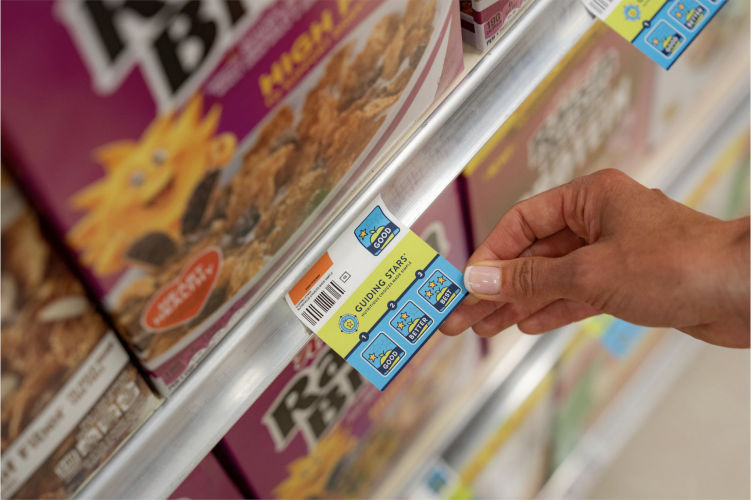
Guiding Stars is an objective, evidence-based, nutrition guidance program that evaluates foods and beverages to make nutritious choices simple. Products that meet transparent nutrition criteria earn a 1, 2, or 3 star rating for good, better, and best nutrition. Guiding Stars can be found in more than 2,000 grocery stores, in Circana’ Attribute Marketplace, and through the Guiding Stars Food Finder app.

*Mixed Greens with Mustard Dressing – 1 Guiding Stars
 

by Kitty Broihier

Originally published on Guiding Stars Health & Nutrition News

It might seem like eating seasonally is all about sustainability and prioritizing local foods. But people have been eating what’s in season since the beginning of time because they didn’t have any other options. Of course now we can get all kinds of foods from around the world pretty much any time of year. Even so, many of us still shift our eating patterns according to the calendar.

Spring Eating Changes That Come Naturally

Sometimes a change of season brings alterations in what and how much we eat—without any real thought on our parts. And that’s not surprising, given that humans and many animal species show physiological changes in response to the seasons. Some studies show that, for humans, caloric intake and body weight are highest in the winter (and physical activity may be lowest), while the opposite is true in the summer. In the winter, extra fat on our bodies helps keep us warm. But as soon as things start warming up, our food intake (and weight) can start tapering off. Spring months prompt a transition for our bodies as well as the weather, it seems. What’s behind some of these changes? Here are a couple of possible reasons:

  • Longer daylight hours. More sunshine impacts serotonin release, which influences satiety and energy intake. Sunlight exposure can also boost mood and provide more opportunities for physical activity.
  • More fresh produce options. Spring brings more crops and therefore more choices, just when winter produce has worn out its welcome. Humans like variety and novel flavors. “Storage crops” like potatoes, beets, turnips, and carrots can feel (and taste) boring compared to fresher fare like lettuces, asparagus, peas, and radishes. In general, spring produce also tends to be lower in calories than winter produce.

Making Intentional Eating Changes This Spring

Making intentional food choices based on the season isn’t exactly a new wellness idea. For example, eating lighter, easy-to-digest evening meals in springtime is a central principle of the ancient practice of Ayurveda. There are lots of ways to change up your diet as you ease into a new season, so choose the ones that feel best to you.

It’s important to remember that you don’t have to do everything at once. You also don’t have to force yourself to make changes that don’t “fit”—that’s a recipe for frustration. In fact, when your eating habits align with your life—your needs, schedule, health priorities, season of life, likes, and dislikes—you don’t need to rely on motivation or willpower to make changes stick. If you’re looking for a few ideas of habits to refresh this spring, consider these:

  • Breakfast: Move from nothing to something. Launching yourself into your day with just coffee or tea for fuel usually backfires in some way. (This often includes carb cravings you can’t refuse by 10:30 am.) Don’t complicate things—find a couple of easy options that you can rotate through—or eat leftovers from dinner. (And if you want some recipe ideas, check out these economical, Guiding Star-earning options.) Then thank yourself later for the improved energy, focus, and ability to get through until lunch with no vending machine snack run!
  • Water: Recommit to drinking more H2O. Sometimes we slow down on our water drinking during the cooler months. It can happen without you even noticing. Plain water is always going to be your body’s beverage of choice. And now with warmer temps and more activity, it’s a good time to get back to your water habit. Here are some ways to help you enjoy water again.
  • Veggies: Get more greens onto your plate. Have you noticed that common winter veggies often lack the color green (lookin’ at you, potatoes and winter squash)? Thankfully, fresh greens are more widely available now (and more economical too). So make it a habit to eat something green once a day—or more! Fresh greens like spinach, tender herbs, arugula, watercress, bok choy, and lettuces are very versatile. They also provide a refreshing contrast in taste and texture to many seasonal dishes. Add them into skillet dinners and stir-fries near the end of cooking so they’re just lightly wilted. You can also chop and sprinkle them on as edible garnishes, or stir them into springtime vegetable soups. Here are some recipe ideas combining greens and grains for you to try.

About Guiding Stars

Guiding Stars is an objective, evidence-based, nutrition guidance program that evaluates foods and beverages to make nutritious choices simple. Products that meet transparent nutrition criteria earn a 1, 2, or 3 star rating for good, better, and best nutrition. Guiding Stars can be found in more than 2,000 grocery stores, in Circana’ Attribute Marketplace, and through the Guiding Stars Food Finder app.

*Mixed Greens with Mustard Dressing – 1 Guiding Stars
 

by Kitty Broihier

Originally published on Guiding Stars Health & Nutrition News

It might seem like eating seasonally is all about sustainability and prioritizing local foods. But people have been eating what’s in season since the beginning of time because they didn’t have any other options. Of course now we can get all kinds of foods from around the world pretty much any time of year. Even so, many of us still shift our eating patterns according to the calendar.

Spring Eating Changes That Come Naturally

Sometimes a change of season brings alterations in what and how much we eat—without any real thought on our parts. And that’s not surprising, given that humans and many animal species show physiological changes in response to the seasons. Some studies show that, for humans, caloric intake and body weight are highest in the winter (and physical activity may be lowest), while the opposite is true in the summer. In the winter, extra fat on our bodies helps keep us warm. But as soon as things start warming up, our food intake (and weight) can start tapering off. Spring months prompt a transition for our bodies as well as the weather, it seems. What’s behind some of these changes? Here are a couple of possible reasons:

  • Longer daylight hours. More sunshine impacts serotonin release, which influences satiety and energy intake. Sunlight exposure can also boost mood and provide more opportunities for physical activity.
  • More fresh produce options. Spring brings more crops and therefore more choices, just when winter produce has worn out its welcome. Humans like variety and novel flavors. “Storage crops” like potatoes, beets, turnips, and carrots can feel (and taste) boring compared to fresher fare like lettuces, asparagus, peas, and radishes. In general, spring produce also tends to be lower in calories than winter produce.

Making Intentional Eating Changes This Spring

Making intentional food choices based on the season isn’t exactly a new wellness idea. For example, eating lighter, easy-to-digest evening meals in springtime is a central principle of the ancient practice of Ayurveda. There are lots of ways to change up your diet as you ease into a new season, so choose the ones that feel best to you.

It’s important to remember that you don’t have to do everything at once. You also don’t have to force yourself to make changes that don’t “fit”—that’s a recipe for frustration. In fact, when your eating habits align with your life—your needs, schedule, health priorities, season of life, likes, and dislikes—you don’t need to rely on motivation or willpower to make changes stick. If you’re looking for a few ideas of habits to refresh this spring, consider these:

  • Breakfast: Move from nothing to something. Launching yourself into your day with just coffee or tea for fuel usually backfires in some way. (This often includes carb cravings you can’t refuse by 10:30 am.) Don’t complicate things—find a couple of easy options that you can rotate through—or eat leftovers from dinner. (And if you want some recipe ideas, check out these economical, Guiding Star-earning options.) Then thank yourself later for the improved energy, focus, and ability to get through until lunch with no vending machine snack run!
  • Water: Recommit to drinking more H2O. Sometimes we slow down on our water drinking during the cooler months. It can happen without you even noticing. Plain water is always going to be your body’s beverage of choice. And now with warmer temps and more activity, it’s a good time to get back to your water habit. Here are some ways to help you enjoy water again.
  • Veggies: Get more greens onto your plate. Have you noticed that common winter veggies often lack the color green (lookin’ at you, potatoes and winter squash)? Thankfully, fresh greens are more widely available now (and more economical too). So make it a habit to eat something green once a day—or more! Fresh greens like spinach, tender herbs, arugula, watercress, bok choy, and lettuces are very versatile. They also provide a refreshing contrast in taste and texture to many seasonal dishes. Add them into skillet dinners and stir-fries near the end of cooking so they’re just lightly wilted. You can also chop and sprinkle them on as edible garnishes, or stir them into springtime vegetable soups. Here are some recipe ideas combining greens and grains for you to try.

About Guiding Stars

Guiding Stars is an objective, evidence-based, nutrition guidance program that evaluates foods and beverages to make nutritious choices simple. Products that meet transparent nutrition criteria earn a 1, 2, or 3 star rating for good, better, and best nutrition. Guiding Stars can be found in more than 2,000 grocery stores, in Circana’ Attribute Marketplace, and through the Guiding Stars Food Finder app.

*Mixed Greens with Mustard Dressing – 1 Guiding Stars
 

Originally published on PSEG ENERGIZE!

Along the Delaware Estuary, a remarkable transformation has been unfolding — quietly, steadily and with profound impact. 

Since 1994, our Estuary Enhancement Program has been reshaping thousands of acres of wetlands and uplands across New Jersey and Delaware, demonstrating what long‑term corporate environmental stewardship can achieve. As one of the largest privately funded salt marsh restoration initiatives in the nation, the program has revitalized more than 20,000 acres of critical habitat

The osprey have made a remarkable comeback in the estuary — thanks in part to the improved habitat and nesting conditions created by the Estuary Enhancement Program.”

-Rebecca, environmental specialist

These wetlands do far more than paint a scenic backdrop. They filter water, buffer communities from storms and support an extraordinary range of wildlife. Among the most inspiring success stories is the resurgence of the osprey. Once endangered, these iconic birds of prey have flourished thanks to restored marshes, improved waterways and the installation of nesting platforms that have helped more than 800 young ospreys take flight.

These wetlands do far more than paint a scenic backdrop. They filter water, buffer communities from storms and support an extraordinary range of wildlife. Among the most inspiring success stories is the resurgence of the osprey. Once endangered, these iconic birds of prey have flourished thanks to restored marshes, improved waterways and the installation of nesting platforms that have helped more than 800 young ospreys take flight.

But the benefits extend beyond wildlife.

By restoring natural systems, reconnecting waterways and inviting the public to explore these revitalized landscapes, the program strengthens biodiversity, enhances climate resilience and fosters a deeper connection between people and the environment.

Our Estuary Enhancement Program is more than a restoration effort — it’s a dedication to renewal. And with every osprey soaring above the marsh, it offers a powerful reminder that sustainability can be a legacy we build together.

Click here to watch a brief video highlighting the program and the remarkable impact it continues to make. 

William J. Smith, Lead Writer – PSEG
 

In this episode of BuzzHouse, Don Bernards and Garrick Gibson break down the most important legislation, policy updates and research shaping the affordable housing industry in early 2026.

They walk through HUD updates, including 2026 OCAF adjustments and new funding timelines for RAD for PRAC conversions, highlighting what owners and developers need to act on now. They also dig into new research on resident services, financial outcomes and property performance, along with insights from Harvard’s latest rental housing report showing rising cost burdens and slowing development.

The episode wraps with a look at emerging QAP trends across states, including deeper income targeting, preservation priorities, sustainability requirements and tighter underwriting standards developers should be tracking closely.

Tune in to hear what these updates mean and how they could shape your next move in affordable housing.

Affordable housing resources

For articles, webinars and additional resources for developers, housing authorities, property managers, state housing credit agencies and lenders, visit our affordable housing page.

For more information on this topic, or to learn how Baker Tilly specialists can help, contact our team.

NEW YORK, May 5, 2026 /3BL/ – Idealist and IBM’s SkillsBuild platform have teamed up to bring Idealist users access to over 1,000 free online courses. Through this collaboration, members of Idealist’s social-impact community can gain digital skills in topics ranging from project management, data analysis, artificial intelligence, and workplace readiness.

Idealist, founded in 1995, serves millions of people looking for ways to build a better world, through full-time jobs, internships, volunteerism, and connecting with neighbors to address local problems.

The IBM SkillsBuild educational platform aims to increase access to technology information. As part of the program, 1,000+ courses across 20 languages are available to help Idealist users develop new skills, whether they are looking for career advancement or changes, providing different support as volunteers to nonprofits, or bringing new insights into their communities. Participants that finish these courses will be able to download digital certificates for their resumes, C.V.s, or online profiles to demonstrate growth in a specific area or field.

“We’re so excited to collaborate with IBM in this way,” said Idealist’s Executive Director Ami Dar. “The nonprofit sector is constantly evolving, as is work and technology. By bringing this content to our community, I know we can change how nonprofits approach difficult problems while addressing the need for skill building around the world. We are looking forward to seeing what this brings.”

To access this free, powerful content, please visit the IBM SkillsBuild channel by Idealist.

About Idealist

For 30 years, Idealist has worked to bridge the gap between intention and action by connecting organizations and people who want to do good. With the 2025 merger with VolunteerMatch, Idealist has connected 200,000+ organizations with tens of millions of people. Over the years, the combined organizations facilitated posting of over a million jobs and over a million volunteer opportunities. Additionally, Idealist empowers businesses to make a difference through volunteering via API technology and other means. Find out more at idealist.org and on LinkedIn and Instagram.

Media Contact

Kevin Kennedy: media@idealist.org

From reliable connectivity to advanced business solutions, Comcast Business is committed to helping Michigan’s small businesses start strong, scale smarter, and grow with confidence.

That commitment was on display at this year’s Michigan’s Next Big Idea Pitch Competition, where Zo’s Mini Donuts was named the winner following a statewide search for innovative, growth‑minded companies. Sponsored by Comcast Business, the competition culminated at the Michigan Celebrates Small Business Summit in East Lansing, awarding Zo’s Mini Donuts a $10,000 cash prize to support its next phase of growth.

Technology and Support Designed for Growing Businesses

Small businesses today need more than great ideas – they need the technology foundation reliable, secure, and easy to manage, so vision can turn into reality without added complexity. Comcast Business works with small businesses and entrepreneurs across Michigan as a local partner helping them take the guesswork out of connectivity, security, and scalability, helping owners stay focused on running and growing their business.

Michigan’s Next Big Idea Pitch Competition reflects that broader mission: giving small businesses not only funding and visibility, but momentum.

“Entrepreneurs like Zo’s Mini Donuts exemplify the innovation and resilience driving Michigan’s small business community,” said Joshua Apodaca‑Muehlenweg, Vice President, Comcast Business. “Our role is to support that momentum by providing reliable technology and expert support so business owners can focus on serving customers, growing their teams, and building something lasting.”

Connecting Big Ideas to Big Potential

Michigan’s Next Big Idea Pitch Competition brought together five finalist businesses, each with a unique approach to solving challenges in industries ranging from technology and sustainability to wellness, education, and food entrepreneurship.

What set Zo’s Mini Donuts apart was a clear growth strategy paired with an innovative approach, one that recognized how the right tools, infrastructure, and partnerships can unlock long‑term success. Located in St. Joseph, Zo’s Mini Donuts brings families and teens together after dark, creating an alcohol‑free late‑night gathering spot that has become a community hub in the coastal town.

More Than Connectivity: A Partner for Growth

Across Michigan, Comcast Business supports small and mid‑sized businesses with solutions designed to grow alongside them – from business‑grade internet and networking to built‑in security, voice, and managed services that help reduce complexity, protect operations, and keep businesses ready for what’s next.

Beyond technology, Comcast Business invests in programs that create opportunities, helping entrepreneurs access resources, share their stories, and connect with networks that strengthen local business communities.

The Pitch Competition, developed in partnership with Michigan Celebrates Small Business, is one of those investments – bringing together leaders, innovators, and community partners to spotlight what’s possible when businesses have the right support.

Celebrating Michigan’s Entrepreneurial Community

Since 2004, Michigan Celebrates Small Business has recognized companies that strengthen the state’s economy through innovation, leadership, and community impact. The annual summit highlights the diverse ways small businesses contribute to local communities and drive economic growth.

Comcast Business: Powering What’s Next for Michigan Small Businesses

By combining reliable, enterprise‑grade technology with meaningful community investment, Comcast Business helps ensure small businesses have the confidence to grow – supported by infrastructure that can scale alongside them.

To learn more about Comcast Business solutions, visit: business.comcast.com/small-business.

Privacy Overview

This website uses cookies so that we can provide you with the best user experience possible. Cookie information is stored in your browser and performs functions such as recognising you when you return to our website and helping our team to understand which sections of the website you find most interesting and useful.