By: Sarah Levitsky
Senior Specialist, Global Communications, Mastercard

For decades, environmental sustainability was treated as a long-term ambition. In 2026, that framing is changing. Across industries, technology is accelerating progress in ways that are tangible, measurable and increasingly embedded into the day-to-day operations of businesses.

What was once a fragmented effort, tracked in spreadsheets or siloed across teams, is becoming a connected, intelligent system. From corporate strategy to energy infrastructure, a new wave of innovation is redefining how businesses approach sustainability, not as a standalone initiative, but as a core driver of growth and efficiency.

The intelligence layer: From data to decision-making

At the center of this shift is data and the platforms that make sense of it. Companies are moving toward integrated sustainability systems that provide real-time visibility into everything from emissions to resource use. These platforms are increasingly acting as the digital backbone of sustainability strategies, translating complex data into clear, actionable insights, according to a recent story in Sustainability Magazine. For example, the supply chain visibility: A company can now vet thousands of suppliers simultaneously to ensure better sustainability in procurement.

Artificial intelligence is amplifying that impact. Already, many companies report using AI to support sustainability efforts, from analyzing environmental data to identifying inefficiencies and guiding strategic decisions a recent Deloitte survey shows. What once required manual reporting and retrospective analysis can now happen dynamically, enabling faster, more informed action across the business.

The result is a shift from tracking performance to actively shaping it, with technology acting as a constant feedback loop between insight and execution.

Powering the transition: Energy systems reimagined

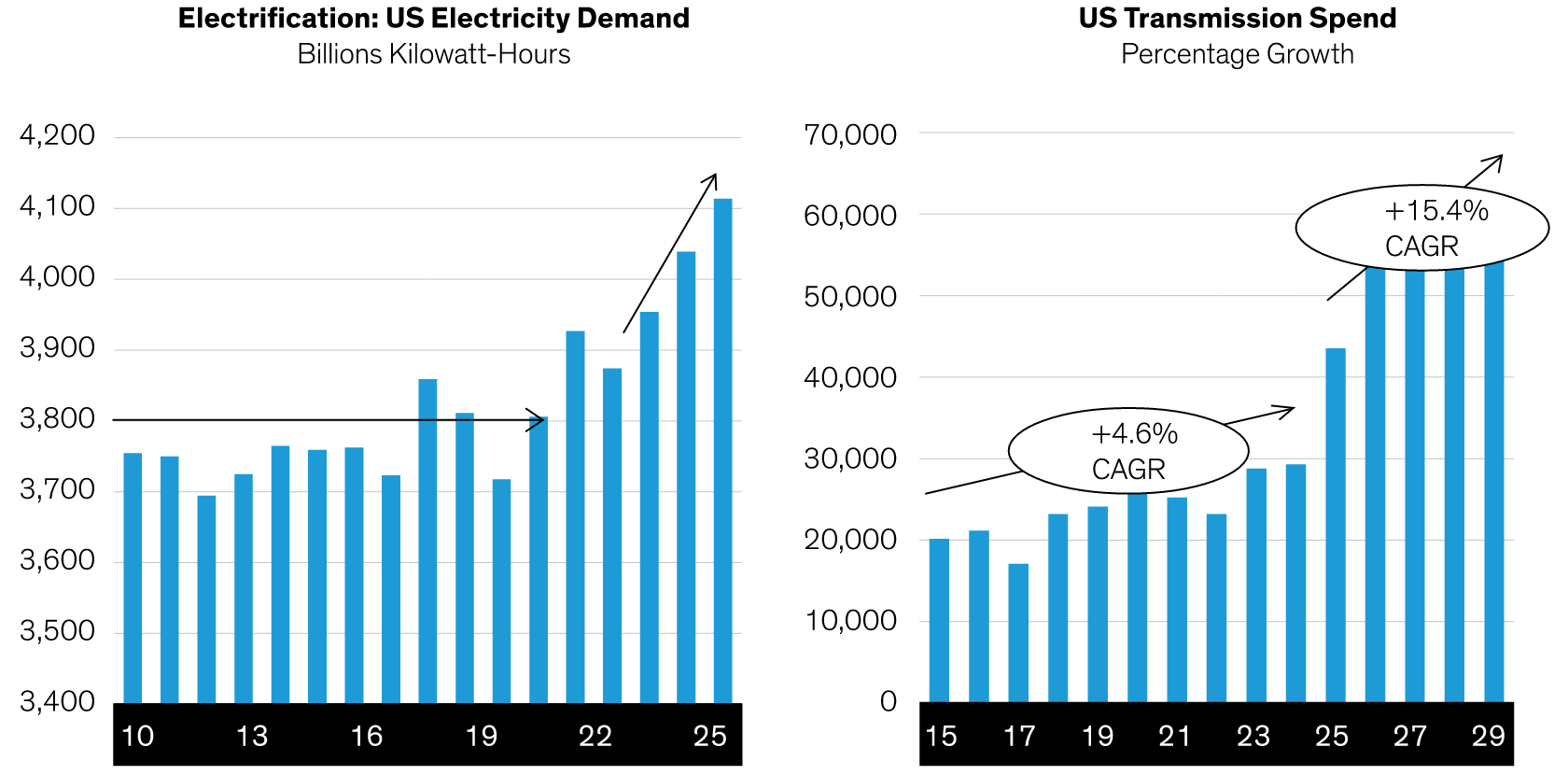
Beyond corporate reporting, technology is also reshaping the physical systems that power the global economy. As electricity demand rises, driven in part by the rapid growth of AI and digital infrastructure, including cryptocurrency mining, climate tech is stepping in to meet the moment.

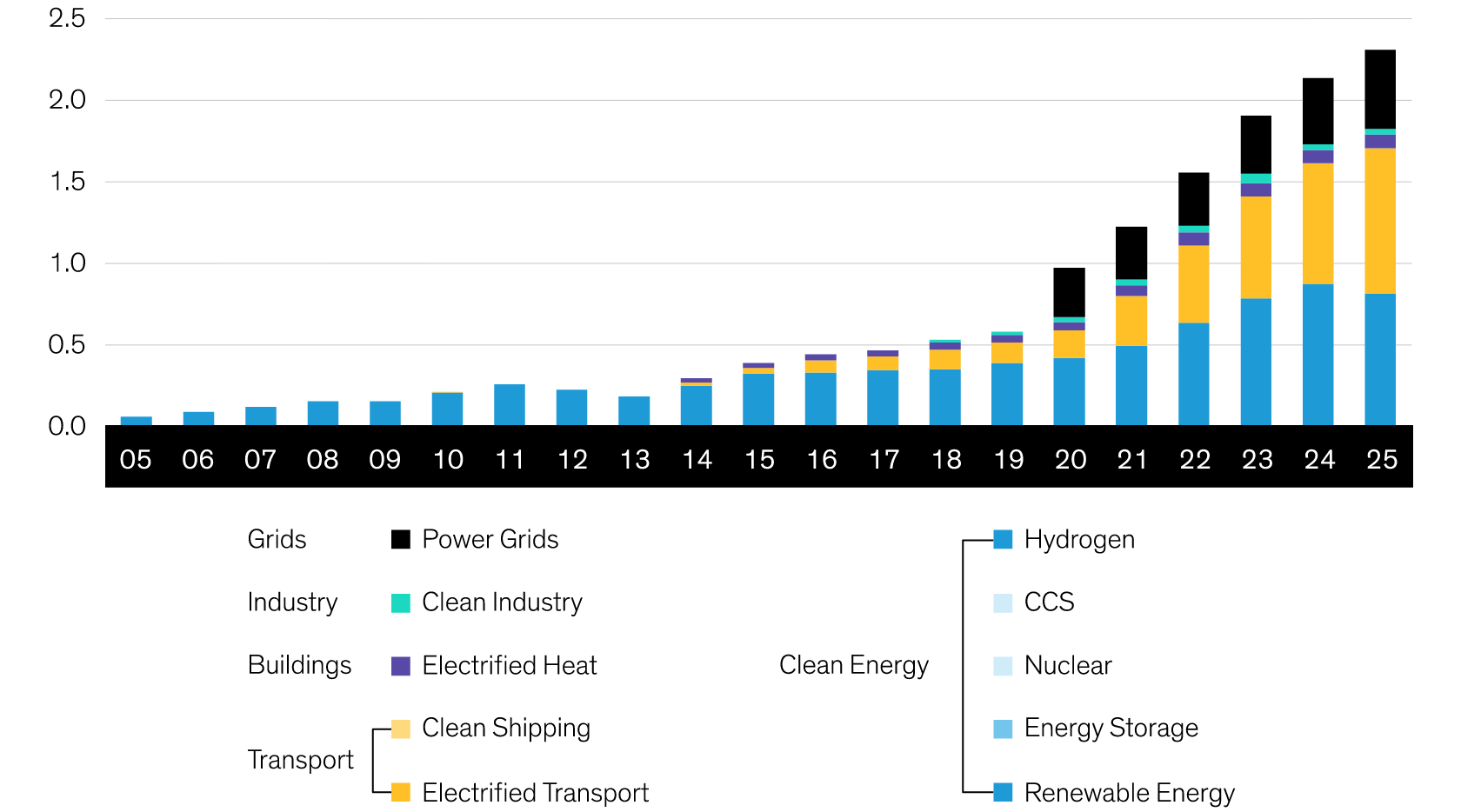
Investment is flowing into renewable energy, battery storage and grid modernization, all of which are critical to building a more flexible and resilient energy system, according to a new J.P. Morgan report. Next-generation batteries are improving how energy is stored and deployed, while modernized grids are better equipped to handle fluctuating supply and demand.

AI is also playing a growing role here, helping operators forecast demand, detect anomalies and optimize energy use in real time, the Deloitte survey says. Together, these technologies are not only supporting the transition to more renewable energy, but also making energy systems smarter, more adaptive and more efficient.

From strategy to operations

While large-scale infrastructure often dominates the conversation, some of the most meaningful progress is happening at the operational level. Across supply chains, workplaces and procurement systems, technology is enabling companies to embed sustainability into everyday decisions.

Advanced platforms are providing visibility into complex supplier networks, helping organizations better understand and manage their environmental impact across the value chain. At the same time, AI tools are simplifying how companies buy what they need and run their day-to-day operations, making it easier to be both efficient and more sustainable, according to Deloitte.

Even small changes, from reducing waste to optimizing resource use, are being scaled through technology, turning incremental improvements into measurable impact.

The next frontier: Innovation at scale

Beyond today’s applications, a new generation of climate technologies is emerging to tackle some of the most complex sustainability challenges. Investment is accelerating in areas like critical minerals, which are essential to scaling clean energy technologies, as well as adaptation solutions designed to respond to the physical impacts of climate change, the J.P. Morgan report notes.

These innovations range from advanced materials and battery chemistries to sensor networks and AI-powered systems that can detect and respond to environmental risks in real time. At the same time, companies are exploring ways to go beyond reducing harm, using technology to support measurable, nature-positive outcomes.

Together, they point to a future where sustainability is not just about minimizing impact, but actively improving the systems that support it.

As these technologies continue to scale, the gap between intention and actoin is narrowing. Sustainability is becoming less about long-term ambition and more about real-time progress powered by technology that makes it possible to measure, manage and accelerate change at every level.

In that sense, the most important shift may not be any single innovation, but the growing realization that the tools to build a more sustainable future are already here and improving every day.

Continue reading here

Follow along Mastercard’s journey to connect and power an inclusive, digital economy that benefits everyone, everywhere.


The Chemours Company’s Titanium Technologies (TT) business has been recognized with two 2026 U.S. Department of Energy (DOE) Better Buildings, Better Plants Initiative awards, underscoring the company’s continued leadership in operational excellence, energy efficiency, and sustainable manufacturing.

Chemours received both a Better Project Award and a Better Practice Award, recognizing distinct but complementary innovations that reduce energy use, cut waste, and deliver measurable business value across TT operations.

Better Project Award: Zero Capital Energy Savings Through Automation

Chemours earned a Better Project Award for its “Automating Standby Savings: Zero‑Capital Energy Efficiency Initiative” at the company’s DeLisle, Mississippi pigment manufacturing facility. The project leveraged existing infrastructure to fully automate standby logic for steam-powered mills during idle periods.

By transitioning from semiautomated to fully automated standby control, the initiative significantly reduced wasted steam, improved process consistency, and eliminated reliance on manual operator intervention—without requiring any capital investment. In 2025 alone, the project delivered $275,000 in energy cost savings, reduced average idle time by 48%, and cut waste steam per unit of production by 97.5%.

The scalable approach is already being replicated at Chemours’ other pigment sites and may be adaptable across the company’s broader manufacturing footprint, reinforcing Chemours’ focus on data‑driven energy management and continuous improvement.

Better Practice Award: Redesigning Packaging to Reduce Waste and Emissions

Chemours also received a Better Practice Award for its Innovative Packaging Redesign initiative for its Ti-Pure™ TiO2 brand, which replaced rigid cardboard inserts in bulk pigment bags with custom internal baffles, creating a lighter, single material packaging solution deployable across global operations.

The redesigned packaging reduced bag weight by 33% and eliminated approximately 130 tons of cardboard waste annually. The single‑material design improves recyclability, enhances warehouse and logistics efficiency, and reduces Scope 3 greenhouse gas emissions associated with transportation.

Designed for replicability, the new packaging approach is being expanded to additional packaging sizes, helping advance Chemours’ material circularity goals while supporting evolving regulatory requirements in key regions.

Driving Scalable, Business Aligned Sustainability

Together, the two awards highlight how Chemours’ TT business is embedding sustainability into everyday operations—through both site-specific innovation and enterprise-wide practices that deliver environmental impact alongside operational and financial performance.

The awards were formally recognized at the 2026 Better Buildings, Better Plants Summit, where winning projects and practices are shared to help accelerate efficiency improvements across U.S. industry.

The Chemours Company’s Titanium Technologies (TT) business has been recognized with two 2026 U.S. Department of Energy (DOE) Better Buildings, Better Plants Initiative awards, underscoring the company’s continued leadership in operational excellence, energy efficiency, and sustainable manufacturing.

Chemours received both a Better Project Award and a Better Practice Award, recognizing distinct but complementary innovations that reduce energy use, cut waste, and deliver measurable business value across TT operations.

Better Project Award: Zero Capital Energy Savings Through Automation

Chemours earned a Better Project Award for its “Automating Standby Savings: Zero‑Capital Energy Efficiency Initiative” at the company’s DeLisle, Mississippi pigment manufacturing facility. The project leveraged existing infrastructure to fully automate standby logic for steam-powered mills during idle periods.

By transitioning from semiautomated to fully automated standby control, the initiative significantly reduced wasted steam, improved process consistency, and eliminated reliance on manual operator intervention—without requiring any capital investment. In 2025 alone, the project delivered $275,000 in energy cost savings, reduced average idle time by 48%, and cut waste steam per unit of production by 97.5%.

The scalable approach is already being replicated at Chemours’ other pigment sites and may be adaptable across the company’s broader manufacturing footprint, reinforcing Chemours’ focus on data‑driven energy management and continuous improvement.

Better Practice Award: Redesigning Packaging to Reduce Waste and Emissions

Chemours also received a Better Practice Award for its Innovative Packaging Redesign initiative for its Ti-Pure™ TiO2 brand, which replaced rigid cardboard inserts in bulk pigment bags with custom internal baffles, creating a lighter, single material packaging solution deployable across global operations.

The redesigned packaging reduced bag weight by 33% and eliminated approximately 130 tons of cardboard waste annually. The single‑material design improves recyclability, enhances warehouse and logistics efficiency, and reduces Scope 3 greenhouse gas emissions associated with transportation.

Designed for replicability, the new packaging approach is being expanded to additional packaging sizes, helping advance Chemours’ material circularity goals while supporting evolving regulatory requirements in key regions.

Driving Scalable, Business Aligned Sustainability

Together, the two awards highlight how Chemours’ TT business is embedding sustainability into everyday operations—through both site-specific innovation and enterprise-wide practices that deliver environmental impact alongside operational and financial performance.

The awards were formally recognized at the 2026 Better Buildings, Better Plants Summit, where winning projects and practices are shared to help accelerate efficiency improvements across U.S. industry.

NEW YORK, May 14, 2026 /3BL/ – SmartEnergy, LLC is deepening its commitment to renewable energy and environmental stewardship through its long-standing partnership with the Arbor Day Foundation. Together, they have helped to plant more than 660,000 trees in the communities SmartEnergy serves, bringing lasting environmental and social benefits to these areas.

For more than a decade, SmartEnergy has helped plant a tree for every new customer, reinforcing its mission to create a cleaner, more sustainable future. These trees are delivered directly to local community members at an ideal time for planting in their area.

In cities and neighborhoods, trees can reduce extreme heat, improve mental and physical health, and filter pollutants from the air. When planted the right way and in the right places, trees can even help homeowners lower their energy bills by up to 30%.

“Growing thriving tree canopies is an instrumental part of building strong, healthy communities, and we rely on companies like SmartEnergy to be bold in their belief that we can build better neighborhoods through trees,” said Dan Morrow, Vice President, Partnerships at the Arbor Day Foundation. “By empowering community members to plant trees today, SmartEnergy is helping lay the groundwork for a better tomorrow.”

“Planting trees is a natural extension of our mission to deliver cleaner energy solutions,” said Jackie Kern, Co-Owner and former Chief Marketing Officer at SmartEnergy. “By investing in initiatives like this, we’re not only helping reduce carbon impacts today, but we’re also creating more sustainable, resilient communities for the future.

About SmartEnergy, LLC  

SmartEnergy is an independent energy supplier committed to providing customers with reliable electricity from 100% renewable resources. SmartEnergy purchases renewable energy credits (RECs) to offset 100% of customer’s electricity usage and seeks to provide real value to their customers. For over a decade, SmartEnergy has supported renewable energy generation, including solar, wind, hydroelectric and geothermal sources.

About the Arbor Day Foundation 

The Arbor Day Foundation is a global nonprofit inspiring people to plant, nurture, and celebrate trees. They foster a growing community of more than 1 million leaders, innovators, planters, and supporters united by their bold belief that a more hopeful future can be shaped through the power of trees. For more than 50 years, they’ve answered critical need with action, planting more than half a billion trees alongside their partners. And this is only the beginning.

The Arbor Day Foundation is a 501(c)(3) nonprofit pursuing a future where all life flourishes through the power of trees. Learn more at arborday.org.

###

NEW YORK, May 14, 2026 /3BL/ – SmartEnergy, LLC is deepening its commitment to renewable energy and environmental stewardship through its long-standing partnership with the Arbor Day Foundation. Together, they have helped to plant more than 660,000 trees in the communities SmartEnergy serves, bringing lasting environmental and social benefits to these areas.

For more than a decade, SmartEnergy has helped plant a tree for every new customer, reinforcing its mission to create a cleaner, more sustainable future. These trees are delivered directly to local community members at an ideal time for planting in their area.

In cities and neighborhoods, trees can reduce extreme heat, improve mental and physical health, and filter pollutants from the air. When planted the right way and in the right places, trees can even help homeowners lower their energy bills by up to 30%.

“Growing thriving tree canopies is an instrumental part of building strong, healthy communities, and we rely on companies like SmartEnergy to be bold in their belief that we can build better neighborhoods through trees,” said Dan Morrow, Vice President, Partnerships at the Arbor Day Foundation. “By empowering community members to plant trees today, SmartEnergy is helping lay the groundwork for a better tomorrow.”

“Planting trees is a natural extension of our mission to deliver cleaner energy solutions,” said Jackie Kern, Co-Owner and former Chief Marketing Officer at SmartEnergy. “By investing in initiatives like this, we’re not only helping reduce carbon impacts today, but we’re also creating more sustainable, resilient communities for the future.

About SmartEnergy, LLC  

SmartEnergy is an independent energy supplier committed to providing customers with reliable electricity from 100% renewable resources. SmartEnergy purchases renewable energy credits (RECs) to offset 100% of customer’s electricity usage and seeks to provide real value to their customers. For over a decade, SmartEnergy has supported renewable energy generation, including solar, wind, hydroelectric and geothermal sources.

About the Arbor Day Foundation 

The Arbor Day Foundation is a global nonprofit inspiring people to plant, nurture, and celebrate trees. They foster a growing community of more than 1 million leaders, innovators, planters, and supporters united by their bold belief that a more hopeful future can be shaped through the power of trees. For more than 50 years, they’ve answered critical need with action, planting more than half a billion trees alongside their partners. And this is only the beginning.

The Arbor Day Foundation is a 501(c)(3) nonprofit pursuing a future where all life flourishes through the power of trees. Learn more at arborday.org.

###

This article is authored by Jenelle Shapiro, Sustainability and Circularity Leader, Trane Technologies.

Every year, the world throws away over 2 billion tons of waste. That number is expected to increase to 3.4 billion tons by 2050. This has far-reaching consequences: wasted resources, lost business value, increased emissions and polluted ecosystems.

Recycling helps, of course, but it cannot solve such a massive issue. To truly address the scale of these challenges, we need to rethink how products and materials are designed, used, maintained and recovered. We need circularity.

Rather than just asking if something can be recycled, circular thinking asks a different question: Can this product and its materials retain its value after use? Circularity focuses on reimagining the lifecycle of equipment and their materials to preserve their value for as long as possible. By reframing our approach to design, product utilization and the recovery of valuable resources and materials, we can capture and preserve their inherent value.

What is circularity?

To understand circularity, it helps to first understand its opposite: the traditional linear model. In a linear economy, materials are extracted, manufactured into products, used and then discarded. This model drives enormous waste, lost business value and depletion of finite resources.

Many people assume that recycling solves the waste problem. But in practice, much of today’s recycling is actually downcycling, where high-quality materials are transformed into lower-value products. Each cycle gradually reduces the material’s usefulness until it ultimately ends up in a landfill.

Circularity offers a different framework: Instead of extracting, using and discarding resources, a circular economy maximizes the value of materials through improved design, extending useful life and integrating thoughtful recovery into product lifecycles. This model isn’t just about diverting waste from landfills. It’s about optimizing the materials across the full product lifecycle to design systems that keep resources in use longer and increase economic value while reducing environmental impact. By designing systems that keep resources in use longer, companies can increase economic returns while reducing environmental impact.

Designing for circularity across the value chain

Up to 80% of a product or material’s environmental impact is determined at the design stage. As an original equipment manufacturer, we work to ensure that our designs incorporate circular approaches.

A circular design strategy consists of three distinct areas of focus:

  1. The first priority is the design itself: by designing our products to ensure they’re durable, repairable and remanufacturable, we add business value and reduce waste. Design choices like these lower total emissions while extending the product lifecycle.
     
  2. The second is materials: how can we ensure our products rely less on virgin materials? How can we use higher recycled content or renewable inputs? How do our material choices support durability and value for our customers?
     
  3. The final category is services. Designing products to take advantage of circular services like maintenance, repair, remanufacturing and R’newal to support longer useful life for valuable equipment, creating sustainable ROI for our customers.

To ensure our products integrate the appropriate low-carbon materials, strong collaboration across the supply chain is necessary. Reverse logistics, recovery infrastructure and alignment with suppliers and customers all play a role in maximizing the useful life and recovery of high-value materials and components while ensuring resilience long-term.

Extending useful life through remanufacture and repair

Our maintenance and overhaul processes are key components of our circularity strategy. For example, our remanufacturing process takes core components of a chiller such as a compressor, motor or electronics, disassembles it to the bolt level, then cleans, repairs and reassembles it.

Remanufacturing processes like this extend the useful life of high-value equipment, offering our customers the same performance at a lower cost, while also reducing environmental footprint. To keep our products in use longer, we also reuse and remanufacture key components of our equipment, for example our reconditioned refrigerated transport units.

Another approach is our equipment buy-back program. If a customer is ready to upgrade an asset, we can, in some cases, refurbish that asset and then reintroduce it via rental or other channels — maximizing both the value and the useful life of systems and equipment while reducing emissions.

“Circularity isn’t just about diverting waste — it’s about preserving the value of products and materials, so we don’t have to continue extracting and wasting resources.”

Jenelle Shapiro
Sustainability and Circularity Leader, Trane Technologies

A circular end of life

The final step in the circular system is the end-of-life for a product or material. We’re working to maximize the value captured at that stage through supply chain and recycling relationships. It starts with our manufacturing facilities, where we receive many packaged goods and materials. Through collaboration with our suppliers, we’re creating solutions for redesigned packaging that allow us to re-leverage it or send it back for reuse through reverse logistics channels.

In addition, during the manufacturing process, we generate scrap and byproducts related to the machining and punching operations. Our procurement teams are redirecting that scrap back to our suppliers, which increases our supply chain resiliency for critical raw materials. And in some markets, we work with recycling companies to disassemble systems and recover reusable parts, while providing customers credit for returning cores to ensure that we’re maximizing the value and useful life of every asset.

The future of circularity and sustainable business

Ultimately, circularity is both an environmental imperative and a systemic approach to how we design products and operate our business. Scaling it will require continued technological advancement and investment. Fortunately, the innovations we need are gaining momentum, from AI-driven predictive maintenance and digital technology to optimize performance, to automated disassembly to dismantle assets for recovery.

At Trane Technologies, our circularity practices help us on our path to achieving goals like the Trane Technologies 2030 sustainability commitments and our Gigaton Challenge. As we transition to a more circular economy, we strengthen supply chain resilience and reduce exposure to price volatility while minimizing waste and reliance on virgin materials. This approach unlocking new avenues for innovation, efficiency and long-term value creation – making circularity a circular strategy for a more resilient and sustainable business future.

Rebuilding The Future: The New Circularity Blueprint 

Listen to the Healthy Spaces podcast to hear a new circularity definition, transforming how we think about product lifecycles even in the built environment.

Learn more about climate innovation on this Healthy Spaces Podcast episode.

This article is authored by Jenelle Shapiro, Sustainability and Circularity Leader, Trane Technologies.

Every year, the world throws away over 2 billion tons of waste. That number is expected to increase to 3.4 billion tons by 2050. This has far-reaching consequences: wasted resources, lost business value, increased emissions and polluted ecosystems.

Recycling helps, of course, but it cannot solve such a massive issue. To truly address the scale of these challenges, we need to rethink how products and materials are designed, used, maintained and recovered. We need circularity.

Rather than just asking if something can be recycled, circular thinking asks a different question: Can this product and its materials retain its value after use? Circularity focuses on reimagining the lifecycle of equipment and their materials to preserve their value for as long as possible. By reframing our approach to design, product utilization and the recovery of valuable resources and materials, we can capture and preserve their inherent value.

What is circularity?

To understand circularity, it helps to first understand its opposite: the traditional linear model. In a linear economy, materials are extracted, manufactured into products, used and then discarded. This model drives enormous waste, lost business value and depletion of finite resources.

Many people assume that recycling solves the waste problem. But in practice, much of today’s recycling is actually downcycling, where high-quality materials are transformed into lower-value products. Each cycle gradually reduces the material’s usefulness until it ultimately ends up in a landfill.

Circularity offers a different framework: Instead of extracting, using and discarding resources, a circular economy maximizes the value of materials through improved design, extending useful life and integrating thoughtful recovery into product lifecycles. This model isn’t just about diverting waste from landfills. It’s about optimizing the materials across the full product lifecycle to design systems that keep resources in use longer and increase economic value while reducing environmental impact. By designing systems that keep resources in use longer, companies can increase economic returns while reducing environmental impact.

Designing for circularity across the value chain

Up to 80% of a product or material’s environmental impact is determined at the design stage. As an original equipment manufacturer, we work to ensure that our designs incorporate circular approaches.

A circular design strategy consists of three distinct areas of focus:

  1. The first priority is the design itself: by designing our products to ensure they’re durable, repairable and remanufacturable, we add business value and reduce waste. Design choices like these lower total emissions while extending the product lifecycle.
     
  2. The second is materials: how can we ensure our products rely less on virgin materials? How can we use higher recycled content or renewable inputs? How do our material choices support durability and value for our customers?
     
  3. The final category is services. Designing products to take advantage of circular services like maintenance, repair, remanufacturing and R’newal to support longer useful life for valuable equipment, creating sustainable ROI for our customers.

To ensure our products integrate the appropriate low-carbon materials, strong collaboration across the supply chain is necessary. Reverse logistics, recovery infrastructure and alignment with suppliers and customers all play a role in maximizing the useful life and recovery of high-value materials and components while ensuring resilience long-term.

Extending useful life through remanufacture and repair

Our maintenance and overhaul processes are key components of our circularity strategy. For example, our remanufacturing process takes core components of a chiller such as a compressor, motor or electronics, disassembles it to the bolt level, then cleans, repairs and reassembles it.

Remanufacturing processes like this extend the useful life of high-value equipment, offering our customers the same performance at a lower cost, while also reducing environmental footprint. To keep our products in use longer, we also reuse and remanufacture key components of our equipment, for example our reconditioned refrigerated transport units.

Another approach is our equipment buy-back program. If a customer is ready to upgrade an asset, we can, in some cases, refurbish that asset and then reintroduce it via rental or other channels — maximizing both the value and the useful life of systems and equipment while reducing emissions.

“Circularity isn’t just about diverting waste — it’s about preserving the value of products and materials, so we don’t have to continue extracting and wasting resources.”

Jenelle Shapiro
Sustainability and Circularity Leader, Trane Technologies

A circular end of life

The final step in the circular system is the end-of-life for a product or material. We’re working to maximize the value captured at that stage through supply chain and recycling relationships. It starts with our manufacturing facilities, where we receive many packaged goods and materials. Through collaboration with our suppliers, we’re creating solutions for redesigned packaging that allow us to re-leverage it or send it back for reuse through reverse logistics channels.

In addition, during the manufacturing process, we generate scrap and byproducts related to the machining and punching operations. Our procurement teams are redirecting that scrap back to our suppliers, which increases our supply chain resiliency for critical raw materials. And in some markets, we work with recycling companies to disassemble systems and recover reusable parts, while providing customers credit for returning cores to ensure that we’re maximizing the value and useful life of every asset.

The future of circularity and sustainable business

Ultimately, circularity is both an environmental imperative and a systemic approach to how we design products and operate our business. Scaling it will require continued technological advancement and investment. Fortunately, the innovations we need are gaining momentum, from AI-driven predictive maintenance and digital technology to optimize performance, to automated disassembly to dismantle assets for recovery.

At Trane Technologies, our circularity practices help us on our path to achieving goals like the Trane Technologies 2030 sustainability commitments and our Gigaton Challenge. As we transition to a more circular economy, we strengthen supply chain resilience and reduce exposure to price volatility while minimizing waste and reliance on virgin materials. This approach unlocking new avenues for innovation, efficiency and long-term value creation – making circularity a circular strategy for a more resilient and sustainable business future.

Rebuilding The Future: The New Circularity Blueprint 

Listen to the Healthy Spaces podcast to hear a new circularity definition, transforming how we think about product lifecycles even in the built environment.

Learn more about climate innovation on this Healthy Spaces Podcast episode.

This article is authored by Jenelle Shapiro, Sustainability and Circularity Leader, Trane Technologies.

Every year, the world throws away over 2 billion tons of waste. That number is expected to increase to 3.4 billion tons by 2050. This has far-reaching consequences: wasted resources, lost business value, increased emissions and polluted ecosystems.

Recycling helps, of course, but it cannot solve such a massive issue. To truly address the scale of these challenges, we need to rethink how products and materials are designed, used, maintained and recovered. We need circularity.

Rather than just asking if something can be recycled, circular thinking asks a different question: Can this product and its materials retain its value after use? Circularity focuses on reimagining the lifecycle of equipment and their materials to preserve their value for as long as possible. By reframing our approach to design, product utilization and the recovery of valuable resources and materials, we can capture and preserve their inherent value.

What is circularity?

To understand circularity, it helps to first understand its opposite: the traditional linear model. In a linear economy, materials are extracted, manufactured into products, used and then discarded. This model drives enormous waste, lost business value and depletion of finite resources.

Many people assume that recycling solves the waste problem. But in practice, much of today’s recycling is actually downcycling, where high-quality materials are transformed into lower-value products. Each cycle gradually reduces the material’s usefulness until it ultimately ends up in a landfill.

Circularity offers a different framework: Instead of extracting, using and discarding resources, a circular economy maximizes the value of materials through improved design, extending useful life and integrating thoughtful recovery into product lifecycles. This model isn’t just about diverting waste from landfills. It’s about optimizing the materials across the full product lifecycle to design systems that keep resources in use longer and increase economic value while reducing environmental impact. By designing systems that keep resources in use longer, companies can increase economic returns while reducing environmental impact.

Designing for circularity across the value chain

Up to 80% of a product or material’s environmental impact is determined at the design stage. As an original equipment manufacturer, we work to ensure that our designs incorporate circular approaches.

A circular design strategy consists of three distinct areas of focus:

  1. The first priority is the design itself: by designing our products to ensure they’re durable, repairable and remanufacturable, we add business value and reduce waste. Design choices like these lower total emissions while extending the product lifecycle.
     
  2. The second is materials: how can we ensure our products rely less on virgin materials? How can we use higher recycled content or renewable inputs? How do our material choices support durability and value for our customers?
     
  3. The final category is services. Designing products to take advantage of circular services like maintenance, repair, remanufacturing and R’newal to support longer useful life for valuable equipment, creating sustainable ROI for our customers.

To ensure our products integrate the appropriate low-carbon materials, strong collaboration across the supply chain is necessary. Reverse logistics, recovery infrastructure and alignment with suppliers and customers all play a role in maximizing the useful life and recovery of high-value materials and components while ensuring resilience long-term.

Extending useful life through remanufacture and repair

Our maintenance and overhaul processes are key components of our circularity strategy. For example, our remanufacturing process takes core components of a chiller such as a compressor, motor or electronics, disassembles it to the bolt level, then cleans, repairs and reassembles it.

Remanufacturing processes like this extend the useful life of high-value equipment, offering our customers the same performance at a lower cost, while also reducing environmental footprint. To keep our products in use longer, we also reuse and remanufacture key components of our equipment, for example our reconditioned refrigerated transport units.

Another approach is our equipment buy-back program. If a customer is ready to upgrade an asset, we can, in some cases, refurbish that asset and then reintroduce it via rental or other channels — maximizing both the value and the useful life of systems and equipment while reducing emissions.

“Circularity isn’t just about diverting waste — it’s about preserving the value of products and materials, so we don’t have to continue extracting and wasting resources.”

Jenelle Shapiro
Sustainability and Circularity Leader, Trane Technologies

A circular end of life

The final step in the circular system is the end-of-life for a product or material. We’re working to maximize the value captured at that stage through supply chain and recycling relationships. It starts with our manufacturing facilities, where we receive many packaged goods and materials. Through collaboration with our suppliers, we’re creating solutions for redesigned packaging that allow us to re-leverage it or send it back for reuse through reverse logistics channels.

In addition, during the manufacturing process, we generate scrap and byproducts related to the machining and punching operations. Our procurement teams are redirecting that scrap back to our suppliers, which increases our supply chain resiliency for critical raw materials. And in some markets, we work with recycling companies to disassemble systems and recover reusable parts, while providing customers credit for returning cores to ensure that we’re maximizing the value and useful life of every asset.

The future of circularity and sustainable business

Ultimately, circularity is both an environmental imperative and a systemic approach to how we design products and operate our business. Scaling it will require continued technological advancement and investment. Fortunately, the innovations we need are gaining momentum, from AI-driven predictive maintenance and digital technology to optimize performance, to automated disassembly to dismantle assets for recovery.

At Trane Technologies, our circularity practices help us on our path to achieving goals like the Trane Technologies 2030 sustainability commitments and our Gigaton Challenge. As we transition to a more circular economy, we strengthen supply chain resilience and reduce exposure to price volatility while minimizing waste and reliance on virgin materials. This approach unlocking new avenues for innovation, efficiency and long-term value creation – making circularity a circular strategy for a more resilient and sustainable business future.

Rebuilding The Future: The New Circularity Blueprint 

Listen to the Healthy Spaces podcast to hear a new circularity definition, transforming how we think about product lifecycles even in the built environment.

Learn more about climate innovation on this Healthy Spaces Podcast episode.

LONDON, May 14, 2026 /3BL/ – FTSE Russell, LSEG’s global index provider, and Planetrics, SLR’s platform specialising in climate-risk analytics, modelling, and scenario-based analysis, today announced the signing of a Memorandum of Understanding (MoU) focussed on the joint development of climate-scenario based indices and analytics.

Under the proposed collaboration, Planetrics will make its proprietary physical and transition climate risk analytics, models and scenario tools available to FTSE Russell, to support the development of climate-scenario based indices across asset classes.

The organisations intend to work together on the development of analytical frameworks and data inputs underpinning any such indices, with FTSE Russell responsible for their governance and commercial distribution, supported by Planetrics’ deep research expertise, market knowledge and technical depth.

FTSE Russell and Planetrics anticipate new indices to be launched later this year.

Stephanie Maier, Head of Sustainable, FTSE Russell, comments:

“As climate considerations continue to drive the investment landscape, we are delighted to be collaborating with Planetrics as we continue to innovate to the needs of the market. The intended partnership reflects our ongoing commitment to developing transparent, innovative indices that draw on robust research and analytical frameworks to help our clients better invest for and through the low carbon transition.”

Thomas Bremner Bligaard, Executive Director, Planetrics, part of SLR, said:

“This collaboration with FTSE Russell reflects where the market needs to go, from acknowledging climate risk to actually pricing it. Our modelling captures a range of plausible futures, including physical shocks and uneven transitions across regions and sectors, then traces how costs, supply chains and competitive positions evolve at a company level. That granularity translates into portfolio signals precise enough to support better allocation decisions and stronger risk management.”


ENDS


Contacts

LSEG Press Office

Hayley Fewster / Simon Henrick  
+44 (0)20 7797 1222

newsroom@lseg.com 
www.lseg.com


About FTSE Russell, an LSEG business

FTSE Russell is a global index leader that provides innovative benchmarking, analytics and data solutions for investors worldwide. FTSE Russell calculates thousands of indexes that measure and benchmark markets and asset classes in more than 70 countries, covering 98% of the investable market globally.

FTSE Russell index expertise and products are used extensively by institutional and retail investors globally. Approximately $20 trillion is benchmarked to FTSE Russell indexes. Leading asset owners, asset managers, ETF providers and investment banks choose FTSE Russell indexes to benchmark their investment performance and create ETFs, structured products and index-based derivatives.

A core set of universal principles guides FTSE Russell index design and management: a transparent rules-based methodology is informed by independent committees of leading market participants. FTSE Russell is focused on applying the highest industry standards in index design and governance and embraces the IOSCO Principles. FTSE Russell is also focused on index innovation and customer partnerships as it seeks to enhance the breadth, depth and reach of its offering. 

FTSE Russell is wholly owned by LSEG. 

For more information, visit FTSE Russell.


About Planetrics

Planetrics (powered by SLR) provides financial institutions with the analytics needed to assess their sustainability impact, limit risks, and find opportunities to support and benefit from a sustainable future. Its SaaS platform, PlanetView, is used by leading banks, insurers, asset managers, and asset owners to help translate climate drivers into financial and economic impacts, enabling clients to understand how climate scenarios affect the value, performance, and risk profile of assets and portfolios.

Planetrics was acquired by SLR in April 2026, a leading global environmental and advisory consultancy, with a team of 5,000+ talented professionals operating from a network of offices in Europe, the Americas, Asia-Pacific, the Middle East, and Africa.

SLR’s sustainability expertise, combined with Planetrics’ advanced climate modelling capabilities, amplify the value delivered to clients and help set the industry standard for managing climate-related challenges – now and into the future. By combining Planetrics’ climate scenario analytics with SLR’s advisory, sustainability, engineering and environmental expertise, clients can gain a complete view of where climate risks and opportunities are most financially material, and how to respond. This integrated capability transforms detailed modelling into practical, actionable solutions across assets, infrastructure, and industries.

Find out more: https://www.slrconsulting.com/planetrics

LONDON, May 14, 2026 /3BL/ – FTSE Russell, LSEG’s global index provider, and Planetrics, SLR’s platform specialising in climate-risk analytics, modelling, and scenario-based analysis, today announced the signing of a Memorandum of Understanding (MoU) focussed on the joint development of climate-scenario based indices and analytics.

Under the proposed collaboration, Planetrics will make its proprietary physical and transition climate risk analytics, models and scenario tools available to FTSE Russell, to support the development of climate-scenario based indices across asset classes.

The organisations intend to work together on the development of analytical frameworks and data inputs underpinning any such indices, with FTSE Russell responsible for their governance and commercial distribution, supported by Planetrics’ deep research expertise, market knowledge and technical depth.

FTSE Russell and Planetrics anticipate new indices to be launched later this year.

Stephanie Maier, Head of Sustainable, FTSE Russell, comments:

“As climate considerations continue to drive the investment landscape, we are delighted to be collaborating with Planetrics as we continue to innovate to the needs of the market. The intended partnership reflects our ongoing commitment to developing transparent, innovative indices that draw on robust research and analytical frameworks to help our clients better invest for and through the low carbon transition.”

Thomas Bremner Bligaard, Executive Director, Planetrics, part of SLR, said:

“This collaboration with FTSE Russell reflects where the market needs to go, from acknowledging climate risk to actually pricing it. Our modelling captures a range of plausible futures, including physical shocks and uneven transitions across regions and sectors, then traces how costs, supply chains and competitive positions evolve at a company level. That granularity translates into portfolio signals precise enough to support better allocation decisions and stronger risk management.”


ENDS


Contacts

LSEG Press Office

Hayley Fewster / Simon Henrick  
+44 (0)20 7797 1222

newsroom@lseg.com 
www.lseg.com


About FTSE Russell, an LSEG business

FTSE Russell is a global index leader that provides innovative benchmarking, analytics and data solutions for investors worldwide. FTSE Russell calculates thousands of indexes that measure and benchmark markets and asset classes in more than 70 countries, covering 98% of the investable market globally.

FTSE Russell index expertise and products are used extensively by institutional and retail investors globally. Approximately $20 trillion is benchmarked to FTSE Russell indexes. Leading asset owners, asset managers, ETF providers and investment banks choose FTSE Russell indexes to benchmark their investment performance and create ETFs, structured products and index-based derivatives.

A core set of universal principles guides FTSE Russell index design and management: a transparent rules-based methodology is informed by independent committees of leading market participants. FTSE Russell is focused on applying the highest industry standards in index design and governance and embraces the IOSCO Principles. FTSE Russell is also focused on index innovation and customer partnerships as it seeks to enhance the breadth, depth and reach of its offering. 

FTSE Russell is wholly owned by LSEG. 

For more information, visit FTSE Russell.


About Planetrics

Planetrics (powered by SLR) provides financial institutions with the analytics needed to assess their sustainability impact, limit risks, and find opportunities to support and benefit from a sustainable future. Its SaaS platform, PlanetView, is used by leading banks, insurers, asset managers, and asset owners to help translate climate drivers into financial and economic impacts, enabling clients to understand how climate scenarios affect the value, performance, and risk profile of assets and portfolios.

Planetrics was acquired by SLR in April 2026, a leading global environmental and advisory consultancy, with a team of 5,000+ talented professionals operating from a network of offices in Europe, the Americas, Asia-Pacific, the Middle East, and Africa.

SLR’s sustainability expertise, combined with Planetrics’ advanced climate modelling capabilities, amplify the value delivered to clients and help set the industry standard for managing climate-related challenges – now and into the future. By combining Planetrics’ climate scenario analytics with SLR’s advisory, sustainability, engineering and environmental expertise, clients can gain a complete view of where climate risks and opportunities are most financially material, and how to respond. This integrated capability transforms detailed modelling into practical, actionable solutions across assets, infrastructure, and industries.

Find out more: https://www.slrconsulting.com/planetrics

Privacy Overview

This website uses cookies so that we can provide you with the best user experience possible. Cookie information is stored in your browser and performs functions such as recognising you when you return to our website and helping our team to understand which sections of the website you find most interesting and useful.