At DP World in Peru, progress toward gender equity is no longer a future goal — it’s already measurable.
Over the past five years, the company has increased women’s participation in operational roles by 367% and grown female representation in leadership positions by 41% — a significant shift in an industry historically defined by low female participation.
Building on that momentum, DP World recently hosted “Women Moving the World,” a panel discussion that brought together leading voices from across Peru’s trade, shipping, and agriculture sectors to explore how greater inclusion can strengthen the industry and drive national development.
A platform for leadership and real-world perspectives
The event convened prominent leaders whose careers reflect the evolving role of women in global trade:
Teresa Mera Gómez, former Minister of Foreign Trade and Tourism for Peru, offered a policy and economic lens on how diversity supports more competitive and resilient trade ecosystems.
Gloria Barandiarán, Deputy General Manager at Evergreen Shipping Agency (Peru) S.A.C., shared insights from the shipping sector and the importance of representation across maritime operations.
Roxana Nolte, Commercial Manager at Agrícola Don Ricardo — one of Peru’s leading agricultural export companies — provided a perspective from the agribusiness sector, highlighting how a diverse logistics workforce enables Peru’s global competitiveness.
Together, the panelists explored how creating more inclusive workplaces is not only a social priority, but also a business imperative — one that drives innovation, improves decision-making, and strengthens supply chains.
Turning momentum into measurable impact
While the panel underscored how far the industry has come, it also highlighted the importance of sustaining that progress through action.
At DP World in Peru, gender equity efforts are part of a broader sustainability strategy that connects workforce development, environmental innovation, and community impact. In 2025 alone, the team:
Inaugurated six digital classrooms at the Virgen de la Inmaculada Concepción school, benefiting more than 300 students and contributing to over 3,000 students reached through education initiatives to date.
Received the Best Good Practices in Social Sustainability award from the Sustainability Observatory of the Ministry of Transport and Communications for its Emprende DP World program — an initiative that has supported the growth of more than 300 micro and small enterprises (MYPES) in Callao, including more than 50 entrepreneurs.
Reduced its carbon footprint in Peru by approximately 22%, cutting emissions from nearly 13,000 tons of CO₂ to a projected 9,700 tons by the end of 2025 — advancing toward its broader goal of a 90% reduction in Scope 1 and 2 emissions.
A stronger industry through inclusion
As Peru continues to strengthen its position in global trade, the path forward is increasingly clear: diversity and sustainability are not separate priorities — they are mutually reinforcing drivers of long-term growth.
Through initiatives like “Women Moving the World” — and tangible progress across education, entrepreneurship, and decarbonization — DP World is helping shape a more inclusive, more resilient logistics sector across Peru. One where opportunity expands alongside impact, and where a more diverse industry is ultimately a stronger one.
Whirlpool Corporation is celebrating Habitat for Humanity International’s 50th anniversary, marking five decades of building homes, communities and hope across more than 60 countries. As one of Habitat’s longest-standing corporate partners, Whirlpool Corp. reaffirmed its commitment to expanding access to safe, affordable housing for families in the U.S. and around the world and support for Habitat’s “Let’s Open the Door” global campaign.
“Whirlpool Corporation is built on a simple idea: that life at home should be better for everyone,” said Marc Bitzer, chairman and CEO of Whirlpool Corporation and member of the Habitat for Humanity International board. “For 27 years, Habitat for Humanity has been one of our most meaningful relationships in living out that ideal. Their work, and the families they serve, remind us why what we do matters. As Habitat marks 50 years of impact, we are proud to stand alongside them and to keep opening doors for families across America and around the world.”
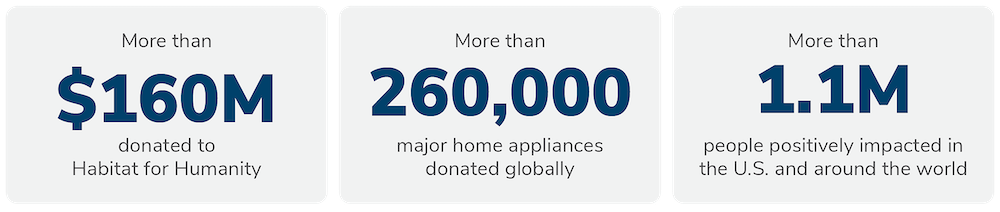
Whirlpool and Habitat for Humanity have worked side by side since 1999. During that time, the relationship has delivered meaningful impact for families across the U.S. and in approximately 50 countries around the world:
Whirlpool Corp. also supports every Habitat home built in the U.S. and Canada by providing a range, refrigerator and garbage disposal, helping new homeowners reduce major appliance costs, lower utility bills and spend less on food.
The company’s support has grown well beyond appliance donations. The BuildBetter with Whirlpool program has helped build sustainable, affordable homes nationwide and the backing of Habitat’s Cost of Home campaign has contributed to changing more than 300 housing policies for an estimated 10 million people. And in the company’s own backyard, Whirlpool Foundation is supporting Project T, a revitalization initiative targeting working families in Benton Harbor, Michigan.
That same belief in supporting American families also drives Whirlpool Corp.’s commitment to American manufacturing. Whirlpool Corp. is proud to be the only major kitchen and laundry appliance company based and owned in the U.S. The company was founded in America in 1911 and has never left. Today, approximately 80 percent of the major appliances it sells in the U.S. are produced in American factories — three times the industry average. Its industry leadership in U.S. production is made possible by $23 billion spent in manufacturing, labor and logistics over the past decade and, most importantly, by its approximately 20,000 person U.S workforce, including nearly 14,000 manufacturing employees, across 10 factories nationwide.
As Habitat marks this milestone, Whirlpool Corp. looks forward to continuing to open doors for families across America and around the world.
To learn more about Habitat for Humanity’s 50th anniversary, visit habitat.org. To learn more about Whirlpool Corporation, visit whirlpoolcorp.com.
Whirlpool Corporation (NYSE: WHR) is a leading home appliance company, in constant pursuit of improving life at home. As the only major U.S.-based manufacturer of kitchen and laundry appliances, the company is driving meaningful innovation to meet the evolving needs of consumers through its iconic brand portfolio, including Whirlpool, KitchenAid, JennAir, Maytag, Amana, Brastemp, Consul, and InSinkErator. In 2025, the company reported approximately $16 billion in annual net sales – close to 90% of which were in the Americas -41,000 employees, and 35 manufacturing and technology research centers. Additional information about the company can be found at WhirlpoolCorp.com.
From site visits to community science fairs, Chemours is helping bring STEM learning to life for students across the communities where it operates. Through hands-on experiences and employee engagement, the company is connecting classroom concepts to real-world applications — inspiring curiosity, creativity, and confidence in the next generation of problem solvers.
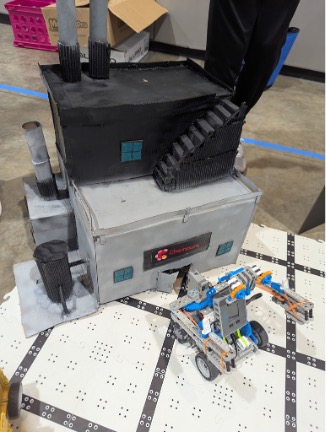
Chemours Offerman Site Inspires Student Innovation Through Hands-On Learning Pierce County Middle School’s Jr. Beta robotics team earned praise for an innovative project at the Beta Club convention in Savannah, Georgia—an idea sparked by a visit to Chemours’ Offerman Separation Plant. The field trip gave students an inside look at how minerals are mined and processed, inspiring the team to design a robot that mimicked the process by scooping simulated dirt, transporting it, and depositing it into a miniature dump truck.
“Their project blended engineering with environmental understanding, showing how robotics can help model the careful work involved in mineral sand mining,” said Jr. Beta sponsor Katie Cravey. “Through creativity, teamwork, and hands-on learning, the team brought their Chemours experience to life in a fun and innovative way.”
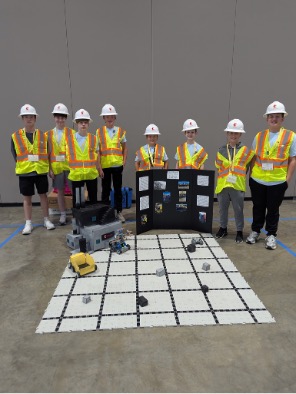
Chemours employees provided hard hats and vests for the students, helping them look the part during their competition. Judges praised the team for its “excellent use of innovation in design,” strong collaboration, and ability to complete the required task. Led by teacher James Wood and supported by sponsors Cravey and Bryany Walker, the group’s achievement reflects the power of experiential learning and community partnership.
Extending STEM Learning Beyond the Site Chemours’ commitment to hands-on STEM education extends beyond the Offerman site. For decades, the company’s Chambers Works site has proudly supported the Salem County Science Fair.
More than 200 students from across Salem County, New Jersey gathered to participate in the 37th annual Science Fair. Students in grades five through twelve presented projects that applied classroom learning to real-world questions, using the scientific method to explore ideas, test hypotheses, and analyze results.
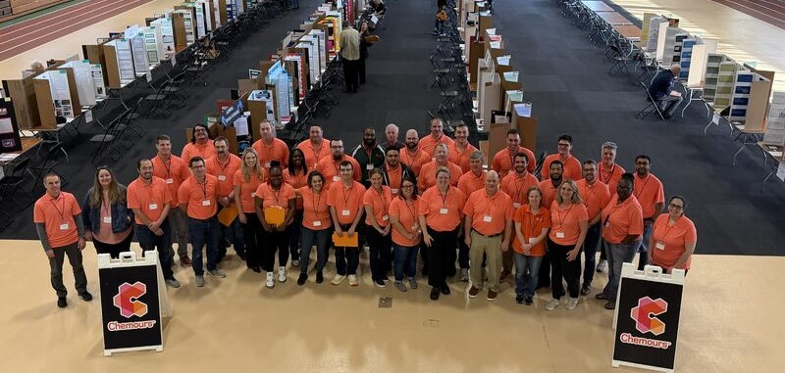
Chemours volunteers from the Chambers Works and Delaware sites, along with local community members, supported the event by reviewing student projects. Together, they engaged students presenting work across a wide range of topics — from chemistry and engineering concepts to cybersecurity, mental health, consumer science, and biology. Through interviews with judges, students strengthened public speaking, presentation, and critical thinking skills.
Top projects from the Salem County Science Fair will advance to the Delaware Valley Science Fair, where students can compete for scholarship opportunities and further recognition.
These events reflect Chemours’ broader commitment to making a difference beyond its walls by advancing STEM education, community safety, and environmental sustainability. By opening its doors and engaging with students in the communities where it operates, Chemours helps spark curiosity, foster innovation, and build connections that strengthen both the workforce of tomorrow and the communities it serves.
Castellum, a leading commercial property company in the Nordic region, has consistently set a bold benchmark for what advancing human health and well-being looks like in buildings and within organizational strategy. Their journey with the WELL Standard (WELL) began as early adopters, demonstrating a long-term commitment that has since scaled to an industry-defining portfolio.
The company’s initial engagement with WELL began in 2017 as part of their vision to set expectations that go far beyond the norm, and to create workplaces where people and enterprises thrive. Castellum’s mission to develop healthy, sustainable workplaces led to the enrollment of nine individual assets through 2021 and achievement of initial milestones like Gold level WELL Core and WELL Certifications. In 2021, this commitment deepened, with Castellum making a strategic shift to integrate WELL into their annual report.1 This was quickly followed by enrolling 37 properties across Sweden into IWBI’s WELL at scale portfolio program, a commitment that expanded to Denmark and Finland in 2022.
Castellum’s strategic integration of health and well-being across its property portfolio and within its own business has driven continuous elevated performance, yielding significant results. In 2023, their Eden in Hyllie project achieved Platinum level WELL Core Certification, and 7stjärnan in Malmö followed in 2025. Castellum’s evolution is a powerful example for how long-term portfolio integration and a health-first mindset can be woven into core business strategy.
This pioneering journey recently culminated in a remarkable set of achievements at their 7stjärnan property in Malmö, Sweden, which now stands as a triple WELL Certified Platinum milestone:
The Base Building: Achieved WELL Core Certification at the Platinum level in 2025
The Anchor Tenant: E.ON achieved WELL Certified Platinum for their Nordic headquarters within the same building shortly thereafter.
The Owner-Occupier: Most recently, in 2026, Castellum’s own regional office within the building also achieved WELL Certified Platinum.
The success of 7stjärnan is rooted in collaboration. The pathway began in 2019 when Castellum and E.ON aligned early, utilizing the Interiors + Base Buildings alignment tool to ensure seamless coordination across the separate certification efforts.
Lina Brömer, Castellum project manager for 7stjärnan, said: “This is one of the larger projects we have carried out within Castellum, where we have not only certified the building itself but also the office spaces. It has been incredibly exciting to follow the project from the very beginning and to work together with so many dedicated partners. It is therefore particularly rewarding that Castellum in this case is also one of the tenants, and that the project has resulted in three WELL certifications: one for the building, one for E.ON’s office and one for Castellum’s own office. It has truly been a joint effort with high ambitions from property owners, contractors and tenants alike.”
The 7stjärnan building is located in Nyhamnen, a sustainable city district designed with resident and visitor experience at the forefront. The influence of WELL extends beyond the building itself; anchor tenant E.ON shared that the process has influenced their workplace strategy and has led to a more active promotion of well-being to coworkers, by highlighting existing health and well-being-related policies and roles. The building has also received BREEAM-SE Outstanding and was a finalist for the Sweden Green Building Council’s Sustainable Building Award.
Reflecting on these achievements, Eleftherios Zacharakis, Manager of Client Success, EMEA Region at IWBI, remarked, “I’m proud to have been involved in the early advisory stages of this project before joining IWBI, and it’s inspiring to see how Castellum continues to embed WELL across their portfolio at scale.”
Castellum’s persistent effort and inspiring outcomes have set the bar, proving that a comprehensive approach to well-being is the future of leadership in the real estate sector in the Nordics and beyond.
Days before The PLAYERS Championship kicked off at TPC Sawgrass, 40 military moms and moms-to-be gathered with their loved ones inside Patriot’s Outpost for a special event. Operation Shower enlisted support from Comcast Business to help celebrate these families and welcome their little ones into the world with surprise after surprise. The organization hosted a big, beautiful baby shower for the moms‑to‑be, creating a joyful moment during such an important time in their lives.
Operation Shower’s mission is to host fun-filled baby showers for military families to ease the stresses of deployment and separation. Comcast Business sponsored the golf-themed event and provided the new parents with brand-new laptops.
Two of the parents being celebrated, Kindal Cochran and Durell Bennett, were thrilled to learn that every family in attendance would be receiving a new laptop, courtesy of Comcast Business. Both Naval servicemembers, serving 12 and 15 years respectively, the couple is expecting a baby boy. Their energy was contagious.
“It’s wonderful to feel love from people who don’t even know you, they just appreciate you,” Cochran said. “Receiving the laptop is amazing. I’m currently finishing up my bachelor’s degree in business management & administration and starting another course soon, so this will really help me.”
Another expectant mother, Savannah Bathis, attended the event with her niece. She and her husband both serve in the Navy. Her husband is currently deployed in the Middle East. She saw the new laptop as another way to connect with him.
Naval Servicemember Savannah Bathis celebrates her new laptop as she prepares for her family addition.
“Since my husband won’t be home when I give birth, I’m hoping this laptop will help me stay in touch with him,” Bathis said. “I’ll be handling a lot on my own, and having this will make it easier to find support and resources.”
Michelle Oyola McGovern, Vice President of Government Affairs at Comcast Florida, attended Operation Shower and spoke about Comcast Business’s gift for the moms in the room.
“The person who needs to be connected more than anyone is a mom. Moms need to be able to connect with their spouses overseas. They need a laptop to upload and share baby pictures,” McGovern said. “Taking care of the moms is just as important as taking care of the babies.”
The families at Operation Shower went home with everything they could need for their new babies including baby bouncers, diaper trash cans and strollers.
Gifts piled up for military moms at Operation Shower.
Comcast Business technicians Ken Merritt and Brandon Booth joined Operation Shower to help families unable to bring all their gifts home in their car. They loaded up Comcast Business trucks with items and personally delivered them to their residences.
I’ve always found that inspiration can come from the most unexpected places. For me, one of those places was the printed pages of Fast Company. I used to read it cover to cover every month. It had this way of mixing business, creativity and innovation that made me stop and think, “How can we do something like this?” To me it was more than just a magazine: It was a monthly dose of possibility I could adapt and apply to our own work.
As geopolitical tensions escalate across the Middle East, including the evolving impacts of the Iran conflict, multinational organizations operating in the region are facing a new level of complexity. From disruptions to airspace and supply chains to workforce safety concerns and regulatory obligations, businesses must quickly adapt to an environment defined by uncertainty.
For companies with operations across the Gulf Cooperation Council (GCC) and broader Middle East region, this moment reinforces a critical reality: resilience is no longer optional, it is a core business function.
Drawing on insights from Inogen Alliance Associates Redlog and Terra Nexus, this article explores how organizations can navigate conflict-related disruption while strengthening long-term operational resilience, workforce protection, and business continuity.
Duty of Care, Workforce Risk, and Operational Readiness
Insights from Randall Shaw, Redlog
With over two decades of experience operating in conflict-affected regions, Redlog has observed how rapidly crises reshape business operations—and how preparedness can define outcomes.
Duty of Care in the GCC: Legal and Operational Imperatives
Across the GCC, labor laws clearly establish employer responsibility for employee safety. In times of regional conflict, this duty of care extends beyond the workplace to include:
Safe transportation and travel risk management
Remote work environments
Real-time alignment with government directives and emergency protocols
For multinational organizations, this means integrating legal compliance with proactive risk management, ensuring that safety is embedded into both policy and day-to-day operations.
The Overlooked Risk: Mental Health and Workforce Stability
While physical safety often takes priority, the psychological impact of conflict on employees is equally critical. As conflicts persist, employees face stress—from personal safety, family concerns and job security. Industry leaders are expanding mental health support to ensure employees feel safe and supported both during this time of conflict and when they return to work. That ensures a clear focus on ongoing and future well-being.
Employees across the region are navigating:
Personal safety concerns
Family and relocation uncertainty
Job security anxiety
Leading organizations are responding by:
Expanding mental health programs
Offering confidential counseling and resilience resources
Establishing regular communication and check-ins
This focus not only supports employee wellbeing but also protects productivity, engagement, and long-term retention.
How Multinationals Are Responding: Scaling Safety and Security
Our clients across sectors—from technology to manufacturing—are leveraging global experience to strengthen local operations. Key actions include:
Enhancing first aid, fire safety, and emergency response readiness
Updating spill response and contingency planning
Strengthening physical security and surveillance systems
Improving governance and crisis management frameworks
These measures reflect a broader shift: security is no longer a reactive function—it is a strategic business priority.
Strategic Actions to Strengthen Business Continuity
To navigate ongoing and future disruptions, Redlog recommends the following:
Expand workforce preparedness through additional safety training. Provide first aid and fire/life safety training to additional staff, as this not only enhances preparedness but also boosts employee confidence in handling incidents
Scale mental health and resilience programs. Implement regular check-ins, offer confidential counseling hotlines, provide resilience workshops, and foster peer-support networks. These measures help reduce stress and ensure employees feel supported both during the crisis and when returning to normal operations.
Conduct security gap assessments to assess the current security readiness. This helps pinpoint vulnerabilities, prioritize improvements, and ensure alignment with both regulatory and best-practice benchmarks. Ultimately, it guides the organization in creating a clear roadmap for enhanced security.
Perform legal compliance audits to reduce regulatory risk. This audit helps uncover any legal or regulatory gaps, ensures alignment with local and international laws, and provides a clear action plan for mitigation – ultimately reducing legal exposure and strengthening operational trustworthiness
Update emergency response and spill cleanup plans aligned with evolving threats and local authority guidance. Incorporate local authority instructions—whether at the workplace, during transit, or at home—to ensure compliance with evolving regulations and real-time guidance. This ensures that employees and operations remain aligned with regional safety protocols, enhancing overall preparedness.
Adopt global security frameworks in the list below. These systems provide structured frameworks to assess risks, ensure business continuity, enhance data protection, and align security practices with global standards. By adopting them, organizations can systematically identify gaps, strengthen resilience, meet legal obligations, and foster trust with clients and stakeholders.
ISO 22301 (Business Continuity)
ISO 27001 (Information Security)
ISO 28000 (Supply Chain Security)
ISO 31000 (Risk Management)
And frameworks like COSO, NIST, GDPR
Together, these steps help organizations move from reactive crisis management to proactive resilience planning.
Regional Stability, Workforce Mobility, and Economic Resilience
Insights from Nivine Issa, Terra Nexus
While the broader Middle East faces disruption, the UAE continues to play a critical role as a regional business hub, though recent events have highlighted that even the most stable markets are not immune to geopolitical shocks.
Terra Nexus is deeply rooted in the UAE and our focus remains serving the UAE and the wider GCC region, despite recent pressures. Our team and staff are no strangers to such volatility, from previous geopolitical tensions to navigating pandemics. The agility of the people and the government of the GCC will prevail and we will adapt to whatever comes our way
The UAE: A Trusted Hub Facing New Pressures
The UAE has long been recognized for its stability, ranking as the world’s most trusted government in 2026 according to the Edelman Trust Barometer. Strong leadership, economic diversification, and effective crisis management have positioned it as a global center for business and talent.
However, recent airspace disruptions and travel interruptions have had immediate ripple effects:
Delays in global mobility and supply chains
Workforce displacement and relocation decisions
Operational slowdowns across industries
Workforce Shifts: Staying, Leaving, and Business Impacts
The UAE’s large expatriate population plays a critical role in its economy. In response to recent instability:
Many professionals are choosing to remain and wait out uncertainty, reflecting long-term commitment
Others are opting for temporary or permanent relocation, impacting workforce availability
For businesses, this creates challenges in:
Talent retention and continuity
Project delivery timelines
Maintaining operational capacity
A Region Built on Adaptability
Despite these pressures, the UAE and broader GCC region have consistently demonstrated resilience.
From the 2008 financial crisis to COVID-19, the region has responded with rapid policy shifts and economic adaptation. Today, initiatives like the UAE’s Economic Agenda D33—focused on non-oil growth—highlight a continued commitment to long-term stability.
As Terra Nexus notes, the region remains:
A global exporter of talent and expertise
A hub for innovation and economic diversification
A market that adapts quickly to external shocks
What This Means for Multinational Businesses
Across both perspectives, a clear pattern emerges:
Geopolitical conflict in the Middle East is not just a regional issue—it is a global business risk.
For multinational organizations, the impacts extend to:
Supply chain disruption
Workforce safety and mobility
Regulatory and compliance exposure
Operational continuity
However, companies that invest in preparedness, governance, and workforce support are better positioned to navigate uncertainty and maintain performance.
Key Takeaways
The Iran conflict and broader Middle East instability are creating immediate and long-term business risks for multinationals
Duty of care obligations in the GCC require organizations to address both physical and psychological employee safety
Workforce disruption including relocation and stress can significantly impact business continuity and productivity
Leading companies are strengthening security, emergency response, and governance frameworks
The UAE remains a resilient business hub, but is not immune to regional volatility
Proactive strategies such as adopting ISO standards and conducting risk assessments are critical for operational resilience
Conclusion: Building Resilience in an Uncertain Region
In a rapidly evolving geopolitical landscape, organizations cannot afford to take a passive approach to risk.
The companies that will succeed in the Middle East are those that:
Integrate security and business continuity into core strategy
Balance legal compliance with employee wellbeing
Leverage global expertise with local insight
By taking a proactive, structured approach, grounded in international standards and informed by regional realities, multinational businesses can not only withstand disruption but emerge stronger, more agile, and better prepared for the future in an evolving global environment.
Inogen Alliance is a global network made up of over 70 of independent local businesses and over 6,000 consultants around the world who can help make your project a success. Our Associates collaborate closely to serve multinational corporations, government agencies, and nonprofit organizations, and we share knowledge and industry experience to provide the highest quality service to our clients. If you want to learn more about how you can work with Inogen Alliance, you can explore our Associates or Contact Us. Watch for more News & Blog updates, listen to our podcast and follow us on LinkedIn.
Over the past two issues of Sustainability Highlights, we’ve tracked how sustainability policy is decentralizing. Instead of federal agencies, policy action has been moving to courtrooms, statehouses, and corporate boardrooms. This week, the picture has shifted again, with a rise in action to build infrastructure for climate policy even while regulatory fights drag on.
In this week’s top stories:
California finally sets a specific deadline for GHG emissions reporting by more than 4,000 companies
Two U.S. states and a Canadian province release a draft agreement to link carbon markets across borders
Major pharmaceutical companies are embedding sustainability requirements directly into supplier contracts, effectively requiring companies throughout their value chains to report emissions and more
New polling shows that 80% of Americans — including a substantial majority of Republicans — expect both government and business to act on climate
One big take-away is that mandated state-level disclosure is now operational. As reported by ESG News, the California Air Resources Board (CARB) approved the implementing regulation for SB 253, setting August 10, 2026 as the first deadline for companies with more than $1 billion in revenue to report Scope 1 and 2 greenhouse gas emissions. That deadline is now just five months away. More than 4,000 U.S. companies — roughly 60% of them headquartered outside of the State of California — are expected to fall in scope, with Scope 3 reporting to follow in 2027. CARB has signaled it will exercise enforcement discretion for the first cycle, focusing on good-faith compliance.
States are also taking initiative to expand and stabilize trade in carbon emissions. ESG Dive reports that Washington, California, and the Province of Québec released a draft agreement to link their cap-and-trade programs into a single carbon market — potentially operational as early as 2027. California and Québec connected their programs back in 2014, creating the largest trading market for carbon emissions in North America and the third-largest such market in the world. Adding Washington State would expand that market further and bring greater price stability for traded carbon emissions. The draft agreement is open for public comment through May 1, 2026.
Customers are also joining the list of those influencing sustainability expectations. In a new resource paper, G&A Institute examines how major pharmaceutical companies are integrating climate and sustainability requirements directly into their procurement strategies, pushing Tier 1 suppliers to disclose emissions, set science-based targets, and respond to platforms like CDP and EcoVadis.
With Scope 3 emissions representing as much as 88% emissions in pharma, this is an area where the rubber meets the road for supply chain decarbonization. For Tier 1 suppliers to large pharma customers, sustainability is no longer a siloed EHS exercise — it’s a company-wide business imperative. G&A’s team is working with suppliers across industries on GHG accounting, SBTi target-setting, CDP responses, and EcoVadis surveys — reach out at info@ga-institute.com to learn how we can help.
What makes all of this more striking is the public backdrop. As Trellis reports, a GlobeScan survey of more than 30,000 people finds that eight in 10 Americans believe government has a responsibility to address climate change — a view that holds across party lines, with a significant percentage of Republicans in agreement. Nearly as many say companies share that responsibility.
At a time when federal actors are dismantling their own climate authority, public expectations are moving in the opposite direction. For professionals navigating this landscape, this issue of Sustainability Highlights covers additional developments like South Korea’s mandatory sustainability reporting timeline, the EU’s proposed Industrial Accelerator Act, the relaunch of the Net-Zero Asset Managers initiative, and the growing role of AI in sustainability solutions
This is just the introduction of G&A’s Sustainability Highlights newsletter this week. Click here to view the full issue.
Over the course of 2025, the GoDaddy Pro team spent hundreds of hours speaking directly with freelancers, studio owners, and agency leaders across the digital services landscape. We conducted in-depth, first-hand interviews with Pros from around the world, such as designers, developers, marketers, and full-stack digital specialists who build and maintain the web for millions of small businesses.
To complement those conversations, we partnered with Promethean Research to field larger, statistically meaningful studies that helped us validate trends, quantify sentiment, and understand the broader forces shaping the digital agency ecosystem today and in the years ahead.
Why we invested so deeply in this research
We undertook this work because GoDaddy is deeply committed to becoming the go-to platform for digital professionals. We know freelancers and agencies are the backbone of the modern web, and our mission is to empower them with everything they need to start, run, and grow their businesses.
And as we conducted these interviews, something interesting happened: almost every Pro we spoke with wanted to know what everyone else was saying, doing, struggling with, or learning.
Many Pros told us they rarely have access to market-wide data and rely heavily on peer communities to understand how the industry is changing. They join networks, private groups, and forums because insights shared by other Pros directly influence how they price, package, hire, market, and scale.
So, for this end-of-year roundup, we want to pay that forward. This report represents the major patterns, lessons, and opportunities we uncovered throughout 2025, shared openly to help freelancers and agencies make smarter, more confident decisions in 2026.
10 key takeaways from web designers and developers in 2025
We’ve gathered the ten most important themes we heard this year, distilled from interviews, data, and real-world stories shared by the very people shaping the web today.
Want to learn more? Join the insiders in the GoDaddy Pro Facebook community, run by the team that collected these insights. We share everything we learn about the industry in this community of digital professionals and ask for feedback about how GoDaddy can improve the experience for web professionals.
1. Everyone enters this industry from a different door, but all grow into multi-disciplinary roles
If there’s one theme that immediately crushed any ideas about “the right way” to become a web professional, it’s this:
Nobody starts in the same place, and it doesn’t matter. What matters is how well you serve your clients and how committed you are to learning what they need next.
Some Pros began as graphic designers. Others came from IT, healthcare, accounting, construction, or completely unrelated careers. One told me:
“I dropped out of high school at 17 and built 400–500 websites since then.”— Rob
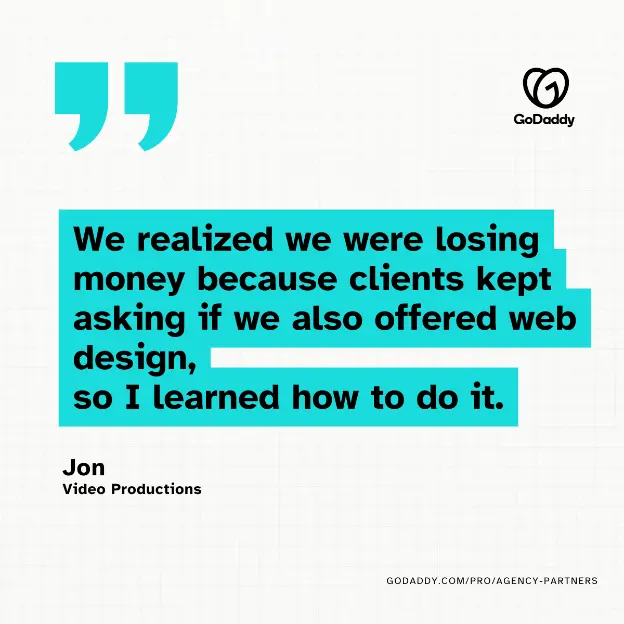
Another started in video production:
Here’s the truth that became obvious interview after interview:
The most important skill in this industry isn’t code or design. It’s the willingness to learn as you go.
Nearly every freelancer and agency owner described a similar journey:
They started with one offering.
A client asked for something new: Can you build our website? Can you help with email? Can you manage our hosting?
Instead of saying no, they figured it out.
That curiosity and adaptability became the bridge: from freelancer → multi-disciplinary professional → full-fledged agency.
Some didn’t even realize they had become an “agency” until years later. They were simply responding to what their clients needed, one project at a time.
And that’s the part I hope everyone reading takes to heart:
You don’t have to come from a traditional background.
You don’t need a degree in design or computer science.
You don’t need to have everything figured out before you start.
Every single Pro we spoke with grew by being resourceful, by saying “yes” before they fully knew how, and by trusting that they could learn anything necessary to help their clients succeed on the web.
It doesn’t matter where you start, it’s how you show up for your clients, how you keep improving, and how you stay curious enough to grow into whatever they need next.
Takeaway: Pros become multi-disciplinary not because they planned it, but because they cared enough to learn. This industry rewards adaptability far more than pedigree.
2. WordPress (still) dominates because it’s what pros know and clients expect
Across every interview, from early-career freelancers to seasoned agency owners, one truth kept resurfacing:
WordPress remains the professional standard for building powerful, flexible, client-friendly websites.
Even pros who experimented with tools like Webflow, Framer, and Squarespace consistently returned to WordPress when a client needed:
Custom integrations
Complex functionality
Robust SEO
Ecommerce
Membership systems
Long-term scalability
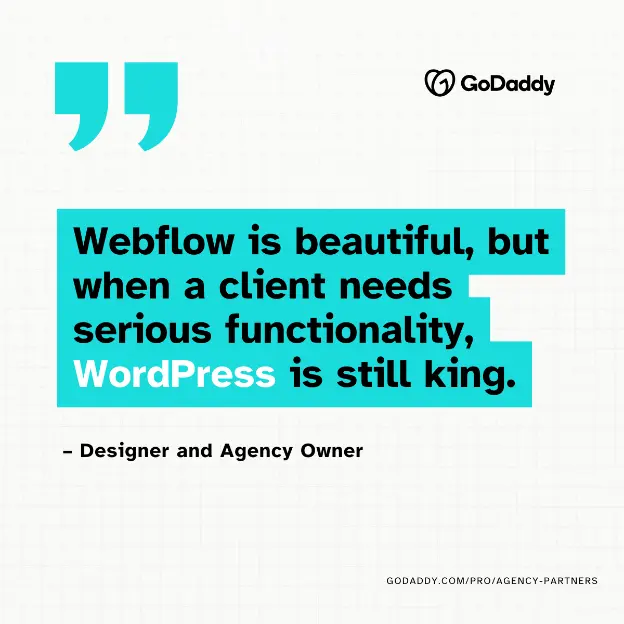
As one designer put it:
And for many Pros, the decision wasn’t even a debate. It was simply the tool they grew up on.
Some found WordPress through online courses. Others Googled their way into it. And many, like one freelancer we spoke with from Upwork, were pointed to it by mentors:
“Everyone told me: If you want to learn how to build websites, start with WordPress and Elementor.”
What really stood out in these conversations was trust. WordPress may not be the newest tool on the block, but it’s the one that consistently supports the wide range of jobs Pros must do.
A quick note about GoDaddy and WordPress
Because so many of the people we interviewed rely on WordPress daily, it’s important to acknowledge our own relationship with the ecosystem.
GoDaddy is, and has always been, deeply invested in the WordPress community:
We sponsor WordCamps around the world
We maintain contributions to the open-source project
We actively support WordPress creators, educators, plugin developers, and agencies
We’ve built our hosting around what real-world WordPress sites need, not just what looks good on paper
And the feedback from Pros and reviewers this year made something incredibly clear:
GoDaddy’s WordPress hosting is becoming one of the fastest and most reliable options in the industry.
In fact, WP Mayor recently said our Managed Hosting for WordPress is “like having a website that loads before you can even finish blinking.”
That praise wasn’t accidental. It’s the direct result of listening to Pros, optimizing for performance and stability, and making sure our platform delivers the speed, uptime, and support required to run modern WordPress businesses.
Takeaway: WordPress continues to power a major portion of the web because it helps freelancers and agencies deliver real results for real clients. And at GoDaddy, WordPress is more than a product. It’s a community we care deeply about and a platform we continuously invest in to help Pros succeed.
3. Recurring revenue (maintenance + hosting) is the true heartbeat of agency businesses
Nearly every professional I spoke with said some version of, “The website build is great, but the real money is in the maintenance contract.”
Across freelancers, studios, and full agencies, the pattern was undeniable: recurring revenue is what creates stability. And the models vary. Monthly plans, quarterly retainers, pre-paid support blocks, or “call us when you need us” troubleshooting all point to the same truth:
Clients need ongoing help. Pros need a predictable income.
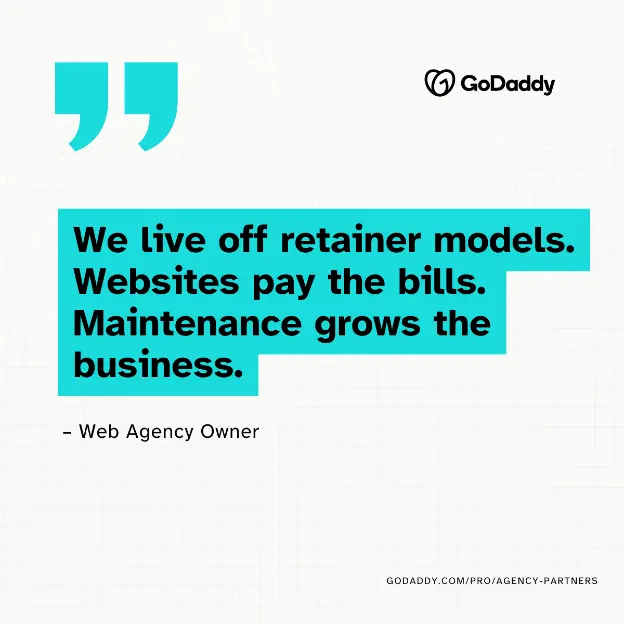
One agency owner explained it simply:
Another freelancer explained that maintenance often leads to more project work:
“People come to me with a problem. Fifteen minutes later, I fix it, and 20% of the time they ask me to rebuild their whole site.”
And whether a Pro is managing five sites or 50, one theme stood out:
The more sites a Pro manages, the more they value automation, centralization, and visibility across all their clients.
How GoDaddy supports recurring revenue for agencies
Because maintenance is such an essential part of how agencies operate, GoDaddy has invested heavily in tools that simplify and streamline this work.
The Hub by GoDaddy Pro
The Hub gives designers and developers a centralized dashboard to manage all their clients’ websites in one place. This includes updates, security checks, site monitoring, backups, and more, regardless of where those sites are hosted.
Pros repeatedly told us that they want one place to see everything happening across their entire client portfolio, and the Hub was built precisely for that.
Site Maintenance Packs for any WordPress website
For Pros who want to turn maintenance into a repeatable, packaged offering, our Site Maintenance Packs provide a turnkey way to deliver professional updates, backups, monitoring, and performance checks — even for websites not hosted at GoDaddy.
That flexibility is important, because many agencies inherit sites on a mix of hosting providers, and they can’t always migrate everything immediately. Being able to standardize maintenance across any WordPress site helps Pros:
scale their recurring revenue
deliver services more consistently
reduce the overhead of managing multiple tools
increase client retention and long-term value
Takeaway: Recurring revenue provides the safety net that allows freelancers and agencies to grow sustainably. Tools that make maintenance easier—automation, centralized dashboards, cross-hosting support, and standardized care plans—directly fuel the financial engine Pros rely on.
And GoDaddy’s Hub and Site Maintenance Packs are designed to make that engine run smoother, faster, and more profitably.
4. Pros don’t care about tools, they care about speed, reliability, and support
One of the clearest themes that emerged this year is that most successful freelancers and agency owners are not emotionally attached to specific tools or platforms. They experiment, adapt, replace, reconfigure, and reorganize their stacks constantly.
Across interviews, the top priorities were:
Fast workflows
Fast hosting
Fast support
Pros choose the tools that help them deliver fast, stable, predictable results for their clients. Everything else is secondary.
Many described switching hosts, plugins, builders, analytics tools, or email platforms multiple times to solve performance issues or reduce friction. But when it came to support, their standards were uncompromising.
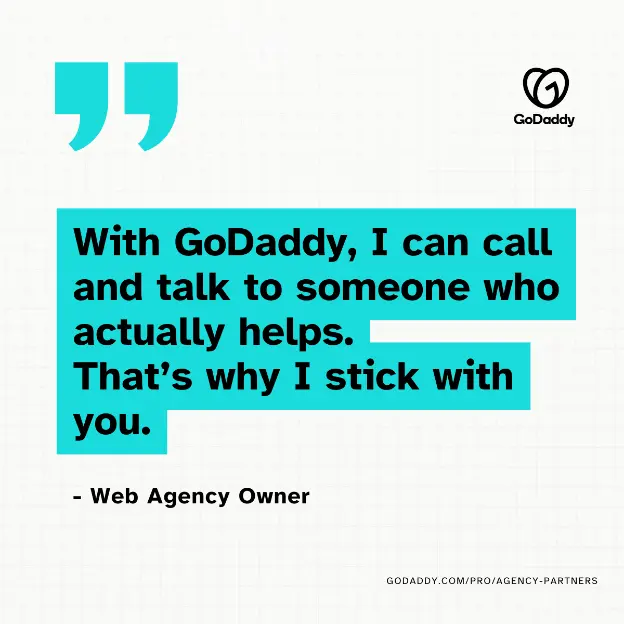
One pro put it plainly:
Another added:
“Clients don’t understand tech. They just want to know someone has their back. Support is part of my insurance policy.”
This was a recurring theme. When a site goes down, when email stops working, when DNS misbehaves, or when a plugin breaks a checkout flow, Pros feel the pressure immediately because their reputation is on the line.
They don’t want to open a ticket and wait. They don’t want to read documentation in a crisis. They want a human who understands the issue and can help them resolve it immediately.
How this connects to GoDaddy
This is precisely why GoDaddy continues to invest heavily in:
24/7, U.S.-based human support
Pro-first workflows and tools designed for multi-client management
High-performance hosting engineered for real-world WordPress sites
Infrastructure that reduces load times, improves uptime, and simplifies troubleshooting
This year, those investments paid off in a major way—not just through customer feedback, but through third-party validation.
For Pros, that performance isn’t an optional luxury, it’s a business expectation. They’re building sites for clients who want immediate load times, smooth user experiences, and uptime they never have to think about.
And when something does go wrong, they need a partner who helps them resolve it, not a platform that pushes them into a chatbot loop or a ticket queue.
Takeaway: Choose tools that deliver fast, stable, predictable outcomes. Speed, support, and reliability are the foundation of client trust, and the foundation of your agency’s growth.
When your tools help you deliver consistently great results, you spend less time firefighting and more time building relationships, solving higher-value problems, and scaling your business with confidence.
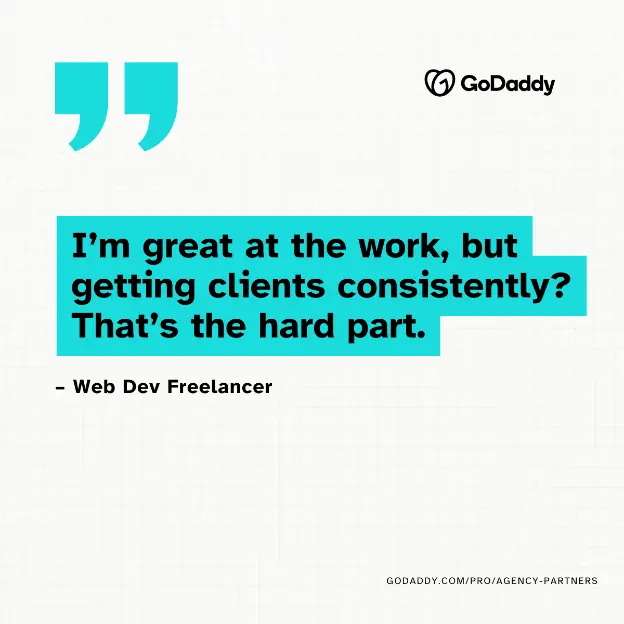
5. Client acquisition is still the hardest part for everyone
No matter how long someone had been in the business — six months or 16 years — every freelancer and agency owner shared the same challenge:
Finding a steady, predictable flow of clients is the single hardest part of running an agency.
Pros can master design, development, SEO, or branding, but the pipeline problem remains universal. Most people enter the industry because they love the craft… not because they love marketing themselves.
Across our interviews, client acquisition came from the same core channels:
Freelancer platforms (an essential entry point for many)
Referrals (the most trusted but the least predictable)
Networking (local business groups, chambers, community events)
Agencies hiring contractors (steady but often low-margin)
Organic search (when Pros have time to invest in their own SEO)
Social media (mixed results: high effort, inconsistent payoff)
But regardless of channel, the emotional experience was consistent. Pros often feel like they should be doing more to generate leads, but few feel confident they’re doing it the “right” way.
One freelancer shared a sentiment that echoed:
“Upwork is how I meet clients. We do a few projects there, then move off the platform because both sides want to avoid extra fees.”
Another described the challenge more bluntly:
This doesn’t mean that skills are lacking. Rather, it’s a lack of time, clarity, and dependable systems. When you’re building sites, writing content, fixing bugs, handling revisions, and keeping clients happy, lead generation becomes the task that always gets pushed to “next week.”
Why this matters for agencies
Because client acquisition is such a universal struggle, it’s also one of the most important places where GoDaddy can create real, lasting value.
More insights (including research like what you’re reading here)
More visibility
More opportunities to connect with potential clients
From sharing market insights, to highlighting high-performing agencies, to creating pathways that help GoDaddy customers discover trusted partners, the Agency Program is designed to give Pros a larger platform — one they don’t have to build alone.
Our goal is simple:
Help agencies grow by connecting them to knowledge, tools, and opportunities they can’t get anywhere else.
Takeaway: Client acquisition is the great equalizer.
The pipeline challenge is real and persistent, no matter if you’re a first-year freelancer or a seasoned agency leader.
Anything that helps Pros get found, get noticed, and get hired fuels the long-term health of the entire industry. And through the GoDaddy Agency Partner Program, we’re committed to helping agencies turn inconsistent opportunities into sustainable growth.
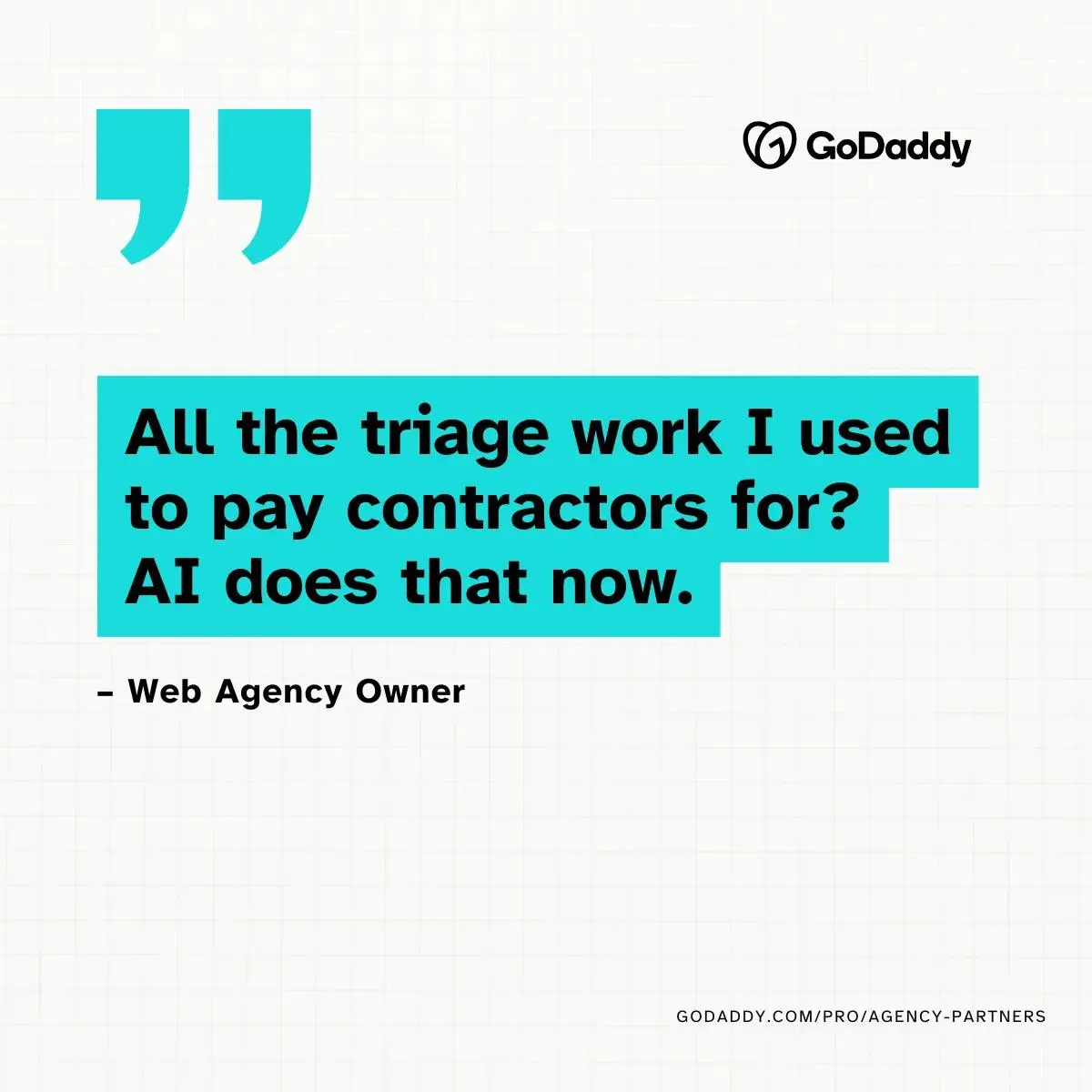
6. AI is becoming an invisible productivity tool
If you only looked at headlines this year, you might think AI is replacing designers and developers.
But that’s not what freelancers and agency owners told us. For real-world Pros, AI isn’t taking the wheel, it’s riding shotgun.
Most professionals aren’t using AI to build entire websites or fully automate creative work. Instead, AI has become a quiet, behind-the-scenes accelerator that helps them work faster, troubleshoot smarter, and spend more time on high-impact tasks.
Across conversations, Pros consistently mentioned using AI for:
Debugging odd WordPress errors
Speeding up copywriting and content drafts
Catching grammar mistakes
Generating ideas for marketing and email campaigns
Even those who claimed they “don’t really use AI” quickly admitted:
“I mostly use it for grammar checks or polishing content.”
And on the more technical end of the spectrum, AI is already reducing low-level work:
What unites these two ends of the spectrum is simple: Pros aren’t replacing themselves with AI; they’re replacing inefficiency and redundancy.
They’re using AI to clear bottlenecks, improve speed, and remove the tedious parts of the job so they can focus on what clients truly value: creativity, strategy, and business impact.
Why this matters for GoDaddy
Pros don’t want AI to do the job for them. They want it to make the job easier. This is why GoDaddy is investing in AI features that are:
Assistive rather than automated
Opt-in rather than intrusive
Designed to enhance human creativity
Built around real use cases Pros surfaced in these interviews
From content suggestions to performance insights to workflow automation inside the Hub, our focus is on using AI to:
Eliminate repetitive tasks
Reduce manual work
Solve problems faster
Help Pros deliver more value in less time
These tools aren’t meant to replace the professional, but empower them instead.
GoDaddy’s Airo® for WordPress is designed to help individuals and agencies build and launch sites in minutes. All with the original WordPress experience intact. So once Airo builds the first version of the website, you can take over and continue with your website design process all from the same WordPress native dashboard.
If you are in the client acquisition phase, you can use Airo for WordPress to build quick mockups to show your client some reference designs. This can significantly reduce the initial workload while Airo does the heavy lifting.
Takeaway: AI isn’t transforming agencies by replacing humans. It’s transforming agencies by freeing humans up to do their best work.
The Pros who thrive in 2026 won’t be the ones who fear AI or the ones who try to automate everything. They’ll be the ones who treat AI like a powerful creative assistant that helps them build smarter, faster, and with more confidence.
7. The most successful pros are the ones with streamlined processes
If there’s one pattern that separated freelancers from fully formed agencies this year, it wasn’t revenue, team size, or location.
The real dividing line is operational maturity.
Freelancers do the work. Agencies build the systems that do the work.
Over and over again, the Pros who grew the fastest — those with consistent income, higher project rates, and the ability to take time off — weren’t necessarily the most talented designers or the most technical developers.
They were the ones who learned how to design and build:
Repeatable workflows
Scalable processes
Predictable systems
Clear handoff steps
Standardized tools
Templates for everything
This evolution is often quiet and gradual, but unmistakable. It starts when a freelancer notices they’re spending too much time answering the same email, rewriting the same proposal, rebuilding the same layout, or troubleshooting the same issues across different clients. Then something clicks.
“If I can streamline this, I can do more work in less time — or bring someone in to help me scale.”
This is the moment the freelancer becomes an emerging agency.
What streamlined pros actually do
Across interviews, the high-performing Pros all shared similar habits:
Designing in Figma first to reduce rework
Using one-day website frameworks to accelerate builds
Standardizing a small set of tools (Elementor, Bricks, Gutenberg, etc.)
Creating proposal templates, intake forms, and SOPs
Systematizing onboarding and communication
Building starter sites or component libraries
Bundling ongoing services into simple monthly plans
One agency owner summarized the payoff:
“Once you start getting more established, you build out the SOPs and then it’s just more like routine than anything else.”
Another explained how process enables pricing differentiation:
“For premium clients, we design in Figma, then build in Bricks. For budget clients, we build directly in WordPress.”
In both cases, the magic isn’t the tool, it’s the repeatability.
The core lesson: Systems build agencies
Every freelancer eventually hits a ceiling. There are only so many hours in the day, and only so many clients one person can juggle.
But the agency owners you interviewed all described the same turning point. They stopped trying to “work harder” and learned how to “work systematically.”
They documented, templated, automated, delegated, and refined. They built a machine that could support:
higher volume
better margins
consistent quality
the ability to hire
the ability to take days off
the ability to grow without burning out
And that’s what ultimately separates a freelancer who’s stuck from one who grows into a thriving, scalable agency.
Takeaway: Tools matter, but processes matter far more.
The fastest-growing Pros of 2025 didn’t settle for only building great websites, they also built great systems. And those systems became the foundation of their success, their profitability, and their ability to grow from solo operators into agencies with real momentum.
8. Predictable pricing matters — a lot
Pricing came up in nearly every conversation this year. Not just as a business tactic, but as a point of stress for freelancers and agencies at every stage.
Across all levels of experience, Pros consistently expressed frustration with tools and platforms that introduce surprise fees, plugin renewals, complex add-ons, or unpredictable hosting costs.
One Pro said what many echoed:
“Don’t make me buy eight plugins for something that should be built-in.”
This wasn’t about money. It was about:
Avoiding awkward conversations with clients
Being able to price projects confidently
Preventing unexpected costs from eating into margins
Providing simple, clear proposals that clients understand
Building predictable recurring revenue in their own agency
And while every Pro had their own project rates, retainers, and billing models, what they valued most was simplicity. They wanted:
Simple plans they could explain in one sentence
Transparent pricing without hidden upsells
Hosting renewals that didn’t surprise their clients
Bundled functionality that reduced the need for scattered tools
And importantly, they wanted products and services they could mark up confidently, without worrying that a client would find a confusing line item and question their pricing.
This was especially true for newer freelancers who were still building confidence in their value. Tools with confusing or unpredictable pricing reinforced imposter syndrome; tools with clean, simple, predictable pricing gave them the stability to charge what their expertise is actually worth.
Where GoDaddy helps
Predictable pricing is a growth enabler. And it’s an area where GoDaddy is intentionally focused on supporting Pros.
Across our hosting, security, and email services, our goal is to offer:
Clear and transparent pricing structures
Easy-to-understand bundles
Renewals that don’t surprise clients
Products that agencies can confidently resell
Management tools (like the Hub) that reduce tool sprawl
This matters because agencies want to spend their time on client work, not decoding pricing tables, tracking plugin renewal dates, or explaining surprise charges their clients found online.
Predictability helps them:
Price projects clearly
Build recurring revenue
Increase client trust
Reduce operational overhead
Standardize their service offerings
And the more predictable pricing becomes, the easier it is for Pros to run profitable, stable, and scalable businesses.
Takeaway: Pricing clarity builds trust, and trust builds retention. Retention builds recurring revenue, and recurring revenue builds healthy agencies.
By offering simple, transparent, and agency-friendly pricing across our products and the GoDaddy ecosystem, we aim to make it easier for Pros to focus on what matters most: delivering amazing work, not worrying about unexpected costs.
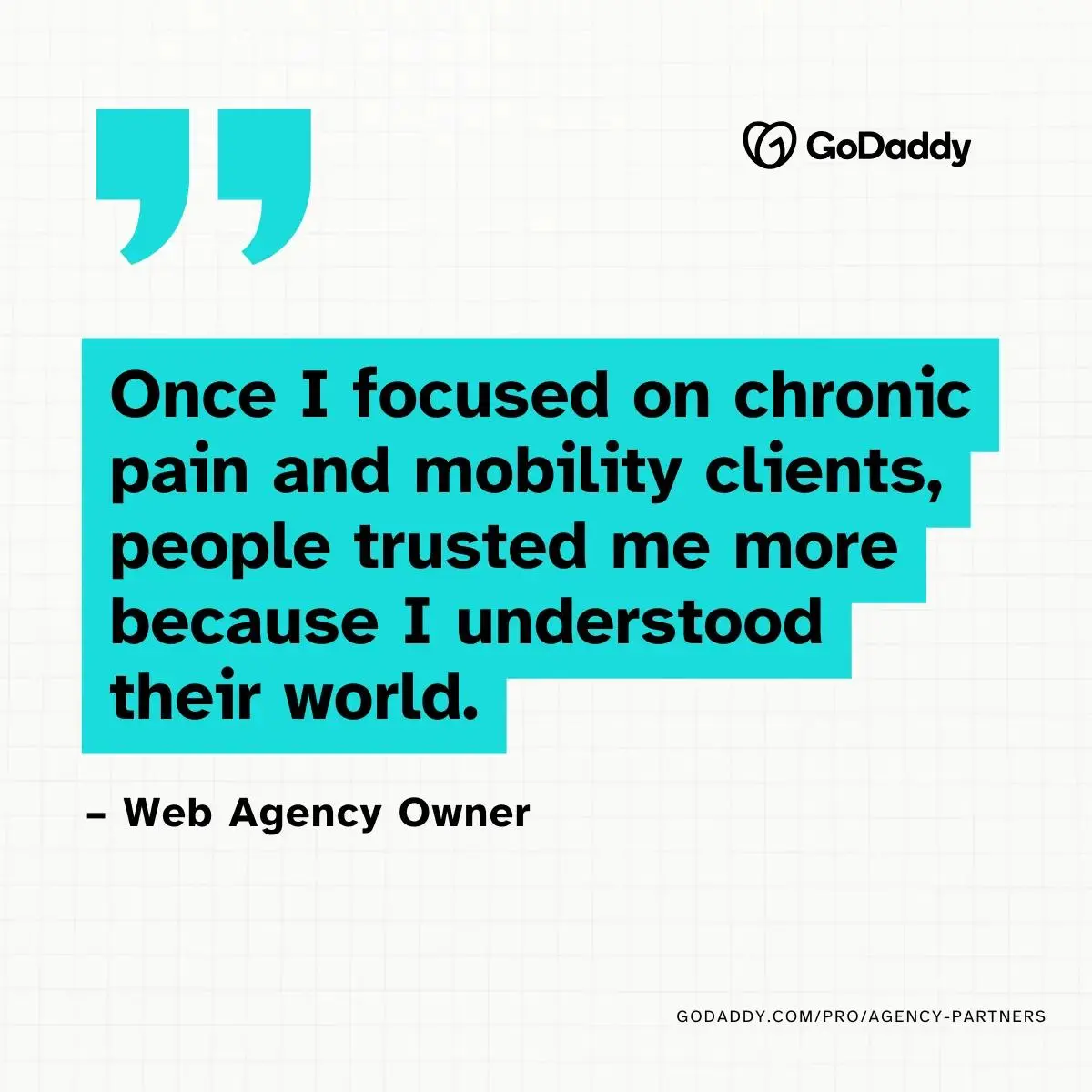
9. Most Pros are generalists, but those who specialize are accelerating faster
Across all of our interviews conducted this year, most freelancers and studios described themselves the same way:
“I’ll work with anyone who needs help.”
Generalists truly do work with everyone: restaurants, nonprofits, SaaS companies, real estate agents, salons, and fitness coaches. And for many Pros, especially early in their careers, this flexibility is a strength. It brings in revenue, builds a portfolio, and keeps the business active.
But a smaller group of Pros took a different path. They chose a segment, industry, or problem space and went all-in. The difference in their results was dramatic.
One agency owner shared:
“We’re creating a second brand just for sports facilities — it helps us get in more easily.”
Another Pro explained that niching gave them not just clarity, but confidence:
These weren’t isolated cases either. This pattern aligned almost perfectly with what we saw in broader market data.
What the research shows: Specialists grow faster and earn more
To help us understand the digital agency landscape, GoDaddy partnered with Promethean Research. In their “How Digital Agencies Grow” report, Promethean quantified what we consistently heard in our interviews.
According to the report:
80% of agencies specialize by service mix
59% specialize by industry
49% specialize by both
And the performance gap between specialists and generalists is substantial:
Agencies that specialize by both service and industry have 17% higher average client lifetime revenue
Those same agencies grow 40% faster than average agencies — even in difficult years
Why? Because specialization makes everything easier. Here’s how:
1. It’s easier to build trust
Promethean notes that specialists “understand both the unique challenges and vocabulary” of their target market.
This accelerates relationship-building, one of the most important drivers of agency growth.
2. It’s easier to nurture leads
Specialists create more relevant content, case studies, and insights, which keeps prospects engaged.
3. It’s easier to expand accounts
Specialists can take what they learn from one client and apply it to others in the same industry, building credibility fast. Promethean put it simply:
“These factors play a major role in why specialists were able to grow so much faster than average during a rough 2023.”
What this means for today’s freelancers and studios
Most Pros don’t begin as specialists, and that’s okay. The journey typically looks like this:
Start as a generalist to learn the craft
Notice a pattern in the clients you enjoy most
Realize those clients refer more work
Build deeper expertise in a specific space
Position yourself as the go-to expert for that niche
Raise prices because clients see you as a specialist
You don’t have to niche immediately. And you don’t have to commit to the same niche forever.
But even partial specialization creates predictability, authority, and higher-margin work.
Pros who specialize often report:
Less time selling
Higher close rates
More referrals
Fewer difficult clients
Greater clarity in their marketing
More confidence in pricing
In short, specialists don’t look for clients as often — clients find them.
Why this matters for GoDaddy
Specialization creates stronger, more sustainable businesses. The GoDaddy Agency Partner Program is designed to support this evolution by:
Giving agencies a larger platform to showcase their niche expertise
Helping them get discovered by GoDaddy customers needing specialized skills
Providing research, insights, and community connections that help clarify their positioning
Offering tools (like the Hub) that streamline workflows so agencies can focus on higher-value strategic work
Elevating specialists through badges, tiers, and visibility opportunities
Our goal is to help freelancers and studios transition into specialized, high-performing agencies, without having to navigate the journey alone.
Takeaway: Generalists survive. Specialists scale.
The most successful agencies of the last several years chose a lane, understood it deeply, and became invaluable to the clients in it. With both real-world interviews and industry-wide research pointing to the same conclusion, the message is clear:
Finding your niche isn’t limiting, it’s liberating.
And through the GoDaddy Agency Partner Program, we’re here to support that evolution every step of the way.
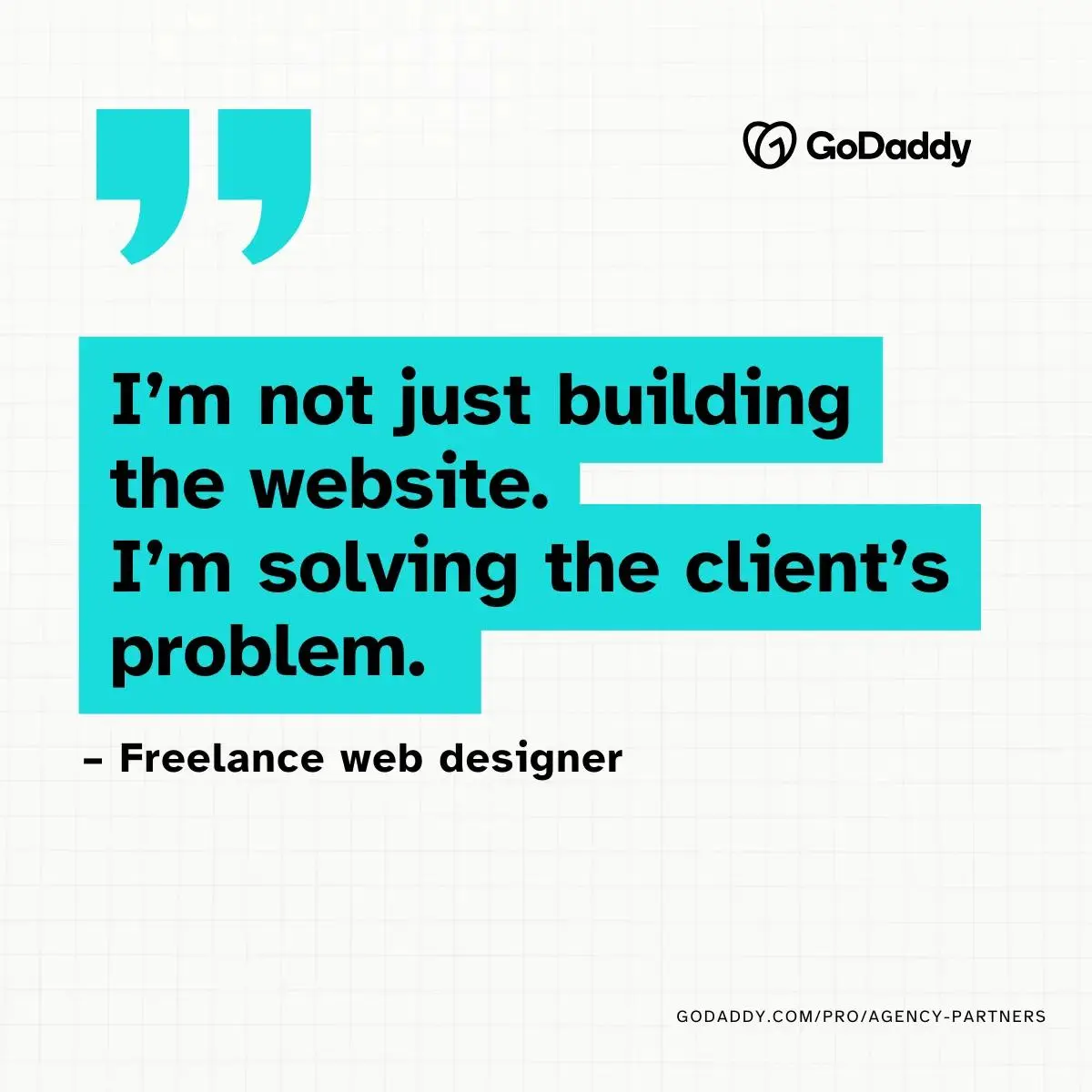
10. Pros don’t want to be “website people.” They want to be trusted advisors
If there is one major philosophical shift happening across the industry, it’s this:
Freelancers and agencies don’t want to be seen as “the website person” anymore. They want to be their clients’ go-to advisor for digital growth.
Pros want the opportunity to help their clients:
Refine their messaging
Understand their customers
Structure their services
Build lead generation systems
Make smarter marketing decisions
Choose the right tools
Improve performance and SEO
Optimize conversion
Plan long-term digital strategy
The website is no longer the final deliverable, it’s the starting point.
One Pro summarized this mindset perfectly:
Another Pro described site building as “just the entry point into a long-term consulting relationship.”
This shift matches what Promethean Research has seen across top-performing agencies. According to their findings, agencies that behave as strategic partners rather than technical executors grow significantly faster because:
Clients stick longer
Retainers are easier to justify
Service expansion is seamless
Agencies become part of business decisions, not just tech decisions
Specialization feeds into this as well: when an agency understands a niche deeply, clients naturally rely on them for broader guidance, rather than merely implementation.
What’s driving this shift?
Several market forces are pushing Pros to step into a more advisory role:
1. Clients are overwhelmed by the complexity of the digital ecosystem
Between SEO, content, paid media, local search, AI, CRM tools, analytics, and funnel strategy… most SMBs feel lost. They don’t want a technician, they need a guide.
2. Technology has become more accessible
With visual builders, templates, AI tools, and low-code platforms, clients know they could build something themselves. What they can’t do on their own is make smart, strategic decisions. That’s where Pros add irreplaceable value.
Retainers shouldn’t be thought of as only for updates. They’re also for insight, direction, and ongoing improvement.
4. Pros themselves want more fulfilling work
Many said some version of:
“I’m tired of being the person who just takes orders and fixes things.”
“I want to help clients grow, not just build what they ask for.”
“I’m more valuable as a strategic partner.”
This desire for deeper impact is reshaping what it means to be a web designer or web developer.
Why this matters for GoDaddy
GoDaddy’s mission in the Pro ecosystem is to empower digital professionals to move up the value chain. That’s why we’re building:
1. The GoDaddy Agency Partner Program
Designed to help Pros:
Elevate their credibility
Get visibility with GoDaddy customers
Access deeper insights (like this report)
Connect with higher-quality clients
Strengthen their business positioning
Agencies in the program are consultants, strategists, and trusted partners. And our goal is to amplify that.
2. The Hub by GoDaddy Pro
A centralized place where Pros can:
Monitor client sites
Manage updates
Automate tasks
Run performance checks
Streamline communication
This frees up time and mental space for Pros to focus on strategy, not firefighting.
3. AI-powered insights and automation
AI tools are not to replace the Pro, but to make it easier to deliver smart, meaningful recommendations that reinforce their value as advisors.
Takeaway: The future of the digital professional isn’t only about building websites. Pros are building business outcomes entirely.
The Pros who stand out in 2026 won’t be the ones who churn out the most pages or the fanciest animations. They’ll be the ones who:
Understand their clients deeply
Guide them with clarity and confidence
Bring data-driven insights
Take a seat at the strategy table
Focus on long-term partnerships
Use tools and AI to enhance their expertise
Digital Pros are becoming strategic partners. Their value is no longer in what they build, but in the clarity and growth they help clients achieve.
And through GoDaddy’s Pro ecosystem and the Agency Partner Program, we’re committed to helping every freelancer and agency owner unlock that next level.
Final thoughts: 2025 was a year of reinvention
If there’s one word that captures what we heard across hundreds of conversations this year, it’s reinvention:
Freelancers reinvented themselves into agencies.
Designers reinvented themselves into strategists.
Developers reinvented their workflows with AI.
Generalists reinvented their positioning by niching down.
Agencies reinvented their business models around recurring revenue.
And almost everyone reinvented how they learn, build, grow, and serve their clients.
What stood out most wasn’t the speed of change in the industry, it was the resilience and creativity of the people in it. Pros showed us again and again that success isn’t about having the perfect process, or the perfect tool stack, or the perfect origin story.
It’s about being willing to evolve: to keep learning, building, and showing up for clients who rely on you.
And that’s exactly why GoDaddy continues to invest in the tools, insights, programs, and community that help digital professionals do their best work. Whether through the Hub, our Managed hosting for WordPress platform, the Site Maintenance Packs, or the GoDaddy Agency Partner Program, our mission is simple:
To help freelancers and agencies build stronger businesses and to grow with them every step of the way.
This series is the start of a broader effort to share what we’re seeing in the market: the trends, patterns, challenges, and opportunities shaping the future of digital work. Over the next several weeks, we’ll dive deeper into each of the ten themes we uncovered in 2025 and explore how Pros can apply these insights to their own business in 2026.
Want to learn more? Join the insiders in the GoDaddy Pro Facebook community, run by the team that collected these insights. We share everything we learn about the industry in this community of digital professionals and ask for feedback about how GoDaddy can improve the experience for web professionals.