Originally published by TriplePundit
By Gary E. Frank

The framework for assessing global risk has shifted significantly in recent years, moving toward a more holistic understanding of how our natural world supports every level of society. Understanding these systemic connections allows us to identify where our greatest risks – and our greatest strengths – truly lie.

According to the World Economic Forum Global Risk Report 2026, three of the top five risks facing our world today are climate-related: extreme weather events, biodiversity loss and ecosystem collapse, and critical change to Earth systems. This assessment serves as a clear call to action, signaling that future resiliency depends on our ability to protect and restore these foundational systems that underpin the global economy.

The natural world is humanity’s greatest ally in the fight against climate change. Forests, wetlands, prairies and other wild ecosystems are better at capturing carbon at scale than any technology we have today, and they keep our air and water cleaner while supporting healthy soils and species biodiversity.

Nature-based climate solutions focused on protecting and restoring the world’s ecosystems can provide over a third of the climate mitigation needed through 2030 to meet the goals of the Paris agreement. That’s why corporate foundations like the Everpure Foundation are focused on nature-based solutions as a way to invest in both climate mitigation and community resilience.

Founded over 10 years ago by the data management company Everpure, the Everpure Foundation makes strategic grants in support of the environment, workforce development, and basic human needs and disaster response.

We recently spoke with two of the Everpure Foundation’s flagship environmental grantees who are leveraging the power of nature to fight climate change while supporting community resilience from the Great Lakes to the Czech Republic.

Aerial shot of peatlands

The Nature Conservancy protects and restores peatlands in Minnesota

“Peatlands cover only 3 percent of the Earth’s surface, but they store 33 percent of global soil carbon,” says Carl McGuinness, natural climate solutions director for The Nature Conservancy, a global environmental nonprofit and 2025 Everpure Foundation grantee.

That means peatlands store twice as much carbon as all of the world’s forests combined, not to mention roughly 10 percent of global freshwater.

“Peatlands are a type of ancient wetland. They’ve been around for millennia, and you find them all over the world,” McGuinness explains. Often called bogs, fens or swamps, peatlands form as plant material slowly decays in waterlogged soils over thousands of years — resulting in a gradual buildup, layer upon layer, of carbon-dense peat soil.

Along with capturing carbon, peatlands filter water, regulate water flow, provide habitat for wildlife, and reduce flooding impacts. “They are amazing systems,” says McGuinness.

For over 15 years, The Nature Conservancy has coordinated efforts to protect and restore global peatlands to mitigate climate change. In North America, that work includes the peatland capital of the contiguous United States: Minnesota.

Minnesota is home to more than 6 million acres of peatlands, covering about a tenth of its total land area. As impressive as that is, the state actually lost about a sixth of its peatlands to ditching and draining for agriculture and other uses in the early 20th century, according to The Nature Conservancy.

When peatlands are drained, the once-waterlogged plant matter begins to dry out and decompose, slowly releasing centuries worth of stored carbon back into the atmosphere. Research supported by The Nature Conservancy recently found that Minnesota’s previously drained peatlands still contribute around 38,000 metric tons of carbon emissions each year.

While it is important to consider that environmental damage from a century ago still contributes to climate change today, it also means there’s big potential to positively impact global emissions by restoring peatlands to their former natural state.

In Minnesota alone, “restoring and re-wetting farmed and partially-drained peatlands could mitigate more than 1 million metric tons of carbon per year — equivalent to removing 233,000 gasoline-powered cars from the road each year,” the research found.

The Nature Conservancy has supported Minnesota state agencies and universities in their work to map and restore drained peatlands since 2021. Researchers from the nonprofit created the “Playbook for Minnesota Peatlands” to guide state restoration efforts and supported the development of the Minnesota Board of Water and Soil Resources’ Potentially Restorable Peatlands mapping tool to better understand feasibility and climate mitigation potential.

“Local partners are always key to how we operate,” McGuinness says. “We look for locally-led solutions that are durable and relevant to local communities, and that’s built through major partner alliances.”

Man walking through wetlands

Research and capacity-building support from The Nature Conservancy and its funders like the Everpure Foundation helped Minnesota qualify for federal funding to take its work even further. The state received $20 million from the U.S. Environmental Protection Agency’s Climate Pollution Reduction Grants Program in 2024, including $4 million made available to tribal nations.
“Without funding [from the Everpure Foundation], we wouldn’t have been able to provide the capacity and capability building needed to make this possible,” McGuinness says. “It’s also going to help us take these learnings and share them globally. We have a whole network of peatland projects around the world, including in places like Indonesia, Ecuador, Mongolia, Patagonia and New Zealand.”

In Minnesota, nearly 20 restoration projects were underway at high-potential sites as of January 2026, with restoration work that includes plugging ditches, re-wetting and planting native vegetation, according to the Board of Water and Soil Resources.

Several of the state’s tribal nations, who have long recognized the importance of peatlands as a source of food, clean water and habitat for wildlife, are now part of a Tribal Peatland Working Group to share knowledge on restoration practices.

“Peatlands restoration work in Minnesota is being pursued by a broad coalition of partners at all levels of government, nonprofits and research organizations,” Suzanne Rhees, who manages peatland restoration programs for the Board of Water and Soil Resources, said in a statement earlier this year. “We’re excited to see such strong engagement and support to protect this valuable resource.”

Volunteers planting trees

Sázíme Stromy plants trees for climate mitigation and community in the Czech Republic

In another unique take on nature-based solutions, the nonprofit Sázíme Stromy (We Plant Trees) is working with local and international volunteers to rewild more rural countryside in the Czech Republic with benefits for both environmental and community wellbeing.

When the former Czechoslovakia was under communist rule from the 1940s through 1980s, large tracts of family farmland were converted to monoculture, the practice of growing one crop in a field at a time. Trees were felled and diverse fields were unified into sprawling single plots suitable for heavy machines.

Though it improved efficiency in the short term, the move to mass monoculture ultimately accelerated soil erosion, drove water pollution, and diminished biodiversity.

“These fields are almost dead because of the large machinery,” says Martina Pavelkova, founder of Sázíme Stromy.

As their name implies, Sázíme Stromy is working to rewild more of the Czech Republic’s rural areas by planting native trees and fruit trees within rural communities. The nonprofit has planted nearly 40,000 trees over the past six years and returns regularly to tend to them with the help of volunteers.

Along with sequestering carbon, bringing more native trees back to the Czech countryside builds benefits like temperature control and biodiversity preservation along with enhancing local quality of life.

Volunteers planting trees

“By planting trees, we are bringing life back into the fields, and we are also bringing people back into the fields because otherwise they cannot easily pass through such huge areas,” Pavelkova says.

In many areas, traveling from one village to another, even if they are near each other, requires a motor vehicle. Planting trees serves to “renew” paths between villages, encouraging people to walk or bicycle, she says.

“Then, of course, the trees bring shade. They cool the landscape. They protect the soil against water and wind erosion,” she explains. “They serve as shelter for animals, birds, and insects. They support biodiversity in the fields because otherwise, the fields are dead.”

Local and international businesses donate money to support the tree-plantings, and municipalities receive the trees as a gift, signing an agreement with Sázíme Stromy to take care of them for the next 10 years with the help of volunteers. Everpure employees and the Everpure Foundation have worked with Sázíme Stromy for years, volunteering to care for trees and granting funds to support the nonprofit’s ongoing work in the Czech Republic.

“We always try to bring as many people together as possible. When we are planting a new alley, there are employees of the donating company, local people and representatives of the municipality,” Pavelkova says. “We believe that if people connect, it is best for the healthy growth of the trees.”

Putting vision into action: Supporting community-led nature-based programs

In 2025, the Everpure Foundation redesigned its environmental grantmaking program, committing 60 percent of its annual strategic grants budget to nature-based solutions and community-led transitions to low-carbon energy like solar and wind.

“The natural world is our most powerful partner in fighting climate change, capable of delivering over a third of the climate fixes we desperately need. By funding nature-based projects, we aren’t just investing in the planet’s future — we’re bringing ecosystems back to life and building stronger, healthier communities for everyone,” says Julie Lata, executive director of the Everpure Foundation.

This vision is already turning into real-world action. Through its collaboration with The Nature Conservancy and Sázíme Stromy, the Everpure Foundation is transforming its funding into lasting benefits for the planet, locally and around the world.

Read more from this series

Before sunrise each day, Gebremedihin Gebrekidan walks to his small farm in Gera Kebele, Walwa village, Abergelle Yichila woreda, in Ethiopia’s Tigray region. A widower and father of six, he carries the full responsibility of parenting in an area repeatedly affected by drought and the lingering impacts of conflict in northern Ethiopia.

Despite his relentless effort, the harvest from his land only sustains his family for four to five months each year. The remainder of the year is marked by struggle, scarcity, and uncertainty. Yet Gebremedihin continues to do everything possible to provide for his children.

A Child’s Sudden Illness

The most difficult moment of his life came when his four-year-old son, Adhen Gebremedihin, suddenly fell seriously ill. His body began to swell and he developed a fever. Alarmed and desperate, Gebremedihin first took him to a nearby health post, but the severity of the condition required urgent referral to Yichila Primary Hospital.

“I was deeply sad,” he recalled quietly. “When I lost my wife, I lost many things. At that moment, I felt like I was losing my child too.”

The diagnosis confirmed his worst fear: severe acute malnutrition. Although Gebremedihin had been feeding his children with whatever food was available, it was not enough. The situation was even more painful because his son had previously been treated for the same condition only months earlier.

“I felt like I had failed to feed my own child,” he said.

Lifesaving Treatment and Renewed Hope

Hope returned when Adhen was admitted and began receiving treatment free of charge through support from the European Civil Protection and Humanitarian Aid Operations (ECHO) For three weeks, he received intensive medical care while his father stayed by his side. During this period, Gebremedihin was also supported with meals, easing the burden of his stay.

For a father who had left his farm unattended, the support meant everything. Each day brought visible improvement in his son’s condition.

“I was very happy to see my son improving,” he said with relief. “I left my farm work for more than three weeks, and I knew no one was taking care of it. But I did not mind because my son is my priority.”

Strengthening Health Services in Crisis Contexts

Yichila Primary Hospital serves more than 180,000 people across six woredas and treats approximately 30 malnourished children every month. According to Nuredin Mohammed, Nutrition and Stabilization Centre focal person, recurring droughts and poor harvests continue to drive severe food insecurity in the area.

Through the ECHO supported “Integrated Multi-Sector Emergency Response to Populations Affected by Conflict and Violence” project, Action Against Hunger provided essential medicines, medical equipment, transportation support, and meals for caregivers. Health workers also received training to strengthen their capacity to manage severe acute malnutrition and save more lives.

“For us as health professionals, it is heartbreaking to see children suffer while we know they can be treated,” he explained. “Before this support, the hospital faced shortages of medicine, equipment, water, sanitation materials, and even food for caregivers.”

“We are the first to feel healed when we see children recover,” Nuredin added with a smile. “Many parents do not immediately connect swollen bodies with lack of proper food. Some first turn to traditional healers. But when they see recovery, they regain hope.”

Restoring Health, Dignity, and Resilience

Health workers continue to advise families to feed children as frequently as possible with available food and to ensure safe drinking water. However, for many households in drought-affected communities, survival remains a daily struggle. Gebremedihin hold onto hope for his son’s future.

“I want my child to become a Prime Minister,” he said.

Through this project, urgent humanitarian assistance is reaching families facing crisis, enabling children to survive and recover through nutrition treatment, healthcare, safe water, and sanitation services. In Abergelle Yichila woreda alone, more than 300 children suffering from severe acute malnutrition received life-saving treatment in 2025. Behind each number is a child fighting for recovery and a parent refusing to give up hope.

Beyond emergency response, the project is also strengthening local health systems, improving access to essential services, and promoting better nutrition and hygiene practices. These efforts are helping communities not only survive the current crisis but also build resilience for the future.

***

Action Against Hunger leads the global movement to end hunger. We innovate solutions, advocate for change, and reach 26.5 million people every year with proven hunger prevention and treatment programs. As a nonprofit that works across over 55 countries, our 8,500+ dedicated staff members partner with communities to address the root causes of hunger, including climate change, conflict, inequity, and emergencies. We strive to create a world free from hunger, for everyone, for good.

KeyBank took center stage in advancing the next generation of technology leaders, partnering with the National Center for Women and Information Technology (NCWIT) to celebrate 33 high school students at the 2026 Ohio Aspirations in Computing Awards.

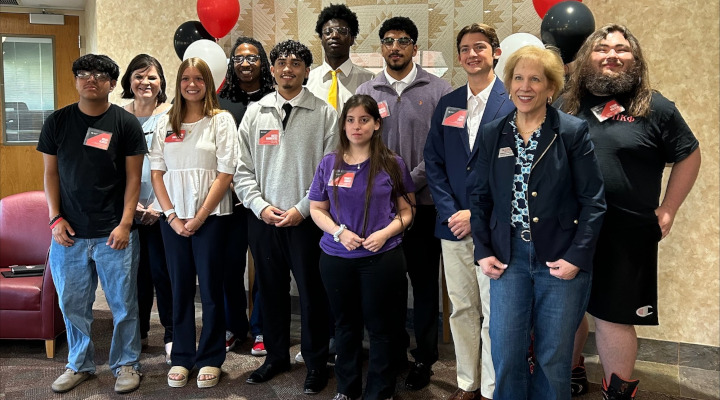
Students in front of balloons

Held at The Aviator in Cleveland, the event highlighted KeyBank’s ongoing commitment to expanding access to STEM opportunities and strengthening the talent pipeline in technology. The bank has supported the Ohio affiliate program for nearly a decade, reinforcing its role as a key driver of innovation and inclusion in the industry.

The ceremony recognized students for excellence in computing, leadership, and innovation. Among the honorees, Bianca Ehling stood out, earning both an Ohio Affiliate Award and a prestigious National Award, along with an invitation to attend the national celebration in North Carolina.

Students standing together

The event was led by Rhonda Crawford, KeyBank Program Manager and Ohio Affiliate Program Manager, whose leadership brought together students, families, educators, and technology professionals for a day focused on achievement and opportunity.

Attendees participated in interactive activities, connected with peers and industry leaders, and gained insights from a panel of emerging technologists—an experience designed not only to celebrate accomplishments but to inspire future careers in STEM.

Someone sitting at a swag table

KeyBank Team Drives Event Success

A cross-functional group of KeyBank employees played a vital role in delivering the event, demonstrating the organization’s hands-on commitment to community engagement and workforce development.

Team members contributed across planning, execution, and on-site support, underscoring KeyBank’s collaborative culture and investment in meaningful initiatives beyond banking.

Six speakers seated on a stage

In addition to KeyBank’s efforts, contributors such as Pete Catavolos provided career-focused support, including resume guidance to help students prepare for future opportunities.

Investing in the Future of Technology

KeyBank’s continued partnership with NCWIT reflects a broader mission to create pathways for underrepresented students to enter and thrive in technology fields. By supporting programs like Aspirations in Computing, the bank is helping cultivate diverse talent essential to the future of the industry.

NCWIT, a national nonprofit community of more than 1,600 organizations across education and industry, works to expand participation in computing by increasing access and fostering environments where individuals can succeed.

Awards

Looking Ahead

Applications for the next cycle of the NCWIT Aspirations in Computing Awards are set to open in August, with KeyBank encouraging students, educators, and volunteers to get involved.

As the 2026 ceremony demonstrated, KeyBank’s leadership continues to play a pivotal role in empowering young innovators—and shaping the future of technology.

2026 Award Winners

Rebecca Jacob – Solon High School, Solon, Ohio 
Anna McCracken – Westerville South High School, Westerville, Ohio 
Aanvi Dogra – Dublin Jerome High School, Plain City, Ohio 
Emily Ahmad – Centerville High School, Centerville, Ohio 
Anuki Mudalige – Olentangy Orange High School, Lewis Center, Ohio 
Samantha Welsh – Hathaway Brown School, Shaker Heights, Ohio 
Zehra Demirtoka – Olentangy Orange High School, Columbus, Ohio 
Elena Zhu – Upper Arlington High School, Columbus, Ohio 
Leilanie Premkumar – Solon High School, Solon, Ohio 
Maya Houghton – Hathaway Brown School, Brecksville, Ohio 
Shubhangi Srishti – Lakota East High School, Liberty Township, Ohio 
Ayesha Faruki – Mentor High School, Mentor, Ohio 
Haasini Sanisetty – Hathaway Brown School, North Royalton, Ohio 
Shivani Arulselvan – Padua Franciscan High School, Strongsville, Ohio 
Ava Kohlhaas – Lakota East High School, Liberty Township, Ohio 
Yifan Wang – Solon High School, Solon, Ohio 
Bianca Ehling – Olentangy Orange High School, Galena, Ohio (Ohio Affiliate & National Winner)

Honorable Mentions

Bohdan Chuprynka – North Royalton High School, North Royalton, Ohio 
Olivia Scarlatella – Felicity-Franklin High School, Bethel, Ohio 
Shrividya Regadamilli – Hathaway Brown School, Solon, Ohio 
Kaavya Gulia – Solon High School, Solon, Ohio 
Rithi Hegde – Western Reserve Academy, Hudson, Ohio 
Stella Houngbedji – Columbus Downtown High School, Columbus, Ohio 
Noreen Akuffo-Konadu – Lakota East High School, Liberty Township, Ohio 
Yeva Borys – Saint Joseph Academy, Parma Heights, Ohio 
Elaina Sharritt – Centerville High School, Centerville, Ohio

Rising Stars

Fatima Mohammadi – Westlake High School, Westlake, Ohio 
Mukesh Mannava – Westlake High School, Westlake, Ohio 
Caleb Shultz – Westlake High School, Westlake, Ohio 
Emma Heuker – Minster High School, Fort Loramie, Ohio 
Olivia Morgan – Padua Franciscan High School, Brunswick, Ohio 
Fatoumata Bah – Canal Winchester High School, Canal Winchester, Ohio 
Sanika Vemireddy – North Royalton High School, North Royalton, Ohio

Learn more about KeyBank’s commitment to helping clients and communities thrive

Originally published on CVS Health Company Newsroom

SAN FRANCISCO AND WOONSOCKET, R.I., June 12, 2026 /3BL/ – Salesforce (NYSE: CRM), the world’s #1 AI CRM, and CVS Health (NYSE: CVS), a leading health care solutions company which serves 185 million people each year, today announced an expansion of their collaboration to simplify and streamline call center interactions for members and providers across multiple CVS Health businesses. This expanded use of Agentforce Health, Salesforce’s industry vertical solution for health care that brings humans, data, and AI agents together on a deeply unified platform, reinforces CVS Health’s leadership position in leveraging AI to personalize the member call center experience and better meet members’ health care needs.

Driving Customer Call Center Engagement with Data and AI

CVS Health will leverage Agentforce Health to support its Aetna and CVS Caremark businesses on a secure call center platform.

The call center platform will use AI agents to provide real-time insights, empowering CVS Health member care colleagues to resolve inquiries faster and with clinical integrity and oversight. Salesforce’s technology will connect CVS Health’s data, as permitted by applicable laws and client contracts, to help ensure member care colleagues have a complete view of a member’s health profile when they are interacting with different CVS Health businesses. This will enable CVS Health member care colleagues to address members’ challenges in a single interaction where possible and appropriate for the member. The platform will remove friction from the experience by giving AI agents access to the information they need to quickly support members and CVS Health member care colleagues, creating a more personalized and easier call center experience.

“Our purpose is to simplify health care — one person, one family and one community at a time — which starts with building a more connected, compassionate and accessible health care experience during every interaction with our members,” said Pushpendu Pal, Senior Vice President and Chief Digital Technology Officer, CVS Health. “Through the responsible use of AI, we’re revolutionizing health care, unlocking new levels of accessibility for our members, and empowering our colleagues to provide an even deeper, more engaged experience in every moment of a member’s journey.”

A Decade of Collaboration Evolves into AI-Driven Call Center Care

For over a decade, CVS Health and Salesforce have worked together to build CVS Health a centralized call center service solution that simplifies the member experience with Agentforce Health and Agentforce Service. By leveraging Slack, customer care call center teams can communicate in real-time and ensure they are aligned on providing the best outcomes for members and providers.

“Agentforce Health supports CVS Health’s call center experience strategy by creating a seamless experience and automating routine tasks,” said Amit Khanna, Senior Vice President and General Manager, Agentforce Health at Salesforce. “With Agentforce Health, CVS Health colleagues can focus on higher-value work, facilitating  more meaningful, one-on-one time with every member.”

This expansion marks Salesforce’s largest Agentforce deal to date across regulated industries.

The expanded collaboration will also help reduce fragmentation in the U.S. health system and demonstrates the value of CVS Health’s integrated call center experience model. As a client of CVS Caremark and Aetna, Salesforce’s own employees will experience the benefits of this expanded collaboration.

About Salesforce

Salesforce helps organizations of any size become Agentic Enterprises – integrating humans, agents, apps, and data on a trusted, unified platform to unlock unprecedented growth and innovation. Visit www.salesforce.com for more information.

About CVS Health

CVS Health is a leading health solutions company simplifying health care one person, one family and one community at a time. As of March 31, 2026, the Company had approximately 9,000 retail pharmacy locations, more than 1,000 walk-in and primary care medical clinics and a leading pharmacy benefits manager with approximately 88 million plan members. The Company also serves an estimated more than 37 million people through a broad range of health insurance products and related services. The Company’s integrated model uses personalized, technology driven services to connect people to simply better health, increasing access to quality care, delivering better outcomes, and lowering overall costs.

Media Contact:

Phil Blando
Phillip.Blando@cvshealth.com

This new case study highlights how EPEAT® registered technology purchases supported carbon neutrality, reduced emissions, and strengthened circular procurement practices.

As higher education institutions work to meet ambitious climate commitments, Loyola University Chicago is demonstrating how sustainable procurement can become a measurable driver of environmental progress.

A new case study from the Global Electronics Council examines how Loyola integrated sustainability standards into its purchasing strategy to advance its carbon neutrality goals while improving operational efficiency and reducing lifecycle environmental impacts.

Over a three-year period from 2022 to 2024, Loyola procured nearly 5,900 EPEAT registered products across computers, monitors, printers, scanners, and servers. These purchases contributed to approximately 1.5 million kg CO2-equivalent emissions reductions and more than 5.3 million kWh in energy savings, supporting the university’s broader sustainability commitments.

As the first university in the Chicago area to achieve carbon neutrality, Loyola has embedded sustainability into procurement policies, supplier engagement, and campus operations. The case study outlines how collaboration between procurement, information technology, and sustainability teams enabled the university to align day-to-day purchasing decisions with institutional climate goals.

“Loyola University Chicago is deeply committed to sustainability, and integrating EPEAT into our procurement strategy has been instrumental in ensuring our electronics purchasing aligns with those core values. We are proud to share our journey and the tangible environmental impact of prioritizing sustainable technology in this case study,” Aaron Durnbaugh, Sustainability Director, Loyola University Chicago.

The case study also highlights Loyola’s focus on circularity and responsible lifecycle management. By prioritizing EPEAT Gold and Silver registered products, the university supports longer-lasting, more repairable technology while reducing waste and strengthening supply chain transparency.

Loyola’s approach demonstrates how mission-driven institutions can transform procurement into a strategic climate action tool while generating measurable environmental and economic benefits.

Read the full case study:
Loyola University Chicago Case Study

About the Global Electronics Council

The Global Electronics Council (GEC) envisions a world with only sustainable electronic technology that enhances the well-being of people and planet. Our mission is to accelerate the transformation of markets toward prioritizing the most sustainable electronic products and services.

As stewards of the EPEAT ecolabel, we set global standards for electronics that empower brands, their value chains and their buyers to achieve ambitious sustainability goals. Through our thought leadership, advocacy, and EPEAT ecolabel, GEC is helping to reshape the electronics industry into a driving force for environmental preservation and global well-being.

Our EPEAT Ecolabel

EPEAT is a leading global ecolabel that enables manufacturers to follow strict third-party verified standards while providing transparency for buyers.

Since its launch in 2006, procurement professionals have reported purchases of more than 3.2 billion EPEAT products, generating cost savings exceeding $39 billion USD and reducing greenhouse gas emissions by more than 370 million metric tonnes.

Erik Fessler 

Senior Manager, Global Communications 

Global Electronics Council

Direct Line: +1 (971) 380-4088

U.S. Eastern Time Zone

efessler@gec.org

BATTLE CREEK, Mich., June 11, 2026 /3BL/ – WK Kellogg Co announced this week a $100,000 donation to the Battle Creek Housing Fund, reinforcing the company’s longstanding commitment to its hometown and to helping communities thrive.

Launched with seed funding from the W.K. Kellogg Foundation and local partners, the Battle Creek Housing Fund was created to address a critical housing shortage in the community—estimated at more than 3,000 units—and to expand access to affordable and market-rate housing. The Fund aims to support the development and rehabilitation of 1,000 housing units by 2035, strengthening economic opportunity and stability for local families.

The financial contribution from WK Kellogg Co will help accelerate these efforts, supporting a more vibrant, inclusive housing market in Battle Creek where the company has been rooted for more than a century. “Battle Creek is more than our headquarters, it’s our home,” said Stacy Flathau, chief corporate affairs officer, WK Kellogg Co. “This investment reflects our deep commitment to the community that shaped our company and our people and continues today. In supporting the Housing Fund, we’re doing our small part to help create opportunities for Battle Creek families to build stability and pursue brighter futures.”

The company’s support of the Housing Fund also builds on a proud legacy established by founder W.K. Kellogg, a pioneering entrepreneur and philanthropist who believed in investing in the health, happiness and wellbeing of children and families—starting in his hometown of Battle Creek, Michigan. Today, that spirit lives on through WK Kellogg Co’s Feeding Happiness™ sustainable business strategy which aims to build healthier and happier futures for families, kids and communities. Through ongoing partnerships with numerous non-profit organizations, WK Kellogg Co is committed to the community it has called home for more than 120 years.

With the investment announced this week, WK Kellogg Co proudly joins a coalition of public, private and philanthropic partners, including the W.K. Kellogg Foundation, the City of Battle Creek, Battle Creek Unlimited (BCU) and the Local Initiatives Support Corporation (LISC) working together to strengthen the local housing ecosystem, support workforce growth and ensure Battle Creek remains a place where families can live, work and succeed.

“The progress we are seeing across Battle Creek is the result of leaders who are willing to invest in the future of this community. We are especially grateful to the WK Kellogg Co for its leadership and commitment to the Battle Creek Housing Fund,” said La June Montgomery Tabron, president and CEO of the W.K. Kellogg Foundation. “Their investment reflects a recognition that housing is not only a community issue, it is an essential workforce and economic development priority. When families have access to safe, affordable housing, they are better positioned to thrive, employers are better positioned to attract and retain the talent they need, and communities are better positioned to achieve long-term, sustainable growth that benefits us all. We hope the WK Kellogg Co’s leadership inspires others across the business community to join this effort.”

To learn more about the fund and how to play a role in supporting it, visit the W.K. Kellogg Foundation website or contact bchousingfund@gmail.com.

About WK Kellogg Co
At WK Kellogg Co, we bring our best to everyone, every day through our trusted foods and brands. Our journey began in 1894, when our founder W.K. Kellogg reimagined the future of food with the creation of Corn Flakes, changing breakfast forever. Our iconic brand portfolio includes Kellogg’s Frosted Flakes®, Rice Krispies®, Froot Loops®, Kashi®, Special K®, Kellogg’s Raisin Bran®, and Bear Naked®. With a presence in the majority of households across North America, our brands play a key role in enhancing the lives of millions of consumers every day, promoting a strong sense of physical, emotional and societal wellbeing. Our beloved brand characters, including Tony the Tiger® and Toucan Sam®, represent our deep connections with the consumers and communities we serve. Through our sustainable business strategy, Feeding Happiness™, we aim to build healthier and happier futures for families, kids and communities. We are making a positive impact while creating foods that bring joy and nourishment to consumers. For more information about WK Kellogg Co and Feeding Happiness, visit www.wkkellogg.com.

SOURCE WK Kellogg Co

For further information: WK Kellogg Co Media Hotline, Media.Hotline@wkkellogg.com, 269-401-3002

  • CNH signs a three-year MoU with the Pidthong Lang Phra Foundation for rural development across 33 provinces in Thailand.
  • CNH provides equipment and training to enhance agricultural work and build local capabilities.

Under this three-year cooperative framework, CNH provides agricultural equipment—including tractors, front blades, ploughs and harrows, to support community-led development initiatives. In parallel, CNH delivers structured theoretical and practical training to the Foundation’s field personnel, ensuring safe operation, maintenance, and effective use of the equipment.

The Pidthong Lang Phra Foundation, which operates across 33 provinces to systematically implement Royal Initiative development frameworks, oversees the localized deployment of the machinery. All equipment supported under this MOU will be dedicated to public, non-commercial use, supporting water resource management, environmental preservation, and sustainable income generation for rural citizens.

Access to modern agricultural machinery and technical expertise strengthens our ability to implement development initiatives effectively at the community level. This collaboration supports a more structured and sustainable approach to land and water development across our target provinces,” said Mr. Krissada Boonrach, Chairman of the Board of the Foundation.

Read the full story here.

NEW YORK, June 11, 2026 /3BL/ – Governance & Accountability Institute (G&A), a leading sustainability consulting and research firm, has issued a new resource paper providing a practical guide to navigating the European Union’s Packaging and Packaging Waste Regulation (PPWR). The resource paper, available here, explains the structure of the new packaging mandate and outlines the design, documentation, and labeling obligations companies will face when placing packaging on the EU market. Some of these obligations begin to take effect in August 2026.

“The PPWR represents a fundamental shift in how the EU governs packaging—from a fragmented, directive-based system to a single, directly applicable regulation with binding requirements on recyclability, recycled content, and conformity documentation,” said Louis Coppola, CEO & Co-Founder at Governance & Accountability Institute. “With key obligations taking effect now, it is essential for companies to understand which requirements apply to them, how their packaging measures up against new design standards, and what documentation they must have in place.”

G&A’s new resource paper includes clear, actionable insights into PPWR compliance, including:

  • Key packaging design requirements covering recyclability, minimum recycled content, packaging minimization, and restrictions on substances including PFAS in food contact packaging.
  • Important timelines under the phased implementation schedule, including the August 2026 registration, conformity assessment, and PFAS restriction deadlines; the 2028 labeling requirements; and the 2030 recyclability and reuse mandates.
  • Documentation obligations, including conformity assessments, technical documentation, and EU Declarations of Conformity that must be retained for ten years.
  • Which economic operators are subject to obligations under the PPWR, including manufacturers, importers, brand owners, distributors, and retailers, and what those obligations entail.

Coppola added, “G&A is available to help companies identify their packaging exposure, assess their portfolios against PPWR requirements, conduct conformity assessments, prepare technical documentation and Declarations of Conformity, and develop strategies to manage costs while maintaining access to the EU market.”

Download this latest G&A resource here.

About G&A Institute, Inc.
Founded in 2006, Governance & Accountability Institute (G&A) is a New York–based sustainability consulting and research firm with deep advisory experience supporting corporate leaders and investors in integrating sustainability into governance, risk, enterprise performance, and evolving regulatory and stakeholder expectations. Backed by rigorous disclosure research and one of the industry’s most comprehensive benchmarking databases, we deliver insight that strengthens transparency, enhances competitiveness, and drives measurable return on investment.

More information is available on our website at ga-institute.com.

FOR MEDIA INQUIRIES & INTERVIEWS, CONTACT
Louis D. Coppola, CEO & Co-Founder 
Governance & Accountability Institute, Inc. 
Tel 646.430.8230 ext 14 Email lcoppola@ga-institute.com

ST PAUL, Minn., June 11, 2026 /3BL/ – Antea Group USA is pleased to announce the addition of Jason Ruf as a Consultant supporting the firm’s Environmental Remediation practice through advanced 3-Dimensional Visualization and Analysis (3DVA), Conceptual Site Model (CSM) development, Environmental Sequence Stratigraphy (ESS), and the integration and interpretation of High-Resolution Site Characterization (HRSC) data to support data-driven decisions.

Jason brings more than 27 years of experience integrating environmental data, geologic understanding, and advanced visualization tools to support site characterization and remediation projects. Throughout his career, he has helped clients and project teams transform complex subsurface data into clear, defensible insights that support confident decision-making and more effective remediation strategies.

Jason has applied advanced visualization and HRSC approaches at hundreds of sites worldwide, including brownfield, industrial, manufacturing, Superfund, UST, ISRA, RCRA, DOE, and municipal projects. His work focuses on integrating historic site information, high-density subsurface data, and geologic frameworks to develop robust CSMs that reduce uncertainty and improve investigation and remediation outcomes.

He has extensive experience developing 3D CSMs for complex environmental projects involving PFAS, petroleum hydrocarbons, chlorinated solvents, and other contaminants. A significant focus of Jason’s work involves applying ESS as deposition-system based geologic modeling and integration of high-resolution datasets, that helps project teams identify preferential migration pathways and contaminant storage zones that are often overlooked using traditional geologic models. These approaches provide a stronger framework for supporting remedial design, site closure strategies, emergency response investigations, and long-term site management programs.

In addition to his technical work, Jason is a recognized industry leader in 3D visualization and data management. He has authored numerous publications and presented at national conferences, industry workshops, and regulatory training programs on topics including conceptual site model development, data visualization, environmental databases, as well as high-resolution site characterization.

In his role at Antea Group, Jason will focus on expanding the firm’s portfolio of 3D Visualization and Analysis services while advancing the effective use, interpretation, and integration of High-Resolution Site Characterization (HRSC) data to help streamline the achievement of site objectives. His work will support the development of robust Conceptual Site Models that improve understanding of complex subsurface conditions, refine site characterization efforts, reduce uncertainty, and support more informed, data-driven remedial decisions throughout the remediation process.

“I’m excited to join Antea Group and contribute to the continued growth of our 3D Visualization and Conceptual Site Model development capabilities,” said Jason Ruf. “The environmental industry continues to generate increasingly large and complex datasets. By integrating advanced visualization, Environmental Sequence Stratigraphy, and High-Resolution Site Characterization data into comprehensive Conceptual Site Models, we can help clients transform information into data-driven decisions that improve long-term project outcomes.”

“We are excited to welcome Jason to Antea Group,” said Ben Rieger, Senior Operations Leader for Environmental Remediation. “His depth of experience and unique ability to translate complex technical data into practical insights will be a tremendous asset to our clients and will support them in better environmental decision-making and project outcomes.”

Jason’s primary areas of expertise include:

  • 3D Visualization and Analysis (3DVA)
  • Conceptual Site Model (CSM) Development
  • High-Resolution Site Characterization (HRSC)
  • Environmental data management and interpretation
  • PFAS and emerging contaminant investigations
  • Groundwater and subsurface characterization
  • Site assessment, remediation, and closure strategies

His leadership and depth of knowledge across these specialties will help drive continued innovation within Antea Group’s Environmental Remediation practice, enhancing the firm’s ability to translate complex environmental data into actionable insights for clients.

COMPLIMENTARY SPANISH WEBINAR

Success in the Certified Wood Products and Pulp Market: FSC Chain of Custody Certification with SCS Global Services

Monday, June 22, 2026

9:00 AM PDT | 11:00 CDT

REGISTER NOW

Is your organization looking to certify their supply chain? Join our complimentary Spanish webinar to learn everything your organization needs to know about Forest Stewardship Council (FSC) certification and the benefits of certifying under the Chain of Custody (CoC) standard.

SCS Global Services International Account Manager, Lizbeth Ruiz, and Chain of Custody Technical Specialist, Rafael Ferreiro, with Israel Martinez of BIO PAPPEL will discuss:

  • What differentiates FSC from other certifications
  • The importance and value of CoC certification
  • A roadmap to certification under the FSC CoC standard
  • And, more

A Q&A portion will follow the broadcast.

REGISTER NOW

Privacy Overview

This website uses cookies so that we can provide you with the best user experience possible. Cookie information is stored in your browser and performs functions such as recognising you when you return to our website and helping our team to understand which sections of the website you find most interesting and useful.