
Author: sHq_LoGiNz
At WK Kellogg Co, we believe healthy soils are the foundation of resilient farming communities, thriving ecosystems and a more sustainable food system. Through our support of the Dan Gillespie Soil Health Fund, we are helping expand opportunities for soil health education, farmer-led innovation and youth engagement initiatives across Nebraska.
The Dan Gillespie Soil Health Fund is working to strengthen the future of agriculture by investing in projects that advance regenerative agriculture, soil biology, water stewardship, biodiversity and hands-on agricultural learning. Together, these efforts are helping producers, students and communities explore practical approaches that improve soil health, strengthen farm productivity, protect natural resources and build resilience for future generations.
One example of this impact is Battle Creek High School FFA member Claire Schmidt, whose award-winning agriscience research demonstrates the leadership and innovation emerging from the next generation of agricultural stewards. Schmidt won the Nebraska State Agriscience Competition in the Environmental Service/Natural Resource Systems category with her project, “Optimizing Nitrogen Application to Maximize Crop Yield, Economic Returns, and Soil Health.” Supported through funding from the Dan Gillespie Soil Health Fund and an anonymous donor through Nebraska Community Foundation’s Youth Engagement Grant, her research showed how optimized nutrient management can improve economic returns while supporting soil health and protecting water quality.
The Dan Gillespie Soil Health Fund continues to invest in farmers, educators and community organizations working to advance soil health knowledge and adoption throughout Nebraska. By supporting locally driven solutions and practical on-farm learning opportunities, these investments help create agricultural systems that are productive, environmentally responsible and economically sustainable.
Here at WK Kellogg Co, we are proud to support this work alongside other donors and community partners who share a commitment to sustainable agriculture, natural resource stewardship and agricultural education.
As a result of this collective investment, the Dan Gillespie Soil Health Fund will increase its maximum grant award to $2,500 for the next two grant cycles, creating additional opportunities for farmers, educators and students to pursue innovative soil health projects that deliver lasting environmental and community benefits.
“We’re proud to support the Dan Gillespie Soil Health Fund and its efforts to expand opportunities for soil health education and innovation,” said Sarah Ludmer, Sustainable Business Officer at WK Kellogg Co “Healthy soils are foundational to resilient farming communities, thriving ecosystems and a sustainable food system. Investing in soil health helps create opportunities for farmers today while supporting future generations of agricultural leaders.”
Supporting initiatives like the Dan Gillespie Soil Health Fund reflects WK Kellogg Co’s broader commitment to advancing sustainable agriculture and building resilient communities through its Feeding Happiness sustainable business strategy. By investing in soil health education, farmer innovation and youth leadership, WK Kellogg Co is helping create positive outcomes for people and the planet while supporting the long-term sustainability of the agricultural systems that help feed communities across the country.
Smile Train, the world’s largest cleft-focused organization, has once again earned top recognition from leading nonprofit evaluators Charity Navigator, Candid, and GreatNonprofits for 2026. These renewed ratings reflect Smile Train’s continued commitment to transparency, accountability, financial stewardship, and the meaningful impact of our work for children and families affected by cleft conditions globally.
For donors, partners, and supporters, these recognitions serve as trusted signals of Smile Train’s effectiveness and responsible management. They demonstrate that the organization operates responsibly and remains focused on delivering sustainable solutions through its global network of local medical partners.
Each recognition highlights a different aspect of nonprofit excellence. Charity Navigator recognizes nonprofits that demonstrate strong financial health, accountability, and measurable impact. Candid, formerly known as GuideStar, highlights organizations that provide comprehensive, transparent information about their mission, programs, goals, and results. GreatNonprofits is based on reviews and stories from volunteers, donors, and community members, reflecting the real-world experiences of those who know our work best.
Together, these honors strengthen confidence among supporters and reinforce Smile Train’s reputation as a trustworthy organization. For many donors, independent evaluations like these play an important role in understanding how nonprofits operate and making informed decisions about where to give.
“These recognitions are a reflection of the dedication and collaboration of the entire Smile Train community,” said Elyse Taub, Chief Development Officer at Smile Train. “Every team member, partner, volunteer, and supporter contributes to the accountability and impact that these ratings represent. These achievements belong to everyone who helps advance our goals.”
As Smile Train continues working toward a future where every child born with a cleft has access to the care they need to live a healthy, full life, these renewed recognitions reaffirm the organization’s commitment to excellence.
To learn more about Smile Train’s work and global impact, visit www.smiletrain.org.
For the fifth consecutive year, SLB has earned a top score on the Disability:IN 2026 Disability Index®, a leading benchmark that measures disability inclusion and accessibility practices.
This year, SLB has been recognized on the index as one of the World’s Top Disability Inclusive Businesses, a distinction that highlights SLB’s disability inclusion efforts, including global best practices and locally led initiatives.
“This year’s Disability Index shows that leading companies are embedding disability inclusion into the core of how they operate. It’s shaping how businesses design products, build trust and drive innovation. The companies leading today are the ones building more adaptable, resilient and future-ready organizations,” said Jill Houghton, president & CEO, Disability:IN.
The index measures performance across a range of disability inclusion practices, including employee resource groups (ERGs), accessibility of buildings and digital content, accommodation processes, disability inclusion training and employee support programs.
“We are proud to be recognized in the Disability Index again this year and named one of the world’s top disability-inclusive organizations,” said Carlos Sarmiento, director of Culture, Diversity and Inclusion at SLB. “The index provides data-driven insights to help assess inclusion in the workplace and identify actions to drive progress. Focusing on workplace inclusivity creates opportunities and builds a culture where all employees can contribute and thrive.”
Supporting these efforts is SLB’s ThisAbility Network, an ERG that provides a global community for employees with disabilities, long-term health conditions and caregiving responsibilities. The network provides opportunities for employees to share experiences, access peer support and promote learning across the organization.
This recognition follows SLB’s inclusion earlier this year on the 2026 Forbes Accessibility 200 List, an annual ranking focused on accessibility and disability inclusion.
Learn more about SLB’s inclusive culture here and in the company’s Sustainability Report.
When Dan Shacklett first agreed to help finish a fence on Angie Clark’s Kentucky farm, he thought he was lending a hand. He didn’t realize he was stepping into a future that would include thousands of feet of fencing, three horse-related businesses and, eventually, a wedding.
“She had 16 unfenced acres, so I went to help,” Shacklett said. “I didn’t know I was going to put up 2,700 more feet of fence all by myself. That’s how I knew it was love.”
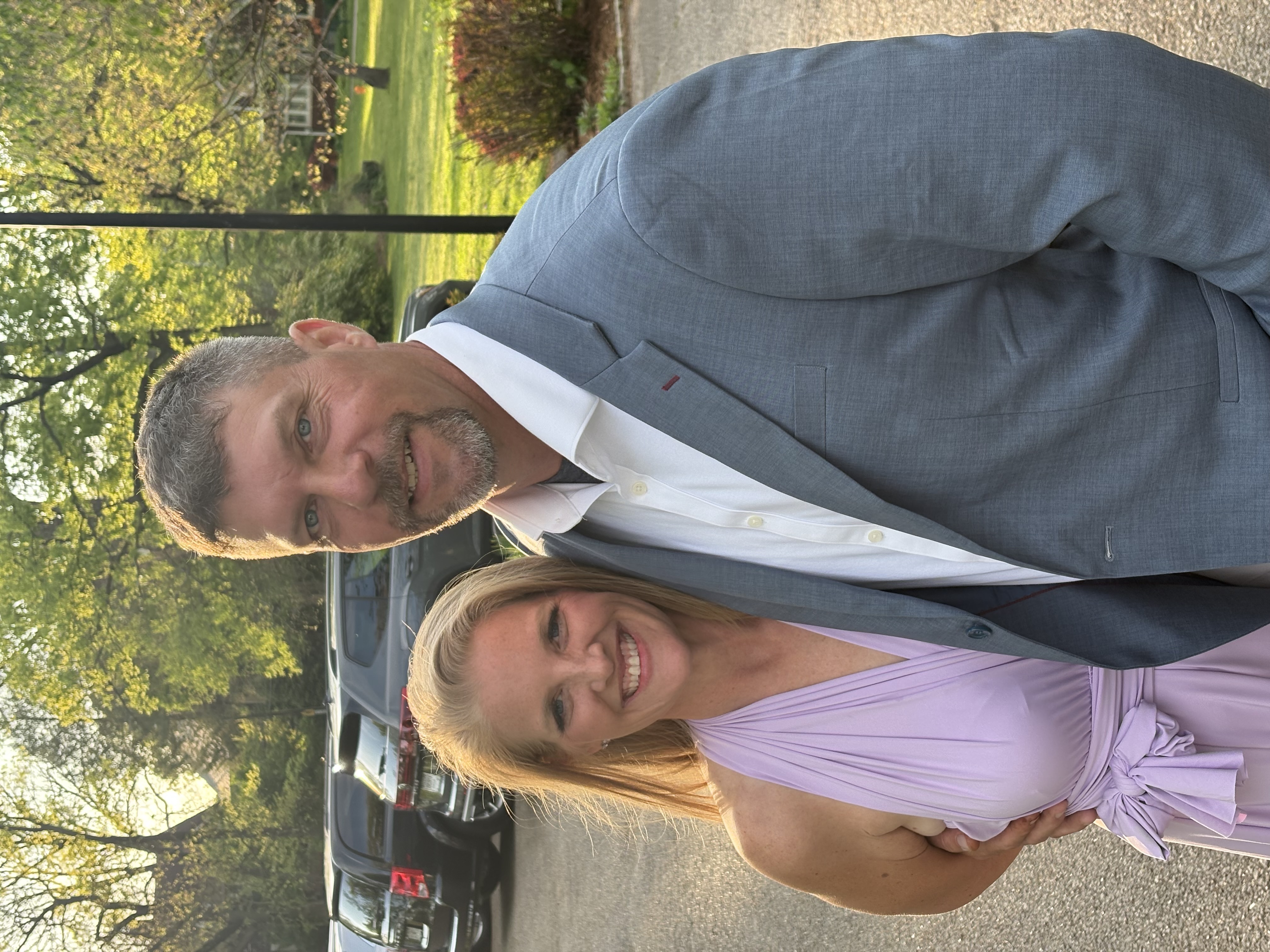
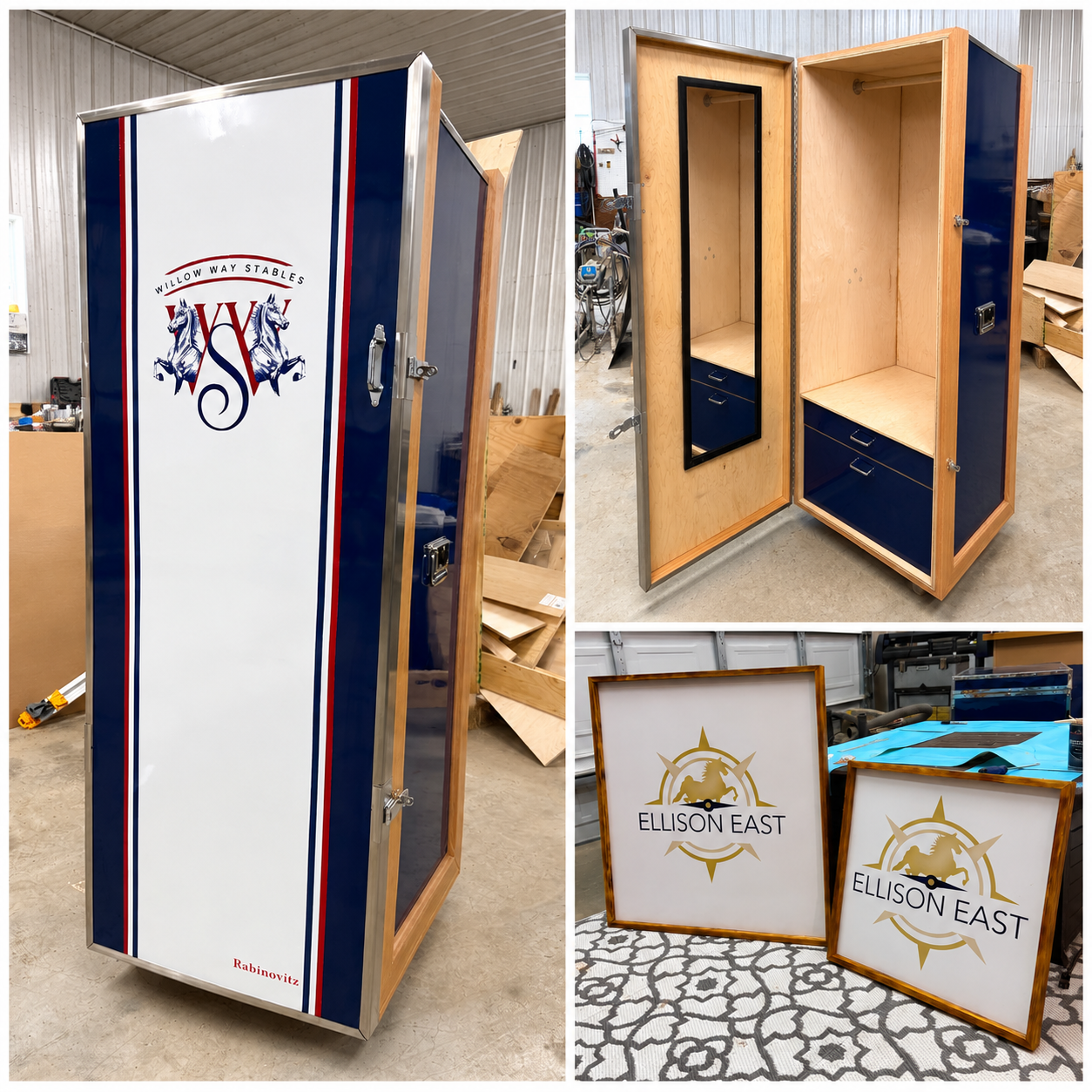
This fall, Shacklett will marry Clark, and together they run Royal Creek Farm, where they board horses, manage a breeding program and build custom pieces for the equestrian community. Their third venture, Red Oak Customs, grew out of Shacklett’s lifelong ability to make and fix things. He builds everything from picture frames and signs to horse tack trunks and show-ready barn setups.
That hands-on skill also serves him in his day job at Yum! Brands, where Shacklett is a building and facilities supervisor at the company’s Restaurant Support Center (RSC) in Louisville, Kentucky. His role is part project manager, part problem solver, making sure his team knows that his door is always open if they have a personal issue or need advice.
Shacklett’s days are long, starting at 3:45 a.m., tending to the horses before hitting the gym and then sitting down at his computer by 5:30 a.m. He tries to leave the office around 3 p.m., then heads straight to Royal Creek Farm. There, he feeds the horses, checks the creek and makes sure debris hasn’t caught in the fencing or gates. After that, he heads to the garage to work on customer orders for Red Oak Customs. By 8 p.m., he stops to eat dinner, watch the news and get a few hours of sleep before doing it all again.
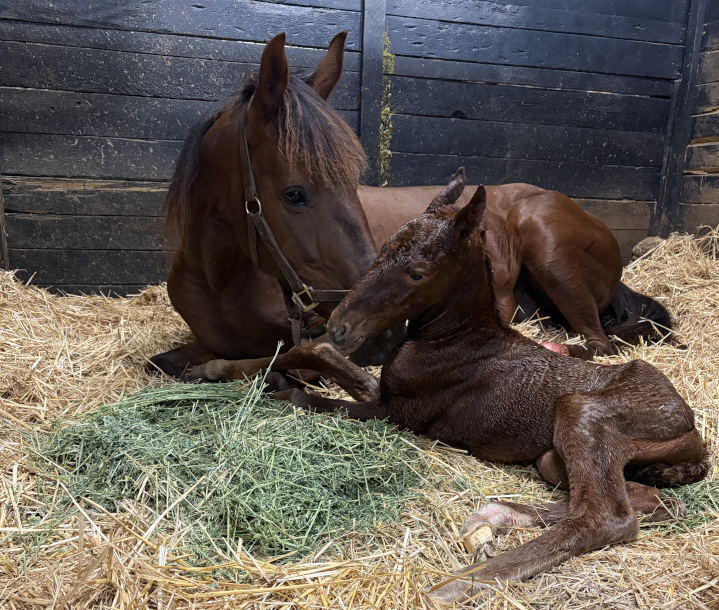
Foaling season can make that already full schedule even more unpredictable. There have been times Shacklett called his coach, Yum! Corporate Services Manager Royce Blevins, to say he’ll be late — not because he overslept, but because a foal was arriving.
“Dan is an early riser. If he’s not in the office by 6 a.m., it’s because he’s bringing a magnificent foal into this world!” said Blevins. “He’s not only a great building engineer, he’s an excellent horseman!”
For Shacklett, the farm is less a hobby than a return to his roots. He grew up on a 150-acre farm where his family raised tobacco, cattle and four Belgian draft horses (the kind of big, sturdy horses people often compare to Clydesdales). Those early years shaped the way he sees animals and the way he approaches work.
“A horse is just a big dog,” he said. “You just have to be easy with them and talk to them. They’re like big puppies that eat a little more.”
Shacklett has always been drawn to work that requires his hands. Before joining Yum! eight years ago, he worked in conveyor maintenance, served as a contractor in Afghanistan helping train and manage local workers and worked as a machinist. Long before any of that, he was the kind of kid who took things apart just to understand how they worked.
“If I couldn’t figure out how to get it back together, then I’d get whipped,” Shacklett said. “So you figure out real quick how to put it back together!”
That practical mindset has carried into every part of his life, from managing facilities projects at the RSC to building the infrastructure at Royal Creek Farm from the ground up. He is quick to point out that the horse world is not all polished arenas and blue ribbons. Show horses may be in the ring for only 10 or 15 minutes, but getting them there takes months of training, travel, care and planning.
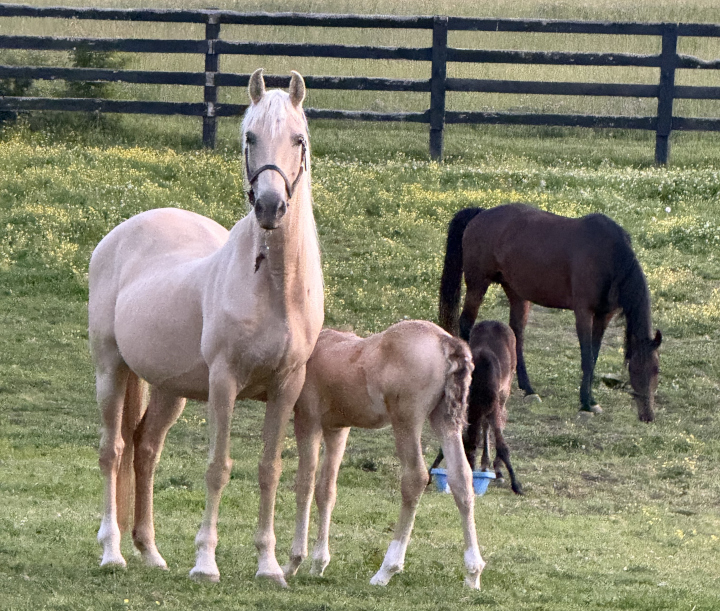
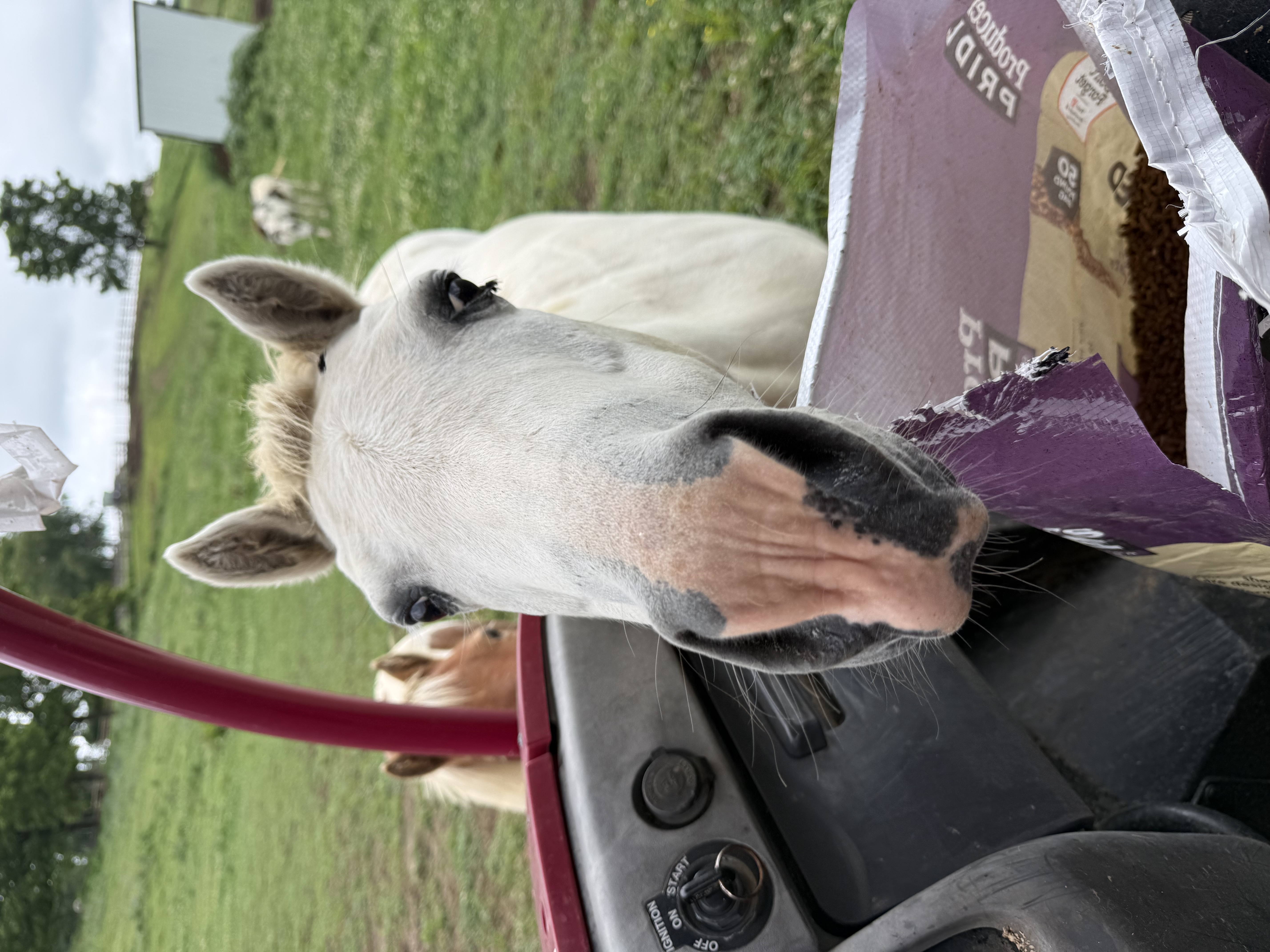
Still, he wouldn’t trade the long days. His favorite part is simple: being with the horses. Each has its own personality, from the retired Hackney Road pony named Whiskey to Bocelli, a boarded horse with torn retinas who relies on Whiskey to help guide him back from the creek.
“Wherever Whiskey goes, Bocelli goes with him,” Shacklett said. “Sometimes Bocelli can get down to the creek by himself, but he can’t always find his way back up the hill. Whiskey will go out there, nudge him and bring him back. It’s sweet.”
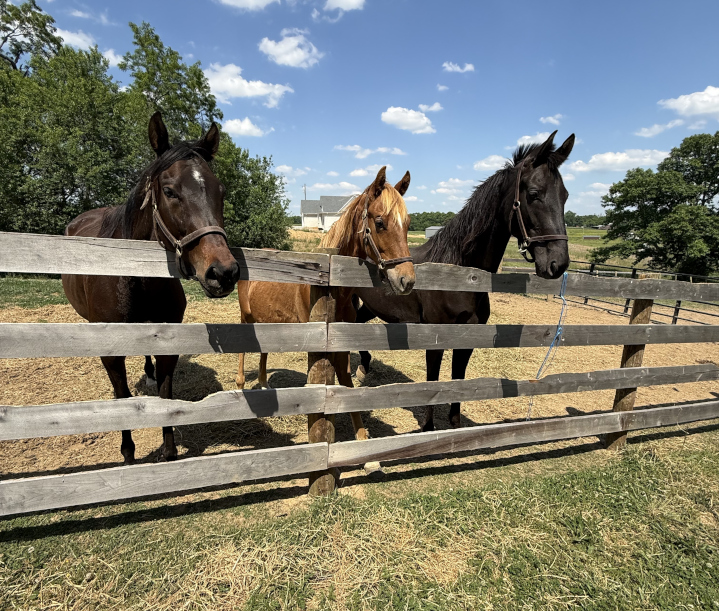
That connection is what keeps Shacklett going, even on five hours of sleep. The farm is demanding, but it also gives him something he can’t always find in the middle of a busy workday: quiet focus.
“If you have a bad day, you can go out there and mess with the horses, and the stress goes away,” he said. “You’re focused on them — how they’re doing, what they need. That’s my stress relief.”
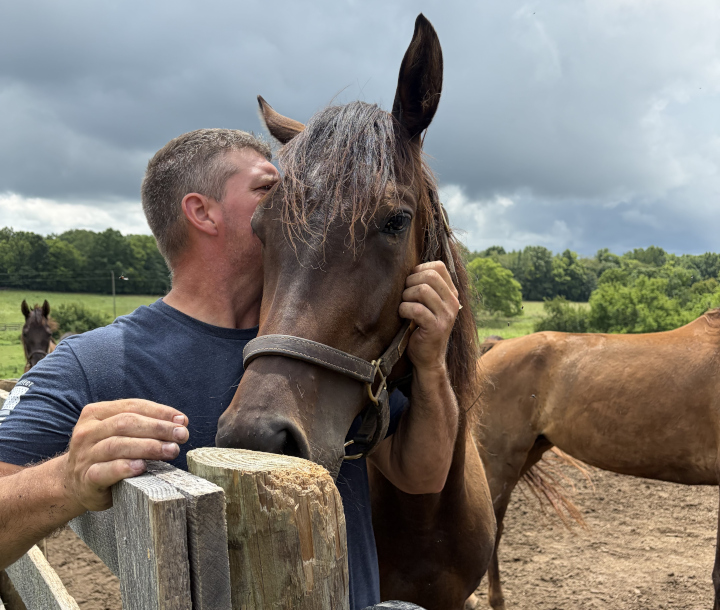
For Shacklett, that balance is possible because of the support he feels at Yum!. He says his team knows his phone is always on and that he’ll answer if there’s an issue. In return, he appreciates the flexibility to manage the occasional early-morning foal or farm emergency.
“They know if there’s an issue, I’ll answer the phone,” Shacklett said. “We’re very flexible.”
It is a fitting arrangement for someone whose days are built around responsibility — to his team, the building, the animals and the future he and Angie are building together. What started as a fence line has become a life stitched together by work ethic, craftsmanship and care.
Celebrating 74 Years of Investment in Education, the Foundation Awards up to $585,000 in Financial Aid to 20 Future Leaders Across 11 U.S. Communities.
The Whirlpool Foundation recently announced that it has awarded 20 scholarships to the students of Whirlpool Corporation employees through the Sons & Daughters College & Vocational Training Scholarship Program. The scholarship program is in its 74th year.
These scholarships celebrate the best and brightest among high school seniors across Whirlpool Corp. locations – including the company’s 10 U.S. manufacturing communities. The Whirlpool Foundation provides these scholarships through a competitive process in which children of more than 20,000 U.S. employees are eligible to apply.
“We have seen firsthand how these awards make a tangible difference, providing the educational foundation these students need to launch their chosen career paths.”
“We are proud to invest directly in the future of America’s next generation of leaders through this long-standing scholarship program,” said Traci Robinson, managing director of the Whirlpool Foundation. “We have seen firsthand how these awards make a tangible difference, providing the educational foundation these students need to launch their chosen career paths.”
The students listed below have been selected to receive a 2026 scholarship.
From global headquarters in Benton Harbor, Mich.:
- Logan Bellinger, child of Ryan Bellinger
- Juhi Bhatt, child of Aarti Mutatkar
- Samara Kiwale, child of Christopher Kiwale (Vocational)
- Elijah Neidlinger, child of Jason Neidlinger
- Audrey Rodewald, child of Marci Rodewald
- Pihu Sahai, child of Tiru Sahai
- Ethan Sherrod-Watkins, child of Asia Wimbush-Sherrod
From manufacturing operations in Amana, Iowa:
- Shreeya Shetty, child of Shekhar Shetty
From manufacturing operations in Cleveland, Tenn.:
- Masyn Gladson, child of Jamie Gladson
- Ian Morgain, child of Patience Morgain
From manufacturing operations in Clyde, Ohio:
- Matthew Kreh, child of Michael Kreh
- Taliyah Farris, child of Talib Garrett
From manufacturing operations in Findlay, Ohio:
- Neeti Barot, child of Trushna Brahmbhatt
From manufacturing operations in Greenville, Ohio:
- Gavin Stachler, child of Shawna Stachler
From manufacturing operations in Marion, Ohio:
- Miley Corbin, child of Carla Bollinger
- Patience Delaney, child of Aleyna Brodman
From manufacturing operations in Ottawa, Ohio:
- Madeline Liebrecht, child of Greg Liebrecht
From manufacturing operations in Tulsa, Okla.:
- Lilia Benoit, child of Jean-Francois Benoit
From other U.S. locations:
- Sara Barragan Ferrer, child of Adriana Ferrer (Florida)
- Cooper Wey, child of Bill Wey (North Carolina)
The Sons & Daughters College & Vocational Training Scholarship Program has provided more than 2,600 scholarships and honor awards totaling over $18 million, with 86 scholarship and award recipients currently attending colleges, universities and vocational schools across the U.S. Children of any full-time Whirlpool Corporation employee at the director level and below are eligible. Students pursuing a 4-year degree will receive $30,000 over 4 years and students working toward a 2-year vocational degree will receive $15,000 over 2 years toward their respective educational costs. Students must maintain a 2.8 grade point average to maintain their scholarship.
Whirlpool Foundation
Since 1952, the Whirlpool Foundation has been making real, positive differences in local communities where Whirlpool Corporation families live and work. This is accomplished through two central pillars: House+Home. “House” supports a decent and affordable place to live and plan for the future, and “Home” focuses on creating thriving, resilient communities with the essential services, quality education, and job training needed to help people dream bigger and do better. The Foundation has an absolute commitment to equality and fairness and takes an innovative approach to social investing that prioritizes impact with measurable results.
View original content here.
SEATTLE, July 27, 2026 /3BL/ – The Biomimicry Institute, a nonprofit dedicated to creating a Nature Positive, inclusive, and regenerative world inspired by nature’s genius, is proud to announce the ten startups selected for the 2026 Ray of Hope Accelerator. Now in its seventh year, the Ray of Hope Accelerator continues to be one of the world’s leading programs supporting nature-inspired entrepreneurs working at the intersection of biomimicry, climate, and innovation.
Selected from a competitive global applicant pool, the 2026 cohort represents the breadth and depth of what becomes possible when founders look to nature not as a backdrop, but as a guide. Over the course of the program, each startup will receive $15,000 in non-dilutive funding, and access to over $50,000 in resources and expert support. Additionally, each startup will participate in a Nature Retreat, and receive mentorship from leaders across science, deep tech, entrepreneurship, and impact investing.
“Each cohort we welcome into the Ray of Hope Accelerator is a testament to what happens when brilliant, committed founders stop asking ‘how do we fix this?’ and start asking ‘how would nature solve this?’” says Biomimicry Institute CEO, Amanda Sturgeon. “The 2026 cohort embodies that shift. These ten startups are not just inspired by the living world, they are learning from it, rigorously and humbly, and building solutions that have the potential to reshape industries. We are proud to walk alongside them.”
The 2026 cohort was evaluated by a 20-member Selection Committee whose expertise spans science, deep tech, entrepreneurship, investing, and beyond. Their guidance ensures the Ray of Hope Accelerator remains rigorous and grounded in identifying ventures with both scientific credibility and real-world potential.
Meet the 2026 Ray of Hope Accelerator Cohort
BioWraptor, Inc., United States of America – Utilizes tardigrade-inspired synthetic peptides to protect perishable biomolecules from heat and degradation, eliminating the need for expensive and energy-intensive cold-chain logistics.
DisperseBio Ltd., Israel – Redefines biofilm and biofouling control through biomimetic peptides inspired by nature. Its breakthrough technology tackles over $100B in annual industrial and maritime damage by activating microbes’ natural, sustainable dispersal pathways instead of relying on toxic biocides.
Fungi Life Corporation, Colombia – Leverages a cell-free formula to replicate the natural biochemical strategy that fungi use to emulsify and break down complex hydrocarbons, accelerating oil spill and soil remediation without introducing live microbes into the environment.
Mireta Urban Dynamics LLC, United States of America – Translates the 500-million-year-old network intelligence of slime molds into generative design algorithms that help planners build highly resilient, resource-efficient city infrastructure.
PhysaFlow, Inc., United States of America – An edge-native AI platform that leverages the universal design principles of biological flow networks to progressively unlock the estimated 30–40% of AI data center capacity currently stranded—reducing power, cooling, and water consumption while increasing workload capacity, all within existing infrastructure to address global AI demand.
Renovenergy S.A.S, Colombia – Develops cost-effective green hydrogen electrolyzers using bioinspired silicon electrodes that are inspired by the nanoscale geometry of mitochondria to achieve high electron-transfer efficiency without relying on scarce precious metals.
Semion Corp, United States of America – Makes plants defend themselves by restoring natural defense mechanisms lost during domestication. Rather than targeting pests directly or genetically modifying crops, they activate plants’ own immune responses, enabling crops to repel pests, attract natural enemies, and become more resistant to diseases.
Terrament, Inc., United States of America – Builds underground gravity storage in existing mines to tackle the growing energy crisis driven by data centers and aging infrastructure, using a patented, cable-free conveyance system inspired by the metachronal wave motion of caterpillars to support massive payloads across extreme vertical drops.
WAVR Technologies, Inc., United States of America – Builds atmospheric water harvesting technology, inspired by the Australian tree frog’s ability to extract water directly from air, to bring water resilience to the world’s most resource-constrained industries.
Xatoms Inc., Canada – Utilizes proprietary AI and quantum chemistry to design novel, visible-light-activated photocatalysts that mirror the solar-powered chemistry of photosynthesis to destroy persistent water contaminants without chemicals or toxic byproducts.
“I was deeply impressed by the caliber and creativity of this year’s Ray of Hope Accelerator applicants. What stood out most was the strength of the science, the clarity of their potential impact, and the thoughtful ways these startups are translating nature-inspired ideas into scalable solutions for global challenges.” – Tak Sing Wong, 2020 Ray of Hope Participant (spotLess Materials), and current Biomimicry Institute Board Member.
This announcement is an invitation to investors, partners, mentors and advocates to join this growing community and support these founders in reshaping what the future can look like when nature leads. These ten startups step into the program carrying not only their own vision, but the momentum of every founder who has come before them, and the conviction that nature’s 3.8 billion years of innovation holds the answers we all need right now. To follow the journey of the 2026 cohort and stay connected to the work, follow The Biomimicry Institute on LinkedIn and subscribe to the newsletter.
About the Ray of Hope Accelerator
Now in its seventh year, the Ray of Hope Accelerator has supported more than 60 nature-inspired startups across six cohorts, building a global portfolio that look to the living world for solutions to some of humanity’s most pressing challenges. The program is made possible through the continued support of keystone partner The Ray C. Anderson Foundation, alongside the EcoShift Collective.
To learn more about the Ray of Hope Accelerator and the 2026 cohort, click here.
# # #
About the Biomimicry Institute
The Biomimicry Institute is a 501(c)(3) not-for-profit organization founded by Janine Benyus in 2005, on a mission to create a nature positive, inclusive, and regenerative world inspired and guided by nature’s genius. The Biomimicry Institute is embarking towards a ten-year vision to dramatically scale the impact that biomimicry is having on some of the biggest challenges facing the world today. Since its founding in 2005, the Institute has worked to spread the practice of looking to the solutions developed by living organisms over billions of years to provide insight and inspiration for effective, efficient, and sustainable innovations and approaches to addressing our own challenges. As the Institute embarks into their third decade, they are fully committed to work across sectors and disciplines to spread the wisdom of nature-inspired, actionable solutions across our world. For more information, visit www.biomimicry.org.
Media Contact
Jen Fredette
The Biomimicry Institute
media@biomimicry.org
CINCINNATI, July 27, 2026 /3BL/ – Fifth Third (NYSE: FITB) has been named a World’s Top Disability Inclusive Business by The Disability Index®, recognizing the Bank’s ongoing commitment to creating opportunities for individuals with disabilities through inclusive workplace practices, accessible banking solutions and community partnerships.
The recognition reflects Fifth Third’s commitment to creating opportunities for employees to grow their careers, contribute their talents, and reach their full potential.
“Creating an environment where all employees feel supported, valued and empowered to succeed helps us better serve our customers and communities. We are honored to be recognized by Disability:IN for the progress we continue to make,” said Nancy Pinckney, chief human resources officer for Fifth Third.
An initiative of Disability:IN, The Disability Index is the world’s leading third-party benchmarking tool for evaluating corporate disability inclusion and is used by hundreds of leading companies across the globe. It provides data-driven insights to assess performance, identify opportunities and drive continuous improvement over time.
This recognition builds on Fifth Third’s broader commitment to responsible business practices. Earlier this year, Ethisphere named Fifth Third one of the World’s Most Ethical Companies® for the seventh time.
“Inclusion is about ensuring every individual has the opportunity to participate, contribute and thrive,” said Nate Bennett, chief inclusion officer for Fifth Third. “Whether through our people, our products or our community partnerships, we are committed to expanding access and creating opportunities for individuals with disabilities.”
Fifth Third’s commitment to disability inclusion extends across its workforce, community partnerships, suppliers and customer offerings. By advancing accessibility and inclusion, Fifth Third is helping ensure employees, customers, suppliers and communities have greater opportunities to achieve their goals and financial well-being.
Fifth Third is a leading partner of Project SEARCH, a one-year program that helps high school students with disabilities transition into the workforce. Since the program’s inception in 2005, Fifth Third has trained more than 425 individuals, including 29 current employees, helping expand access to meaningful employment opportunities for people with disabilities.
Fifth Third’s commitment to inclusion is reflected in its network of 11 Business Resource Groups, which help foster belonging, strengthen community connections and drive business innovation. Open to all employees, these groups create opportunities to share perspectives and experiences while contributing to a workplace where employees can thrive.
Fifth Third was also the first bank to design a checking account for the Achieving a Better Life Experience program, or ABLE. These accounts allow individuals with disabilities to save and invest assets for disability-related expenses.
###
About the Disability Index
The Disability Index® is the leading benchmarking tool for advancing disability inclusion in business worldwide. Trusted by over 70% of the Fortune 100 and nearly half of the Fortune 500, the tool helps companies determine opportunities for progress through data-driven actions and outcomes.
An initiative of Disability:IN, participation is open to companies operating in countries around the globe. Learn more at DisabilityIN.Org.
About Fifth Third
Fifth Third is a bank that’s as long on innovation as it is on history. Since 1858, we’ve been helping individuals, families, businesses and communities grow through smart financial services that improve lives. Our list of firsts is extensive, and it’s one that continues to expand as we explore the intersection of tech-driven innovation, dedicated people and focused community impact. Fifth Third is one of the few U.S.-based banks to have been named among Ethisphere’s World’s Most Ethical Companies® for several years. With a commitment to taking care of our customers, employees, communities and shareholders, our goal is to be the one bank people most value and trust.
Fifth Third Bank, National Association is a federally chartered institution. Fifth Third Bancorp is the indirect parent company of Fifth Third Bank, and its common stock is traded on the New York Stock Exchange under the symbol “FITB.” Investor information and press releases can be viewed at www.53.com. Deposit and credit products provided by Fifth Third Bank, National Association. Member FDIC.
CONTACT
Amanda Nageleisen (Media Relations)
amanda.nageleisen@53.com
Matt Curoe (Investor Relations)
matt.curoe@53.com | 513-534-2345