
NEW YORK–(BUSINESS WIRE)–WealthStream, the Advice Intelligence platform that helps wealth management firms make their best planning judgment available to every advisor, today announced the appointment of Larry Roth to its Strategic Advisory Board. Roth is Founder and Managing Partner of Ascentix Partners, the leading growth strategy consultancy for wealth management enterprises, wealthtech platforms and private market solutions providers. He previously served as CEO of Advisor Group, now Osai
Author: sHq_LoGiNz
RALEIGH, N.C.–(BUSINESS WIRE)–Hotel Indigo Raleigh, part of the IHG Luxury & Lifestyle portfolio, is now open and accepting reservations, marking the revitalization of one of downtown Raleigh’s most recognizable landmarks following a $36 million renovation. Located in the distinctive round tower on Hillsborough Street, the 204-room boutique hotel introduces a fresh hospitality experience deeply ingrained in the local neighborhood, with mid-century-modern design, locally inspired details,
NEW YORK–(BUSINESS WIRE)–Flatiron Health, a leading healthtech company dedicated to improving cancer care and advancing research using real-world data, today announced that its Breast Cancer Panoramic dataset has surpassed one million patients — the largest rigorously curated breast cancer real-world dataset of its kind. This milestone arrives during Breast Cancer Awareness Month, underscoring Flatiron’s commitment to transforming patient experiences into evidence that advances care for peopl
GREENVILLE, S.C.–(BUSINESS WIRE)–Real Motors, an engineering initiative developing what it calls Future Machines™, has named former LiveWire CTO Vance Strader its chief technology officer. Strader will help bring the Project : ARES electric motorcycle to market and advance Manufacto, the company’s approach to designing and building its next generation of machines. Strader brings decades of motorcycle engineering experience and is a trailblazer in EV. He worked on Harley-Davidson’s electric mo
MILWAUKEE–(BUSINESS WIRE)–Badger Meter, Inc. (NYSE: BMI) today announced that it will issue its third quarter 2026 earnings release before the market opens on Thursday, October 22, 2026. Following the release, Badger Meter will hold its earnings conference call at 10:00 am CT. A live listen-only webcast will be accessible the day of the call from the Events & Presentations section of the Company’s investor relations website. Those wishing to actively participate in the conference call can
Originally published on CVS Health Company Newsroom
CVS Pharmacy pharmacists answer common flu shot questions, including whether flu, COVID-19 and other recommended vaccines can be given during the same visit.
Flu season is approaching, and September and October are generally ideal times for most people to get vaccinated. CVS Pharmacy pharmacists are answering the flu, COVID-19 and adult vaccine questions patients commonly ask this time of year. Whether you’re due for your annual flu shot or wondering if you can receive more than one vaccine during the same visit, here’s what our pharmacists want you to know.
Do healthy adults still need a flu shot?
Yes. Flu viruses change over time, and protection from vaccination declines, so an annual flu vaccine is recommended for almost everyone 6 months and older — even people who are healthy and rarely get sick.
“Healthy adults can still get seriously ill from the flu, and vaccination remains the best protection for yourself and the people around you,” says Amy Lynn Valentine, PharmD, MBA, CVS Pharmacy.
Can I get a flu and COVID-19 vaccine during the same visit?
In most cases, yes. People who are eligible and due for both vaccines maybe be able to receive them during the same visit. Getting recommended vaccines together can be a safe and convenient way to stay up to date. Eligibility and availability for vaccines may vary by age, location and current federal and state guidance, so ask your pharmacist to confirm the right timing and options for you when you schedule.
When is the best time to get a flu shot?
September or October is generally the best time for most people to get vaccinated, ideally by the end of October. Because it takes about two weeks for your body to build protection, it’s best not to wait until flu is spreading widely in your community. If you miss that window, getting vaccinated later can still help protect you while the flu viruses are circulating.
Can I get more than one vaccine at the same time?
Often, yes. CVS Pharmacy offers a range of adult vaccines, and pharmacists can help determine which recommended vaccines may be administered during the same visit, based on your age, health history, eligibility and current guidance. These may include vaccines for flu, COVID-19, RSV, shingles, pneumococcal pneumonia and measles.
What are the side effects of the flu shot, and how long do they last?
Flu shots are made with inactivated viruses or with proteins from the flu virus, so they cannot cause flu illness. Common side effects may include soreness, redness or swelling where the shot was given, as well as headache, fever, nausea, muscle aches or fatigue. These effects may begin soon after vaccination and usually resolve on their own within a few days. Serious allergic reactions are very rare.
What can I expect at my appointment?
CVS Pharmacy makes it easy to schedule an appointment online, book an appointment for up to four family members together, and speak with a pharmacist about which vaccines may make sense for you this season. Walk-in vaccinations may also be available. Availability, eligibility and age restrictions can vary by vaccine and location.
Call to action: Schedule your flu shot — and check which other vaccines you may be due for— at CVS.com/immunizations or in the CVS Health app.
SWORDS, Ireland, October 1, 2026 /3BL/ – Trane Technologies (NYSE: TT), a global climate innovator, today announced the launch of advanced residential cold climate heat pumps across its Trane® and American Standard® Heating & Air Conditioning brands: Trane’s 20 TruComfort™ Cold Climate Heat Pump with WeatherGuard™ and American Standard’s AccuComfort™ Platinum 20 Cold Climate Heat Pump with All Weather®.
The launch marks Trane Technologies’ first cold climate heat pumps engineered and manufactured for the residential market, a significant milestone that advances the transition to high-efficiency, all-electric and home comfort. Designed for harsh winter conditions, both systems maintain 100% heating capacity down to 5°F and continue operating in temperatures as low as -20°F, while delivering year-round heating and cooling. These systems are also designed to work in duel-fuel capacity for homes with furnaces.
The new cold climate heat pumps successfully surpassed the performance requirements of the U.S. Department of Energy’s (DOE) Residential Cold Climate Heat Pump Technology Challenge, a rigorous, industry-wide initiative to accelerate the development of heat pumps capable of reliable performance in some of the coldest regions of the United States. The systems were further validated through nearly 18,000 hours of field testing in homes in Minnesota, Montana, New York, Pennsylvania, Wisconsin and Texas, with outdoor temperatures reaching as low as -21°F.
“This launch marks an important step in making residential electrification practical for more homeowners,” said Mark Majocha, President, Residential HVAC, Trane Technologies. “For years, extreme cold has been seen as the limit of what heat pumps could achieve. We are redefining that expectation with innovative heat pump systems designed to deliver the efficiency, intelligence and reliable performance homeowners need to confidently move toward all-electric comfort. We are proud to help expand access to more sustainable homes without compromising comfort or peace of mind.”
Engineered for Cold Climate Performance
Both Trane’s TruComfort™ and American Standard’s AccuComfort™ systems feature variable speed operation designed to deliver precise, reliable comfort and increased energy efficiency across a wide operating range, including:
- Continuous heating operation from -20°F to 66°F
- Cooling operation across a wide ambient range of 55°F to 115°F
- Variable speed compressor operation that continually adjusts in increments as fine as 0.1% for precise comfort delivery
- Advanced airflow algorithms delivering supply air temperatures up to 110°F
- Reduced reliance on backup electric heat
Connected, Intelligent Home Comfort
Both systems are designed for Link® communicating technology, enabling a fully communicating system that helps optimize performance, enhances homeowner control and integrates seamlessly with Trane and American Standard smart thermostats and indoor air quality solutions. Trane’s TruComfort™ and American Standard’s AccuComfort™ variable-speed technology continuously adjusts compressor speed to match the home’s needs, supporting more precise temperature control, quieter operation and improved energy efficiency.
For dealers, integrated connectivity enables advanced remote diagnostics and improved system visibility. Both units are also zoning capable when paired with Link®-enabled indoor equipment.
Availability
Trane’s 20 TruComfort™ and American Standard’s AccuComfort™ Variable Speed Platinum 20 Cold Climate Heat Pumps are available this fall. The systems are backed by a limited warranty covering the compressor for up to 12 years and the outdoor coil and parts for up to 10 years with registration.
For more information, visit www.trane.com or www.americanstandardair.com.
###
About Trane Technologies
Trane Technologies is a global climate innovator. Through our strategic brands Trane® and Thermo King®, and our portfolio of environmentally responsible products and services, we bring efficient and sustainable climate solutions to buildings, homes and transportation. For more on Trane Technologies, visit tranetechnologies.com.
Forward Looking Statements
This news release includes “forward-looking statements” within the meaning of securities laws, which are statements that are not historical facts, including statements that relate to our residential cold climate heat pump product and service innovations and the anticipated benefits of these innovations. These forward-looking statements are based on our current expectations and are subject to risks and uncertainties, which may cause actual results to differ materially from our current expectations. Factors that could cause such differences can be found in our Form 10-K for the year ended December 31, 2025, as well as our subsequent reports on Form 10-Q and other SEC filings. New risks and uncertainties arise from time to time, and it is impossible for us to predict these events or how they may affect the Company. We assume no obligation to update these forward-looking statements.
FedEx team members experience the impacts of climate change firsthand — often facing extreme heat, flood-prone routes, and poor air quality on their daily deliveries. Planting for Good, our global urban greening strategy, helps address these risks head-on with community and nature-based solutions.
With technology and guidance from environmental nonprofits like the Arbor Day Foundation, National Fish and Wildlife Foundation, and One Tree Planted, FedEx can increasingly use data to pinpoint where trees and healthy green spaces can do the most good. We then mobilize thousands of team member volunteers to bring these projects to life, building stronger neighborhoods and a more resilient delivery network.
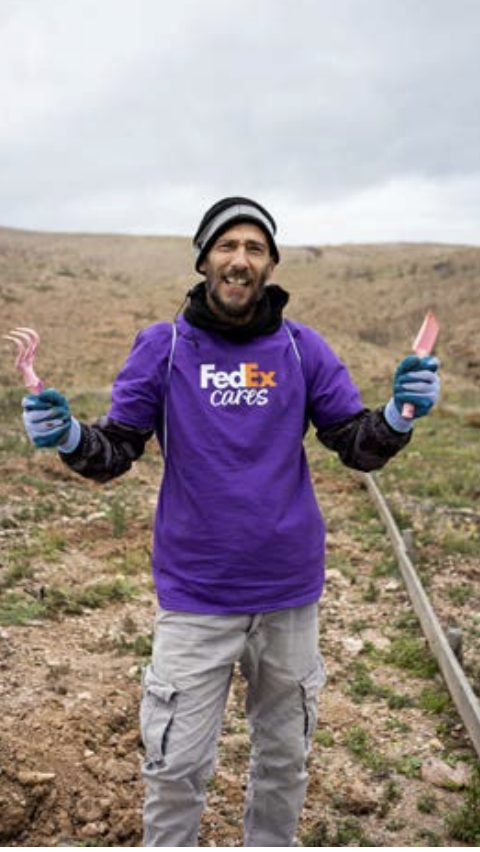
Planting for good
Planting for Good unites FedEx team members, local and global community organizations, and environmental experts to grow greener, healthier communities with purpose. Since 2009, FedEx and our team members have helped plant 5.8 million trees, restore nearly 10,000 acres of habitat, and clear 241 miles of riverbanks across the globe.
This spirit shows up at FedEx planting events around the world. Watch highlights from World Environment Day in Greece, when our team members and their families planted 250 trees with the Arbor Day Foundation to help restore a forest devastated by wildfire. Since 2022, our team members in Greece have added 8,500 trees to bring fire-damaged forests back to life.
Click here to see the team from Greece in action.
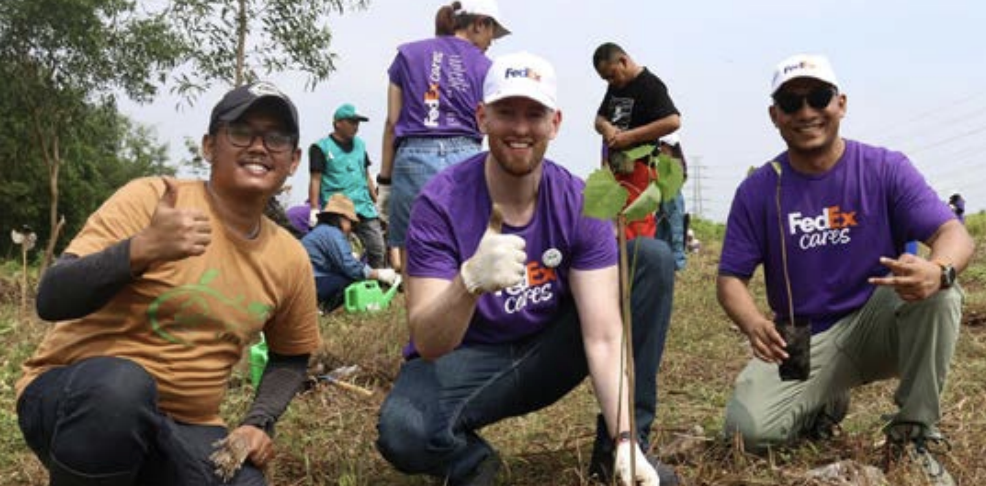
Picture proof of planting
Picture Proof of Planting is our annual photo contest celebrating FedEx team members in action at treeplanting events around the world. In 2025, global team members cast votes to choose five winning photos from over 250 entries — and each winner directed a $10,000 grant to the local nonprofit that made their planting event possible.
2025 Winners
- Trees4Trees: Jakarta, Indonesia
- Pittsburgh Parks Conservancy: Pittsburgh, Pennsylvania, USA
- Fundación Tlaloc A.C.: Santiago Tlacotepec, Mexico
- Green Columbus: Columbus, Ohio, USA
- Nación Verde: Tijuana, Mexico
“At FedEx, we are committed to leading responsibly, driving change forward, and channeling innovation to deliver a brighter future for the people and communities we serve and the planet we share.”
Kawal Preet, EVP, Planning, Engineering, & Transformation
Click here to read more about all the 2025 winners.
Building climate-resilient communities across Europe
To accelerate the shift toward cleaner, more inclusive mobility, FedEx and Climate KIC issued their third annual call for entries to the Sustainable Mobility Challenge, which invites European cities to submit bold, climate resilient transportation concepts.
Selected projects receive funding and expert support to execute their visions. The 2025 cohort includes Brașov (Romania), Viseu Dão Lafões (Portugal), The Hague (Netherlands), and Üsküdar, Istanbul (Turkey).
Project update: greening the way forward in the UK
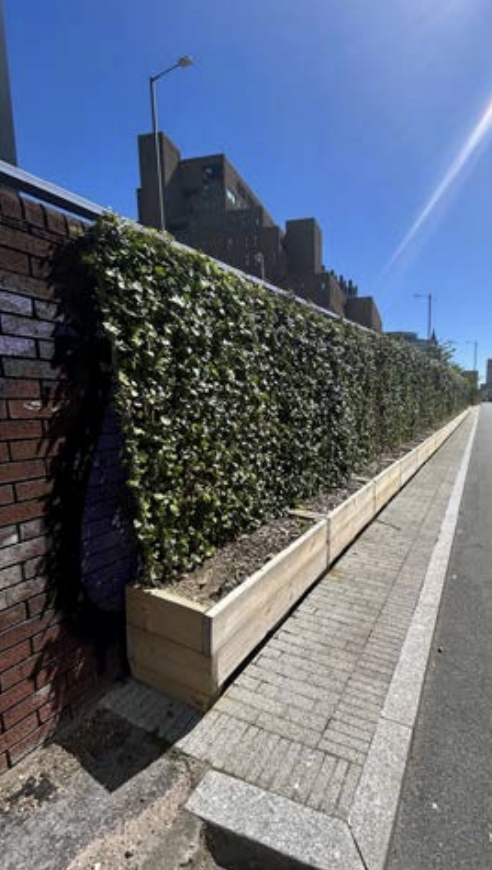
A 2024 Challenge winner in Liverpool, UK is empowering residents to trade their car keys for bike helmets, turning sub-5km car trips into cycling journeys. With FedEx funded green infrastructure, protected bike lanes, green walls, and pollinator plantings are being woven into active travel routes, making cycling safer, streets cooler, and neighborhoods more resilient. The project supports Liverpool’s city-wide goal of a tenfold increase in cycle journeys by 2027.
“These projects prove that when local leadership is engaged and citizens are empowered, we can reshape the places we live to be more just and climate-resilient than ever before.”
Kirsten Dunlop , CEO of Climate KIC
Click here to learn about the 2025 selected projects.
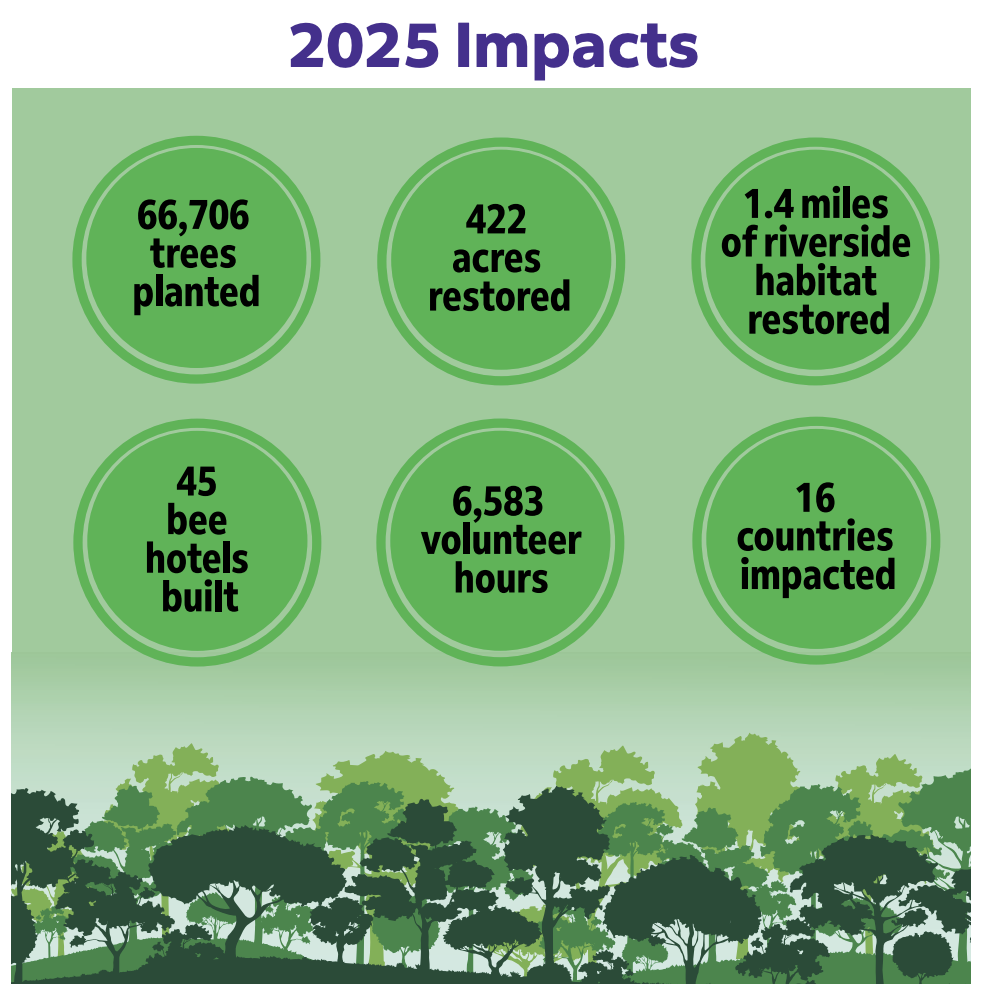
Learn more about how FedEx is advancing climate solutions in the 2025 FedEx Cares Report
Summary
Everpure uses impact accounting to translate environmental impacts into monetary value, helping teams integrate sustainability into business decisions.
Last year was one of the warmest years on record, and the last 11 years have been the warmest 11 consecutive years ever. There was a time, not too long ago, when unusually warm weather was dismissed as “just the weather being the weather,” but we can no longer look away from what climate change is doing to our planet.
Corporations obviously play a massive role in the sustainability picture. Climate Week NYC, which took place last week, was as good a moment as any to ask: How can we turn sustainability ambition into something businesses can actually act on? I was at Climate Week to talk about the work Everpure is doing in impact accounting, for which we recently received an award (more on that later).
While the award is great validation, Climate Week was all about sharing ideas on how we can all help move the needle and continue a conversation that has at its center the health of our planet. Sustainability can’t just be something companies measure and report on. The opportunity is to change the way we make decisions and move the market toward impact-informed, integrated decision-making—and a more sustainable future grounded in financial principles.
What is impact accounting?
Simply put, impact accounting is a way to translate a company’s non-financial environmental and social impacts into monetary value. Where traditional financial accounting tracks revenue, expenses, and profits, impact accounting assigns a financial cost (or benefit) to factors like water usage, carbon emissions, and employee well-being, ultimately creating a profit and loss statement that shows, with actual numbers, how a company is helping or harming people and the planet alongside its traditional financial returns.
Why data alone isn’t enough anymore
Most companies have gotten significantly better at tracking their carbon footprints, water consumption, and waste volumes across their value chain. But reporting those numbers at the end of the fiscal year doesn’t automatically mean they get factored into everyday operational decisions.
The core challenge isn’t a lack of data—it’s context.
When a product team evaluates material options or an operations team chooses a new facility, traditional financial metrics offer a clear common currency: dollars and cents. Environmental metrics, by contrast, often sit off to the side in separate spreadsheets, with measurements reported in metric tons or cubic meters. Because these data sets speak completely different languages, evaluating trade-offs across innovation, supply chain resilience, and long-term cost gets tricky.
How impact accounting bridges the gap
At Everpure, we apply established cost accounting principles to environmental impacts. By using standardized valuation factors—developed by the Value Balancing Alliance and the International Foundation for Valuing Impacts—we can actually monetize environmental factors like greenhouse gases, waste, and water consumption.
What this is really about: creating a clearer lens for decision-making. Monetizing impacts helps our teams:
- Compare apples to apples: It translates disparate metrics across energy, waste, water, materials, and land use into a consistent, unified view.
- Add location-specific context: The real-world cost of water usage varies significantly depending on whether a facility operates in a water-scarce region or a water-abundant one. Impact accounting reflects those nuances.
- Inform customer choices: Beyond internal optimizations, translating these impacts into monetary terms helps us equip our customers to make smarter, more impact-informed buying decisions.
What we’ve learned from putting this into practice
Integrating environmental accounting into standard business practice is a journey, and we certainly don’t have every answer. But as our work has expanded across R&D, supply chain management, real estate, and customer-facing teams, a few key insights have emerged:
- Visibility changes the conversation. When environmental impacts are expressed in terms that align naturally with financial analysis, sustainability stops being an outlier and starts functioning as a core business input.
- Silos break down naturally. Sustainability can’t live solely within a dedicated sustainability department. By grounding impact in financial terms, cross-functional teams—from procurement to engineering—begin speaking the same language.
- Progress beats perfection. You don’t need absolute precision before you start acting. Waiting for flawless data delays insights that can happen right now.
Validation on a global stage
While our work is ongoing, having external validation signals that we’re headed in the right direction. Everpure was recently honored with the 2026 Finance for the Future Award for Leadership in Nature and Biodiversity.
What made this recognition particularly meaningful was the judges’ emphasis on our collaborative, system-wide approach. They highlighted how our diverse teams—spanning real estate, supply chain, R&D, and commercial operations—have worked together to operationalize these concepts. It reinforces a simple truth: When sustainability is treated as an integrated business discipline, people take notice.
From New York back to the business
At Climate Week NYC, I participated in “Finance for the Future: Innovation Stories and Insights for Systems Change,” hosted alongside the Cornell SC Johnson College of Business, the Cornell Atkinson Center for Sustainability, and Accounting for Sustainability.
We shared what we’ve learned at Everpure, but we were just as eager to learn from others in the room. Moving from lofty commitments to practical, daily execution is a challenge every forward-thinking organization faces. By sharing real-world frameworks, asking hard questions about implementation, and partnering to scale what works, we can move the market together toward a more sustainable future—one grounded in both environmental responsibility and sound financial principles.
Learn more about our impact accounting work by reading our FY26 Impact Report.
WASHINGTON, D.C., October 1, 2026 /3BL/ – Fairtrade America, the organization behind the world’s most recognized label for social justice and sustainability, the Fairtrade certification, has commissioned a new mural at Two Rivers Public Charter School, 1234 4th St. NE, Washington, D.C. 20002, to mark Fairtrade Month this October and celebrate the long-term partnerships that are working to change our global food system.
Created as part of Fairtrade Month’s 2026 theme, “The Real Deal,” the mural highlights the people and relationships behind the food we enjoy every day: farmers growing food, families making purchasing decisions, retailers connecting products to communities, and businesses investing in responsible supply chains.
For more than 30 years, Fairtrade has worked hand in hand with farmers to help eradicate poverty and create more equitable trade. What began as a grassroots movement has grown into a global network committed to ensuring farmers receive a fair deal for their crops, their labor, and their future. In the last decade, farmers have collectively earned more than $2 billion in Fairtrade Premium.
Mexican-born, D.C.-based artist Salvador Rubio Rivera painted the mural, which features three smallholder farmers.
- Dora Atiiga, a cocoa farmer from Ghana
- Ana Polo Aguilar, a banana farmer from Ecuador
- Jeminem, a coconut sugar farmer from Indonesia
The piece reflects Rivera’s signature focus on everyday experiences and the people who shape them. The artwork is made possible through partnerships with Two Rivers Public Charter School and NoMa Business Improvement District (NoMa BID).
At a time when rising temperatures are threatening agricultural production and global trade systems continue to leave many farmers without enough income to meet their basic needs, the mural serves as a powerful reminder that behind every cup of coffee, chocolate bar, or banana there are real people whose livelihoods depend on fair and transparent trade.
Too often, the well-being of the people who grow our food is treated as less important than the prices paid or profits earned. Despite producing crops that power global supply chains worth billions of dollars, many farmers lack the negotiating power needed to earn a decent living. As a result, millions remain trapped in cycles of poverty while facing increasing climate-related challenges.
Fairtrade farmers are the real deal. Through Fairtrade’s democratic model, farmers help develop standards that address workers’ rights, gender equity, climate change, child labor prevention, organizational development, and economic opportunity because they understand firsthand the challenges facing their communities and the solutions needed to address them.
A better food system is possible. Trade can create stable livelihoods, strengthen communities, and enable responsible stewardship of natural resources when it is built on greater transparency, equity, and shared responsibility.
Long-term partnerships between farmers, families, retailers, and food companies are essential to making that vision a reality. Fairtrade connects farming communities around the world, helping farmers share knowledge, strengthen their organizations, and access resources through the power of real partnerships. Brands and retailers that choose Fairtrade certification make real commitments to responsible sourcing and help distribute more value throughout supply chains, supporting farmers and workers around the world.
Only by working together can we build a dependable global food system that nourishes us with real food, enables farmers and their lands to thrive, and strengthens the resilience of international supply chains in a rapidly changing climate.
“Bringing people together for a better future is what Fairtrade is all about,” said Amanda Archila, Executive Director, Fairtrade America. “This mural recognizes the real people behind our food. On October 22nd, everyone in the community is invited to celebrate the mural with us and be surrounded by people who contribute meaningfully to both the local and global food systems. Dedicating time and space to think about where our food comes from and how we can bring about the changes needed to make our food and the livelihoods of the people who grow our food more sustainable can help inspire desperately needed progress across some of the most pressing issues we’re facing today.”
Fairtrade America is bringing farmers, families, retailers, and food companies together this October to celebrate those partnerships and demonstrate how all people can contribute to a fairer food system.
Everyone is invited to attend the mural unveiling on October 22, 2026, at the Third Street Art Garden, where Fairtrade America, NoMa BID, Two Rivers Public Charter School, certified food brands, and local civil society organizations will all be popping up. This free, public party right here in the District will showcase farmers that power international supply chains alongside the NoMa Farmers’ Market, where local farmers serve the community regularly. Join us for food, drinks, prizes, performances, and more.
###
Editor’s Notes
- The following people are available for interviews. Contact Fairtrade America for scheduling.
- Dora Atiiga, a cocoa farmer from Ghana
- Ana Polo Aguilar, a banana farmer from Ecuador
- Jeminem, a coconut sugar farmer from Indonesia
- Amanda Archila, Executive Director, Fairtrade America
- Maura Brophy, President, NoMa BID
- McKenzie Baecker, Principal, 4th Street Elementary Campus
- Megan DeRitter, Principal, Young Elementary Campus
- Belicia Reaves, Executive Director, Two Rivers Public Charter School
- Salvador Rubio Rivera, artist
- Fairtrade certified food brands in attendance will include Ben & Jerry’s, Equal Exchange, Feastables, Grace Farms Tea & Coffee, Hu, and Rockin’ Cat.
- A media alert with details about the October 22 mural unveiling event will be disseminated on October 15, 2026.
Quotes from Farmers
“Fairtrade is the most life-impacting partner for farmers I have ever met. Fairtrade should extend their educational and life-impacting programs to others to help achieve the vision of having a fairer future for all,” Dora Atiiga, Kukuom District Cooperative Cocoa Farmers & Marketing Union, Ghana.
“I am constantly participating in capacity-building opportunities to learn how I can improve and support my household economy and my community. I know that Fairtrade can provide me with the tools and knowledge I need to collaborate better,” Ana Polo Aguilar, Asociación de Pequeños Productores el Guabo, Ecuador.
“With Fairtrade, we can be prepared for basic and new needs,” said Jeminem, Koperasi Karya Manis Sejahtera, Indonesia. “It has helped us get basic equipment, health care funds, and grants. And in past years, we’ve run many programs that have benefitted all the members of the cooperative.”
About Fairtrade America
Fairtrade America works to rebalance trade, making it a system rooted in partnership and mutual respect rather than exploitation. It’s about businesses, shoppers, farmers and workers all working together so we can all experience the benefits of trade. Fairtrade America is the U.S. branch of Fairtrade International, the original and global leader in fair trade certification with more than 30 years of experience working for fair trading practices in more than 60 countries across the globe. A non-profit 501(c)3 organization, Fairtrade America is part of the world’s largest and most recognized fair trade certification program —part of a global movement for change. Learn more at fairtrade.net, and by connecting with Fairtrade America on Facebook, Instagram and LinkedIn.
About NoMa Business Improvement District
The NoMa Business Improvement District (NoMa BID) is the driving force behind the transformation and vitality of one of D.C.’s most dynamic neighborhoods. The BID is dedicated to enhancing the overall quality of life and economic vitality of the NoMa neighborhood through innovative programs, strategic partnerships, and community engagement initiatives. The NoMa BID was created by the Council of the District of Columbia and Mayor in March 2007. The NoMa BID is funded through a special assessment collected from property owners within a 35-block area.
About Two Rivers Public Charter School
Nestled in the fast-growing area near the Union Market District, NoMa, and Gallaudet University, Two Rivers Public Charter School embraces the idea that the community is the classroom. Educators and administrators at Two Rivers Public Charter School strive to nurture a diverse group of students to become lifelong, active participants in their own education, develop a sense of self and community, and become responsible and compassionate members of society. Their strong sense of crew sets them apart, as they live out “We are crew, not passengers,” strengthened by meaningful service to others.
Media Contact
Liz Davis, ldavis@fairtradeamerica.org | +1 202-930-4349