
CHICAGO–(BUSINESS WIRE)–NIQ (NYSE: NIQ), ein führendes Unternehmen im Bereich Consumer Intelligence, gab heute die Ausweitung seiner Zusammenarbeit mit Google bekannt. Im Rahmen dieser Zusammenarbeit wird Meridian, Googles Open-Source-MMM-Framework, in NIQ Cadence™, das KI-native Betriebssystem von NIQ zur Messung der Marketingeffektivität, integriert. Die strategische Partnerschaft bietet Marketingfachleuten eine zentrale Plattform, um die Marketingleistung zu messen und entsprechend zu reag
Author: sHq_LoGiNz
CHICAGO–(BUSINESS WIRE)–NIQ (NYSE : NIQ), une entreprise leader dans le domaine de l’intelligence consommateur, a annoncé aujourd’hui le renforcement de son partenariat avec Google grâce à l’intégration de Meridian, le cadre de travail MMM open source de Google, dans NIQ Cadence™, le système d’exploitation d’efficacité marketing natif de l’IA de NIQ. Ce partenariat stratégique offre aux responsables marketing un espace unique pour mesurer les performances marketing et agir en conséquence, réd
SAN FRANCISCO–(BUSINESS WIRE)—- $PNR #PNR–Hagens Berman is investigating claims in a class action complaint filed on behalf of investors in Pentair plc (PNR) against the Company.
NEW YORK–(BUSINESS WIRE)–American Express and the International Downtown Association Foundation (IDA) today launched this year’s Backing International Small Restaurants grants program, open for applications through November 16, 2026. Celebrating its fifth anniversary, the program plans to award more than $1.5 million to support over 100 independent restaurants across nine countries and expand to Italy for the first time. The program supports small, independent restaurants as they grow, recove
LONDON–(BUSINESS WIRE)– Funds Date TIDM ISIN Code Shares in Issue Currency Net Asset Value NAV/per Share First Trust FactorFX UCITS ETF 30.09.2026 FXGB LN IE00BD5HBR05 44,032.00 GBP 955,184.13 28.818
LONDON–(BUSINESS WIRE)– Funds Date TIDM ISIN Code Shares in Issue Currency Net Asset Value NAV/per Share First Trust FactorFX UCITS ETF 30.09.2026 FTFX IE00BD5HBQ97 58,116.00 USD 1,669,331.14 28.724
New CECP and E4E Relief Report: 95% of Employees Who Receive Emergency Financial Relief Report Improved Well-Being
Research finds relief grants boost retention and stability, but limited employee awareness remains the top barrier
NEW YORK, October 1, 2026 /3BL/ – Emergency Financial Relief grants deliver measurable returns for employees and employers alike, according to a new issue brief from Chief Executives for Corporate Purpose® (CECP) and E4E Relief. Resilience When It Matters Most: Emergency Financial Relief as a Workforce Lifeline and Strategic Investment makes the business case for relief grants as disasters and financial shocks hit workers more often.
Grant recipients report:
- 95% improved overall well-being
- 85% regained financial stability
- 85% increased desire to stay with their employer
- 79% feel more positively about their employer
“Emergency Financial Relief is a strategic investment in employee engagement and retention,” said Leah Battin, Manager, Strategic Advisory, CECP. “When a crisis hits, companies that show up for their people build loyalty that lasts.”
Rising risk, growing need
In 2025, the U.S. averaged one-billion-dollar disaster every 10 days. Financial stress is widespread even without disasters: 59% of U.S. employees are stressed about money, and 56% say it hurts their productivity at work. For someone earning under $50,000, a single $1,000 expense exceeds a week’s pay.
Financial Relief reaches those who need it most
Eighty-four percent of E4E Relief’s U.S. grants reach at least one financially vulnerable population. The average U.S. award of $1,300 covers roughly seven days’ pay for a household earning under $50,000.
The awareness gap
Programs only work if employees use them. Limited employee awareness is the top barrier to uptake, cited by 62% of corporate citizenship leaders and 50% of HR leaders.
“An employee financial relief program that isn’t consistently promoted internally has limited reach,” said Ashley Wilson Oster, VP and Director, Marketing & Partnerships, E4E Relief. “Companies that communicate early and often see the strongest outcomes for their people and their business.”
Join CECP and E4E Relief on Tuesday, October 27 at 1:00PM ET for a live webinar on how companies can close the awareness gap and get relief to the employees who need it most. During this webinar, leaders from CECP and E4E Relief will highlight key findings from the report and discuss how direct grants to individuals empower people to move from financial crisis to stability. Attendees will hear real-world insights on the growing financial pressures facing workers, how companies are responding, and the impact these programs can have on employees and organizations alike. Register here.
CECP Media Contact
Katie Leasor-Erwin
###
About Chief Executives for Corporate Purpose (CECP)
Chief Executives for Corporate Purpose® (CECP) is the only nonpartisan business counsel and network dedicated to driving measurable returns on purpose. We promote responsible purpose-driven business as it increases customer loyalty, builds employee engagement, improves brand trust, attracts top talent, connects with strategic investors, and contributes to the bottom line.
More than 200 of the world’s leading companies seek to improve their return on purpose through access to CECP’s solutions in insights and benchmarking. With our companies, we harness the power of purpose for business, stakeholders, and society.
For more information, visit https://cecp.org
About E4E Relief
E4E Relief became the first social enterprise provider of charitable Emergency Financial Relief programs on behalf of corporations, emerging after the Sept. 11, 2001, attacks. Since inception, E4E Relief has been rapidly responding to individuals impacted by disasters and hardships globally for 25 years. Its programs are compassion-led, technology-forward and trusted at scale, and its groundbreaking ImpactStack® survey-based grantee metrics tool provides corporate partners with critical business and social outcomes data. E4E Relief, a 2026 Great Place To Work® Certified™ organization, has awarded $424M in financial relief and received $638M in charitable contributions.
/3BL/ – Recognition follows Lenovo’s first Disability Index® submission across all eight Disability Advantage markets, with five markets achieving Advanced-level recognition
Lenovo announced it has been recognized as a World’s Top Disability Inclusive Business through the Disability Index®, the world’s leading benchmarking tool for measuring and advancing disability inclusion in business. Trusted by more than 70% of the Fortune 100, the Disability Index evaluates how organizations embed accessibility and disability inclusion across key areas of their business. This recognition follows Lenovo’s first Disability Index submission across all eight markets participating in its global Disability Advantage strategy, marking an important milestone in the company’s journey to build more accessible and inclusive workplaces worldwide.
This year, Lenovo expanded participation from a limited number of markets to include Argentina, Brazil, India, Japan, Mexico, Slovakia, the United Kingdom and the United States, demonstrating the continued evolution of its global disability inclusion strategy. Among those markets, Brazil, India, Japan, Slovakia and the United States achieved Advanced-level recognition, reflecting progress made through locally driven action supported by a consistent global framework.
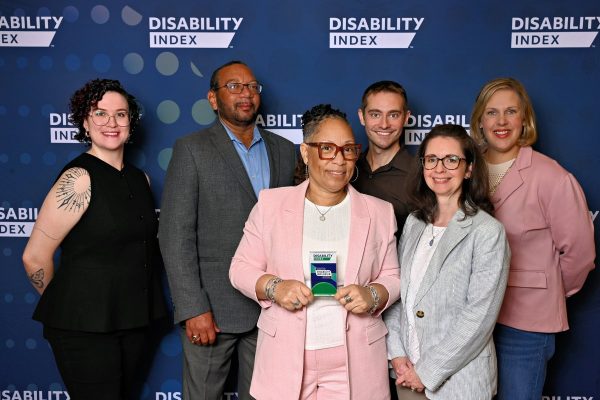
“Disability inclusion is fundamental to building a workplace where everyone has the opportunity to contribute, grow and innovate,” said Calvin Crosslin, Vice President Chief Inclusion Officer, Lenovo. “The Disability Index recognition reflects the progress we’ve made in embedding accessibility and inclusion across our business, while reinforcing that creating an inclusive culture is an ongoing journey. Through our Disability Advantage Strategy, we’re helping ensure our employees, customers and communities benefit from technology and workplaces designed for everyone.”
Lenovo’s Disability Advantage strategy provides a global framework for advancing disability inclusion through local action plans focused on accessibility, awareness, inclusive workplaces and sustainable change. Building on Lenovo’s 2020 commitment to The Valuable 500, the strategy brings together global and local teams to strengthen accessibility, promote inclusive hiring practices and foster a culture where all employees can thrive.
Examples of this work are Lenovo’s progress in both physical and digital workplace accessibility. Across physical spaces, the real estate teams have used local accessibility audits to drive practical improvements such as automatic doors, lowered badge readers, improved signage and elevator installation. In the digital workplace, Lenovo has also improved access to key employee information through accessibility enhancements to its HR Knowledge Base. Together, these actions show how Lenovo is embedding disability inclusion into everyday employee experiences.
While the Disability Index recognizes workplace inclusion, Lenovo’s commitment extends beyond its workforce. Through initiatives such as the Inclusive Product Design Office, Lenovo is also working to ensure its products and solutions reflect the diversity of the people who use them, leading to technology that is really for all.
You can learn more about Lenovo’s accessible innovations and inclusive workplace in Lenovo’s FY 2025/26 Environment, Social and Governance Report.
About the Disability Index
The Disability Index® is the leading benchmarking tool for advancing disability inclusion in business worldwide. Trusted by over 70% of the Fortune 100 and nearly half of the Fortune 500, the tool helps companies determine opportunities for progress through data-driven actions and outcomes.
An initiative of Disability:IN, participation is open to companies operating in countries around the globe. Learn more at DisabilityIN.Org.
About Disability:IN
Disability:IN is the leading nonprofit resource for business disability inclusion worldwide. Together with the world’s leading companies, Disability:IN drives progress through initiatives, tools, and expertise that deliver long-term business impact. Are You IN?
About Lenovo
Lenovo is a US$83 billion revenue global technology powerhouse, ranked #153 in the Fortune Global 500, and serving millions of customers every day in 180 markets. Guided by its vision of “Smarter Technology for All”, Lenovo is executing a Hybrid AI strategy that spans Personal AI – one personal AI, multiple devices; and Enterprise AI – helping customers turn data into insights and value. This strategy is delivered through the Group’s commitment to world-class innovation and a full-stack AI portfolio, including devices (PCs, workstations, smartphones, tablets, accessories), infrastructure solutions (server, storage, edge, high performance computing and software defined infrastructure), as well as software, solutions, and services. With a global footprint spanning more than 20 research and development locations and a global supply chain that includes more than 30 manufacturing sites across 11 markets, Lenovo is widely recognized for its operational excellence. Lenovo is listed on the Hong Kong stock exchange under Lenovo Group Limited (HKSE: 992) (ADR: LNVGY). Learn more at www.lenovo.com and follow the latest news in our newsroom.
Entergy New Orleans and Rebuilding Together New Orleans (RTNO) announced the launch of Power Up Homes, a pilot program designed to help New Orleans households reduce energy costs through critical home repairs and energy-efficiency improvements.
Supported by a $100,000 investment from The Entergy Charitable Foundation, the program closes the gap for low-income homeowners who are not eligible for existing energy efficiency programs due to the poor conditions of their homes. Through the program eligible homeowners receive critical repairs and upgrades that will enable them to also benefit from Energy Smart and other energy-efficiency programs.
“Power Up Homes allows us to address the underlying issues that can contribute to high energy costs while helping customers make their homes safer, more comfortable and more energy efficient,” said Deanna Rodriguez, president and CEO at Entergy New Orleans. “This partnership builds on the work we already do through Energy Smart by bringing energy-efficiency improvements directly into homes that need them most.”
Work is underway on two New Orleans homes, one on Saratoga Street and another on First Street. Both homes were identified through RTNO’s weatherization pipeline as households experiencing high energy use associated with aging or failing home systems.
“Power Up Homes pairs critical repairs like HVAC and water heater replacements with resilient home repairs that help families weather rising utility costs and extreme weather,” said William Stoudt, executive director of Rebuilding Together. “The name reflects the program’s purpose: power homes more efficiently, and power up the families and neighborhoods that depend on them.”
In addition to energy efficiency upgrades, homeowners will also be offered access to a suite of services and programs provided by United Way of Southeast Louisiana’s J. Wayne Leonard Prosperity Center including EITC/VITA, matched savings accounts, budgeting, asset creation and credit repair all with a goal of placing families on the path to economic stability.
Upgrading aging home systems
At the Saratoga Street home, crews are replacing an over 20-year-old air-conditioning system and water heater. The work also includes attic insulation, duct sealing, installing a programmable thermostat and electrical safety improvements.
The existing HVAC system is being replaced with a new 19 SEER high-efficiency system. A new high-efficiency gas water heater also will be installed, along with improvements to ventilation and exhaust systems.
“I am so grateful for this program because my bill was really high,” said Power Up Homes participant. “I am so happy that I was able to get the much-needed upgrades and repairs to my home to make it more energy efficient and will help lower my bills.”
At the home on First Street, the project includes a new 19 SEER HVAC system, a high-efficiency water heater and replacement of a non-functioning attic ventilation system. Flooring improvements also are being made in two bedrooms where the existing subfloor was uninsulated.
These improvements will help the homes operate more efficiently while replacing aging or failing equipment.
Helping customers save energy
Replacing aging HVAC and water-heating equipment can make a meaningful difference in household energy use and costs. Cooling and water heating can account for 45-65% of a typical New Orleans household’s electric bill, particularly in older homes with inefficient equipment and limited insulation.
The 19 SEER HVAC systems installed through Power Up Homes can reduce cooling costs by approximately 35% to 55% compared with 15- to 20-year-old systems operating at 8 to 10 SEER, depending on the existing equipment’s condition.
Water-heating upgrades can also deliver significant savings. Older tank water heaters typically have an efficiency factor of 0.55 to 0.60, while high-efficiency models can reduce water-heating costs by approximately 60% to 70%. ENERGY STAR estimates that a family of four can save several hundred dollars annually by upgrading.
For households receiving both upgrades, the combined improvements could result in several hundred dollars in potential annual utility savings. Attic insulation, duct sealing and programmable thermostats can further reduce energy use and improve equipment performance. Beyond energy savings, these improvements can enhance home comfort, reduce strain on major systems and help extend the life of new equipment.
Powering homes for the future
Power Up Homes also provides a pathway for participating households to access additional energy-efficiency resources through Entergy’s Energy Smart program. Together, the initiatives can help customers address immediate home needs while identifying additional ways to improve efficiency and manage energy costs.
Through Power Up Homes, Entergy New Orleans and RTNO are demonstrating how targeted home improvements can address aging equipment, improve efficiency and help customers get more from the energy they use. The pilot program reflects our ongoing commitment to helping customers use energy more efficiently while investing in the communities we serve.
View original content here.
Originally published on GoDaddy Resource Library
What first inspired you to pursue a career in Software Development, and how did your path lead you to GoDaddy?
I didn’t grow up with a perfectly mapped-out plan to become a Software Engineer. Coming from Jaipur, India and pursuing my Bachelor of Technology there, my journey into technology was driven more by curiosity than certainty. What drew me to Software Development was the idea that you could start with a problem, break it down, and build something that could actually make someone’s life a little easier.
Like many students starting out, there were moments when I questioned whether I knew enough or was ready for the opportunities I wanted. Over time, I learned that a career in technology isn’t about knowing everything from day one. It’s about being willing to learn, staying curious, asking questions, and getting comfortable with not always having the answer immediately. That mindset shaped my journey and eventually led me to GoDaddy, where I’ve had the opportunity to keep learning while working on real-world problems and growing alongside talented people.
Looking back, one thing I would tell anyone beginning their own journey is: you don’t need to have your entire career figured out before you start. Take the next opportunity to learn, keep building your skills, and allow your path to evolve along the way. Sometimes, where you end up can be much bigger than what you initially imagined.
What’s one thing you wish more engineers understood about long-term collaboration?
One thing I wish more engineers understood is that long-term collaboration is less about always agreeing and more about building trust. When you work with the same people over time, there will naturally be different opinions on how a problem should be solved, and that’s often a good thing.
I’ve learned that being a strong engineer isn’t just about writing good code or finding the technically best solution. It’s also about listening to different perspectives, communicating the reasoning behind your decisions, being open to changing your mind, and making it easier for the people around you to contribute.
Code will change, technologies will evolve, and projects will eventually move on, but the way you work with people stays with them. Being someone others can ask questions, disagree with, learn from, and rely on is just as important as being technically strong. That’s what turns a group of good engineers into a team that can build great things together over the long term.
How do you create space for experimentation within the constraints of deadlines and priorities?
I don’t think experimentation always needs a separate block of time on the calendar. Some of the best experiments begin with a simple question: “What if we tried this differently?”
When you’re working with deadlines and competing priorities, there will rarely be a perfect time to explore every interesting idea. So, I’ve learned to make experimentation part of the way I work rather than something I wait to have time for. It could be testing a small idea before committing to it, trying a different approach on a problem, or spending a little time understanding why something has always been done a certain way.
Of course, not every experiment works—and that’s part of it. The value isn’t always in finding a better solution; sometimes it’s in learning quickly that an idea isn’t the right one. If you can learn something without putting the larger goal at risk, I think that’s time well spent.
For me, the balance is simple: respect the deadline, but don’t let the deadline take away your curiosity.
Are there any resources that you would recommend to others interested in personal development?
I’d recommend Atomic Habits by James Clear for building sustainable habits and developing a mindset of continuous improvement. I’ve also found mentors—both formal and informal—incredibly valuable. Learning from people who offer honest feedback, share their experiences, and challenge your perspective can accelerate personal growth.
Ultimately, staying curious, reflecting regularly, and being open to feedback are some of the best development tools available.
What’s the most valuable feedback you’ve ever received?
One of the most valuable pieces of feedback I’ve received was: “Don’t measure your contribution by how busy you are; measure it by the difference you make.”
Early in my career, I often associated doing more with doing better taking on more tasks, spending more time on a problem, and trying to solve everything that came my way. Over time, I learned that being busy and being effective aren’t always the same thing.
That feedback taught me to pause and ask better questions: What problem are we actually trying to solve? Does this need to be complicated? Where can my time make the biggest difference? Sometimes the most valuable contribution isn’t writing more code or doing more work—it’s simplifying something, preventing a problem, helping someone else move forward, or recognizing that something doesn’t need to be built at all.
It changed my definition of a good day at work. I no longer think only about how much I got done, but whether what I did actually mattered.

What’s your personal mantra?
You don’t have to have it all figured out. You just have to be willing to begin.
I’ve learned that we often wait for the right moment—to feel confident enough, prepared enough, or certain enough. But some of the most meaningful things in my life started when I wasn’t completely ready.
I simply took the first step, learned along the way, and trusted that I would figure out the next one when I got there.
So that’s something I try to remind myself of, especially when something feels unfamiliar or intimidating: start before you feel ready, stay curious when you don’t know, and don’t let the fear of getting it wrong stop you from finding out how far you can go. Because when I look back, the moments that changed me the most weren’t the ones where I had all the answers. They were the ones where I chose to begin anyway.
Are you enjoying this series and want to know more about life at GoDaddy? Check out our GoDaddy Life social pages! Follow us to meet our team, learn more about our culture (Teams, ERGs, Locations), careers, and so much more. You’re more than just your day job, so come propel your career with us.