
NEW YORK–(BUSINESS WIRE)–Frontline workers with similar jobs, pay and financial pressures can still experience their financial lives very differently. New research from Stream, a Workplace Finance platform available to more than four million workers, explores how two small, everyday money habits are associated with those differences. In their new report, Mind Over Money, Stream surveyed 7,171 U.S. frontline workers, all using the same employer-provided financial app, and grouped them based on
Author: sHq_LoGiNz
Additional Neighborhood Partners Program grants will be announced in the coming months
NEWARK, N.J., September 29, 2026 /3BL/—In recognition of national Hunger Action Month, the PSEG Foundation announced the first cohort of 2026 grant awardees under its Neighborhood Partners Program (NPP), a long-standing initiative that will distribute over $1 million in grants to nonprofit partners and community organizations in New Jersey and on Long Island this year. Eighty nonprofit organizations working to combat food insecurity throughout New Jersey and Long Island will receive a combined $500,000 in funding. The remaining grants will be distributed to additional cohorts over the next few months.
Awardees include Meals on Wheels, which provided homebound senior citizens with over 143,000 nutritious meals throughout Mercer County in the past year; St. Joseph’s Social Service Center, which provides food, clothing and medications to residents of Elizabeth; and Newark’s Covenant House, which provides food, water, hygiene kits and immediate and long-term support to youth experiencing homelessness.
“Many New Jersey and Long Island residents continue to struggle to afford basic necessities,” said Calvin Ledford Jr., President of the PSEG Foundation and Director of Corporate Social Responsibility at PSEG. “The PSEG Foundation’s goal is to help position our nonprofit partners to meet growing demand. Our community partners are on the front lines every day, helping meet the needs of families, senior citizens and individuals. The PSEG Foundation is proud to fund their work and strengthen the communities we serve and operate in.”
“Addressing food insecurity requires strong partnerships and a shared commitment to community well-being. The Neighborhood Partners Program reflects the power of collaboration between funders and the nonprofit organizations that serve individuals and families every day,” said Maria Spina, Senior Manager, PSEG Foundation & Corporate Social Responsibility. “We are honored to partner with nonprofit organizations that work tirelessly to expand access to food and essential resources, and we congratulate each of this year’s awardees for the important impact they make in our communities”.
“When a family is struggling to put food on the table, having a reliable place to turn to can make a huge difference,” said Bernadette Murphy, Executive Director at St. Joseph Social Service Center. “PSEG Foundation’s support helps to sustain our food program and nourishes our neighbors not just with food, but also with support services delivered with love, dignity, and compassion.”
The Neighborhood Partners Program is part of the PSEG Foundation’s ongoing work to care for the communities served by PSE&G and PSEG Long Island. Since the program’s began in 2014, more than $9.8 million in funding has been given to over 825 organizations across New Jersey and Long Island, with $8.9 million invested in New Jersey alone. PSEG employees complement that financial support through volunteer service. In 2025, nearly 700 employees volunteered to support more than 50 food drives, soup kitchens and food pantry initiatives, including partnerships with major food banks across the state. So far this year 350 employees have contributed over 1,500 volunteer hours at 14 organizations working to address food insecurity and support residents in need.
Visit our website for more information about the PSEG Foundation, the Neighborhood Partners Program and the list of awardees.
For more information about National Hunger Action Month, visit: https://www.feedingamerica.org/take-action/hunger-action-month.
###
About PSEG Foundation
The PSEG Foundation, a separate 501(c)(3) supported and fully funded by Public Service Enterprise Group (PSEG) (NYSE: PEG), prioritizes investments in promoting community well-being, environmental sustainability, and economic empowerment.
Contacts:
DL-ENT-pseg.communications@pseg.com
CHARLOTTE, N.C., September 29, 2026 /3BL/ – Tepper Sports & Entertainment (TSE) today announced that Trane Technologies (NYSE: TT) has been named a Cornerstone Partner, extending a long-term commitment to the future of Bank of America Stadium. The company will serve as the exclusive Official Climate Technology Partner and an Official Sustainability Partner of both the Carolina Panthers and Charlotte FC. The designation places Trane Technologies among a select group of Cornerstone Partners and reflects the company’s deep ties to the Carolinas. Trane Technologies, a global climate innovator with more than 45,000 employees around the world, maintains its North American headquarters in Davidson, North Carolina and employs more than 4,600 employees across North Carolina and South Carolina.
The announcement builds on a relationship that began in 2018 when the organizations first worked together on a comprehensive upgrade to Bank of America Stadium’s climate and cooling systems to improve fan comfort, indoor air quality and energy efficiency.
“Trane Technologies has been a trusted partner for many years, and we’re excited to have them play an even greater role as we continue the transformation of Bank of America Stadium,” said Kristi Coleman, Tepper Sports & Entertainment CEO. “Their decision to become a Cornerstone Partner reflects the strength of our relationship, the value they bring to this project and a shared vision for what it means for our fans, our region and future generations.”
Trane Technologies will become the presenting partner of the 300-Level Silver Club at Bank of America Stadium in 2029, encompassing more than 50,000 square feet of premium hospitality space and four adjacent club destinations across the level. As part of the stadium’s ongoing transformation, the company is also leading the upgrade of the venue’s HVAC infrastructure systems and controls to continue to improve comfort, efficiency and performance throughout the stadium.
“Bank of America Stadium is a powerful economic and community asset for the Carolinas, and we’re honored to serve as a Cornerstone Partner to support its next chapter,” said Dave Regnery, Chair and CEO of Trane Technologies. “We believe innovation can help shape a more sustainable future, and we look forward to continuing our support of this important venue and its transformation, providing advanced climate technology that helps enhance stadium comfort, efficiency and performance for years to come.”
Another key component of the partnership is the continuation of the STEM Stadium of the Future Challenge, a 10-week program that empowers North and South Carolina high school students to dream big and design the next generation of sports venues. Challenged to envision what an NFL-style stadium built for their school could look like, students use STEM skills to create innovative concepts that blend sustainability, technology, fan experience, accessibility and school pride. Supported by mentors from Trane Technologies, teams construct scale models of their designs and present them before a panel of industry leaders, competing for Panthers Charities and Trane Technologies Foundation grants that help advance STEM education in their schools.
###
About Tepper Sports & Entertainment
Tepper Sports & Entertainment (TSE) owns and operates the Carolina Panthers of the National Football League (NFL), Major League Soccer’s (MLS) Charlotte Football Club, and Bank of America Stadium in Charlotte, N.C. TSE is committed to making the greater Charlotte metro area the premier year-round destination for sports and entertainment in the Carolinas. From hosting around 12 football-focused events annually, Bank of America Stadium now boasts around 40 annual ticketed events. The diverse array of events attracts audiences spanning NFL, NCAA, high school football, MLS, international soccer, and blockbuster concerts. Beyond sports and entertainment, the venue accommodates hundreds of corporate and community events throughout the year and has served as a mass vaccination site in 2020, as well as an early voting site in the 2020, 2022 and 2024 elections.
About Trane Technologies
Trane Technologies is a global climate innovator. Through our strategic brands Trane® and Thermo King®, and our portfolio of environmentally responsible products and services, we bring efficient and sustainable climate solutions to buildings, homes and transportation. For more on Trane Technologies, visit tranetechnologies.com.
Forward Looking Statements
This news release includes “forward-looking statements” within the meaning of securities laws, which are statements that are not historical facts, including statements that relate to plans and objectives for future operations, economic performance, and predictions of future operational benefits and outcomes. These forward-looking statements are based on current expectations and are subject to risks and uncertainties, which may cause actual results to differ materially from current expectations. Factors that could cause such differences can be found in the Form 10-K filed with the U.S. Securities and Exchange Commission by Trane Technologies plc for the year ended December 31, 2025, as well as subsequent reports filed by Trane Technologies plc on Form 10-Q and other SEC filings. New risks and uncertainties arise from time to time, and it is impossible to predict these events or how they may affect the statements set forth in this news release. We assume no obligation to update these forward-looking statements.
In this bonus episode, host Charlotte Buffoni is joined by Giorgia McGuigan from Peter J Ramsay and Associates in Australia to examine how AI-enabled workflow, reporting and performance management tools can introduce psychosocial risks at work.
A tool intended to save time can leave employees feeling more closely monitored, raise productivity expectations, blur how performance data is used or add to workloads. Giorgia explains why autonomy, role clarity, fatigue and trust matter when organisations introduce systems that influence decisions about people.
The discussion explores what EHS professionals can contribute before and throughout implementation: consult workers, assess how the tool changes work, question whether it addresses a real need and keep people involved in interpreting its outputs. The key test is whether an organisation can explain to a worker how the system affected a decision about them.
Listen Now
Time Stamps
- 00:00:02 – Introduction: AI at work and psychosocial safety
- 00:01:21 – When productivity tools change the experience of work
- 00:01:57 – Autonomy, monitoring and decisions informed by AI
- 00:03:37 – AI scheduling and the risk of worker fatigue
- 00:04:49 – Warning signs: Role clarity and rising demands
- 00:07:08 – What responsible implementation could look like
- 00:08:01 – Using AI as a support for human judgement
- 00:10:40 – Consulting workers about changes to their work
- 00:12:00 – Bringing EHS into design and management of change
- 00:14:13 – Questioning the need for a tool and reviewing its impact
- 00:15:13 – Can you explain a decision to the affected worker?
- 00:15:56 – Closing reflections on the human impact of technology
Guest Quotes
Giorgia McGuigan:
“I think asking would we be comfortable in explaining to the worker how this system has influenced decision about them?”
Originally published on CVS Health Company Newsroom
Key points
- Value-based primary care has stalled in many places not because the model is wrong, but because too many have approached it as a contracting exercise, signing the risk deal and documenting patients’ clinical conditions, instead of the harder work of integrating care around the patient.
- Scaling it takes connecting the whole system around one patient: the health plan, primary care, in-home engagement, retail clinics and the neighborhood pharmacy, all working toward the same goal.
- At CVS Health, we’re doing the harder work of integration and medical cost improvement, not just the easier work of contracting and documenting, and being honest about what that takes.
For many clinicians, the moments from the exam room that stay with them are rarely the dramatic ones. They’re the avoidable ones: the patient who lands in the emergency department over a weekend because no one caught the warning signs on Thursday, the medication that was never reconciled, the specialist visit that never got back to the person managing the whole picture. None of those failures are about the skill of any single clinician. They’re about a system that pays for activity instead of outcomes, and that leaves everyone in it working harder than ever while patients still fall through the gaps.
That is the promise of value-based care: paying for health rather than volume and rewarding clinicians for keeping people well. But value-based primary care has stalled in so many places not because the payment model is wrong. It’s that too many have approached it as a contract to manage rather than a system of care to build. Scaling it takes connecting the entire system—primary care, the health plan, in-home care, retail clinics and the neighborhood pharmacy—so that care is organized around one person rather than fragmented across wherever it happens to be delivered. That is what CVS Health is working to build. And it is hard.
Why scaling value-based primary care is hard
We should be clear about the difficulty, because the industry too often isn’t. This is a challenging moment for value-based care—and it is challenging industry-wide. Three forces are converging at once: medical costs have risen as patients returned to care after the pandemic; reimbursement has lagged those costs; and the risk-adjustment models that underpin the sustainability of the model have changed. The result is outsized operational and financial pressure on value-based providers.
There is a more fundamental difficulty—one that never shows up in a contract. Value-based primary care only works when you have a panel of patients you know well, and that takes years to build, not quarters. A clinic isn’t sustainable the day it opens; it becomes sustainable as relationships deepen, gaps in care close, and avoidable costs come down. We learned this at Oak Street Health. Our footprint grew quickly, and we have since moved from a clinic-growth mentality to a disciplined focus on strengthening performance in existing centers—deepening the panels in the clinics we already have rather than chasing new construction. It’s the less glamorous strategy. It’s also the right one.
In this environment, it is important to be precise about each patient’s health needs so that care teams have an accurate picture of the people they serve. That work matters, and it demands rigor in how conditions are identified, documented and addressed. We have invested in AI-enabled tools to help meet that bar. But documentation accuracy is only the starting point. The durable work—the work that actually bends the cost curve—is medical cost management: keeping people out of the hospital, coordinating their specialists, managing their medications, and addressing the social barriers that drive avoidable utilization. That is harder, slower and less visible than administrative precision. It is also the only thing that makes value-based care worth doing.
Doing that at scale takes more than any single clinic or any single contract. In practice, it comes down to four things.
It takes shared accountability, not siloed contracts
Value-based contracts move accountability from the cost of a single service to the total cost of a patient’s care: every admission, every specialist, every prescription, and the social factors that shape all of them. Making that work demands genuine alignment between payors and providers, who too often operate at arm’s length on competing incentives. Oak Street Health is an all-payor model—built to deliver for every health plan and every patient, not any single relationship. When a health plan and a care team commit to the same goal for the same patient, with appropriate consent and safeguards, they can coordinate more closely, close gaps in care faster, and organize care around the person rather than the claim.
And it is working. At Oak Street Health, which is fully accountable for the total cost of care of the patients it serves, the model produces a 40% reduction in hospital admissions per thousand compared with traditional Medicare. These are not feel-good statistics: when patients stay healthier, every payor that partners with Oak Street benefits—and so do the patients themselves. Aetna is one example of that alignment, and the depth of that collaboration demonstrates what genuine payor-provider alignment can achieve. Oak Street’s model is designed to work across payors, with the same focus on improving outcomes and lowering avoidable costs for every patient it serves.
View patient Linda’s story here.
It takes a complete picture of the patient to successfully deliver value-based care
Most of what determines a patient’s health never appears in a medical chart, and almost none of it surfaces in a 15-minute office visit. Nearly a third of Americans have no primary care physician, and one in three lives in a health care desert. Diet, housing, transportation, isolation, fall risk at home—these shape outcomes far more than most diagnoses, and they are invisible from behind a desk. And when we can’t see the full picture, value-based care falls apart.
That is why we go to people’s homes. Through Signify Health, our clinicians conduct in-home health evaluations that can capture more than 300 clinical and social data points: early signs of chronic disease, mental and cognitive health concerns, mobility and safety risks, and barriers like food insecurity or unreliable transportation. Across the country, that adds up to roughly 3.5 million home visits a year—3.5 million chances to catch a risk before it becomes an emergency.
But data alone does not improve anyone’s health. Action does. Signify Health is built to help close that loop: when a visit surfaces an unmet need or a care gap, our clinicians help connect the person to the next step in their care—so a risk spotted in the living room becomes a problem we help prevent rather than an emergency we meet in the hospital.
It takes the pharmacy—value-based care’s most underused asset
Here is a fact that should reshape how we think about value-based care. A typical Medicare patient sees their primary care physician 7 times a year. They interact with their pharmacist far more often—and for many people, the pharmacist is the most trusted and most accessible clinician in their lives. Nearly 85% of Americans live within five miles of a CVS Pharmacy. In value-based care, access is not a coincidence. It is an asset.
With the patient’s consent, the pharmacy can reinforce the care plan: medication management and adherence support the care team can act on, screenings and vaccinations that close gaps in care, and a pharmacist who is a genuine extension of a patient’s primary care relationship rather than a transaction at a counter. When the pharmacy, the primary care clinic, the home visit and the health plan share the same goal for the same patient, the frequency of those pharmacy interactions stops being a missed opportunity and becomes connective tissue for the patient’s care—and a direct lever on value-based outcomes.
It takes coordination that’s built in, not bolted on
Coordinating care is operationally hard: electronic records still don’t talk to each other cleanly, and the workforce is stretched thin. But for patients juggling multiple specialists, medications and follow-ups, coordination is the difference between a care plan that works and one that exists only on paper.
At Oak Street Health, where about 65% of our patients live with two or more chronic conditions, team-based care is the default: our teams coordinate actively with specialists, reinforce treatment plans, and provide transitional care after a hospitalization—the most fragile moment in a patient’s journey—to prevent avoidable readmissions. Signify Health’s care coordinators help members take the next best step, whether that is establishing a relationship with a primary care provider or connecting to their health plan’s care-management resources. And our MinuteClinic primary care model—now available at more than 65% of our clinics—is helping people connect to longitudinal care close to home.
Underneath all of it is technology. AI is making integration real-time rather than aspirational. At Oak Street Health, an AI-enabled risk model helps care teams identify which patients are most likely to face a serious health event so we can reach them before they reach the hospital. The same capability stratifies the risks Signify surfaces in the home and connects fragmented records so a care team sees the whole patient rather than fragments. Used well—with clear safeguards for privacy and real clinical oversight—technology is not a substitute for the relationship between a patient and a care team; it is what gives that team the time, and the information, to do their jobs.
What it takes—and why it’s worth it
Scaling value-based primary care takes shared accountability, a complete picture of each patient, the most frequent touchpoints in the system, and coordination built into every visit. It takes the patience and the honesty to do the real work—improving medical cost and integrating care—rather than treating payment reform as the finish line. We hold ourselves to a simple standard: the work has to translate into measurable outcomes for patients.
No single organization will fix American health care alone. It will take payors, providers, pharmacists and policymakers willing to do the hard work of integration, not just redesign payment models and hope the care experience changes on its own. But when value-based primary care is built on connected access, real insight into each patient, and coordination at its foundation, it can mean fewer avoidable hospital visits, better medication support, more connected follow-up and easier access to care. At CVS Health, that is the work underway: connecting care across the home, clinic, pharmacy and health plan so value-based primary care can become more accessible, more coordinated and more sustainable.
by Hardik Gohil
Most people never see the systems that keep daily life moving. They simply expect the light to turn on, the train to leave on time, and help to arrive when it is needed. That unseen force is the “Invisible Pulse” of modern society: the silent, essential heartbeat of mission-critical networking. For the team at Nokia, keeping that pulse strong is more than a responsibility; it is a shared purpose.
Around the world, dedicated professionals run the infrastructures society depends on most. They are utility operators managing the nervous system of a national grid, where control messages are every bit as critical as the power lines themselves. When a cyclone or earthquake strikes, the grid cannot be reenergized without the IP communications network that controls the relays and switches.
They are also the emergency aeromedical crews flying through stormy nights in what are, in effect, airborne intensive care units. For these pilots and clinicians, a reliable data link is not a convenience; it is how critical information reaches the hospital before the patient does. In their world, a connection failure is not just a technical issue, it can put the entire mission at risk. For these organizations, failure is simply not an option.
That reality demands extraordinary foresight. When planning these control networks, these organizations must think a decade ahead, anticipating the capacity, reliability, and resilience they will need in 2035 and beyond. While “five nines” availability remains the telecom benchmark, mission-critical networks are built to go “beyond the five nines,” with resilience designed to keep systems operating and support recovery even amid natural disasters.
And this is where the story becomes personal.
For me, this commitment to the Invisible Pulse is one of the things that makes this work so meaningful. It sits at the intersection of engineering excellence and human impact. Our team does not build connectivity solutions in isolation; we immerse ourselves in our customers’ realities, whether in public safety, defense, transportation, or energy.
I find real purpose in knowing that our IP networking helps a pilot focus on flying, helps clinicians prepare before a patient arrives, and helps communities recover after floods and storms. That is what drives us: the ambition to be so reliable, so resilient, and so seamless that the control network fades into the background, even as it keeps everything else running. We are proud to be the Invisible Pulse behind the world’s most essential systems, always on, always resilient, always there.
But the best way to understand it is to hear directly from the people who keep society’s critical functions running every day:
After more than two decades with Leidos and its predecessor company, SAIC, Mike Sapp had built an impressive career leading large, complex software programs. But like many professionals, there came a point where he wanted something different.
Today, he’s back at Leidos as the Director of Product Delivery for the Air Traffic team, helping pursue one of the company’s most significant opportunities: modernizing the nation’s aging air traffic control system.
For him, returning wasn’t simply about coming back, it was about finding the right role at the right time.
A career that started with curiosity
When Mike first joined the company in 2002, he was looking for an opportunity to expand his technical skills.
“I wanted to update my software development knowledge by learning Java,” he says. “The company was willing to invest in teaching me while I used my management experience to help lead a project.”
That willingness to learn set the stage for a career that would span more than 20 years, primarily leading large-scale software programs and eventually overseeing a portfolio of more than 400 employees as a vice president.
Stepping away to gain perspective
After years in senior leadership, he found himself ready for a change.
Following a challenging program transition, he began exploring new leadership opportunities. When the right fit didn’t materialize internally, he decided to take his career in a different direction.
“I wanted to experience working for a smaller company and have a more manageable schedule,” he says. “While I didn’t end up loving the role itself, I did enjoy working a true 40-hour week with less stress.”
That experience ultimately gave him something even more valuable: clarity. “It helped me figure out who I wanted to be at this point in my career and how I wanted to finish it.”
Finding the right opportunity to return
When his small company lost the contract he supported, he began exploring options once again. A conversation with a former Leidos colleague changed everything.
“He told me about a role that checked nearly every box,” he says. “It was mostly remote, outside the cleared community, and had a completely different pace and focus.”
Returning to Leidos suddenly felt like the perfect next step. “I finally felt like I was working the way I’d always wanted to, even if I hadn’t previously had the words to describe it.”
His second chapter at Leidos has been very different from the first. Instead of the demanding schedule that often comes with executive leadership, he has found the balance he had been seeking. “I work a much more natural schedule now and have the work-life balance I wanted.”
The experience also reinforced something many returning employees discover: a large organization offers the flexibility to reinvent your career without starting over somewhere else.
Turning a passion into a profession
Earlier this year, Mike transitioned to the Air Traffic Management team. Now he’s helping capture the next-generation FAA air traffic management program, work that feels especially meaningful because it aligns with a lifelong personal passion.
“I’ve been a private pilot since 1996,” he says. “Working on the future of air traffic management feels like I’m working on my hobby every day.”
One of the biggest surprises of this stage in his career has been rediscovering software development. Although he spent most of his career managing software teams rather than writing code himself, advances in AI have opened new possibilities.
“I had long ago accepted that I wasn’t going to build software anymore,” he says. “Then AI changed everything.”
Today, he uses AI to develop, debug, and deploy meaningful software while continuing to lead teams. “I’m still a software manager but now I’m one who produces code as well. It’s completely changed my day-to-day work.”
Advice for fellow alumni
Looking back, he says leaving Leidos ultimately helped him appreciate what the company could offer in a different role.
My return has changed my work life ten times for the better. I’m happier at work than I’ve been in years.
Mike Sapp, Director of Product Delivery, Air Traffic, Leidos
His advice for anyone considering coming back is simple. “We’re a very large organization, and there are opportunities in so many different corners of the business. If the path you’re on isn’t the right one, that doesn’t mean there isn’t another one that’s exactly what you’re looking for.”
For him, returning wasn’t about going backward. It was about discovering the next chapter of a career that still had plenty of opportunities ahead.
If you’re also a Leidos alumnus, we’d love to keep in touch!
Join the Leidos Alumni Network to receive company updates, including opportunities to rejoin the company or even earn up to $10,000 by referring your professional contacts, friends and family.
Originally published on 3M News Center
New products can come from anywhere – formal meetings, lab discoveries, customer conversations, or even running into a colleague in the hallway.
The new 3M™ Adhesive Mix Monitor traces its origins to a conversation in the 3M Germany office between Benjamin Muenstermann, advanced research specialist, and Knut Schumacher, senior product development specialist.
Muenstermann was looking for input on a customer challenge with two-part adhesive dispensing. He wanted to know how they could, in real time, know that adhesive was being mixed correctly so they could improve first-pass quality, reduce scrap, and avoid the hidden cost of off-ratio dispensing. Schumacher realized that measurement expertise from an earlier project could provide that much-needed visibility and manufacturing confidence.
They quickly got to work on an early concept that eventually became the 3M Adhesive Mix Monitor.
A manufacturing challenge: ensuring mix quality during dispensing
In modern vehicles, two-part structural adhesives help bond roofs, doors and lightweight body panels made from steel, aluminum and composites. These materials are also used in electronics, medical devices and industrial equipment where strong, reliable bonds are critical. They are created by combining two components during dispensing, and their performance depends on those components being mixed as intended.
Even small deviations in mix ratio can affect bond strength and long-term reliability, yet the issue may not be visible when the adhesive is first dispensed. In some cases, it may only be discovered later, after parts have moved further down the production line or products are already in use
“Customers had been frustrated for years by the lack of a reliable way to verify mix quality during dispensing,” said Alissa Wenner, application engineering specialist in 3M’s Industrial Adhesives and Tapes Division. “In one case shared with the team, improper mixing led to thousands of dollars’ worth of scrapped parts.”
From hallway conversation to practical solution
The 3M Adhesive Mix Monitor was developed to help address that challenge. The system evaluates mixed adhesive during dispensing and determines whether the ratio remains within defined limits. It translates that complex measurement into a simple visual indication for operators and provides engineers with time-stamped data for quality monitoring, traceability and troubleshooting.
Turning that idea into a product required far more than adhesive expertise alone. The challenge was not only finding a way to evaluate mix quality during dispensing but also translating that insight into a system that could work reliably in a manufacturing environment.
What began with a hallway conversation grew into a broader effort across 3M teams in Germany and the United States, drawing on expertise in science, electronics, software, mechanical design and application engineering.
“There are outstanding experts across 3M,” Schumacher said. “What makes a difference is being able to connect with them easily and work together to solve a real problem.”
FAQ
What is the 3M Adhesive Mix Monitor?
The 3M Adhesive Mix Monitor is a process-monitoring system designed for use with 3M two-part structural adhesives. It evaluates mixed adhesive in real time during dispensing to help manufacturers improve visibility into a quality process that can be difficult to monitor.
Why is monitoring mix quality important?
If the two adhesive components are not mixed correctly, the adhesive may not perform as intended. The problem may not be obvious right away and may only be discovered later, after defective parts have already been produced or a finished product is already in use.
How does the system work during dispensing?
The system uses a disposable sensor at the outlet of the static mixer to evaluate mixed adhesive in real time during dispensing. For operators, the result appears as a simple visual signal: green when the adhesive is within the defined dispense zone and red when it is not.
How does the system support manufacturing teams?
Operators receive immediate visual feedback during dispensing, and engineers can use time-stamped data from the system to support process monitoring, traceability and troubleshooting.
Leah Operana, a program specialist helping bring Tata Consultancy Services’ Go Innovate Together (goIT) program to teachers all over the United States, has seen a pattern among the educators, parents and volunteers who bring TCS goIT to students. She calls it “The Boomerang Effect” because, once teachers and volunteers experience the student innovation and career-readiness program, they frequently come back to it as soon as possible, eager to see it benefit more young people.
“What I hear again and again from teachers and volunteers is that goIT gives students a different way to see themselves,” Operana said. “They witness the confidence young people build as they brainstorm ideas, solve problems and present their thinking to encouraging mentors from the IT and social enterprise industries. They want more students to have that experience.”
goIT was created by TCS in 2009 for students in Greater Cincinnati. Its successful beginning led to its development as a hands-on, digital innovation and career-readiness program and, later, to its expansion across North America and around the world. By challenging students to innovate in ways that help advance the United Nations 2030 Sustainable Development Goals (SDGs), it helps young people develop the skills, confidence and mindset needed to pursue careers of the future. goIT activities emphasize design thinking, collaboration skills, presentation techniques, and the affirmation that youth are capable of developing creative solutions to real-world challenges.
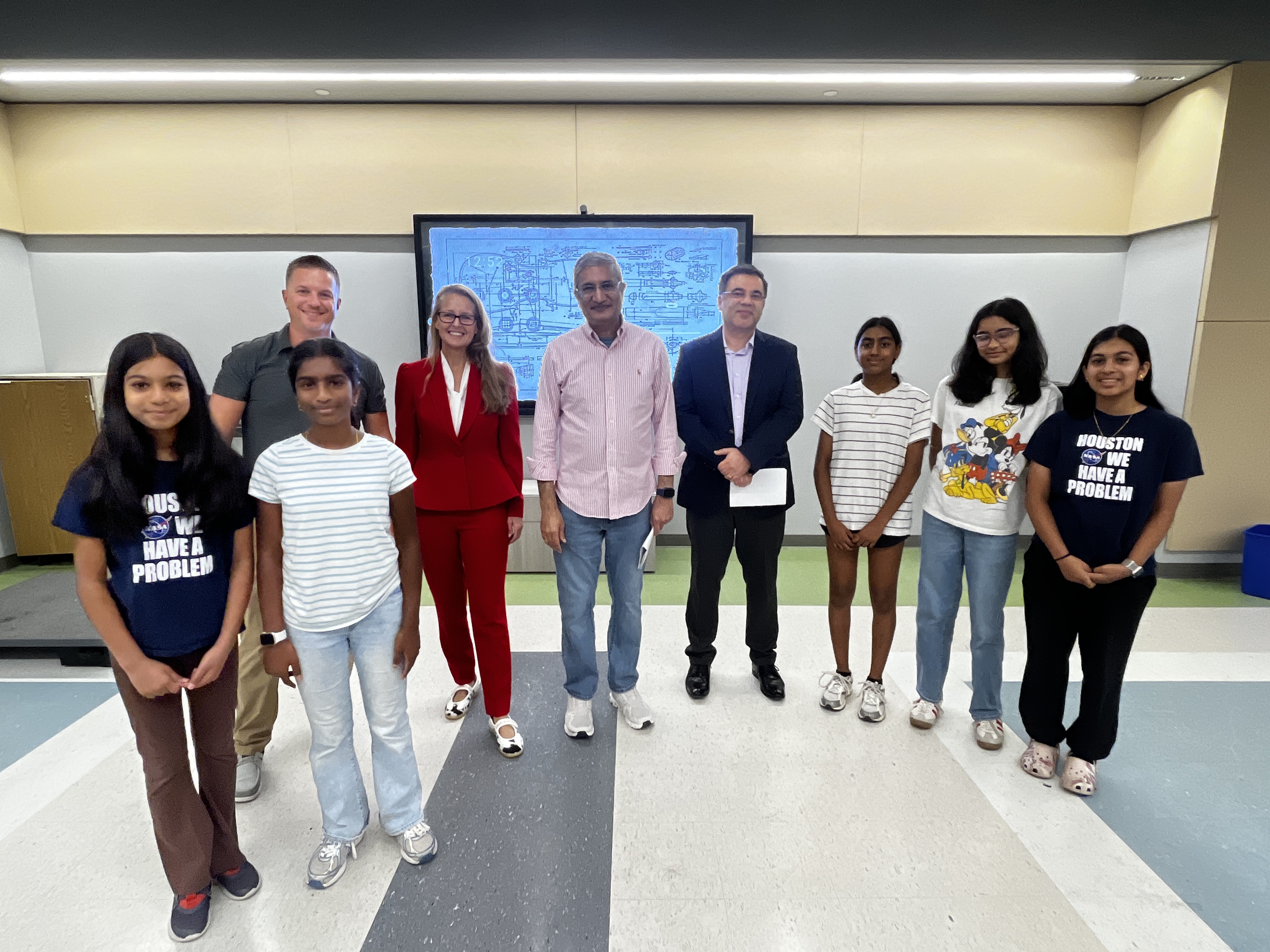
Social Studies teacher John Peach is a prime example of Operana’s “Boomerang Effect” in action. Peach has brought goIT to students in New Jersey school districts in Edison and Metuchen, NJ annually since 2022. This past summer, he led summer programs at both school districts, giving more than 200 students access to goIT. His efforts enabled them to use part of their break to go through goIT modules such as Design Thinking, Generative AI, and Machine Learning before ideating in groups and taking their digital concept pitches to goIT volunteers, including TCS employees and customers.
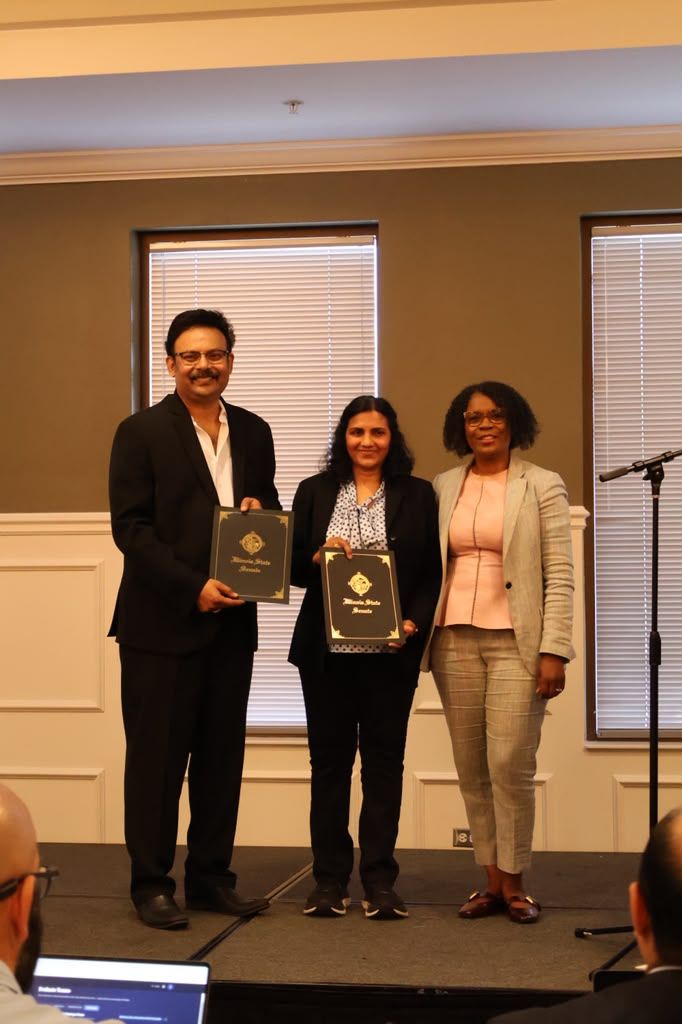
In Illinois, TCS employee Muralidhar Singh’s path with goIT was similar. He first served as a volunteer judge, coaching and mentoring appreciative students during a program culmination event. Murali enjoyed experiencing goIT’s impact on students, their abilities and self-confidence. He immediately sought to bring goIT to more youth through the Lake County Indians Association (LCIA), where he serves as an advisor.
“Watching young people strengthen their problem-solving, career readiness, and innovation skills inspired me to help expand the program locally,” said Singh. “I’m proud of the students who dedicated part of their summer to learning and deeply grateful to the volunteers who made the experience possible.”

More than 60 students took part in LCIA’s 2026 summer program. With support from more than 30 volunteers and community partners who participated as facilitators, judges and guest speakers, the local high school students explored the SDGs and collaborated to solve problems related to education, health, poverty and the environment. When they finished, they had the honor of being present when Illinois State Senator Adriane Johnson presented LCIA and TCS with a proclamation acknowledging the power of the TCS STEM education-enhancement program.
Summer programs demonstrate multiple sides of TCS goIT’s impact, from what students gain from the goIT experience to the added benefits when participating during a long break from formal education. In the summer, goIT can help stave off learning losses while getting kids ready for confident learning and engagement from the start of the school year.
“No matter when it’s implemented, goIT shows people how youth can contribute to solving global human and environmental challenges, and how strongly the adults around them believe those benefits are worth making time for,” said Operana. “It works beautifully no matter what time of year it takes place and TCS has volunteers eager to help year-round.”
Learn more about TCS goIT here.
Learn more about Tata Consultancy Services’ work in North America here.
About Tata Consultancy Services
Tata Consultancy Services (BSE: 532540, NSE: TCS) is the technology partner of choice for industry-leading organizations worldwide. Since its inception in 1968, TCS has upheld the highest standards of innovation, engineering excellence, and customer service.
It has set an aspiration to become the world’s largest AI-led technology services company and is enabling its clients to transform themselves across the full AI stack, from infrastructure to intelligence.
Rooted in the heritage of the Tata Group, TCS is focused on creating long term value for its clients, its investors, its employees, and the community at large. With a highly skilled workforce spread across 56 countries and 194 service delivery centers across the world, the company has been recognized as a top employer in six continents. With the ability to rapidly apply and scale new technologies, the company has built long-term partnerships with its clients. Many of these relationships have endured into decades and navigated every technology cycle, from mainframes in the 1970s to artificial intelligence today.
TCS sponsors 14 of the world’s most prestigious marathons and endurance events, including the TCS New York City Marathon, TCS London Marathon, Tata Mumbai Marathon, and TCS Sydney Marathon with a focus on promoting health, sustainability, and community empowerment.
TCS generated consolidated revenues of over US $30 billion in the fiscal year ended March 31, 2026. For more information, visit www.tcs.com.
TORONTO–(BUSINESS WIRE)–Cizzle Brands Corporation (Cboe Canada: CZZL; OTCQB: CZZLF; Frankfurt: 8YF) (“Cizzle Brands” or the “Company”), the sports nutrition company that is elevating the game in health and wellness, today announced that it has entered into a multi-year agreement (the “Agreement”) with Maple Leaf Sports & Entertainment (“MLSE”) making CWENCH Hydration the Official Sports Drink of the Toronto Maple Leafs and the Toronto Marlies®. The Agreement comes three months after the M