
LONDON–(BUSINESS WIRE)– FORM 8.3 PUBLIC OPENING POSITION DISCLOSURE/DEALING DISCLOSURE BY A PERSON WITH INTERESTS IN RELEVANT SECURITIES REPRESENTING 1% OR MORE Rule 8.3 of the Takeover Code (the “Code”) 1. KEY INFORMATION (a) Full name of discloser: NATIXIS SA (b) Owner or controller of interests and short positions disclosed, if different from 1(a): The naming of nominee or vehicle companies is insufficient. For a trust, the trustee(s), settlor and beneficiaries must be named. (c) Name o
Author: sHq_LoGiNz
CANTON, Mass.–(BUSINESS WIRE)–This week at the MEDITECH LIVE leadership summit, healthcare organizations using MEDITECH’s Traverse Exchange interoperability network highlighted significant benefits gained since implementing the network’s new Consolidated Patient Summary. Unveiled at last year’s summit, the enhanced workflow has seen swift adoption among clinicians, providing care teams with faster access to critical patient information, reducing duplicate testing, and supporting more informed
LONDON–(BUSINESS WIRE)– FORM 8.3 PUBLIC OPENING POSITION DISCLOSURE/DEALING DISCLOSURE BY A PERSON WITH INTERESTS IN RELEVANT SECURITIES REPRESENTING 1% OR MORE Rule 8.3 of the Takeover Code (the “Code”) 1. KEY INFORMATION (a) Full name of discloser: NATIXIS SA (b) Owner or controller of interests and short positions disclosed, if different from 1(a): The naming of nominee or vehicle companies is insufficient. For a trust, the trustee(s), settlor and beneficiaries must be named. (c) Name o
DURHAM, N.C.–(BUSINESS WIRE)–HemoSonics LLC announced today that it will be honored during Premier’s annual Supplier Innovation Celebration at its 2026 Breakthroughs Conference and Exhibition. The Innovation Celebration recognizes groundbreaking healthcare technologies launched throughout the year and highlights how these products help improve the health of communities. “Premier’s recognition of the Quantra Systems clearance in Obstetrics reinforces our commitment to delivering rapid, actiona
LOS ANGELES–(BUSINESS WIRE)—- $NAGE #Biotech–Niagen Bioscience, Inc. (NASDAQ: NAGE), the global authority on NAD+ (nicotinamide adenine dinucleotide) with a focus on the science of healthy aging, today announced a Start-Up Agreement with Mass General Brigham (MGB) to begin detailed planning for what is envisioned to be the largest and most comprehensive clinical trial of Niagen (patented nicotinamide riboside or NR) to date. “This agreement reflects the next stage of responsible NAD+ science,” said Rob Fried,
LONDON–(BUSINESS WIRE)– FORM 8.3 IRISH TAKEOVER PANEL OPENING POSITION DISCLOSURE/DEALING DISCLOSURE UNDER RULE 8.3 OF THE IRISH TAKEOVER PANEL ACT, 1997, TAKEOVER RULES, 2022 BY PERSONS WITH INTERESTS IN RELEVANT SECURITIES REPRESENTING 1% OR MORE 1. KEY INFORMATION (a) Full name of discloser Qube Research & Technologies Limited (b) Owner or controller of interests and short positions disclosed, if different from 1(a) The naming of nominee or vehicle companies is insufficient. For a tru
CHICAGO–(BUSINESS WIRE)–Hyatt Hotels Corporation (NYSE: H) today announced that Amar Lalvani has been appointed Hyatt’s first-ever Chief Creative Officer, in addition to his role as President & Creative Director of the company’s Lifestyle Group, effective immediately. Lalvani will continue to serve on Hyatt’s senior leadership team and report to Mark Hoplamazian, Hyatt’s Chairman, President and Chief Executive Officer. The appointment reflects Hyatt’s continued evolution as a more insight
This story first appeared on Baker Hughes’ Energy Forward Stories
Chiara Antonelli is a test bench leader. She recently volunteered at a hospital in Africa, to create a photo-reportage for an Italian humanitarian charity. This is her story.
Hello Chiara. Could you please introduce yourself and tell us a little bit more about your current role at Baker Hughes?
Chiara Antonelli
I am Chiara Antonelli. I’m based in Massa, Italy, one of the largest turbomachinery manufacturing plants in this country. I am currently a test bench leader for the turbomachinery string test cell. I coordinate and supervise the testing activities in the plant. It is an exciting job, which I started nine months ago. Previously I was in the planning team for the same department.
I am also a hub leader for the Employee Resource Group Women’s Network and for one of our culture initiatives People First at the local site. Click here to find out more about these Baker Hughes programs.
I really enjoy building a network outside of my direct work team, to feed my curiosity and make new connections.
Tech explainer
What is a turbomachinery string test?
A turbine string test is a factory acceptance test where a complete machinery train—typically a driver (turbine/motor), gearbox, and driven equipment (compressor/pump)—is coupled and tested together as one unit. It simulates site operating conditions to verify mechanical performance, vibration, and thermal behavior, ensuring all components operate properly together before field installation.
To validate the entire system, the string test team will identify vibration or misalignment, and avoid expensive on-site, last-minute modifications.
The components tested are gas turbines, compressors, motors, and auxiliaries connected in a “string”.
The test monitors bearing temperatures, rotor dynamics, and vibration at full speed and load.
Here is an example of how this can also be done virtually.
Question:
Which Baker Hughes technologies go through testing in Massa?
Chiara Antonelli
We test new turbomachinery units manufactured in the Massa and Florence plants, or upgrades to existing units. As a key part of the supply chain, the test bench is the last department once a unit is being packaged and completed, before dispatch for delivery. The customer can ask for additional testing activities, for both new units and upgrades. This is way to ensure quality checks before our products are installed at the customer sites.
When I mention ‘units’, it can be gas turbines or compressors.
The test carried out is for the main skid and its auxiliaries. We test the skid using the same site operating conditions as at the customer’s site.
We use different configurations for the testing of the equipment, to recreate operating conditions as realistically as possible. My team consists of 15 people, divided into mechanical and electrical sub-teams, and is led by Andrea Riccucci, while I oversee the operational activities.
Tech explainer
What is a skid?
A skid is a modular, steel-framed platform holding auxiliary equipment for gas/ steam turbines or compressors, such as fuel conditioning, lube oil systems, or cooling systems. These self-contained units treat, control, or transport fluids and gases to the main item, improving performance and protecting sensitive components from contamination. Baker Hughes technologies cover virtually every application across the oil and gas value chain, and in other industries, too. Power plants, LNG, and pipeline transmission feature some of the most well-known, innovative solutions.
Question:
Could you please explain what your journey through education and previous roles were, to get to where you are today?
Chiara Antonelli
I am a Management Engineer. I graduated from Pisa University, and I originally joined Baker Hughes in 2022 as an intern working on continuous improvement. Since then, I completed my master’s degree while working with this amazing team. The company gave me the opportunity to take both paths in parallel: academic and professional.
Question:
You recently had the opportunity to volunteer for an unusual project in Africa. Can you please describe how this came about?
Chiara Antonelli
Since 2009, I’ve watched my father, who is an anesthetist, pack his suitcase for humanitarian missions. He would come home with vivid stories of new worlds for my brother and me.
Over the years, I came to understand the deeper meaning of such missions: helping others and receiving in return a profound sense of gratitude.
I have been waiting for an occasion to join him for a long time; I just didn’t really know how to access such an opportunity with my career. My brother is a nurse now, so he will be able to do this as part of his job. But for me it was a little less obvious.
I should also mention, I have always loved photography, I practiced it as a hobby but worked freelance during my studies. I have experience with product marketing and wedding photography. Since becoming an engineer, I have kept it alive when I get the opportunity.
Last year, my dad called to let me know the charity Emergenza Sorrisi he was working with needed a reporting photographer during their next humanitarian mission in the Republic of the Congo (RDC). So, he suggested I send my resume, to see if it would be a good fit for me to join them, and I was accepted in the team!
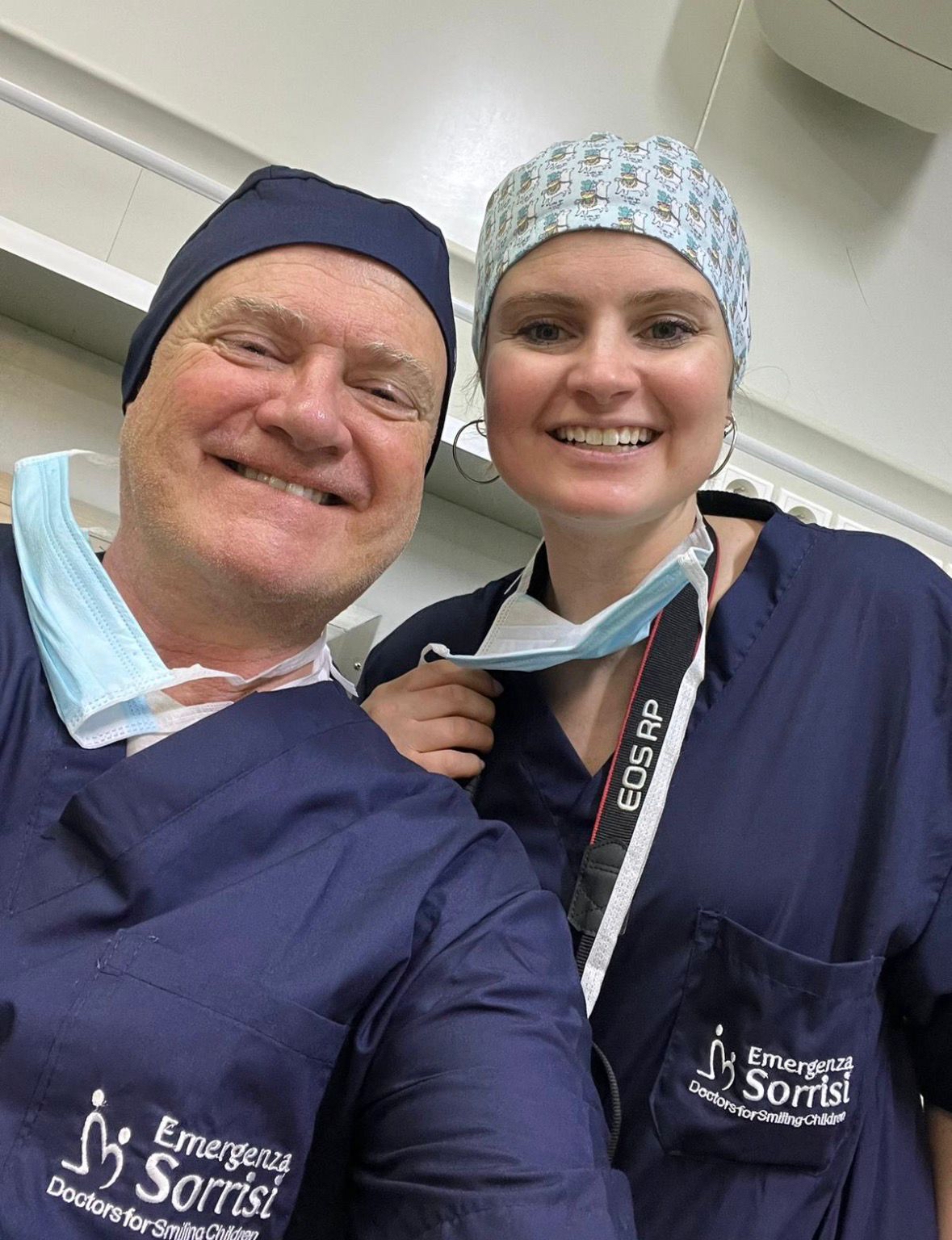
As you can imagine, ahead of making it to RDC, we encountered logistical complexities, including last-minute travel arrangements, required vaccinations, and safety checks due to the geopolitical situation.
Once in Brazzaville (RDC), everything I had imagined through my father’s stories took shape — the sounds, the colors, the emotions and experiencing this next to him made it even more meaningful.
I was there for a week. I took it as annual leave from Baker Hughes.
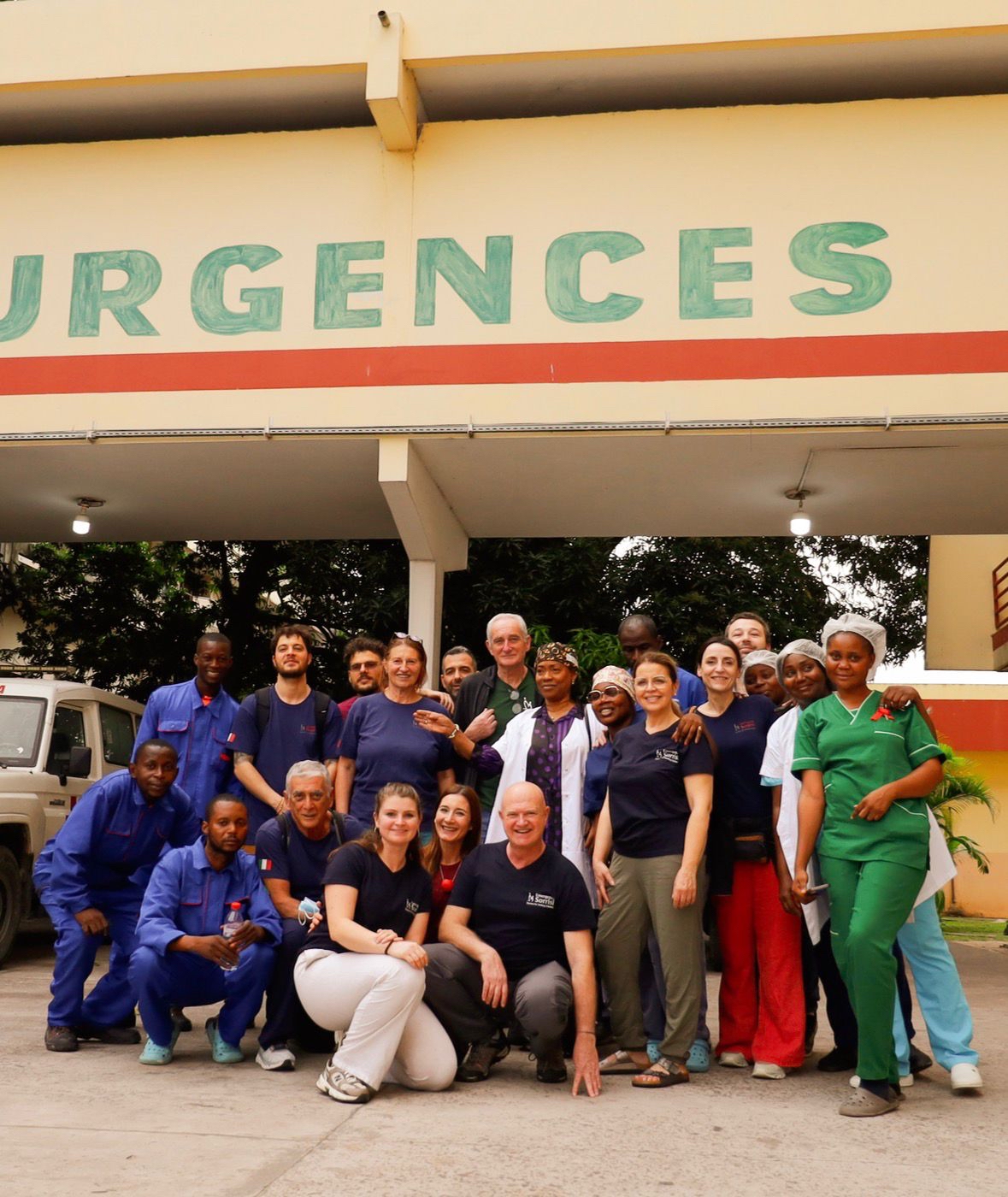
From 8am to 8pm, our daily routine was simple: breakfast, then straight to the hospital. While the medical staff was operating, I was staying with the families and the children awaiting treatment and reporting on the day’s activities for the charity, then back for a quick dinner and a rest.
The language barrier was an issue at times, as local people speak French and unfortunately, I don’t. So, we had to go through team mates to translate. It was so gratifying getting to know the patients, discovering their stories and understanding their culture.
Charity description:
Emergenza Sorrisi ETS (Doctors for Smiling Children) is a humanitarian organization that, since 2007, has been providing free specialized surgical care and medical assistance to the most vulnerable children living in fragile contexts, where access to healthcare is limited or non-existent. Active in more than 31 countries, it carries out missions thanks to the voluntary work of over 300 highly qualified doctors, nurses, and healthcare professionals, and has given a new life to more than 8,000 children.
The organization’s mission focuses on treating severe craniofacial malformations, burn sequelae, and disabling traumas — including those caused by armed conflicts — which compromise vital functions such as breathing, speech, and nutrition, often leading to social exclusion.
Question:
Can you please explain what happens now with the photos you took during the mission?
Chiara Antonelli
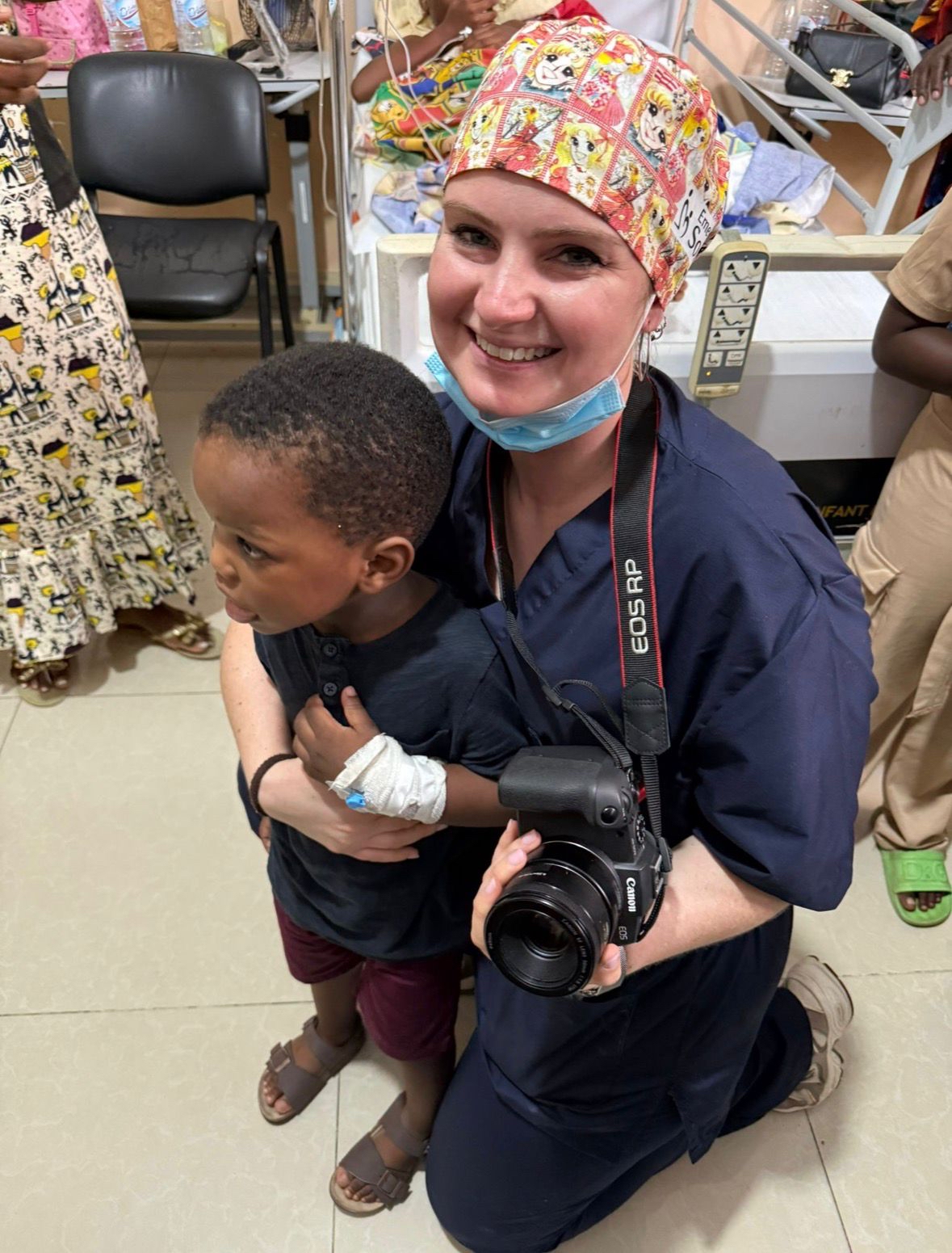
The charity relies on donations from corporate organization and the Italian government for example, as well as private donors. The photography is used to help document the organization’s work around the world, for their website, on social media and for presentations to potential patrons. It is important to record a day in the life of the children and families and the benefits of the work of the mission.
In the week I was there, 43 children were operated on, around double what was expected, thanks to the additional support from the local staff. Patients from all over the RDC come to the Brazzaville Children’s Hospital. The mission staff supported screening and specialized interventions on cranial fascial malfunctions. The team took the opportunity to also train local staff while on site.
The main purpose is to make the process sustainable so that local staff and community can benefit during and after the visit from the team from Italy. I truly felt that what they choose to do for the local community is inspiring.
Question:
Now that you are back at work, can you tell us how you feel this experience already has or will influence your work. What did you learn?
Chiara Antonelli
I think I can explain by referring to the Baker Hughes values, grow, collaborate, lead and care, which are relevant here
I believe empathy or care in this instance is one of the main aspects of this journey for me. You never know what the person in front of you is going through in their life. That’s an important perspective to take in everyday interactions with colleagues and people in general.
Making connections and stepping out of your comfort zone is essential to continue to learn. I was not part of the medical staff, yet I was able to help the patients, families and their children as they were waiting to be seen by the doctors and in the operating room. Taking photos and interacting created a distraction in a very tense situation. I realized I could be of some help, even though I am an engineer in ‘real life’. This was very gratifying and meaningful to me. This also resonated with the collaborate value- taking care of each other and understanding others to help them.
I do feel better equipped to lead, in the sustainable energy development context of our industry. As I mentioned earlier, the mission’s aim is to make work methods more sustainable for future operations in the hospital, well beyond the week of planned interventions. This was a key learning for me. When you do something with people at work, you also teach them how to do it themselves, to make it work. This is very important in my daily work for knowledge transfer, both when I am coaching others and learning.
Finally, I am convinced this experience made me grow not only as a leader, but also as a human. Witnessing the relief and gratitude of the parents, after experiencing the stress and the worry for their children, was priceless. To feel all the emotions of this intense experience, while bringing back so many memories is transformative.
Originally published on CVS Health Company Newsroom
Millions of people across the United States face food insecurity, making it harder to stay healthy, manage chronic conditions and focus on everyday life. During Hunger Action Month, CVS Health is highlighting the organizations working every day to ensure individuals and families can access the nutritious meals they need.
Feeding America’s Map the Meal Gap 2026 study underscores the ongoing challenges many families face in putting food on the table. Nearly 48 million people, including 14 million children, experienced food insecurity in 2024. With food insecurity affecting every U.S. community, the findings reinforce the importance of local organizations, community collaborations and innovative programs that help connect individuals and families to nutritious food and support healthier outcomes.
Investing in solutions that meet community needs
Because every community faces different challenges, there is no one-size-fits-all approach to addressing food insecurity. CVS Health supports organizations working on the ground to create solutions tailored to local needs.
In recent years, the company and the CVS Health Foundation have invested in nonprofit organizations helping expand food access, provide medically-tailored meals and strengthen community food systems. Recent investments include support for Feeding America’s Meal Connect platform, which helps reduce food waste while increasing access to nutritious food, as well as Community Servings’ Food is Medicine Accelerator Program, which expands medically tailored nutrition programs through training and fundraising assistance throughout the country.
CVS Health and the CVS Health Foundation have also provided funding to nonprofit organizations focused on food insecurity solutions, including No Kid Hungry, Meals on Wheels of New Jersey, Harlem Grown, Windy City Harvest, Central California Food Bank and other community-based organizations working to support healthier outcomes through nutritious meal programs, prescription food boxes, urban agriculture, and community gardening efforts that increase access to fresh, healthy foods. Recently, CVS Health helped support the opening of a new, school-based food pantry inside Woonsocket High School in Rhode Island, giving local students and families immediate access to essential groceries on campus.
Taking action through volunteerism
Addressing food insecurity requires more than financial support. Volunteers play an essential role in helping food banks and community organizations sort, pack, and distribute food to individuals and families facing hunger.
Throughout the year, CVS Health and Aetna colleagues volunteer with food banks, meal programs, community gardens, and nonprofit organizations across the country, helping strengthen local food systems and support neighbors in need. These volunteer efforts provide critical hands-on support at a time when many food banks are experiencing increased demand and serving more families than ever before.
Hunger Action Month is also an opportunity for customers and community members to get involved. Whether volunteering at a local food pantry, participating in a food drive or supporting a community meal program, even a few hours of service can help organizations expand their reach and provide nutritious food to more people.
Building healthier communities together
Creating healthier communities requires both investment and action. Through volunteer efforts, charitable giving and collaborations with organizations working on the front lines of hunger relief, CVS Health colleagues and customers are helping make a meaningful difference in the lives of neighbors across the country.
This Hunger Action Month, CVS Health encourages everyone to find a way to get involved and help build a future where everyone has access to nutritious food.
Learn more about CVS Health’s efforts to address food insecurity and support healthier communities.
Originally published on CVS Health Company Newsroom
Millions of people across the United States face food insecurity, making it harder to stay healthy, manage chronic conditions and focus on everyday life. During Hunger Action Month, CVS Health is highlighting the organizations working every day to ensure individuals and families can access the nutritious meals they need.
Feeding America’s Map the Meal Gap 2026 study underscores the ongoing challenges many families face in putting food on the table. Nearly 48 million people, including 14 million children, experienced food insecurity in 2024. With food insecurity affecting every U.S. community, the findings reinforce the importance of local organizations, community collaborations and innovative programs that help connect individuals and families to nutritious food and support healthier outcomes.
Investing in solutions that meet community needs
Because every community faces different challenges, there is no one-size-fits-all approach to addressing food insecurity. CVS Health supports organizations working on the ground to create solutions tailored to local needs.
In recent years, the company and the CVS Health Foundation have invested in nonprofit organizations helping expand food access, provide medically-tailored meals and strengthen community food systems. Recent investments include support for Feeding America’s Meal Connect platform, which helps reduce food waste while increasing access to nutritious food, as well as Community Servings’ Food is Medicine Accelerator Program, which expands medically tailored nutrition programs through training and fundraising assistance throughout the country.
CVS Health and the CVS Health Foundation have also provided funding to nonprofit organizations focused on food insecurity solutions, including No Kid Hungry, Meals on Wheels of New Jersey, Harlem Grown, Windy City Harvest, Central California Food Bank and other community-based organizations working to support healthier outcomes through nutritious meal programs, prescription food boxes, urban agriculture, and community gardening efforts that increase access to fresh, healthy foods. Recently, CVS Health helped support the opening of a new, school-based food pantry inside Woonsocket High School in Rhode Island, giving local students and families immediate access to essential groceries on campus.
Taking action through volunteerism
Addressing food insecurity requires more than financial support. Volunteers play an essential role in helping food banks and community organizations sort, pack, and distribute food to individuals and families facing hunger.
Throughout the year, CVS Health and Aetna colleagues volunteer with food banks, meal programs, community gardens, and nonprofit organizations across the country, helping strengthen local food systems and support neighbors in need. These volunteer efforts provide critical hands-on support at a time when many food banks are experiencing increased demand and serving more families than ever before.
Hunger Action Month is also an opportunity for customers and community members to get involved. Whether volunteering at a local food pantry, participating in a food drive or supporting a community meal program, even a few hours of service can help organizations expand their reach and provide nutritious food to more people.
Building healthier communities together
Creating healthier communities requires both investment and action. Through volunteer efforts, charitable giving and collaborations with organizations working on the front lines of hunger relief, CVS Health colleagues and customers are helping make a meaningful difference in the lives of neighbors across the country.
This Hunger Action Month, CVS Health encourages everyone to find a way to get involved and help build a future where everyone has access to nutritious food.
Learn more about CVS Health’s efforts to address food insecurity and support healthier communities.