Healthcare is experiencing a transformation that seemed impossible just a few years ago. AI is detecting diseases earlier, personalizing treatments with unprecedented precision, and delivering complex care in more accessible settings. It’s driving measurable and meaningful improvements in patient outcomes, workflow efficiency, and care accessibility. It’s raising the standard of care around the world.

Yet, there’s another impact we need to discuss: AI is also resource-intensive. With $3 trillion projected to be invested in AI by 2028, its energy and water consumption has rightfully raised concerns.

Some estimates suggest that without new capacity, AI could consume over 9% of the U.S. electricity grid in the next decade, up from nearly 3% today.

It’d be easy to frame this as a binary choice — innovation or sustainability. But that’s not realistic, and it’s not responsible. Healthcare can’t afford to prioritize one at the expense of the other, even when weighing healthcare benefits against environmental costs can become impossibly complex. We need to be pragmatic about how we can advance both simultaneously without compromising on either.

So, let’s talk about what it will take to get this balance right.

Welcome to Healthcare 5.0

We’re entering an era defined by ultra-personalized, predictive, and preventive care — Healthcare 5.0. It’s a fundamental shift in how we deliver care that’s possible as we harness the power of AI.

Diagnostic tools leveraging AI are enabling earlier, more precise disease detection. The AI-powered GI Genius™ improves colonoscopy detection rates by up to 14%, helping physicians identify polyps they might otherwise miss. Aside from the direct patient health outcome benefit, better detection leads to earlier intervention, which can help prevent more resource-intensive treatments down the line.

Personalized treatment planning also shows real, measurable results. Spinal surgery using patient-specific alignment, such as the UNiD™ adaptive spine intelligence (ASI) system, has been shown to lower revision rates compared to traditional approaches. While this approach may require more resources initially, eliminating the need for a potential second surgery mitigates future consumption and delivers a superior patient experience. In addition, AI-enabled spinal surgery planning can provide predictable and reproducible outcomes for patients with spinal deformity.

AI and digital tools are also redefining where and how care is delivered. Digital capabilities, such as the Touch Surgery™ ecosystem, are being explored for ambulatory settings where using Live Stream enables access to experts from elsewhere. In an emergency or at a remote location, these tools support and augment on-site staff. Moving complex care from hospitals to outpatient centers also dramatically reduces resource use since hospitals generate an estimated over 29 pounds of waste per bed per day. Ambulatory care requires a fraction of that infrastructure while making care more accessible and affordable.

When it comes to workflow, AI is helping healthcare systems do more with what they have. Early data shows AI could be used to augment or automate 70% of healthcare workers’ tasks, allowing organizations to serve more patients without expanding infrastructure. As an example, Medtronic’s own LINQ II™ insertable cardiac monitor — deploying AccuRhythm™ AI algorithms — can save clinicians 400 hours annually of false alert reviews for every 200 patients they serve. Accomplishing more with existing resources is an efficiency that matters for both business and the planet.

It also matters for individual clinicians. By reducing administrative burden, AI can free up time for patient interactions and help address burnout.

The measurement challenge

Here’s where it gets complicated. Current sustainability metrics focus heavily on immediate environmental impacts — the energy consumed by a query or the water used to cool a data center. They don’t capture the full life cycle impacts of AI-enabled healthcare.

The industry needs frameworks that can meaningfully compare the environmental costs of AI against the healthcare value it creates. How do we measure the resources AI consumes against avoided hospital stays, prevented complications, or lives extended? AI’s ability to improve outcomes, efficiency, and accessibility creates value that must factor into sustainability discussions. And we need reliable and industry-wide measurement frameworks sophisticated enough to capture both sides of the equation.

It’s also worth noting that, from a resource-consumption perspective, not all AI is created equal. At Medtronic, we focus primarily on closed-loop AI models that operate within established knowledge paradigms — algorithmic AI that’s far less resource-intensive than large language models analyzing vast universes of open data. It’s an important distinction since generative AI applications require significantly more computational power, while the algorithmic AI embedded in some of our medical devices operates efficiently in more contained environments.

Healthcare companies can’t solve this alone. Enterprise AI providers and cloud computing partners need to measure AI efficiency using metrics that attempt to quantify AI’s performance against the resources consumed — something like “tokens per watt per gallon of water,” perhaps. The measurement challenge is as much about cross-industry collaboration as it is about developing the right metrics.

Practicing the balancing act

So, what can we do?

First, we need strategic AI deployment. Not every problem requires the most computationally intensive solution. The principle should be simple: Use the right AI tool for the right job, and only deploy AI when it demonstrably improves a healthcare success metric. This is what responsible AI should be about — particularly in healthcare, where, unlike other generative AI applications, there should be zero tolerance for hallucinations or clinically indefensible outputs. AI for AI’s sake is part of the problem.

This requires governance systems within companies that guide appropriate tool selection, helping teams match computational intensity to problem complexity while maximizing the benefit created.

We also need perspective on technology maturation. History shows us that emerging technologies become more efficient and cost-effective over time: Solar panels are 40% more efficient than in 2010, while electric vehicle battery energy density has boosted typical ranges from 100 miles per charge to 250–400 miles in around a decade. AI is following the same trajectory, with new chip architectures delivering more computational power while using less energy, and smaller models proving you don’t always need the biggest solution.

We should manage AI’s environmental impact early in its adoption, but we should also be realistic about giving it time to mature.

In the meantime, there are concrete steps we can take. Medtronic is investing in renewable energy at scale — our recent virtual power purchase agreement adds renewable energy equivalent to nearly all our North American energy needs. We’re modernizing facilities with more efficient technology and partnering with AI providers committed to sustainable practices. These aren’t perfect solutions, but they’re actions we can take today.

To learn more about our approach, see the Medtronic FY25 Impact Report.

The path forward

The path forward requires holding two truths simultaneously: AI is driving essential healthcare innovation that improves lives, and AI has environmental impacts we must actively manage. Healthcare leaders need to develop measurement frameworks that capture full life cycle value, implement mitigation strategies now, and collaborate across industries to create sustainable practices.

Healthcare has always faced a twin impact from climate change — the healthcare industry contributes roughly 5% of global greenhouse gas emissions while concurrently treating the adverse health effects caused by environmental pollution and climate change. That creates a compounding burden we can’t ignore.

This isn’t about choosing between innovation and sustainability. It’s about pursuing both with equal commitment, measuring honestly, implementing strategically, and collaborating broadly.

The healthiest future is one in which AI advancement and environmental sustainability aren’t opposing forces but integrated imperatives driving healthcare forward together.
At LG Electronics, Better Life for All is more than a corporate vision or tagline – it’s a guiding principle that shapes everything we create. Central to our inclusive vision is a belief in universal design: the philosophy of crafting products and experiences to deliver convenience and comfort for everyone, regardless of age, gender or physical ability.

Committed to this philosophy, LG aims to go beyond functional innovation to provide unique lifestyle solutions that truly put people first. A deep understanding of our customers and the diverse environments in which they live is essential to this endeavor, which is why listening to the voice of the customer is such an integral part of our design process.

We have established systems to directly integrate real user feedback, especially from those with limited mobility – and seniors and children – into the product development stage. This includes operating an advisory group of people with disabilities and conducting in-depth usability testing. Both of these elements have proven instrumental in helping us to identify and minimize even the smallest points of user discomfort.

Designing with Empathy, Delivering with Purpose

Design at LG has always been about more than aesthetics. It’s about innovating with empathy to ensure usability, ease and enjoyment for all. For us, universal design is not just an outcome, but a mindset shared by all our teams – one that infuses human-centeredness into every decision, no matter how minor or inconsequential it may seem to someone looking in from the outside. From the first concept sketch to the final product experience, we view every touchpoint as an opportunity to make someone’s daily life simpler, safer and more enjoyable.

This approach requires us to design with people rather than for them. It challenges our teams to think beyond convention, to question what “easy to use” truly means and to continuously refine our technology to better meet and adapt to real human needs. When empathy is woven into the design process itself, innovation follows naturally. That is how we translate inclusivity from principle to practice.

Turning Philosophy into Practice: The Comfort Kit

Putting this philosophy into action, we launched the Comfort Kit – a series of affixable assistive kits designed to allow anyone to use our products easily, regardless of their gender, age or physical condition.

Some examples:

  • Easy Handle: Enables users with limited hand mobility to open washers and dryers with minimal effort.
  • Easy Ball: Helps those with reduced finger dexterity to manipulate control dials with ease.
  • Easy Hanger: Allows people using wheelchairs, or those who are shorter than average, to interact comfortably with the LG Styler.
  • Rotating Shelf: Improves refrigerator usability by making it easier to access hard-to-reach items.

We have presented inclusive design solutions that improve the usability of existing products, becoming the first in the home appliance industry to introduce 14 accessibility-enhancing kits. These Comfort Kit series, designed to remove the “one-size-fits-some” barrier that many customers have long faced, are also sustainably manufactured – reflecting our commitment to protecting the planet.

Recognition Beyond Design

Our efforts have not gone unnoticed. Globally, we are recognized as a model company for inclusive design.

We’ve shared our accessibility technologies and design philosophy at forums such as the CSUN Assistive Technology Conference, where the Comfort Kit series was welcomed by both consumers and organizations advocating for underrepresented communities.

We also showcased this work at important global exhibitions such as IFA and CES. Our dedication to good design earned us the “Design Awards Grand Slam” – winning top honors at all three major global design awards, Red Dot, iF, and IDEA.

These accolades matter to us, but more importantly, they reflect our deep conviction that inclusive design is not just a feature – it’s a responsibility.

Designing for a Better Tomorrow

For us at LG, realizing the Better Life for All vision means creating unique products and experiences that feel right for everyone, and can be enjoyed by anyone. We will continue to advance accessibility so that all customers can take advantage of everything that our products and services have to offer. No caveats or compromises, only convenience and comfort.

# # #

MILLEDGEVILLE, Ga., Nov. 24, 2025 /PRNewswire/ — When Dr. Gertrude Ehrlich fled Nazi-controlled Austria with her family in 1939, she found an educational haven in Georgia College & State University (then called Georgia State College for Women).

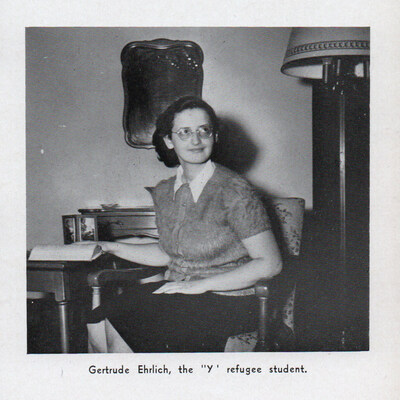
Refugee Gertrude Ehrlich attended Georgia College on a scholarship; she repaid that kindness with a $9 million bequest.

Supported by scholarship funding, Ehrlich became one of the university’s first international students, earned her bachelor’s degree then enjoyed a long career as a professor and textbook author. The class of 1943 alumna died last month in Gaithersburg, Maryland, at 102 years old, but her legacy will live on through a $9 million donation from her estate to the university —the largest gift in the institution’s 136-year history. The funds will be used solely to support students in need.

“We were lucky we were able to get out [of Austria],” Ehrlich said in a 2017 video interview with GCSU. “You could be arrested just for looking Jewish.”

But on the Milledgeville-based Georgia College campus, she was embraced.

“They were so kind to me,” said Ehrlich, who earned a refugee scholarship from the Young Women’s Christian Association nonprofit organization. “I didn’t pay a penny for anything. It was all taken care of.”

The Dr. Gertrude Ehrlich Endowed Scholarship will offer similar impact, providing need-based scholarships for students, with a portion of the fund designated for housing scholarships for local Pell Grant-eligible students. This will be Georgia College’s first endowed housing scholarship.

This historic gift — which will begin awarding scholarships in fall 2026 — comes at an opportune time for students, as GCSU has seen all-time highs in student demand, leading to record enrollment numbers.

“As the university celebrates all-time high student interest — highlighted by an 83% spike in applications received during our fall ‘early action’ period since 2022 — these scholarships will ensure that students have access to an elite education and will be supported throughout their college careers,” said Joel Robinson, senior associate vice president of Enrollment Management. “It is truly a lifechanging impact.”

Ehrlich’s gift also highlights a recent increase in donations among alumni and donors to GCSU.

“The university has seen unprecedented support from its alumni and donors in both 2023 and 2024, and Dr. Ehrlich’s transformational gift this year continues the trend,” said Dr. Seth Walker, vice president for University Advancement. “This level of generosity illustrates the immense pride alumni feel for their alma mater, as well as their support in our unique purpose as serving as Georgia’s designated public liberal arts university, which will create ripples of benefits that will be felt far into the future.”

Building Better Futures

Born in Vienna, Austria, in 1923, Ehrlich was a teenager when Adolf Hitler’s Nazi forces took over her home country in the late 1930s. With the help of an uncle who, a few decades prior, had emigrated to the United States, most of Ehrlich’s family left the unstable European environment for America.

The Ehrlich family wound up in Atlanta, and Gertrude attended Georgia College on a YWCA refugee scholarship. Ehrlich lived in Sanford Hall and served as vice president of the math club on her way to earning her bachelor’s degree in mathematics.

After graduation, Ehrlich went on to receive her master’s degree from the University of North Carolina and doctorate from the University of Tennessee before becoming a math professor at the University of Maryland. She authored several math textbooks during her 37-year teaching tenure, and Georgia College presented her with an alumni achievement award in 1970.

“Dr. Ehrlich’s life serves as a case study in the power of resilience,” said GCSU President Cathy Cox. “Her legacy will benefit generations of students to come, creating opportunities for those who need it most to make a similarly positive impact on the world around them.”

About Georgia College & State University
Located in Milledgeville, Georgia, Georgia College & State University is one of three selective admission institutions in the University System of Georgia, along with Georgia Tech and The University of Georgia. With an enrollment of more than 7,300 students from 150 of Georgia’s 159 counties, GCSU was ranked fifth among all public regional universities in the South – and first among schools in Georgia — in the US News & World Report’s 2026 rankings. Since 2022, GCSU has also produced the No. 1 academic success rate among all NCAA Division II colleges and universities in the country. Hands-on learning opportunities at the university are available in top undergraduate majors, including Business, Nursing, Education, Psychology, Exercise Science and Communications, plus dozens of graduate programs and a pre-med mentoring pathway with 15 years of 100% success in medical school admission.

For more information, visit www.gcsu.edu, or visit Front Page for the latest university news.

Media Contact
Amanda J. Respess
Director of News & Media Relations
478-445-7828 office
912-674-1788 mobile
amanda.respess@gcsu.edu

Cision View original content to download multimedia:https://www.prnewswire.com/news-releases/refugee-alumnas-historic-9-million-gift-to-support-generations-of-georgia-college-students-302624777.html

SOURCE Georgia College & State University

On 24 November 2025, Alfa Laval hosted its annual Capital Markets Day, where Group Management presents the company’s strategic direction for the coming years, along with updates on financial targets and investments for future profitable growth.

LUND, Sweden, Nov. 24, 2025 During the event, held at Alfa Laval’s new Innovation Center in Flemingsberg, Sweden, the company presented an overview of its ambitions and strategic priorities. With a strong emphasis on recently updated financial targets—designed to more accurately reflect the company’s performance—and a clear commitment to removing barriers to growth, the presentations spanned all three business divisions: Energy, Food & Pharma (formerly the Food & Water Division), and Ocean (formerly the Marine Division). Ongoing projects and new initiatives were shared, underscoring Alfa Laval’s dedication to innovation and progress.

Presentations and selected recorded sessions from the day will be available on Alfa Laval’s investor site Capital Markets Day | Alfa Laval

Contacts

Johan Lundin
Head of Investor Relations, Alfa Laval
Mobile: +46 730 46 30 90
johan.lundin@alfalaval.com
 

Sara Helweg-Larsen
Head of Communication, Alfa Laval
Mobile: +46 730 35 80 98
sara.helweglarsen@alfalaval.com

This is Alfa Laval   
The ability to make the most of what we have is more important than ever. Together with our customers, we’re innovating the industries that society depends on and creating lasting positive impact. Alfa Laval is a leading global provider of first-rate products in the areas of heat transfer, separation and fluid handling. We’re set on helping billions of people to get the energy, food, and clean water they need. And, at the same time, we’re decarbonizing the marine fleet that is the backbone of global trade.

We pioneer technologies and solutions that enable our customers to unlock the true potential of resources. As our customers’ businesses grow stronger, the goal of a truly sustainable world edges closer. The company is committed to optimizing processes, creating responsible growth, and driving progress to support customers in achieving their business goals and sustainability targets. Together, we’re pioneering positive impact.

Alfa Laval was founded 140 years ago, has customers in 100 countries, employs more than 22,300 people, and annual sales were SEK 66.9 billion (5.8 BEUR) in 2024. The company is listed on Nasdaq Stockholm.
www.alfalaval.com

This information was brought to you by Cision http://news.cision.com

https://news.cision.com/alfa-laval/r/alfa-laval-capital-markets-day-2025—strengthening-growth-and-profitability-ambitions,c4271304

The following files are available for download:

https://mb.cision.com/Public/905/4271304/9bb3443749345a2c.pdf

Alfa Laval Capital Markets Day 2025 – strengthening growth and profitability ambitions Alfa Laval press release 20251124


Cision View original content:https://www.prnewswire.com/news-releases/alfa-laval-capital-markets-day-2025–strengthening-growth-and-profitability-ambitions-302624720.html

SOURCE Alfa Laval

The story of Mike Bean shines as a testament to the power of community and the impact of dedicated volunteers. Mike, a seasoned culinary industry employee from Asheville, NC, felt the call to action immediately after Hurricane Helene ravaged his hometown, leaving devastation in its wake. With a deep-rooted passion for his community, Mike joined World Central Kitchen (WCK) as a volunteer, ready to lend a hand where it was desperately needed.

His journey began at Curaté, a WCK partner restaurant owned by Chef Corps member Katie Button. Here, Mike witnessed the power of collaboration as the team churned out tens of thousands of meals for those affected by the flooding. Not one to rest on his laurels, Mike moved on to Bear’s Smokehouse BBQ on his second day. Under the leadership of WCK Response Corps member Chef Jamie McDonald, Bear’s transformed into a bustling Field Kitchen and operational hub, becoming the heart of WCK’s Helene response.

Mike’s unique blend of expertise in the food and media industries quickly made him an invaluable asset. His commitment and fervor didn’t go unnoticed, and he soon took on the role of Community Outreach Lead with WCK. For over six months, Mike ensured that meals reached families in need, forged partnerships with local and national organizations, and supported long-term recovery efforts alongside newly formed nonprofits.

Despite the challenges brought on by the hurricane, including delays in reopening his own deli-restaurant, Mike remained steadfast in his mission. His connection with WCK endured, as he continued to support disaster response efforts across the Southeastern United States.

The efforts of volunteers like Mike are supported by organizations such as FedEx, which collaborates with nonprofits like WCK to provide critical aid during disasters. Through their Delivering for Good program, FedEx offers charitable donations and in-kind shipping to help deliver essential supplies to affected areas. This collaboration was vital during the aftermath of Hurricanes Helene and Milton, as FedEx sent 35 shipments of cooking supplies to North Carolina, Florida, and Tennessee on behalf of World Central Kitchen, ensuring that help reached those in need.

Mike’s story is a reminder of the incredible impact that individuals and organizations can have when they come together to support their communities in times of crisis.

Click here to learn about FedEx Cares, our global community engagement program.


HARRISBURG, Pa., Nov. 24, 2025 /PRNewswire/ — AARP Pennsylvania is encouraging caregivers to explore a free video training series developed by the Administrative Office of Pennsylvania Courts (AOPC) that provides an overview of guardianship and alternatives to guardianship in Pennsylvania. 

The Guardianship Training Series includes 14 videos designed to provide newly appointed guardians, prospective guardians and other members of the public with guidance on the roles and responsibilities of a court-appointed guardian. The series is especially timely as new data released by AARP and the National Alliance for Caregiving shows nearly one quarter of adults in Pennsylvania are providing unpaid care to loved ones and only a small percentage receive formal training.

According to AARP’s Caregiving in the U.S. 2025: Caring Across States report, more than 2.3 million adults in Pennsylvania—23 percent of the population—are family caregivers. Nearly half (46 percent) are high-intensity caregivers, providing extensive support with daily tasks and medical needs. Yet only 9 percent receive any formal training.

“When a court appoints a guardian, they are essentially transferring decision-making authority from one person to another,” said Bill Johnston-Walsh, AARP Pennsylvania State Director. “Promoting guardianship resources during National Family Caregiving Month is essential because it equips families and caregivers with the knowledge and tools needed to manage complex legal responsibilities, make informed decisions, and support caregiving needs effectively. AARP appreciates the AOPC for providing these resources to make the caregiving journey easier when the need for guardianship exists.”

“Ensuring that guardians understand their responsibilities is critical to protecting the rights, dignity, and well-being of some of our Commonwealth’s most vulnerable residents,” said Chief Justice of Pennsylvania Debra Todd. “We are grateful for AARP Pennsylvania’s partnership in helping to raise awareness of these educational tools. By equipping families and caregivers with clear, accessible information, we can help them navigate these important decisions and support those in their care.”

To view the video series, visit the Pennsylvania Office of the Elder Justice in the Courts website.

Connect with AARP Pennsylvania on Facebook: @AARPPA, X: @AARPPA, Instagram: @AARPPennsylvania, & YouTube: @TheAARPPA

About AARP

AARP is the nation’s largest nonprofit, nonpartisan organization dedicated to empowering Americans 50 and older to choose how they live as they age. With a nationwide presence, AARP strengthens communities and advocates for what matters most to the 125 million Americans 50-plus and their families: health and financial security, and personal fulfillment. AARP also works for individuals in the marketplace by sparking new solutions and allowing carefully chosen, high-quality products and services to carry the AARP name. As a trusted source for news and information, AARP produces the nation’s largest-circulation publications, AARP The Magazine and AARP Bulletin. To learn more, visit www.aarp.org/about-aarp/, www.aarp.org/español or follow @AARP, @AARPLatino and @AARPadvocates on social media.

Media Contact:
TJ Thiessen
717-381-7420
tthiessen@aarp.org

Cision View original content to download multimedia:https://www.prnewswire.com/news-releases/aarp-pennsylvania-promotes-guardianship-training-series-as-caregiving-demands-rise-across-the-commonwealth-302624659.html

SOURCE AARP Pennsylvania

by Seth Goldman, cofounder, Just Ice Tea and Honest Tea

This Autumn will mark three years since Just Ice Tea entered the market and 27 years since I first entered the natural foods industry with Honest Tea. These milestones give me the chance to reflect on some of the ways the natural foods business is evolving.

First, some thoughts on the retailers. While most natural food entrepreneurs and investors talk about how important it is to launch a new brand in Sprouts or Whole Foods Market, there are two networks of stores, INFRA and NCG which are not as well-known but played a critical role for Honest Tea, Just Ice Tea and hundreds of other brands that launch in the natural channel.

As an entrepreneur, I am duty-bound to serve my investors. I raise money from them to launch products that compete based on their taste, health and environmental and social impact. In exchange for their capital, I work to deliver a return on their confidence in my enterprise. That’s what happened with Honest Tea/Honest Kids when our founding investors realized a 23-fold return as a result of our sale to Coca-Cola.

But the financial return is only part of the story. Through the success of Honest Kids, we expanded access to organic drinks and helped reduce empty calories in the American diet. And through Just Ice Tea we are showing how we can invest in tea farmers and their Fair Trade communities while building a powerful brand.

Capitalism has plenty of flaws but I’ve yet to see a system that does a better job deploying money to innovators and creating a marketplace for ideas and products.

Read Seth’s full article here – https://greenmoney.com/just-ice-tea-and-my-reflections-on-the-evolving-natural-foods-industry

=====

Rockwell Automation, in collaboration with ICT Academy, has launched the Youth Empowerment Program, an initiative designed to boost the employability of young talent across India through specialized skill development.

The training initiative is set to benefit 550 students from arts and science streams across 11 institutions in Delhi NCR, Karnataka, and Tamil Nadu. The program is designed to equip students with essential skills in emerging technologies like AI, Data Analytics, and Robotic Process Automation.

“The Youth Empowerment Program reinforces our commitment to inclusive education and sustainable community development,” said Dilip Sawhney, managing director, Rockwell Automation India. “By equipping students with future-ready skills, we’re shaping a stronger, more resilient workforce for India.”

Delivered through ICT Academy’s Center of Excellence, the training program bridges the gap between academic learning and industry expectations. It provides students with hands-on experience and certifications in high-demand domains.

“The training program has been thoughtfully designed to build industry-ready talent,” said Suresh Babu, associate vice president, ICT Academy. “ICT Academy remains committed to driving impactful initiatives, enabling both industry and academia to derive lasting value from such CSR programs.”

This collaboration reflects Rockwell’s commitment to building a skilled talent pool and driving socio-economic progress in the communities the company serves. By empowering students with practical skills and industry-relevant knowledge, Rockwell is helping shape a more capable and competitive workforce for the future.

###

MILAN, November 24, 2025 /3BL/ – MARTINI® wins the “Storytelling through products and brand” category at the 2025 Corporate Heritage Awards with the redesign of its iconic bottle. The project blends tradition and innovation, enhancing the company’s heritage and its bond with Turin to relaunch the brand in the global aperitivo market.

Now in its fifth edition, the Corporate Heritage Awards are promoted by Leaving Footprints, an academic spin-off of the University of Sannio and the University of Naples Parthenope. They recognize Italian companies that stand out for showcasing their historical and cultural heritage through creative projects with social impact. This year, MARTINI® triumphs in the “Storytelling through products and brand” category, dedicated to telling corporate heritage through products and brand identity.

For over 160 years, MARTINI® has been synonymous with quality and Italian style in the world of vermouth. In 2025, the brand repositioned itself with a new bottle featuring a magnetic design, created to celebrate the Italian aperitivo. Inspired by the brand’s history, the new look is rich in elements that reinterpret its heritage in a contemporary key. The arched silhouette pays homage to Turin and its UNESCO-listed architecture, evoking the characteristic arcades that frame the city’s historic cafés. The ribbed texture of the glass recalls the neon of the famous MARTINI® sign in Piazza San Carlo, one of the city’s grand salons. At the center of the label stands the Ball & Bar logo, an icon introduced in the late 1920s: in nearly a century it has undergone very few changes, confirming the foresight of an immediate, minimalist, and rational style.

The new bottle also looks to the future with sustainable choices: over 99% of the wine used in MARTINI vermouths comes from Equalitas-certified wineries, helping ensure full traceability and guaranteeing quality and transparency throughout the supply chain. In addition, the 1-liter format has been lightened by 30 grams (-5% in weight), helping reduce the brand’s carbon footprint, while the slimmer shape makes it possible to transport 48 more 75 cl bottles per pallet (+8%), significantly improving logistics efficiency.

This ability to combine tradition and innovation is rooted in a unique asset: the MARTINI® Historical Archive, recognized by the Ministry of Culture in 1999 as “of notable historical interest.” With about two linear kilometers of documents, ledgers, photographs, audiovisuals, bottles, posters, objects, and materials organized into holdings and collections (including historical series dating from 1847, international holdings, and a photographic collection of the Terrazze MARTINI® with over 50,000 images), the archive fuels today’s creativity and offers the public a valuable cross-section of Italy’s business culture.

Within this context, the brand’s cultural heritage becomes an integral part of Casa MARTINI®, the brand home located at the historic production site in Pessione just outside Turin, where the brand welcomes consumers eager to get up close with its history and craft through tours, tastings, and unique experiences exploring vermouth and mixology. It is a place where memory becomes experience and tradition becomes contemporary inspiration.

Thanks to the Corporate Heritage Awards, MARTINI® reaffirms its Piedmontese and Italian roots and consolidates its status as a global icon capable of engaging with new generations, looking to the future responsibly while preserving and revitalizing a great past.

###

Be responsible: do not drink before or while driving

MARTINI AND ITS TRADE DRESS ARE REGISTERED TRADEMARKS

MARTINI® 

One of the most iconic brands in the world, MARTINI® is a leader in the wine industry and offers vermouth and sparkling wines of the highest quality. The MARTINI vermouth range, known for its award-winning bittersweet taste, is the result of secret blends featuring more than 40 aromatic herbs sourced from diverse rural and natural regions around the globe. The MARTINI portfolio includes: MARTINI Bianco, MARTINI Rosso, MARTINI Bitter, MARTINI Extra Dry, MARTINI Riserva Speciale Ambrato, MARTINI Riserva Speciale Bitter, MARTINI Asti, and MARTINI Prosecco. Founded in 1863 in Turin, the MARTINI brand is part of the Bacardi Limited portfolio, headquartered in Hamilton, Bermuda, and continues to be the market leader in its category. Bacardi Limited is part of the Bacardi group of companies, which includes Bacardi International Limited.

MARTINI, MARTINI DARE TO BE, and the BALL & BAR logo are registered trademarks. MARTINI is part of the Bacardi Limited portfolio, headquartered in Hamilton, Bermuda. “Bacardi Limited” refers to the Bacardi group of companies, including Bacardi International Limited.

MARTINI® HISTORICAL ARCHIVE

Recognized in 1999 by the Ministry of Culture as “of notable historical interest,” the MARTINI® Historical Archive is among the most comprehensive in the vermouth, wine, and spirits sector. It preserves about 2 linear kilometers of documents, ledgers, photographs, audiovisuals, bottles, posters, objects, and materials, organized into fonds and collections. The Michel Re Agnelli and Baudino and Martini & Rossi fonds gather documentary series dating from 1847 (corporate books, ledgers, journals, inventories, correspondence, and department files). The Foreign Fonds testify to early international expansion and enable the study of the Italian wine industry around the world. The Archival Collections include MARTINI-branded objects, labels, advertising materials, audiovisuals, and photographs, including over 50,000 images of the Terrazze MARTINI (primarily Milan). The archive is located at MARTINI’s historic production site in Pessione, just outside Turin. It is also home to the brand’s visitor center, Casa MARTINI, where heritage is an integral part of an experiential, sensory journey open to all consumers interested in learning about the brand’s history, production, vermouth, and Italian-style aperitivo mixology.