
Author: sHq_LoGiNz
By Brittany Ford
July 14, 2026 /3BL/ – Living in Southeast Texas means facing intense summer heat, and for many families staying comfortable while managing their home energy use is top of mind. That’s why Entergy Texas remains committed to providing affordable, reliable service and supporting the communities we serve. As part of Entergy Texas’ CoolSaver program, our energy efficiency team partnered with local contractors to provide no‑cost A/C tune-ups for customers in the Orange and Dayton areas.
Entergy Texas is expanding these services to more communities in the coming years, helping customers stay cool and in control of their energy bills.
“We know summer heat in Southeast Texas can be intense, and inefficient cooling systems can add stress to a family’s budget,” said Weslyn Brown, Entergy Texas energy efficiency program manager. “These tune-ups and upgrades help improve comfort, reduce energy use and put customers in a better position during the hottest months of the year.”
CoolSaver program and weatherization upgrades
Through Entergy Texas’ CoolSaver program, customers receive no-cost A/C tune-ups designed to clean, correct, adjust and optimize their home cooling systems. Each service is valued at more than $250 per unit, and Entergy Texas covers the full cost. In addition, qualifying customers may also receive weatherization improvements including air‑infiltration sealing, upgraded attic insulation, and duct sealing to help keep cool air in and hot air out.
At each event, held twice a year, an outreach tent is set up where customers without an appointment can sign up for services and receive a free fan and home energy-efficiency kit.
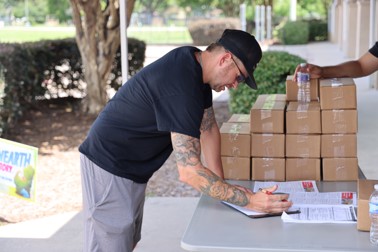
Pictured: Entergy Texas’ energy efficiency event in Dayton, Texas.
For many customers, these upgrades offer meaningful support when it’s needed most.
“Companies can charge a lot for services like this, so knowing it was offered for free encouraged us to participate,” said Entergy Texas customer, Karen Karmer. “Thank you, Entergy, for coming out and doing this for us. I hope you keep offering this program, because there are many people like me who truly need it.”
Since 2018, Entergy Texas has served more than 3,000 customers through the CoolSaver program.
“All residential customers qualify for the services,” said Entergy Texas energy efficiency program manager, Mark Delavan. “However, Entergy prioritizes areas that are considered low-income or hard-to-reach to ensure the company’s most vulnerable customers receive support.”
Helping families save energy and money
As temperatures continue to rise throughout the summer, Entergy Texas wants customers to stay comfortable without feeling the pressure of sudden bill spikes. We know that when homes run more efficiently, families feel the difference both in comfort and on their monthly bills. Through programs like CoolSaver, Entergy Texas provides simple, long-term ways for customers to use less energy and better manage how much it cost to cool their home.
To explore more of Entergy Texas’ energy efficiency programs, visit EntergyTexas.com/EnergyEfficiency.
About Entergy Texas
Entergy Texas provides electricity to approximately 538,000 customers in 27 counties. Entergy Texas is a subsidiary of Entergy Corporation. Entergy produces, transmits and distributes electricity to power life for 3 million customers through our operating companies in Arkansas, Louisiana, Mississippi and Texas. Its customers are connected to the Midcontinent Independent System Operator Inc. power grid, which is a regional transmission organization responsible for administering the transmission systems of member utilities in 15 states stretching across the central region of the United States and Manitoba, Canada. We’re investing for growth and improved reliability and resilience of our energy system while working to keep energy rates affordable for our customers. We’re also investing in cleaner energy generation like modern natural gas, nuclear and renewable energy. A nationally recognized leader in sustainability and corporate citizenship, Entergy delivers more than $100 million in economic benefits each year to the communities we serve through philanthropy, volunteerism and advocacy. Entergy is a Fortune 500 company headquartered in New Orleans, Louisiana, and has approximately 12,000 employees. Learn more at EntergyTexas.com and connect with @EntergyTX on social media.
Media Inquiries:
Entergy Texas Media
281-297-2353 (media line)
entergytexasmedia@entergy.com
View original content here.
Key Points
- An employee-led idea the help remove waste from the Port of Long Beach in Southern California is delivering visible results.
- Operating around the clock, the trash skimmers have removed thousands of pounds of waste and debris from the harbor in two years.
- By helping clean the water, the trash skimmers are benefiting wildlife and the broader port community at one of the nation’s busiest seaports.
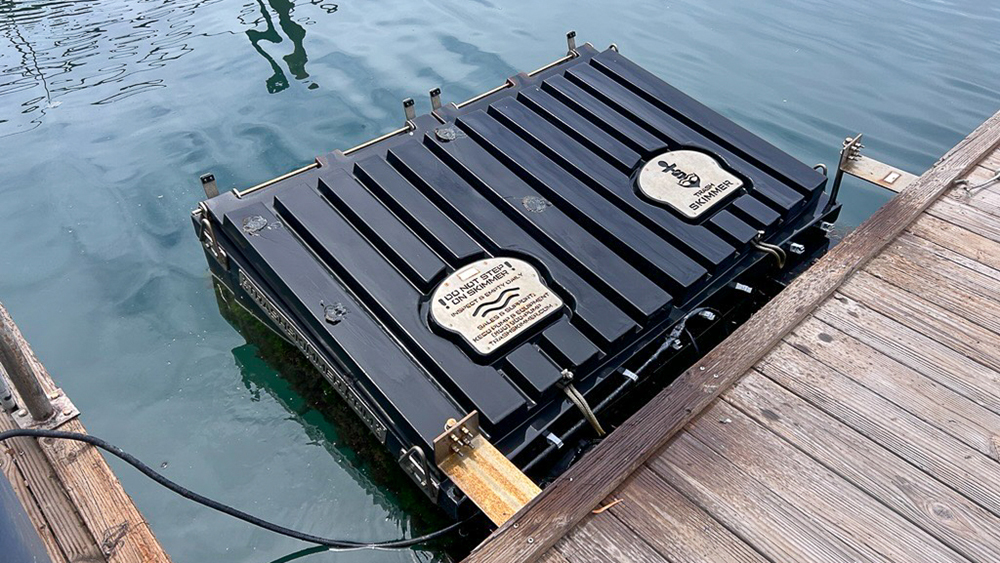
What began as an idea from employees at Marathon Pipe Line’s (MPL) Long Beach Terminal 2 facility to help reduce trash and litter in the harbor has become a proven success story. Two years after the local team installed two electric trash skimmers at the Port of Long Beach, the program continues to deliver measurable results for one of the nation’s busiest seaports and the surrounding waterways.
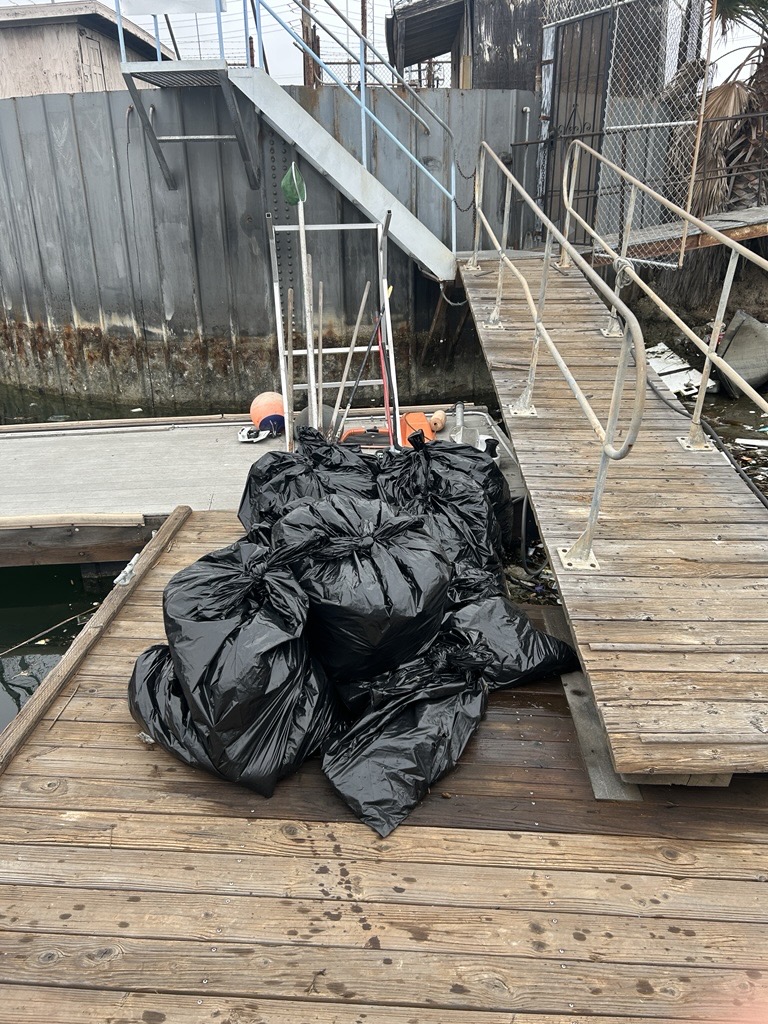
Since launching in May 2024, the skimmers have removed nearly 14,000 pounds of trash from the water, roughly the weight of an adult African elephant. The devices have also filtered nearly 50 million gallons of water, equivalent to more than 75 Olympic-sized swimming pools.
“It’s incredible to see what this program has accomplished in just two short years,” said Tim Hayes, MPL’s Operations Director for the Pacific West Region, whose local team manages the effort. “What started as a simple idea has grown into something that’s making a visible difference in the harbor every day, and we’re all very proud of that at Marathon.”
“Together, we are building the Port of the Future – a clean, efficient, zero-emissions port that proves to the world we can create jobs, serve the community and operate sustainably.”
The skimmers operate around the clock, collecting floating debris before it can spread throughout the harbor or pose a threat to marine wildlife. By removing trash from the water, the program helps create a cleaner environment for birds, fish and other species that depend on the harbor. While the skimmers are located at Marathon’s Terminal 2 facility, they help remove debris from a shared waterway that supports numerous businesses, vessels and communities throughout the region.
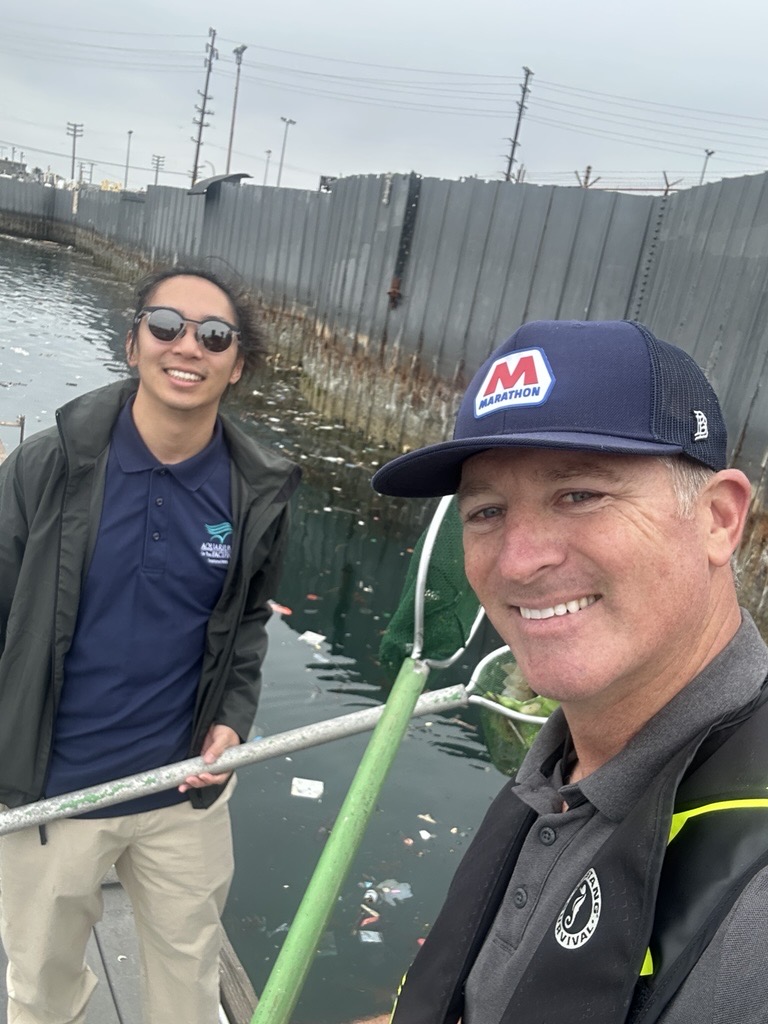
The program has also strengthened Marathon’s collaboration with the Port of Long Beach, which supports the effort by helping facilitate debris disposal.
“We thank Marathon for partnering with us to reduce operational impacts on more than 1,000 species of marine life thriving in the San Pedro Bay,” said Port of Long Beach CEO Dr. Noel Hacegaba. “Together, we are building the Port of the Future – a clean, efficient, zero-emissions port that proves to the world we can create jobs, serve the community and operate sustainably.”
Originally published on Truist Newsroom
CHARLOTTE, N.C., July 14, 2026 /3BL/ – Truist Financial Corporation (NYSE: TFC) today announced that its Small Business Online and Mobile Banking platforms earned the No. 1 overall rank by Barlow Research, a leading financial services market research firm.
The recognition highlights Truist’s continued investment in digital banking capabilities for small businesses, including tools that improve cash flow visibility, enhance security, and simplify payments. According to Barlow Research, Truist moved up three positions in Online Banking—from No. 4 in 2025 to No. 1 overall—while earning recognition for functionality and features that are most important to small businesses.
Barlow Research recognized Truist as a leader across several critical categories:
- Online Banking: account security and fraud protection, cash flow management, and card management.
- Mobile Banking: security and profile management, cash flow management, receiving payments, and card management.
“Small businesses deserve digital banking experiences that match their ambition,” said Sherry Graziano, head of digital, client experience and marketing at Truist. “This recognition reflects our investments to simplify financial management, strengthen security, and give business owners confidence and control so they can spend more time growing, serving, and creating opportunities.”
“Earning the No. 1 ranking in both Online and Mobile Banking demonstrates how we’re delivering experiences that are both digitally empowering and deeply relational,” said Claudia Davis Adamson, head of small business banking at Truist. “By combining intuitive digital capabilities with strong client relationships, we’re helping small business owners manage their finances more effectively and scale with confidence.”
Truist serves approximately 1.2 million small business clients and continues to invest in digital tools, online banking, and mobile banking solutions that help business owners run and manage their operations.
Learn more about Truist Small Business Banking and Barlow Research.
About Truist
Truist Financial Corporation is a purpose-driven financial services company committed to inspiring and building better lives and communities. Headquartered in Charlotte, North Carolina, Truist has leading market share in many of the high-growth markets in the U.S. and offers a wide range of products and services through wholesale and consumer businesses, including consumer and small business banking, commercial and corporate banking, investment banking and capital markets, wealth management, payments, and specialized lending businesses. Truist is a top 10 commercial bank with $549 billion as of March 31, 2026. Truist Bank, Member FDIC. Equal Housing Lender. Learn more at Truist.com.
NEW YORK–(BUSINESS WIRE)– #LFG–Viridi Energy (Viridi) announced the start of construction on a transformative renewable natural gas (RNG) facility at the City of Lincoln’s Landfill.
by Katie Hess, Cascale Better Buying
Responsible purchasing practices (RPP) are not just a “nice to have” in the textile industry — they are where climate ambition succeeds or fails in practice.
When buyers cancel orders, push down prices, change timelines, or create volatility, the impacts ripple through supply chains in ways that undermine labor rights and environmental outcomes.
Recent U.S. tariff disruptions show what happens when commercial risk is pushed down the supply chain.
An investigation earlier this year found that paused orders and cancelled purchases following new U.S. import tariffs contributed to labor risks in garment factories, as suppliers operating on already low margins struggled to absorb sudden cost shocks. These are not isolated side effects of market disruption — they are predictable outcomes when commercial risk is pushed down the supply chain.
Volatility is not the issue. Risk transfer is.
Commercial strain weakens supplier resilience — and resilience is essential to climate action. Better Buying’s supplier-reported data consistently shows that when pressures build, suppliers have less room to absorb shocks, less ability to plan, and less capacity to invest in the operational improvements that climate progress requires.
But here’s the good news: where there’s an impact, there is potential to influence.
This is the part often missing from climate conversations: suppliers cannot decarbonize in unstable commercial environments. Commercial predictability changes the game. Because when factories are managing last-minute changes, reduced margins, delayed payments, or unpredictable order volumes, they are not operating from a position of resilience. That’s a position of reactivity. And resilience is what makes long-term investments in cleaner production, efficiency, and emissions reductions possible.
The problem is not disruption itself, but how buyers anticipate it. When buyers respond to uncertainty by changing terms, cutting prices, or cancelling orders at short notice, the burden of adaptation falls on suppliers and workers, and climate progress becomes harder to sustain.
RPP challenges the characteristic race to the bottom that has long shaped the apparel industry.
It links climate ambition to real economic decisions. Climate strategies are harder to deliver if purchasing teams are incentivized to prioritize short-term cost savings over long-term stability. Fair terms, predictable planning, realistic timelines, and consistent communication are not sustainability add-ons — they are the commercial conditions that make decarbonization possible.
Tariff uncertainty makes the case even clearer. As further trade disruption looks likely, buyers will either reinforce or undermine supplier resilience. Embedding RPP now is one of the most direct ways companies can protect workers, stabilize supply chains, and support long-term climate goals.
Responsible purchasing practices are a critical part of building more resilient supply chains — and supplier feedback is essential to understanding where change is needed.
Explore Cascale’s Better Buying to learn how supplier insights are helping companies strengthen purchasing practices and support more resilient supply chains.
Katie Hess is head of product at Cascale Better Buying
New Report Examines the Evolution and Resilience of Corporate Social Responsibility in the U.S.
NEW YORK, July 14, 2026 /3BL/ – A comprehensive new report by Chief Executives for Corporate Purpose© (CECP) supported by YourCause® from Blackbaud® released today reveals that despite recurring economic disruptions, Corporate Social Responsibility (CSR) in the United States has demonstrated remarkable long-term resilience, serving as an essential stabilizing force within democratic capitalism.
The report traces the evolution of social impact from its roots in the English Poor Law of 1601 through key historical friction points. It evaluates how corporate giving moved from legal uncertainty during World War I—the first large-scale wave of coordinated corporate donations to organizations like the Red Cross and YMCA—to formal validation under the Revenue Act of 1935. The study also analyzes how the sector matured despite intellectual resistance, such as Milton Friedman’s landmark 1970 essay rejecting CSR in favor of pure shareholder returns. And it also looks at how businesses repeatedly mobilized resources to drive tangible community impact during national crises, including the $2.8 billion corporate response following the terrorist attacks on September 11, 2001.
“Looking back at the historical milestones of American philanthropy reminds us that corporate community investment is not a modern add-on, but a core element woven into the fabric of our economic system,” said Leah Battin, Manager, Strategic Advisory, CECP. “As we navigate rapid technological change and shifting workforce expectations, companies have both a distinct advantage and a clear responsibility to align their community investments with a deeper corporate purpose. True innovation happens when business goals and community resilience advance together.”
Data analyzed within the report from Giving USA, Blackbaud, CECP, and the IRS highlights the massive growth and institutionalization of the social impact ecosystem. Key findings show:
- Sector Growth: The U.S. nonprofit sector has expanded exponentially, growing from just over 82,000 501(c)(3) charitable organizations in 1975 to nearly 1.55 million in 2024.
- Corporate Giving Durability: According to Giving USA 2025 data, corporate contributions reached US$44.4 billion in 2024. While individual giving dropped from 80% of total contributions in 1984 to 67% in 2024, corporations have consistently accounted for 5% to 7% of total giving over the last 40 years.
- Meeting the Moment: Long-term data from CECP’s 20-year matched-set of companies reveals that median Total Community Investment (TCI) grew from US$98.3 million in 2005 to $120.2 M in 2024. Intermittent spikes—such as a jump to US$174.7 million in 2020—demonstrate that corporate giving regularly rises to meet changing moments of economic, political, and social dynamics.
- The Matching Gift Standard: Highlighting the deep integration of workplace giving, the report notes that since the GE Foundation launched the first 1:1 corporate matching-gift program in 1954, the benefit has become a standard practice, offered by 93% of companies by 2024. According to CECP’s Giving in Numbers® data, the median total community investment per company sits at US$21.5 million.
“Overtime, the right technology turns manual, localized giving into scalable, data-driven global impact,” said Dale Strange, president, Corporate Impact, Blackbaud. “By utilizing automated matching-gift platforms and digital grants management, companies are streamlining their operations and removing barriers to employee engagement. This technological shift not only clarifies success metrics for corporate leaders but also provides nonprofit partners with the efficient, transparent support necessary to address modern societal needs.”
Looking ahead, the report notes that contemporary CSR is increasingly shaped by technology and employee choice. Case studies featured in the report illustrate how modern enterprises leverage digital grants management and workplace giving platforms to streamline global impact, automate matching gifts, and capture clearer data metrics.
As workforce trends shift, future strategies must balance digital enablement with an authentic employee voice. With 71% of Americans believing it is vital for the country to provide opportunities for prosperous lives, but only 19% believing it does so effectively, the report concludes that integrated corporate purpose will remain paramount to building healthy, resilient communities over the next decade.
The full report, featuring historical milestones, data trends, and future-looking insights from CSR leaders, is available for download here.
###
About Chief Executives for Corporate Purpose (CECP)
Chief Executives for Corporate Purpose® (CECP) is the only nonpartisan business counsel and network dedicated to driving measurable returns on purpose. We promote responsible purpose-driven business as it increases customer loyalty, builds employee engagement, improves brand trust, attracts top talent, connects with strategic investors, and contributes to the bottom line.
More than 200 of the world’s leading companies seek to improve their return on purpose through access to CECP’s solutions in insights and benchmarking. With our companies, we harness the power of purpose for business, stakeholders, and society.
For more information, visit http://cecp.co.
The 30th annual American Chemical Society Green Chemistry & Engineering Conference gathered educators, students, and industry professionals in San Antonio with a shared goal: advancing sustainability in chemistry and reducing the environmental impact of science. As a champion of both efforts, MilliporeSigma, the U.S. and Canada Life Science business of Merck KGaA, Darmstadt, Germany, supported the conference as a sponsor, with experts contributing to and leading sessions. Company experts also shared practical insights on the 12 Principles of Green Chemistry and related sustainability topics.
This included a focus on science communication, helping attendees understand why it matters and how to do it effectively. Supporting the annual student and postdoc workshop, Jeffrey Whitford, Vice President of Sustainability & Social Business Innovation at MilliporeSigma, shared insights shaped by more than 20 years of experience in science communication and sustainability, to nearly 100 attendees.
In the first session, “From Bench to Breakthrough: The Art and Science of Communicating Chemistry,” Whitford and workshop participants explored the fundamentals of effective science communication, analyzed real-world case studies and practiced their skills through mock media interviews. In the second session, “Crafting an Authentic, Credible and Standout (ACS) Personal Brand as a Research Chemist,” Whitford examined MilliporeSigma’s branding evolution, how the organization externally reframed sustainability as a business strategy, helped attendees identify their own personal brands and conducted an exercise to update their LinkedIn profiles.

Throughout both sessions, Whitford emphasized why communication is more important than ever in science: if scientific discoveries are not communicated effectively, they may not be understood, delaying action and impact. Through a mix of educational and hands-on activities, attendees left better equipped to serve as advocates for science and Green Chemistry.
To explore how MilliporeSigma is advancing sustainability across the life science industry, visit the company’s Sustainability and Social Business Innovation webpage.
AMSTERDAM, HONG KONG, OAKLAND, Calif., July 14, 2026 /3BL/ – The apparel alliance (Apparel Impact Institute, Cascale, Textile Exchange, and ZDHC Foundation) today announced the launch of Version 2 of the Supply Chain Taxonomy, an updated harmonized framework designed to improve consistency, transparency, and collaboration across the textile, clothing, leather, and footwear (TCLF) sectors of the broader apparel industry.
“Shared definitions are not just administrative; they help the industry make better decisions, improve data quality, and work from the same understanding of the supply chain. Clarifying that wet processing is accounted for across all tiers, not just Tier 2, gives the industry a more accurate picture of where emissions sit and where action is needed most.” — Alma Palacios, senior sustainability reporting coordinator at Aii
“When facilities, products, and processes are classified consistently, the whole industry benefits, from more reliable data and clearer reporting to stronger collaboration on the work that matters most. The updated Supply Chain Taxonomy is foundational infrastructure for a more aligned and effective sustainability ecosystem. It reflects what’s possible when organizations commit to alignment, and we’re confident it will support more effective progress across the value chain.” — Joël Mertens, director of environmental impact methodologies at Cascale
“Aligning on a shared language for the supply chain is fundamental to driving credible, system-wide progress. This updated taxonomy helps bring greater clarity and consistency to how materials, processes, and impacts are understood and reported, enabling more effective collaboration and accelerating the industry’s transition to preferred production systems.”— Luca Mosca, director of impact data and reporting at Textile Exchange
“No single organisation can drive industry transformation alone. Shared language is a crucial foundation to enable collaboration within the ecosystem of like-minded partners. Bringing more depth to the Supply Chain Taxonomy with this new update strengthens the common foundation of the apparel alliance to enhance clarity for the wider value chain actors as well as unlock new opportunities to create a more interoperable system.” — Maria Arroyo, sector partnership lead at ZDHC
Building on its initial release in November 2024, the updated taxonomy addresses key challenges in the original framework, including overlapping processes, undefined boundaries, and classification gaps. The result is a clearer, more detailed structure that supports consistent classifications across the TCLF value chain and future alignment across apparel alliance work and joint initiatives.
The Supply Chain Taxonomy supports the apparel industry by:
- Creating a shared framework and common language across stakeholders.
- Improving transparency and reporting through more consistent disclosures and supply chain visibility.
- Supporting compliance and risk management through clearer process ownership and environmental boundaries.
- Reducing duplication and aligning efforts across organizations.
- Enabling better benchmarking and supporting collective sustainability initiatives.
The Supply Chain Taxonomy is a jointly developed and maintained resource of the apparel alliance organizations (Apparel Impact Institute, Cascale, Textile Exchange, and ZDHC). Designed as an evolving framework, planned annual updates reflect stakeholder feedback, emerging materials and technologies, and ongoing regulatory and industry developments. While not exhaustive, the taxonomy provides a practical foundation for classifying the most common processes and products across the value chain.
Download the Supply Chain Taxonomy
LinkedIn | Instagram | Facebook | YouTube
ABOUT THE apparel alliance
The apparel alliance is a collaborative industry working group uniting four global organizations: Apparel Impact Institute, Cascale, Textile Exchange, and ZDHC Foundation. Since its inception in 2020, the apparel alliance has worked to align sustainability tools, programs, and industry initiatives while reducing duplicative efforts across the apparel and textile sector. By combining complementary expertise, global networks, and shared goals, the apparel alliance aims to accelerate industry decarbonization and achieve a minimum 45% reduction in greenhouse gas emissions by 2030 across the global supply chain.
ABOUT Aii
Apparel Impact Institute (Aii) is a nonprofit collective founded in 2017 by four industry leaders: the Sustainable Apparel Coalition (SAC), the Sustainable Trade Initiative (IDH), Natural Resource Defense Council (NRDC) and Target Corporation. The organization emerged organically as a result of a real need that apparel brands and retailers self-identified. Gap Inc., PVH, Arvind Mills, HSBC, GIZ, Stichting Doen and Schmidt Family Foundation joined the founders in the first three years of start-up and organizational development. Aii identifies, funds, and scales proven quality solutions to accelerate positive impact in the apparel and footwear industry. Aii programs focus on areas that result in positive environmental impact from the production of apparel and footwear products to improve the industry.
ABOUT CASCALE
Cascale is the global nonprofit alliance driving systemic transformation to combat climate change and support decent work in the consumer goods industry. Formerly the Sustainable Apparel Coalition, Cascale unites a diverse, worldwide ecosystem of over 300 retailer, brand, manufacturer, supplier, service provider, government, academic, and nonprofit members.
Our alliance catalyzes pre-competitive collaboration for maximum impact, anchored by our stewardship of the Higg Index frameworks — implemented through the Worldly technology platform — and recent acquisition of the Better Buying and Sustainable Furnishings Council tools. While these methodologies are central to our work, they are part of a broader strategy to mobilize collective action, challenge industry norms, and build an industry that gives back more than it takes to the planet and its people.
Cascale Media Contact: Forster Communications, cascaleforster@forster.co.uk
ABOUT TEXTILE EXCHANGE
Textile Exchange is a global non-profit driving beneficial impacts on climate and nature across the fashion, textile, and apparel industry. It guides a growing community of brands, manufacturers, and farmers towards more purposeful production from the very start of the supply chain.
Its goal is to help the industry to achieve a 45% reduction in the emissions that come from producing fibers and raw materials by 2030, while keeping its focus holistic and interconnected and seeking to improve the state of our freshwater, soil health, and biodiversity too.
For real change to happen, everyone needs a clear path to beneficial impact. That’s why Textile Exchange believes that approachable, step-by-step instruction paired with collective action can change the system to make preferred materials and fibers the accessible default, mobilizing leaders through attainable strategies, proven solutions and a driven community.
At Textile Exchange, materials matter. To learn more, visit TextileExchange.org.
ABOUT ZDHC
The ZDHC Foundation oversees the implementation of the Roadmap to Zero Programme and is a global multi-stakeholder initiative of more than 350 Signatories within the fashion and footwear industry. Its vision is widespread implementation of sustainable chemistry, driving innovations and best practices to protect consumers, workers, and the environment. ZDHC uses collaborative engagement to drive a holistic, industry-focused and practical approach to sustainable chemical management. ZDHC guidelines, platforms and solutions drive large-scale industry-wide implementation that advances the industry as a whole towards the zero discharge of hazardous chemicals.