
Author: sHq_LoGiNz
From advancing high-performance and energy-efficient AI computing to cultivating an innovative, inclusive workforce, AMD is committed to driving the computing industry forward responsibly.
The AMD 2025-26 Corporate Responsibility Report outlines our approach across the business, from how we design products and manage our supply chain to how we support our people and communities.
Read the AMD 2025-26 Corporate Responsibility Report
Learn more about corporate responsibility at AMD
About AMD
AMD (NASDAQ: AMD) drives innovation in high-performance and AI computing to solve the world’s most important challenges. Today, AMD technology powers billions of experiences across cloud and AI infrastructure, embedded systems, AI PCs and gaming. With a broad portfolio of AI-optimized CPUs, GPUs, networking and software, AMD delivers full-stack AI solutions that provide the performance and scalability needed for a new era of intelligent computing. Learn more at www.amd.com.
TORONTO, August 26, 2026 /3BL/ – Alberta has earned the title of Canada’s most entrepreneurial province, according to fresh findings from the GoDaddy Small Business Research Lab.
The province’s microbusiness growth jumped 17% from the first to the fourth quarter of 2025, edging out Nova Scotia and Ontario, which each climbed 16%. The annual ranking tracks prior-year growth among active microbusinesses run by GoDaddy – firms with fewer than 10 employees. Western, Atlantic and Central Canada all landed in the top three, underscoring how entrepreneurship now spans the entire country.
Canada’s 10 Most Entrepreneurial Provinces
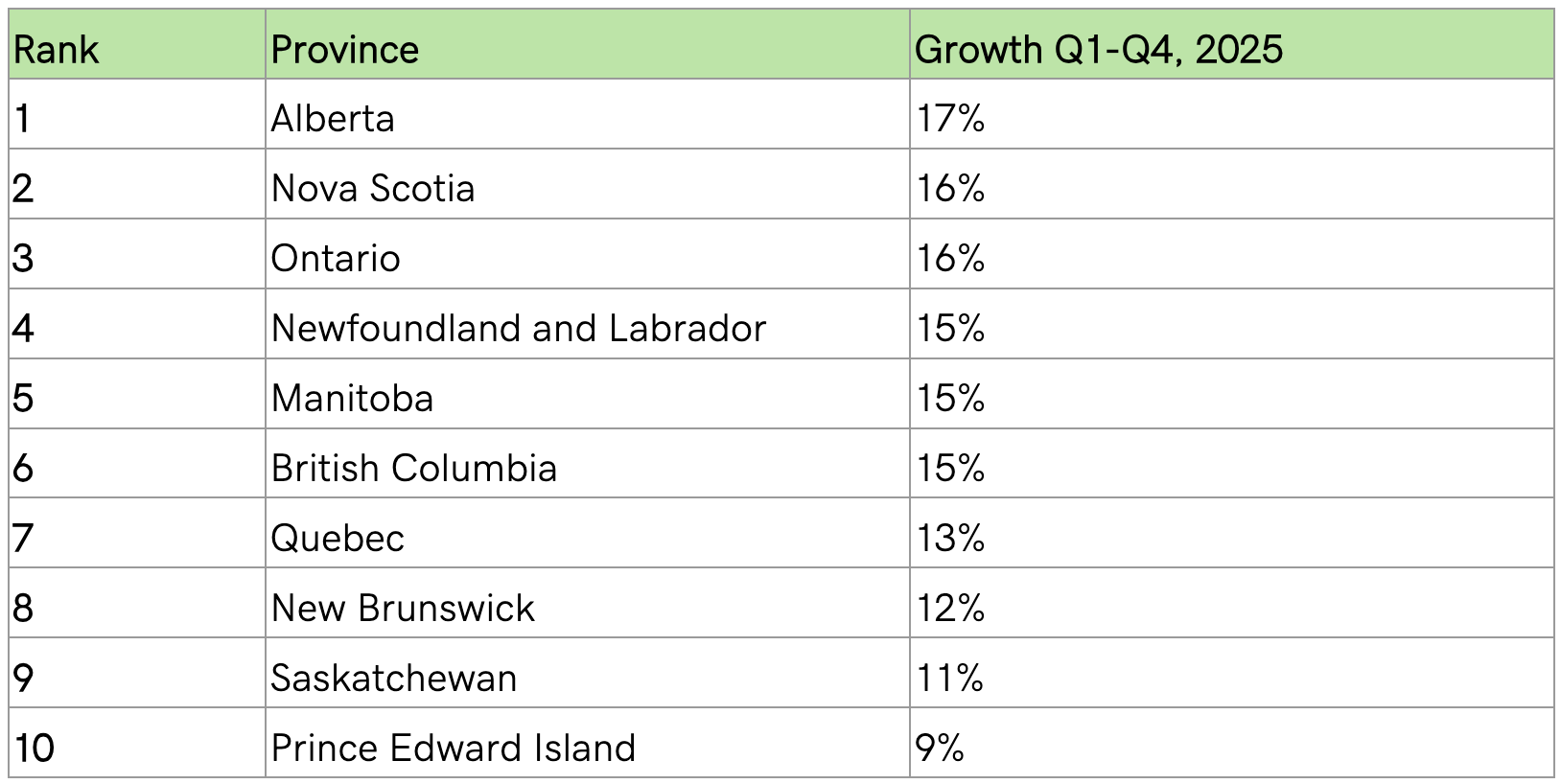
Six provinces recorded growth of 15% or more, while every province posted gains. Even Prince Edward Island, which rounded out the ranking in tenth place, recorded healthy growth of 9%.
Canada’s microbusinesses are intentionally lean. Ninety-two percent have fewer than 10 employees, and more than a quarter are run by solo owners. Only 28% say their venture is their primary income, while 38% use it to supplement other earnings. Half are first-time founders and one in four already manage more than one business, signalling a growing appetite to experiment, launch and scale ideas despite economic headwinds.
“Every province in Canada grew in 2025, and that signals a shift that entrepreneurial momentum in Canada isn’t locked to any one region,” said Alexandra Rosen, GoDaddy’s small business economist. “Digital tools are lowering the barrier to entry, and what really stands out is the consistency, with six provinces topping 15% growth, and all 10 moving upward.”
To explore the 2026 Most Entrepreneurial Provinces rankings or learn more about GoDaddy’s Small Business Research Lab, visit GoDaddy Research.
About GoDaddy
GoDaddy, the world’s largest domain name registrar, helps millions of entrepreneurs globally start, grow, and scale their businesses. People come to GoDaddy to name their idea, build a website and logo, sell their products and services and accept payments. Airo™, the company’s agentic operating system for small businesses, helps entrepreneurs get their idea online, run their business day-to-day, and grow through an integrated identity, presence and commerce experience. GoDaddy’s expert guides are available 24/7 to provide assistance. To learn more about the company, visit www.GoDaddy.com.
About GoDaddy Small Business Research Lab
The GoDaddy Small Business Research Lab analyzes more than 20 million online businesses with a digital presence, defined by a unique domain and active website. Most of these businesses employ fewer than ten people, classifying them as microbusinesses. Since 2019, the program has surveyed more than 70,000 entrepreneurs, making it a leading source of data and insights on microbusiness trends. To learn more, visit godaddy/research.
Strong communities aren’t built overnight. They grow through steady investments in people, partnerships and systems that help neighborhoods weather economic uncertainty and evolving social needs. For business owners, resilience goes beyond protecting the bottom line. It’s about creating conditions for communities to thrive.
From collaborating with local nonprofits to investing in workforce development, businesses can play a meaningful role in the places they call home. Long-term business success is closely tied to the health of the communities they rely on and serve. In fact, according to the 2025 Edelman Trust Barometer, 80% of people globally believe business leaders should address societal issues when their companies can make a meaningful impact.
Stronger, more resilient communities require investment in people and the systems that support them. Through partnerships that help expand access to food and safe water, help prepare future leaders and support workforce development, PepsiCo’s approach is rooted in a simple belief: when communities thrive, businesses, supply chains and economies can grow stronger and more resilient.
The 2025 Global Social Impact Report reveals local impact is possible when a three-part strategy is implemented in your community:
1. Prioritize Strategic Partnerships
Collaboration is one of the most effective ways to build resilient communities. Companies that have deep local roots and firsthand knowledge of the challenges residents face can be valuable partners for nonprofits, schools and local governments.
Community partnerships can take many forms, such as a restaurant working with a food pantry to address hunger in underserved neighborhoods, a construction company partnering with schools to introduce students to skilled trades or retailers supporting civic events. These partnerships build trust and credibility among businesses and residents while opening doors to networking opportunities, shared funding initiatives and stronger visibility.
2. Support Local Systems
Businesses can help strengthen the systems communities rely on every day by investing in local infrastructure, talent and supply chains. Restaurants and grocery stores, for example, may source products from nearby farms to help reduce supply chain disruptions while supporting local economies. Small businesses and producers can also partner with training programs, community colleges and apprenticeship initiatives to help prepare future talent, expand economic opportunities and build more resilient communities over time.
When businesses source locally for both resources and talent, they help keep investment, opportunity and economic growth flowing within the communities they serve.
3. Invest in People
Strong communities are built by people – farmers, students, entrepreneurs and local leaders who help shape what comes next. When people have access to opportunity, communities are better positioned to adapt and grow.
Businesses can play a direct role by investing in the people who help power their communities, from offering fair wages and career development to supporting employee well-being. Beyond their own workforce, companies can expand opportunities through partnerships that support skills training, mentorship and pathways into stable jobs. That can include creating internship programs, mentorship opportunities and scholarship support, incentivizing young people to develop skills while encouraging them to stay within and contribute to their communities.

Connecting Communities and Businesses
Taken together, these actions show how businesses of all sizes can play a role in building stronger, more resilient communities. It doesn’t require a complex strategy, just a clear focus on partnerships, local systems and people.
For example, PepsiCo’s approach offers a clear example of what this can look like in practice, with partnerships aimed at expanding access to food and safe water, supporting farmers and opening doors to workforce opportunities. The focus is less on standalone programs and more on working alongside communities and applying the company’s scale in ways that deliver steady, long-term impact.
The result is stronger communities that are better equipped to adapt and grow, and businesses that are more connected to the people and places they serve.
Learn more and find the full report by visiting Social Impact: PepsiCo
BOWIE, Md.–(BUSINESS WIRE)–Installnet surpasses 60 million pounds of office furniture diverted from landfills through its award-winning Ecoserv decommissioning program.
MetLife seeks to strengthen long-term business performance by reducing our environmental impact, creating operational efficiencies, managing risk, and enabling sustainable growth. In support of this objective, we have set an ambition to reach Net Zero greenhouse gas (GHG) emissions across our global operations and MetLife’s general account (GA) investment portfolio by 2050 or sooner.¹ Aligned with New Frontier, we aim to reduce emissions where we have control to help minimize risks, strengthen all-weather performance and improve operations. We complement these efforts by using natural resources efficiently, reducing water consumption, and minimizing waste sent to landfills.
Energy and Emissions
MetLife takes a disciplined approach to energy and emissions management to improve efficiencies, enhance performance, help manage risks and support a thriving workforce—implementing initiatives that lower operating costs, promote collaboration and enhance how we deliver responsible growth and long-term value. We have decreased location-based GHG emissions by 52 percent since 2019 and have maintained carbon neutrality for our offices, fleets and business travel since 2016.2
We promote energy efficiency and implement green building practices throughout our 8.9 million square feet of offices, including by:
- Consolidating office space and implementing efficiency upgrades, such as installing LED lighting, enhancing building management systems and improving plug load management;
- Strategically managing and optimizing performance of data center operations to reduce total electricity consumption, for example by consolidating mainframes and Intermediate Distribution Frame closets and transitioning from wireless access points to Power over Ethernet;
- Replacing fleet vehicles with electric or hybrid options, where possible;
- Encouraging global reductions in business travel, such as recommending combining trips, traveling by train instead of air and flying premium economy instead of business class on long-haul flights;
- Generating on-site renewable energy at offices in Madrid, Spain, and Nicosia, Cyprus;
- Purchasing renewable energy via energy attribute certificates—issued when one megawatt-hour of electricity is generated and delivered to the grid from a renewable energy resource—to match our global electricity consumption (see GHG Emissions and Energy data in Sustainability Scorecard); and
- Supplementing emissions reductions and energy efficiency initiatives with a diverse portfolio of third-party-certified carbon offset and removal projects that drive tangible economic and community benefits in addition to carbon reduction. As one example, we have partnered with Charm Industrial to reduce wildfire risk in Colorado by converting biomass into biochar, a charcoal-like substance. Beyond carbon sequestration, the partnership is also creating new local jobs and access to employee benefits that help build long-term financial security.
Optimizing High-Performance Offices
We integrate sustainability and well-being features into our offices and operations to create healthy, energizing workplaces. We maintain green leasing guidelines and prioritize using sustainable materials in our buildings, striving for our global offices to be certified to green or healthy building standards, particularly Leadership in Energy and Environmental Design, ENERGY STAR®, Fitwel and Building Research Establishment Environmental Assessment Method. Properties managed by MetLife Investment Management (MIM) also strive for green and healthy building standards.
Within our facilities, we aim to minimize our consumption of water, plastics, paper and other natural resources and reduce the volume of waste, including food waste and e-waste, that we send to landfills. We also provide high levels of indoor air quality and natural light and offer amenities, such as healthy dining options and sit-stand desks. MetLife’s Global Event Operations team prioritizes paperless conferences, local sourcing and eco-friendly alternatives. MetLife also prioritizes sourcing products that allow us to consume less, operate more efficiently and generate co-benefits such as cost savings, when possible.
Please see our Sustainability Scorecard for our water and energy use, waste diversion and green building certification data.
Driving Supply Chain Sustainability
MetLife’s Supplier Inclusion and Sustainability program helps us align suppliers with our environmental stewardship values and expectations for responsible business practices. To drive continuous improvement and mitigate potential sustainability-related risks in our supply chain, we request sustainability information during supplier onboarding and ongoing supplier management processes.
Through supplier engagement, we expand our understanding of our suppliers’ business goals and performance and foster a culture of transparency and collaboration. By 2030, we aim to have two-thirds of our top suppliers by spend set emissions-reduction goals. 68 percent of suppliers by spend had established goals in 2025.3
We work with our suppliers to find innovative opportunities to advance sustainability and encourage our top suppliers to disclose their climate risks, environmental targets and GHG emissions through the annual CDP Questionnaire, so that we can analyze our supply chain for resiliency.
To learn more about MetLife’s broader supplier management practices, see Supplier Management.
Read more about how we are supporting the environment through our sustainability efforts in MetLife’s 2025 Sustainability Report.
1 See Non-GAAP and Other Financial Disclosures for additional information about MetLife’s GA assets under management (AUM). Learn more about our approach to Net Zero. Please also see Forward-Looking Statements.
2 MetLife’s carbon neutrality efforts apply to global owned and leased offices, global vehicle fleets (Scope 1 and 2 emissions) and employee business travel (Scope 3 Category 6). MetLife purchases energy attribute certificates and carbon credits to offset the remainder of annual emissions in these categories. See Glossary.
3 For the top 80 percent of MetLife suppliers by spend, this target measures suppliers that set public commitments to reduce GHG emissions by 2025 or later, aligned with limiting global temperature rise to 2°C above pre-industrial times. Spend represents procurable spend with third-party suppliers. MetLife uses its own discretion for determining supplier alignment based on supplier’s reported emissions-reduction goal attributes, such as scope coverage, target year, base year and reduction percentage. Evaluation occurs on an annual basis.
The Ray recently hosted a webinar on the Connected Construction Data Alliance (CCDA) Transportation Pooled Fund with state Department of Transportation (DOT) partners who lead the nation in digital project delivery and work zone safety initiatives. Pioneering leaders from the Delaware, Maryland, and Iowa DOTs highlighted active connected construction use cases already deployed in their states, including digital as-builts, definitive proof of worker presence supporting work zone speed enforcement, and active work zone alerts pushed directly to dynamic message boards and navigation apps.
Unlocking these applications at scale, along with evolving capabilities like V2X integration and remote inspection, requires clear data standards and specifications, and clear communication of data access gaps and needs to equipment manufacturers.
What Sets the CCDA Apart
Unlike other work zone initiatives, the Connected Construction Data Alliance (CCDA) is the only Transportation Pooled Fund that prioritizes contractor equipment telematics alongside e-Ticketing data, while paving the way for emerging inputs like field sensors, drones, and wearable technology.
As Delaware DOT’s Cassidy Blowers emphasized during the panel:
The true power of the CCDA is establishing a unified, collective State DOT voice to set national data specifications based on practical use cases today and for the future—guiding data access and directing future work zone innovation.
Key Presentation Takeaways
Delaware DOT: Demonstrating how contractor telematics, Waze integration, and HaulHub automate real-time worker presence alerts to protect crews in active work zones.
Maryland DOT SHA: Leveraging statewide e-Construction systems to digitize field workflows, streamline inspection burdens, and improve project reliability.
Iowa DOT: Leading digital delivery, e-Ticketing, and drone integration to modernize construction management and asset tracking.
Iowa State University: Translating applied research into practical frameworks for state DOTs to explore evolving use cases like remote inspections. Existing federal funding streams can support your participation in the CCDA Transportation Pooled Fund and accelerate connected construction deployment, including the State Planning & Research Program Subpart B, EDC-8 Connected Corridors Program, and Congestion Mitigation and Air Quality Improvement Program.
Roxanne Low | Research Analyst—Responsible Investing
Jonathan Berkow | Director of Quantitative Research and Data Science—Equities
From brand risks to regulatory uncertainty, AI poses investment challenges. Is there a way forward?
Artificial intelligence (AI) poses many ethical issues that may translate into risks for consumers, companies and investors. AI regulation, which is developing unevenly across jurisdictions, adds to the uncertainty. The key for investors, in our view, is to focus on transparency and explainability.
The ethical issues and risks of AI begin with the developers who create the technology. From there, they flow to the developers’ clients—companies that integrate AI into their businesses—and on to consumers and society more broadly. Through their holdings in AI developers and companies that use AI, investors are exposed to both ends of the risk chain.
Diverging Rules Shape AI Risk
AI continues to develop briskly, far ahead of most people’s understanding of it. Among those trying to keep up are global regulators and lawmakers, whose activity has recently surged. Many countries have released national AI strategies, and several major jurisdictions have moved from strategy to enforceable rules (Display).
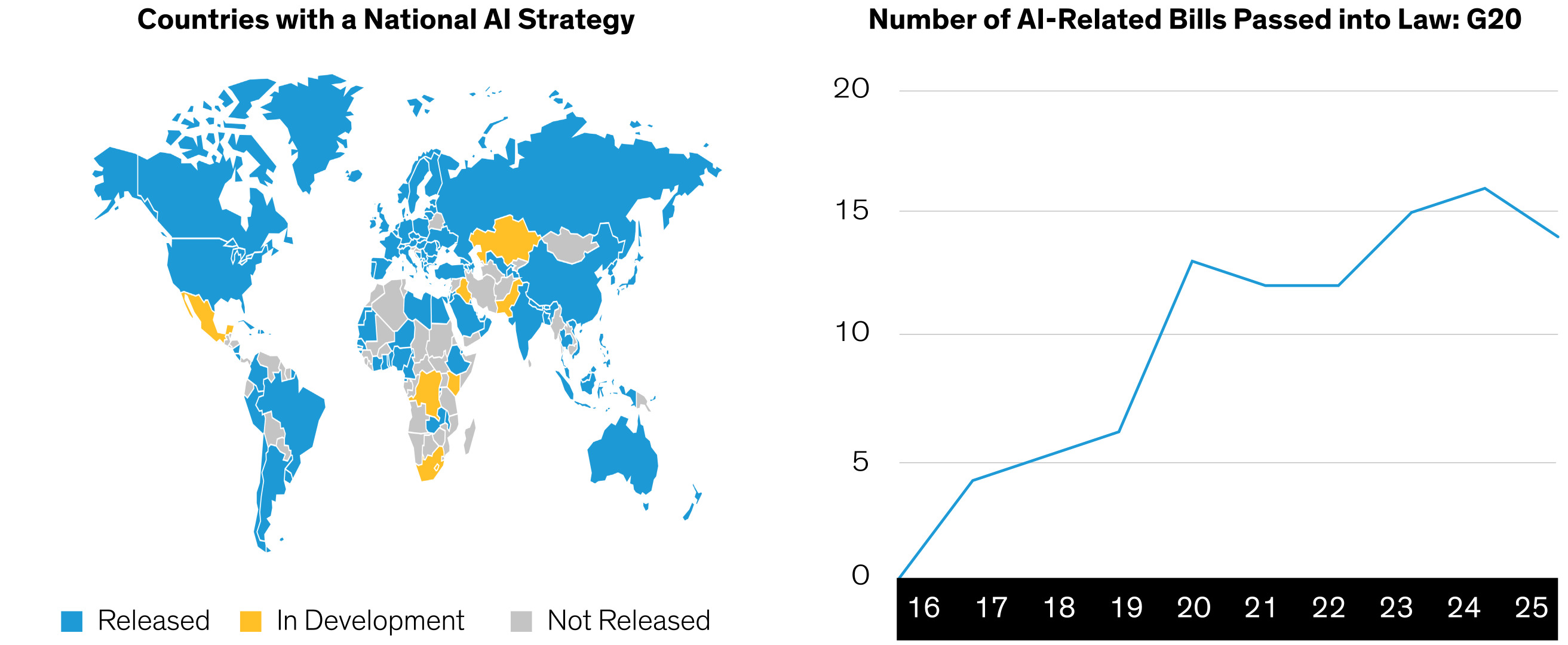
The lack of a uniform approach to AI regulation across jurisdictions creates complexities for international businesses. Regulatory approaches differ in form and scope. The European Union’s (EU) Artificial Intelligence Act adopts a risk-based model, with strict requirements for high-risk AI systems. The US takes a sector-specific approach that emphasizes innovation and competitiveness. China prioritizes state control, data sovereignty and comprehensive monitoring.
This regulatory landscape requires internationally operating businesses to monitor developments closely—and compounds AI’s other risks for investors.
Data Risks Can Damage Brands
In business, AI is often deployed through generative tools—such as text, video and voice generation—and large language models (LLMs). LLMs underpin applications such as chatbots, automated content creation and large-scale data analysis.
Many companies have found that AI innovations may involve potentially brand-damaging risks. These can arise from biases inherent in the data on which LLMs are trained and have resulted in banks inadvertently discriminating against minorities in granting home-loan approvals, and in a US health insurance provider facing a class-action lawsuit alleging that its use of an AI algorithm caused extended-care claims for elderly patients to be wrongfully denied.
Risks also stem from AI training data. In September 2025, Anthropic settled a class action over pirated training data for about $1.5 billion. By year-end, more than 70 generative AI copyright lawsuits had been filed, including The New York Times v. OpenAI and Microsoft, Disney and Universal v. Midjourney, and Getty Images v. Stability AI. AI training data risk is increasingly a quantifiable balance-sheet risk.
Bias, discrimination and training data are key regulatory risks that should be on investors’ radars; others include intellectual property rights and privacy considerations concerning data. Risk-mitigation measures—such as developer testing of the performance, accuracy and robustness of AI models, and providing companies with transparency and support in implementing AI solutions—should also be scrutinized.
Dive Deep to Understand AI Regulations
Regulatory approaches to AI are diverging in ways that matter for investors. The EU’s AI Act, a comprehensive, risk-based framework, has been rolling out in phases since 2024. The US, by contrast, relies on existing federal agencies, voluntary frameworks and state-level laws rather than a single overarching regime. The UK has taken a principles-based approach, deferring comprehensive legislation. And China has moved quickly with targeted rules focused on specific applications—particularly those tied to content control, social stability and data sovereignty.
For investors, this divergence has real implications. It is increasingly relevant to ask which jurisdiction a portfolio company is effectively optimizing for, as the rules governing a global business may vary materially by market.
Investors, in our view, should do more than drill down into jurisdiction-specific AI regulations. They should also understand how existing legal frameworks—such as copyright law to address data infringements and employment legislation where AI has an impact on labor markets—are being applied to AI.
Fundamental Analysis and Engagement Are Key
A useful rule of thumb for investors assessing AI risk is that companies that proactively disclose their AI strategies and policies are likely to be better prepared for new regulations. More generally, fundamental analysis and issuer engagement are central to this area of research.
As we see it, fundamental analysis should examine not only company-level AI risks but also risks along the business chain and across the regulatory environment, testing insights against core responsible-AI principles (Display).
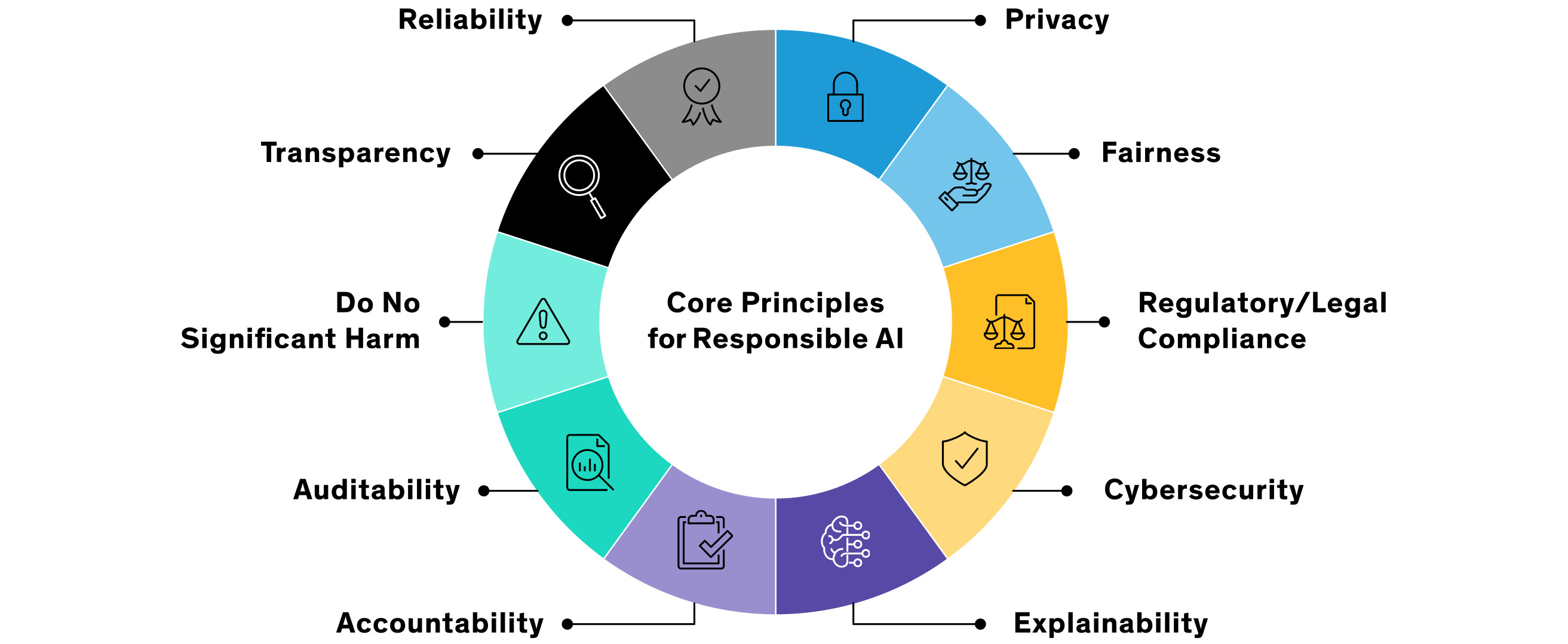
Engagement conversations should address AI issues not only in business operations but also from environmental, social and governance perspectives.
AI Oversight: Questions for Boards and Management
Questions for investors to ask boards and management include:
- AI integration: How has the company integrated AI into its overall business strategy? What are some specific examples of AI applications within the company?
- Board oversight and expertise: How does the board ensure it has sufficient expertise to effectively oversee the company’s AI strategy and implementation? Are there any specific training programs or initiatives in place?
- Public commitment to responsible AI: Has the company published a formal policy or framework on responsible AI? How does this policy align with industry standards, ethical AI considerations and AI regulation?
- Proactive transparency: Does the company have any proactive transparency measures in place to withstand future regulatory implications?
- Risk management and accountability: What risk management processes does the company have in place to identify and mitigate AI-related risks? Is there delegated responsibility for overseeing these risks?
- Data challenges in LLMs: How does the company address privacy and copyright challenges associated with the input data used to train LLMs? What measures are in place to ensure input data is compliant with privacy regulations and copyright laws? How does the company handle restrictions or requirements related to input data?
- Bias and fairness challenge in generative AI systems: What steps does the company take to prevent and/or mitigate biased or unfair outcomes from its AI systems? How does the company ensure that the output of any generative AI systems used are fair, unbiased and do not perpetuate discrimination or harm to any individual or group?
- Jurisdictional compliance: Does the company comply to the highest global standard by default, or jurisdiction by jurisdiction?
- Incident tracking and reporting: How does the company track and report on incidents related to its development or use of AI, and what mechanisms are in place for addressing and learning from these incidents?
- Metrics and reporting: What metrics does the company use to measure the performance and impact of its AI systems? How are these metrics reported to external stakeholders? How does the company maintain due diligence in monitoring the regulatory compliance of its AI applications?
Ultimately, the best way through the maze is for investors to stay grounded and skeptical. They should insist on clear answers—and not be unduly impressed by elaborate explanations.
The views expressed herein do not constitute research, investment advice or trade recommendations, do not necessarily represent the views of all AB portfolio-management teams and are subject to change over time.
Learn more about AB’s approach to responsibility here.
What does it take to preserve more than 160 years of family, business, and brand history? Hear from Rachel Guerin, Bacardi Heritage Curator and sixth generation Bacardi family member who shares an inside look at one of the world’s most unique, private corporate heritage collections: the Bacardi Archives.
For most people, history lives in textbooks, museums, or old family photo albums. At Bacardi, the world’s largest privately held international spirits company, heritage is actively preserved, protected, and put to work every day.
Located in Miami, the Bacardi Archives houses more than 20,000 artifacts and records that tell the story of seven generations of family ownership, entrepreneurial resilience, and the evolution of one of the world’s most recognized spirits companies. From century-old rum bottles and original advertisements to family photographs and handwritten business records, the collection serves as both a guardian of the past and a source of inspiration for the future.
To close out Rum Month, Rachel shares some of her favorite stories hidden within the collection and why preserving history remains an important investment for Bacardi and the company’s future.
Q: For those who have never heard of the Bacardi Archives, how would you describe it?
Rachel Guerin: Think of the archives as the collective memory of Bacardi. We preserve more than 160 years of family, our rum-making business, and brand history through over 20,000 artifacts and records that help tell the story of who we are, where we’ve been, and how we’ve evolved across seven generations from the very beginning in Santiago de Cuba to a global company.
Alongside rare Prohibition-bottle eras of our namesake rum and colorful advertisements, we preserve family photographs, important business records, correspondence, packaging, family heirlooms, merchandise and everyday objects that offer a unique window into the people and moments that shaped our history.
Q: When people hear the word “archive,” they often picture dusty boxes tucked away in storage. What do the Bacardi Archives actually look like today?
RG: What surprises most people who reference our archives is that our collections of items really are living; my role as Heritage Curator is to ensure we’re constantly researching and digitizing records that are most at risk of inaccessibility or degradation (and not just the very old ones).
We’re currently digitizing more than 2,000 VHS tapes and an extensive CD collection containing advertisements, presentations, and campaigns from the 1990s and early 2000s. Though they may not seem that old or dusty in comparison to a document from the 1850s, they are surprisingly more complex to preserve.
Today in our largely digital world, we work around the clock to evolve to new technologies, tools and systems to make sure we’re protecting born-digital records today that can be accessible for generations to come.
Q: How is the collection used today?
RG: The archives support projects across many areas of our business, from trademark protection and innovation to marketing, education, and brand storytelling. Historical materials help ensure our stories remain factual and authentic while inspiring new ideas for the future.
Recently I’ve collaborated with the BACARDÍ rum brand team to develop a collection of vintage BACARDÍ emblems and graphics from our archives, reimagining them for 21st-century luxury goods.
Beyond supporting business initiatives, the collection is also becoming more visible than ever before. Our new archives showpiece room was intentionally designed as a modern, welcoming environment where our employees, family members, and guests can step inside the world of BACARDÍ from 1862 to present.
Q: Do you have a favorite object in the collection?
RG: A recent favorite object is the very first gold medal BACARDÍ rum ever received at the 1876 Philadelphia Exposition. This award symbolized the moment in time where consumers from the United States and Europe first recognized the unparalleled quality of my great-great-great grandfather Don Facundo Bacardí Massó’s light-bodied rum. Alongside modern marvels of the day like the Remington Typewriter and the Singer sewing machine, BACARDÍ rum won this medal, and the family was so proud they immediately placed its emblem on our bottle label. Today, BACARDÍ is the world’s most awarded rum, and this Philadelphia medal is still proudly represented on our bottle labels, 150 years later.

Q: In what ways does preserving history contribute to a more sustainable future?
RG: Sustainability is often thought of as environmental stewardship, but I think preserving our cultural heritage is equally important.
For family-owned businesses like Bacardi, stewardship has always been about thinking beyond the present moment. The decisions made by previous generations continue to influence us today and help us make more informed decisions, and the records they left behind help us understand not only what they accomplished, but how they navigated challenges, adapted to change, and planned for the future.
When we preserve history, we’re really making an investment in future generations, ensuring they have access to the experiences, wisdom, and stories that shaped the path before them.
Q: Is there a historical figure in the archives whose story continues to resonate with you today?
RG: I am enthralled with the legacy of my great, great grandfather Emilio Bacardí Moreau, the eldest son of founder Don Facundo Bacardí Massó. While he helped lead the family rum business in one of Cuba’s most politically tumultuous and challenging times, his impact extended far beyond rum production and into the very lives of his fellow Cuban citizens. Emilio served as the first democratically elected mayor of Santiago de Cuba following the Spanish American War and devoted much of his life to rebuilding the city and supporting its people. He was a fantastic writer, devoted husband and father, and to me, he perfectly exemplified the importance of stewardship to your community and leaving the world better than you found it.

Q: What do you hope future generations will learn from the collection a hundred years from now?
RG: I hope future generations see that history is never finished; every generation adds a new, exciting chapter to our story. The artifacts my team preserves today will become the historical record of tomorrow, and I hope that sense of stewardship continues on indefinitely.
More than anything, I hope they see the people behind the story. It’s easy to look at a company with more than 160 years of history and focus on the milestones, products, or business achievements. But when I walk through the archives, what I see are generations of individuals and some of my own ancestors who faced uncertainty, embraced change, and worked hard to build something larger than themselves.
- Hear more from Rachel on a History Factory Podcast.
- View the Bacardi Limited Corporate Story video.
- Explore the Bacardi company’s rich heritage timeline.
CHARLOTTE, N.C., August 26, 2026 /3BL/ – Discovery Education today announced that Mystery Writing, its supplemental writing solution for kindergarten through grade 5, is now available to educators nationwide. Mystery Writing joins Mystery Science, the most widely used K-5 science curriculum in the United States, in reaching the full elementary grade span within Discovery Education’s family of open-and-go, evidence-backed instructional solutions.
Writing instruction has historically received less classroom time and professional learning investment than reading, even though research shows the two skills are deeply interrelated. That is beginning to shift: several states have recently increased funding for evidence-based writing instruction, with 39 states mentioning writing within “science of reading” laws. Mystery Writing gives educators a classroom-ready way to act on that shift now.
“Writing skills are foundational for student success in literacy, yet too often the conversation focuses on reading alone,” said Brian Shaw, CEO of Discovery Education. “As schools work to strengthen literacy outcomes based on learning science, teachers need support to bring high-quality writing instruction into their daily practice alongside reading curricula. Mystery Writing meets that need by combining rigorous, scaffolded instruction with the curiosity and engagement that Discovery Education’s Mystery solutions are known for.”
A Developmental Approach, Grounded in Research
Mystery Writing is built on research showing that writing instruction is most effective when students write frequently, receive explicit and scaffolded instruction, and get timely feedback within a supportive writing community. Every lesson follows the same instructional sequence: an engaging, real-world hook; explicit instruction; scaffolded practice; discussion; independent writing application; and reflection, moving students from guided support toward independent writing.
- Kindergarten and grade 1 (new): a developmental sequence that moves from drawing to labeling to sentence-writing, organized into short, single-skill lessons of about 20 minutes. Lessons are designed to complement a classroom’s existing phonics program, applying students’ phonics knowledge to writing. Teachers can move flexibly within a skill group to meet their students’ needs.
- Grades 2 through 5 (established): genre units in narrative, opinion, and informative writing, plus essential skill lessons that build fundamental writing abilities across genres. Lessons include built-in differentiation, structured partner work, and pre- and post-unit assessments so teachers can track student progress.
Mystery Writing lessons are open-and-go, simplifying implementation: teachers can begin teaching with minimal preparation. The program’s explicit, step-by-step instruction and scaffolded tasks build students’ confidence and independence as writers over time, enabling young writers to overcome the common fear of the blank page.
Evidence-Backed Impact
In December 2023, LearnPlatform by Instructure, an independent edtech research organization, completed a logic model review of Mystery Writing that satisfies Level IV evidence requirements (“Demonstrates a Rationale”) under the Every Student Succeeds Act (ESSA). This evidence tier reflects a well-specified logic model informed by prior research, together with active planning for a higher-tier effectiveness study; it also means districts can apply Title funds toward a Mystery Writing purchase. Discovery Education has since begun planning an ESSA Level III study examining Mystery Writing usage and its relationship to student writing outcomes.
“Mystery Writing covers all three types of writing—informative, persuasive, and narrative—which is exactly what our state standards require,” said Stacey Leary, 4th Grade Teacher in New Hampshire. “I love that the resources in Mystery Writing are right there in the lessons to click on and print. The step-by-step instructions save me time with planning.”
Availability and Trial for Classrooms, Schools, and Districts
Teachers and parents or guardians can sign up for a free, year-long trial of Mystery Writing at https://writing.mysteryscience.com/. A Getting Started Guide is available to help educators plan how to use Mystery Writing in their classrooms. Mystery Writing is also available for purchase by schools and districts.
About Discovery Education
Discovery Education is a global education technology leader whose innovative solutions empower educators and progress student learning. Discovery Education’s solutions have served more than 100 million students globally, supporting effective teaching and learning in 45% of U.S. K-12 schools and in 100+ countries and territories. The company’s portfolio includes award-winning core and supplemental curriculum, high-quality standards-aligned content, and AI-enabled teaching and learning tools. Solutions span math, science, literacy, social studies, and career-connected learning, including instructionally-aligned content developed through one-of-a-kind partnerships with industry leaders to bring real-world relevance into every lesson. Learn more at www.DiscoveryEducation.com.
Media Contact
Ali Koper
AKoper@DiscoveryEd.com
503-415-9699