WESTCHESTER, N.Y., September 1, 2026 /3BL/ – SavATree today announced a national partnership with the Arbor Day Foundation to accelerate reforestation in regions recovering from hurricanes, wildfires, and other disasters. Through SavATree’s new For Every Tree initiative, every tree removal performed by the company will directly support the planting of a new tree in high‑priority restoration areas across Florida and Michigan.  

This commitment is rooted in SavATree’s brand promise to help another tree grow for every tree removed.  

“We’ve been saving our customers trees, shrubs, and lawns for over 45 years; preservation is core to our mission at SavATree,” said Ryan Berk, Chief Executive Officer of SavATree. “However, when a tree must come down, we believe it should spark new growth somewhere else. Healthy forests are the foundation of resilient ecosystems, and restoring habitats after major storms is essential to protecting wildlife and strengthening communities.  Our For Every Tree initiative ensures when a customer does need a removal, we’re helping another tree grow in the forests that people and wildlife depend on.” 

“Trees and forests are the backbone of our ecosystems. As we grapple with a changing climate and the challenges it brings people and the planet, restoring forests and acting as caring leaders of our neighborhood canopies can make a significant difference in our future, which is why we are proud to partner with SavATree,” said Dan Morrow, Vice President of Partnerships at the Arbor Day Foundation. “SavATree’s commitment to responsible stewardship and their For Every Tree initiative reflects the kind of long‑term dedication that’s needed to create meaningful impact in the forests that need it most. Together, we’re helping restore critical habitat and strengthening the natural landscapes communities rely on.” 

Rebuilding Forests in Florida and Michigan 

The partnership will initially support two major Arbor Day Foundation projects; each identified as a forest area of greatest need by the Arbor Day Foundation: 

  • Florida — Hurricane Michael Reforestation Project 

    Hurricane Michael devastated more than 2.8 million acres of forestland when it struck the Florida panhandle in 2018. SavATree’s support will help reestablish lost tree canopy to restore watershed and ecological functions, as well as vital habitat for a variety of threatened and endemic wildlife in the region. 

  • Michigan — State Forests Reforestation Project 

    In partnership with the Michigan Department of Natural Resources, SavATree will help replant 15,000 trees across state forests. The project focuses on restoring native jack pine and red pine stands, critical habitat for species such as deer, turkey, grouse, and the threatened Kirtland’s warbler. 

Why This Matters Now 

Recent data shows that climate‑driven disturbances are reshaping America’s forests at an unprecedented pace. The U.S. lost more than 3.4 million acres of natural forest in a single recent year, and weather events including hurricanes and wildfires are now rising faster than human‑directed land changes, a dramatic shift documented by NASA and Global Forest Watch.  

SavATree’s arborists have seen the impact firsthand. Many worked on post‑storm cleanup after Hurricane Michael, removing dangerous trees and clearing debris.  

Press Contact: Dan Forman Storyline Advisors Dan.Forman@StorylineAdvisors.com 

About SavATree 

SavATree is a leading provider of professional tree, shrub, and lawn care services, with a commitment to science‑based stewardship and sustainable landscape management. With ISA Certified Arborists® across the country, SavATree delivers expert care that prioritizes preservation, safety, and environmental responsibility. 

About the Arbor Day Foundation 

The Arbor Day Foundation is a global nonprofit inspiring people to plant, nurture, and celebrate trees. They foster a growing community of more than 1 million leaders, innovators, planters, and supporters united by their bold belief that a more hopeful future can be shaped through the power of trees. For more than 50 years, they’ve answered critical need with action, planting more than half a billion trees alongside their partners. And this is only the beginning.  

The Arbor Day Foundation is a 501(c)(3) nonprofit pursuing a future where all life flourishes through the power of trees. Learn more at arborday.org. 

### 
TriplePundit

by Tina Casey

The United States lost more than 270,000 journalism jobs over the past two decades as almost 3,500 newspapers shut down. Even as independent news outlets are forced to close, a well-capitalized network of partisan platforms that some have likened to propaganda machines is growing quietly in the background.

Media critics have long focused attention on Fox as a mainstream news outlet singularly dedicated to coloring the news with a formulaic ratings strategy that promotes and amplifies conservative talking points on issues like climate change and transgender rights. Even casual Fox News viewers can determine pretty quickly the network has a partisan bent, but that’s not always the case.

In one concerning example, investigative journalist Judd Legum recently identified a new network of Republican-affiliated news websites aimed at influencing voters in key swing states under the guise of reliable media outlets.

“One Nation, the Senate GOP’s primary dark money group, is producing propaganda masquerading as journalism,” Legum reported in his Popular Information newsletter earlier this month. So far, he found half a dozen such operations, covering key races in Alaska, Georgia, Iowa, Maine, New Hampshire and Ohio in the runup to the November midterm elections.

These outlets are branded as neutral and credible local news platforms like Maine Policy Updates, which publishes under the tagline “Maine’s News Source,” and Iowa Voice (“Stay Informed. Stay Iowa”), making it almost impossible for readers to tell the sites are entirely owned and operated by One Nation. Legum also identified factual inaccuracies reported in the outlets that match messaging used in One Nation political ads.

The loss of credible news outlets alongside the rising prevalence of fake news is not the only concern. The decline of trustworthy information resources in the United States takes many forms — from social media platforms, where over half of Americans are exposed to misinformation on a daily basis, to the Donald Trump administration’s systematic elimination of evidence-based federal programs and resources.

In the face of these challenges, a group of often unsung heroes are still fulfilling the role of professionally trained, reliable information and community outreach specialists, even as budget cuts threaten their mission. Yes, we’re talking about your local librarians, who perhaps are more important now than ever before.

community learning circle
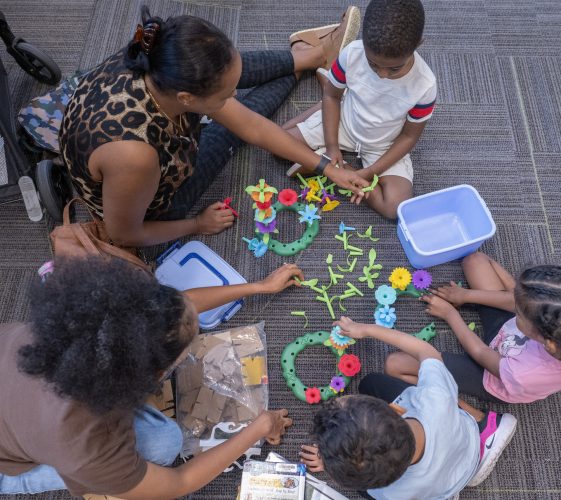
Beyond shelves of books, public libraries provide learning, workforce development and public health programming to more than 90 million people every year. At the Howard County Library System in Maryland, Little Learners classes feature stories and activities for preschoolers.<em> (Image: </em><a href=”https://flickr.com/photos/hocolibrary/55433242118/in/photolist” target=”_blank” rel=”noopener”><em><u>Howard County Library System</u></em></a><em>/Flickr)</em>

Libraries remain a trusted resource, but staffing and budget shortfalls pose problems

Trump took office last year with a reputation for criticizing public libraries, among other independent social and cultural institutions. But the latest numbers from the Institute of Museum and Library Services (IMLS), an independent federal agency Trump unsuccessfully tried to eliminate, tell a story of an essential community resource.

“This year’s data make clear that public libraries remain one of the most trusted and utilized institutions in American life. With over 800 million visits, millions of programs offered, and a steady rise in both physical and digital circulation, libraries are demonstrating their enduring relevance and reach in communities nationwide,” according to the most recent IMLS report tracking over 9,000 U.S. public library systems. “A total of 93 million people attended 4.6 million programs, addressing critical needs in early learning, digital and financial literacy, workforce development, and public health.”

The use of digital library services is also on the rise. Earlier this year, the Ohio-based e-lending firm OverDrive noted that digital lending broke records last year among the 114 countries where it provides services, with U.S. library systems listed in nine of the top 10 library systems providing e-books, audiobooks and digital magazines.

Yet the gap between library budgets and the rising demand for library services is widening. While library room reservations and e-resources increased alongside in-person visits from 2021 to 2024, staffing and budgets have not kept up, the advocacy organization Every Library warns. In 2024, staffing levels remained 8.2 percent below pre-pandemic levels and a 5 percent budget increase failed to match the pace of inflation.

“Smaller libraries have been hit especially hard. Their staffing levels were down 11.5 percent, more than three times the average,” Every Library emphasized. “They also saw a decrease in e-resource usage, contradicting the trend seen in larger systems.”

steam learning activity
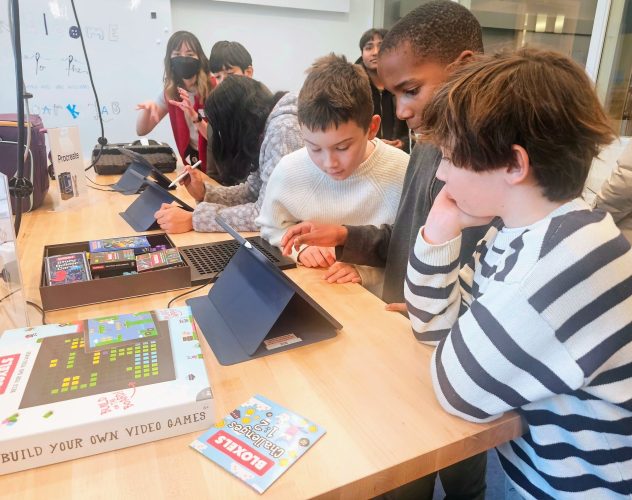
Local children enjoy activities at the opening of Spark Lab, a science, technology, engineering, arts and math (STEAM) learning space at Princeton Public Library in New Jersey earlier this year.<em> (Image: </em><a href=”https://flickr.com/photos/princetonpubliclibrary/55091065000/in/photolist” target=”_blank” rel=”noopener”><em><u>Princeton Public Library</u></em></a><em>/Flickr)</em>

Changes to federal broadband program could threaten digital access and restrict access to content at public libraries

Libraries are also beacons of digital literacy for people with limited access to the internet, undercutting educational and employment opportunities among other life goals. Around 66 million U.S. households have “low levels of digital readiness,” and 33 million do not use the internet at home, according to the American Library Association. People of color, rural residents, low-income families and people with disabilities are most impacted by digital opportunity gaps, according to the ALA.

“America’s libraries — 120,000 strong — are essential to addressing these gaps and realizing the vision of universal broadband adoption and ability to use,” the organization argues. Even so, smaller libraries are more likely to cut e-services when budgets fall short.

Despite these concerns, in June the Federal Communications Commission signaled that it will propose new rules impacting its E-Rate program, which provides schools and public libraries with low-cost broadband access.

The FCC followed up on August 14, filing a document in the Federal Register in which it opened several proposed rules for public comment. Although the FCC previously stated that no facilities would be cut from the E-Rate program, advocacy groups continue to raise alarms over the potential for paring down the program, if not eliminating it entirely.

Equally concerning is the FCC’s apparent willingness to impose new content restrictions on E-Rate users that target minorities, particularly transgender individuals. Specifically, the agency’s proposal references CIPA, the Children’s Internet Protection Act of 2000, which is intended to prevent minors from accessing pornography online. However, words like pornography are subject to interpretation, and Trump swept into office under a social agenda targeting “transgender ideology” as pornographic.

Although the text of the FCC filing emphasizes general concerns over “children’s screen time,” the initial reference to CIPA is of a piece with the Trump administration’s persistent efforts to demonize transgender persons, providing powerful momentum for ongoing attempts to prevent LGBTQ materials from circulating in public libraries.

speaker activity
Kids pack the house for a “Science Ninja” event at the Irving Public Library in Texas. <em>(Image: </em><a href=”https://flickr.com/photos/irvinglibrary/54593531246/in/photolist” target=”_blank” rel=”noopener”><em><u>Irving Public Library</u></em></a><em>/Flickr)</em>

Library advocates fight back

This summer, the American Library Association partnered with the Schools, Health & Libraries Broadband Coalition to launch a national campaign calling on the public to lobby their representatives in Congress to preserve E-Rate. “E-Rate is a congressionally-mandated program, and we need Congress to help us defend E-Rate now,” the partners emphasize.

The campaign also includes an online tool to help people submit comments to the FCC before the October 13 deadline.

While the result remains to be seen, raising awareness about the potential impact on library services is a solid first step. For communities already impacted by cuts to food assistance benefits and new Medicaid work requirements, losing free services at a local public library is yet another cut that runs deep.

Featured image: Mitya Ivanov/Unsplash

What If the Point of Foreign Assistance Was to End Foreign Assistance?
By Jacqueline Huh
August 31, 2026

Beneath the partisan debate on foreign assistance lies a remarkable consensus. Whether motivated by humanitarian obligation, national security, or economic opportunity, both Democrats and Republicans have long agreed that American support should advance the interests of the United States and the American people.

And yet the American people, whose taxes fund this work, have rarely been given a clear account of what their money concretely achieves and how they benefit. That gap between effort and explanation is one reason foreign assistance has been so easy to caricature and so hard to defend. The most basic question has also been the least consistently answered.

What does success actually look like?

The American people have been told how much foreign assistance costs and how many projects it funds. Too little attention has been paid to what those investments are supposed to produce over time. If American support is an investment made on behalf of the American people, then success cannot be defined by how much is spent or even by what is delivered. It must be defined by whether countries become capable of doing more for themselves and relying less on foreign assistance over time.

For decades, foreign assistance has been judged primarily by what it delivers, not what it leaves behind. A disease surveillance system may report impressive testing numbers while remaining indefinitely dependent on external technical support. A school is counted as built whether or not teachers are hired, students attend, or local authorities can maintain it after the project ends. These are real achievements, often lifesaving and lifechanging – but they answer only one question. What was delivered? They do not answer the more important one. What became unnecessary?

The real measure of success is whether countries become more capable of governing themselves, financing their own priorities, responding to crises, and sustaining progress after foreign assistance declines or ends. That shift in definition changes everything.

But success cannot be measured the same way across every form of foreign assistance and every country. Different objectives require different standards. One reason the debate has become so confused is that these distinct purposes are too often treated as though they were the same.

Emergency assistance answers to natural disasters, conflicts, and other crises. Its purpose is to save lives and relieve suffering. Food aid, for instance, is grown on American farms and carried on American ships before it reaches people in crisis abroad.

Recovery assistance restores basic security and essential public services after conflict or government collapse. Its purpose is to stabilize conditions long enough for reconstruction to take hold. The rebuilding, for instance, is led by American engineering firms and equipped with American-made machinery, from generators to water-treatment systems, before countries can govern, generate power, and rebuild themselves again.

Development assistance builds the institutions, systems, and workforce capacity that allow countries to govern themselves, fund their own priorities, and manage their own crises. Its purpose is to end long-term dependence on American support and to build more stable governments, more capable contributors to regional and global security, and more reliable trading partners. Development assistance is the rarest and most difficult of the three, and, on occasion, it has worked completely.

That is not an abstract aspiration. It has already happened.

After the Korean War, South Korea depended heavily on foreign assistance. But rather than remaining a permanent recipient, it invested in effective public institutions, education, and an export-oriented economy with a strong industrial policy. In 2009, South Korea became the first former aid recipient to join the OECD’s Development Assistance Committee as a donor nation.

Today, South Korea is one of the United States’ largest trading partners, with over $200 billion in annual two-way trade. Its firms manufacture semiconductors, batteries, and automobiles in the United States. During the COVID-19 pandemic, it rapidly scaled diagnostic testing capacity and, by April 2020, was exporting tests to more than 100 countries, including the United States. A South Korea that once depended on foreign assistance became one that strengthens the United States’ security and prosperity.

That is what success looks like. Not a dependency well managed. A dependency ended. Less of the same help, less often, for less long.

Each type of foreign assistance requires different tools, different timelines, and different definitions of success. Confusing them is one reason American support so often disappoints. Emergency assistance is judged as if it should build institutions. Recovery assistance is judged as if it should end dependence for good. But it is development assistance, more than any other category, where long-term success is ultimately decided, and where the greatest opportunities lie for the United States and the American people.

Too often, incentives reward continuation rather than progress toward independence. Development assistance can operate for years without demonstrating that governments are becoming more capable of performing core functions independently. Organizations are rewarded for delivering activities efficiently, not for making themselves unnecessary. Legislatures and boards demand results within political cycles, even though institutional capability is built over generations.

This is a problem of structure, not intention. Experts have spent years advancing ideas like local ownership, capacity building, and sustainability. But good intentions do not change what gets measured. And what gets measured is what gets rewarded.

Development assistance is routinely renewed even if it fails to demonstrate increasing local capability. Implementing organizations that produce dependency are rarely distinguished from those that produce independence. A system that cannot tell the two apart will reliably reproduce both.

Accountability is not a constraint on effectiveness. It is the condition for it. Countries start from different baselines, and the time it takes to build lasting capability will vary accordingly – some will need support for years longer than others. But implementing organizations should still be able to demonstrate, within defined time horizons appropriate to that starting point, that the countries they support are becoming more capable of performing core functions independently. Where that trajectory is absent, development assistance should be redesigned or ended, not simply continued.

Framing success in this way would not diminish humanitarian values. It would strengthen them. Countries that govern themselves effectively, finance their own priorities, and manage their own crises are better able to protect their citizens long after foreign assistance ends. They are also more stable partners, more capable contributors to regional and global security, and more reliable trading partners.

This is not a choice between charity and national interest. It is where they increasingly converge.

Foreign assistance will never disappear, nor should it. Earthquakes, pandemics, conflicts, and other shocks will continue to overwhelm even the most capable governments. Emergency and recovery assistance will remain essential tools of American leadership and engagement.

But development assistance should have different ambitions.

The argument is, in the end, a simple one. The goal of foreign assistance should not be how much is delivered, but what it leaves behind: capable governments, contributors to regional and global security, and reliable trading partners. Whatever form American support takes going forward, in whatever institutions, under whatever name, that is the outcome worth designing, funding, and measuring for. Not to keep it going. To make it unnecessary.

Jacqueline Huh is Head of External Affairs & Strategic Initiatives at the Stop TB Partnership. For more than a decade, she has led the design, development, and deployment of transformative public-private initiatives and partnerships across global health and development, working across civil society and community, local partners, governments, academia and research, the private sector, multilateral institutions, and donors to bring new approaches from idea to execution. The views expressed are her own.

Privacy Overview

This website uses cookies so that we can provide you with the best user experience possible. Cookie information is stored in your browser and performs functions such as recognising you when you return to our website and helping our team to understand which sections of the website you find most interesting and useful.