
Month: September 2026
Following severe weather and prolonged commercial power outages in Indiana, T-Mobile teams helped customers and communities stay connected during recovery.
For customers impacted by the severe weather and prolonged power outages in Indiana, T-Mobile is offering unlimited talk, text and data to T-Mobile Postpaid and Prepaid, Metro by T-Mobile, UScellular, Assurance Wireless, Mint and Ultra customers in affected areas who don’t already have it, from Friday, August 21 through Tuesday, September 15.
T-Mobile also provided free Wi-Fi and device charging support in impacted communities across Northwest and east-central Indiana. Support was available to everyone in the community, no matter which wireless provider they use.
In Northwest Indiana, support was available in Merrillville, Highland and Gary, with additional support in Connersville in east-central Indiana. As commercial power was restored and T-Mobile coordinated with local agencies on remaining community needs, teams concluded on-site support at select locations while continuing to monitor conditions.
Behind the scenes, teams deployed portable generators and satellite backhaul solutions where needed, helping support connectivity as recovery efforts continued.
For the latest preparedness and response updates, visit T-Mobile’s Emergency Response hub: https://www.t-mobile.com/news/emergency-response.
Verizon
By Raquel Wilson
At a glance
- Verizon deployed Frontline Crisis Response teams and assets in Washington, Indiana and Hawai’i and new Community Disaster Resilience connectivity vans in impacted areas to provide emergency Wi-Fi, charging stations, and essential relief to first responders and displaced residents.
- To support long-term recovery, Verizon awarded targeted local grants to nonprofits in Hawaiʻi, Washington, Indiana, and West Virginia, assisting communities impacted by severe storms, wildfires, and flooding.
- Marking National Preparedness Month in September, select Verizon retail stores are handing out free portable power banks and encouraging residents to build digital preparedness plans.
As natural disasters become more frequent, evidenced by recent weather across the country, communities are left increasingly vulnerable. Verizon is meeting this challenge holistically by combining long-term resilience investments with immediate aid. By deploying specialized connectivity fleets, awarding targeted community grants, and preparing communities before disaster, Verizon is on the scene when needed most.
On the frontlines
Built on the philosophy that Verizon runs to a crisis, the Verizon Frontline Crisis Response team provides mission critical support to emergency personnel and first responders. The team employs a host of Frontline response assets to provide vital connectivity and essential communications.
Following severe storms in Northwest Indiana, the team mobilized rapidly to support local emergency efforts by deploying satellite assets, 5G routers, and mobile devices. In addition, Verizon is keeping customers in Indiana connected by offering unlimited domestic Talk, Text & Data to our active postpaid and SMB customers and prepaid customers until September 15.
In Hawaiʻi, in response to Hurricane Lala, specialized engineers from Verizon’s Disaster Incident Response Team were on the ground to support technical crews.
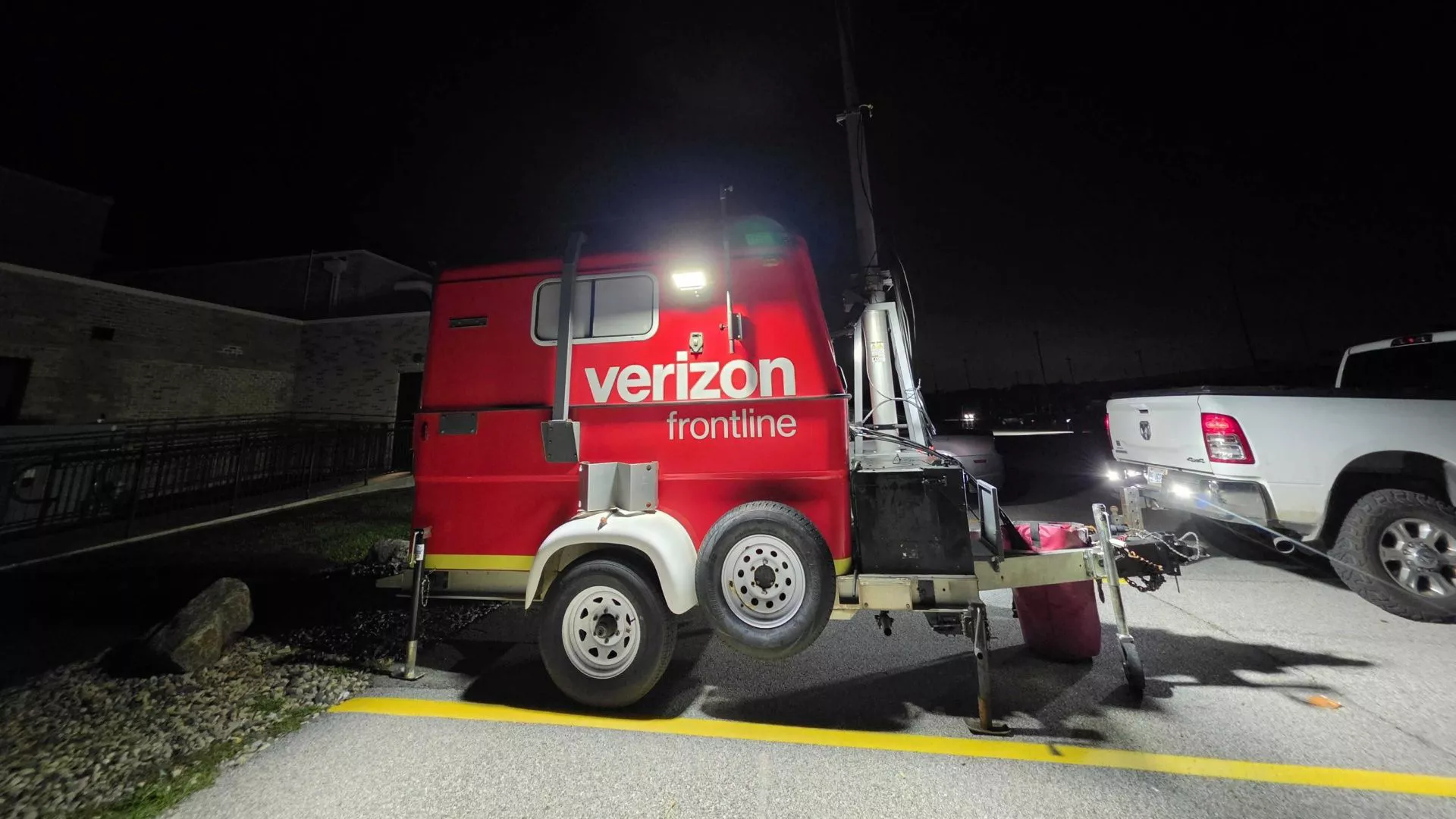
Mobile assets were also deployed in Spokane, WA including mobile cell sites, portable generators and satellite links that were ready to deploy for rapid recovery and community support.
The Community Disaster Resilience Vans in action
The latest addition to our Frontline response assets are the Community Disaster Resilience (CDR) connectivity vans, created to deliver essential resources and critical internet access directly to local neighborhoods.
In response to the ongoing Hawk Wildfire in Reno, Nevada, a CDR van has been deployed to the Reno Community Resource Center stocked with LED rechargeable flashlights, water, document dry bags, chargers to distribute to the community along with Wi-Fi, charging, and printing capabilities.
After severe weather ripped through the Midwest, a CDR van supported hundreds of displaced residents and shelter guests in Hobart and Gary, Indiana, with bottled water, Wi-Fi, and continuous device charging.
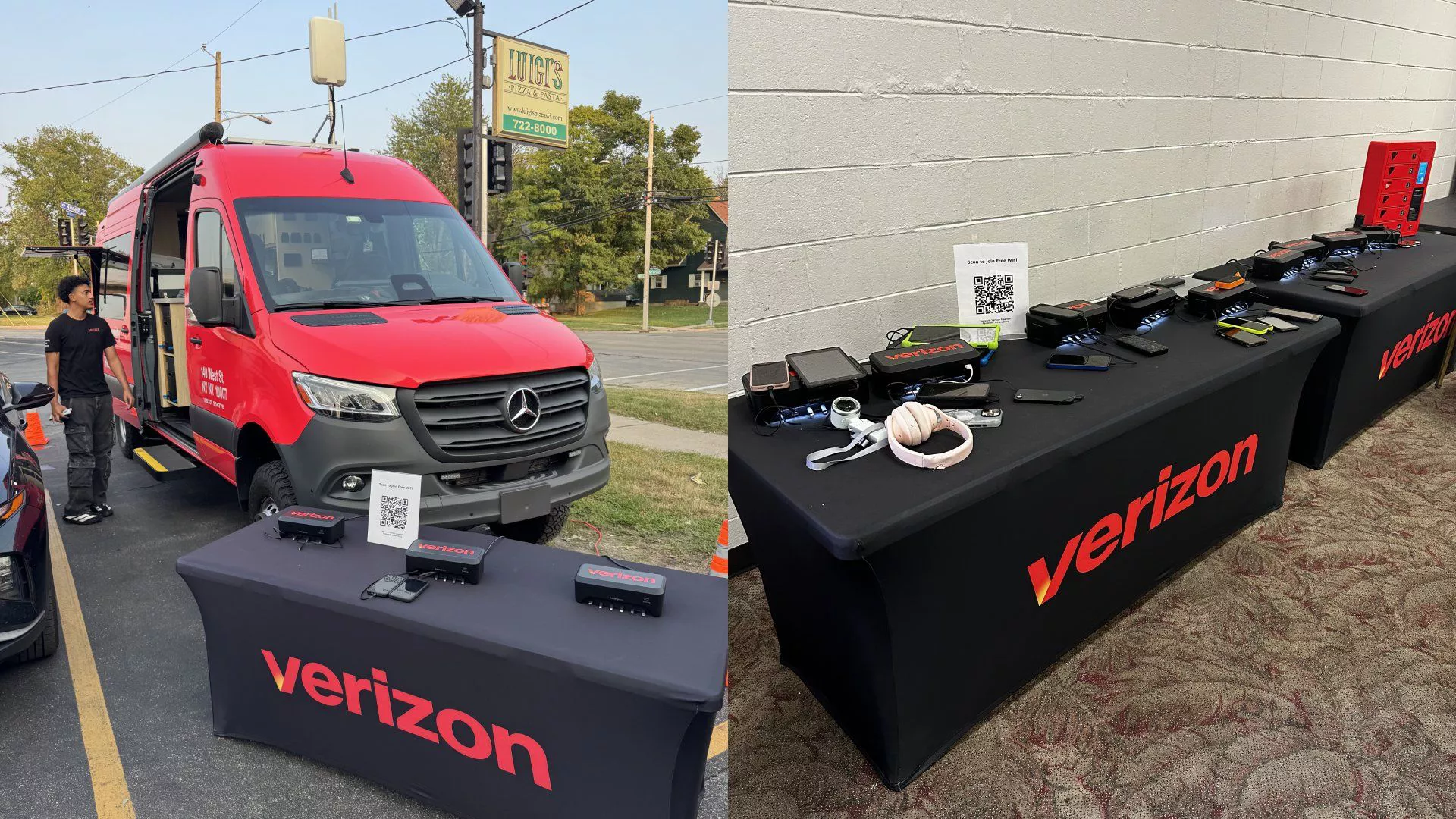
Out West, a CDR van joined the Spokane Disaster Assistance Center to deliver secure device charging lockers, tabletop charging ports, and public-access Chromebooks. Teams also distributed critical supplies—including flashlights, dry bags for protecting vital documents, and N95 masks to mitigate poor air quality. Beyond the van, Verizon supplied emergency charging kits directly to American Red Cross evacuation shelters and opened local retail stores as dedicated community charging hubs.
When a tornado displaced dozens of residents in Steger, Illinois, the CDR van brought critical infrastructure straight to the shelter doors. Fay Kiaurakis, Director of the Louis Sherman Community Center, shared her appreciation for how Verizon showed up during the crisis:
“Your charging stations were a godsend; we were running out of outlets…There are not enough words for how grateful I am for…Verizon for coming to our aid. Thank you for sending the truck and [the team]. They are welcome here anytime and so is Verizon.”
Fay Kiaurakis
Director of the Louis Sherman Community Center
In Menasha, Wisconsin, a connectivity van deployed directly into storm-impacted communities following severe weather disruptions, providing emergency high-speed Wi-Fi connectivity, multi-device charging lockers, and preparedness items like LED flashlights and foldable water bottles to prepare for future disaster.
Investing in the communities we serve
In addition to our on-the-ground response, Verizon is also reinforcing our commitment to the wellbeing of our communities by providing four local grants to nonprofits who are working to support individuals impacted by natural disasters.
Indiana—To directly support community recovery, Verizon is awarding $20,000 in emergency disaster relief grants to two frontline organizations: $10,000 to the United Way of Northwest Indiana to coordinate direct aid for rebuilding families, and $10,000 to the American Red Cross Indiana Region for local shelter and emergency supplies.
Hawaiʻi—After working with the Hawaiʻi Community Foundation in 2023 in response to the Maui fires, Verizon is teaming up with this local organization once again to support the Stronger Hawaiʻi Fund. Verizon’s $15,000 donation will help support statewide disaster and emergency related preparedness, response, recovery, mitigation, and resilience.
Washington—Verizon is reinforcing its commitment to the Spokane, WA, community with a $25,000 donation to Innovia Foundation’s Spokane Complex Wildfire Response Fund. These funds are intended to support immediate and long-term needs related to the ongoing fires in the Spokane region.
West Virginia—Verizon proudly donated $25,000 to the West Virginia Chamber of Commerce Foundation to coordinate direct aid and community resources. Verizon also donated $25,000 to the Tygart Valley United Way in partnership with the West Virginia University Center for Community Engagement, funding the Lewis and Upshur Flood Fund to assist families in the state’s hardest-hit counties.
Preparing communities before the storm
September is National Preparedness Month, and Verizon is helping customers across several states ensure they are ready for whatever Mother Nature has in store.
For the second time this year, as part of Verizon’s community disaster resilience initiatives, Verizon is preparing communities before disaster strikes. Across the country select Verizon stores in California, Colorado, Idaho, New Mexico, Tennessee, Texas, and Washington will be handing out free portable chargers, while supplies last, to local communities and urging residents to create their personal digital preparedness plans.
When Deana Youngblood returned from a trip to South Carolina in 2025, she was coughing up something dark and struggling to breathe. She had no health insurance and nowhere obvious to turn, so she called Wheeling Health Right, the only free clinic in West Virginia’s Northern Panhandle.
By the next day, Youngblood had received a chest X-ray, an antibiotic, and a donated inhaler to manage her COPD, treatment she otherwise could not afford.
“What would be my workaround without Health Right?” Youngblood said. “I honestly don’t know.”
The inhaler Youngblood received was donated by Direct Relief through a partnership with Teva. Since 2008, Direct Relief has made 251,471 deliveries of donated medicines and medical supplies, with a cumulative wholesale value of $3.1 billion, to nonprofit health providers in all 50 states and multiple U.S. territories.
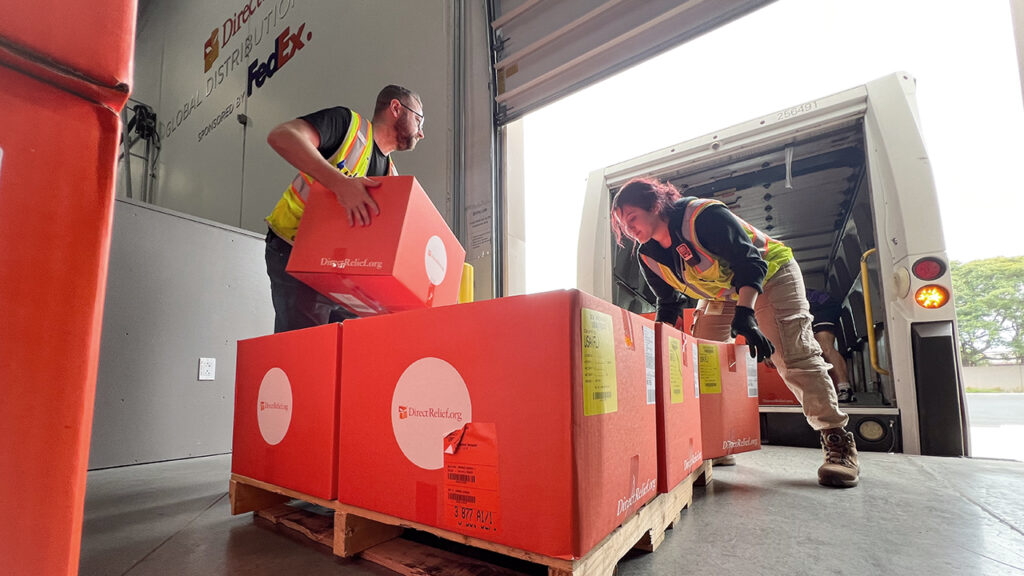
More than $1 billion of that aid has been delivered since June 2023. The total represents the cumulative wholesale value assigned to the donated products, not the amount Direct Relief paid for them or what patients would otherwise have spent.
The acceleration reflects both expanded capacity and rising need. Nearly six in 10 U.S. adults worry about affording prescription drugs, the highest share KFF has recorded since it began asking in 2018. More than four in 10 report taking at least one cost-saving measure that altered their treatment.
That affordability pressure is reaching the safety-net clinics that patients without other options rely on. At Mosaic Health Center in Georgia, a charitable clinic serving only uninsured patients, calls for new-patient appointments rose through the final months of 2025 after marketplace shoppers found higher premiums, enough that the clinic extended its evening hours.
Dallas Smith, a volunteer pharmacist there for five years, said the gap often isn’t the expensive drugs. “Medications like metformin and amlodipine and some of your basic hypertension or diabetes medications, they aren’t the most expensive, but patients who don’t have a lot of room to work with in terms of their budget, that adds up,” he said. “Even if it’s only $30 to $40 a month, that could be spent on food for their kids.”
What’s in the $3 Billion
The $3 billion total is the result of a nationwide distribution system built to move charitable medicine at scale. Because Direct Relief holds wholesale distribution licenses in all 50 states, the products move through the same regulated supply chain as commercially sold medicines, with pharmacist review and temperature controls throughout.
Teva Pharmaceuticals is providing inhalers for uninsured patients with asthma and COPD through a program launched with Direct Relief in December 2024. Medicines360 and Bayer have supported access to long-acting contraception for uninsured women, helping provide products that are otherwise among the most expensive contraceptive options to obtain out of pocket.
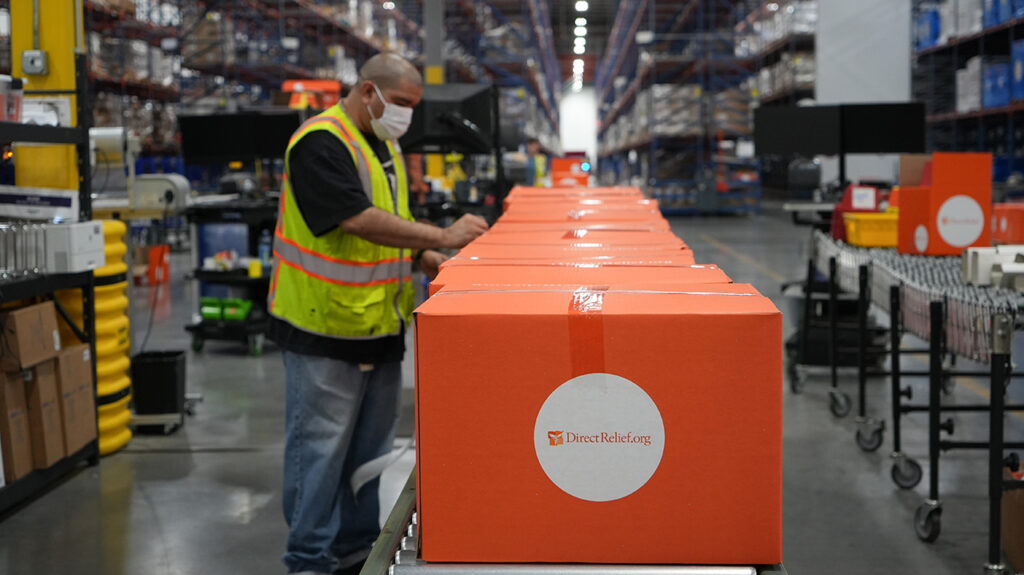
Donations often work in combination. Eli Lilly donates insulin for distribution to community health centers serving patients with diabetes, while embecta contributes millions of pen needles and insulin syringes needed to administer much of that insulin.
Through Direct Relief’s ReplenishRx program, contributions from AbbVie, Alcon, Johnson & Johnson, Sanofi and others provide uninsured patients with consistent monthly access to prescription medicines needed to manage chronic diseases.
Since 2017, Direct Relief has distributed more than 3.5 million doses of naloxone through partnerships with Pfizer, while BD has donated needles and syringes that go out with them.
Much of Direct Relief’s U.S. aid is transported with in-kind logistics support from FedEx, helping medicines and supplies reach nonprofit health providers across the country.
Together, those partnerships turn donated products, funding, logistics and technical expertise into a national supply network. More than 175 companies across health care, technology, transportation and other sectors help Direct Relief deliver more than $300 million in medical aid each year to more than 2,000 community-based organizations nationwide.
From a Hurricane to a National Charitable Medicine Program
Before Hurricane Katrina, Direct Relief’s work was concentrated primarily outside the United States. When the storm struck the Gulf Coast in 2005, people with diabetes, heart disease and other chronic conditions lost access to the medicines that kept those conditions in check, and manageable illnesses became emergencies.
Direct Relief delivered more than $50 million in material medical aid and cash assistance within six months, then built the licensing and distribution infrastructure required to distribute prescription medicines nationwide. It has retained and expanded that infrastructure ever since, seeded by investments from medtech company Abbott Laboratories.
Direct Relief’s U.S. aid now fills persistent gaps in medicine access while turning an existing provider network into a lifeline when disasters cut patients off from routine care.
In western North Carolina, Hurricane Helene knocked out the roads, bridges, post offices and cell service that NC MedAssist, a statewide charitable pharmacy, relies on to reach more than 70,000 patients across all 100 counties.
Staff called patients individually to arrange insulin shipments through 80-degree heat, asked helicopter crews headed to rural areas to carry medicine with them, and moved prescriptions on hospital mobile-pharmacy units. Direct Relief sent insulin, tetanus vaccines, field medic packs and epinephrine injectors, the last for an unexpected reason. “With the pure disruption of the ecosystem, there are a lot of bees and yellowjackets,” said Dustin Allen, the pharmacy’s chief operating officer.
More telling was what patients weren’t asking for. Requests for mental health medications, anti-seizure drugs and treatments for hypertension and high cholesterol ran lower than expected. According to Allen, that was a sign that people were cut off from routine care were going without.
In Puerto Rico, Direct Relief spent the years after Hurricane Maria building the infrastructure the storm showed was missing. An estimated 4,600 people died in the storm’s aftermath. In roughly a third of cases, the reason was because they could not reach care in time.
Since 2017, Direct Relief has provided $56.4 million in financial support and $96.7 million in material medical aid across the island, funding 52 resilient-power projects, 67 mobile clinics and off-road vehicles, and wells serving communities without municipal water. The work was supported in large part by AbbVie.
At Profamilias, a San Juan clinic providing reproductive and chronic disease care, generators once ran mainly to keep the pharmacy cold — and during hurricanes, even that failed. “Employees had to take certain products home and keep them refrigerated because there was no way to store them at the facility,” said services manager Michael Domínguez. After Maria, he said, “people had to buy medications wherever they could, at whatever price.”
The resilient power systems have since been tested repeatedly. When Hurricane Fiona struck in September 2022, all nine solar-equipped community health clinics stayed operational and all 25 community wells kept delivering clean water.
What the infrastructure enables now expands beyond storms. In February, Direct Relief joined COSSAO, Ponce Health Sciences University, and RWJ Barnabas Health to provide cardiology, pulmonology, gynecology, and other specialist services to 59 residents of Utuado, many of whom were accessing this level of care for the first time.
The lesson is the same one Katrina taught two decades earlier: resilience depends on building systems before disaster strikes and sustaining them through the next crisis.
Dual Pressures of Coverage and Climate
Coverage pressures are also expected to grow. Federal law requires states to apply Medicaid work requirements to many adults covered through Medicaid expansion beginning Jan. 1, 2027, though states may act sooner.
KFF research has found that eligible people may lose coverage when state systems cannot verify their status or when enrollees are unable to provide the required documentation.
Health center leaders describe the strain directly. “Community health centers are caring for more patients with more complex needs than ever before, even as workforce shortages and financial pressures intensify,” Kyu Rhee, president and CEO of the National Association of Community Health Centers, said in April.
Meanwhile, billion-dollar weather and climate disasters are being recorded far more often. The United States averaged three such disasters a year during the 1980s and 20 annually from 2016 through 2025, according to Climate Central. Twelve occurred during the first half of 2026 alone.
For the health safety net, the pressures compound. A lapsed insurance plan and a washed-out road produce the same result: care that is harder to access.
What Happens Next
Against this backdrop, Direct Relief remains committed to expanding the network of providers it supports and the range of products it provides. The mechanics stay the same: eligible nonprofit providers request what their patients need, Direct Relief delivers at no cost, and no one is billed for a donated item. Not the patient, insurer or a government program.
Donated medicine does not fix insurance gaps or staffing shortages. But for patients like Youngblood, a free prescription can mean the difference between managing a chronic illness and being unable to breathe.
When Deana Youngblood returned from a trip to South Carolina in 2025, she was coughing up something dark and struggling to breathe. She had no health insurance and nowhere obvious to turn, so she called Wheeling Health Right, the only free clinic in West Virginia’s Northern Panhandle.
By the next day, Youngblood had received a chest X-ray, an antibiotic, and a donated inhaler to manage her COPD, treatment she otherwise could not afford.
“What would be my workaround without Health Right?” Youngblood said. “I honestly don’t know.”
The inhaler Youngblood received was donated by Direct Relief through a partnership with Teva. Since 2008, Direct Relief has made 251,471 deliveries of donated medicines and medical supplies, with a cumulative wholesale value of $3.1 billion, to nonprofit health providers in all 50 states and multiple U.S. territories.
More than $1 billion of that aid has been delivered since June 2023. The total represents the cumulative wholesale value assigned to the donated products, not the amount Direct Relief paid for them or what patients would otherwise have spent.
The acceleration reflects both expanded capacity and rising need. Nearly six in 10 U.S. adults worry about affording prescription drugs, the highest share KFF has recorded since it began asking in 2018. More than four in 10 report taking at least one cost-saving measure that altered their treatment.
That affordability pressure is reaching the safety-net clinics that patients without other options rely on. At Mosaic Health Center in Georgia, a charitable clinic serving only uninsured patients, calls for new-patient appointments rose through the final months of 2025 after marketplace shoppers found higher premiums, enough that the clinic extended its evening hours.
Dallas Smith, a volunteer pharmacist there for five years, said the gap often isn’t the expensive drugs. “Medications like metformin and amlodipine and some of your basic hypertension or diabetes medications, they aren’t the most expensive, but patients who don’t have a lot of room to work with in terms of their budget, that adds up,” he said. “Even if it’s only $30 to $40 a month, that could be spent on food for their kids.”
What’s in the $3 Billion
The $3 billion total is the result of a nationwide distribution system built to move charitable medicine at scale. Because Direct Relief holds wholesale distribution licenses in all 50 states, the products move through the same regulated supply chain as commercially sold medicines, with pharmacist review and temperature controls throughout.
Teva Pharmaceuticals is providing inhalers for uninsured patients with asthma and COPD through a program launched with Direct Relief in December 2024. Medicines360 and Bayer have supported access to long-acting contraception for uninsured women, helping provide products that are otherwise among the most expensive contraceptive options to obtain out of pocket.
Donations often work in combination. Eli Lilly donates insulin for distribution to community health centers serving patients with diabetes, while embecta contributes millions of pen needles and insulin syringes needed to administer much of that insulin.
Through Direct Relief’s ReplenishRx program, contributions from AbbVie, Alcon, Johnson & Johnson, Sanofi and others provide uninsured patients with consistent monthly access to prescription medicines needed to manage chronic diseases.
Since 2017, Direct Relief has distributed more than 3.5 million doses of naloxone through partnerships with Pfizer, while BD has donated needles and syringes that go out with them.
Much of Direct Relief’s U.S. aid is transported with in-kind logistics support from FedEx, helping medicines and supplies reach nonprofit health providers across the country.
Together, those partnerships turn donated products, funding, logistics and technical expertise into a national supply network. More than 175 companies across health care, technology, transportation and other sectors help Direct Relief deliver more than $300 million in medical aid each year to more than 2,000 community-based organizations nationwide.
From a Hurricane to a National Charitable Medicine Program
Before Hurricane Katrina, Direct Relief’s work was concentrated primarily outside the United States. When the storm struck the Gulf Coast in 2005, people with diabetes, heart disease and other chronic conditions lost access to the medicines that kept those conditions in check, and manageable illnesses became emergencies.
Direct Relief delivered more than $50 million in material medical aid and cash assistance within six months, then built the licensing and distribution infrastructure required to distribute prescription medicines nationwide. It has retained and expanded that infrastructure ever since, seeded by investments from medtech company Abbott Laboratories.
Direct Relief’s U.S. aid now fills persistent gaps in medicine access while turning an existing provider network into a lifeline when disasters cut patients off from routine care.
In western North Carolina, Hurricane Helene knocked out the roads, bridges, post offices and cell service that NC MedAssist, a statewide charitable pharmacy, relies on to reach more than 70,000 patients across all 100 counties.
Staff called patients individually to arrange insulin shipments through 80-degree heat, asked helicopter crews headed to rural areas to carry medicine with them, and moved prescriptions on hospital mobile-pharmacy units. Direct Relief sent insulin, tetanus vaccines, field medic packs and epinephrine injectors, the last for an unexpected reason. “With the pure disruption of the ecosystem, there are a lot of bees and yellowjackets,” said Dustin Allen, the pharmacy’s chief operating officer.
More telling was what patients weren’t asking for. Requests for mental health medications, anti-seizure drugs and treatments for hypertension and high cholesterol ran lower than expected. According to Allen, that was a sign that people were cut off from routine care were going without.
In Puerto Rico, Direct Relief spent the years after Hurricane Maria building the infrastructure the storm showed was missing. An estimated 4,600 people died in the storm’s aftermath. In roughly a third of cases, the reason was because they could not reach care in time.
Since 2017, Direct Relief has provided $56.4 million in financial support and $96.7 million in material medical aid across the island, funding 52 resilient-power projects, 67 mobile clinics and off-road vehicles, and wells serving communities without municipal water. The work was supported in large part by AbbVie.
At Profamilias, a San Juan clinic providing reproductive and chronic disease care, generators once ran mainly to keep the pharmacy cold — and during hurricanes, even that failed. “Employees had to take certain products home and keep them refrigerated because there was no way to store them at the facility,” said services manager Michael Domínguez. After Maria, he said, “people had to buy medications wherever they could, at whatever price.”
The resilient power systems have since been tested repeatedly. When Hurricane Fiona struck in September 2022, all nine solar-equipped community health clinics stayed operational and all 25 community wells kept delivering clean water.
What the infrastructure enables now expands beyond storms. In February, Direct Relief joined COSSAO, Ponce Health Sciences University, and RWJ Barnabas Health to provide cardiology, pulmonology, gynecology, and other specialist services to 59 residents of Utuado, many of whom were accessing this level of care for the first time.
The lesson is the same one Katrina taught two decades earlier: resilience depends on building systems before disaster strikes and sustaining them through the next crisis.
Dual Pressures of Coverage and Climate
Coverage pressures are also expected to grow. Federal law requires states to apply Medicaid work requirements to many adults covered through Medicaid expansion beginning Jan. 1, 2027, though states may act sooner.
KFF research has found that eligible people may lose coverage when state systems cannot verify their status or when enrollees are unable to provide the required documentation.
Health center leaders describe the strain directly. “Community health centers are caring for more patients with more complex needs than ever before, even as workforce shortages and financial pressures intensify,” Kyu Rhee, president and CEO of the National Association of Community Health Centers, said in April.
Meanwhile, billion-dollar weather and climate disasters are being recorded far more often. The United States averaged three such disasters a year during the 1980s and 20 annually from 2016 through 2025, according to Climate Central. Twelve occurred during the first half of 2026 alone.
For the health safety net, the pressures compound. A lapsed insurance plan and a washed-out road produce the same result: care that is harder to access.
What Happens Next
Against this backdrop, Direct Relief remains committed to expanding the network of providers it supports and the range of products it provides. The mechanics stay the same: eligible nonprofit providers request what their patients need, Direct Relief delivers at no cost, and no one is billed for a donated item. Not the patient, insurer or a government program.
Donated medicine does not fix insurance gaps or staffing shortages. But for patients like Youngblood, a free prescription can mean the difference between managing a chronic illness and being unable to breathe.
Commercial water filtration presents a different type of sales challenge where projects often begin with specifications developed for a particular filtration system. Effective size, or ES, and uniformity coefficient, or UC, are among the measurements that can play an important role in figuring out whether filtration media meets those requirements.
Mike describes uniformity coefficient as an indication of how tightly grouped the particle sizes are within a product. The tighter the distribution, the lower the uniformity coefficient. Effective size provides another measurement of the material’s particle sizing. Depending on the application, customers may also consider characteristics such as:
- Specific Gravity
- Grain shape
- Acid solubility
Understanding these specifications for filtration sand and gravel is essential because the requirements can vary from one project to the next. That technical knowledge is part of what Joel believes makes specialization so important in the market.
“Water filtration is a very niche market,” Joel said. “You need somebody that’s specialized in that market who can talk that market’s language, know the customers in that market, build those relationships, and continue to grow it.”
A Project Business Where Timing Matters
Understanding the specification is only the beginning. Commercial filtration is often project-based, unlike other industries that are more likely to yield recurring orders. In addition, the nature of water filtration projects creates a timing challenge that requires the necessary filtration media to be available before work can begin.
“These customers are generally repurposing a filter,” Joel explained. “They’re putting new media in the filter, and they’re scheduling their project to take down the filter at a certain point of time, and they have to have it back up and running at a certain point in time.”
Winning an order is only one part of the process. A single project can require several grades of material. Different layers of gravel and sand may work together within the filtration system, making product availability and coordination important considerations. If one aspect of the project isn’t aligned, it creates immediate problems for the customer.
Commercial projects require coordination among sales, production, plant leadership, product development, technical resources, and logistics. Each group plays a critical role in delivering a successful outcome for the customer. For Mike and Joel, collaboration is essential, both internally and externally, because successful filtration projects depend not only on product quality but also on flawless execution and strong customer relationships. By working closely with customers throughout the process, they build trust, gain a deeper understanding of customer needs, and ensure expectations are met every step of the way. This level of teamwork and partnership demonstrates Covia’s commitment to being a trusted partner and reliable supplier that customers can count on for future orders.
“We build that relationship with that customer for their trust,” Mike shared. “They know that they can count on us to deliver a good product in the timeline that they need.”
Create Partnerships on Three Sides of the Project
Unlike a traditional sales relationship centered primarily on a purchasing contract, filtration projects can involve several groups with significant influence over the final material selection. For Joel, each project in the commercial filtration market is like a three-legged stool, with three key parties supporting the project:
- The municipality
- The engineer designing the filter
- The construction company installing the filter
Each group plays a different role. The municipality or end user decides what the system needs. Engineers help design the filtration system and establish specifications. Contractors bid on the work and ultimately need confidence in the suppliers providing the materials they will install.
“To win the contract, you have to have all three of them bought in because they all make decisions in that process,” Joel explained. “It’s a complicated process, and that complexity makes building those relationships especially valuable.”
The project-based cadence of water filtration is another reason why Joel’s and Mike’s ability to build trust among each group is notable. A successful experience with one engineer, municipality, or contractor can create credibility that carries into future opportunities.
“We want to be the first call for the customer,” Joel said. “We want to be trusted advisors. We want to be the ones where they pick up the phone and they call and ask questions, and we can give them answers and we can also give them solutions.”
Creating a Larger Platform for Growth
Covia had been active in the water filtration market before acquiring the Thompson plant, including an established presence in pool filtration through AQUAQUARTZ® pool filter sand. However, both Mike and Joel see the 2024 acquisition as a key opportunity to deepen that commercial filtration presence.
“The acquisition of Thompson gave us an opportunity to expand into the commercial water filtration market and provide better service,” Joel said. “We have always been a player in this market, but now we are dedicating more time and focus.”
Joel also points to collaboration with the Covia Innovation Center and product development teams as another part of the effort. These teams are doing developmental work and evaluating products and capabilities that could address more needs within the filtration market.
Looking Beyond the Next Project
Mike and Joel know that growing the filtration business isn’t about a single defining sale. In a project-based market, progress is built one specification, one relationship, and one successful delivery at a time. That growth requires time for specifications, customer calls, plant coordination, and travel, but it’s also important for both of them to leave room for life outside work.
Mike enjoys traveling with his family, attending his children’s soccer activities, and fitting in an occasional cruise.
Joel takes a similar approach, prioritizing his children’s sporting events along with golf and biking. He also enjoys spending time on the water, even after once insisting he would never own a boat.
The balance is fitting for two careers built around relationships. Whether they are working with a customer, coordinating with a plant, developing a new opportunity, or spending time with family, Mike and Joel understand that trust is rarely built in one moment. It develops through consistency, communication, and showing up when it matters.
For Covia’s growing water filtration business, those same principles are helping turn specialized capabilities into new opportunities, one project at a time.
For Gokaldas Exports (NSE: GOKEX), a Cascale Corporate member, sustainability has become closely intertwined with the company’s broader transformation.
Founded in 1979 and headquartered in Bengaluru, India, the apparel manufacturer operates across India, Kenya, and Ethiopia and serves over 20 global brands and retailers across more than 50 countries.
In a conversation for Cascale’s “Source of Good” podcast, Siva Ganapathi, vice chairman and managing director, described how the company’s transformation began around 2017, when management focused on strengthening factories, improving quality and delivery, investing in automation, and rebuilding customer confidence. As expectations from global brands continued to evolve, Gokaldas also needed to translate sustainability commitments into measurable, credible improvement across its manufacturing operations — while ensuring those investments supported the company’s broader business goals.
“We invested a lot in sustainability because we understood that brands are requiring it,” Ganapathi said on the “Source of Good” podcast. “It made environmental sense, it made social sense, and it made business sense.”
Top Takeaways
- Sustainability investment is helping drive Gokaldas Exports’ broader business transformation.
- Higg FEM data supports factory-level measurement, benchmarking, and corrective action.
- Independent validation strengthens the credibility of Gokaldas’ environmental performance data.
- Water investments have delivered significant gains, including 92 percent process-water recycling in laundry operations.
- Gokaldas Exports has developed a robust and well-defined roadmap to achieve net zero emissions by 2045 and carbon neutrality by 2030.
- MCAP is helping Gokaldas translate its climate ambitions into measurable, science-aligned Scope 1 and 2 targets.
The Challenge: Turning Expectations into Measurable Performance
Sustainability, and Cascale membership, became an increasingly important part of Gokaldas’ investment strategy. Ganapathi explained that while sustainability initiatives existed previously, they were not a primary focus. As brand expectations evolved, Gokaldas increasingly viewed sustainability not only as an environmental and social responsibility, but also as a business imperative.
The challenge was to turn those growing expectations into consistent, measurable action across the company’s operations. That required reliable factory-level data, credible validation of reported performance, targeted investments in areas such as water and energy, and a structured pathway for advancing climate goals.
The company’s FY2024–25 Annual Report reflects this approach, identifying sustainability as a core component of its operating strategy and highlighting investments in energy, water, waste, sustainable sourcing, and circularity.
Making Sustainability Measurable with Higg FEM
Data has become a central part of Gokaldas’ sustainability management. The company has used the Higg Facility Environmental Module (Higg FEM) to assess and benchmark environmental performance across its facilities, covering areas such as energy, water, waste, wastewater, air, and chemical management.
In the podcast, Ganapathi reported that Gokaldas’ average Higg FEM score increased to 91 percent in 2025, up from 89 percent in 2024. To achieve it, Gokaldas tracks performance at the factory level and focuses corrective action on facilities and areas where performance is weaker.
This reflects a progression from measuring sustainability performance to using standardized data as an operational management tool. It gives Gokaldas a consistent framework through which to identify performance gaps, compare results, and direct improvement efforts across its operations.
Strengthening Confidence Through Independent Verification of Higg FEM Data
Gokaldas Exports subjects its Higg FEM-related environmental data to independent validation, strengthening the credibility of the information it uses to assess environmental performance. In its FY2024–25 Annual Report, the company states that it engaged Bureau Veritas, PDCA International Limited, and Teks Tech Inspection India Private Limited to validate its environmental data in accordance with Higg FEM 4.0. The validation covers reported environmental performance across areas including energy, water, wastewater, emissions, and waste.
Third-party verification plays a vital role in building confidence in environmental performance data. It provides independent assurance that Gokaldas sustainability data is accurate, reliable, and aligned with internationally recognized standards. This enhances transparency, strengthens trust with their customers and stakeholders, and demonstrates their commitment to accountability. More importantly, verified data supports informed decision-making and reinforces Gokaldas’ focus on continuous improvement, making it a key element of their sustainability journey.
Water: From Efficiency to Water Neutrality
Water is one of the areas where Gokaldas has made particularly significant progress. The company reports recycling 92 percent of process water in its laundry operations and has achieved a 40 percent reduction in water use in laundry operations through state-of-the-art machinery. Water intensity per kilogram of garment washed also decreased by 36 percent.
The company has implemented Zero Liquid Discharge (ZLD) systems and uses treated wastewater to reduce freshwater requirements. In the podcast, Ganapathi also noted that the company’s fabric-dyeing plants recycle approximately 96 percent of water.
These initiatives support Gokaldas’ goal of becoming water positive by 2030. The company’s current sustainability strategy identifies water as a priority alongside decarbonization and circularity.
Net Zero by 2045, Carbon Neutrality by 2030
The company has developed a robust and well-defined roadmap to achieve net zero emissions by 2045 and carbon neutrality by 2030, supported by clear milestones and strategic investments. Significant progress has been made through the increased procurement of renewable energy, Carbon offset strategy, implementation of energy-efficiency projects, and the gradual transition toward an electric fleet to reduce fossil fuel dependence.
Using MCAP to Put Climate Targets into Action
Gokaldas Exports’ participation in Cascale’s Manufacturer Climate Action Program (MCAP) has helped strengthen the company’s approach to climate action by providing a structured pathway to establish science-aligned targets for Scope 1 and 2 emissions.
Through MCAP, manufacturers with guidance and support to measure emissions, develop and validate Scope 1 and 2 science-aligned targets, assess climate risks, and build actionable decarbonization plans. Gokaldas has combined target setting with practical work on energy efficiency, renewable energy, and resource management. The company has highlighted its progress in procuring renewable energy, improving machinery efficiency, and increasing water and waste recycling as part of its broader decarbonization efforts.
Listen to “The Business Advantage of Sustainability Investment with Gokaldas Exports”
Why It Matters
Gokaldas Exports demonstrates how a manufacturer can integrate sustainability into a broader business transformation. By combining Higg FEM measurement and independent data validation with investments in water efficiency, renewable energy, operational improvements, and science-aligned climate targets through MCAP, the company is building sustainability into how it manages and grows its manufacturing operations.
Together, these efforts show how sustainability investment can support more disciplined, data-driven management while helping a manufacturer respond to customer expectations and prepare for long-term growth.
Curious about Cascale membership and the benefits our members receive?