
Month: September 2026
Based in Brussels, I have seen firsthand how European policy discussions move from technical debates to practical considerations for global companies, supply chains, and the people working across them, often well beyond Europe’s borders.
Today, EU sustainability policy continues to evolve across reporting, product requirements, circularity, human rights, and supply chain due diligence. One thing is certain: it’s a complex planning environment for consumer goods companies. Different policy files may move through different timelines, but many point toward a shared expectation: companies need stronger systems, better data, and clearer internal coordination to understand and respond to sustainability risks and impacts.
This was the focus of Cascale’s July EU Policy Briefing for Cascale Members, where we convened Corporate and Affiliate Members with experts from Cascale, the Social & Labor Convergence Program (SLCP), and Policy Hub to discuss what companies should be watching and preparing for next.
The Policy Landscape Is Increasingly Connected
The EU policy agenda continues to shape expectations across many parts of business. Reporting developments, including the Corporate Sustainability Reporting Directive (CSRD), the European Sustainability Reporting Standards (ESRS), the Voluntary Sustainability Reporting Standard for non-listed SMEs (VSMEs), and the Omnibus I package, are influencing how companies understand and communicate sustainability performance. The Ecodesign for Sustainable Products Regulation (ESPR) and related product sustainability developments, such as the Digital Product Passport (DPP), point toward more structured product-level sustainability information. Human rights and due diligence developments, including the EU Forced Labor Regulation and the Corporate Sustainability Due Diligence Directive (CSDDD), reinforce the need for credible supply chain visibility and risk management. Circularity and consumer information measures, including the Circular Economy Act, Waste Framework Directive, national EPR developments, and the Empowering Consumers for the Green Transition Directive, are shaping expectations around product responsibility and claims.
Taken together, these developments show that sustainability policy is increasingly connected to how companies collect data, design products, engage suppliers, assess risk, and communicate progress.
For many companies, this means the internal response cannot sit with one team alone, as I noted in my previous blog piece. Reporting requirements may involve sustainability, finance, legal, and data teams. Product sustainability policy may require input from design, sourcing, product development, and technical teams. Due diligence and forced labor expectations may require closer coordination across human rights, compliance, sourcing, and supplier engagement functions. Circularity and consumer information requirements may also involve marketing, public affairs, and legal teams.
The companies best positioned to respond will be those that can translate policy developments into coordinated internal action.
Readiness Matters While Details Continue to Evolve
EU policy discussions are dynamic. Some requirements may be revised, clarified, delayed, or implemented in phases. That uncertainty can make planning difficult, especially for companies operating across multiple markets and complex value chains.
Still, waiting for every detail to be finalized can create its own risks. Many of the capabilities that support policy readiness are useful across multiple regulatory pathways. Reliable data, clear governance, value chain visibility, and supplier engagement will remain important even as specific timelines or technical requirements shift.
Readiness does not require companies to predict every final outcome. It requires building systems that can adapt as expectations become clearer.
For consumer goods companies, that preparation is especially important because EU policy developments can influence global supply chains, including manufacturers and suppliers outside Europe. New reporting, product, due diligence, and circularity expectations may lead to new information requests, stronger documentation needs, and closer engagement between brands, retailers, manufacturers, and other value chain partners.
A credible approach to readiness should account for those practical realities. Companies need to understand what information they may need, where that information will come from, how it will be used, and how to engage suppliers in ways that support better outcomes rather than simply shifting administrative burdens down the value chain.
Why Interpretation and Convening Matter
A crowded policy landscape can be difficult to navigate alone. Companies need timely information, but information alone is rarely enough. They also need opportunities to understand what developments may mean in practice, where uncertainty remains, and how peers and partners are thinking about similar challenges.
That is where our member engagement plays an important role.
For Cascale Corporate and Affiliate members, policy briefings provide access to expert interpretation, practical discussion, and direct Q&A with policy and subject-matter experts. They also create space to connect policy developments to the realities of operating across global value chains — from data and tools to supplier engagement, internal planning, and collective action.
This kind of engagement supports Cascale’s broader work across climate and decent work. As policy expectations evolve, Corporate and Affiliate members need to understand how emerging requirements connect to the systems and partnerships that support credible sustainability action.
Feedback from the recent webinar highlighted the value of helping Corporate and Affiliate members connect developments across different policy files and understand practical implications for their business operations.
As the EU policy landscape will continue to evolve, Cascale will continue supporting Corporate and Affiliate members through timely policy updates, expert engagement, and spaces for collective discussion — helping companies navigate uncertainty with greater clarity and confidence. By attending briefing calls, Cascale Corporate and Affiliate members help identify what to watch, where to focus attention, and how to prepare more effectively.
Continue the Conversation
Cascale Corporate and Affiliate Members: Watch the recording of the EU Policy Briefing and continue the conversation in the Policy & Public Affairs Knowledge Hub on Cascale Connect.
Interested in Cascale membership? Learn how Cascale helps Corporate and Affiliate members stay ahead of regulatory developments through policy insights, practical guidance, stakeholder engagement, and coordinated advocacy that helps bring member perspectives into relevant policy discussions.
Gabriele Ballero is manager of public affairs at Cascale. This article is for general informational purposes only and should not be considered legal, compliance, or professional advice.
BATTLE CREEK, Mich., September 3, 2026 /3BL/ – WK Kellogg Co is celebrating National Better Breakfast Month all September long, highlighting the benefits of cereal as the backbone of a better breakfast – in addition to a healthy way to snack throughout the day.
In the U.S., millions of boxes of cereal are purchased each week, with a single serving of cereal providing hard-to-get nutrients like vitamin D, iron and B vitamins – in addition to fiber and protein.
According to the Dietary Guidelines for Americans1, 95% of Americans fall short of the recommended intake of fiber. In 2025 alone, WK Kellogg Co’s cereals provided more than 6 billion2 servings of fiber, reflecting the important role ready-to-eat cereal can play in helping consumers fill the fiber gap.
“As a dietitian and a mom, cereal is my go-to breakfast for my family because it can bring whole grains, iron, fiber and folate to every bowl,” said Sarah Ludmer, RDN and Chief Wellbeing & Sustainable Business Officer at WK Kellogg Co. “Once you add milk and some fruit and nuts, you’ve also got calcium, potassium, vitamin D and protein, bringing energy and balanced nutrition to each morning. The great thing about cereal is that it’s endlessly customizable to individual taste, nutrition and lifestyle needs, making it a great choice throughout the day as well.”
This year, WK Kellogg Co highlighted the importance of how its cereals make eating well easy – introducing the SPOONS on-pack nutrition guide and its commitment to bring protein to the table and serve as an outstanding source of fiber (the “P” and “O” of SPOONS). In August, the company also announced it is a full year ahead of schedule to eliminate all certified artificial colors across its full portfolio of cereals by the end of this year, reinforcing the simplicity (the “S”) in its cereals.
From its earliest days, Kellogg’s cereal has been a pioneer in advancing nutrition, with the company hiring the industry’s first in-house dietitian in 1923, introducing on-pack nutrition information in 1939 and championing the benefits of fiber, right from the start. The company continues to evolve its cereal portfolio to meet changing consumer needs by increasing whole grains and fiber, reducing sugar and sodium, and delivering essential vitamins and minerals families typically don’t get enough of.
Dating back to the 1950s, National Better Breakfast Month is observed every September as children return to school, encouraging Americans to start their day with a nutritious, balanced morning meal.
To learn more about SPOONS and check out fiber- and protein-forward recipes, visit wkkellogg.com/our-impact/make-eating-well-easy.
1US Department of Agriculture; Agricultural Research Service. What We Eat in America: Nutrient intakes from food by gender and age. National Health and Nutrition Examination Survey (NHANES) 2009-10.
2 Servings of fiber to consumers in the U.S., Canada and the Caribbean. Based on fiscal year 2025 sales volume.
###
About WK Kellogg Co
At WK Kellogg Co, we bring our best to everyone, every day through our trusted foods and brands. Our journey began in 1894, when our founder W.K. Kellogg reimagined the future of food with the creation of Corn Flakes, changing breakfast forever. Our iconic brand portfolio includes Kellogg’s Frosted Flakes®, Rice Krispies®, Froot Loops®, Kashi®, Special K®, Kellogg’s Raisin Bran® and Bear Naked®. With a presence in the majority of households across North America, our brands play a key role in enhancing the lives of millions of consumers every day, promoting a strong sense of physical, emotional and societal wellbeing. Our beloved brand characters, including Tony the Tiger® and Toucan Sam®, represent our deep connections with the consumers and communities we serve. Building on our long history of nutrition leadership, we continue to help consumers make informed choices through innovations such as our SPOONS on-pack nutrition guide, which highlights the benefits of cereal, including simple ingredients, fiber and protein. Through our sustainable business strategy, Feeding Happiness™, we aim to build healthier and happier futures for families, kids and communities. We are making a positive impact while creating foods that bring joy and nourishment to consumers. For more information visit www.wkkellogg.com.
More than 14 tons of requested medical aid departed for Nepal from Direct Relief’s Santa Barbara, California, warehouse today in response to continued health needs from last week’s flash floods that killed more than 1,100 people, damaged infrastructure, and cut off large areas of the country from road access.
More than 4,500 people are still missing, and thousands have been displaced from their homes and are congregating in schools and other sites.
Critical Medical Supplies Depart for Post-Flood Health Needs
Direct Relief has staff on the ground in Nepal and is working in partnership with local groups to prevent secondary health risks, including waterborne diseases, interruptions to primary care and maternal health services, and other health issues that arise from long-term displacement and infrastructure damage.
The emergency shipment addresses urgent health needs reported by healthcare providers operating in flood-damaged districts:
- Infection Control: Broad-spectrum antibiotics and anti-infectives to treat waterborne bacterial infections and more.
- Dehydration & Clean Water: IV fluids (Lactated Ringer’s) and water purification supplies.
- Chronic Disease Management: Insulin, diabetes supplies, COPD, asthma, and hypertension medications.
- Emergency & Triage Support: Wound care kits, first aid essentials, field medic packs, and diagnostic equipment for mobile field clinics, including care taking place in shelters.
- Sanitation & Protection: Personal protective equipment, medical-grade disinfectants, and hygiene products for displaced people.
Medical aid from Direct Relief was already pre-positioned in the country when the disaster occurred, and local groups deployed to mountain areas within hours of the disaster to provide care. One of those groups was Mountain Heart Nepal, which specializes in medical outreach to remote communities in the Himalayan foothills.
Wednesday’s 14-ton shipment will be received by the group, which is continuing to provide medical care to flood-impacted areas.
More than 21 tons of medical aid are currently in process or en route to Nepal to support health efforts in response to the flooding. Wednesday’s shipment is part of an ongoing stream of medical shipments departing from Direct Relief’s warehouse this week, as well as from the organization’s distribution center in Europe.
Emergency Funds Supporting Local Groups
In addition to medical supplies departing for Nepal, the organization has committed or disbursed $125,000 in emergency operating grants to organizations responding locally.
Groups that have or will receive emergency funds are:
- Mountain Heart Nepal, which is using funds to support emergency mobile medical teams and their immediate work of bringing medical services to areas cut off from care.
- Shanti Foundation is providing emergency flood response efforts to impacted women and children. The foundation, led by Shanti Tamang, a long-time partner of Direct Relief, will be providing hygiene supplies, child-friendly spaces in displacement centers and temporary settlements, and psychosocial support.
- One Heart Worldwide will work to maintain essential maternal and newborn health services in the flood-affected districts of Rasuwa, Nuwakot, and Dhading, Nepal.
All three organizations were key partners of Direct Relief during the 2015 earthquake response and have continued to receive ongoing support.
NEPAL FLOOD UPDATE
Frequently Asked Questions
What is Direct Relief doing to help after the Nepal floods?
Direct Relief sent more than 14 tons of medical supplies to Nepal, working alongside local partner organizations already on the ground to prevent secondary health problems like waterborne illness and disruptions to routine and maternal care.
How much medical aid has Direct Relief sent to Nepal so far?
The September shipment totaled more than 14 tons on its own, and Direct Relief reports over 21 tons of medical aid either already delivered or in transit as part of the broader flood response, sent from both its Santa Barbara, California warehouse and its European distribution center.
What kinds of medical supplies are included in the shipment?
The aid covers five main needs: antibiotics and anti-infectives for waterborne bacterial infections; IV fluids and water purification supplies for dehydration; medications for chronic conditions like diabetes, asthma, COPD, and hypertension; wound care and first-aid supplies for field clinics; and protective equipment and hygiene products for people who’ve been displaced.
Who is receiving and distributing the aid in Nepal?
The supplies are going to Mountain Heart Nepal, a local group focused on medical outreach in remote Himalayan communities. The organization had already deployed teams to affected mountain areas within hours of the flooding and continues to run mobile medical care in the hardest-hit districts.
Is Direct Relief providing financial support as well as supplies?
Yes. Direct Relief has committed or distributed $125,000 in emergency grants to three local organizations — Mountain Heart Nepal, Shanti Foundation, and One Heart Worldwide — supporting mobile medical teams, displaced women and children, and maternal and newborn health services.
SCS Global Services will be hosting a full day of insightful sessions at this year’s Climate Week NYC.
Proof Over Promises: The Universal Drive for Verified Climate Leadership
Join us on Tuesday, September 22nd as we explore the critical role of credible sustainability action in addressing today’s climate challenges. Enjoy networking and complimentary refreshments before and following the sessions.
From Compliance to Competitive Advantage: Unlocking the Strategic Value of Assured ESG Data
September 22, 2026 | 9:00 AM – 10:00 AM
This session will explore the growing demand for credible ESG data across a broad range of impact categories that are increasingly scrutinized by investors, customers, regulators, and business partners. Investors are seeking reliable, decision-useful information to assess risk and long-term value creation. Consumers are demanding greater transparency and accountability. Meanwhile, companies are leveraging ESG insights to optimize operations, enhance resilience, and meet evolving stakeholder expectations.
From Water Accounting to Water Advantage: Water Scopes 1–3 as a Strategic Business Resilience Tool
September 22, 2026 | 11:00 AM – 12:00 PM
This session explores how organizations can use Water Scopes to identify risk, strengthen supply chain resilience, prioritize investments, and prepare for evolving disclosure expectations. Panelists will discuss implementation challenges and practical first steps, helping attendees understand how water accounting can support stronger strategy, stewardship, and long-term value creation.
Panelists:
- Lauren Enright, Program Manager for Water Services, SCS Global Services
- Sara Walker, Director, Corporate Water Engagement, World Resources Institute
- Klaudia Schachtschneider, PhD, Programme Manager, Pacific Institute & Interim Technical Lead, CEO Water Mandate
- Alexis Morgan, Global Water Stewardship Lead, World Wildlife Fund
Beyond Removals: Why Forest Carbon Reductions Still Matter
September 22, 2026 | 1:30 PM – 2:30 PM
This session will challenge the notion that climate impact begins and ends with removals. Bringing together leaders from governments, development institutions, project developers, corporate buyers, and independent validation and verification bodies, the discussion will explore why reductions, including REDD+, remains critical to achieving global net-zero goals.
Panelists:
- SCS Global Services, providing a validation and verification perspective
- Andres Espejo, World Bank, Forest Carbon Partnership Facility
- Emergent
- Bayer
From Capital to Carbon Outcomes: How the Carbon Offset Value Chain Can Scale High-Integrity Regenerative Agriculture Removals
September 22, 2026 | 3:30 PM – 4:30 PM
This discussion will bring together leaders from across the carbon and climate value chain to explore what it takes to finance, verify, procure, and scale high-integrity climate outcomes. Using regenerative agriculture and nature-based carbon solutions as examples, panelists will discuss how capital, trust, and market demand can accelerate climate impact while generating economic returns.
Panelists:
- Nelson Switzer, Climate Innovation Capital (CIC) – Investor perspective
- Dan Grotsky, Groundwork BioAg – Project developer and technology provider perspective
- Christie Pollet-Young, Moderator: SCS Global Services – Independent assurance, certification, and market integrity perspective
John Lin | Chief Investment Officer—Emerging Markets Value Equities and China Equities
Xiaoyu Gu | Managing Director—AB CarVal
Sara Rosner | Director—Responsible Investing Research
Dr. Gernot Wagner | Climate Economist and Senior Lecturer at Columbia Business School
Global policy shifts are rewiring energy supply and control—and repricing risks and opportunities.
Climate change has become a defining force in geopolitics. As governments respond to record heat waves, floods, wildfires and droughts, their policies and economic posturing are reshaping manufacturing, trade and energy security across the capital markets. This makes global warming as much a financial risk as a physical one, with policy shifts repricing risks and opportunities across countries and companies alike.
Energy Security Moves to the Foreground
Energy security and climate policy are increasingly inseparable. Clean technology suppliers benefit from powerful structural tailwinds but also face cyclical risks tied to overcapacity and policy shifts. Meanwhile, fossil fuel exposure carries geopolitical risk and sensitivity to price swings, even when near term demand remains firm.
Case in point: Germany was an early leader in renewable energy, but its continued reliance on Russian gas left it exposed when supplies were cut following Russia’s 2022 invasion of Ukraine. Its economy has lagged the EU since.
More recently, oil price shocks from the conflict in Iran are rippling through global economies. Even if temporary, such disruptions can continue to reprice risks across energy markets and create lasting inflationary pressure. In our view, conflict in the Middle East underscores how dependence on fossil fuels can expose existing vulnerabilities when geopolitics intervene.
Geopolitical Footprints in Renewable Energy
We think renewable energy is well positioned to meet geopolitical challenges and opportunities. Globally, renewable energy deployment continues to grow, hitting a record $2 trillion in 2025.
Renewable assets require higher up-front capital, making financing conditions, interest rates and policy certainty critical. Throughout Africa, for example, the cost of financing projects comprises the lion’s share of electricity costs generated from wind and solar, while in North America the up-front capital cost of building those assets is the dominant driver.
Once built and paid for, however, renewable assets incur minimal operating costs and fuel-price risk. Cost avoidance also factors into renewable energy’s bottom line. China, for example, avoided $441 billion in fossil fuel burning and pollution damage costs in 2024 (Display).
Renewables: The Opportunity
Estimated Annual Benefits from Renewable Power Generation in Selected Countries in 2024
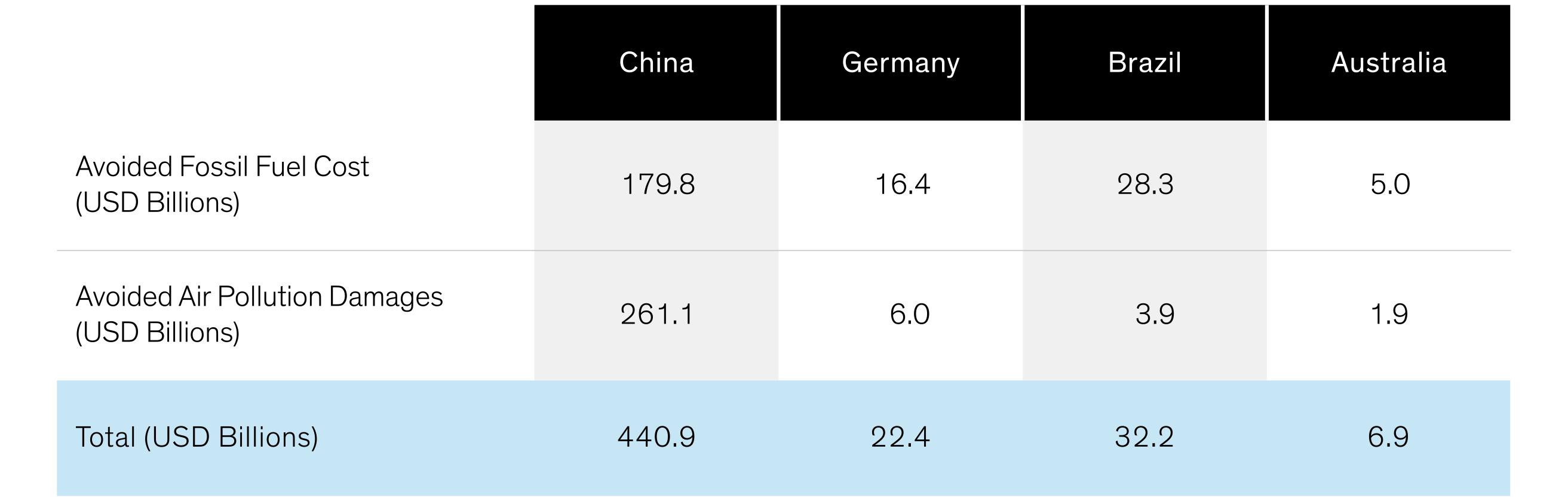
China leads in renewables spending, channeling $600 billion in 2025 to low-carbon technologies such as solar photovoltaics (PV) and electric vehicle manufacturing—about 10% of GDP. In fact, China accounted for at least 70% of combined global clean energy capacity in 2024, according to a BloombergNEF report. It’s also now the world’s largest EV maker, recently surpassing Tesla.
This is not by chance but through policy. In 2014, China laid the blueprint to transform its energy system, prioritizing renewables for state support to reduce import dependence, grow competitiveness and build technological leadership. Though mostly successful, China’s policies unintentionally created overproduction in areas such as solar panels, where a supply glut, global price collapse and layoffs underscore the need for greater policy flexibility.
The Cost Curve Can Matter More than Politics
While the cost of coal-generated electricity has barely changed in decades, solar power, wind and batteries (storage) have seen dramatic and sustained cost declines. For example, solar power—prohibitively expensive 40 years ago—is now the cheapest source of electricity (Display). Battery costs also continue to fall sharply due to improvements in technology and economies of scale.
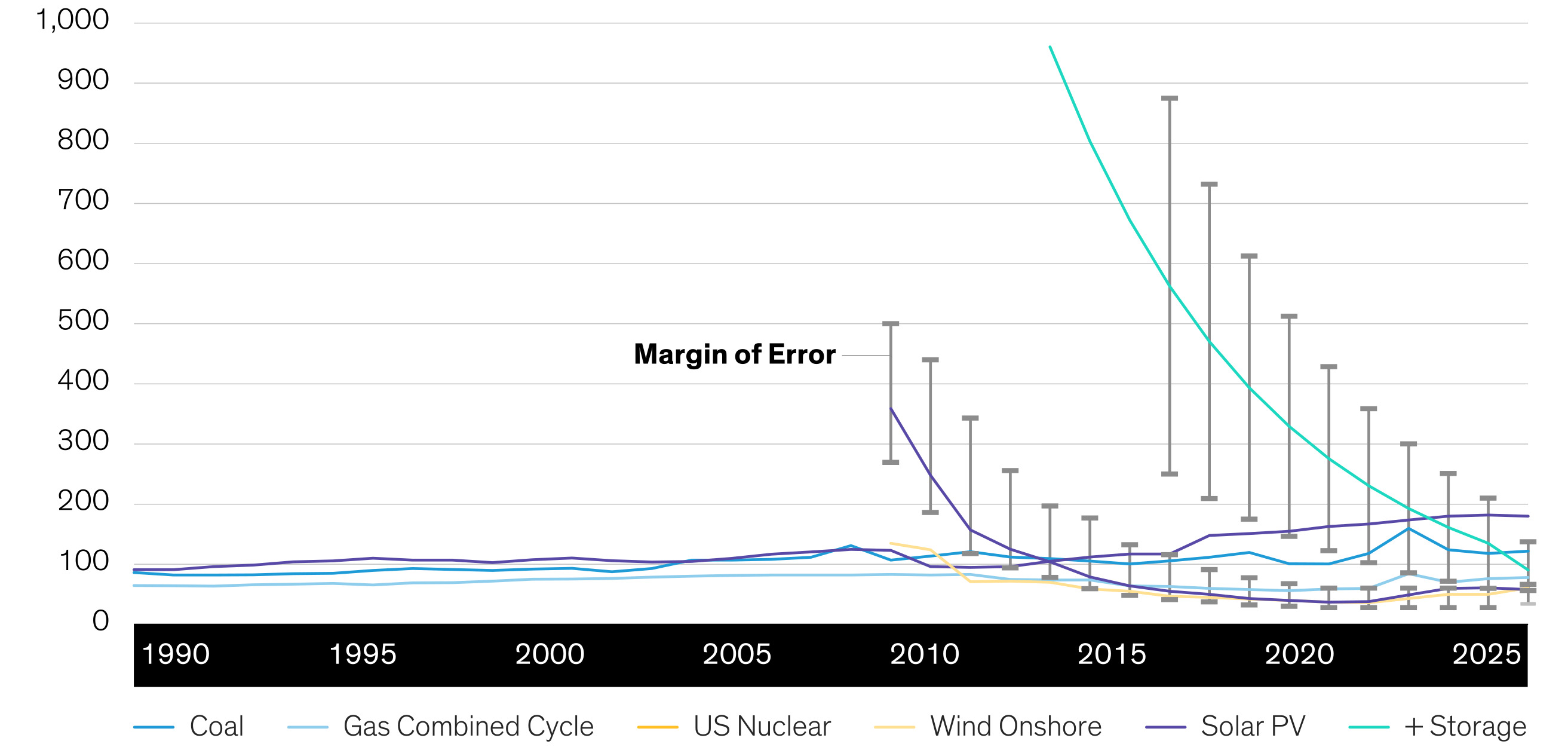
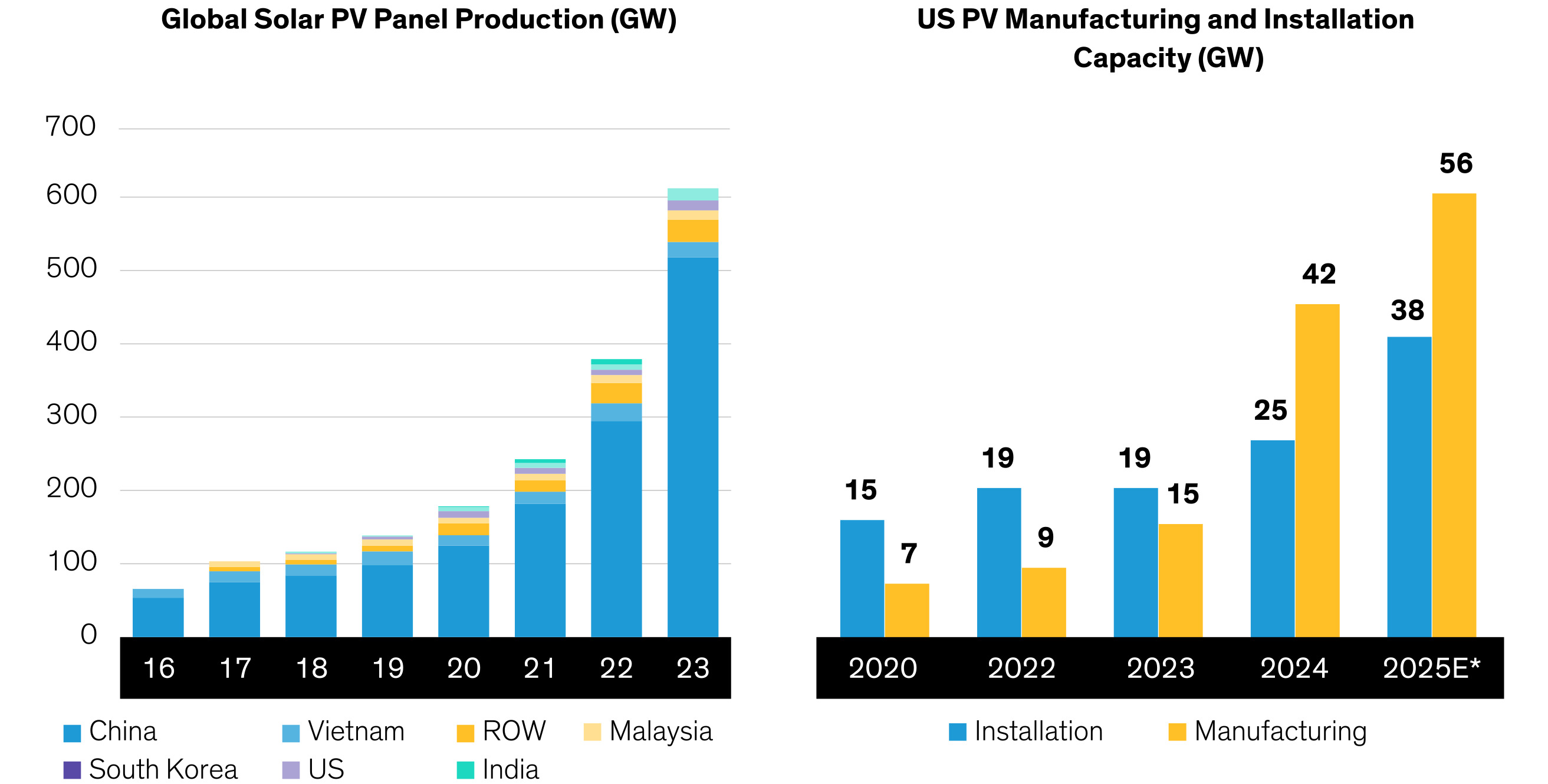
This dynamic helps explain why renewable deployment can gain ground even where climate policy ambitions are lacking. For example, substantial subsidies from the Inflation Reduction Act (IRA) of 2022 accelerated US solar energy production for several years, leading to a 50% annual growth rate and even higher leaps in some states (Display).
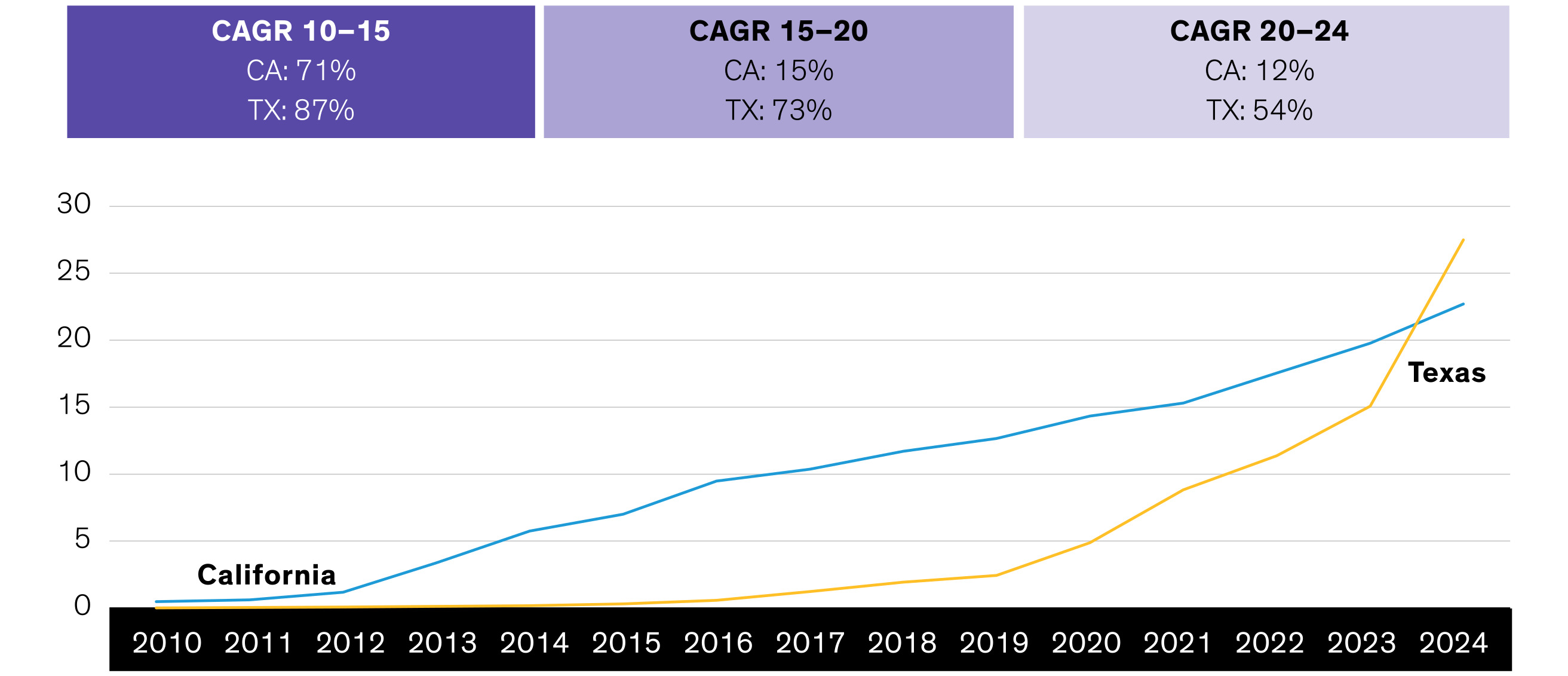
Texas, with relatively little state-level climate policy, surpassed even California in solar PV installations in 2024 (Display). But the surge reflects looser state policies that let installers benefit directly from IRA subsidies rather than environmental considerations alone.
Policy support can be reversed. The US One Big Beautiful Bill Act of 2025, for instance, tightened solar and wind power incentives, while maintaining other subsidies for low-carbon technologies like nuclear and geothermal.
Tariffs are another policy tool with two-sided consequences for renewable energy markets. US levies on renewable equipment may help support domestic production. But US expertise and independence in this area lag competitors and will require years of substantial investment in technology and labor. Until it can fill the supply chain domestically, the US will be challenged to manage costs, particularly when inputs include tariff-inflated components.
Investment Implications of Climate Geopolitics
For investors, the rise of climate geopolitics does not produce simple winners and losers. Rather, it rewards adaptability. Utilities with access to low cost clean power and grid investment opportunities may benefit significantly from rising demand in our analysis. Meanwhile, energy intensive industries face pressure, but those that invest early in efficiency and cleaner processes may improve long term competitiveness.
We see strong renewable opportunities among suppliers of solar panels, wind turbines and grid-level equipment. Many are based in emerging markets, including China, South Korea, Taiwan and Southeast Asia.
While policy can accelerate or slow clean energy adoption, cost curves—not politics alone—are likely to determine long term direction. The key is not to predict politics but to understand how regulation, commodity cycles, energy demand and technology costs interact across regions and industries. Climate geopolitics are reshaping markets unevenly—but decisively. For investors, the cost of ignoring that shift can be sudden and severe.
The views expressed herein do not constitute research, investment advice or trade recommendations, do not necessarily represent the views of all AB portfolio-management teams and are subject to change over time.
References to specific securities discussed are for illustrative purposes only and should not to be considered recommendations by AllianceBernstein L.P. It should not be assumed that investments in the securities mentioned have necessarily been or will necessarily be profitable.
Learn more about AB’s approach to responsibility here.
John Lin | Chief Investment Officer—Emerging Markets Value Equities and China Equities
Xiaoyu Gu | Managing Director—AB CarVal
Sara Rosner | Director—Responsible Investing Research
Dr. Gernot Wagner | Climate Economist and Senior Lecturer at Columbia Business School
Global policy shifts are rewiring energy supply and control—and repricing risks and opportunities.
Climate change has become a defining force in geopolitics. As governments respond to record heat waves, floods, wildfires and droughts, their policies and economic posturing are reshaping manufacturing, trade and energy security across the capital markets. This makes global warming as much a financial risk as a physical one, with policy shifts repricing risks and opportunities across countries and companies alike.
Energy Security Moves to the Foreground
Energy security and climate policy are increasingly inseparable. Clean technology suppliers benefit from powerful structural tailwinds but also face cyclical risks tied to overcapacity and policy shifts. Meanwhile, fossil fuel exposure carries geopolitical risk and sensitivity to price swings, even when near term demand remains firm.
Case in point: Germany was an early leader in renewable energy, but its continued reliance on Russian gas left it exposed when supplies were cut following Russia’s 2022 invasion of Ukraine. Its economy has lagged the EU since.
More recently, oil price shocks from the conflict in Iran are rippling through global economies. Even if temporary, such disruptions can continue to reprice risks across energy markets and create lasting inflationary pressure. In our view, conflict in the Middle East underscores how dependence on fossil fuels can expose existing vulnerabilities when geopolitics intervene.
Geopolitical Footprints in Renewable Energy
We think renewable energy is well positioned to meet geopolitical challenges and opportunities. Globally, renewable energy deployment continues to grow, hitting a record $2 trillion in 2025.
Renewable assets require higher up-front capital, making financing conditions, interest rates and policy certainty critical. Throughout Africa, for example, the cost of financing projects comprises the lion’s share of electricity costs generated from wind and solar, while in North America the up-front capital cost of building those assets is the dominant driver.
Once built and paid for, however, renewable assets incur minimal operating costs and fuel-price risk. Cost avoidance also factors into renewable energy’s bottom line. China, for example, avoided $441 billion in fossil fuel burning and pollution damage costs in 2024 (Display).
Renewables: The Opportunity
Estimated Annual Benefits from Renewable Power Generation in Selected Countries in 2024
China leads in renewables spending, channeling $600 billion in 2025 to low-carbon technologies such as solar photovoltaics (PV) and electric vehicle manufacturing—about 10% of GDP. In fact, China accounted for at least 70% of combined global clean energy capacity in 2024, according to a BloombergNEF report. It’s also now the world’s largest EV maker, recently surpassing Tesla.
This is not by chance but through policy. In 2014, China laid the blueprint to transform its energy system, prioritizing renewables for state support to reduce import dependence, grow competitiveness and build technological leadership. Though mostly successful, China’s policies unintentionally created overproduction in areas such as solar panels, where a supply glut, global price collapse and layoffs underscore the need for greater policy flexibility.
The Cost Curve Can Matter More than Politics
While the cost of coal-generated electricity has barely changed in decades, solar power, wind and batteries (storage) have seen dramatic and sustained cost declines. For example, solar power—prohibitively expensive 40 years ago—is now the cheapest source of electricity (Display). Battery costs also continue to fall sharply due to improvements in technology and economies of scale.
This dynamic helps explain why renewable deployment can gain ground even where climate policy ambitions are lacking. For example, substantial subsidies from the Inflation Reduction Act (IRA) of 2022 accelerated US solar energy production for several years, leading to a 50% annual growth rate and even higher leaps in some states (Display).
Texas, with relatively little state-level climate policy, surpassed even California in solar PV installations in 2024 (Display). But the surge reflects looser state policies that let installers benefit directly from IRA subsidies rather than environmental considerations alone.
Policy support can be reversed. The US One Big Beautiful Bill Act of 2025, for instance, tightened solar and wind power incentives, while maintaining other subsidies for low-carbon technologies like nuclear and geothermal.
Tariffs are another policy tool with two-sided consequences for renewable energy markets. US levies on renewable equipment may help support domestic production. But US expertise and independence in this area lag competitors and will require years of substantial investment in technology and labor. Until it can fill the supply chain domestically, the US will be challenged to manage costs, particularly when inputs include tariff-inflated components.
Investment Implications of Climate Geopolitics
For investors, the rise of climate geopolitics does not produce simple winners and losers. Rather, it rewards adaptability. Utilities with access to low cost clean power and grid investment opportunities may benefit significantly from rising demand in our analysis. Meanwhile, energy intensive industries face pressure, but those that invest early in efficiency and cleaner processes may improve long term competitiveness.
We see strong renewable opportunities among suppliers of solar panels, wind turbines and grid-level equipment. Many are based in emerging markets, including China, South Korea, Taiwan and Southeast Asia.
While policy can accelerate or slow clean energy adoption, cost curves—not politics alone—are likely to determine long term direction. The key is not to predict politics but to understand how regulation, commodity cycles, energy demand and technology costs interact across regions and industries. Climate geopolitics are reshaping markets unevenly—but decisively. For investors, the cost of ignoring that shift can be sudden and severe.
The views expressed herein do not constitute research, investment advice or trade recommendations, do not necessarily represent the views of all AB portfolio-management teams and are subject to change over time.
References to specific securities discussed are for illustrative purposes only and should not to be considered recommendations by AllianceBernstein L.P. It should not be assumed that investments in the securities mentioned have necessarily been or will necessarily be profitable.
Learn more about AB’s approach to responsibility here.
September 3, 2026 /3BL/ – DP World has become the first port terminal operator in Chile to receive the Explora Logística Seal, recognizing its work in San Antonio to connect students with the logistics industry through structured educational visits.
Led by Conecta Logística, a nonprofit focused on advancing Chile’s logistics sector, and Fundación ChileDual, which connects technical education with industry, the recognition is awarded to organizations that open their operations to students through structured technical visits.
The initiative supports the UN Sustainable Development Goals, including SDG 4: Quality Education, SDG 8: Decent Work and Economic Growth, and SDG 11: Sustainable Cities and Communities, while helping employees develop leadership skills and connecting companies with future talent.
Since launching its educational visits program in 2024, DP World in San Antonio has welcomed nearly 1,000 students from high schools, technical institutes, and universities throughout Chile. The terminal hosts an average of three visits each month, with approximately 30 participants per visit.
Students experience port operations firsthand and learn about the roles and skills involved in moving cargo and supporting global trade. The visits follow DP World’s safety standards and are supported by employee volunteers who share their knowledge and experience with participants.
Julio Tenesaca, Senior People Director at DP World in San Antonio, said: “This recognition reflects our long-term corporate vision, where sustainability, human capital development, and community engagement are central to our purpose. The commitment and participation of our team of volunteers have also been fundamental to opening our doors and creating meaningful experiences for students.”
Mabel Leva, Executive Director of Conecta Logística, said: “The Explora Logística Seal recognizes the commitment of companies like DP World to supporting students from technical and vocational high schools, bringing the industry closer to younger generations and inspiring them to pursue careers in the sector.
Andrea Garrido, Executive Director of Fundación ChileDual, said: “This recognition reflects a commitment: preparing future technicians is a shared responsibility between the education system and the productive sector. Experiences like DP World’s demonstrate that when companies open their doors and share their knowledge, they make a tangible contribution to strengthening the educational pathways of future generations.”
Expanding Educational Opportunities in San Antonio
The program builds on DP World’s wider support for education and youth development in San Antonio. Since 2016, its Pre-University Program has helped more than 300 students prepare for Chile’s Higher Education Admissions Test (PAES). The company also celebrates academic achievement of employees’ children, recognizing students from Year 1 through Year 12 for their outstanding performance during the school year. In 2025, the company further expanded its education initiatives with the launch of its free English Academy for the local community, helping youth strengthen their English skills and broaden their future education and career opportunities.
Through these programs, DP World is helping young people learn about careers in logistics, build practical skills, and prepare for the workplace while strengthening its connection with the communities surrounding its operations.
Learn more about how DP World is supporting people and communities around the world.