CAMDEN, N.J., July 13, 2026 /3BL/ – Subaru of America, Inc. (Subaru) today announced a $35,000 donation to The Cooper Foundation. This is Subaru’s fifth consecutive annual gift supporting Camden-based patients. The Subaru team also assembled 1,000 appreciation kits for nurses at Cooper University Health Care as part of its Subaru Loves to Care® initiative and its ongoing commitment to the automaker’s hometown of Camden.

More than 70 Subaru employees volunteered their time to assemble the appreciation kits, each filled with thoughtful items and handwritten notes recognizing the compassion, dedication, and exceptional care Cooper nurses provide every day. Representatives from Subaru personally delivered the kits during a special event honoring Cooper nurses for their unwavering commitment to patients and families.
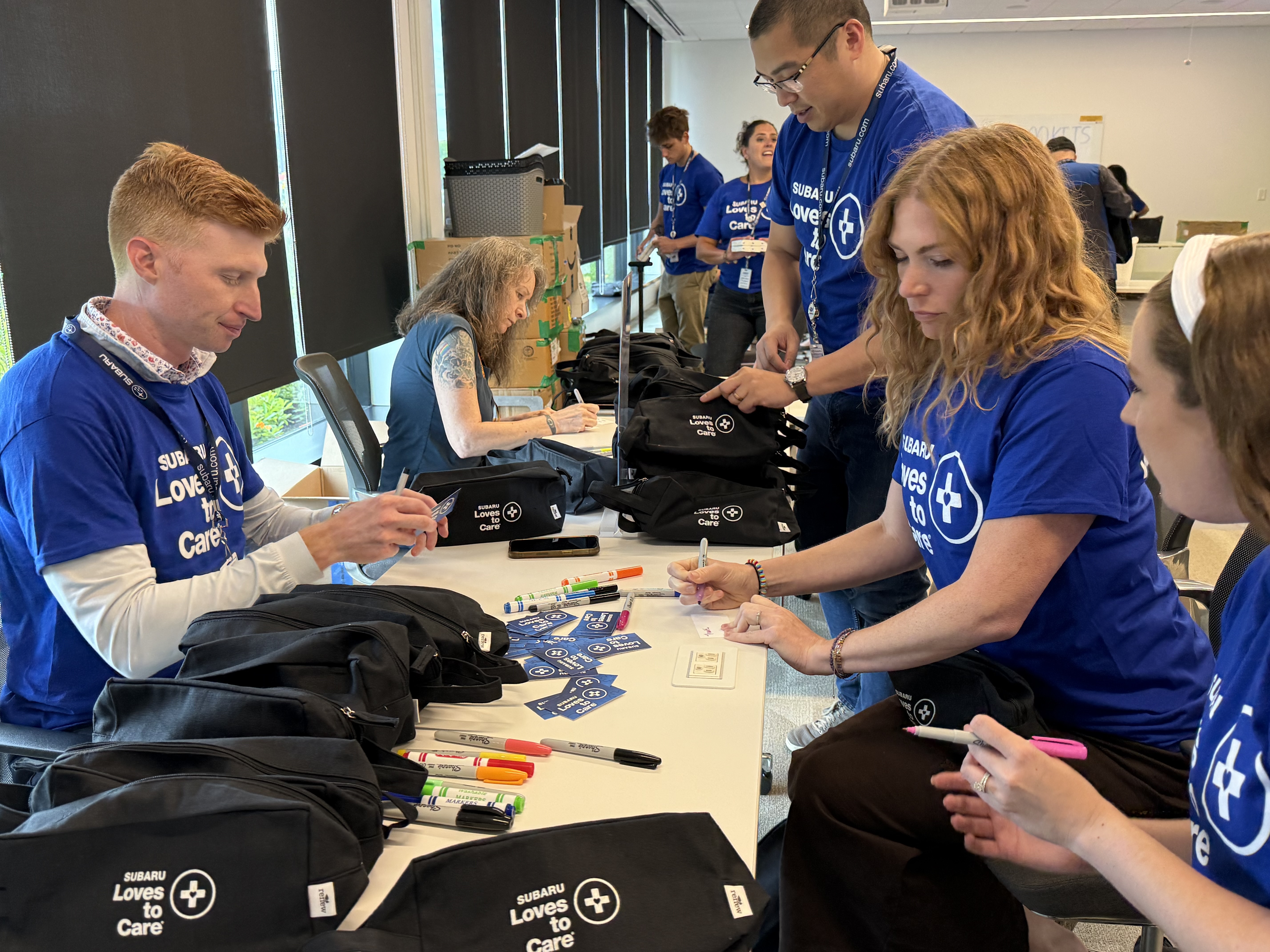
Along with the $35,000 donation to The Cooper Foundation, Subaru volunteers also assembled 1,000 personalized thank-you kits for nurses and staff at Cooper University Health Care. The kits were delivered as a show of gratitude for the hard work they put forth each day.

In addition to the appreciation kits, Subaru presented a $35,000 check to The Cooper Foundation, increasing its annual contribution to help address rising costs and expand access to essential care for patients served by Cooper. The funding will provide durable medical equipment—including blood pressure monitors, glucometers, scales, wheelchairs, walkers, and canes—to patients managing chronic health conditions at home, while also supporting transportation assistance to help Camden residents get to and from medical appointments.

Subaru’s partnership with Cooper continues to transform access to care for Camden residents facing financial and transportation barriers. During the past year, Subaru’s support helped nearly 1,000 uninsured and underinsured residents receive essential health-related assistance, including more than 1,500 units of durable medical equipment, more than 37,300 individual medical supplies, and more than 1,100 rides to medical appointments. Together, Subaru and Cooper are helping ensure patients can safely recover at home, manage chronic conditions, and access the care they need—regardless of the barriers they face.

“Subaru has become one of The Cooper Foundation’s most valued community partners because they understand that improving individuals’ health extends far beyond the walls of a hospital. Their continued investment—and the generosity of their employees—helps ensure more patients can access the care they need while recognizing the extraordinary professionals who deliver it every day. Partnerships like this create lasting impact for the communities we are privileged to serve,” said Philip A. Norcross, Esq., chairman of The Cooper Foundation Board.

“At Subaru, we believe being a good neighbor means investing in the people and communities that surround us. Through Subaru Loves to Care, we’re proud to recognize the extraordinary compassion of Cooper’s nurses while continuing to help patients access care. Whether it’s providing transportation, essential medical equipment, or simply reminding health care workers how much they’re appreciated, we’re honored to stand alongside Cooper in making a meaningful difference throughout Camden,” said Erica McLeod, corporate social responsibility manager, Subaru of America, Inc.

“Our nurses represent the very best of Cooper, bringing exceptional skill and compassion to patients and families every day. We are grateful to Subaru for recognizing Cooper’s nurses’ dedication and for their team’s continued partnership in supporting the people who care for our community,” said Anthony J. Mazzarelli, MD, JD, MBE, co-CEO of Cooper University Health Care.

“Subaru’s generous support helps remove everyday barriers patients face by providing transportation assistance and essential medical equipment, helping more people get the care they need, when they need it,” said Kevin M. O’Dowd, JD, co-CEO of Cooper University Health Care.

Subaru has been a steadfast supporter of Cooper and the Camden community through charitable giving, volunteerism, and its Subaru Loves to Care® initiative. In addition to supporting patient transportation and durable medical equipment, Subaru has donated emergency vehicles to Cooper EMS, supported Children’s Regional Hospital at Cooper, partnered with The Cooper Foundation’s Pink Roses & Teal Magnolias event benefiting women’s cancer programs, and recognized Cooper team members through annual appreciation initiatives.

The continued partnership between Subaru and Cooper reflects a shared commitment to improving access to care, supporting health care professionals, and strengthening the health and well-being of the Camden community.

###

About Subaru of America, Inc.

Subaru of America, Inc. (SOA) is an indirect wholly owned subsidiary of Subaru Corporation of Japan. Headquartered in Camden, N.J., the company markets and distributes Subaru vehicles, parts, and accessories through a network of about 640 retailers across the United States. All Subaru products are manufactured in zero-landfill plants, including Subaru of Indiana Automotive, Inc., the only U.S. automobile manufacturing plant designated a backyard wildlife habitat by the National Wildlife Federation. SOA is guided by the Subaru Love Promise®, which is the company’s vision to show love and respect to everyone and to support its communities and customers nationwide. Over the past 20 years, SOA and the SOA Foundation have donated more than $340 million to causes the Subaru family cares about, and its employees have logged over 115,000 volunteer hours. Subaru is dedicated to being More Than a Car Company® and to making the world a better place. For additional information, visit media.subaru.com. Follow us on Facebook, Instagram, LinkedIn, TikTok, and YouTube.

About The Cooper Foundation
The Cooper Foundation supports Cooper University Health Care by inspiring philanthropic investment to advance patient care, research, education, and community programs. Through the generosity of donors and partners, the Foundation is helping shape the future of health care in South Jersey.

Learn more by following The Cooper Foundation on social media. FacebookInstagramLinkedInXTikTokYouTubeFlickrfoundation.cooperhealth.org

About Cooper University Health Care
Cooper University Health Care is a leading academic health system affiliated with Cooper Medical School of Rowan University. Cooper, headquartered in Camden, New Jersey, has revenues of more than $3 billion and an A+ credit rating from both S&P and Fitch Ratings.

Cooper has nearly 14,000 team members, including more than 2,200 nurses, more than 1,200 employed physicians representing 95 specialties and subspecialties, and more than 700 advanced practice providers.

Cooper operates MD Anderson Cancer Center at Cooper as well as three hospitals – its 663-bed flagship Cooper University Hospital in Camden, its 229-bed Cooper University Hospital Cape Regional in Cape May Court House, and Children’s Regional Hospital in Camden.

Cooper University Hospital in Camden is the only Level 1 trauma center in South Jersey and the busiest in the region. The hospital has been recognized as a top-performing regional hospital by U.S. News & World Report’s Best Hospitals annual survey for six years.

More than 2.54 million patients visit Cooper’s facilities annually. Cooper’s ambulatory network encompasses three outpatient surgery centers, seven urgent care centers, a wound care center, and more than 130 physician, physical therapy, and radiology offices extending from the Delaware River to the New Jersey shore.

Cooper was named one of America’s Best Large Employers for 2026 by Forbes, ranking among the top 200 in the nation. Visit CooperHealth.org to learn more.

Contacts:

Diane Anton
Corporate Communications Manager
(856) 488-5093
danton@subaru.com

Adam Leiter
Corporate Communications Specialist
(856) 488-8668
aleiter@subaru.com

Wendy A. Marano
Cooper University Health Care
(856) 904-1688
marano-wendy@cooperhealth.edu

Alexie Constantinou
Cooper University Health Care
(609) 424-4102
constantinou-alexie@cooperhealth.edu

How does the former CEO of Ben & Jerry’s think about sustainability, profit, culture, trust… and the future of business? Probably not the way you’d expect. Because according to Matthew McCarthy, the biggest threat to most organizations isn’t always their competitors. It’s themselves. 

On It Shouldn’t Be This Hard, we talk to business leaders, sustainability professionals, and social impact entrepreneurs working at the intersection of purpose and performance—hosting lively, playful (and often provocative) discussions around why sometimes it’s so hard to do the right thing… and do the right things. 

In this two-part conversation, former CEO of Ben & Jerry’s Matthew McCarthy challenges some of business’s most deeply held assumptions, from the false choice between purpose and profit to why trust, culture, and leadership may matter more than most organizations realize.

Listen to Part 1 of the interview here.

Don’t miss Part 2… coming soon!


About Grounded World

Grounded is a multi-award-winning, B Corp certified brand activation agency — thriving at the intersection of brand experience, commercial innovation, sustainability and social impact. They work with brands, retailers, startups and nonprofits all over the world, helping them transform purpose into profit, commercialize sustainability and drive positive behavior change at scale. Learn more.

Contact: paloma@grounded.world

COMPLIMENTARY WEBINAR

The Road to CSRD Assurance: How Companies Can Prepare Today

July 30, 2026

12PM PT | 3PM ET

REGISTER

In response to strong interest, SCS Global Services is offering an additional Introduction to CSRD session to address questions on getting started with audit readiness and to revisit key topics for those who missed the original broadcast.

As organizations prepare for CSRD reporting, understanding assurance expectations is critical. This complimentary webinar will provide an auditor’s perspective on what assurance providers will be looking for, including governance structures, controls, documentation, data quality, and evidence to support reported disclosures. Attendees will gain practical insights into common readiness gaps and actions they can take now to strengthen their reporting processes and prepare for assurance with greater confidence.

A live Q&A will follow the broadcast. 

REGISTER

Every chatbot query and every model trained runs on electricity. This prompts not just the desired query response, but also a familiar set of social and environmental impacts. In most industries, operational impacts like energy consumption and emissions, water stewardship, and community relations are the subject of corporate sustainability disclosures. This week’s news looks at both challenges and sources of hope related to AI’s ESG impacts and the related transparency.

First, the Environmental Integrity Project recently determined that 74 gas-fired plants have been proposed to power U.S. data centers. These “behind the meter” facilities – which would collectively emit approximately the same amount of greenhouse gas (GHG) a year as France or Australia – could bypass the usual permitting process that public plants face. Reporting on EIP’s findings, Reuters notes that only one in three Americans approves of the pace of data-center construction, which has given rise to a political dilemma heading into U.S. mid-term elections in November 2026.

This week, the United Nations set out to close the gap between the physical footprint of AI infrastructure, and expectations of transparency and good governance. As Fast Company reports, UN Secretary-General António Guterres just launched an AI Environmental Transparency Initiative calling on every major AI company to measure and disclose its full footprint — carbon, water, land — and to run its data centers on renewable energy sources by 2030. For a sense of the urgency of this demand, data centers drew about 1.5% of global electricity in 2025, headed toward nearly 3% by 2030. Given their role in global energy consumption, Guterres said “It is time to come clean.”

It’s important to remember that building AI infrastructure can also help drive growth in the green economy – as long as electrification is linked to renewable energy. As reported by ESG Dive, the London Stock Exchange Group (LSEG) found that for the first time, the global green economy has passed US$10 trillion in market capitalization, with electrification and AI infrastructure among the drivers. LSEG calculates that if the green economy is considered as a standalone industry, it “would now be the world’s third largest, surpassing Health Care, only behind Technology and Industrials.”

The supply chain is a specific area of the AI economy with crucial opportunities for greener infrastructure. TIME’s new Most Sustainable Companies list scores companies on transparency, and names several companies that help power the AI industry as disclosing well, including graphics processing unit (GPU) maker Nvidia (#31), chip-equipment maker ASML (#24), and data-center power specialist Delta Electronics (#34). The emissions impact of tech supply chains is the focus of a new G&A paper that maps what Microsoft, Apple, Google, and Meta now expect. G&A’s Scope 3 and SBTi target-setting teams help suppliers deliver on these ambitious expectations from their largest customers.

With the evolution of AI raising new questions about transparency, the Global Reporting Initiative (GRI), the world’s leading standard-setter in corporate ESG disclosure, has flagged AI and other aspects of digitalization as a research priority that could shape future guidance. This week, GRI named G&A co-founder Lou Coppola as the new Chair of its Stakeholder Council, a multistakeholder body that advises on the standards and helps shape its priorities. GRI’s standards are referenced by companies representing 62% of global market capitalization across 107 jurisdictions. Lou plans to bring meaningful stewardship at a moment of high stakes and substantial impacts for sustainability reporting.

Also in this issue: California moves to delay its first SB 253 emissions deadline from August to November; ESG Today covers the ISSB allowing metrics for nature disclosure as part of the Task Force on Nature-related Financial Disclosures (TNFD); Responsible Investor has investors backing SBTi’s net-zero revisions, with caveats; an EcoVadis study finds that 80% of Tier 1 suppliers still lack any process for managing supply-chain sustainability risk; and G&A’s new paper on extended producer responsibility in the EU hones in on steps to take by August 12 for companies that place packaging on the EU market.

This is just the introduction of G&A’s Sustainability Highlights newsletter this week. Click here to view the full issue.

Every year, billions of dollars in potential charitable giving go unclaimed, not because employees don’t want to give, but because their employers haven’t made it easy. Matching gift programs are among the simplest, most impactful tools a company can offer, yet a surprising number of organizations haven’t taken the step of launching one.

If your company is on the fence, here’s why matching gifts matter and what you need to know to get started.

The Case for Matching Gifts

Today’s workforce expects more from employers than a paycheck. Research shows that 71% of employees say it’s important to work at a company with a culture that supports giving and volunteering. Nearly three in five employee donors say it’s imperative that their employer match their personal donations with corporate funds.

The impact on charitable giving itself is significant. 84% of donors say they’re more likely to give when a match is offered, and one in three say they’d give a larger amount if matching is applied. In short, a matching gift program doesn’t just reflect well on your company — it actively moves the needle on how much good gets done in the world.

And yet, fewer than three in ten small and mid-sized companies currently offer matching programs, and more than one in three large firms haven’t launched one either. That’s a major missed opportunity.

A Win for Everyone Involved

What makes matching gift programs especially compelling is that they create genuine value for three distinct groups at once.

For companies, matching gifts amplify charitable impact without requiring a single large donation. They help build corporate culture, strengthen brand equity among nonprofit partners, and are a proven tool for attracting and retaining talent in a competitive hiring landscape.

For employees, matching gifts mean their personal donations go further, giving them a stronger connection to causes they care about and a deeper sense of alignment with their employer.

For nonprofits, the benefits extend beyond larger donations. Some organizations are able to build lasting relationships with companies through matching gift programs, leading to broader partnerships around cause marketing and employee volunteering.

Getting a Program Off the Ground

Setting up a matching gift program is more straightforward than it might seem, especially with the right partner. There are five core questions every company needs to answer:

  • What’s your budget? Decide whether you’ll set an overall program cap, a per-employee cap, or both. Factor in not just the matching funds themselves, but the staff time and technology needed to run the program well.
  • What’s your match ratio? Will you match dollar-for-dollar or offer a percentage, such as 50%? Will all employees be eligible, or only full-time staff? Keeping your overall campaign goal front and center, whether that’s maximizing participation or total dollars raised, should guide these decisions.
  • What’s your timeframe? Some companies run campaigns during a specific season or month; others keep their programs open year-round. Time-limited campaigns can create urgency, while year-round programs build a sustained culture of giving.
  • Which nonprofits are eligible? You can open giving to any IRS-recognized charity or limit it to a curated list aligned with your company’s philanthropic mission. Broader choice tends to increase employee participation; research shows that 30% of employee donors have opted out of workplace giving simply because their preferred causes weren’t available.
  • What’s your contingency plan? Plan ahead for both scenarios: what happens if you hit your cap early, and what happens if you fall short? Communicating these policies clearly to employees before the campaign begins prevents confusion and builds trust.

The Bottom Line

A matching gift program is one of the most cost-effective investments a company can make in its people and its community. When employees see their employer standing behind the causes they care about, it strengthens loyalty, deepens engagement, and creates a culture of purpose that goes far beyond the bottom line.

The mechanics can be managed, and experienced partners handle the complexity for you. The harder question is simply whether your company is ready to step up. For most organizations, the answer should be yes.

Ready to Get Started?

Launching a matching gift program doesn’t have to be complicated. America’s Charities has spent 40 years helping employers build and manage employee giving programs, from defining your campaign goals to processing donations and reporting impact. Their team can walk you through every step of the process.

Contact America’s Charities today to learn how a matching gift program can work for your organization at www.charities.org/matchinggifts

Your employees are already giving. Make sure every dollar goes further.

Smile Train Blog

Local surgical team in Ghana performing cleft surgery

Training local surgical teams, such as this one in Ghana, helps build stronger health systems worldwide.

Cleft Care as a Health Systems Model

At its core, Smile Train frames cleft care as a systems challenge.

Clefts are treatable, and whether a person can access safe, high-quality cleft surgery when they need it offers something powerful: a window into how well a health system is functioning overall.

Groundbreaking research coauthored by Smile Train-affiliated experts shows that the age at which a child receives cleft lip surgery can act as a “bellwether” indicator of surgical system strength – a proxy for whether a country’s health system can deliver timely, essential pediatric surgery.

Baby in Brazil before Smile Train-supported cleft surgery

A baby in Brazil rests before receiving Smile Train-supported cleft surgery.

Countries where children receive surgery earlier — on average at seven months of age for a cleft lip — tend to have:

  • Stronger surgical workforces
  • Lower maternal and child mortality
  • Higher overall health system performance

Conversely, delayed access reflects gaps in healthcare systems and their capacity to deliver essential care, especially pediatric surgical care.

This is what makes cleft care more than a series of individual treatments — it is a diagnostic tool for the entire surgical system.

What is cleft care
Why access matters

Partner Hospitals: Anchors of Local Health Systems

Smile Train works through a global network of partner hospitals and clinics — comprising more than 20,000 interdisciplinary medical professionals across 75+ countries — embedding high-quality cleft care, improved surgical safety, and lasting expertise in otherwise underserved communities around the world.

Dr. Sally Adel providing speech therapy for a cleft care patient in Egypt

Comprehensive cleft care includes long-term speech support, like the care Dr. Sally Adel provides in Egypt.

By strengthening existing institutions, Smile Train ensures that care is:

  • Continuous
  • Locally led
  • Integrated into broader health delivery

Where Smile Train Works

Map showing where Smile Train supports cleft care through local partners worldwide

Across 75+ countries, Smile Train partners with local teams to strengthen cleft care and health systems.

Surgical Workforce Training: Building Capacity at Scale

A surgical system is only as strong as its workforce.

Across low- and middle-income countries, shortages of trained providers are one of the biggest barriers to accessing care. The data reinforces this: countries with fewer surgical specialists see significantly delayed cleft surgeries, signaling weaker surgical system capacity overall.

Cleft team members in Kenya training with a high-fidelity surgical simulator

Simulation-based training helps cleft teams strengthen their skills before entering the operating room.

Smile Train addresses this through:

  • Hands-on training
  • Surgical and anesthesia fellowships
  • Long-term mentorship
  • Global knowledge exchange
  • Digital and simulation-based education

Each provider trained expands not just cleft care, but the entire health ecosystem.

Medical training programs
Education initiatives

Infrastructure: Investing Beyond the Operating Room

Surgical access is not just about surgeons — it’s about systems.

Delivering high-quality cleft surgery requires:

  • Pre-surgical patient screening
  • Referral pathways
  • Safe anesthesia
  • Equipped operating rooms
  • Post-operative care systems

Facilities capable of performing cleft surgery reflect increased specialization and management of complex care, meaning they are strong enough to deliver a wide range of essential surgeries.

Patient in the Philippines being scanned with an Orthophos S 3D x-ray system

Infrastructure investments like advanced imaging equipment help local teams deliver safer, more comprehensive cleft care.

Smile Train invests across this ecosystem, including supporting:

  • Trained multidisciplinary surgical teams
  • Hospital infrastructure
  • Surgical and anesthesia equipment and supplies
  • Digital patient tracking systems
  • Comprehensive care (speech services, nutrition support, psychosocial care, and more)

Surgery as Essential Healthcare

For decades, surgery has been overlooked in global health conversations, viewed as a specialized service rather than a foundational one. That perspective is changing.

The evidence is clear: essential surgery is foundational to universal access to health coverage, a principle now enshrined in global commitments like World Health Assembly Resolution 68.15 — which Smile Train advocacy efforts helped bring to fruition — and, more recently, WHA Resolution 76.2, which formally integrated emergency, critical, and operative care as essential to universal health coverage.

Cleft care illustrates this powerfully:

  • It is cost-effective
  • It is life-changing
  • It is time-sensitive

And critically, it reveals whether a system can deliver pediatric surgical care when and where it is needed.

Baby in Argentina before Smile Train-supported cleft surgery

A baby in Argentina rests before receiving Smile Train-supported cleft surgery.

When cleft surgery is delayed, it signals broader failures:

  • Weak referral systems
  • Lack of equipped healthcare facilities
  • Limited workforce
  • Financial barriers to care

When it is timely, it signals strength. And that signal doesn’t stop at cleft care — it speaks to what a health system can do for every patient who needs a surgeon.

Building Surgical Systems in LMICs

Low- and middle-income countries, or “LMICs,” carry over 90% of the global burden of congenital surgical conditions, yet access to specialized surgical care remains uneven. The same systemic gaps that delay cleft surgery, such as undertrained workforces, under-resourced facilities, and weak referral pathways, limit access to essential surgery more broadly.

Smile Train-supported patient in Mexico wearing a lab coat and stethoscope

Smile Train-supported cleft care can support confidence and inspire children to pursue their dreams.

Smile Train’s model directly addresses these gaps by:

  • Investing in local ownership
  • Embedding training within local health systems
  • Supporting long-term infrastructure
  • Strengthening referral and care pathways

Improving the surgical capacity of local health systems, as indicated by improved access to cleft surgery, may also yield improvements in:

  • Life expectancy
  • Maternal and child survival
  • Financial protection from health costs

This is health systems strengthening in action.

A Scalable Model for Global Surgery

Smile Train has supported millions of cleft surgeries, but our deeper contribution is systemic.

By positioning cleft care as a bellwether for surgical capacity, we provide something invaluable in global health: A measurable, scalable way to track progress in building surgical systems.

Jenious holding a picture of himself as a baby before cleft surgery

Each cleft care journey reflects the broader impact of timely, locally available surgical care.

As children receive essential surgical care at increasingly younger ages, it signals:

  • Increased workforce capacity and skill
  • Improved access to timely and essential surgical care
  • Stronger health systems overall

The Takeaway

Smile Train is not just closing the cleft care gap, we are helping close the global surgery gap.

By treating cleft care as both a service and a signal, Smile Train is redefining what it means to strengthen health systems:

Not episodic. Not external. But embedded, measurable, and built to last.

And in doing so, we are helping create a future where safe, timely surgery is not a privilege but a standard.

Read more about cleft care on our blog

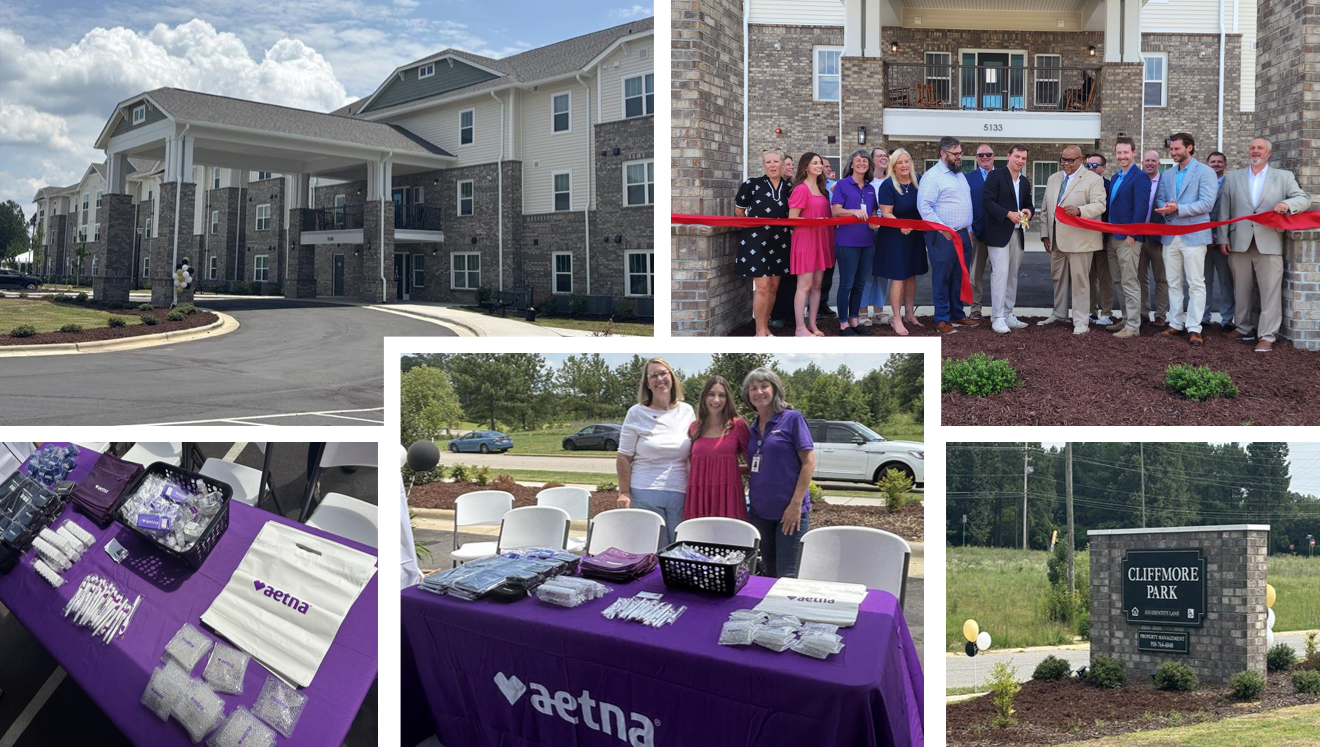
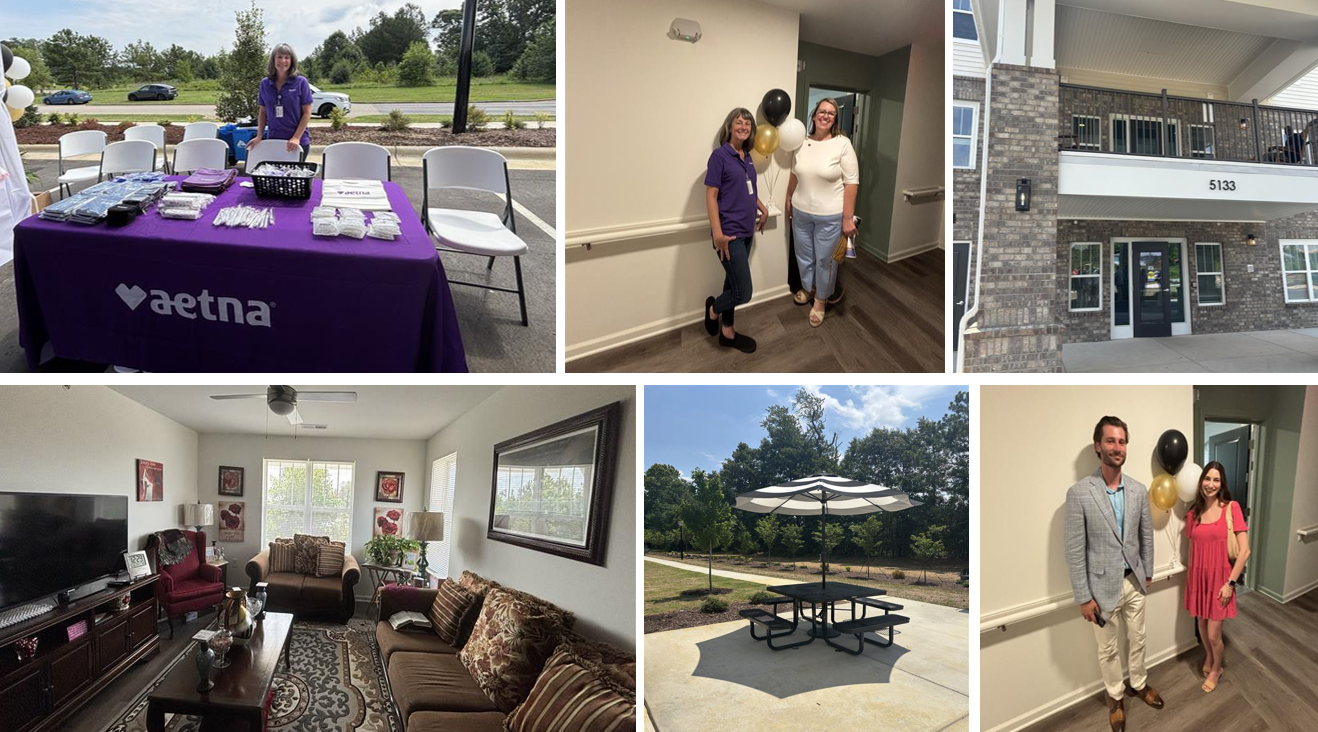
On June 26, 2026, we proudly celebrated the Grand Opening of Cliffmore Park in Fayetteville, North Carolina, alongside amazing colleagues, local leaders, and development partners. Cliffmore Park is a newly constructed 72-unit community designed for seniors. Following the devastating impacts of Hurricane Matthew in 2016 and Hurricane Florence in 2018, which caused the destruction of many homes in the Fayetteville area, the development of Cliffmore Park was designed to support the rebuilding of the community. The project was awarded a prestigious Community Development Block Grant through the Disaster Recovery program administered by the U.S. Department of Housing and Urban Development. We are proud to play a role in delivering thoughtfully designed homes and were honored to celebrate this exciting achievement!

CVS Health‑Aetna is proud to support developments like Cliffmore Park, which reflect our commitment to strengthening communities and showcasing that Housing is Health Care. Developments like this remind us of the lasting impact our work has in the neighborhoods where we live and serve.

Grand opening photo collagegrand opening photo collage

On Sunday, June 28, AEG’s LA Kings hosted a ball hockey Jamboree at Charles Wilson Park in Torrance, bringing together over 100 youth participants for a day of competition, teamwork and community engagement. Held at the park’s roller hockey rink, the event featured two age-based tournaments — one for children ages eight and under and another for youth ages 12 and under.

Throughout the day, players were assigned to teams and competed in a series of closely contested games culminating in championship matchups. Guided by LA Kings Hockey Development coaches and volunteers from LA Kings STREET leagues across Los Angeles, participants had the opportunity to sharpen their skills while learning the values of collaboration, perseverance and sportsmanship. The event demonstrated the power of sport to connect young people from diverse backgrounds and foster a sense of belonging both on and off the playing surface.

The Jamboree also underscored the impact of LA Kings STREET, the organization’s flagship ball hockey initiative, implemented in partnership with local operators, the National Hockey League (NHL) and RCX Sports. Designed to expand access to hockey, the program addresses some of the sport’s most significant participation barriers — the need for skating experience, access to an ice rink and the high costs traditionally associated with play.

Through community-based programming like the STREET Jamboree, the LA Kings continue to advance their commitment to youth development and equitable access to sport, introducing a new generation of players to hockey regardless of background or financial circumstance.

To learn more about LA Kings STREET click here.

NEW YORK and LONDON, July 13, 2026 /3BL/ – AccountAbility is pleased to share the release of a new article with Capital Finance International (CFI) Boards and AI: From Oversight to Insight – authored by AccountAbility CEO Sunil (Sunny) A. Misser.

The article examines how artificial intelligence (AI) is beginning to reshape board effectiveness and corporate governance. As directors face growing responsibilities spanning technology, risk, sustainability, geopolitics, and regulation, the demands placed on boards continue to increase.

Against this backdrop, the piece explores how AI can improve the quality, speed, and depth of board oversight, while strengthening directors’ ability to focus on strategic and judgement-based decision-making. It also addresses practical questions surrounding adoption, including where AI can add value, where human oversight must remain central, and how organizations can approach implementation responsibly.

Importantly, AI should inform board decisions, not make them. 

“AI will not make the decisions. It leaves those who do better prepared and more capable of doing so,” said Sunny Misser, Chief Executive Officer of AccountAbility. 

The article explores several themes shaping the future of board effectiveness and governance, including:

  • Using AI to help directors distill & digest information and ask targeted questions. 
  • Supporting more informed and independent oversight. 
  • Freeing up valuable “board time” for judgement-based decision-making. 
  • Enabling “evidence-based” evaluation of directors and management. 
  • Ensuring that AI informs decisions without replacing human judgement. 

As organizations continue to navigate the opportunities and challenges presented by AI, the article offers a practical perspective on its role in the boardroom of the future.

The full CFI article can be found here.


About AccountAbility 

AccountAbility is an expert international Sustainability Advisory and Standards firm. Established in 1995 and structured as a Public Benefit Corporation, we work with businesses, investors, governments, and multilateral organizations to innovate and lead the global sustainability agenda by improving the practices and performance of organizations. We focus on delivering practical, effective, and enduring results that enable our clients and standards users to succeed.

AccountAbility operates globally from offices in New York, London, Riyadh, and Dubai, supported by a highly qualified team recognized by the Financial Times, Forbes, and Capital Finance International. AccountAbility is also acknowledged in the U.S. Library of Congress as a source of ESG & sustainability research and thought leadership.


About CFI.co

CFI.co (Capital Finance International) helps professional readers identify the ideas, institutions, leadership models, and investment opportunities that drive durable, inclusive growth and economic convergence.

Since 2012, we have reported on the forces reshaping the global economy for an international audience of executives, institutional investors, policymakers, and strategic decision-makers. We believe the old distinction between “emerging” and “developed” markets is becoming less useful. What matters more is understanding which strategies, organisations, and leaders are expanding opportunity, narrowing divides, and creating lasting value. We do not simply describe change. We explain what is working, why it works, what risks could undermine it, and what others can learn from it.

For media inquiries or further information, please contact:


Mr. Jon Damon

jon.damon@accountability.org 
Chief Operating Officer 
AccountAbility

Website: www.accountability.org

Originally published in GoDaddy’s 2025 Global Stakeholder Impact Report

In my first year as GoDaddy’s Chief People Officer, I was inspired by how our employees bring our purpose to life. Our belief that opportunity should be inclusive for all is more than an aspiration. It shows up in how our teams collaborate, support one another, and serve the customers who trust GoDaddy to help them grow their businesses. 

This focus is reflected throughout GoDaddy’s 2025 Global Stakeholder Impact Report. The report highlights progress grounded in transparency, trust, and shared accountability, and it connects the employee experience, including engagement, growth, wellbeing, and belonging, to outcomes that matter to our customers. 

Building an Inclusive Foundation 

For more than a decade, GoDaddy has publicly shared workforce representation and pay parity outcomes because we believe trust is built through consistent, transparent disclosure. In 2025, we again achieved gender pay parity globally and race and ethnicity pay parity in the United States, reinforcing our focus on fair compensation. 

Pay parity reflects the kind of environment we work to build. When people trust that systems are fair, they can focus on innovation and collaboration, build skills, and contribute in ways that advance our mission. That foundation supports strong teams and helps us deliver for customers and stakeholders.

Preparing Our People for the Future of Work

As the workplace evolves, expanding opportunity means preparing our people for new ways of working. In 2025, we focused on building practical AI capabilities through inclusive learning and experimentation. This work supports our broader focus on continuous learning, leadership development, and career growth so employees can build skills alongside our business.

Moving Forward, Together

Our people remain at the center of every decision we make. In the year ahead, our employees will continue to integrate AI into daily tasks, aiming to boost efficiency and shorten cycle times. We will continue investing in AI skill development, wellbeing, and safety because when people feel supported and connected, they are best equipped to help our customers succeed.

I am proud of the progress reflected in this report and grateful to every employee who makes it possible. Guided by our purpose, we will continue advancing this work together.

Sarfraz Nakai
Chief People Officer, GoDaddy

Learn more about GoDaddy’s 2025 Global Stakeholder Impact Report

About this Report

The GoDaddy 2025 Global Stakeholder Impact Report details our progress toward our corporate sustainability goals, strategies, and initiatives in support of our overarching purpose and values. Unless otherwise noted, this report reflects our corporate sustainability performance across our global operations covering the fiscal year period from January 1 to December 31, 2025. To demonstrate our commitment to transparent communication regarding our sustainability progress, we routinely share updates through our website and our annual reporting. We welcome your questions, comments, and feedback on this report by contacting ESG@GoDaddy.com.

This report references the Global Reporting Initiative Standards, includes select Sustainability Accounting Standards Board metrics for the Internet Media and Services sector, and the Task Force on Climate Related Financial Disclosures. We also disclose our contributions and progress toward priority UN SDGs. For additional information on how we align with these frameworks and key indicators demonstrating our sustainability performance, please refer to the Frameworks & Metrics section.

About GoDaddy

GoDaddy, the world’s largest domain name registrar, helps millions of entrepreneurs globally start, grow, and scale their businesses. People come to GoDaddy to name their idea, build a website and logo, sell their products and services and accept payments. GoDaddy Airo®, the company’s AI-powered experience, makes growing a small business faster and easier by helping them to get their idea online in minutes, drive traffic and boost sales. GoDaddy’s expert guides are available 24/7 to provide assistance. To learn more about the company, visit www.GoDaddy.com.

Privacy Overview

This website uses cookies so that we can provide you with the best user experience possible. Cookie information is stored in your browser and performs functions such as recognising you when you return to our website and helping our team to understand which sections of the website you find most interesting and useful.