Published by Las Vegas Sands on June 23, 2026

LAS VEGAS, July 14, 2026 /3BL/ – Las Vegas Sands (NYSE: LVS) has contributed $300,000 to Nevada Partnership for Homeless Youth (NPHY), bringing its total contributions for NPHY’s programs to address the growing population of youth experiencing homelessness in Clark County and the nonprofit’s role in spearheading the statewide Movement to End Youth Homelessness to $3.2 million since 2014.

In 2025, Nevada’s first statewide study on youth homelessness found that almost 3,000 unaccompanied youth across Nevada accessed homeless services in one year. The study also examined young people falling through the cracks of systems and determined that the true number of young people experiencing homelessness across the state could be as high as more than 33,000 in a single year. At the same time, NPHY also has experienced unprecedented levels of uncertainty regarding government funding at federal and local levels.

Sands’ focus on helping end youth homelessness is one of the company’s top community engagement priorities at corporate headquarters, and the 2026 Sands Cares investment supports three foundational areas: funding programs for youth in crisis; providing capacity-building support to facilitate NPHY’s growth; and continuing to underwrite NPHY’s leadership of Nevada’s Movement to End Youth Homelessness.

With Sands Cares’ support, NPHY served 726 individual youth in 2025 across its core programs, the most youth the organization has ever assisted in one year, and made more than 17,000 contacts with youth in need via outreach efforts. NPHY’s emergency shelter also is now one of the only privately funded emergency shelters in Southern Nevada and the only shelter that serves unaccompanied minors experiencing homelessness.

“Sands has been a transformational partner for more than 10 years, consistently supporting our vision to be Nevada’s leading advocate and service provider for youth experiencing homelessness,” Arash Ghafoori, CEO of NPHY, said. “The company has helped us give youth in crisis a pathway to stability while fueling our vision toward lasting solutions that overcome one of the most critical issues in our community and state. Our partnership is again leading us toward another milestone as we kick off development of the state’s first stand-alone plan to end youth homelessness this year and bring statewide stakeholders together to contribute to this work at the 10th annual Nevada Youth Homelessness Summit in November.”

The 2026 Sands Cares contribution to NPHY continues the company’s long-standing support for the following initiatives.

Providing Immediate Relief to Youth in Crisis: A portion of the Sands Cares funding is underwriting NPHY’s comprehensive continuum of care for young people experiencing homelessness, which includes outreach efforts, Safe Place mobile crisis intervention, family reunification, the drop-in center, and housing programs spanning emergency shelter, transitional housing and rapid-re-housing. This year’s Sands Cares funding is enabling NPHY to work on increasing emergency shelter beds by 50% without changing or increasing its shelter staffing model.

Capacity-Building to Strengthen NPHY: NPHY is restructuring functions previously housed under a central development department into three entities: a development department; an impact, systems and policy department; and an advocacy and communications department. Separating these functions will enable the organization to best capitalize on development and communication opportunities while focusing other staff on leading systems-level work. Sands Cares funding is empowering this transition through underwriting of staffing and other infrastructure needs.

Advocating for Lasting Solutions and Systemic Change: The third component of the Sands Cares donation is continued investment in NPHY’s leadership of the statewide Movement to End Youth Homelessness, including Sands’ co-presentation of the 2026 Nevada Youth Homelessness Summit with NPHY. Other NPHY activities supported through this funding include launching the statewide process to create Nevada’s first standalone plan to end youth homelessness, establishing the first statewide Movement Youth Action Board, establishing and supporting regional youth action boards across the state, bringing Movement Institute trainings to northern Nevada for the first time, and continuing advocacy to strengthen higher education access for vulnerable young people.

“Our commitment to ending youth homelessness remains strong – yet the challenges have only gotten stronger as incidence rates in our state continue to rise,” Ron Reese, senior vice president of global communications and corporate affairs, said. “We cannot rest on what has been done in the past if we are to ensure safety nets are in place for our most vulnerable youth. NPHY continues to evolve solutions to help youth in crisis move beyond their situations and has a sound vision for how our state can mobilize to end youth homelessness. That’s why we continue to invest in their mission.”

To learn more about Sands Cares, visit sands.com/responsibility/communities/.

To learn more about Nevada Partnership for Homeless Youth, visit https://nphy.org/.

About Nevada Partnership for Homeless Youth

NPHY is the most comprehensive service provider for the thousands of homeless youth in Southern Nevada, serving hundreds of youth through core programs and touching the lives of thousands more through outreach each year. NPHY’s programs stabilize homeless teens’ lives, meeting their immediate needs and providing a safe, supportive environment and a path to self-sufficiency. Through work with homeless youth, NPHY creates productive, healthy adults who contribute to society. Strengthening and complementing the high-quality direct services for homeless youth, NPHY is dedicated to advocating with and for the Las Vegas Valley’s homeless youth population and serves as a leader in systems-level efforts to eliminate homelessness among Nevada’s youth. For more information or to support our life-changing work for homeless youth, please visit www.nphy.org.

About Sands (NYSE: LVS)

Sands is the leading global developer and operator of integrated resorts. The company’s iconic properties drive valuable leisure and business tourism and deliver significant economic benefits, sustained job creation, financial opportunities for local businesses and community investment to help make its host regions ideal places to live, work and visit.

Sands’ portfolio of properties includes Marina Bay Sands® in Singapore and The Venetian® Macao, The Londoner Macao®, The Parisian® Macao, The Plaza® Macao and Four Seasons® Hotel Macao, and Sands® Macao in Macao SAR, China, through majority ownership in Sands China Ltd.

Dedicated to being a leader in corporate responsibility, Sands is anchored by the core tenets of serving people, communities and the planet. The company’s ESG leadership has led to inclusion on the Dow Jones Best-in-Class Indices for World and North America, as well as Fortune’s list of the World’s Most Admired Companies. To learn more, visit www.sands.com.

Contacts:

Kristin Koca
Sands Nevada
702.923.9142
Kristin.Koca@sands.com

Lanette Rivera
Partnership for Homeless Youth
702-688-1013
lanette@nphy.org
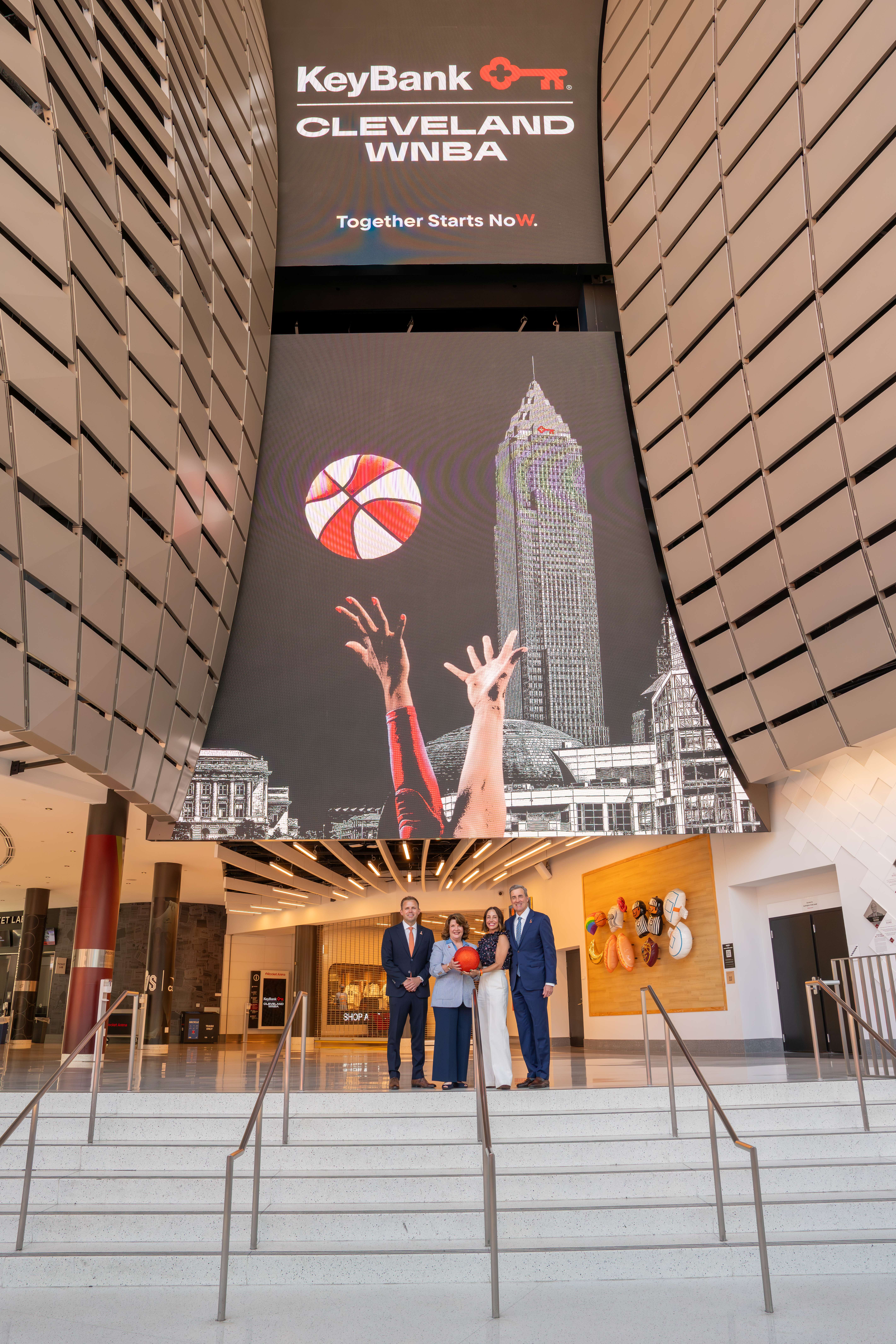
CLEVELAND, July 14, 2026 /3BL/ – The Cleveland WNBA today announced KeyBank, Northeast Ohio’s hometown bank, as its first Founding Partner. The new, multiyear partnership establishes the financial institution as the team’s official and exclusive retail banking partner. As a founding partner, KeyBank will help shape the fan experience from the franchise’s earliest days through its inaugural 2028 season and beyond.

A cornerstone of the partnership is KeyBank’s sponsorship of the franchise’s membership platform, the home for the team’s most loyal fans. As the presenting partner of the platform, KeyBank will provide Cleveland WNBA fans who have made the initial $28 membership deposit with exclusive benefits, including exclusive seating area at the team’s brand unveil later this summer along with early access to the post-launch retail drop. Cleveland WNBA currently has nearly 9,000 initial payments as momentum continues to build ahead of the team’s debut at Rocket Arena in 2028.

people standing on top of stairs at event

“Establishing our first foundational partnership with KeyBank, with a focus on our membership platform, reflects how deeply committed we are to collectively investing in unforgettable experiences for our fans, whose passion and belief in the return of the WNBA to Ohio has been clear since day one,” said Allison Howard, Cleveland WNBA, President of Business Operations. “Partnering with this trusted hometown brand strengthens the momentum behind our shared mission to create opportunity, expand access and deliver moments that matter for communities across Ohio and the region.”

KeyBank and Cleveland WNBA will collaborate annually on a signature community impact program, extending the partnership beyond the arena and into neighborhoods across the region. This dedicated program will reinforce a shared commitment to deepening community connection and driving meaningful, long-term investment in Cleveland.

“I’ve long believed in the power of women’s sports, not only as a platform for incredible athletes, but as a force for bringing people together and strengthening communities,” said Trina Evans, Chief of Staff and Director of Corporate Center, KeyBank. “As a Founding Partner of Cleveland WNBA, KeyBank is proud to support the return of professional women’s basketball to our hometown and help create new opportunities for connection, economic vitality, and enduring pride across Northeast Ohio.”

Additionally, beginning with the team’s inaugural season in 2028, KeyBank will expand its presence with in-game moments that create memorable experiences for members and fans at Cleveland WNBA games at Rocket Arena. The marquee activation includes serving as presenting partner of the High-Five Tunnel, where lucky fans will get a close-up view of the team and court during warmups. KeyBank will also serve as presenting partner for one theme night and associated fan giveaway each season.

###

ABOUT CLEVELAND WNBA

Cleveland WNBA is the 16th franchise in the Women’s National Basketball Association (WNBA). The team, operated by Rock Entertainment Group, will begin play in the 2028 season at Rocket Arena, downtown Cleveland’s premier 19,000-seat venue, which is also home to the NBA’s Cleveland Cavaliers and AHL’s Cleveland Monsters. Cleveland WNBA will train at their own dedicated and premier 52,000-square-foot performance center in Independence, Ohio. The Cleveland WNBA is a part of Rock Entertainment Group, the umbrella entity for the sports and entertainment properties under Chairman Dan Gilbert’s ROCK Family of Companies. Nic Barlage serves as the CEO of Cleveland WNBA, Rocket Arena and Rock Entertainment Group, and Allison Howard leads Cleveland WNBA as President of Business Operations.

ABOUT KEYBANK

KeyCorp’s roots trace back more than 200 years to Albany, New York. Headquartered in Cleveland, Ohio, Key is one of the nation’s largest bank-based financial services companies, with assets of approximately $189 billion at March 31, 2026.

Key provides deposit, lending, cash management, and investment services to individuals and businesses in 15 states under the name KeyBank National Association through a network of approximately 950 branches and approximately 1,100 ATMs. Key also provides a broad range of sophisticated corporate and investment banking products, such as merger and acquisition advice, public and private debt and equity, syndications and derivatives to middle market companies in selected industries throughout the United States under the KeyBanc Capital Markets trade name. For more information, visit https://www.key.com/. KeyBank Member FDIC.

Media Contact: 

Daijha Johnson 
Djohnson@cavs.com

Meg Lower
KeyBank, Regional Communications Manager
Meg_lower@keybank.com

260709-4710278

Originally published in Wesco’s 2026 Sustainability Report

At Wesco, sustainability is integral to how we operate, grow and create long-term value. It shapes our strategy, informs our decisions, and guides how we serve customers, support our people and engage with communities around the world. As global demand accelerates for more resilient, efficient and connected infrastructure and supply chains, our role — and our responsibility — has never been more important.

In 2025, Wesco continued to make meaningful progress amid powerful secular trends including digitalization, power generation and reliability, and supply chain resiliency. These forces are reshaping energy systems, industrial operations and data-driven environments worldwide. Wesco sits at the center of these ecosystems, enabling solutions that help customers build, connect, power and protect critical infrastructure more safely and sustainably.

Our portfolio of products, services and solutions supports customers as they modernize power grids, deploy data centers, advance automation and improve building intelligence. At the same time, we are transforming our own operations through a multi-year digital transformation to improve efficiency, strengthen supply chain resilience and reduce waste. By leveraging data, analytics and technology at scale, we are embedding sustainability into the way we operate every day.

Our people remain the foundation of our success. In 2025, we continued to invest in a safe, inclusive and engaging workplace – one that equips our teams with the skills needed to succeed in a rapidly evolving, digital-first environment. Recognition as a Great Place to Work® and continued external recognition for our culture reflect our commitment to supporting our employees and leading with integrity.

Beyond our operations, Wesco is committed to making a positive impact in the communities we serve. Through our Wesco Cares program, employees around the world support disaster relief, education, workforce development and housing initiatives. Their generosity, volunteerism and civic leadership demonstrate our values in action and reinforce our belief that strong communities are essential to long-term success.

Strong governance is our foundation. Our Board of Directors and Leadership team remain focused on ethical conduct, responsible capital allocation, effective enterprise risk management and transparent engagement with stakeholders. These principles are essential to maintaining trust and delivering sustainable performance over time.

As we look ahead, we recognize that sustainability is a continuous journey. The challenges facing our world – supply chain complexity, workforce transformation and technological changes — require focus, collaboration and accountability. Wesco has entered 2026 with positive momentum, a clear strategy and a steadfast commitment to responsible growth.

This report outlines our approach, priorities and progress. I thank our employees, customers, suppliers and partners for their continued trust as we work together to build a more sustainable future.

Read Wesco’s full 2026 Sustainability Report here

​​Your brain controls everything from how you move and speak to how you think, remember, and experience the world. But when blood flow is disrupted, the impact can be immediate and life changing. Conditions such as stroke and aneurysm affect millions of people each year, yet many still don’t recognize the warning signs, understand risk factors, or realize how dramatically technology is transforming treatment options.  

​In this conversation from our Health Care Untapped  series,  Linnea Burman, SVP and President of Neurovascular at Medtronic, joins neurosurgeon and Chief Medical Officer Dr. Adam Arthur to explore the future of neurovascular care. From minimally invasive procedures to advances in imaging and artificial intelligence, they explore how innovation is reshaping neurovascular treatment — and why faster diagnosis and treatment can make all the difference. 

This interview has been edited for length and clarity.

Linnea Burman: When you tell someone you’re a neurosurgeon, what’s the first question you’re typically asked?  
Dr. Adam Arthur : “Are you for real?” Seriously. I think a lot of people understand that the brain is fascinating and that we know so little about it. There’s fascination about what it’s like to operate on the brain. Specifically: How do you do that? How do you get there? 

​Burman: I think that would probably fascinate a lot of people. How do you access the brain?  
Dr. Arthur: We still do open brain surgery, which is at least 7,000 years old, where we make an incision and use a saw and drill to open the skull and operate with a microscope. But in neurovascular care today, we also have minimally invasive approaches that allow us to access the brain without opening the skull — through small punctures in the wrist or leg arteries using advanced imaging techniques. Patients often experience less pain, less inconvenience, and shorter hospital stays. 

​Burman: How has the transition from open surgery to minimally invasive procedures changed over your career?  
Dr. Arthur: It’s been massive. When I started training, neurovascular procedures were mainly used for imaging. Then they became important in treating aneurysms, and later there was a huge revolution in treating ischemic stroke by removing blood clots blocking blood flow to the brain. Now we’re exploring treatments for additional conditions like chronic subdural hematoma and potentially even refractory migraine. 

Burman: Most people have heard of stroke, but can you explain conditions like aneurysms and chronic subdural hematomas?  
Dr. Arthur: You can think of arteries as hoses that bring blood to the brain. An aneurysm is essentially a weak spot on that hose, like a water balloon forming on the side. Many aneurysms never rupture, but when they do, it can be devastating. A chronic subdural hematoma occurs when blood accumulates between the brain and skull, often related to aging and sometimes small trauma. 

Burman: How do lifestyle factors impact brain and neurovascular health?  
Dr. Arthur: I like to call sleep, diet, and exercise the “holy trinity” of lifestyle. Those three things have a tremendous impact on the likelihood of stroke or aneurysm. Nicotine is certainly harmful as well. You can still experience these conditions while living a healthy lifestyle, but it’s important to prioritize rest, recovery, good nutrition, and staying active. 

​Burman: When someone is having a stroke, what is actually happening in the brain?  
Dr. Arthur: With ischemic stroke, there’s a blockage in an artery delivering oxygen and blood to the brain. Patients may experience facial drooping, slurred speech, or weakness in the arms. The key is restoring blood flow quickly because once brain tissue is lost, it doesn’t grow back. Patients may lose as many as 2 million neurons per minute during a stroke. 

​Burman: I think many people know that a stroke can be disabling. How much time do patients really have?  
Dr. Arthur: Time is critical. There’s an area of brain tissue that dies quickly, but there’s also surrounding tissue, what we call the penumbra, that’s still salvageable if blood flow is restored fast enough. If you notice problems with speech, movement, or facial drooping, it’s important to seek medical attention immediately. 

​Burman: Globally, how many people experience a stroke each year?  
Dr. Arthur: About 12 million people every year. Because stroke symptoms can vary and patients can’t always communicate what they’re experiencing, there’s a tremendous opportunity to reduce disability through awareness and faster intervention. 
Burman: Stroke is only the third leading cause of death, but it’s the leading cause of disability. The impact extends beyond the patient to families and caregivers who often need to step in and provide long-term support. 

​Burman: True or false: Stroke can affect women differently than men.  
Dr. Arthur: True. Women are less likely to receive timely care and more likely to experience poor outcomes. We still have work to do in understanding why and improving systems of care. 

​Burman: Can strokes only happen to older adults?  
Dr. Arthur: False. Stroke can affect people of all ages, including children. 

​Burman: What’s a symptom many people don’t realize is connected to the brain?  
Dr. Arthur: Whooshing sounds in the ear, medically known as pulsatile tinnitus. Some people experience it so severely that it interferes with daily life, and in some cases, it’s linked to neurovascular conditions that can be treated .

​Burman: There’s a lot of conversation around AI right now. How is AI impacting neurovascular care?  
Dr. Arthur: AI is helping us identify patients who need intervention faster and helping improve the safety and effectiveness of devices used in the brain. 

​Burman: As a health tech leader, where do you see technology taking neurovascular care?  
Dr. Arthur: I’m excited about how we’re using clinical study data, imaging, and machine learning to better understand device performance in patient anatomy over time. It’s helping us design better devices and predict performance with greater confidence. 

Burman: How do you balance innovation with safety when working so closely to the brain?  
Dr. Arthur: Every innovation must be carefully tested through multiple models and ongoing clinical research to ensure solutions are as effective and safe as possible for patients. 

​Burman: If I were diagnosed with one of these conditions, what questions should I ask my physician?  
Dr. Arthur: Ask how the technology has been tested and whether your unique medical situation presents any specific considerations. I also think it’s valuable to ask your doctor: “If you were the patient, what option would you choose?”

Watch the Health Tech Untapped video here, and learn more here.

Linnea Burman is a leader in neurovascular health and healthcare technology at Medtronic.  Her work focuses on advancing innovation in stroke care, neurovascular therapies, and technologies that support better patient outcomes worldwide. 

​Dr. Adam Arthur has more than 20 years of experience specializing in neurovascular and minimally invasive brain procedures.  Arthur is Chief Medical Officer for Medtronic Neurovascular and a past chair of neurosurgery at University of Tennessee Health Science Center.  He currently practices at the Semmes Murphey Clinic in Memphis, Tennessee, and is the principal investigator on multiple multicenter international clinical trials. 

Published on June 16, 2026 

Privacy Overview

This website uses cookies so that we can provide you with the best user experience possible. Cookie information is stored in your browser and performs functions such as recognising you when you return to our website and helping our team to understand which sections of the website you find most interesting and useful.