
BELLEVUE, Wash.–(BUSINESS WIRE)–Symetra received the 2026 Community Champion Award from the Puget Sound Business Journal at the Corporate Citizenship Awards in Seattle on May 12th.
Month: May 2026
May 27, 2026 /3BL/ — On the eve of World Hunger Day, a broad-based coalition of farmers, protein producers, hunger advocates and others announce the Coalition to Close the Protein Gap, a $40 million public-private initiative to permanently close America’s 800-million-pound annual charitable protein gap and deliver up to 3 billion protein-rich meals to American families every year.
“Millions of American families are going without the protein they need, and our farmers are already raising it. The protein gap shouldn’t exist,” said Tony Robbins, hunger advocate and leader of the 100 Billion Meals Challenge. “The Coalition to Close the Protein Gap is building a permanent solution. I am proud to stand with every farmer, company, and leader putting real commitment behind this.”
Robbins’ involvement with the Coalition builds on his history of fighting food insecurity—providing more than a billion meals across the United States in the last 12 years. Working alongside HATCH and coalition partners, Robbins is elevating awareness of America’s protein insecurity crisis and mobilizing public engagement around the Coalition’s mission to expand access to high-quality protein.
Today, protein is the most requested food in the charitable food system, but only 14% of food distributed, leaving many without access to this essential nutrient. The biggest barrier to closing the gap is improving accessibility and logistics to support distribution. The Coalition will provide $40 million in funding to expand cold storage and infrastructure. In addition, America’s farmers and protein producers are stepping up to supply protein into the food relief system and bridge the 800-million-lb gap.
Closing the protein gap is not something any one of us can do alone; everyone plays a critical role in this effort. The CDC Foundation, in partnership with HATCH, is launching The Missing Piece, a nationwide crowdfunding campaign with a simple ask: Be the Missing Piece in closing the protein gap. Donations will help build the infrastructure needed to move more high-quality protein through HATCH’s proven nationwide distribution network, supporting the goal of delivering up to 3 billion protein-rich meals annually to communities across the country. Readers can visit ClosetheProteinGap.org to donate.
Infrastructure and logistics will be implemented by HATCH, the nation’s largest nonprofit addressing protein insecurity. Operating for over a decade, HATCH sources protein directly from U.S. farmers without reliance on ongoing donations, manages cold-chain logistics, and delivers to food banks using a self-sustaining model. The organization operates without reliance on ongoing donations, delivering over 102 million meals across 120 food banks nationwide in 2025.
“A decade of operations taught us one thing: supply alone doesn’t close the gap, and infrastructure alone doesn’t close the gap. They must move together. The supply exists, and HATCH consistently and reliably gets it where it needs to go. The Coalition will align supply and infrastructure at a scale that finally makes closing the gap possible,” said Daniel Leckie, CEO of HATCH.
Improving access to wholesome, nutritious protein to ensure Americans can Eat Real Food has meaningful implications for public health, healthcare costs, and economic stability.
“This is a monumental moment to create lasting change that will impact Americans for generations. It’s the most meaningful alignment between government, agriculture, and the hunger community I have seen in my career,” said Jeff Simmons, CEO of Elanco Animal Health and HATCH Board Chairman. “The protein industry has the supply, the scale, and the will. What it has needed is the right infrastructure to connect that supply to the families who need it. I’m incredibly grateful to HHS and the USDA, as well as America’s farmers and the U.S. protein industry for joining the Coalition to Close the Protein Gap. Their partnership, paired with HATCH’s proven delivery model, will get more high-quality protein into communities across the country and permanently close the protein gap—without reliance on ongoing donations.”
America’s leading protein checkoff organizations and other national producer groups stand united behind the Coalition. The Coalition is designed as a long-term demand channel that turns American supply into nutrition outcomes for American families. The Coalition list continues to grow; current members include Cargill, Case Farms, Elanco, Hilmar Cheese, Koch Foods, Mountaire Farms, MPS Egg Farms, Perdue Farms, Rose Acre Farms, Simmons Foods, and Tyson Foods, with the support of American Egg Board, National Cattlemen’s Beef Association, National Chicken Council, National Milk Producers Federation, National Pork Producers Council, National Pork Board, National Turkey Federation, and Wayne-Sanderson Farms.
###
ABOUT THE COALITION TO CLOSE THE PROTEIN GAP
Founding Coalition partners include HHS, USDA, the CDC Foundation, the nation’s leading beef, pork, poultry, egg, dairy, and turkey checkoff and producer organizations, and hunger advocates. Together, the Coalition’s partners are committing the supply, the infrastructure, and the capital to deliver 3 billion protein-rich meals a year — and finally close America’s protein gap for good.
ABOUT HATCH
Founded in 2015, HATCH is on a mission to make lasting access to complete nutrition a reality for every community. Through partnerships with hunger relief organizations nationwide, HATCH helps deliver fresh, high-quality protein to families who need it most—creating stability, dignity, and nourishment where it’s often hardest to find. Guided by its “1, 2, 3 Vision,” HATCH is building a future where nutritious food is not a privilege, but a shared foundation for stronger, healthier generations to come. Follow HATCH on LinkedIn, Instagram and Facebook.
About Tony Robbins:
Tony Robbins is an eight-time #1 New York Times bestselling author, entrepreneur, peak performance coach, and life and business strategist. A recognized authority on the psychology of leadership, negotiations, and organizational turnaround, he has served as an advisor to leaders around the world for more than 40 years. He is also a philanthropist whose influence extends globally, positively impacting over 50 million individuals across 100 countries through his audio programs, educational videos, and live seminars.
Media Contact for Tony Robbins:
Jennifer Connelly
jconnelly@jconnelly.com
(646) 922-7755Hannah Kruger-Burton
HATCH for Hunger
hkburton@hatchforhunger.com
The future of global trade will be shaped not only by infrastructure, technology or investment – but by people.
As supply chains grow more complex and digital, the demand for new skills is accelerating across logistics, technology, sustainability and engineering. Yet millions of young people around the world still lack access to the education and opportunities needed to participate in the global economy.
For a company at the center of global trade, investing in education is not just a social initiative. It is a strategic investment in the future of supply chains.
At DP World, education is a core pillar of our sustainability strategy because building resilient trade systems starts with empowering the next generation.
The Skills Challenge Facing Global Trade
The global logistics sector is undergoing rapid transformation.
Automation, digital platforms, decarbonisation technologies and data-driven supply chains are reshaping how goods move around the world. These changes require a workforce equipped with new capabilities – from digital literacy and STEM expertise to sustainability and climate knowledge.
At the same time, the world faces a significant skills gap. Without access to quality education and training, millions of young people risk being left behind in an increasingly technology-driven economy.
This is why DP World focuses on expanding educational opportunities that build future-ready skills and career pathways for young people around the world.
Connecting Education with Opportunity
Education has the greatest impact when it connects learning directly to real-world opportunities.
DP World’s global education initiatives are designed to inspire young people, build practical skills and introduce students to careers in logistics, engineering and technology. By collaborating with schools, nonprofits and governments, the company supports vocational training, digital learning and scholarship opportunities that help young people prepare for the jobs of tomorrow.
These partnerships ensure that education is not just theoretical but aligned with the evolving needs of global industries.
Supporting the Global Education Agenda
Education sits at the center of the United Nations Sustainable Development Goals, particularly SDG 4: Quality Education, which aims to ensure inclusive and equitable learning opportunities for all.
DP World’s education programs directly support this goal by expanding access to learning resources and skills training worldwide. At the same time, initiatives also promote SDG 5: Gender Equality, helping ensure that women and girls have access to education and career opportunities in sectors traditionally dominated by men.
For industries like logistics and maritime, where gender gaps remain significant, empowering women through education is essential to building a more inclusive workforce.
Inspiring the Next Generation of Innovators
One of the most powerful aspects of education is inspiration.
DP World’s programs introduce students to the real-world impact of global trade—from how supply chains operate to how innovation can make them more sustainable. Educational resources and programs also emphasize STEM learning, digital skills and environmental awareness, helping students understand how technology and sustainability will shape the future economy.
These initiatives aim to spark curiosity and encourage young people to pursue careers where they can help transform industries and address global challenges.
Education as a Catalyst for Community Resilience
Education also plays a broader role in strengthening communities.
Through its wider sustainability strategy, “Our World, Our Future,” DP World invests in initiatives that empower people, create economic opportunity and support long-term community resilience.
By investing in education and skills development, companies can help create pathways to employment, entrepreneurship and leadership—unlocking opportunities that extend far beyond individual careers.
Collaboration Is Essential
Like many of the world’s biggest challenges, education cannot be solved by any one organization.
DP World works with a wide range of partners – from educational institutions to global nonprofits – to expand access to skills training and develop programs tailored to local needs. These collaborations ensure that educational initiatives are scalable, impactful and aligned with community priorities.
Through partnership, education can become a powerful driver of inclusive economic growth.
Building the Workforce of Tomorrow
The logistics sector is often described as the backbone of the global economy. But that backbone depends on people – engineers, technicians, digital specialists, sustainability experts and innovators.
Investing in education today means investing in the workforce that will design smarter ports, build greener supply chains and drive the next era of global trade.
For companies operating at the heart of global logistics, the responsibility is clear: empower young people with the knowledge, skills and opportunities they need to shape the future.
Because the future of trade depends not just on the movement of goods – but on the movement of ideas, talent and opportunity.
Learn more about DP World’s Investments in Education.
What types of global education programs does DP World offer?
At DP World, we provide various education programs, such as vocational training, scholarships, STEM initiatives, and digital learning platforms. These are aimed at enhancing skills and creating career opportunities globally. We are dedicated to continuing our support for the people and communities we serve.
How does DP World work with its education partners to enhance global education?
We work with education partners to support initiatives that enhance skills training, digital learning, and access to quality education worldwide. By collaborating with schools, nonprofits, and governments, we help develop vocational programs and scholarship opportunities. Our focus is empowering youth and underserved communities to acquire future-ready skills and improve their employment prospects globally.
How does DP World contribute to the Sustainable Development Goals (SDGs) related to education?
At DP World, we support various Sustainable Development Goals (SDGs) related to education, with SDG 4 being our primary focus on promoting inclusive and quality education for everyone. We also endorse SDG 5 by advocating for gender equality in underserved communities across the globe.
How does DP World support future leaders through its education program?
We empower future leaders through our education program by offering access to digital tools, STEM education, and career pathways. By collaborating with communities and partners, we equip youth with the skills needed to thrive in tomorrow’s economy, ensuring strong training through DP World.
Learn more about DP World’s Investments in Education.
At FedEx, our network connects people and possibilities across the globe every single day. But some of our most remarkable deliveries don’t just bridge miles—they bridge millions of years.
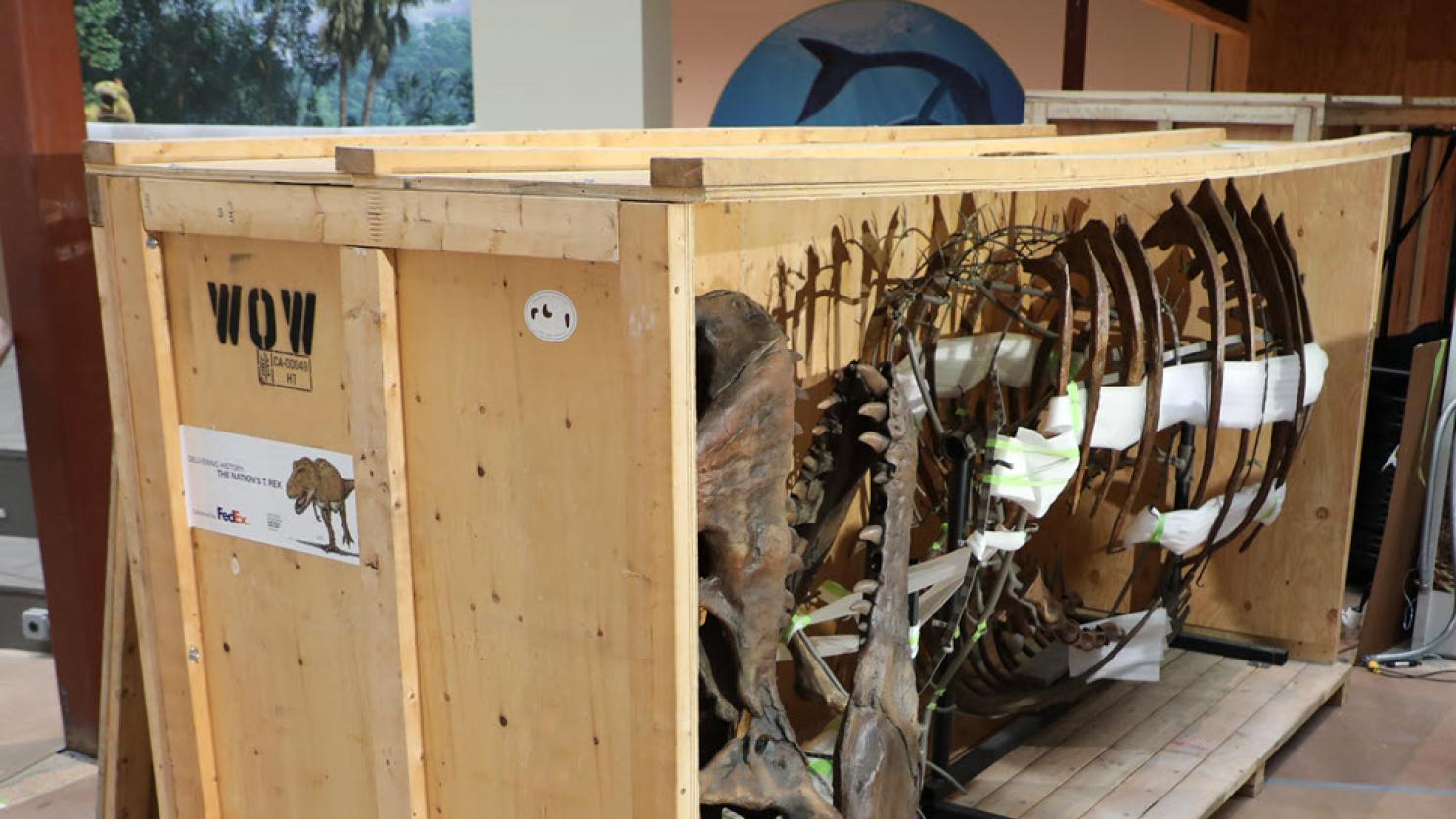
As FedEx joins in the celebration of America’s 250th anniversary, we are revisiting some of the most special deliveries we’ve made to the Smithsonian’s National Museum of Natural History. By helping to ensure the safe transport of these priceless objects, we help the museum tell the story of the natural world and our place in it. These deliveries have enabled significant additions to a vast collection of more than 148 million specimens and objects, helping researchers to uncover how the past helps shape our future.
They also provide the public with the incredible opportunity to explore the history of animals, dinosaurs and fossils, geology, gems and minerals, and human culture, inspiring the next generation of scientists and environmental stewards.
Moving delicate, millions-of-years-old fossils requires ultimate precision, care, and logistical expertise. FedEx has been entrusted with the safe transport of some of the most significant paleontological discoveries in the country to the National Fossil Collection.
Here is a look at the prehistoric VIPs we have recently guided on their journeys:
- The Nation’s T. rex & Friends: In one of our most massive prehistoric undertakings, the Nation’s T. rex and 700 of his fossil companions returned from a “dinosaur spa” in Canada in 2019 to be reinstalled at the David H. Koch Hall of Fossils – Deep Time. This world-class exhibition allows visitors to journey through ancient ecosystems and witness the evolution of plant and animal life across millions of years. From an ancient palm frond discovered in Alaska to a dramatic “fight to the death” between a T. rex and a Triceratops, this collection brings the prehistoric world to life in stunning detail.
- Paleogene Period Paleobotany: A rare collection of Paleogene Period plant fossils has been returned from the Yale Peabody Museum after three decades on loan. These fossils are essential tools for scientists studying how life recovered following mass extinctions, offering critical insights into both evolutionary biology and the long-term patterns of a changing climate.
- Devonian Period Paleobotany: We were honored to ship a remarkable new collection of Devonian Period plant fossils from UNC-Chapel Hill, donated by renowned American paleontologist Dr. Patricia Gensel. Her work has unlocked crucial insights into early land plant evolution. By safely delivering these fossils to be studied on site at the Smithsonian, FedEx is helping scientists research how plants have adapted in the past—and how they will continue to evolve in our changing world.
- Late Cretaceous Pterosaurs: Delivered from Bryan, Texas, we transported two rare pterosaur specimens from the Late Cretaceous age. Among these “winged lizard” specimens is a stunning 95-million-year-old fossilized jaw. It is incredible to imagine these creatures soaring over the present-day Dallas-Fort Worth area during the Cretaceous Period—an era when much of Texas was submerged beneath a massive ancient sea.
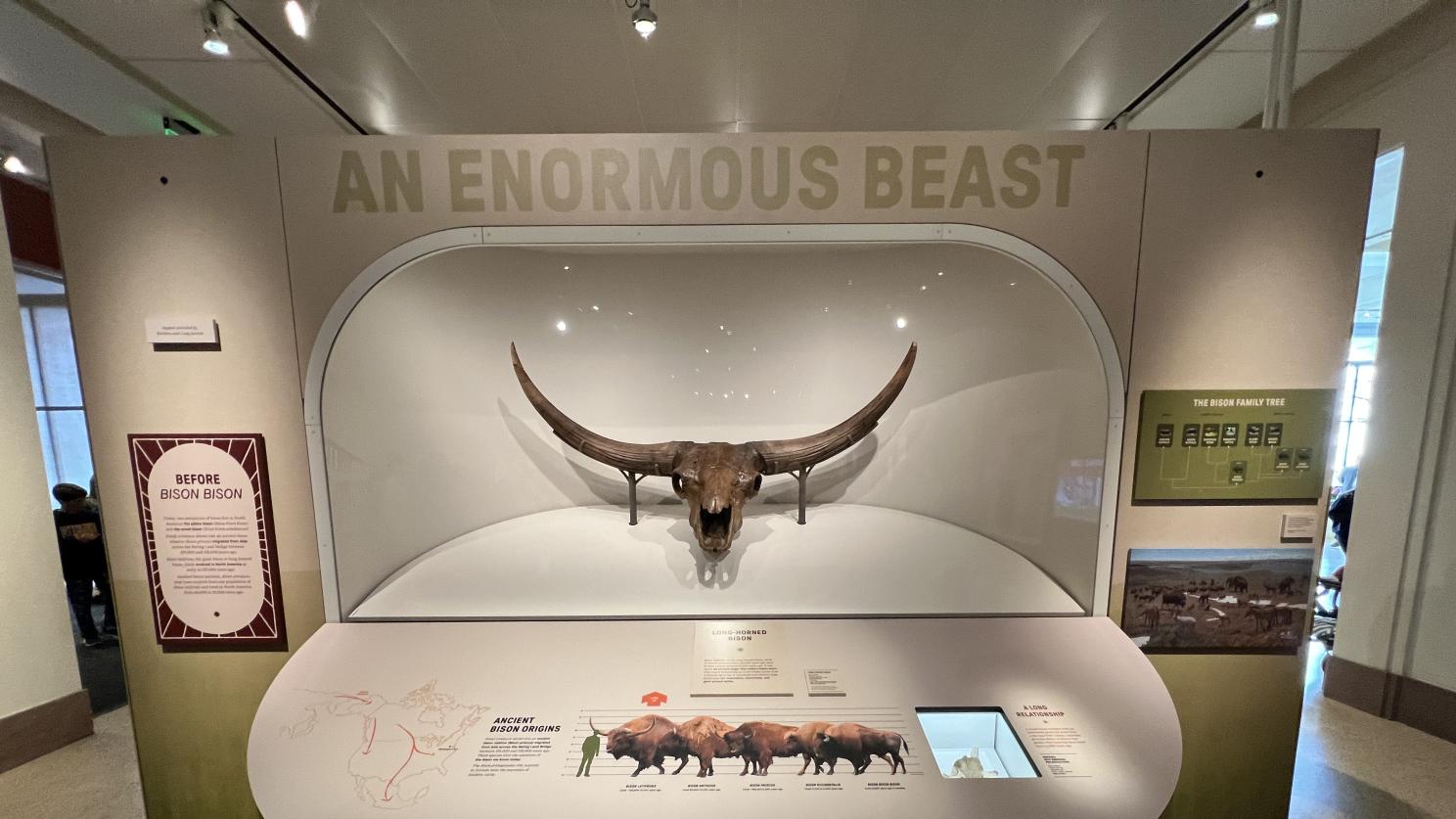
- “Junior” the Giant Bison: One of our most exciting passengers was “Junior,” a massive Bison latifrons skull. Discovered by Idaho’s first female paleontologist, Junior’s journey required custom crating and white-glove handling from our team to ensure the fragile fossil made the cross-country trek safely. Today, Junior stands proudly as a centerpiece of the Bison: Standing Strong exhibit. You can read the full story of Junior’s cross-country journey in the Smithsonian Magazine.
But the journey doesn’t stop with our prehistoric deliveries! In honor of the nation’s 250th anniversary, FedEx is incredibly proud to sponsor the Tennessee objects featured in the Smithsonian’s newly opened From These Lands exhibition. Running through December 2029, this sweeping exhibit explores America’s rich natural and cultural heritage through more than 600 collection objects. Many of these pieces are rare and have never been exhibited before, representing all 50 states, the District of Columbia, and the five U.S. territories that people call home.
Click here to learn about FedEx Cares, our global community engagement program.
NEW YORK, May 27, 2026 /3BL/ – MetLife and Global Citizen announced Footwork for Futures, a global soccer-themed social media challenge that supports children’s access to quality education and sports to foster more confident and resilient communities.
Footwork for Futures invites people to share a short video of themselves juggling – or attempting to juggle – a soccer ball on Instagram, LinkedIn, X, TikTok, or Facebook and include the hashtag #FootworkForFutures, or by submitting a video through the Global Citizen app. For each eligible video submission, MetLife will donate $5 to the FIFA Global Citizen Education Fund, up to $100,000, to help support access to quality education and sports for children through grants to community-based organizations around the world.
This social campaign builds upon MetLife Foundation’s $9 million contribution as a founding donor of the FIFA Global Citizen Education Fund. The fund gives grants to organizations in communities around the world that offer educational and sports programs. Footwork for Futures uses the excitement of this summer’s FIFA World Cup 2026TM to help organizations grow their initiatives, aiming to boost children’s confidence and strengthen communities.
“The FIFA Global Citizen Education Fund is proof of what’s possible when we unite the world’s love of football with the power of education to strengthen our communities,” said Nuria Garcia, Head of Global Sustainability, MetLife, and Chair, MetLife Foundation. “Footwork for Futures helps make that mission fun, real and accessible. Every video submitted is a meaningful step toward building more confident futures for young people around the world.”
Participation in Footwork for Futures is open to all individuals, regardless of skill, ability or experience, allowing each person to showcase their own approach to keeping a soccer ball in motion. The initiative runs from May 12 to July 19, 2026, or until donations reach $100,000. Submissions received after this period will be shared; however, they will not contribute to additional donations. Participants are encouraged, but not required, to nominate friends and family to join in.
All videos must follow the rules of the respective social media platforms and the campaign’s Terms & Conditions. To be eligible, each video must clearly display a real person safely and responsibly juggling (or attempting to juggle) a soccer ball. Global Citizen reserves the right to disqualify any entry that fails to meet these standards. For more information on how to participate visit: Footwork for Futures.
About MetLife
MetLife, Inc. (NYSE: MET), through its subsidiaries and affiliates (“MetLife”), is one of the world’s leading financial services companies, providing insurance, annuities, employee benefits and asset management to help individual and institutional customers build a more confident future. Founded in 1868, MetLife has operations in more than 40 markets globally and holds leading positions in the United States, Asia, Latin America, Europe and the Middle East. For more information, visit www.metlife.com.
About MetLife Foundation
At MetLife Foundation, we are committed to driving inclusive economic mobility. We collaborate with nonprofit organizations and provide grants aligned to three strategic focus areas – economic empowerment, financial health and resilient communities – while engaging MetLife employee volunteers to help drive impact. MetLife Foundation was established in 1976 and for 50 years has continued MetLife’s long tradition of community engagement and involvement. Since its inception, MetLife Foundation has contributed over $1 billion to strengthen communities where MetLife has a presence. To learn more about MetLife Foundation, visit www.metlife.org.
About Global Citizen
Global Citizen is the world’s largest movement to end extreme poverty. Powered by a worldwide community of everyday advocates raising their voices and taking action, the movement is amplified by campaigns and events that convene leaders in music, entertainment, public policy, media, philanthropy and the private sector. Since the movement began, more than $50 billion in commitments announced on Global Citizen platforms has been deployed, impacting 1.3 billion lives. Established in Australia in 2008, Global Citizen operates in the US, the UK, France, Germany, Spain, Switzerland, Brazil, Canada, Australia, South Africa, Nigeria, Ghana, Rwanda, the UAE, and across Asia. Join the movement at globalcitizen.org, download the Global Citizen app, and follow Global Citizen on TikTok, Instagram, YouTube, Facebook, X and LinkedIn.
Global Citizen:
media@globalcitizen.org
MetLife: Peggy Fries Carlton
peggy.f.carlton@metlife.com
Welcome to Advancing with Purpose, a video series featuring the people behind AMD corporate responsibility efforts.
In this video, Justin Murrill, Chief Sustainability Officer at AMD, discusses how AMD is advancing environmental sustainability across its operations, supply chain and broader value chain. He explains why setting ambitious goals, increasing renewable energy use and driving industry collaboration are important to building a more sustainable future.
Through personal stories like Justin’s, this series highlights how AMD employees are helping bring corporate responsibility to life across the company.
Learn more: https://www.amd.com/en/corporate/corporate-responsibility/environmental-sustainability.html
KeyBank Foundation presented Capital Roots with a grant of $750,000 over three years in support of the organization’s Cut Local Produce Program, a regional initiative increasing access to fresh, nutritious, locally sourced food across the Capital Region while strengthening opportunities for local farms and food producers.
The announcement was made during a special celebration and facility tour held at Capital Roots’ Food Hub and Community Room at 598 River Street in Troy.
The Cut Local Produce Program sources produce from local and regional farms and processes fruits and vegetables into ready-to-use products for schools, childcare centers, institutions, businesses, and community members. By reducing labor and preparation barriers, the program makes it easier for organizations and families to incorporate healthy, local food into everyday meals.
“This grant from KeyBank Foundation represents more than funding, it is an investment in healthier communities, stronger regional farms, and a more equitable food system,” said Amy Klein, Chief Executive Officer of Capital Roots.
Klein emphasized that the program directly addresses practical challenges institutions and individuals face when trying to use fresh local produce. “When a school wants to utilize local produce, there are barriers that can make that difficult. A cafeteria worker may not be able to cut and prep 100 pounds of sweet potatoes, but receiving them cubed and ready to bake makes it an easy and nutritious option. When we serve seniors who may have difficulty cutting a butternut squash, but love the taste, this allows them a simple, affordable option for their meals.”
Representatives from KeyBank and KeyBank Foundation highlighted the bank’s commitment to community investment, food access, and economic opportunity throughout the Capital Region.
“KeyBank is proud to support Capital Roots and its mission to expand access to fresh, affordable food and green spaces across the Capital Region,” said Erica Choi, Capital Region President, KeyBank. “Healthy, resilient communities are built when people have the resources they need to succeed, and we’re honored to invest in initiatives that create lasting benefits for local families and neighborhoods.”
“KeyBank Foundation is committed to supporting organizations and programs that help individuals and communities thrive. By improving access to healthy food, encouraging lifelong learning, and supporting overall community well-being, Capital Roots is making a real difference. Their work aligns closely with our philanthropic priorities of neighbors, education, and workforce,” said Eric Fiala, CEO, KeyBank Foundation.
“Access to fresh, nutritious food can transform a young child or family’s life,” said Senator Patricia Fahy. “By connecting our local and regional farmers with a program that has a track record of proven success, we are expanding that access to more and more families while strengthening our economy and supply chains. I want to thank Capital Roots for their important work in ensuring families can access fresh produce and KeyBank for their vision and commitment to making it happen for our Capital Region communities.”
“The Cut Local Produce Program will expand access to fresh, nutritious food for families, schools, and seniors across our region while also strengthening opportunities for local farmers and producers,” said Assemblymember John T. McDonald III, RPh. “This transformational investment from KeyBank will help build a healthier and more equitable food system while supporting economic growth throughout the Capital Region. I applaud both Capital Roots and KeyBank Foundation for their leadership and continued investment in our communities.”
“Capital Roots is an instrumental partner in the State’s goal to ensure that people in this region – and across New York State – can put food on their tables,” said New York State Department of Agriculture and Markets Commissioner Richard A. Ball. “They are successful because they continue to adapt to the community’s needs and meet consumers where they are. We congratulate Capital Roots on the expansion of the critical Cut Local Produce Program, which connects the dots between our farmers and our consumers and uses outside the box thinking on how we can get more local food into the hands of our families, students, seniors, and underserved residents.”
Guests toured Capital Roots’ Food Hub, Cut Local Produce processing line, and Incubator Kitchen, where they saw firsthand how local produce is processed and distributed throughout the region. The tour also highlighted the organization’s efforts to support emerging food entrepreneurs and create a stronger regional food economy.
The Cut Local Produce Program plays a critical role in connecting small and mid-sized farms with institutional markets that may otherwise face barriers to purchasing local food. By creating a streamlined processing and distribution system, the program helps schools, childcare providers, senior-serving organizations, businesses, and families access healthy food while ensuring local farms have reliable market opportunities.
For more information on Capital Roots and its 50-year history of impact, visit www.capitalroots.org.
Originally published on Kenvue.com
When it comes to product development, real time decisions require real time data– and when it comes to environmental data, that often means curating thousands of data sets into legible analysis for a product developer to evaluate easily. That’s where the Sustainable Innovation Profiler, a patent‑pending, science‑based, decision‑support tool developed by Kenvue, comes in.
Designed to help enable environmental performance evaluations during the product design cycle, the Profiler was launched with 600 users across our R&D team and is today integrated into our innovation. It also helps enable our Healthy Lives Mission commitment to ensure that75% of new product development can demonstrate improved environmental performance by 2030.
We are proud to share the science behind Kenvue’s Sustainable Innovation Profiler methodology for the first time. The methodology document outlines its purpose, scope, assumptions, and calculation methods. By making this incredibly robust work public,we hope to raise the bar on sustainable product innovation as well as invite the scientific community to give us feedback as we continue to evolve our approach.The Sustainable Innovation Profiler assesses formulated products across categories such as skin care, oral care, OTC medicines, nutritionals, and hair care, while excluding certain product types (e.g., engineered products, aerosols, and refill formats), with plans to expand scope over time.
The Sustainable Innovation Profiler evaluates products across four core metrics;all compared against an appropriate baseline product:
- Product Environmental Footprint–Cradle‑to‑grave life cycle assessment methodology that assesses16 environmental impact categories (e.g., climate change, water use, land use, human toxicity)in alignment with EF3.1. Results are normalized, weighted, and aggregated into a single score.
- Product Carbon Footprint– Focuses specifically on greenhouse gas emissions over the product life cycle, aligned with IPCC AR6 GWP100 methodology.
- Green Chemistry– Evaluates formulation ingredients based on environmental hazard at end of life, presence of emerging‑concern ingredients, and renewable origin, guided by selected principles of Green Chemistry.
- Packaging Circularity– Assesses packaging sustainability through post‑consumer recycled content, material efficiency,recycle‑ready design, and the absence of recyclability disruptors, aligned withKenvue’s sustainable packaging commitments.
For a product to be classified as having improved environmental performance, it must show improvement in at least one metric without regression in any others. Each metric is then scored on a standardized scale ranging from excellent to very poor.
Learn more by downloading the Sustainable Innovation Profiler methodology.
By Susan Illman
Charles Dickens did it. So did Darwin, Beethoven and Goethe. They took long walks to foster creativity. Aristotle debated his students while walking. Sigmund Freud conducted walking analyses with patients. More recently, President Barack Obama, KPMG Communications head Sorrelle Harper, and media mogul Arianna Huffington all revealed they take walking meetings. Mahatma Ghandi did, too. In fact, research studies show that walking can increase creativity by an average of 60%.
Movement is one of the WELL Standard’s 10 central pillars that offers over four dozen strategies for integrating movement into workplace design and programming to support health and well-being throughout the workday.
Most of us know that physical activity improves health. But we may not be as aware that physical movement as simple as walking helps to improve cognitive function. For Mental Health Awareness month, we explored how physical movement can really get the juices flowing.
Divergent thinking is the thought process used to generate creative ideas by exploring many possible solutions. “Productive creativity involves a series of steps – from idea generation to execution,” says Dr. Marily Oppezzo, an author of a Stanford University study demonstrating the benefits of walking applied to the divergent element of creative thinking. “Walking could help you at the beginning stages of creativity.”
Research studies supporting this finding are many, though the causal mechanism remains elusive. Studies have shown improved verbal creative performance after a running intervention, improved “figural creative ideation” after hours of playing sports in one week, and more physically fit school-aged children have been shown to outperform their lesser fit peers in creative thinking tasks.
WELL’s large body of research also warns that sedentary behavior is on the rise. Despite the well-known health benefits of physical activity, global estimates in the last decade show nearly a quarter of adults remain physically inactive. Adolescents and older populations demonstrate even higher levels of physical inactivity – about 80% and 53% respectively. This is why a founding principle of the WELL Movement pillar isn’t just about a healthy body; it also helps advance innovative thinking behind new ideas.
Creativity by Design
Working in a WELL Certified space may stimulate occupants’ creativity for several reasons. In the past dozen years WELL Certified office buildings have been designing circulation networks that keep occupants moving throughout the day, and far more than they realize for not having had a midday workout.
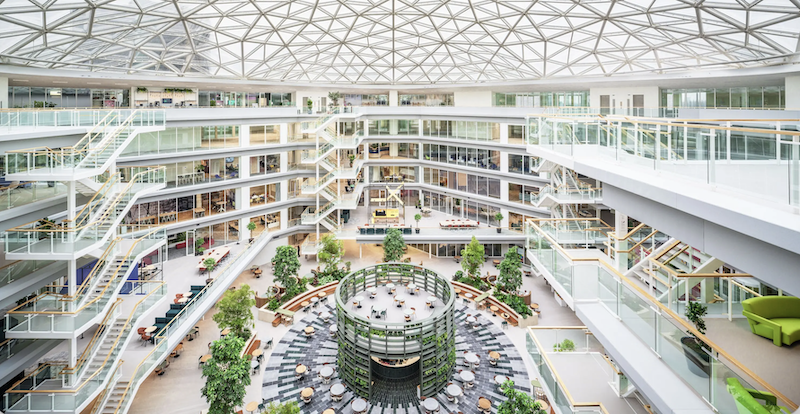
Edge West
Edge is a prominent European real estate developer based in Amsterdam focused on sustainable, smart buildings designed for health and energy efficiency. Edge designs its spaces for maximum movement:
- The EDGE Olympic building in Amsterdam was the first EDGE property to achieve Platinum level WELL Core and Shell Certification in 2019. The building includes a central staircase from the large, light-filled atrium lobby up several floors. Since then, the central staircase has become a signature design feature of EDGE buildings all over Europe. The staircase is the primary route between common areas such as the café, food and beverage areas, and fitness facilities. EDGE also maps walking routes throughout the building to encourage walking meetings and other informal movement.
- At EDGE West in Amsterdam, the designers introduced a room made specifically for walking meetings. At its center is one big square walking belt that functions like a treadmill so that people can walk as they talk. The above-cited Stanford study found the same increase in creative thinking in people who just walked on a treadmill facing a boring wall, compared to people walking outdoors.
- In EDGE Grand Central Berlin, indoor walking routes are designed to offer varying levels of stimulation. The ground floor has a route that begins in a “buzzy zone” and gradually moves towards quieter areas, allowing the brain to transition from stimulation to concentration flow. In this way, movement is not just physical but cognitive – a tool for regulating attention, energy and creativity throughout the day.
At the heart of M Moser’s innovative and pioneering healthy building design, Turbine Hall in the former St. James Power Station in Singapore, now Dyson Global Headquarters, is a steel spiral staircase that acts as the functional spine of the workplace linking all four renovated industrial floors, encouraging movement. It supports connection between departments and activates circulation. Signage throughout the space encourages employees to take the stairs, while sunroofs invite occupants to move upward and outdoors to the rooftop terrace to enjoy natural daylight and biophilia.

Spiral staircase
GTB Headquarters, the workplace for a global marketing, public relations, advertising and communications firm in Shanghai that became WELL Certified in 2016, reinforces movement through spatial planning. “The design encourages people to move, exercise and get engaged,” said Dr. Christine Bruckner, a sustainability-focused architect and director at M Moser Associates, who played a key role in designing the space. WELL design principles are embedded throughout, encouraging standing, stretching, moving and interaction by including different workstation typologies. A corridor loop – 7-feet 10-inches wide, with contrasting floor color – resembles a running track, with multiple lanes for fast and slow foot traffic and for walking meetings.
These examples of spatial planning of circulation networks in WELL Certified spaces show how thoughtful design can provide natural walking opportunities several times daily to occupants who are likely benefiting from the creativity of their low-intensity physical activity. WELL Movement strategies also guide low- to high-intensity fitness programming in spaces, which fosters healthier workplace cultures.
Movement As Culture
Alice Haigh works at Built Development Group, a construction company in Sydney, Australia (WELL Certified Platinum, 2023), and loves the gym amenity just down the road from her office. At her previous job, she had a fitness subsidy program, which gave her a gym membership discount, but didn’t necessarily get her to go to the gym. “But [Built] is above and beyond anything I’ve experienced because everyone here encourages me to use these offerings. It’s part of the culture,” she said. Her Corporate Communications team respects the blocks in her diary for going to the gym during the workday. And when she doesn’t show up, colleagues miss her and ask where she was. “It makes me want to use it more,” she said.
It’s one thing to have a free gym amenity at work. It’s another to actively support employees’ use of it. And then there’s structured programming and leaders who model use of these well-being benefits that shape the culture of a workplace.
What also draws Haigh to Built’s gym are the 4-6 week blocks of strength training and other types of physical exercise that encourage consistency. These fitness programs are all custom-developed by Built’s Head of Workplace Well-being, Haydn Masters. “He’s usually there to make adjustments on technique or push you harder,” said Haigh. “The gym is really widely used by both leadership and junior staff.”
HSBC Bank USA’s Headquarters in New York City(WELL Certified Platinum, 2024, pictured in above header) offers employees a full menu of low-impact wellness services including yoga, stretching, Tai Chi and meditation to employees in its wellness suite. HSBC also offers Mindful Meetings programming to its staff to get them moving during traditional seated meetings and increase engagement. Complimentary 5-15 minute sessions, online or in-person, offer four different types of meeting breaks: meditation, dance, chair yoga or a signature session that includes movement, stretching, connection to the breath and mindfulness practice.
WELL is a Movement
From ensuring ample walking throughout the workday and physical fitness for those who want it, WELL gets people moving to a healthy degree. WELL Certified workplaces, in particular, are reaping the health and economic rewards of having more engaged, productive, decisive and creative workforces developing their products and running their businesses. Where there’s a will, there’s WELL.
View original content here.
LINCOLN, Neb., May 27, 2026 /3BL/ – The Arbor Day Foundation’s programmatic network reached new heights in 2025, honoring more than 4,500 cities, campuses, and utilities across its five iconic recognition programs.
“Earning recognition from the Arbor Day Foundation is never automatic. It’s the result of hard work, planning, and intention. The fact that a majority of applicants reapply year after year is a testament to the value they see in being part of this incredible network of tree champions, that only continues to grow,” said Dan Lambe, chief executive of the Arbor Day Foundation. “This is a global movement that spans countries and continents, uniting people bold enough to shape a better future through trees.”
The Arbor Day Foundation’s Tree City USA, Tree Cities of the World, Tree Campus Higher Education, Tree Campus Healthcare, and Tree Line USA are all designed to recognize superior commitment to trees. The programmatic network engages cities, campuses, and utilities in all 50 U.S. states, 25 countries, and six continents.
The 2025 recognitions include:
- Tree City USA: 3,636 cities, touching nearly half of the U.S. population.
- Tree Cities of the World: 283 cities honored internationally, across six continents.
- Tree Campus (Higher Ed and Healthcare): 457 campuses acknowledged for their leadership in cultivating green spaces and engaging students, staff, and communities.
- Tree Line USA: 152 utility companies celebrated for best practices in utility arboriculture and public stewardship.
While the specific standards of each program varies, the Arbor Day Foundation outlines specific guidelines related to financial investment in tree planting and maintenance, canopy management and care, community engagement and education, and an annual celebration of trees.
Visit arborday.org/recognition to learn more about how to join the Arbor Day Foundation’s programmatic network.
About the Arbor Day Foundation
The Arbor Day Foundation is a global nonprofit inspiring people to plant, nurture, and celebrate trees. They foster a growing community of more than 1 million leaders, innovators, planters, and supporters united by their bold belief that a more hopeful future can be shaped through the power of trees. For more than 50 years, they’ve answered critical need with action, planting more than half a billion trees alongside their partners.
And this is only the beginning.
The Arbor Day Foundation is a 501(c)(3) nonprofit pursuing a future where all life flourishes through the power of trees. Learn more at arborday.org.
###