MilliporeSigma, the U.S. and Canada Life Science business of Merck KGaA, Darmstadt, Germany, has launched its Sustainability Toolkits, making four practical resources available to all around the world.

Designed to help strengthen sustainability efforts, the toolkits translate MilliporeSigma’s proven sustainability strategies into actionable guidance that can support measurable environmental progress across the life science supply chain.

Translating Success into Scalable Solutions

The four toolkits—Environmental Accounting, Packaging Improvement, Energy & Water Efficiency, and Renewable Electricity—represent nearly two decades of refined sustainability expertise.

The Packaging Improvement toolkit draws directly from MilliporeSigma’s SMASH Packaging program, which, as of 2025, has avoided over 1,764 metric tons of packaging annually compared to a 2020 baseline.

The Energy & Water Efficiency toolkit leverages methodologies from the company’s EDISON program, which achieved over 31,000 MWh of energy savings and more than 38,000 cubic meters of water conservation in 2025 alone.

We’ve proven these strategies work within our own operations, delivering measurable results that directly impact our bottom line and environmental footprint,” said Kevin Reyer, Program Manager, Sustainable Value Chains at MilliporeSigma. “Now we’re taking that success and scaling it across our entire supply chain, creating a multiplier effect that extends our impact beyond our own facilities. This is about giving others access to the same tools that have made us industry leaders.”

Supporting Continued Progress

The toolkits are part of MilliporeSigma’s broader work to engage and support more sustainable practices across its value chain. Additional toolkits are already in development and will address topics such as logistics decarbonization and product carbon footprinting.

Authored by Baker Tilly’s Rob Bellile

Energy tax credits continue to reshape the U.S. manufacturing landscape, with one requirement emerging as a defining factor in eligibility: foreign entity of concern (FEOC) compliance. FEOCs had their beginnings in the Inflation Reduction Act (IRA), specifically with the electric vehicle tax credit. FEOC rules expanded under the One Big Beautiful Bill Act (OBBBA) and the impact on manufacturers in the U.S. is only beginning to unfold.

FEOC basics and why it matters for manufacturers

The basics

The requirements for FEOC compliance were first introduced in the IRA’s 30D electric vehicle credit, restricting the use of battery minerals or components sourced from China, Iran, North Korea or Russia. The passage of the One Big Beautiful Bill Act (OBBBA) expanded these rules to include:

  • Additional definitions of disallowed entities
  • Restrictions on licensing agreements, royalty payments and other structured payments
  • Guardrails on debt or financial arrangements that could create foreign influence

The goal of these requirements is clear — ensure that U.S. tax credits support domestic or allied-nation supply chains and not companies tied to FEOCs.

While there is no comprehensive list of required documents necessary to submit to be compliant, there is a certification letter that companies must sign stating that they are not a prohibited foreign entity, which includes two new terms introduced in OBBBA: Specified foreign entity and foreign influenced entity.

Why FEOC matters for manufacturers

Under the clean energy tax credit framework, FEOC is not a bonus credit, but rather a baseline requirement. This means that if you fail the FEOC certification process, the entire credit disappears. When you take into consideration that these credits can offset nearly half of project costs, compliance isn’t just a nice-to-have box checked off on a to-do list. It is instead a critical factor in a manufacturer’s strategy.

What FEOC compliance looks like today

The IRS has yet to publish a list of required documents for certification, but there is a certification that needs to be signed that declares the manufacturer is not a prohibited foreign entity. To support the certification, manufacturers must evaluate the following:

  1. Ownership structure. No more than 25% of manufacturer voting rights, board seats or equity interests can be from FEOC countries, and the direct and indirect ownership of the company matter.
  2. Debt and financial influence. The manufacturer’s lending arrangements cannot have more than 15% ownership of debt by entities with ties to a FEOC.
  3. Licensing and royalty agreements. Intellectual property, technology licenses or other rights related to products eligible for credits cannot be owned by prohibited foreign entities.
  4. Significant payments. This requirement is very loosely defined currently, but could include service, software or technology payments if they create a material influence.

Impacts on the supply chain

FEOC compliance doesn’t stop at the manufacturers’ ownership, either – the implications extend deep into the supply chain. This is where the material assistance cost ratio comes into play. The material assistance cost ratio stipulates the percentage of component cost within a product or project that must be FEOC compliant.

For manufacturers providing products that claim credits under Sections 48E or 45Y, that product and all other products provided on the project must meet the material assistance cost ratio. This requires:

  • Reviewing the Level 1 Bill of Materials for direct components
  • Assessing whether each component came from a FEOC source
  • Looking at not only the manufacturing location of the component, but also the supplier ownership structure

For example, if a project component is made in Vietnam, a country not on the FEOC list, but their ownership structure demonstrates being Chinese-owned, that still counts as a FEOC noncompliant component and thus failing to increase the material assistance cost ratio.

As a result of this, many companies are requesting supplier certification statements confirming their FEOC status, independently verifying global ownership structures of their supply chain, and reassessing their supplier relationships to avoid risking noncompliance.

FEOC versus domestic content: Similar frameworks, different impacts

FEOC and domestic content both involve taking a deeper look at the supply chain, their purpose and consequences of noncompliance differ.

Focus

Domestic content is focused on where components are manufactured, while FEOC dives deeper into who owns or influences the manufacturer.

Credit impact

Domestic content compliance means a bonus credit of 10% in most cases. Failing to comply with FEOC means no credit at all for most activities in 2026 and beyond.

Analysis method

Domestic content takes a look at bill of materials and cost percentages. FEOC looks at the bill of materials, ownership structure, licensing, and other areas of influence on a manufacturer.

In short, FEOC requirements introduce a new lens — economic influence, not just geography.

What manufacturers can do now for future compliance

Additional guidance is forthcoming, but in the meantime, it can be prudent for manufacturers to start evaluating things that are in their control such as:

  1. Evaluate ownership structures and debt structures to understand the influence and control behind all major investors and lenders in your capital structure.
  2. Review licensing or royalty agreements for any payments that may flow to a prohibited foreign entity.
  3. Map and assess the supply chain by documenting component suppliers and evaluate for any potential ties to prohibited foreign entities.
  4. Start seeking supplier certifications from partners willing and able to attest to their FEOC compliance status.
  5. Prepare strategically for the long-term as many companies are already restructuring to present themselves as FEOC-compliant, which is a potential competitive advantage in the long run.

How Baker Tilly can help

Baker Tilly offers manufacturers and their suppliers a structured risk assessment process, designed to help manufacturers navigate these new requirements.

  • Detailed information gathering on ownership, licensing, financing and supply chains
  • FEOC risk identification and mitigation planning
  • FEOC status memo outlining findings, risks and next steps
  • Support for evaluating domestic content without exposing sensitive supply chain data

Connect with a Baker Tilly specialist to learn more

Nurses are the heart of healthcare, combining clinical expertise with a deep sense of empathy and dedication. This year, DaVita announces 57 exceptional nephrology nurses have been honored with the 2026 DAISY Award® for Extraordinary Nurses, celebrating the profound impact they make on the lives of our patients and their families.

The DAISY Award is an international recognition program established by the DAISY Foundation to honor nurses who provide outstanding, compassionate care.

Empowering Nursing Excellence

DaVita’s commitment to building supportive career paths is built on recognizing that caring for caregivers is the foundation of outstanding patient care. Through intentional investments in nursing education, comprehensive training programs and established pathways for advancement, DaVita empowers nurses and other clinical teammates to thrive. Meaningful recognition, like the DAISY Award, is a cornerstone of this commitment, expressing gratitude for the dedication of DaVita’s nursing team.

Congratulations to the 2026 Honorees

These award recipients were nominated by their fellow teammates and patients for helping to drive outstanding clinical outcomes and consistently demonstrating DaVita’s Caring Behaviors. Their stories are a powerful reminder that nursing is a calling.

Please join DaVita in congratulating the following 2026 DAISY Award recipients:

Aleksandra Drapacz

Amanda Keown

Amy Piasecki

Ana Coronel

Angie Bragg

Ashley Drew

Bailey Roark

Becky Crowe

Brandy McDonald

Bridgette Donaldson

Carrie Gabel

Claudio Velloso

Cynthia Flowers

Dawn Bloom

Dhruva Patel

Eliver Tumbaga

Elizabeth Hawman

Erika Cohen

Gladys Ayure

Jessica Smith

Jhimbo Feliciano

Joanne Allred

Karen Kratzer

Katherine Lovinger

Katherine Blevins

Kelli Zukowitz

Kyung soon Lee

Lauren L. Jones

LeShandon Hill

Leslie Thompson

Lowell Edio

Madison Pflipsen

Malory Moles

Marjorie Ferrer

Mary Aniciete

Melissa Carter

Nick Faul

Osmar Ramirez

Paige Velarde

Pat Patton

Pauline Anne Cruz

Rachel McGee

Rebecca Gray

Renee Goddard

Rowanne Parojinog

Roxanna DeJesus

Ryan Santos

Sally Antonio

Sally Kim

Sarah Gramstorff

Sarah Leeper

Sarah Vallejos

Sharon Segovia

Sheri Steele

Sonya Ogunbanjo

Stephany Hill

Virginia Quinn

DaVita is immensely proud of these remarkable nurses and grateful for the standard of excellence they set for kidney care.

To learn more about how DaVita supports nurses throughout their careers, visit Careers.DaVita.com.

RESTON, Va. /3BL/ – More than 4.7 million Department of War service members and family members will continue to receive comprehensive well-being services through Military OneSource, supported by Leidos (NYSE: LDOS) through a $456 million contract from the General Services Administration to manage the program over four years.

Military OneSource provides confidential counseling, resources for parents and caregivers, tax services, spouse employment support, relocation and deployment tools, and more to service members and their families via phone and live chat 24/7.

“As a military spouse, I know how important it is to have straightforward access to these services,” said Liz Porter, Leidos Health president. “Leidos has been supporting active duty and retired military personnel, and their families, for many years now. Strengthening the health and readiness of those in uniform is a responsibility we feel deeply across our company.”

Leidos delivers a broad range of health services, including 2.8 million exams each year for active-duty service members, veterans, government employees, and civilians across the United States and in 44 countries. The company also provides non-medical counseling through a network of more than 1,200 counselors at over 135 military installations worldwide and has deployed the world’s largest electronic health record system, serving nearly 10 million people across the Department of War and other federal agencies.

Leidos’s work on Military OneSource aligns with the managed health services priority of the company’s NorthStar 2030 growth strategy.

About Leidos

Leidos is an industry and technology leader serving government and commercial customers with smarter, more efficient digital and mission innovations. Headquartered in Reston, Virginia, with approximately 50,000 global employees, Leidos reported annual revenues of approximately $17.2 billion for the fiscal year ended January 2, 2026. For more information, visit www.leidos.com.

Certain statements in this announcement constitute “forward-looking statements” within the meaning of the rules and regulations of the U.S. Securities and Exchange Commission (SEC). These statements are based on management’s current beliefs and expectations and are subject to significant risks and uncertainties. These statements are not guarantees of future results or occurrences. A number of factors could cause our actual results, performance, achievements, or industry results to be different from the results, performance, or achievements expressed or implied by such forward-looking statements. These factors include, but are not limited to, the “Risk Factors” set forth in Leidos’ Annual Report on Form 10-K for the fiscal year ended January 2, 2026, and other such filings that Leidos makes with the SEC from time to time. Readers are cautioned not to place undue reliance on such forward-looking statements, which speak only as of the date hereof. Leidos does not undertake to update forward-looking statements to reflect the impact of circumstances or events that arise after the date the forward-looking statements were made.

Media Relations

Brandon Ver Velde
Senior Media Relations Manager
(571) 526-6257 | brandon.p.vervelde@leidos.com

RESTON, Va. /3BL/ – More than 4.7 million Department of War service members and family members will continue to receive comprehensive well-being services through Military OneSource, supported by Leidos (NYSE: LDOS) through a $456 million contract from the General Services Administration to manage the program over four years.

Military OneSource provides confidential counseling, resources for parents and caregivers, tax services, spouse employment support, relocation and deployment tools, and more to service members and their families via phone and live chat 24/7.

“As a military spouse, I know how important it is to have straightforward access to these services,” said Liz Porter, Leidos Health president. “Leidos has been supporting active duty and retired military personnel, and their families, for many years now. Strengthening the health and readiness of those in uniform is a responsibility we feel deeply across our company.”

Leidos delivers a broad range of health services, including 2.8 million exams each year for active-duty service members, veterans, government employees, and civilians across the United States and in 44 countries. The company also provides non-medical counseling through a network of more than 1,200 counselors at over 135 military installations worldwide and has deployed the world’s largest electronic health record system, serving nearly 10 million people across the Department of War and other federal agencies.

Leidos’s work on Military OneSource aligns with the managed health services priority of the company’s NorthStar 2030 growth strategy.

About Leidos

Leidos is an industry and technology leader serving government and commercial customers with smarter, more efficient digital and mission innovations. Headquartered in Reston, Virginia, with approximately 50,000 global employees, Leidos reported annual revenues of approximately $17.2 billion for the fiscal year ended January 2, 2026. For more information, visit www.leidos.com.

Certain statements in this announcement constitute “forward-looking statements” within the meaning of the rules and regulations of the U.S. Securities and Exchange Commission (SEC). These statements are based on management’s current beliefs and expectations and are subject to significant risks and uncertainties. These statements are not guarantees of future results or occurrences. A number of factors could cause our actual results, performance, achievements, or industry results to be different from the results, performance, or achievements expressed or implied by such forward-looking statements. These factors include, but are not limited to, the “Risk Factors” set forth in Leidos’ Annual Report on Form 10-K for the fiscal year ended January 2, 2026, and other such filings that Leidos makes with the SEC from time to time. Readers are cautioned not to place undue reliance on such forward-looking statements, which speak only as of the date hereof. Leidos does not undertake to update forward-looking statements to reflect the impact of circumstances or events that arise after the date the forward-looking statements were made.

Media Relations

Brandon Ver Velde
Senior Media Relations Manager
(571) 526-6257 | brandon.p.vervelde@leidos.com

Originally published by Make-A-Wish America

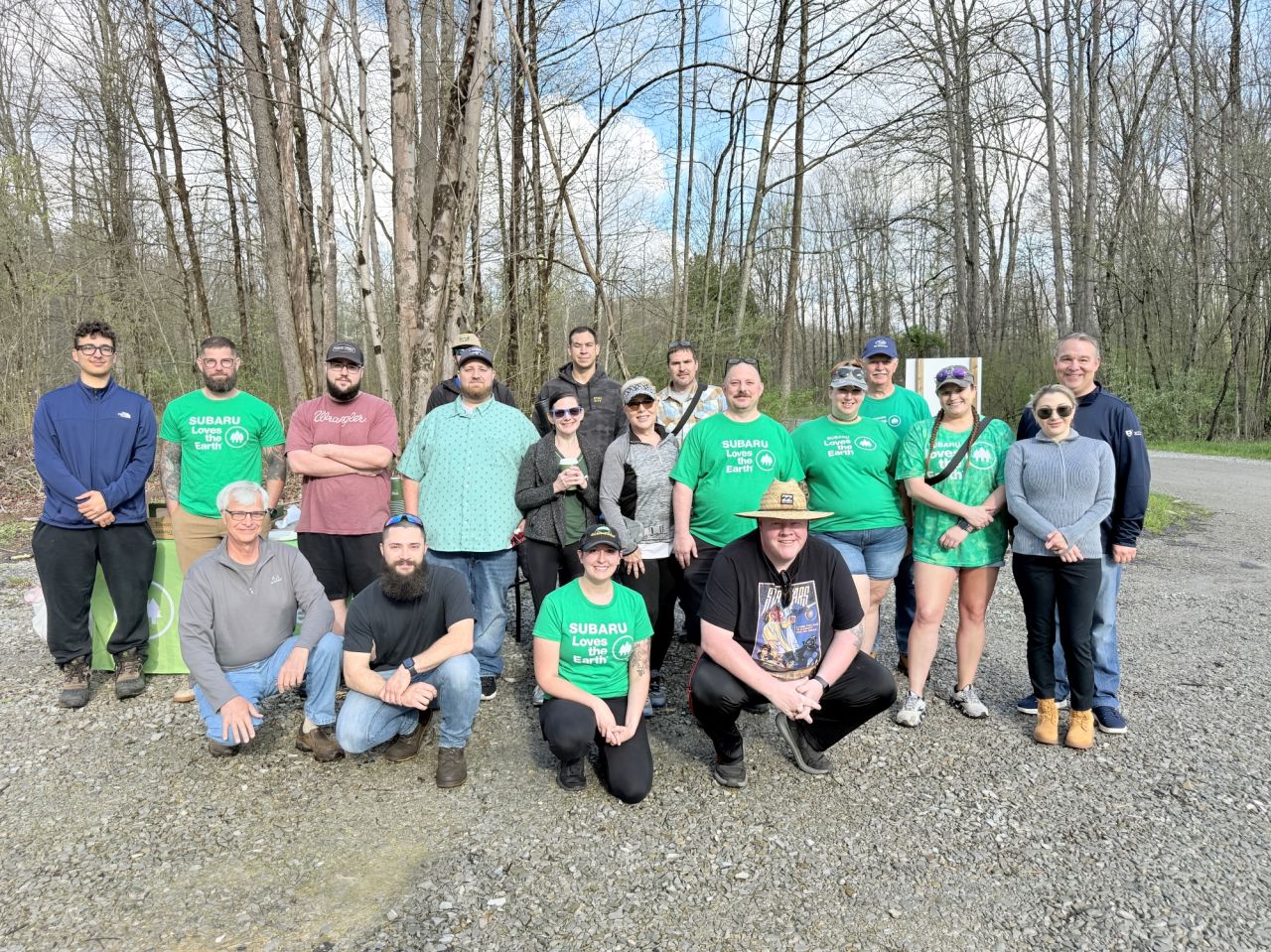
For the 15th consecutive year, Subaru of America selected Make-A-Wish as one of the four national charity beneficiaries of the 2025 Subaru Share the Love® Event. Last year’s event raised more than $2.5 million for the organization, for a total of more than $40 million since the partnership started, underscoring Subaru’s ongoing commitment to bringing hope and joy to children when they need it most.

As part of the Subaru Share the Love Event, Subaru and its retailers donated a minimum of $300 for every new Subaru vehicle purchased or leased. In addition to supporting the four national charity beneficiaries, Subaru retailers were able to select hometown charities in their communities for donation consideration. Across the country, Subaru retailers again chose to support Make-A-Wish chapters as their hometown charities, enabling customers to direct contributions toward helping fulfill wishes for children within their local communities.

“A wish delivers joy that can become a powerful turning point for a child facing a critical illness,” said Leslie Motter, president and CEO of Make‑A‑Wish America. “Through the Subaru Share the Love Event, the $2.5 million raised reflects a powerful community of WishMakers coming together to deliver hope, strength, and renewed possibility to children and families when they need it most.”

This initiative underscores the strength of the collaboration between Subaru, its retailers, and Make-A-Wish, as well as their shared focus on delivering measurable community benefit. Through coordinated national efforts and localized retailer participation, the Subaru Share the Love Event continues to support Make-A-Wish’s mission while engaging customers in giving back to causes that matter in their communities.

To learn more visit wish.org/Subaru.

About Make-A-Wish®
Make-A-Wish creates life-changing wishes for children with critical illnesses. Founded in Phoenix, Arizona, Make-A-Wish is the #1 most trusted nonprofit operating locally in all 50 states throughout the U.S. Together with generous donors, supporters, staff and more than 20,000 volunteers across the country, Make-A-Wish delivers hope and joy to children and their families when they need it most. Make-A-Wish aims to bring the power of wishing to every child with a critical illness because wish experiences can help improve emotional and physical health. Since 1980, Make-A-Wish has granted more than 650,000 wishes in 50 countries worldwide; more than 400,000 wishes in the U.S. and its territories alone. For more information about Make-A-Wish America, visit wish.org.

Originally published by Make-A-Wish America

For the 15th consecutive year, Subaru of America selected Make-A-Wish as one of the four national charity beneficiaries of the 2025 Subaru Share the Love® Event. Last year’s event raised more than $2.5 million for the organization, for a total of more than $40 million since the partnership started, underscoring Subaru’s ongoing commitment to bringing hope and joy to children when they need it most.

As part of the Subaru Share the Love Event, Subaru and its retailers donated a minimum of $300 for every new Subaru vehicle purchased or leased. In addition to supporting the four national charity beneficiaries, Subaru retailers were able to select hometown charities in their communities for donation consideration. Across the country, Subaru retailers again chose to support Make-A-Wish chapters as their hometown charities, enabling customers to direct contributions toward helping fulfill wishes for children within their local communities.

“A wish delivers joy that can become a powerful turning point for a child facing a critical illness,” said Leslie Motter, president and CEO of Make‑A‑Wish America. “Through the Subaru Share the Love Event, the $2.5 million raised reflects a powerful community of WishMakers coming together to deliver hope, strength, and renewed possibility to children and families when they need it most.”

This initiative underscores the strength of the collaboration between Subaru, its retailers, and Make-A-Wish, as well as their shared focus on delivering measurable community benefit. Through coordinated national efforts and localized retailer participation, the Subaru Share the Love Event continues to support Make-A-Wish’s mission while engaging customers in giving back to causes that matter in their communities.

To learn more visit wish.org/Subaru.

About Make-A-Wish®
Make-A-Wish creates life-changing wishes for children with critical illnesses. Founded in Phoenix, Arizona, Make-A-Wish is the #1 most trusted nonprofit operating locally in all 50 states throughout the U.S. Together with generous donors, supporters, staff and more than 20,000 volunteers across the country, Make-A-Wish delivers hope and joy to children and their families when they need it most. Make-A-Wish aims to bring the power of wishing to every child with a critical illness because wish experiences can help improve emotional and physical health. Since 1980, Make-A-Wish has granted more than 650,000 wishes in 50 countries worldwide; more than 400,000 wishes in the U.S. and its territories alone. For more information about Make-A-Wish America, visit wish.org.

Electronic payment systems make it easier than ever to manage money—but they also present opportunities for cybercriminals. Electronic Payments Fraud occurs when criminals exploit online banking tools, merchant payment systems, and peer‑to‑peer platforms such as Zelle® and PayPal® to steal funds or sensitive financial information.

Understanding how these fraud schemes work is the first step toward protecting yourself. Below KeyBank is sharing information about the most common types of electronic payment fraud, how they occur, and steps you can take that can help safeguard your accounts.

Common Types of Electronic Payments Fraud

1. Stolen Online Card Information

What it is
Fraudsters steal debit or credit card details and use them to make unauthorized purchases or obtain cash advances.

How it happens
Criminals may:

  • Hack into online platforms where card data is stored
  • Use phishing emails or texts to deceive victims into revealing card information
  • Employ social engineering tactics or card‑skimming devices to capture account details

2. Wire Fraud

What it is
Victims are tricked into sending money directly to a fraudster via wire transfer—often with little chance of recovery due to the speed of these transactions.

How it happens
Scammers frequently impersonate trusted individuals or legitimate businesses and fabricate urgent scenarios (such as legal issues, emergency payments, or compromised accounts) to pressure victims into sending funds immediately.

3. Account Takeover (ATO)

What it is
A fraudster gains unauthorized access to an account and uses it to conduct fraudulent activity. While financial accounts are common targets, email, e‑commerce, and social media accounts are also at risk.

How it happens
Account takeovers often result from:

  • Phishing emails or fake login pages
  • Malware infections
  • Reused passwords across multiple websites—especially if one of those sites has been compromised

4. Payment App Fraud

What it is
Victims are deceived into sending money through payment apps such as Zelle® or PayPal®, believing the recipient is a trusted person or legitimate business.

How it happens
Fraudsters may:

  • Impersonate known contacts
  • Create fake profiles or spoof account details
  • Exploit urgency or emotional manipulation to prompt quick transfers

Protecting Yourself: KeyBank’s Fraud Prevention Best Practices

Taking proactive steps can significantly reduce your risk. KeyBank strongly recommends the following safeguards:

  • Never share sensitive information such as passwords, PINs, or credit card numbers with unknown or unverified sources
  • Create strong, unique passwords with at least 15 characters, mixing upper‑ and lowercase letters, numbers, and symbols
  • Enable two‑factor authentication (2FA) on all eligible accounts
  • Monitor your accounts regularly for unauthorized transactions or unusual activity
  • Review your credit report on a routine basis to detect suspicious changes
  • Only enter payment information on trusted websites and avoid unfamiliar checkout pages
  • Avoid clicking suspicious pop‑ups, links, ads, or email attachments, especially from unknown senders
  • Use secure Wi‑Fi networks when accessing financial accounts
  • Shred documents containing personal or financial information before disposal
  • Stay informed about emerging fraud tactics and cybersecurity best practices
  • KeyBank clients: Activate account alerts through online and mobile banking to receive real‑time notifications of account activity

What to Do if You Suspect Fraud

If you believe you may be a victim of electronic payments fraud, contact your bank immediately. Early action can help limit losses and protect your accounts.

KeyBank clients should contact the KeyBank Fraud Client Service Center at 1‑800‑433‑0124. Dial 711 for TTY/TRS.

To learn more about fraud prevention tools, resources, and safe banking practices, visit the KeyBank Fraud Protection Center at Key.com/fraud.


This document is designed to provide general information only and is not comprehensive nor is it legal advice; particular situations may require additional actions. If legal advice or other expert assistance is required, the services of a competent professional should be sought. KeyBank does not make any warranties regarding the results obtained from the use of this information. All rights reserved. All trademarks, service marks, and trade names referenced in this material are the property of their respective owners.

Zelle and the Zelle-related marks are wholly owned by Early Warning Services, LLC, and are used herein under license. Venmo is a registered trademark of PayPal, Inc.©2026 KeyCorp®. All rights reserved. KeyBank Member FDIC. CFMA #260513-4465728

Electronic payment systems make it easier than ever to manage money—but they also present opportunities for cybercriminals. Electronic Payments Fraud occurs when criminals exploit online banking tools, merchant payment systems, and peer‑to‑peer platforms such as Zelle® and PayPal® to steal funds or sensitive financial information.

Understanding how these fraud schemes work is the first step toward protecting yourself. Below KeyBank is sharing information about the most common types of electronic payment fraud, how they occur, and steps you can take that can help safeguard your accounts.

Common Types of Electronic Payments Fraud

1. Stolen Online Card Information

What it is
Fraudsters steal debit or credit card details and use them to make unauthorized purchases or obtain cash advances.

How it happens
Criminals may:

  • Hack into online platforms where card data is stored
  • Use phishing emails or texts to deceive victims into revealing card information
  • Employ social engineering tactics or card‑skimming devices to capture account details

2. Wire Fraud

What it is
Victims are tricked into sending money directly to a fraudster via wire transfer—often with little chance of recovery due to the speed of these transactions.

How it happens
Scammers frequently impersonate trusted individuals or legitimate businesses and fabricate urgent scenarios (such as legal issues, emergency payments, or compromised accounts) to pressure victims into sending funds immediately.

3. Account Takeover (ATO)

What it is
A fraudster gains unauthorized access to an account and uses it to conduct fraudulent activity. While financial accounts are common targets, email, e‑commerce, and social media accounts are also at risk.

How it happens
Account takeovers often result from:

  • Phishing emails or fake login pages
  • Malware infections
  • Reused passwords across multiple websites—especially if one of those sites has been compromised

4. Payment App Fraud

What it is
Victims are deceived into sending money through payment apps such as Zelle® or PayPal®, believing the recipient is a trusted person or legitimate business.

How it happens
Fraudsters may:

  • Impersonate known contacts
  • Create fake profiles or spoof account details
  • Exploit urgency or emotional manipulation to prompt quick transfers

Protecting Yourself: KeyBank’s Fraud Prevention Best Practices

Taking proactive steps can significantly reduce your risk. KeyBank strongly recommends the following safeguards:

  • Never share sensitive information such as passwords, PINs, or credit card numbers with unknown or unverified sources
  • Create strong, unique passwords with at least 15 characters, mixing upper‑ and lowercase letters, numbers, and symbols
  • Enable two‑factor authentication (2FA) on all eligible accounts
  • Monitor your accounts regularly for unauthorized transactions or unusual activity
  • Review your credit report on a routine basis to detect suspicious changes
  • Only enter payment information on trusted websites and avoid unfamiliar checkout pages
  • Avoid clicking suspicious pop‑ups, links, ads, or email attachments, especially from unknown senders
  • Use secure Wi‑Fi networks when accessing financial accounts
  • Shred documents containing personal or financial information before disposal
  • Stay informed about emerging fraud tactics and cybersecurity best practices
  • KeyBank clients: Activate account alerts through online and mobile banking to receive real‑time notifications of account activity

What to Do if You Suspect Fraud

If you believe you may be a victim of electronic payments fraud, contact your bank immediately. Early action can help limit losses and protect your accounts.

KeyBank clients should contact the KeyBank Fraud Client Service Center at 1‑800‑433‑0124. Dial 711 for TTY/TRS.

To learn more about fraud prevention tools, resources, and safe banking practices, visit the KeyBank Fraud Protection Center at Key.com/fraud.


This document is designed to provide general information only and is not comprehensive nor is it legal advice; particular situations may require additional actions. If legal advice or other expert assistance is required, the services of a competent professional should be sought. KeyBank does not make any warranties regarding the results obtained from the use of this information. All rights reserved. All trademarks, service marks, and trade names referenced in this material are the property of their respective owners.

Zelle and the Zelle-related marks are wholly owned by Early Warning Services, LLC, and are used herein under license. Venmo is a registered trademark of PayPal, Inc.©2026 KeyCorp®. All rights reserved. KeyBank Member FDIC. CFMA #260513-4465728

May 21, 2026 /3BL/ – DP World marked its 13th participation in the 10KM Tribuna FM Race, the largest 10K race in Brazil and one of the fastest in South America, reaffirming its long-standing commitment to community engagement, healthy living and local investment.

This year’s race brought together approximately 25,200 participants in Santos, with DP World fielding a team of 520 runners — placing the company among the five largest teams in the competition.

Promoting Health, Well-being and Community Connection

More than just a race, the 10KM Tribuna FM is an annual celebration that reflects DP World’s broader sustainability strategy, “Our World, Our Future,” and its commitment to community engagement as one of its seven responsible business priorities. The initiative also supports UN SDG 3: Good Health and Well-Being.

The company’s participation in the 10KM Tribuna FM Race began in 2012, when a small group of fewer than 20 enthusiastic DP World employees joined the event.

Investing in Sports Development Across Brazil 

DP World has long supported sports development in Brazil through Municipal Tax Incentive Programs for sports and culture, including Promifae and Promicult. Since 2015, the company has invested more than R$11 million in initiatives in Santos, supporting a wide range of disciplines including gymnastics, skateboarding, surfing, canoeing, football, CrossFit, beach tennis, table tennis, artistic gymnastics, futsal, handball and duathlon.

Through these initiatives, DP World promotes sport as a catalyst for inclusion, opportunity and community development, helping expand access to athletic programs for young people and socially vulnerable groups.

Expanding Community Impact Across Latin America Through Sports

Beyond Brazil, DP World continues to leverage sport-driven initiatives to create lasting social impact across the region. In Peru, the DP World Race — a 10K charity run held in Callao — has supported school improvement projects for more than a decade, with proceeds from the event directed toward local schools in the community.

In 2025, the company inaugurated six digital classrooms, along with a modern computer room and tutoring room, at the Virgen de la Inmaculada Concepción Educational Institution of Callao, benefiting more than 300 local students and expanding access to digital education.

In Chile, the company inaugurated the new DP World Sports and Social Centre in Lirquén late last year— a CLP $150 million (more than US$290,000) community investment.

Built near the company’s port terminal, the 3,400-square-meter facility is the first project of its kind in the area dedicated to sports, recreational activities and community engagement, benefiting employees, families, athletes and local residents alike.

For more insights into how DP World is impacting people and communities visit: https://www.dpworld.com/en/sustainability/people-and-communities

Privacy Overview

This website uses cookies so that we can provide you with the best user experience possible. Cookie information is stored in your browser and performs functions such as recognising you when you return to our website and helping our team to understand which sections of the website you find most interesting and useful.