LinkedIn

April was Earth Month, a time to reflect on how we care for our planet and the role each of us plays in building a more sustainable future.

For Aurélie Dufour, Europe Sustainability Regulation Lead for Yum!’s Global Sustainability team, this work connects closely to Yum!’s focus on regenerative, nature-positive agriculture. She leads sustainability regulation and governance across Europe, translating complex requirements into clear priorities for Yum!’s brands and markets, helping embed sustainability into how the business grows.

What stands out most to Aurélie is Yum!’s collaborative approach. By working with farmers, suppliers and partners, our teams are helping advance more resilient agricultural practices and healthier ecosystems. She also brings teams together through cross-brand forums that drive alignment and progress across Europe.

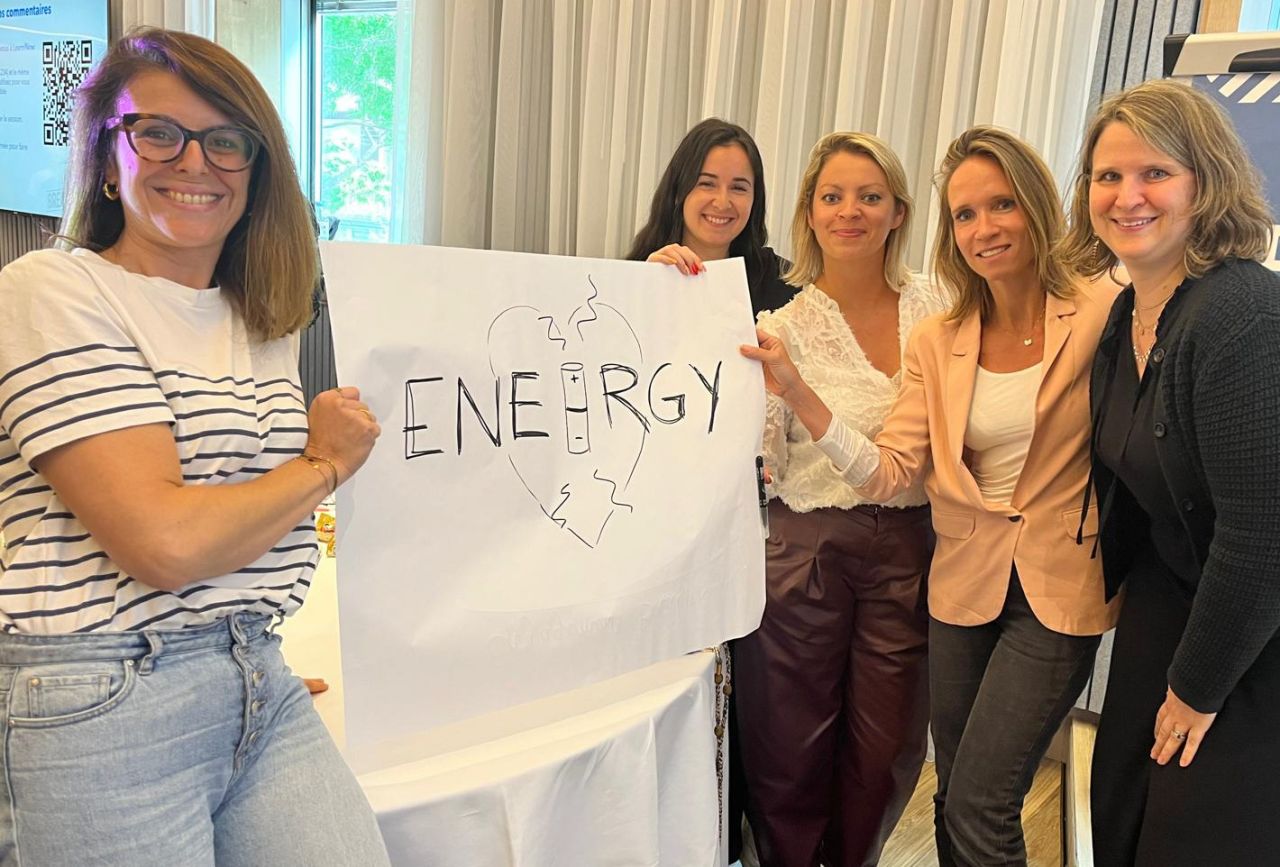
Five people holding up a sign that reads "Energy"

At Yum!, we lead with Smart, Heart and Courage. Aurélie brings Smart to life by shaping forward-looking strategies that build resilience across our value chain.

Learn more about building your career at Yum! and our approach to being good stewards of the environment

As sustainability reporting expectations continue to evolve across Europe, organizations are facing a more nuanced reality: while the environmental, social and governance (ESG) reporting has accelerated significantly in recent years, current discussions around the European Sustainability Reporting Standards (ESRS) scope adjustments and broader regulatory simplifications are creating a more complex landscape.

Social sustainability is not yet universally central in practice. In some sectors, it is advancing rapidly; in others, it is still emerging or even being prioritized amid regulatory uncertainty. Yet this is precisely where leadership matters most.

The recent webcast by the International WELL Building Institute (IWBI) on WELL and ESRS explored this tension directly: how organizations can move beyond compliance and use WELL to strengthen long-term value, resilience and business performance through measurable social sustainability strategies.

Bringing together perspectives from policy, industry and real estate, the discussion highlighted to a clear conclusion: the challenge is no longer understanding why social sustainability matters, but how to measure it, implement it and report on it in a credible way.

A new level of expectation: from narrative to data

Across markets, ESG is moving from high-level commitments to structured, comparable and decision-useful data. Nowhere is this more visible than in the EU regulatory landscape.

As Saara Mattero, Head of Office for a Member of the European Parliament, noted: “EU regulation raises the ambition globally […] companies tend to align with the most stringent standards and scale them across regions.”

This shift is particularly significant for the “S” in ESG. Social sustainability is now being defined through measurable indicators, covering workforce well-being, equity, health and user experience.

The implication is direct: organizations are expected not only to act, but to demonstrate impact in a structured, comparable and decision-relevant way.

Bridging performance and reporting

This is where WELL plays a distinct role.

Rather than operating alongside ESG frameworks, WELL functions as a bridge between what organizations do and how they report it, by translating health and well-being strategies into measurable indicators supporting disclosure expectations.

This connection has been further identified through IWBI’s WELL–ESRS Alignment Tool. The analysis shows that WELL strategies may support up to 50% of ESRS disclosures, with particularly strong alignment in the social pillar.

As Lefteris Zacharakis, Client Success Manager, EMEA Region at IWBI, noted: “The shift we’re seeing is from ESG as a narrative to ESG as an operational and reporting requirement. What clients are asking for now is clarity and how to translate what they’re already doing into something measurable, comparable and reportable. That’s exactly the gap the WELL-ESRS alignment is designed to address.”

This is where IWBI’s work becomes increasingly central, by helping organizations move from fragmented initiatives to an integrated model where performance, measurement and reporting are directly connected.

From intention to evidence in the real estate sector

The real estate sector illustrates this shift clearly. Developers such as Atenor are moving beyond intention, focusing on how social value can be demonstrated and quantified.

As Julie Willem, Archilab Director and Member of the Management Committee for Atenor sa, explained: “Policy brings intention, but frameworks like WELL bring evidence […] they make social value comparable and credible with data.”

This marks a broader transition in the built environment. Elements such as daylight, indoor air quality, thermal comfort and access to nature are no longer qualitative features, they are measurable drivers of user experience, asset performance and long-term value. In this context, social sustainability becomes both visible and investable.

Regulation as a baseline, not the endpoint

At the same time, regulation alone is not enough to drive this transformation.

As Lourdes Calderon, Sustainability Manager at the European Public Real Estate Association (EPRA), noted: “The EU regulation sets the base… but to go further, you need complementary initiatives.”

This reflects a critical dynamic. Regulation defines what needs to be reported. Frameworks like WELL enable organizations to define how to deliver, measure and continuously improve performance. For companies, this shifts the mindset from compliance to leadership, by moving early to structure, measure and communicate impact in a credible way.

The business case for health is becoming clearer

This shift is not only regulatory, it is also increasingly financial.

IWBI’s Investing in Health Pays Back special report consolidates a growing body of evidence linking health and well-being strategies to business outcomes. These include improved employee performance and retention, reduced absenteeism, stronger tenant demand and enhanced asset differentiation.

As Ann Marie Aguilar, Senior Vice President, EMEA Region, IWBI, noted: “We’re seeing a growing body of evidence that investing in health and well-being delivers measurable value for organizations.”

In the context of ESRS, this matters. Organizations are not only expected to disclose policies, but they are expected to demonstrate outcomes.

Health and well-being are increasingly part of that value equation.

A practical starting point: begin with what you measure

Despite the complexity of ESG frameworks, the most effective starting point is often simple.Most organizations are already collecting relevant data on workforce health, absenteeism, engagement or workplace conditions. The opportunity lies in structuring and scaling that data into a consistent reporting approach.

As Saara Mattero put it: “What you measure, you get […] when we start measuring well-being and health, we start improving them.”

Organizations that move forward effectively will focus on:

  • Selecting a small number of meaningful indicators
  • Building consistency over time
  • Connecting performance directly to reporting

From compliance to leadership

ESRS is not just a reporting requirement, it is a catalyst for change.

It is pushing organizations to clarify how they define social sustainability, how they measure it and how they communicate it externally.
In this context, WELL provides a practical pathway to move from:

  • Intent to implementation
  • Implementation to measurement
  • Measurement to reporting

Reporting to financing and long-term strategy

As Minjia Yang, Vice President and Head of Sustainable Finance, IWBI, noted: “Sustainability goes beyond compliance. Especially in periods of regulatory uncertainty, leadership is about holding firm to the fundamental values that underpin our society—and translating them into action.”

Organizations that act early have an opportunity not just to comply, but to lead by making social sustainability measurable, credible and strategically relevant.

Explore the tools and resources

To support this transition, IWBI has developed resources that help organizations operationalize social sustainability and align with ESRS:

These tools are designed to reduce complexity, improve clarity and enable organizations to translate strategy into measurable outcomes.

Conclusion

Social sustainability is entering a new phase: one defined by measurement, accountability and business relevance.

As reporting expectations evolve, the question is no longer whether to act, but how to do so in a way that is credible, structured and aligned with value creation. WELL’s role in this landscape is increasingly clear: not just as a certification system, but as a framework that connects people, performance and reporting.

For organizations navigating ESRS, this is where the opportunity lies, not only to comply, but to lead.

WELL and ESRS is also the topic of IWBI’s latest EMEA regional webcast, “From Alignment to Performance: How WELL supports ESRS reporting in practice.” View the recording here.

View original content here.

As sustainability reporting expectations continue to evolve across Europe, organizations are facing a more nuanced reality: while the environmental, social and governance (ESG) reporting has accelerated significantly in recent years, current discussions around the European Sustainability Reporting Standards (ESRS) scope adjustments and broader regulatory simplifications are creating a more complex landscape.

Social sustainability is not yet universally central in practice. In some sectors, it is advancing rapidly; in others, it is still emerging or even being prioritized amid regulatory uncertainty. Yet this is precisely where leadership matters most.

The recent webcast by the International WELL Building Institute (IWBI) on WELL and ESRS explored this tension directly: how organizations can move beyond compliance and use WELL to strengthen long-term value, resilience and business performance through measurable social sustainability strategies.

Bringing together perspectives from policy, industry and real estate, the discussion highlighted to a clear conclusion: the challenge is no longer understanding why social sustainability matters, but how to measure it, implement it and report on it in a credible way.

A new level of expectation: from narrative to data

Across markets, ESG is moving from high-level commitments to structured, comparable and decision-useful data. Nowhere is this more visible than in the EU regulatory landscape.

As Saara Mattero, Head of Office for a Member of the European Parliament, noted: “EU regulation raises the ambition globally […] companies tend to align with the most stringent standards and scale them across regions.”

This shift is particularly significant for the “S” in ESG. Social sustainability is now being defined through measurable indicators, covering workforce well-being, equity, health and user experience.

The implication is direct: organizations are expected not only to act, but to demonstrate impact in a structured, comparable and decision-relevant way.

Bridging performance and reporting

This is where WELL plays a distinct role.

Rather than operating alongside ESG frameworks, WELL functions as a bridge between what organizations do and how they report it, by translating health and well-being strategies into measurable indicators supporting disclosure expectations.

This connection has been further identified through IWBI’s WELL–ESRS Alignment Tool. The analysis shows that WELL strategies may support up to 50% of ESRS disclosures, with particularly strong alignment in the social pillar.

As Lefteris Zacharakis, Client Success Manager, EMEA Region at IWBI, noted: “The shift we’re seeing is from ESG as a narrative to ESG as an operational and reporting requirement. What clients are asking for now is clarity and how to translate what they’re already doing into something measurable, comparable and reportable. That’s exactly the gap the WELL-ESRS alignment is designed to address.”

This is where IWBI’s work becomes increasingly central, by helping organizations move from fragmented initiatives to an integrated model where performance, measurement and reporting are directly connected.

From intention to evidence in the real estate sector

The real estate sector illustrates this shift clearly. Developers such as Atenor are moving beyond intention, focusing on how social value can be demonstrated and quantified.

As Julie Willem, Archilab Director and Member of the Management Committee for Atenor sa, explained: “Policy brings intention, but frameworks like WELL bring evidence […] they make social value comparable and credible with data.”

This marks a broader transition in the built environment. Elements such as daylight, indoor air quality, thermal comfort and access to nature are no longer qualitative features, they are measurable drivers of user experience, asset performance and long-term value. In this context, social sustainability becomes both visible and investable.

Regulation as a baseline, not the endpoint

At the same time, regulation alone is not enough to drive this transformation.

As Lourdes Calderon, Sustainability Manager at the European Public Real Estate Association (EPRA), noted: “The EU regulation sets the base… but to go further, you need complementary initiatives.”

This reflects a critical dynamic. Regulation defines what needs to be reported. Frameworks like WELL enable organizations to define how to deliver, measure and continuously improve performance. For companies, this shifts the mindset from compliance to leadership, by moving early to structure, measure and communicate impact in a credible way.

The business case for health is becoming clearer

This shift is not only regulatory, it is also increasingly financial.

IWBI’s Investing in Health Pays Back special report consolidates a growing body of evidence linking health and well-being strategies to business outcomes. These include improved employee performance and retention, reduced absenteeism, stronger tenant demand and enhanced asset differentiation.

As Ann Marie Aguilar, Senior Vice President, EMEA Region, IWBI, noted: “We’re seeing a growing body of evidence that investing in health and well-being delivers measurable value for organizations.”

In the context of ESRS, this matters. Organizations are not only expected to disclose policies, but they are expected to demonstrate outcomes.

Health and well-being are increasingly part of that value equation.

A practical starting point: begin with what you measure

Despite the complexity of ESG frameworks, the most effective starting point is often simple.Most organizations are already collecting relevant data on workforce health, absenteeism, engagement or workplace conditions. The opportunity lies in structuring and scaling that data into a consistent reporting approach.

As Saara Mattero put it: “What you measure, you get […] when we start measuring well-being and health, we start improving them.”

Organizations that move forward effectively will focus on:

  • Selecting a small number of meaningful indicators
  • Building consistency over time
  • Connecting performance directly to reporting

From compliance to leadership

ESRS is not just a reporting requirement, it is a catalyst for change.

It is pushing organizations to clarify how they define social sustainability, how they measure it and how they communicate it externally.
In this context, WELL provides a practical pathway to move from:

  • Intent to implementation
  • Implementation to measurement
  • Measurement to reporting

Reporting to financing and long-term strategy

As Minjia Yang, Vice President and Head of Sustainable Finance, IWBI, noted: “Sustainability goes beyond compliance. Especially in periods of regulatory uncertainty, leadership is about holding firm to the fundamental values that underpin our society—and translating them into action.”

Organizations that act early have an opportunity not just to comply, but to lead by making social sustainability measurable, credible and strategically relevant.

Explore the tools and resources

To support this transition, IWBI has developed resources that help organizations operationalize social sustainability and align with ESRS:

These tools are designed to reduce complexity, improve clarity and enable organizations to translate strategy into measurable outcomes.

Conclusion

Social sustainability is entering a new phase: one defined by measurement, accountability and business relevance.

As reporting expectations evolve, the question is no longer whether to act, but how to do so in a way that is credible, structured and aligned with value creation. WELL’s role in this landscape is increasingly clear: not just as a certification system, but as a framework that connects people, performance and reporting.

For organizations navigating ESRS, this is where the opportunity lies, not only to comply, but to lead.

WELL and ESRS is also the topic of IWBI’s latest EMEA regional webcast, “From Alignment to Performance: How WELL supports ESRS reporting in practice.” View the recording here.

View original content here.
During the first week of May, thousands of national security professionals from industry, academia and the U.S. Intelligence Community (IC) gathered in Aurora, Colo., for the 2026 United States Geospatial Intelligence Foundation GEOINT Symposium.

Inside the convention center, conversations centered on artificial intelligence, autonomy and the evolving role of geospatial intelligence (GEOINT). But, for a group of Leidos employees attending the symposium, a part of the week’s focus extended beyond the trade show floor. 

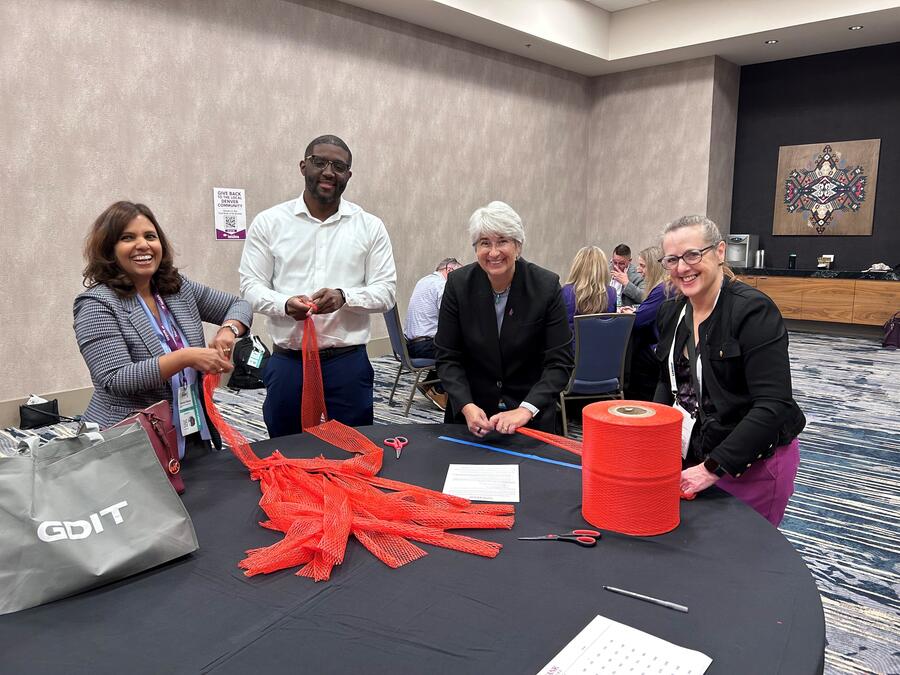
Thirty employees, both from the local area and those visiting for the event, spent part of May 6 volunteering with the Food Bank of the Rockies. Together, they assembled meal bags and created ‘food for health’ cards to support Colorado families facing food insecurity. 

For many of the volunteers, whose day-to-day work directly supports the IC and the National Geospatial-Intelligence Agency (NGA), the opportunity served as a reminder that service can take many forms.

“Our mission begins in the communities where we live and work,” said Jason O’Connor, president of Leidos Intelligence. “Even while we were gathered for an important industry event, it’s critical that we take time to support those around us.”

Four volunteers

The volunteer effort was paired with a $15,000 corporate donation from Leidos to the Food Bank of the Rockies, along with an additional $1,400 contributed by employees. Together, those contributions are expected to help provide approximately 45,000 meals across the region.

Food insecurity remains a persistent challenge for families, seniors and children throughout Colorado. For organizations like the Food Bank of the Rockies, partnerships with businesses and volunteers play a critical role in helping meet growing demand.

“Financial contributions combined with hands-on volunteer support allow us to expand our reach and help ensure our neighbors have access to nutritious meals when they need it the most,” said Charlene Moser, corporate partnership manager, Food Bank of the Rockies. 

Connection to the community is especially important for Leidos as Colorado continues to grow as a hub for employees supporting space, intelligence and national security programs. 

And as organizations compete for talent and cultivate workplace culture, volunteerism and philanthropy increasingly reflect the values employees want to see in the companies they represent.

MORE ON LEIDOS GEOINT WORK & INNOVATION

Originally published on CVS Health Company Newsroom

New facility at Community Care of West Virginia’s Clarksburg location offers health and wellness resources, community meeting space and member support

CLARKSBURG, W.Va., May 29, 2026 /3BL/ – Aetna Better Health® of West Virginia, a CVS Health® company (NYSE: CVS), announced the opening of a new Community Resource Center (CRC) located within the Community Care of West Virginia’s Clarksburg facility. Open to the public, the center provides access to supportive health-related resources and a welcoming space for community meetings.

The CRC plans to host wellness events and vaccine clinics to help address gaps in care and bring services closer to where people live. The space also offers flexible meeting rooms, computers for virtual care appointments and teleconferencing capabilities for community use.

For Aetna Better Health of West Virginia members, the center will provide in-person support from care managers several days a week, along with the option to schedule one-on-one meetings outside of typical clinical hours.

“This Community Resource Center strengthens our ability to provide accessible health care support and meet people where they are,” said Todd White, CEO of Aetna Better Health of West Virginia. “Whether someone needs one-on-one assistance, attends a wellness clinic or participates in a community meeting, the center offers valuable resources to the local community.”

“Community Care of West Virginia is proud to partner with Aetna Better Health of West Virginia to bring this Community Resource Center to Clarksburg,” said Patricia “Trish” Collett, CEO of Community Care of West Virginia. “In a region where access to care and support services can be a challenge, this space helps remove barriers by connecting people to the resources they need close to home. Together, we are expanding whole-person care beyond the exam room and creating new opportunities for individuals and families to improve their health and well-being.”

Community Resource Centers extend care beyond traditional health care settings by connecting people to local health and social services in their communities. With nearly four in 10 West Virginians living in rural areas, CRCs help bring resources closer to home and support stronger health outcomes, economic stability and family well‑being.

Aetna Better Health of West Virginia is a Managed Care Organization serving more than 166,000 Medicaid members across 55 counties. For more information, visit https://www.aetnabetterhealth.com/westvirginia.


###

About Aetna Medicaid

Aetna Medicaid Administrators LLC (Aetna Medicaid), a CVS Health company, has over 30 years of experience managing the care of Medicaid members, using innovative approaches and a local presence in each market to achieve both successful health care results and effective cost outcomes. Aetna Medicaid has expertise serving high-need Medicaid members, including those who are dually eligible for Medicaid and Medicare. Currently, Aetna Medicaid owns and/or administers Medicaid managed health care plans under the names of Aetna Better Health and other affiliate names. Together, these plans serve members in 15 states, including Arizona, Florida, Illinois, Kentucky, Louisiana, Maryland, Michigan, New Jersey, New York, Ohio, Oklahoma, Pennsylvania, Texas, Virginia and West Virginia. For more information, see www.aetnabetterhealth.com.

About CVS Health

CVS Health is a leading health solutions company simplifying health care one person, one family and one community at a time. As of March 31, 2026, the Company had approximately 9,000 retail pharmacy locations, more than 1,000 walk-in and primary care medical clinics and a leading pharmacy benefits manager with approximately 88 million plan members. The Company also serves an estimated more than 37 million people through a broad range of health insurance products and related services. The Company’s integrated model uses personalized, technology driven services to connect people to simply better health, increasing access to quality care, delivering better outcomes, and lowering overall costs.

Media contact

Monica Prinzing
Monica.Prinzing@CVSHealth.com

Privacy Overview

This website uses cookies so that we can provide you with the best user experience possible. Cookie information is stored in your browser and performs functions such as recognising you when you return to our website and helping our team to understand which sections of the website you find most interesting and useful.