JAKARTA, Indonesia, April 20, 2026 /PRNewswire/ — Standard Energy (STDARD), a trusted global clean energy solutions provider, announces its participation in SOLARTECH INDONESIA 2026, from April 22–24, 2026, at the Jakarta International Expo.

The company will host a showcase at Booth A1F2-01, presenting its end-to-end integrated PV supply chain solutions and global delivery system to partners worldwide.

Showcasing Integrated Value Chain Expertise

As a platform for the solar industry in Southeast Asia, the exhibition enables Standard Energy to deepen engagement with regional partners. The company provides stable, efficient, and customizable supply chain solutions that address diverse market needs—from quality compliance and low-carbon certification to delivery efficiency and cost optimization for projects worldwide. This is supported by its fully integrated PV manufacturing chain covering wafers, cells, and modules, the global”One Headquarters with Six Centers”operational layout, and key international certifications including ISO, CE, UL, BIS and Intertek,which collectively ensure reliable performance and smooth market access worldwide. Building on this global foundation, Standard Energy’s local manufacturing and service capabilities in Indonesia enable faster delivery and enhanced support for customers across Southeast Asia, while also strengthening its service to the U.S., Indian, and European markets.

Reliable Global Supply, Backed by Scale

Our supply chain spans Indonesia, Laos, the Philippines, and the United States, with a total PV capacity of 11.5 GW. This includes 3 GW of silicon rod and 3 GW of silicon wafer capacity in Indonesia. Additionally, we possess a dedicated aluminum frame production capacity of 15 GW. At the exhibition, we will showcase our integrated supply chain strengths, global delivery system, and tailored service capabilities to support the global energy transition.

Committed to Global Partnerships

“Standard Energy is committed to being a trusted global partner in the clean energy transition. By integrating the PV supply chain, we deliver efficient, end-to-end solutions worldwide,” said a company representative. “We look forward to connecting with customers and partners from the U.S., India, Europe, Southeast Asia, and beyond to advance the broader adoption of solar energy.”

On-site Business Engagement

Throughout the event, the Standard Energy team will host one-on-one business meetings and dedicated discussions on supply chain collaboration. Industry partners are invited to visit the booth for in-depth conversations and exploring partnership opportunities.

About Standard Energy

Founded in 2019, Standard Energy is committed to being a trusted global provider of clean energy solutions. The company has established a strategic layout of “One Headquarters With Six Centers”, covering six countries and regions: Singapore, the United States, Taiwan (China), the Philippines, Indonesia, and Laos. In 2026, the company will reach a PV manufacturing capacity of 11.5 GW and an aluminum frame production capacity supporting 15 GW of PV modules. Standard Energy’s core products include 182/210mm large-sized silicon wafers, PV cells, high-efficiency PV modules, and BIPV (Building-Integrated Photovoltaics).

Contact

Email:info@stdard-energy.com

Facebook:https://www.facebook.com/StandardEnergyForSolar

Linkedin:https://www.linkedin.com/company/standardenergyforsolar

Cision View original content to download multimedia:https://www.prnewswire.com/news-releases/standard-energy-showcases-vertically-integrated-pv-supply-chain-at-solartech-indonesia-2026-serving-clean-energy-markets-in-the-united-states-india-europe-southeast-asia-and-worldwide-302747438.html

SOURCE Standard Energy

This article is authored by Mauro J. Atalla, Senior Vice President and Chief Technology and Sustainability Officer, Trane Technologies

The AI-enabled economy is accelerating at a breakneck pace, but its ultimate speed limit won’t be dictated by software; instead, it will be defined by the necessary physical infrastructure: power, cooling, water and space. At the same time, the increased infrastructure demand challenges the limits of traditional engineering. From climate modeling to advanced biomedical research and physical-AI applications, each breakthrough creates new requirements for power density and data center cooling efficiency.

As Chief Technology and Sustainability Officer, I see firsthand that the future of data centers depends not just on isolated technological breakthroughs, but on deep, strategic industry partnerships. This dual role reinforces a core truth: our greatest technological challenges and our most urgent sustainability imperatives are fundamentally intertwined. Meeting the needs of the AI economy in a sustainable fashion requires us to radically rethink how we design, build, and operate these facilities.

Engineering for a constrained world

Unprecedented scale and growth are rapidly shifting the industry’s requirements. To deliver the infrastructure necessary to power this new era, we must engineer solutions that can handle dynamic, high-density workloads while optimizing energy management and power consumption, water usage, and even acoustic profiles and noise generation. Achieving our sustainability goals is a critical imperative that is functionally linked to greater operational efficiency. We must minimize resource use and our physical footprint while maximizing overall reliability and uptime.

No single organization can solve these multifaceted challenges alone. As rack power densities leap forward, innovating at the pace our customers require demands more than the knowledge contained within our own four walls. It requires a holistic ecosystem approach.

Consolidating expertise across the ecosystem

A prime example of this collaborative approach is our work with NVIDIA. Together, we developed the first comprehensive thermal management system reference design for gigawatt-scale AI factories, engineered to support high-density platforms like Grace Blackwell and Vera Rubin. By combining Trane Technologies’ advanced HVAC expertise with NVIDIA’s Omniverse-powered digital twin capabilities, we can simulate and optimize the real-world performance of thermal systems before they are installed.

We have since built on this foundation with two new designs and further optimizations. These enhanced reference designs achieve a nearly 10% improvement in overall thermal management performance, effectively freeing up 22 MW of cooling capacity in a 1 GW data center for additional IT capacity. Furthermore, our new 250-MW duplex design delivers 14% higher efficiency with integrated heat recovery, proving that we can drastically increase compute capacity without unnecessarily elevating total data center energy consumption.

But the required ecosystem must be broad and inclusive. We are actively engaging with leading chip manufacturers to ensure our data center cooling systems are adaptable across various hardware architectures. Furthermore, to address the energy demands of modern facilities, we are partnering with specialists in onsite power generation and advanced electrical distribution. These collaborations are essential for creating resilient microgrids, enabling the direct integration of renewable energy sources at the site level, and ensuring that facilities have the highest efficiency, minimizing resource utilization. Beyond the physical hardware, working with technology leaders like Autodesk expands our ability to streamline workflows and democratize the benefits of AI for building owners and operators.

“These new advancements reflect what’s possible when deep expertise and shared purpose come together.”

Mauro J. Atalla
Senior Vice President and Chief Technology and Sustainability Officer, Trane Technologies

Bridging the gap between research and deployment

Evolving chip and cooling technologies present both opportunities and risks. Rushed, untested solutions can disrupt operations, while delayed adoption can leave operators lagging behind. Dr. Dereje Agonafer, Distinguished Professor at the University of Texas at Arlington, underscored this during a recent discussion on our Healthy Spaces podcast on data center energy demands: “We need to have a better dialogue between academia and the industry. That’s really the way that our nation can succeed.”

Putting this into practice, we are supporting academic partners at the University of Maryland and UT Arlington, where we are participating in the U.S. Department of Energy ARPA-E COOLERCHIPS program. These direct research partnerships accelerate the design process for next-generation facilities, facilitating the rapid development and testing of novel hybrid cooling solutions that drastically reduce energy and water needs.

Connecting data centers to the broader energy grid

As these partnerships move the field forward, we are collectively unlocking new levels of efficiency across the entire digital infrastructure landscape. Instead of viewing data centers solely as massive power consumers, engineers and policymakers are increasingly recognizing them as integral parts of a larger energy ecosystem.

Through advanced waste heat recovery and redistribution, data centers can actively contribute back to the network. By integrating closed-loop and hybrid liquid cooling systems, we enable localized benefits—capturing low-grade heat and using it to supply thermal energy to local communities. A prime example of this is our work with Infomaniak, a data center operator in Geneva, Switzerland. Together with the developer and the local community, we designed a system using advanced Trane heat pumps that recovers virtually 100 percent of the facility’s waste heat. That thermal energy is injected directly into the city’s district heating network, supplying enough energy to warm 6,000 homes in the winter or provide 20,000 hot showers in the summer. This is how we drive more efficient community integration.

The future of collaborative innovation

A clear lesson from the rapid expansion of AI infrastructure has emerged: successful innovation is measured by resilience, adaptability and positive real-world impact. The race to build the next generation of data centers is fundamentally a race for intelligent resource stewardship and reliable design.

With billions in capital at stake and high execution risks, enduring progress is only possible through deep, cross-industry collaborations capable of reliably delivering the speed, scalability, and vision that tomorrow’s digital solutions and infrastructure demands. The demands of an AI-driven world require more than just hardware; they call for new alliances, multidisciplinary approaches and human ingenuity. Our commitment remains clear: to bring people, ideas and expertise together to engineer and scale sustainable solutions.

See how Trane Technologies transforms innovation into measurable results, advancing efficiency, sustainability and performance across industries. – Learn more about our sustainable innovation.

This article is authored by Mauro J. Atalla, Senior Vice President and Chief Technology and Sustainability Officer, Trane Technologies

The AI-enabled economy is accelerating at a breakneck pace, but its ultimate speed limit won’t be dictated by software; instead, it will be defined by the necessary physical infrastructure: power, cooling, water and space. At the same time, the increased infrastructure demand challenges the limits of traditional engineering. From climate modeling to advanced biomedical research and physical-AI applications, each breakthrough creates new requirements for power density and data center cooling efficiency.

As Chief Technology and Sustainability Officer, I see firsthand that the future of data centers depends not just on isolated technological breakthroughs, but on deep, strategic industry partnerships. This dual role reinforces a core truth: our greatest technological challenges and our most urgent sustainability imperatives are fundamentally intertwined. Meeting the needs of the AI economy in a sustainable fashion requires us to radically rethink how we design, build, and operate these facilities.

Engineering for a constrained world

Unprecedented scale and growth are rapidly shifting the industry’s requirements. To deliver the infrastructure necessary to power this new era, we must engineer solutions that can handle dynamic, high-density workloads while optimizing energy management and power consumption, water usage, and even acoustic profiles and noise generation. Achieving our sustainability goals is a critical imperative that is functionally linked to greater operational efficiency. We must minimize resource use and our physical footprint while maximizing overall reliability and uptime.

No single organization can solve these multifaceted challenges alone. As rack power densities leap forward, innovating at the pace our customers require demands more than the knowledge contained within our own four walls. It requires a holistic ecosystem approach.

Consolidating expertise across the ecosystem

A prime example of this collaborative approach is our work with NVIDIA. Together, we developed the first comprehensive thermal management system reference design for gigawatt-scale AI factories, engineered to support high-density platforms like Grace Blackwell and Vera Rubin. By combining Trane Technologies’ advanced HVAC expertise with NVIDIA’s Omniverse-powered digital twin capabilities, we can simulate and optimize the real-world performance of thermal systems before they are installed.

We have since built on this foundation with two new designs and further optimizations. These enhanced reference designs achieve a nearly 10% improvement in overall thermal management performance, effectively freeing up 22 MW of cooling capacity in a 1 GW data center for additional IT capacity. Furthermore, our new 250-MW duplex design delivers 14% higher efficiency with integrated heat recovery, proving that we can drastically increase compute capacity without unnecessarily elevating total data center energy consumption.

But the required ecosystem must be broad and inclusive. We are actively engaging with leading chip manufacturers to ensure our data center cooling systems are adaptable across various hardware architectures. Furthermore, to address the energy demands of modern facilities, we are partnering with specialists in onsite power generation and advanced electrical distribution. These collaborations are essential for creating resilient microgrids, enabling the direct integration of renewable energy sources at the site level, and ensuring that facilities have the highest efficiency, minimizing resource utilization. Beyond the physical hardware, working with technology leaders like Autodesk expands our ability to streamline workflows and democratize the benefits of AI for building owners and operators.

“These new advancements reflect what’s possible when deep expertise and shared purpose come together.”

Mauro J. Atalla
Senior Vice President and Chief Technology and Sustainability Officer, Trane Technologies

Bridging the gap between research and deployment

Evolving chip and cooling technologies present both opportunities and risks. Rushed, untested solutions can disrupt operations, while delayed adoption can leave operators lagging behind. Dr. Dereje Agonafer, Distinguished Professor at the University of Texas at Arlington, underscored this during a recent discussion on our Healthy Spaces podcast on data center energy demands: “We need to have a better dialogue between academia and the industry. That’s really the way that our nation can succeed.”

Putting this into practice, we are supporting academic partners at the University of Maryland and UT Arlington, where we are participating in the U.S. Department of Energy ARPA-E COOLERCHIPS program. These direct research partnerships accelerate the design process for next-generation facilities, facilitating the rapid development and testing of novel hybrid cooling solutions that drastically reduce energy and water needs.

Connecting data centers to the broader energy grid

As these partnerships move the field forward, we are collectively unlocking new levels of efficiency across the entire digital infrastructure landscape. Instead of viewing data centers solely as massive power consumers, engineers and policymakers are increasingly recognizing them as integral parts of a larger energy ecosystem.

Through advanced waste heat recovery and redistribution, data centers can actively contribute back to the network. By integrating closed-loop and hybrid liquid cooling systems, we enable localized benefits—capturing low-grade heat and using it to supply thermal energy to local communities. A prime example of this is our work with Infomaniak, a data center operator in Geneva, Switzerland. Together with the developer and the local community, we designed a system using advanced Trane heat pumps that recovers virtually 100 percent of the facility’s waste heat. That thermal energy is injected directly into the city’s district heating network, supplying enough energy to warm 6,000 homes in the winter or provide 20,000 hot showers in the summer. This is how we drive more efficient community integration.

The future of collaborative innovation

A clear lesson from the rapid expansion of AI infrastructure has emerged: successful innovation is measured by resilience, adaptability and positive real-world impact. The race to build the next generation of data centers is fundamentally a race for intelligent resource stewardship and reliable design.

With billions in capital at stake and high execution risks, enduring progress is only possible through deep, cross-industry collaborations capable of reliably delivering the speed, scalability, and vision that tomorrow’s digital solutions and infrastructure demands. The demands of an AI-driven world require more than just hardware; they call for new alliances, multidisciplinary approaches and human ingenuity. Our commitment remains clear: to bring people, ideas and expertise together to engineer and scale sustainable solutions.

See how Trane Technologies transforms innovation into measurable results, advancing efficiency, sustainability and performance across industries. – Learn more about our sustainable innovation.

ALEXANDRIA Va., April 20, 2026 /PRNewswire/ — The recent report on child welfare issued by New Mexico Attorney General Raúl Torrez uses ugly, Trump-style tactics to stereotype families caught up in the system, misunderstands basic data and is likely to worsen the very failures it highlights, according to a national child advocacy organization.

“One year ago, just as Attorney General Torrez was beginning his investigation of the New Mexico Children, Youth and Families Department, we warned that his investigation would fail if it left people out,” said Richard Wexler, executive director of the National Coalition for Child Protection Reform. “He left people out. The investigation failed.”

NCCPR released a comprehensive rebuttal to Torrez’s report Monday. These are the key points:

  • His report is largely right about the failings of CYFD: It is an agency lurching from crisis to crisis, incapable of truly protecting children.
  • But his report is dangerously wrong about the reasons for those failings. Torrez alleges that the system deliberately leaves children in danger because CYFD supposedly is hellbent on preserving families “at almost any cost.” He calls it a “systemic moral failing.”
  • Ignoring a mountain of contrary evidence, Torrez makes his case by taking a page from the Donald Trump playbook. Trump tries to boost support for his horrific immigration policies by reveling in the most gruesome stories concerning immigrants, stories that are, of course, entirely unrepresentative of immigrants as a whole. Torrez uses the same tactic. He relies the same way on horror stories about birth parents who torture and murder their children – stories that bear no resemblance to the overwhelming majority of parents who lose children to foster care.
  • In 2024, in 80% of cases in which children were forced into foster care in New Mexico, there was not even an allegation of physical or sexual abuse. In 59%, there was not even an allegation of any form of drug abuse. Far more common are cases in which family poverty is confused with neglect. In fact, in New Mexico in 2024, more children were placed in foster care because of inadequate housing than because of physical and sexual abuse combined. Torrez ignores all of this. In a 220-page report about child welfare in the state with the highest child poverty rate in America, the word poverty does not appear even once.
  • At one point, Torrez’s rhetoric borders on the rhetoric of conspiracy theory, when he points out that a shortage of foster parents gives CYFD “a built-in excuse” to leave children in dangerous homes.
  • Torrez’s approach makes all children less safe. It is likely to set off another foster-care panic, a sharp, sudden spike in the number of children torn from everyone they know and love and consigned to the chaos of foster care. Such a panic sent entries into care skyrocketing more than 40 percent between 2022 and 2023 – leading to an exponential increase in children forced into dangerous makeshift placements, such as CYFD offices.

That did enormous harm to the children needlessly taken, exposing them to emotional trauma that can be life-shattering. It also put them at risk of abuse in foster care. Multiple studies find abuse in one-quarter to one-third of family foster homes, with an even higher rate in group homes and institutions. At the same time, when a take-the-child-and-run mentality sets off a foster-care panic, it further overloads the system, making it even harder to find the relatively few children in real danger. Torrez’s false conclusion about the reasons CYFD is failing actually makes more likely the very horrors he rightly decries.

  • Study after study finds that, in typical cases, not the horror stories, children left in their own homes fare better in later life than even comparably-maltreated children placed in foster care. One study even finds that, in such direct comparisons, the foster youth are four times more likely to die by age 20. The most common cause of death: suicide.
  • When Torrez was asked about such studies at a news conference, he defended his own ignorance, declaring, “I’m not afforded the luxury of an academic view of public safety. I have to have a real view of public safety.” But the academic view he derides is based on a close, objective examination of the fates of tens of thousands of children. Not only does Torrez embrace the Trump approach to fearmongering, he also embraces the RFK Jr. approach to science – even when that may put children’s lives at risk. That makes his conclusions – unreal.
  • Torrez’s Trump-style approach diverts attention from the real reasons CYFD is failing – reasons cited over and over in the report itself: An underprepared, underqualified, undertrained, undersupervised workforce that’s horrendously overwhelmed – all problems that a foster-care panic can only worsen.
  • Torrez either misunderstood key data or chose to use it selectively. Contrary to his claims, there is no evidence that there is more child abuse in New Mexico than in other states (nor is there any evidence that there is less). And the staggering increase in children forced into makeshift placements occurred during the foster-care panic, not, as Torrez claims, when entries into foster care were decreasing. If there were a hotline to which one could report statistics abuse, Attorney General Torrez would have his rights to the calculator app on his phone terminated.
  • The Attorney General and his staff appear to have sought out the views only of those who would confirm their biases going in. Either that or they spoke to some who would contradict the report’s thesis, but chose to ignore them. The voices of birth parents whose children were needlessly taken, and even the voices of foster youth who say they should have been allowed to remain in their own homes, appear nowhere in the report.
  • Torrez did get some things right – including his condemnation of CYFD’s obsessive secrecy. And he’s right to bring a lawsuit about it. But he ignores real solutions that really could vastly improve CYFD and make all children safer.

“Attorney General Torrez has issued a report that indulges in horror stories in the manner of Donald Trump, ignores evidence and is likely to leave the system even worse,” Wexler said. “What might one call such a report? How about: a systemic moral failure.”

About NCCPR: The National Coalition for Child Protection Reform is a small, nonprofit child advocacy organization dedicated to trying to make the “child welfare” system better serve America’s most vulnerable children.  You can read all about our distinguished Board of Directors here and about what others in the field say about us here.    

For further information, contact
Richard Wexler, executive director (rwexler@nccpr.info)

Cision View original content to download multimedia:https://www.prnewswire.com/news-releases/new-mexico-ags-child-welfare-report-is-dangerously-wrong-national-child-advocacy-group-says-302747320.html

SOURCE National Coalition for Child Protection Reform

ALEXANDRIA Va., April 20, 2026 /PRNewswire/ — The recent report on child welfare issued by New Mexico Attorney General Raúl Torrez uses ugly, Trump-style tactics to stereotype families caught up in the system, misunderstands basic data and is likely to worsen the very failures it highlights, according to a national child advocacy organization.

“One year ago, just as Attorney General Torrez was beginning his investigation of the New Mexico Children, Youth and Families Department, we warned that his investigation would fail if it left people out,” said Richard Wexler, executive director of the National Coalition for Child Protection Reform. “He left people out. The investigation failed.”

NCCPR released a comprehensive rebuttal to Torrez’s report Monday. These are the key points:

  • His report is largely right about the failings of CYFD: It is an agency lurching from crisis to crisis, incapable of truly protecting children.
  • But his report is dangerously wrong about the reasons for those failings. Torrez alleges that the system deliberately leaves children in danger because CYFD supposedly is hellbent on preserving families “at almost any cost.” He calls it a “systemic moral failing.”
  • Ignoring a mountain of contrary evidence, Torrez makes his case by taking a page from the Donald Trump playbook. Trump tries to boost support for his horrific immigration policies by reveling in the most gruesome stories concerning immigrants, stories that are, of course, entirely unrepresentative of immigrants as a whole. Torrez uses the same tactic. He relies the same way on horror stories about birth parents who torture and murder their children – stories that bear no resemblance to the overwhelming majority of parents who lose children to foster care.
  • In 2024, in 80% of cases in which children were forced into foster care in New Mexico, there was not even an allegation of physical or sexual abuse. In 59%, there was not even an allegation of any form of drug abuse. Far more common are cases in which family poverty is confused with neglect. In fact, in New Mexico in 2024, more children were placed in foster care because of inadequate housing than because of physical and sexual abuse combined. Torrez ignores all of this. In a 220-page report about child welfare in the state with the highest child poverty rate in America, the word poverty does not appear even once.
  • At one point, Torrez’s rhetoric borders on the rhetoric of conspiracy theory, when he points out that a shortage of foster parents gives CYFD “a built-in excuse” to leave children in dangerous homes.
  • Torrez’s approach makes all children less safe. It is likely to set off another foster-care panic, a sharp, sudden spike in the number of children torn from everyone they know and love and consigned to the chaos of foster care. Such a panic sent entries into care skyrocketing more than 40 percent between 2022 and 2023 – leading to an exponential increase in children forced into dangerous makeshift placements, such as CYFD offices.

That did enormous harm to the children needlessly taken, exposing them to emotional trauma that can be life-shattering. It also put them at risk of abuse in foster care. Multiple studies find abuse in one-quarter to one-third of family foster homes, with an even higher rate in group homes and institutions. At the same time, when a take-the-child-and-run mentality sets off a foster-care panic, it further overloads the system, making it even harder to find the relatively few children in real danger. Torrez’s false conclusion about the reasons CYFD is failing actually makes more likely the very horrors he rightly decries.

  • Study after study finds that, in typical cases, not the horror stories, children left in their own homes fare better in later life than even comparably-maltreated children placed in foster care. One study even finds that, in such direct comparisons, the foster youth are four times more likely to die by age 20. The most common cause of death: suicide.
  • When Torrez was asked about such studies at a news conference, he defended his own ignorance, declaring, “I’m not afforded the luxury of an academic view of public safety. I have to have a real view of public safety.” But the academic view he derides is based on a close, objective examination of the fates of tens of thousands of children. Not only does Torrez embrace the Trump approach to fearmongering, he also embraces the RFK Jr. approach to science – even when that may put children’s lives at risk. That makes his conclusions – unreal.
  • Torrez’s Trump-style approach diverts attention from the real reasons CYFD is failing – reasons cited over and over in the report itself: An underprepared, underqualified, undertrained, undersupervised workforce that’s horrendously overwhelmed – all problems that a foster-care panic can only worsen.
  • Torrez either misunderstood key data or chose to use it selectively. Contrary to his claims, there is no evidence that there is more child abuse in New Mexico than in other states (nor is there any evidence that there is less). And the staggering increase in children forced into makeshift placements occurred during the foster-care panic, not, as Torrez claims, when entries into foster care were decreasing. If there were a hotline to which one could report statistics abuse, Attorney General Torrez would have his rights to the calculator app on his phone terminated.
  • The Attorney General and his staff appear to have sought out the views only of those who would confirm their biases going in. Either that or they spoke to some who would contradict the report’s thesis, but chose to ignore them. The voices of birth parents whose children were needlessly taken, and even the voices of foster youth who say they should have been allowed to remain in their own homes, appear nowhere in the report.
  • Torrez did get some things right – including his condemnation of CYFD’s obsessive secrecy. And he’s right to bring a lawsuit about it. But he ignores real solutions that really could vastly improve CYFD and make all children safer.

“Attorney General Torrez has issued a report that indulges in horror stories in the manner of Donald Trump, ignores evidence and is likely to leave the system even worse,” Wexler said. “What might one call such a report? How about: a systemic moral failure.”

About NCCPR: The National Coalition for Child Protection Reform is a small, nonprofit child advocacy organization dedicated to trying to make the “child welfare” system better serve America’s most vulnerable children.  You can read all about our distinguished Board of Directors here and about what others in the field say about us here.    

For further information, contact
Richard Wexler, executive director (rwexler@nccpr.info)

Cision View original content to download multimedia:https://www.prnewswire.com/news-releases/new-mexico-ags-child-welfare-report-is-dangerously-wrong-national-child-advocacy-group-says-302747320.html

SOURCE National Coalition for Child Protection Reform

Originally published by GoDaddy

SAN FRANCISCO and TEMPE, Ariz., April 20, 2026 /3BL/ – Cloudflare, Inc. (NYSE: NET), the leading connectivity cloud company, and GoDaddy (NYSE: GDDY), global leader in domains and tech for small businesses, today announced a strategic partnership to help give website owners and AI developers transparency and control over how their content is used by AI, while also supporting standards to better identify AI agents. Together, the companies aim to help bring identity, trust, and access to the agentic open web.

The Internet is currently undergoing a fundamental shift, expanding from a web of pages designed for humans to a web that is also designed to support agents acting on behalf of humans. Without clear standards and tools, this transition risks overwhelming website owners, including small businesses and content creators, with unidentifiable and potentially malicious bot traffic. There needs to be a way to ensure that website owners have the tools to easily identify, manage, and trust AI traffic.

Visibility and Control for AI Crawlers

Starting today, GoDaddy will integrate Cloudflare’s AI Crawl Control into its website hosting platform, helping website owners, including small businesses and creators, globally gain visibility and control over how automated AI-powered crawlers access their website content. This helps website owners manage which AI crawlers can collect their information while helping keep their site protected.

Identity and Transparency for AI Agents

Beyond just controlling crawls to a site, the industry needs standardized ways to verify who operates an agent and what an agent is allowed to do. However, enforcing consistent identification methods for bots and agents that want to interact with web applications in a safe manner is a more nuanced problem. ANS is a global open standard introduced by GoDaddy that is designed to support consistent naming, verification, and discovery for AI agents across systems, using proven open standards, domain name system (DNS), and public key infrastructure (PKI). ANS enables website owners to distinguish legitimate AI agents from unidentified AI agents, including malicious impersonators, on the open web.

Cloudflare is committed to a transparent agentic web and supports ANS and the development of a broad range of verifiable agent identity standards. In 2025, Cloudflare also introduced Web Bot Auth as a new method of using cryptography to verify bot and agent traffic, as well as a Signature Agent Card to help agent developers transparently share their agent’s identity and purpose. With an open ecosystem of standards and methods for identifying agents, the agentic web can evolve with transparency built in by default.

Together, Cloudflare and GoDaddy aim to provide the technical architecture to move into the agentic web era and help to:

  • Enforce a permission-based model for the agentic web: GoDaddy is integrating Cloudflare’s AI Crawl Control directly into its hosting experience. This allows any website owner to set their own terms—choosing to allow, block, or signal that payment is required—protecting the value of their content.
  • Build trust and transparency into AI-native commerce: Identifying a bot is no longer enough; we must enable them to transact. By supporting ANS and Web Bot Auth, Cloudflare and GoDaddy are providing the verifiable identity layer needed for a functional digital marketplace. This ensures that when an agent makes a request—whether for a data query or an autonomous purchase—its identity is cryptographically signed, creating the trust necessary for a sustainable value exchange.
  • Secure a fair value exchange in the Answer Engine era: As the Internet shifts from search-and-click to AI-generated answers, the traditional traffic-based business model is breaking. This partnership provides one technical solution to this economic challenge. By combining granular audit logs with transparent agent identity, GoDaddy and Cloudflare are helping enable an ecosystem where human-generated content remains the lifeblood of the web but is protected and compensated in an AI-first world.

“The Internet is evolving into a high-velocity, AI-driven ecosystem, and that requires a new kind of transparent infrastructure,” said Stephanie Cohen, Chief Strategy Officer at Cloudflare. “By putting tools like AI Crawl Control and open standards into the hands of website owners, we are providing essential underpinnings for a new Internet business model. We want to ensure that every creator has the tools to verify who is interacting with their site, while giving legitimate AI agents a secure, transparent way to participate in a thriving open web.”

“By working with Cloudflare on AI Crawl Control and championing the Agent Name Service, an open standard giving every agent a verifiable identity built on DNS, we are providing our customers the transparency they need to thrive in an AI-first world,” said GoDaddy Chief Strategy Officer, Jared Sine. “We move at the speed of the Internet, and we’re working with the broader industry to ensure the agentic open web does too.”

To learn more, check out the following resources:

About Cloudflare

Cloudflare, Inc. (NYSE: NET) is the leading connectivity cloud company. It empowers organizations to make their employees, applications and networks faster and more secure everywhere, while reducing complexity and cost. Cloudflare’s connectivity cloud delivers the most full-featured, unified platform of cloud-native products and developer tools, so any organization can gain the control they need to work, develop, and accelerate their business.

Powered by one of the world’s largest and most interconnected networks, Cloudflare blocks billions of threats online for its customers every day. It is trusted by millions of organizations – from the largest brands to entrepreneurs and small businesses to nonprofits, humanitarian groups, and governments across the globe.

Learn more about Cloudflare’s connectivity cloud at cloudflare.com/connectivity-cloud. Learn more about the latest Internet trends and insights at https://radar.cloudflare.com.

Follow us: Blog | X | LinkedIn | Facebook | Instagram

About GoDaddy

GoDaddy, the world’s largest domain name registrar, helps millions of entrepreneurs globally start, grow, and scale their businesses. People come to GoDaddy to name their idea, build a website and logo, sell their products and services and accept payments. GoDaddy Airo®, the company’s AI-powered experience, makes growing a small business faster and easier by helping them to get their idea online in minutes, drive traffic and boost sales. GoDaddy’s expert guides are available 24/7 to provide assistance. To learn more about the company, visit www.GoDaddy.com.

Forward-Looking Statements

This press release contains forward-looking statements within the meaning of Section 27A of the Securities Act of 1933, as amended, and Section 21E of the Securities Exchange Act of 1934, as amended, which statements involve substantial risks and uncertainties. In some cases, you can identify forward-looking statements because they contain words such as “may,” “will,” “should,” “expect,” “explore,” “plan,” “anticipate,” “could,” “intend,” “target,” “project,” “contemplate,” “believe,” “estimate,” “predict,” “potential,” or “continue,” or the negative of these words, or other similar terms or expressions that concern Cloudflare’s expectations, strategy, plans, or intentions. However, not all forward-looking statements contain these identifying words. Forward-looking statements expressed or implied in this press release include, but are not limited to, statements regarding the capabilities and effectiveness of Cloudflare’s AI Crawl Control and Cloudflare’s other products and technology, the benefits to Cloudflare’s customers from using Cloudflare’s AI Crawl Control and Cloudflare’s other products and technology, Cloudflare’s partnership with GoDaddy and the potential resulting benefits to Cloudflare customers, the potential opportunity for Cloudflare to attract additional customers and to expand sales to existing customers through Cloudflare’s partnership with GoDaddy, Cloudflare’s technological development, future operations, growth, initiatives, or strategies, and comments made by Cloudflare’s Chief Strategy Officer and others. Actual results could differ materially from those stated or implied in forward-looking statements due to a number of factors, including but not limited to, risks detailed in Cloudflare’s filings with the Securities and Exchange Commission (SEC), including Cloudflare’s Annual Report on Form 10-K filed on February 26, 2026, as well as other filings that Cloudflare may make from time to time with the SEC.

The forward-looking statements made in this press release relate only to events as of the date on which the statements are made. Cloudflare undertakes no obligation to update any forward-looking statements made in this press release to reflect events or circumstances after the date of this press release or to reflect new information or the occurrence of unanticipated events, except as required by law. Cloudflare may not actually achieve the plans, intentions, or expectations disclosed in Cloudflare’s forward-looking statements, and you should not place undue reliance on Cloudflare’s forward-looking statements.

© 2026 Cloudflare, Inc. All rights reserved. Cloudflare, the Cloudflare logo, and other Cloudflare marks are trademarks and/or registered trademarks of Cloudflare, Inc. in the U.S. and other jurisdictions. All other marks and names referenced herein may be trademarks of their respective owners.

Originally published by GoDaddy

SAN FRANCISCO and TEMPE, Ariz., April 20, 2026 /3BL/ – Cloudflare, Inc. (NYSE: NET), the leading connectivity cloud company, and GoDaddy (NYSE: GDDY), global leader in domains and tech for small businesses, today announced a strategic partnership to help give website owners and AI developers transparency and control over how their content is used by AI, while also supporting standards to better identify AI agents. Together, the companies aim to help bring identity, trust, and access to the agentic open web.

The Internet is currently undergoing a fundamental shift, expanding from a web of pages designed for humans to a web that is also designed to support agents acting on behalf of humans. Without clear standards and tools, this transition risks overwhelming website owners, including small businesses and content creators, with unidentifiable and potentially malicious bot traffic. There needs to be a way to ensure that website owners have the tools to easily identify, manage, and trust AI traffic.

Visibility and Control for AI Crawlers

Starting today, GoDaddy will integrate Cloudflare’s AI Crawl Control into its website hosting platform, helping website owners, including small businesses and creators, globally gain visibility and control over how automated AI-powered crawlers access their website content. This helps website owners manage which AI crawlers can collect their information while helping keep their site protected.

Identity and Transparency for AI Agents

Beyond just controlling crawls to a site, the industry needs standardized ways to verify who operates an agent and what an agent is allowed to do. However, enforcing consistent identification methods for bots and agents that want to interact with web applications in a safe manner is a more nuanced problem. ANS is a global open standard introduced by GoDaddy that is designed to support consistent naming, verification, and discovery for AI agents across systems, using proven open standards, domain name system (DNS), and public key infrastructure (PKI). ANS enables website owners to distinguish legitimate AI agents from unidentified AI agents, including malicious impersonators, on the open web.

Cloudflare is committed to a transparent agentic web and supports ANS and the development of a broad range of verifiable agent identity standards. In 2025, Cloudflare also introduced Web Bot Auth as a new method of using cryptography to verify bot and agent traffic, as well as a Signature Agent Card to help agent developers transparently share their agent’s identity and purpose. With an open ecosystem of standards and methods for identifying agents, the agentic web can evolve with transparency built in by default.

Together, Cloudflare and GoDaddy aim to provide the technical architecture to move into the agentic web era and help to:

  • Enforce a permission-based model for the agentic web: GoDaddy is integrating Cloudflare’s AI Crawl Control directly into its hosting experience. This allows any website owner to set their own terms—choosing to allow, block, or signal that payment is required—protecting the value of their content.
  • Build trust and transparency into AI-native commerce: Identifying a bot is no longer enough; we must enable them to transact. By supporting ANS and Web Bot Auth, Cloudflare and GoDaddy are providing the verifiable identity layer needed for a functional digital marketplace. This ensures that when an agent makes a request—whether for a data query or an autonomous purchase—its identity is cryptographically signed, creating the trust necessary for a sustainable value exchange.
  • Secure a fair value exchange in the Answer Engine era: As the Internet shifts from search-and-click to AI-generated answers, the traditional traffic-based business model is breaking. This partnership provides one technical solution to this economic challenge. By combining granular audit logs with transparent agent identity, GoDaddy and Cloudflare are helping enable an ecosystem where human-generated content remains the lifeblood of the web but is protected and compensated in an AI-first world.

“The Internet is evolving into a high-velocity, AI-driven ecosystem, and that requires a new kind of transparent infrastructure,” said Stephanie Cohen, Chief Strategy Officer at Cloudflare. “By putting tools like AI Crawl Control and open standards into the hands of website owners, we are providing essential underpinnings for a new Internet business model. We want to ensure that every creator has the tools to verify who is interacting with their site, while giving legitimate AI agents a secure, transparent way to participate in a thriving open web.”

“By working with Cloudflare on AI Crawl Control and championing the Agent Name Service, an open standard giving every agent a verifiable identity built on DNS, we are providing our customers the transparency they need to thrive in an AI-first world,” said GoDaddy Chief Strategy Officer, Jared Sine. “We move at the speed of the Internet, and we’re working with the broader industry to ensure the agentic open web does too.”

To learn more, check out the following resources:

About Cloudflare

Cloudflare, Inc. (NYSE: NET) is the leading connectivity cloud company. It empowers organizations to make their employees, applications and networks faster and more secure everywhere, while reducing complexity and cost. Cloudflare’s connectivity cloud delivers the most full-featured, unified platform of cloud-native products and developer tools, so any organization can gain the control they need to work, develop, and accelerate their business.

Powered by one of the world’s largest and most interconnected networks, Cloudflare blocks billions of threats online for its customers every day. It is trusted by millions of organizations – from the largest brands to entrepreneurs and small businesses to nonprofits, humanitarian groups, and governments across the globe.

Learn more about Cloudflare’s connectivity cloud at cloudflare.com/connectivity-cloud. Learn more about the latest Internet trends and insights at https://radar.cloudflare.com.

Follow us: Blog | X | LinkedIn | Facebook | Instagram

About GoDaddy

GoDaddy, the world’s largest domain name registrar, helps millions of entrepreneurs globally start, grow, and scale their businesses. People come to GoDaddy to name their idea, build a website and logo, sell their products and services and accept payments. GoDaddy Airo®, the company’s AI-powered experience, makes growing a small business faster and easier by helping them to get their idea online in minutes, drive traffic and boost sales. GoDaddy’s expert guides are available 24/7 to provide assistance. To learn more about the company, visit www.GoDaddy.com.

Forward-Looking Statements

This press release contains forward-looking statements within the meaning of Section 27A of the Securities Act of 1933, as amended, and Section 21E of the Securities Exchange Act of 1934, as amended, which statements involve substantial risks and uncertainties. In some cases, you can identify forward-looking statements because they contain words such as “may,” “will,” “should,” “expect,” “explore,” “plan,” “anticipate,” “could,” “intend,” “target,” “project,” “contemplate,” “believe,” “estimate,” “predict,” “potential,” or “continue,” or the negative of these words, or other similar terms or expressions that concern Cloudflare’s expectations, strategy, plans, or intentions. However, not all forward-looking statements contain these identifying words. Forward-looking statements expressed or implied in this press release include, but are not limited to, statements regarding the capabilities and effectiveness of Cloudflare’s AI Crawl Control and Cloudflare’s other products and technology, the benefits to Cloudflare’s customers from using Cloudflare’s AI Crawl Control and Cloudflare’s other products and technology, Cloudflare’s partnership with GoDaddy and the potential resulting benefits to Cloudflare customers, the potential opportunity for Cloudflare to attract additional customers and to expand sales to existing customers through Cloudflare’s partnership with GoDaddy, Cloudflare’s technological development, future operations, growth, initiatives, or strategies, and comments made by Cloudflare’s Chief Strategy Officer and others. Actual results could differ materially from those stated or implied in forward-looking statements due to a number of factors, including but not limited to, risks detailed in Cloudflare’s filings with the Securities and Exchange Commission (SEC), including Cloudflare’s Annual Report on Form 10-K filed on February 26, 2026, as well as other filings that Cloudflare may make from time to time with the SEC.

The forward-looking statements made in this press release relate only to events as of the date on which the statements are made. Cloudflare undertakes no obligation to update any forward-looking statements made in this press release to reflect events or circumstances after the date of this press release or to reflect new information or the occurrence of unanticipated events, except as required by law. Cloudflare may not actually achieve the plans, intentions, or expectations disclosed in Cloudflare’s forward-looking statements, and you should not place undue reliance on Cloudflare’s forward-looking statements.

© 2026 Cloudflare, Inc. All rights reserved. Cloudflare, the Cloudflare logo, and other Cloudflare marks are trademarks and/or registered trademarks of Cloudflare, Inc. in the U.S. and other jurisdictions. All other marks and names referenced herein may be trademarks of their respective owners.
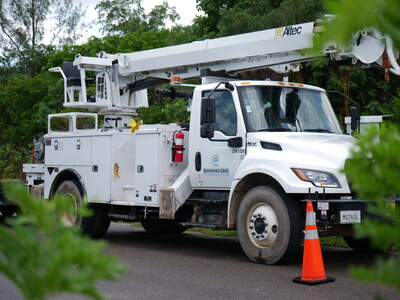
Local leaders across Georgia can now see a more detailed picture of what impacts to expect from climate change with a new map tool released by Drawdown Georgia.

The group, which aims to reduce the state’s greenhouse gas emissions, unveiled the maps at the Super South Summit in Atlanta last week.

Scientists warn that Georgia can expect hotter, longer summers, more extreme weather, more rainfall overall and also longer droughts. But those impacts will vary across the state.

Now, researchers have found ways to scale down big-picture data so they can project not just how climate change is affecting Georgia or the Southeast broadly, but also how it’s changing conditions in specific locations.

Read the full story on WABE.

Local leaders across Georgia can now see a more detailed picture of what impacts to expect from climate change with a new map tool released by Drawdown Georgia.

The group, which aims to reduce the state’s greenhouse gas emissions, unveiled the maps at the Super South Summit in Atlanta last week.

Scientists warn that Georgia can expect hotter, longer summers, more extreme weather, more rainfall overall and also longer droughts. But those impacts will vary across the state.

Now, researchers have found ways to scale down big-picture data so they can project not just how climate change is affecting Georgia or the Southeast broadly, but also how it’s changing conditions in specific locations.

Read the full story on WABE.

Local leaders across Georgia can now see a more detailed picture of what impacts to expect from climate change with a new map tool released by Drawdown Georgia.

The group, which aims to reduce the state’s greenhouse gas emissions, unveiled the maps at the Super South Summit in Atlanta last week.

Scientists warn that Georgia can expect hotter, longer summers, more extreme weather, more rainfall overall and also longer droughts. But those impacts will vary across the state.

Now, researchers have found ways to scale down big-picture data so they can project not just how climate change is affecting Georgia or the Southeast broadly, but also how it’s changing conditions in specific locations.

Read the full story on WABE.