When Sarah Tapani sat in on one of the first Altaviva™ implants, the patient wasn’t focused on the procedure. She was chatting about what she wanted for lunch.

After injecting a local anesthetic, the physician slid an Altaviva™ device — a Medtronic device smaller than a standard stick of gum that treats the symptoms of urinary urge incontinence (the involuntary loss of urine associated with urgency) — into a small incision near the patient’s ankle and closed it with a couple of stitches. The conversation never paused.

Tapani, a senior director and core team lead in the Medtronic tibial portfolio and a driving force behind the engineering that brought the Altaviva™ device to life, took it all in and one thought kept coming to mind: if the patient is planning lunch mid-procedure, we’re doing something right.

The goal of keeping it easy for patients and physicians was so important to the Altaviva™ device team that it became part of the project’s mantra: “hard for us, easy for them.”

The Altaviva™ device was recently named a 2026 Edison Award winner in the Health, Medical and Biotech category. The award honors the most consequential innovations across the globe.

A strategic bet

It’s been known for a long time that stimulating the tibial nerve in the ankle is a way to treat bladder symptoms, according to Medtronic engineers close to this work.

But the team still faced a new, significant challenge. Could they take a therapy that usually requires weekly clinic visits to a small, implantable battery that quietly blended into a patient’s life?

As Medtronic teams approached the challenge, there were three non-negotiables, Tapani said: the device had to be safe, it had to be simple, and it had to get to patients fast.

Those early results mattered. A Medtronic-sponsored clinical trial to assess the safety and effectiveness of Altaviva™ therapy showed implantable tibial neuromodulation delivered relief following 12 months of therapy for people living with urge urinary incontinence1, evidence that the team’s “hard for us, easy for them” approach could translate into lasting patient benefit.

To get Altaviva™ therapy off the ground, the team didn’t have the luxury of working step by step. Engineering, clinical and regulatory strategy, and commercialization all moved in parallel.

“While the pivotal study was getting results, the engineers were squeezing a lot of innovation into that little device,” Tapani said.

The system evolved significantly inside and out, with features like new chipsets, lead elimination, and MRI-compatible design.

One way the teams stuck to their goal of ease-of-use was to resist the urge to add unnecessary features just because they could. Senior Principal Systems Engineer and technical lead on the program Kunal Paralikar called it avoiding “cognitive burden,” or not making patients and clinicians think harder than they need to.

This required attention to detail and thoughtful design touches.

For example, the team incorporated intelligence so the device’s system and the patient’s Altaviva My Therapy application — which is like a phone app, but on a handheld programmer provided by Medtronic — could be synced to update the device’s internal time when the clocks changed for daylight savings’ time — a seemingly simple task that was anything but.

“It was all in an effort to come to an additional therapy option for patients,” he said.

For Tapani, what stands out most isn’t a single technical breakthrough, but the way the team showed up for the people they were building for.

“Patients and clinicians always came first for us,” she said.

That mindset carried the Altaviva™ system from idea to approval to launch — and ultimately, into the lives of patients.

For the team, that’s the measure of success: when years of hard work come together in a therapy designed to fit into patients’ lives.

Learn more about Medtronic.

In addition to risks related to surgery, complications can include pain at the implant site, lower leg pain, infection, and/or technical or device problems. Results vary. Talk to your doctor to see if the Altaviva™ system is right for you.

Important Safety Information
Medtronic Altaviva™ tibial neuromodulation system treats urge urinary incontinence (leakage). It should be used after you have tried other treatments such as medications and behavioral therapy, and they have not worked or you could not tolerate them.

This therapy is not for everyone. The Altaviva™ system is contraindicated (not allowed) for patients who are poor surgical candidates including patients with open wounds, sores, or damaged skin near the treatment area; current or recent history of poor blood circulation in the legs or open sores on the legs from circulation problems; physical changes or previous surgeries where the Altaviva™ device is placed. You must be able to operate or receive assistance in operating the system to be a candidate.

This therapy is not intended for patients who: are not good candidates for surgery or have conditions that make it hard to heal from wounds (such as uncontrolled diabetes, swelling in the lower leg, or nerve problems in the leg); have metal implanted within 5 cm of where the Altaviva™ device would be placed; have a current or unresolved blockage in the urinary tract caused by things like an enlarged prostate, cancer, or urethral narrowing; are allergic to any materials in the Altaviva™ device. The Altaviva™ system may affect or be affected by other implanted medical devices, including pacemakers and defibrillators. Talk to your doctor if you have a pacemaker or other implanted devices. You cannot have diathermy (deep heat treatment using shortwave or microwave electromagnetic energy) if you have an Altaviva™ device. Do not place the charger or ankle band on broken or unhealed skin. Safety and effectiveness have not been established for pregnancy; patients under the age of 18; patients with progressive, systemic neurologic disease; patients with history of urinary retention, or bilateral stimulation.

In addition to risks related to surgery, complications can include pain at the implant site or lower leg pain, infection, wound complications, nerve injury, movement of the implant, undesirable change in bowel or bladder function, uncomfortable or unintended stimulation sensations, unexpected shocking sensation, loss of therapeutic effect, discomfort when recharging, or technical or device problems.

This therapy is not for everyone. This treatment is prescribed by your doctor. Please talk to your doctor to decide whether this therapy is right for you. Your doctor should discuss all potential benefits and risks with you. Although many patients may benefit from the use of this treatment, results may vary.

For complete safety information about this treatment, please visit the Medtronic website at www.medtronic.com.

References

  1. Lee U, Xavier K, Carey J, et al. Implantable tibial neuromodulation therapy improves symptoms of urge urinary incontinence from the TITAN 2 pivotal study. J Urol. 0(0). doi:10.1097/JU.0000000000004958
When Sarah Tapani sat in on one of the first Altaviva™ implants, the patient wasn’t focused on the procedure. She was chatting about what she wanted for lunch.

After injecting a local anesthetic, the physician slid an Altaviva™ device — a Medtronic device smaller than a standard stick of gum that treats the symptoms of urinary urge incontinence (the involuntary loss of urine associated with urgency) — into a small incision near the patient’s ankle and closed it with a couple of stitches. The conversation never paused.

Tapani, a senior director and core team lead in the Medtronic tibial portfolio and a driving force behind the engineering that brought the Altaviva™ device to life, took it all in and one thought kept coming to mind: if the patient is planning lunch mid-procedure, we’re doing something right.

The goal of keeping it easy for patients and physicians was so important to the Altaviva™ device team that it became part of the project’s mantra: “hard for us, easy for them.”

The Altaviva™ device was recently named a 2026 Edison Award winner in the Health, Medical and Biotech category. The award honors the most consequential innovations across the globe.

A strategic bet

It’s been known for a long time that stimulating the tibial nerve in the ankle is a way to treat bladder symptoms, according to Medtronic engineers close to this work.

But the team still faced a new, significant challenge. Could they take a therapy that usually requires weekly clinic visits to a small, implantable battery that quietly blended into a patient’s life?

As Medtronic teams approached the challenge, there were three non-negotiables, Tapani said: the device had to be safe, it had to be simple, and it had to get to patients fast.

Those early results mattered. A Medtronic-sponsored clinical trial to assess the safety and effectiveness of Altaviva™ therapy showed implantable tibial neuromodulation delivered relief following 12 months of therapy for people living with urge urinary incontinence1, evidence that the team’s “hard for us, easy for them” approach could translate into lasting patient benefit.

To get Altaviva™ therapy off the ground, the team didn’t have the luxury of working step by step. Engineering, clinical and regulatory strategy, and commercialization all moved in parallel.

“While the pivotal study was getting results, the engineers were squeezing a lot of innovation into that little device,” Tapani said.

The system evolved significantly inside and out, with features like new chipsets, lead elimination, and MRI-compatible design.

One way the teams stuck to their goal of ease-of-use was to resist the urge to add unnecessary features just because they could. Senior Principal Systems Engineer and technical lead on the program Kunal Paralikar called it avoiding “cognitive burden,” or not making patients and clinicians think harder than they need to.

This required attention to detail and thoughtful design touches.

For example, the team incorporated intelligence so the device’s system and the patient’s Altaviva My Therapy application — which is like a phone app, but on a handheld programmer provided by Medtronic — could be synced to update the device’s internal time when the clocks changed for daylight savings’ time — a seemingly simple task that was anything but.

“It was all in an effort to come to an additional therapy option for patients,” he said.

For Tapani, what stands out most isn’t a single technical breakthrough, but the way the team showed up for the people they were building for.

“Patients and clinicians always came first for us,” she said.

That mindset carried the Altaviva™ system from idea to approval to launch — and ultimately, into the lives of patients.

For the team, that’s the measure of success: when years of hard work come together in a therapy designed to fit into patients’ lives.

Learn more about Medtronic.

In addition to risks related to surgery, complications can include pain at the implant site, lower leg pain, infection, and/or technical or device problems. Results vary. Talk to your doctor to see if the Altaviva™ system is right for you.

Important Safety Information
Medtronic Altaviva™ tibial neuromodulation system treats urge urinary incontinence (leakage). It should be used after you have tried other treatments such as medications and behavioral therapy, and they have not worked or you could not tolerate them.

This therapy is not for everyone. The Altaviva™ system is contraindicated (not allowed) for patients who are poor surgical candidates including patients with open wounds, sores, or damaged skin near the treatment area; current or recent history of poor blood circulation in the legs or open sores on the legs from circulation problems; physical changes or previous surgeries where the Altaviva™ device is placed. You must be able to operate or receive assistance in operating the system to be a candidate.

This therapy is not intended for patients who: are not good candidates for surgery or have conditions that make it hard to heal from wounds (such as uncontrolled diabetes, swelling in the lower leg, or nerve problems in the leg); have metal implanted within 5 cm of where the Altaviva™ device would be placed; have a current or unresolved blockage in the urinary tract caused by things like an enlarged prostate, cancer, or urethral narrowing; are allergic to any materials in the Altaviva™ device. The Altaviva™ system may affect or be affected by other implanted medical devices, including pacemakers and defibrillators. Talk to your doctor if you have a pacemaker or other implanted devices. You cannot have diathermy (deep heat treatment using shortwave or microwave electromagnetic energy) if you have an Altaviva™ device. Do not place the charger or ankle band on broken or unhealed skin. Safety and effectiveness have not been established for pregnancy; patients under the age of 18; patients with progressive, systemic neurologic disease; patients with history of urinary retention, or bilateral stimulation.

In addition to risks related to surgery, complications can include pain at the implant site or lower leg pain, infection, wound complications, nerve injury, movement of the implant, undesirable change in bowel or bladder function, uncomfortable or unintended stimulation sensations, unexpected shocking sensation, loss of therapeutic effect, discomfort when recharging, or technical or device problems.

This therapy is not for everyone. This treatment is prescribed by your doctor. Please talk to your doctor to decide whether this therapy is right for you. Your doctor should discuss all potential benefits and risks with you. Although many patients may benefit from the use of this treatment, results may vary.

For complete safety information about this treatment, please visit the Medtronic website at www.medtronic.com.

References

  1. Lee U, Xavier K, Carey J, et al. Implantable tibial neuromodulation therapy improves symptoms of urge urinary incontinence from the TITAN 2 pivotal study. J Urol. 0(0). doi:10.1097/JU.0000000000004958
When Sarah Tapani sat in on one of the first Altaviva™ implants, the patient wasn’t focused on the procedure. She was chatting about what she wanted for lunch.

After injecting a local anesthetic, the physician slid an Altaviva™ device — a Medtronic device smaller than a standard stick of gum that treats the symptoms of urinary urge incontinence (the involuntary loss of urine associated with urgency) — into a small incision near the patient’s ankle and closed it with a couple of stitches. The conversation never paused.

Tapani, a senior director and core team lead in the Medtronic tibial portfolio and a driving force behind the engineering that brought the Altaviva™ device to life, took it all in and one thought kept coming to mind: if the patient is planning lunch mid-procedure, we’re doing something right.

The goal of keeping it easy for patients and physicians was so important to the Altaviva™ device team that it became part of the project’s mantra: “hard for us, easy for them.”

The Altaviva™ device was recently named a 2026 Edison Award winner in the Health, Medical and Biotech category. The award honors the most consequential innovations across the globe.

A strategic bet

It’s been known for a long time that stimulating the tibial nerve in the ankle is a way to treat bladder symptoms, according to Medtronic engineers close to this work.

But the team still faced a new, significant challenge. Could they take a therapy that usually requires weekly clinic visits to a small, implantable battery that quietly blended into a patient’s life?

As Medtronic teams approached the challenge, there were three non-negotiables, Tapani said: the device had to be safe, it had to be simple, and it had to get to patients fast.

Those early results mattered. A Medtronic-sponsored clinical trial to assess the safety and effectiveness of Altaviva™ therapy showed implantable tibial neuromodulation delivered relief following 12 months of therapy for people living with urge urinary incontinence1, evidence that the team’s “hard for us, easy for them” approach could translate into lasting patient benefit.

To get Altaviva™ therapy off the ground, the team didn’t have the luxury of working step by step. Engineering, clinical and regulatory strategy, and commercialization all moved in parallel.

“While the pivotal study was getting results, the engineers were squeezing a lot of innovation into that little device,” Tapani said.

The system evolved significantly inside and out, with features like new chipsets, lead elimination, and MRI-compatible design.

One way the teams stuck to their goal of ease-of-use was to resist the urge to add unnecessary features just because they could. Senior Principal Systems Engineer and technical lead on the program Kunal Paralikar called it avoiding “cognitive burden,” or not making patients and clinicians think harder than they need to.

This required attention to detail and thoughtful design touches.

For example, the team incorporated intelligence so the device’s system and the patient’s Altaviva My Therapy application — which is like a phone app, but on a handheld programmer provided by Medtronic — could be synced to update the device’s internal time when the clocks changed for daylight savings’ time — a seemingly simple task that was anything but.

“It was all in an effort to come to an additional therapy option for patients,” he said.

For Tapani, what stands out most isn’t a single technical breakthrough, but the way the team showed up for the people they were building for.

“Patients and clinicians always came first for us,” she said.

That mindset carried the Altaviva™ system from idea to approval to launch — and ultimately, into the lives of patients.

For the team, that’s the measure of success: when years of hard work come together in a therapy designed to fit into patients’ lives.

Learn more about Medtronic.

In addition to risks related to surgery, complications can include pain at the implant site, lower leg pain, infection, and/or technical or device problems. Results vary. Talk to your doctor to see if the Altaviva™ system is right for you.

Important Safety Information
Medtronic Altaviva™ tibial neuromodulation system treats urge urinary incontinence (leakage). It should be used after you have tried other treatments such as medications and behavioral therapy, and they have not worked or you could not tolerate them.

This therapy is not for everyone. The Altaviva™ system is contraindicated (not allowed) for patients who are poor surgical candidates including patients with open wounds, sores, or damaged skin near the treatment area; current or recent history of poor blood circulation in the legs or open sores on the legs from circulation problems; physical changes or previous surgeries where the Altaviva™ device is placed. You must be able to operate or receive assistance in operating the system to be a candidate.

This therapy is not intended for patients who: are not good candidates for surgery or have conditions that make it hard to heal from wounds (such as uncontrolled diabetes, swelling in the lower leg, or nerve problems in the leg); have metal implanted within 5 cm of where the Altaviva™ device would be placed; have a current or unresolved blockage in the urinary tract caused by things like an enlarged prostate, cancer, or urethral narrowing; are allergic to any materials in the Altaviva™ device. The Altaviva™ system may affect or be affected by other implanted medical devices, including pacemakers and defibrillators. Talk to your doctor if you have a pacemaker or other implanted devices. You cannot have diathermy (deep heat treatment using shortwave or microwave electromagnetic energy) if you have an Altaviva™ device. Do not place the charger or ankle band on broken or unhealed skin. Safety and effectiveness have not been established for pregnancy; patients under the age of 18; patients with progressive, systemic neurologic disease; patients with history of urinary retention, or bilateral stimulation.

In addition to risks related to surgery, complications can include pain at the implant site or lower leg pain, infection, wound complications, nerve injury, movement of the implant, undesirable change in bowel or bladder function, uncomfortable or unintended stimulation sensations, unexpected shocking sensation, loss of therapeutic effect, discomfort when recharging, or technical or device problems.

This therapy is not for everyone. This treatment is prescribed by your doctor. Please talk to your doctor to decide whether this therapy is right for you. Your doctor should discuss all potential benefits and risks with you. Although many patients may benefit from the use of this treatment, results may vary.

For complete safety information about this treatment, please visit the Medtronic website at www.medtronic.com.

References

  1. Lee U, Xavier K, Carey J, et al. Implantable tibial neuromodulation therapy improves symptoms of urge urinary incontinence from the TITAN 2 pivotal study. J Urol. 0(0). doi:10.1097/JU.0000000000004958
Originally published on newsroom.marykay.com

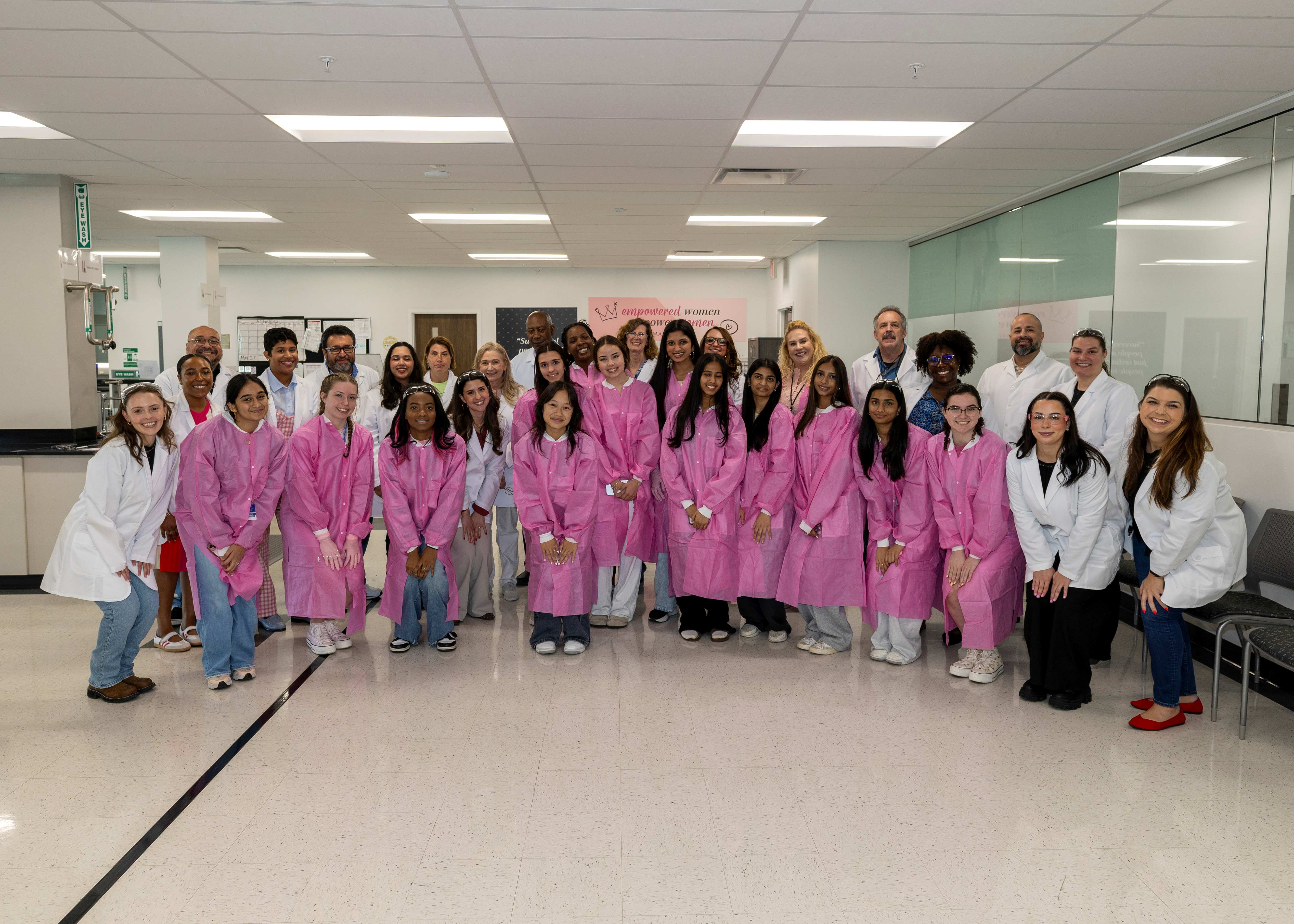
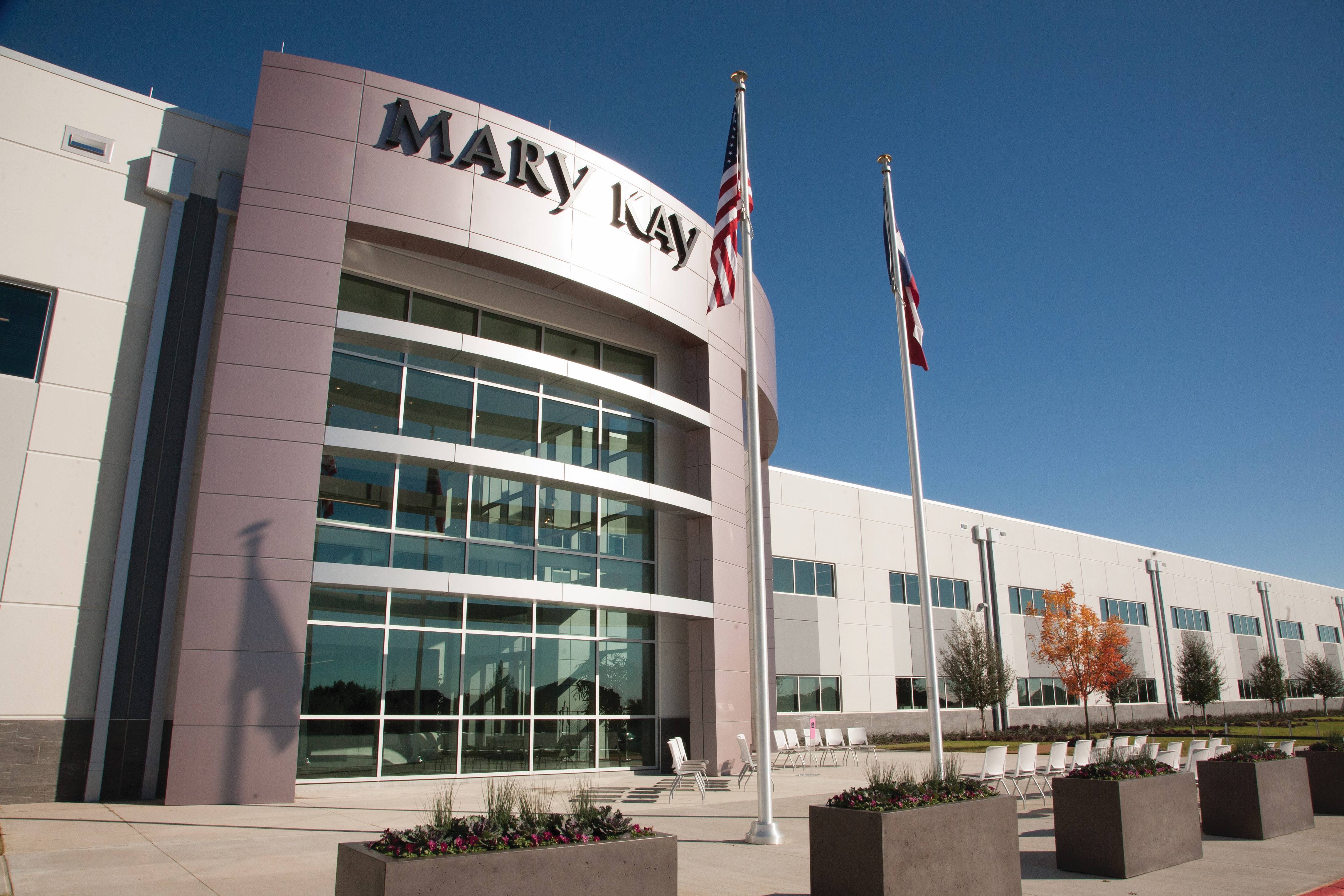
Early April, Mary Kay welcomed nearly 100 sophomore girls and faculty from Lewisville Independent School District (LISD), along with Mayor of Lewisville, T.J. Gilmore, and representatives from local and national elected officials’ offices to the Richard R. Rogers Manufacturing and Research & Development Center, also known as “R3,” for Mary Kay’s largest-ever Women in STEMK Day.

Nearly 100 Lewisville Independent School District students visited May Kay’s Richard R. Rogers Manufacturing and Research & Development Center. (Photo Courtesy: Bill Birt)

Nearly 100 Lewisville Independent School District students visited May Kay’s Richard R. Rogers Manufacturing and Research & Development Center. (Photo Courtesy: Bill Birt)

This immersive experience was designed to spark curiosity, build confidence, and expand young women’s perceptions of what a STEM career can look like at Mary Kay. Over 60 corporate employees volunteered their time serving as expert panelists, tour guides, and lab scientists to ensure a memorable experience for the students.

“Unlocking the potential of the next generation of women in science and innovation isn’t just important – it is  transformative,” said Dr. Lucy Gildea, Chief Brand and Scientific Officer at Mary Kay. “When we equip young women with the confidence, tools, and knowledge to pursue STEM, we’re not just opening doors – we are redefining the future. These brilliant minds will lead breakthroughs, reshape industries, and bring fresh vision to both beauty and science. Watching that moment when curiosity turns into ambition, when possibility becomes purpose, that’s where real change begins. And that’s how we build a future where women don’t just participate in STEM – they lead it.”

Explore, Create, Innovate through three cornerstone experiences.
Throughout the day, groups of students rotated through three cornerstone experiences each designed to give them a firsthand look at STEM career possibilities:

  1. Behind‑the‑scenes facility tour of R3
    Tour guides led the groups through each of the facilities’ areas to give students a taste of all the various STEM jobs that range from upstream research and product formulation to manufacturing and supply chain and everything in between.
  2. Hands-On “Create Your Own Lip Gloss” Lab Experiment
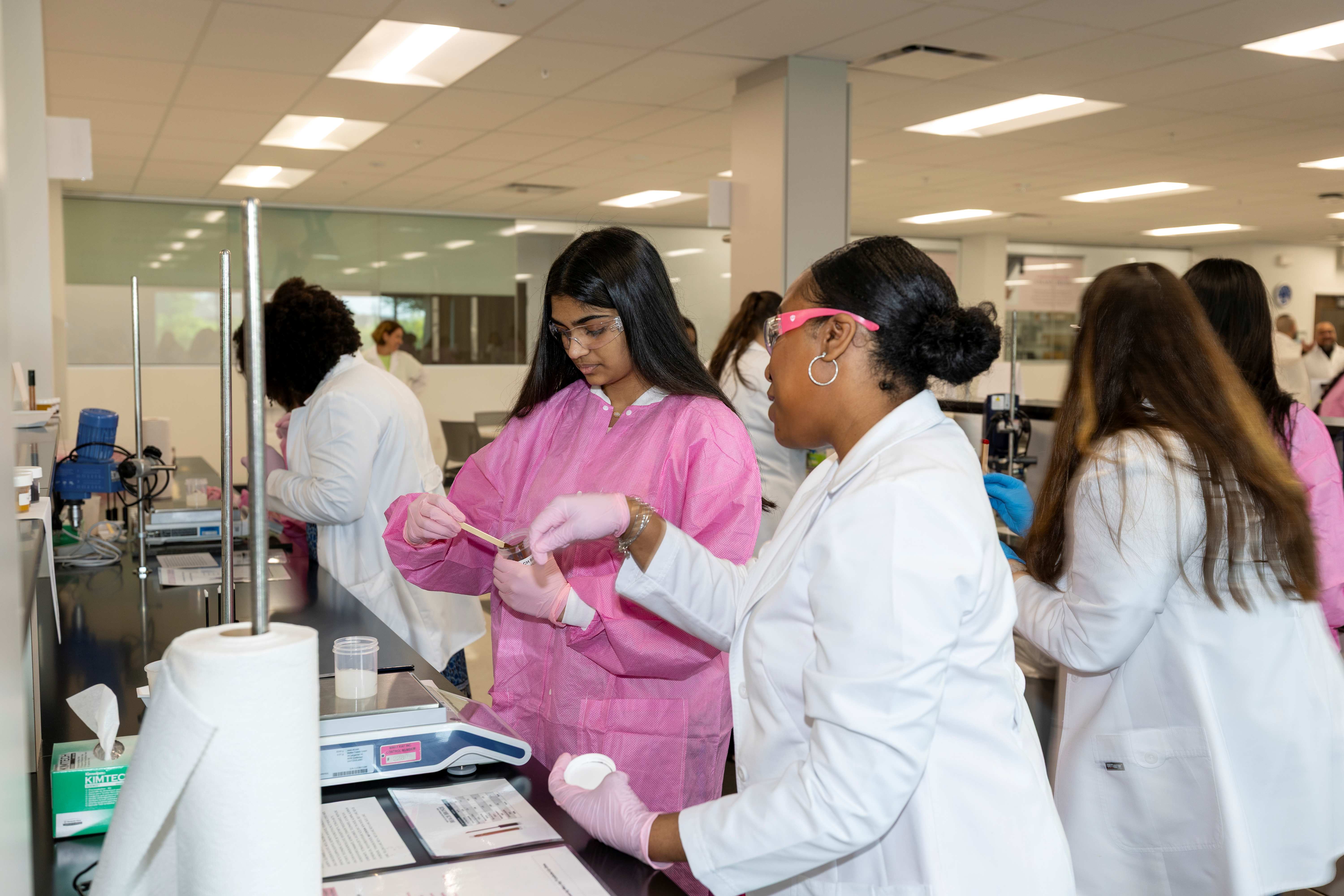
    During the lab session, students worked alongside Mary Kay scientists to experience what hands‑on experimentation looks like in a real R&D environment. Each left with a unique shade of Mary Kay Unlimited® Lip Gloss inspired by their very own in-lab creation.
  3. Women in STEMK Mentor Panels.
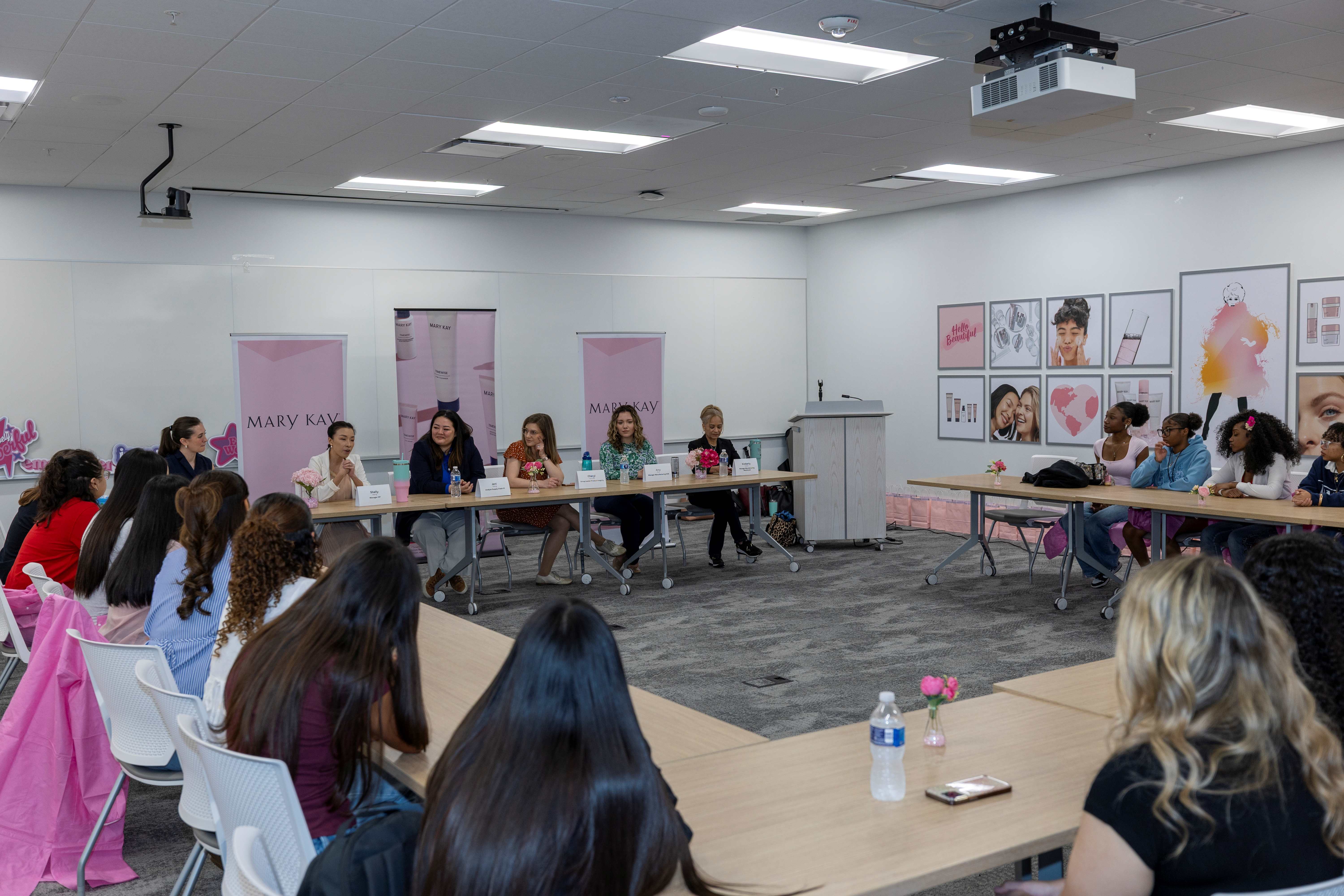
    Three panels of our resident expert females in STEM shared personal stories of career pivots, overcoming imposter syndrome, finding their place in a male-dominated field, and reassurance that a career path is anything but linear.

Students worked alongside Mary Kay scientists to create a unique shade of Mary Kay Unlimited® Lip Gloss. (Photo Courtesy: Bill Birt)

Students worked alongside Mary Kay scientists to create a unique shade of Mary Kay Unlimited® Lip Gloss. (Photo Courtesy: Bill Birt)

This rotating format allowed every student to engage directly with our female STEM leaders, see, and learn about our world-class innovation center, and hear about the many career paths that exist within STEM at Mary Kay and beyond.

“Through our partnership with Mary Kay, Lewisville ISD is able to provide students with meaningful, real-world STEM experiences that bring classroom learning to life,” said Lindsay Ayers, Administrator of Business Partnerships at Lewisville Independent School District. “Together, we are connecting students with inspiring women leaders, expanding their understanding of career possibilities, and helping them build the confidence and skills needed for future success. This collaboration reflects our shared commitment to preparing the next generation – especially young women – to lead, innovate, and thrive in STEM fields.”

Every student got to engage directly with our female STEM leaders, see, and learn about our world-class innovation center, and hear about the many career paths within STEM at Mary Kay and beyond. (Photo Courtesy: Bill Birt)

Every student got to engage directly with our female STEM leaders, see, and learn about our world-class innovation center, and hear about the many career paths within STEM at Mary Kay and beyond. (Photo Courtesy: Bill Birt)

Women in STEM Day: Sophomore Student Survey Results

Students were invited to complete a pre- and post‑event survey to share how the experience influenced their perceptions of women in STEM careers and Mary Kay as a women’s empowerment brand.

  • 94% of students reported a positive impact from seeing women in STEM roles.
    • 70% of students said seeing women in diverse STEM roles “greatly impacted their view of their own career possibilities.”
  • 91% now recognize STEM careers in cosmetics reach beyond sales/marketing.
  • After visiting, students shifted focus away from earnings and toward purpose, balance, and creativity.
    • High earning potential” decreased in importance while “work-life balance,” “helping others,” and “creativity” increased.

The impact is clear, but don’t take our word for it, take theirs. When asked “What surprised you most about the facility or the careers you learned about?” students responded:

  • “I have never seen so many women holding such high positions in a company (sad, I know) in real life. I loved seeing smart, beautiful, strong women so much.”
  • “How passionate the women were about their work.”
  • “What surprised me is how many people were really willing to teach us and actually liked their job.”
  • “I was surprised that on the panel, there were more than chemists and manufacturers, demonstrating that a business like Mary Kay has more that goes into it than the makeup.”
  • “All the testing and thinking behind what we just see when we are shopping for products.”
  • “I was surprised by the diversity in their jobs that they did throughout their lifetime. They were successful even if they didn’t have everything figured out by junior year of high school and that inspired me and calmed my anxiety!”
  • “I was surprised to learn that there were way more to makeup related fields other than engineering. It made me invested in potential careers that I might be interested in doing.”
  • “How many women in the fields I dream of were present. As well as how productive and creative people are to become the successful force of Mary Kay.”

Why It Matters

Exposing young women to the possibilities of a future in STEM can be life changing during critical formative years. Women in STEMK events reflect Mary Kay’s long‑standing commitment to expanding access, representation, and opportunity – especially at pivotal moments when young women begin shaping their academic and career aspirations.

The experience was mutually beneficial. The expert panelists also left with learnings and new perspectives:

Laura Reinschmidt, Manager, Process Development & Commercialization

“I didn’t have opportunities like this growing up, so it’s really meaningful to be part of something that’s changing that for the next generation. It’s so powerful for them to see just how many possibilities are out there. I’m really passionate about helping young girls see that these paths are within reach for them too, and it was also so great hearing everyone on the panel share their journeys so openly.”

Geetha Kalahasti, Associate Principal Scientist

“Truly inspiring!! It’s wonderful to see the impact this experience had on the students. I really enjoyed being part of this and love that we’re able to give back and help guide the next generation.”

By opening our doors, sharing our stories, and investing time in mentorship, we’re helping students envision futures they may not have previously considered – reinforcing Mary Kay’s role as a place where science, innovation, and purpose are empowering the next generation.

Did You Know:

  • Boasting a 62% female, global R&D team, Mary Kay celebrates and encourages young women who are taking charge of their futures through leadership, innovation, and determination to excel in STEM fields.[1]
  • According to UNESCO, female students represent only 35% of all students enrolled in STEM-related fields of study in higher education globally[2].
  • The Mary Kay Richard R. Rogers Manufacturing and Research & Development Center features 21 product packaging lines which have the combined capability of producing up to 1 million units per day.

The Mary Kay Richard R. Rogers Manufacturing and Research & Development Center features 21 product packaging lines with a combined capacity of producing up to 1 million units per day. (Photo Courtesy: Mary Kay Inc.)

The Mary Kay Richard R. Rogers Manufacturing and Research & Development Center features 21 product packaging lines with a combined capacity of producing up to 1 million units per day. (Photo Courtesy: Mary Kay Inc.)

***

About Mary Kay

One of the original glass ceiling breakers, Mary Kay Ash founded her dream beauty brand in Texas in 1963 with one goal: to enrich women’s lives. Learn more at marykayglobal.com. Find us on FacebookInstagram, and LinkedIn, or follow us on X.


[1] Source: Women Representation & Leadership at Mary Kay (2025).
[2] UNESCO. Cracking The Code: Girls’ And Women’s Education In Science, Technology, Engineering And Mathematics (STEM). Retrieved from https://unesdoc.unesco.org/ark:/48223/pf0000253479

Originally published on newsroom.marykay.com

Early April, Mary Kay welcomed nearly 100 sophomore girls and faculty from Lewisville Independent School District (LISD), along with Mayor of Lewisville, T.J. Gilmore, and representatives from local and national elected officials’ offices to the Richard R. Rogers Manufacturing and Research & Development Center, also known as “R3,” for Mary Kay’s largest-ever Women in STEMK Day.

Nearly 100 Lewisville Independent School District students visited May Kay’s Richard R. Rogers Manufacturing and Research & Development Center. (Photo Courtesy: Bill Birt)

Nearly 100 Lewisville Independent School District students visited May Kay’s Richard R. Rogers Manufacturing and Research & Development Center. (Photo Courtesy: Bill Birt)

This immersive experience was designed to spark curiosity, build confidence, and expand young women’s perceptions of what a STEM career can look like at Mary Kay. Over 60 corporate employees volunteered their time serving as expert panelists, tour guides, and lab scientists to ensure a memorable experience for the students.

“Unlocking the potential of the next generation of women in science and innovation isn’t just important – it is  transformative,” said Dr. Lucy Gildea, Chief Brand and Scientific Officer at Mary Kay. “When we equip young women with the confidence, tools, and knowledge to pursue STEM, we’re not just opening doors – we are redefining the future. These brilliant minds will lead breakthroughs, reshape industries, and bring fresh vision to both beauty and science. Watching that moment when curiosity turns into ambition, when possibility becomes purpose, that’s where real change begins. And that’s how we build a future where women don’t just participate in STEM – they lead it.”

Explore, Create, Innovate through three cornerstone experiences.
Throughout the day, groups of students rotated through three cornerstone experiences each designed to give them a firsthand look at STEM career possibilities:

  1. Behind‑the‑scenes facility tour of R3
    Tour guides led the groups through each of the facilities’ areas to give students a taste of all the various STEM jobs that range from upstream research and product formulation to manufacturing and supply chain and everything in between.
  2. Hands-On “Create Your Own Lip Gloss” Lab Experiment
    During the lab session, students worked alongside Mary Kay scientists to experience what hands‑on experimentation looks like in a real R&D environment. Each left with a unique shade of Mary Kay Unlimited® Lip Gloss inspired by their very own in-lab creation.
  3. Women in STEMK Mentor Panels.
    Three panels of our resident expert females in STEM shared personal stories of career pivots, overcoming imposter syndrome, finding their place in a male-dominated field, and reassurance that a career path is anything but linear.

Students worked alongside Mary Kay scientists to create a unique shade of Mary Kay Unlimited® Lip Gloss. (Photo Courtesy: Bill Birt)

Students worked alongside Mary Kay scientists to create a unique shade of Mary Kay Unlimited® Lip Gloss. (Photo Courtesy: Bill Birt)

This rotating format allowed every student to engage directly with our female STEM leaders, see, and learn about our world-class innovation center, and hear about the many career paths that exist within STEM at Mary Kay and beyond.

“Through our partnership with Mary Kay, Lewisville ISD is able to provide students with meaningful, real-world STEM experiences that bring classroom learning to life,” said Lindsay Ayers, Administrator of Business Partnerships at Lewisville Independent School District. “Together, we are connecting students with inspiring women leaders, expanding their understanding of career possibilities, and helping them build the confidence and skills needed for future success. This collaboration reflects our shared commitment to preparing the next generation – especially young women – to lead, innovate, and thrive in STEM fields.”

Every student got to engage directly with our female STEM leaders, see, and learn about our world-class innovation center, and hear about the many career paths within STEM at Mary Kay and beyond. (Photo Courtesy: Bill Birt)

Every student got to engage directly with our female STEM leaders, see, and learn about our world-class innovation center, and hear about the many career paths within STEM at Mary Kay and beyond. (Photo Courtesy: Bill Birt)

Women in STEM Day: Sophomore Student Survey Results

Students were invited to complete a pre- and post‑event survey to share how the experience influenced their perceptions of women in STEM careers and Mary Kay as a women’s empowerment brand.

  • 94% of students reported a positive impact from seeing women in STEM roles.
    • 70% of students said seeing women in diverse STEM roles “greatly impacted their view of their own career possibilities.”
  • 91% now recognize STEM careers in cosmetics reach beyond sales/marketing.
  • After visiting, students shifted focus away from earnings and toward purpose, balance, and creativity.
    • High earning potential” decreased in importance while “work-life balance,” “helping others,” and “creativity” increased.

The impact is clear, but don’t take our word for it, take theirs. When asked “What surprised you most about the facility or the careers you learned about?” students responded:

  • “I have never seen so many women holding such high positions in a company (sad, I know) in real life. I loved seeing smart, beautiful, strong women so much.”
  • “How passionate the women were about their work.”
  • “What surprised me is how many people were really willing to teach us and actually liked their job.”
  • “I was surprised that on the panel, there were more than chemists and manufacturers, demonstrating that a business like Mary Kay has more that goes into it than the makeup.”
  • “All the testing and thinking behind what we just see when we are shopping for products.”
  • “I was surprised by the diversity in their jobs that they did throughout their lifetime. They were successful even if they didn’t have everything figured out by junior year of high school and that inspired me and calmed my anxiety!”
  • “I was surprised to learn that there were way more to makeup related fields other than engineering. It made me invested in potential careers that I might be interested in doing.”
  • “How many women in the fields I dream of were present. As well as how productive and creative people are to become the successful force of Mary Kay.”

Why It Matters

Exposing young women to the possibilities of a future in STEM can be life changing during critical formative years. Women in STEMK events reflect Mary Kay’s long‑standing commitment to expanding access, representation, and opportunity – especially at pivotal moments when young women begin shaping their academic and career aspirations.

The experience was mutually beneficial. The expert panelists also left with learnings and new perspectives:

Laura Reinschmidt, Manager, Process Development & Commercialization

“I didn’t have opportunities like this growing up, so it’s really meaningful to be part of something that’s changing that for the next generation. It’s so powerful for them to see just how many possibilities are out there. I’m really passionate about helping young girls see that these paths are within reach for them too, and it was also so great hearing everyone on the panel share their journeys so openly.”

Geetha Kalahasti, Associate Principal Scientist

“Truly inspiring!! It’s wonderful to see the impact this experience had on the students. I really enjoyed being part of this and love that we’re able to give back and help guide the next generation.”

By opening our doors, sharing our stories, and investing time in mentorship, we’re helping students envision futures they may not have previously considered – reinforcing Mary Kay’s role as a place where science, innovation, and purpose are empowering the next generation.

Did You Know:

  • Boasting a 62% female, global R&D team, Mary Kay celebrates and encourages young women who are taking charge of their futures through leadership, innovation, and determination to excel in STEM fields.[1]
  • According to UNESCO, female students represent only 35% of all students enrolled in STEM-related fields of study in higher education globally[2].
  • The Mary Kay Richard R. Rogers Manufacturing and Research & Development Center features 21 product packaging lines which have the combined capability of producing up to 1 million units per day.

The Mary Kay Richard R. Rogers Manufacturing and Research & Development Center features 21 product packaging lines with a combined capacity of producing up to 1 million units per day. (Photo Courtesy: Mary Kay Inc.)

The Mary Kay Richard R. Rogers Manufacturing and Research & Development Center features 21 product packaging lines with a combined capacity of producing up to 1 million units per day. (Photo Courtesy: Mary Kay Inc.)

***

About Mary Kay

One of the original glass ceiling breakers, Mary Kay Ash founded her dream beauty brand in Texas in 1963 with one goal: to enrich women’s lives. Learn more at marykayglobal.com. Find us on FacebookInstagram, and LinkedIn, or follow us on X.


[1] Source: Women Representation & Leadership at Mary Kay (2025).
[2] UNESCO. Cracking The Code: Girls’ And Women’s Education In Science, Technology, Engineering And Mathematics (STEM). Retrieved from https://unesdoc.unesco.org/ark:/48223/pf0000253479

Originally published on newsroom.marykay.com

Early April, Mary Kay welcomed nearly 100 sophomore girls and faculty from Lewisville Independent School District (LISD), along with Mayor of Lewisville, T.J. Gilmore, and representatives from local and national elected officials’ offices to the Richard R. Rogers Manufacturing and Research & Development Center, also known as “R3,” for Mary Kay’s largest-ever Women in STEMK Day.

Nearly 100 Lewisville Independent School District students visited May Kay’s Richard R. Rogers Manufacturing and Research & Development Center. (Photo Courtesy: Bill Birt)

Nearly 100 Lewisville Independent School District students visited May Kay’s Richard R. Rogers Manufacturing and Research & Development Center. (Photo Courtesy: Bill Birt)

This immersive experience was designed to spark curiosity, build confidence, and expand young women’s perceptions of what a STEM career can look like at Mary Kay. Over 60 corporate employees volunteered their time serving as expert panelists, tour guides, and lab scientists to ensure a memorable experience for the students.

“Unlocking the potential of the next generation of women in science and innovation isn’t just important – it is  transformative,” said Dr. Lucy Gildea, Chief Brand and Scientific Officer at Mary Kay. “When we equip young women with the confidence, tools, and knowledge to pursue STEM, we’re not just opening doors – we are redefining the future. These brilliant minds will lead breakthroughs, reshape industries, and bring fresh vision to both beauty and science. Watching that moment when curiosity turns into ambition, when possibility becomes purpose, that’s where real change begins. And that’s how we build a future where women don’t just participate in STEM – they lead it.”

Explore, Create, Innovate through three cornerstone experiences.
Throughout the day, groups of students rotated through three cornerstone experiences each designed to give them a firsthand look at STEM career possibilities:

  1. Behind‑the‑scenes facility tour of R3
    Tour guides led the groups through each of the facilities’ areas to give students a taste of all the various STEM jobs that range from upstream research and product formulation to manufacturing and supply chain and everything in between.
  2. Hands-On “Create Your Own Lip Gloss” Lab Experiment
    During the lab session, students worked alongside Mary Kay scientists to experience what hands‑on experimentation looks like in a real R&D environment. Each left with a unique shade of Mary Kay Unlimited® Lip Gloss inspired by their very own in-lab creation.
  3. Women in STEMK Mentor Panels.
    Three panels of our resident expert females in STEM shared personal stories of career pivots, overcoming imposter syndrome, finding their place in a male-dominated field, and reassurance that a career path is anything but linear.

Students worked alongside Mary Kay scientists to create a unique shade of Mary Kay Unlimited® Lip Gloss. (Photo Courtesy: Bill Birt)

Students worked alongside Mary Kay scientists to create a unique shade of Mary Kay Unlimited® Lip Gloss. (Photo Courtesy: Bill Birt)

This rotating format allowed every student to engage directly with our female STEM leaders, see, and learn about our world-class innovation center, and hear about the many career paths that exist within STEM at Mary Kay and beyond.

“Through our partnership with Mary Kay, Lewisville ISD is able to provide students with meaningful, real-world STEM experiences that bring classroom learning to life,” said Lindsay Ayers, Administrator of Business Partnerships at Lewisville Independent School District. “Together, we are connecting students with inspiring women leaders, expanding their understanding of career possibilities, and helping them build the confidence and skills needed for future success. This collaboration reflects our shared commitment to preparing the next generation – especially young women – to lead, innovate, and thrive in STEM fields.”

Every student got to engage directly with our female STEM leaders, see, and learn about our world-class innovation center, and hear about the many career paths within STEM at Mary Kay and beyond. (Photo Courtesy: Bill Birt)

Every student got to engage directly with our female STEM leaders, see, and learn about our world-class innovation center, and hear about the many career paths within STEM at Mary Kay and beyond. (Photo Courtesy: Bill Birt)

Women in STEM Day: Sophomore Student Survey Results

Students were invited to complete a pre- and post‑event survey to share how the experience influenced their perceptions of women in STEM careers and Mary Kay as a women’s empowerment brand.

  • 94% of students reported a positive impact from seeing women in STEM roles.
    • 70% of students said seeing women in diverse STEM roles “greatly impacted their view of their own career possibilities.”
  • 91% now recognize STEM careers in cosmetics reach beyond sales/marketing.
  • After visiting, students shifted focus away from earnings and toward purpose, balance, and creativity.
    • High earning potential” decreased in importance while “work-life balance,” “helping others,” and “creativity” increased.

The impact is clear, but don’t take our word for it, take theirs. When asked “What surprised you most about the facility or the careers you learned about?” students responded:

  • “I have never seen so many women holding such high positions in a company (sad, I know) in real life. I loved seeing smart, beautiful, strong women so much.”
  • “How passionate the women were about their work.”
  • “What surprised me is how many people were really willing to teach us and actually liked their job.”
  • “I was surprised that on the panel, there were more than chemists and manufacturers, demonstrating that a business like Mary Kay has more that goes into it than the makeup.”
  • “All the testing and thinking behind what we just see when we are shopping for products.”
  • “I was surprised by the diversity in their jobs that they did throughout their lifetime. They were successful even if they didn’t have everything figured out by junior year of high school and that inspired me and calmed my anxiety!”
  • “I was surprised to learn that there were way more to makeup related fields other than engineering. It made me invested in potential careers that I might be interested in doing.”
  • “How many women in the fields I dream of were present. As well as how productive and creative people are to become the successful force of Mary Kay.”

Why It Matters

Exposing young women to the possibilities of a future in STEM can be life changing during critical formative years. Women in STEMK events reflect Mary Kay’s long‑standing commitment to expanding access, representation, and opportunity – especially at pivotal moments when young women begin shaping their academic and career aspirations.

The experience was mutually beneficial. The expert panelists also left with learnings and new perspectives:

Laura Reinschmidt, Manager, Process Development & Commercialization

“I didn’t have opportunities like this growing up, so it’s really meaningful to be part of something that’s changing that for the next generation. It’s so powerful for them to see just how many possibilities are out there. I’m really passionate about helping young girls see that these paths are within reach for them too, and it was also so great hearing everyone on the panel share their journeys so openly.”

Geetha Kalahasti, Associate Principal Scientist

“Truly inspiring!! It’s wonderful to see the impact this experience had on the students. I really enjoyed being part of this and love that we’re able to give back and help guide the next generation.”

By opening our doors, sharing our stories, and investing time in mentorship, we’re helping students envision futures they may not have previously considered – reinforcing Mary Kay’s role as a place where science, innovation, and purpose are empowering the next generation.

Did You Know:

  • Boasting a 62% female, global R&D team, Mary Kay celebrates and encourages young women who are taking charge of their futures through leadership, innovation, and determination to excel in STEM fields.[1]
  • According to UNESCO, female students represent only 35% of all students enrolled in STEM-related fields of study in higher education globally[2].
  • The Mary Kay Richard R. Rogers Manufacturing and Research & Development Center features 21 product packaging lines which have the combined capability of producing up to 1 million units per day.

The Mary Kay Richard R. Rogers Manufacturing and Research & Development Center features 21 product packaging lines with a combined capacity of producing up to 1 million units per day. (Photo Courtesy: Mary Kay Inc.)

The Mary Kay Richard R. Rogers Manufacturing and Research & Development Center features 21 product packaging lines with a combined capacity of producing up to 1 million units per day. (Photo Courtesy: Mary Kay Inc.)

***

About Mary Kay

One of the original glass ceiling breakers, Mary Kay Ash founded her dream beauty brand in Texas in 1963 with one goal: to enrich women’s lives. Learn more at marykayglobal.com. Find us on FacebookInstagram, and LinkedIn, or follow us on X.


[1] Source: Women Representation & Leadership at Mary Kay (2025).
[2] UNESCO. Cracking The Code: Girls’ And Women’s Education In Science, Technology, Engineering And Mathematics (STEM). Retrieved from https://unesdoc.unesco.org/ark:/48223/pf0000253479

In 2021, Chemours made a commitment to pair climate action with community investment. Aligned with the company’s 2030 Corporate Responsibility Commitment (CRC) goals, Chemours partnered with the American Forest Foundation (AFF) to help launch the Family Forest Carbon Program (FFCP) in West Virginia—an initiative designed to support family forest owners in implementing management practices that grow the economic and environmental value of their forested properties over time.

Five years later, the results underscore what is possible when climate solutions are built through collaboration and centered on local communities.

Program Growth That Exceeded Early Expectations

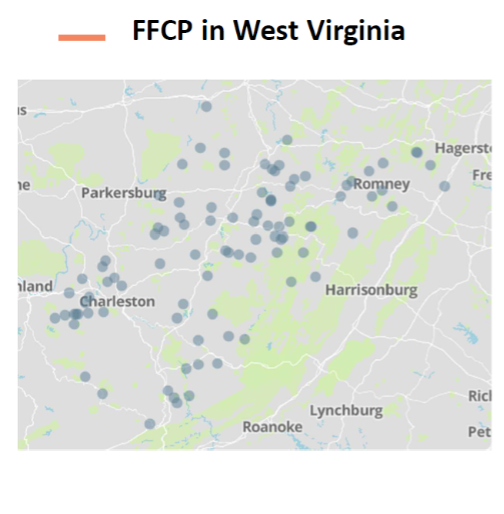
What began with a goal of enrolling 50 landowners and 6,500 acres of family-owned forest has grown significantly. As of late 2023, 101 landowners and more than 15,500 acres were enrolled in the program—more than doubling initial targets.

Those enrolled forests are now estimated to store an additional 420,000 tonnes of CO₂e, representing a meaningful contribution to climate mitigation. To put that impact in context, this level of carbon storage is equivalent to removing the emissions associated with burning nearly 470 million pounds of coal from the atmosphere.

Importantly, the program’s success in West Virginia has also helped catalyze additional investment in similar initiatives across Appalachia and beyond.

An Intentional Focus on Communities Navigating Economic Transition

From the outset, Chemours and AFF were deliberate about where the work would take place. Enrollment in West Virginia was focused on Logan, Wyoming, Boone, Fayette, and Kanawha counties—communities that have historically relied on the fossil fuel economy and are navigating significant economic transition as energy systems evolve.

Today, these counties represent a majority of FFCP participation in the state, and the program’s benefits extend beyond environmental outcomes to support economic resilience in regions facing real change.

FFCP in West Virginia

Forests That Create Value for Families and Communities

The FFCP is designed to deliver tangible benefits to landowners while strengthening sustainable forestry practices. To date, the American Forest Foundation has committed $8.17 million in practice payments to participating landowners in West Virginia.

Those investments support local sustainable forestry jobs, help families build long-term value from land they have stewarded for generations, and reinforce the role that family-owned forests can play in addressing climate challenges at scale.

Measurable Impact, Built Through Partnership

For Chemours employees and stakeholders in West Virginia, this work is more than a sustainability milestone—it is happening in local communities, with neighbors and families directly benefiting from the program’s success.

The American Forest Foundation’s mission has long been to empower family forest landowners to deliver meaningful conservation outcomes. Through this partnership, Chemours has helped advance that mission in a region where climate action and community investment are deeply interconnected.

Five years in, the results offer a clear takeaway: when climate initiatives are designed with communities at the center, the impact is not only meaningful—it is measurable.

In 2021, Chemours made a commitment to pair climate action with community investment. Aligned with the company’s 2030 Corporate Responsibility Commitment (CRC) goals, Chemours partnered with the American Forest Foundation (AFF) to help launch the Family Forest Carbon Program (FFCP) in West Virginia—an initiative designed to support family forest owners in implementing management practices that grow the economic and environmental value of their forested properties over time.

Five years later, the results underscore what is possible when climate solutions are built through collaboration and centered on local communities.

Program Growth That Exceeded Early Expectations

What began with a goal of enrolling 50 landowners and 6,500 acres of family-owned forest has grown significantly. As of late 2023, 101 landowners and more than 15,500 acres were enrolled in the program—more than doubling initial targets.

Those enrolled forests are now estimated to store an additional 420,000 tonnes of CO₂e, representing a meaningful contribution to climate mitigation. To put that impact in context, this level of carbon storage is equivalent to removing the emissions associated with burning nearly 470 million pounds of coal from the atmosphere.

Importantly, the program’s success in West Virginia has also helped catalyze additional investment in similar initiatives across Appalachia and beyond.

An Intentional Focus on Communities Navigating Economic Transition

From the outset, Chemours and AFF were deliberate about where the work would take place. Enrollment in West Virginia was focused on Logan, Wyoming, Boone, Fayette, and Kanawha counties—communities that have historically relied on the fossil fuel economy and are navigating significant economic transition as energy systems evolve.

Today, these counties represent a majority of FFCP participation in the state, and the program’s benefits extend beyond environmental outcomes to support economic resilience in regions facing real change.

FFCP in West Virginia

Forests That Create Value for Families and Communities

The FFCP is designed to deliver tangible benefits to landowners while strengthening sustainable forestry practices. To date, the American Forest Foundation has committed $8.17 million in practice payments to participating landowners in West Virginia.

Those investments support local sustainable forestry jobs, help families build long-term value from land they have stewarded for generations, and reinforce the role that family-owned forests can play in addressing climate challenges at scale.

Measurable Impact, Built Through Partnership

For Chemours employees and stakeholders in West Virginia, this work is more than a sustainability milestone—it is happening in local communities, with neighbors and families directly benefiting from the program’s success.

The American Forest Foundation’s mission has long been to empower family forest landowners to deliver meaningful conservation outcomes. Through this partnership, Chemours has helped advance that mission in a region where climate action and community investment are deeply interconnected.

Five years in, the results offer a clear takeaway: when climate initiatives are designed with communities at the center, the impact is not only meaningful—it is measurable.

In 2021, Chemours made a commitment to pair climate action with community investment. Aligned with the company’s 2030 Corporate Responsibility Commitment (CRC) goals, Chemours partnered with the American Forest Foundation (AFF) to help launch the Family Forest Carbon Program (FFCP) in West Virginia—an initiative designed to support family forest owners in implementing management practices that grow the economic and environmental value of their forested properties over time.

Five years later, the results underscore what is possible when climate solutions are built through collaboration and centered on local communities.

Program Growth That Exceeded Early Expectations

What began with a goal of enrolling 50 landowners and 6,500 acres of family-owned forest has grown significantly. As of late 2023, 101 landowners and more than 15,500 acres were enrolled in the program—more than doubling initial targets.

Those enrolled forests are now estimated to store an additional 420,000 tonnes of CO₂e, representing a meaningful contribution to climate mitigation. To put that impact in context, this level of carbon storage is equivalent to removing the emissions associated with burning nearly 470 million pounds of coal from the atmosphere.

Importantly, the program’s success in West Virginia has also helped catalyze additional investment in similar initiatives across Appalachia and beyond.

An Intentional Focus on Communities Navigating Economic Transition

From the outset, Chemours and AFF were deliberate about where the work would take place. Enrollment in West Virginia was focused on Logan, Wyoming, Boone, Fayette, and Kanawha counties—communities that have historically relied on the fossil fuel economy and are navigating significant economic transition as energy systems evolve.

Today, these counties represent a majority of FFCP participation in the state, and the program’s benefits extend beyond environmental outcomes to support economic resilience in regions facing real change.

FFCP in West Virginia

Forests That Create Value for Families and Communities

The FFCP is designed to deliver tangible benefits to landowners while strengthening sustainable forestry practices. To date, the American Forest Foundation has committed $8.17 million in practice payments to participating landowners in West Virginia.

Those investments support local sustainable forestry jobs, help families build long-term value from land they have stewarded for generations, and reinforce the role that family-owned forests can play in addressing climate challenges at scale.

Measurable Impact, Built Through Partnership

For Chemours employees and stakeholders in West Virginia, this work is more than a sustainability milestone—it is happening in local communities, with neighbors and families directly benefiting from the program’s success.

The American Forest Foundation’s mission has long been to empower family forest landowners to deliver meaningful conservation outcomes. Through this partnership, Chemours has helped advance that mission in a region where climate action and community investment are deeply interconnected.

Five years in, the results offer a clear takeaway: when climate initiatives are designed with communities at the center, the impact is not only meaningful—it is measurable.

Solar window-treatment system designed to add supplemental on-site generation for buildings facing rising data center electricity demand

CHICAGO, April 21, 2026 /PRNewswire/ — Total Shade Solar, an innovation initiative of Total Shade Inc., is advancing toward the commercial release of a solar power-producing window shade system designed to turn window treatments into active energy assets for commercial buildings.

As AI infrastructure and data centers increase pressure on the electric grid, Total Shade Solar is positioning its technology as a way to capture underused vertical surface area. The system uses solar-generating shade material to help buildings produce supplemental electricity from window areas that have traditionally served only shading, glare control, and heat management functions.

For a standard 43 x 80-inch window, the company expects output in the range of 450 to 500 watts per hour, creating a new opportunity for commercial properties with large expanses of glass to participate in distributed energy generation.

“Data centers are intensifying the need for every viable form of distributed power generation,” said Dave of Total Shade Inc. “If a building has large expanses of glass, those surfaces should have the potential to do more than manage glare and heat. They should have the potential to produce electricity.”

The system is not intended to replace utility service or primary data center power architecture. Instead, it is designed to support a layered energy strategy that may include on-site generation, storage, energy efficiency, and building controls.

Total Shade Solar expects interest from commercial developers, engineers, smart building designers, data center-adjacent properties, and urban facilities seeking new ways to add supplemental on-site power.

Additional details on product availability, pilot deployments, and commercial rollout timing are expected to be announced as the launch progresses.

Total Shade Solar allows our customers in vertical structures and data centers to produce power from every outward-facing window within their structures. Not only do our shades contain patented technology to increase window efficiency, but now offer the ability to produce grid power directly from your outward-facing windows.

Press Release Service provided by 24-7PressRelease.com.

Cision View original content to download multimedia:https://www.prnewswire.com/news-releases/total-shade-solar-announces-commercial-launch-initiative-for-power-producing-window-shades-302748152.html

SOURCE Total Shade Solar

Privacy Overview

This website uses cookies so that we can provide you with the best user experience possible. Cookie information is stored in your browser and performs functions such as recognising you when you return to our website and helping our team to understand which sections of the website you find most interesting and useful.