AEG’s L.A. LIVE and Pizza City Fest reinforced their commitment to workforce development and community investment by donating $10,000 to the Culinary Careers Program (C•CAP) during the Fourth Annual Pizza City Fest, held April 25–26 atop the Event Deck at L.A. LIVE.

The donation supports C•CAP’s mission to prepare underserved high school students and adults for careers in the culinary and hospitality industries. As part of the festival, students from the program worked side-by-side with professional pizzaiolos, gaining hands-on experience assisting chefs and serving thousands of slices to nearly 5,000 attendees over the two-day event.

Pizza City Fest, featured 40 Southern California pizzerias showcasing a wide range of styles—including Chicago Tavern-style, New York-style, Detroit, Grandma Pie, and Neapolitan—along with live demonstrations, panel discussions, entertainment, and interactive competitions. Beyond celebrating pizza culture, the festival created a meaningful bridge between education and employment.

Since expanding to Los Angeles in 2023, Pizza City Fest has partnered with C•CAP, which serves more than 25,000 students and adults annually through culinary training, job readiness programs, apprenticeships, and mentorship, while awarding over $2.5 million in scholarships each year.

“C•CAP has been our charitable partner since day one,” said Steve Dolinsky, founder of Pizza City Fest. “Watching students build skills, confidence, and professional connections, sometimes even receiving job offers on the spot, is incredibly rewarding. Establishing a dedicated L.A. LIVE Pizza City Fest scholarship is another way we’re investing in the future of this community.”

AEG’s contribution was presented during the festival on Saturday, April 25, with support from the Los Angeles Kings Ice Crew and mascot Bailey, underscoring AEG’s broader commitment to youth opportunity, education, and career pathways across Los Angeles.

“I came up through the hospitality and culinary world, so I know firsthand how transformational the right opportunity can be,” said Andrew Simon, General Manager of L.A. LIVE. “Supporting C•CAP through Pizza City Fest is about opening doors, believing in potential, and empowering the next generation of culinary professionals.”

Through partnerships like Pizza City Fest, AEG and L.A. LIVE continue to leverage major cultural events as platforms for community impact, workforce development, and economic mobility, creating experiences that nourish both the city’s culture and its future talent.

CINCINNATI, April 28, 2026 /3BL/ – Charmin’s commitment doesn’t stop at a better bathroom experience. Through a partnership with the Arbor Day Foundation, P&G and Charmin are supporting forest restoration while helping strengthen communities across the country. As part of this effort, 1 million trees were planted between 2020 and 2025 in areas impacted by natural disasters, and today they announce a new commitment: plant another 1 million trees by 2030. Why? It’s simple – Charmin loves trees, no butts about it.

“Charmin is committed to helping keep forests as forests, which is why we participate in several initiatives to protect, grow and restore forests,” said Chris Reeves, Certified Forester and Senior Scientific Communications Leader at P&G. “Our partnership with the Arbor Day Foundation helps us make an impact in areas beyond our supply chain that have been affected by natural disasters.” To learn how Charmin protects, grows and restores forests, go to Charmin.com/en-us/sustainability.

As natural disasters intensify, the Arbor Day Foundation is focused on replanting in communities and forests where trees have been lost. They work with on-the-ground planting partners who know the areas best and understand the recovery, ensuring the right trees are planted with purpose. But recovery goes beyond trees — it’s about fostering partnerships that strengthen communities against future challenges.[i]

“A more hopeful future can be shaped through the power of trees,” said Dan Lambe, Chief Executive at the Arbor Day Foundation. “We are proud to partner with brands like Charmin that are bold enough to be part of our effort to plant trees in the areas that need them most. Our partnership with Charmin has already made a positive impact in multiple disaster-affected communities and we’re eager to continue this important work.”

How does Charmin approach responsible forestry?

Charmin helps protect, grow and restore forests. The brand protects by only using pulp certified by the Forest Stewardship CouncilTM, which are standards that help protect wildlife and support thriving local communities. Grow means for every tree used, at least two are regrown. And it restores by partnering with the Arbor Day Foundation to plant trees in areas affected by natural disasters like wildfires or hurricanes, helping make a difference by transforming and strengthening communities and bringing hope, healing and benefits back to neighborhoods and forests. Learn more at Charmin.com/en-us/sustainability.

Does Charmin use pulp certified by the Forest Stewardship Council?

Charmin only uses pulp that is certified by the Forest Stewardship Council, which is an organization that sets standards that help protect wildlife and support thriving local communities.

Why is tree planting important?

Home to 1.6 billion people and 80% of all plant and animal species, our world’s forests are the cornerstone of life itself. They provide us with countless benefits, including cleaner water and air, habitat for wildlife, food security and a place for recreation and wellness. Forest restoration efforts positively impact communities and wildlife around the country. Learn more from the Arbor Day Foundation.

How long have Charmin and the Arbor Day Foundation been partners?

Procter & Gamble and the Arbor Day Foundation have partnered since 2020. P&G joined a group of like-minded corporate partners as part of the Arbor Day Foundation’s Evergreen Alliance, a community of leaders driving innovation, discovery, and action in the Foundation’s work to plant trees, engage tree planters, and elevate awareness of the value of forests. The Evergreen Alliance helped the Foundation meet the Time for Trees® initiative to plant 100 million trees and inspire 5 million tree planters by 2022. 
 

About Procter & Gamble

P&G serves consumers around the world with one of the strongest portfolios of trusted, quality, leadership brands, including Always®, Ambi Pur®, Ariel®, Bounty®, Charmin®, Crest®, Dawn®, Downy®, Fairy®, Febreze®, Gain®, Gillette®, Head & Shoulders®, Lenor®, Olay®, Oral-B®, Pampers®, Pantene®, SK-II®, Tide®, Vicks®, and Whisper®. The P&G community includes operations in approximately 70 countries worldwide. Please visit https://www.pg.com for the latest news and information about P&G and its brands. For other P&G news, visit us at https://www.pg.com/news
 

About the Arbor Day Foundation

The Arbor Day Foundation is a global nonprofit inspiring people to plant, nurture, and celebrate trees. They foster a growing community of more than 1 million leaders, innovators, planters, and supporters united by their bold belief that a more hopeful future can be shaped through the power of trees. For more than 50 years, they’ve answered critical need with action, planting more than half a billion trees alongside their partners. And this is only the beginning. The Arbor Day Foundation is a 501(c)(3) nonprofit pursuing a future where all life flourishes through the power of trees. Learn more at arborday.org.


Contacts

Aliza Solc 
MSL New York 
Aliza.Solc@MSLGroup.com

[i] https://www.arborday.org/our-work/natural-disaster-recovery


FSC-C100701

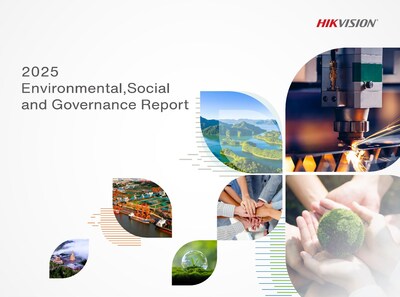
HANGZHOU, China, April 28, 2026 /PRNewswire/ — Hikvision has released its 2025 Environmental, Social and Governance Report, marking the eighth consecutive year of transparent sustainability reporting.

Guided by its THRIVE sustainability philosophy, the report refined its double materiality assessment, identifying technological innovation, product safety and quality, and cybersecurity as double materiality topics, advancing its sustainable development goals in a systematic manner.

Advancing Social Good through AIoT

Committed to “Tech for Good,” Hikvision fosters innovation to create positive values. In urban governance, it develops end-to-end monitoring systems to safeguard critical infrastructures, with more than 300 devices and 140 scenario-based solutions for traffic management. In nature conservation, Hikvision’s solutions, which were showcased at the 5th World Congress of Biosphere Reserves, are now deployed across China’s first batch of national parks, and 50% of the country’s biosphere reserves.

Beyond business operations, Hikvision remains dedicated to social good. Spanning 14 countries and regions, the STAR Program powers Pyrenees ecological observations and Himalayan glacier research, while the 2025 STAR Installer Partner Initiative unites a global network for vital technical support.

Building Reliability through Cybersecurity and Quality

To strengthen digital trust, Hikvision has established a comprehensive cybersecurity framework to enhance management. These efforts, including a 100% vulnerability remediation rate in 2025, were recognized with the highest level of the Digital Trust Assurance Award from the British Standards Institution (BSI).

In product quality management, Hikvision has built standardized digital processes to ensure reliability and strengthen its intellectual property portfolio, with 7,399 invention patent applications related to its core business and 1,553 newly granted patents in 2025.

Ensuring Compliance and Data Protection

By adopting global best practices, Hikvision effectively embeds compliance requirements in daily operations. In 2025, the company achieved ISO 37301 certification. Keeping pace with the latest technological trends, the company also published Hikvision’s Journey Practicing Responsible AI, outlining its firm commitment to compliant AI development.

Data protection remains a paramount priority for Hikvision. Hikvision successfully cleared annual audits in 2025 for multiple international standards, including ISO/IEC 27701, ISO/IEC 38505, ISO/IEC 29151, and ISO 37301, and achieved 100% workforce coverage in personal data protection awareness.

Accelerating Climate Action

Hikvision drives climate action through a three-tier governance structure, supporting decarbonization across four pillars: low-carbon products, smart manufacturing, digital empowerment, and green operations.

To further its impact, the company built the GPA platform to enhance green product management capabilities. By the end of 2025, 169 product models completed carbon footprint accounting. Notably, seven WonderHub smart displays obtained the TCO Certified Generation 10 certification, becoming the world’s first large-format displays to meet this standard.

Upholding the Ten Principles of UN Global Compact, Hikvision continues to advance responsible governance and sustainable business practices, evidenced by its latest ESG recognitions – the EcoVadis Silver Medal and DMCC Global Enterprise ESG Leader Award.

Looking ahead, Hikvision will remain committed to continuous improvement and long-term value creation, joining hands with stakeholders for a more resilient, sustainable world.

Check here to read Hikvision’s full 2025 ESG Report.

Cision View original content to download multimedia:https://www.prnewswire.com/news-releases/hikvision-releases-2025-esg-report-advancing-sustainability-through-tech-for-good-302755774.html

SOURCE Hikvision

In this bonus episode of Rethinking EHS, Angelique Dixon speaks with Ross Griffiths, Managing Director of Environment Analyst, to unpack the key forces shaping the global environmental and sustainability consulting sector. The conversation dives into evolving ESG trends, where the focus is moving from intent to measurable business value, as well as the rising demand for energy solutions, digital transformation, and the accelerating growth of EHS services. With insights across regions the episode highlights how environmental and EHS challenges are now core business priorities.


Listen now


Time Stamps

00:00:40 What is Environment Analyst?

00:02:45 54% Industry Growth – Why It Matters

00:03:35 From Climate Momentum to Uncertainty

00:05:10 ESG Isn’t Dead – It’s Evolving

00:06:20 Energy Costs Are Reshaping Everything

00:07:15 Why ROI Matters More Than Ever

00:10:05 EHS Is the Fastest Growing Segment

00:19:45 This Is a Business Problem, Not Political


Guest Quotes

Ross Griffiths:

“I do think that if your bid writers or your project managers or your report authors cannot translate those environmental solutions into value creation, I think you could be exposed.”

News Summary

  • LG Electronics’ 2026 TV lineup has received eco-certifications from three globally recognized bodies, reflecting the company’s sustainability commitment.
  • Recognitions cover Carbon Trust CO2 certifications for LG OLED TVs, including Reducing CO2 certification for the G6 series (varying by model size and region) and Resource Efficiency certification from Intertek for eight series.
  • LG OLED TVs are expected to reduce plastic consumption and lower CO2 emissions in 2026, while the broader TV lineup is projected to recover more end-of-life plastic through recycling.

SEOUL, South Korea, April 28, 2026 /3BL/ – Global consumer electronics innovator LG Electronics has earned multiple globally recognized eco-certifications for its 2026 TV lineup, underscoring the company’s sustainability efforts across the full product lifecycle, from manufacturing and distribution to end-of-life management. The achievements also highlight LG’s progress in lowering CO2 emissions, delivering carbon savings and expanding the use of recycled plastics made from post-consumer waste materials.

Reducing CO21 and Measured CO22 Certifications from Carbon Trust

LG OLED TVs have received Reducing CO2 and Measured CO2 certifications from the Carbon Trust for the sixth consecutive year, with certification types varying by model size and region. The 2026 G6 83-, 77- and 65-inch models earned Reducing CO2 certification, while the G6 55-inch model secured Reducing CO2 certification outside Europe and Measured CO2 certification within Europe.

The Carbon Trust, an independent climate consultancy focused on supporting the transition to a zero-carbon future, assesses carbon emissions across a product’s entire lifecycle, including materials, production, use and end-of-life. LG OLED TVs contribute to carbon reduction by utilizing self-emissive technology that eliminates the need for a backlight and reduces the number of components and materials.

Resource Efficiency Certification from Intertek

LG’s 2026 TV lineup has received Resource Efficiency certification from Intertek, a globally recognized testing and certification body. The certification was awarded to eight series3 based on evaluations of material efficiency,4 energy efficiency5 and recycled content.

E-Cycle Excellent Products Certification from E-Cycle Governance

For the fourth consecutive year, LG TV models have been recognized by Korea’s E-Cycle Governance as E-Cycle Excellent Products, based on 11 criteria that include recyclable design, reduced use of hazardous substances and ease of disassembly. The certification extends to LG’s lifestyle TV lineup in 2026, with the 32-inch StanbyME 2 newly awarded. In addition, OLED evo C series models – including the 55-, 48- and 42-inch C6 – have received certification.

The certifications reflect the company’s sustainability priorities, with LG OLED TVs expected to reduce plastic consumption by approximately 15,000 tons and CO2 emissions by around 80,000 tons in 2026 versus an equivalent number of LCD TVs. In the use phase, the 83-inch OLED evo G6 and 83- and 77-inch OLED evo C6 models have achieved an EU Energy Label rating of D for the first time. Across its broader TV lineup6, LG has recycled approximately 20,000 tons of end-of-life plastic over the past three years, and the company plans to further expand the use of recycled plastics in 2026.

“Our 2026 TV lineup demonstrates how environmental responsibility and premium performance can come together in a meaningful way,” said Lee Choong-hwoan, head of the Display Business at the LG Electronics Media Entertainment Solution Company. “These certifications represent measurable progress in how we design, build and manage our products over their full lifecycle.”

1 Applies to 83-, 77- and 65-inch G6 models and the 55-inch G6 except Europe.

2 Applies to 55-inch G6 in Europe.

3 Applies to W6, G6, C6, B6, MRGB95, MRGB9M, MRGB85 and QNED85 models.

4 Covers recyclable design, reduced use of hazardous substances and repairability.

5 Based on the following energy efficiency standards: the Energy Labelling Regulation (EU) 2017/1369, the California Code of Regulations (CCR) Title 20, and the Regulation on Energy Efficiency Management Equipment under Article 15 of the Energy Use Rationalization Act of Korea.

6 Includes OLED, QNED and Nano UHD models.

# # #

About LG Electronics Media Entertainment Solution Company

The LG Media Entertainment Solution (MS) Company is a recognized innovator in televisions, audio, displays and its award-winning smart TV platform, webOS. The MS Company enhances the media entertainment experience with its OLED TVs, renowned for perfect black and perfect color, and premium LCD QNED TVs, all powered by the webOS platform with advanced user experience, AI-driven features and LG Shield security. The MS Company also offers Information Technology solutions (gaming monitors, business monitors, laptops, projectors, cloud devices and medical displays) as well as Signage solutions (Micro LED signage, digital signage, hospitality displays and signage software solutions) that are designed to maximize customers’ work efficiency and deliver strong value. For more news on LG, visit www.LG.com/global/newsroom/.

About LG Electronics USA

LG Electronics USA Inc., based in Englewood Cliffs, N.J., is the North American subsidiary of LG Electronics Inc., a smart life solutions company with annual global revenues of more than $60 billion. In the United States, LG sells a wide range of innovative home appliances, home entertainment products, commercial displays, air conditioning systems and vehicle components. LG is an 11-time ENERGY STAR® Partner of the Year. www.LG.com.

Media Contacts:

LG Electronics USA

Chris De Maria
+1 908 548 4515
christopher.demaria@lge.com

LG Electronics North America

John I. Taylor
+1 202 719 3490
john.taylor@lge.com

Procurement is quickly becoming one of the most immediate and practical tools for advancing climate goals. A new case study from the Global Electronics Council® (GEC), developed in collaboration with the State of California, shows what this looks like in practice.

From Policy to Progress: How California Is Using EPEAT® to Build a Net-Zero Future explores how one of the world’s largest economies is embedding sustainability directly into purchasing decisions, delivering measurable results aligned with its goal of achieving carbon neutrality by 2045.

By integrating EPEAT, the premier global ecolabel for electronics, into procurement policies and contracts, the California Department of General Services ensures that environmental and social performance is built into everyday purchasing across state agencies.

Between 2022 and 2024, California purchased more than 311,000 EPEAT registered electronic products. Using lifecycle assessment methodologies, these purchases delivered:

  • Over 40,000 metric tons of CO₂e emissions reductions
  • Nearly $7.5 million in cost savings
  • Significant reductions in energy use, water consumption, air pollution and waste

These outcomes illustrate how aligning procurement with sustainability criteria can deliver measurable environmental and economic returns while supporting broader public health goals.

“California’s approach shows that strong market signals for sustainable products can be an effective aspect of an organization’s climate impact strategy,” said Bob Mitchell, CEO of GEC. “By embedding EPEAT into procurement policy and tenders, organizations can turn everyday purchasing into a consistent source of progress toward sustainability goals.”

The case study outlines a replicable model for sustainable procurement, including:

  • Integration of EPEAT criteria into statewide contracts and policies
  • Supplier engagement and accountability measures
  • Cross-agency collaboration and implementation support
  • Transparent performance tracking using lifecycle-based metrics
  • Continuous improvement through EPEAT Climate+™

California’s strategy is anchored in its Environmentally Preferable Purchasing (EPP) Program and reinforced by policy directives that require state agencies to prioritize environmentally responsible products. The state also continues to expand its leadership through adoption of EPEAT Climate+™, recognizing products designed to reduce greenhouse gas emissions across their lifecycle.

“Being able to quantify the state’s purchases of electronic goods into greenhouse gas emissions and reductions helps us add transparency and continuity to California’s efforts,” said Tony Wang from California Department of General Services, Environmentally Preferable Purchasing Unit. “EPEAT helps ensure that every purchase supports both environmental protection and public health.”

This new resource provides actionable insights for governments, institutions, and organizations seeking to align procurement with climate and sustainability goals.

Read the full case study: https://globalelectronicscouncil.org/resources/case-studies/california-dgs-epp-2026/

About the Global Electronics Council

The Global Electronics Council (GEC) envisions a world with only sustainable electronic technology that enhances the well-being of people and planet. Our mission is to accelerate the transformation of markets toward prioritizing the most sustainable electronic products and services.

As stewards of the EPEAT ecolabel, we set global standards for electronics that empower brands, their value chains and their buyers to achieve ambitious sustainability goals. Through our thought leadership, advocacy, and EPEAT ecolabel, GEC is helping to reshape the electronics industry into a driving force for environmental preservation and global well-being.

About the EPEAT Ecolabel

EPEAT is a leading global ecolabel that enables manufacturers to follow strict third-party verified standards while providing transparency for buyers.

Since its launch in 2006, procurement professionals have reported purchases of more than 3.2 billion EPEAT products, generating cost savings exceeding $39 billion USD and reducing greenhouse gas emissions by more than 370 million metric tonnes.

Media Contact

Erik Fessler
Senior Manager, Global Communications
Global Electronics Council

Direct Line: +1 (971) 380-4088
U.S. Eastern Time Zone
efessler@gec.org

By: Beth Szymkowski
Contributor

At first glance, The Way We Wore could be mistaken for an ordinary Los Angeles secondhand store with a warehouse vibe. Huge windows cast warm light onto cement floors and racks hung with an eclectic mix of clothing and accessories. But a closer look reveals that it is more like a museum of fashion history. Some items date back to the early 1900s. There’s a rack of Chanel. Another of Pucci. Orange and red Bakelite jewelry fills a shelf in a glass case. Doris Raymond, a longtime leader in the world of high-end vintage fashion, carefully curates every item in the showroom.

After 45 years in the vintage business, Raymond is suddenly right at the forefront of fashion. The resale market is growing fast, driven in large part by younger shoppers. Nearly half of Gen Z and millennials say they search for secondhand or used items more often than they used to, compared with roughly a quarter of boomers, according to Mastercard’s December 2025 Consumer Collective Financial Sentiment survey.

And an upcoming analysis by the Mastercard Economics Institute shows Finland, France and the U.S. leading the way, with circular spending accounting for 10.5% of clothing store spending in Finland, with resale the vast majority.

Part of the appeal is that reusing items is better for the environment, and younger generations say they’re willing to pay more for goods that align with their values. Those sustainability concerns, along with tariff-related price increases on imported goods like fast fashion, will likely feed the circular economy trend.

“We’re watching circular spending move from the margins to the mainstream,” says Ellen Jackowski, chief sustainability officer at Mastercard. “It’s not a fad; it’s economics. When value meets values, everybody wins: consumers, merchants, and the planet.”

Secondhand fashion is now a $256 billion global business on track to reach $367 billion by 2029. Raymond’s corner of the market, luxury resale, which includes a handful of e-commerce giants, made up 27% of online luxury apparel spending in 2024, while mass-market resale climbed to 5.4% in 2025, according to the Mastercard Economics Institute’s 2025 report on fashion and the circular economy. And in Los Angeles, where Raymond is based, circular fashion makes up 7% of online apparel spending, the report says.

“I’m an accidental sustainable person,” Raymond says with a laugh while taking me on a tour of her appointment-only showroom. She has always been drawn to older clothes that were made with a level of care and quality that fast fashion lacks. “Why throw away money on something that’s not made to last, even if it’s four times the price? If you buy a classic, something that’s not trendy, it’ll be with you for a long time.”

Colorful, chunky and often carved, Bakelite jewelry was also affordable, hitting its peak of popularity in the Depression. Today the pieces are highly collectible. (Photo credit: Beth Szymkowski)

Raymond, who starred in the Smithsonian Channel series “L.A. Frock Stars,” became interested in vintage clothing as a teenager looking for an inexpensive way to express her unique style. She grew her passion into a business in the San Francisco area, eventually opening a store, doing vintage clothing shows and renting pieces to the film and television industry. She moved to Los Angeles in 2004 and, in addition to her brick-and-mortar shop, now maintains a YouTube channel with more than 100 episodes and an online store.

Unlike many high-end vintage shops that sell only clothing from the past 30 or so years, Raymond’s showroom is lovingly filled with items from the last century as well as more popular items from recent decades. Customers might find Gucci cage stiletto booties perched on shelves near Emanuel Ungaro pumps, but her collection is not based on big-name designers only. “A label isn’t everything,” she says, pointing out a dress’s intricate handmade lace and the artistry of a slyly whimsical Anthony Ferrara chain-mail belt with two hand-shaped clasps. “If something transcends time, that’s what matters.”

Sharing her passion is part of why Raymond offers deep dives into fashion history for customers, including through a curated Priceless Experience for Mastercard cardholders. She might show guests an elegant 1920s flapper dress and compare it to a 1960s minidress, explaining how both styles emerged as a reaction to societal change. In the 1920s, shortly after women gained the right to vote, clothing evolved to reflect their newfound freedoms: Hemlines rose and the restrictive corsets of earlier eras were abandoned. The Civil Rights and anti-war movements of the 1960s ushered in a similarly liberated style. After the Priceless Experiences, participants frequently peruse the showroom with newfound appreciation for the items they see.

“My biggest joy is inspiring other people,” Raymond says. “That’s why I’m doing the Mastercard events. Every single exoerience that’s happened, I’ve enjoyed it as much as the people who came. I know they leave feeling really, really good.”

Continue reading here

Follow along Mastercard’s journey to connect and power an inclusive, digital economy that benefits everyone, everywhere.

Key points

  • The first FDA-approved treatment for a chronic liver infection
  • The first FDA-approved treatment for Hepatitis D virus in adults with chronic liver disease
  • CVS Caremark’s Clinical Pipeline Services team tracks what’s ahead ​by ​translating complex drug approvals into practical information about what may matter for ​​​patient care​.

Originally published on CVS Health Company News

New treatments take years of research, clinical trials, and regulatory review before reaching patients. Several therapies approaching FDA decisions this spring could expand treatment options for people managing a range of conditions.

CVS Caremark’s Clinical Pipeline Services team — made up of licensed clinical pharmacists and analysts — monitors new therapies moving through the drug pipeline and evaluates what those approvals could mean for members. The team’s latest Drugs to Watch report identifies several notable therapies with decisions expected between April and June 2026, including:

  • A new oral option for patients with treatment-resistant hypertension
  • ​​​A more convenient, at-home format for early Alzheimer’s disease treatment that avoids lengthy IV infusions​​​​​​​​​​
  • The first FDA-approved treatment for a chronic ​​​​liver infection
  • An additional non-nicotine option for adults looking to quit smoking

The following provides a closer look at each drug: what it is, why it matters, and how it could expand treatment options for patients.

Baxdrostat: a new mechanism for treating high blood pressure

Baxdrostat is an oral medication being reviewed for adults whose blood pressure remains uncontrolled despite treatment with multiple other blood pressure medications, a condition known as treatment-resistant hypertension. It would be used as an add-on to existing treatments. What makes Baxdrostat stand out is how it works: it inhibits aldosterone synthase (an enzyme involved in regulating blood pressure), an approach not currently available in approved treatments for this condition.

​​Treatment-resistant hypertension is blood pressure that stays above a target level even after trying at least three different medications at the right doses. ​​​​​A new mechanism may offer another way to control the condition, which could be significant for people who have run out of alternatives. If approved, it would be the first option of its kind for this population.

Status: Pending FDA approval 6/2/2026.

Leqembi Iqlik: an at-home treatment for Alzheimer’s

Leqembi Iqlik is an injectable form of Leqembi, a therapy already FDA-approved for the treatment of early Alzheimer’s disease. The existing version is given through an IV infusion every two weeks over an initial 18-month course. Leqembi Iqlik is already approved for ongoing treatment after that initial IV phase. ​​If approved for this use, it would become the first therapy of its kind that patients could administer at home weekly from the start of treatment.

The shift to a weekly injection at home is what makes this approval worth watching. For patients and caregivers navigating early Alzheimer’s disease, reducing the burden of getting to a treatment facility could make a difference  if and how people pursue this type of care.

Status: Pending FDA approval 5/24/2026.

Hepcludex: a possible first FDA-approved treatment for chronic hepatitis D virus infection in adults with chronic liver disease

Hepcludex (bulevirtide) is an injectable treatment being reviewed for chronic hepatitis D virus (HDV) infection in adults with chronic liver disease. If approved, it would be the first FDA-approved treatment for HDV, a condition with no FDA-approved treatment in the United States.

For patients living with a condition that has had no approved treatment, this could be a significant milestone. While taking Hepcludex on its own may allow some patients to eventually stop treatment, the data suggests combining it with another medication called pegylated interferon produces meaningfully better results — an important detail for providers and patients following this potential approval.

Status: Pending FDA approval 5/22/2026.

Cytisinicline: another tool in the fight to quit smoking

Cytisinicline is an oral therapy being reviewed for the treatment of nicotine dependence in adults seeking to quit smoking. It would join Varenicline (e.g., Chantix) and Bupropion as prescription options that don’t rely on nicotine replacement. If approved, it would be administered as part of either a six- or 12-week initial treatment course.

Quitting smoking is notoriously difficult, and one reason is that different approaches work for different people. More options increase the chances that patients can find an approach that works for them.

Status: Pending FDA approval 6/20/2026.

The bigger picture: what this spring’s pipeline says about where care is headed

The therapies expected this spring span different conditions and work in different ways. But each represents a meaningful step forward for patients who need care — whether that’s a new option where existing treatments haven’t worked, a first approval in a condition that has never had an approved treatment, or a more accessible way to take a therapy that already exists. For patients and providers alike, having more options means more room to find an approach that works.

Coverage will vary by plan, and not every approval will be relevant to every member. But staying informed about the pipeline is valuable. If any of these conditions affect you or someone you care for, it could be worth starting a conversation with your provider about what may be on the horizon.

CVS Caremark’s Clinical Pipeline Services team will continue tracking what is next so ​CVS clients and their plan ​members can stay informed as new therapies move closer to approval.

Learn more about the team and the Q2 2026 Pipeline Drugs to Watch Report.

Privacy Overview

This website uses cookies so that we can provide you with the best user experience possible. Cookie information is stored in your browser and performs functions such as recognising you when you return to our website and helping our team to understand which sections of the website you find most interesting and useful.