MANILA, Philippines, November 3, 2025 /3BL/ – Federal Express Corporation, one of the world’s largest express transportation companies, has been recognized as one of the awardees of the HR Asia Best Companies to Work for in Asia 2025. Organized by HR Asia, a leading publication for HR professionals across the region, the awards program is judged using HR Asia’s proprietary Total Engagement Assessment Model (TEAM), which measures employee engagement, workplace culture, and HR practices. In addition, FedEx also received the Sustainable Workplace Award and the Tech Empowerment Award, reinforcing its achievements in sustainability, innovation, and employee well-being.

The HR Asia Best Companies to Work for in Asia Awards is one of the region’s most prestigious employer recognition programs. It honors organizations with outstanding HR practices, high levels of employee engagement, and strong workplace cultures. The program attracts participation from Fortune 500 companies, multinational corporations, and top employers across Asia, making the triple win of FedEx a significant achievement in the competitive landscape of corporate excellence.

The Sustainable Workplace Award recognizes organizations that champion long-term employee well-being, promote environmental responsibility, and implement sustainable business practices within their workplace culture. The Tech Empowerment Award celebrates companies that leverage technology to enhance the employee experience, drive innovation, and enable a more connected and agile workforce.

“This triple win is a powerful testament to the dedication of our people and the strength of the FedEx People-Service-Profit philosophy,” said Maribeth Espinosa, managing director of FedEx Philippines. “Our Purple Promise is to deliver an outstanding FedEx experience at every touchpoint, starting with how we support and care for our team members. These prestigious recognitions inspire us to foster an inclusive workplace culture, accelerate the adoption of cutting-edge digital technologies that empower our people, and drive sustainable practices that benefit our communities and the environment.”

More than a recognition of workplace excellence, the awards reflect the commitment of FedEx to driving progress for communities and the environment. Its people-first agenda was further recognized at the HR Excellence Awards 2025 Philippines, where FedEx secured Gold in Excellence in Cross-Generational Workforce Management and Leadership Development and Silver in Excellence in Best HR Team (Multinational Company). These distinctions demonstrate the breadth and depth of FedEx’s leadership in human capital development.

To learn more about FedEx solutions, visit the FedEx Philippines website.

Click here to learn about FedEx Cares, our global community engagement program.

Members of a Georgia-focused funding collaborative recently visited Athens Land Trust (ALT) during a month-long tour of Drawdown Georgia Climate Solutions & Equity Grants awarded throughout the state. ALT received a two-year, $200,000 grant in 2023-24 to conduct energy efficiency improvements and workforce development programs in previously disinvested neighborhoods in Athens-Clarke County, Georgia.

The Athens Energy Opportunity project expands on two existing initiatives launched by ALT in the Historic West Broad community; the West Broad Neighborhood Sustainability Project and the Young Urban Builders (YUB) workforce development program. 

The West Broad Neighborhood Sustainability Project addresses barriers to low-income and historically disadvantaged communities in accessing energy efficiency, weatherization, and renewable energy benefits. By pursuing this effort in conjunction with capacity building, impacted communities are now poised to take ownership and assume leadership in the direction of current and future opportunities to implement energy efficiency, weatherization, renewable energy, and other services in their neighborhoods. Working with YUB, the implementation of these community improvements have opened pathways to careers for impacted youth in the field of sustainable building, energy efficiency, and solar energy.

The West Broad Sustainability Project was expanded into North Athens and East Athens in 2024 with help from the Drawdown Georgia grant.

YUB is a paid job skills training program for Athens youth between the ages of 16 and 25. The program was started in 2018 as a way to address youth unemployment and perform owner-occupied rehabilitation for community homes. YUB is designed to provide job training and experience while working on community projects and aiding in neighborhood revitalization. 

ALT provides land protected in perpetuity, and affordable housing to allow first time homeowners from previously disinvested communities access to their goals for homeownership. In doing so, they are also investing in keeping communities in West Broad, North Athens and East Athens together, and defying patterns of gentrification.

New home clients are not only provided with affordable housing opportunities, they are encouraged and empowered to take action and help other neighbors navigate similar experiences through leadership, education, advocacy and collective action. The new Earthcraft homes that ALT offers in legacy communities are unique and attractive in design, varied in size and top of the line for energy efficiency. Most of all, with the help of federal, state and local grants and rebates that ALT carefully manages, the homes are comfortable and affordable, allowing first time homebuyers to purchase new homes for a fraction of the real cost.

ALT also offers energy efficiency upgrades for existing homes in the same neighborhoods. They help legacy residents protect their land and their homes, and they help retrofit and weatherize existing homes in the same communities where they oversee new builds; however, as they’ve prepared to weatherize older housing stock to help reduce energy burdens, they’ve identified many of the target homes that need significant and costly repairs, outside the scope of ALT’s weatherization grants and budget. 

The Drawdown Georgia Climate Solutions & Equity Grant helped fill this void. Grant dollars were bundled, allowing ALT and its contractors to make repairs for health and safety prior to weatherization. In many cases, this extra boost has made the difference between losing a home and keeping one for legacy residents. Common repairs include flooding, holes in roofs and floors, moldy interiors, rotten support beams, asbestos remediation and more. ALT also helps elderly residents with mobility friendly access features like ramps, and they often add central air and heat systems, where none previously existed.

Community Farming in the Heart of Athens

In addition to housing projects, ALT runs a community agriculture program, right in the heart of the city. Through a conservation easement, they were able to help the Williams family protect their farm into perpetuity, ensuring that it would never be developed. Once the family members were no longer farming the land, they arranged for ALT to run a community farm. Williams Farm is managed by ALT employees, but relies mainly on its Young Urban Farmers (YUF) program and community volunteer groups to complete the day to day tasks. In 2024, Williams Farm produced more than 9,000 lbs of produce that was provided to more than 40 high poverty-risk families identified through the Athens-Clarke County elementary schools.

Challenges for the Future

The pressure for big development continues to surround and slowly encroach on legacy communities in Athens, so the importance of educating citizens on their rights and their collective impact is crucial. With federal funding expected to continue to contract in the near future, ALT is poised to expand their reach for additional funding from foundations, corporate giving and individual giving. With the increased occurrence of extreme weather events, and the number of aging legacy homes in the communities they serve, ALT will need to retrofit many more homes with new electrical upgrades and HVAC systems to combat the effects of extreme heat. They will also need to be prepared to address more water and wind intrusion issues due to inland impacts from tropical storms and hurricanes.

The grant ALT received from Drawdown Georgia was supported by a funding cohort that included The Kendeda Fund, The R. Howard Dobbs, Jr. Foundation and its Dobbs Fund, The Ray C. Anderson Foundation, The Sapelo Foundation and The Wilbur & Hilda Glenn Family Foundation.

Click here to read a story about Former U.S. Energy Secretary Jennifer Granholm from the Biden Administration, visiting homes in 2023 in the West Broad community. The resident that she interviewed was Bennie Tillman, one of ALT’s Community Advisory Board members, a legacy resident, and a recipient of repairs and upgrades through the West Broad Sustainability Project, enhanced by the Drawdown Georgia grant.

Watch a video featuring Secretary Granholm and Bennie Tillman here.

About Athens Land Trust

The mission of Athens Land Trust is to improve quality of life for all by preserving, protecting, and strengthening the fabric of the community through education and the stewardship of land for purposes of affordable housing, conservation, agriculture, and economic development. They respond to community-identified needs and build individual and collective power among historically marginalized people. 

Originally published in Principal Financial Group 2024 Sustainability Report

Leadership and development

We encourage employees to expand their knowledge, build new skills, and continuously develop by providing a variety of opportunities that best suit their needs. This includes formal development opportunities, experiential and on-the-go education, and professional relationship building.

Our approach

We offer employees a wide array of development opportunities including new hire onboarding and ongoing role-specific training that includes asynchronous and synchronous learning opportunities, simulation and role-play, videos, and e-learning courses.

New leaders in the U.S. experience 20 hours of onboarding related to being an effective and inclusive leader, and we offer numerous ways for leaders to continue to refine their leadership skills over the course of their career.

Employees can engage in learning within a broad range of topics, such as growing technical skills, enabling high-performing teams, and building inclusion and career development capabilities. Employees have access to sessions focused on life skills through our EAP provider.

Short-term growth assignments are also available to learn and apply skills outside their formal role. Additional opportunities exist for role rotations, job shadowing, mentoring, and pursuing further education or skills training.

We also offer a collegiate internship program and a variety of rotational programs for recent graduates.

Leaders provide feedback to employees and engage them in reflection and development planning annually. We promote a culture that encourages employees to reflect on their performance, provide feedback to their peers, and share development recommendations to their managers.

Learn more on our careers site

Our actions and performance in 2024

Progress on our goals

We continue to find ways to expand access to and engagement in the core development programs we offer.

By the end of 2025, we aim to:

  • Increase overall employee participation in core enterprise learning and development programs by 15%.
  • Capture and centrally manage engagement data for 100% of our core enterprise learning and development programs in a common location, positioning us to better analyze key business outcomes based on our findings.
  • Make 50% of core enterprise learning and development programming available in Spanish.
  • Cross-train facilitators on 50% of core enterprise learning and development programming.

In 2024, we made significant progress toward these goals.

  • 75% of core programming is available in Spanish (exceeding our goal of 50%).
  • We attained our goal of cross-training facilitators on 50% of our core programming.
  • We’ve made progress on our goal surrounding learning data. One hundred percent of our core program engagement data is captured, and we’re on track to have the data centrally managed by the end of 2025.
  • We’re below target for our participation goal in core programming. Participation across all programs decreased an average of 23% in 2024.

We are continuing to market our programs and align them with business and employee priorities to help increase participation in these programs. Additionally, as we enhance our engagement tracking capabilities, we will also refine our targets to ensure they are aligned with the realities of our business and employee needs.

Learning and growth opportunities

In 2024, our employees participated in 92,924 hours of voluntary learning and development, which is equal to about 4.7 hours per employee. Leaders specifically engaged in 13,382 hours of voluntary learning and development in 2024.

In 2024, approximately 162 employees participated in our educational assistance program that offers employees financial assistance with their job-related educational pursuits. In 2024, this totaled over $993,799 in investment by the organization.

We hired 219 interns in 2024 and continued our focus on early and mid-level career opportunities. Our conversion rate for interns to full-time roles was 69%.1

  • 13,382: hours leaders spent in voluntary learning and development in 2024

We have partnerships with a wide range of organizations, including Jobs for America’s Graduates (iJAG), Girls Who Invest, Sponsors for Educational Opportunity, the Organization of Latino Actuaries (OLA), the Association of Latino Professionals for America (ALPFA), and the International Association of Black Actuaries. These partnerships help us build relationships and educate potential job candidates on the career opportunities available at Principal®.

In 2024, we also piloted a 12-month immersive apprentice program for early career roles, broadening our talent investment among individuals without four-year degrees or experience in financial services. We’re excited by the first few months of the program and look forward to sharing the outcomes after the first cohort completes the program.

In 2024, 96.1% of global employees received a rating as part of an annual performance review process which allows employees and their leaders to reflect on the prior year’s performance, and setting goals for the year ahead.

What’s next

In 2025, our plans include:

  • Investing in strategic upskilling of employees in the areas of data and AI literacy
  • Implementing new programming to support talent readiness and succession planning health
  • Evolving our learning technology and data platforms to improve employee experience and drive better insights into measuring the impact of learning on business results
  • Increasing the visibility, accessibility, and global reach of learning programming

To learn more, read the Principal Financial Group 2024 Sustainability Report.

Insurance products issued by Principal National Life Insurance Co (except in NY) and Principal Life Insurance Company®. Plan administrative services offered by Principal Life. Principal Funds, Inc. is distributed by Principal Funds Distributor, Inc. Securities offered through Principal Securities, Inc., member SIPC and/or independent broker/dealers. Referenced companies are members of the Principal Financial Group®, Des Moines, IA 50392.

1Based on full-time eligibility and offers extended and accepted

Three Points to Remember 

  1. Disaster response presents high-stakes, manually intensive and mentally demanding scenarios for responders and management teams.
     
  2. C2AI enhances situational awareness, automates processes toward faster decision-making, and optimizes response plans and courses of action.
     
  3. Leidos and NVIDIA continue to speed C2AI’s development toward operational fielding as a cutting-edge tool for life-saving capabilities in disaster management.

A loud explosion suddenly sends a routine day into chaos. Within seconds, 911 calls flood in and first responders jump into action. Amid the scramble, a team of AI agents bands together to rapidly pinpoint where an underground gas pipeline has blown, assist in taking assessments of injuries, and create courses of action for human approval to send to police, fire and EMS dispatchers.

This could resemble disaster response in the near future, with command-and-control AI, or C2AI. Serving as nimble eyes and ears for responders and emergency management leaders when stress levels are high and mental and physical capabilities are taxed, C2AI will also help automate flows of crucial information while crunching multiple streams of incoming data to provide situational insights that can lead to more effective decisions.

Leidos and NVIDIA are developing C2AI in a partnership. Through a network of task-specific autonomous agents, C2AI is designed to turn emergency response from a process requiring intense thinking and coordination into a more efficient and automated one rooted in collaboration between humans and AI. Personnel can affirm or tailor the artificial intelligence’s recommended courses of action that are based on “doctrinally sound” FEMA or agency-specific principles, procedures and practices.

“Command and control in disaster management can take time when seconds matter, getting information from 911 operators to the incident commander and determining an action plan,” says Corey Hendricks, VP and chief engineer of Leidos’ Commercial and International Sector. “We’ve created an agentic workflow and removed a lot of the friction points in 911 and emergency management systems.”

AI agents take the cognitive load off emergency response personnel

After the gas explosion, operators at 911 answering points quickly become inundated by distress calls. They tend to panicked callers and juggle monitors and radios, but instead of compiling and relaying information by hand to get aid dispatched, an AI agent helps transcribe the calls to ease their multitasking burden.

When even a split-second loss of attention could put people in harm’s way, the operators stay focused on callers. An AI orchestration agent routes the transcripts to a third agent that parses them to create incident reports. The agent displays the reports back to the operators through chat, with incident locations, injury numbers and their severity.

While this is happening, the AI agent that transcribes incoming calls also listens to first-responder and EMS radios and transmits more crucial details for the orchestration agent, which is coordinating with yet other agents that are flagging and tagging events off municipal video camera feeds. As a building partially collapses in the wake of the blast, these visual alerts agents inform the operators through chat, as well.

“There are cameras located all across most cities, so imagine if you have AI agents monitoring all those camera feeds 24/7,” Hendricks says. “And instead of static image classification, they can do event detection.”

With C2AI stepping in, machine vision can detect what humans might not. And the artificial intelligence can build out the situational awareness picture by correlating what the visual alerts agents pick up on various camera feeds, helping keep track of rapidly changing conditions.

Working C2AI seamlessly into disaster response and action planning

Like a virtual, supplementary workforce, the C2AI agents work synchronously by themselves but always under the supervision of humans. Leidos built the agents using NVIDIA’s foundational speech AI, LLMs and vision-language models to enable natural back-and-forth communication with both each other and humans.

“The intent is to augment operators and for the AI to start building the course of action,” Hendricks says. “We want to help operations center personnel, as well. They are looking at seven or eight screens simultaneously, so making those screens turn red, orange or yellow is a straightforward way to get their attention.”

At the emergency operations center, where the incident commander needs to size up the crisis situation quickly, the visual alerts agents directly patch in what they detect on cameras and color-code the events based on severity. Trained to pick up cues like smoke, structural damage and vehicle crashes, one of the agents displays on-screen: “A building collapse is happening, with debris scattered around. The building has a large hole in its side, but there are no visible signs of fire or individuals exhibiting signs of distress.”

But within seconds, embers appear and the C2AI’s EMS planning agent adjusts the recommended response plan to dispatch a fire truck and requests, “Affirm plan or provide input for revision.” The experienced incident commander, anticipating that a fire will grow, orders an additional fire engine and a ladder truck. Moments later, a new log from the alerts agent comes in, describing the scene: “A fire is spreading rapidly with intense heat and smoke visible through five floors of the building.”

Firefighters en route see the update on their Team Awareness Kit, or TAK, a communications and collaboration application that the Air Force Research Laboratory and Leidos co-developed and is currently fielded to 70,000 DOD, DHS, state and local users. The information helps all emergency vehicle units to be better prepared when they arrive on the scene.

Designing C2AI to run at the tactical edge 

“TAK jumped out at us when we thought about how to integrate C2AI naturally into emergency management workflows because that’s where first responders and personnel are already operating,” Hendricks says.

TAK features location tracking, live video feeds, incident maps and chat functions. With C2AI, descriptive and visual map updates, 911 transcripts and action approvals from commanders will be designed to flow into TAK seamlessly and be seen by all first responders, adding robustness to the common operating picture.

Meanwhile, the EMS planning agent continuously receives updates streaming in about available vehicle units and the conditions of the injured. The agent looks up established doctrine and keeps recommendations optimized and going up the chain to the incident commander, who returns confirmations or further instructions on what to dispatch to ground zero. This results in an efficient loop of command and control that helps save countless lives.

As the emergency management scenario depicts, C2AI stands on a framework of modular and scalable agent building blocks. The agents don’t require knowledge training or retraining since they rely on real-time retrieval of specified documentation when making their decisions, and this allows them to adapt quickly to changes in principles, procedures and practices.

Leidos and NVIDIA are developing C2AI as lightweight microservices that don’t require large computing infrastructures to operate. That means C2AI will be designed to run on servers at the tactical edge for tasks that rely on data processing with almost no delay time. The approach uses NVIDIA’s established AI models that are packaged in containers with the necessary computing resources for streamlined deployment. With the microservices architecture, agencies would be able to add C2AI in pieces and at a pace that fits their operational needs.

Leveraging NVIDIA’s AI hardware, software and Metropolis smart-cities platform has expedited C2AI’s development so far, Hendricks says, and will continue to accelerate it towards fielding and operational use.

C2AI spawned out of a partnership the two companies established earlier this year to operationalize artificial intelligence capabilities faster for government agencies, combining Leidos’ mission expertise and integration experience with NVIDIA’s AI technologies.

“With C2AI, we are focused on applying agentic AI to solve complex problems and augment decision-making in high-consequence situations,” Hendricks says. “In disaster scenarios, let’s reduce the time to critical care.”

More on Leidos AI Capabilities

CHARLOTTE, N.C., November 3, 2025 /3BL/ – California’s San Bernardino City Unified School District (SBCUSD) today announced it has broadened its collaboration with Discovery Education to advance STEAM education across the district. Through this expanded partnership the district has doubled the number of schools using a suite of innovative digital tools that engage students and drive academic achievement. Discovery Education is the maker of essential PreK-12 learning solutions used in classrooms around the world.

Located in the heart of San Bernardino, California, SBCUSD provides a comprehensive education through a diverse array of academic programs and innovative learning pathways serving nearly 50,000 students. Guided by a commitment to equity, safety, and collaboration, SBCUSD’s dedicated educators foster an inclusive environment where every student is encouraged to discover their unique strengths and pursue excellence. The district’s family-centered approach and strong community partnerships empower students to thrive academically and socially, nurturing responsible citizenship and lifelong learning. Through its Vision 2030 initiative, SBCUSD celebrates cultural diversity and invests in creative, resilient teaching practices that prepare students to succeed in school, career, and life.

To support the principles of the Vision 2030 initiative and prepare district students for success beyond graduation, SBCUSD has created a Science, Technology, Engineering, Arts, and Mathematics (STEAM) program. SBCUSD’s STEAM program fosters problem solving, inquiry, creativity, and innovation in order to prepare students for both college and career.

To support SBCUSD’s STEAM program, district leaders sought additional digital resources that would engage students in interdisciplinary STEAM learning in new and innovative ways. Following a review of potential solutions, the district moved to integrate Discovery Education Experience into 11 additional schools, bringing the total number of schools in the district using this resource to 21.

The essential companion for engaged classrooms, Discovery Education Experience is a supplemental cross-curricular digital resource that inspires teachers, motivates students, and supports instruction in all academic disciplines. Designed expressly for K-12 schools, Experience delivers all-in-one, ready-to-teach lessons and strategies, exciting career exploration resources, standards-aligned content, and flexible tools for differentiation and assessment. Earlier this year, Discovery Education announced a host of new enhancements to Discovery Education Experience that includes new tools and resources, AI technology, additional career explorations, and more.

Discovery Education Experience will be used alongside two other Discovery Education solutions already used in classrooms across the district: Discovery Education Science Techbook and Mystery Science.

“It’s critical for us to offer students engaging STEAM lessons that connect classroom instruction to the real world and that build the critical skills needed for future success” said Caitlin Arakawa, STEAM Program Specialist at SBCUSD. “We are excited to deepen our partnership with Discovery Education and bring these powerful tools to more classrooms across the district.”

SBCUSD educators using the new solutions from Discovery Education will receive dedicated professional development from the company’s team of professional learning experts. These learning opportunities for teachers help schools recognize the full return on their edtech investment. Through Discovery Education’s interactive professional development sessions, participants will learn best practices for integrating their new digital resources into instruction. Effective professional learning increases student engagement and supports the continued academic development of all students.

In addition, all educators using Discovery Education’s digital resources have access to the Discovery Educator Network or DEN. A global community of education professionals, the DEN connects members across school systems and around the world through social media, virtual conferences, and in-person events, fostering valuable idea sharing and inspiration. Recently, the DEN celebrated 20 years of connecting educators to their most valuable resource: each other. Educators interested in learning more about this powerful professional learning community and joining the DEN can learn more here.

“Discovery Education is proud to support San Bernardino City Unified School District’s work to create a world-class STEAM program,” said Rachel Merten, Discovery Education Account Executive. “The expansion of this long-term partnership will help scale the tremendous work already underway.”

For more information about Discovery Education’s award-winning digital resources and professional learning solutions, visit www.discoveryeducation.com, and stay connected with Discovery Education on social media through LinkedIn, Instagram, TikTok, and Facebook.

###

About Discovery Education
Discovery Education is the worldwide edtech leader whose state-of-the-art, PreK-12, digital solutions help educators engage all students and support higher academic achievement. Through award-winning multimedia content, instructional supports, and innovative classroom tools that are effective, engaging, and easy to use, Discovery Education helps educators deliver powerful learning experiences. Discovery Education serves approximately 4.5 million educators and 45 million students worldwide, and its resources are accessed in over 100 countries and territories. Through partnerships with districts, states, and trusted organizations, Discovery Education empowers teachers with essential edtech solutions that inspire curiosity, build confidence, and accelerate learning. Learn more at www.discoveryeducation.com.

Contact 
Stephen Wakefield 
Discovery Education 
Phone: 202-316-6615 
Email: swakefield@discoveryed.com

by Liz Peters

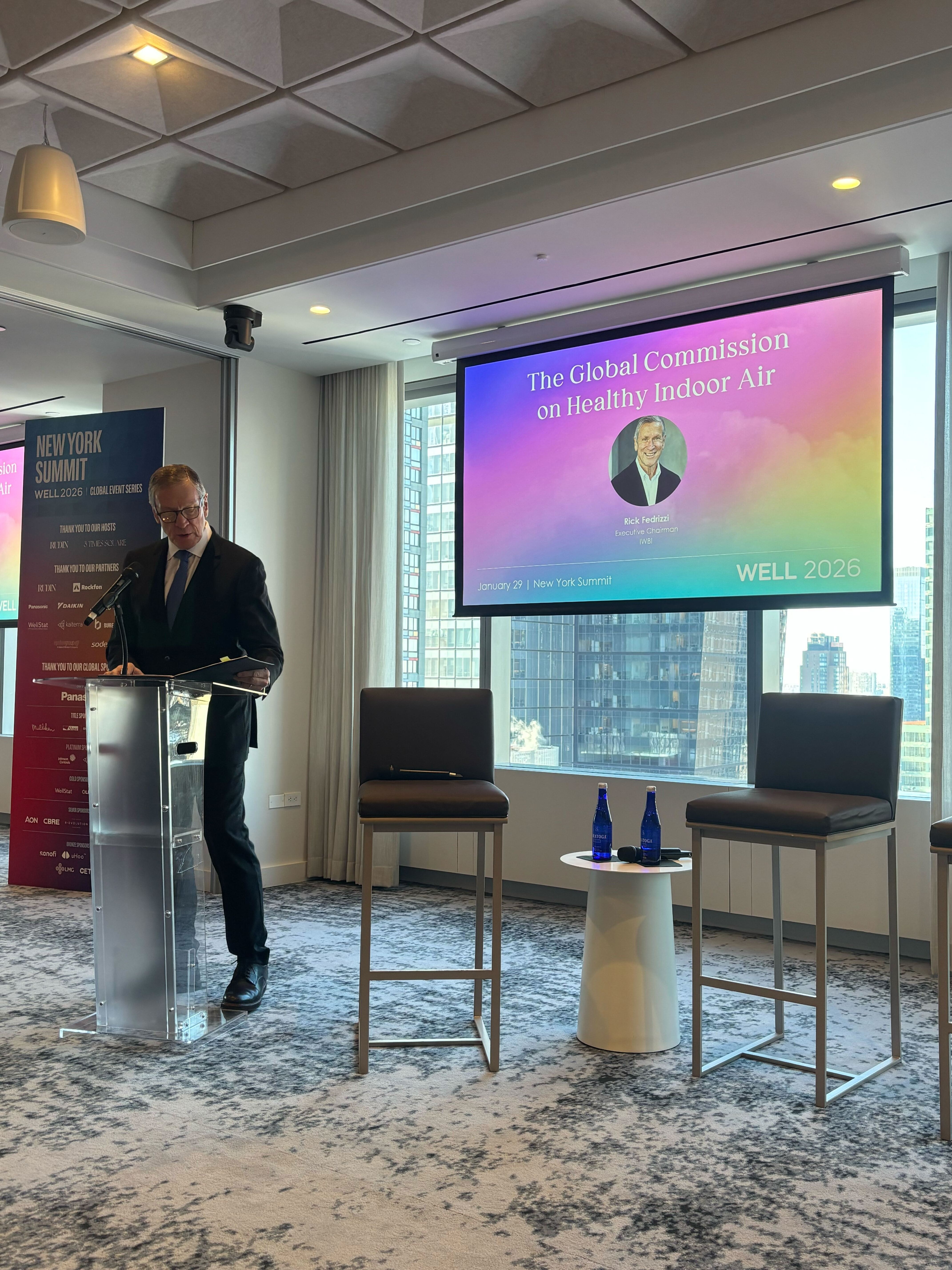
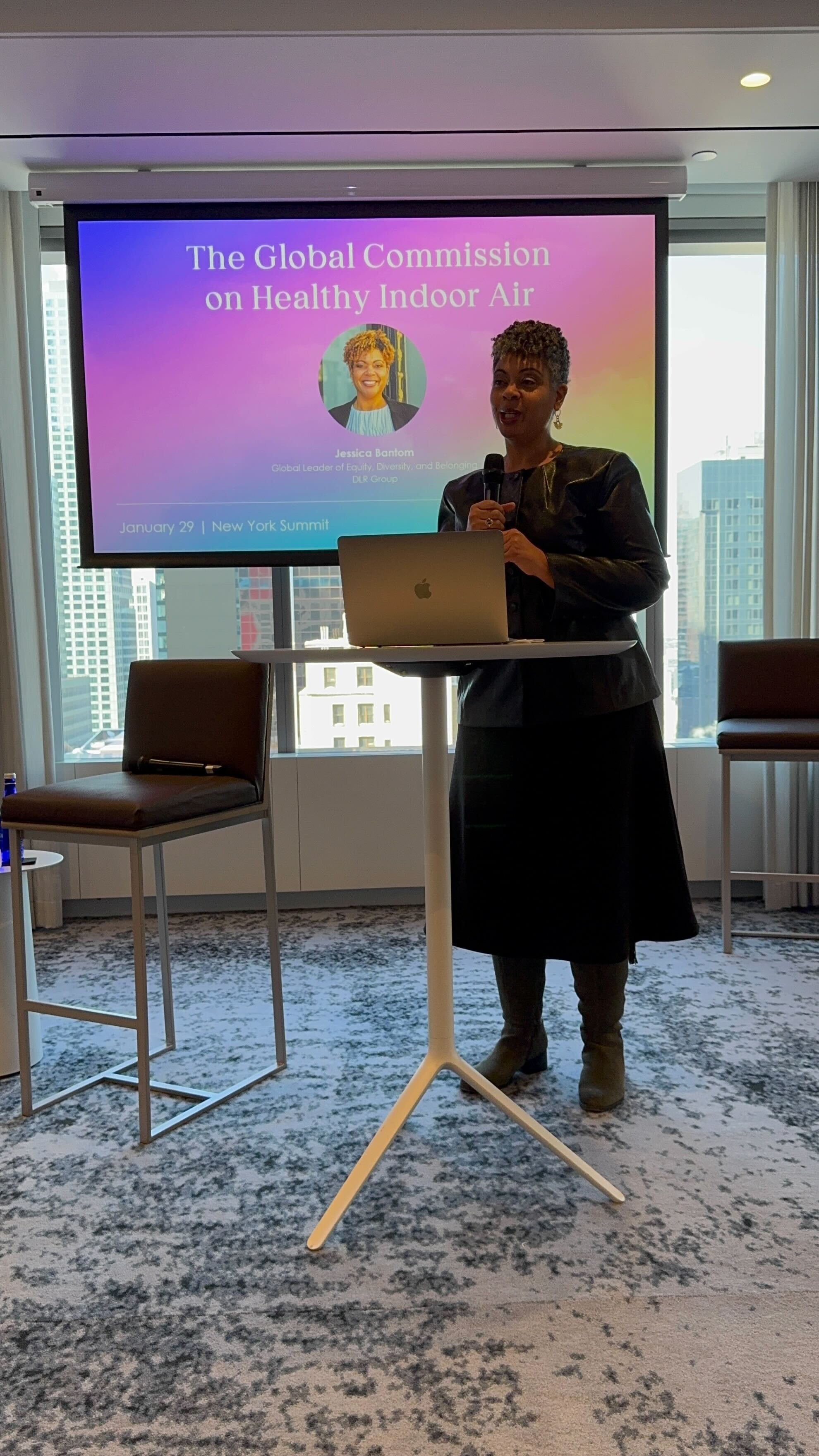
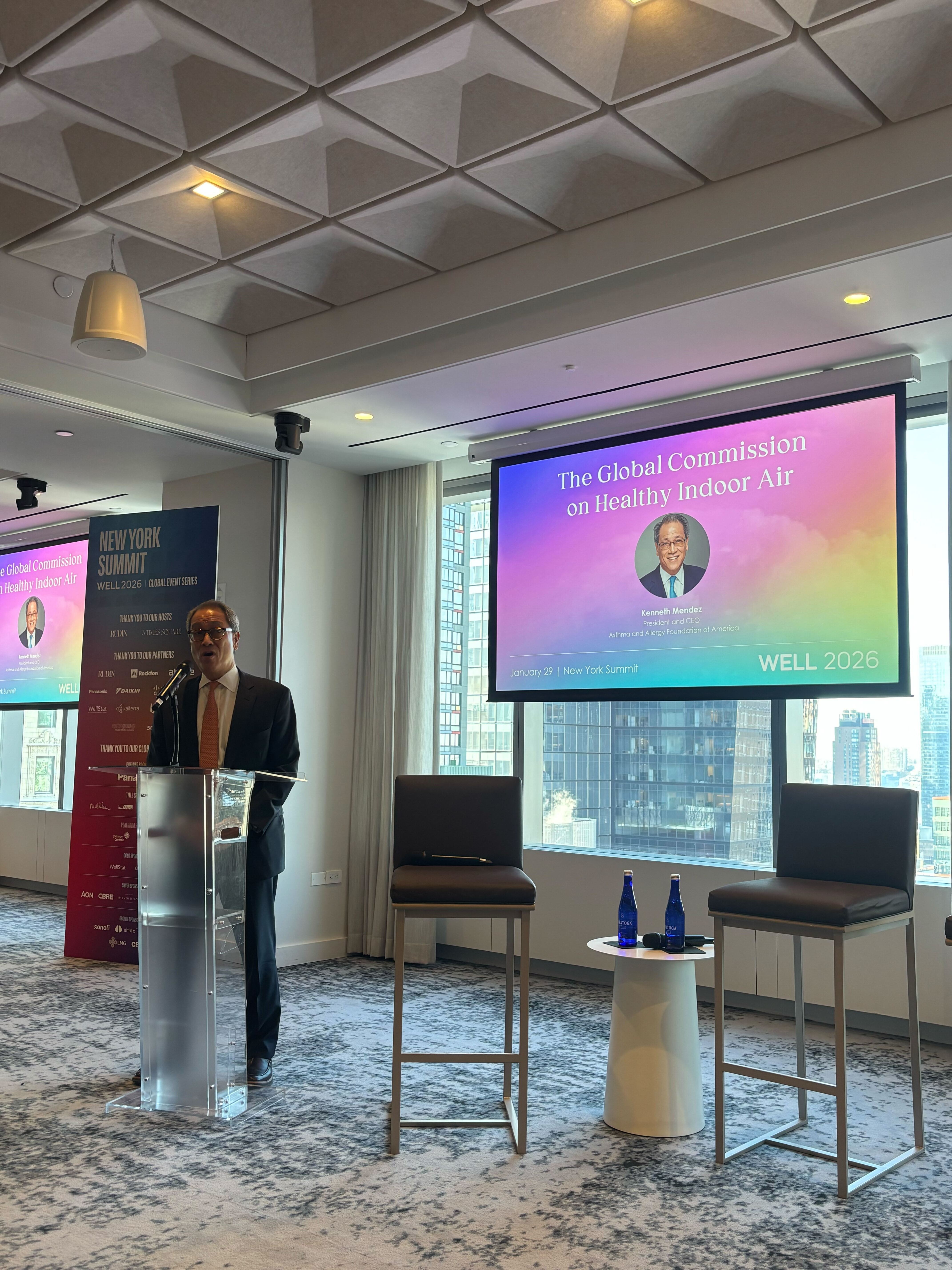
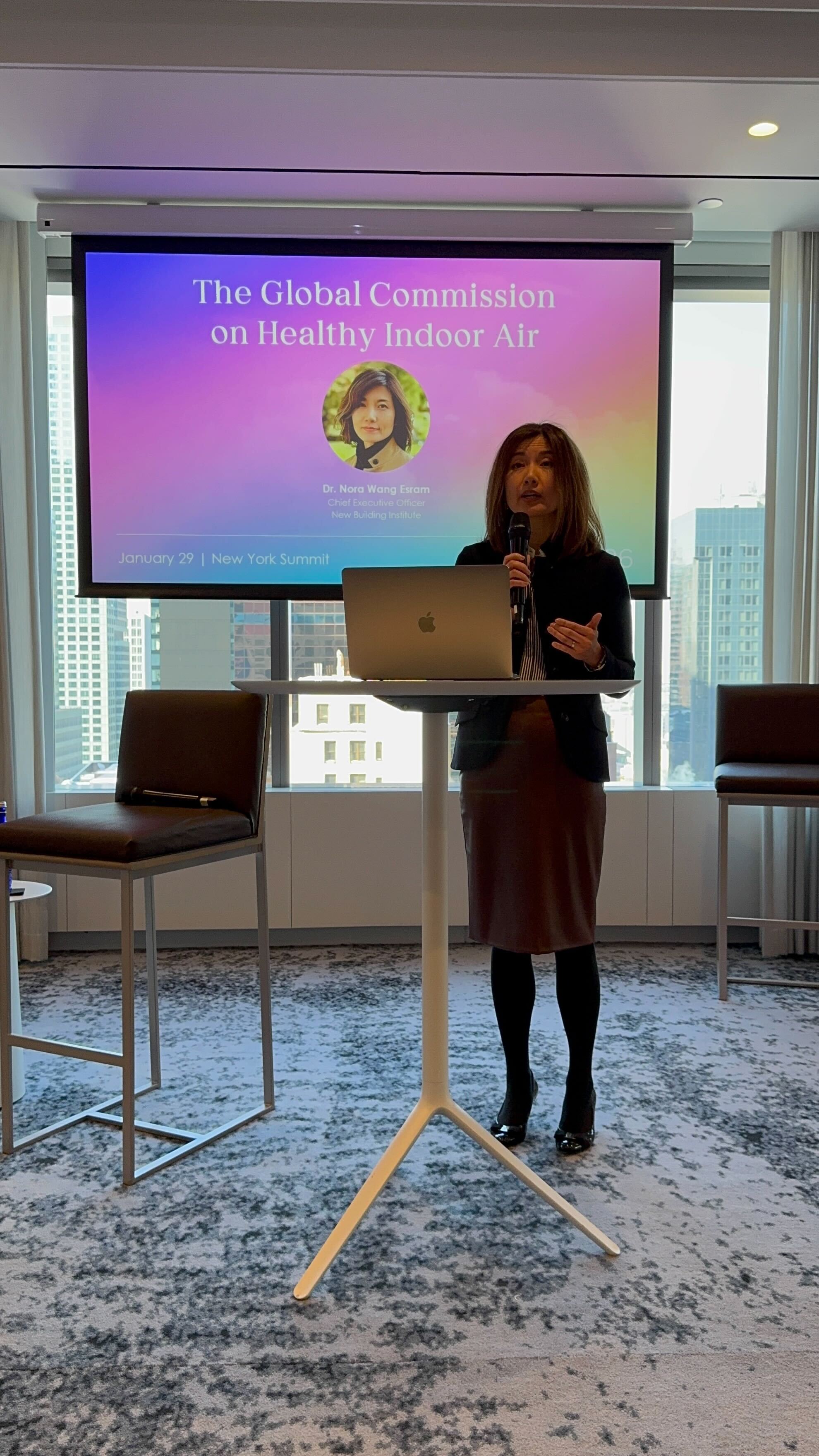
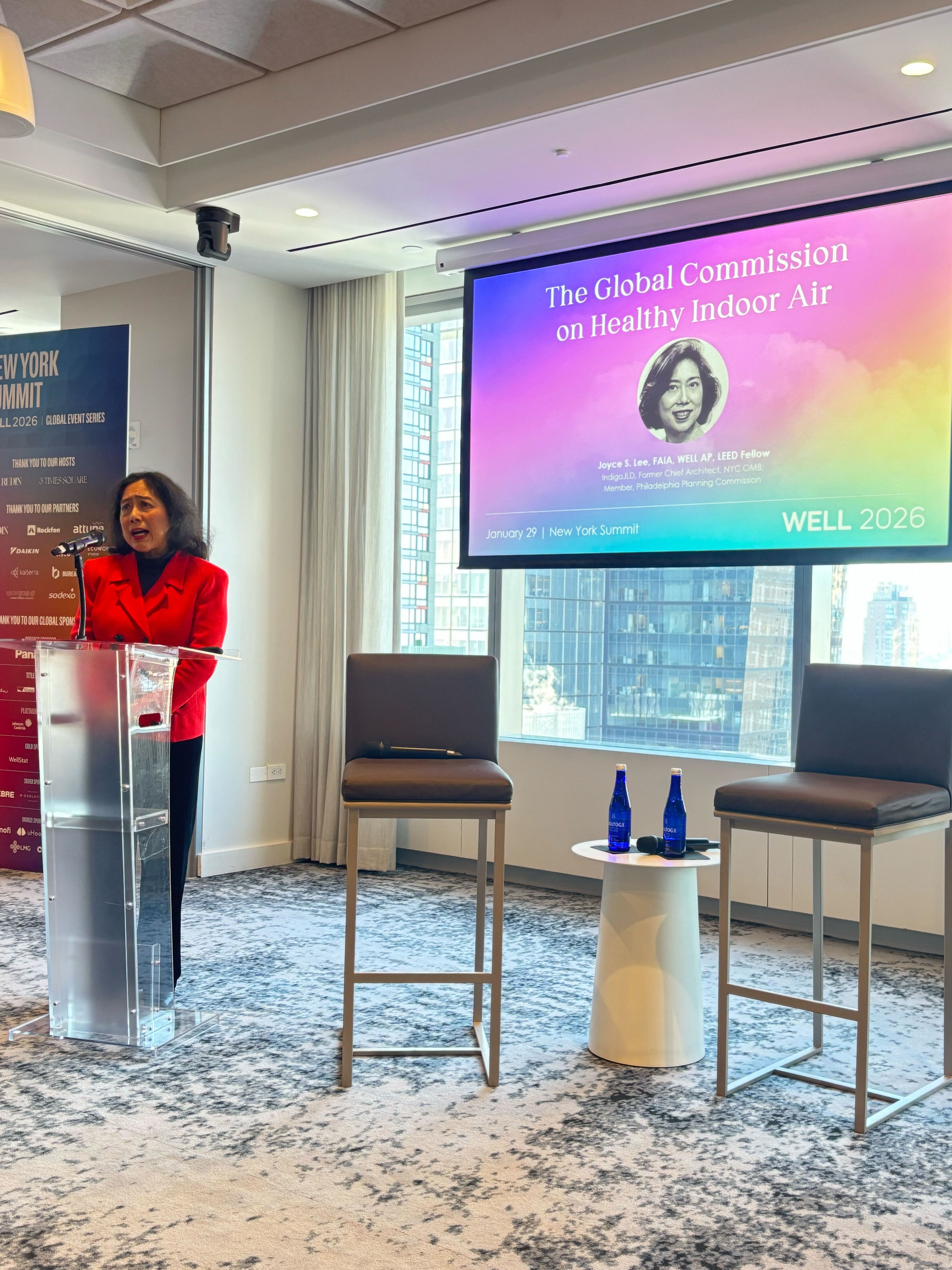
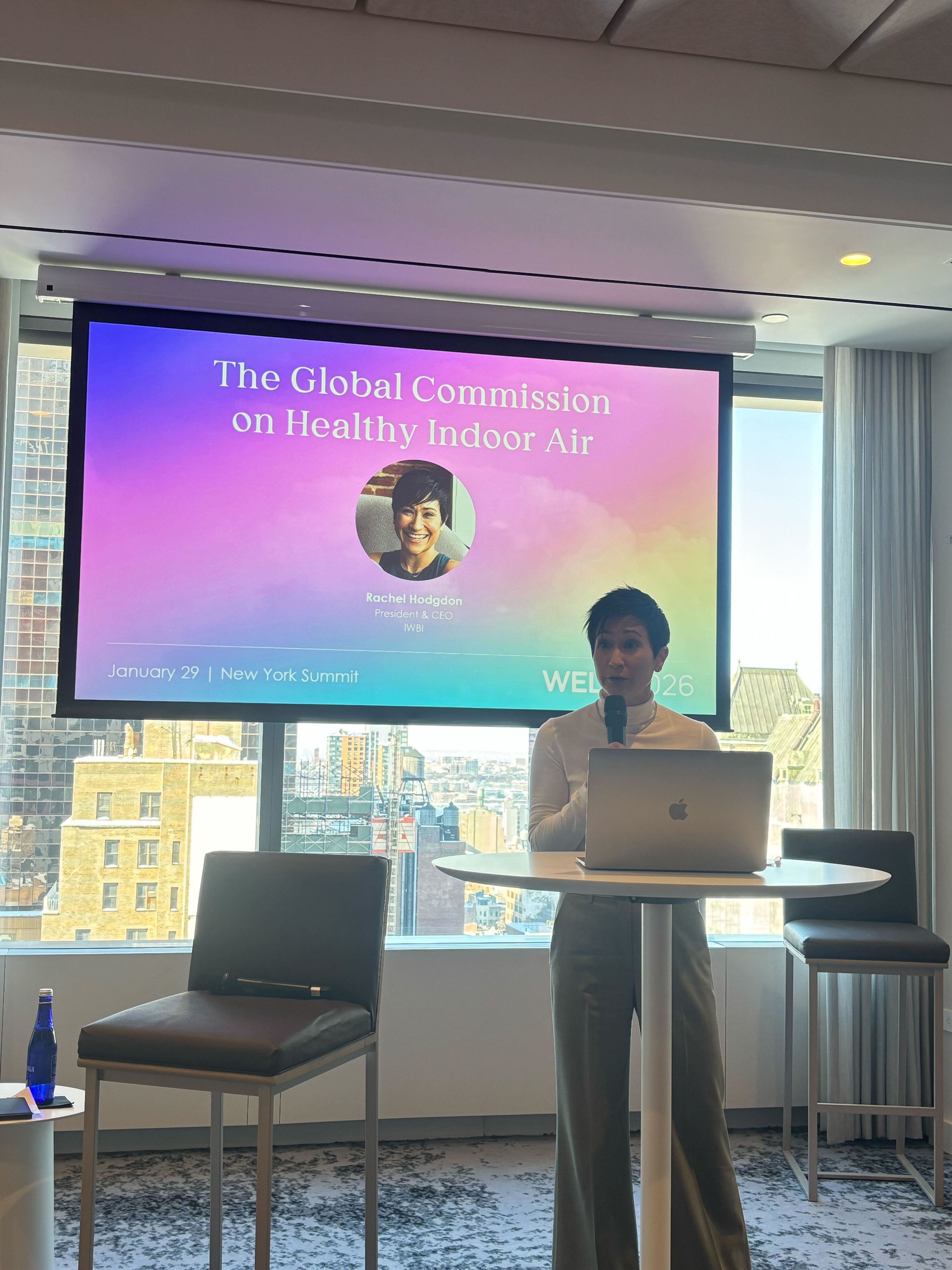
In the recent IWBI webcast, From Classrooms to Communities: The Future of Healthy Indoor Air Policy and Advocacy, experts and innovators came together to explore how indoor air quality policy, technology and advocacy are reshaping the built environment, with a focus on the schools, a priority sector for driving action.

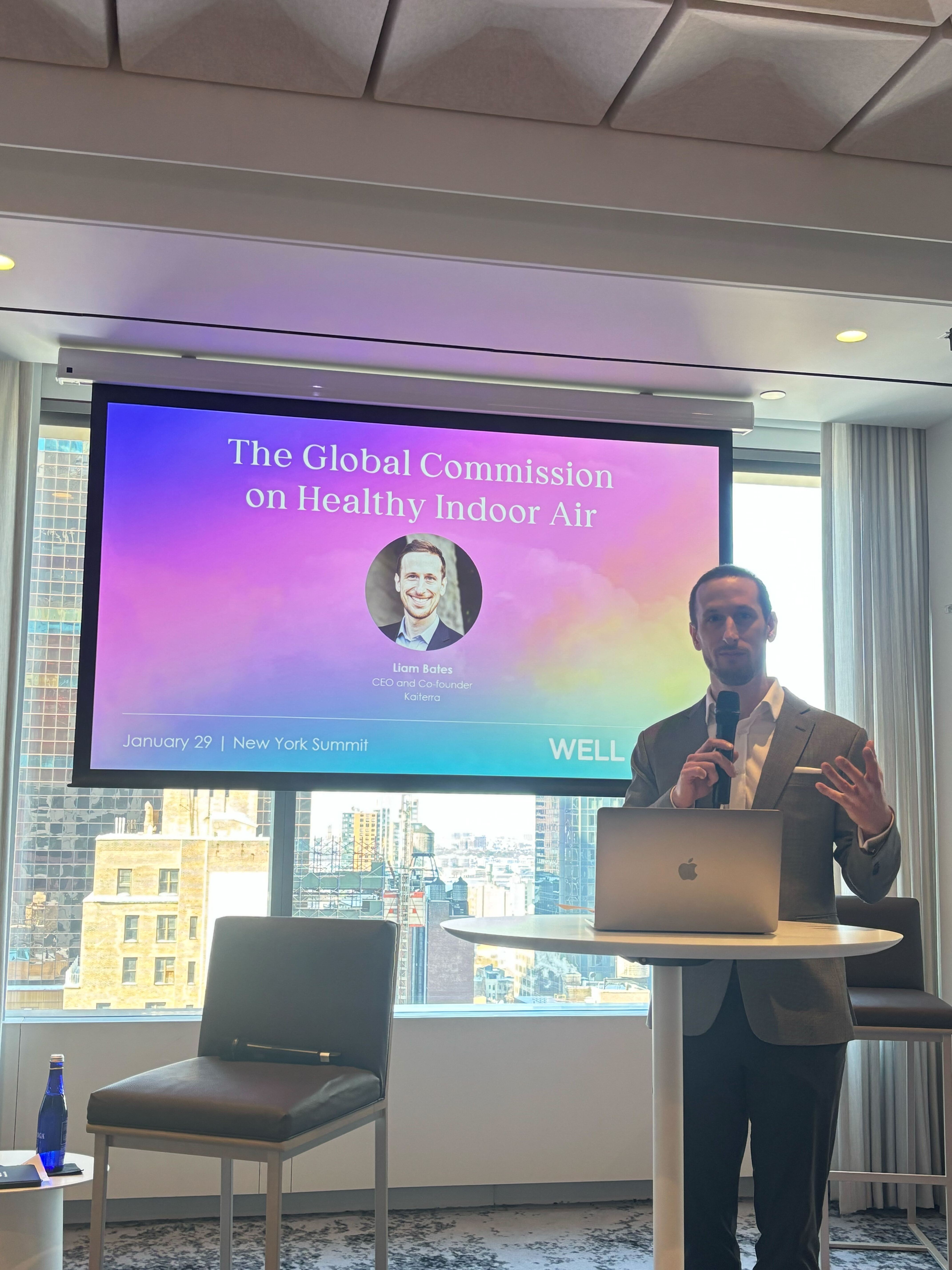
“What started as a weekend project spun completely out of control. Eleven years later, here we are.” – Liam Bates, CEO, Co-Founder, Kaiterra, explaining how and why he founded his company, Kaiterra, as a passion project focused on helping people breathe healthier indoor air.

“COVID forced people to understand that the places where we live, work, learn and play isn’t just a tagline–it’s vital for survival and human health.” – Jennifer Berthelot-Jelovic, Client Development Director, BranchPattern, underscoring a paradigm shift in how we think about health and well-being inside our buildings, where research shows people spend 90% of their lives.

“We can get a little more shoulder behind [modernizing our schools] and make sure we don’t miss a generation.” – Mary Filardo, Executive Director, 21st Century School Fund, emphasizing the urgency to make progress across our nation’s school facilities.

“The kids should be more important than screwing your outdoor air shut. We’ve got to figure out how to do better.” – Glenn Wilson, Applied Air Business Development Manager, Daikin Applied, illustrating that some school facilities are not optimizing for health when they should be.

Moderated by Jason Hartke, IWBI’s EVP of External Affairs and Global Advocacy, the session explored how advocacy, policy and technology are converging to make healthy air a reality–from schools to workplaces to community spaces. From cutting-edge IAQ data tools to policies driving investment in healthier learning environments, the discussion highlighted how schools can lead the way–and how public-private collaboration is spreading those benefits into workplaces and communities everywhere.

From personal passion to public impact
For Jennifer Berthelot-Jelovic of BranchPattern, the conversation starts at home. As a mother and longtime sustainability consultant, she’s seen firsthand how awareness can spark action. “When my teenage son turned on the exhaust fan above our gas stove after attending the WELL Healthy Homes Summit,” she shared, “I realized education is everything. We need to bring that same awareness into our schools.”

Standing shoulder to shoulder for schools
Mary Filardo, who founded the 21st Century School Fund more than 30 years ago, reminded everyone that America’s schools are massive and underfunded–and that our policy at all levels of government must match that reality. “Every community makes decisions about the conditions in their schools,” she said. “With the civic, education and industry sectors working together, we can get a little more shoulder behind this and make sure we don’t miss a generation.”

Filardo, the lead author of the next State of Our Schools report, which will be released later this year, shared that the annual gap in school infrastructure investment continues to grow at an alarming rate. She emphasized that while the challenge is seeming more insurmountable, there are significant opportunities to drive proven solutions, saying, “If we were doing [facility spending] smarter, holistically, the gap wouldn’t be so big.”

Innovation with heart
For Liam Bates of Kaiterra, the path to advocacy began with a personal story. When his now-wife’s asthma flared in a polluted city, he wanted to know what was in the air, but he couldn’t find any affordable or accessible ways to measure it. “I took on a small weekend project that spun completely out of control,” he laughed. “Eleven years later, we’re helping people make the invisible visible.”

As a call to action he urged stakeholders to do something, even if they can’t do everything, a great start being measuring. “Imagine if every school in the country had just one [indoor] air quality data point,” he said. “You’d immediately see which buildings are in crisis and which fixes cost nothing at all.”

Doing better by design
Glenn Wilson from Daikin Applied brought a technician’s perspective—and a dose of urgency. “I can’t count how many times I’ve been on a school roof and seen the fresh air dampers screwed shut,” he said, a cost-saving action that compromises proper ventilation by reducing the amount of outdoor air into the building. “Kids should be more important than saving a few dollars. We’ve got to figure out how to do better.”

The path ahead
The conversation returned time and time to the theme that our school facilities, and more importantly, the children, teachers and administrators inside them, are too important to continue to underfund our school infrastructure. To move forward and spark action, the panel called for smarter policy, more creative and scalable funding and cross-sector collaboration.

As Hartke summarized, “We’ve spent decades investing [billions] in energy efficiency. It’s time we invest in health with the same intensity.”

Watch the full webcast.

View original content here.

We strive to enable colleagues at all levels to lead with purpose, collaborate effectively and drive impactful outcomes. We cultivate a purpose-driven and inclusive culture that serves as a driving force for meeting our business objectives.

Engaging Our Colleagues

MetLife continues to adopt practices and programs that drive a consistent employee experience, creating connection and engagement. 

MOMENTUM is MetLife’s global community of employee-driven networks organized and operating under one umbrella focused on cultivating a great place to work for our employees, everywhere we operate. Led by employee volunteers, the networks are voluntary and open to all employees. 

MOMENTUM actively engages our colleagues in career development and community outreach. Our networks sponsor events and learning opportunities that highlight career paths and tools available at MetLife, enabling everyone to thrive. By aligning and amplifying our MOMENTUM networks, community ambassadors— office-based volunteers—actively foster and strengthen community interconnectivity. 

Innovation thrives in an inclusive culture, where people feel confident about sharing their ideas. MetLife’s global Experimentation Fund gives colleagues the chance to submit ideas to receive funding for low-cost, quick experiments. In addition, we empower colleagues to challenge the status quo and identify opportunities to improve processes—to “remove pebbles.” Since the “removing pebbles” program’s inception in July 2023, the initiative has saved 1.7 million hours

Listening to Our Colleagues

Listening to colleagues, gaining their perspective on how we are working together and recognizing them when they advance our purpose are essential to nurturing our purpose-driven, inclusive culture. Colleagues provide feedback on our work practices through surveys, Let’s Talk, Live! forums (monthly, CEO-led, global town halls) and virtual and in-person listening sessions with leaders.

The MyVoice survey is part of our Company-wide annual listening program, dedicated to fostering a culture where every colleague’s voice is heard and valued. Sharing and actioning results is a collaborative and inclusive effort—our CEO shares enterprise-wide results at Let’s Talk, Live!, leaders review feedback with their teams, and we engage MyVoice action committees throughout the organization to help identify opportunities and to implement solutions to improve the employee experience. Insights are leveraged to establish enterprise focus areas and help us move forward together.

The 2024 MyVoice surveys had record-high engagement and strong results overall. We improved or maintained year-over-year scores across all survey questions and exceeded industry benchmarks where measured. Areas where employees said MetLife is doing well include culture, balance and flexibility, well-being, learning and development.

Recognizing Our Colleagues

The Global Recognition program at MetLife honors the commitment and outstanding performance of our employees. It exemplifies our culture in action by recognizing employees for their contributions toward fulfilling our purpose. Throughout the year, we recognize employees through multiple global channels, including:

  • Purpose Award, which recognizes individuals or teams who made extraordinary efforts to bring MetLife’s purpose to life and deliver for our stakeholders;
  • Above and Beyond Award, which recognizes colleagues for their collaboration, experimentation and customer-focused achievements; and
  • Center Stage, a platform for sharing continuous recognition, such as anniversaries, milestones and successes.

Read more about MetLife’s purpose-driven and inclusive culture in its 2024 Sustainability Report.

AEG Presents recently welcomed students to two career exposure events designed to introduce aspiring professionals to the world of live entertainment. These programs provided participants with firsthand insight into event production, festival operations, and the business of live music while fostering direct connections with industry experts.

At the Rose Bowl in Pasadena, CA, the Goldenvoice team along with AEG’s Presents’ College Connection Program hosted students from The FAM Music Group for an exclusive behind-the-scenes experience ahead of the Chappell Roan concert. Students toured the stadium grounds, observed stage design and production setups, and participated in breakout sessions with Goldenvoice staff and the Rose Bowl Events Team. The experience offered a deeper understanding of the collaboration, planning, and creativity required to execute a large-scale live music event.

“For many students, this is their first time seeing what happens before the gates open,” said Michael Ilves, Senior Director of Festivals at Goldenvoice. “Our goal is to show them that there’s a place for their skills and creativity in this business — whether that’s in production, partnerships, or operations.”

Meanwhile, at the Mountain Winery in Saratoga, AEG Presents welcomed students from De Anza College, Santa Clara University, West Valley University and the University of Silicon Valley for a career development event. Led by AEG’s University Relations team, the program introduced the AEG Internship Program and offered insights on career readiness. Mountain Winery staff also led students on a tour of the historic venue and concluded the day with live performances by fellow students.

“This industry is built on passion and opportunity,” said Ronan Daly, general manager of the Mountain Winery said. “If we can provide spaces for young people to learn, connect, and see how it all comes together behind the scenes, that’s something that truly matters.”

Through these initiatives, AEG Presents continues to invest in the next generation of entertainment professionals by offering students mentorship, access, and immersive learning experiences that highlight the diverse career paths available in live entertainment.

Key Points

  • The St. Paul Park refinery hosted a Safety Fair in August, bringing employees, contractors, vendors and families together to focus on what matters most, going home safe every day.
  • The event featured booths, demonstrations and hands-on activities that made safety learning practical and engaging.
  • The fair provided a fun and meaningful way to reconnect around safety and strengthen the refinery’s shared commitment to one another.

At Marathon Petroleum’s St. Paul Park refinery, finding meaningful and engaging ways to talk about safety is part of everyday life. Each year, the refinery’s Safety Fair gives employees, contractors, vendors and families a chance to connect, learn and celebrate what safety means to them.

Held in late August, this year’s fair brought hundreds of people together to focus on what matters most, making sure everyone goes home safe at the end of the day.

“It’s always such a great way to highlight this important topic in a meaningful and interactive way,” said Kristin Heutmaker, Refining Environmental, Safety & Security Director at the St. Paul Park refinery. “It’s also a chance for teams to learn from each other and see a different side of the refinery than they might in their day-to-day work.”

The event featured booths and demonstrations from refinery departments and outside vendors, covering everything from industry safety practices to everyday tips for staying safe.

“We look at this as a one-stop shop for all things health and safety,” said Obed Goodwin, BBS (Behavior-Based Safety) Facilitator and co-organizer of the event. “It’s educational, but it’s also fun. There’s something for everyone.”

Each year, it’s about bringing people together outside of the traditional teaching settings in both a practical and engaging way for a refresher of what’s truly important.

“The St. Paul Park refinery has always been about community,” Heutmaker added. “That starts with taking care of each other. Making sure every member of the team goes home safely to their families is what it’s all about.”

MEMPHIS, Tenn., October 31, 2025 /3BL/ – FedEx Corp. (NYSE: FDX) today released its annual Global Economic Impact Report, highlighting the company’s worldwide network and role in fueling innovation during its 2025 fiscal year (FY25).[1] Produced in consultation with Dun & Bradstreet, a leading provider of business decisioning data and analytics, the study demonstrates the positive impact FedEx has on individuals, businesses, and communities around the world — otherwise known as the FedEx Effect. 

“For more than 50 years, FedEx has shaped global commerce by offering innovative shipping services that bring communities closer together,” said Raj Subramaniam, president and CEO, FedEx Corporation. “Our culture of innovation, paired with our team’s steadfast commitment to outstanding service and bold ideas, enabled the FedEx network to continue fueling worldwide progress this past year through a rapidly evolving trade landscape and shifts in supply chains.”

The report reveals that FedEx contributed $126 billion in direct and indirect impact to the global economy in FY25. This activity reflects the scale of the FedEx network and the company’s ongoing efforts to enhance its services and optimize its operations during its first fiscal year operating as one FedEx.

FedEx operates the world’s largest industrial network, serving more than 220 countries and territories and employing more than 500,000 people across 5,000 facilities. The company transports approximately 17 million packages per day and more than $2 trillion worth of goods every year.

Key highlights of the FedEx Global Economic Impact Report include:

  • Trade: Leveraging the company’s long history of connecting businesses around the world, deep understanding of the complexities of global supply chains, and expertise in customs brokerage services positions, FedEx continues to be a valuable trade partner and help customers navigate and optimize their supply chains. By analyzing changing regulations and trade patterns, FedEx has been able to adjust capacity across its network to meet customers’ evolving needs.
  • Operational enhancements: FedEx continued to improve its network in FY25, notably through the ongoing optimization of its surface network into a single transportation system and redesign of its international air network to align capacity with shifting global trade flows. Other multi-year investments continued, including the completion of an automated secondary sort facility in Memphis, a new Life Science Center in the Netherlands, a freight and parcel facility with advanced automation in Thailand, and a new international service station in Brazil.
  • Supply chain: In calendar year 2024, 90% of the 100,000 suppliers FedEx contracted with were small- and medium-sized businesses (SAMs), supporting hundreds of thousands of jobs.
  • Intelligent innovation: FedEx is leveraging its industrial network and the data it captures to develop digital, AI-driven tools and solutions — modernizing operations to create smarter, more flexible supply chains, and streamlining the international shipping process. FedEx expanded its AI-driven digital brokerage solutions that improve the customs clearance experience, reduce delays, and help customers adapt to evolving regulatory requirements across regions.
  • Small businesses: FedEx offers a portfolio of solutions and programs that are designed to help SAMs accelerate their growth and extend their global reach. In FY25, the company expanded the availability of several digital innovations designed to streamline international trade and global supply chain management, including launching the Collaborative Shipping Tool to all FedEx import customers in APAC, Canada, MEISA, and the U.S.
  • Sustainability: The company advanced toward its goal to achieve carbon-neutral operations by 2040 through continued investments in renewable energy to power its facilities, fleet electrification, alternative fuels, and air fleet modernization. In FY25, FedEx began its first major U.S. deployment of sustainable aviation fuel (SAF), securing more than 3 million gallons of blended SAF for use at Los Angeles International Airport (LAX) over the course of a year.
  • Giving: FedEx Cares is committed to strengthening communities worldwide through charitable giving, employee volunteerism, and in-kind shipping support. In FY25, FedEx contributed $55.5 million to nonprofit initiatives, dedicated more than 81,000 volunteer hours among team members, and harnessed its global network to deliver critical disaster relief to communities in need, quickly and reliably.

United States impact 
FedEx delivers to every U.S. ZIP code through its extensive network made up of more than 3,800 facilities, 700 aircraft, and approximately 40,000 vehicles, as well as 5,700 independent service providers. With approximately 375,000 U.S. employees in FY25, FedEx is one of the largest employers in the country.

The study found that in FY25, FedEx directly contributed 6.6% of the U.S. Transportation and Warehousing sector’s[2] total net economic output and indirectly contributed $7.8 billion to net economic output across the entire U.S. economy. 

The company’s operations are uniquely positioned to help customers adapt to changing economic conditions and trade patterns with two major air hubs in Memphis and Indianapolis and dedicated international air gateways in Alaska and Miami to facilitate global trade. It also provides highly efficient supply chain and distribution services for important domestic industries, such as U.S. automobile manufacturers and the pharmaceutical sector.

Read the full FY25 FedEx Global Economic Impact Report and explore the FedEx Effect in communities and regions around the world at fedex.com/economicimpact.

About FedEx Corp.FedEx Corp. (NYSE: FDX) provides customers and businesses worldwide with a broad portfolio of transportation, e-commerce, and business services. With annual revenue of $89 billion, the company offers integrated business solutions utilizing its flexible, efficient, and intelligent global network. Consistently ranked among the world’s most admired and trusted employers, FedEx inspires its more than 500,000 employees to remain focused on safety, the highest ethical and professional standards, and the needs of their customers and communities. FedEx is committed to connecting people and possibilities around the world responsibly and resourcefully, with a goal to achieve carbon-neutral operations by 2040. To learn more, please visit fedex.com/about

Click here to learn about FedEx Cares, our global community engagement program.

###
 

[1] Fiscal year (FY) 2025 is defined as June 1, 2024-May 31, 2025.
[2] As defined by the U.S. Bureau of Economic Analysis.

Privacy Overview

This website uses cookies so that we can provide you with the best user experience possible. Cookie information is stored in your browser and performs functions such as recognising you when you return to our website and helping our team to understand which sections of the website you find most interesting and useful.