ATLANTA, March 30, 2026 /3BL/ – Georgia-Pacific announced that effective immediately, David Duncan, executive vice president of Georgia-Pacific’s consumer products group, has been named president and CEO. Mark Luetters, who currently serves as executive vice president of Koch, Inc., with responsibility overseeing several Koch companies, had temporarily served as president and CEO of Georgia-Pacific since 2025.

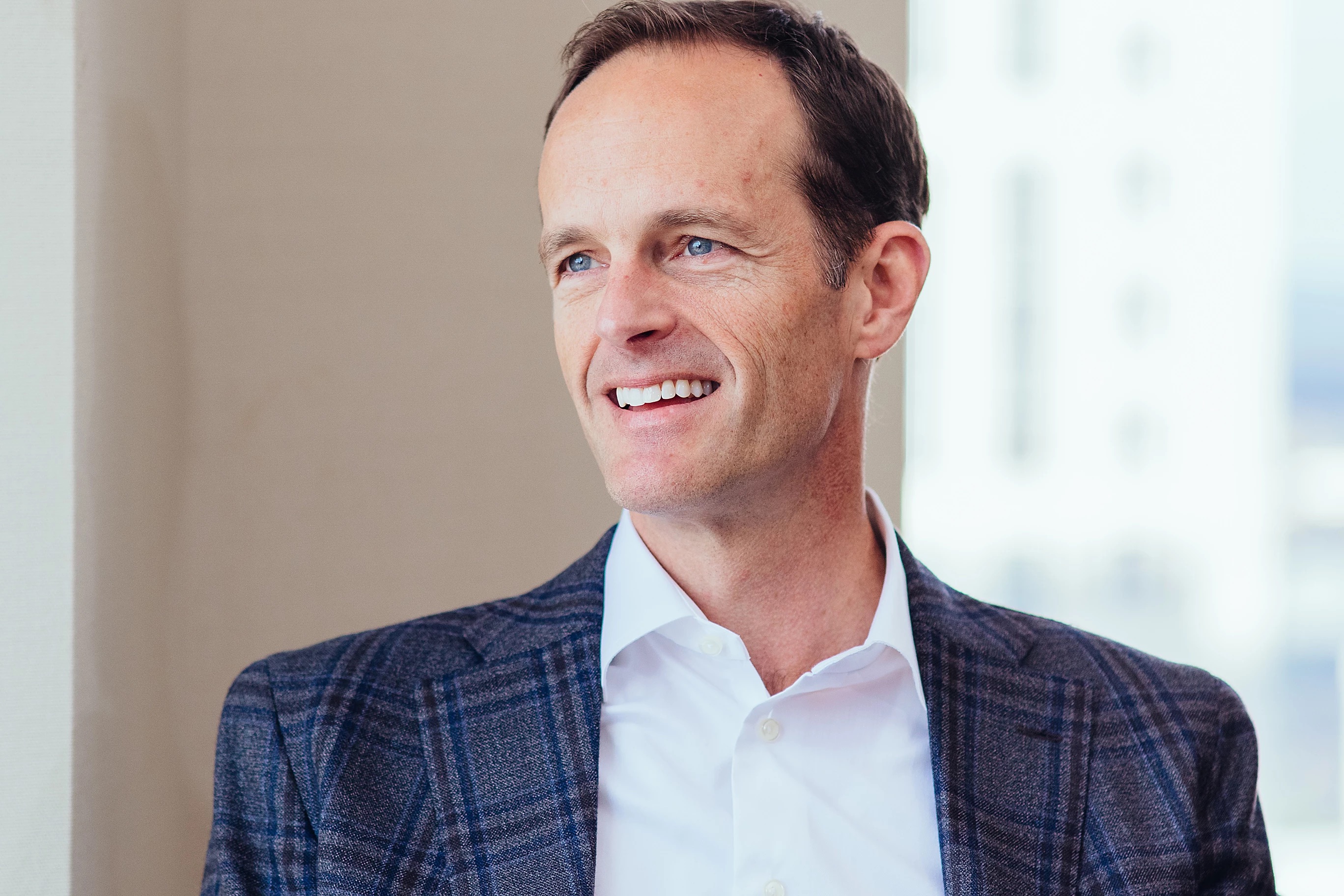
David Duncan

David Duncan, executive vice president of Georgia-Pacific’s consumer products group, has been named president and CEO. He’s been with the company since 2018 in leadership roles and has 28 years of experience at Koch companies.

David joined the company in 2018 as executive vice president of the Georgia-Pacific building products business, before moving into the consumer products leader role in 2019. Prior to joining Georgia-Pacific, he served as president of performance solutions at INVISTA. With more than 28 years of experience at Koch companies, David has held a variety of roles including managing director for Koch Ventures and Koch Equity Development, chief financial officer for Koch Minerals, and various roles at INVISTA.

Vivek Joshi, currently president of the consumer tissue, towel and napkins (TTN) business, will become executive vice president of the consumer products business. Vivek joined GP in 2002 as a marketing manager for the Dixie® Foodservice food wrap business. Throughout his career with the company, he has been a part of significant investments across the consumer products business and has helped improve performance in many of our consumer-facing brands such as Angel Soft®, Brawny®, Dixie®, Sparkle®, Quilted Northern® and Vanity Fair®. Vivek has held numerous roles within the consumer business during the past 23 years, including vice president of innovation and business development, senior vice president of marketing effectiveness, vice president and general manager of the Dixie® business and senior vice president and general manager of the tissue business. 

Vivek Joshi

Vivek Joshi, president of the consumer tissue, towel and napkins business, will become executive vice president of the consumer products business. Vivek joined Georgia-Pacific in 2002 as a marketing manager for the Dixie® Foodservice food wrap business.
 

“I’m honored and grateful for the opportunity to lead an organization full of talented and dedicated people who work together across Georgia-Pacific to deliver results every day,” said Duncan. “I also want to congratulate Vivek on his new role. He has been a strong leader within our consumer products business for many years, and I’m excited to continue working closely with him as he steps into this expanded responsibility.”

View original content here.

BOSTON, March 30, 2026 /3BL/ – The Village Works has achieved the first WELL Coworking Rating in the U.S. for a flexible workspace. This WELL achievement, awarded by The International WELL Building Institute (IWBI) and The Instant Group, demonstrates health focused design and operational strategies have been implemented to meet the evidence-based standard to advance wellbeing for flexible workspace users. The Village Works received the designation for its 769 Centre Street location.

They join an esteemed group of flexible workspace operators globally who have achieved the WELL Coworking Rating for some of their workspaces. In 2025, Industrious secured the WELL rating for its UK portfolio; And-Co was the first to achieve the rating in Canada, for their Vancouver location; and KMC, Awfis Space Solutions, and WORQ achieved the rating in Asia for portions of their portfolios.

The Village Works is a neighborhood workspace in Boston created with the vision of providing a welcoming, healthful, and high-performance work environment where members want to show up to work every day. Founded by a team of designers, The Village Works serves the modern needs of individual hybrid workers and teams, startups, and small businesses alike. It has a second location in Brookline, Mass.

Melissa Tapper Goldman, Co-Founder, The Village Works, said, “We created The Village Works as a human-centered coworking space. Being the first WELL Coworking Rated space in the U.S. validates our hard work and leadership over the last 10 years. We set out to build an inspiring, welcoming space that supports the whole person. Whether it’s pruning plants in support of our biophilia program or managing natural light with strategies that change season to season, the rating process affirmed what our team invests in every day. As designers and operators whose values align naturally with WELL, it also updated our knowledge of best practices, and we discovered new avenues to embody our commitments—truly a mutual win.”

The WELL Coworking Rating is derived from the researched-backed health strategies in the WELL Building Standard and includes nearly 50 features spanning all 10 concepts in WELL, such as air and water quality, light, thermal comfort, movement and nourishment. The rating serves to validate and showcase how coworking and flexible workspaces meet evidence-based health and well-being measures, whilst also being integrated with The Instant Group’s platform to help occupiers make informed workspace decisions based on health and well-being. Prospective coworking and flexible workspace users will be able to search for the new rating and its associated data as they access more than 350,000 flexible workplaces on Instant’s digital platforms.

Sam Pickering, Managing Director of Consulting, at The Instant Group, said, “We are thrilled to recognize the first U.S. workspace that has obtained the WELL Coworking Rating. It was a pleasure collaborating with The Village Works to help them deliver their customers an exceptional place to come to work that demonstrates their commitment to health and wellness. We are excited to team with other providers in the U.S. to bring healthy flexible workspaces to many more cities.”

“As more people rely on flexible workspaces, it’s critical these environments support the health and well-being of the people who use them,” said Rachel Hodgdon, president and CEO of IWBI. “The first WELL Coworking Rated space in the U.S., the Village Works demonstrates how design choices that prioritize people’s health add tremendous value to these ‘third’ spaces.”

About The Village Works

The Village Works offers community coworking and design. Over 10 years, The Village Works (TVW) has developed beautiful, inspiring spaces that support modern workers and vibrant neighborhoods. Based in a commitment to the well-being of individuals, organizations, and the broader community, TVW offers access to high-quality spaces through flexible workspace membership, engaging meeting sites, locus for events and tactical convening, and traditional offices. With workplaces, styles, and needs in rapid change, The Village Works embraces adaptability and continuous improvement of the work environment. thevillageworks.com thevillageworks.com

About The Instant Group

The Instant Group has been rethinking workspace since 1999 with over 500 experts working globally across more than 175 countries. Instant’s digital platforms constitute the world’s largest digital marketplace for flexible workspace listing meeting rooms, virtual offices, flexible office space and coworking memberships. Its global team advises on commercial real estate solutions from serviced offices to fully customised managed offices, and consulting services for portfolio and net zero strategies. Instant’s approach enables agility, hybrid working solutions and improved operational resilience for more than 250,000 businesses every year. Clients include Prudential, Booking.com, Shell, Jaguar Land Rover and GSK. Instant has global offices including London, New York, Mexico City, Hong Kong, Singapore and Sydney. www.theinstantgroup.com www.instantoffices.com

International WELL Building Institute, IWBI, the WELL Building Standard, WELL v2, WELL Certified, WELL AP, WELL EP, WELL Score, The WELL Conference, We Are WELL, the WELL Community Standard, WELL Health-Safety Rated, WELL Performance Rated, WELL Equity Rated, WELL Equity, WELL Coworking Rated, WELL Residence, Works with WELL, WELL and others, and their related logos are trademarks or certification marks of International WELL Building Institute pbc in the United States and other countries.

###

This article is authored by Mauro Atalla, Senior Vice President and Chief Technology and Sustainability Officer, Trane Technologies and Chris Kuehn, Executive Vice President and Chief Financial Officer, Trane Technologies

As a global business community, we have a once-in-a-generation opportunity to lead. Technology is transforming the economy to be defined by data and energy, and it’s up to us to keep sustainability at the center. To help our community meet this moment, we’ve collaborated with leaders from global brands and industry-leading companies to create the ROI of Sustainability Playbook, a project that highlights the many ways that sustainability creates business value.

Contributors to the playbook include sustainability and technology leaders from Colgate-Palmolive, McDonald’s, Prologis, Turner Construction, BrainBox AI and Clever Carbon. In the playbook, you’ll find a series of insights from these leaders, each with real-world examples that inspire action. The innovators who contributed to this piece are redefining what “business as usual” looks like to build what comes next, and we are grateful for their insights and perspectives.

A pivotal moment in the energy transition

At the center of this shift, sustainability and technology leaders are redefining how businesses grow and compete, leveraging sustainability as a core business strategy that drives growth, with returns that include cost reduction, reduced energy waste, better risk mitigation, increased revenues and strengthened resilience.

The winners in this landscape will leverage sustainability as a performance advantage, generating returns holistically across the value chain. Leaders in diverse industries are already aligning finance, operations and supply chains around sustainability outcomes. In parallel, companies are harnessing digital technology as a growth engine, while AI and connected systems are supercharging climate-smart strategies across sectors and functions.

At its core, sustainability is about making things last while building organizations, systems and communities that can thrive in the future. It’s about developing technologies that reduce energy use and waste, lower costs and power performance. It encompasses designing for the long term, using resources wisely, reducing risk and increasing resilience while creating business value — setting the stage for continued growth.

“The winners in this landscape will leverage sustainability as a performance advantage, generating returns holistically across the value chain.”

Mauro J. Atalla
Senior Vice President and Chief Technology and Sustainability Officer, Trane Technologies

Climate innovation and business performance

At Trane Technologies, we have been demonstrating the ROI of sustainability since we were launched as a pure play climate innovator in 2020, and we’re proud to lead through this transformation. At the heart of it is our relentless investment in technology and our purpose to challenge what’s possible for a sustainable world. Another important piece is partnerships — working with our customers, our suppliers, our industry community — to find new ways to reduce energy and cost across the value chain.

The stories highlighted in this playbook demonstrate that sustainability is not a side project or a trade-off. It is a practical strategy for sustained business success, helping companies perform better both today and for generations to come. Thank you to our contributors – for their leadership, innovation and collaboration. As you explore the insights and perspectives in the playbook, we hope they spark new ideas for how sustainability can create value across your own organization. We invite you to join us as we shape a more sustainable future together.

“We’re proud to lead through this transformation. At the heart of it is our relentless investment in technology and our purpose to challenge what’s possible for a sustainable world.”

Chris Kuehn
Executive Vice President and Chief Financial Officer, Trane Technologies

Discover the ROI of Sustainability Playbook

person holding up a cup of water

In Darliston, where Water Mission installed two safe water systems to treat water from a murky pond, Sherine Salmon shared how access to safe water changed everything:

“Without water, we wouldn’t know how to manage. We had nothing left after the storm, so having clean water here means everything to us.”

When Hurricane Melissa made landfall on October 28, 2025, Jamaica faced one of the most powerful storms ever recorded in the Atlantic. With Category 5 winds reaching 185 mph, the hurricane devastated the island’s southwestern coast, ripping roofs from homes, flooding towns, and cutting off safe water access for entire communities. Families emerged into wreckage with little more than what they could carry—and no clear path to recovery.

In the wake of the disaster, safe water became one of the most urgent needs—especially for women and girls in rural Jamaica, who are often responsible for water collection and household care, making the loss of water particularly acute. This World Water Day, under the theme Water and Gender and the message ‘Where Water Flows, Equality Grows,’ we reflect on how rapid response and strong partnership reduced that burden and helped restore dignity and stability to thousands.

Water Mission, a Christian engineering nonprofit, deployed its Disaster Assistance Response Team (DART) ahead of the storm and moved quickly afterward to assess damage and install emergency safe water treatment systems. But getting the right equipment to the right place at the right time required reliable logistics support—something FedEx was uniquely positioned to provide.

Through the FedEx Cares Delivering for Good program, essential equipment to enable water treatment was shipped from Water Mission’s U.S. headquarters to Jamaica. FedEx’s expansive network enabled fast movement, allowing Water Mission to get safe water flowing quickly.

Thanks to this support, Water Mission had two water treatment systems producing safe water in Ferris Cross within two weeks. From there, treated water was trucked daily to tap stands and storage tanks placed at churches, schools, and community centers across multiple communities. In total, Water Mission installed systems in seven locations, reaching people in Savanna la Mar, Whitehouse, Darliston, Petersfield, Bluefields, and other surrounding areas.

person holding up a cup of water

In Whitehouse, Tina, a mother of four, described how her family panicked as windows shattered and the roof gave way. After surviving the storm, they faced another crisis: no safe water.

The human stories emerging from these communities reveal the depth of need—and the power of restored water.

In Whitehouse, Tina, a mother of four, described how her family panicked as windows shattered and the roof gave way. After surviving the storm, they faced another crisis: no safe water.

“Before you came, children were getting sick, and people were panicking”, she said. “Now we don’t have to worry about water. We are so grateful.”

In Darliston, where Water Mission installed two safe water systems to treat water from a murky pond, Sherine Salmon shared how access to safe water changed everything:

“Without water, we wouldn’t know how to manage. We had nothing left after the storm, so having clean water here means everything to us.”

At Belmont Academy in Bluefields, which sheltered nearly 80 displaced residents, Principal Raymon emphasized the importance of clean water, both drinking and hygiene:

“Water is essential to life,” he said. “Thank you for restoring safe drinking water to our school and community. Our boys and girls can learn safely again. You are a hero.”

By the end of February 2026, the systems Water Mission installed had produced more than 1.8 million gallons of safe water, serving more than 59,000 people. These efforts made the greatest difference for women and children, reducing long walks for water, supporting school reopenings, and preventing illness during a time of immense stress and uncertainty.

This response demonstrates the profound impact of partnership. FedEx’s rapid logistical support enabled Water Mission to reach some of the hardest-hit communities with the timely, reliable, safe drinking water they needed to recover.

Together, we helped restore safe water, hope, and stability for families across southwestern Jamaica. And as World Water Day reminds us, when safe water flows—especially for women and girls—equality grows.

Click here to learn about FedEx Cares, our global community engagement program.

Over the past month we’ve tracked the gradual decentralization of U.S. policy regarding corporate climate disclosure, as it changes form across courtrooms, statehouses, and supply chains. We’ve also looked at slow-moving transitions in Europe to balance investors’ disclosure needs with realistic expectations for companies.

This week, our lens shifts to actual corporate action around climate reporting, and how it is responding to the regulatory environment.

On both sides of the Atlantic, regulators have worked to simplify and scale back climate disclosure mandates. Some corporate sustainability leaders and investors are deepening their commitments, demanding better data, and building reporting infrastructure that exceeds the requirements of any single regulation.

The most striking signal comes from Europe. As reported by ESG Dive, a new survey by Osapiens found that 90% of companies now outside the scope of the EU’s simplified CSRD still intend to maintain or expand their sustainability reporting — and 86% plan to continue reporting in line with CSRD requirements.

Looking at these companies’ recent practices, it is clear that corporate climate reporting has crossed an important threshold. It’s no longer just a compliance exercise. It’s how companies manage risk, maintain market access, and hold the confidence of investors, customers and other important stakeholders.

The message from these companies: even when the mandate disappears, the strategic rationale for corporate management does not.

For those still in scope of the CSRD, a new G&A issue brief reviews the long road to finalization of both the CSRD and CSDDD, describing the ultimate outcome on scope thresholds, timelines, and what U.S. multinationals with European operations still need to prepare for.

The picture in the U.S. is different, according to some recent reporting. Trellis explains that close to 300 companies that published sustainability reports in 2024 did not do so in 2025, according to data from The Conference Board and ESGAUGE— the first decline in the survey’s five-year history.

The drop was concentrated among small and mid-cap firms in the Russell 3000, where total reports fell 17%. Contributing factors appear to include reduced investor pressure, greenwashing litigation risk, and legal threats against voluntary standard-setters like CDP and SBTi. However, larger companies – indeed, most of those listed on the S&P 500 Index® – continued to publish, and the data suggests delays rather than wholesale abandonment.

Also in the U.S., as reported by ESG News, the SEC has opened a formal consultation on climate-related disclosures, inviting public input on potential updates to Regulation S-K and S-X. The move signals that investor demand for standardized, comparable climate data has grown strong enough to keep the conversation alive even under a deregulatory administration.

Amid these evolving signals, sustainability reporting standards continue to get more granular at the sector level. IndexBoxlooks at the Global Reporting Initiative’s 2026 launch of GRI 14, a dedicated standard for the mining sector that creates new expectations around land use, Indigenous peoples’ rights, tailings management, and community impacts. For mining companies — many of which are already navigating CDP, ISSB, and CSRD requirements — this adds another layer of sector-specific disclosure that investors and stakeholders will increasingly expect.

Mining is the latest sector to get its own dedicated GRI standard, joining oil and gas, coal, and agriculture, aquaculture and fishing — with financial services and textiles and apparel currently under development and 40 sectors prioritized overall. Companies in high-impact industries should expect sector-specific disclosure expectations to continue expanding. G&A Institute works with companies across these sectors to navigate sustainability reporting strategy, GHG inventories, and framework alignment. Reach out at info@ga-institute.com to learn how we can help.

For professionals navigating this landscape, stories selected for this issue cover a range of other new developments, like:

  • The Net Zero Asset Owner Alliance’s updated target-setting protocol
  • State bills related to climate lawsuit liability
  • The growing intersection of AI and sustainability
  • Why worsening drought conditions alongside issues related to inequality are creating a new category of investment risk

This is just the introduction of G&A’s Sustainability Highlights newsletter this week. Click here to view the full issue

ATLANTA, March 30, 2026 /3BL/ – Drawdown Georgia today announced the launch of the Drawdown Georgia Climate Outlook Maps, a new tool designed to help civic, business, and community leaders understand and visualize how Georgia’s climate may change between now and 2050—and what those changes could mean for infrastructure, agriculture, public health, and economic development.

Introduced at the Super South conference in Atlanta, the maps allow users to compare today’s climate conditions with projected conditions in 2050 under several possible emissions pathways. By visualizing potential changes in extreme heat, rainfall, and growing seasons, the maps help communities anticipate risks and make more informed long-term decisions about how Georgia builds, grows, and manufactures in the decades ahead.

Developed by Dr. William Drummond of Georgia Tech, the maps translate global climate models used in federal climate assessments into Georgia-specific projections.

“What makes these maps valuable is that they turn global climate science into a practical planning tool,” Dr. Drummond said. “Users can see how heat, rainfall, and growing conditions may shift in their own regions and use that insight to guide long-term resilience decisions.”

Unlike many climate projections that focus on the year 2100, the Drawdown Georgia team selected 2050 as a practical planning horizon. Roads, stormwater systems, industrial facilities, farms, and hospitals built today are likely to remain in service through mid-century.

“For too long, climate information has been buried in science journals and the halls of academia. Drawdown Georgia’s new Climate Outlook Maps are making this data accessible to the public, stakeholders, and decision-makers,” said Dr. Marshall Shepherd, former president of the American Meteorological Society and Regents Professor at the University of Georgia. “Given our exposure to an array of climate extremes in Georgia, this release is quite timely.”

Each map set compares present-day conditions with projections for 2050 under three emissions scenarios. Viewing the scenarios side by side allows users to explore how future climate conditions could differ depending on global emissions trends.

The Drawdown Georgia Climate Outlook Maps are available free of charge on the Drawdown Georgia website as part of a growing suite of data-informed tools and trackers designed to support business and civic leaders who are responsible for scaling climate solutions and resilience planning across the state.

“Drawdown Georgia is focused on scaling practical climate solutions across the state, but communities also need tools to prepare for the changes already underway,” said John A. Lanier, executive director of the Ray C. Anderson Foundation and a founding member of Drawdown Georgia. “These maps give us a clearer picture of what Georgia’s climate could look like within the lifetime of today’s infrastructure—and help us plan accordingly.”

For more information and to explore the maps, visit:
www.drawdownga.org/maps

About Drawdown Georgia

Drawdown Georgia is a statewide research-based initiative launched in 2020 that was born from a multi-university collaboration, funded by the Ray C. Anderson Foundation. Taking inspiration from Project Drawdown®, the world’s leading resource for taking action on climate change, Drawdown Georgia localized that work by identifying the 20 highest-impact solutions for reducing greenhouse gas emissions in our state over the next decade.

This framework focuses on climate solutions in five sectors: transportation, buildings & materials, food & agriculture, electricity, and land sinks. It considers how these solutions can reduce emissions and advance “beyond carbon” priorities, including equity, economic development, public health, and nurturing the larger environment.

Drawdown Georgia has grown into a “leader-full” movement, bringing together many organizations, universities, companies, leaders, and funders who are working to advance climate solutions in Georgia, including Drawdown Georgia Research, the Drawdown Georgia Business Compact, Drawdown Georgia Congregations, and Drawdown Georgia Higher Education. Learn more at drawdownga.org.

Media Contact:

Lisa Lilienthal: lisa@dialoguemarketing.com, 404.661.3679

As sustainability becomes a decisive factor in enterprise purchasing, Lenovo is responding by delivering configuration-level Product Carbon Footprints (PCFs) for ThinkPad through its partnership with Makersite.

For enterprise PC buyers, this shift is driven by a clear need: broad product-level estimates of PCFs are no longer enough. They want to know the carbon impact of the exact configuration they plan to purchase, and they increasingly expect verified, International Standards Organization (ISO) ‑ aligned data to back it up.

For Lenovo’s flagship ThinkPad line, this shift created both a challenge and an opportunity. Historically, ThinkPad reported PCFs using a single model-level value. This number was accurate at the portfolio level, but it couldn’t account for the real variation across thousands of customer configurations. And when customers asked for configuration-specific footprints during enterprise tenders, additional manual work was required to meet customer demands with speed and accuracy.

Today, that challenge has become a strategic advantage—thanks to Lenovo’s adoption of Makersite as a complementary system for configuration-level PCF modelling. By integrating granular supplier data, automating Life Cycle Assessments (LCAs), and standardizing footprint modelling across teams, Lenovo is now delivering a new standard for transparency and precision in PC sustainability.

A New Baseline for PCF Accuracy

“Our partnership with Makersite is about setting a new baseline for how product carbon footprints are measured at Lenovo,” says Tom Butler, VP of Commercial Product and Portfolio Management for Lenovo’s Intelligent Devices Group. “Instead of relying on broad portfolio averages, we can now model carbon footprints at the configuration level, using traceable, ISO-aligned data.”

Helping a global brand like Lenovo transition from model-level estimates to configuration-level, traceable carbon footprints marks an important milestone for product sustainability,” adds Neil D’Souza, Founder and CEO of Makersite. “By embedding ISO-aligned, component-level modelling into enterprise workflows, Lenovo is not only strengthening reporting but also transforming how products are designed and evaluated.” For enterprise buyers, product families aren’t what matters — specific configurations are. Differences in storage, memory, displays, and other components can significantly influence the final PCF. With configuration-level visibility, Lenovo sellers can now show customers exactly how component choices affect carbon outcomes and give them credible options that balance price, performance, and sustainability.

For example, a customer may choose a lower-performance SSD that carries a lower carbon footprint. With Makersite’s modelling, sales teams can demonstrate that impact with evidence, not estimates.

Building a Unified, Auditable Data Foundation

The industry-standard PAIA methodology already enabled ThinkPad’s model-level PCFs, but it wasn’t designed for configuration-level modelling at scale. With thousands of possible configurations, Lenovo needed a workflow that could ingest supplier data, generate LCAs automatically, and provide consistent, customer-ready outputs.

By integrating Makersite, Lenovo created a single, auditable data foundation shared across sustainability, engineering, and commercial teams.

2.5 million supplier Full Material Declarations (FMDs) have been ingested.

These FMDs are automatically converted into substance-level LCAs, providing unprecedented detail.

New component data is onboarded through a structured validation workflow, improving quality as the system scales.

“By bringing supplier declarations and configuration-level modelling into one framework, we made carbon reporting consistent, scalable, and customer-ready,” says William Dominici, Director of PCSD Strategy at Lenovo Worldwide. “It’s improved confidence in the data across sustainability, engineering, and tender teams.”

“Accurate carbon insight is table stakes for enterprise IT procurement,” adds Julian Weitz, Chief Revenue Officer at Makersite. “With Makersite powering configuration-specific PCFs at scale, Lenovo can confidently respond to tender requirements with defensible, customer-ready carbon data that strengthens credibility with procurement, engineering, and sustainability stakeholders alike.”

Data-driven decisions on the journey to net-zero 

Lenovo has committed to reaching net-zero greenhouse gas emissions by 2050, with targets validated by the Science Based Targets initiative. Accurate measurement of emissions across the enterprise’s value chain is a challenge for companies like Lenovo, who are aligning their net-zero goals with climate science. The largest category of Lenovo’s emissions includes customers’ use of Lenovo products (scope 3), which also impacts Lenovo’s customers’ emissions.  

By empowering ThinkPad customers with PCFs at the configuration level, Lenovo is enabling decision makers to prioritize sustainability in their ThinkPad purchases, helping them manage their own IT carbon footprint.  

Without accurate, credible data, large enterprises like Lenovo and their global customers cannot make progress on their emissions reduction journeys. By using data-driven tools like Makersite to measure the PCF of flagship products like the Lenovo ThinkPad, Lenovo is charting a smarter path toward a more sustainable future. 

Learn more by reading the case study on Makersite.
Privacy Overview

This website uses cookies so that we can provide you with the best user experience possible. Cookie information is stored in your browser and performs functions such as recognising you when you return to our website and helping our team to understand which sections of the website you find most interesting and useful.