In this bonus episode, Host Angie Dickson, President of the Inogen Alliance and EVP of Antea Group USA, speaks with Sofiane, a Senior EHS Consultant with Baden Consulting in Switzerland. Sofiane walks through the extraordinary remediation of a major hazardous waste site, one of the largest and most complex environmental cleanup projects in Swiss history. He explains how decades of contamination were safely excavated, contained, and transformed into a site that now serves both the environment and the surrounding community.


Listen now on:

Apple Podcasts

Spotify

YouTube


Time Stamps

00:45 The Long History of the Site: From Clay Extraction to Waste Disposal
04:05 Safely Removing 500,000+ Tons of Hazardous and Contaminated Material
05:40 Shared Responsibility: Local Authorities, Industry, and Federal Support
06:25 From Hazard to Habitat: Agriculture, Natural Reserves, and Regeneration
07:40 Core Lessons: Prevention, Collaboration, and Lifecycle Stewardship
08:20 Waste-to-Energy Insights: Why Reduction Still Comes Firs


Guest Quote

“The site is no longer a hazard. It is now a resource for the community and the environment. It shows that land contamination can be reversed if action is taken.” – Sofiane

As climate risks escalate across global coastlines, new ShippingWatch reporting reveals just how urgently port operators must act to safeguard infrastructure, trade flows, and coastal communities. The article – “DP World invests in climate protection to keep ports resilient” – highlights DP World’s significant investments to “climate-proof” its 60+ ports and terminals worldwide, underscoring an industrywide shift toward resilience and decarbonization.  

For the Americas — home to hurricane-exposed coastlines, rising sea levels, and densely interconnected trade routes — the implications are especially profound. 

DP World’s Resilience Strategy Reflects Rising Climate Threats 

The article cites a major risk assessment showing that nearly 90% of the world’s major ports are exposed to damaging climate risks, including storm surges, flooding, and extreme heat. With billions in infrastructure and trillions in trade at stake, inaction could lead to soaring repair costs and prolonged supply chain disruption.  

This reality aligns with what supply chain stakeholders across the Americas are already experiencing: climate volatility is now a structural operating condition. 

DP World’s global COO for Ports & Terminals, Tiemen Meester, explains that the company has conducted detailed climate modeling across more than 50 sites, evaluating sea-level rise, storm intensity, and heat impacts. While many DP World assets are inherently resilient by design, he emphasizes that proactive adaptation — such as strengthening quay walls, electrifying equipment, and deploying renewable energy — is essential for long-term operability.  

The Americas Lens: Why Climate Resilience Matters Even More Here 

The Americas face some of the most intense climate-driven disruptions: 

  • Hurricanes and tropical storms continue to affect trade gateways from Mexico to the U.S. Gulf to the Caribbean.
  • El Niño–related flooding and extreme heat have strained port operations in Peru, Ecuador, and Chile.
  • Sea-level rise threatens coastal terminals across North America and South America. 

DP World’s regional investments directly address these escalating risks: 

  • Peru (Callao): A US$66 million investment in electric cranes and EV infrastructure boosts both climate resilience and air quality.
  • Canada: Shore power in Vancouver and Prince Rupert allows ships to shut off diesel engines while berthed — cutting emissions and reducing local pollution.
  • Dominican Republic: Fully electric fleets and solar capacity strengthen operational continuity amid climate stress.
  • Ecuador & Brazil: Nature-based solutions such as mangrove restoration and aquatic fauna monitoring create natural coastal buffers and protect biodiversity. 

Decarbonization Is Becoming a Resilience Strategy 

As highlighted in the ShippingWatch reporting, DP World is investing US$500 million over five years in decarbonization — including electrification, renewable energy, low-carbon fuels, process modernization, and digitalization. Already, 59% of all electricity across DP World terminals is renewable, with 28 terminals operating on 100% renewable power.  

In the Americas, this progress is accelerating: 

  • Peru’s electric fleet has already eliminated more than 2,400 tons of CO₂ annually.
  • Chile, Ecuador, Brazil, and Canada are expanding renewable power, electrified equipment, and zero-waste initiatives to fortify operational resilience. 

Why This Matters Now 

With global trade projected to double by 2050 and the Americas playing a growing role in nearshoring and regionalized manufacturing, the region’s ports must be prepared to operate under increasingly volatile conditions. 

ShippingWatch’s DP World profile underscores that port resilience is emerging as a top economic priority, not a distant sustainability aspiration. DP World’s strategy across the Americas demonstrates what proactive climate protection looks like — and why it is foundational to the future of competitive, reliable trade. 

Read the full ShippingWatch article here: “DP World invests in climate protection to keep ports resilient” 

  • Grid-interactive building with microgrid, EV charging and battery storage reduces electricity costs and supports grid resilience
  • Eaton highlights the strategies powering the next era of American energy infrastructure at the Reuters Energy LIVE 2025 event 

PITTSBURGH, December 9, 2025 /3BL/ – Intelligent power management company Eaton will deliver a clean energy microgrid for the new Manchester Public Library in Connecticut to support affordable, resilient and sustainable power. The library will be the first newly constructed building in the state to implement grid-interactive renewables, battery storage and electric vehicle (EV) charging – helping maximize energy savings and reduce strain on the local electric grid. Scheduled for completion in 2026, the project aims to achieve zero net energy (ZNE) ready status.

Using its Buildings as a Grid approach that enables flexible energy systems, Eaton is empowering the Town of Manchester to strategically balance energy production and consumption while enhancing grid flexibility. Eaton will synchronize the onsite renewables, energy storage and EV charging with local energy markets, allowing the library to optimize energy usage and enabling the utility to better manage peak demand and support the grid.

“The new Manchester Public Library showcases how smart energy management can reduce costs and demand on the grid while optimizing resilience and sustainability,” said Paul Ryan, vice president and general manager of energy transition at Eaton. “We’re confident our proven intelligent power management solutions and expertise will benefit the Town of Manchester and its residents for decades to come.”

Eaton will enable the library to leverage 370 kilowatts (kW) of solar photovoltaics (PV) and battery storage to generate carbon-friendly power and reduce electricity costs. The company is delivering electrical infrastructure, turnkey engineering services and return on investment (ROI) modeling for the project. With its microgrid control solution and grid-interactive xStorageTM battery energy storage system (BESS), Eaton will help the library maximize onsite solar consumption and export excess electricity to support grid stability. Additionally, Eaton is leveraging its industry-first EV charging partnership with ChargePoint to provide vehicle charging infrastructure that helps intelligently reduce costs, effectively manage site power requirements and enhance reliability. 

“Our community overwhelmingly supports our investment in this state-of-the-art library as a beacon of sustainability, innovation and education,” said Steve Stephanou, town manager at the Town of Manchester. “Eaton’s forward-thinking solutions and strong relationships with the project team have been essential to turn our goal of building Connecticut’s first net-zero public library into reality.” 

The project is supported by federal tax credits, state and local funding, and incentives provided through the Energy Storage Solutions program. This program is overseen by the Public Utilities Regulatory Authority (PURA), is paid for by electric ratepayers, and is administered by the Connecticut Green Bank, Eversource, and the United Illuminating Company (UI). Learn more about how Eaton is helping electrify the grid-interactive buildings of the future.

Angie McMillin, president of Energy Solutions and Services at Eaton, will deliver a keynote focused on the strategies supporting quick onsite power delivery, energy resilience and sustainability during the Reuters Energy LIVE event in Houston on December 9. The session will spotlight the new Manchester Library project and how it is advancing affordable, reliable and sustainable power.

Eaton is an intelligent power management company dedicated to protecting the environment and improving the quality of life for people everywhere. We make products for the data center, utility, industrial, commercial, machine building, residential, aerospace and mobility markets. We are guided by our commitment to do business right, to operate sustainably and to help our customers manage power ─ today and well into the future. By capitalizing on the global growth trends of electrification and digitalization, we’re helping to solve the world’s most urgent power management challenges and building a more sustainable society for people today and generations to come.

Founded in 1911, Eaton has continuously evolved to meet the changing and expanding needs of our stakeholders. With revenues of nearly $25 billion in 2024, the company serves customers in more than 160 countries. For more information, visit www.eaton.com. Follow us on LinkedIn.

Contact:

Regina Parundik 
+1.412.559.1614
ReginaParundik@eaton.com 

###

EMERYVILLE, Calif., December 9, 2025 /3BL/ – SCS Standards and Assurance Systems is pleased to announce that draft version 2.0 of the SCS-007 Certification Standard for Sustainably Produced Gemstones, formerly known as the Certification Standard for Sustainability Rated Diamonds, is now available for public review.

The Standard was first introduced in 2020 to establish a uniform and credible basis for independently assessing and certifying the environmentally and socially responsible production and handling of gemstone-quality diamonds, and to support business and consumer-facing claims for such diamonds.

Draft version 2.0 of SCS-007 has been revised to add emeralds, rubies, and sapphires to the scope of the standard and replace requirements for mined diamonds with a recognition of the Initiative for Responsible Mining Assurance (IRMA) certification for mined gemstones within the scope of the standard. Proposed revisions additionally replace requirements for fingerprinting conformity testing with blockchain technology for gemstone traceability. Finally, the updated standard introduces Trailblazer categories for indicators that promote best practices, such as the use of 100% renewable electricity.

The public is welcome to comment on the proposed updates to the standard until January 30, 2026. To submit comments, please reach out to standards@scsstandards.org, or please visit Certification Standard for Sustainability Rated Diamonds | SCS Standards.

A webinar will be held to introduce the Standard and proposed changes at 10:00 AM PST on January 13, 2025. Registration is available here.

About SCS Standards and Assurance Systems

SCS Standards and Assurance Systems is an organization committed to the development of standards that advance the United Nations Sustainable Development Goals. Standards are developed in alignment with best practices and guidelines provided by internationally recognized bodies to ensure a robust, transparent, and collaborative approach. SCS Standards and Assurance Systems is the official standards development body for Scientific Certification Systems, Inc. For more information, visit www.SCSstandards.org.

Media Contact

Victoria Norman
Executive Director
Send an email

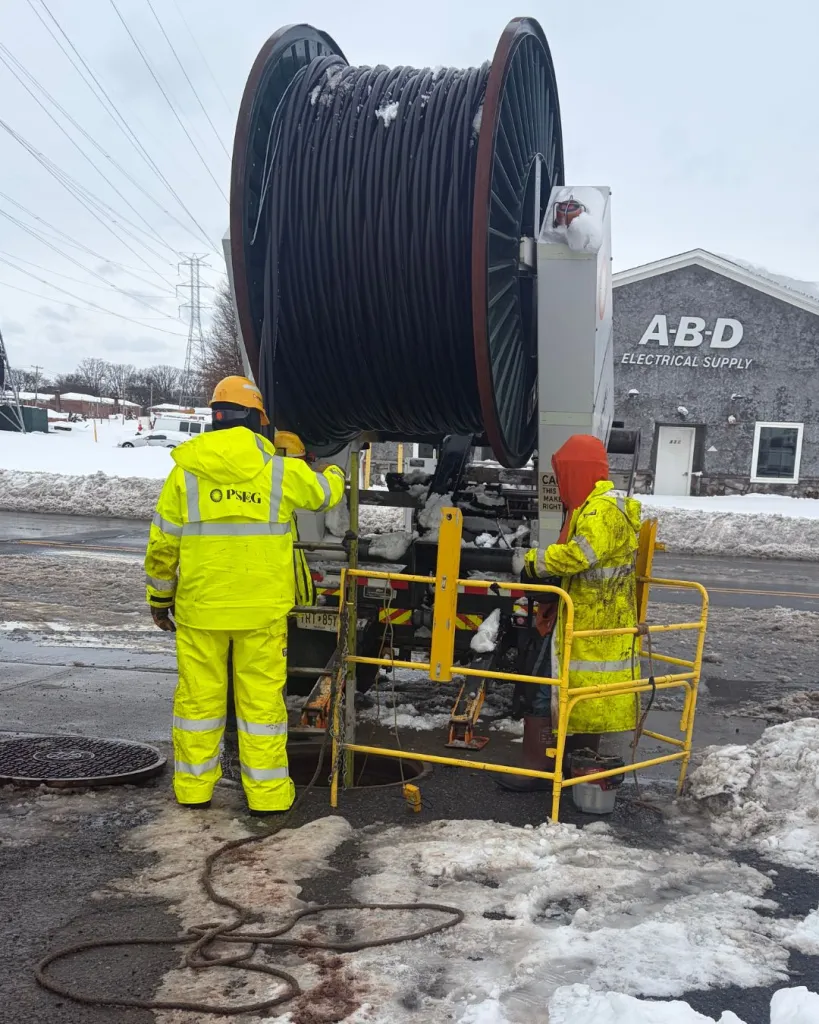
December 8, 2025 /3BL/ – Today, PSE&G and the PSEG Foundation announced $1.5 million in grants to over 25 local organizations that provide critical assistance to households facing economic hardship. The Community Relief Initiative reflects PSE&G’s and the PSEG Foundation’s ongoing dedication to affordability and community well-being.

The one-year initiative aims to provide critical support through a multifaceted approach that includes funding to Shares Nation (formerly NJ Shares) for energy assistance and housing relief, as well as partner organizations of Shares Nation and several foodbanks that are designed and equipped to operate on a wide scale as the backbone of the community food assistance system.

As part of its unwavering commitment to uplifting communities across New Jersey, PSE&G and the PSEG Foundation have invited nonprofit partners to a conference designed to deepen collaboration and spark fresh, practical insights.

“At PSE&G and the PSEG Foundation, we believe true community support goes beyond providing safe and reliable energy — it’s about building strong partnerships with organizations that understand local needs,” said President of the PSEG Foundation and Director Corporate Social Responsibility Calvin Ledford Jr. “During times of economic challenges and hardship, these collaborations allow us to deliver meaningful solutions that directly benefit families across New Jersey. We are deeply grateful for each of our partners and for the impact these initiatives will have in helping local communities access the critical resources needed to stay safe, healthy, and secure.”

Read the press release to learn more about the Community Relief Initiative.

December 8, 2025 /3BL/ – Today, PSE&G and the PSEG Foundation announced $1.5 million in grants to over 25 local organizations that provide critical assistance to households facing economic hardship. The Community Relief Initiative reflects PSE&G’s and the PSEG Foundation’s ongoing dedication to affordability and community well-being.

The one-year initiative aims to provide critical support through a multifaceted approach that includes funding to Shares Nation (formerly NJ Shares) for energy assistance and housing relief, as well as partner organizations of Shares Nation and several foodbanks that are designed and equipped to operate on a wide scale as the backbone of the community food assistance system.

As part of its unwavering commitment to uplifting communities across New Jersey, PSE&G and the PSEG Foundation have invited nonprofit partners to a conference designed to deepen collaboration and spark fresh, practical insights.

“At PSE&G and the PSEG Foundation, we believe true community support goes beyond providing safe and reliable energy — it’s about building strong partnerships with organizations that understand local needs,” said President of the PSEG Foundation and Director Corporate Social Responsibility Calvin Ledford Jr. “During times of economic challenges and hardship, these collaborations allow us to deliver meaningful solutions that directly benefit families across New Jersey. We are deeply grateful for each of our partners and for the impact these initiatives will have in helping local communities access the critical resources needed to stay safe, healthy, and secure.”

Read the press release to learn more about the Community Relief Initiative.

DP World’s Without Logistics: Technology Edition report reveals a critical inflection point for data center operators: logistics disruptions are no longer rare anomalies – they are recurring, high-impact threats that erode uptime, customer trust, and competitiveness. According to the report, the average logistics incident costs technology companies nearly US$1 million and contributes to more than US$16 billion in annual sector-wide losses.

For data center environments – where thousands of unique components, spare parts, and high-value assets must move flawlessly across global networks – these vulnerabilities translate directly into operational downtime. Our research into disruptions between 2022 and 2025 highlights the challenge:

  • 87% of companies report more customer complaints after logistics disruptions
  • 66% have lost contracts or business due to supply chain failures
  • 50% lose more than a month of operations in disrupted years
  • 59% lose more than a month of operations in disrupted years

But the report also makes one thing clear: resilience is achievable. Companies that integrate logistics across six or more areas – from inbound parts management to warehousing, last-mile delivery, and ESG-aligned practices – see 40% lower disruption costs and 38% faster recovery times.

For data center operators racing to scale capacity and support the next generation of AI infrastructure, treating logistics as core infrastructure – not an afterthought – is now essential.

Call to Action

Download Without Logistics: Technology Edition now to understand the hidden risks facing data center supply chain – and learn how integrated logistics can accelerate deployments, reduce downtime, and build long-term resilience.

This is the playbook for data center leaders preparing for the next era of AI-driven, always-on infrastructure.

DP World’s Without Logistics: Technology Edition report reveals a critical inflection point for data center operators: logistics disruptions are no longer rare anomalies – they are recurring, high-impact threats that erode uptime, customer trust, and competitiveness. According to the report, the average logistics incident costs technology companies nearly US$1 million and contributes to more than US$16 billion in annual sector-wide losses.

For data center environments – where thousands of unique components, spare parts, and high-value assets must move flawlessly across global networks – these vulnerabilities translate directly into operational downtime. Our research into disruptions between 2022 and 2025 highlights the challenge:

  • 87% of companies report more customer complaints after logistics disruptions
  • 66% have lost contracts or business due to supply chain failures
  • 50% lose more than a month of operations in disrupted years
  • 59% lose more than a month of operations in disrupted years

But the report also makes one thing clear: resilience is achievable. Companies that integrate logistics across six or more areas – from inbound parts management to warehousing, last-mile delivery, and ESG-aligned practices – see 40% lower disruption costs and 38% faster recovery times.

For data center operators racing to scale capacity and support the next generation of AI infrastructure, treating logistics as core infrastructure – not an afterthought – is now essential.

Call to Action

Download Without Logistics: Technology Edition now to understand the hidden risks facing data center supply chain – and learn how integrated logistics can accelerate deployments, reduce downtime, and build long-term resilience.

This is the playbook for data center leaders preparing for the next era of AI-driven, always-on infrastructure.

COLUMBIA, S.C., December 8, 2025 /3BL/ – South Carolina Commissioner of Agriculture Hugh Weathers and State Senator Russell Ott announced a new grant program to help South Carolina’s farming industry. The Wells Fargo Foundation is providing $600,000 to the South Carolina Research Authority to fund the Cultivating Innovation in SC Agribusiness grant program. The grants are designed to accelerate growth and foster groundbreaking innovation in the state’s farming industry. “We are proud to support South Carolina’s small agribusinesses as they innovate and grow,” said Wells Fargo Foundation VP of Philanthropy and Community Impact Pam Bryant. “This investment reflects our ongoing commitment to strengthening rural communities and advancing sustainable economic development through agriculture.”

“South Carolina’s agribusiness sector is the backbone of our state’s economy, and innovation is the key to keeping it strong and competitive,” said SCRA Interim President and CEO Bill Kirkland. “Thanks to the Wells Fargo Foundation’s generous support, we can equip small farmers and agribusiness owners with the resources, training, and capital they need to turn bold ideas into reality.”

SCRA will administer the grants in partnership with the South Carolina Small Business Development Centers and other key collaborators. “The program will provide intensive training, expert mentorship, and one-time innovation grants of up to $30,000 to competitively selected small agribusinesses,” said SCRA Senior Investment Manager Mitch Smith. “The funding enables participants to develop and implement novel products, services, processes, practices, or technology adoptions that create tangible value for their operations and the state’s agricultural economy.”

Eligible businesses must be for-profit businesses operating in the agricultural sector, headquartered in South Carolina for at least one tax year, and meet U.S. Small Business Administration size standards. Grant funds may be used for project-specific expenses, including labor, working capital, research and development, equipment and technology, supplies, professional services, and marketing.

Selected participants will benefit from:

  • Five targeted webinars on innovation strategy, AI tools, market validation, financial planning, intellectual property protection, and scaling
  • Personalized consulting from SC SBDC advisors and SCRA
  • Access to an expert mentorship pool

Key program dates:

  • Application Launch: December 1, 2025
  • Application Deadline: February 2, 2026
  • Cohort Notification: February 5, 2026
  • Program Start: February 12, 2026

Interested businesses are encouraged to visit scaginnovation.com or contact jimmymj@mailbox.sc.edu for more information and to begin the application process.

South Carolina Research Authority

Chartered in 1983 by the State of South Carolina as a public, nonprofit corporation, South Carolina Research Authority fuels the state’s innovation economy through the impact of its comprehensive services to technology-based startups, academia, and industry. 

South Carolina Small Business Development Centers  

The SC SBDC provides no-cost consulting, low-cost training, and resources to help small businesses start, grow, and thrive.

Media Contact:

Adrianne Grimes, Director of Marketing & Communications
South Carolina Research Authority
Adrianne.Grimes@scra.org  

COLUMBIA, S.C., December 8, 2025 /3BL/ – South Carolina Commissioner of Agriculture Hugh Weathers and State Senator Russell Ott announced a new grant program to help South Carolina’s farming industry. The Wells Fargo Foundation is providing $600,000 to the South Carolina Research Authority to fund the Cultivating Innovation in SC Agribusiness grant program. The grants are designed to accelerate growth and foster groundbreaking innovation in the state’s farming industry. “We are proud to support South Carolina’s small agribusinesses as they innovate and grow,” said Wells Fargo Foundation VP of Philanthropy and Community Impact Pam Bryant. “This investment reflects our ongoing commitment to strengthening rural communities and advancing sustainable economic development through agriculture.”

“South Carolina’s agribusiness sector is the backbone of our state’s economy, and innovation is the key to keeping it strong and competitive,” said SCRA Interim President and CEO Bill Kirkland. “Thanks to the Wells Fargo Foundation’s generous support, we can equip small farmers and agribusiness owners with the resources, training, and capital they need to turn bold ideas into reality.”

SCRA will administer the grants in partnership with the South Carolina Small Business Development Centers and other key collaborators. “The program will provide intensive training, expert mentorship, and one-time innovation grants of up to $30,000 to competitively selected small agribusinesses,” said SCRA Senior Investment Manager Mitch Smith. “The funding enables participants to develop and implement novel products, services, processes, practices, or technology adoptions that create tangible value for their operations and the state’s agricultural economy.”

Eligible businesses must be for-profit businesses operating in the agricultural sector, headquartered in South Carolina for at least one tax year, and meet U.S. Small Business Administration size standards. Grant funds may be used for project-specific expenses, including labor, working capital, research and development, equipment and technology, supplies, professional services, and marketing.

Selected participants will benefit from:

  • Five targeted webinars on innovation strategy, AI tools, market validation, financial planning, intellectual property protection, and scaling
  • Personalized consulting from SC SBDC advisors and SCRA
  • Access to an expert mentorship pool

Key program dates:

  • Application Launch: December 1, 2025
  • Application Deadline: February 2, 2026
  • Cohort Notification: February 5, 2026
  • Program Start: February 12, 2026

Interested businesses are encouraged to visit scaginnovation.com or contact jimmymj@mailbox.sc.edu for more information and to begin the application process.

South Carolina Research Authority

Chartered in 1983 by the State of South Carolina as a public, nonprofit corporation, South Carolina Research Authority fuels the state’s innovation economy through the impact of its comprehensive services to technology-based startups, academia, and industry. 

South Carolina Small Business Development Centers  

The SC SBDC provides no-cost consulting, low-cost training, and resources to help small businesses start, grow, and thrive.

Media Contact:

Adrianne Grimes, Director of Marketing & Communications
South Carolina Research Authority
Adrianne.Grimes@scra.org  

Privacy Overview

This website uses cookies so that we can provide you with the best user experience possible. Cookie information is stored in your browser and performs functions such as recognising you when you return to our website and helping our team to understand which sections of the website you find most interesting and useful.