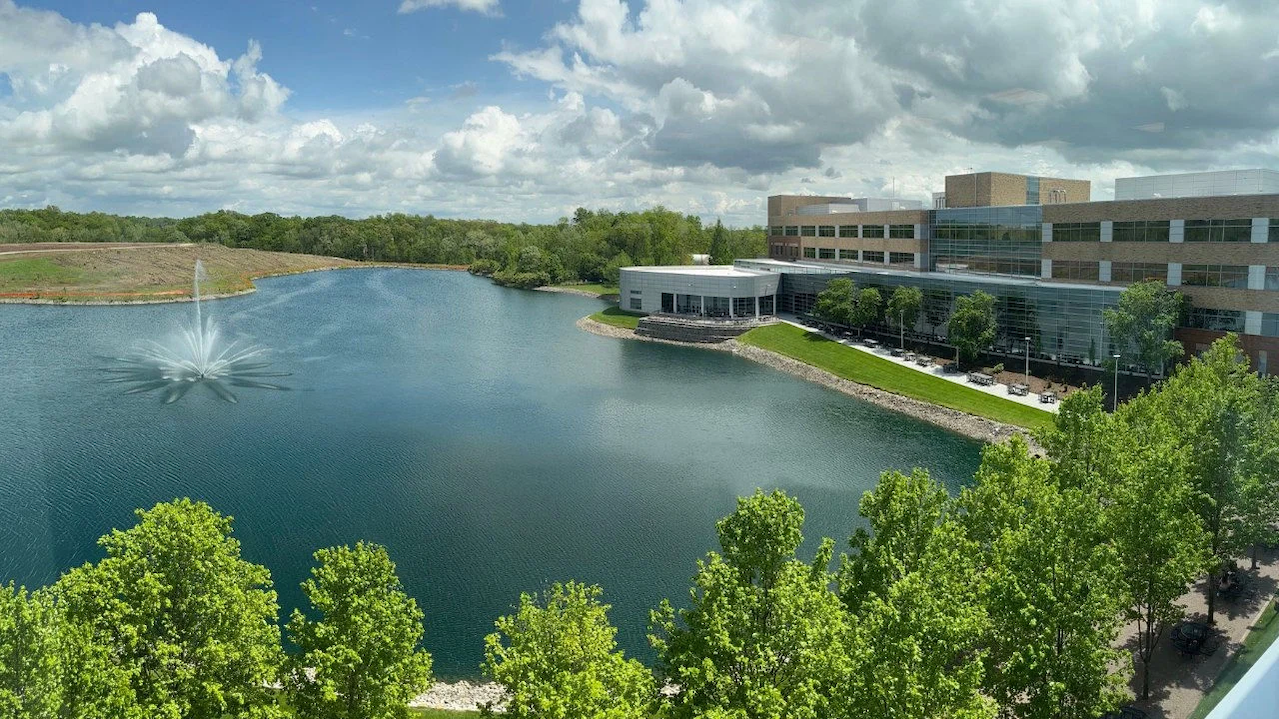
BUDA, Texas, April 1, 2026 /3BL/ - Heart Water, a climate adaptation technology company specializing in decentralized water infrastructure, has earned Volumetric Water Benefit Accounting (VWBA) v2.0 Water Positive verification — an independent designation confirming that a facility returns more water to the local watershed than it consumes — for its rainwater-capture and purification system in Buda, Texas. The independent audit, completed by SCS Global Services, confirms that Heart Water’s system generates more than two million gallons per year of measurable, verified watershed benefits.   

Heart Water’s Water Positive verification builds on the certification they also underwent for SCS Water Stewardship and Resiliency (WSR). WSR certification demonstrates responsible site-specific water management informed by local watershed conditions and best-practice stewardship standards.  

Unlike traditional water solutions that rely on municipal systems, Heart Water designs onsite rainwater systems that let organizations — including those in water-intensive sectors such as data centers, manufacturing, and logistics hubs — secure their own supply of high-quality water. Heart Water’s infrastructure captures rainfall before it touches the ground and purifies it using a combination of modular cistern engineering and AI-driven, real-time monitoring.   

Heart Water’s CEO, Belal El Banna commented that, “this certification marks a critical milestone in our mission to redefine water infrastructure, proving that we can provide operational resilience for industry while delivering verified environmental benefits back to our local watersheds. By turning rainwater into a scalable, auditable resource, we are offering our corporate partners a transparent and credible path to achieving their most ambitious water-positive commitments.” 

Certified Water Impact, Verified by Independent Auditors    

The VWBA v2.0 verification validates four categories of water benefit produced by Heart Water’s Buda system: water supply reliability, water quality improvements, flood mitigation, and aquifer recharge. The facility’s 100,000 square-foot capture system collects, treats, and redistributes approximately 2,023,566 gallons of rainfall annually.  

 “Our audit confirmed that Heart Water’s rainwater systems are designed and managed with a high degree of rigor. The quality of the data, monitoring, and basin level considerations demonstrated that the project meets the requirements of the VWBA v2.0,” said Lauren Enright, Program Manager, Water Stewardship, SCS Global Services.   

Why This Matters for Big Water Users — Especially Data Centers    

Water-intensive facilities are under growing pressure to secure reliable long-term supply while meeting increasingly scrutinized stewardship commitments. On-site rainwater infrastructure offers an alternative pathway: a verified, renewable source that supports both operational resilience and sustainability outcomes.   

Heart Water’s modular cistern systems integrate into building foundations or parking structures, maximizing storage without affecting leasable space. Combined with automated purification controls, the technology provides operators a credible, independently audited water source as they plan for growth, permitting, and long-term water security.  

Water Benefits Available to Corporate Partners  

The water benefits generated by the Buda facility are fully transferable, enabling companies to apply independently verified Volumetric Water Benefits (VWBs) toward their water stewardship and basin impact commitments. Purchasing VWBs from Heart Water directly supports expansion of rain capture infrastructure and delivers documented, water positive outcomes. 

About Heart Water 

Heart Water captures, treats, and stores rainwater directly on-site by transforming the passive facades and rooftops of commercial facilities into active catchment infrastructure. As a producer of the highest-quality potable water, Heart Water’s patented system meets the large-scale volumetric needs of water-intensive facility’s including beverage manufacturers, CPG operations and data centers.    

Reliance on centralized municipal grids has become a critical business liability. This is most acute for data centers, the backbone of the digital economy, where water for cooling is as critical as electricity. Heart Water provides a decentralized and autonomous water platform which provides operational security and on-site water stewardship. 

For more information visit, https://rainpositive.com  

About SCS Global Services    

SCS Global Services is an international leader in third-party environmental and sustainability verification, certification, auditing, testing, and standards development. Its programs span a cross-section of industries, recognizing achievements in climate mitigation, green building, product manufacturing, food and agriculture, forestry, consumer products, and more. Headquartered in Emeryville, California and celebrating over 40 years in business, SCS has representatives and affiliate offices throughout the Americas, Asia/Pacific, Europe, and Africa. Its broad network of auditors are experts in their fields, and the company is a trusted partner to companies, agencies, and advocacy organizations due to its dedication to quality and professionalism. SCS is a chartered Benefit Corporation, reflecting its commitment to socially and environmentally responsible business practices. SCS is also a Participant of the United Nations Global Compact and adheres to its principles-based approach to responsible business.   

For more information, visit www.SCSGlobalServices.com 

Media Contact:

Rachel Barnhart   
Director, Corporate Communications and Public Relations   
SCS Global Services   
Email: rbarnhart@scsglobalservices.com 

By Charlie Wilkie, Chief Executive Officer

A comms leader I work with lost a third of her team about two years ago.

The CMO made a compelling case: Advertising had measurable return on ad spend (ROAS). Content marketing had attribution, earned media had neither. It wasn’t an unreasonable argument. The metrics said what they said. Her headcount went to marketing.

We ran an AI visibility audit earlier this month for them. The brand was barely present. Old coverage, a critical piece from 2021, a competitor comparison the marketing team had never seen. Everyone who reviewed the audit was surprised during our Teams call.

She looked into her camera — at nobody and everybody at once — and said, almost matter-of-factly: “AI can’t quote coverage we never generated.”

She’s right, and most boardrooms haven’t properly sat with what that means yet.

Ask an AI assistant about your company right now. What probably comes back is a patchwork: a review site, an old article, a forum thread from 2022. Assembled with complete confidence. Presented as fact. Most people reading it will believe it.

Two peer-reviewed studies from 2025 tested this directly. Citations in AI responses increase user trust, even when those citations are completely wrong. Researchers found that responses with random, irrelevant citations were still rated more trustworthy than responses with no citations at all. Most participants never checked. Among those who did and found the citations were nonsense, trust dropped, but only then.

The default, for most people, is to believe. AI will describe your brand with complete confidence whether you’ve earned that description or not.

Generative AI systems don’t surface whoever publishes the most. They cite whoever is most corroborated — consistently — across credible third-party sources. AirOps analysed over 21,000 brand mentions across ChatGPT, Claude, and Perplexity, and 85% of the citations came from third-party sources. Brands were 6.5 times more likely to be cited through earned media than through anything they published themselves.

The University of Toronto studied citation patterns across industries — consumer electronics, automotive, software. The answer was the same everywhere. Earned media dominated. Owned content barely registered. The brands publishing the most weren’t the ones being cited.

SEO got you here. It won’t get you there.

Traditional search rewarded whoever ranked highest for the right keywords. AI rewards whoever has built the deepest, most consistent trail of independent validation. Those aren’t the same thing. The rules changed while most brands were still perfecting the old playbook.

The standard response is to publish more. Post more. Build the content engine.

The data doesn’t support it. Ahrefs looked at approximately 14 billion web pages and found that 96.55% receive zero organic traffic from Google. Zero. HubSpot, probably the most sophisticated content operation in the world, watched its blog traffic fall 75% in two years as AI Overviews began answering the questions their content was written to rank for.

If the content marketing playbook isn’t working for the people who wrote it, it isn’t working.

AI systems are trained on what already exists. Right now, they’re learning which brands are credible, which sources to trust, which names to cite. Those patterns will be hard to shift once they’re set. Seer Interactive tracked 3,119 search queries across 42 organisations over 15 months. Brands cited in AI Overviews earned 35% more organic clicks than those not cited. Brands not cited saw click-through rates fall 65% year on year.

Gartner predicts PR and earned media budgets will double by 2027 as organisations work out that AI visibility is built through independent credibility, not owned content volume. I run a company that benefits if you believe that. The data is worth looking at anyway. The smarter brands already have.
None of this is an argument for abandoning owned channels. Your blog, your social presence, your press releases — these are raw material. They are not the credibility. They are inputs into a system where what others say about you matters far more than what you say about yourself.

The brands winning in AI search aren’t the ones with the biggest content teams. They’re the ones with the deepest independent coverage, the most consistent third-party validation, and the richest citation trails built over time.

It’s what good comms people have been doing all along.

The comms leader on that call saw it immediately. She’d spent years making the case for coverage that couldn’t be tracked, relationships that didn’t show up in dashboards, credibility that compounded slowly and invisibly. She lost that argument once already.

The metrics have caught up. Whether the boardroom has is another question.

Interested in learning more? Talk to our team.


Image: Getty Images/Unsplash

By Charlie Wilkie, Chief Executive Officer

A comms leader I work with lost a third of her team about two years ago.

The CMO made a compelling case: Advertising had measurable return on ad spend (ROAS). Content marketing had attribution, earned media had neither. It wasn’t an unreasonable argument. The metrics said what they said. Her headcount went to marketing.

We ran an AI visibility audit earlier this month for them. The brand was barely present. Old coverage, a critical piece from 2021, a competitor comparison the marketing team had never seen. Everyone who reviewed the audit was surprised during our Teams call.

She looked into her camera — at nobody and everybody at once — and said, almost matter-of-factly: “AI can’t quote coverage we never generated.”

She’s right, and most boardrooms haven’t properly sat with what that means yet.

Ask an AI assistant about your company right now. What probably comes back is a patchwork: a review site, an old article, a forum thread from 2022. Assembled with complete confidence. Presented as fact. Most people reading it will believe it.

Two peer-reviewed studies from 2025 tested this directly. Citations in AI responses increase user trust, even when those citations are completely wrong. Researchers found that responses with random, irrelevant citations were still rated more trustworthy than responses with no citations at all. Most participants never checked. Among those who did and found the citations were nonsense, trust dropped, but only then.

The default, for most people, is to believe. AI will describe your brand with complete confidence whether you’ve earned that description or not.

Generative AI systems don’t surface whoever publishes the most. They cite whoever is most corroborated — consistently — across credible third-party sources. AirOps analysed over 21,000 brand mentions across ChatGPT, Claude, and Perplexity, and 85% of the citations came from third-party sources. Brands were 6.5 times more likely to be cited through earned media than through anything they published themselves.

The University of Toronto studied citation patterns across industries — consumer electronics, automotive, software. The answer was the same everywhere. Earned media dominated. Owned content barely registered. The brands publishing the most weren’t the ones being cited.

SEO got you here. It won’t get you there.

Traditional search rewarded whoever ranked highest for the right keywords. AI rewards whoever has built the deepest, most consistent trail of independent validation. Those aren’t the same thing. The rules changed while most brands were still perfecting the old playbook.

The standard response is to publish more. Post more. Build the content engine.

The data doesn’t support it. Ahrefs looked at approximately 14 billion web pages and found that 96.55% receive zero organic traffic from Google. Zero. HubSpot, probably the most sophisticated content operation in the world, watched its blog traffic fall 75% in two years as AI Overviews began answering the questions their content was written to rank for.

If the content marketing playbook isn’t working for the people who wrote it, it isn’t working.

AI systems are trained on what already exists. Right now, they’re learning which brands are credible, which sources to trust, which names to cite. Those patterns will be hard to shift once they’re set. Seer Interactive tracked 3,119 search queries across 42 organisations over 15 months. Brands cited in AI Overviews earned 35% more organic clicks than those not cited. Brands not cited saw click-through rates fall 65% year on year.

Gartner predicts PR and earned media budgets will double by 2027 as organisations work out that AI visibility is built through independent credibility, not owned content volume. I run a company that benefits if you believe that. The data is worth looking at anyway. The smarter brands already have.
None of this is an argument for abandoning owned channels. Your blog, your social presence, your press releases — these are raw material. They are not the credibility. They are inputs into a system where what others say about you matters far more than what you say about yourself.

The brands winning in AI search aren’t the ones with the biggest content teams. They’re the ones with the deepest independent coverage, the most consistent third-party validation, and the richest citation trails built over time.

It’s what good comms people have been doing all along.

The comms leader on that call saw it immediately. She’d spent years making the case for coverage that couldn’t be tracked, relationships that didn’t show up in dashboards, credibility that compounded slowly and invisibly. She lost that argument once already.

The metrics have caught up. Whether the boardroom has is another question.

Interested in learning more? Talk to our team.


Image: Getty Images/Unsplash

Key Points

  • The Marathon Pipe Line LLC (MPL) Sustainable Landscapes Program reached its goal of applying nature-based solutions to 10,000 acres of pipeline rights of way ahead of schedule, benefiting both operations and the environment.
  • The program uses a circular process of site assessment, tailored vegetation management, and ongoing monitoring, involving collaboration with contractors, landowners, and conservation groups.
  • Building trust with local stakeholders and adapting to their needs has been crucial to the program’s success and future expansion plans.

For years the solution to maintaining Marathon Pipe Line LLC (MPL) pipeline rights of way across the United States was simply to mow existing vegetation. It was not until Scott Sharpe, a natural resource manager by trade, joined the team that MPL began considering how investing in sustainable landscaping could protect its operations, benefit the local environment, drive cost-efficiency, and improve MPL’s relationships with landowners.

“We recognized that maintaining the status quo was not sustainable. Costs were going up, vegetation growth was not slowing down, and regulations were increasing across the country,” said MPL’s Right of Way and Public Engagement Manager Aron Velasquez, whose team is responsible for rights-of-way maintenance. “Something needed to change with our approach. Not just on the cost side but also from the nature side of things, too.”

Lessy Mehler, administrative assistant, and Seth Hesler, operations technician, check a birdhouse along a right of way at a Wildlife Habitat Council site in the Illinois Wabash Valley area.

Lessy Mehler, administrative assistant, and Seth Hesler, operations technician, check a birdhouse along a right of way at a Wildlife Habitat Council site in the Illinois Wabash Valley area.

Sharpe, MPL senior environmental specialist, and Austin Bussard, MPL operations supervisor, explored the Sustainable Landscapes Program in 2021 and eventually launched it in 2023 with the goal of applying nature-based solutions to 10,000 acres of compatible rights of way by the end of 2025. These 10,000 acres represent approximately 50% of MPL’s compatible rights of way nationwide. The team hit their goal in September, months ahead of schedule.

“The rights of way are valuable from a wildlife perspective because houses will never be built on them,” Scott said. “We can help native plants and wildlife survive and thrive by creating sustainable habitats that help improve the local environment while protecting our assets and saving money.”

The new approach is saving MPL more than $2 million per year while also improving the company’s impact on biodiversity and its relationships with regulators and permitting agencies.

Circular process

The team follows a circular process to evaluate each land parcel, Sharpe said. Following a site assessment, the team develops a plan based on where it’s located, who owns it, what it’s used for, and the type of vegetation currently growing there. Then they execute and continuously monitor the site to see what works and what does not.

“For a majority of our rights of way, this is not a one-time process,” said Sharpe. “We remove invasive species to provide room for native plants to thrive. We also remove trees and shrubs with roots that may disrupt our pipelines and sometimes seed the area. In every case, we then monitor the response and make adjustments as needed.”

Last year the team seeded 1,000 acres of rights of way with integrated vegetation management (IVM) compliant seeds provided by Pheasants Forever, a wildlife conservation group.

“Each location required a different mix,” said Sharpe. “West Texas looks different from northern Utah or Ohio, so we adjust according to the local vegetation.”

Our landscaped right of way in one of Utah’s national wildlife refuges.

Our landscaped right of way in one of Utah’s national wildlife refuges.

 The process requires constant communication and collaboration with contractors who perform the work and local stakeholders like landowners, the federal Bureau of Land Management (BLM), and even nearby beekeepers. Julie Beaschler, MPL senior right-of-way specialist who joined the team in 2022, previously worked in robotics automation and oversees the tracking and execution of the program. She built a real-time dashboard with an interactive, color-coded map of our U.S. pipeline assets to provide in-depth details on the status of each acreage parcel and which contractor services it.

“It started as an Excel spreadsheet and evolved into a more sophisticated tracking system,” she said. “It’s necessary so we know where we need to apply herbicide, where we should mow, what areas are forested, and where someone else is managing the land with crops.”

The system also helps Beaschler track the work and progress of the handful of skilled contractors used across the United States who perform specialized work with custom-built, industrial equipment.

“The contractors have to be licensed individuals to perform the work,” she said. “We train our contractors to make sure the work is performed to our expectations while ensuring safety and to help them earn the trust of landowners.”

Building trust

The duo’s work has helped build inroads with landowners who were initially uncertain and skeptical about what MPL was doing and how contractors were tending to their property in a new way. In several cases, Sharpe met face-to-face with landowners explaining the program and its methods and completely changed the relationship. A prime example is the Umatilla Reservation in Pendleton, Oregon.

A bee visits native wildflowers along a right of way in Louisiana.

A bee visits native wildflowers along a right of way in Louisiana.

“We had a strained relationship initially, so Julie and I went out to meet with their cultural resources and natural wildlife contacts and just listened,” Sharpe said. “We learned what was important to them and what they’re trying to accomplish on their land. We spent the day in the field identifying plants and listening to the history of why it meant something to their people.”

“If they didn’t have this plant, the community struggled to make it through the winter; this one was for weddings and funerals; this one was for seasoning a favorite dish,” Sharpe said. “They explained the challenges of preserving these important plants, so we used it as an opportunity to go after invasive species and support their native plants. We slowly built the relationship through accountability and follow through and now we have their trust.”

Planning for the future

While the team achieved their initial 10,000 acres goal, they are already deep into planning for 2026 and beyond.

“Even though we hit the goal, there is still more work to be done and more opportunities at our fingertips to expand the program,” Beaschler said. “Vegetation doesn’t stop growing, and there’s always something to assess and improve on.”  

A butterfly lands on blooming flowers on a right of way in Louisiana.

A butterfly lands on blooming flowers on a right of way in Louisiana. 

Key Points

  • The Marathon Pipe Line LLC (MPL) Sustainable Landscapes Program reached its goal of applying nature-based solutions to 10,000 acres of pipeline rights of way ahead of schedule, benefiting both operations and the environment.
  • The program uses a circular process of site assessment, tailored vegetation management, and ongoing monitoring, involving collaboration with contractors, landowners, and conservation groups.
  • Building trust with local stakeholders and adapting to their needs has been crucial to the program’s success and future expansion plans.

For years the solution to maintaining Marathon Pipe Line LLC (MPL) pipeline rights of way across the United States was simply to mow existing vegetation. It was not until Scott Sharpe, a natural resource manager by trade, joined the team that MPL began considering how investing in sustainable landscaping could protect its operations, benefit the local environment, drive cost-efficiency, and improve MPL’s relationships with landowners.

“We recognized that maintaining the status quo was not sustainable. Costs were going up, vegetation growth was not slowing down, and regulations were increasing across the country,” said MPL’s Right of Way and Public Engagement Manager Aron Velasquez, whose team is responsible for rights-of-way maintenance. “Something needed to change with our approach. Not just on the cost side but also from the nature side of things, too.”

Lessy Mehler, administrative assistant, and Seth Hesler, operations technician, check a birdhouse along a right of way at a Wildlife Habitat Council site in the Illinois Wabash Valley area.

Lessy Mehler, administrative assistant, and Seth Hesler, operations technician, check a birdhouse along a right of way at a Wildlife Habitat Council site in the Illinois Wabash Valley area.

Sharpe, MPL senior environmental specialist, and Austin Bussard, MPL operations supervisor, explored the Sustainable Landscapes Program in 2021 and eventually launched it in 2023 with the goal of applying nature-based solutions to 10,000 acres of compatible rights of way by the end of 2025. These 10,000 acres represent approximately 50% of MPL’s compatible rights of way nationwide. The team hit their goal in September, months ahead of schedule.

“The rights of way are valuable from a wildlife perspective because houses will never be built on them,” Scott said. “We can help native plants and wildlife survive and thrive by creating sustainable habitats that help improve the local environment while protecting our assets and saving money.”

The new approach is saving MPL more than $2 million per year while also improving the company’s impact on biodiversity and its relationships with regulators and permitting agencies.

Circular process

The team follows a circular process to evaluate each land parcel, Sharpe said. Following a site assessment, the team develops a plan based on where it’s located, who owns it, what it’s used for, and the type of vegetation currently growing there. Then they execute and continuously monitor the site to see what works and what does not.

“For a majority of our rights of way, this is not a one-time process,” said Sharpe. “We remove invasive species to provide room for native plants to thrive. We also remove trees and shrubs with roots that may disrupt our pipelines and sometimes seed the area. In every case, we then monitor the response and make adjustments as needed.”

Last year the team seeded 1,000 acres of rights of way with integrated vegetation management (IVM) compliant seeds provided by Pheasants Forever, a wildlife conservation group.

“Each location required a different mix,” said Sharpe. “West Texas looks different from northern Utah or Ohio, so we adjust according to the local vegetation.”

Our landscaped right of way in one of Utah’s national wildlife refuges.

Our landscaped right of way in one of Utah’s national wildlife refuges.

 The process requires constant communication and collaboration with contractors who perform the work and local stakeholders like landowners, the federal Bureau of Land Management (BLM), and even nearby beekeepers. Julie Beaschler, MPL senior right-of-way specialist who joined the team in 2022, previously worked in robotics automation and oversees the tracking and execution of the program. She built a real-time dashboard with an interactive, color-coded map of our U.S. pipeline assets to provide in-depth details on the status of each acreage parcel and which contractor services it.

“It started as an Excel spreadsheet and evolved into a more sophisticated tracking system,” she said. “It’s necessary so we know where we need to apply herbicide, where we should mow, what areas are forested, and where someone else is managing the land with crops.”

The system also helps Beaschler track the work and progress of the handful of skilled contractors used across the United States who perform specialized work with custom-built, industrial equipment.

“The contractors have to be licensed individuals to perform the work,” she said. “We train our contractors to make sure the work is performed to our expectations while ensuring safety and to help them earn the trust of landowners.”

Building trust

The duo’s work has helped build inroads with landowners who were initially uncertain and skeptical about what MPL was doing and how contractors were tending to their property in a new way. In several cases, Sharpe met face-to-face with landowners explaining the program and its methods and completely changed the relationship. A prime example is the Umatilla Reservation in Pendleton, Oregon.

A bee visits native wildflowers along a right of way in Louisiana.

A bee visits native wildflowers along a right of way in Louisiana.

“We had a strained relationship initially, so Julie and I went out to meet with their cultural resources and natural wildlife contacts and just listened,” Sharpe said. “We learned what was important to them and what they’re trying to accomplish on their land. We spent the day in the field identifying plants and listening to the history of why it meant something to their people.”

“If they didn’t have this plant, the community struggled to make it through the winter; this one was for weddings and funerals; this one was for seasoning a favorite dish,” Sharpe said. “They explained the challenges of preserving these important plants, so we used it as an opportunity to go after invasive species and support their native plants. We slowly built the relationship through accountability and follow through and now we have their trust.”

Planning for the future

While the team achieved their initial 10,000 acres goal, they are already deep into planning for 2026 and beyond.

“Even though we hit the goal, there is still more work to be done and more opportunities at our fingertips to expand the program,” Beaschler said. “Vegetation doesn’t stop growing, and there’s always something to assess and improve on.”  

A butterfly lands on blooming flowers on a right of way in Louisiana.

A butterfly lands on blooming flowers on a right of way in Louisiana. 

This Women’s Month, Jacqui Seargeant, Global Heritage Manager at Bacardi, was inducted into the Keepers of the Quaich, one of Scotch whisky’s most prestigious and enduring societies. The honor recognizes individuals who have shown outstanding commitment to the preservation, promotion, and advancement of Scotch whisky around the world.

Founded in 1988, the Keepers of the Quaich celebrates those who act as true custodians of whisky heritage—sharing knowledge, protecting craftsmanship, and championing the cultural significance of Scotland’s national spirit. Induction into the society is by invitation only, making it a deeply meaningful recognition among peers across the global whisky community.

For Jacqui, this moment reflects her career at Bacardi that spans more than 25 years, dedicated to storytelling, stewardship and preservation of DEWAR’S Scotch Whisky. As Global Heritage Manager at Bacardi, she has played a vital role in safeguarding and sharing the rich histories behind some of the world’s most iconic spirits. Her work ensures that heritage is not only preserved, but directly inspires the brand’s future—connecting past craftsmanship with today’s consumers and the next generation of whisky fans.

“This honor represents everything I’ve loved about my career in the world of Scotch whisky—heritage, shared knowledge, and the people in our community who make this spirit with pride,” stated Jacqui Seargeant. “From witnessing pivotal moments in the DEWAR’S story to championing its history globally, I’ve always believed that whisky is about far more than what’s in the glass. Becoming a Keeper of the Quaich is a moment I will treasure.”

With each new woman inducted into the Keepers of the Quaich, the society continues to reflect the evolving face of the global whisky community—one that honors its heritage and creates space for more women to shape the future of whisky.

Discover more about Jacqui and her unique role protecting the DEWAR’S legacy.

This Women’s Month, Jacqui Seargeant, Global Heritage Manager at Bacardi, was inducted into the Keepers of the Quaich, one of Scotch whisky’s most prestigious and enduring societies. The honor recognizes individuals who have shown outstanding commitment to the preservation, promotion, and advancement of Scotch whisky around the world.

Founded in 1988, the Keepers of the Quaich celebrates those who act as true custodians of whisky heritage—sharing knowledge, protecting craftsmanship, and championing the cultural significance of Scotland’s national spirit. Induction into the society is by invitation only, making it a deeply meaningful recognition among peers across the global whisky community.

For Jacqui, this moment reflects her career at Bacardi that spans more than 25 years, dedicated to storytelling, stewardship and preservation of DEWAR’S Scotch Whisky. As Global Heritage Manager at Bacardi, she has played a vital role in safeguarding and sharing the rich histories behind some of the world’s most iconic spirits. Her work ensures that heritage is not only preserved, but directly inspires the brand’s future—connecting past craftsmanship with today’s consumers and the next generation of whisky fans.

“This honor represents everything I’ve loved about my career in the world of Scotch whisky—heritage, shared knowledge, and the people in our community who make this spirit with pride,” stated Jacqui Seargeant. “From witnessing pivotal moments in the DEWAR’S story to championing its history globally, I’ve always believed that whisky is about far more than what’s in the glass. Becoming a Keeper of the Quaich is a moment I will treasure.”

With each new woman inducted into the Keepers of the Quaich, the society continues to reflect the evolving face of the global whisky community—one that honors its heritage and creates space for more women to shape the future of whisky.

Discover more about Jacqui and her unique role protecting the DEWAR’S legacy.

Water is essential to food, communities, and the resilience of our business.

At Griffith Foods, water sustainability goes beyond what happens inside our facilities. We’re focused on understanding the watersheds we rely on and using water in a way that supports long-term replenishment and shared access.

We are prioritizing action at 10 factory sites in water‑stressed areas, improving efficiency and working toward sustainable water use by 2030—so the water we depend on remains available for ecosystems, communities, and future generations. Water is essential for our products like sauces and dressings, and our manufacturing processes.

On World Water Day and every day, we’re reminded that protecting water is not just good stewardship—it’s essential to building a resilient and sustainable food system.

View original content here.

About Griffith Foods

Griffith Foods is a global product development partner helping food companies meet the evolving needs of consumers with high-quality, culinary driven, customized products. Founded in 1919 and headquartered in Alsip, Illinois, USA, Griffith Foods is a family-owned business known for collaborative innovation guided by its purpose to “Blend Care and Creativity to Nourish the World.”  Operating in over 40 countries across six continents, Griffith Foods employs more than 5,000 people, including over 40 chefs and 340 food scientists, who work together to create solutions that nourish people, planet, and communities. The company’s product capabilities include seasonings, sauces, dressings, coating systems, and alternative protein solutions. Griffith Foods’ primary areas of focus include Foodservice, Food Manufacturers, Protein Processors, and Retail.
 

Water is essential to food, communities, and the resilience of our business.

At Griffith Foods, water sustainability goes beyond what happens inside our facilities. We’re focused on understanding the watersheds we rely on and using water in a way that supports long-term replenishment and shared access.

We are prioritizing action at 10 factory sites in water‑stressed areas, improving efficiency and working toward sustainable water use by 2030—so the water we depend on remains available for ecosystems, communities, and future generations. Water is essential for our products like sauces and dressings, and our manufacturing processes.

On World Water Day and every day, we’re reminded that protecting water is not just good stewardship—it’s essential to building a resilient and sustainable food system.

View original content here.

About Griffith Foods

Griffith Foods is a global product development partner helping food companies meet the evolving needs of consumers with high-quality, culinary driven, customized products. Founded in 1919 and headquartered in Alsip, Illinois, USA, Griffith Foods is a family-owned business known for collaborative innovation guided by its purpose to “Blend Care and Creativity to Nourish the World.”  Operating in over 40 countries across six continents, Griffith Foods employs more than 5,000 people, including over 40 chefs and 340 food scientists, who work together to create solutions that nourish people, planet, and communities. The company’s product capabilities include seasonings, sauces, dressings, coating systems, and alternative protein solutions. Griffith Foods’ primary areas of focus include Foodservice, Food Manufacturers, Protein Processors, and Retail.
 

Water is essential to food, communities, and the resilience of our business.

At Griffith Foods, water sustainability goes beyond what happens inside our facilities. We’re focused on understanding the watersheds we rely on and using water in a way that supports long-term replenishment and shared access.

We are prioritizing action at 10 factory sites in water‑stressed areas, improving efficiency and working toward sustainable water use by 2030—so the water we depend on remains available for ecosystems, communities, and future generations. Water is essential for our products like sauces and dressings, and our manufacturing processes.

On World Water Day and every day, we’re reminded that protecting water is not just good stewardship—it’s essential to building a resilient and sustainable food system.

View original content here.

About Griffith Foods

Griffith Foods is a global product development partner helping food companies meet the evolving needs of consumers with high-quality, culinary driven, customized products. Founded in 1919 and headquartered in Alsip, Illinois, USA, Griffith Foods is a family-owned business known for collaborative innovation guided by its purpose to “Blend Care and Creativity to Nourish the World.”  Operating in over 40 countries across six continents, Griffith Foods employs more than 5,000 people, including over 40 chefs and 340 food scientists, who work together to create solutions that nourish people, planet, and communities. The company’s product capabilities include seasonings, sauces, dressings, coating systems, and alternative protein solutions. Griffith Foods’ primary areas of focus include Foodservice, Food Manufacturers, Protein Processors, and Retail.
 

Privacy Overview

This website uses cookies so that we can provide you with the best user experience possible. Cookie information is stored in your browser and performs functions such as recognising you when you return to our website and helping our team to understand which sections of the website you find most interesting and useful.