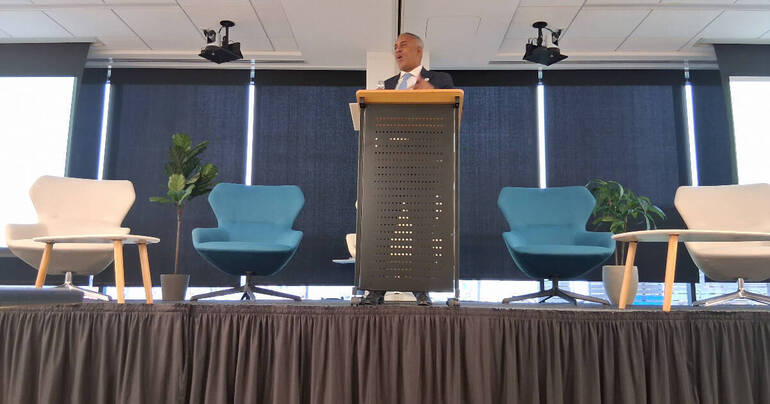
PALM SPRINGS, Calif., April 13, 2026 /3BL/ – Engage for Good today named Mattel, Inc. (NASDAQ: MAT), a leading global play and family entertainment company and owner of one of the most iconic brand portfolios in the world, its 2026 Halo Corporation of the Year, recognizing the company’s work to build purpose into the way it operates across its brands, partnerships, and products.

In its 24th year, The Halo Awards recognize companies and nonprofit organizations that are defining the gold standard for what effective corporate–nonprofit partnerships look like in practice. This year’s recognition reflects a broader shift across the private sector: purpose is no longer judged by intent or visibility alone, but by its ability to drive outcomes for both communities and businesses.

Muneer Panjwani, CEO of Engage for Good, said: “Mattel represents the very best of what this award stands for. They have shown that purpose is not a campaign or a side initiative; it is a strategic force that can shape culture, drive business results, and create lasting impact. In doing so, they have set a new benchmark for what it looks like to lead in this space.”

Mattel is being recognized for demonstrating how a global brand can integrate purpose across its portfolio, connecting product design, partnerships, and corporate strategy in ways that reinforce impact and business performance. They partner with nonprofit organizations including Save the Children, Feed the Children, Make-A-Wish, the American Red Cross, Baby2Baby, and the Salvation Army to create a positive, lasting social impact.

The legacy of giving back at Mattel spans its more than eight decades as a company. Through its Play it Forward initiatives, Mattel leverages its brands, partnerships, and people to advance children’s well-being, representation, and community responsibility globally. Mattel also manufactures the only toy in the world created and distributed exclusively as a donation – Brave Barbie® and Brave Ken®. To date, Mattel has placed over 180,000 dolls in the hands of children experiencing illness-related hair loss.

Rather than treating these efforts as standalone programs, Mattel aligns them with core business and brand priorities.

Through its 80 Moments for 80 Years campaign – the centerpiece of the company’s 80th anniversary celebration in 2025 – Mattel held more than 150 purpose-driven initiatives, activating thousands of employees across 14 countries to strengthen partnerships at the local, regional, and global level and far exceeding their goal of 80 moments.

Nancy Molenda, Vice President of Global Corporate Events and Philanthropy at Mattel, said, “Through Play it Forward, we’re creating opportunities for our employees around the world to show up for their communities in meaningful ways. When we thought about celebrating 80 years, we wanted it to be more than celebrating nostalgia – it was about celebrating our purpose. It’s something we bring to life every day through our brands, our partnerships, and our people. Seeing our teams come together through volunteerism to help improve the lives of children is what makes this work so powerful.”

Mattel will participate in the Engage for Good 2026 Conference, where they will share how the company has evolved its work across purpose and partnerships. The conference will bring together more than 700 corporate and nonprofit leaders to explore the strategies, partnerships, and innovations shaping the future of social impact.

About the Halo Awards

Now in its 24th year, The Halo Awards are the social impact sector’s longest-running recognition of excellence in corporate–nonprofit partnerships. Past awardees include Google, Procter & Gamble, Big Brothers Big Sisters, Macy’s, The Trevor Project, and more.

“A Halo Award win signals to your partners, funders, and your C-suite that your impact work shouldn’t be a side initiative,” Panjwani added. “It’s a core driver of business and brand reflecting a level of rigor, creativity, and execution that sets the standard for the field.”

Mattel, alongside 15 other category winners, will be honored at The Halo Awards Gala during the Engage for Good Conference, taking place April 21–24 in Palm Springs, California. The event will bring together more than 700 corporate and nonprofit leaders to explore the strategies, partnerships, and innovations shaping the future of social impact.

Registration is open at https://events.engageforgood.com/conference.

# # # #

About Engage for Good

For more than two decades, Engage for Good (EFG) has been the trusted home for corporate and nonprofit leaders building partnerships that deliver real results. EFG has equipped leaders shaping cause marketing, CSR, ESG, and nonprofit partnership strategy with the connections, best practices, and community they need to build high-impact partnerships that drive both business and social value. With a community of over 19,000 impact leaders, EFG’s programs include the annual Engage for Good Conference, The Halo Awards, membership for impact professionals, and consulting services for nonprofits and companies. Learn more at engageforgood.com.

About Mattel 

Mattel is a leading global play and family entertainment company and owner of one of the most iconic brand portfolios in the world. We engage consumers and fans through our franchise brands, including Barbie®, Hot Wheels®, Fisher-Price®, American Girl®, Thomas & Friends™, UNO®, Masters of the Universe®, Matchbox®, Monster High®, Polly Pocket®, as well as other popular properties that we own or license in partnership with global entertainment companies. Our offerings include toys, content, consumer products, digital and live experiences. Our products are sold in collaboration with the world’s leading retail and ecommerce companies. Since its founding in 1945, Mattel is proud to be a trusted partner in empowering generations to explore the wonder of childhood and reach their full potential. Visit us at mattel.com.

Press Contacts:
Engage for Good: Luci Manning, Luci@engageforgood.com
Mattel: press@mattel.com

IWBI’s landmark report, Investing in Health Pays Back: The Business Case for Healthy Buildings and Healthy Organizations, underscores the powerful business case for health in buildings and organizations. The extensive body of research examined in this recently-released second edition points to a clear conclusion: health delivers measurable returns.

From driving societal economic gains to improving company performance through greater productivity, and from strengthening business outcomes to generating real estate benefits such as rent premiums, faster lease-uprates and higher valuations, the benefits are significant and well-documented.

Together, this aggregate research is redefining how investors evaluate risk and opportunity—elevating health and well-being from a perceived soft value to a material driver of long-term performance. As investors increasingly look beyond traditional financials, health has emerged as a critical consideration with ESG frameworks.(1) While all three pillars—environmental, social and governance—touch on aspects of well-being, it is the social pillar that most directly reflects a company’s impact on people, echoing the foundational role of “people” in the original “people, planet, profit” definition of sustainability.(2)

As with changing environmental conditions, social conditions expose companies to new sources of risk and opportunity. For example, companies with broader talent pipelines and inclusive work environments are better positioned to compete for top talent in increasingly competitive markets. These organizations benefit from a variety of perspectives that drive innovation and problem-solving while reducing costly turnover.

From a market perspective, companies that appeal to wider audiences have larger customer bases, generating increased sales opportunities. The business case is straightforward: organizations that recruit from the widest possible talent pool and serve the broadest possible market are better positioned for sustainable growth and profitability. As investors and companies alike seek more sophisticated ways to measure these impacts, social sustainability is emerging as a central focus for developing meaningful, performance-based KPIs.

In one set of examples, researchers uncovered how investing in employee health spurs outperformance at the firm level:

  • Researchers at Oxford and Indeed used crowdsourced data from the Indeed platform to develop the Work Wellbeing Score and compared it to the financial performance of 1,782 publicly listed companies between October 2019 and December 2023. Researchers found that a 1-point increase in the Work Wellbeing Score was associated with annual increases of 1.4% to 1.6% in return on assets (ROA) and 1.63 to 2.75 billion USD in profits.(3)
  • This aligns with earlier findings of peer-reviewed studies that used simulation and past market performance and found that companies with strong employee health and well-being programs significantly outperform the S&P 500.
  • Portfolios composed of companies that received the C. Everett Koop National Health Award appreciated by 325% compared to the overall S&P 500 Index appreciation of 105%.(4)
  • A study of 45 companies that received high scores in a health and wellness assessment demonstrated appreciation of 235% compared to an overall S&P 500 Index appreciation of 159% over a six-year simulation period.(5)

These dynamics are equally relevant in real estate, where assets are managed, used and paid for by people. Engaged real estate investors pay attention to human capital management, as the connection between employee satisfaction and financial returns holds true in the real estate sector. Additionally, developing and operating real estate with a focus on social sustainability can help increase tenant satisfaction, improve community relations and drive financial performance:

  • WELL Certified buildings report significantly higher occupant satisfaction compared to those in non-WELL buildings, with 18% more satisfied with access to sunlight, 17% more satisfied with acoustical privacy, 16% more satisfied with connection to the outdoor environment, 12% more satisfied with lighting, 11% more satisfied with thermal comfort,and 10% more satisfied with both indoor air quality and air movement, as well as 12% fewer Sick Building Syndrome (SBS) complaints and 6% fewer musculoskeletal complaints.(8)
  • U.S. REITs with a health and well-being policy have outperformed, a relationship that was particularly strong in the face of a public health threat—the COVID-19 pandemic. During COVID (Feb 2020 – Feb 2022), REITs with a health and well-being policy and/or assets with healthy building certifications provided annualized returns of 10% compared to 6% for non-health focused REITs.(7)
  • Tenant satisfaction drives financial performance. Within the commercial office setting, research has found that a 1-point increase in tenant satisfaction is associated with a 4.6% lower probability of moving, and that 10% higher building-level tenant satisfaction correlates with 0.9% higher growth in effective gross rent.(8)

The growing integration of health and social considerations into investment decision-making signals a fundamental shift in how markets define value and manage risk. What we’re witnessing is the early stages of a broader transformation—one that is poised to reshape investment strategies across all asset classes, sectors and geographies.

The organizations and investors who recognize this shift early—and position themselves accordingly—will capture significant competitive advantages. Those who continue to view health and social factors as ancillary considerations risk being left behind as markets increasingly price in these material drivers of long-term performance. The business case is clear, the regulatory landscape is emerging and institutional support is building. We stand at the threshold of an era where investing in health and well-being will not be considered optional—it will be recognized as fundamental to sound investment practice and sustainable value creation.

Access the full report at https://www.wellcertified.com/health-pays-back and explore how the materiality of health is reshaping the investment landscape (p. 46).

Join IWBI at the WELL 2026 Social Sustainability Summit, on Wednesday, April 15, as we explore how people-first strategies are shaping the future of business in Asia Pacific. Register here.

View original content here.

1) World Bank. (2004). Who cares wins: Connecting financial markets to a changing world. World Bank Group. https://documents1.worldbank.org/curated/en/280911488968799581/pdf/113237-WP-WhoCaresWins-2004.pdf
2) Triple bottom line. (2009, November 17). The Economist. https://www.economist.com/news/2009/11/17/triple-bottom-line
3) De Neve, J-E., Kaats, M., Ward, G. (2024). Workplace Wellbeing andFirm Performance. University of Oxford Wellbeing Research CentreWorking Paper 2304. doi.org/10.5287/ora-bpkbjayvk
4) Goetzel, R. Z., Fabius, R., Fabius, D., Roemer, E. C., Thornton, N., Kelly,R. K., Pelletier, K. R. (2016). The stock performance of C. Everett Koop award winners compared with the Standard & Poor’s 500 Index. Journal of Occupational and Environmental Medicine, 58(1), 9-15.https://doi.org/10.1097/JOM.0000000000000632
5) Grossmeier, J., Fabius, R., Flynn, J. P., Noeldner, S. P., Fabius, D.,Goetzel, R. Z., & Anderson, D. R. (2016). Linking workplace health promotion best practices and organizational financial performance.Journal of Occupational and Environmental Medicine, 58(1), 16-23. https://doi.org/10.1097/jom.0000000000000631
6) Center Square. (2022). The social spotlight: An emerging focusin real estate ESG. https://www.centersquare.com/wp-content/uploads/2022/09/The_Social_Spotlight_-_An_Emerging_Focus_in_Real_Estate_ESG.pdf
7) Center Square. (2022). The social spotlight: An emerging focusin real estate ESG. https://www.centersquare.com/wp-content/uploads/2022/09/The_Social_Spotlight_-_An_Emerging_Focus_in_Real_Estate_ESG.pdf
8) Hu, M., Kok, N., & Palacios, J. (2024). Tenant satisfaction and commercial building performance (MIT Center for Real Estate Research Paper No. 24/01). SSRN. https://doi.org/10.2139/ssrn.4721577

MetLife

NEW YORK, April 13, 2026 /3BL/ – MetLife Foundation announced new recipients of its Community Impact Grant Program (CIGP), providing more than $6.5 million to nonprofit organizations addressing essential community needs. By tackling critical issues, the program supports nonprofits providing the services and resources people rely on to build financial security and resilience, reflecting MetLife and MetLife Foundation’s long‑standing commitment to helping people and communities move forward with greater confidence and access to opportunity.

Launched in 2023 and expanded globally in 2025, CIGP supports organizations with solutions focused on food security, mental well‑being, environmental sustainability and vibrant communities. In this latest round, more than 100 nonprofit organizations across the globe received grants, including:

  • Banco de Tapitas in Mexico, focuses on environmental sustainability through its vocational training program on the use, transformation and craftsmanship of recycled plastic.
  • Cedar Hill Shares Food Pantry in Dallas, Texas, addresses food security among adults and students through nutrition, literacy and financial health programs.
  • General Incorporated Association BowL in Japan, helps individuals return to work after facing mental health challenges through their Workplace Mental Wellness Support Program.
  • Super Power Agency in the U.K., helps foster vibrant communities by hosting creative writing and expression workshops to increase the overall self-esteem, confidence and self-respect of kids.

“Through the Community Impact Grant Program, MetLife Foundation invests in nonprofits that are strengthening the well-being of people and our communities,” said Tia Hodges, President and CEO of MetLife Foundation and Head of Corporate Giving and Employee Volunteerism at MetLife. “Together, we’re helping individuals and families navigate challenges and move forward with greater stability and resilience.”

As with previous rounds of CIGP funding, MetLife employees assisted in the selection process, volunteering their time to review grant applications from nonprofit organizations. Since its launch, the Community Impact Grant Program has awarded over $9 million to 207 nonprofit organizations, reaching 1.6 million people across the U.S., Asia, Latin America, Europe and the Middle East. The program is a key part of MetLife Foundation’s broader efforts to advance inclusive economic mobility and financial health, while helping build the resilience of communities where MetLife operates.

To learn more about the work of MetLife Foundation and the full list of recipients, visit MetLife.org.

About MetLife Foundation

At MetLife Foundation, we are committed to driving inclusive economic mobility. We collaborate with nonprofit organizations and provide grants aligned to three strategic focus areas – economic empowerment, financial health and resilient communities – while engaging MetLife employee volunteers to help drive impact. MetLife Foundation was established in 1976 and for 50 years has continued MetLife’s long tradition of community engagement and involvement. Since its inception, MetLife Foundation has contributed over $1 billion to strengthen communities where MetLife has a presence. To learn more about MetLife Foundation, visit www.metlife.org.

For Media:
Olivia Janicelli
347-751-5728
olivia.janicelli@metlife.com

On Thursday, May 7, 2026, the Smithsonian National Museum of Natural History will help mark the 250th anniversary of the signing of the Declaration of Independence with the opening of Bison: Standing Strong, an exhibition that explores the cultural, ecological, and historical legacy of bison from ancient times to the present.

Drawing from across the Smithsonian’s vast collections, the exhibition features fossils, mounted specimens, anthropological objects, and imagery that trace the species’ dramatic arc, from its deep evolutionary roots and central role in Indigenous cultures to its near extinction in the late 19th century and subsequent recovery. Smithsonian taxidermist William Temple Hornaday witnessed this devastation firsthand and helped spark national awareness through influential museum displays and living bison exhibits on the National Mall, later contributing to the founding of the National Zoo and the modern conservation movement. As Director Kirk Johnson notes, the bison’s story of decline and resurgence is a quintessentially American one, closely tied to the Smithsonian’s early leadership in conservation.

A major exhibition highlight is the dramatic inclusion of Bison latifrons, an extinct Ice Age giant whose horns span up to seven feet across. The fossilized skull, which is on loan from the Idaho Museum of Natural History courtesy of the Bureau of Reclamation, was transported cross country by FedEx to the Smithsonian for this exhibition. The Bison latifrons will soon offer visitors a powerful glimpse into the sheer scale and evolutionary history of bison in North America, underscoring how long these animals have shaped and been shaped by the landscape.

To learn more, go to Bison Standing Strong.

Click here to learn about FedEx Cares, our global community engagement program.

Article and Interview by Amanda Theisen of Sunrise Banks

​Laura Wildenborg’s background in environmental sustainability takes center stage in her current role as VP of Strategic Lending at Sunrise Banks, a values-based community bank with locations in Minneapolis/St. Paul, Minnesota, and Sioux Falls, South Dakota. She is the driving force behind the company’s Net Zero Banking program, an innovative way for customers to use their accounts to positively impact climate change.

Over the last several years, Wildenborg focused on developing a strategy for the bank to reach net-zero carbon emissions across the company by 2050. She recently stated “I analyzed the financed emissions of our loan portfolio, which highlighted the critical role of decarbonization in climate action. That work helped me see how the relationship between deposits and lending could be leveraged to support our customers’ carbon reduction efforts while advancing our bank’s own net zero goals.”

Her ideas for Net Zero Banking go even further. With Net Zero Deposits, customers can direct their money towards Net Zero Financing loans for climate-friendly projects, such as energy-efficient building upgrades, electric vehicles, or solar panel installations.

Read the full interview and listen to the Social Currency podcast herehttps://greenmoney.com/how-laura-wildenborg-is-guiding-customers-on-net-zero-banking-path

======

ATLANTA, April 13, 2026 /3BL/ – The Ray has published its annual report—State of The Ray 2025—documenting a landmark year in which the organization achieved unprecedented national impact. Moving beyond its foundational roots in Georgia, The Ray spent 2025 mapping the geospatial data needed to develop the policy frameworks and on-the-ground implementations that will redefine American infrastructure.

The year’s hallmark achievement was the creation of a comprehensive national right-of-way (ROW) dataset in partnership with the National Laboratory of the Rockies (NLR). By mapping the energy potential and suitability of the entire U.S. roadside, The Ray is providing the data-driven solutions required to transform thousands of miles of passive land into active corridors for energy security and grid stability. As we prepare to expand our partnerships with state Department of Transportation (DOT) agencies this year, the insights we now possess make us your right-of-way experts.

On the ecological front, the Natural Capital Program proved the fiscal value of living infrastructure through several 2025 milestones. The Ray secured a $10,000 grant from the UIC Rights-of-Way as Habitat Working Group for three native pollinator meadows in Charleston County, SC, while executing site-specific habitat projects with Goodyear in Michigan and Ryder in North Carolina. These initiatives, alongside a landmark agreement with the Georgia DOT (GDOT) for ten statewide installations, utilize deep-rooted native vegetation to provide mechanical slope stabilization. By effectively reducing pollution and atmospheric elements, these projects offer a pragmatic solution to decrease mowing frequency and lower maintenance costs for state agencies.

Operational safety and circularity also reached new heights before the end of the year. In partnership with ATLDOT and Liberty Tire Recycling, LLC, The Ray completed the first municipal application of Recycled Rubber-Modified Asphalt (RMA) in downtown Atlanta—upcycling 500 tires into a more durable, quieter road surface. Simultaneously, the expansion of the Pi-Lit® Impact Detection System with GDOT has modernized asset management by providing real-time alerts within 60 seconds of a vehicle impact, ensuring critical safety hardware is repaired immediately.

“2025 was the year we realized a high level of impact on a truly national scale. Our work is no longer just a blueprint for the future; it is the technical and operational standard that federal and state partners use to build a smarter, safer, and more resilient transportation system today.”

— Allie Kelly, Executive Director

At the heart of these successes is The Ray’s unique Public-Private-Philanthropic-Partnership (P4) model. By aligning the philanthropic community’s resources with the private sector’s technical ingenuity and the public sector’s regulatory authority, we provide a neutral platform for rapid innovation. This collaborative framework is our essential tool for reimagining infrastructure—allowing us to prove that our transportation networks can be safer, cleaner, and more productive for the communities they serve.

Let’s drive the future.

Media Contact

Dallen McLemore, Communications Specialist, The Ray

229.449.6168 | dallen@theray.org | @TheRayHighway

ATLANTA, April 13, 2026 /3BL/ – The Ray has published its annual report—State of The Ray 2025—documenting a landmark year in which the organization achieved unprecedented national impact. Moving beyond its foundational roots in Georgia, The Ray spent 2025 mapping the geospatial data needed to develop the policy frameworks and on-the-ground implementations that will redefine American infrastructure.

The year’s hallmark achievement was the creation of a comprehensive national right-of-way (ROW) dataset in partnership with the National Laboratory of the Rockies (NLR). By mapping the energy potential and suitability of the entire U.S. roadside, The Ray is providing the data-driven solutions required to transform thousands of miles of passive land into active corridors for energy security and grid stability. As we prepare to expand our partnerships with state Department of Transportation (DOT) agencies this year, the insights we now possess make us your right-of-way experts.

On the ecological front, the Natural Capital Program proved the fiscal value of living infrastructure through several 2025 milestones. The Ray secured a $10,000 grant from the UIC Rights-of-Way as Habitat Working Group for three native pollinator meadows in Charleston County, SC, while executing site-specific habitat projects with Goodyear in Michigan and Ryder in North Carolina. These initiatives, alongside a landmark agreement with the Georgia DOT (GDOT) for ten statewide installations, utilize deep-rooted native vegetation to provide mechanical slope stabilization. By effectively reducing pollution and atmospheric elements, these projects offer a pragmatic solution to decrease mowing frequency and lower maintenance costs for state agencies.

Operational safety and circularity also reached new heights before the end of the year. In partnership with ATLDOT and Liberty Tire Recycling, LLC, The Ray completed the first municipal application of Recycled Rubber-Modified Asphalt (RMA) in downtown Atlanta—upcycling 500 tires into a more durable, quieter road surface. Simultaneously, the expansion of the Pi-Lit® Impact Detection System with GDOT has modernized asset management by providing real-time alerts within 60 seconds of a vehicle impact, ensuring critical safety hardware is repaired immediately.

“2025 was the year we realized a high level of impact on a truly national scale. Our work is no longer just a blueprint for the future; it is the technical and operational standard that federal and state partners use to build a smarter, safer, and more resilient transportation system today.”

— Allie Kelly, Executive Director

At the heart of these successes is The Ray’s unique Public-Private-Philanthropic-Partnership (P4) model. By aligning the philanthropic community’s resources with the private sector’s technical ingenuity and the public sector’s regulatory authority, we provide a neutral platform for rapid innovation. This collaborative framework is our essential tool for reimagining infrastructure—allowing us to prove that our transportation networks can be safer, cleaner, and more productive for the communities they serve.

Let’s drive the future.

Media Contact

Dallen McLemore, Communications Specialist, The Ray

229.449.6168 | dallen@theray.org | @TheRayHighway

CLEVELAND, April 13, 2026 /3BL/ — Homeownership remains a cornerstone of the American dream; however, according to KeyBank’s 2026 Financial Mobility Pulse Poll, 25% of Americans say homeownership currently feels out of reach. Some keys to closing this gap? Financial education, strategic planning, and expert guidance. By tapping into these resources, prospective buyers can transform uncertainty into action that can help make homeownership achievable.

The data reveals a moment of recalibration rather than retreat. 13% of Americans believe homeownership is within reach in 2026, This signals that current affordability pressures may prompt potential buyers to explore creative pathways like down payment assistance programs, first-time buyer incentives, and personalized financial coaching.

“Homeownership remains one of the most powerful tools Americans have to build long-term wealth and strengthen their communities,” said Victor Alexander, Head of Consumer Banking at KeyBank (NYSE: KEY). “Today’s buyers are approaching homeownership with more intentionality and planning than ever before, and that’s where banks can make the biggest difference. When people have the right tools and support, the path to homeownership can move from possibility into reality. At KeyBank, we’re committed to simplifying the journey with clear guidance, helpful resources, and impactful solutions designed for today’s market. “

Fair Housing Month: Making the Path to Homeownership More Accessible

April is Fair Housing Month, a time to recognize that homeownership should be accessible to every American, regardless of background or starting point. While each buyer’s journey looks different, prospective homeowners do not have to navigate the process alone.

Banks, housing counselors, and community partners offer a range of tools that can help reduce barriers, including:

  • Down payment assistance programs
  • Low down‑payment mortgage options
  • First‑time homebuyer education
  • One‑on‑one financial guidance

“The opportunity for banks and financial institutions is clear: equip Americans with the tools, knowledge, and support they need to turn aspiration into achievement, said Eric Fiala, Chief Corporate Responsibility Officer at KeyBank. “From financial education to innovative financing solutions, the right resources can empower buyers to navigate today’s market with confidence — and write their own homeownership success stories.”

What Americans Can Do to Make Homeownership Achievable

While affordability remains a challenge, there are practical steps Americans can take — now or over time — to make progress toward owning a home:

1. Start with a clear financial picture

Understanding your credit score, debt‑to‑income ratio, and savings is the foundation of any homebuying plan. KeyBank’s mortgage affordability calculator can help clarify where you stand today.

2. Explore down payment assistance options

Many state and local programs, as well as lender‑supported solutions, offer grants, credits, and low down‑payment options that can significantly lower upfront costs.

3. Talk to a banker early and often

You don’t need to be ready to buy to start the conversation. Connecting with a banker 12–18 months ahead is one step that can help improve readiness through credit planning, savings strategies, and realistic timelines. Keep that conversation going as your financial picture becomes more clear.

4. Rethink the timeline, not the goal

For many Americans, homeownership is becoming a multi‑year plan rather than an immediate step. Progress rather than speed is what matters most.

A Call to Action: Empowerment Over Uncertainty

KeyBank’s 2026 Financial Mobility Pulse Poll highlights the emotional and financial strain Americans are feeling, but it also underscores the importance of education, planning, and partnership. As housing affordability challenges persist, equipping consumers with the right tools and guidance can help keep the door to homeownership open.

KeyBank remains committed to supporting financial mobility and helping customers make progress toward their financial dreams.

To learn more about the survey findings, visit the KeyBank 2026 Financial Mobility Pulse Survey Executive Summary.

Methodology

This survey was conducted online by Schmidt Market Research in January 2026 polling 1,000 Americans ages 18-70. All respondents have sole or shared responsibility for household financial decisions and maintain a checking or savings account. The survey examined respondents’ spending and savings habits, levels of financial confidence, stress and resiliency factors, economic sentiment, and debt impacts.

ABOUT KEYCORP

KeyCorp’s roots trace back more than 200 years to Albany, New York. Headquartered in Cleveland, Ohio, Key is one of the nation’s largest bank-based financial services companies, with assets of approximately $184 billion at December 31, 2025.

Key provides deposit, lending, cash management, and investment services to individuals and businesses in 15 states under the name KeyBank National Association through a network of approximately 950 branches and approximately 1,200 ATMs. Key also provides a broad range of sophisticated corporate and investment banking products, such as merger and acquisition advice, public and private debt and equity, syndications and derivatives to middle market companies in selected industries throughout the United States under the KeyBanc Capital Markets trade name. For more information, visit https://www.key.com/. KeyBank Member FDIC.

NMLS #399797. Equal Housing Lender.

Equal Housing lender

CFMA #260403-4302378


CLEVELAND, April 13, 2026 /3BL/ — Homeownership remains a cornerstone of the American dream; however, according to KeyBank’s 2026 Financial Mobility Pulse Poll, 25% of Americans say homeownership currently feels out of reach. Some keys to closing this gap? Financial education, strategic planning, and expert guidance. By tapping into these resources, prospective buyers can transform uncertainty into action that can help make homeownership achievable.

The data reveals a moment of recalibration rather than retreat. 13% of Americans believe homeownership is within reach in 2026, This signals that current affordability pressures may prompt potential buyers to explore creative pathways like down payment assistance programs, first-time buyer incentives, and personalized financial coaching.

“Homeownership remains one of the most powerful tools Americans have to build long-term wealth and strengthen their communities,” said Victor Alexander, Head of Consumer Banking at KeyBank (NYSE: KEY). “Today’s buyers are approaching homeownership with more intentionality and planning than ever before, and that’s where banks can make the biggest difference. When people have the right tools and support, the path to homeownership can move from possibility into reality. At KeyBank, we’re committed to simplifying the journey with clear guidance, helpful resources, and impactful solutions designed for today’s market. “

Fair Housing Month: Making the Path to Homeownership More Accessible

April is Fair Housing Month, a time to recognize that homeownership should be accessible to every American, regardless of background or starting point. While each buyer’s journey looks different, prospective homeowners do not have to navigate the process alone.

Banks, housing counselors, and community partners offer a range of tools that can help reduce barriers, including:

  • Down payment assistance programs
  • Low down‑payment mortgage options
  • First‑time homebuyer education
  • One‑on‑one financial guidance

“The opportunity for banks and financial institutions is clear: equip Americans with the tools, knowledge, and support they need to turn aspiration into achievement, said Eric Fiala, Chief Corporate Responsibility Officer at KeyBank. “From financial education to innovative financing solutions, the right resources can empower buyers to navigate today’s market with confidence — and write their own homeownership success stories.”

What Americans Can Do to Make Homeownership Achievable

While affordability remains a challenge, there are practical steps Americans can take — now or over time — to make progress toward owning a home:

1. Start with a clear financial picture

Understanding your credit score, debt‑to‑income ratio, and savings is the foundation of any homebuying plan. KeyBank’s mortgage affordability calculator can help clarify where you stand today.

2. Explore down payment assistance options

Many state and local programs, as well as lender‑supported solutions, offer grants, credits, and low down‑payment options that can significantly lower upfront costs.

3. Talk to a banker early and often

You don’t need to be ready to buy to start the conversation. Connecting with a banker 12–18 months ahead is one step that can help improve readiness through credit planning, savings strategies, and realistic timelines. Keep that conversation going as your financial picture becomes more clear.

4. Rethink the timeline, not the goal

For many Americans, homeownership is becoming a multi‑year plan rather than an immediate step. Progress rather than speed is what matters most.

A Call to Action: Empowerment Over Uncertainty

KeyBank’s 2026 Financial Mobility Pulse Poll highlights the emotional and financial strain Americans are feeling, but it also underscores the importance of education, planning, and partnership. As housing affordability challenges persist, equipping consumers with the right tools and guidance can help keep the door to homeownership open.

KeyBank remains committed to supporting financial mobility and helping customers make progress toward their financial dreams.

To learn more about the survey findings, visit the KeyBank 2026 Financial Mobility Pulse Survey Executive Summary.

Methodology

This survey was conducted online by Schmidt Market Research in January 2026 polling 1,000 Americans ages 18-70. All respondents have sole or shared responsibility for household financial decisions and maintain a checking or savings account. The survey examined respondents’ spending and savings habits, levels of financial confidence, stress and resiliency factors, economic sentiment, and debt impacts.

ABOUT KEYCORP

KeyCorp’s roots trace back more than 200 years to Albany, New York. Headquartered in Cleveland, Ohio, Key is one of the nation’s largest bank-based financial services companies, with assets of approximately $184 billion at December 31, 2025.

Key provides deposit, lending, cash management, and investment services to individuals and businesses in 15 states under the name KeyBank National Association through a network of approximately 950 branches and approximately 1,200 ATMs. Key also provides a broad range of sophisticated corporate and investment banking products, such as merger and acquisition advice, public and private debt and equity, syndications and derivatives to middle market companies in selected industries throughout the United States under the KeyBanc Capital Markets trade name. For more information, visit https://www.key.com/. KeyBank Member FDIC.

NMLS #399797. Equal Housing Lender.

Equal Housing lender

CFMA #260403-4302378


Privacy Overview

This website uses cookies so that we can provide you with the best user experience possible. Cookie information is stored in your browser and performs functions such as recognising you when you return to our website and helping our team to understand which sections of the website you find most interesting and useful.