Kiplinger readers have named KeyBank “Outstanding” across every core category in the National Bank segment of the 2026 Readers’ Choice Awards, a distinction determined entirely by the customers who bank with them every day.
Now in its fourth year, the Kiplinger Readers’ Choice Awards gathered responses from more than 4,200 readers across the country, all of them active customers at the financial institutions they rated. Participants weighed in on service quality, trust, ease of use and overall experience, and were invited to share written feedback in their own words.
KeyBank earned “Outstanding” ratings in all three categories evaluated for national banks, customer service, overall satisfaction and likelihood to recommend, the highest designation given in the survey. With nearly 950 branches across 15 states, including New York, Ohio, Pennsylvania, Washington and Colorado, KeyBank is among the few large-footprint regional banks to receive across-the-board “Outstanding” scores, a result that points to its ability to deliver consistent, personal service at scale.
“Delivering a best-in-class experience, one where our clients feel truly valued, supported, and understood at every stage of their journey, is central to everything we do,” said Victor Alexander, Head of Key’s Consumer Bank. “Our commitment goes far beyond any single transaction; it’s about building lasting relationships grounded in trust and service excellence. Hearing directly from the clients we serve every day through an independent and respected voice is incredibly meaningful. It not only validates the work we’re doing but also challenges and inspires us to keep raising the bar, continuously improving, and finding new ways to serve our clients better.”
Among the written responses, one participant described a relationship with KeyBank spanning several decades and said their trust in the bank had only deepened over time. Kiplinger editors noted this kind of sustained, long-term confidence as a recurring theme in the KeyBank feedback.
What sets KeyBank’s 2026 results apart is consistency: the bank posted high scores across every individual metric tracked in the survey, not just the headline categories. That pattern, no weak spots across a wide-ranging evaluation, suggests strong performance is embedded in how KeyBank operates, rather than concentrated in isolated service areas.
The Kiplinger Readers’ Choice Awards are considered among the most trustworthy consumer guides in personal finance because every rating comes directly from verified active customers, not editorial panels, industry associations or sponsored surveys. Covering financial categories from banking and credit cards to investment brokers and wealth managers, the awards give consumers a peer-based view of which institutions are performing well in practice, not just on paper.
Across New Jersey, thousands of families rely on local nonprofits every day for meals, transportation, shelter and other essential support. Through partnerships with community organizations, the PSEG Foundation helps connect residents with critical resources during times of need.
Why do community partnerships matter for New Jersey families?
Community organizations often serve as the first line of support for families facing food insecurity, housing instability or financial hardship. These partnerships help strengthen local programs and expand practical support for the people who rely on them most.
Organizations like The Salvation Army, SHARES Nation and Paterson Task Force are helping communities across New Jersey respond to growing needs through practical, local assistance.
How is The Salvation Army of Elizabeth helping New Jersey families?
The Salvation Army of Elizabeth provides food, shelter and transportation support to families across Union County facing financial hardship. Through a range of community programs and services, the organization helps residents access critical resources when they need them most.
Between 2020 and 2025, The Salvation Army of Elizabeth provided critical support across the community by:
Providing 239,836 food pantry meals
Sheltering 2,528 individuals
Serving 178,214 hot meals
Donating 11,399 toys to children
Support from the PSEG Foundation has also helped The Salvation Army expand culturally sensitive meal options in their soup kitchen, improve transportation services and respond to growing community needs.
The organization’s work reflects the importance of local partnerships in helping communities remain resilient and connected.
How is SHARES Nation supporting families in New Jersey?
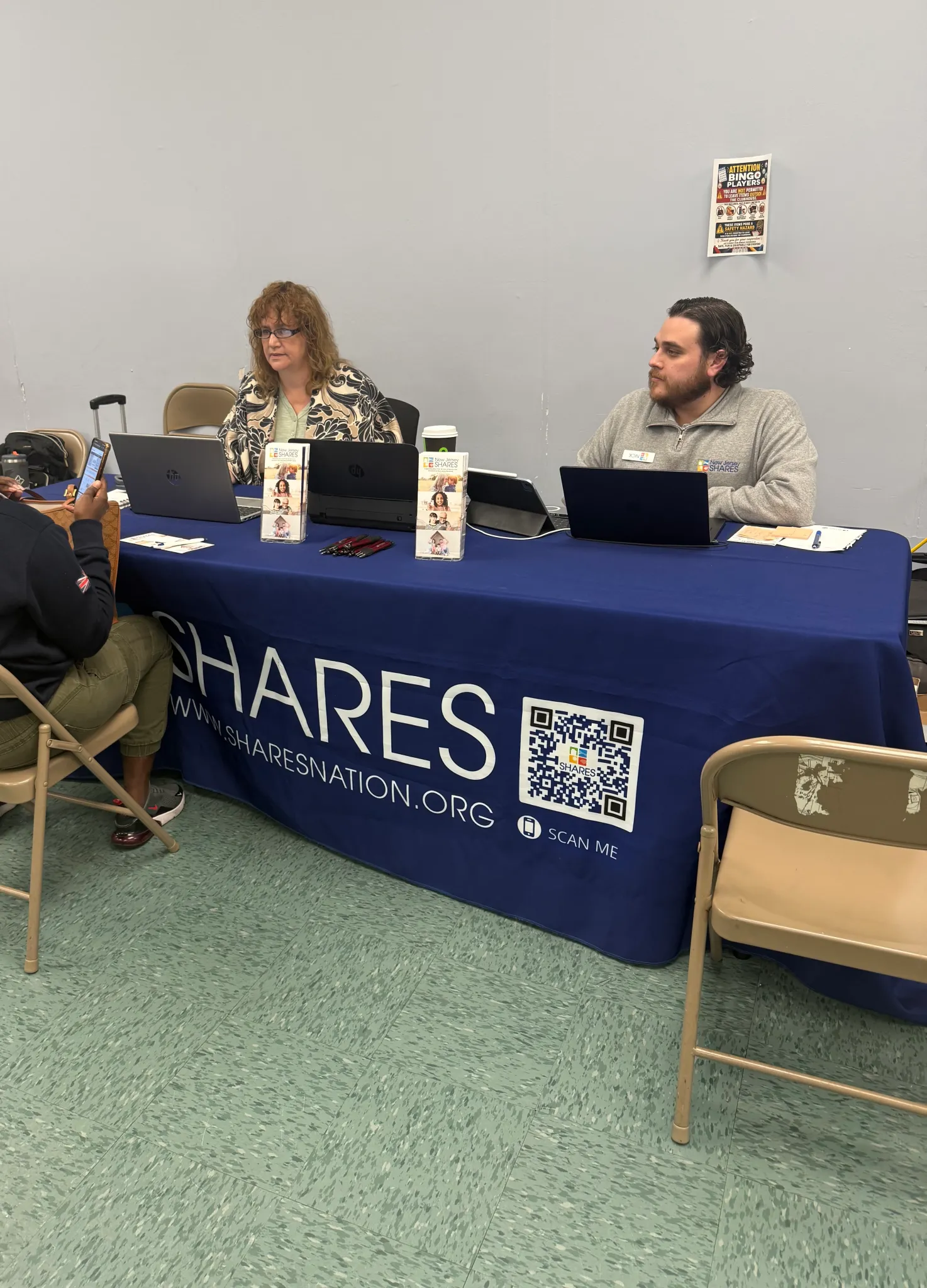
Founded in 1998 through a partnership between concerned citizens and utility companies, SHARES Nation helps New Jersey families facing unexpected financial hardships access critical utility and housing assistance. Through programs that provide rent, mortgage and property tax support, the organization works to help residents remain safe, stable and connected during difficult times.
Because unexpected challenges can happen to anyone, SHARES Nation continues to help families access the support they need when they need it most. Eligible New Jersey residents may qualify for up to $1,400 in assistance — including up to $700 for gas expenses and $700 for electric expenses.
Support from the PSEG Foundation has helped SHARES Nation continue to provide emergency assistance and expanding access to resources for New Jersey residents facing financial hardship. The organization’s work reflects the importance of community partnerships in helping families remain supported during times of uncertainty.
How is Paterson Task Force for Community Action supporting families in New Jersey?
The Paterson Task Force for Community Action helps families across Northern New Jersey access critical support, food assistance and essential household resources.
With support from the PSEG Foundation, Paterson Task Force Community Action was able to provide cleaning and hygiene vouchers to 339 individuals and 147 families, along with food vouchers for 196 individuals and 82 families.
These programs help families maintain clean, safe and healthy living conditions while easing financial strain during difficult times.
Through these programs, residents can purchase household essentials including soap, shampoo, cleaning products and hygiene supplies, along with food staples such as fresh produce, grains, meat, canned goods, baby food and infant formula.
The organization’s work reflects the importance of local partnerships in helping communities remain supported during times of financial uncertainty.
Learn more about the Paterson Task Force for Community Action at PatersonTaskForce.com.
Supporting stronger communities across New Jersey
The PSEG Foundation continues to support nonprofit organizations across New Jersey that help residents access food assistance, housing support, transportation resources and educational opportunities.
By working alongside trusted community partners, we’re helping strengthen the local support systems New Jersey families count on every day. Together, these partnerships are helping communities remain supported and connected through practical, local assistance.
To learn more about the PSEG Foundation’s community initiatives and nonprofit partnerships, visit pseg.com/Foundation.
Bob Herr| Director of Corporate Governance Zhiyuan Tao, CFA| Portfolio Manager—Japan Value Equities; Senior Research Analyst—Value Research Haruna Usui, CMA| Head of ESG Strategy―AB Japan
Japanese companies favor seniority, but there may be material benefits to multigenerational boards.
Japan has made major strides in corporate governance over the past decade. Reforms have included increasing board independence and modernizing committee structures. Yet one component of Japanese boards remains relatively unchanged: age. That’s a material oversight, in our view. Corporate boards that are too monolithic could be putting a damper on profits.
Corporate boards in Japan have long been characterized by seniority and continuity against a backdrop of lifetime employment. More than 95% of directors in the TOPIX 100 are in the bubble generation or older, while fewer than 1% are under the age of 50. This level of experience provides stability and institutional knowledge, but it may also entrench decision-making and hinder capital efficiency.
Many boards in Japan prioritize balance sheet safety over returning capital to shareholders and taking calculated risks. This has helped contribute to a more than 10% gap in return on equity (ROE) between Japanese and US equities . In a market long challenged by poor capital allocation, we think multigenerational boards can help buck this trend.
Multigenerational Boards Can Boost Performance
Studies in both the US and Europe present a clear link between multigenerational boards and financial performance. He, Miletkov and Staneva found that companies with younger directors not only generate higher return on assets but also command higher price-to-book values—particularly for firms that invest more in R&D and engage in patenting activity.
Younger boards can also mean less exposure to defaults—and chicanery. Janahi, Millo and Voulgaris discovered that banks with multigenerational boards experience fewer nonperforming loans, while Neukirchen, Posch and Betzer observed less corporate misconduct among firms with a greater age range.
These findings cumulatively suggest that multigenerational boards have the potential to improve capital allocation, reduce risk and boost valuations.
Mind the Gaps: Age and ROE
Our own in-house research confirms these findings. We tracked TOPIX constituents over a 10-year period—the largest study of its kind. The results were striking.
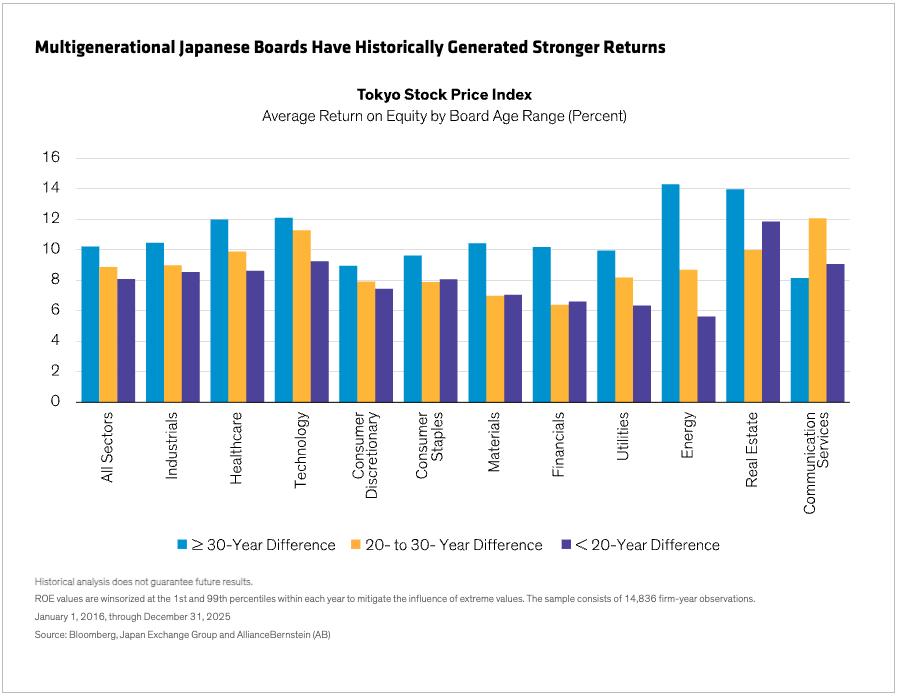
Firms with a more than 30-year age gap between the youngest and oldest director—what we define as multigenerational boards—delivered ROE more than 200 basis points higher, on average, than companies with more senior boards. This outperformance occurred in every calendar year during the period, and the results were statistically significant across sectors. Multigenerational boards achieved superior ROE in all but one sector, with the dispersion independent of size, style or founder-led status (Display).
Why the improved performance under multigenerational boards? We theorize that younger directors counterbalance the risk-averse tendencies of more senior directors. Prior academic research shows that younger boards exhibit greater risk tolerance, on average, than their senior counterparts. This is reflected in increased M&A activity and lower cash balances.
Of course, experience and qualifications remain critically important to board appointments. We favor a balanced approach that preserves legacy institutional knowledge while opening the door to next-generation dynamism.
What does this look like in practice?
Hello Kitty’s Generational Glow-Up
Sanrio, the company behind the popular Hello Kitty brand, has long held a rich portfolio of valuable intellectual property. But historically, its business model focused largely on domestic merchandise sales. The company maintained consistent leadership for many decades under its founder, Shintaro Tsuji, which contributed to stability but slowed strategy development. As market conditions evolved and retail trends shifted, Sanrio’s merchandise business came under pressure, and the company recorded a loss in fiscal year 2020.
Recognizing the need to adapt, the 92-year-old Tsuji turned leadership of the company over to his 31-year-old grandson but remained on the board. Sanrio’s young new president initiated sweeping reforms by refreshing the board and management, overhauling retail operations, and recruiting external talent with diverse backgrounds.
The company also expanded its international footprint and leveraged social media and streaming services to amplify its brand. These changes unlocked the global potential of Sanrio’s character portfolio and repositioned the firm as an entertainment-focused intellectual-property enterprise, rather than a traditional retailer.
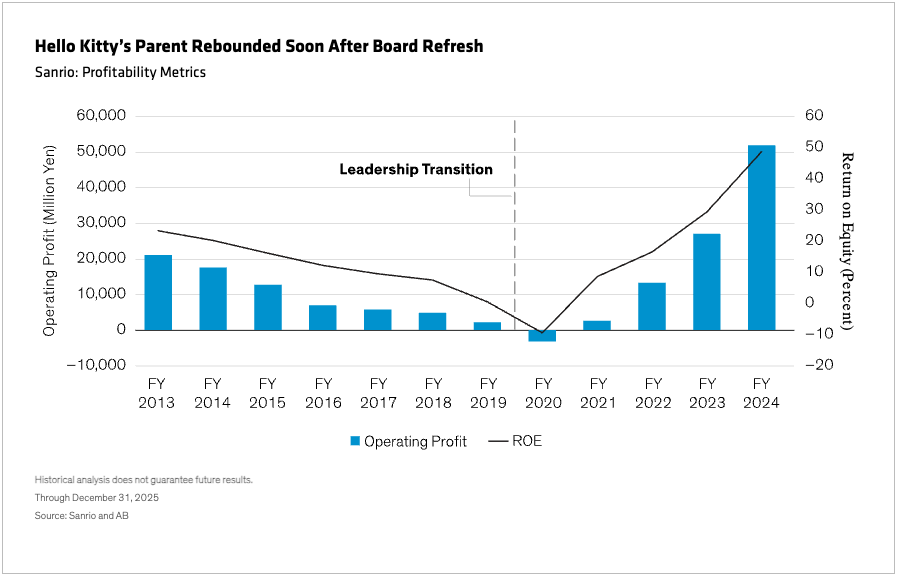
The effect on operating profit and ROE has been dramatic (Display). Sanrio now expects operating profit of ¥75.1 billion in FY 2025—more than triple its previous peak of ¥21 billion in FY 2013. Moreover, the company’s stock price has increased tenfold, reflecting renewed investor confidence in its strategy and earnings potential.
Sanrio’s transformation illustrates how a fresh generational perspective can address underlying issues hindering shareholder returns. In our view, if properly implemented, multigenerational boards can unlock organizational agility, greater independence and new pathways for value creation. In an era of rapid market and technological change, we believe boards that balance experience with fresh perspectives can be catalysts for building shareholder value.
The authors would like to thank Landon Shea, Investment Stewardship Associate and Research Lead, for his contribution to this piece.
The views expressed herein do not constitute research, investment advice or trade recommendations, do not necessarily represent the views of all AB portfolio-management teams and are subject to change over time.
References to specific securities discussed are for illustrative purposes only and should not to be considered recommendations by AllianceBernstein L.P. It should not be assumed that investments in the securities mentioned have necessarily been or will necessarily be profitable.
Learn more about AB’s approach to responsibility here.
Majority of respondents believe that low digital literacy is having a negative impact on their ability to manage their health
CVS Health continues to launch innovative digital offerings to help members access care, as part of its $20 billion technology investment, announced in 2025
WOONSOCKET, R.I., June 2, 2026 /3BL/ –CVS Health® (NYSE: CVS), released “Navigating the Digital Health Literacy Gap,” a research-based white paper revealing a significant gap between older Americans’ current ability to navigate digital health tools and their interest and openness to learning more. These findings come at a crucial time as health care undergoes a profound transformation fueled by AI just as all baby boomers will be age 65 and older and are set to comprise one in five Americans by 2030*.
Key findings of the survey include:
58% state that low digital health literacy is negatively impacting their health management.
Across four key areas – navigation, knowledge, access, and trust – navigation emerged as the most significant barrier, with 85% of respondents reporting challenges understanding how to use digital health platforms effectively.
Yet, despite this challenge, 86% of older Americans are open to engaging with digital health tools.
And 71% of respondents reported an eagerness to engage more with digital health care tools.
“We’re caring for the fastest growing and most clinically complex population in the country, and what we found in the research challenges a common assumption—older adults actually are more open to engaging with technology than many think,” said Dr. Benjamin Kornitzer, Senior Vice President and Chief Medical Officer of Aetna. “It creates a real opportunity to meet them where they are and provide day to day support, whether it’s managing medications, following up after a visit, or staying on track with chronic conditions. Technology and engagement can help them live healthier, more independent lives.”
A growing population with complex needs
The need for accessible digital health solutions is becoming increasingly urgent. In addition to becoming one of the largest demographics by 2030, CVS Health’s research found that Medicare respondents report an average of more than three health conditions, highlighting the importance of tools that support ongoing care management. At the same time, digital engagement helps improve access to care – from scheduling appointments to managing prescriptions and navigating benefits.
The opportunity: designing for older Americans
The research makes clear that the issue is not willingness, but usability. Older Americans are ready to adopt digital health tools when they are designed with their needs in mind and paired with the right level of support.
More intuitive self-service: We’re enabling CVS Pharmacy customers to initiate self-check-in, schedule appointments, see pharmacy rewards, and provide additional information via intuitive prompts to help expedite prescription pickup and pharmacy care.
Personalized digital care tools: CVS Health launched Care Paths to provide more personalized, timely guidance within digital channels. These capabilities help members better understand care options and next steps, supporting a more intuitive experience.
Community-based support: Oak Street Health offers classes on “Smartphone Basics” in their community rooms, and computer/internet access for those who may not have it at home.
The white paper is based on comprehensive research by CVS Health including surveys, interviews, and ethnographic studies of Medicare-eligible consumers across the United States. To learn more: Navigating the Digital Health Literacy Gap.
*According the U.S. Census Bureau
###
About CVS Health
CVS Health is a leading health solutions company simplifying health care one person, one family and one community at a time. As of March 31, 2026, the Company had approximately 9,000 retail pharmacy locations, more than 1,000 walk-in and primary care medical clinics and a leading pharmacy benefits manager with approximately 88 million plan members. The Company also serves an estimated more than 37 million people through a broad range of health insurance products and related services. The Company’s integrated model uses personalized, technology driven services to connect people to simply better health, increasing access to quality care, delivering better outcomes, and lowering overall costs.
AI is no longer just a technology wave; it is the operating system of our modern economy. Yet, across industries, academia, and geographies, one pattern is increasingly clear: organizations that invest in AI tools alone will underperform, while those that combine AI adoption with systematic skills development will pull ahead.
Infrastructure alone is a stranded asset. The true engine of innovation is the person behind the screen. As AI evolves into Connected Intelligence, where humans and AI agents work side-by-side, the most significant risk we face is not the technology itself, but the readiness gap.
I have a front-row seat to this transformation as the Vice President of Operations for Cisco’s Digital Impact Office, where I dedicate my career to bridging the gap between cutting-edge technology and the people who will shape our future. My work is driven by a firm belief: technology is only as powerful as the minds behind it, and our true success lies in fostering ecosystems where innovation and human potential converge.
Investing in AI without investing in people is like building a plane with no one trained to fly it.
The skills gap is the new system downtime. In the early phases of digital transformation, competitive advantage came from deploying new platforms: cloud, mobility, and data analytics. AI changes the equation.
But AI alone does not create value. AI combined with human skills does.
Here is a statistic that should keep every technology leader awake: 90% of enterprises have an AI strategy, but fewer than 15% have a workforce trained to execute it. This is not a technology problem; it is a leadership gap, and it becomes more expensive every quarter it goes unaddressed. And there’s more data where that came from:
Building capability today is not about sending people to a training seminar once a year. It is about integrated learning ecosystems that evolve as fast as technology itself. Organizations that adopt this mindset also address one of the most underestimated barriers to AI adoption: resistance to change. Familiarity breeds confidence, and confidence turns a skeptic into an advocate.
The gap that should worry every leader is not the one between humans and machines. It is the one between having an AI strategy on paper and having the people to carry it out.
Putting AI to work for society
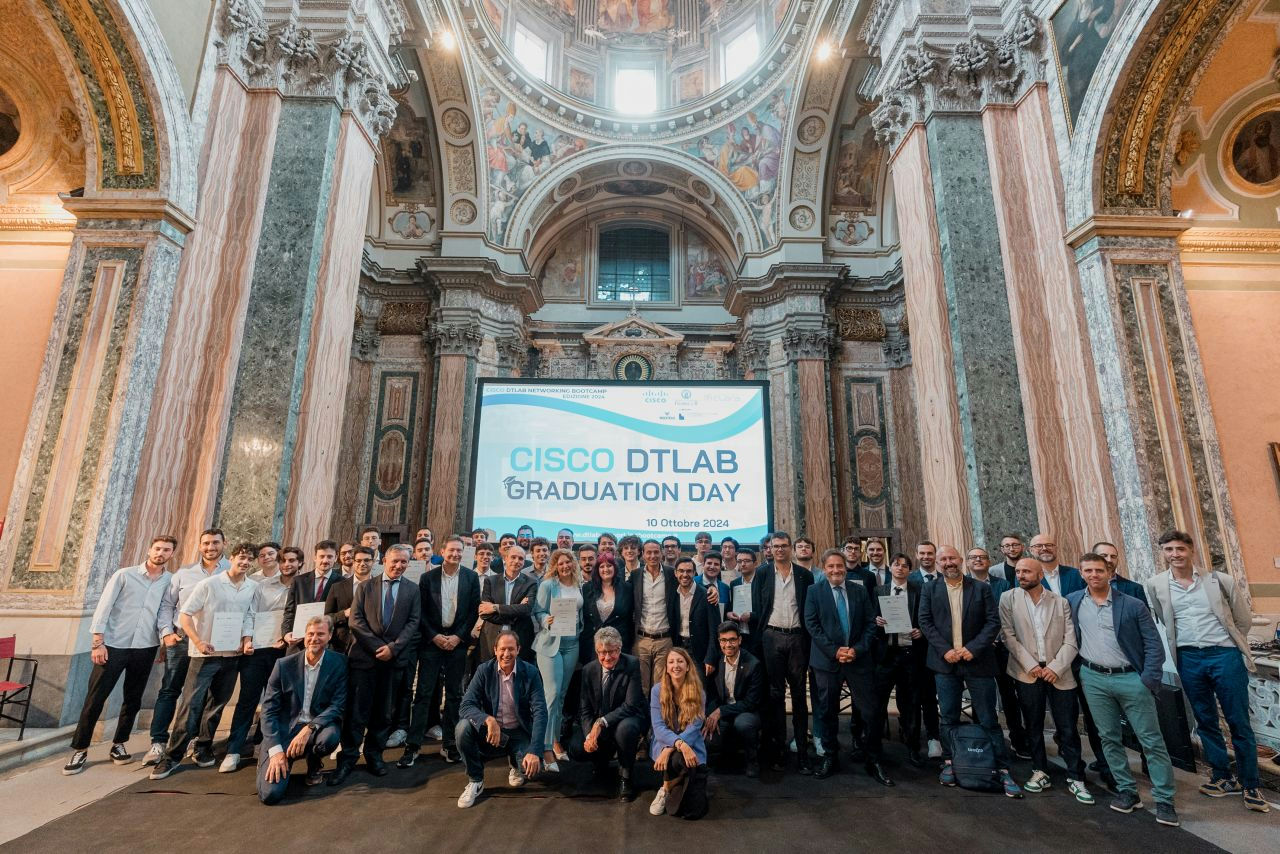
Participants in the DTlab Academy in Naples, Italy.
Cisco Networking Academy has reached 28 million learners across 195 countries, many in regions where a career in technology was previously out of reach.
In my experience, this program truly unlocks the potential of every participant, regardless of their academic or professional background. I have witnessed this firsthand through the Cisco DTlab, a specialized academy we host in Naples. Each year, 20 of Italy’s brightest minds come together for intensive training in networking — the essential foundation of AI.
The initiative’s ultimate goal is to bridge the gap between education and industry, enabling these talents to collaborate on pilot projects with Cisco customers and partners. By fostering an environment where innovation thrives, we empower these individuals to master the latest technologies and apply their skills to real-world challenges.
Cisco Networking Academy’s curriculum keeps pace with the industry as it exists today, not where it was five years ago. Professionals who once mastered routing protocols now need to master prompt engineering, agentic AI workflows, and responsible AI governance. The job has changed, and the urgency to support people through that transition has never been higher.
Cisco has committed to training one million Americans in AI skills over four years and 1.5 million Europeans by 2030, including 5,000 new instructors under the EU’s Union of Skills initiative. These commitments reflect Cisco’s belief that an AI economy only works if the workforce can participate in it.
Investing in the core
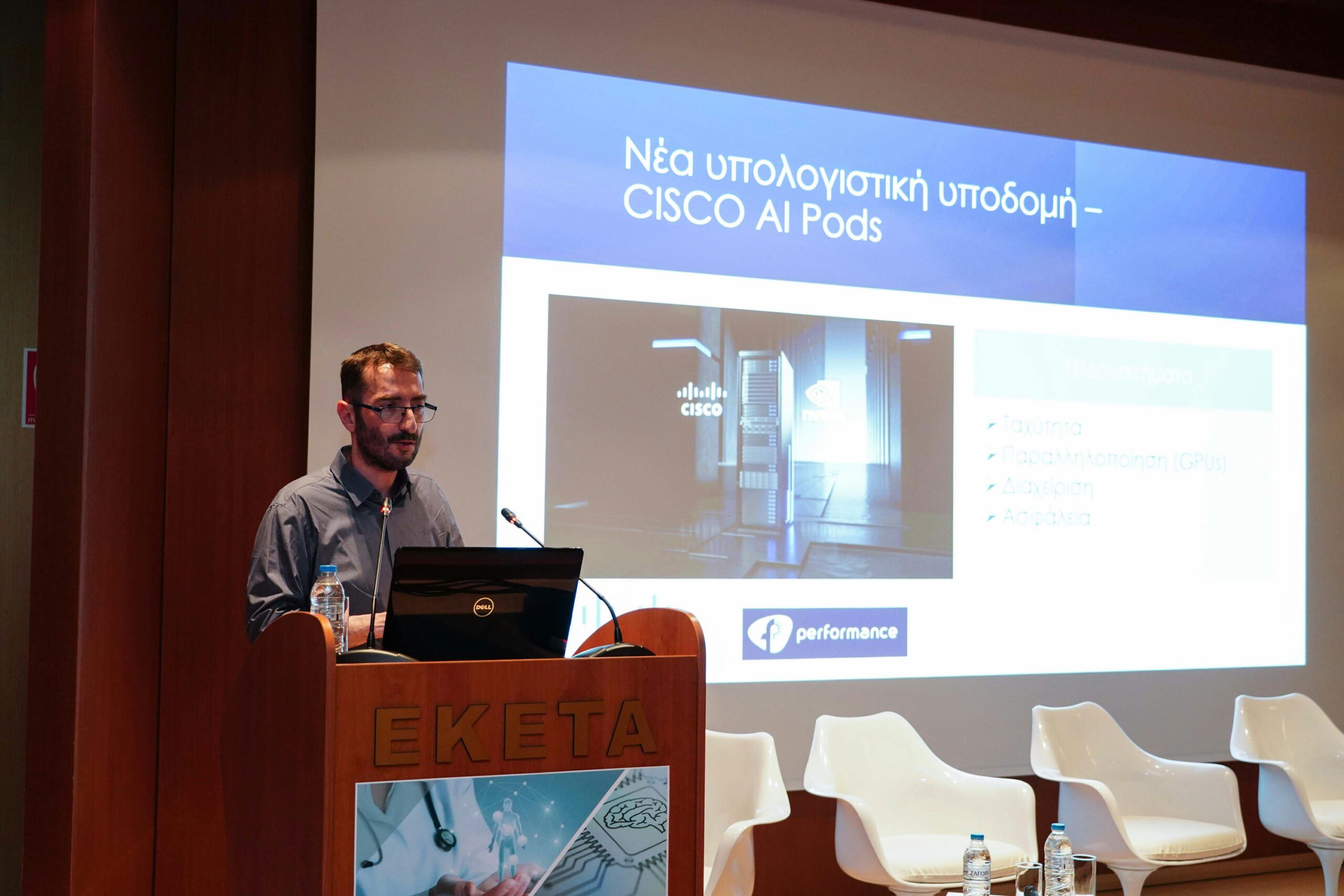
A presentation connected to our partnership in Greece.
Whether co-investing with governments to build AI-ready data centers in the Middle East, supporting smart territories in Europe and Africa, or uplifting underserved communities in the Americas, the goal of our Country Digital Acceleration (CDA) projects are the same: to provide the foundation for mission-critical services.
Consider our latest initiative in Greece, where we have partnered with the Institute of Applied Biosciences (INAB/CERTH) and Papageorgiou Hospital to establish a transformative AI-driven health ecosystem. By deploying a high-performance AI infrastructure, an “AI Pod,” this project enables the secure, large-scale processing of over 1.4 million patient records. This initiative bridges the gap between clinical research and real-world patient care, accelerating research cycles and empowering the Ministry of Health with actionable, data-driven insights. By strengthening national digital sovereignty and ensuring alignment with EU research frameworks, this project is positioning Greece as a premier hub for clinical innovation, ultimately leading to faster diagnostics and more personalized treatments for patients.
When we invest in infrastructure (the CDA model) and pair it with learning (the Cisco Networking Academy model), we do more than innovate. We build trust and resilience. We live our Purpose to Power an Inclusive Future for All, helping technology serve everyone, not just a few.
Stop separating tech spend from human purpose
Every technology initiative I review comes down to one question: Who benefits, and how broadly? It demands that we look beyond ROI and ask whether the value being created will spread to the workers navigating disruption, to the communities building around new industries, and to the students in markets where opportunity has been scarce.
To my peers and partners, I offer this guidance: We must stop viewing innovation and social impact as separate objectives. When we align our innovation strategy with our purpose, we ensure that digital progress serves everyone:
Invest in the machine but neglect the mind: You gain speed without direction.
Train the mind but starve the machine: You gain vision without the power to act.
The investments that survive market shifts and technology generations start with silicon and software, but they are scaled by human potential. In a world where speed is our competitive advantage, the leaders who will define the next decade are those who don’t just innovate they are the ones who empower everyone around them to innovate, too.
• Gen Z’s relationship with money is cautious and control‑oriented—debit‑first behavior, preference for low/transparent fees, and aversion to hidden terms. (Mastercard internal Gen Z research; PYMNTS 2025) • Digital behaviors dominate discovery and checkout: social and mobile drive influence, while wallets and BNPL adoption are rising among Gen Z. (Mastercard internal; PYMNTS 2025; J.D. Power / Payments Dive 2025) • Information abundance ≠ financial confidence: parents and social remain key teaching nodes, but embedded, contextual education at the point of decision is what moves the needle. (Mastercard internal; MarketWatch 2025; Spruce/H&R Block 2025) • Trust is evaluated, not assumed: banks retain a trust edge on complex needs, while fintechs win on UX; younger customers expect transparency and supportive guardrails. (Mastercard internal; YouGov 2025; J.D. Power 2025)
Setting the stage: a pragmatic, digital‑first cohort
Gen Z came of age with volatility and screens. Their outlook blends digital fluency with financial caution: they want clarity, control, and immediacy—without downside surprises. They increasingly use mobile wallets, tap‑to‑pay, and BNPL at the margin, yet default to debit for everyday spend, reinforcing a live‑within‑means mindset.
Unlimited information, limited confidence—how Gen Z learns
• Primary early sources: parents, then peers and social; however, reliance on short‑form content leaves gaps on core concepts (APR, billing cycles, credit scores). • What works: bite‑size, visual, gamified, and contextual explanations triggered inside the product experience (e.g., explain APR at application; simulate score impact before confirming).
Trust is earned through transparency and support
• Gen Z expects full fee transparency, no‑surprise terms, and human help at high‑stakes moments. • Traditional banks retain trust for complex needs; fintechs/neobanks win on ease and self‑service—Gen Z wants both in one partner.
What “good” looks like in products
• Debit‑first daily spend; digital wallets for speed; no‑fee accounts; tangible, instant rewards (cashback/discounts) that don’t require extra spend. • Credit as a tool, not a lifestyle: build credit safely with clear guardrails, on‑time rewards, and proactive education. • Buy Now Pay Later (BNPL): valued for flexibility; mitigate risks via spend caps, repayment nudges, and visibility across obligations.
Engagement playbook: from messaging to alignment
• Tone & language: clear, direct, jargon‑free; disclose trade‑offs up front. • Channels: in‑app notifications + social, anchored by useful content (how‑tos, calculators, explainers). • Design: mobile‑first flows, frictionless onboarding, spending controls and savings goals visible by default. • Education: embedded, gamified modules tailored to maturity; reward progress. • Support: 24/7 digital self‑serve + escalation to humans for complex events.
Multiple studies and our research show debit‑first behavior for everyday spend, with rapid adoption of mobile wallets; credit remains important for building history.
Is BNPL a must‑have for Gen Z?
Usage spikes in seasonal periods and certain categories. If offered, ensure clear terms, spend visibility and repayment nudges to prevent over‑extension.
Where should financial education live?
Inside the product experience—contextual, just‑in‑time prompts outperform static content for confidence and comprehension.
EMERYVILLE, Calif., and LEIDEN, NL, June 2, 2026 /3BL/ –SCS Global Services and 123Carbon today announced that SCS will serve as an independent assurance provider on the 123Carbon platform — ensuring third-party verification of emissions-reduction data before Environmental Attribute Certificates (EACs) are issued and allocated to various supply chain partners, allowing them to reduce Scope 3 emissions. This allocation is typically done through chain-of-custody models such as Book and Claim.
Key Takeaways
SCS joins 123Carbon as an independent assurance provider for verified EACs across several hard-to-abate sectors such as transportation, concrete and cement, steel and chemicals.
Every certificate is blockchain-backed, tamper-proof, and independently verified before it’s issued — no double counting, no guesswork
Companies can use EAC certificates confidently in ESG reporting and Scope 3 accounting
Under the agreement, SCS will independently verify the underlying data that supports certificate issuance on the 123Carbon platform and ensure alignment with global accounting standards. Assurance statements are uploaded directly into the platform, creating a seamless, audit-ready record for companies relying on carbon insetting to meet their Scope 3 reporting obligations.
Two Strengths. One Trusted Solution.
Book and Claim is scaling rapidly within the transportation sector (Air, Road, Marine, Rail) and is now being introduced into other hard-to-abate sectors. However, the adoption of Book and Claim depends on trust, transparency and integrity. The collaboration between SCS and123Carbon ensures this trust by delivering third party verification on an independent platform.
123Carbon handles the certificate side: its platform issues, tracks, and allocates emissions-reduction certificates. Within transportation, 123Carbon covers all transport modes, such as aviation, marine, road and rail. Every certificate is recorded on a blockchain, which means it can’t be altered or claimed twice. Each one also comes with a detailed record of how the emissions reduction was calculated and documented, so buyers know exactly what they’re getting.
SCS handles the verification side: independent, third-party confirmation that the emissions reductions behind each certificate are real, correctly calculated, and backed by evidence. SCS has been verifying greenhouse gas data for more than 15 years — completing hundreds of verifications for organizations of all sizes, including some of the largest Fortune 500 companies across aviation, manufacturing, retail, and technology. SCS has recently also been recognized by Smart Freight Centre as a verification body for their global Market Based Measures methodology, a leading Book and Claim methodology within transportation.
Don Scott, Director of Biofuels Policy at SCS Global Services says, “Book and Claim works when there is credible verification. That’s what SCS brings to the 123Carbon platform, delivering a seamless solution for the market.”
The turnkey system gives shippers, carriers, and brands credible claims they can use in ESG reports, CDP disclosure, and Scope 3 accounting with confidence. The market also expects that both SBTi and GHG Protocol will provide guidance soon on how to include these EACs into emissions reporting and how they can contribute to a company’s Scope 3 goals.
Jeroen van Heiningen, Managing Director at 123Carbon states, “We are very pleased to add SCS Global Services to our list of external verifiers. They have a great presence in several key regions such as the United States, can support our platform users with their expertise across several industries and are a recognized verification body in transportation, which is our key market.”
About 123Carbon
123Carbon was founded to accelerate the decarbonisation of hard-to-abate sectors using Market Based instruments. Developed collaboratively with the industry, for the industry, 123Carbon’s platform is an independent, integrated platform, empowering organisations to issue externally verified Environmental Attribute Certificates (EAC’s), which can be allocated to downstream supply chain partners through chain-of-custody models like Book & Claim. These EAC’s can subsequently be used to mitigate a company’s scope 3 reductions. 123Carbon is globally recognized as a leading platform within multi-modal transportation and is also active in other hard-to-abate sectors like steel, cement and chemicals. For more information, please contact us at info@123carbon.com.
About SCS Global Services
SCS Global Services is an international leader in third-party environmental and sustainability verification, certification, auditing, testing, and standards development. Its programs span a cross-section of industries, recognizing achievements in climate mitigation, green building, product manufacturing, food and agriculture, forestry, consumer products, and more. Headquartered in Emeryville, California and celebrating over 40 years in business, SCS has representatives and affiliate offices throughout the Americas, Asia/Pacific, Europe, and Africa. Its broad network of auditors are experts in their fields, and the company is a trusted partner to companies, agencies, and advocacy organizations due to its dedication to quality and professionalism. SCS is a chartered Benefit Corporation, reflecting its commitment to socially and environmentally responsible business practices. SCS is also a Participant of the United Nations Global Compact and adheres to its principles-based approach to responsible business. For more information, visit www.SCSGlobalServices.com.
When an industry is trying to move faster on climate and decent work, clarity makes action easier. Last year, more than 7,000 people — 68 percent of whom are Cascale members – took part in Cascale’s Industry Awareness Benchmark Survey, giving us a clearer view of how the industry sees both the challenge and Cascale’s role in addressing it.
Top Findings from Cascale’s 2025 Industry Survey
84 percent of respondents believe the consumer goods industry can reduce carbon emissions in its supply chain, and 87 percent believe it can improve working conditions.
86 percent of respondents are somewhat or very confident Cascale will drive meaningful change on decarbonization by 2030, and 87 percent are somewhat or very confident Cascale will drive meaningful change on working conditions by 2030.
81 percent of respondents indicated they were aware of at least one of Cascale’s programs, tools, and methodologies.
While Cascale is a 501(c)(6) nonprofit, nearly 49 percent of respondents incorrectly identified us as a for-profit company.
Enthusiasm is important, especially in impact work. So it goes without saying, we are grateful to everyone who took the time to participate. Whether you’ve engaged with Cascale for years or are still getting to know us, your input helps strengthen how we present our programs, tools, and methodologies — and improve the pathways that make it easier for stakeholders to find what’s most relevant to their goals. Cascale’s 2026 Industry Awareness Survey is now open – and just takes two minutes to complete.
Sustainability targets across the consumer goods industry are steep, and coordinated, collective action is critical to meet them. Optimism and confidence help create momentum — and that momentum can be half the battle. Our survey results were encouraging, with strong optimism reflected across potential impact and progress: 84 percent of respondents believe the consumer goods industry can reduce carbon emissions in its supply chain, and 87 percent believe it can improve working conditions.
Confidence in Cascale’s role is also strong. A majority 86 percent of respondents are somewhat or very confident Cascale will drive meaningful change on decarbonization by 2030, and 87 percent are somewhat or very confident Cascale will drive meaningful change on working conditions by 2030. We also gained a useful read on awareness of Cascale’s work. Over 81 percent of respondents indicated they were aware of one or more of Cascale’s programs, tools, and methodologies — an encouraging foundation to build on. However, although Cascale is a 501(c)(6) nonprofit, nearly 49 percent of respondents incorrectly identified us as a for-profit company – a mistake we will continue to remedy.
A Closer Look at What Cascale Offers
Our survey showed us that awareness of the full set of offerings still varies across audiences. This only strengthens our imperative to organize and present our work more clearly, with improved pathways for organizations to explore what’s most relevant to their goals and better understand how Cascale helps the industry align and take action.
Cascale’s programs, tools, and methodologies are designed to help the industry align on credible approaches — and then use that alignment to drive measurable progress. Here are a few key offerings to explore:
Higg Index — Since Cascale’s foundation as the Sustainable Apparel Coalition, the Higg Index has provided a common foundation for consistent social and environmental sustainability measurement across the value chain. Cascale stewards and governs the Higg Index frameworks, modules, and methodologies, which are implemented globally through the Worldly sustainability and supply chain intelligence platform.
Manufacturer Climate Action Program (MCAP) — Helps manufacturers strengthen climate action planning and implementation through capacity building, guidance, and peer exchange.
Better Buying — Strengthens responsible purchasing practices by elevating supplier feedback and supporting more resilient, durable buyer–supplier relationships.
Sustainable Furnishings Council tools — Added to Cascale’s toolbox in 2025 to further support cross-sector relevance and practical action in the home furnishings industry.
Foundational Environmental Performance (FEP) — Cascale convened members and stakeholders to establish a clear, industry-aligned definition of Foundational Environmental Performance (FEP), baseline environmental management practices expected of all global facilities manufacturing consumer goods, in order to align with legal compliance, improve comparability, and mitigate critical risks of environmental harm.
Cascale’s Role in Delivering Member Value
While Cascale is a 501(c)(6) nonprofit, we are ever attuned to the business realities of our members. Our membership spans manufacturers, brands, retailers, non-corporates, service providers, academia, and others. And our unique strength lies in convening them all. (Learn more about Cascale membership).
Today, we operate not only in apparel and footwear, but also in home furnishings, bags and luggage, sporting and outdoor goods, and the wider sweep of consumer goods. This is a knowledge gap we will continue to work on closing.
Why does membership matter? As we explored in the recent State of the Industry 2026 report, many of the industry’s most pressing challenges — like climate change and decent work — are impossible for a single organization to address alone. Cascale membership brings the industry together to set shared priorities for measurable progress. By aligning measurement frameworks, expectations, and improvement approaches, we help organizations reduce duplicative efforts and strengthen the credibility of their sustainability practices.
That role comes to life through how we strengthen measurement, enable action through our tools and methodologies, and convene the industry to move forward together. This includes our forthcoming Annual Meeting in Athens, where the industry comes together to discuss system-level challenges, collaborate, and learn from one another.
Want to help inform our process? Take two minutes to complete Cascale’s 2026 Industry Survey today!
CSRD assurance requirements are approaching, and organizations are advancing their readiness for external audit and assurance. In our previous webinar ‘Preparing for CSRD Mandatory Assurance: What Companies Need to Do Now‘, we outlined the foundational elements relevant to CSRD audit preparedness.
This session will focus on key CSRD metrics from an assurance perspective, highlighting common reporting challenges and areas where deficiencies are frequently identified during audits. We will also examine typical issues related to supporting documentation and disclosures, including the nature and extent of evidence expected to support reported information across selected metrics.
This webinar is intended to provide an audit-focused perspective on complex metrics and disclosures, with emphasis on factors that may impact the completeness, accuracy, and auditability of reported information.
CSRD assurance requirements are approaching, and organizations are advancing their readiness for external audit and assurance. In our previous webinar ‘Preparing for CSRD Mandatory Assurance: What Companies Need to Do Now‘, we outlined the foundational elements relevant to CSRD audit preparedness.
This session will focus on key CSRD metrics from an assurance perspective, highlighting common reporting challenges and areas where deficiencies are frequently identified during audits. We will also examine typical issues related to supporting documentation and disclosures, including the nature and extent of evidence expected to support reported information across selected metrics.
This webinar is intended to provide an audit-focused perspective on complex metrics and disclosures, with emphasis on factors that may impact the completeness, accuracy, and auditability of reported information.