
MINNEAPOLIS–(BUSINESS WIRE)–Xcel Energy (NASDAQ: XEL) is strengthening its energy grid with new electric generation and infrastructure to adapt to a rapidly evolving energy landscape, the company announced today in its 21st annual Sustainability Report. Xcel Energy’s investments in a diverse and increasingly carbon-free energy portfolio aim to deliver reliable, low-cost energy service for all of its customers during a time of significant growth in demand from data centers, vehicle charging, e
Author: sHq_LoGiNz
In automotive manufacturing, precision and reliability extend far beyond the assembly line; they demand a high-performing physical foundation. The Ray team is proud to highlight its recent collaboration with Kia Georgia at their West Point manufacturing facility, where The Ray’s Natural Capital program oversaw the installation of 14 acres of perennial native grasses and wildflowers.
Specifically selected to address the severe wind and water erosion common to large-scale industrial testing environments, this project introduces a new blueprint for corporate facility endurance through three core areas of impact:
Erosion Control & Ground Stabilization: Establishing deep-rooted native vegetation that anchors the soil far more effectively than traditional turf grass. This protects the slopes surrounding the test track from heavy wind and water degradation, maintaining the site’s physical integrity.
Smart Stormwater Management: Utilizing natural absorption properties of perennial root systems to capture and filter heavy rainfall. This mitigates localized flooding, limits sediment runoff into nearby water resources, and ensures the testing surface remains safe and operational.
Low-Maintenance Industrial Buffers: Replacing high-maintenance lawns with a resilient, self-sustaining ecosystem. This significantly reduces the need for frequent mechanical mowing and chemical inputs, lowering operational costs while naturally adapting to the active manufacturing environment.
Driving Commercial Innovation
The Ray team is currently analyzing performance data from Kia Georgia to determine how to scale this model across other industrial sites. This research is a key part of the mission to deploy infrastructure that prevents severe erosion, protects water quality, and delivers operational savings. As these biological assets continue to mature along the test track, we all move closer to a self-healing, cost-effective manufacturing infrastructure network built for long-term resilience.
NEW YORK and LONDON, June 2, 2026 /3BL/ – AccountAbility recently announced the launch of the public consultation process for the next edition of the AA1000 Stakeholder Engagement Standard (AA1000SES v3), introducing their revised framework designed to help organizations navigate a rapidly evolving stakeholder, regulatory, and technological landscape. The announcement coincided with a global webinar introducing the updated Standard, featuring Working Group Co-Chairs Dr. Gaia Pretner, Head of Sustainability at European Football Clubs, and Hanya Gartner, Director of ESG at Carrier.
Originally launched in 2005 as the world’s first Stakeholder Engagement Manual, the AA1000SES established a globally recognized approach for organizations seeking to strengthen accountability, transparency, and sustainability performance through effective stakeholder engagement. The current edition, AA1000SES v2 (2015), has guided organizations across industries and geographies for the past decade.
The forthcoming AA1000SES v3 reflects significant shifts in how organizations engage with stakeholders in an environment increasingly shaped by digital communication, social media, artificial intelligence (AI), and expanding sustainability disclosure requirements.
“Stakeholder engagement has evolved from a basic communications function into a core strategic capability that directly impacts governance, resilience, risk management, and long-term value creation,” said Mr. Sunil (Sunny) A. Misser, CEO of AccountAbility. “The AA1000SES v3 is designed to help organizations transition from periodic consultation exercises towards more continuous, responsive, and impact-driven engagement models that reflect the realities of tomorrow’s operating environment.”
The revised Standard introduces the concept of “Fourth Generation Stakeholder Engagement” – an approach centered on strategic integration, co-creation, and measurable impact. While preserving the AccountAbility Principles of Inclusivity, Materiality, and Responsiveness, AA1000SES v3 places Impact at the forefront, as a foundational principle for stakeholder engagement practice.
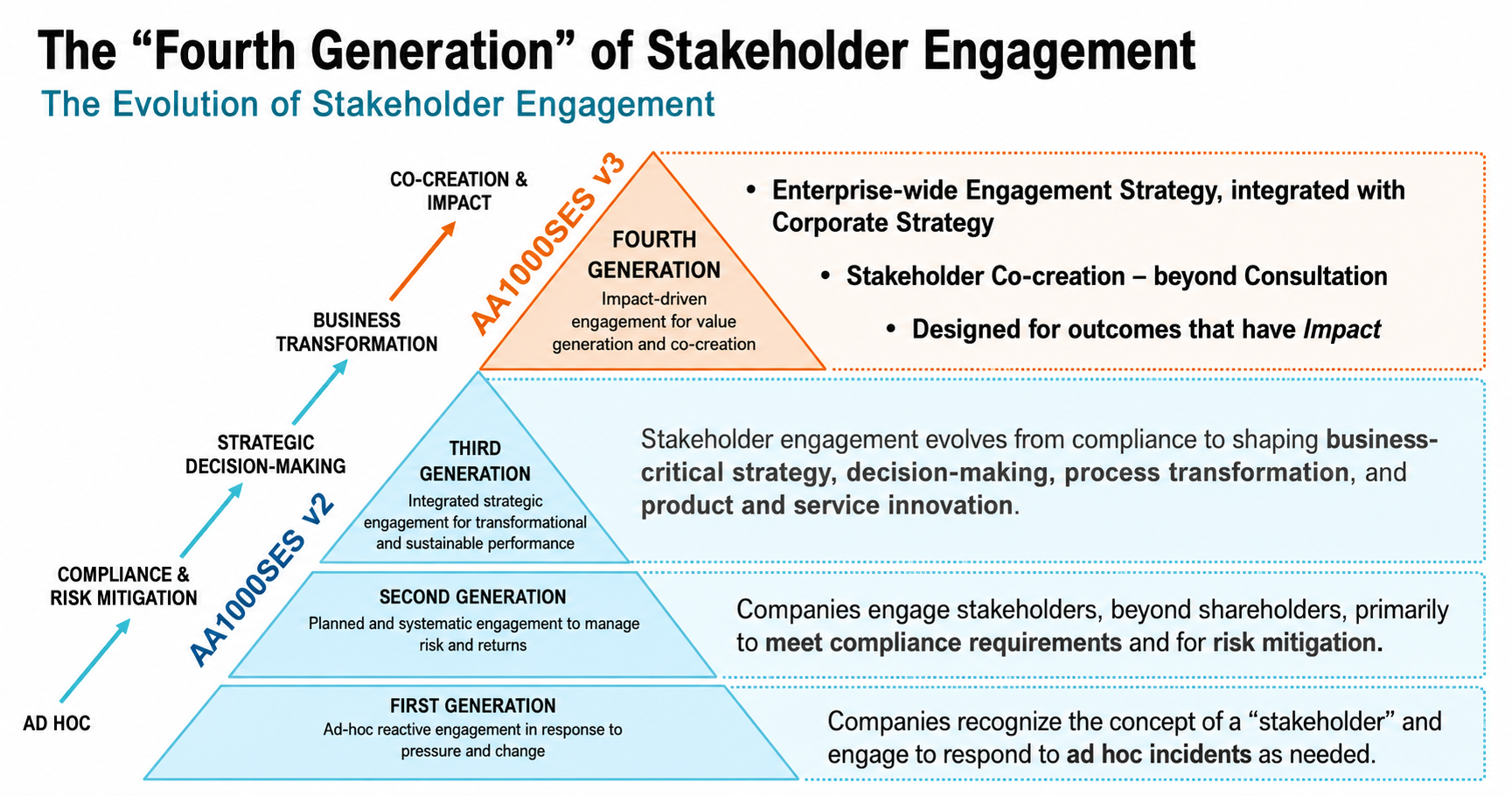
The updated Standard also responds to the growing role of stakeholder engagement within emerging sustainability disclosure and governance frameworks, including the Global Reporting Initiative (GRI), Corporate Sustainability Reporting Directive (CSRD), European Sustainability Reporting Standards (ESRS), International Financial Reporting Standards Sustainability Disclosure Standards (IFRS S1 & S2), and the Taskforce on Nature-related Financial Disclosures (TNFD).
“Organizations today face increasing pressure to demonstrate not only that they engage stakeholders, but that those engagements are credible, responsive, and connected to strategic decision-making,” said Dr. Natasha Matic, Chair of the AccountAbility Standards Board. “AccountAbility’s AA1000SES v3 is intended to provide organizations with a practical and ‘easy-to-use’ framework for embedding stakeholder perspectives into governance, sustainability, and business performance.”
Key enhancements to the AA1000SES v3 include expanded guidance on continuous engagement processes, collaborative and co-creation engagement models, the use of digital and AI-enabled engagement tools, and interoperability with evolving global sustainability frameworks and regulations.
“In sport, fans are now far closer to players and coaches through social media. Managing that range of voices is a real challenge,” said Dr. Gaia Pretner, Head of Sustainability at European Football Clubs and Co-Chair of the AA1000SES v3 Working Group. “The difficulty is finding someone inside the organization with the time, the capabilities, and the understanding to run a stakeholder engagement plan that is genuinely useful – not a box-ticking exercise, but a process that serves both the sustainability agenda and the broader business strategy. That is why part of my role in this working group is ensuring the AA1000SES v3 is easy to understand and applicable to everyone who could benefit from it.”
“Over the years, I’ve seen the importance placed on stakeholder engagement increase in step with the advancement of sustainability,” said Hanya Gartner, Director of ESG at Carrier and Co-Chair of the AA1000SES v3 Working Group. “This aligns closely with the rise of digital technology, social media, and the greater focus on transparency we’re seeing in the financial sector. This is exciting, but it’s complicated. I joined this process to help design a Stakeholder Engagement Standard that will enable Carrier and other companies to manage the complexity ahead.”
The revised Standard will also be accompanied by a suite of supplemental resources, including a Practitioner’s Guide, Materiality Assessment Guide, AI-Enabled Assurance Matrix, and Interoperability Guidance Document.
As with all the Series of AA1000 Standards, the development of AA1000SES v3 is being conducted through a broad, multi-stakeholder process incorporating perspectives from businesses, investors, assurance providers, regulators, academics, civil society organizations, and sustainability practitioners worldwide.
The public consultation period will remain open through June 12, 2026, supporting the planned release of AA1000SES v3 in Q4 2026.
AccountAbility encourages organizations and stakeholders across sectors and geographies to review the draft Standard and contribute feedback to help shape the future of stakeholder engagement practice. Access the public consultation here, and watch the webinar discussion introducing the AA1000SES v3 here.
About AccountAbility
AccountAbility is a leading global standards and consulting firm that works with businesses, investors, governments, and multilateral organisations to innovate and advance the global sustainability agenda by improving the practices, performance, and impact of organizations. We focus on delivering practical, effective, and enduring results that enable our clients and standards users to succeed. AccountAbility operates globally from offices in New York, London, Riyadh, and Dubai, through a highly qualified team that has received awards and recognition by the Financial Times, Forbes, and Capital Finance International. Learn more at www.accountability.org.
For media inquiries or further information, please contact:
Mr. Lev Novak
Head of Marketing & Communications
AccountAbility
Phone: +1 617-276-6348
Email: Lev.novak@accountability.org
Website: www.accountability.org
In this episode, host Keith Knoke, Chair of the Board for Inogen Alliance from Antea Group USA, is joined by Alizabeth Smith (Antea Group USA) and Chris Trim (Peter J. Ramsay & Associates Australia) to discuss how risk management is evolving in 2026. Together, they examine the growing strategic role of EHS functions, the importance of predictive risk indicators, and how companies are building resilience through proactive planning, collaboration, and better management of operational and psychosocial risks.
Listen Now
Time Stamps
- 00:00:00 – Introduction: how risk management is changing in 2026
- 00:01:31 – Why risk is now faster, more connected, and business critical
- 00:03:11 – EHS influence at the board and strategic level
- 00:05:17 – How COVID changed organisational understanding of risk
- 00:07:24 – Business resilience and continuity planning
- 00:10:14 – Due diligence, operational risk, and proactive assessments
- 00:14:28 – Emerging business risks: supply chains, packaging, and PFAS
- 00:16:22 – Leading indicators and predictive risk management
- 00:20:17 – Management of change and operational decision-making
- 00:26:22 – Global collaboration and local expertise in risk management
- 00:31:53 – Emerging risks organisations should prioritise
- 00:33:08 – Closing reflections and preview of the bonus episode
Guest Quotes
Alizabeth Smith:
“Risk used to mean emergency response plans. Now it touches every part of the company.”
Chris Trim:
“The more proactive you can be about identifying risks, the better off you can be.”
Lenovo is supporting the advancement of the Integrated Dreams mission through the Football for All Leadership Programme, the first international programme specifically designed to promote employability, entrepreneurship and networking of people with disabilities in the sports world.
Inclusion is a core value at Lenovo – across our culture, products, and the way we do business. But after announcing that Lenovo would be the Global Technology Partner of the 2026 FIFA World Cup, a new opportunity to use sport as a catalyst for inclusion arose.
As the most popular sport on the planet, Football is also a proven global democratizer. It brings communities together, teaches important life skills, and can connect people with transformative opportunities. Jose Soares, founder of Integrated Dreams, recognized this when he started Integrated Dreams to empower the inclusion of people with disabilities through sport and education.
Today, Lenovo is supporting the advancement of the Integrated Dreams mission through the Football for All Leadership Programme, the first international programme specifically designed to promote employability, entrepreneurship and networking of people with disabilities in the sports world. By funding the development of the Football for All technology programme, Lenovo is empowering people with disabilities to create a lasting positive impact for the community. But as accessibility experts know – you can’t just develop an app, share it with a community of users with disabilities, and assume it will work. That’s why Lenovo’s Head of Corporate Citizenship, Santiago Mendez, traveled to Morrocco to complete user testing as part of the 2026 Football For All Leadership Program (FFALP), made possible by a grant from FIFA Foundation and the World Football Remission Fund.
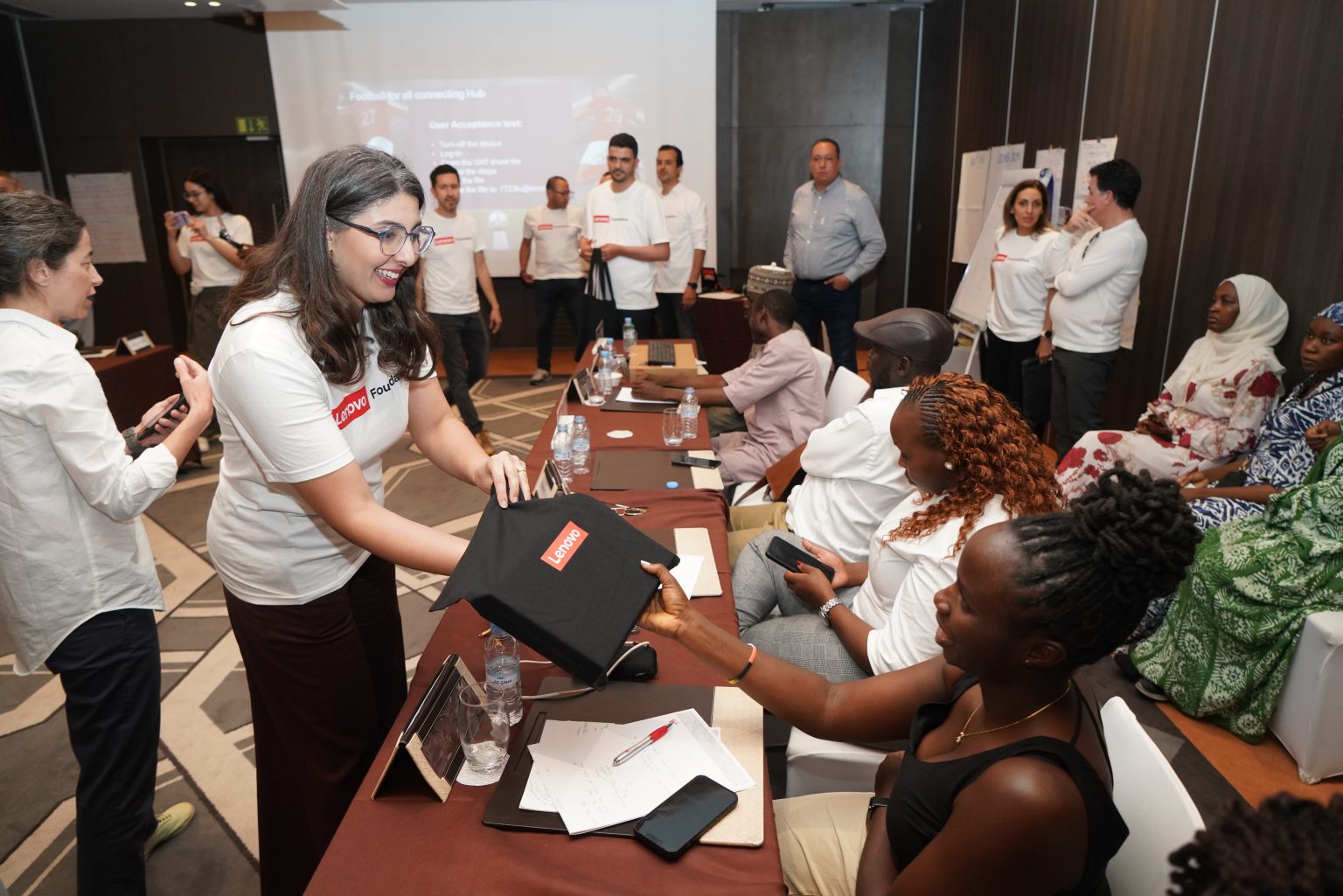
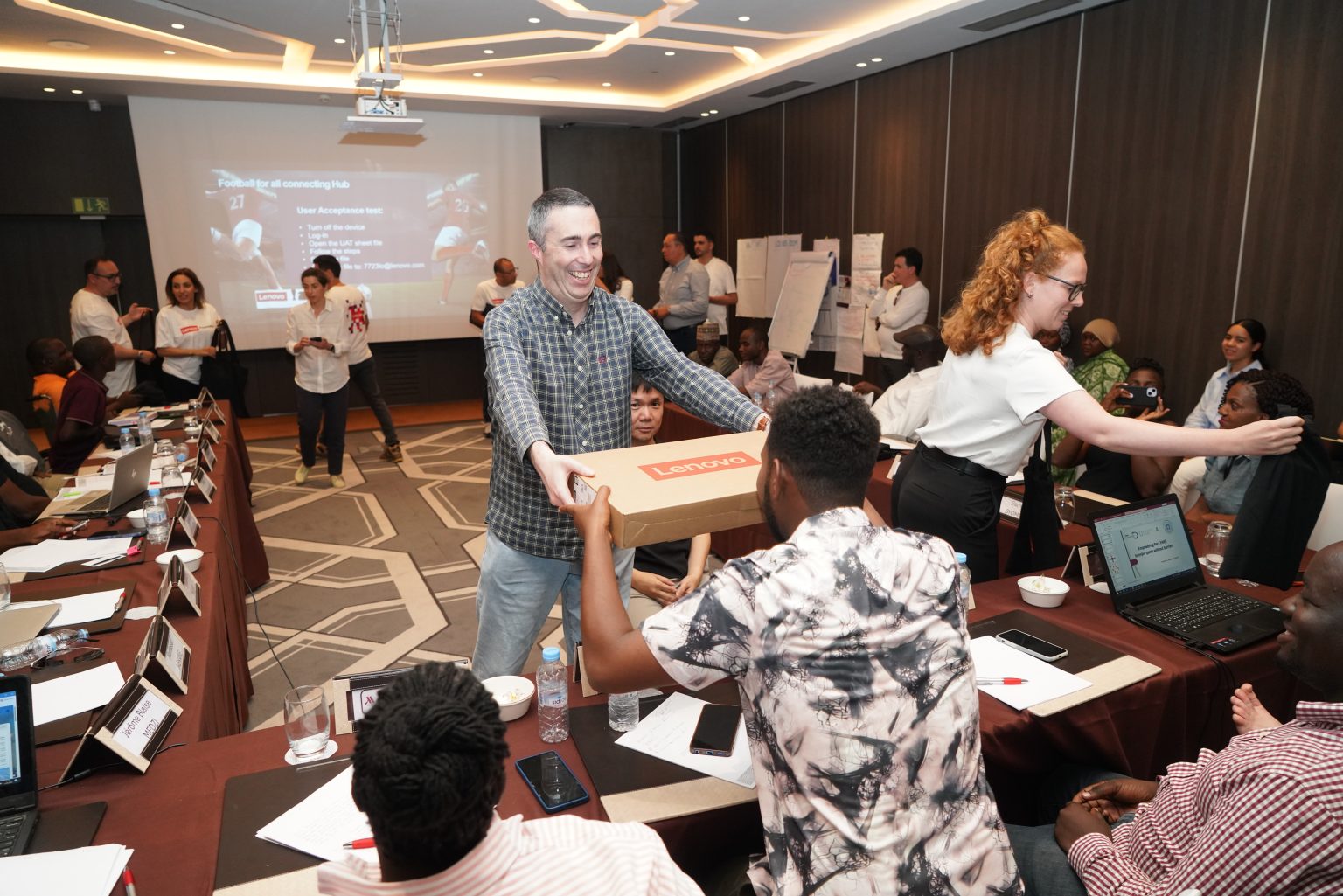
Leveraging the best practices of Lenovo’s Inclusive Product Design Office, Mendez, Morrocco-based Lenovo employees, and Integrated Dreams staff led FFALP participants through guided testing to ensure the new platform truly met the community’s needs. Tested on Lenovo’s tablets and notebooks (based on participant needs), initial testing reviews were promising, and Mendez looks forward to the further expansion and use of the platform.
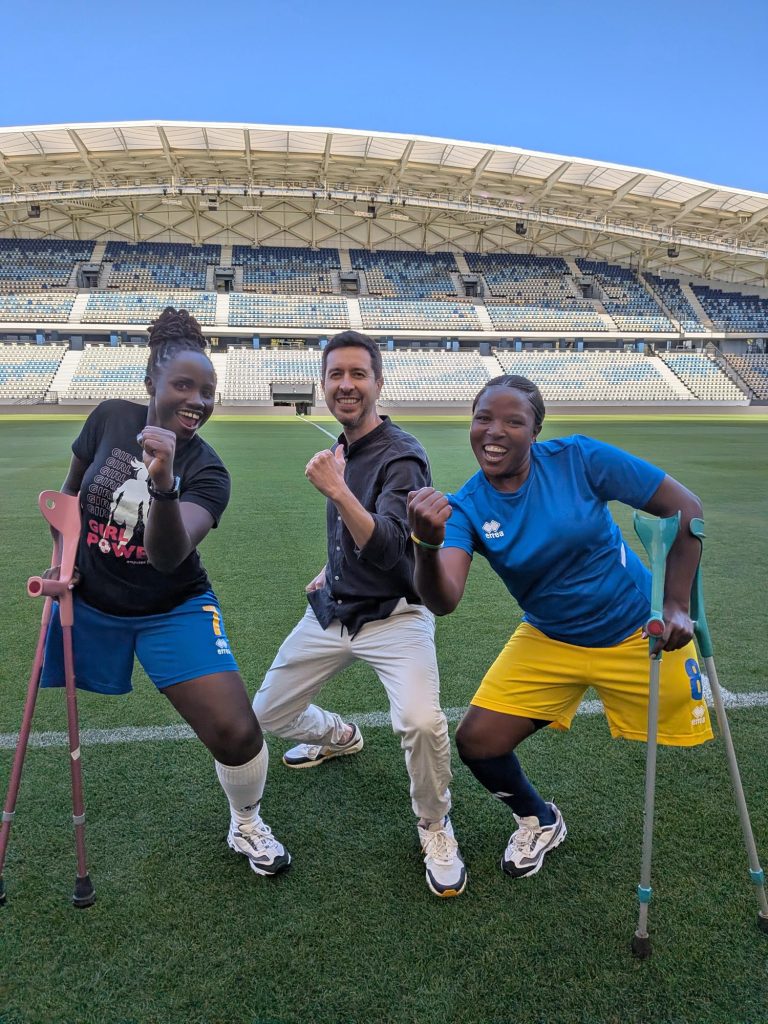
“It was wonderful to watch the users experience the app and determine how they could use it to meet their individual needs and entrepreneurial education,” shared Mendez. “But it wasn’t all testing – the participants were there because they also love football. Having fun on a pitch together at the end of the day truly highlighted the power of football as a catalyst for inclusion. Through our values of inclusion and innovation, Lenovo is uniquely positioned to make a lasting impact with Integrated Dreams and watch our smarter technology for all vision come to life!”
“Lenovo has been working with us to develop the platform for over a year. They understand the potential of technology to connect and educate our community, and we’re excited about the resource they’ve helped us develop,” shared Jose Soares, Integrated Dreams Founder and Chief Association Executive.
Moving ahead, Integrated Dreams will continue to refine the platform as it is shared with communities worldwide. The team is looking forward to the entrepreneurial outcomes, connections, and community that the platform will build – another notable example of technology that’s powered by humanity, changing our greatest challenges into our greatest breakthroughs.
Originally published on Kenvue.com
Kenvue Canada and Fuel Transport took a practical step toward lower-emissions logistics earlier this year—launching a pilot to test electric freight delivery across select urban routes in the Greater Toronto Area(GTA). Known as theElectric Loop (eLoop), the initiative focuses on how electric vehicles perform in real-world conditions, including dense city routes, multi-stop delivery patterns, and colder weather environments.
The pilot deploys an electric truck on a short-haul route across the GTA with the aim to better understand operational performance, energy efficiency, and overall emissions impact in day-to-day use—insights that can help inform future approaches to urban logistics.
The collaboration reflects a shared focus on innovation and future-ready transportation. By working together, Kenvue and Fuel are exploring how more flexible, customized delivery networks can support lower-emissions operations while maintaining reliability.
By testing and learning in real time, both companies are working to better understand the role electric delivery vehicles can play in reducing transportation-related emissions—while helping to shape more efficient, lower-emissions supply chains for the future, in line with our Healthy Lives Mission.
For Cynthia Garrido, working in the port industry means being part of a broader transformation. As Personnel Planning Supervisor at DP World’s operations in Callao, Peru, she plays a key role in coordinating operational staff and ensuring the smooth execution of daily operations. Her journey reflects both personal perseverance and the growing presence of women in maritime and logistics roles traditionally led by men.
Leading Operational Planning with Purpose
Over the years, Cynthia has developed extensive experience managing operational workforce planning in a highly dynamic environment. Her leadership, commitment, and professionalism have helped strengthen operational efficiency while contributing to a collaborative workplace culture.
“Being part of the 1.2% of women working in the port sector means being part of the change,” Cynthia shares. “We have the skills and leadership needed to prove there are no differences.”
Breaking Barriers in the Port Sector
Working within operational planning has presented unique challenges, particularly in an environment where female role models have historically been limited. Despite this, Cynthia has continued to grow professionally, demonstrating resilience and leadership.
She believes strongly in encouraging more women to pursue careers in the port and logistics industry. Through her experience, she hopes to inspire future generations to confidently enter technical and operational roles across the sector.
“If another woman asked me whether she should join DP World or the port industry, I would absolutely say yes,” Cynthia says. “Even though it may be challenging at first, there will always be someone by your side, and you can do it.”
Creating Lasting Impact Through Inclusion
Reflecting on her journey, Cynthia emphasizes the importance of inclusion and equal opportunity in shaping the future of the industry.
“To my younger self 15 years ago, I would say this: women in the port sector did not come to take up space — we came to add value. Leadership and capability have no gender.”
Careers That Make an Impact at DP World
At DP World, employees are empowered to grow their skills, lead with purpose, and help shape the future of global trade. Across more than 70 countries, DP World is committed to fostering a diverse and inclusive workplace where people can create meaningful impact within the business and the communities where it operates. Learn more at careers.dpworld.com
Kiplinger readers have named KeyBank “Outstanding” across every core category in the National Bank segment of the 2026 Readers’ Choice Awards, a distinction determined entirely by the customers who bank with them every day.
Now in its fourth year, the Kiplinger Readers’ Choice Awards gathered responses from more than 4,200 readers across the country, all of them active customers at the financial institutions they rated. Participants weighed in on service quality, trust, ease of use and overall experience, and were invited to share written feedback in their own words.
KeyBank earned “Outstanding” ratings in all three categories evaluated for national banks, customer service, overall satisfaction and likelihood to recommend, the highest designation given in the survey. With nearly 950 branches across 15 states, including New York, Ohio, Pennsylvania, Washington and Colorado, KeyBank is among the few large-footprint regional banks to receive across-the-board “Outstanding” scores, a result that points to its ability to deliver consistent, personal service at scale.
“Delivering a best-in-class experience, one where our clients feel truly valued, supported, and understood at every stage of their journey, is central to everything we do,” said Victor Alexander, Head of Key’s Consumer Bank. “Our commitment goes far beyond any single transaction; it’s about building lasting relationships grounded in trust and service excellence. Hearing directly from the clients we serve every day through an independent and respected voice is incredibly meaningful. It not only validates the work we’re doing but also challenges and inspires us to keep raising the bar, continuously improving, and finding new ways to serve our clients better.”
Among the written responses, one participant described a relationship with KeyBank spanning several decades and said their trust in the bank had only deepened over time. Kiplinger editors noted this kind of sustained, long-term confidence as a recurring theme in the KeyBank feedback.
What sets KeyBank’s 2026 results apart is consistency: the bank posted high scores across every individual metric tracked in the survey, not just the headline categories. That pattern, no weak spots across a wide-ranging evaluation, suggests strong performance is embedded in how KeyBank operates, rather than concentrated in isolated service areas.
The Kiplinger Readers’ Choice Awards are considered among the most trustworthy consumer guides in personal finance because every rating comes directly from verified active customers, not editorial panels, industry associations or sponsored surveys. Covering financial categories from banking and credit cards to investment brokers and wealth managers, the awards give consumers a peer-based view of which institutions are performing well in practice, not just on paper.
©2026 KeyCorp®. All rights reserved. KeyBank Member FDIC.
CFMA #260527-4519778
Originally published on PSEG ENERGIZE!
Across New Jersey, thousands of families rely on local nonprofits every day for meals, transportation, shelter and other essential support. Through partnerships with community organizations, the PSEG Foundation helps connect residents with critical resources during times of need.
Why do community partnerships matter for New Jersey families?
Community organizations often serve as the first line of support for families facing food insecurity, housing instability or financial hardship. These partnerships help strengthen local programs and expand practical support for the people who rely on them most.
Organizations like The Salvation Army, SHARES Nation and Paterson Task Force are helping communities across New Jersey respond to growing needs through practical, local assistance.
How is The Salvation Army of Elizabeth helping New Jersey families?
The Salvation Army of Elizabeth provides food, shelter and transportation support to families across Union County facing financial hardship. Through a range of community programs and services, the organization helps residents access critical resources when they need them most.
Between 2020 and 2025, The Salvation Army of Elizabeth provided critical support across the community by:
- Providing 239,836 food pantry meals
- Sheltering 2,528 individuals
- Serving 178,214 hot meals
- Donating 11,399 toys to children

Support from the PSEG Foundation has also helped The Salvation Army expand culturally sensitive meal options in their soup kitchen, improve transportation services and respond to growing community needs.
The organization’s work reflects the importance of local partnerships in helping communities remain resilient and connected.
Learn more about The Salvation Army’s services at SalvationArmyUSA.org.
How is SHARES Nation supporting families in New Jersey?
Founded in 1998 through a partnership between concerned citizens and utility companies, SHARES Nation helps New Jersey families facing unexpected financial hardships access critical utility and housing assistance. Through programs that provide rent, mortgage and property tax support, the organization works to help residents remain safe, stable and connected during difficult times.
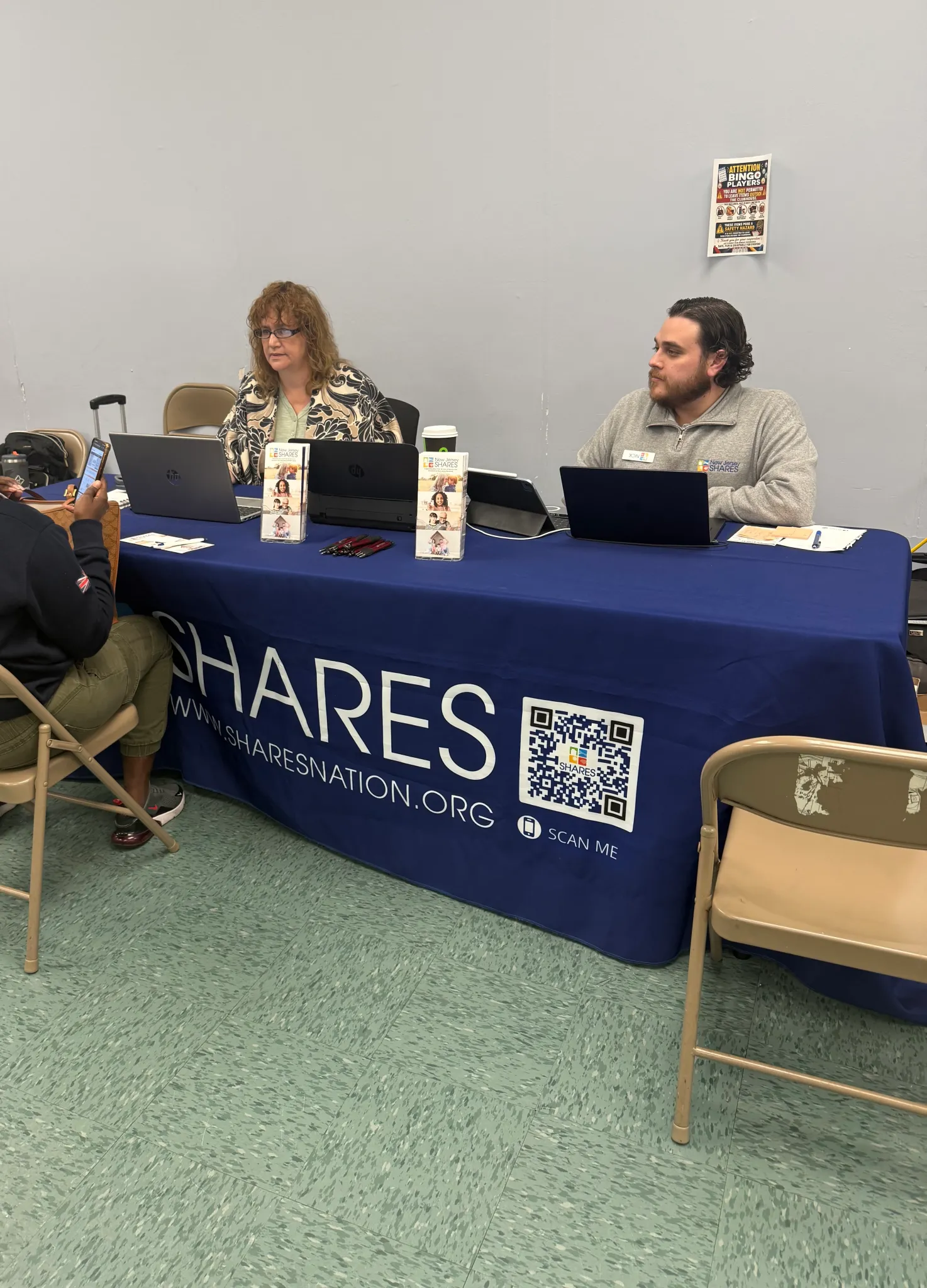
Because unexpected challenges can happen to anyone, SHARES Nation continues to help families access the support they need when they need it most. Eligible New Jersey residents may qualify for up to $1,400 in assistance — including up to $700 for gas expenses and $700 for electric expenses.
Support from the PSEG Foundation has helped SHARES Nation continue to provide emergency assistance and expanding access to resources for New Jersey residents facing financial hardship. The organization’s work reflects the importance of community partnerships in helping families remain supported during times of uncertainty.
Learn more about SHARES Nation at SharesNation.org.
How is Paterson Task Force for Community Action supporting families in New Jersey?
The Paterson Task Force for Community Action helps families across Northern New Jersey access critical support, food assistance and essential household resources.

With support from the PSEG Foundation, Paterson Task Force Community Action was able to provide cleaning and hygiene vouchers to 339 individuals and 147 families, along with food vouchers for 196 individuals and 82 families.
These programs help families maintain clean, safe and healthy living conditions while easing financial strain during difficult times.
Through these programs, residents can purchase household essentials including soap, shampoo, cleaning products and hygiene supplies, along with food staples such as fresh produce, grains, meat, canned goods, baby food and infant formula.
The organization’s work reflects the importance of local partnerships in helping communities remain supported during times of financial uncertainty.
Learn more about the Paterson Task Force for Community Action at PatersonTaskForce.com.
Supporting stronger communities across New Jersey
The PSEG Foundation continues to support nonprofit organizations across New Jersey that help residents access food assistance, housing support, transportation resources and educational opportunities.
By working alongside trusted community partners, we’re helping strengthen the local support systems New Jersey families count on every day. Together, these partnerships are helping communities remain supported and connected through practical, local assistance.
To learn more about the PSEG Foundation’s community initiatives and nonprofit partnerships, visit pseg.com/Foundation.
Bob Herr| Director of Corporate Governance
Zhiyuan Tao, CFA| Portfolio Manager—Japan Value Equities; Senior Research Analyst—Value Research
Haruna Usui, CMA| Head of ESG Strategy―AB Japan
Japanese companies favor seniority, but there may be material benefits to multigenerational boards.
Japan has made major strides in corporate governance over the past decade. Reforms have included increasing board independence and modernizing committee structures. Yet one component of Japanese boards remains relatively unchanged: age. That’s a material oversight, in our view. Corporate boards that are too monolithic could be putting a damper on profits.
Corporate boards in Japan have long been characterized by seniority and continuity against a backdrop of lifetime employment. More than 95% of directors in the TOPIX 100 are in the bubble generation or older, while fewer than 1% are under the age of 50. This level of experience provides stability and institutional knowledge, but it may also entrench decision-making and hinder capital efficiency.
Many boards in Japan prioritize balance sheet safety over returning capital to shareholders and taking calculated risks. This has helped contribute to a more than 10% gap in return on equity (ROE) between Japanese and US equities . In a market long challenged by poor capital allocation, we think multigenerational boards can help buck this trend.
Multigenerational Boards Can Boost Performance
Studies in both the US and Europe present a clear link between multigenerational boards and financial performance. He, Miletkov and Staneva found that companies with younger directors not only generate higher return on assets but also command higher price-to-book values—particularly for firms that invest more in R&D and engage in patenting activity.
Younger boards can also mean less exposure to defaults—and chicanery. Janahi, Millo and Voulgaris discovered that banks with multigenerational boards experience fewer nonperforming loans, while Neukirchen, Posch and Betzer observed less corporate misconduct among firms with a greater age range.
These findings cumulatively suggest that multigenerational boards have the potential to improve capital allocation, reduce risk and boost valuations.
Mind the Gaps: Age and ROE
Our own in-house research confirms these findings. We tracked TOPIX constituents over a 10-year period—the largest study of its kind. The results were striking.
Firms with a more than 30-year age gap between the youngest and oldest director—what we define as multigenerational boards—delivered ROE more than 200 basis points higher, on average, than companies with more senior boards. This outperformance occurred in every calendar year during the period, and the results were statistically significant across sectors. Multigenerational boards achieved superior ROE in all but one sector, with the dispersion independent of size, style or founder-led status (Display).
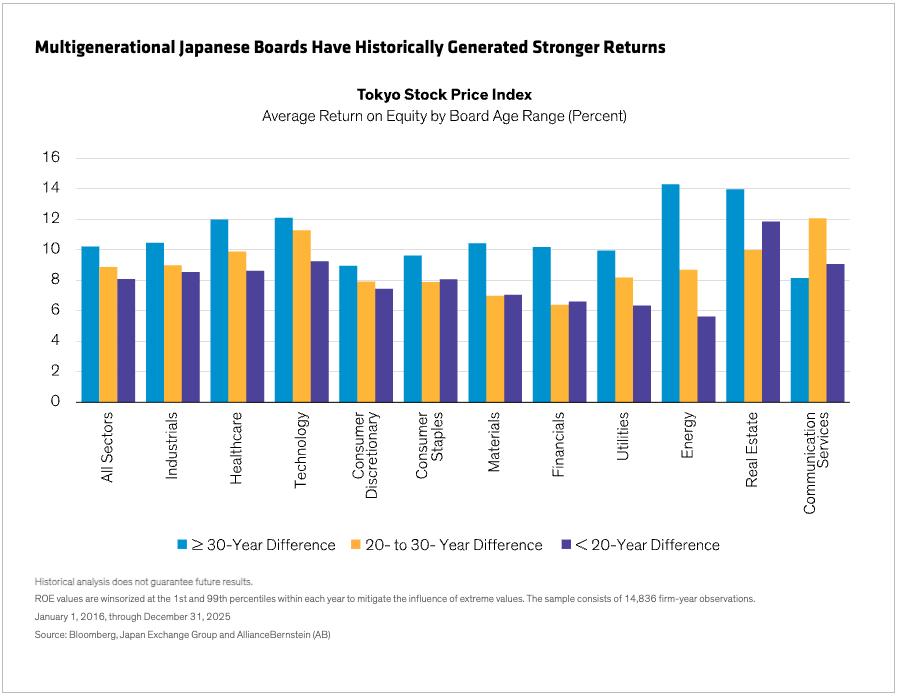
Why the improved performance under multigenerational boards? We theorize that younger directors counterbalance the risk-averse tendencies of more senior directors. Prior academic research shows that younger boards exhibit greater risk tolerance, on average, than their senior counterparts. This is reflected in increased M&A activity and lower cash balances.
Of course, experience and qualifications remain critically important to board appointments. We favor a balanced approach that preserves legacy institutional knowledge while opening the door to next-generation dynamism.
What does this look like in practice?
Hello Kitty’s Generational Glow-Up
Sanrio, the company behind the popular Hello Kitty brand, has long held a rich portfolio of valuable intellectual property. But historically, its business model focused largely on domestic merchandise sales. The company maintained consistent leadership for many decades under its founder, Shintaro Tsuji, which contributed to stability but slowed strategy development. As market conditions evolved and retail trends shifted, Sanrio’s merchandise business came under pressure, and the company recorded a loss in fiscal year 2020.
Recognizing the need to adapt, the 92-year-old Tsuji turned leadership of the company over to his 31-year-old grandson but remained on the board. Sanrio’s young new president initiated sweeping reforms by refreshing the board and management, overhauling retail operations, and recruiting external talent with diverse backgrounds.
The company also expanded its international footprint and leveraged social media and streaming services to amplify its brand. These changes unlocked the global potential of Sanrio’s character portfolio and repositioned the firm as an entertainment-focused intellectual-property enterprise, rather than a traditional retailer.
The effect on operating profit and ROE has been dramatic (Display). Sanrio now expects operating profit of ¥75.1 billion in FY 2025—more than triple its previous peak of ¥21 billion in FY 2013. Moreover, the company’s stock price has increased tenfold, reflecting renewed investor confidence in its strategy and earnings potential.
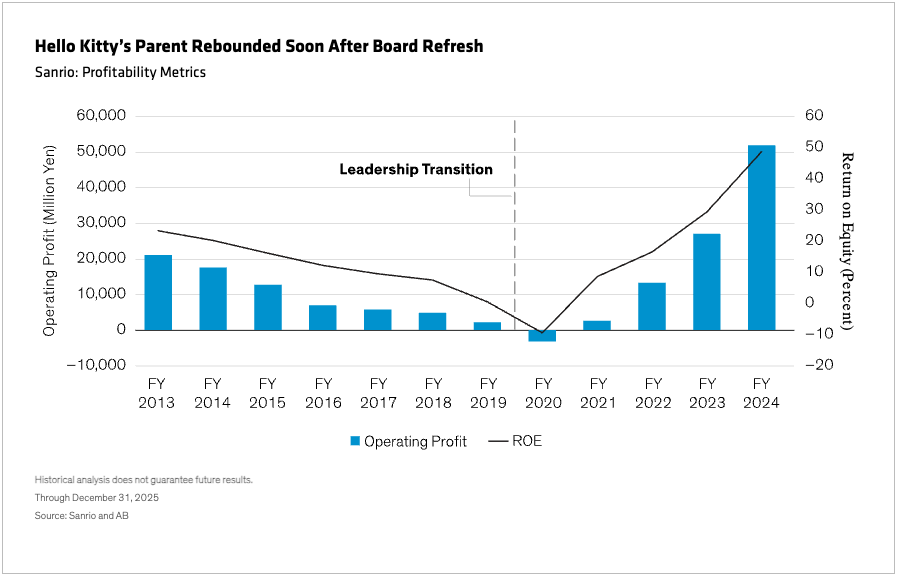
Sanrio’s transformation illustrates how a fresh generational perspective can address underlying issues hindering shareholder returns. In our view, if properly implemented, multigenerational boards can unlock organizational agility, greater independence and new pathways for value creation. In an era of rapid market and technological change, we believe boards that balance experience with fresh perspectives can be catalysts for building shareholder value.
The authors would like to thank Landon Shea, Investment Stewardship Associate and Research Lead, for his contribution to this piece.
The views expressed herein do not constitute research, investment advice or trade recommendations, do not necessarily represent the views of all AB portfolio-management teams and are subject to change over time.
References to specific securities discussed are for illustrative purposes only and should not to be considered recommendations by AllianceBernstein L.P. It should not be assumed that investments in the securities mentioned have necessarily been or will necessarily be profitable.
Learn more about AB’s approach to responsibility here.