
ニューヨーク–(BUSINESS WIRE)–(ビジネスワイヤ) — さまざまな業界や地域の代表的な主要企業が参加するグローバル連合「カーボン・メジャーズ」が、新たに発足しました。同連合は、より正確なカーボン会計の枠組みを構築し、できる限り低コストで排出量を削減する市場主導型ソリューションを推進することを目指しています。 この連合は、確かな科学的知見と財務会計の原則を活用し、より一層正確で、二重計上を排除し、現行の情報ギャップを解消する台帳型のカーボン会計フレームワークの実現を目指して活動します。この新しい枠組みにより、世界経済全体での排出量の追跡がより正確に行えるようになり、企業は自社製品の差別化を図り、政府はより的確かつ情報に基づいた政策判断を下せるようになります。 カーボン・メジャーズは、イノベーション、競争、そして市場の力を引き出す新たな政策の策定と導入を呼びかけています。世界の炭素排出量は増加を続けており、効果的で効率的かつ実践的な政策が実施されない限り、今後も上昇し続ける見通しです。高度化された排出量会計フレームワークに基づく検証可能なデータに裏付けられた製品レベル
Author: sHq_LoGiNz
NEW YORK–(BUSINESS WIRE)–Carbon Measures, nová globální koalice zastupující významné podniky z různých odvětví a geografických oblastí, byla dnes založena s cílem vytvořit přesnější rámec pro výpočet uhlíkové stopy a prosazovat tržní řešení vedoucí ke snížení emisí při nejnižších nákladech. Tato koalice bude ve své práci využívat spolehlivé vědecké poznatky a principy finančního účetnictví, aby pomohla vytvořit rámec pro účetnictví uhlíku založený na účetních knihách, který bude podstatně pře
NOWY JORK–(BUSINESS WIRE)–Carbon Measures, nowa globalna koalicja reprezentująca największe firmy z różnych branż i zakątków świata, powstała dziś z myślą o utworzeniu dokładniejszych ram rozliczania emisji dwutlenku węgla i pobudzenia opracowania rynkowych rozwiązań z myślą o ograniczeniu emisji po jak najniższych kosztach. W swoich działaniach koalicja będzie wykorzystywać solidne dowody naukowe oraz zasady sprawozdawczości finansowej, aby pomóc w stworzeniu ram rozliczania emisji dwutlenku
NUEVA YORK–(BUSINESS WIRE)–Carbon Measures, una coalición global nueva que representa a las principales empresas de diversas industrias y zonas geográficas, se lanzó hoy para establecer un marco de contabilidad del carbono más preciso e impulsar soluciones basadas en el mercado a fin de reducir las emisiones al menor costo. El trabajo de la coalición aprovechará la ciencia sólida y los principios de la contabilidad financiera para habilitar un marco de contabilidad de carbono basado en un lib
美国爱荷华州得梅因–(BUSINESS WIRE)–(美国商业资讯)– 根据《全球金融普惠指数》(Global Financial Inclusion Index,下称“指数”,由Principal Financial Group®最新发布),全球金融普惠在经历过去两年的显著提升后,于2025年趋于停滞。报告显示,受全球贸易格局变化及地缘政治紧张局势影响,商业不确定性持续上升,促使企业在薪酬灵活性、保险及养老金福利等方面采取更多措施以促进金融普惠。然而,随着企业压力加大,数据显示,各国政府和金融体系正加快介入,推动金融普惠的持续发展。 由经济与商业研究中心(Centre for Economics and Business Research,简称Cebr)与®联合发布的《全球金融普惠指数》今年迎来第四年。该指数评估了全球42个市场中,政府、金融体系及雇主在推动金融普惠方面的表现,提供了全球范围内系统、全面且具可比性的分析,不仅以绝对分值衡量各市场的进展,也对其进行了相对排名。报告显示,新加坡自指数创立以来,连续四年位居全球金融普惠度最高的市场。 Principal Asset M
DES MOINES, Iowa–(BUSINESS WIRE)–L’inclusion financière, qui s’était améliorée à l’échelle mondiale au cours des deux dernières années, a atteint un plateau en 2025, selon le dernier indice mondial d’inclusion financière (l’indice) de Principal Financial Group®. Ces résultats marquent un tournant, l’incertitude économique résultant de l’évolution de la dynamique commerciale mondiale et des tensions géopolitiques poussant les entreprises à prendre des mesures en faveur de l’inclusion financièr
New report examines the road to retirement for people in the middle class across age ranges
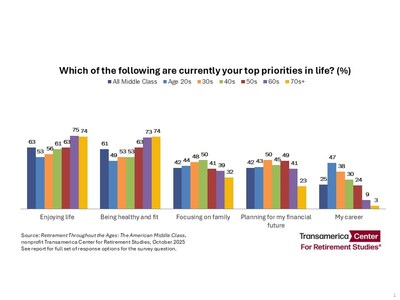
LOS ANGELES, Oct. 21, 2025 /PRNewswire/ — More than six in 10 people in the American middle class cite enjoying life (63%) and being healthy and fit (61%) as top priorities in life, according to Retirement Throughout the Ages: The American Middle Class, a survey-based research report published by nonprofit Transamerica Center for Retirement Studies® (TCRS) in collaboration with Transamerica Institute®. Other priorities include focusing on family (42%), planning their financial future (42%), and their career (25%). The report explores how priorities across age ranges influence the retirement outlook of the middle class.
“The middle class embodies the American dream, but their retirement outlook is unclear,” said Catherine Collinson, CEO and president of Transamerica Institute and TCRS. “The middle class is working hard, caring for their families, and saving for the future while navigating an evolving economy, artificial intelligence (AI), the aging population and need for caregivers, and Social Security uncertainties.”
Twenties: Starting Strong but Strained
“Twentysomethings are under pressure. They’re embarking on careers, gaining financial footing, and worrying about technological advancements that may threaten their jobs. At the same time, many are being called upon to serve as caregivers for aging loved ones,” said Collinson.
Among people in the middle class, the survey finds:
- Almost half of twentysomethings cite their career as a top priority in life (47%). Eighty-six percent are employed or self-employed. Among those who are employed, one in three has two or more jobs (33%), and 58% have a side hustle. Fifty-two percent are worried that AI and robotics will make their job skills no longer needed. Fifty-five percent say they are having trouble making ends meet.
- Forty-three percent of twentysomethings are currently serving and/or have previously served as a caregiver for a relative or friend during their working career.
- More than three in four twentysomethings are saving for retirement in a 401(k) or similar plan and/or outside the workplace (77%). They started saving at age 21 (median).
- $300k is the amount (median) that twentysomethings estimate they need to feel financially secure in retirement but, among those providing estimates, 47% guessed the amount. Only 17% say they have “a lot” of working knowledge about personal finance.
- Twentysomethings have saved $43,000 in household retirement accounts (estimated median). Twenty-eight percent have taken an early withdrawal from a 401(k) or similar plan or IRA.
“Twentysomethings may be strained, but most are saving for retirement. They are getting a strong start with decades for their savings to compound and grow. However, they need to learn about personal finance because the better-informed decisions they make early on can have a long-term impact,” said Collinson.
Thirties: Focusing on Their Financial Future
“Thirtysomethings are progressing in their careers, starting families, serving as caregivers, and prioritizing finances. Yet, they can be doing more to strengthen their financial situations,” said Collinson.
Among people in the middle class, the survey finds:
- Half of thirtysomethings cite planning for their financial future as a top priority in life (50%).
- More than eight in 10 thirtysomethings are employed or self-employed (85%). Among those who are employed, 24% have two or more jobs, and 44% have a side hustle. Forty-six percent are worried that AI and robotics will make their job skills no longer needed.
- Four in 10 thirtysomethings are currently serving and/or have previously served as a caregiver for a relative or friend during their working career (41%).
- More than eight in 10 thirtysomethings are saving for retirement in a 401(k) or similar plan and/or outside the workplace (83%). They started saving at age 27 (median).
- $500k is the amount (median) that thirtysomethings estimate they need to feel financially secure in retirement and, among those providing an estimate, 46% guessed the amount. Only 18% say they have “a lot” of working knowledge about personal finance, and 29% have a financial strategy for retirement in the form of a written plan.
- Thirtysomethings have saved $54,000 in household retirement accounts (estimated median). Twenty-three percent have taken an early withdrawal from a 401(k) or similar plan or IRA.
“As thirtysomethings focus on their financial future, one of the most impactful things they can do is to create a financial plan and consult with a professional financial advisor, if needed. The financial plans they create today will serve as a roadmap throughout their working years and into retirement,” said Collinson.
Forties: Juggling Work, Family, and Finances
“Fortysomethings are in their sandwich years of juggling career, family, and finances. Out of necessity, they are making financial trade-offs between immediate needs and long-term goals. Most are saving for retirement, but many are at risk of falling behind,” said Collinson.
Among people in the middle class, the survey finds:
- Half of fortysomethings cite focusing on family as a top priority in life (50%).
- Eight in 10 fortysomethings are employed or self-employed. Among those who are employed (81%), 21% have 2 or more jobs, and 36% have a side hustle. Forty-four percent are worried that AI and robotics will make their job skills no longer needed.
- Almost four in 10 fortysomethings are currently serving and/or have previously served as a caregiver for a relative or friend during their working career (39%).
- Eight in 10 fortysomethings are saving for retirement in a 401(k) or similar plan and/or outside the workplace (80%). They started saving at age 30 (median).
- $500k is the amount (median) that fortysomethings estimate they need to feel financially secure in retirement and, among those providing an estimate, 49% guessed the amount. Only 18% say that they have “a lot” of working knowledge about personal finance, and 24% have a financial strategy for retirement in the form of a written plan.
- Fortysomethings have saved $73,000 in household retirement accounts (estimated median). Twenty-one percent have taken an early withdrawal from a 401(k) or similar plan or IRA.
“Fortysomethings are spread thin and could easily lose track of the time. Retirement is still a couple of decades away, but now is the time for them to formalize goals, create financial plans, make course corrections and seek the services of a professional advisor,” said Collinson.
Fifties: Entering the Retirement Danger Zone
“Fiftysomethings have entered the retirement danger zone. Many are falling short on their savings and their window of time before retirement is closing. The solution is to extend their working years, retire later in life, and save more. However, their ability to achieve success depends on factors that may be out of their control, such as health and access to employment opportunities,” said Collinson.
Among people in the middle class, the survey finds:
- Almost half of fiftysomethings cite planning for their financial future as a top priority in life (49%).
- Three in four fiftysomethings are employed or self-employed (76%), and 7% are now retired.
- Among those who are not yet retired, 32% are currently serving and/or have previously served as a caregiver for a relative or friend during their working career.
- Among those who are not yet retired, more than half expect to retire after the age of 65 or do not plan to retire (52%). However, only 44% are focused on performing well at their current job and 41% are keeping their job skills up to date.
- Almost eight in 10 fiftysomethings who are not yet retired are saving for retirement in a 401(k) or similar plan and/or outside the workplace (79%). They started saving at age 30 (median).
- $600k is the amount (median) that fiftysomethings who are not yet retired estimate they need to save to feel financially secure in retirement and, among those providing an estimate, 55% guessed the amount. Just 21% have a financial strategy for retirement in the form of a written plan. Twenty-nine percent use a professional financial advisor.
- Among those who are not yet retired, fiftysomethings have saved $112,000 in household retirement accounts (estimated median). Six percent have saved $1,000,000 or more and 25% have saved less than $50,000.
“Working longer can help bridge savings gaps but success is not guaranteed. Fiftysomethings must be hypervigilant about safeguarding their health and keeping their job skills up to date. It is also critical that they create a financial strategy for retirement that anticipates potential setbacks,” said Collinson.
Sixties: Retiring Ready or Not
“Sixtysomethings are exiting the workforce and prioritizing enjoyment of life. Some are retiring or are already retired, while others have plans for continued work. The question is whether they were financially ready to retire,” said Collinson.
Among people in the middle class, the survey finds:
- Three in four sixtysomethings cite enjoying life as a top priority (75%), and 89% indicate they are enjoying life.
- More than half of sixtysomethings are retired (52%) and 40% are still working. Among those who are not yet retired, almost half (49%) expect to retire at age 70 or older or do not plan to retire.
- Forty-six percent of sixtysomethings cite Social Security being reduced or ceasing to exist and 43% cite outliving their savings and investments as greatest retirement fears. Four in 10 sixtysomethings (40%) expect Social Security to be their primary source of retirement income.
- Less than three in 10 have a “a lot” of working knowledge about personal finance (29%). Only one in four has a financial strategy for retirement in the form of a written plan (25%). Forty-three percent currently use a professional financial advisor.
- $277,000 is the amount saved by sixtysomethings who are not yet retired in household retirement accounts (estimated median). Sixteen percent have saved $1,000,000 or more and 19% have saved less than $50,000.
- $203,000 is the amount sixtysomething retirees have in total household savings excluding home equity (estimated median). Sixteen percent have $1,000,000 or more and 26% have less than $50,000.
“During their transition from work to retirement, sixtysomethings should engage in retirement planning and work with a professional financial advisor, if needed. By learning expert strategies, they could potentially maximize their income and Social Security benefits, minimize their tax liability, and, ultimately, ensure their savings last their lifetime,” said Collinson.
Age 70 and Older: Enjoying Life and Focusing on Health
“People in their seventies and older are enjoying retired life and focused on maintaining their health. They are faring well financially, but they are unprepared to pay for long-term care if their health deteriorates,” said Collinson.
Among people in the middle class, the survey finds:
- Almost three in four people age 70 and older cite enjoying life and being healthy and fit as top priorities in life (both 74%) – and 89% say they are enjoying life.
- Eighty-six percent of people age 70 and older are retired and 12% are working. Retirees retired at age 65 (median). Among those who are not yet retired, almost four in 10 do not plan to retire (38%).
- Roughly four in 10 people age 70 and older cite declining health that requires long-term care (45%), cognitive decline, dementia, Alzheimer’s Disease (39%), and losing their independence (39%) as greatest retirement fears.
- Only 16% of retirees are “very confident” they will be able to afford long-term care. Almost half (49%) plan to receive such care from family and friends, if care is needed, and 22% do not yet have plans.
- Only one in four people who are age 70 and older has a financial strategy for retirement in the form of a written plan (25%). Forty-seven percent currently use a professional financial advisor.
- $157,000 is the amount saved by people who are age 70 and older who are not yet retired in household retirement accounts (estimated median). Eighteen percent have saved $1,000,000 or more and 27% have saved less than $50,000.
- Retirees who are age 70 and older have $286,000 in total household savings excluding home equity (estimated median). Eighteen percent have $1,000,000 or more and 19% have less than $50,000.
“People in their seventies and older experience declines in health and may eventually need assistance with daily activities. For those who haven’t yet explored available options for long-term care, it is crucial to have family discussions, research care providers, and anticipate the cost of such care. A proactive approach can make transitions easier – versus waiting until a crisis when emotions are running high and options may be limited,” said Collinson.
A Call to Action
“The American middle class is the heartbeat of our nation’s society and economy. They are working hard and saving for the future, but their ability to achieve a financially secure retirement is hanging in the balance,” said Collinson. “People in the middle class need more support from policymakers, the financial services industry, and employers. A collaborative approach to implement solutions can ensure that the middle class has access to workplace retirement benefits, products and services, social safety nets, and the know-how that is required for success.”
Retirement Throughout the Ages: The American Middle Class
is part of TCRS’ 25th Annual Retirement Survey, one of the largest and longest-running surveys of its kind. The report examines the employment, personal finances, and retirement expectations and preparations of U.S. residents who are in the middle class, and it offers detailed comparisons by age range. Transamerica Institute and TCRS broadly define “middle class” as those with an annual household income between $50,000 and $199,999. The report is a follow up to The Retirement Outlook of the American Middle Class published in 2024. To download these reports and other research, visit www.transamericainstitute.org. Follow on LinkedIn, Facebook, and X @TI_insights and @TCRStudies.
###
About Transamerica Center for Retirement Studies
Transamerica Center for Retirement Studies® (TCRS) is a division of Transamerica Institute®, a nonprofit, private operating foundation. TCRS conducts one of the largest and longest-running annual retirement surveys of its kind. The information provided here is for educational purposes only and should not be construed as insurance, securities, ERISA, tax, investment, legal, medical, or financial advice or guidance. Please consult independent professionals for answers to your specific questions. www.transamericainstitute.org
About the 25th Annual Transamerica Retirement Survey
The analysis contained in Retirement Throughout the Ages: The American Middle Class was prepared internally by the research team at Transamerica Institute and TCRS. It is based on an online survey conducted within the U.S. by The Harris Poll on behalf of Transamerica Institute and TCRS between September 11 and October 17, 2024, among a nationally representative sample of 10,009 adults including 5,369 adults with a household income of $50,000 to $199,999. Data was weighted where necessary for age by gender, race/ethnicity, region, education, marital status, household size, household income, and smoking status. Respondents were selected from among those who have agreed to participate in our surveys. The sampling precision of Harris online polls is measured by using a Bayesian credible interval and the worker sample data is accurate to within ±1.2 percentage points using a 95% confidence level. This credible interval will be wider among subsets of the surveyed population of interest. Percentages are rounded to the nearest whole percent. Note: Some questions have reduced bases, see full report for details.
Transamerica Center for Retirement Studies
Media Contact: Kyle Moschen
kmoschen@webershandwick.com

 View original content to download multimedia:https://www.prnewswire.com/news-releases/the-american-middle-class-and-its-retirement-preparations-prospects-and-perils-302589672.html
SOURCE Transamerica Institute

NEW YORK–(BUSINESS WIRE)–Carbon Measures, eine neue globale Allianz, die namhafte Unternehmen aus verschiedenen Branchen und Regionen zusammenführt, wurde heute gegründet, um ein präziseres Rahmenwerk für die Kohlenstoffbilanzierung einzuführen und marktbasierte Lösungen zu fördern, die Emissionen zu den niedrigsten Kosten senken. Die Tätigkeit der Allianz wird sich auf fundierte wissenschaftliche Erkenntnisse und grundlegende Prinzipien der Finanzbuchhaltung stützen, um ein Ledger-basiertes
WUHU, China, Oct. 21, 2025 /PRNewswire/ — On October 21, 2025, the 2025 Chery International User summit — a global gathering transcending geography and culture — was grandly held in Wuhu, China.
With the theme “Co-Create, Co-Define,” the event brought together more than 3,000 participants from nearly 100 countries, including overseas users, dealership partners, members of the ESG Advisory Alliance, and international media representatives, to engage in an in-depth dialogue about the future of mobility.

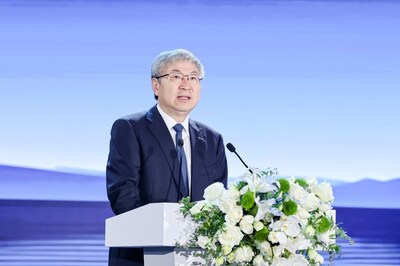
In his keynote address at the opening ceremony,Yin Tongyue, Chairman of Chery Automobile Co., Ltd. (9973.HK), elaborated on the strategic essence of “Co-Create, Co-Define.”
From January to September 2025, Chery Group’s global sales surpassed 2 million units, with European sales more than doubling year-on-year to reach 145,000 units, showcasing the tangible value of global co-creation.
Mr. Yin emphasized that Chery is evolving from an automobile manufacturer into a builder of intelligent mobility ecosystems. Guided by the principle “In somewhere, For somewhere, Be somewhere,” the Group continues to advance localization by partnering with local universities and enterprises to develop localized products and nurture local talent, striving to become a truly local enterprise.
He also emphasized that ESG is central to sustainable development. Chery will continue working with international organizations to advance low-carbon technologies and public welfare initiatives, fulfilling its responsibility as a global corporate citizen. Mr. Yin concluded by reaffirming Chery Group’s commitment to building an open, inclusive, and sustainable automotive ecosystem together with its global partners.
Co-Creation — Building an Open and Collaborative User Ecosystem
Global Voices, Shared Stories
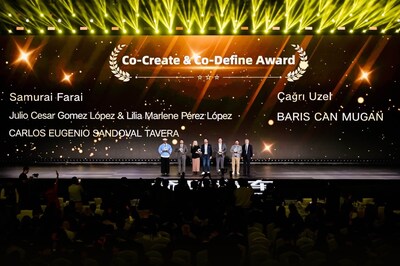
At the User Awards Ceremony, representatives from Vietnam, South Africa, Kazakhstan, Spain, and Indonesia shared their stories of connection with Chery.
Le Nguyen Bao Ngoc, brand ambassador for OMODA & JAECOO Vietnam, integrates sustainability into brand communication. Samurai Farai, a South African artist, infused local culture into Chery through creative vehicle art. Mussa Ramazanov from Kazakhstan demonstrated the reliability of EXEED vehicles after driving over 100,000 km. Carlos Guisado from Spain and his family showcased their deep trust by choosing the OMODA & JAECOO brand. Humam from Indonesia built a local community of over 300 Chery owners, forming a thriving content ecosystem.
From CHERY, OMODA & JAECOO, and EXEED to iCAUR, LEPAS, and LUXEED, users around the world are not just customers — they are co-creators shaping Chery’s global brand narrative. Their authentic engagement gives Chery a warmer, more human presence in the global marketplace.
Expanding the ESG Alliance: Building a Global Network for Sustainability
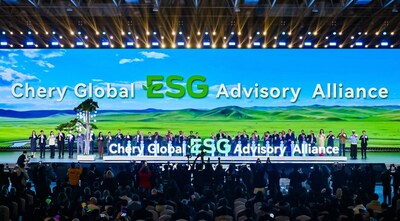
A key highlight of the conference was the launch of the Chery Global ESG Advisory Alliance, marking a major upgrade in Chery’s sustainability strategy.
This year, the alliance expanded significantly — welcoming new globally influential members such as the IUCN, the United Nations University, and the Asian Paralympic Committee.
The alliance now encompasses a broader network of media, NGOs, and financial institutions, fostering a rich, collaborative ecosystem.
Notably, former UN Secretary-General Ban Ki-moon attended in person and officially joined the alliance as an ESG Advisor.
His participation not only enhanced the alliance’s international credibility but also reflected global recognition of Chery’s sustainability roadmap. Through this upgraded alliance, Chery is transforming ESG from an internal corporate initiative into a global collaborative movement, promoting deep cooperation in low-carbon R&D, public welfare programs, and industry standardization.
At the ESG strategy level, Chery has built a comprehensive framework supported by three key pillars: “Low-Carbon Transition and Nature Positive,” “Value Chain Collaboration,” and “Self-Discipline and Compliance Development.” The Group has already made substantial progress across multiple dimensions.
On the technological front, Chery promotes low-carbon transformation through innovations such as the Mars Architecture Hybrid Platform and solid-state battery technology.
On the environmental front, it became the first Chinese automaker to receive a mutual recognition report for Life Cycle Assessment (LCA) between China and the EU.
On the social responsibility front, Chery continues to collaborate with UNICEF on the “Empowering Every Child’s Learning Journey” initiative and works with the IUCN to advance global nature conservation projects — demonstrating its firm commitment to turning ESG promises into tangible action.
Co-Define — Shaping the Strategic Blueprint for
Intelligent Mobility
Strategic Elevation Defines a New Paradigm for Intelligent Mobility
In the grand finale, Mr. Zhang Guibing, President of Chery International, delivered a keynote speech themed “Co-Creating Sustainable Development, Co-Defining the Future Ecosystem,” elaborating on Chery’s strategic evolution from a traditional automaker to a builder of intelligent mobility ecosystems.
He noted that Chery has ranked No.1 among Chinese brands in overseas sales for 22 consecutive years, with monthly exports exceeding 100,000 units for five consecutive months. Its new energy vehicle growth rate leads among China’s top five auto brands, and PHEV models have achieved No.1 retail sales in multiple markets — achievements that firmly validate the foundation of Chery’s strategic transformation.
Driven by the global trends of low-carbon transition and AI intelligence, the automotive industry is rapidly evolving toward an integrated “vehicle + ecosystem” model. In this context, Chery is building a comprehensive technology ecosystem that transcends the traditional automotive domain — one that deeply integrates users, vehicles, robots, and big data.
This system is anchored in intelligent, connected new energy vehicles, while extending into emerging fields such as flying cars, robotaxis, robotics, photovoltaics, and green energy, forming a diversified and synergistic innovation network. Moving forward, Chery will dedicate part of its teams to the automotive business and others to the research, development, and operation of new ventures like robotics, jointly shaping a future-oriented mobility ecosystem.
Mr. Zhang further detailed Chery’s roadmap: Strengthening leadership in PHEV hybrid and BEV electric platforms. Accelerating commercialization of autonomous driving technologies. Advancing innovation in robotics and aerial mobility. Deepening localization under the philosophy “In somewhere, For somewhere, Be somewhere.”
This strategic transformation marks Chery’s evolution from a traditional automaker into a green, intelligent mobility technology company that co-creates, co-defines, and co-prospers with its users and partners. By building an open and collaborative innovation ecosystem, Chery is not only redefining the boundaries of the mobility industry but also opening new pathways for shared growth with global partners.
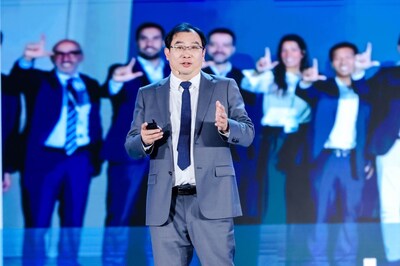
Co-Create. Co-Define.
Co-Win the Future.
Through its dynamic structure of speeches, dialogues, and collaborative announcements, the 2025 Chery International User Summit vividly embodied its theme of “Co-Create, Co-Define.”
From Ban Ki-moon’s participation to user stories from across the globe, from the robotic performances that opened the event to the upgraded ESG Alliance, Chery conveyed a clear message to the world:
It is not building a closed product system, but an open, evolving, user-driven mobility ecosystem.
As technology converges with humanity, and users evolve from product consumers to ecosystem co-creators, Chery’s vision extends beyond cars — toward a new way for people to connect with the world.
 View original content to download multimedia:https://www.prnewswire.com/news-releases/2025-chery-international-user-summit-shaping-the-industrys-future-through-co-creation-and-innovation-302589857.html
SOURCE Chery International

NOVA YORK–(BUSINESS WIRE)–A Carbon Measures, nova coalizão global que reúne grandes empresas de diversos setores e regiões, foi lançada hoje para criar um framework de contabilização de carbono mais preciso e promover soluções de mercado que reduzam emissões com o menor custo possível. O trabalho da coalizão utilizará ciência rigorosa e princípios da contabilidade financeira para viabilizar um framework de contabilização de carbono baseado em registros que seja significativamente mais preciso