Name: Mary Beth Cote-Jenssen | Environmental Sustainability Senior Manager

Company:  PepsiCo, Inc.

Connect with Mary Beth on LinkedIn

Welcome to our series aimed at spotlighting the individual leaders within BIER member companies and stakeholder organizations. Learn how these practitioners and their companies are addressing pressing challenges around water, energy, agriculture, climate change, and what inspires each of them to advance environmental sustainability in the beverage sector and collectively, overall.

Briefly describe your role and responsibilities and how long you have worked with your company.

I joined PepsiCo in 2022 and work within our Global Sustainability Office, specifically focused on water stewardship. My role includes leading our watershed health initiatives, those tied to our supply chain supporting our Restore and Protect targets, and those tied to operations, including replenishment efforts and our Alliance for Water Stewardship goal. I also lead our water risk assessment process, which evaluates both our company-owned manufacturing facilities and those of our franchise bottlers.

It’s a unique and rewarding role, especially because it allows me to drive impact at both the facility and watershed levels, and contribute to programs that have the potential to strengthen ecosystems, communities, and agricultural resilience worldwide.

How has the company’s sustainability program evolved over the years, and what are your specific priorities for 2025?

PepsiCo has been engaged in sustainability efforts for many years. Our first water stewardship goals were set in 2006, and in 2008, we became a signatory to the CEO Water Mandate. Since then, our program has grown in both ambition and scope, evolving in response to our progress and experience. Today, we follow an impact-driven strategy called PepsiCo Positive, which includes goals for 2025 and 2030.

One goal I’m especially excited to work on is spreading the adoption of regenerative agriculture, restorative, or protective practices across 10 million acres of land supporting key crops and ingredients by 2030. I support this through watershed health initiatives in water-stressed basins worldwide. Specifically, this year, I aim to expand one project, launch two new projects, and lay the groundwork for a total of 10 projects globally. This watershed health program aims to have a portfolio of initiatives carefully selected to deliver meaningful, scalable, and lasting watershed-level impact.

This geographic focus is intentional: we want to prioritize depth of impact. Each project will be designed to scale to watershed-level, driving holistic impact, addressing not only water stress and quality challenges but also improving biodiversity, strengthening climate resilience, and fostering socioeconomic improvements.

What excites me most is the opportunity to design each project with this holistic aim to start with water and then consider how to positively impact biodiversity, climate resilience, and community well-being. This is not just about metrics, it’s about creating deeply rooted change that can be felt at the local level and sustained over time.

How do you feel being a BIER member will help you successfully address the key areas you are addressing in 2025? 

It starts with BIER’s convening ability. I’ve already had the opportunity to discuss our watershed health program with other members and explore partnership opportunities, including scaling an existing initiative in India. BIER’s ability to bring people together is instrumental in making this happen.

Beyond this program, having a pre-competitive forum to discuss project objectives and challenges with peers, people who share a similar drive for impact, is invaluable. Tackling systemic challenges requires open dialogue and collaboration. BIER creates the space for this kind of collaboration and helps facilitate tangible, impactful outcomes.

Being able to have those honest conversations with peers who share both the urgency and vision for impact helps break down barriers to action. BIER doesn’t just convene, it can be a catalyst for trust, shared learning, and momentum.

Name one of the practical solutions or best practices you learned in working with BIER and its members and why it was important to you and/ or your company.

I would highlight the Charco Bendito initiative in Mexico as a best practice. It’s a great example of how BIER leverages its convening power to facilitate collective action among peers and competitors alike.

The project identified geographic alignment as a common barrier to collaboration and then aligned on a project scope that delivers multiple quantifiable benefits. That alignment, first geographically and then in scope, is often the hurdle that prevents collaboration. But, through BIER, we were able to overcome that. For me, it represents what’s possible when industry competitors come together because of a shared ambition to create positive action in the places where we operate.

One of PepsiCo’s franchise bottlers is supporting this initiative. The ability to identify shared challenges and facilitate alignment toward a collective initiative demonstrates BIER’s unique value in creating scalable sustainability solutions.

Share a recent accomplishment of your company’s sustainability initiatives/achievements you are most proud of and why.

I’m incredibly proud of our watershed health program, especially our first initiative, which was launched in India. It’s a unique and innovative approach to project implementation focused on agricultural landscapes, working with non-PepsiCo growers – something new for us. It required internal education and a shift in perspective, recognizing that even when we’re doing all we can within our own supply chain, the broader watershed still presents an opportunity to engage in collaborative action. This was a step into the unknown, and it was grounded in trust and innovation.

With our implementing partner, we created a circular water model that captures, treats, and reuses water within the village, aiming for water security at the community level. We also engaged local farmers to improve irrigation efficiency and introduce new practices. These changes resulted in 80 million liters of water recharged and increased income for those farmers. What made this even more meaningful was that adoption didn’t stop there.

These farms also served as demonstration farms, showcasing the new practices for others to learn from. One of the most exciting outcomes is how this project has inspired independent adoption of these practices beyond our initial scope. Notably, farmers are taking ownership of these practices because they’ve seen them work on these demonstration farms. That kind of peer-to-peer learning is incredibly powerful; it creates agency. It’s an example of ripple-effect impact, driving holistic change in watershed health, agricultural livelihoods, and community resilience.

Additionally, we’ve successfully leveraged local financing, including government and community support. In year two, we’re expanding the project to include agricultural enterprise creation, such as nurseries and vermicomposting. This helps the benefits of this program continue to ripple through families and communities, creating more opportunities alongside environmental resilience. This initiative has not only been a learning opportunity but a true source of pride. 

If you had one superpower that could be used to radically accelerate and scale sustainable best practices, which one would it be, and how would you use it? 

My superpower would be the ability not only to see the future, but to show others the future. I would use it to galvanize engagement, shorten timelines to collective action, and scale initiatives more effectively.

It would provide clarity on which solutions and activities deliver the most impact at the landscape level, and where globally those efforts should be prioritized. This would help determine scale, location, and timing, ensuring maximum impact.

Ultimately, this power would bring stakeholders together with clarity and confidence that their efforts are driving change, up front, rather than waiting years to see results. That kind of clarity, the ability to know your actions are truly making a difference, is what every sustainability practitioner hopes for. 
The LG x ShowerUp Program started from a simple yet powerful idea: outfit a truck with laundry services, mobile showers, and toiletries to provide critical relief to unhoused populations in Huntsville, Alabama, where LG has been leading corporate citizen since the 1970s.

By joining forces with respected non-profit ShowerUp, LG Electronics USA has helped provide unhoused populations in Huntsville and now also in Nashville, Tennessee, with safe space to escape extreme weather or a place to freshen up and wash their clothes before school or a job interview. To date, the program has provided more than 10,000 wash cycles and 80,000 showers to individuals in need.

This program is a success not only for the lives it touches daily, but for the broader message it sends – that systemic challenges like housing insecurity can be met with strategic, compassionate, and lasting solutions when businesses and communities work together. For this reason, the LG x ShowerUp Program is expanding further in November (National Homelessness Awareness Month) to Wichita, Kansas.

“We understand the power access to shower or clean clothes can have – the confidence and sense of wellbeing it can create. The assistance from LG helps open doors to housing and job opportunities for the unhoused population, in addition to the overall positive impact it can make on the surrounding community,” says ShowerUP CEO Paul Schmitz.

From a corporate volunteer perspective, LG employees have also donated their time and technical expertise onsite during the truck’s deployment. Ultimately, the partnership has deepened LG’s local relationships and bolstered our standing as a community-first organization, according to LG Electronics USA’s Corporate Marketing Director Jeannie Lee.

“At LG, we are proud of the role we play, alongside a cast of public and private partners, in creating a Better Life for All,” she says. “Through our three strategic impact pillars – mental & physical health, environmental health, and community health – we take an integrated approach to health and wellbeing built on the belief that we can help people move toward a healthier, happier place.”

Learn about how you can get involved at https://showerup.org/

Originally published by TriplePundit

By Andrew Kaminsky

Around a billion tires are discarded globally each year. The world depends on tires for mobility, but without recovery and recycling programs, they can create major waste management problems. Their size and non-biodegradability means tires take up a lot of space in landfills, and if they’re illegally dumped, they can disrupt ecosystems, become a breeding ground for mosquitoes or even pose a fire hazard.

Given the environmental and public health implications, jurisdictions around the world have put laws on the books to incentivize tire recovery and recycling.

Among those legislative models is extended producer responsibility, or EPR, which requires producers to manage tire recovery and recycling. EPR laws have been around for decades in European countries and provinces across Canada, and the lessons learned along the way create a roadmap others can follow to ensure transparency and proper management that keeps tires out of the environment.

From the Wild West to best-in-class: Ontario’s lesson in traceability

Ontario, Canada’s largest province by population, first established EPR for tires back in 2018. The early days were a bit like the Wild West, recalls Steve Meldrum, CEO of eTracks, a not-for-profit established to help tire producers meet the needs of the new EPR laws.

Verified tire collection was not a strict requirement, leading to a glut of what Meldrum dubs “ghost tires.” Service providers could inflate tire recovery loads — and thus their paychecks — by driving over the same scale multiple times, and the collection depots that accept those loads often recorded exaggerated figures.

But it didn’t take long for Ontario leaders to spot the problem and introduce a stricter system requiring each individual producer and auto dealer to be responsible for the tires they bring into the province. Producers became responsible for recycling the tires they sold into the market a few years later at the end of their life.

This level of value chain scrutiny requires a complete tracking system that can definitively say where tires have been collected, the verified weights delivered to recycling depots, and the weight of recycled material sold onward for use in its next life.

That’s why eTracks developed the eSustainable Recovery Platform (eSRP). Rolled out in 2022, the tire tracking platform includes geotagging of every transaction, photos of tire pick-up and drop-off, and artificial intelligence capabilities that flag any weight discrepancies or inconsistencies with photographs.

“Ontario’s regulations are about as detailed as any regulation on the planet, so we figured if we build it for that, we can always turn things off for people who don’t need all the functions,” Meldrum says.

Dusting off the ledger book for the future of tire traceability

With a network of over 6,000 tire collection sites (dealerships, repair shops, transfer stations, etc.) in Ontario, eTracks can collect and trace tires across the province, which spans an area 1.5 times the size of Texas.

Haulers pick up the tires from collection sites, with QR code enabled documentation, and bring them to recycling depots. There, the hauler and recycling processor both electronically document the drop-off. The processor documents the amount of usable material retrieved after processing and inputs where the processed material has been sold as raw material for new products.

Though the industry hasn’t developed the ability to make a new tire from a scrap tire, popular end markets for tires include molded rubber products like athletic mats, sports flooring, flatbed truck liners, rubber-modified asphalt and artificial turf infill.

eTracks now tracks and traces about 13 million tires per year using the eSRP system. Producers that need to meet Ontario’s EPR requirements pay a fee to eTracks to manage the whole process, providing an auditable account of tire recovery, transportation, processing and onward sale of tire “crumbs.”

It’s a long way from the mostly paper record-keeping typical of the early days of EPR in the province. Tire stakeholders from mom-and-pop auto shops to small recyclers often used little more than ledgers, clipboards and dusty filing cabinets to keep tabs on tire transactions.

While some still try to meet EPR requirements this way, Meldrum says it simply doesn’t make sense for large companies with thousands of tons of tire recycling obligations to try to manage their systems on paper or in a spreadsheet.

“Paper management is untraceable, unauditable and really expensive,” Meldrum explains. “What do you do if you lose a clipboard that represents 20,000 tires? It’s just time consuming and completely unreliable.”

With the eTracks system, tires are tracked every step of the way. “We can take a rubber mat sold at Home Depot and more or less trace it back to where the used tires that made the product were collected,” Meldrum says.

EPR for tires takes hold in the United States

Building on success in Ontario, eTracks is now expanding its services into other Canadian provinces and gaining momentum in the United States.

Though eTracks’ platform can be used in jurisdictions that don’t have EPR, growing interest in EPR legislation among U.S. states could help pave the way for broader use. Connecticut passed the first U.S. tire EPR law in 2023, and Virginia and Vermont followed shortly after.

Conservationists, state lawmakers and local waste management authorities are welcoming the change. “For too long, the burden of unwanted tires not managed by the retail system, including illegally dumped tires, has fallen on local governments,” said Jennifer Heaton-Jones, executive director of the Housatonic Resources Recovery Authority serving western Connecticut, in a statement. “We now look forward to the support and partnership with manufacturers who will share the responsibility of end-of-life management of all scrap tires.”

Featured image credit: Pablo Merchán Montes/Unsplash

Read more from this series

About This Content

This content was created in partnership with eTracks. TriplePundit maintains editorial independence and works with partners to create valuable content that aligns with our mission of solution-oriented journalism.

HENDERSON, Nev., Nov. 20, 2025 /PRNewswire/ — PDS Health®, a leading integrated healthcare support organization, announced that two 2025 fundraising campaigns raised more than $1 million in support of the PDS Health Foundation™. The funds will help expand access to special care dentistry for patients with intellectual and developmental disabilities. The total sets a new fundraising record for this campaign initiative and reflects PDS Health’s ongoing commitment to improving outcomes by addressing disparities in access, education, and training in oral health care.

PDS Health worked alongside the independent dental and primary care practices it supports across 24 states to advance this initiative. The collaboration raised funds through two cornerstone campaigns:

  • Smile for Special Needs, a two-month-long in-practice fundraising effort that generated more than $900,000
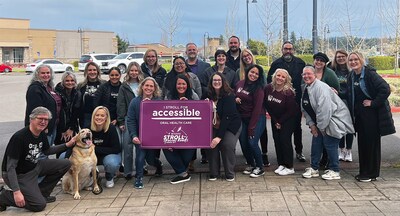
  • Stroll for Special Needs, an annual 5K that encourages participants to walk, run, or roll in support of the cause, which raised more than $148,000 with more than 640 participants across the country

One in four adults in the U.S. lives with a disability. Among adults with intellectual, acquired, or developmental disabilities, the prevalence of periodontal disease ranges from 56 to 92%, and up to 72% experience tooth loss, according to the Journal of the American Dental Association. Providing compassionate and regular oral care to patients with special needs is important, given the strong connection between poor oral health and systemic conditions such as stroke, diabetes, heart disease and Alzheimer’s disease.

However, most dental students receive little to no formal training on how to care for patients with intellectual or developmental disabilities. As a result, many individuals, especially those with anxiety or sensory sensitivities, go without necessary care for years.

The PDS Health Foundation is addressing these challenges by expanding access to care through the Dentists for Special Needs practice in Phoenix, Arizona, and advancing clinical training opportunities for current and future oral health professionals. This includes hands-on rotations for dental and dental hygiene students, continuing education for the more than 17,000 PDS Health clinicians, and immersion experiences that equip care teams to better serve patients with disabilities.

The Foundation also produces and distributes Smile Kits and other sensory-friendly tools to help create more comfortable and inclusive care environments. These efforts are designed to ensure that patients with intellectual and developmental disabilities can find a dental home that is equipped to meet their needs with compassion, expertise and consistency.

“The success of these campaigns is a testament to the commitment of PDS Health team members, who go above and beyond to support better access to care for people with intellectual and developmental disabilities,” said Michael Le, Executive Director of the PDS Health Foundation. “These funds will support clinical rotations for dental students, immersion programs for clinical teams, and the production of tools to help patients with sensory sensitivities feel safe and supported. Thanks to the generosity of the individuals who contributed and the dedication of participating care teams, we are helping ensure that all patients, regardless of ability, can access quality dental care that supports their overall health.”

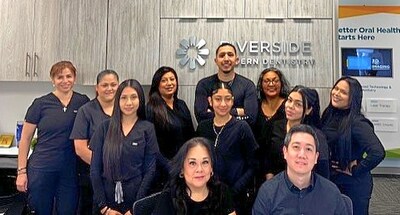
Riverside Modern Dentistry in Riverside, Calif., was the top fundraising practice during the Smile for Special Needs campaign, raising more than $23,000.

“Smile for Special Needs holds a special place in our hearts,” said Jennifer Corral, Operations Manager at Riverside Modern Dentistry. “We believe every patient deserves access to quality dental care. Supporting this cause allows our team to make a meaningful difference for those who need it most.”

As part of its long-term vision, PDS Health and the PDS Health Foundation remain focused on building a more inclusive oral healthcare system that strengthens the provider pipeline, reduces barriers to care, and helps create healthier, happier patients.

To learn more about the PDS Health Foundation’s work, visit pdsfoundation.org.

About PDS Health

PDS Health® continues the journey started by Pacific Dental Services® in 1994, with a vision to redefine health care through the integration of dental and medical services. Its approach, centered on the connection between oral health and overall health, aims to create healthier, happier patients and set new benchmarks in the healthcare industry. As a leading provider of integrated healthcare support, the company delivers a broad spectrum of services to dental, dental specialties, and medical providers, enhancing operations and care delivery for clinicians across the U.S. For more information about PDS Health, visit pdshealth.com. 

About PDS Health Foundation 
The PDS Health Foundation™ is a 501(c)(3) charitable organization whose mission is to improve overall health through opportunities to serve locally, nationally and internationally. The PDS Health Foundation provides tools and resources to help build a lasting and sustainable impact on the communities it serves as well as on the volunteers who freely give their time. The vision of the PDS Health Foundation is a world where everyone has a heart to serve and a home for oral health. Through its three main programs: special needs dentistry, dental assistant scholarships and international service trips, the PDS Health Foundation has been able to increase access to oral healthcare for communities across the globe. For more information, visit pdsfoundation.org. 

Cision View original content to download multimedia:https://www.prnewswire.com/news-releases/pds-health-raises-over-1-million-to-expand-access-to-special-care-dentistry-302622006.html

SOURCE PDS Health

Medtronic, a global leader in healthcare technology, today announced the Medtronic Spark Scholarship, a program to remove financial barriers for talented students pursuing health tech and related careers.

The scholarship is a core part of Medtronic Spark, a global 10-year initiative to propel 1 million students from low-income households into health tech careers. By 2030, the global shortfall of health workers is predicted to reach 11 million.

Scholarship recipients are eligible for financial support to meet education expenses — renewable for up to four years — and career-building experiences, which may include Medtronic mentorship, coaching, and networking support. There is also an opportunity for additional funding for unexpected episodic hardships during the scholarship period.

A survey conducted by Gallup and the Lumina Foundation found that over half of current, former, and prospective students (53%) cited financial aid or scholarships as important factors in their decision to continue or enroll in a postsecondary program.

Additionally, a global study of 700,000+ respondents by the World Economic Forum found that young people’s highest priority is obtaining the education, skills and competencies to allow them to enter the workforce and build successful careers.

“This global program is designed to inspire the next generation of health tech leaders. By helping bridge financial barriers and providing ongoing support, it enables talented students to thrive. From their first day of college to launching their careers, this program aims to open doors and empower students on their path to a brighter future in health tech,” said Sally Saba, president of Medtronic Foundation.

Medtronic will award up to 100 new scholarships each year to students residing in 70+ eligible countries. Applications close on Jan. 30, 2026. Visit iie.org/medtronicsparkscholarship to learn more.

About Medtronic
Bold thinking. Bolder actions. We are Medtronic. Medtronic plc, headquartered in Galway, Ireland, is the leading global healthcare technology company that boldly attacks the most challenging health problems facing humanity by searching out and finding solutions. Our Mission — to alleviate pain, restore health, and extend life — unites a global team of 95,000+ passionate people across more than 150 countries. Our technologies and therapies treat 70 health conditions and include cardiac devices, surgical robotics, insulin pumps, surgical tools, patient monitoring systems, and more. Powered by our diverse knowledge, insatiable curiosity, and desire to help all those who need it, we deliver innovative technologies that transform the lives of two people every second, every hour, every day. Expect more from us as we empower insight-driven care, experiences that put people first, and better outcomes for our world. In everything we do, we are engineering the extraordinary. For more information on Medtronic, visit www.Medtronic.com and follow on LinkedIn.

Any forward-looking statements are subject to risks and uncertainties such as those described in Medtronic’s periodic reports on file with the Securities and Exchange Commission. Actual results may differ materially from anticipated results.

Contacts:

Jane Di Leo
Public Relations
jane.e.dileo@medtronic.com

Ryan Weispfenning
Investor Relations
+1-763-505-4626

Guardian’s “From Workforce to ‘Careforce'” report finds a 13% increase in the number of employees balancing caregiving responsibilities and a job, with more women leaving the workforce for full-time caregiving responsibilities

NEW YORK, Nov. 19, 2025 /PRNewswire/ — A new report from The Guardian Life Insurance Company of America® (Guardian) has found that the percentage of full-time working Americans who also manage caregiving duties for a loved one has risen sharply since 2019. At the same time, more women are leaving the workforce because of the difficulty in balancing their jobs with caregiving responsibilities.


Download the From Workforce to “Careforce” report here:
 https://www.guardianlife.com/reports/caregiving-in-america.

Among all Americans who remain in the workforce full time, nearly half (43%) juggle caregiving duties. This represents a 13% increase from prior years, when 38% of full-time employees reported having caregiving responsibilities in 2019.

More women are taking on caregiving duties full time
In 2023, Guardian found that 56% of full-time workers who were also caregivers were women, while 44% were men. In 2025, Guardian’s new report found that men now make up 57% of full-time working caregivers, with women comprising the remaining 43%. As women still represent the vast majority of all caregivers, this suggests an exodus of women from the full-time workforce rather than a dramatic shift in who is managing caregiving responsibilities.

Supporting caregivers in the workplace
When employers step up to support their employees with caregiving responsibilities, everyone benefits.

According to the report, caregivers with access to relevant support at work report better overall well-being and mental health, as well as less stress. In contrast, nearly half of caregivers who lack resources or assistance from their companies report low overall well-being.

“With nearly half of full-time workers also taking on caregiving roles, today’s workforce continues to undergo a profound transformation that will only accelerate in the years ahead,” said Stacey Hoin, Chief Human Resources Officer at Guardian. “As almost one out of every two employees is now a caregiver, retaining this talent is a business imperative for employers and HR professionals. Given the impact of caregiving on an employee’s mental, physical, and financial wellness, it’s essential that we offer support that addresses these interconnected needs.”

Providing resources for caregivers can also minimize the need for employees to take one or multiple leaves of absence. This is particularly important given that Guardian found that one-third of caregivers who take a leave to care for family members end up taking another leave for themselves.  

“Employers have a real opportunity to make a difference for working caregivers, whether through offering dedicated mental health and caregiving wellness services, flexible schedules, equitable paid leave benefits, or employee assistance programs through their benefits,” said Jessica Vanscavish, Head of Disability, Absence, Life, and Supplemental Health at Guardian. “When companies offer these resources, it’s not just individual employees and their families who benefit—entire organizations can see improvements in engagement, retention, and overall performance.”

Other takeaways from the From Workforce to “Careforce” report include:


Caregiving responsibilities are prevalent across generations in the workforce.

  • 25% of Baby Boomers, 39% of Gen X, 51% of Millennials, and 38% of Gen Z employees identify as having caregiving responsibilities.


Caregivers face mental health challenges.

  • Only 36% of caregivers report “very good” mental health.
  • Caregivers are 55% more likely to struggle with substance use challenges than non-caregivers.
  • Caregivers are 48% more likely to have experienced increased anxiety and depression over the past year.
  • Of caregivers who took a paid leave of absence from work, over a third (37%) said that it was due to mental health needs.

A copy of the From Workforce to “Careforce” report is available here:

https://www.guardianlife.com/reports/caregiving-in-america
.


Media contact:


mediarelations@glic.com

About Guardian
Guardian makes a difference in the lives of people when they need us most. With 165 years of stability and fiscal integrity, we are a trusted resource to generations of families and business owners, inspiring well-being and helping build financial confidence. Today, we stand behind millions of consumers, helping them prepare and plan for a bright future for themselves and their families. We help business owners care for their employees. And we help people recover and thrive in times of unexpected loss. As a modern mutual insurance company, we believe in driving value beyond dividends. We invest in our colleagues, are building an inclusive and innovative culture, and are helping to uplift communities through thoughtful corporate impact programs. Guardian, which is based in New York City, is a leading provider of life, disability, dental, and other benefits, and has received accolades for its culture and service. Our colleagues and financial professionals serve with care and experience, and our commitments rest on a strong financial foundation, which included a 2025 dividend allocation of $1.6 billion – the largest in the company’s history. For more information, visit guardianlife.com or follow us on Facebook, LinkedIn, and YouTube.

Disclaimer
Dividends are not guaranteed. They are declared annually by Guardian’s Board of Directors. The total dividend calculation includes mortality experience and expense management as well as investment results.

All guarantees are backed by the strength and claims paying ability of the issuing insurance company.

Financial information concerning Guardian as of December 31, 2024, on a statutory basis: Admitted assets = $86.8 billion; liabilities = $77.5 billion (including $60.7 billion of reserves); and surplus = $9.3 billion.

Guardian’s Group Insurance products are underwritten and issued by The Guardian Life Insurance Company of America, New York, NY. Products are not available in all states.

All data is sourced from Guardian’s From Workforce to “Careforce” report.

8601571.1  (11/27)

Cision View original content to download multimedia:https://www.prnewswire.com/news-releases/number-of-full-time-workers-who-are-juggling-caregiving-responsibilities-has-increased-by-double-digits-even-as-more-women-leave-the-workforce-302619200.html

SOURCE Guardian

MCKINNEY, Texas, Nov. 20, 2025 /PRNewswire/ — As the year closes, hearts are both heavy and hopeful—heavy from witnessing “Gaza Burning” and “Syria Under Terror,” hopeful because God still works through a faithful few. Headlines spark momentary outrage, aid flickers, and then the cycle repeats. Few embrace the slow, costly work of presence.


Global Catalytic Ministries does.

GCM doesn’t arrive with cameras or parachute campaigns; their indigenous teams already live there in Gaza and Syria. They worship, weep, and—by the Spirit’s power—lead neighbors to Jesus. Now GCM is deploying targeted, house-to-house disciple-makers in Gaza and Syria. These are long-term, creative, high-risk missions, and Phase 1 is already underway.

What can be made public, clearly and plainly:

1. GCM’s primary mission is always the Gospel. House-to-house, low-visibility, adaptable, and designed to continue even when borders close or media cycles move on.

2. Teams are trained and coached to meet practical needs. Aid is a bridge to relationship; it never replaces GCM’s Gospel mission.

3. GCM is building communication and supply chains, ensuring safe housing, establishing entry/exit plans, and implementing contingency measures, all under strict security protocols. Lives depend on confidentiality, but GCM’s Executive staff is available and willing to connect with you personally.

4. Nationals lead. Outside workers enter only when strategically required. GCM’s field design is: Train, Place, Sustain, Rescue (if necessary).

ACTIVE FIELD REPORT:

This is a true inside look at our active mission in Gaza and Syria with sister Nara Zwaldi, a disciple of Jesus and family member of Hamas leadership.

Message 1: Her Call (received November 1, 2025)

“Good morning, my family. I prayed about Australia or Syria and heard an inner voice: What will you do in Australia when you know no one there? My calling is to those in Syria who don’t know Jesus. If I seek prosperity, I’ll choose Australia; if I want to share the Gospel, I must go to my Shiite community in Syria, even if it’s dangerous and hard. To be a daughter of Christ, I must follow His will and the Spirit’s leading. From the start of my faith, I have prayed, ‘Lord, You are the One who sends me.'”

Message 2: Her Journey into Syria (received November 5, 2025)

“Thank God I reached my destination last night. I was arrested by local security, but God saved me. Five others and I were being smuggled across a river when a soldier fired in the air: ‘Stop right there!’ My heart froze. He questioned us, and I prayed, ‘Jesus, save me.’ Trembling, I admitted I had no ID. They held us briefly in a room while I repeated, ‘The Lord is my light and my salvation; whom shall I fear?’ Then he said, ‘Walk on,’ and we continued. In the city, I called my husband; a car collected me, and another will take me to a neighboring town in two days. I trust God to guide my path. Please pray for me, sisters. Thank you for caring, my family.”

The Ongoing Mission of GCM in Gaza and Syria

What sets GCM apart is simple. Global Catalytic Ministries embeds disciple-makers and builds movements from within. The thing that lasts (the thing that changes hearts and families and future generations) is the bread of life and the living water. That is GCM’s primary investment. Ongoing financial support to stand with this work in Gaza and Syria is always appreciated. Please donate through the GCM website if this mission is deemed important.

MEDIA CONTACT

https://www.catalyticministries.com/

405278@email4pr.com

Mike Patino
(630) 580-5629

Cision View original content to download multimedia:https://www.prnewswire.com/news-releases/global-catalytic-ministries-launches-gaza–syria-program-led-by-nationals-a-peace-deal-through-indigenous-leaders-and-the-gospel-of-jesus-302621857.html

SOURCE Global Catalytic Ministries

November 20, 2025 /3BL/ – Catherine Burns, PhD, has been named Managing Director of The Nature Conservancy’s impact investing and sustainable finance team, NatureVest. Cat joined TNC in 2010 and has held increasingly strategic roles with NatureVest and TNC’s California and North Carolina chapters. In recent years, Cat led the development of NatureVest’s Impact Management Team, building capacity and expertise to ensure measurable outcomes aligned with TNC’s 2030 conservation and climate goals. Cat has also served as Interim Managing Director for the past eight months, guiding the team through a period of strategic growth and collaboration. 

As Managing Director, Cat will oversee NatureVest’s teams that work to structure, close and implement impact investments across a range of structures, including private equity, sovereign debt, and other mechanisms.  Cat applies her deep conservation science background and market-facing experience to drive market solutions for climate action and nature protection. 

“Now more than ever, the private sector must play an active role in supporting the transition to a more sustainable future,” said Burns. “I’m honored to lead this team of talented, dedicated, and strategic individuals working at the forefront of impact investing and other market-based solutions to deliver solutions that generate environmental, social, and financial returns.”

Since 2014, NatureVest’s portfolio has grown to represent USD $4 billion in committed impact capital, with projects spanning four continents and covering a variety of asset types and financial structures. These projects focus on delivering impact alongside financial returns in the realms of forestry and carbon, water and agriculture, fisheries and aquaculture, infrastructure and renewable energy, and conservation tourism, and on creating sovereign debt solutions that enable countries to stabilize their debt while creating impact on a national scale.

“This appointment reflects our commitment to building a leadership team that can connect financial innovation with real-world conservation outcomes,” said Matt Arnold, Global Head of Impact Finance and Markets at The Nature Conservancy. “Cat’s deep experience and collaborative approach have already made a lasting impact, and we’re thrilled to see her lead this next chapter of NatureVest advancing nature-positive investment strategies.”

For media enquiries or further information about NatureVest’s projects and impact, please contact media@tnc.org

About The Nature Conservancy

The Nature Conservancy is a global conservation organization dedicated to conserving the lands and waters on which all life depends. Guided by science, we create innovative, on-the-ground solutions to our world’s toughest challenges so that nature and people can thrive together. We are tackling climate change, conserving lands, waters and oceans at an unprecedented scale, providing food and water sustainably and helping make cities more resilient. The Nature Conservancy is working to make a lasting difference around the world in 83 countries and territories (39 by direct conservation impact and 44 through partners) through a collaborative approach that engages local communities, governments, the private sector, and other partners. To learn more, visit nature.org or follow @nature_press on X.

About NatureVest

NatureVest is the impact investing and conservation finance team of The Nature Conservancy (TNC), one of the world’s leading environmental organizations. The team designs and executes innovative financial products and provides advisory services that align private capital with measurable conservation outcomes. Since its founding in 2014, NatureVest has helped mobilize over $4 billion in committed capital for projects that address climate change, biodiversity loss, and community resilience. Across more than 25 countries, these projects have collectively avoided or sequestered 5.1 million metric tons of CO₂e, improved management on over 7 million acres of land, and protected 172,000 square miles of ocean. For more information, visit www.naturevest.org

Key takeaways:

  1. 6G is the next-generation wireless communication technology set for rollout in 2030.
  2. 6G is expected to have breathtakingly high data rates, ultra-low latency, and high reliability.
  3. Artificial intelligence (AI) and machine learning (ML) are expected to be in a symbiotic relationship with 6G in the future. They would likely be essential to the working of 6G networks but also rely on 6G to realize exciting new applications.

Are your engineers and customers ready for a future where smartphones transmit at terabits per second, enable worldwide connectivity in even the most remote locations, and make science-fiction-like holographic telepresence an everyday reality?

In this blog post, find out how 6G networks are promising this exciting future, how they’ll probably work, and how AI is expected to enable their extreme performance.

What is a 6G network, and how might it work?

Sixth generation (6G) is the term for the next major leap in mobile wireless networks after 5G networks and 5G-Advanced networks. The envisioned features for this next-generation technology include:

  • extreme mobile broadband performance, possibly with terabits-per-second (Tbps) high speeds, microsecond latency, and ultra-high reliability
  • new ultra-wide frequency bands in the mid band of 7 Gigahertz (GHz) to 20 GHz, millimeter-wave (mmWave) bands (30 GHz to 100 GHz), and the sub-Terahertz (THz) and THz bands (100 GHz to 10 THz)
  • AI-enabled network technologies, with artificial intelligence and machine learning expected to be embedded in many operations
  • ubiquitous connectivity and coverage
  • interoperability with all previous generations

Briefly, a 6G network will probably consist of the following subsystems:

  • Radio access network: This would be the wireless technology part with all the network elements communicating over radio frequencies.
  • Core network: The RAN would demodulate the voice or data from radio signals and forward it to the core network, which would consist of customer lookup databases, switches to route calls, and routers to connect to external networks like the internet.
  • Transport network: This would connect the RAN and core network, as well as components within them. It would comprise fiber optic cables, microwave links, IP routers, and switches.
  • Operations and maintenance: This would be the ecosystem of software and systems used to configure and monitor the RAN, core, and transport networks. It would perform network management functions like configuration, fault, performance, security, and accounting.

When will 6G networks be available?

Commercial 6G network rollout is expected in 2030 in most countries.

The International Telecommunication Union (ITU) published its vision for 6G in 2023.

Based on this vision, the Third Generation Partnership Project (3GPP) will work on 6G studies as part of Release 20 and Release 21 (2025-2027).

The core 6G standards are expected to come out in 2028-2029 as part of Release 21. They will enable research and development of standards-compliant 6G hardware and devices by 2030.

How fast will 6G networks be?

The envisioned parameters for 6G are outlined below:

  • Peak data rates might reach 200 gigabits per second (Gbps) to several Tbps in the THz bands. Consumers could enjoy 300-500 megabits per second (Mbps) on average.
  • Latency is expected to be very low — 0.1 milliseconds (ms) for the air interface, 1 ms end-to-end in industrial environments, and a few ms for cellular vehicle-to-everything (V2X).
  • Device densities of 1 million to 100 million devices per square kilometer (km) could be possible.
  • Mobility speeds of 500-1,000 km per hour are envisioned, enabling 6G for aircraft, drones, and high-speed trains.

What are the applications of 6G technology?

Let’s look at some of the exciting future applications that 6G networks could unlock.

  • Autonomous mobility: The ubiquitous presence and lower latency of 6G could enable safe autonomous mobility and reliable real-time vehicle-to-everything (V2X) collaboration.
  • Autonomous drones: The high data rates and worldwide availability of 6G networks could expand the use of drones for critical operations like rescue missions, logistics, environmental monitoring, and defense.
  • Industrial internet of things (IoT): Private 6G networks could enable smart factories where operations are automated using thousands of IoT sensors and robotic vehicles.
  • Holographic telepresence: The high data rates of 6G could allow realistic high-resolution virtual avatars of people to be shown on 3D holographic displays for face-to-face communication and presentation.
  • Immersive experiences: Extended reality technologies like virtual reality (VR), augmented reality (AR), and mixed reality (MR) could become ubiquitous through 6G-enabled devices like AR glasses for e-sports, gaming, and entertainment.
  • Advanced health care: For advanced health care like robotic surgeries, 6G networks promise to be highly reliable and always available with built-in redundancies.

What is an AI-enabled 6G network, and how could it be different from 5G?

6G is called AI-enabled or AI-native because AI is expected to be foundational to even its most basic operations, unlike 5G, where AI is bolted on to optimize some network functions. The contrasts between 6G and 5G design philosophies are illustrated in the table above.

In 6G networks, much of the architecture, protocols, and functions could be powered by AI-driven intelligence and optimizations. Some possible technical differences between 6G and 5G are shown above.

We explore these expected uses of AI in 6G networks in the next section.

How could AI shape the development and optimization of 6G networks?

In this section, we go into the technical details of how AI could automate 6G communications and network operations, autonomously manage resources, and enable self-healing and predictive maintenance.

All previous generations of mobile networks divided coverage areas into hexagonal cells. The cell edges have always been zones of interference, poor reception, handover glitches or delays, and other problems.

But 6G envisions fully cell-free architectures, a true paradigm shift in mobile telecom design. A cell-free network could consist of many small, low-power, distributed access points (APs), which are essentially antennas with some basic AI-driven radio frequency (RF) processing. All the APs would be connected to a central unit.

When sending data to user equipment (UE), the central unit could use AI to select nearby APs that transmit together coherently to combine into a precisely aimed beam. When a UE sends data, several nearby APs could receive partial signals and forward them to the central unit to reconstruct the data using AI. The AI-based coordination of APs would enable seamless 6G availability without typical handover glitches.

Non-terrestrial networks (NTNs), introduced in the 5G standards for worldwide availability, could be more advanced in 6G. AI/ML could enable more efficient resource allocation and parameter optimization in constantly changing satellite-to-ground conditions.

AI-enabled radio access network (RAN)

AI/ML models could optimize and dynamically adapt the entire RAN in real time as traffic, network, and environmental conditions change.

AI-enabled air interfaces

Air interfaces specify the analog RF aspects and the digital aspects (like protocols) of wireless communications between:

  • UE like smartphones and VR glasses
  • 6G tower components, like base stations
  • non-terrestrial network elements like unmanned aerial vehicles and satellites

These interfaces traditionally have manually designed signal processing blocks with limited configurability and many simplifying assumptions.

In 6G networks, the air interfaces are expected to be AI-enabled. At both ends, neural transceivers could run powerful ML models that would be highly configurable, modifiable, adaptive to dynamic conditions, and capable of factoring in all influencing variables. They could reduce pilot signals, eliminate cyclic prefixes, and ease synchronization.

AI-powered beamforming

AI could be crucial for predicting optimal beamforming directions and dynamically creating lean modulation schemes based on real-time, complex channel conditions to optimize spectrum sharing and energy efficiency. Specifically, AI could explore vast solution spaces to find optimal beamforming weights for multiple users in ultra-massive multiple-input multiple-output (UM-MIMO) deployments.

AI-driven waveforms and modulation

AI could design novel 6G waveforms and modulation schemes instead of using traditional analytical models. The models would dynamically learn and select modulation schemes based on real-time channel conditions.

AI-optimized channel estimation and state

In 6G networks, deep neural networks could learn the more realistic nonlinear relationships between received signals and channel responses, outperforming traditional linear estimation techniques.

Highly compressed channel state information (CSI) feedback would be crucial for UM-MIMO in sub-terahertz bands. However, the training data needed for designing it would not be available until the customer trial phases. Even then, the training data is likely to be sparse. This can be overcome early by using two-sided unsupervised learning with coordination between UEs and base stations.

ML-based positioning with centimeter-level accuracy

6G envisions positioning with centimeter-level accuracy, which would be crucial for autonomous vehicles, robotics, and smart factories. This could be achieved by AI/ML models using fingerprinting based on channel observations, identifying non-line-of-sight conditions, and refining timing or angle measurements.

Integrated sensing and communications (ISAC) optimization

ISAC means 6G radio resources would be used not just to communicate but also to actively sense the network’s surroundings. AI could facilitate:

  • complex signal processing needed for ISAC
  • real-time data analysis for critical use cases like collision avoidance
  • spectrum sharing without interference between communication and sensing tasks
  • predictive failure analysis in ISAC systems

Holistic energy efficiency

In 6G networks, AI could optimize network power consumption at city-wide and even larger scales for holistic sustainability. AI models could dynamically switch off entire base stations and reconfigure resources based on real-time demand while optimizing energy use.

How could 6G networks be co-designed with AI to enable intelligent, self-optimizing infrastructure?

All trends point toward 6G and AI co-evolving in close symbiosis over the coming decade. 6G will probably not be a dumb data pipe but actively use AI to adapt, learn, and optimize itself. Simultaneously, 6G could unlock exciting AI-driven use cases as outlined below.

Intelligent networks

A 6G network could be a massive, distributed AI model that is constantly sensing, adapting, and improving itself over time. It could self-organize, self-optimize, and self-heal with the help of AI/ML models.

Self-organization means a network is expected to dynamically reconfigure its components to meet changing environmental conditions and service requirements.

Self-optimization would involve AI/ML continuously analyzing network traffic and automatically reallocating resources (like bandwidth and power) where they are most needed. Not only could AI optimize a 6G network (AI for network slicing), but the network too could efficiently support emerging AI services (slicing for AI). The network could provide the necessary connectivity, computing, and data resources for AI applications to function seamlessly.

Self-healing means AI/ML models would autonomously detect, diagnose, and recover from network impairments. For example, they could predict demand spikes to prevent congestion and optimize data routing for ultra-low latency.

Real-time digital twins

To be effective, digital twins for 6G networks, other systems, and processes could rely on both AI and 6G. The high data rates of 6G might become essential for transmitting the massive data needed for real-time mirroring. AI might become essential for reconstructing virtual models from that massive data. Conducting experiments on the digital twin of a 6G network or other systems might also require AI/ML.

Pervasive edge computing

6G’s high data rates and network architecture could facilitate new ways of running AI models that were inconvenient before. These could include distributed learning, federated learning, and online learning. These advanced deployments could, in turn, dictate how AI concerns — like training data, inference, weights, and gradient updates — could be handled in 6G PHY, protocols, and edge devices.

ISAC operations

ISAC could be used to create detailed, real-time, dynamic maps of a network’s environment. Processing the high volumes of sensing data could require AI. In turn, these maps would allow AI to realize use cases that were previously impractical, such as autonomous vehicle convoys and smart cities.

Semantic communication

With AI’s help, 6G networks could understand the meaning or intent behind the data they’re pumping. For example, for a video call, instead of sending every pixel, it can send a “person A is now saying: …” message.

At the other end, generative AI could realistically reconstruct video frames corresponding to the speaker’s lip movement. This complete re-imagining of communication, driven by a co-design of 6G and AI, could save massive amounts of bandwidth for service providers and consumers.

How could AI accelerate the design validation process for 6G networks?

AI/ML models could expedite the design, validation, and qualification of 6G networks and components. They could enable faster prototyping of complex 6G components and protocols, reduce simulation time, optimize test coverage, and streamline many other development and test workflows. Let’s understand how.

AI-driven digital twins for 6G networks

AI could create realistic virtual models of an entire 6G network. Engineers could use them to test new protocols and hardware designs in realistic simulations at a fraction of the cost and time needed for physical prototypes.

AI-accelerated simulations

Closed-form physics-based models can be very accurate and thorough, but:

  • support only limited network complexity
  • involve many simplifying assumptions
  • require custom software development
  • take several hours or days to complete

In contrast, AI/ML could model complex phenomena even for dense networks. Examples include:

  • radio wave propagation in dense urban areas
  • channel estimation and channel state information
  • performance of ultra-massive MIMO

AI could also offer a variety of architectures and hyperparameter optimizations to balance between fast performance, good explainability, and high accuracy.

Comprehensive training and test data generation

Generative models, large reasoning models, and regression models could generate comprehensive data for training AI models and testing different scenarios.

For example, generative adversarial networks could synthesize massive amounts of realistic wireless channel data to test AI model behaviors in different real-world scenarios.

Intelligent test coverage

Instead of running millions of random tests, AI could identify the most critical or likely-to-fail scenarios, ensuring better validation with fewer tests. By combining AI models for test execution with digital twins, automated test suites could be developed for different dynamic conditions.

Dynamic AI algorithms

AI could help design and validate algorithms for complex operational aspects, like beamforming and interference management, before they are coded into hardware. Keeping the model weights in rewritable storage or non-volatile memory would enable models to be dynamically updated as new data and tests improve their metrics.

What are Keysight’s solutions for 6G?

Keysight is pioneering 6G research and provides comprehensive technology solutions for communication service providers, mobile network vendors, and device manufacturers.

Our 6G testing solutions include hardware and instruments for 6G vector analysis, sub-THz testbed, NTN satellite emulation, and end-to-end network design using system modeling software.

Our AI technology solutions address the design and validation of AI models and chips.

Our AI data center solutions enable 6G pervasive edge computing through:

Streamline your 6G network with Keysight

In this blog post, you got an overview of 6G networks and explored how AI could be used in their operations.

Contact us for deep insights and expertise into all things 6G.

A C-Suite Perspective from Benevity Chief People Officer, Janeen Speer, on the critical connection between employee giving and engagement

When people come together to do good in the workplace, something powerful happens.

They feel part of something bigger. They feel proud of where they work. They feel connected — to purpose, to their colleagues and to the impact they’re creating.

That connection has never mattered more. Around the world, the need is rising. And while the desire to participate in giving is there, too often it remains a moment, not a movement. There is a real opportunity to transform Giving Tuesday and the surge of giving during the holidays into sustained employee engagement that thrives long after the season ends.

Doing good isn’t just a charitable act. It’s a strategy for culture. And companies can benefit when they shift from one-day donation drives to year-round employee activation, where volunteering, donation matching and everyday acts of kindness are a part of how people work together.

That’s the promise of giving season. It’s about more than the dollars given. It’s a springboard, a moment for leaders to unite people through shared purpose so we can carry that energy forward into a culture of belonging that is woven into the very fiber of an organization.

From Giving Tuesday to year-round engagement

The link between giving and engagement isn’t theoretical; it’s deeply personal.

When employees contribute to causes they care about, especially alongside their peers through corporate giving programs, they experience belonging and fulfillment. They see their company’s values in action. They build relationships that make work more collaborative and rewarding.

That’s why giving programs so often lead to stronger workplace cultures. People aren’t motivated by transactions. They’re moved by shared purpose.

At Benevity, we’ve seen this across hundreds of client programs as well as within our own company. The organizations that integrate purpose into everyday work — rather than reserving it for an annual campaign — see employees who are more motivated, more loyal and more connected to one another. Each is a critical element for building a sustainable workplace culture.

Culture in action: At Benevity “We are we, not just me”

At Benevity, our culture is guided by one core principle: We are we, not just me.

It’s a community-focused mindset that reminds people that Benevity succeeds when everyone thinks beyond themselves, beyond their own teams and beyond today. Employees are encouraged to consider the ripple effects of their decisions — how they impact others, the company and the communities Benevity serves.

We hire people we trust to use good judgment to “Do the Right Thing” and we develop leaders who can empower people to make decisions rooted in shared values rather than rigid policies. When people are given that trust and freedom, they bring their best selves to work, and we believe this drives commitment to our shared goals, rather than compliance.

This collective spirit drives real impact from movements like Giving Tuesday — a belief that when all of us, from leadership to new hire, unite behind a common cause, we create change greater than any individual effort.

MyGoodness: Where purpose becomes practice

Our internal giving program “MyGoodness,” also embodies this idea. It’s fueled in part by our belief in the “double bottom line” – that we do well as a company by doing good. This concept is so important to Benevity that we became one of Canada’s first certified B corporations in 2011. It means our strategic mission as a company and our social mission are baked together. So doing good is at the core of what we do.

Internally, we’ve seen that employees who participate in giving or volunteering within their first 30 to 60 days are twice as likely to stay engaged long term. Because our “MyGoodness” program is so fundamental to who we are, we introduce our employees to this during their first week, where they participate in a volunteering activity and are seeded giving dollars to gain comfort early in using our platform.

Why employee giving matters more than ever

Work looks different today. Hybrid and remote teams, rapid change, and digital overload can make it harder for people to feel truly connected.

That’s why acts of shared purpose through corporate giving programs are so vital. They remind employees that they’re part of something meaningful and that their company stands for more than profit.

People want to do good, and global studies confirm the same trend. The CAF World Giving Index 2024 found that 73% of people worldwide gave time, money or help to a stranger in 2023. Within Benevity, we’ve seen that 92% of our employees take part in giving or volunteering.

Moments like Giving Tuesday cut through the noise. They bring people together around values, not job titles, and help re-energize teams. But it’s the organizations that build on that momentum throughout the year through volunteering, donation matching programs or peer recognition that can turn generosity into an ongoing source of engagement. And that pays off for those organizations in big ways.

Benevity Impact Labs research quantifies what many leaders intuitively know: doing good drives measurable business benefits.

As an added bonus, Gallup’s World Happiness Report showed that people who engage in giving behaviors also report higher happiness and stronger community ties.

The business case for corporate purpose

The business results of generosity are also becoming increasingly visible.

The Benevity 2025 State of Corporate Purpose Report, showcased survey results from people around the globe to reveal the top trends shaping social impact work and CSR leaders. The result is powerful:

  • 92% said they are investing in CSR programs because it is good for business
  • 88% say their impact strategy is future-proofing their business when it comes to talent, customers and regulatory requirements
  • 91% say they are making sure their programs support their corporate strategy & values.

Benevity’s clients demonstrate daily that when they weave purpose into their people strategies, they outperform other companies in engagement, innovation and trust. They know that connection isn’t built through compliance. It’s built through shared values in action.

“Doing good is good for business because it’s good for your people. When employees feel connected to a cause and to each other, they show up as their best selves — and that’s good for everyone.”

Turning Giving Tuesday into a year-round movement

For many companies, Giving Tuesday is the biggest moment of the year for social impact. But its greatest value lies in what comes after.

To make generosity an ongoing part of company culture, leaders can focus on five actions:

1. Start early

Introduce giving and volunteering during onboarding. Early participation greatly increases the likelihood of long-term engagement in the giving platform and with your company.

2. Empower employee voice

Invite teams and employee resource groups to generate personal campaigns. Engage with your employee resource groups and partner with them to drive awareness and giving opportunities for causes they feel matter. When employees help design programs, participation feels personal.

3. Celebrate and share

Be a voice. Better yet, be a consistent voice. Help tell the stories behind the numbers throughout the year. Recognizing impact throughout the year reinforces that doing good is part of how the company succeeds.

4. Measure what matters

Track participation and sentiment — not just donations. Benevity Impact Reports help companies connect purpose-driven activity with engagement results.

When generosity becomes an embedded rhythm rather than an annual event, employees don’t just give more — they care more.

5. Show up and be an active participant

As leaders, we often have an obligation to take the first step and to lead by example. Your people will be inspired when they see you generating support for a cause that matters to you, and they will appreciate seeing you support their campaigns as well.

Employee engagement can start with workplace giving

It is beneficial in an organization to have an engaged, inspired workforce. Giving provides a way to get there — not through mandates, but through meaning.

When people are invited to give and volunteer together, they rediscover what makes their work matter. They see the positive impact they can create as part of a team.

That’s the real power of Giving Tuesday and the giving season. It’s not just a fleeting moment or the size of the donation. It’s the opportunity to create a culture of shared purpose and engagement that lasts all year. When companies make giving part of everyday work, they create critical connections, build stronger teams and stronger communities.