If 2025 was a year of recalibration, 2026 is shaping up to be a year of rebuilding. And for businesses, that means getting better at navigating the unknown, while playing a part in the solutions. This coming year, business leaders face a landscape marked by political polarization, economic uncertainty, and technological acceleration. The question isn’t whether business should lead; it’s how—in a way that feels connected to purpose, relevant to the business, and tied to the expectations and needs of key stakeholders.

At CECP, we know corporate purpose is the compass. It’s what helps companies stay grounded in their mission and values while adapting to change. It’s what builds trust across employees, communities, investors, consumers, and partners, even when the headlines are divisive. It’s what enables leaders to make decisions grounded in corporate values that are both principled and pragmatic.

As we look ahead to 2026, four imperatives stand out:

  1. Rebuilding Trust Through Local Connection
  2. Reskilling for a Reshaped Workforce
  3. Reframing Language in a Polarized World
  4. Rethinking Transparency and the Future of Reporting

These themes reflect what we’re hearing from CEOs and corporate leaders across our network. They also reflect the moment that we’re in. That is a moment that demands courage, clarity, and a renewed commitment to long-term value by prioritizing resilience and sustainable growth.

Rebuilding Trust Through Local Connection

Companies are rediscovering the power of local connection and getting back to basics. Trust is built through listening, showing up, and responding to the most pressing community needs, such as housing, hunger, jobs, and education.

In 2026, the future of responsible capitalism starts at home. We’re seeing a focus on repatriation with companies investing in local communities, rebuilding supply chains, and strengthening regional partnerships. This isn’t just about risk mitigation. It’s about relevance and shoring up the communities in which businesses operate.

Companies are also navigating new expectations around community investment, including the 1% threshold within the One Big Beautiful Bill Act, which establishes a floor on the deductibility of corporate charitable contributions, as well as employees’ demand for more engaging volunteering opportunities. As companies assess how changes in tax law impact them, they’re also reevaluating the full spectrum of how they invest in society, from philanthropic giving to non-cash giving (e.g., product and service donations, pro bono support, skills-based volunteering), which is on the rise. At the same time, many companies are feeling increased pressure, especially in the U.S., to deploy funds quickly in response to emergency issues, requiring faster decision-making and more agile partnerships. A recent CECP Pulse Survey showed that a third (31%) of companies plan to support local community organizations following the reduction/pause of SNAP benefits, signaling a meaningful commitment by a portion of the private sector to help address food insecurity, while recognizing that business efforts complement rather than replace government programs.

The Edelman Trust Barometer continues to show that business is the most trusted institution, but that trust is fragile. It depends on proximity, empathy, and action. It depends on leaders who find relevant local issues in which to invest and use language that connects instead of divides.

We’ve also been operating in an age of corporate grievance. From “economic blackout” boycotts to backlash against DEI initiatives, companies are being pulled into the cultural debate. While these pressures are not entirely new, the rise of social media has amplified and accelerated calls for accountability, making them more visible, immediate, and harder to ignore. What’s different today is that these dynamics are being tracked and scrutinized in real time. The challenge for businesses is to reduce the harm they might be causing and stay true to their values while navigating complexity. Corporate purpose helps bridge that gap.

As CECP founder Paul Newman once said, companies must “do more.” That doesn’t mean taking sides. It means taking responsibility. It means listening differently, responding locally, and leading with empathy.

CECP helps companies build trust through:

  • Benchmarking & corporate trend data – Track peer practices and emerging trends to inform strategy and reporting decisions around employee engagement, sustainable business, and corporate societal engagement. With momentum building around quantifying “connection,” CECP provides data on volunteering and employee engagement, as well as thought leadership on the reputational value of volunteering and the tangible benefits it delivers in employee loyalty, culture, and retention.
  • Fast-Track Consulting – Custom guidance to address urgent questions and challenges, in support of goal setting and strategy building, identifying best practices, defending budgets, and more.
  • Advanced Advisories – Tailored projects that engage a team of experts in building, communicating, evaluating, and measuring a company’s social strategies. These projects often involve stakeholder interviews to help determine specific needs and scorecard development to track impact.
  • CEO and corporate leader convenings – Curated in-person and virtual forums for peer-to-peer connection, support, insight sharing, and collaboration to drive measurable community impact and returns on purpose. In this environment, peer connection is more than a nice-to-have; it’s strategic asset.

In 2026, the most resilient companies will be those that reconnect with their communities as true partners, rather than viewing them solely as markets.

Reskilling for a Reshaped Workforce

AI is transforming the entire job trajectory. Entry-level roles are disappearing. Frontline workers are facing new pressures. And demographic shifts, including declining immigration, are creating talent gaps that rival the impact of tariffs.

Many CEOs are using KPIs like lower headcounts and reduced operating costs to signal efficiency. But beneath those metrics lies a deeper challenge: how do we build a workforce that’s ready for what’s next?

The answer isn’t just automation, it’s adaptation and recognizing which roles require uniquely human skills. Companies like Medtronic are investing in specialized roles—manufacturing technicians, biomedical engineers—that demand hands-on expertise that AI cannot replicate. It’s about investing in people, especially those historically overlooked or entering new job markets like veterans, and creating pathways to good-paying, in-demand jobs that leverage human judgment and skill.

In 2026, we see a growing need for programs that prepare employees for these durable roles; collaborative initiatives that bring together employers, educators, and community partners to build specialized talent pipelines; as well as platforms for frontline employees to share their valuable insights about the work that truly requires human expertise.

CECP helps companies prepare for the future of work with:

  • Accelerators – Professional development into priority areas to advance strategies and the field by upskilling teams on specific best practices. These gatherings incorporate CECP data and insights, peer learning, company case examples, and shared resources.
  • AI Employee Voice Scorecard – A tool that enables companies to take point-in-time snapshots of employee engagement, track progress year-over-year, and drive real business impact.
  • Responsible AI Community of Practice – A learning and engagement program and cohort to help companies integrate employee voices when designing and developing large language models, ensuring buy-in, efficiency, productivity, and growth.
  • Employee engagement strategy support – Using insights drawn from our Giving in Numbers™ data, we help leaders design people-centered strategies though benchmarking, trend analysis, and identifying high-impact engagement levers across industries.

Changes happening in the job market due to AI are very real. But so is the opportunity to build a workforce that’s more inclusive, more agile, and more aligned with purpose.

Reframing Language in a Polarized World

Language itself has become a fault line. Acronyms like ESG and DEI, once shorthand for responsible business, are now politicized flashpoints. Employees, communities, and investors are left questioning what companies truly mean when they use these terms. The challenge for leaders is not only to act responsibly, but to communicate responsibly, choosing words that connect instead of divide.

Corporate purpose provides the compass. By reframing language around people, communities, and long-term value, CEOs and their teams can cut through polarization and reinforce trust. This means shifting from jargon to clarity: “social human capital” becomes “ “sustainability” becomes “long-term success,” “governance” becomes “responsible leadership.” It means anchoring commitments in shared values that resonate across audiences. Instead of abstract, vague, and controversial terms, find concrete, specific, and common-sense examples. Equally important, leaders should explain values in business terms (e.g., innovation, new markets, retention, risk management) so that commitments are defensible as core business strategy. When values are tied to tangible outcomes, they are harder to dismiss as rhetoric and easier to champion as drivers of growth and resilience.

The stakes are high. In an era of corporate grievance, where backlash against DEI or boycotts can dominate headlines, words can either inflame or inspire. Courageous leaders will equip their teams with language that is authentic, intuitive, and nonpartisan. This is language that makes responsible business feel relevant to daily life. Reframing language is not semantics; it is strategy. It is how companies demonstrate character, build credibility, and ensure that purpose remains a unifying force in turbulent times.

CECP helps companies reframe language through:

  • Purpose-led communications audits – Comprehensive reviews of corporate messaging across reports, websites, and more to identify jargon, politicized terminology, or inconsistencies. CECP provides actionable recommendations to replace abstract acronyms with values-driven clarity that resonates across stakeholder audiences.
  • Messaging toolkits – Frameworks that equip leaders, managers, and employees with practical language guides. These connect responsible business commitments to everyday work, ensuring consistency across internal and external communications while reinforcing trust and credibility.
  • Integrated Long-Term Plan Framework – A unified roadmap that clearly communicates how a company will create enduring value over the long term. CECP helps companies communicate the connection between purpose and performance by linking a company’s mission, strategy, and measurable outcomes in a clear, tangible way.
  • Custom board presentations – Tailored briefings that use CECP’s data and insights to help boards and executives adopt language that bridges divides and reinforces trust. These cover a range of key issue areas such as evolving reporting frameworks, dropping the labels and doing the work, and upskilling employees for the future.

By choosing words that unite rather than divide, companies can ensure their commitments are understood, trusted, and acted upon. The words leaders choose are central to how businesses earn trust in society.

Rethinking Transparency and the Future of Reporting

In 2026, the rules of corporate disclosure will continue to shift. Companies are navigating a new cadence of requirements, evolving expectations, and a growing tension between transparency and reputational risk. The rise in impact reporting has created both opportunities and anxieties: how do you share what matters without saying too much?

There is a delicate balance companies must strike between mitigating risk and exposing themselves to risk. Stakeholders have different information needs: investors want data-driven disclosures, while customers and employees seek values in action through compelling narratives. Regulatory shifts like the SEC’s proposed move toward bi-annual reporting encourage this longer-term, strategic focus over short-term metrics. And reporting isn’t just changing externally. It’s being reshaped internally. Many companies are shifting ownership of corporate responsibility work—moving it from corporate affairs into legal or other functions—or rethinking the cadence and format of their disclosures altogether.

CECP’s guidance is simple: let corporate purpose lead. Your corporate purpose is your North Star. It should guide what you report, how often, and to whom. It should shape the story that your data tell about both performance and impact. In fact, CECP’s Giving in Numbers™: 2025 Edition that 87% of companies now have a corporate purpose statement, and over 90% use it to guide both social investment and broader business decisions. Additionally, companies with metrics aligned to their corporate purpose reported 25% higher median revenue and 22% higher median pre-tax profit than those without such metrics. This underscores that purpose is no longer a communications exercise, but a strategic imperative.

Companies are increasingly embracing more meaningful data disclosures, shifting toward reporting designed for specific audiences—investors, employees, customers, and communities—that prioritizes relevance over volume. Instead of overwhelming audiences with fragmented metrics, leading firms are curating insights to what each stakeholder group values: rigorous data and benchmarks for investors, cultural and impact stories for employees and customers, backed by clear narratives that connect the data to real-world outcomes. Gathering insights from 500+ corporate leaders, a CECP Pulse Survey found that, in 2026, 78% of companies plan to publish a full report, while 13% will publish a summary or data index, reflecting a trend toward streamlined disclosure to meet transparency expectations.

CECP helps companies communicate transparently and strengthen their impact with:

  • Integrated Long-Term Disclosure Assessment – A clear, data-backed, actionable snapshot of where a company stands and where it can make the biggest impact.
  • Communications support – Tailored and unified messaging that connects with specific stakeholders or unites a range of stakeholders who may have differing perspectives and expectations.
  • Corporate purpose statement development – Support to clearly and authentically articulate a company’s reason for being that connects with employees, customers, and communities.
  • Impact report development – End-to-end support for companies developing their impact reports, to ensure streamlined and transparent communication, purpose-aligned messaging, and strategy-led storytelling while addressing measured progress on responsible business goals.

We help leaders identify the valuable data and stories they hold—not only in goods and services, but in the talent and expertise of their people—and how they can share it in ways that build trust, brand equity, and credibility.

In 2026, transparency isn’t just about compliance. It’s about clarity. It’s about showing who you are, what your company stands for, and how you’re creating value that lasts for the long haul.

The Role of Business in 2026

The role of business today goes beyond competition. It’s about connection. To lead with values and integrity, even when the political climate is polarized. To build trust, share impact, and invest in people, all while staying focused on creating enduring value for the company for the long term.

Gallup research shows Americans are rethinking capitalism. They’re asking what works, what doesn’t, and what needs to change. Increasingly, they see responsible business as the key to shared prosperity and they’re looking to businesses to lead the way.

In 2026, companies must rise to that challenge. They must take politics out of corporate purpose, not by avoiding hard conversations, but by anchoring in shared values. They must show that corporate purpose isn’t a slogan, it’s a strategy.

CECP is here to help. We offer tools, insights, and partnerships that support CEOs and corporate leaders to lead with clarity and courage. From reporting strategy to workforce engagement to community connection, we help companies turn corporate purpose into action.

Because in a world of uncertainty, lasting values are your greatest advantage

Let’s get to work.

Communities and partners like the Norwegian Refugee Council are bringing schools back to life and students back to learning in Sudan through ECW-funded programme.

AL GENEINA, Sudan, Dec. 9, 2025 /PRNewswire/ — Fatima Idris stands at the front of the classroom in Al Geneina, Sudan, watching as her students eagerly take their seats. The sound of rustling papers fills the room as they prepare for their exams – an event that, just a few months ago, seemed almost impossible. 

This classroom, once reduced to near rubble by the armed conflict, has transformed into a sanctuary for these children. 

“Education had almost disappeared,” said Teacher Fatima Idris. “Schools were burned, destroyed and left in ruins. But today, we are seeing something we never imagined – children returning to school, taking their exams and proving that they belong in a classroom.”

The conflict in Sudan, which began in April 2023, has devastated communities across the country. Residential neighborhoods turned into war zones. Thousands of civilians have been killed, and millions have been forced to flee their homes. When the fighting stopped in Al Geneina, returning to school seemed like a distant dream.

But against all odds, hope has begun to emerge. 

Thanks to the support of the Norwegian Refugee Council (NRC), with funding from Education Cannot Wait (ECW), an initiative to rebuild and reopen schools in Al Geneina was launched. This initiative is part of ECW’s Multi-Year Resilience Programme in Sudan. In March, thousands of students in the country who had been forced out of education due to the armed conflict took their transitional exams – one step closer to rejoining formal schools and continuing to build the future they deserve.

Building Education in Al Geneina

When the fighting finally stopped in Al Geneina, the families and children left could barely recognize their town – let alone the destroyed schools around them. Since the conflict in Sudan began over two years ago, hundreds of school buildings have been damaged or destroyed, with many others being used as shelters.

But the community was determined to keep learning alive.

Teachers and parents banded together and began holding lessons in the damaged classrooms, and even under trees, using whatever tools and resources were at hand. 

Responding to the education crisis and the community’s strong desire to ensure Sudan’s children could resume their education, in 2024, NRC launched a structured non-formal education intervention across schools in Al Geneina. The ECW-funded programme, delivered by NRC – together with parents, teachers and local committees – supported the renovation of school buildings, repair of classrooms, construction of latrines and securement of gates. 

Accelerated education programmes were also established, allowing children who had fallen behind due to the armed conflict to catch up on the learning they’d missed.

After 10 months of the accelerated education classes, more than 2,000 children who were forced out of school due to the conflict were able to take their transitional exams in March. This marked a critical step to them rejoining the formal school system. 

Students and parents alike see these exams as a beacon of hope.

“Without education, children become homeless. We want them to be educated and cultured so they can benefit the country,” says Haja Abdulazim Adam, mother of a student. “After the war, many children were left on the streets, with no schools to go to. Today, they have a second chance.”

The students who passed the assessment advanced to the next academic level, and are able to transition to formal schools once they are officially reopened.

ECW and partners like NRC continue to support children and adolescents in the whole of Sudan to ensure that, even in the most challenging circumstances, girls and boys impacted by the crisis can continue their education.

ECW in Sudan

Two and a half years since the start of the armed conflict, more than half of the country’s population requires humanitarian assistance – including 16 million children who lack access to food, water, shelter, education and healthcare. Most schools across the country remain shuttered and are struggling to re-open, leaving 16.5 million children out of school.

ECW investments in the country, which began in 2021, total US$33.7 million and support the building and rehabilitation of classrooms, provision of learning and teaching materials, teacher training, improvement of access to drinking water, gender-sensitive water and sanitation facilities, and improvement of access to inclusive, quality education. ECW has also provided more than US$20 million in response to the regional refugee education needs, with grants announced in the Central African Republic, Chad, Egypt, Ethiopia, Libya, South Sudan and Uganda. 

In times of crisis, education supports not only academic growth but also provides stability, normalcy and protection. Schools provide displaced girls and boys with a secure space to recover from the trauma of conflict. Additionally, they protect children from dangerous practices such as child marriage, child labor and forced recruitment into armed groups, offering them the opportunity to chase their dreams and build a better future.

For children in Sudan and around the world, education represents more than just learning; it’s a pathway to a brighter future. Despite the trauma they’ve experienced, these students are showing that conflict may have interrupted their education, but it hasn’t erased their immense potential. The transformation in Al Geneina is a testament to the resilience of both the community and its children.

For Teacher Fatima Daway, watching her students return to school, take their exams and believe in their futures once again is the greatest triumph of all.

“The war has caused immense destruction. We were psychologically broken,” she says. “We could not imagine that schools would return as they did. But they did. And today, hope has returned with them.”

Cision View original content to download multimedia:https://www.prnewswire.com/news-releases/lessons-after-the-silence-302637028.html

SOURCE Education Cannot Wait

Company Will Donate a Percentage of Every Dollar in Small Business Funding Provided in December

NEW YORK, Dec. 9, 2025 /PRNewswire/ — ByzFunder, one of the fastest-growing small business funding companies in the United States, today announced its inaugural “Holiday Gifts for Kids” initiative through ByzCares, the company’s community-impact and charitable giving program.

Through the new campaign, a percentage of every dollar funded will go directly toward purchasing toys, gifts, and essential items for children in need. Donations will support Toys for Tots, local foster-care organizations, and children’s hospitals across the United States.

Putting Children First — One Deal at a Time
As ByzFunder helps small businesses access capital during one of the busiest seasons of the year, the company is using that momentum to help kids experience a joyful holiday. The program reflects ByzFunder’s commitment to treating small business customers like family.

Instead of a one-time donation, ByzFunder tied giving to total December funding volume — a move designed to scale impact as more small businesses receive the financing they need. This means:

  • Growing businesses get the capital they need.
  • Children in difficult circumstances get gifts and the care they need.
  • And every single deal creates real, immediate good for a family somewhere in the U.S.

Quote from ByzFunder CEO Ilya Fridman — “This One Matters to Us.”
“Every holiday, we meet business owners who are fighting for their families, their staff, and their communities. So this year, we wanted our success to reflect something bigger.

When a business gets funded, a child gets needed support. It’s that simple — and it matters. There are kids in hospitals, in foster care, and in shelters who need to feel seen and supported. This program allows us to help in meaningful ways.”

Strengthening Communities Through SMB Lending
For ByzFunder, this initiative is more than charity — it’s an extension of the work the company does every day. Small businesses are the backbone of local communities, and ByzFunder believes supporting families and children is another key part of building stronger neighborhoods, towns, and cities.

ByzCares focuses on:

  • Children’s welfare
  • Pediatric healthcare
  • Foster and adoption support
  • Education
  • Family-focused community programs

The company expects this year’s program to be the largest December charitable initiative in ByzFunder history, driven by record funding volume and increased holiday demand for working capital.

For more information, please go to byzfunder.com.

About ByzFunder
Founded in 2019, ByzFunder is a fast-growing fintech lender specializing in fast, flexible working capital solutions for small and mid-sized businesses nationwide. With more than $1 billion funded to date, ByzFunder combines modern technology, experienced underwriting, and a customer-first approach to deliver transparent, reliable financing across essential industries. The company’s product suite — including traditional working capital programs and ByzFlex, its revenue-based financing solution — is designed to give business owners a fast, simple, secure funding experience built around real-world needs and opportunities.

Fast. Simple. Secure.

Cision View original content:https://www.prnewswire.com/news-releases/byzfunder-to-support-multiple-childrens-charities-with-holiday-gifts-for-kids-302636992.html

SOURCE ByzFunder

LINCOLN, Neb., December 9, 2025 /3BL/ – In partnership with the Arbor Day Foundation, Vita Coco’s “Growing Roots Grant” program is making a lasting impact in the lives and education of young people. The grant initiative awarded $50,000 to three schools seeking to expand access to green spaces and strengthen outdoor experiential learning.

Growing Roots was launched in 2024 as a pilot initiative to bring meaningful, tree-focused projects to K–12 schools. Funding applications were open to all schools recognized by the Arbor Day Foundation’s Tree Campus K-12 program and the opportunity saw great demand. In total, 24 schools representing 18 states submitted nearly $850,000 in requests.

“The overwhelming demand we saw through Growing Roots shows just how eager schools are to connect students with trees and outdoor spaces,” said Dayna Berry, program manager for the Arbor Day Foundation. “Alongside Vita Coco, we’re proud to help schools act on their environmental goals by connecting them with the resources they need to bring nature into the classroom.”

“We’re proud to partner with the Arbor Day Foundation to help schools transform unused locations into green spaces that promote health, wellness, and leadership,” said John Tran, Director of Sustainability and Social Impact at Vita Coco. “These projects reflect our commitment to strengthening communal wellbeing by investing in the people and places that help neighborhoods thrive.”

The Arbor Day Foundation and Vita Coco selected three recipients for the $50,000 in funding. At the end of the program’s pilot year, Growing Roots engaged nearly 2,000 students, grew 800 seedlings, and planted more than 90 trees.

Growing Roots Program Funding Recipients 

  • Buffalo Public School #84 (Buffalo, NY) transformed 1,500 square feet of unused space into an accessible learning and inclusive outdoor classroom for students with mental and physical disabilities. With a view of 14 cherry blossom trees, staff and students immediately integrated the space into daily learning and wellness activities.
  • Le Jardin Academy (Kailua, HI) built a native plant nursery as on-campus conservation and nature education hub. In addition to dozens of trees and hundreds of seedlings, grant funding also supported summer internships and fostered leadership opportunities for students.  
  • On Track Academy (Spokane, WA) empowered students to help turn unused campus areas into outdoor classrooms. It motivated them to expand the scope of the project and seek collaboration from more than 15 local partners, businesses and community organizations. In total they raised an additional $85,000 in community donations. The project also helped connect students to real-world urban forestry careers.

The three 2024 grant recipients are all schools recognized by Arbor Day Foundation’s Tree Campus K-12 program. Tree Campus K-12 honors schools that show dedication to enhancing student well-being through tree education, hands-on experiences, and community engagement. Currently 107 K-12 Campuses are recognized across 33 states.

Visit arborday.org to learn more about the program’s four core standards.

About the Arbor Day Foundation 

The Arbor Day Foundation is a global nonprofit inspiring people to plant, nurture, and celebrate trees. They foster a growing community of more than 1 million leaders, innovators, planters, and supporters united by their bold belief that a more hopeful future can be shaped through the power of trees. For more than 50 years, they’ve answered critical need with action, planting more than half a billion trees alongside their partners.

And this is only the beginning.

The Arbor Day Foundation is a 501(c)(3) nonprofit pursuing a future where all life flourishes through the power of trees. Learn more at arborday.org.

About The Vita Coco Company
The Vita Coco Company is a family of brands on a mission to reimagine what’s possible when brands deliver healthy, nutritious, and great-tasting products that are better for consumers and better for the world. This includes its flagship coconut water brand Vita Coco and protein-infused water PWR LIFT. The Company was co-founded in 2004 by Michael Kirban and Ira Liran and is a public benefit corporation and Certified B Corporation. Vita Coco, the principal brand within the Company’s portfolio, is the leading coconut water brand in the U.S. With electrolytes, nutrients, and vitamins, coconut water has become a top beverage choice among consumers after a workout, in smoothies, as a cocktail mixer, after a night out, and more.

###

Abundia advances its licensing agreement by delivering site notification to Alterra Energy for the deployment of its plastics liquefactions technology at Abundia’s Cedar Port Renewable Energy Complex

HOUSTON, Dec. 9, 2025 /PRNewswire/ — Abundia Global Impact Group, Inc. (NYSE American: AGIG) (“Abundia” or the “Company”), today announced that it has progressed in its licensing agreement with Alterra Energy (“Alterra”) towards the development of a technology and commercialization platform to convert discarded plastic into renewable fuels and chemical products. Following the critical step of solidifying the project’s infrastructure with the recent acquisition of the Baytown Site in Texas, its Cedar Port Innovation Center, Abundia has officially delivered site notification to Alterra to commence the technology design process.

Through extensive operations at Alterra’s commercial facility, the technology platform has demonstrated strong and consistent performance across a broad range of post-consumer plastic feedstocks. Alterra’s fully continuous, catalyst-free reactor and process design using standard industrial equipment has proven its robustness by delivering high liquid yields and stable product quality that meets the requirements of downstream processors. Historically, Alterra’s technology and process designs have successfully manufactured a commercial grade liquified product that aligns with Abundia’s business focus of turning waste into high-value renewable fuels and chemical products.

“We have made significant strides in the transformation of our business with a view to becoming one of the largest producers of sustainable fuels and energy transition technologies. Advancing our licensing agreement with Alterra is a critical next step for the Company,” stated Ed Gillespie, Chief Executive Officer of Abundia. “We have worked diligently to get to this point, and we are excited to commence the process with Alterra in the buildout of Abundia’s first commercial plant. We have confidence that Alterra delivers an industry “best in class” platform, and we look forward to working with the Alterra team to bring this project to final development.”

 “Abundia’s confidence in our renewables focused technology and its vision for advancing circular solutions is a major step forward in “Solving Plastic Pollution®”, said Fred Schmuck, Chief Executive Officer of Alterra. “We are honored to partner with Abundia as it pursues this pivotal project.”

About Abundia Global Impact Group, Inc.

Abundia Global Impact Group, Inc. (NYSE American: AGIG), formerly Houston American Energy Corp., is a low-carbon energy company focused on converting waste into value. Headquartered in Houston, Texas, we are developing commercial-scale facilities that transform waste plastics and biomass into drop-in fuels and low-carbon chemical feedstocks. Our flagship project at Cedar Port positions Abundia at the center of the Gulf Coast’s energy and chemical infrastructure, with access to feedstock supply chains, upgrading partners, and end markets.

For more information, please visit www.abundiaimpact.com.

Forward-Looking Statements

This press release contains forward-looking statements regarding the Company’s current expectations. Words such as “plans,” “believes,” “expect,” “intends,” “may,” “will,” “could,” “predicts,” and similar expressions (or the negative versions of such words or expressions) are intended to identify such forward-looking statements. These forward-looking statements include, without limitation, references to the Company’s expectations regarding the Company’s operations and capabilities to provide the Company’s products and services in the future. The statements are not guarantees of future performance and are subject to certain risks, uncertainties and assumptions that are difficult to predict. Factors that could cause actual results to differ materially from those set forth in such forward-looking statements include, but are not limited to, risks and uncertainties related to there being no guarantee that the trading price of the Company’s common stock will be indicative of the Company’s value or that the Company’s common stock will become an attractive investment in the future. These and other risks and uncertainties are described more fully in our filings with the U.S. Securities and Exchange Commission. The information in this press release is provided only as of the date of this press release, and we undertake no obligation to update any forward-looking statements contained in this press release based on new information, future events, or otherwise, except as required by law.

About Alterra Energy 

Alterra is the developer, operator, and licensor of its thermochemical liquefaction process technology that renews discarded plastic back into its original building blocks, thus minimizing reliance on new, fossil-derived materials for the manufacturing of new plastic products. Our Akron, OH plastics circularity facility is the only full-scale, continuous plant of its kind. Through the global deployment of our technology, we are Solving Plastic Pollution®. Read more: https://alterra360.com/.

Investors:
CORE IR
IR@abundiaglobalimpactgroup.com

Cision View original content to download multimedia:https://www.prnewswire.com/news-releases/abundia-global-impact-group-inc-advances-its-plastics-recycling-facility-with-alterra-energys-technology-platform-302636921.html

SOURCE Alterra

OKLAHOMA CITY, Dec. 9, 2025 /PRNewswire/ — APMEX, one of the nation’s leading online precious metals retailers, is proud to announce a $250,000 donation to the Regional Food Bank of Oklahoma. This gift will directly support the organization’s mission to combat food insecurity across central and western Oklahoma.

The Regional Food Bank serves 53 counties and works year-round to provide nutritious food to individuals and families facing hunger. APMEX’s contribution will support the food bank’s daily operations, helping sustain essential programs that reach thousands of Oklahomans in need.

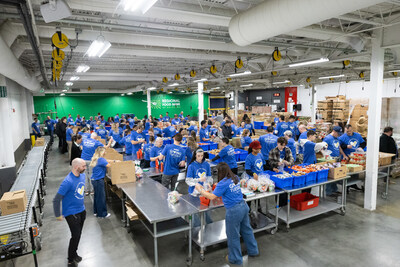
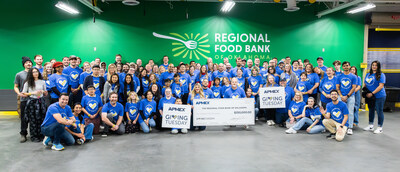
As part of this year’s Giving Tuesday efforts, APMEX employees, along with their families and friends, participated in a dedicated volunteer shift at the Regional Food Bank’s Volunteer Center on December 2. This special volunteer night demonstrated APMEX’s commitment to giving back to the state it calls home. During their shift, volunteers packed enough food to help feed over 4,000 kids.

“At APMEX, we make giving back to the community a top priority. Feeding those in need is important to us,” said APMEX CEO Kenneth Lewis. “We had over 125 volunteers tonight, sorting and packing over 14,000 pounds of food. It’s a big win for the community, and it’s something we’re excited to support.”

The Regional Food Bank relies on donations and volunteer engagement to continue its essential work. This combined financial and volunteer support from APMEX represents a meaningful contribution during one of the most critical times of the year for hunger-relief organizations.

About APMEX

APMEX LLC, part of Bullion International Group, is one of the nation’s largest online retailers of precious metals. It offers a wide selection of gold, silver, platinum, palladium, and numismatic products to customers worldwide. Headquartered in Oklahoma City, APMEX has been in business for more than 25 years, has more than $18 billion in retail customer sales, has more than 2 million customers and has more than 30,000 products in stock. To learn more, visit apmex.com.

Cision View original content to download multimedia:https://www.prnewswire.com/news-releases/apmex-donates-250-000-to-the-regional-food-bank-of-oklahoma-302636908.html

SOURCE Bullion International Group

AUSTIN, Texas, Dec. 9, 2025 /PRNewswire/ — Waterloo Capital Family Office Services, a provider of comprehensive family office reporting and fractional family office solutions, today announced the integration of its service offerings with Ironclad Strategies Consulting, a firm specializing in asset protection, tax strategy, and business transfer advisory services. The combined platform will enhance the scope of services available to high-net-worth families, privately held business owners, and entrepreneurial leadership teams.

The integration aligns Ironclad Strategies’ advisory capabilities in corporate strategy, organizational design, and performance improvement with Waterloo Capital Family Office Services’ tailored financial oversight, multi-generational planning, and administrative support. The unified service model is designed to deliver an institutional-quality framework for clients seeking both strategic advisory and family office solutions under a single platform.

“Integrating our capabilities creates a more comprehensive offering to address the increasingly complex needs of our clients,” said Mark McAdams, Managing Member of Ironclad Strategies. “Our organizations share a commitment to disciplined execution, confidentiality, and long-term client partnership.”

John Chatmas, Founder of Waterloo Capital Family Office Services, added, “This combination expands our resources and strengthens our ability to provide end-to-end support across strategic, financial, and operational dimensions. Clients will benefit from a streamlined service model that brings together advisory expertise and family office infrastructure within one coordinated structure.”

The combined offerings will operate under the Waterloo Capital Family Office Services name. The firm will be headquartered in Austin, Texas, reflecting the city’s continued emergence as a hub for innovation, capital formation, and private enterprise.

About Waterloo Capital Family Office Services

Waterloo Capital Family Office Services is a boutique advisory firm based in Austin, Texas, delivering a comprehensive suite of services designed for high-net-worth families, entrepreneurs, and privately held business owners. The firm’s core capabilities include:

  • Multigenerational wealth planning and legacy advisory: helping families define and implement their goals and objectives related to preservation of capital, plan for succession, and structure long-term holdings across generations, through estate planning, philanthropic advice, and family dynamics guidance.
  • Comprehensive family office administration: including bookkeeping, consolidated financial reporting, bill payment, cash-flow management, lifestyle management, concierge services, and coordination with legal, tax, and trust advisors.
  • Investment oversight and coordination: facilitating collaboration with external investment managers, real estate advisors, and alternative-asset specialists — while delivering independent reporting and oversight.
  • Tax strategy and business-transfer advisory: structuring tax-efficient ownership and exit strategies for privately held businesses and closely held assets.
  • Integrated strategic advisory: combining financial oversight with organizational design, asset protection, and business-continuity planning to deliver an “all-in-one” resource platform for families and business leaders.

Waterloo Capital Family Office Services emphasizes discretion, fiduciary-level standards, and personalized service, with a commitment to long-term client relationships built on trust, transparency, and institutional-grade professionalism. The firm serves as a central hub for clients’ financial, strategic, and legacy needs — enabling individuals and families to pursue their broader personal and business ambitions with confidence.

Cision View original content to download multimedia:https://www.prnewswire.com/news-releases/waterloo-capital-family-office-services-and-ironclad-strategies-consulting-announce-integration-of-service-offerings-302636857.html

SOURCE Waterloo Capital

BofA Becomes Front of Jersey Partner, Tillamook to Remain on Kit With Sleeve Patch

PORTLAND, Ore., Dec. 9, 2025 /PRNewswire/ — The Portland Timbers today announced Bank of America as the club’s new front-of-jersey partner in a multi-year deal, a partnership rooted in community impact that will focus on making soccer more inclusive and accessible. Additionally, Tillamook will transition its kit placement to the sleeve patch, continuing its commitment to the club.

“We’re proud to welcome Bank of America to the Timbers family, and together we are committed to making meaningful impact in our community,” said Heather Davis, CEO of the Portland Timbers. “Bank of America’s investment goes beyond the Timbers; it’s an investment in the city of Portland. This partnership will provide valuable resources and opportunities for youth in sports, local small businesses, public schools and more.”

Bank of America, one of the world’s leading financial institutions, will be featured prominently on the Timbers’ home and away kits beginning in 2026, marking the first time it has been featured on a professional sports jersey. This partnership is part of Bank of America’s broader, ongoing commitment to supporting communities through soccer. Bank of America is also an official sponsor for FIFA World Cup 26 and U.S. Soccer.

“The Timbers are a tremendous asset to Portland, and this partnership is an opportunity to strengthen ties in the community and create meaningful economic impact across the region,” said Roger Hinshaw, Bank of America Oregon and Southwest Washington president. “Our collaboration goes well beyond the pitch, as we build programs that create greater access for youth to experience soccer and deliver lasting benefits throughout the community.”

The partnership introduces Bank of America’s Soccer with Us to the Portland community. The initiative aims to make soccer more inclusive and accessible, and will extend this national platform across Oregon and Southwest Washington.

Soccer with Us is designed to remove barriers to play and promote equity through grassroots investments in the community. The program will be activated locally through a series of youth-centric efforts, including free camps, equipment donations and infrastructure improvements:

  • The partnership includes the development of “Community Futsal Courts,” with plans to build and or resurface 10 futsal courts over the course of the partnership in Portland and underserved communities throughout Oregon. The initiative will provide new goals, nets, and soccer equipment to enhance safe and inclusive spaces for play.
  • The “Camps for All” program will offer 50 free youth soccer camps at Providence Park and select community locations, engaging 5,000 young athletes across the region. 250 scholarships to PTFC Camps will be awarded, resulting in 750,000 minutes of youth soccer exposure.
  • Through the “Equipped to Play” initiative, the Timbers and Bank of America will donate $200,000 worth of soccer equipment to local schools and community groups. The effort will support 1,000 youth, including Special Olympics athletes, providing them with essential gear such as jerseys, balls, socks, backpacks, and ball bags.

Additionally, Bank of America is committed to strengthening economic opportunities throughout Oregon and Southwest Washington, and will invest in the city through a program aimed at supporting local small businesses with the following initiatives:

  • Through “First Match Access Pass,” the Timbers and Bank of America will provide 100 tickets per game to individuals who have never been to a match, with the intention of introducing low-income families, local youth organizations, and new residents to the Portland Timbers community.
  • As part of the “Small Business of the Game” platform, Bank of America will select 50 local small businesses over the course of the partnership to promote at home Timbers games, and each will receive a $5,000 grant.
  • “Game Changers of Tomorrow” will identify 20 students over the course of the partnership who demonstrate exceptional promise to be given a VIP experience at a Timbers match and receive an educational grant for making a difference in their school or community.
  • Bank of America will annually host the “Small Business Summit” at Providence Park, welcoming over 100 local businesses to attend and benefit from workshops, panels and keynote speakers, networking and more.
  • As a co-presenting partner of “Stand Together,” Bank of America will support the club’s annual week-long community initiative, serving non-profit projects and in-person volunteer opportunities across Portland.

The club partnered with Elevate to secure the jersey partnership with Bank of America.

A partner of the club since 2014, Tillamook will transition its representation on Portland’s jerseys to the sleeve patch after two years of being displayed on the front.

“Tillamook has been an incredible partner of the club, and we’re excited to continue our relationship for years to come,” Davis said. “Their move to the sleeve patch reflects their enduring support of the club and shared commitment to our community.”

The Oregon-based, farmer-owned dairy cooperative will continue its support of the club’s community programs, partnering with Stand Together, PTFC Camps, and activating other local youth initiatives.

“We’re thrilled to continue our partnership with the Portland Timbers — a team that shares our deep Oregon roots and commitment to community, and excellence. As fellow champions of the Pacific Northwest, we’re grateful for the opportunity to keep celebrating what makes this region so special, both on the field and at the table.” Kate Boltin, Senior Vice President of Marketing at Tillamook shared.

Portland Timbers

The Portland Timbers are an American men’s professional soccer club based in Portland, Ore., that plays their home matches at the iconic Providence Park. Founded in 1975, the Timbers have been a beloved part of the Portland sports landscape since their early beginnings in the North American Soccer League, launching the era of “Soccer City USA” in the Rose City. The club joined Major League Soccer (MLS) – the top division of men’s professional soccer in the United States – in 2011, winning its first league championship in 2015.

Bank of America

Bank of America is one of the world’s leading financial institutions, serving individual consumers, small and middle-market businesses and large corporations with a full range of banking, investing, asset management and other financial and risk management products and services. The company provides unmatched convenience in the United States, serving nearly 70 million consumer and small business clients with approximately 3,600 retail financial centers, approximately 15,000 ATMs (automated teller machines) and award-winning digital banking with approximately 59 million verified digital users. Bank of America is a global leader in wealth management, corporate and investment banking and trading across a broad range of asset classes, serving corporations, governments, institutions and individuals around the world. Bank of America offers industry-leading support to approximately 4 million small business households through a suite of innovative, easy-to-use online products and services. The company serves clients through operations across the United States, its territories and more than 35 countries. Bank of America Corporation stock (NYSE: BAC) is listed on the New York Stock Exchange.

For more Bank of America news, including dividend announcements and other important information, visit the Bank of America newsroom and register for news email alerts.

Reporters may contact

Jill Farley, Portland Timbers
Phone: 1.503.896.2827
jfarley@timbers.com

Britney Sheehan, Bank of America
Phone: 1.425.467.9744
britney.sheehan@bofa.com

Cision View original content to download multimedia:https://www.prnewswire.com/news-releases/portland-timbers-enter-multi-year-community-impact-partnership-with-bank-of-america-302636803.html

SOURCE Bank of America Corporation

Why Megawatt Charging?

As the electrification of heavy-duty transport accelerates, the demand on charging infrastructure is increasing exponentially. While the Combined Charging System (CCS) supports charging power up to 500 kW, this is insufficient for heavy-duty vehicles with battery capacities ranging from 500 to 1000 kWh. This is where the Megawatt Charging System (MCS) comes into play, a new charging standard that enables charging power of up to 3.75 MW (3000 A at 1250 V DC).

Technical Specifications of MCS

  • Maximum charging power: 3.75 MW
  • Voltage: Up to 1250 V DC
  • Current: Up to 3000 A
  • Communication: Automotive Ethernet (IEEE 10Base-T1S), replacing Powerline Communication (PLC) used with CCS
  • Connector design: Liquid-cooled, with automated locking and optional robotic support

These specifications make it possible to charge a 1000-kWh battery in under 30 minutes, an essential factor for the economic operation of electric trucks in long-haul transport or other heavy-duty vehicles.

Industries and Application Areas

The introduction of the Megawatt Charging System (MCS) opens new possibilities for electrifying vehicles and machines with particularly high energy demands. Industries that rely on large battery capacities, short charging times, and high availability stand to benefit the most. Key application areas include:

  • Long-haul transport and logistics: Charging times under 45 minutes enable break-compliant charging in accordance with EU driver regulations.
  • Mining vehicles: Electrification of large haul trucks and loaders operating in remote or underground environments, requiring robust and fast charging solutions.
  • Construction and agricultural machinery: Electrification of heavy off-highway vehicles.
  • Maritime applications: Electric ferries and harbor tugs requiring high charging power.
  • Airport operations: Ground support equipment such as pushbacks and baggage tractors.
  • Public transport and bus depots: Fast depot charging overnight or at terminal stops.

Technological Challenges

The implementation of the Megawatt Charging System (MCS) introduces a range of complex technical challenges that go far beyond current e-mobility standards. One of the most critical hurdles is thermal management. At current levels of up to 3000 amps, significant heat losses occur, which not only reduce efficiency but also pose safety risks. To reliably dissipate this heat, MCS relies on an actively cooled cable and connector system with liquid cooling, ensuring stable thermal performance even under continuous load.

Another key aspect is electrical safety. With charging voltages reaching up to 1250 volts, the requirements for insulation, overvoltage protection, and arc detection increase significantly. The MCS specification, therefore, includes multi-layered safety mechanisms at both the hardware and protocol levels. These include galvanic isolation, automated locking systems, and continuous monitoring of electrical parameters throughout the charging process.

Communication between the vehicle and the charging infrastructure also undergoes a fundamental shift with MCS. Instead of the previously used Powerline Communication (PLC), an automotive Ethernet-based communication technology (IEEE 10Base-T1S) is implemented. This change is necessary to ensure electromagnetic compatibility at high power levels while enabling robust, low-latency data transmission, especially for charging control commands and authentication processes.

Finally, the physical handling of the system presents its own challenges. Due to the size and weight of the MCS connector and cable, the use of robotic charging systems is being considered in many applications. These systems aim to improve ergonomics and enable automated, standardized charging infrastructure for fleets and logistics hubs.

Infrastructure and Grid Requirements

Implementing megawatt charging systems places significant demands not only on vehicle technology but also on charging infrastructure and energy supply. Due to the extremely high-power levels, up to 3.75 megawatts per charging point, a direct connection to the medium-voltage grid is typically essential. This means that MCS stations cannot be operated via conventional low-voltage connections like standard fast chargers. Instead, they require dedicated transformers and switchgear to deliver the necessary power.

A central issue in this context is load management. To avoid grid overloads while maintaining economic viability, MCS sites must be equipped with intelligent energy management systems. These systems coordinate charging schedules, prioritize vehicles based on operational needs, and can integrate local energy sources such as photovoltaic systems or stationary battery storage. Especially in logistics hubs or highway corridors where multiple vehicles may charge simultaneously, dynamic load balancing is critical.

Scalability is another key consideration. The infrastructure must be designed to grow with increasing demand, both in terms of physical layout and grid capacity. This requires close collaboration between charging infrastructure providers, utility companies, and local authorities, particularly when it comes to permitting and expanding medium-voltage connections.

Standardization also plays a decisive role. Only if MCS charging points are interoperable across manufacturers and can be seamlessly integrated into existing backend systems, a widespread rollout will be successful. The CharIN initiative is therefore working intensively on the global harmonization of MCS specifications to ensure interoperability and investment security.

What comes next: MCS as a Strategic Enabler of Transport Decarbonization

The Megawatt Charging System is on the verge of industrial deployment and is expected to play a central role in transforming the transport sector over the coming years. Initial pilot projects involving MCS-capable vehicles and infrastructure are already underway in Europe and North America. From 2025 onward, broader market adoption is anticipated, particularly in long-haul transport, where charging time and range are critical economic factors.

In the long run, MCS will extend beyond highway corridors and logistics centers. It will also be implemented in multimodal transport hubs like ports, airports, and industrial areas. In these settings, MCS can act as a technological link between different modes of transportation, supporting seamless electrification, from trucks to ships to automated ground vehicles.

Another driver of MCS adoption is the increasing automation of fleet operations. Combined with autonomous vehicles and robotic charging systems, fully automated charging processes could emerge, operating around the clock and offering a major advantage for logistics companies with high throughput and tight schedules.

From a regulatory perspective, the direction is also clear: the EU and other regions are tightening CO₂ fleet limits and promoting zero-emission zones, further accelerating demand for high-performance charging infrastructure. Incentive programs and regulatory support are expected to boost the rollout of MCS sites.

Technologically, the system is designed to be scalable and future-proof. The combination of high charging power, standardized interfaces, and digital communication makes MCS a platform technology, well-suited for future applications such as bidirectional charging (vehicle-to-grid) or grid-supportive load shifting.

In summary, MCS is much more than just a new connector, it is a crucial part of the energy transition in the transportation sector. Those who invest in this technology today are laying the groundwork for an emission-free, efficient, and connected heavy-duty transport system of the future.

How Keysight Supports the Transition to Megawatt Charging

In this dynamic environment, Keysight supports OEMs, charging infrastructure providers, and component manufacturers in navigating the technical challenges of megawatt charging. With decades of experience in high-power electronics, automotive testing, and energy systems, Keysight offers comprehensive test and validation solutions focused on performance, safety, and interoperability across the entire MCS ecosystem.

By aligning with standards such as ISO 15118-20 and actively contributing to the development of the MCS specification, Keysight test solutions ensure that new MCS solutions meet both current and future requirements. Whether you’re developing next-generation charging systems or validating individual components, Keysight provides the tools and expertise to accelerate development cycles and reduce time-to-market.

Keysight’s solution portfolio includes:

  • High-power test systems for EVSE and EV interface components
  • Conformance and interoperability testing for ISO 15118 and MCS protocols
  • Power quality and thermal behavior analysis
  • Advisory services for system architecture and compliance

With this combination of technology, experience, and industry insight, Keysight is a trusted partner in building a safe, scalable, and future-ready charging infrastructure – designed to meet the demands of next-generation electric heavy-duty transport.

Learn more about the Megawatt Charging Test Solution at: www.keysight.com/megawatt-charging