As society evolves in step with rapid advancements in artificial intelligence (AI), computational thinking skills are gaining more attention as an important driver of future career success.

What is computational thinking?
Computational thinking is a problem-solving process. It involves breaking down complex issues into manageable parts, recognizing patterns, and developing step-by-step solutions like those that could be implemented through the computer programming process. It encompasses concepts including logical reasoning, abstraction and algorithmic thinking.

While AI can be used to help solve problems and even generate computer programs, AI does not replace the need for computational thinking. These skills actually become more important in the age of AI.

According to experts from TCS Ignite My Future, Tata Consultancy Services’ professional development program for educators, computational thinking skills are critical to student success after they graduate. They believe computational thinking strengthens critical thinking abilities, boosts confidence in problem solving, and prepares young people to better adapt to a rapidly changing, technology-driven world. As a program, Ignite My Future is dedicated to empowering teachers with free resources to incorporate computational thinking into their classrooms and core school subjects, but families can also reinforce these skills at home.

Why it’s important
“Creating an AI-ready workforce is a high priority in every industry, and students and young professionals with computational thinking skills will be far ahead of their peers in tomorrow’s workforce,” says Kelli Recher, TCS Ignite My Future Global Innovation Lead. “If we can teach those skills early, the next generation will be better able to use AI responsibly, identify and solve problems, and help shape the technology as it continues to develop.”

Reports reveal a more competitive technology job market than ever before and educational institutions at all levels are reorganizing around how to teach students about computer science in the AI age.

Schools in countries such as China, Finland, and South Korea are already implementing AI to support student learning. In addition, all over the world, collaboratives, coalitions and conferences are convening universities, researchers and other stakeholders to determine the best ways to teach and manage AI. In the U.S., efforts led by the White House Task Force on AI Education are promoting Al literacy and proficiency among America’s youth and educators. Similar government planning for AI education is happening around the globe.

No special skills needed
Knowing parents are busy and don’t always see themselves as teachers of such subjects, TCS Ignite My Future suggests they encourage their children to explore patterns in everyday things. It’s an easy way for parents to teach these critical skills. For instance:

  • Traffic signals: Demonstrate that patterns are practical and useful by observing traffic signals in the neighborhood.
    • By sitting with you near a busy corner with a traffic light, kids can learn that green, yellow and red have different meanings, are timed to control traffic in certain ways and that they always follow a specific sequence. These are things you can let younger kids discover through observation or encourage older kids to time and record at different times of day.
  • Arts and Crafts: Help children discover patterns in drawings, paintings or crafts, whether they are creating the artwork themselves or observing color and shape patterns in works of art created by others.
    • Parents can give kids a start by creating a simple bracelet pattern on a string with colored beads and asking them to replicate it. This will enhance their visual pattern recognition skills and their fine motor skills.
  • Dance: Learning how to do specific or choreographed dances is another great way to develop computational thinking skills because dance is all about pattern development.
    • Learning a dance enhances all kinds of cognitive functions because it requires memorizing steps, sequences and patterns and developing physical and spatial awareness.
  • Everyday things and daily activities: Computational thinking skills can also be attained by analyzing patterns in stories, recognizing patterns in everyday objects such as stripes, dots or flowers on wrapping paper.
    • Families can even turn routines into “algorithms.” All they have to do is break down daily tasks—like making a sandwich, getting ready for school or even brushing their teeth—into steps and exploring what might happen–good or bad–if the order shifted.

Whether a child dreams about becoming a doctor, scientist, teacher, entrepreneur, artist or any other profession, computational thinking can help them be more creative, work through challenges, and use technology thoughtfully and responsibly.

Learn more about Ignite My Future here.

With its Medtronic Spark project, launched to “ignite the curiosity of young people, unleash their talents, and increase diversity in health technologies,” Medtronic aims to transform both young people and global healthcare. Turkey stands out as an important part of this grand goal.

As part of the company’s 10-year global initiative, Medtronic Spark aims to empower 1 million students from low-income households worldwide with education, mentorship, and scholarships, helping them discover their talent in health technology and increase equal opportunities.

Within this context, 110 students from Darüşşafaka visited Medtronic Türkiye’s innovation center in Istanbul during the event.

Read the full article on Anadolu Ajansı.

FARMINGTON HILLS, Mich., Dec. 19, 2025 /PRNewswire/ — RHP Properties’ Farmington Hills corporate office continued its long-standing tradition of giving with its annual holiday donation to the Farmington Area Goodfellows, marking the 22nd year of support to a vital organization serving children, families, seniors and developmentally challenged adults in need.

Employees from RHP Properties donated $4,015 which was matched by the company for a total donation of $8,030 this year. Altogether, the company has donated a total of $38,037 since beginning its charitable efforts, in addition to providing much-needed food and toys for those in the community.

“The Farmington Area Goodfellows do remarkable work and we’re honored to support their mission again this year,” said Ross Partrich, CEO of RHP Properties. “It’s a tradition our team looks forward to each year and our employees continue to show extraordinary generosity and heart, coming together to help ensure local children, families, and seniors feel cared for during the holiday season.”

“RHP Properties has grown into our largest single supporter and we are deeply grateful for their continued commitment to our organization,” said Richard Lerner, Farmington Area Goodfellows Chairman of the Board of Directors. “Their support over the years has helped us reach countless residents across our community and this year’s contribution comes at a time when the demand for assistance continues to grow and is greater than ever.”

Farmington Area Goodfellows is a volunteer-run charity that has been assisting vulnerable individuals for over 80 years, supporting an average of 400-500 people and families each holiday season. This year, the organization anticipates a significant need for donations and depends on the generosity of residents and businesses to meet its goals. Every dollar donated goes directly to the program which is supported by a team of over 200 volunteers. 

The Farmington Area Goodfellows’ donations will be delivered on Saturday, December 20. For more information or to help, visit https://goodfellows.info 

About RHP Properties
Founded in 1988, RHP Properties (RHP) has professionally managed manufactured home communities for over 30 years guided by a philosophy of putting residents first and providing attainable, well-maintained communities residents love to call home. RHP is headquartered in Farmington Hills, Michigan and is the nation’s largest privately held owner and operator of manufactured home communities. For more information visit www.rhp.com.

About Farmington Area Goodfellows 
Founded in 1939, Farmington Area Goodfellows is an all-volunteer 501c3 non-profit public charity serving at-risk children, families and seniors in Farmington and Farmington Hills, Michigan. The Goodfellows strive to end food insecurity and believe no one should ever have to go to bed hungry, and no child or senior should go without a Christmas. For more information visit www.goodfellows.info.

Cision View original content:https://www.prnewswire.com/news-releases/rhp-properties-marks-22nd-year-helping-farmington-area-goodfellows-ensure-no-child-or-senior-without-a-christmas-302647063.html

SOURCE RHP Properties

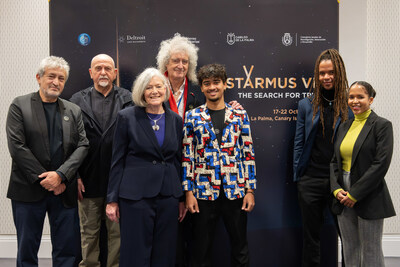
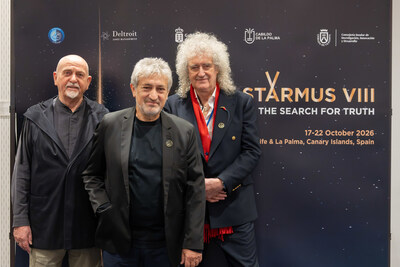
LONDON, Dec. 19, 2025 /PRNewswire/ — This week at London’s Royal Society, board members of the world-leading science and music festival STARMUS—Garik Israelian, Sir Brian May, Peter Gabriel, Lord Michael Hintze, and Lord Martin Rees—were joined by members of Jane Goodall’s family and Mary Lewis, Vice President of the Jane Goodall Institute, to announce STARMUS VIII and the launch of the Jane Goodall Earth Medal.

Garik Israelian, Peter Gabriel, Mary Lewis, Sir Brian May, Nick Van-Lawick, Merlin Van-Lawick, Angel Van-Lawick - Jane Goodall’s grandchildren.

The medal will be awarded for the first time at STARMUS VIII, to be hosted in Tenerife and La Palma in 2026.

The announcement took place exactly ten years after STARMUS and Professor Stephen Hawking stood together at the Royal Society to launch the Stephen Hawking Medal for Science Communication, marking a decade of STARMUS’s commitment to uniting science, art, and humanity.

STARMUS Director and Co-Founder Garik Israelian said:
“Ten years ago, Stephen Hawking joined us to launch a medal that inspired millions to look to the stars. Today, with the blessing of Jane Goodall and her family, we launch a medal that calls us to protect the Earth. STARMUS VIII will unite these two visions — the cosmic and the planetary — in a festival dedicated to the search for truth.”

Stephen Hawking once said of STARMUS:
“In a world beset by so many terrible problems, STARMUS offers a ray of hope… a unique debating chamber for the future of the human race.”

In 2026, STARMUS will celebrate the 10th anniversary of the Stephen Hawking Medal, honoring a decade of scientists, creators, musicians, filmmakers, and communicators who have carried forward Hawking’s vision—encouraging humanity to question deeply and embrace the power of science.

At the same time, the festival will award the inaugural STARMUS Jane Goodall Earth Medal, a global honor recognizing voices who protect the planet, defend biodiversity, and redefine humanity’s relationship with nature. Approved and blessed by Dr. Jane Goodall, DBE, and her family, the medal extends the STARMUS mission into environmental and humanitarian action.

Jane Goodall held a cherished role within STARMUS as an Advisory Board Member, Hawking Medal laureate, keynote speaker, and a source of inspiration—particularly for the people of La Palma following the volcanic eruption. In private conversations with Israelian and Mary Lewis, she gave her blessing for an environmental and humanitarian medal to bear her name.

Merlin Van-Lawick, Jane Goodall’s grandson, said:
“We are deeply grateful that STARMUS chose to honor my grandmother in this way. We fully support this initiative, and Jane has given it her blessing.”

STARMUS Co-Founder Sir Brian May added:
“Jane Goodall and Stephen Hawking changed how we see the world — one by looking to the stars, the other by reminding us to protect life on Earth. Bringing their legacies together is profoundly necessary for our time.”

www.starmus.com

Photo – https://mma.prnewswire.com/media/2849730/Starmus_1.jpg
Photo – https://mma.prnewswire.com/media/2849729/Starmus_2.jpg


Cision View original content to download multimedia:https://www.prnewswire.com/news-releases/brian-may-and-starmus-mark-10-years-of-the-stephen-hawking-science-medal-with-the-launch-of-the-jane-goodall-earth-medal-302647030.html

SOURCE Starmus

For the past decade, Entergy New Orleans has hosted its annual Operation Secret Santa event for our customers visiting the Canal Street Customer Care Center for billing assistance.

During the event, customers arriving for what they believe to be a standard appointment are met with a delightful surprise. Santa Claus, accompanied by Deanna Rodriguez, Entergy New Orleans president and CEO, and Patty Riddlebarger, Entergy vice president of corporate social responsibility, happily announced that their electric bills had been paid in full. This initiative is made possible through Entergy’s The Power to Care program, designed to provide emergency bill payment assistance to older adults and customers with disabilities during their time of need.

“This event is about meeting our customers where they are and offering a little extra support during the holidays,” said Rodriguez. “Through The Power to Care program, we’re able to provide meaningful relief and support to customers when they need it the most.”

The Secret Santa response from customers was heartwarming, with many expressing gratitude and relief during an already challenging time of year. Now an annual tradition, the event remains one of the most rewarding moments of the year and reflects Entergy’s commitment to supporting our customers and strengthening the communities we serve.

Through The Power to Care program, Entergy collaborates with local nonprofits, dedicated employees, and generous customers to offer emergency bill payment support year-round. Since its inception in 2008, the program has raised over $50 million, assisting more than 250,000 customers in need.

As the holiday season approaches, we invite everyone to join us in extending a helping hand to our neighbors in need. Your support can play a vital role in ensuring that those struggling can keep their lights on during this chilly winter season.

Discover how you can contribute to keeping the power on for someone in need this holiday season.

View original content here.