SACRAMENTO, Calif., Jan. 30, 2026 /PRNewswire/ — The California Lawyers Association (CLA), consistent with its mission to promote fairness in the administration of justice and the rule of law, expresses serious concern regarding federal law enforcement actions that raise constitutional and other legal questions.

Recent federal immigration enforcement operations in locations including Chicago, Los Angeles, Minneapolis, and Maine have raised questions about adherence to constitutional principles and the rule of law. Reports of warrantless home entries, detention practices without adequate judicial oversight, restrictions on access to legal counsel, and the use of force against individuals have prompted concern across the legal community about fundamental protections guaranteed to all persons under the United States Constitution.

CLA affirms that constitutional protections apply to all persons and are not negotiable in the pursuit of any policy objective. The Fourth Amendment prohibits warrantless entries into private homes and requires probable cause for arrests and detention. The Sixth Amendment guarantees the right to legal counsel. The First Amendment protects the right to peacefully protest and to record law enforcement activity in public spaces. These constitutional safeguards form the bedrock of our democracy and must be upheld by all law enforcement agencies, regardless of their mission or jurisdiction.

In California, pursuant to California Rule of Court 9.7, as amended effective October 1, 2025, every attorney must annually reaffirm their oath to support the Constitution of the United States and the Constitution of the State of California. This requirement underscores that our obligation to uphold constitutional principles is not merely aspirational; it is a recurring professional commitment that California attorneys renew each year. When government actions raise serious questions about constitutional compliance, attorneys have a heightened responsibility to ensure that the rule of law prevails.

CLA stands in solidarity with legal organizations nationwide in affirming that all law enforcement activity must be conducted within lawful authority, with transparency, accountability, and full respect for constitutional protections, including due process and equal justice under the law.

CLA calls on courts and oversight institutions to ensure independent review of actions that implicate civil liberties and due process. As lawyers and officers of the court, we have a duty to speak out when the rule of law is threatened and to affirm that constitutional limits on government power are essential to liberty, safety, justice, and the functioning of our democracy. CLA reaffirms the role of lawyers and legal institutions in maintaining public confidence in the justice system and the rule of law.

The California Lawyers Association (CLA) is a member-driven, mission-focused organization dedicated to the professional advancement of attorneys practicing in the state of California.

Established in 2018, CLA is a nonprofit, voluntary bar association serving thousands of licensed attorneys throughout California. We are the premier statewide voice for the legal community, advocating on behalf of our members before the Legislature, the Judiciary, the Executive Branch, and the State Bar of California, which is the licensing and disciplinary regulator of our industry.

Contact: Alicia Pilmore, Marketing and Communications Department Head
communications@calawyers.org

Cision View original content to download multimedia:https://www.prnewswire.com/news-releases/california-lawyers-association-statement-on-upholding-constitutional-principles-and-rule-of-law-in-federal-immigration-enforcement-302675337.html

SOURCE California Lawyers Association

REDWOOD CITY, Calif., Jan. 30, 2026 /PRNewswire/ — Zilliz, the company behind the leading open-source vector database Milvus, today announced the open-source release of its Bilingual Semantic Highlighting Model, an industry-first AI model designed to dramatically reduce token usage and improve answer quality in production RAG-powered AI applications.

This highlighting model introduces sentence-level relevance filtering, enabling AI developers to remove low-signal context before sending prompts to large language models. This approach directly addresses rising inference costs and accuracy issues caused by oversized context windows in enterprise RAG and RAG-powered AI deployments.

“As RAG systems move into production, teams are running into very real cost and quality limits,” said James Luan, VP of Engineering at Zilliz. “This model gives developers a practical way to reduce prompt size and improve answer accuracy without reworking their existing pipelines.”

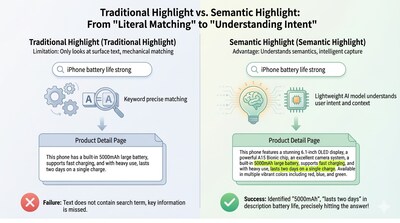
Traditional Highlight VS Semantic Highlight

Key Innovations and Technical Breakthroughs

  • Bilingual relevance by design: Optimized for both English and Chinese, the model addresses cross-lingual relevance challenges common in global RAG deployments. It is built on the MiniCPM-2B architecture, enabling low-latency, production-ready performance.
  • Sentence-level context filtering: Rather than scoring entire document chunks, the model evaluates relevance at the sentence level and retains only content that directly supports a user query before sending it to the LLM.
  • Lower token usage, higher answer quality: Zilliz reports that sentence-level filtering significantly compresses prompt size while improving downstream response quality, helping teams reduce inference costs and improve generation speed in production environments.

Availability

The Bilingual Semantic Highlighting Model is available today as an open-source release. To learn more about the training methodology and performance benchmarks, visit the Zilliz Technical Blog.

Download: : zilliz/semantic-highlight-bilingual-v1

About Zilliz

Zilliz is the company behind Milvus, the world’s most widely adopted open-source vector database. Zilliz Cloud brings that performance to production with a fully managed, cloud-native platform built for scalable, low-latency vector search and hybrid retrieval. It supports billion-scale workloads with sub-10ms latency, auto-scaling, and optimized indexes for GenAI use cases like semantic search and RAG.

Zilliz is built to make AI not just possible—but practical. With a focus on performance and cost-efficiency, it helps engineering teams move from prototype to production without overprovisioning or complex infrastructure. Over 10,000 organizations worldwide rely on Zilliz to build intelligent applications at scale.

Headquartered in Redwood Shores, California, Zilliz is backed by leading investors, including Aramco’s Prosperity 7 Ventures, Temasek’s Pavilion Capital, Hillhouse Capital, 5Y Capital, Yunqi Partners, Trustbridge Partners, and others. Learn more at  Zilliz.com.


Cision View original content to download multimedia:https://www.prnewswire.com/news-releases/zilliz-open-sources-industry-first-bilingual-semantic-highlighting-model-to-slash-rag-token-costs-and-boost-accuracy-302675291.html

SOURCE Zilliz

At Northern Trust, a career isn’t just a job, it’s a journey.

From the moment someone joins us, they’re supported with opportunities to learn, build skills, grow into new roles and shape long-term careers. Our Quarter Century Club, a tradition dating back to our founder Byron L. Smith, celebrates employees who have reached remarkable milestones on that journey.

We welcomed 288 new members in 2025 – the largest-ever class of employees to reach their 25-year anniversary, joining a community of nearly 1,600 colleagues who have built decades-long careers here.

“I’m so proud that nearly 1,600 partners have been with Northern Trust for over 25 years. That longevity and institutional knowledge is just one of many elements that makes Northern Trust an incredible place to work.” – Chairman and CEO Mike O’Grady.

Learn about some of our Quarter Century Club members below.

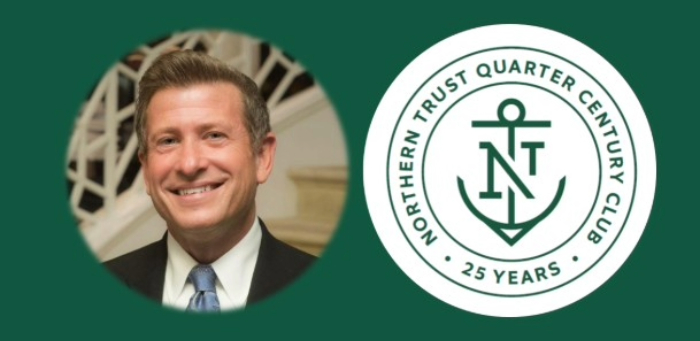
Steven Krause

Meet Steven Krause

After 46 years and six offices, Steven Krause, senior trust advisor on the Wealth Management team, has built a legacy of dedication and connection at Northern Trust. From Lake Bluff, Illinois to Sarasota, Florida (where he is now located), Krause’s journey is defined by his commitment to clients and colleagues.

What was your first job at Northern Trust and what do you remember about it?
I started my career at Northern Trust by being grandfathered in from The First National Bank of Lake Forest, which Northern Trust acquired. I was originally hired at the Lake Bluff office to be a lender, but in a small office of about 20 employees, I wore many hats. The close-knit environment meant everyone pitched in wherever needed.

What’s one piece of office tech or process that totally changed since you started?
Computers! Before personal computers arrived, our work was primarily done on paper ledgers. The introduction of PCs revolutionized how we worked, making everything faster and less reliant on paper.

Do you remember your first day? What surprised you the most?
I vividly remember my first day in Lake Bluff. Living on the north side of Chicago without a car, I reverse commuted on the train – no express trains, so it took over an hour each way.

It was crisp autumn day in October 1979, and I could smell burning leaves as I stepped off the train. I love that smell; it reminds me of home, which made me feel more relaxed than anxious about my first day.

I also recall being the youngest in the office (a big change from now, where I’m the oldest!). The environment was friendly and inviting.

What’s the biggest change you’ve seen in the company or industry over the years?
One of the biggest and most meaningful changes for me has been the growth and strength of our employee-led Business Resource Councils.

Back in 1996, I was co-chair of the Diversity Council, which focused on confronting prejudice, treating everyone fairly, promoting cultural understanding and educating coworkers about minority groups. I’m proud of how Northern Trust has continued to evolve, making inclusion a core part of our culture. It all stems from our partners and how we celebrate and recognize everyone.

What advice would you give to someone just starting out at Northern Trust?
You’ve stepped into the door of the best. Bring your “A” game every day and give as much as you want Northern Trust to give back to you.

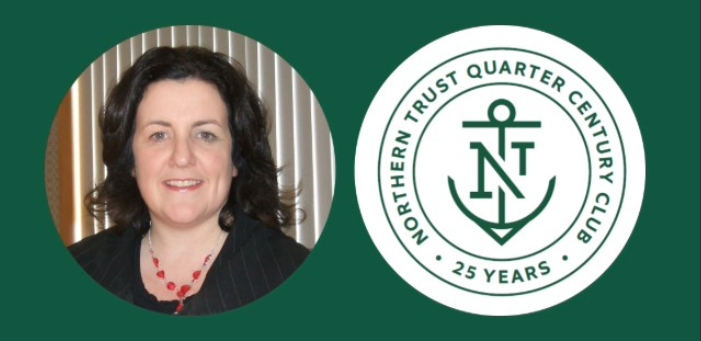
Catherine Duffy

Meet Catherine Duffy

Catherine Duffy, Ireland operations manager based in Limerick, recently celebrated her 36th year with Northern Trust. Over the decades, she’s seen the company and industry evolve in remarkable ways, from color-coded pens to digital transformation.

What was your first job at Northern Trust and what do you remember about it?
My first role at the company was on a team handling daily bank reconciliations.

Back then, we had a color-code system: blue pen for figures that matched, red for those that didn’t and green for mysterious ones we couldn’t recognize. It was a simple way to keep things in check and definitely added some color to the workday!

Thankfully the reconciliation process has come a long way – no more color-coded pens, just streamlined systems that actually make life easier.

What’s the biggest change you’ve seen in the company or industry over the years?
For me, the biggest shift has been the digital transformation. Technology now powers nearly everything we do. It’s been incredible to watch innovation reshape how we work, communicate and create.  

Do you remember your first day? What surprised you the most?
I remember my first day so clearly. Everyone was incredibly welcoming, kind and very willing to help get me up to speed. One thing I distinctly remember was that there was a new coffee machine on the floor – everyone was gathered around trying to figure out how to use it!

What’s the biggest change you’ve seen in the company or industry over the years?
For me, the biggest shift has been the digital transformation. Technology now powers nearly everything we do. It’s been incredible to watch innovation reshape how we work, communicate and create.

What advice would you give to someone just starting out at Northern Trust?
Ask loads of questions, take advantage of our internal Northern Trust University courses and get yourself a mentor who you can lean on.

Bert Rebelo

Meet Bert Rebelo

Bert Rebelo, head of Asia Pacific institutional client group based in Melbourne, Australia, recently celebrated his 26th year with Northern Trust. From London to Melbourne, Bert’s journey is filled with memorable moments, global moves and a deep commitment to growth and connection.

What was your first job at the company?
I started as a business risk and compliance analyst in the London office. At the time, our team covered all of Northern Trust’s business risk and compliance efforts in London, and I was the third member to join.

What’s one piece of office tech or process that’s totally changed since you started?
I think the biggest change has been the ability to easily connect with people via Teams during COVID. I still remember the big clunky phones on everyone’s desk!

Do you remember your first day? What surprised you the most?
I came from the asset management arm of a very conservative U.K. insurance-based company. What struck me most was how approachable and friendly everyone was at Northern Trust and how the organization didn’t feel overly hierarchical. 

What’s the biggest change you’ve seen in the company or industry over the years?
The growth of the business, especially Northern Trust Asset Management international.

One of my first tasks after joining Northern Trust Asset Management in London was helping to establish NTGIL, which is the primary legal entity based in London.

What advice would you give to someone just starting out at Northern Trust?
Be curious. Don’t hesitate to lean into areas of interest as opportunities arise when you extend yourself.

New Additions Join to Advance Reveal’s Operator-Focused Capabilities at the Tactical Edge

BOZEMAN, Mont., Jan. 30, 2026 /PRNewswire/ — Reveal Technology, a veteran-founded defense technology company, announced today the addition of four new executives: Niko Hughes, Chief Growth Officer; Padden Guy Murphy, Chief Marketing & Communications Officer; Chris Booth, Director of Special Missions; and Cale Teeter, Senior Vice President, Federal & Public Safety.

“Coming off our Series B and passing a key revenue inflection point, this is the moment to build the leadership required to scale,” said Garrett Smith, CEO of Reveal Technology. “The nature of war hasn’t changed but the technology shaping the battlefield has. We’re investing now because the next decade of conflict will be won by speed, integration, and clarity at the tactical edge. By bringing on leaders like Padden, Niko, Cale, and Chris, we’re building Reveal with the ambition and operational depth needed to grow into a next-generation defense leader.”

  • Niko Hughes, Chief Growth Officer (CGO), will drive revenue growth and scale Reveal’s go-to-market strategy across defense, intelligence, and federal markets. Hughes served as President of Kägwerks, leading the bootstrapped startup through acquisition by Codan Limited in December 2024 and growing revenue 44% post-acquisition. Under his leadership, Kägwerks secured multiple DoW Programs of Record, fielding over 40,000 units across the U.S. Army. A U.S. Army EOD Officer with TS/SCI clearance and honor graduate of Naval School Explosive Ordnance Disposal, Hughes previously founded BetterGrowth, bootstrapping to $2.5 million in annual revenue before a successful exit.
  • Padden Guy Murphy, Chief Marketing & Communications Officer (CMO), will lead marketing, communications, and brand strategy as Reveal scales across defense and allied markets. Murphy co-founded Foundry Ten, advising companies including California Forever, Google, Webflow, and Metropolis. He previously held senior marketing and business development roles at WeWork, Lyft, REEF, Adobe, and Getaround. Murphy earned degrees in International Relations and Chinese from Tufts and Oxford, founded Montana Festival, and serves on boards of The Montana Ambassadors and Headwaters Community Housing Trust.
  • Christopher “Chris” Booth, Director of Special Missions, will lead outreach to the U.S. Intelligence Community and partner with foreign security and intelligence services. With nearly thirty years as a national security professional, Army officer, and attorney working with partners across Africa, Asia, Europe, and the Middle East – particularly in capacity building – he is uniquely suited for this role. Chris also co-directs the Irregular Warfare Initiative’s Maritime Program. He is a distinguished graduate of Marine Corps Command & Staff College, Barrow Fellow for Strategic Competition, and Gray Scholar on Social & Political Conflict. He earned his J.D. from Vanderbilt Law School and has published in venues including: The Atlantic Council, War on the Rocks, U.S. Naval Institute Proceedings, West Point’s Modern War Institute, and The National Interest.
  • Cale Teeter, Senior Vice President, Federal & Public Safety, will lead strategic growth and operational alignment across Reveal’s federal, public safety, and intelligence community portfolios. A retired SOF officer, Teeter brings decades of operational and executive leadership experience supporting U.S. government missions, with expertise in aligning people, process, and technology to deliver mission-critical capabilities in complex, high-risk environments. Prior to Reveal, Teeter led successful growth initiatives ahead of acquisition at goTenna, Kägwerks, EF Johnson, and SecureCo, driving scalable revenue growth and long-term customer trust. Teeter holds a B.S. and M.S. in Biology and an M.S. in BioDefense, with advanced education from the Naval Postgraduate School, Naval War College, University of Utah, and Texas Tech University.

The leadership expansion follows Reveal’s $30 million Series B funding round led by Ballistic Ventures and the company’s recent acquisition of Anomaly Six, a multi-domain digital intelligence company. Reveal has increased revenue tenfold year over year, with products actively deployed across the U.S. Army, Special Operations Command, Marine Corps, law enforcement agencies, and international forces.

About Reveal Technology, Inc.
Reveal Technology is a veteran-founded defense technology company building the ecosystem for autonomy at the tactical edge, with a mission to serve as the digital arms room for the modern warrior. Founded by former U.S. Marine Corps officers and Stanford technologists, Reveal delivers offline intelligence platforms that work when networks are degraded, enabling real-time decision-making in contested environments. The company’s flagship products, Farsight (geospatial intelligence) and Identifi (edge and mobile biometrics), are deployed with the U.S. Army, Special Operations Command, Marine Corps, and international forces. Based in Bozeman, Montana, with a team that is 50% military reservists, guardsmen and veterans, Reveal Technology is dedicated to providing warfighters with mission-critical tools that work offline, under fire, and in real time.

Cision View original content to download multimedia:https://www.prnewswire.com/news-releases/reveal-technology-expands-leadership-team-with-four-strategic-new-hires-302675234.html

SOURCE Reveal Technology, Inc.