Our Health Our Wellness (OHOW) is a month-long observance, powered by the Black Health Matters Foundation (BHMF). OHOW is designed to improve health outcomes and empower under-resourced people to healthy behavior change in underserved communities through prevention, intervention, and increased access to resources.

NEW YORK, March 31, 2026 /PRNewswire/ — On March 28-30 Black Health Matters (BHM) is attending the American Cardiology Conference (ACC.26) in New Orleans and will launch the Our Health Our Wellness (OHOW) National Campaign. BHM will leverage ACC as a strategic platform to introduce OHOW, engaging HCPs and pharmaceutical stakeholders through a dedicated promotional booth and targeted launch materials designed to drive awareness and partnership opportunities across BHMF’s platforms. OHOW is geared towards promoting healthy behavior change that leads to improved health outcomes for under-resourced communities across the United States. With health information in both English & Spanish, OHOW expands access to resources and literacy among diverse populations.
Throughout April 2026, OHOW will address priority health areas that significantly impact Americans, while recognizing an individual’s holistic health journey to wellness. Health topics include Alzheimer’s, Cancer, Chronic Kidney Disease, Heart Health (Cholesterol, Diabetes, Hypertension), Mental Health, Vaccinations, and more. Due to health disparities among these conditions, OHOW aims to help medically underserved communities engage in preventative risk reduction, early detection, and intervention.

Black Health Matters (BHM) serves as the nation’s leading health and wellness platform for Black and Brown communities. BHMF’s vision is to be the leading resource for communities facing barriers to healthcare, creating a transformative health impact that prioritizes well-being and closes gaps in health outcomes. OHOW is one of the ways we aim to accomplish this goal. Through multisectoral partnerships, the initiative expands its reach into multigenerational communities by delivering population-specific education and engagement.

“Being healthy and having access to proper services for wellness are essential as we age. I want OHOW to be a movement where people can learn about what’s impacting them and their families. Then know how to speak with their doctor and have guidance on the next steps” said Roslyn Y. Daniels, CEO and Founder of Black Health Matters.

It’s time to change the national dialogue on health and wellness. Join OHOW as we reclaim control over Our Health, Our Wellness, one step at a time. Visit the OHOW website to learn more about upcoming events and how to get involved. The website provides culturally relevant health information, community resources, wellness screenings, and educational events—all designed to meet people where they are and help them take control of their health.

BHM invites all communities to prioritize their well-being by joining the OHOW campaign. OHOW is more than a monthly observance; it is a call to action that promotes increased literacy, advocacy, empowerment, and improved health.

“With OHOW, people can become the healthiest version of themselves,” said Roslyn Y. Daniels, CEO and Founder of Black Health Matters.

OHOW Upcoming Events

  • Saturday-Monday, March 28 –30: American Cardiology Conference (ACC.26)
    • Location: New Orleans
    • Topic: Our Health, Our Wellness (OHOW) Launch Booth
  • Thursday, April 2: Church of Christ Ladies Lectureship Retreat Health Fair 
  • Friday-Saturday, April 2-4: NCAA Women’s Final Four: Mobile Mammography
    • Location: Phoenix, AZ
    • Topic: Breast Cancer Prevention
  • Wednesday, April 8: OHOW Webinar – Roll Up Your Sleeve: Why Vaccines Need to be Part of Your Lifelong Wellness Plan
  • Tuesday, April 14: OHOW Webinar- The Power of Prevention: Daily Habits for a Cancer Free Life
  • Wednesday, April 22: OHOW Webinar-Living with Cancer: What You Should Know
    • Location: Zoom – Visit the OHOW website to learn more
    • Topic: Cancer Intervention
  • Wednesday, April 29: OHOW Webinar- The Future of Cancer Treatment is Already Here
    • Location: Zoom -Visit the OHOW website to learn more
    • Topic: Innovations in Oncology

Cision View original content to download multimedia:https://www.prnewswire.com/news-releases/building-healthier-communities-our-health-our-wellness-april-2026-launchblack-health-matters-foundation-national-campaign-for-health–wellness-302730644.html

SOURCE Black Health Matters

Our Health Our Wellness (OHOW) is a month-long observance, powered by the Black Health Matters Foundation (BHMF). OHOW is designed to improve health outcomes and empower under-resourced people to healthy behavior change in underserved communities through prevention, intervention, and increased access to resources.

NEW YORK, March 31, 2026 /PRNewswire/ — On March 28-30 Black Health Matters (BHM) is attending the American Cardiology Conference (ACC.26) in New Orleans and will launch the Our Health Our Wellness (OHOW) National Campaign. BHM will leverage ACC as a strategic platform to introduce OHOW, engaging HCPs and pharmaceutical stakeholders through a dedicated promotional booth and targeted launch materials designed to drive awareness and partnership opportunities across BHMF’s platforms. OHOW is geared towards promoting healthy behavior change that leads to improved health outcomes for under-resourced communities across the United States. With health information in both English & Spanish, OHOW expands access to resources and literacy among diverse populations.

Throughout April 2026, OHOW will address priority health areas that significantly impact Americans, while recognizing an individual’s holistic health journey to wellness. Health topics include Alzheimer’s, Cancer, Chronic Kidney Disease, Heart Health (Cholesterol, Diabetes, Hypertension), Mental Health, Vaccinations, and more. Due to health disparities among these conditions, OHOW aims to help medically underserved communities engage in preventative risk reduction, early detection, and intervention.

Black Health Matters (BHM) serves as the nation’s leading health and wellness platform for Black and Brown communities. BHMF’s vision is to be the leading resource for communities facing barriers to healthcare, creating a transformative health impact that prioritizes well-being and closes gaps in health outcomes. OHOW is one of the ways we aim to accomplish this goal. Through multisectoral partnerships, the initiative expands its reach into multigenerational communities by delivering population-specific education and engagement.

“Being healthy and having access to proper services for wellness are essential as we age. I want OHOW to be a movement where people can learn about what’s impacting them and their families. Then know how to speak with their doctor and have guidance on the next steps” said Roslyn Y. Daniels, CEO and Founder of Black Health Matters.

It’s time to change the national dialogue on health and wellness. Join OHOW as we reclaim control over Our Health, Our Wellness, one step at a time. Visit the OHOW website to learn more about upcoming events and how to get involved. The website provides culturally relevant health information, community resources, wellness screenings, and educational events—all designed to meet people where they are and help them take control of their health.

BHM invites all communities to prioritize their well-being by joining the OHOW campaign. OHOW is more than a monthly observance; it is a call to action that promotes increased literacy, advocacy, empowerment, and improved health.

“With OHOW, people can become the healthiest version of themselves,” said Roslyn Y. Daniels, CEO and Founder of Black Health Matters.

OHOW Upcoming Events

  • Saturday-Monday, March 28 –30: American Cardiology Conference (ACC.26)
    • Location: New Orleans
    • Topic: Our Health, Our Wellness (OHOW) Launch Booth
  • Thursday, April 2: Church of Christ Ladies Lectureship Retreat Health Fair 
  • Friday-Saturday, April 2-4: NCAA Women’s Final Four: Mobile Mammography
    • Location: Phoenix, AZ
    • Topic: Breast Cancer Prevention
  • Wednesday, April 8: OHOW Webinar – Roll Up Your Sleeve: Why Vaccines Need to be Part of Your Lifelong Wellness Plan
  • Tuesday, April 14: OHOW Webinar- The Power of Prevention: Daily Habits for a Cancer Free Life
  • Wednesday, April 22: OHOW Webinar-Living with Cancer: What You Should Know
    • Location: Zoom – Visit the OHOW website to learn more
    • Topic: Cancer Intervention
  • Wednesday, April 29: OHOW Webinar- The Future of Cancer Treatment is Already Here
    • Location: Zoom -Visit the OHOW website to learn more
    • Topic: Innovations in Oncology

Cision View original content to download multimedia:https://www.prnewswire.com/news-releases/building-healthier-communities-our-health-our-wellness-april-2026-launchblack-health-matters-foundation-national-campaign-for-health–wellness-302730644.html

SOURCE Black Health Matters
(PRNewsfoto/American Water)

Keep Communities Flowing® Fund assists 1,250 households

CAMDEN, N.J., March 31, 2026 /PRNewswire/ — The American Water Charitable Foundation, a philanthropic non-profit organization established by American Water (NYSE: AWK), the largest regulated water and wastewater utility company in the U.S., announced today that it has supported the distribution of $250,000 to 1,250 eligible New Jersey households through its Keep Communities Flowing® Fund—one of the first utility assistance pilot programs of its kind to help pay utility bills.

“This pilot showed how partnerships can deliver real results for New Jersey families,” said New Jersey Department of Health Acting Commissioner Raynard E. Washington. “By combining philanthropic investment, trusted WIC infrastructure, and innovative technology, this project provided direct relief to more than a thousand families with no red tape and no delays. We look forward to building on this model.”

The initiative was designed to reduce barriers for families experiencing financial hardship by offering a streamlined and accessible process. Participants were able to select the utility provider—electric, gas, or water—that best met their needs, helping to ensure both convenience and choice.

“The Keep Communities Flowing® Fund pilot program has demonstrated measurable impact by helping 1,250 eligible New Jersey households pay their utility bills,” said Carrie Williams, President, American Water Charitable Foundation. “By reducing barriers and offering flexible assistance across electric, gas, and water providers, the initiative effectively supported families facing financial hardship. This approach not only delivered direct relief but also demonstrated the potential for a scalable model of future utility assistance. The Foundation is proud to support this groundbreaking initiative and is exploring opportunities for continued collaboration.”

The Foundation provided $250,000 to Dream Machine Innovation Lab, a 501(c)(3) nonprofit that independently exercised full control over the grant funds, with program administration supported by Promise, a technology company specializing in the efficient delivery of assistance to low-income populations. The pilot was rolled out in phases across select New Jersey counties to help ensure thoughtful and effective implementation. Plans for future expansion into Pennsylvania are underway.

Since 2012, the American Water Charitable Foundation has invested over $25 million in funding through grants and matching gifts that positively benefit the communities where American Water and its employees live and work. Learn more about the American Water Charitable Foundation here.

About American Water
American Water (NYSE: AWK) is the largest regulated water and wastewater utility company in the United States. With a history dating back to 1886 and celebrating 140 years in 2026, We Keep Life Flowing® by providing safe, clean, reliable and affordable drinking water and wastewater services to approximately 14 million people with regulated operations in 14 states and on 18 military installations. American Water’s approximately 7,000 talented professionals leverage their significant expertise and the company’s national size and scale to achieve excellent outcomes for the benefit of customers, employees, investors and other stakeholders. For more information, visit amwater.com and join American Water on LinkedIn, Facebook, X and Instagram.

About American Water Charitable Foundation
The American Water Charitable Foundation, a philanthropic non-profit organization established by American Water, focuses on three pillars of giving: Water, People, and Communities. Since 2012, the Foundation has invested over $25 million in funding through grants and matching gifts to support eligible organizations in communities served by American Water. The Foundation is funded by American Water shareholders and has no impact on customer rates. For more information, visit amwater.com/awcf.

About Promise
Promise is an AI company deployed inside government benefits programs and partners with agencies and utilities to deliver scalable affordability and assistance programs. Promise has reached more than 5 million households across 20+ states and builds tools that verify eligibility, deliver relief, enforce compliance, and produce audit-ready records for every dollar, operating across SNAP, LIHEAP, WIC, Medicaid, and energy affordability programs. Promise has raised over $50 million in venture capital from leading investors, including First Round Capital, Y Combinator, Kapor Capital, XYZ Ventures, The General Partnership, and Howard Schultz. To learn more, visit joinpromise.com.

Cision View original content to download multimedia:https://www.prnewswire.com/news-releases/american-water-charitable-foundation-funds-250-000-pilot-program-providing-utility-assistance-for-eligible-new-jersey-households-302730584.html

SOURCE American Water

WASHINGTON, March 31, 2026 /PRNewswire/ — Following the successful launch of its national Bliss Collective: Brunch & Sip series in New York City, the Tigerlily Foundation is continuing the powerful movement with upcoming events in Atlanta, Georgia, and Miami, Florida, bringing women together for inspiring conversations around wellness, empowerment, and advocacy.

Tigerlily Foundation is continuing the powerful movement with upcoming events in Atlanta, Georgia, and Miami, Florida

Designed to create culturally meaningful spaces for connection, self-care, and education, the Bliss Collective series blends community, lifestyle, and health awareness to encourage women to prioritize their well-being while learning about important topics including breast health, mental wellness, and participation in clinical trials.

The next events in the national series include:

Atlanta, GA
Kimpton Sylvan Atlanta – Buckhead
Saturday, April 18, 2026
10:30 AM – 2:00 PM

Miami, FL
InterContinental Miami
Saturday, April 25, 2026
10:30 AM – 2:00 PM

The Bliss Collective series first launched in New York City in December 2025, bringing together women for a powerful brunch experience focused on joy, healing, and empowerment. The upcoming events will continue to expand the series’ national impact, connecting women across communities through meaningful dialogue, storytelling, and wellness-centered experiences.

A Brunch Experience with Purpose

More than just a social gathering, the Bliss Collective is a transformative experience designed to help women pause, recharge, and connect with a supportive community. Guests enjoy a chic brunch setting while engaging in discussions about self-advocacy, health equity, breast health, and the importance of representation in clinical research.

The experience also provides women with tools and resources to help them make informed decisions about their health and become advocates for themselves and their communities.

“Empowerment comes to life through the strength of our sisterhood. When women come together to uplift one another, we create a powerful force for health, wellness, and healing. The Tigerlily Foundation community honors our journeys and celebrates the resilience that unites us. At Tigerlily’s Bliss Collective Brunch, we embrace the beauty of thriving together and providing a safe space for each other as we move through life.”
— Maimah Karmo, Tigerlily Foundation, CEO & Founder

“The Bliss Collective: Brunch & Sip event should not be missed if you are Black or Brown. It was very open and honest. The room was filled with hope, laughter, and good food. We listened to Warriors and ANGEL Advocates who shared their stories. Cancer is HARD, but all you saw was HOPE, and women who did not let cancer define them. I was in awe of everyone who made today possible. I hope that Tigerlily continues to do this work.” – Bliss Collective, New York attendee.

Empowering Women Nationwide

As part of Tigerlily Foundation’s commitment to addressing disparities in healthcare, the Bliss Collective series also highlights the importance of increasing awareness and participation in clinical trials among communities that have historically been underrepresented in research.

Through engaging conversations, shared experiences, and access to trusted resources, the series aims to strengthen health literacy and empower women to advocate for themselves and their loved ones.

The Bliss Collective series is presented in partnership with Bristol Myers Squibb and will continue to expand to additional cities throughout 2026.

Learn more about upcoming Bliss Collective events:
https://tigerlilyfoundation.org

About Tigerlily Foundation

Tigerlily Foundation is a national cancer organization whose mission is to educate, empower, and advocate for young women before, during, and after a breast cancer diagnosis. Through initiatives including the ANGEL Advocacy Program, clinical trial education and engagement efforts, and wellness programs like the Bliss Collective, Tigerlily works to eliminate disparities in healthcare and create transformational change in the cancer experience.

Follow Tigerlily Foundation:
Instagram
Facebook

LinkedIn
TikTok

Media Contact:
Jules Annen
Director, Communications and Health Literacy
Jules@tigerlilyfoundation.org

Cision View original content to download multimedia:https://www.prnewswire.com/news-releases/tigerlily-foundation-continues-the-bliss-collective-brunch–sip-series-with-upcoming-events-in-atlanta-and-miami-302730316.html

SOURCE TIGERLILY FOUNDATION

BRIDGEWATER, N.J., March 31, 2026 /PRNewswire/ — The law firm of Norris McLaughlin, P.A. is proud to announce a developing partnership with The Chrysalis Project, a nonprofit initiative founded in 2017 by retired accountant and former Plainfield Municipal Utilities Authority Assistant Comptroller Leana Walcott. The program is dedicated to equipping high school–aged young women with the skills, confidence, and exposure needed to thrive in college, careers, and adulthood.

Walcott expressed that the partnership with the firm will provide invaluable exposures to the young ladies in The Chrysalis Project. “When organizations like Norris McLaughlin invest in young people, I believe the impact will reach far beyond one visit or one project,” said Walcott. “Seeds of possibilities will be planted, helping our young ladies recognize that their goals are achievable and that futures are full of opportunities.”

Norris McLaughlin’s Diversity, Equity, and Inclusion Group, led by firm member Melissa Peña, Esq., is spearheading the firm’s involvement with the organization. The collaboration will include mentorship, professional exposure, and career readiness experiences.

“We’re proud to support and partner with The Chrysalis Project,” said Peña. “When we give our time, our knowledge, and our support, we don’t just change someone else’s path, we’re changed, too.”

Norris McLaughlin, P.A. will support a range of 2026 programming with The Chrysalis Project, including career‑focused workshops, professional development sessions, event sponsorships, and year‑round engagement designed to equip young women with both inspiration and practical tools for their futures. The partnership kicked off with a Female Empowerment Month panel led by Gysselle Terry, alumna of The Chrysalis Project’s inaugural cohort and current Events Coordinator for the firm, with three other women professionals.

“The Chrysalis Project helped me build the professional skills I needed to succeed in college and ultimately secure my role here at Norris McLaughlin,” said Terry. “It’s a great way to show the students what’s possible and hopefully inspire them the same way the program once inspired me.”

Terry spoke with the students on March 26 about navigating the transition from school to the workforce, her professional growth at Norris McLaughlin, P.A. and how her career has developed – starting as an intern and now working in the Business Development & Marketing Department.

Through this partnership, Norris McLaughlin aims to help expand the reach and impact of The Chrysalis Project, supporting the next generation of young women as they transition into their future careers and academic endeavors.

Norris McLaughlin, P.A., is a multi-practice, commercial law firm with offices in New Jersey, New York, and Pennsylvania, delivering legal solutions to clients wherever they conduct their business, including nationally and internationally. The firm’s nearly 120 attorneys practice in more than 25 legal disciplines and industry-focused groups and serve a wide range of clients, including small businesses, middle-market companies, and Fortune 500 corporations, as well as the private individuals and families who may own, lead, and/or manage those companies. Norris McLaughlin is a member of Meritas®, a global alliance of leading independent law firms. To learn more, visit www.norrismclaughlin.com.

Contact: Skylar Daley
Communications Coordinator
(908) 252-4214
sdaley@norris-law.com

Cision View original content to download multimedia:https://www.prnewswire.com/news-releases/norris-mclaughlin-pa-partners-with-the-chrysalis-project-to-support-young-womens-success-in-underserved-communities-302730423.html

SOURCE Norris McLaughlin, P.A

By Charlie Wilkie, Chief Executive Officer

A comms leader I work with lost a third of her team about two years ago.

The CMO made a compelling case: Advertising had measurable return on ad spend (ROAS). Content marketing had attribution, earned media had neither. It wasn’t an unreasonable argument. The metrics said what they said. Her headcount went to marketing.

We ran an AI visibility audit earlier this month for them. The brand was barely present. Old coverage, a critical piece from 2021, a competitor comparison the marketing team had never seen. Everyone who reviewed the audit was surprised during our Teams call.

She looked into her camera — at nobody and everybody at once — and said, almost matter-of-factly: “AI can’t quote coverage we never generated.”

She’s right, and most boardrooms haven’t properly sat with what that means yet.

Ask an AI assistant about your company right now. What probably comes back is a patchwork: a review site, an old article, a forum thread from 2022. Assembled with complete confidence. Presented as fact. Most people reading it will believe it.

Two peer-reviewed studies from 2025 tested this directly. Citations in AI responses increase user trust, even when those citations are completely wrong. Researchers found that responses with random, irrelevant citations were still rated more trustworthy than responses with no citations at all. Most participants never checked. Among those who did and found the citations were nonsense, trust dropped, but only then.

The default, for most people, is to believe. AI will describe your brand with complete confidence whether you’ve earned that description or not.

Generative AI systems don’t surface whoever publishes the most. They cite whoever is most corroborated — consistently — across credible third-party sources. AirOps analysed over 21,000 brand mentions across ChatGPT, Claude, and Perplexity, and 85% of the citations came from third-party sources. Brands were 6.5 times more likely to be cited through earned media than through anything they published themselves.

The University of Toronto studied citation patterns across industries — consumer electronics, automotive, software. The answer was the same everywhere. Earned media dominated. Owned content barely registered. The brands publishing the most weren’t the ones being cited.

SEO got you here. It won’t get you there.

Traditional search rewarded whoever ranked highest for the right keywords. AI rewards whoever has built the deepest, most consistent trail of independent validation. Those aren’t the same thing. The rules changed while most brands were still perfecting the old playbook.

The standard response is to publish more. Post more. Build the content engine.

The data doesn’t support it. Ahrefs looked at approximately 14 billion web pages and found that 96.55% receive zero organic traffic from Google. Zero. HubSpot, probably the most sophisticated content operation in the world, watched its blog traffic fall 75% in two years as AI Overviews began answering the questions their content was written to rank for.

If the content marketing playbook isn’t working for the people who wrote it, it isn’t working.

AI systems are trained on what already exists. Right now, they’re learning which brands are credible, which sources to trust, which names to cite. Those patterns will be hard to shift once they’re set. Seer Interactive tracked 3,119 search queries across 42 organisations over 15 months. Brands cited in AI Overviews earned 35% more organic clicks than those not cited. Brands not cited saw click-through rates fall 65% year on year.

Gartner predicts PR and earned media budgets will double by 2027 as organisations work out that AI visibility is built through independent credibility, not owned content volume. I run a company that benefits if you believe that. The data is worth looking at anyway. The smarter brands already have.
None of this is an argument for abandoning owned channels. Your blog, your social presence, your press releases — these are raw material. They are not the credibility. They are inputs into a system where what others say about you matters far more than what you say about yourself.

The brands winning in AI search aren’t the ones with the biggest content teams. They’re the ones with the deepest independent coverage, the most consistent third-party validation, and the richest citation trails built over time.

It’s what good comms people have been doing all along.

The comms leader on that call saw it immediately. She’d spent years making the case for coverage that couldn’t be tracked, relationships that didn’t show up in dashboards, credibility that compounded slowly and invisibly. She lost that argument once already.

The metrics have caught up. Whether the boardroom has is another question.

Interested in learning more? Talk to our team.


Image: Getty Images/Unsplash

Key Points

  • The Marathon Pipe Line LLC (MPL) Sustainable Landscapes Program reached its goal of applying nature-based solutions to 10,000 acres of pipeline rights of way ahead of schedule, benefiting both operations and the environment.
  • The program uses a circular process of site assessment, tailored vegetation management, and ongoing monitoring, involving collaboration with contractors, landowners, and conservation groups.
  • Building trust with local stakeholders and adapting to their needs has been crucial to the program’s success and future expansion plans.

For years the solution to maintaining Marathon Pipe Line LLC (MPL) pipeline rights of way across the United States was simply to mow existing vegetation. It was not until Scott Sharpe, a natural resource manager by trade, joined the team that MPL began considering how investing in sustainable landscaping could protect its operations, benefit the local environment, drive cost-efficiency, and improve MPL’s relationships with landowners.

“We recognized that maintaining the status quo was not sustainable. Costs were going up, vegetation growth was not slowing down, and regulations were increasing across the country,” said MPL’s Right of Way and Public Engagement Manager Aron Velasquez, whose team is responsible for rights-of-way maintenance. “Something needed to change with our approach. Not just on the cost side but also from the nature side of things, too.”

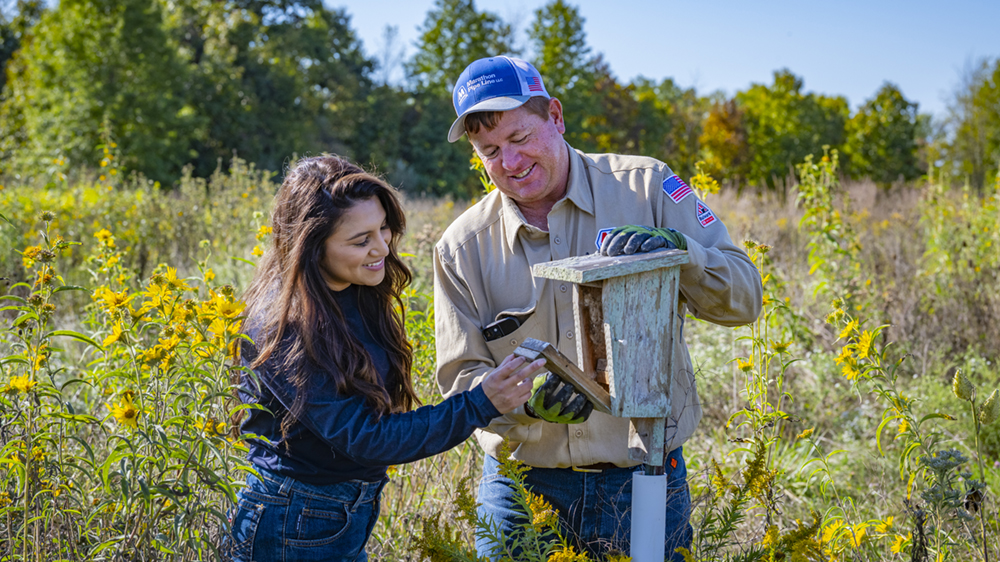
Lessy Mehler, administrative assistant, and Seth Hesler, operations technician, check a birdhouse along a right of way at a Wildlife Habitat Council site in the Illinois Wabash Valley area.

Lessy Mehler, administrative assistant, and Seth Hesler, operations technician, check a birdhouse along a right of way at a Wildlife Habitat Council site in the Illinois Wabash Valley area.

Sharpe, MPL senior environmental specialist, and Austin Bussard, MPL operations supervisor, explored the Sustainable Landscapes Program in 2021 and eventually launched it in 2023 with the goal of applying nature-based solutions to 10,000 acres of compatible rights of way by the end of 2025. These 10,000 acres represent approximately 50% of MPL’s compatible rights of way nationwide. The team hit their goal in September, months ahead of schedule.

“The rights of way are valuable from a wildlife perspective because houses will never be built on them,” Scott said. “We can help native plants and wildlife survive and thrive by creating sustainable habitats that help improve the local environment while protecting our assets and saving money.”

The new approach is saving MPL more than $2 million per year while also improving the company’s impact on biodiversity and its relationships with regulators and permitting agencies.

Circular process

The team follows a circular process to evaluate each land parcel, Sharpe said. Following a site assessment, the team develops a plan based on where it’s located, who owns it, what it’s used for, and the type of vegetation currently growing there. Then they execute and continuously monitor the site to see what works and what does not.

“For a majority of our rights of way, this is not a one-time process,” said Sharpe. “We remove invasive species to provide room for native plants to thrive. We also remove trees and shrubs with roots that may disrupt our pipelines and sometimes seed the area. In every case, we then monitor the response and make adjustments as needed.”

Last year the team seeded 1,000 acres of rights of way with integrated vegetation management (IVM) compliant seeds provided by Pheasants Forever, a wildlife conservation group.

“Each location required a different mix,” said Sharpe. “West Texas looks different from northern Utah or Ohio, so we adjust according to the local vegetation.”

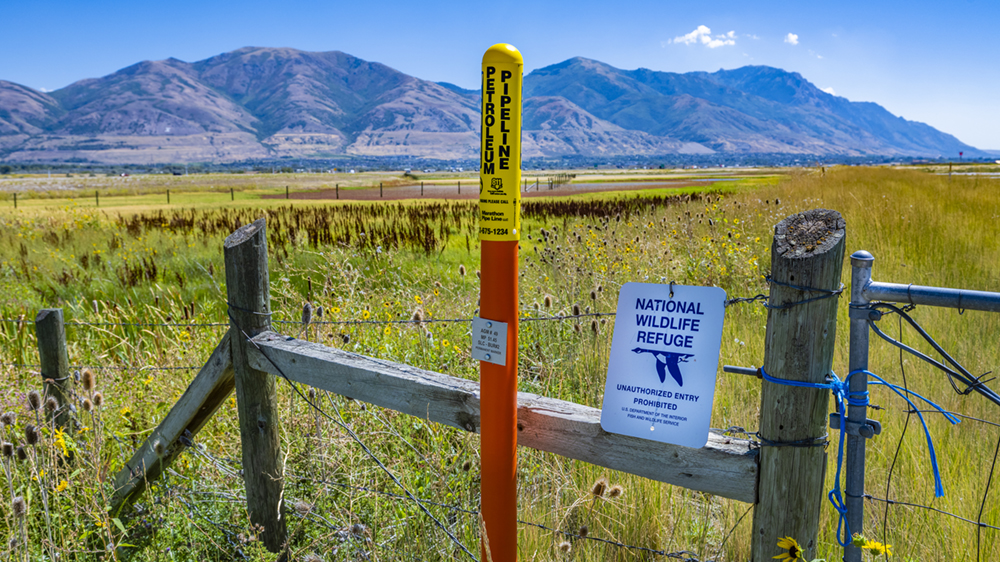
Our landscaped right of way in one of Utah’s national wildlife refuges.

Our landscaped right of way in one of Utah’s national wildlife refuges.

 The process requires constant communication and collaboration with contractors who perform the work and local stakeholders like landowners, the federal Bureau of Land Management (BLM), and even nearby beekeepers. Julie Beaschler, MPL senior right-of-way specialist who joined the team in 2022, previously worked in robotics automation and oversees the tracking and execution of the program. She built a real-time dashboard with an interactive, color-coded map of our U.S. pipeline assets to provide in-depth details on the status of each acreage parcel and which contractor services it.

“It started as an Excel spreadsheet and evolved into a more sophisticated tracking system,” she said. “It’s necessary so we know where we need to apply herbicide, where we should mow, what areas are forested, and where someone else is managing the land with crops.”

The system also helps Beaschler track the work and progress of the handful of skilled contractors used across the United States who perform specialized work with custom-built, industrial equipment.

“The contractors have to be licensed individuals to perform the work,” she said. “We train our contractors to make sure the work is performed to our expectations while ensuring safety and to help them earn the trust of landowners.”

Building trust

The duo’s work has helped build inroads with landowners who were initially uncertain and skeptical about what MPL was doing and how contractors were tending to their property in a new way. In several cases, Sharpe met face-to-face with landowners explaining the program and its methods and completely changed the relationship. A prime example is the Umatilla Reservation in Pendleton, Oregon.

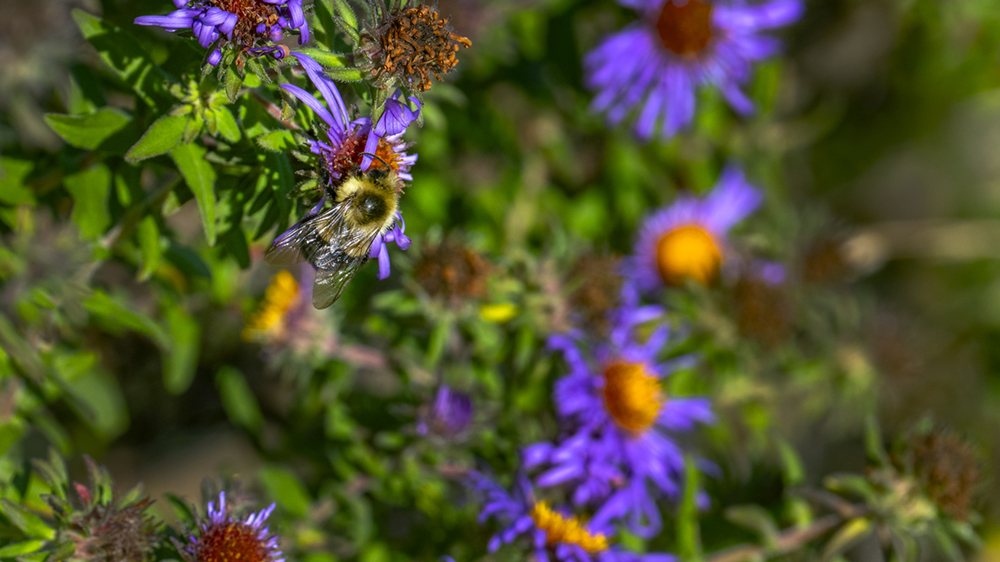
A bee visits native wildflowers along a right of way in Louisiana.

A bee visits native wildflowers along a right of way in Louisiana.

“We had a strained relationship initially, so Julie and I went out to meet with their cultural resources and natural wildlife contacts and just listened,” Sharpe said. “We learned what was important to them and what they’re trying to accomplish on their land. We spent the day in the field identifying plants and listening to the history of why it meant something to their people.”

“If they didn’t have this plant, the community struggled to make it through the winter; this one was for weddings and funerals; this one was for seasoning a favorite dish,” Sharpe said. “They explained the challenges of preserving these important plants, so we used it as an opportunity to go after invasive species and support their native plants. We slowly built the relationship through accountability and follow through and now we have their trust.”

Planning for the future

While the team achieved their initial 10,000 acres goal, they are already deep into planning for 2026 and beyond.

“Even though we hit the goal, there is still more work to be done and more opportunities at our fingertips to expand the program,” Beaschler said. “Vegetation doesn’t stop growing, and there’s always something to assess and improve on.”  

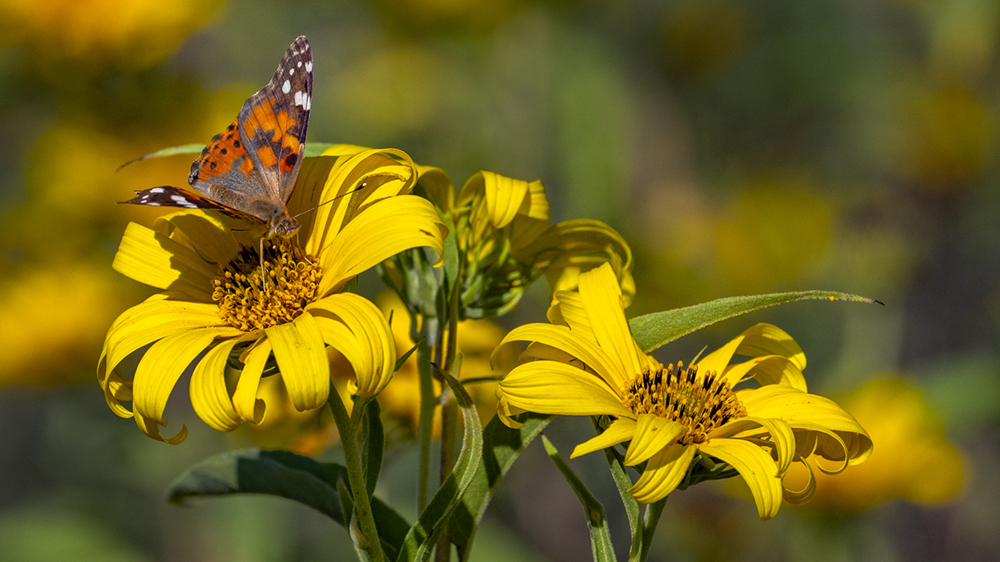
A butterfly lands on blooming flowers on a right of way in Louisiana.

A butterfly lands on blooming flowers on a right of way in Louisiana. 

Privacy Overview

This website uses cookies so that we can provide you with the best user experience possible. Cookie information is stored in your browser and performs functions such as recognising you when you return to our website and helping our team to understand which sections of the website you find most interesting and useful.