AMSTERDAM, April 10, 2026 /PRNewswire/ — OCI Global N.V. (“OCI” or the “Company”) (Euronext: OCI) today announced the publication of its 2025 Annual Report, including the audited financial statements for the year ended 31 December 2025.
The Annual Report and the audited financial statements therein include disclosures reflecting the substantial transformation of OCI during 2025, including the completion of major divestments, the return of capital to shareholders, and the resulting simplification of the group’s portfolio and capital structure.
The Annual Report has been filed with the Dutch Authority for the Financial Markets (AFM) using the European Single Electronic Format (ESEF). The 2025 Annual Report is also available for download on OCI’s website at www.oci-global.com.
Further information regarding OCI’s Annual General Meeting will be communicated in due course.
About OCI Global
Learn more about OCI at www.oci-global.com. You can also follow OCI on LinkedIn.
Climate risk is increasingly being reframed as a core business issue – not just a sustainability additive.
Shared supplier challenges highlight the need for collective solutions
Validation and opportunities for MCAP
Cascale recently contributed to Schneider Electric Perspectives Day Asia in Hong Kong, convening 150 senior executives from across the consumer goods industry. The event brought together leaders in sustainability, finance, energy, and supply chain to explore practical pathways to net-zero.
Nicole Lee-Kauer, manager of Cascale’s Manufacturer Climate Action Program (MCAP), joined a breakout panel called “Advancing Supply Chain Decarbonization: Leveraging Data, System Interoperability, and Regulatory Compliance,” injecting learnings from the Manufacturer Climate Action Program (MCAP), now in its fifth cohort.
The 18-month program is a pivotal initiative that unifies global manufacturers to combat climate change across the consumer goods industry, driving sustainable change through science-aligned targets (SATs). Engaging over 85 manufacturers to date, the program is open to all manufacturers looking to accelerate the adoption of science-aligned GHG reduction targets within their Scope 1 and 2 emissions. Manufacturers and brands can register for the informational webinar April 21 (register now).
Across the event, a clear theme was present: accountability. Organizations are increasingly integrating climate risk into enterprise-wide risk management, rather than treating it as a standalone sustainability topic. Companies such as Philippines‑based conglomerate Ayala and hotel chain Marriott are embedding climate considerations into governance structures, linking performance to executive decision-making and incentives. This reflects growing alignment between sustainability and financial accountability.
Discussions with brands and retailers, including Japanese beverage retailer Asahi, Henderson Land, and Hong Kong Land reinforced that manufacturers face similar decarbonization challenges across sectors. These shared barriers point to the importance of collective action, aligned tools, and consistent data to drive progress at scale.
A separate session offered insights from FairPrice Group’s supplier decarbonization program. There was strong alignment with Cascale’s MCAP, particularly in terms of the program’s approach to target-setting and capacity building. For example, FairPrice’s use of a supplier segmentation model and structured training offers a practical example of how brands can engage manufacturers more effectively.
At the same time, their experience underscores the role of enabling environments. Public funding, supportive policy frameworks, and cross-border partnerships are key accelerators for supplier decarbonization. These learnings present opportunities to further strengthen MCAP, including the potential development of a simple self-assessment tool to help manufacturers evaluate readiness for programs like MCAP or science-based targets.
In all, events like Perspectives Day Asia reinforce Cascale’s role not only as a convener, bringing diverse perspectives in consumer goods, but also as a contributor to cross-industry dialogue.
Global Environmental Test Chambers Market Research Report:
There’s a quiet arms race happening inside engineering labs around the world. It’s not about who can build the fastest product — it’s about who can validate it most rigorously before it ever reaches a customer. Environmental test chambers sit at the center of that race, and the numbers reflect just how seriously industries are taking it.
The global market is valued at USD 2,712 Million in 2025 and is projected to reach USD 4,809 Million by 2032 — an 8.6% CAGR that isn’t built on hype. It’s built on the very real and growing cost of failure.
Market Size & Forecast
Market Opportunities: USD 4,809 Million by 2032
By Application: Automotive and electronics remain the primary demand centers
By Type: Temperature and humidity chambers continue to dominate
Government Policies
A decade ago, regulatory compliance was something engineering teams dealt with near the end of a product’s development cycle. That approach is now effectively obsolete. Standards like MIL-STD, ISO, and ASTM are no longer destination checkpoints — they’re embedded into how products are designed from the outset.
Nowhere is this shift more visible than in aerospace. Following a wave of post-incident scrutiny, OEMs and their supply chains have moved away from sampled testing toward full-cycle stress validation. That’s a significant operational change, and it’s driving real capital investment in advanced chamber infrastructure. Meanwhile, government-backed R&D programs in the U.S. and Europe are accelerating the uptake of next-generation systems — ones that offer higher precision, greater automation, and the audit trails that regulators increasingly demand.
The test chamber market doesn’t move in isolation. It responds to complexity — and right now, product complexity across key industries is surging.
Start with semiconductors. As chip architectures become more densely packed, the tolerances for environmental variation tighten significantly. A temperature fluctuation that would have been inconsequential in a previous generation of hardware can now compromise performance or reliability. Semiconductor manufacturers are responding by investing in high-precision chambers capable of replicating extreme and rapidly shifting conditions with a level of consistency that older systems simply can’t deliver.
Electric vehicles tell a similar story, but the stakes are even higher. Battery validation has become one of the most time-intensive and technically demanding workflows in automotive engineering. Getting it wrong carries consequences that go well beyond a product recall — thermal incidents in EV batteries can be catastrophic. Leading OEMs are now deploying advanced environmental chambers to simulate years of thermal stress in a matter of days. One Tier-1 supplier managed to cut battery validation timelines by over 40% by consolidating thermal shock and humidity cycling into a single integrated test environment. That’s not just faster — it’s a fundamental rethink of how validation fits into the development calendar.
The chambers themselves have also evolved. Today’s systems are less passive enclosures and more intelligent platforms. IoT-enabled monitoring gives engineers real-time visibility into test conditions across multiple facilities simultaneously. AI-driven analytics are beginning to surface failure patterns before they emerge as physical defects — catching problems upstream, where fixes are cheap, rather than downstream, where they’re not. For procurement teams evaluating capital expenditure on testing infrastructure, that predictive capability represents a measurable return.
There’s also a clear consolidation trend on the buyer side. Instead of maintaining separate units for temperature cycling, humidity exposure, and corrosion testing, companies are moving toward multifunctional systems that handle several test environments within a single chamber. The footprint reduction is tangible. So are the workflow efficiencies, particularly in high-throughput R&D environments where floor space and technician hours are both in short supply.
By product type, temperature and humidity chambers remain the industry’s workhorse — adaptable, cost-effective, and broadly compatible with testing requirements across virtually every sector. But thermal shock chambers are gaining ground fast. Their ability to swing between extreme temperature ranges within minutes makes them indispensable for aerospace components and high-performance electronics, where material fatigue under rapid temperature change is a critical failure mode.
Specialized chambers are also carving out meaningful share. Corrosion chambers are seeing increased demand from automotive coating manufacturers and coastal infrastructure developers. Xenon chambers — which replicate long-term UV exposure in compressed timeframes — have become essential for solar panel manufacturers and outdoor materials testing. A panel designed to last 25 years in the field needs to prove it can survive the equivalent of that exposure in a lab environment, and xenon testing is how that proof gets generated.
Trends Influencing the Environmental Test Chambers Market Growth
The fundamentals driving this market come down to two converging forces: rising product complexity and the regulatory frameworks designed to manage the risks that complexity creates.
Consider what’s at stake in EV battery development. A single thermal anomaly can cause performance degradation that undermines the vehicle’s range or, in more serious cases, creates safety risks that escalate quickly. Environmental chambers let engineers simulate extreme heat, freezing temperatures, humidity cycles, and rapid transitions — all before a vehicle prototype ever leaves the controlled environment of a development facility. Testing that previously required weeks of field exposure can now be replicated in a matter of days without sacrificing rigor.
Electronics manufacturers face a version of the same challenge. As components shrink and sensitivity to moisture and heat increases, the margin for error in validation narrows. Aerospace firms are validating systems under simulated altitude and pressure conditions that most testing environments can’t replicate. Pharmaceutical companies rely on stability chambers to ensure drug efficacy holds across the full range of climatic conditions a product might encounter throughout its distribution chain — from a climate-controlled warehouse in Germany to a distribution hub in Southeast Asia.
Regulation isn’t loosening any of this pressure. Certification requirements across aerospace, defense, and automotive are becoming more rigorous, not less. MIL-STD-810 compliance isn’t optional for defense contractors; it’s the baseline. In automotive, tightening safety and emissions regulations are pushing manufacturers to extend environmental testing coverage across EV systems that simply didn’t exist in previous regulatory frameworks.
Technology investment has kept pace with these demands. Modern chambers come equipped with advanced sensor arrays, automated parameter control, and predictive maintenance capabilities that alert operators to potential equipment issues before they interrupt a test run. Remote monitoring has become standard on higher-tier systems, allowing engineering teams to manage simultaneous tests across multiple facilities without deploying additional personnel.
Sustainability considerations are reshaping procurement decisions in ways that weren’t a factor just five years ago. Newer chamber designs are meaningfully more energy-efficient than their predecessors and use refrigerants with significantly lower global warming potential. For cleantech manufacturers — solar panel producers being a prime example — there’s an obvious tension in using energy-intensive testing infrastructure to validate products built around environmental responsibility. Next-generation chambers are designed to reduce that tension, and buyers in sustainability-conscious sectors are noticing.
Customization has moved from niche request to standard expectation. Engineering teams increasingly want systems configured to their specific testing matrix — a single chamber that handles temperature cycling, humidity exposure, and vibration testing in one integrated workflow. The value isn’t just convenience; it’s the reduction in capital expenditure and the elimination of handoff points between separate test environments where inconsistencies can creep in.
Demand is also expanding beyond the market’s traditional anchors. Renewable energy infrastructure, telecom networks (particularly as 5G deployment scales and early 6G development begins), and biotech are all generating new requirements for environmental validation. These aren’t niche applications — they represent long-term demand drivers that will sustain market growth well beyond the current forecast window.
How is the Environmental Test Chambers Market Segmented?
By Type
Temperature and Humidity Chamber
Thermal Shock Test Chamber
Corrosion Test Chamber
Xenon Test Chamber
By Application
Automotive
Aerospace
Electronics
Pharmaceutical
Key Companies
ESPEC
GWS Environmental Equipment
TOMILO
Suzhou Sushi Testing Group
Chongqing Yinhe Testing Instrument
DOAHO Testing Equipment
Chongqing ATEC Technology
Weiss Technik
Hardy Technology
ZHONGZHI TESTING INSTRUMENTS CO., LTD.
Envsin Instrument Equipment Co., Ltd.
KOMEG
SOYATEA TEST
SanmTest
ATMARS
Giant Force Instrument Enterprise (Suzhou) Co., Ltd.
Automotive and electronics command the largest share of demand — and the logic is straightforward. Whether you’re stress-testing an EV battery pack or qualifying a semiconductor wafer for aerospace deployment, failure isn’t an abstract risk. It’s a liability, a recall, or worse. That’s the environment driving procurement decisions.
Temperature and humidity chambers dominate the product landscape because they’re the most versatile tool available for the widest range of testing requirements. They’re equally at home in an R&D lab running exploratory durability tests and on a production line verifying that every batch meets spec. That adaptability keeps them central to testing infrastructure across industries — and it’s why they’ll continue to lead by volume even as more specialized chamber types accelerate their growth trajectories.
Regional Analysis
Asia-Pacific remains the center of gravity for this market. The region’s manufacturing scale—particularly in China, Japan, South Korea, and India—continues to drive strong demand for environmental testing equipment.
North America is seeing robust growth, supported by high R&D spending and a strong focus on innovation, particularly in aerospace, defense, and advanced electronics.
Europe maintains a solid position, largely due to its stringent regulatory environment and well-established engineering sectors.
Emerging regions such as Latin America and the Middle East & Africa are beginning to invest more heavily in industrial infrastructure. While still smaller in scale, these markets are gradually opening new opportunities for chamber manufacturers.
SUBSCRIPTION
We have introduced a tailor-made subscription for our customers. Please leave a note in the Comment Section to know about our subscription plans.
What are some related markets to the Environmental test chambers market?
Benchtop Environmental Test Chambers Market was valued at USD 1272 Million in the year 2024 and is projected to reach a revised size of USD 1528 Million by 2031, growing at a CAGR of 2.7% during the forecast period.
Air Cooling Xenon Test Chambers market is projected to grow from USD 85 Million in 2024 to USD 114.6 Million by 2030, at a Compound Annual Growth Rate (CAGR) of 5.1% during the forecast period.
Automotive Battery Test Chambers market was valued at USD 356 Million in 2025 and is anticipated to reach USD 657 Million by 2032, at a CAGR of 9.0% from 2026 to 2032.
Valuates offers in-depth market insights into various industries. Our extensive report repository is constantly updated to meet your changing industry analysis needs.
Our team of market analysts can help you select the best report covering your industry. We understand your niche region-specific requirements and that’s why we offer customization of reports. With our customization in place, you can request for any particular information from a report that meets your market analysis needs.
To achieve a consistent view of the market, data is gathered from various primary and secondary sources, at each step, data triangulation methodologies are applied to reduce deviance and find a consistent view of the market. Each sample we share contains a detailed research methodology employed to generate the report. Please also reach our sales team to get the complete list of our data sources.
Contact Us Valuates Reports sales@valuates.com For U.S. Toll-Free Call 1-(315)-215-3225 WhatsApp: +91-9945648335
The National Fish and Wildlife Foundation (NFWF) today announced nearly $1.8 million in grants to restore, improve and conserve sagebrush, mesic wet meadow and big game migratory corridor habitats in Idaho, Utah and Wyoming. The grants will leverage $1.6 million in matching contributions, generating a total conservation impact of $3.4 million.
The grants were awarded through the Rocky Mountain Rangelands Program, a partnership between NFWF and Capri Holdings, Cargill, the USDA Natural Resources Conservation Service (NRCS) and Yum! Brands. The Rocky Mountain Rangelands Program was established in 2019 to work with private landowners wanting to voluntarily conserve and restore habitats for wildlife that often require large open spaces to sustain their populations, while also helping improve the economic productivity of their lands.
Tell us a little bit about yourself and your career journey to date.
My journey at GoDaddy began almost seven years ago when I joined as a WordPress Expert. Looking back, I can honestly say I didn’t have nearly as much knowledge or confidence as I do today, but what I did have was curiosity, determination, and an incredible team around me. With their support and a constant desire to learn, test, and improve, I grew more than I ever expected.
Before joining GoDaddy, I worked in roles that required strategic thinking, risk management, and strong communication between clients and internal teams. Those early experiences taught me how to stay calm under pressure, make thoughtful decisions, and understand different perspectives. At the time, I did not fully realize how important those skills would become in shaping my career.
Over time, I moved into a Senior WordPress Developer role, and that phase of my career helped me deepen my technical expertise and, just as importantly, strengthened my ability to understand clients beyond the technical request. I learned that solving problems isn’t just about the technical solution. It’s about understanding people, their frustrations, their goals, and what success looks like for them.
Eventually, that growth led me to my current role as a Website Solution Architect. Today, I get to combine everything I’ve learned – technical knowledge, strategic thinking, and communication – into one role. I work closely with clients to understand their vision, guide them through technical decisions, and design solutions that support their business goals.
For me, being a Solution Architect isn’t just about building websites. It’s about helping businesses feel confident in their online presence, translating complex technical ideas into clear direction, and creating something that truly works for them long-term.
And when I look back at where I started, I’m just grateful for the growth, the mentors, the challenges, and the journey that shaped me into the professional I am today.
You’re described as a “link” between clients and the design/dev teams. What does that actually look like day-to-day, and why does that bridge matter?
On a day-to-day basis, my work is centered around communication and coordination. That can mean email conversations with potential clients we’re exploring projects with, ongoing communication with clients whose websites we’re currently building, scheduled meetings to align on goals, or internal team discussions.
Some days start with presales calls, understanding a client’s vision, their business challenges, and what they’re hoping their website will achieve. Other days are focused on revision calls, walking through a live build, gathering feedback, refining functionality, and making sure we’re moving in the right direction.
A typical day often looks like this: I speak with the client to fully understand their needs, goals, and expectations, not just what they say they want, but what they’re trying to accomplish long-term. Then, I take that information back to the development and design teams. We discuss practicality, technical considerations, scalability, timelines, and the best way to approach the solution.
Once we align internally, I bring that solution back to the client, clearly explained, realistic, and tailored to their business. My role is to make sure the technical direction supports their vision, and that their vision is translated into something that is not only buildable but also sustainable.
There’s a lot of back-and-forth in this role, and that’s exactly the point. The value of being the bridge is in the constant alignment. It’s about making sure nothing gets lost in translation, that expectations are clear, and that both sides feel heard and understood.
At the end of the day, my work is less about “managing a project” and more about creating clarity, helping clients feel confident in their decisions, and helping our internal teams build with purpose and direction.
What’s been the biggest adjustment as you’ve stepped into your new role?
The biggest adjustment has been shifting my mindset from solving problems directly to designing the bigger picture.
In my previous roles, I was deeply hands-on. I focused on testing, implementing solutions, and making sure everything worked exactly as it should.
In my current role, I’ve had to step back and look at the bigger picture. Instead of just asking how something will be built, I now ask why we’re building it and whether it truly supports the client’s long-term goals.
Another adjustment has been embracing influence over execution. I’m not the one implementing every detail anymore. Instead, I help define the direction, align teams, and create clarity before the build even begins. That requires trust in the team, clear communication, and confidence in decision-making.
It also comes with greater responsibility. When you’re the bridge between clients and internal teams, you have to be comfortable having honest conversations. Sometimes that means setting realistic expectations. Sometimes it means guiding clients toward a different approach. And sometimes it means protecting the team’s time and focus.
Ultimately, the adjustment hasn’t just been about a new title. It’s been about evolving from a technical expert into a strategic partner. And while that shift challenged me at first, it’s also been one of the most rewarding parts of my journey, so far.
How do you keep yourself motivated and inspired in your work?
For me, staying motivated has never been about constant excitement. It’s about staying connected to purpose.
That purpose comes from helping people grow their businesses through their websites. A website is never just a design or a technical build. It represents someone’s vision, their investment, and often their future. Knowing that my work can help a business attract customers, generate revenue, or operate more efficiently gives real meaning to what I do.
What inspires me most is the transformation. Taking an idea and shaping it into something functional, strategic, and ready to support real growth is incredibly rewarding.
Growth also plays a big role in keeping me motivated. I enjoy learning new tools and finding better ways to deliver results. Even when tasks become repetitive, I challenge myself to approach them more efficiently or more thoughtfully. That mindset keeps things dynamic.
Just as importantly, I believe motivation needs balance to be sustainable. Taking small breaks, stepping away to reset, and allowing myself space to think clearly helps me return with a fresh perspective. Staying inspired isn’t about pushing nonstop. It’s about maintaining energy in a way that lasts.
When I focus on the people behind the projects and the long-term impact of the work, motivation feels lasting and meaningful. It becomes something natural, not something I have to chase.
What differentiates GoDaddy from other companies in Belgrade?
What truly sets GoDaddy apart from other companies in Belgrade is its combination of global impact, strong culture, and trust in its employees.
GoDaddy operates on a global scale, supporting millions of customers worldwide, yet it empowers local teams in Belgrade to make meaningful contributions. Employees are not just executing tasks. They are influencing products, processes, and customer experiences that have worldwide reach. That level of responsibility and visibility is something not every company offers.
Another key differentiator is GoDaddy’s strong customer-first mindset.
The company genuinely focuses on helping entrepreneurs and small businesses succeed, not just selling products. That sense of purpose creates a work environment where impact matters.
GoDaddy also stands out because of the flexibility it offers. The ability to work from home reflects a high level of trust in employees. It shows that the company values accountability and results over micromanagement. That trust fosters independence, ownership, and a healthier work-life balance, which is extremely important in today’s work environment.
Lastly, GoDaddy invests in growth and development. There are opportunities to learn, collaborate across teams, and continuously improve, both technically and professionally.
Overall, it’s the combination of global reach, employee trust, flexibility, and strong culture that differentiates GoDaddy from many other companies in Belgrade.
What do you enjoy doing outside of work?
Outside of work, I’m happiest in the simple moments, especially when I’m with the people and animals I love.
I have two dogs, and they’re a huge part of my life. I love taking them on walks and little hikes whenever I can. One of them is older now, so our pace isn’t always fast, and honestly, I’ve grown to appreciate that. Slowing down, catching sunsets after a walk, and just standing there for a few quiet minutes feels grounding. It helps me switch off from work and just be present.
I’m also a big fan of quiet rituals. Having coffee while watching the sunset or enjoying a slow morning helps me reset and reflect after busy days.
Spending time with friends and family is just as important to me. My three-year-old nephew brings so much joy and energy into my life. Being around him is fun, unpredictable, and refreshing all at once. He asks endless questions, brings so much energy into every moment, and constantly reminds me not to take life too seriously.
At the end of the day, I value simple, meaningful moments. They help me recharge, stay balanced, and appreciate what really matters.
Are you enjoying this series and want to know more about life at GoDaddy? Check out our GoDaddy Life social pages! Follow us to meet our team, learn more about our culture (Teams, ERGs, Locations), careers, and so much more. You’re more than just your day job, so come propel your career with us.
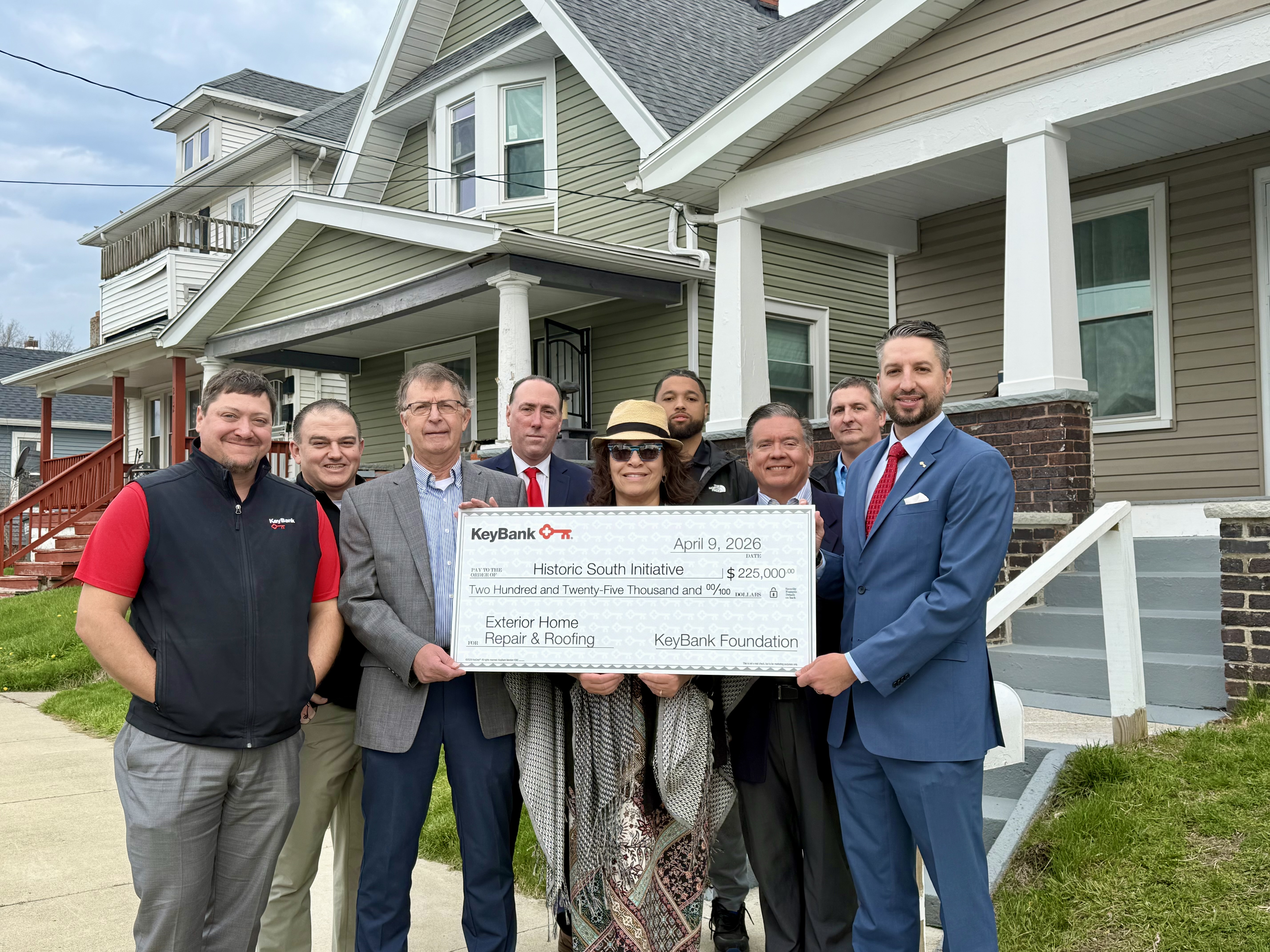
The KeyBank Foundation announced on Thursday, April 9 an investment of $225,000 in Historic South Initiative’s (HSI) Exterior Home Repair and Roofing program, a key component in preserving safe, stable and affordable housing in Toledo’s Old South End.
The program assists homeowners with support for essential exterior and structural repairs that help extend the life of existing homes, improve neighborhood appearance and enhance overall community pride and stability. The goal is to preserve existing housing stock, prevent displacement and improve neighborhood appearance and safety.
The Exterior Home Repair and Roofing Program provides financial assistance and project management support to complete critical exterior repairs for eligible homeowners. Typical projects include roof replacement, siding and window repair, gutters, porches, and painting—all of which address health, safety, and weatherization concerns. Priority is given to low‑ and moderate‑income households, seniors, and long‑term residents committed to maintaining their homes.
“Safe, quality homes are the foundation of a stable neighborhood,” said Carl Wagner, Board Chair of Historic South Initiative. “This investment from the KeyBank Foundation allows us to help more longtime residents protect the homes they have worked hard to maintain while preserving the affordability and character of Toledo’s Old South End.”
To date, the Exterior Home Repair Program has helped more than 400 homeowners’ complete critical repairs, contributing to safer housing conditions and stronger neighborhood pride throughout the Old South End.
“At KeyBank, we believe that everyone deserves the opportunity to thrive in a community that supports their aspirations,” said Carla Frost, KeyBank Corporate Responsibility Officer. “Our investment in Historic South Initiative and its programs underscores our commitment to affordable housing solutions that effect meaningful change in the lives of Northwest Ohio residents.”
ABOUT KEYCORP
KeyCorp’s roots trace back more than 200 years to Albany, New York. Headquartered in Cleveland, Ohio, Key is one of the nation’s largest bank-based financial services companies, with assets of approximately $184 billion at December 31, 2025.
Key provides deposit, lending, cash management, and investment services to individuals and businesses in 15 states under the name KeyBank National Association through a network of approximately 950 branches and approximately 1,200 ATMs. Key also provides a broad range of sophisticated corporate and investment banking products, such as merger and acquisition advice, public and private debt and equity, syndications, and derivatives to middle market companies in selected industries throughout the United States under the KeyBanc Capital Markets trade name. For more information, visit https://www.key.com/. KeyBank Member FDIC.
ABOUT KEYBANK FOUNDATION
KeyBank Foundation is a nonprofit charitable foundation that supports organizations and initiatives aimed at improving financial wellness, education, and community development. Through strategic philanthropy, KeyBank Foundation works to create thriving communities and drive meaningful, lasting change.
ABOUT HISTORIC SOUTH INITIATIVE
The Historic South Initiative (HSI) is a nonprofit organization working to strengthen the Old South End neighborhood of Toledo through housing stabilization, neighborhood improvement, and strategic partnerships. HSI’s Exterior Home Repair Program has helped repair more than 400 homes, preserving historic housing, improving safety and appearance, and supporting long-term residents. HSI collaborates with residents, community organizations, and public and private partners to ensure the Old South End remains a safe, stable, and affordable place to live.
No matter the time zone, mentorship and the confidence to lead are universal factors in professional growth and advancement at Tapestry. That’s why the work of EmpowHER, the company’s first global Employee Business Resource Group, is so important.
“EmpowHER provides a platform where we can all thrive and help each other succeed,” says Denise Kulikowsky, Tapestry Chief People Officer and EmpowHER Executive Sponsor.
What began three years ago now includes more than 500 members across North America, Europe, and the Asia-Pacific (APAC) region. As an international community, the EBRG is presented with a unique challenge of how to engage its members across geographies. For EmpowHER, the answer is simple: Think globally, execute locally.
“We’re one EBRG,” says Bridget Ryan, Tapestry Global Card Manager and EmpowHER Co-lead in North America. “But what employees are facing in APAC may be different than in North America. We’re all working toward the same messaging and goals, like supporting well-being, being inclusive and leadership development, but carrying them out locally based on our population, pillars, and communities.”
“[In the past] We worked more in silos,” says Rossella Schipani, HR Director of Field Sales Europe, based in Milan. “But since last year, with the help of Denise, we are much more connected to each other.”
BRINGING LEADERSHIP TO LIFE
In APAC, EmpowHER used this Women’s History Month to focus on programming supporting career growth and leadership.
From a virtual AI skill-building workshop to in-person financial literacy to a Fireside Chat featuring a senior leadership panel, the goal is to encourage and inspire employees, says Kelly Lin, Senior Vice President of Asia Supply chain and EmpowHER APAC Co-lead. For Sarah Tang, Sr. Director of Enterprise Solutions and EmpowHER APAC Co-Lead, building leadership opportunities means cultivating a supportive ecosystem.
“Empowerment is not only about women,” she says. “With support from families, teams and allies, career advancement gains sustainable momentum. Caring for people’s lives is the deepest form of empowerment.”
CREATING SPACE FOR WELLNESS
When it comes to caring for people’s lives, nothing’s more important than conversations about mental health and wellness in the workforce across industries and gender. EmpowHER makes sure facilitating self-care is a priority in its programming.
In North America, EmpowHER hosted an Unscripted series on menopause, featuring a session with Dr. Sharon Malone.
“We had Dr. Sharon speak to us, and after the session, we shared knowledge in a way that felt like a normal conversation over brunch,” says Nita Stephens, Director of Enterprise Solutions at Tapestry and EmpowHER North America Co-lead.
The discussion let employees talk openly about their experiences in a way that doesn’t usually happen at work. The following month, EmpowHER partnered with Tapestry’s Working Parents & Caregivers EBRG for a conversation about infertility and IVF.
“A lot of people are going through things that others may not know about,” Stephens says. “We’re just opening up space where employees can remember we’re humans first.”
OPENING DOORS FOR THE NEXT GENERATION
Beyond the workplace, EmpowHER members are inviting the next generation to explore career opportunities.
In Europe, Schipani reflects on a community initiative in suburban London where young women from The Baytree Center were invited to collaborate with Tapestry employees on a real product concept. Participants were challenged to innovate on a Coach or kate spade new york accessory, and present concepts to a panel of Tapestry leaders. This allowed them to try their hand thinking about product strategy and practice their presentation skills.
“For me it was very powerful,” Schipani says. “The creativity and energy these young women brought to the project was incredible and we enjoyed providing them with feedback.”
In New York City, EmpowHER partnered with the Lower East Side Girls Club to host recent graduates at Tapestry’s Hudson Yards headquarters. Participants toured showrooms, speed networked with employees, and were each gifted a Coachtopia bag.
“Just giving people opportunities to step into these rooms can make a big change in their life and their trajectory,” Ryan says.
And for employees, the experience was equally impactful. Says Ryan: “I got to see my coworkers from other EBRGs share knowledge, wisdom, career paths and hopefully make a difference to these students.”
SAME GOALS, DIFFERENT TIME ZONES
Through educational events, networking opportunities, and community initiatives, EmpowHER continues to gain momentum and empower members.
While issues may differ from region to region, the commitment to inclusion and highlighting important issues remains the same.
“Of course we cannot solve all the problems of the world,” Schipani says. “But we can start from our reality and our workplace.”
Every 34 seconds, someone in the U.S. loses their life to heart disease. But with the right care, it can be prevented and managed.
In a recent article, we shared why it’s critical to prioritize heart health as part of overall care. To prevent heart disease from progressing or even occurring in the first place, people need regular access to care providers, screenings and ongoing management. Unfortunately, for many Americans, that isn’t the reality.
CVS Health is making preventive heart health care, early risk detection and ongoing condition management more accessible.
Primary care and screenings to support heart health
Regular screenings for blood pressure, blood sugar and cholesterol are important for catching issues early. People who are at risk of heart failure, including older adults and those with multiple chronic conditions, may also need monitoring for abnormal heart rhythms and changes in heart structure and function.
However, with a growing shortage of primary care providers in the U.S., more than one-third of Americans don’t have consistent access for these important health screenings. Primary care providers are often patients’ main source of ongoing preventive care, screenings and referrals to specialists, including cardiologists. That’s why CVS Health is focused on making it easier for people to access services that can help them prioritize prevention.
Personalized weight loss and lifestyle support
Excess weight can put strain on the heart and cause high blood pressure, high cholesterol and diabetes—all of which increase the risk of heart disease. In the U.S., 71% of adults have an unhealthy weight, and about 42% have obesity. Losing weight is often challenging, but coaching and nutritional guidance can help people set realistic goals, develop and stick to a plan.
Smoking is another risk factor that contributes to one in four deaths from heart disease. Similar to losing weight, quitting smoking alone can be difficult—less than one in ten people who try to quit on their own are successful.
Routine screenings and heart-healthy lifestyle choices are key to preventing heart problems. If you have heart disease, you likely need regular check-ups and prescription medications. It can be challenging to stay on track. That’s why people need convenient access to clinicians they can trust, which is what we’re focused on at CVS Health.
—Sree Chaguturu, MD, President of Health Care Delivery at CVS Health
How CVS Health Care Delivery helps people stay on track
From prevention and lifestyle support to care coordination, the three businesses in CVS Health Care Delivery are helping people with their heart health every step of the way.
MinuteClinic®
For patients enrolled in MinuteClinic primary care, available in select markets, heart health is a key part of our focus on prevention and chronic condition management. We also offer preventive screenings and condition monitoring services for patients with or without primary care providers.
The MinuteClinic Weight-Loss Program, available at our clinics and through video visits, gives patients tools to help them along their weight-loss journeys. Providers can prescribe weight-loss medications for patients who meet eligibility criteria. Within the first four months, 85% of patients who completed at least three visits lost some weight.
MinuteClinic providers are also available in-person and virtually to help people quit tobacco and other nicotine-containing products through coaching, education and prescribing as appropriate.
Oak Street Health®
At Oak Street Health, we deliver primary care tailored to older adults, emphasizing preventive heart health through personalized care plans, medication management, and in some cases, on-site services to manage conditions like high blood pressure and cholesterol.
Our Oak Street Health providers are trained to give dietary education to patients who have diabetes and chronic heart failure.
Most Oak Street Health locations offer exercise classes and wellness activities that are hosted in our community rooms. Patients also have access to virtual nutrition insights through our partnership with RubiconMD.
Signify Health®
During In-Home Health Evaluations (IHEs), experienced clinicians assess plan members’ health risks and make recommendations to support their overall well-being – including lifestyle choices they can make to achieve better heart health.
Plan members at risk for arrhythmias (abnormal heart rhythms) may be eligible for continuous electrocardiogram (cECG) monitoring through an adhesive patch that measures electrical cardiac activity for 14 days. Results are shared with the member and their primary care provider for follow up support.
Continuous monitoring has been shown to be more effective at detecting abnormal heart rhythms and more comfortable to wear than conventional Holter monitors. In 2025, ~80% of cECGs completed by Signify Health clinicians indicated presence of abnormal heart rhythms.
With over 1,000 primary care and walk-in clinics, virtual care options and over three-million In-Home Health Evaluations completed each year, MinuteClinic, Oak Street Health and Signify Health are equipping patients and members for better heart health.
CVS Health is also a proud national sponsor of the American Heart Association’s Go Red for Women movement, raising awareness about the risk of heart disease among women.
SHANGHAI and SCHORNDORF, Germany, April 10, 2026 /PRNewswire/ — Sigenergy, a leading energy innovator, is entering the market for utility-scale photovoltaic systems in Europe. Together with Baden-Württemberg/Germany based PV specialist Arausol, and the European distributor Memodo, it is building Germany’s largest PV plant with decentralized storage systems that operate on direct current (DC).
The project in Weissach im Tal is currently under construction and will have an installed peak PV capacity of 11.6 MWp and a battery capacity of 20 MWh. This capacity is distributed across 1,660 Sigenergy battery modules, each with a capacity of 12 kWh, which are securely installed in stackable SigenStacks. Unlike large-scale batteries, they are deployed in a decentralized manner.
Installing SigenStacks on Arausol mounting structure—similar to PV module racks—is quick, easy, and safe, requiring no complicated cabling or the use of cranes or other heavy equipment. The solution thus avoids soil sealing, which is common in projects involving large central batteries housed in containers.
DC Coupling and AI: more power, more renewable electricity and higher revenues
Compared to AC-coupled systems, the system eliminates the need for multiple conversions between DC and AC. Instead, excess photovoltaic DC power is fed directly into the batteries and converted to AC via the inverters only when it is time to feed power into the grid. DC coupling thus increases the overall system’s efficiency—by at least 4%. It also eliminates the need for duplicate inverter infrastructure.
The DC mode also allows Arausol to increase the output of the PV system, further enhancing the project’s economic viability.
Less Need for Grid Expansion
In comparison, AC-coupled systems have technical limitations. As a result, consistent use of DC coupling for large-scale PV projects would allow for a smaller-scale expansion of the power grids required for Germany’s energy transition. This would also help keep costs low for electricity customers.
In addition to storage systems and inverters, Sigenergy is supplying Arausol with other electrical components, such as medium-voltage transformer stations equipped with pre-installed low-voltage connections. Memodo ensures reliable procurement through its delivery capability and market expertise. Arausol is responsible for the construction and project management, in addition to providing the substructures from its own facilities. Grid connection is scheduled for July 2026.
Partnership for cutting-edge technology
“This project sends a clear message: DC coupling enables utility-scale energy systems to be built faster, smarter, more efficiently, and in a more environmentally friendly way,” explains Emanuel Spahrkäs, Senior Account Manager at Sigenergy. “By combining Sigenergy’s unique DC-coupled solution with a decentralized battery architecture and Arausol’s easy-to-install mounting system, we achieve faster commissioning, higher performance, and lower operating costs.”
Jaime Arau, CEO and founder of Arausol, said: “As a leading systems integrator and project developer for photovoltaic systems, we are committed to implementing the latest technology. Thanks to its innovative DC coupling, Sigenergy is an ideal partner for realizing this goal.”
Memodo emphasized its strategic role in the project, highlighting early-stage collaboration and technology alignment. The company worked closely with the customer to define the system architecture and position Sigenergy as a suitable partner. “Our strength lies in actively bringing innovations to the market and supporting projects across the entire value chain,” said Jonas Hollweg, Head of Sales at Memodo. “The project underlines the potential of close and strategic cooperation between manufacturers, project developers and distributors in delivering advanced energy solutions.”
New campaign celebrates meaningful life “firsts” through the EV2
EV2 positioned as Kia’s smallest EV and entry point to the brand’s electric line-up
Fully integrated 360-degree European campaign spans TV, cinema, product films, print, and social-first content
Second campaign phase to introduce creator-led in summer 2026
FRANKFURT AM MAIN, Germany, April 10, 2026 /PRNewswire/ — Kia Europe has launched “The Power of Firsts”, a new integrated campaign marking the introduction of the EV2, the smallest EV in the brand’s line-up and its entry point into electric mobility.
Developed in collaboration with INNOCEAN Berlin, the campaign positions the EV2 as an enabler of new experiences. Moving beyond purely product messaging, it connects with new and emerging customer groups through emotionally grounded storytelling while reinforcing Kia’s progressive brand identity.
Celebrating new beginnings “The Power of Firsts” builds on a simple insight: first experiences shape how we see the world. Whether it is a first independent drive, a first creative step, or a first shared adventure, these moments often mark key transitions into new life chapters.
“The EV2 represents a significant step in broadening access to electric mobility within Kia’s line-up,” said David Hilbert, Marketing Director at Kia Europe. “With ‘The Power of Firsts’, we want to place the focus on the human experience. The campaign positions the EV2 as a companion to meaningful first moments and demonstrates Kia’s ambition to connect with customers in an authentic, meaningful way that reflects how they live today.”
“A campaign of this nature is, coincidentally, a first for Kia,” added Gabriel Mattar, CCO at Innocean Berlin. “It evolves over time, going from a traditional film to a social second chapter. A testimony of Kia’s constant search for innovation and inspiration in everything they do.”
The creative execution presents a distinctly forward-looking narrative. A series of intimate vignettes portrays meaningful “firsts”, all subtly connected through the presence of the EV2. Each story is crafted to resonate broadly, appealing to diverse audiences while avoiding age-based or life-stage stereotypes.
A fully integrated 360-degree approach “The Power of Firsts” launches as a multi-channel platform across Europe. The first phase of the campaign includes a hero film for television, cinema, and digital platforms, supported by dedicated product films, print executions, digital assets, and tailored social-first content for platforms such as Instagram and TikTok. The campaign has been designed modularly. This maintains a consistent narrative while allowing for adaptation across formats and markets. Neutral photography and digital assets support the EV2 product website and online brochure.
The second chapter of “The Power of Firsts” The campaign will be expanded in summer 2026 with a second phase, featuring collaborations with content creators from different disciplines. Each will revisit a defining personal “first” with the EV2 integrated into their story. Two creators introduced in the main film will continue their involvement. This approach embeds the campaign naturally within social platforms and maintains long-term engagement beyond the initial launch.
Expanding Kia’s electric portfolio As the smallest EV in Kia’s line-up, the EV2 plays a strategic role within the brand’s growing electric portfolio. It complements Kia’s larger EVs by offering a compact, design-led and emotionally distinctive electric car that captures the essence of the brand. Through progressive storytelling, the EV2 is positioned to resonate with both existing and new customer segments.
About Kia Europe Kia Europe is the European sales and manufacturing division of Kia Corporation – a global mobility brand that is creating innovative, pioneering, and leading sustainable mobility solutions for consumers, communities, and societies around the world. As a Sustainable Mobility Solutions Provider, Kia is spearheading the popularisation of electrified and battery electric vehicles and developing a growing range of mobility services, encouraging people around the world to explore the best ways of getting around.
Kia Europe, headquartered in Frankfurt, Germany, employs in total over 5,500 employees from 40 nationalities in 39 markets across Europe and the Caucasus. It also oversees European production at the company’s state-of-the-art facility in Žilina, Slovakia.Kia’s innovative products continue to attract great acclaim, notably the EV6 battery electric vehicle, becoming the first Korean car to be named European Car of the Year in 2022.
About INNOCEAN INNOCEAN, launched in 2005 as the marketing vanguard for Hyundai Motor Group, evolved rapidly into a true global marketing communications company, with over 3,800 employees and a worldwide network consisting of 23 overseas operations. Its European network, with almost 400 employees from 50+ nationalities, builds bespoke international teams in proximity to clients across its offices in Frankfurt am Main (also serving as the regional HQ), London, Paris, Madrid, Milan, Moscow, and Istanbul.
The agency has accelerated its expansion since the set-up of a European Creative Hub in Berlin. In 2018, it hired Gabriel Mattar and Ricardo Wolff as European COO and ECD respectively, to lead a tight-knit, award-winning international creative team based at the Hackescher Markt.

 View original content:https://www.prnewswire.com/news-releases/oci-global-publishes-2025-annual-report-and-audited-financial-statements-302739414.html


 View original content:






 View original content to download multimedia:


 View original content to download multimedia:
