The partnership aims to build resilience where land meets water across North America and Asia

Press Kit

WASHINGTON, April 16, 2026 /PRNewswire/ — Blue Boundaries, a partnership between the National Geographic Society and the Chubb Charitable Foundation, has selected its first focus locations across North America and Asia. Launched in 2025, the multiyear global initiative focuses on transformational change at the intersection of land and water.
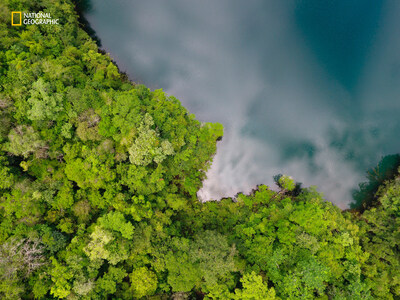
The first phase of the Blue Boundaries program focuses on freshwater wetlands and will champion scientific research and spark scalable conservation efforts across three regions worldwide. Those locations include:

  • Wetlands of Southern Mexico, Belize & Guatemala: As the gateway to the tropics for the Americas, this region’s biodiverse wetlands serve as a critical stronghold for iconic wildlife — including jaguars, howling monkeys and greater flamingos — while simultaneously supporting a robust tourism-based economy and storing vast amounts of irrecoverable carbon that is essential to achieving global climate stability.
  • Wetlands of the Lower Mekong Basin: Spanning four nations, including Laos, Thailand, Cambodia and Vietnam, the Lower Mekong Basin is a critical transnational lifeline that sustains tens of millions of livelihoods and hosts one of the world’s largest and most productive inland fisheries, producing 2.3 million tons of fish harvested every year. This region remains a global biodiversity hotspot, providing shelter for rare mammals, birds and aquatic life such as Asian elephants, Irrawaddy dolphins and Malayan tigers.
  • Wetlands of the Mississippi River: A cornerstone of North American ecological resilience, this region provides essential drinking water, economic stability through agriculture, trade and hydropower, and carbon storage. This watershed acts as an unparalleled biodiversity artery, hosting 60% of North American migratory birds and providing critical habitat for species such as beavers, river otters and American alligators.

“Wetlands are one of the most critical ecosystems globally, yet they’re disappearing three times faster than forests. Protection and resilience for the people and nature that rely on these life-sustaining ecosystems is more important than ever before,” said Ian Miller, chief science and innovation officer at the Society. “These three selections reflect our program’s commitment to illuminate and protect some of the most critical and at-risk ecosystems on our planet.”

Blue Boundaries is driven by a deep curiosity about the interconnected networks of life where land meets water. The program focuses on safeguarding three of Earth’s most vital ecosystems — freshwater wetlands, coastal systems and reefs — through high-impact, science-driven efforts to conserve, protect and restore these critical environments. It will also deploy powerful storytelling to mobilize global awareness and action in support of these ecosystems.

The progression of the program’s three phases mirrors the natural downstream flow of water, beginning with freshwater wetlands. Freshwater ecosystems, including wetlands, support the livelihoods and clean drinking water for billions of people. Both freshwater and coastal wetlands provide habitat for more than 40% of species globally.

In collaboration with leading experts and the program’s newly established science committee, the Blue Boundaries team conducted a thorough analysis to identify potential locations for the program’s first phase. From a list of 37 high-potential locations, the team selected three based on the program’s impact goals and its core scientific pillars, which focus on understanding and supporting a rich variety of life, creating a healthy carbon balance, strengthening nature’s ability to bounce back from disruption, and ensuring people and nature can thrive together.

The Blue Boundaries Science Committee consists of members from academic, conservation and partner institutions, including chair Justin Brashares, UC Berkeley professor and a member of the Society’s Committee for Research and Exploration; Katie Fiorella, Cornell University associate professor; Jason Gulley, University of South Florida professor; Ian Harrison, co-chair of the Freshwater Conservation Committee at the IUCN Species Survival Commission; Clint Willson, dean of the Louisiana State University College of the Coast & Environment; and Margaret Peloso, senior vice president, Chubb Group. This advisory group will provide specialized knowledge and mentor the cohorts of National Geographic Explorers for Blue Boundaries.

The first Blue Boundaries Explorer cohort will be selected this year through an invite-only peer-review process. Research and conservation projects funded in these three regions will focus on the program’s core scientific pillars, illuminate and elevate the instrumental role these ecosystems play for people and the environment, and advance strategies essential for habitat restoration and global resilience.

About Blue Boundaries
The National Geographic Society and the Chubb Charitable Foundation are partnering together to drive transformational change for vital ecosystems at the intersection of land and water. Led by a cohort of National Geographic Explorers, the Blue Boundaries program focuses on safeguarding three of Earth’s most vital ecosystems — freshwater wetlands, coastal systems and reefs — through on-location research and conservation projects, paired with compelling storytelling and innovative education.

To learn more about this program, visit www.NatGeo.org/BlueBoundaries

About Chubb
Chubb is a world leader in insurance. With operations in 54 countries and territories, Chubb provides commercial and personal property and casualty insurance, personal accident and supplemental health insurance, reinsurance and life insurance to a diverse group of clients. The company is defined by its extensive product and service offerings, broad distribution capabilities, exceptional financial strength and local operations globally. Parent company Chubb Limited is listed on the New York Stock Exchange (NYSE: CB) and is a component of the S&P 500 index. Chubb employs approximately 45,000 people worldwide.

Additional information can be found at: www.chubb.com.

About the National Geographic Society
The National Geographic Society is a global nonprofit organization that uses the power of science, exploration, education and storytelling to illuminate and protect the wonder of our world. Since 1888, National Geographic has pushed the boundaries of exploration, investing in bold people and transformative ideas, providing more than 15,000 grants for work across all seven continents, reaching 3 million students each year through education offerings, and engaging audiences around the globe through signature experiences, stories and content.

To learn more, visit www.nationalgeographic.org or follow us on Instagram, LinkedIn, and Facebook.
Cision View original content to download multimedia:https://www.prnewswire.com/news-releases/national-geographic-society-chubb-charitable-foundation-select-first-three-freshwater-wetland-sites-for-new-blue-boundaries-program-302743824.html

SOURCE National Geographic Society

The partnership aims to build resilience where land meets water across North America and Asia

Press Kit

WASHINGTON, April 16, 2026 /PRNewswire/ — Blue Boundaries, a partnership between the National Geographic Society and the Chubb Charitable Foundation, has selected its first focus locations across North America and Asia. Launched in 2025, the multiyear global initiative focuses on transformational change at the intersection of land and water.

The first phase of the Blue Boundaries program focuses on freshwater wetlands and will champion scientific research and spark scalable conservation efforts across three regions worldwide. Those locations include:

  • Wetlands of Southern Mexico, Belize & Guatemala: As the gateway to the tropics for the Americas, this region’s biodiverse wetlands serve as a critical stronghold for iconic wildlife — including jaguars, howling monkeys and greater flamingos — while simultaneously supporting a robust tourism-based economy and storing vast amounts of irrecoverable carbon that is essential to achieving global climate stability.
  • Wetlands of the Lower Mekong Basin: Spanning four nations, including Laos, Thailand, Cambodia and Vietnam, the Lower Mekong Basin is a critical transnational lifeline that sustains tens of millions of livelihoods and hosts one of the world’s largest and most productive inland fisheries, producing 2.3 million tons of fish harvested every year. This region remains a global biodiversity hotspot, providing shelter for rare mammals, birds and aquatic life such as Asian elephants, Irrawaddy dolphins and Malayan tigers.
  • Wetlands of the Mississippi River: A cornerstone of North American ecological resilience, this region provides essential drinking water, economic stability through agriculture, trade and hydropower, and carbon storage. This watershed acts as an unparalleled biodiversity artery, hosting 60% of North American migratory birds and providing critical habitat for species such as beavers, river otters and American alligators.

“Wetlands are one of the most critical ecosystems globally, yet they’re disappearing three times faster than forests. Protection and resilience for the people and nature that rely on these life-sustaining ecosystems is more important than ever before,” said Ian Miller, chief science and innovation officer at the Society. “These three selections reflect our program’s commitment to illuminate and protect some of the most critical and at-risk ecosystems on our planet.”

Blue Boundaries is driven by a deep curiosity about the interconnected networks of life where land meets water. The program focuses on safeguarding three of Earth’s most vital ecosystems — freshwater wetlands, coastal systems and reefs — through high-impact, science-driven efforts to conserve, protect and restore these critical environments. It will also deploy powerful storytelling to mobilize global awareness and action in support of these ecosystems.

The progression of the program’s three phases mirrors the natural downstream flow of water, beginning with freshwater wetlands. Freshwater ecosystems, including wetlands, support the livelihoods and clean drinking water for billions of people. Both freshwater and coastal wetlands provide habitat for more than 40% of species globally.

In collaboration with leading experts and the program’s newly established science committee, the Blue Boundaries team conducted a thorough analysis to identify potential locations for the program’s first phase. From a list of 37 high-potential locations, the team selected three based on the program’s impact goals and its core scientific pillars, which focus on understanding and supporting a rich variety of life, creating a healthy carbon balance, strengthening nature’s ability to bounce back from disruption, and ensuring people and nature can thrive together.

The Blue Boundaries Science Committee consists of members from academic, conservation and partner institutions, including chair Justin Brashares, UC Berkeley professor and a member of the Society’s Committee for Research and Exploration; Katie Fiorella, Cornell University associate professor; Jason Gulley, University of South Florida professor; Ian Harrison, co-chair of the Freshwater Conservation Committee at the IUCN Species Survival Commission; Clint Willson, dean of the Louisiana State University College of the Coast & Environment; and Margaret Peloso, senior vice president, Chubb Group. This advisory group will provide specialized knowledge and mentor the cohorts of National Geographic Explorers for Blue Boundaries.

The first Blue Boundaries Explorer cohort will be selected this year through an invite-only peer-review process. Research and conservation projects funded in these three regions will focus on the program’s core scientific pillars, illuminate and elevate the instrumental role these ecosystems play for people and the environment, and advance strategies essential for habitat restoration and global resilience.

About Blue Boundaries
The National Geographic Society and the Chubb Charitable Foundation are partnering together to drive transformational change for vital ecosystems at the intersection of land and water. Led by a cohort of National Geographic Explorers, the Blue Boundaries program focuses on safeguarding three of Earth’s most vital ecosystems — freshwater wetlands, coastal systems and reefs — through on-location research and conservation projects, paired with compelling storytelling and innovative education.

To learn more about this program, visit www.NatGeo.org/BlueBoundaries

About Chubb
Chubb is a world leader in insurance. With operations in 54 countries and territories, Chubb provides commercial and personal property and casualty insurance, personal accident and supplemental health insurance, reinsurance and life insurance to a diverse group of clients. The company is defined by its extensive product and service offerings, broad distribution capabilities, exceptional financial strength and local operations globally. Parent company Chubb Limited is listed on the New York Stock Exchange (NYSE: CB) and is a component of the S&P 500 index. Chubb employs approximately 45,000 people worldwide.

Additional information can be found at: www.chubb.com.

About the National Geographic Society
The National Geographic Society is a global nonprofit organization that uses the power of science, exploration, education and storytelling to illuminate and protect the wonder of our world. Since 1888, National Geographic has pushed the boundaries of exploration, investing in bold people and transformative ideas, providing more than 15,000 grants for work across all seven continents, reaching 3 million students each year through education offerings, and engaging audiences around the globe through signature experiences, stories and content.

To learn more, visit www.nationalgeographic.org or follow us on Instagram, LinkedIn, and Facebook.

Cision View original content to download multimedia:https://www.prnewswire.com/news-releases/national-geographic-society-chubb-charitable-foundation-select-first-three-freshwater-wetland-sites-for-new-blue-boundaries-program-302743824.html

SOURCE National Geographic Society

The Carajás Mining Complex is Brazil’s largest mine and the world’s largest source of iron ore. Mine operator Vale is converting Carajás Plant 1 to operate entirely with natural moisture, aiming to reduce process water consumption by 100% and eliminate tailings waste while also increasing production capacity. Rockwell is Vale’s end-to-end integration partner for the retrofit project, responsible for orchestrating and integrating automation, electrical systems, and equipment from six different suppliers.

“It’s a very complex project,” said José Roberto Silva Muniz, Control and Automation, Iron Ore North Projects Engineering Team, Vale. “Precise planning is critical because we have just a few days at a time to stop production, upgrade systems, and ensure the plant immediately reaches specified performance. We preferred an industrial automation partner with technical skills who can work with us. Rockwell is supporting us for the entire project—the hardware, the software, and the management.”

Rockwell’s PlantPAx® Distributed Control System will help Vale securely control plant operations, including waterless production processes, to optimize productivity and reduce overall operations risks. Rockwell’s Engineer-to-Order (ETO) panels, drives, and other power management components are core to the plant’s electrical systems. Rockwell’s Lifecycle Services is providing engineering services that span the full project lifecycle, from design and commissioning to optimization and support.

“The Carajás project is inside the National Forest of Carajás, and we are responsible, together with Brazil’s government, to guarantee its care,” said Muniz. “It’s also an opportunity to help change the lives of people in a region of Brazil that is far away from large industrial centers and cities.”

Discover additional sustainability stories by reading the Rockwell Automation 2025 Sustainability Report.

By Renee Thompson, Sustainability Director, Wesco International

Sustainability and security have long been treated as separate concerns — one focused on the planet, the other on protecting business. Many people don’t realize how much common ground they share, and recognizing this connection is increasingly important.

Why These Two Things Are Being Talked About Together

At first glance, sustainability and security seem very different. Sustainability is about how an organization manages its environmental impact—generally focusing on topics like reducing energy use, cutting carbon emissions, and minimizing waste. Security is about protecting the organization from harm, focusing on safeguarding data, defending systems, and keeping operations running safely.

So why are the two increasingly being discussed together now? Because the risks they deal with are starting to overlap in ways that are hard to ignore. A major storm that floods a data center is, all at once, a climate event and a security incident. A supplier without environmental governance may also lack standards across the board, including those for handling sensitive data. These aren’t coincidences, they are patterns.

Both sustainability and security are really about the same thing: making sure your organization can keep operating, today and in the future.

The Shared Language of Resilience

The word that brings them together is resilience, the ability to withstand disruption and bounce back from setbacks. Security teams have used it for years to describe systems that can withstand attacks. Sustainability professionals often use it to describe how businesses and communities cope with climate events, resource shortages, and shifting regulations.

Once you frame the goals of both teams this way, the overlap becomes clear. Reducing an organization’s dependency on a single energy source makes an organization more environmentally responsible and less vulnerable to outages. Knowing exactly who is in your supply chain helps you track emissions and reduces the risk of a security breach.

Where the Overlap Shows Up in Practice

Think about the buildings and systems that organizations rely on every day. Office buildings, warehouses, and server rooms all consume energy and need to be physically secure. When an organization upgrades to smart building technology to reduce its energy footprint, it installs connected devices, such as sensors, automated controls, and networked systems. Those same systems need to be secured against unauthorized access. A greener building and a safer building are, in this case, the same building.

The same logic applies to supply chains. Most organizations today source products and services from dozens, hundreds, or possibly thousands of external partners. Tracking the environmental information of those partners, where materials come from, and how much carbon their operations produce, requires the same kind of detailed supplier mapping that security teams use to understand who has access to their systems and data. Many organizations are starting to combine these assessments into a single process, saving time while building a more complete picture of their overall risk.

Practical examples of where sustainability and security meet:

  • Smart building upgrades that save energy also introduce connected devices that need to be secured.
  • Supplier audits for environmental standards and security practices can be run together.
  • Business continuity plans increasingly need to account for extreme weather events.
  • Reducing energy waste in data centers lowers costs, emissions, and points of failure.
  • Transparent reporting requirements for both sustainability and security push organizations to improve record-keeping and data governance across the board.

The Role of Regulation

In the EU, for example, Corporate Sustainability Reporting Directive (CRSD) requires larger organizations to report not just on their carbon footprint but also on broader risks, including operational and digital risks that could undermine their ability to meet their sustainability commitments. This is new territory for most companies and their compliance teams, and it is nudging sustainability and security colleagues to work more closely together than they ever have before.

For many organizations, the compliance process itself is where collaboration begins. A shared deadline has a way of bringing people to the same table.

What This Means for People and Culture

Beyond systems and processes, there is a human dimension to this shift. People working in sustainability and security often face the same internal challenge – making the case for investment in something whose benefits are difficult to see. You cannot point to the cyberattack that didn’t happen, just as you cannot show someone the emissions that weren’t produced. Both require organizations to look into the future and trust that prevention is worth the cost.

The shared experience of advocating for future-focused thinking in organizations that often prioritize short-term results has become an unexpected bond between professionals in both fields. They are increasingly finding that they have more to learn from each other than they once assumed.

The best organizations are not asking whether this is a sustainability problem or a security problem. They are asking: What is the right thing to do to keep this organization safe and responsible in the long term?

A Starting Point, not a Destination

For most organizations, thinking about sustainability and security together is still relatively new. There is no single established model for how to do it. The important thing is to start looking for connections by noticing when a decision in one area has implications for the other, and to make sure the right people are in the conversation when it does.

That might mean a joint review of a supplier shortlist. It might mean including sustainability considerations in a business continuity plan. It may mean scheduling a regular conversation between two teams that have historically had little reason to meet. Small steps, consistently taken, tend to compound.

Over the next decade, the organizations that successfully navigate this collaboration will likely be the ones that stop treating these as separate problems a little earlier than everyone else.

Industry-recognized indoor air quality certification from SCS Global Services strengthens compliance with leading green building standards.

AJMAN, United Arab Emirates, April 16, 2026 /3BL/ – GIBCA Furniture has achieved Indoor Advantage™ Gold certification from SCS Global Services across its core product categories, becoming the first UAE-based manufacturer to secure this certification across its full product range.

“Performance today extends beyond functionality to include indoor air quality and environmental responsibility. Achieving Indoor Advantage™ Gold certification across our product portfolio reflects our long‑term commitment to responsible manufacturing and healthier indoor environments, while supporting architects and consultants with solutions that simplify compliance and meet the evolving expectations of the built environment,” said Imran Khan, General Manager for Gibca Furniture.

As indoor environments continue to take priority in building design, material selection is no longer limited to aesthetics and durability. Emissions, air quality impact, and compliance with global standards are now central to specification decisions, particularly across commercial offices, education, and healthcare projects.

By achieving Indoor Advantage™ Gold certification, Gibca Furniture provides architects and consultants with independently verified products that meet the CDPH/EHLB Standard Method (CA 01350), complying with stringent low‑emission criteria suitable for sensitive indoor environments such as offices, schools, and residential developments. This eliminates the need for additional testing, simplifies documentation, and supports faster, more confident specification—particularly for projects pursuing LEED®, BREEAM®, and WELL™ certifications.

The certification covers Gibca’s Hufcor operable wall systems, demountable partition solutions, and its HPL product range – systems that are widely used in projects where flexibility, performance, and long-term usability are critical.

Certified product categories include:

  • 600 Series Acoustic Operable Walls: 641, 642, 643E, 645V, 363, 5630, GF Series
  • Demountable Partition Systems: Auralis 30, Auralis 100, Auralux, Linea
  • HPL Solutions: Kitchen Cabinets, Kitchen Countertops, Toilet Cubicles, Wall Cladding

For project teams, this certification directly supports compliance requirements tied to indoor air quality credits, helping reduce risk during design approvals and certification audits. It also ensures that materials used within enclosed environments contribute to healthier indoor conditions over the life of the building.

“GIBCA Furniture Company has shown a clear dedication to product transparency and indoor air quality by achieving certification across multiple product categories. The achievement reflects a growing commitment to delivering low‑emitting products that support high‑performance, sustainable buildings,” states Rob Emelander, Operations Director for Environmental Certification Services at SCS Global Services.

About GIBCA Furniture Company

Gibca Furniture, part of the GIBCA Group, is a leading space management solutions provider across the MENA region. Since the 1990s, the company has delivered workspace solutions across more than 75,000 installations spanning the Middle East, Central Asia, and Africa. Gibca Furniture offers a comprehensive range of systems designed to support evolving interior requirements, including operable partitions, demountable partition systems, high-pressure laminate (HPL) applications, and acoustic solutions. With Hufcor now part of Gibca Furniture, the company further strengthens its offering in operable wall systems, bringing globally recognized solutions into the regional market with local expertise and execution. For more information, visit www.gfiuae.com

About SCS Global Services

SCS Global Services is an international leader in third-party environmental and sustainability verification, certification, auditing, testing, and standards development. Its programs span a cross-section of industries, recognizing achievements in climate mitigation, green building, product manufacturing, food and agriculture, forestry, consumer products, and more. Headquartered in Emeryville, California and celebrating over 40 years in business, SCS has representatives and affiliate offices throughout the Americas, Asia/Pacific, Europe, and Africa. Its broad network of auditors are experts in their fields, and the company is a trusted partner to companies, agencies, and advocacy organizations due to its dedication to quality and professionalism. SCS is a chartered Benefit Corporation, reflecting its commitment to socially and environmentally responsible business practices. SCS is also a Participant of the United Nations Global Compact and adheres to its principles-based approach to responsible business. For more information, visit www.SCSGlobalServices.com.

  • 32 grants totaling more than $250,000 enable community‑led park and green space projects across six states

CHARLOTTE, N.C., April 16, 2026 /PRNewswire/ — The Duke Energy Foundation has awarded 32 grants totaling more than $250,000 to local nonprofit organizations working to revitalize parks, playgrounds and shared green spaces across North Carolina, South Carolina, Ohio, Indiana, Kentucky and Florida.

Grant funding will support community‑led cleanups, public landscaping efforts, playground improvements and trail enhancements – helping strengthen outdoor spaces where families and individuals gather for recreation, connection and community events.

Why It Matters

These grants represent the first announced awards under the Duke Energy Foundation’s America250 initiative, a more than $1 million investment supporting community‑driven projects across the company’s service territories in recognition of America’s 250th anniversary.

The investment coincides with Earth Day volunteer efforts, as Duke Energy employees participate in park cleanups and beautification projects across the communities they live and work in. Together, these grants and volunteer efforts help improve shared spaces while delivering tangible, local impact.

Additional America250 grant recipients will be announced later this spring, including support for veterans’ workforce pathways and initiatives that expand access to history and civics education.

Duke Energy Foundation
Duke Energy Foundation provides nearly $30 million annually in philanthropic support to meet the needs of communities where Duke Energy customers live and work. The Foundation is funded by Duke Energy shareholders.

Duke Energy
Duke Energy (NYSE: DUK), a Fortune 150 company headquartered in Charlotte, N.C., is one of America’s largest energy holding companies. The company’s electric utilities serve 8.7 million customers in North Carolina, South Carolina, Florida, Indiana, Ohio and Kentucky, and collectively own 55,700 megawatts of energy capacity. Its natural gas utilities serve 1.6 million customers in North Carolina, South Carolina, Ohio and Kentucky.

Duke Energy is executing an energy modernization strategy, keeping customer value at the forefront as it invests in electric grid upgrades and efficient generation resources to strengthen the system and serve growing energy needs.

More information is available at duke-energy.com. Follow Duke Energy on X, LinkedIn, Instagram, TikTok and Facebook for stories about the people and innovations powering its communities.

Media Contact: Gina DiPietro
24-hour: 800.559.3853

Cision View original content to download multimedia:https://www.prnewswire.com/news-releases/ahead-of-earth-day-duke-energy-foundation-announces-first-round-of-america250-grants-to-revitalize-local-parks-and-green-spaces-302738772.html

SOURCE Duke Energy

Originally published by Mastercard

By Vicki Hyman
Director, Global Communications, Mastercard

Financial health is often framed as a long-term goal: building wealth, buying a “forever home,” planning for retirement, perhaps even early retirement. But new global research from Mastercard suggests that for many consumers today, financial health is far more immediate and practical.

Across 11 markets, consumers defined being “financially well” first and foremost as paying bills on time without stress (50%) and being free from debt (50%; rising to 56% and ranking most important of those with low income), followed closely by having emergency savings (47%) and being able to comfortably afford everyday essentials (45%) — gas, not tropical getaways; medicine, not Michelin-star meals.

Longer-term goals like building wealth or retiring when they want fall much lower on the list, underscoring how rising costs, economic uncertainty and day-to-day pressures are reshaping what “doing well” really means.

The findings come from a 2026 survey of 9,605 consumers and 2,276 small businesses across the United States, Canada, Brazil, Mexico, Colombia, the United Kingdom, France, Germany, Australia, India and China, offering a broad view into how people are experiencing their financial lives today.

The survey found that fewer than 1 in 4 (24%) people describe their current financial situation as “very comfortable,” with nearly 3 in 10 (29%) saying they are “just getting by” or “struggling,” more common among lower income segments (46%) and those who are underbanked (35%).

But despite the pressures shaping today’s definition of financial health, optimism remains resilient, with 61% of consumers (65% underbanked) saying they believe their best days are still ahead.

Back to basics

When asked what it means to be financially well, consumers consistently prioritized stability over aspiration. Barely a third named building wealth, and just over a quarter said being able to retire when they want.

“People need to feel confident about getting through the day before planning for the future,” says Shamina Singh, president and founder of the Mastercard Center for Inclusive Growth. “True financial health depends on whether people can use financial tools with confidence, manage short-term needs and weather unexpected shocks.”

That understanding underpins Mastercard’s next chapter in this space — a commitment to connect and protect 500 million people and small businesses on their pathways to financial health by 2030. The focus is on supporting the full journey, from access to active use, from use to security, and from security to long-term resilience, so that participation in the digital economy feels safe, practical and reliable.

This work follows Mastercard’s work during the last decade to bring more than 1 billion people and 65 million small businesses into the formal financial system, which was a critical first step in providing access to digital and financial tools.

This new commitment may look different in different markets. In Africa, farmers are creating a digital profile that can unlock affordable digital financial services through the MADE Alliance initiative. In Southeast Asia, factory workers are receiving digital wages, a safer option than cash, and one that gives them more control over their finances. In North America, small business owners are accessing affordable cyber solutions to protect their enterprises and AI-powered agents that can act as digital executives to gain deeper insights into their operations so they can grow smarter and faster.

And around the world, the Global Financial Health Coalition, launched last year by Mastercard, is convening leaders across the ecosystem to strengthen trust, expand protection and embrace innovation, moving people beyond short-term survival toward lasting financial confidence and opportunity.

“Advancing financial health at scale requires shared insight and collective action,” says Bunita Sawhney, chief consumer product officer at Mastercard. “By bringing different perspectives together, we can better understand what people and small businesses actually need — and design solutions that help them build resilience in ways that are trusted and relevant to their everyday lives.”

Global research data from Mastercard’s Global Financial Sentiment Survey 2026. Contact Jenna.Yasgur@mastercard.com for more information.

Continue reading here.

Follow along Mastercard’s journey to connect and power an inclusive, digital economy that benefits everyone, everywhere.

WHO

Fairtrade America, Marketplace of the Future, D.C. Climate Week

WHAT

Approaching its 10th annual event in NYC, the Marketplace of the Future is the longest running consecutive event in NYC Climate Week history and is making its second year return in D.C. this month. The Marketplace of the Future, as one of D.C. Climate Week’s primary features, shows the public what the future could look like if we give ourselves full permission to envision the ideas, products, services that collectively form a model of a healed planet – whether it’s repair stations or solar infrastructure companies. Marketplace of the Future offers achievable steps toward creating a more sustainable future.

Fairtrade America sees a future where exploitative trade no longer exists, where fair trade becomes the normalized, integrated structure of global trade. We see a future where consumers don’t have to choose Fairtrade products because fair trade practices like market minimums and additional premiums are built into standard practice.

You’ll see Fairtrade America at this year’s D.C. Climate Week Marketplace for the Future, representing a future where all individuals – farmers, traders, manufacturers, shippers, labelers and consumers – equitably share trade’s benefits.

WHEN

April 25, 2026
12-10:00 p.m. Eastern

WHERE

The Square at 1875 I. St. N.W.
Washington, D.C.

WHY

Fairtrade works to rebalance trade, making it a system rooted in partnership and mutual respect rather than exploitation. It’s about businesses, shoppers, farmers and workers all working together so we can all experience the benefits of trade. We envision a future where all producers can enjoy secure and sustainable livelihoods, fulfil their potential and decide on their future.

Despite mounting pressure from economic uncertainty and inflation, recent consumer research from GlobeScan shows that 72% of U.S. consumers who said they have seen the Fairtrade Mark are willing to pay more for a product to help farmers earn a fair price. In fact, ⅔ of shoppers who know Fairtrade are willing to pay more for certified products: $1.50 more for a Fairtrade bar of chocolate, $3.40 more for a bag of Fairtrade coffee and $0.80 more per pound for Fairtrade bananas.

ABOUT FAIRTRADE AMERICA

Fairtrade America works to rebalance trade, making it a system rooted in partnership and mutual respect rather than exploitation. It’s about businesses, shoppers, farmers and workers all working together so we can all experience the benefits of trade. Fairtrade America is the U.S. branch of Fairtrade International, the original and global leader in fair trade certification with more than 30 years of experience working for fair trading practices in more than 30 countries across the globe. A non-profit 501(c)3 organization, Fairtrade America is part of the world’s largest and most recognized fair trade certification program — part of a global movement for change. Learn more at fairtrade.net, and by connecting with Fairtrade America on Facebook, Instagram and LinkedIn.

Fairtrade takes human rights, sustainability and trade personally. Though consequences often go unseen, companies’ and consumers’ choices have human and environmental costs. By choosing Fairtrade, businesses, shoppers, farmers and workers can create a better world – one that puts people and planet over profits. Together, we can prioritize global partnership and our shared humanity.

ABOUT MARKETPLACE OF THE FUTURE

Inspired by the 1939 New York World’s Fair, Marketplace for the Future in Washington, D.C. is an expo designed to highlight climate solutions and the possibilities of a more sustainable future. Scheduled for April 25, 2026, the event will feature exhibitors, panels, live jazz and more to create an immersive experience for attendees.

MEDIA CONTACT

Liz Davis, Fairtrade America

202.930.4349 | ldavis@fairtradeamerica.org

Privacy Overview

This website uses cookies so that we can provide you with the best user experience possible. Cookie information is stored in your browser and performs functions such as recognising you when you return to our website and helping our team to understand which sections of the website you find most interesting and useful.