At Henkel, our pioneers are driven by an unwavering spirit to explore, create, and transform possibilities into progress and improve life for generations to come. Learn their stories.
Pioneers at heart for the good of generations

In this story, you will discover:

Introducing Melissa Jacobs

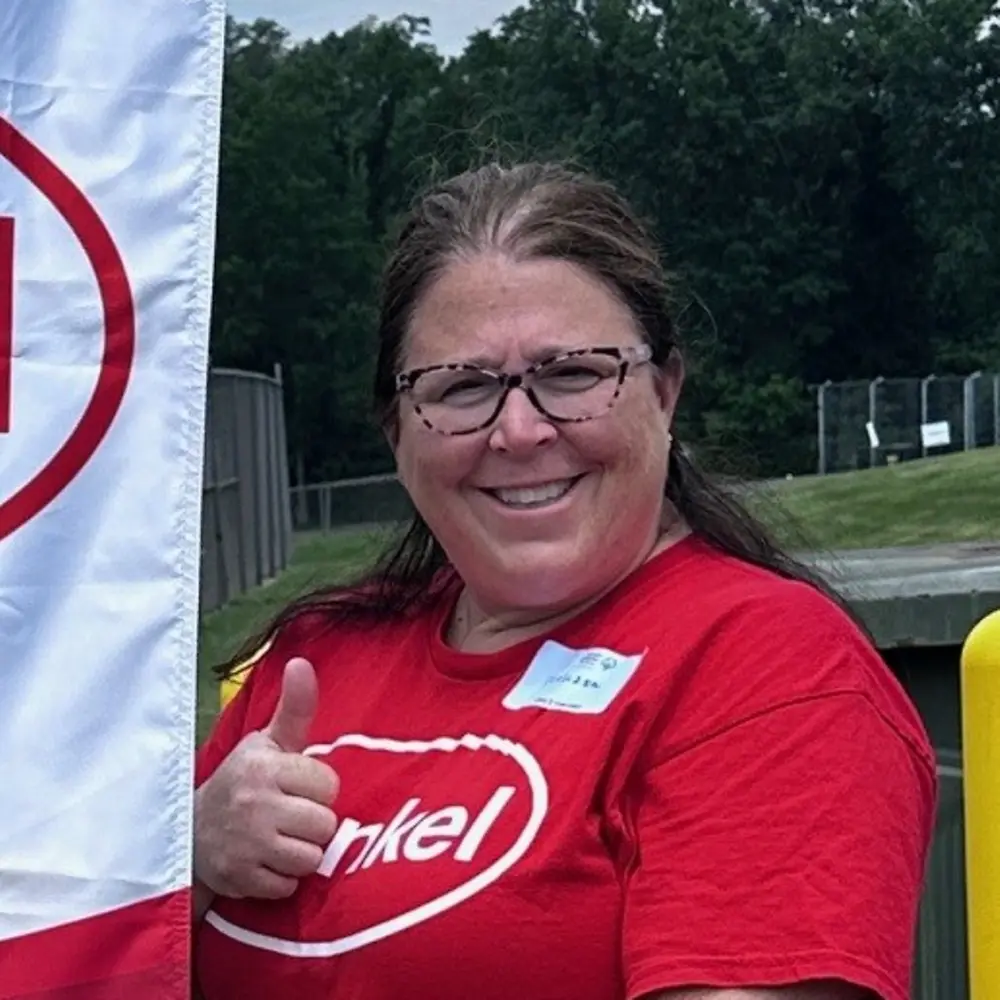
For Melissa Jacobs, inclusion starts with empathy and grows through action. As a senior litigation paralegal for Henkel North America, a longtime volunteer with Special Olympics CT and a leader of Henkel’s Awareness of Visible and Invisible Disabilities (AVID) Employee Resource Group (ERG), Melissa helps create spaces where people feel valued and empowered to participate fully.

Melissa shares what inspires her to be a pioneer for good

Creating Space to Be Seen

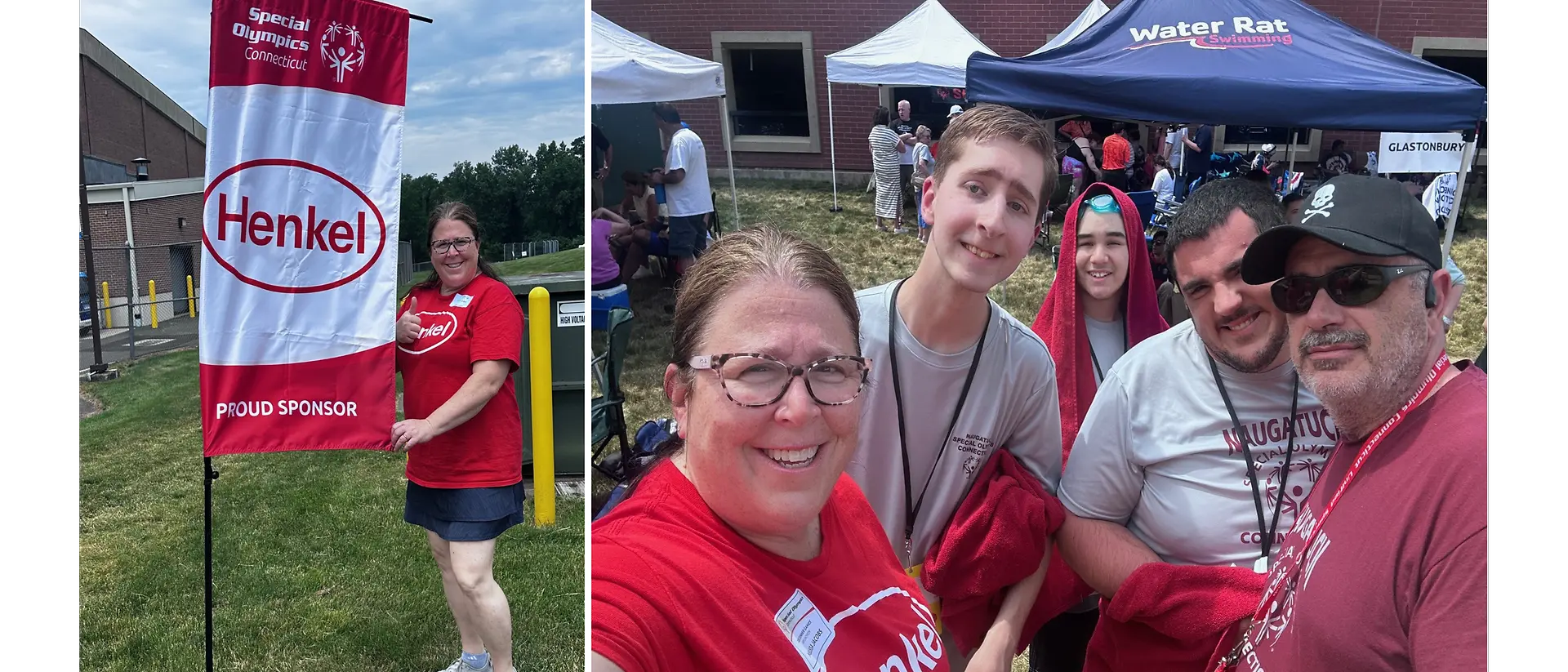
The Special Olympics CT summer games in June 2026 marked the 15th year of Henkel’s support through employee volunteering and donations. Melissa is the lead organizer for the Henkel team – with a passion and connection for the games that began when she was younger, volunteering as a one-on-one escort for athletes at local events. Years later, her connection to the organization has taken on an even deeper meaning.

For Melissa, the most powerful moments are often the most personal.

As the parent of a son with a learning disability, Melissa saw volunteering as an opportunity to help build his confidence while showing him that people can face challenges, persevere, and achieve remarkable things. She has seen the growth in confidence for her son and the many athletes she meets at the games.

She also recalls when an athlete named Stephen, whom Melissa had never heard speak during the two years she had known him, stepped on stage during a karaoke event at the winter games in CT and confidently sang every word of a rock song.
Pioneers for Good: Melissa Jacobs

When individuals feel included, it gives them a sense of belonging. When people feel like they belong, they start to advocate for themselves and take chances because they have that confidence.

Melissa Jacobs, Senior litigation paralegal for Henkel North America

Melissa’s commitment has earned significant recognition, including selection as one of 60 Henkel volunteers for the 2023 Special Olympics World Games in Berlin, Germany, and receiving Special Olympics CT’s Unsung Hero Award.

Small Changes, Meaningful Impact

Melissa hopes more Henkel employees can experience how volunteering can foster a deeper appreciation for Special Olympics athletes and others in need while offering meaningful lessons in resilience, confidence and inclusion.

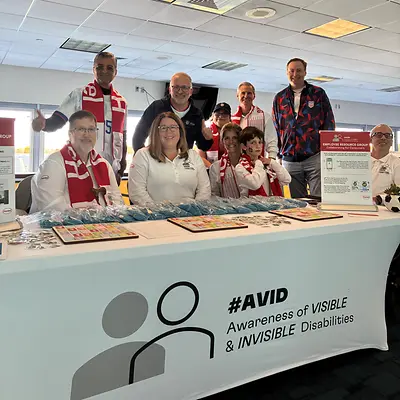
That commitment carries into Melissa’s work with Henkel’s Awareness of Visible and Invisible Disabilities (AVID) Employee Resource Group (ERG). As one of the ERG’s leaders, she helps raise awareness around visible, invisible, permanent and temporary disabilities while encouraging employees to better support and understand one another’s experiences.
Pioneers for Good: Melissa Jacobs

Melissa and her AVID colleagues are continuously identifying meaningful opportunities to raise awareness, including:

  • Hosting a table of education materials and sign language resources at Henkel’s Match and Mixer soccer event for employees and their families where one match featured the German and U.S. Men’s Deaf National Teams.
  • Organizing an empathy-building VR experience to give Henkel colleagues an opportunity to better understand experiences related to autism, dementia, low vision and hearing impairment.
  • Co-hosting a series of accessibility learning sessions with Henkel’s IT team to help colleagues better understand the digital tools on their Henkel computers to support different audio/visual needs.

For Melissa, progress does not require a large-scale solution. Sometimes it starts simply with active listening, recognizing needs that may not be immediately visible and making small adjustments that help people feel comfortable and seen.

If we can make an impact and improve just one person’s day-to-day experience at Henkel, then we’re making progress.

Melissa Jacobs, Senior litigation paralegal for Henkel North America

Building a More Inclusive Future

As Henkel celebrates its 150th anniversary under the motto “Future? Ready!”, Melissa believes building a more inclusive future starts with the actions people take every day through their interactions with colleagues at work or volunteering in the community. It is about consistently choosing empathy, listening to understand and helping others feel they belong.

By championing trust, advocacy and awareness, Melissa is helping build a more inclusive future, one colleague, one athlete and one community at a time.

" "" "" "

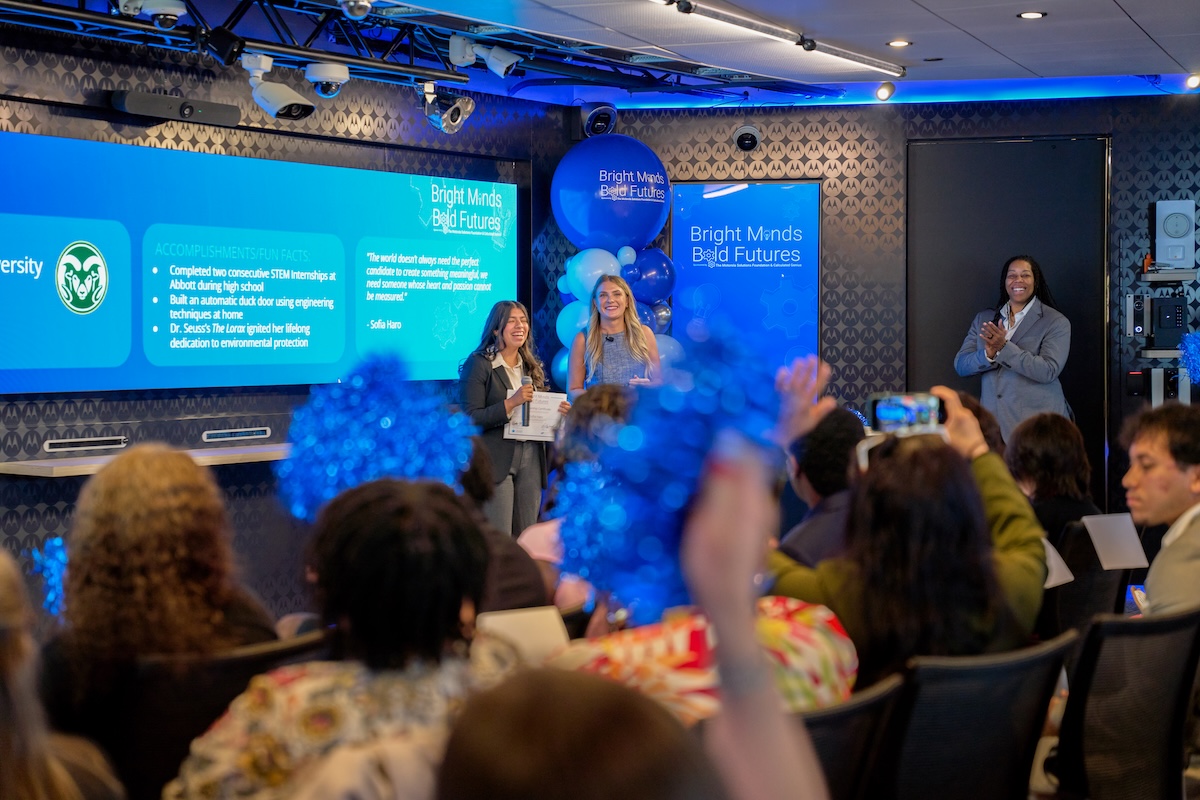
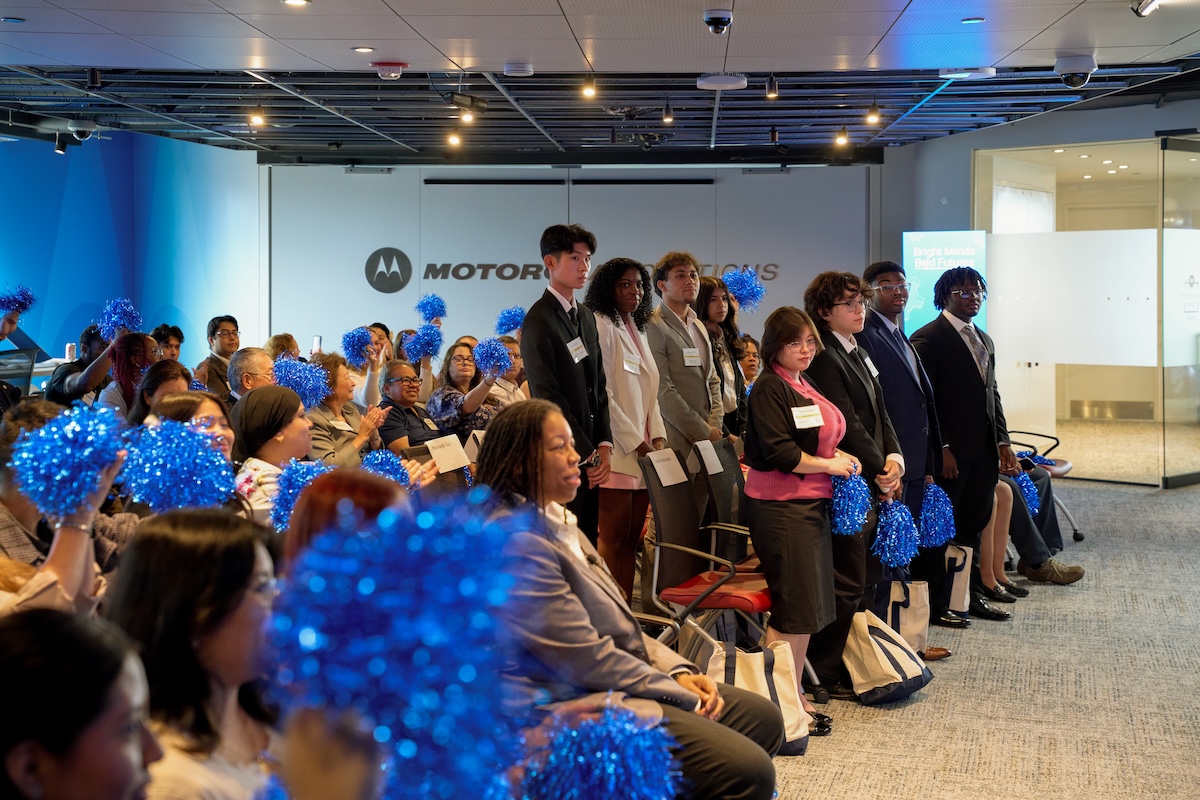
Ten extraordinary Chicagoland high school seniors recently gathered at Motorola Solutions’ global headquarters in Chicago, joined by family members, mentors and community leaders to celebrate their academic careers and Bright Minds, Bold Futures scholarships. Each student was recognized for their academic achievements as they took this significant step toward shaping the next generation of engineering.

A Shared Commitment to Opportunity

Now in its fourth annual cohort, Bright Minds, Bold Futures grew out of a clear goal: to remove the barriers that keep talented students out of engineering. The program reflects an ongoing partnership between the Motorola Solutions Foundation and Calculated Genius. This year’s recipients, along with the 50 students who came before them, earned their place through determination and persistence in the face of real challenges. Several of these scholars are headed to institutions including the University of Southern California, the University of Illinois Urbana-Champaign and Hampton University.

To date, the Motorola Solutions Foundation has awarded more than $425,000 to support scholarships for over 60 students through the Bright Minds, Bold Futures program.

people talking at event

More than Financial Support

Funding opens the doors, but the heart of the program is the community that surrounds each student. Scholars connect with one another and gain access to a professional network that stays with them through college and into the early years of their careers. This structure means students have guidance and encouragement at every stage, not just at the start.

During the event, Calculated Genius Founder Kimberly Moore made clear that diversifying engineering isn’t a side goal — it’s the foundation of her organization’s work. She emphasized that the field must reflect the full range of people who stand to shape it. Motorola Solutions Foundation Executive Director Wesley Barden Touhy reinforced that message, speaking to the Foundation’s long-term investment in removing financial obstacles and building the kind of institutional support that moves students from potential to achievement.

people standing up at group event

Passing the Torch

A highlight of the ceremony came as each new scholar stepped forward for the certificate presentation, with their achievements and college plans read aloud. The recognition of returning scholars followed, a reminder of the long-term community taking shape around the program. Surrounded by proud families and supporters, the moment captured the connection forming between generations of engineers.

“As you start this journey, remember that nobody builds alone. Bet on yourself, out loud, and stay curious. And when you reach your goals, look back and be that same support for someone else coming up behind you,” Kimberly Moore said during her congratulation speech to the new scholars.

Congratulations to this year’s scholarship recipients, and continued best wishes to our current scholars.

June 30, 2026 /3BL/ – The LA Galaxy Foundation, the charitable arm of the LA Galaxy, which is owned by AEG, has been named a recipient of the 2026 Braille Institute Community Hero Award, recognizing its leadership in expanding access to sport and advancing inclusive programming for individuals who are blind or have low vision.

This honor builds on a growing portfolio of impact driven recognition for the organization, including the Kevin Payne Community Impact Award from the U.S. Soccer Foundation, which celebrates professional teams that use soccer to engage youth and strengthen under resourced communities, as well as Major League Soccer naming the Galaxy its 2025 Marisa Colaiano Community Impact Club of the Year.

Guided by a commitment to equity, access, and community partnership, the LA Galaxy Foundation continues to invest in innovative programming that removes barriers to participation. Notably, the Foundation hosted the first Blind Soccer Experience at Dignity Health Sports Park and supported the development of Los Angeles’ first blind soccer pitch. These efforts created meaningful opportunities for LAUSD students who are blind or have low vision to train with members of the U.S. Blind Soccer Men’s National Team as they prepare for the LA28 Paralympic Games, fostering both confidence and skill development while elevating awareness of adaptive sport.

The award was presented during the globally recognized Braille Challenge Finals, held June 26 to June 28 at the University of Southern California. Honorees were selected through a competitive nomination process evaluated by a panel of internal and external experts, with a focus on demonstrated leadership, measurable impact, and sustained contributions across corporate, small business, government, and nonprofit sectors.

This recognition underscores the LA Galaxy Foundation’s commitment to leveraging sport as a platform for inclusion and social impact, helping to create more equitable access to opportunity across the Los Angeles community.

As AI moves from experimentation into critical infrastructure, a new reality is emerging across Europe and the Middle East: control over data, compute and energy is becoming as important as performance itself.

This shift is already well underway. 88% of IT decision-makers view data sovereignty as critical to competitiveness, and nearly all expect it to remain a priority over the next five years. As regulation tightens and the value of data continues to rise, organisations are rethinking not just how AI is built, but where it lives, who controls it, and how it is governed.

Regulatory pressure and geopolitical complexity are accelerating this transformation. Organisations are being challenged to scale innovation globally while maintaining local accountability, compliance and trust.

This is redefining infrastructure strategy. AI is no longer just a software challenge, it is an infrastructure decision. And increasingly, it is a sovereign one.

Delivering high-performance at scale

Lenovo has maintained long-term global leadership in in high-performance computing, with ThinkSystem technology currently powering 133 supercomputers on the latest TOP500 list[1]. Remaining at the forefront of this transformation, Lenovo powered HPC clusters are enabling organisations across industries and markets, to build and scale sovereign AI environments with high-performance, energy-efficient infrastructure designed to deliver control, performance and sustainability – without compromise.

At the same time, Lenovo continues to demonstrate leadership in sustainable computing, with strong representation in the Green500 rankings for energy-efficient supercomputing – including one of the top 5 listed.

A changing landscape: from experimentation to infrastructure

Market momentum underscores that this shift is structural, not incremental. According to Lenovo’s CIO Playbook, 93% of organisations in Europe and the Middle East are increasing AI budgets, with infrastructure now the top investment priority. Meanwhile, 82% are planning on-premises or edge deployments, reflecting a clear preference for environments that offer greater control, compliance and performance.

Crucially, organisations now rank scalable, high-performing, and energy-efficient infrastructure as one of the most critical success factors for AI adoption. This is a clear indicator that AI has become fundamentally dependent on the underlying compute architecture.

Across the region, regulatory frameworks such as GDPR and the EU AI Act, combined with sovereign cloud mandates and national AI strategies, are accelerating this shift. At the same time, enterprises are prioritising the protection of intellectual property and sensitive data, driving a move toward more controlled and localised AI environments.

The result is a profound evolution in the role of HPC. GPU clusters are moving into sovereign data centres, governments are investing in national supercomputing, and enterprises are building private AI platforms – transforming HPC from research infrastructure into a foundation for competitiveness and digital independence.

Delivering real-world results

This transformation is already delivering tangible outcomes. At TechWorld earlier this year, Lenovo unveiled its AI Cloud Gigafactory program with NVIDIA, and Hybrid AI Factory Services, enabling organisations to deploy sovereign, secure and specialised AI environments at scale. Built on next-generation accelerated computing architectures, these solutions allow organisations to bring AI closer to their data – while maintaining full control over performance, cost and compliance. Across Europe and the Middle East, organisations are already translating this capability into real-world impact.

  • In Germany, Lenovo is powering next-generation sovereign AI research in the Free State of Bavaria at the HPC-center of University of Erlangen (NHR@FAU), enabling the development of large multi modal models under strict GDPR requirements. The system delivers secure, high-performance compute at national scale, which demonstrates how purpose-built HPC infrastructure can help Europe advance AI innovation while retaining full control over data and compliance.
  • In France, the University of Grenoble Alpes has inaugurated the CINAURA “Kraken” supercomputer enabling researchers to process complex datasets locally while strengthening national digital sovereignty. This allows faster, more secure AI-driven discovery across disciplines ranging from physics to advanced computing.
  • In Azerbaijan, AzInTelecom has launched the country’s first Supercomputer Center, built on Lenovo infrastructure, to support its national AI strategy. By enabling AI workloads – from public services and language platforms to cybersecurity and research – to be developed and run in-country, the platform is helping to strengthen data sovereignty while accelerating innovation.

But these are not isolated examples, they are signals of a broader trend: AI infrastructure is being rebuilt around sovereignty, scale and control.

Energy efficiency: powering sustainable scale

As organisations scale AI, a new constraint is emerging; energy. AI workloads are inherently power-intensive and without efficient infrastructure design, scaling them becomes economically and environmentally unsustainable – particularly in Europe, where energy costs and regulatory scrutiny are intensifying.

This is driving a fundamental rethink of data centre design.

Technologies such as liquid cooling, higher rack density and intelligent workload management are no longer optional enhancements, they are essential to unlocking sustainable AI at scale. By enabling more efficient heat removal and higher compute density, these innovations allow organisations to maximise performance while reducing energy consumption and environmental impact.

Lenovo is leading this shift through its Neptune® liquid cooling technology, which can improve energy efficiency by up to 40% while enabling higher-performance HPC and AI workloads. Deployed in environments such as Formula 1’s Media & Technology Centre, Neptune demonstrates how advanced cooling can simultaneously drive performance, efficiency and sustainability.

In this context, energy efficiency is no longer just an operational consideration, it is becoming a strategic differentiator.

Lenovo Neptune

Powering the future of sovereign AI strategies

The convergence of AI scale, regulatory pressure and energy constraints is creating a new reality for organisations across Europe and the Middle East. Sovereign AI is no longer a niche concept, it is becoming the default model for enterprise and national AI strategies.

In this new landscape, scalable and energy-efficient infrastructure is not optional. It is the foundation on which organisations can:

  • Protect and control their data
  • Comply with evolving regulations
  • Scale AI workloads with confidence
  • Build a long-term competitive advantage

By combining global HPC leadership with a full-stack AI portfolio spanning infrastructure, software and services, Lenovo is enabling organisations to move from experimentation to production – from AI ambition to real-world impact.

Visit booth D30 at the International Supercomputing Conference in Hamburg from June 22-26 to discover how Lenovo is powering the next era of sovereign AI.

[1] including Lenovo ThinkSystem installations by other vendors.

CLEVELAND, June 30, 2026 /3BL/ – KeyBank Community Development Lending and Investment (CDLI) provided a $16.5MM taxable construction loan, a $9.4MM federal LIHTC equity investment, and a $8.2MM state LIHTC investment on behalf of National Church Residences (NCR) to finance the new construction of Clover Glen II, a 96-unit affordable housing project for seniors aged 55+ in Galloway, Ohio.

KeyBank Commercial Mortgage Group also provided a Freddie TEL permanent loan of $8.2MM.

KeyBanc Capital Markets served as bond underwriter and underwrote $13,820,000 in tax-exempt bonds for the project.

Bringing much-needed senior affordable housing to a robust and growing area near Columbus Ohio, Clover Glen II will have 15 units restricted to 50% AMI, 76 units restricted to 60% AMI, and 5 units restricted to 70% AMI.

The project is a new construction senior LIHTC development that will feature one-bedroom, one-bathroom units with senior-oriented design and accessibility, such as handrails and grab bars. The four-story, single residential building’s amenities include a clubhouse, fitness center, central laundry, on‑site management, surface parking, picnic areas, limited‑access entry with intercom and video surveillance, and common‑area Wi‑Fi.

KeyBank and NCR have a long‑standing, multi‑market affordable housing partnership centered on construction lending, tax credit equity, and guarantor support. NCR is a strong guarantor, sponsor, and operator of affordable housing, with 350+ communities (26,000+ units) across 25 states and Puerto Rico. A nonprofit 501(c)(3) affordable housing developer, property manager and supportive services provider, NCR is the nation’s largest nonprofit provider of senior affordable housing and services, having managed LIHTC properties for over 35 years.

Previously, CDLI (through an investment with Ohio Capital Corporation for Housings) closed the Clover Glen I transaction, an adjacent parcel to the north, in October 2022. This transaction leverages an experienced repeat sponsor, strong development team, and adjacent successful Phase I performance.

David Lacki and Ryan Olman of KeyBank CDLI structured the financing.

Sam Adams and Alex Steckler of KeyBanc Capital Markets underwrote the bonds.

About KeyBank Community Development Lending and Investment

KeyBank Community Development Lending and Investment (CDLI) finances projects that stabilize and revitalize communities across all 50 states. As one of the top affordable housing capital providers in the country, KeyBank’s platform brings together construction, acquisition, bridge-to-re-syndication, and preservation loans, as well as lines of credit, Agency and HUD permanent mortgage executions, and equity investments for low-income housing projects, especially Low-Income Housing Tax Credit (LIHTC) financing. KeyBank has earned 11 consecutive “Outstanding” ratings on the Community Reinvestment Act exam, from the Office of the Comptroller of the Currency, making it the first U.S. national bank among the 25 largest to do so since the Act’s passage in 1977.

About KeyBanc Capital Markets 

KeyBanc Capital Markets is a leading corporate and investment bank providing capital markets and advisory solutions to emerging growth and middle market companies, private equity firms, and asset managers. Our deep industry expertise, broad capabilities and unique ideas and execution capabilities are seamlessly delivered to companies across the Consumer & Retail, Diversified Industries, Financial Services, Healthcare, Industrial, Oil & Gas, Real Estate, Utilities, Power & Renewables and Technology verticals. With more than 800 professionals across a national platform, KeyBanc Capital Markets has raised more than $125 billion of capital over the last twelve months for its clients and has an award-winning equity research team that provides coverage on over 500 publicly traded companies.

KeyBanc Capital Markets is a trade name under which the corporate and investment banking products and services of KeyCorp® and its subsidiaries, KeyBanc Capital Markets Inc., Member FINRA/SIPC (“KBCM”), and KeyBank National Association (“KeyBank N.A.”), are marketed. Securities products and services are offered by KeyBanc Capital Markets Inc. and its licensed securities representatives. Banking products and services are offered by KeyBank N.A. Securities products and services: Not FDIC Insured • No Bank Guarantee • May Lose Value

About KeyCorp

KeyCorp’s roots trace back 200 years to Albany, New York. Headquartered in Cleveland, Ohio, Key is one of the nation’s largest bank-based financial services companies, with assets of approximately $189 billion at March 31, 2026.

Key provides deposit, lending, cash management, and investment services to individuals and businesses in 15 states under the name KeyBank National Association through a network of approximately 1,000 branches and approximately 1,200 ATMs. Key also provides a broad range of sophisticated corporate and investment banking products, such as merger and acquisition advice, public and private debt and equity, syndications, and derivatives to middle market companies in selected industries throughout the United States under the KeyBanc Capital Markets trade name. For more information, visit https://www.key.com/. KeyBank is Member FDIC.

###

CONTACT:
Laura Mimura
216-471-2883
Laura_J_Mimura@KeyBank.com

KEY MEDIA NEWSROOM: 
Key.com/newsroom

In this bonus episode of Rethinking EHS, host Charlotte Buffoni (Antea Group UK) is joined by Massimo Cagnetta (HPC Italy) to explore how data center operators are managing rapidly evolving technologies, emerging risks, and increasingly complex operational environments. As digital infrastructure continues to expand and technologies such as artificial intelligence drive new demands, safety professionals are being challenged to adapt at an unprecedented pace. The episode also explores the organisational complexities of modern data centers, where responsibility is often shared across landlords, operators, contractors, and end users.

Listen Now

Time Stamps

  • 00:00:02 – Introduction to data centre safety challenges
  • 00:00:48 – How technologies inside data centres are changing
  • 00:01:45 – Increasing operational complexity and EHS implications
  • 00:02:49 – Fire suppression systems and balancing safety priorities
  • 00:04:22 – Lithium-ion batteries and emerging fire risks
  • 00:06:04 – Battery monitoring and management systems
  • 00:07:05 – Using video analytics and technology to improve safety
  • 00:08:09 – Governance challenges in data centre environments
  • 00:08:30 – Shared responsibility between landlords, operators and users
  • 00:09:47 – Understanding risk ownership and accountability
  • 00:11:55 – Collaboration and communication across stakeholders
  • 00:12:23 – Future risks and opportunities for data centre leaders
  • 00:13:02 – The importance of staying informed and connected
  • 00:13:35 – What excites safety leaders about the future of the industry
  • 00:14:29 – Closing reflections

Guest Quotes

Massimo Cagnetta:

“The devices inside data centres are changing rapidly, and the operations need to adjust to this.”

“The most important point is to stay updated and stay connected with the organisation to understand what is happening.”

DP World is advancing biodiversity conservation at its Deep-Water Port in Posorja, Ecuador, through an innovative bee rescue and conservation initiative that protects pollinators, enhances mangrove ecosystems, and supports safer port operations.

Developed in partnership with Apícola del Ecuador, the project rescues bee swarms discovered within operational areas of the terminal and relocates them to a dedicated apiary within nearby mangrove habitats. The initiative helps preserve bee populations while reducing risks to employees and maintaining safe operations.

Historically, bee swarms would occasionally establish themselves within operational areas of the terminal, creating potential safety risks for employees. Rather than removing the colonies, DP World transformed the challenge into an opportunity to protect pollinators and support local biodiversity.

Today, rescued colonies are relocated to a technical area adjacent to the Port of Posorja, surrounded by native flowering plants and mangrove ecosystems. There, the bees are monitored, protected, and provided supplemental feeding when weather conditions require it.

Since the apiary was established in 2023, DP World has installed four beehives housing approximately 20,000 bees each, making it the only port in Ecuador operating a dedicated bee conservation and relocation program. The project also produces honey from the relocated colonies — a tangible reflection of the health of the hives and the surrounding ecosystem

The initiative builds on a partnership with Apícola del Ecuador that began in 2020 to train terminal personnel in the safe management and rescue of bee swarms.

Sany Rodríguez, Senior Director for Safety & Environment in Colombia, Ecuador and Peru at DP World, said: “Logistics and biodiversity can thrive together when sustainability is integrated into daily operations. By protecting pollinators and supporting mangrove ecosystems, we are demonstrating how infrastructure can contribute to environmental stewardship while maintaining safe and efficient operations. This initiative reflects our commitment to creating long-term value for both local communities and the natural environments where we operate.”

Supporting One of Nature’s Most Important Species

Pollinators play a vital role in maintaining healthy ecosystems and supporting global food systems. According to the Food and Agriculture Organization (FAO) of the United Nations, approximately 87.5% of flowering plants and more than 75% of food crops depend, at least in part, on pollination.

Samuel Gualotuña, CEO of Apícola del Ecuador, said: “Bees are important because they contribute to the balance of the ecosystem, through pollination, in this case, of the mangroves. What we have been doing with DP World is rescuing and relocating the bees found in the operational area, giving them a home, and ensuring they have a place of their own, so they can help nature maintain its balance.”

Part of a Broader Biodiversity Strategy

The bee conservation initiative complements DP World’s wider environmental efforts in Ecuador, where the company has planted more than 250,000 mangroves across 105 hectares in El Morro and Puná since 2017.

DP World has also supported the implementation of Ecuador’s first Agreement for the Sustainable Use and Stewardship of the Mangrove Ecosystem (AUSCEM) within the port sector, helping place more than 900 hectares of mangroves under community custodianship in partnership with local fishing associations and under the supervision of Ecuador’s Ministry of Environment and Energy.

More importantly, the bee conservation initiative demonstrates how operational challenges can be transformed into opportunities that create positive environmental impact. From mangrove restoration to pollinator conservation, DP World continues to show how trade infrastructure can help protect biodiversity, strengthen ecosystem resilience, and support a more sustainable future.

Learn more about DP World’s global sustainability work here.

LONDON, June 30, 2026 /3BL/ – DP World has helped customers cut more than 160,000 tonnes of CO2e savings from UK supply chains in less than three years, driven by a combination of increased rail freight, lower-carbon trucking solutions and innovative carbon inset programmes.

The pioneering Modal Shift Programme launched in September 2023 has played a major role in the achievement, increasing the share of rail freight at DP World’s Southampton terminal from 21% to more than 30%, with more than 200,000 truck trips moved from road to rail.

DP World UK’s Low Carbon Truck Programme (LCTP) trial has registered more than 1,500 trucks to the scheme, enabling hauliers serving London Gateway and Southampton to transition from diesel to Hydrotreated Vegetable Oil (HVO) at no additional cost under phase one.

The LCTP has been further strengthened by the second phase with the implementation of the Electric Vehicle Introduction and Transition Accelerator (EVITA) trial at Southampton, allowing hauliers to operate electric HGVs at the same cost as diesel and test in real world operations for a period of 12-weeks.

John Trenchard, Vice President – Sustainable Supply Chains, DP World, said: “Exceeding 160,000 tonnes of CO2e savings in just three years is a major milestone. We see the net zero economy as a key factor in our future growth and our ability to deliver for customers. This achievement demonstrates the real benefits of ports, logistics providers and customers working collaboratively to decarbonise supply chains at scale. Through initiatives spanning rail freight, lower-carbon fuels, electrification and carbon inset credits, we are helping customers reduce emissions while maintaining efficient, resilient and commercially sustainable supply chains.”

The initiatives are helping customers reduce Scope 3 emissions without compromising supply chain efficiency, reliability or competitiveness.

DP World’s Carbon Inset Programme (CIP) has continued to scale since launching in January 2025, with registrations now surpassing 250,000 TEUs worth of cargo after the credits available through the scheme were increased five-fold from 50kg to 250kg of CO2e per container.

Building on the programme, DP World UK earlier this year launched the new ‘Container Terminal Inset Certificates’ created through emissions reductions at Southampton, which will be included in DP World’s Carbon Inset Programme. These inset certificates enable customers to count emissions reductions generated through electrification, renewable electricity and lower-carbon fuels such as HVO towards their own supply chain decarbonisation targets.

DP World operates across more than 75 countries, enabling over 9% of global containerised trade. Through its integrated ports, logistics and transport network, DP World is helping customers accelerate supply chain decarbonisation while maintaining efficient and resilient trade flows worldwide.

— END —

MetLife released its 2025 Sustainability Report1, showcasing how the company is creating long-term value for customers, employees, communities and shareholders while advancing its purpose: Always with you, building a more confident future. The report highlights MetLife’s progress executing its five-year strategy, New Frontier, and demonstrates how sustainability remains a key driver of business performance, innovation and impact.

For nearly 160 years2, MetLife has helped individuals and institutions build financial security and confidence. In 2025, the company served more than 100 million customers across more than 40 markets, had approximately $741.7 billion in total assets under management3 and was supported by approximately 46,000 employees worldwide Additionally, MetLife paid more than $50 billion in policyholder benefits and claims in 2025, reinforcing its commitment to keeping promises when customers need support most.

The report also marks the first year of New Frontier, MetLife’s targeted five-year strategy designed to deliver stronger growth and attractive returns with lower risk. Built around the company’s strengths in scale, diversification, distribution capabilities and technology, New Frontier focuses on extending leadership in Group Benefits, capitalizing on its retirement solutions, accelerating growth in asset management and expanding its presence in high-growth international markets.

As the company looks ahead, the 2025 Sustainability Report demonstrates how MetLife is translating purpose into action, combining business performance, employee engagement and environmental stewardship to help build a more confident future for generations to come.

Read the full 2025 Sustainability Report
 

1 Information is as of December 31, 2025, or for the year ended December 31, 2025, unless otherwise noted. Certain metrics have been rounded to aid readability. Metrics do not include information from PineBridge Investments, unless otherwise noted.

2 As of March 24, 2026. 

3 At estimated fair value as of December 31, 2025. Includes PineBridge Investments assets under management.

Forward-Looking Statements
The forward-looking statements in this article, using words such as “long-term,” are based on assumptions and expectations that involve risks and uncertainties, including the “Risk Factors” MetLife, Inc. describes in its U.S. Securities and Exchange Commission filings. MetLife’s future results could differ, and it does not undertake any obligation to publicly correct or update any of these statements.

Originally published on CVS Health Company Newsroom

Key points

  • Many men develop silent risks for heart disease and certain cancers sooner than they may realize.
  • Preventive screenings can catch issues early, yet men are less likely than women to seek routine care.
  • CVS Health offers convenient ways to get screened — from walk in clinics to virtual care and mobile health vans

Why health screenings matter

Taking care of health doesn’t have to be complicated — but it does need to be consistent. Regular screenings can identify potential issues before symptoms appear.

“Most of the conditions we worry about in men develop quietly. Screenings give us a chance to catch issues early, when treatment is simpler and outcomes are far better,” says David Fairchild, MD, Chief Medical Officer, Retail Health at CVS Health.

Conditions like high blood pressure, high cholesterol, diabetes, and some cancers often develop undetected. Heart disease remains the leading cause of death in the United States, and men tend to develop cardiovascular disease at younger ages than women.1, 2

The average age of a first heart attack is about 65 for men, compared to 72 for women.3 Nearly 1 in 5 heart attacks occurs without clear symptoms — making routine screenings essential.3

Preventive care is about staying well, not just treating illness. Screenings help detect issues early, prevent complications, and provide a clearer picture of overall health.

What early detection can look like

Across care settings, routine screenings often uncover important risks — sometimes when individuals feel completely fine:

  • A firefighter in his 20s learns during a routine screening that he has dangerously high blood pressure, allowing him to take action before long-term damage occurs.
  • A busy administrator in his 40s discovers elevated blood sugar levels at a preventive visit, leading to early diabetes management and reduced risk of complications.
  • A retired teacher in his 60s completes a colorectal cancer screening that detects an issue early, when treatment is most effective.

While these illustrative scenarios differ, they point to a shared takeaway: Screening needs change with age and risk — and accessible, convenient care makes it easier to stay on track. Knowing what to check, and when, helps men take a more proactive role in their health.

What men should prioritize for better health at every age

Preventive care isn’t one-size-fits-all—but there is a set of recommended core screenings men should stay on top of throughout adulthood, regardless of age. These foundational screenings help track overall health, catch early risk factors, and guide timely care decisions.

Recommended core screenings for adult men include:

  • Annual physical exam
  • Blood pressure screening
  • Cholesterol screening
  • Diabetes screening (based on age and risk)
  • Mental health screening
  • Routine infectious disease and STI screening as appropriate

As men age, these core screenings continue, while additional age-specific screenings are layered in to detect conditions that become more common over time.

Here’s how screening recommendations typically evolve by decade. People should talk with a health care provider to determine what’s right for them.

20s: Build a baseline

In the late teens and twenties, many men feel healthy—which makes this an ideal time to establish a baseline through preventive care.

Continue core screenings, with the focus on:

  • Establishing baseline metrics (blood pressure, cholesterol)
  • HIV and hepatitis C screening (at least once)4

30s: Stay proactive

Risk for heart disease can begin to rise in the 30s, often without noticeable symptoms.1

Continue core screenings, plus:

  • Monitoring trends in blood pressure and cholesterol
  • Diabetes screening for individuals with risk factors4

40s: Shift toward early detection

Risk continues to increase in the 40s, making early detection more important than ever.

Continue core screenings, plus:

  • Colorectal cancer screening starting at age 454

Cancer screenings become especially important during this stage. Prostate cancer has more than 99% five-year survival when detected early.6 Colorectal cancer is also rising in younger adults, with about 1 in 5 cases occurring under age 55.5

50s and early 60s: Make prevention a priority

These years are a critical window for preventive care and cancer detection.

Continue core screenings, plus:

  • Colorectal cancer screening
  • Prostate cancer screening (based on individual risk)4
  • Lung cancer screening (for those with a history of smoking)4

“Screening needs change with age, but the goal stays the same: Understand risks early and stay ahead of them,” says Dr. Fairchild.

65 and beyond: Focus on long-term health

Screening continues to play a key role in maintaining independence and quality of life.

Continue core screenings, plus:

  • Monitoring and managing chronic conditions
  • Abdominal aortic aneurysm screening for certain men (typically ages 65–75 with smoking history)4
  • Conversations about mobility, cognitive health, and overall wellness

Why many men delay preventive care

Even though screenings can save lives, many men still put them off. Men are also less likely than women to seek preventive care or visit a doctor regularly.7

Mental health is another gap. Only about half of men with mental illness receive care, and men are nearly four times more likely to die by suicide.8 Persistent stigma and social expectations can limit men’s willingness to seek care. Improving access is key to closing this gap.

How CVS Health expands access to preventive screenings and care

Convenience is often the biggest barrier to preventive care. CVS Health offers multiple ways to get screened — meeting people where they are:

  • MinuteClinic®: Walk-in preventive services including screening for blood pressure, cholesterol, diabetes, and STIs; wellness visits, as well as adult primary care in select markets and virtual mental health counseling in most states.
  • Oak Street Health®: Primary care for older adults on Medicare with a team-based model integrating physical, behavioral and social health and a strong focus on preventive care and chronic condition management.
  • Signify Health®: In-home health evaluations for eligible health plan members, which may include certain preventive screenings, along with care coordination and referrals.
  • Project Health: Free community-based screenings through mobile units and in-store events.
  • Aetna®: Coverage and care coordination that help members stay on track with recommended screenings.

“When care is convenient and close to home, people are far more likely to get the screenings they need. Reducing barriers is essential,” says Dr. Fairchild.

A simple step toward better health

Staying healthy doesn’t require a major overhaul. Consistent, proactive care can make a meaningful difference over time.

“Don’t wait. Schedule the screening. Small steps like this can make a life-changing difference,” says Dr. Fairchild.

Preventive care is easier than ever — whether it’s a walk-in clinic, a primary care visit, or a community screening event. The key is making it routine, not an afterthought.

Privacy Overview

This website uses cookies so that we can provide you with the best user experience possible. Cookie information is stored in your browser and performs functions such as recognising you when you return to our website and helping our team to understand which sections of the website you find most interesting and useful.