Expanding Actum’s Leadership in California Through Strategic Communications, Advocacy, and Community Engagement

LOS ANGELES, July 16, 2025 /PRNewswire/ — Actum, a global consulting firm built to solve complex problems for clients around the world, today announced that Elevate Public Affairs, a female-owned California-based communications firm is joining Actum. Elizabeth Hansell and Becky Warren who co-founded Elevate join Actum as Partners.

“Elizabeth and Becky are two of the most talented and impactful communications leaders in California, intensely focused on delivering measurable business wins for their clients,” said Fabian Núñez, Co-Founder and Managing Partner at Actum. “They have built Elevate into a great firm with an exceptional team organized around a results-driven, collaborative culture and we are thrilled that they are now part of Actum,” added Mr. Núñez.

Elevate, recently recognized as one of the best places to work in Los Angeles, is a full-service communications firm known for developing strategic, results-driven campaigns. The firm specializes in media relations, public affairs, community engagement, and issue advocacy. Elevate has led successful statewide ballot measure efforts, issue campaigns and advised clients across dynamic sectors including artificial intelligence, cryptocurrency, and online platforms. The team also brings deep experience managing public and community engagement for airports and local governments, advancing complex land use and renewable energy projects, and supporting nonprofit and social impact projects.

“In less than four years, Actum has built one of the most influential and effective consultancies in California, they are the future of our industry,” said Elizabeth Hansell, Principal and Co-Founder of Elevate Public Affairs. “California’s economy is the fourth largest in the world, and the consulting model developed by Actum—where the focus is on senior people, deeply engaged at every touchpoint, solving incredibly nuanced challenges—is a perfect fit for Elevate,” added Ms. Hansell.

“I joined Actum because I believe that solving complex problems at the intersection of business, media, politics and government is how I can best impact issues that I deeply believe in,” said Laphonza Butler, former United States Senator and current Actum Partner. “Actum is building a global platform that focuses on recruiting and acquiring the most talented practitioners in our field. Becky and Liz have proven themselves as world-class entrepreneurs, business leaders and client facing practitioners,” concluded Butler.

“Actum is relentlessly focused on delivering real business results through a sharply differentiated platform and ensuring that our clients win,” said Becky Warren, Principal and Co-Founder of Elevate Public Affairs. “We’re thrilled to build a world-class consultancy as part of Actum,” added Ms. Warren.

Media Contact: Laziza Lambert, llambert@actumllc.com

About Actum
Actum is a global consulting firm built to solve complex problems for our clients around the world. Our capabilities in strategy, management, execution, communications, government relations, storytelling and narrative development, digital and social media, advocacy mobilization, special groups, political consulting, public opinion research, and data, are all best in class because our people are best in class. For our clients, we provide seasoned and experienced advisors and partners, from the highest levels of government, media, business, advocacy, politics, technology, and special groups, who lead teams of subject matter experts to deliver exceptional, measurable value and outcomes.

www.actumllc.com

Cision View original content:https://www.prnewswire.com/news-releases/elevate-public-affairs-joins-actum-302506851.html

SOURCE Actum LLC

HOUSTON, July 16, 2025 /PRNewswire/ — Syzygy Plasmonics is rewriting the rules of sustainable aviation fuel (SAF) production with a first-of-its-kind commercial project in Uruguay—now supported by Fischer-Tropsch technology leader Velocys. The NovaSAF 1 facility will convert dairy waste and biogas into drop-in jet fuel with a nameplate capacity of 500,000 gallons annually, using only renewable electricity and waste gas—no green hydrogen, no complex gasification.

At the heart of the project is Syzygy’s light-driven GHG e-Reforming technology, which produces the ideal 2:1 syngas ratio for Fischer-Tropsch (FT) synthesis directly from biogenic methane and CO₂. This breakthrough eliminates the need for water-intensive steam reforming or expensive electrolyzers, radically simplifying the SAF value chain.

To convert that syngas into high-yield jet fuel, Syzygy has selected Velocys and its microFTL technology, known for reliability and for maximizing fuel output, both critical factors in driving down the total cost required to produce synthetic fuel.

“This project proves that profitable SAF production doesn’t have to wait on future infrastructure,” said Trevor Best, CEO of Syzygy Plasmonics. “With Velocys, we’re bringing in a complete, modular solution that drives down overall production costs and is ready to scale. Uruguay is only the start.”

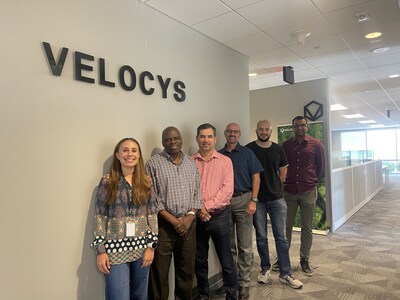
“We’re proud to bring our FT technology into a project that’s changing the game,” said Matthew Viergutz, CEO of Velocys. “This is what innovation looks like—fast, flexible, and focused on making SAF production affordable.”

NovaSAF 1 Project Highlights:

  • Nameplate Capacity: 500,000 gallons/year of ASTM D7566-compliant SAF
  • Feedstocks: Dairy waste, biogenic methane, and CO₂
  • Power Source: 100% renewable electricity
  • Technology: Syzygy’s NovaSAF™ platform + Velocys’ microFTL™ technology
  • FID: Q4 2025 | Start of Operations: Q1 2027
  • Certifications in Progress: CORSIA, EU RED II and RFNBO, LCFS, U.S. RFS
  • With its modular design and feedstock flexibility, NovaSAF 1 is built for replication across 50,000+ untapped biogas sites worldwide—unlocking a new era of profitable, policy-aligned SAF production.

About Syzygy Plasmonics
Syzygy Plasmonics develops light-driven chemical reactors that electrify and decarbonize fuel and chemical production. Based in Houston, the company’s NovaSAF™ platform converts biogenic CO₂ and methane into ultra-low carbon fuels using renewable electricity.

About Velocys
Velocys is a leader in advanced biofuels technology, providing compact, high-yield Fischer-Tropsch reactor technology for sustainable fuel production.

Media Contact:
Suzanne Foti
suzanne@plasmonics.tech

Velocys
info@velocys.com


Image of Estancia Del Lago Site, courtesy EDL. This is the location where Syzygy will locate its project that has licensed Velocys technology.


(PRNewsfoto/Syzygy Plasmonics)


Cision View original content to download multimedia:https://www.prnewswire.com/news-releases/syzygy-surges-ahead-uruguay-saf-project-gains-momentum-with-velocys-onboard-as-ft-licensor-302506178.html

SOURCE Syzygy Plasmonics

TEMPE, Ariz., July 16, 2025 /3BL/ — A new GoDaddy (NYSE: GDDY) survey reveals a surprising paradox among younger consumers: while Gen Z and Millennials appear less concerned about protecting themselves online, they have little tolerance for businesses that fall short on security.

In the latest GoDaddy Consumer Pulse* survey of 1,500 U.S. consumers, 42% of Gen Z and 40% of Millennial respondents admit they would not immediately change their passwords or credit card information after being notified of a data breach at a business they use—if they act at all. In contrast, 72% of Gen X and Boomers would take immediate action.

Meanwhile, these same younger consumers are the first to walk away when a business fails to protect their data.

  • More than half of Gen Z (53%) and 42% of Millennials surveyed have cut ties with a business because it experienced a security incident—notably higher than the 37% of Gen X and Boomers
  • When faced with data breaches at both a large corporation and a small business, 1 in 3 (34%) Gen Z and Millennials say they would stop shopping with both entirely, compared to 27% of Gen X and Boomers

Consumers assess business credibility with a fine-tooth comb
Most consumers (68%) surveyed expect small businesses to maintain the same level of digital security as large corporations or better.

A website with misspelled or grammatically incorrect words, broken links, a poor design, slow load times, or an unfriendly mobile user experience rank among the top five red flags that deter consumer purchases.

However, younger generations find a few things more concerning than older shoppers:

  • About 1 in 3 (30%) Gen Z and Millennials say sites that are not mobile-friendly are concerning vs. 24% of Gen X and Boomers
  • 31% of Gen Z and 27% of Millennials feel uneasy when websites have ads vs. 18% of Gen X and Boomers
  • Nearly 1 in 4 (21%) Gen Z and Millennials feel businesses using a free email address like Gmail or Yahoo are concerning vs. 15% of Gen X or Boomers

“With younger consumers, you might not get more than one chance to earn their trust,” said Dennis Smith, director of security go-to-market at GoDaddy. “They assume some risk but expect businesses to take responsibility for keeping their data safe. If small businesses don’t invest in a secure, professional online presence and clearly demonstrate to their customers how they’re protecting their data, these younger shoppers will take their business elsewhere.”

Consumers lack cybersecurity hygiene
Although more than 1 in 3 (38%) consumers report they have been a victim of identity theft in the past, people across all generations have quite relaxed security habits.

The majority of consumers (61%) repeat passwords across their various accounts—a habit slightly more common among Gen Z and Millennials compared to Gen X and Boomers. Notably, 69% of consumers also do not check if a website has a secure padlock icon before making online purchases.

As a consumer, what steps do you take to help protect yourself from being hacked?
  Total Gen Z Millennials Gen X and
Boomers
I use a different password for every
account
39 % 38 % 33 % 42 %
I don’t save my credit / debit card
information in brand accounts
35 % 33 % 32 % 37 %
I use a credit monitoring service 35 % 26 % 34 % 38 %
I use a password manager that creates
secure passwords
32 % 33 % 36 % 30 %
I check that the website has a padlock
icon before visiting and/or purchasing
anything
31 % 36 % 31 % 30 %
I froze my credit 22 % 26 % 20 % 21 %
None of the above 9 % 10 % 10 % 8 %

Personal risk is perceived as inevitable
The findings suggest a growing sense of cybersecurity fatigue among consumers. While 65% of all consumers say they’re more concerned about online security than they were five years ago, a small subset of younger consumers (21% of Gen Z and 16% of Millennials) report being less concerned than they were five years ago, compared to 7% of Gen X and Boomers.

Meanwhile, the majority (67%) of consumers believe that their personal information is already on the dark web.

“The data points to classic signs of consumers feeling overwhelmed,” said Smith. “Businesses that can step in to take security concerns off consumers’ plates will build deep loyalty, while those that ignore or downplay security risks will forfeit long–term growth.”

What can small businesses do?
The survey found consumers are more likely to remain loyal to businesses that respond to breaches with transparency and extend support to their customers.

  • More than 2 in 5 (43%) of consumers appreciate when a business is open and transparent about a security breach
  • Half (53%) of consumers would stay loyal to a business that takes immediate steps to fix a breach and offers proactive protection like credit card monitoring
  • 1 in 4 (23%) consumers said having loyalty or rewards points on the line would influence your decision to remain a customer

There are some simple, cost-effective changes small businesses can implement to improve consumers’ perception of their business. For example, they can test that their website loads quickly and renders well across Apple and Android mobile devices. Or they can upgrade to an email address that matches their business’s domain name, if they don’t already use one.

To help small businesses protect their website, GoDaddy offers a suite of security solutions—from Website Security firewall bundles to a range of SSL certificates and Managed SSL plans. These tools, paired with sound security practices, can help businesses of every size meet rising consumer expectations.

To learn more about GoDaddy and its products, visit www.GoDaddy.com.

*GoDaddy Consumer Pulse is a series of surveys of consumers ages 18 and above conducted throughout the year.

About GoDaddy
GoDaddy helps millions of entrepreneurs globally start, grow, and scale their businesses. People come to GoDaddy to name their idea, build a website and logo, sell their products and services and accept payments. GoDaddy Airo®, the company’s AI-powered experience, makes growing a small business faster and easier by helping them to get their idea online in minutes, drive traffic and boost sales. GoDaddy’s expert guides are available 24/7 to provide assistance. To learn more about the company, visit www.GoDaddy.com.

Source: GoDaddy Inc.

Explore the often-overlooked “hidden middle” of agrifood value chains, which offers a key opportunity for global food-system transformation.

The world is at a pivotal moment in the global climate conversation. As nations grapple with the urgent need to curb greenhouse gas emissions and enhance food security, the transformation of food systems has become a top priority. And as the latest Climate COP in Baku (COP29) highlighted, world leaders, policymakers, and sustainability advocates are focused on an often-overlooked segment:the hidden middle of agri-food chains.

“Working together, we aim to enable policies, technology, financing, and partnerships that can shine light on this under-appreciated yet essential segment.” 

This segment, which includes critical midstream activities such as processing, packaging, storage, transportation, and distribution, plays an essential yet underappreciated role in food systems. While it accounts for 18% of food-related emissions, it contributes up to 40% of the economic value added within food systems.

“Ignoring the hidden middle means missing a critical piece of the sustainability puzzle,” says Lars Holmquist, Executive Vice President Sustainability at Tetra Pak. “And while discussions on food systems are often focused on agriculture and consumption – the beginning and the end of the supply chain – this undervalued segment has the power to make a big difference on the environment and economy. Improving the hidden middle is not just an opportunity, but a necessity for building sustainable, resilient and just food systems.”

The Food and Agriculture Organisation (FAO) reports that approximately one-third of food produced for human consumption is lost or wasted globally each year. By investing in midstream infrastructure and technologies, these losses can be substantially decreased, leading to better resource efficiency and increased availability of food. It can also bolster economic growth through job creation, support rural and urban livelihoods, and empower smallholder farmers and marginalised groups by integrating them into value-added activities.

Why the hidden middle is under-financed on the world stage

The hidden middle represents a range of critical functions that bridge the gap between farm and fork. These activities support social stability and economic development, and are instrumental in ensuring that farmed ingredients are transformed into food products that actually reach consumers – in a safe and nutritious form.

“Improving the hidden middle is not just an opportunity, but a necessity for building sustainable, resilient and just food systems.”

But despite recent data highlighting the hidden middle’s significant environmental and economic impact, it continues to receive only a fraction of climate financing: while food systems contribute about 30% of total greenhouse gas emissions, only 2.5-4% of climate finance goes towards transforming this sector. Small and medium enterprises (SMEs) in this segment face a $106 billion financing gap globally, and limited investment results in inefficiencies, food loss (which can reach 14% globally), and bottlenecks that affect the entire chain.

“There are many reasons why this midstream segment can be overlooked, including that tracking emissions and efficiencies, when so many stakeholders are involved, can be logistically tricky,” says Lars. “But the truth is that this is essential: the hidden middle is exactly where we have the biggest opportunities to improve food systems and cut emissions.”

What opportunities for improvement does the hidden middle contain?

Harnessing the potential contained in the hidden middle could be a game-changer for achieving global climate targets. According to recent estimates, addressing inefficiencies and emissions in the midstream could provide up to 20% of the emissions reductions required to meet the Paris Agreement’s goals by 2050.

It also holds vast untapped potential for optimising food systems, reducing waste, and improving food security. Improved midstream infrastructure can dramatically reduce food loss and increase food access, particularly in developing regions where up to 40% of food can be lost post-harvest. This loss is due in part to lack of refrigerated transport infrastructure in many regions – and that is where smart, aseptic packaging solutions can help bridge the gap in protecting food safety during transport and preventing waste through spoilage.

“We have been working hard to improve midstream infrastructure in vulnerable regions, through partnering with local governments and organisations,” says Lars. “We’ve implemented renewable-powered cold chain solutions to help reduce food loss and enhance food security in areas where these systems are lacking. And as we announced at COP29, we’re committed to investing in innovating packaging solutions and energy-efficient processing equipment to further support the hidden middle.”

Change can take place on the production floor, too. The best-performing factories take a holistic approach to resource optimisation, delivering sustainability, performance, and cost benefits. Tetra Pak’s best-practice line for UHT milk with OneStep technology, for example, combines several process steps – separation, standardisation, blending, and heat treatment – into one.

This results in using less equipment and ultimately massive energy savings, as demonstrated by Mengniu’s Ningxia dairy factory, which was recently awarded World Economic Forum “Lighthouse Factory” status with the help of Tetra Pak technology. One of the world’s most intelligent dairy factories, it has leveraged cutting-edge Tetra Pak equipment and technology to reduce operational costs by 32% and delivery lead time by 55%.

Investment and policy gap: the key to unlocking the hidden middle

Bridging the gap between funding and impact requires governments and international organisations to create enabling policies and financial incentives that recognise the hidden middle’s value, such as subsidies for midstream innovations or tax breaks for sustainable practices.

“Our goal is to drive progress in critical discussions on food systems by convening policymakers, government leaders, NGOs, IGOs, and industry stakeholders, and we encourage these conversations through forums like COP29,” says Lars. “Together, we aim to explore actionable solutions through collaboration and dialogue, working to enable policies, technology, financing, and partnerships that can shine light on this under-appreciated yet essential segment.”

There is great opportunity for integrating the hidden middle of food value chains, especially as countries are actively revising their Nationally Determined Contributions (NDCs) for submission by 2025 – a crucial step toward aligning policy with climate goals and ensuring this vital segment receives the funding it deserves. Transformative public-private partnerships will also be essential for scaling up the infrastructure and innovations needed to unlock the hidden middle’s potential.

“Success in this area would help ensure a future where the hidden middle operates efficiently to reduce emissions, support livelihoods, and bolster food security for all communities around the globe.”

What’s next? Looking ahead to COP30 in Brazil

The outcomes of COP29 have laid a strong foundation for the future of food systems transformation. Tetra Pak has long been committed to enabling change in food systems, and our support of improvement within the hidden middle continues this work, helping the transition to secure, sustainable, and resilient food systems. From advanced manufacturing processes to renewable energy-powered processing equipment and sustainable packaging solutions, we are working to extend the shelf life of foods and reduce waste throughout the supply chain.

“Looking ahead to COP30 in Belem, Brazil, there is growing momentum for policy shifts and funding initiatives to improve midstream food systems infrastructure,” says Lars. “This is hopeful – and success in this area would help ensure a future where the hidden middle operates efficiently to reduce emissions, support livelihoods, and bolster food security for all communities around the globe.”

Learn more about the hidden-middle and other related topics discussed at COP29 here.

Originally published in Aflac’s Do Good Newsletter. Click here to subscribe.

Applications for 2025 Child Life Program Grants open now

This year, the Aflac Childhood Cancer Foundation will award up to 15 grants of $1,500 each to Child Life programs in the U.S. that provide support to children with cancer and/or blood disorders and/or their siblings. If you or someone you know works with a hospital Child Life program, you can download the application at AflacChildhoodCancer.org. The deadline for completed applications is 5 ‍p.‍m. ED‍T on Ju‍ly 2‍5.

Apply today

Life beyond ringing the bell

The high school years are a pivotal time in life, and for Katie Rutherford, it was also about surviving. After being diagnosed with rhabdomyosarcoma, Katie became a patient at the Aflac Cancer and Blood Disorders Center of Children’s Healthcare of Atlanta. Her experience came full circle — today, she works for the center where, seven years ago, she rang the bell that symbolized the end of her cancer treatment journey.

Read Katie’s story

From surviving cancer to finding a career with impact

Ryan Zimmerman began his life with cancer and, growing up, he spent a lot of time at his local children’s hospital. Now, Ryan is a cancer survivor and after learning about Aflac’s mission and work to support those with childhood cancer and blood disorders, he joined the Aflac flock as an IT apprentice.

Read Ryan’s story

My Special Aflac Duck® featured resource: Let’s go to space!

Do you ever wish you could transport yourself or your patient to a calm, happy place? Maybe it’s outer space, the beach or a cozy spot at home. Whatever your itinerary holds in store, you can use the Soundscapes® Spaceship to help visualize a place that brings happiness. My Special Aflac Duck is a comforting companion available free of charge to children ages 3 and up with cancer or a blood disorder like sickle cell disease.

Learn more

Learn about the Aflac Childhood Cancer Campaign

Order My Special Aflac Duck free of charge

© 2025 Aflac Incorporated. All rights reserved. This newsletter is for informational purposes only and is not a solicitation for insurance. Aflac includes Aflac and/or Aflac New York.

Aflac WWHQ | 1932 Wynnton Road | Columbus, GA 31999

‍Z2500435‍
EXP: 06/26

CHARLOTTE, N.C., July 16, 2025 /PRNewswire/ — Deriva Energy, LLC, one of the largest American clean power developer/owner/operators today announced that Russell Young was appointed Chief Operating Officer. He will oversee Deriva’s operational strategy, with a focus on scaling its capabilities, optimizing performance and delivering long-term value through innovation and collaboration.

“I look forward to being a part of Deriva’s continuing success.” – Russell Young, COO of Deriva Energy

Young brings more than three decades of senior leadership experience to Deriva in renewable operations across wind, solar and energy storage as well as renewable equipment manufacturing. Most recently, he served as Managing Director of Technical Services at Clearway Energy Group. Prior to that, he held multiple senior leadership roles at ENGIE North America, including Vice President of Operations for Renewables across the U.S. and Canada. Young also brings valuable experience to Deriva from his time at leading equipment manufacturers including GE, Vestas and ABB PowerOne.

Deriva Energy CEO, John Clapp, said: “We are excited to have Russell join the leadership team at Deriva. He brings industry-leading expertise to our platform of over 9 gigawatts of operating projects including our owned assets and third-party O&M business.”

Young said: “Deriva is an established leader in the clean power sector, with seasoned leadership, a dynamic portfolio of operating assets, and a strong pipeline of new projects. I look forward to being a part of Deriva’s continuing success.”

About Deriva Energy
Deriva Energy
 is an established industry leader in clean energy, with over 9 GW of operating assets and 10.8 GW of assets in development across the U.S. Headquartered in Charlotte, North Carolina, Deriva is a portfolio company of Brookfield, the world’s largest owner and operator of renewable power and climate transition assets. For more information, visit derivaenergy.com.

Contact: press@derivaenergy.com

Cision View original content to download multimedia:https://www.prnewswire.com/news-releases/russell-young-named-chief-operating-officer-at-deriva-energy-302506240.html

SOURCE Deriva Energy

MEMPHIS, Tenn., July 16, 2025 /3BL/ – In honor of World Snake Day, International Paper (IP) and National Fish and Wildlife Foundation (NFWF) take a moment to recognize how forest restoration is fueling the recovery of one of America’s most iconic serpents, and how NFWF and IP’s Forestland Stewards Partnership is supporting this effort.

The eastern indigo snake is part of the Drymarchon genus of snakes, which comes from the Greek words “drymos” (forest) and “archon” (ruler or lord). This species lives up to its name as it is the longest native snake species in the United States. The eastern indigo snake once flourished in the longleaf pine forests. Its striking glossy blue-black coloring could be seen slithering across the forest floor, but now due to habitat loss, this federally threatened species has been pushed to the brink disappearing from the forests it once thrived. 

However, thanks to a grant from NFWF with funding support from IP and four additional funding partners, efforts to bring this species back are gaining new momentum.

The grant, awarded to The Nature Conservancy Florida Chapter through the Longleaf Landscape Stewardship Fund, is part of a broader, multi-year initiative to restore critical longleaf pine habitat in Southwest Georgia and Florida. These open-canopied forests not only support the indigo snake but are home to many at-risk species like the gopher tortoise, red-cockaded woodpecker, and Bachman’s sparrow.

This funding will also support the care and breeding of eastern indigo snakes at the Orianne Center for Indigo Conservation (OCIC), the world’s first and only facility dedicated to this species. Captive-bred snakes raised at OCIC have been released at The Nature Conservancy’s Apalachicola Bluffs and Ravines Preserve since 2017. And for the first time in 2023, wild-born juveniles were documented on the landscape, signaling a huge milestone in recovery efforts.

“Seeing wild-born indigo snakes for the first time in decades is an incredible milestone,” said Sophie Beckham, Chief Sustainability Officer at International Paper.  “It’s proof that when we invest in both species and habitat, we can reverse declines and rebuild populations from the ground up.”

In tandem, the grant will fund habitat restoration by supporting prescribed burning, hardwood reduction, and the planting of more than 4,900 acres of longleaf pine. These actions help restore the open, sun-dappled understory that snakes and their prey need to thrive.

This support from IP marks its first direct investment in eastern indigo snake recovery. Through NFWF’s Longleaf Landscape Stewardship Fund grant program, IP is also helping restore habitat for other at-risk snake species such as the Louisiana pine snake and northern pine snake.

As invasive species and development continue to threaten the Southeast’s forests, partnerships like this are critical. That is why World Snake Day is a great reminder that even the most misunderstood animals deserve a place and a future on our planet.

###

About International Paper 
International Paper (NYSE: IP; LSE: IPC) is the global leader in sustainable packaging solutions. With company headquarters in Memphis, Tennessee, USA, and EMEA (Europe, Middle East and Africa) headquarters in London, UK, we employ more than 65,000 team members and serve customers around the world with operations in more than 30 countries. Together with our customers, we make the world safer and more productive, one sustainable packaging solution at a time. Net sales for 2024 were $18.6 billion. In 2025, International Paper acquired DS Smith creating an industry leader focused on the attractive and growing North American and EMEA regions. Additional information can be found by visiting internationalpaper.com 

About the National Fish and Wildlife Foundation 
The National Fish and Wildlife Foundation (NFWF) works with partners to foster sustainable and impactful conservation solutions so that people and nature thrive together. Chartered by Congress in 1984, NFWF has grown to become the nation’s largest conservation foundation.  Since its founding, NFWF has supported more than 7,000 grantee organizations and funded over 23,300 projects that have generated a total conservation impact of $11.3 billion. Learn more at nfwf.org

Joleen Ong, Cascale’s senior director of brand and retailer membership, recently joined a panel at the Good Business Forum in New York to discuss how workplace strategies, particularly those focused on women, have translated into tangible business outcomes.

The event, hosted by Good Business Lab, brought together industry leaders to showcase innovative tools, share success stories, learnings, and insights, and catalyze collaborations that drive measurable change. The “Business of Better Work” panel brought together experts from global apparel brands, the UN system, and sustainability coalitions to explore why investing in women-friendly workplaces makes smart business sense.

Ong noted that brands are shifting from one-off CSR initiatives to systemic and long-term investment in women workers. Sharing insights from Cascale collaborator SLCP’s Impact Report, she highlighted that 35 percent of facilities reported a gender pay gap and that only 25 percent of managers are women despite making up 59 percent of the workforce. She emphasized the importance of strong HR management systems — a key area assessed by compliance tools such as the Higg Index, SLCP, and other compliance tools, to successfully achieve gender equity within a workplace.

Reflecting on her experience at Columbia Sportswear Company, Ong shared how she helped establish the 1Women’s Leadership Initiative — an internal employee resource group — with support from the chief human resources officer and approval from the CEO. The initiative provided a sounding board for how to be more intentional with DEI efforts, mentorship, and internal learning and networking to support career advancement.

2Ong highlighted how facilities with strong social indicators tended to succeed in environmental metrics, noting that gender-inclusive HR systems supported better overall facility management. She pointed out how women in leadership often drive stronger follow-through on ESG initiatives, emphasizing that gendered risks are frequently overlooked in audits unless assessed through a gender lens.

Drawing on her experience as a board member of the menstrual health and education INGO Days for Girls International, Ong highlighted how menstrual stigma and inflexible workplaces that overlook menstrual health needs can contribute to absenteeism and limit opportunities for advancement.3She underscored that Inclusive workplaces are not only more effective but also more sustainable– highlighting the inextricable link between gender equity and climate resilience.

Ong shared challenges that hinder suppliers’ ability to invest in gender equity, including inconsistent trust between sustainability and sourcing teams and misalignment between sustainability goals and purchasing practices. She concluded by underscoring the importance of business cases framed around factors such as return on investment, compliance and reputational risk, and competitive differentiation as key drivers of meaningful investment in gender equity.

1 Columbia Impact Report 2023 https://d1io3yog0oux5.cloudfront.net/_7243294f6152cc533d813bdcb6c832fb/columbia/db/641/5807/pdf/Columbia_Impact_Report_2023.pdf (pg15)

2 Better Work (2022). Gender Equality and Inclusion Strategy 2022–2027 https://betterwork.org/reports-and-publications/global-gender-strategy/

3 Women, Gender Equality and Climate Change: https://www.un.org/womenwatch/feature/climate_change/

SANTA CLARA, Calif., July 16, 2025 /PRNewswire/ — Renewable America has launched a new brand identity, including a redesigned logo that reflects its growth, mission, and long-term vision for community-focused clean energy.

Inspired by Renewable America’s commitment to solar energy, the new logo is based on an analemma—the path the sun traces across the sky over the course of a year from a fixed point on Earth. This flowing, infinity-like shape captures the principles of circular economy, environmental harmony, and sustainable impact central to Renewable America’s mission.

“The analemma symbolizes our values—our respect for nature and our belief in building solar energy systems that will help sustain communities for generations,” said Ardi Arian, President and CEO of Renewable America. “This brand update reflects who we are and where we’re headed. We’re proud to bring solar and storage solutions to communities often overlooked—and to do it with a bottom-up approach that prioritizes trust, partnership, and long-term value.”

This updated visual identity replaces previous abbreviations with the full company name—Renewable America—to emphasize the company’s mission to customers, landowners, community partners, and energy buyers. The logo’s vibrant color palette—blue for the sky, orange for the sun, and green for the natural world—reinforces the company’s deep ties to environmental stewardship.

The new branding comes at a pivotal time for Renewable America, which has experienced rapid growth over the past several years. As a lean, hard-working team delivering end-to-end development—from land acquisition and engineering to financing, construction, and long-term operations—Renewable America has successfully scaled projects across California, supporting the rise of local energy grids, energy independence, and community resilience.

Renewable America’s brand refresh aligns with its continued focus on offering complete, locally generated clean energy solutions as a trusted, community-centered partner.

About Renewable America
Renewable America is a leading provider of distributed energy resources, serving communities with small utility-scale, locally generated solar plus storage facilities and community microgrids that work in conjunction with the distribution grid. With over 15 years of experience in development, engineering, procurement, and construction throughout Europe and North America, Renewable America creates resilience within communities by delivering local power to local load. The company’s end-to-end development process maximizes quality and efficiency, while minimizing lasting environmental impact on site. Based in Santa Clara, Renewable America has over 320 megawatts (MW) of solar and 680 megawatt-hours (MWh) of energy storage projects under development throughout California. Learn more at https://renewam.com.

Renewable America Media Contact:
Richele Delapaz
398083@email4pr.com
(408) 663-6647

Cision View original content to download multimedia:https://www.prnewswire.com/news-releases/renewable-america-unveils-new-logo-and-brand-identity-to-reflect-companys-growth-and-mission-302506438.html

SOURCE Renewable America

Privacy Overview

This website uses cookies so that we can provide you with the best user experience possible. Cookie information is stored in your browser and performs functions such as recognising you when you return to our website and helping our team to understand which sections of the website you find most interesting and useful.