IDB findings on regional digital trade reinforce AIBotics’ Jamaica-first strategy to pursue mapping, drone services and automation opportunities across CARICOM

MIAMI and KINGSTON, Jamaica, Oct. 27, 2026 (GLOBE NEWSWIRE) — AIBotics, Inc. (OTCID: AIBT) (“AIBotics” or the “Company”) today outlined a Jamaica-first expansion strategy for NovaCore Labs intended to bring commercial technology services to selected markets across the Caribbean Community (CARICOM). Building on its October 14, 2026 acquisition of specified NovaCore operating assets from PlayJamaica Limited, AIBotics plans to use the Jamaica operation’s existing capabilities in drone services, geospatial mapping and automation to develop a repeatable, locally supported service model before entering additional markets.

The opportunity is increasingly cross-border. In a September 30, 2026 analysis, the Inter-American Development Bank (IDB) reported that Latin American and Caribbean exports of digitally delivered services expanded from $18.5 billion in 2005 to $87.7 billion in 2024. Yet trade among economies within the region accounted for only 8.4% of their 2023 digitally deliverable services exports. These broader Latin American and Caribbean figures are not CARICOM-specific estimates, but they illustrate the untapped potential for providers that can serve neighboring markets.

A World Bank economic update released in October 2026 projected 2.2% growth across Latin America and the Caribbean for the year, while identifying AI adoption, productivity improvements and technical training as pathways to stronger performance. AIBotics believes that applying advanced technology to real commercial needs—supported by trained personnel and consistent service delivery—offers an opportunity in Caribbean markets even amid modest overall regional economic growth.

Private-sector activity also demonstrates the value of an established regional operating presence. In August, global travel retailer Avolta announced a majority investment in Penha Duty Free Group, an established retailer operating across five Caribbean markets. That separate transaction has no connection to AIBotics, but illustrates how companies in other industries are using local platforms and relationships to pursue growth across multiple island economies.

For NovaCore, AIBotics intends to evaluate potential demand in tourism and hospitality, infrastructure and property surveying, mapping, facility operations and other areas where drones, geospatial information and robotics can solve practical problems. Rather than treating CARICOM as one uniform market, management plans to assess prospective territories individually based on customer demand, partners, regulations, staffing and service economics. No new country launch, cross-border contract or deployment is being announced.

“Our goal is to make Jamaica a base from which we can serve a wider Caribbean market, not simply a place to test technology,” said Gregory Moore, Chief Executive Officer of NovaCore Labs Limited. “Businesses across the islands often face similar challenges in mapping, inspection and service delivery. We intend to build dependable capabilities here, develop the people who can support them and pursue regional customers where our services can deliver clear commercial value.”

NovaCore’s acquired operating assets include commercial drones, service robots, mapping equipment, software and related field capabilities. The Company intends to build on relationships previously developed with the University of Technology, Jamaica, and the University of the West Indies Global Campus as it explores workforce development and technical training. Any new institutional program, additional investment or regional entry remains subject to funding, local requirements and necessary agreements.

“The opportunity is not limited to the size of any one island market,” said Ben Kaplan, Chief Executive Officer of AIBotics. “The IDB’s findings point to significant room for cross-border digital services to develop. Our focus is to build a real operating business in Jamaica, establish services customers will pay for and expand into additional Caribbean markets when demand and execution support it.”

AIBotics intends to assess progress and update investors through customer opportunities, agreed service engagements, development of local technical capacity and practical arrangements for serving new territories.

About AIBotics
AIBotics, Inc. is a global technology company building a platform around AI-enabled robotics, autonomous systems and intelligent automation. The Company focuses on applying advanced technologies to real-world environments through strategic partnerships, technology development and international market relationships. AIBotics seeks to identify, develop, implement and scale solutions that improve machine operations, automate business processes and expand the practical use of artificial intelligence in the physical world. For more information, visit www.aibotics.ai.

Forward-Looking Statements
This release contains forward-looking statements regarding the expansion of NovaCore operations, customer demand, service offerings, AI and LiDAR capabilities, workforce programs, regional growth, revenue milestones and contemplated capital deployment. The intended US$1 million budget is not fully funded or deployed by virtue of this announcement; financing is subject to availability and the Company’s contemplated Regulation A offering. Contractual earn-out thresholds are not forecasts. Plans may be affected by financing availability, retention and development of personnel, transfer or consent requirements for contracts, regulatory permissions, customer demand, competition, public procurement, technical performance and operational execution. No projects, partnerships, revenues or regional expansion are guaranteed. Forward-looking statements speak only as of the date made, subject to applicable disclosure obligations.

Media and Investor Relations
David Kugelman
Atlanta Capital Partners, LLC
Office: (404) 856-9157
Toll Free: (866) 692-6847
Mobile and WhatsApp: (404) 281-8556
dk@atlcp.com

GENIUSpark Alberta targets an initial 100 MW of high-performance computing (HPC) capacity across a cluster of 3 MW to 9.9 MW sites, with a stretch goal of 1 GW, and plans a Genius City to serve the full cluster in east-central Alberta.

Every GENIUSpark Alberta site intends to return a portion of funds towards training and reskilling via the Genius City model, and establish a local Community Investment Fund.

First site, Hanna Campus No. 1, is a $24.3 million, 2.4 MW HPC campus on a 20.2-acre site to be acquired in Hanna, Alberta.

Construction is planned to commence in December 2026 with first compute targeted for the second quarter of 2027.

Alberta has received more than 16 GW of data center connection requests against an interim grid limit of 1.2 GW, giving sub-10 MW sites with their own power a fast path to market[1].

WEST PALM BEACH, Fla., SINGAPORE and CALGARY, Alberta, Oct. 27, 2026 (GLOBE NEWSWIRE) — FingerMotion, Inc. (Nasdaq: FNGR) (“FingerMotion” or the “Company”), Genius Group Limited (NYSE American: GNS) (“Genius Group”, or “GNS”), a leading AI-powered education group and BlueFlare Energy Solutions Inc. (“BlueFlare”), a Calgary-based developer of behind-the-meter power and data center infrastructure, today announced that they have signed binding agreements to form GENIUSpark Alberta Inc. (“GENIUSpark Alberta”) and to build its first site, Hanna Campus No. 1. The agreements follow Genius Group’s launch of GENIUSpark yesterday as a Community-first Data Center initiative and make Alberta, Canada the home of the first GENIUSpark joint venture.

GENIUSpark Alberta: The First GENIUSpark Joint Venture

GENIUSpark Alberta will be formed under a binding joint venture and shareholder agreement with FingerMotion holding 51% and Genius Group holding 49% of the initial issued share capital. The board consists of two directors from each company, and budgets, new sites, debt, new investors and related-party contracts all require the approval of both parties. FingerMotion leads the site acquisition, power, construction and data center management together with BlueFlare. Genius Group leads the branding, marketing, training and reskilling academy, future school and community program. Each site will be held in its own Alberta project company, targeted to be funded by a combination of equity and debt financing.

Each site has a target to pay 10% of its net profit into a locally governed Community Fund, and Genius Group will deliver Genius City programs, including schooling, entrepreneurship and reskilling into the jobs each site creates. The partners intend to develop a Genius City serving the full cluster of sites, beginning with a feasibility study at a proposed energy park in east-central Alberta. Genius Group’s education platforms will also have priority access to GENIUSpark capacity at 10% below its best market price.

The first site, Hanna Campus No. 1, is located on a 20.2-acre site in the Town of Hanna, east-central Alberta, contracted for acquisition by the Hanna project subsidiary. The site plans to launch a first phase of 3 MW of grid power from ATCO and 2.4 MW of HPC capacity running 432 GPU servers, with the option to add up to 3 MW of BlueFlare’s own natural gas generation.

The total project cost for Hanna is estimated at $24.3 million, targeted to be funded with approximately $14.4 million of non-recourse project debt and $9.9 million of equity contributed in proportion to the partners’ ownership. Construction is planned to begin in December 2026, with first compute targeted for the second quarter of 2027.

The first phase of the site is planned to be live within six months of first power, and at full capacity Hanna is designed to generate more than $24 million in annual revenue. Closing is subject to customary conditions, including completion of the land purchase, the grid connection agreement, project financing and regulatory approvals.

Hanna is the pilot site for the Alberta roll-out. Under the agreements, further sites are approved once Hanna sustains an average of at least $1.64 per chip-hour at 70% utilization, or once a new site has contracts or prepayments for at least half of its capacity and a lender commitment, while site, permitting, and power work on the next sites can begin during the Hanna ramp-up.

GENIUSpark Alberta targets an initial 100 MW of HPC capacity and a stretch goal of 1 GW, and the partners intend to consider a listing of GENIUSpark Alberta on the TSX or Nasdaq at the appropriate time.

Why Alberta: Power, Speed and Community

TrendForce forecasts global data center power demand to rise 31% this year to 161 GW, and to reach 490.7 GW by 2030, leaving a projected 268 GW gap against available grid capacity[2]. Alberta sits at the center of that gap: large-load connection requests in the province climbed above 16 GW, against an interim limit of 1,200 MW for new loads of 75 MW or more through 2027 and 2028. GENIUSpark Alberta sites are sized below 10 MW and can bring their own behind-the-meter power, allowing them to move in months rather than waiting years in the grid queue.

Nearly $200 billion of U.S. data center projects, across about 120 projects, were blocked or delayed in the first half of 2026, and a Gallup survey found that seven in ten citizens oppose a data center in their local area[3]. The partners believe the GENIUSpark model addresses the growing demand for a community-first power and compute solution.

Jolie Kahn, CEO of FingerMotion, said “Hyperscale and technology companies are signing up to 15-year, multi-billion-dollar contracts for powered capacity, for which construction is a multi year process, thus one of the scarcest assets in digital infrastructure today is a site you can energize in months. GENIUSpark Alberta takes FingerMotion beyond powered land into owning the compute that runs on it. With BlueFlare’s and FingerMotion’s power and infrastructure and Genius Group’s community model, Hanna is the first step in what we believe can become one of Alberta’s leading high-performance computing platforms.”

Roger James Hamilton, Founder and CEO of Genius Group, said “Yesterday we announced the launch of GENIUSpark as a community solution for the next era of computing. Today we are pleased to have signed our first joint venture to build the GENIUSpark model in Alberta. FingerMotion and BlueFlare have the power, site-development and construction capability. Genius Group has the community reskilling and treasury model that directly benefits the local community.”

Unit Economics Built for Alberta

Under the GENIUSpark model, each full 9.9 MW site is targeted to generate more than $100 million in annual revenue at a target net profit margin of up to 35%, with a goal of providing more than $3 million a year invested in the local Community Fund and more than 1,000 students, entrepreneurs and workers trained each year.

The partners target site capex of $9.85 million per MW of compute, using refurbished servers bought in bulk, modular halls and BlueFlare’s own power, and all-in project cost of $10.1 million per MW against an industry average of $17.6 million per MW for a new data center in the U.S. and Canada before any chips are installed[4].

Landon Ruszkowski, CEO of BlueFlare, said “Small sites with their own power are how Alberta wins in high-performance computing. We design, build and operate each site ourselves, generate power behind the meter, and avoid the multi-year transmission queue. Hanna will be built by Albertans and staffed locally around the clock, and it sets the template for every GENIUSpark Alberta site that follows, with the jobs, the investment and a share of the profits staying in the community.”

Following signing, the partners will incorporate GENIUSpark Alberta and Hanna Campus No. 1 Inc., complete the Hanna land purchase, grid connection and project financing, and make the required regulatory filings ahead of construction.

Sources

[1] McCarthy Tétrault, “Alberta faces a surge in AI data centre power demand: AESO responds with phased connection plan,” June 6, https://www.mccarthy.ca/en/insights/blogs/canadian-energy-perspectives/alberta-faces-a-surge-in-ai-data-centre-power-demand-aeso-responds-with-phased-connection-plan
[2] TrendForce, “Data Center Power Demand to Rise 31% in 2026; Grid Gap to Widen from 2028,” September 16, 2026.
https://www.trendforce.com/presscenter/news/20260916-13237.html

[3] Gizmodo, citing Data Center Watch and Gallup, “Nearly $200 billion worth of data center projects have been blocked or delayed this year,” September 21, 2026.
https://gizmodo.com/nearly-200-billion-worth-of-data-center-projects-have-been-blocked-or-delayed-this-year-2000815054

[4] Cushman & Wakefield, 2026 Data Center Development Cost Guide, September 3, 2026.
https://www.stocktitan.net/news/CWK/cushman-wakefield-releases-2026-data-center-development-cost-guide-xf33r13eb1oh.html

About BlueFlare

BlueFlare Energy Solutions Inc. is an Alberta-incorporated developer, engineer and constructor of behind-the-meter energy and high-performance compute infrastructure operating under the “From Wellhead to Workload” platform. BlueFlare originates, designs, builds and supports co-located natural gas generation, high-performance compute and bitcoin mining sites across Western Canada, integrated by its proprietary BALA™ (BlueFlare Adaptive Load Architecture™) load-following platform. BlueFlare self-performs design, procurement, construction and commissioning on its programs. BlueFlare is a subsidiary of BlueFlare Group Holdings Inc. Additional information is available at www.goblueflare.com.

About FingerMotion

FingerMotion, Inc. (Nasdaq: FNGR) is a technology company that has historically served the mobile payment, recharge and data-analytics markets in the People’s Republic of China. Through its relationship with BlueFlare Energy Solutions Inc., the company is developing behind-the-meter powered high performance computing capacity in Alberta for high-performance computing clients. Additional information is available at www.fingermotion.com.

About Genius Group

Genius Group (NYSE: GNS) is a global education group delivering AI powered, education and acceleration solutions for the future of work. Genius Group serves 6 million users in over 100 countries through its Genius City model and online digital marketplace of AI training, AI tools and AI talent. It provides personalized, entrepreneurial AI pathways combining human talent with AI skills and AI solutions at the individual, enterprise and government level. To learn more, please visit geniusgroup.ai

Forward-Looking Statements

Statements made in this press release include forward-looking statements within the meaning of Section 27A of the Securities Act of 1933, as amended, and Section 21E of the Securities Exchange Act of 1934, including statements regarding GENIUSpark Alberta’s intended model, targets, capacity, costs, timing, revenue, net profit, community benefits, further sites, any future listing, and the closing of the Hanna Campus No. 1 project. Forward-looking statements can be identified by the use of words such as “may,” “will”, “plan,” “should,” “expect,” “anticipate,” “estimate,” “target,” “continue,” or comparable terminology. The intended model and targets are for illustrative purposes only and are not intended as binding projections, forecasts or guarantees, and depend on assumptions including compute pricing, utilization, power and construction costs, and the availability of project financing and customer contracts, which are not yet in place. Closing of the Hanna project is subject to conditions including the land purchase, grid connection, project financing and regulatory approvals, and there is no assurance that it will close on the terms described or at all. Such forward-looking statements are inherently subject to certain risks, trends and uncertainties, many of which the companies cannot predict with accuracy, and may cause actual results to differ materially from those projected or suggested. Readers are cautioned not to place undue reliance on these forward-looking statements and are advised to consider the additional factors under the heading “Risk Factors” in FingerMotion’s Periodic Reports on Forms 10-K and 10-Q, as supplemented by its Current Reports on Form 8-K, and in FingerMotion’s filings with the Securities and Exchange Commission. None of Genius Group, FingerMotion nor BlueFlare assumes any obligation to update or supplement forward-looking statements. No information in this press release should be construed as any indication whatsoever of any party’s future revenues, results of operations, or stock price.

Contacts
FingerMotion: ir@fingermotion.com
Genius Group: investor@geniusgroup.ai
BlueFlare: sales@goblueflare.com

Originally published on PSEG ENERGIZE!

When severe weather damages electric equipment or an inspection reveals a potential problem, getting a clear view of the situation quickly can help our crews determine what needs to be done. Drones give our teams another way to do that — helping us inspect equipment, identify potential problems and assess storm damage while keeping employees out of hazardous areas. 

It’s one of the ways we’re using new technology to better serve our customers. Whether it’s strengthening the electric grid, preparing for severe weather or embracing new technologies, our goal is the same: deliver safe, reliable service while working to keep energy affordable and care for the communities we serve.

How does PSE&G use drones to inspect the electric grid? 

Drones are changing the way we inspect critical electric infrastructure. Equipped with cameras, they give our teams a close-up view of transmission lines, substations and other equipment without requiring employees to climb structures or, in many situations, wait for a helicopter to be available. That means inspections can often be completed more quickly, safely and efficiently. 

How can drones help prevent power outages? 

In addition to increasing safety, the real value of these inspections is what they help us find.  

Drones can identify early signs of equipment wear, damaged insulators, loose hardware or vegetation growing too close to power lines before these situations contribute to outages. Finding them early gives our crews an opportunity to make planned repairs and address potential problems before customers lose power. 

Making every infrastructure investment count 

By planning ahead, we can use our resources more efficiently to maintain our system. Emergency repairs are often more complex and costly than scheduled maintenance. By using drone inspections to identify and prioritize work before equipment fails, we can better plan maintenance, deploy resources more efficiently and make the most of every investment in our infrastructure. Those efficiencies help us continue providing reliable service while being responsible stewards of our customers’ dollars. 

How are drones helping PSE&G respond after severe storms? 

Drones are also proving to be an invaluable tool after severe storms, like the severe thunderstorms that impacted our area this past July. Instead of waiting for crews to access difficult or hazardous areas, drones were quickly deployed to capture detailed images of damaged equipment across large sections of the electric system. 

That real-time information helped us assess conditions faster, prioritize repairs and restore power to customers as safely and efficiently as possible. 

In one case, drones were used to survey and assess a complex backyard area that had significant access challenges. This provided a real-time view of the damage, allowing dispatch of the correct crew and materials more efficiently. As a result, the overall outage duration was several hours shorter than it may have been without utilizing the drones. 

How do drones help keep PSE&G employees safer? 

Just as importantly, drone technology enhances employee safety.  

For some inspections, drones can capture detailed images from a distance, giving our teams the information they need while reducing employees’ exposure to heights, damaged equipment and other hazardous conditions. This helps our field teams assess equipment and facilities more safely and efficiently. 

 Reducing those risks while improving the quality of inspections is a win for both our employees and the customers we serve. 

FAA approval unlocks new capabilities 

We recently reached an exciting milestone in our drone program with approval from the Federal Aviation Administration (FAA) to expand how we use this technology. 

The approval allows our docked drones to fly Beyond Visual Line of Sight (BVLOS), meaning they can inspect infrastructure farther from their operators. One remote pilot can safely oversee up to four drones at the same time.  

The approval reflects the safety procedures and risk controls required for these advanced drone operations, marking an important achievement and another example of the utility industry adopting advanced technology to enhance customer value. It reflects our continued focus on using innovative technology to improve safety, strengthen system reliability and perform inspections even more efficiently. 

What’s next for PSE&G’s drone program? 

As drone technology evolves, so will the capabilities of our drone program. 

Advances in imaging, automation and data analysis will continue to help us monitor the health of our infrastructure and make smarter, more informed maintenance decisions to keep the electricity flowing. 

At PSE&G, we don’t just adopt new technology for technology’s sake. We adopt new tools when we are confident they will help us deliver better outcomes for our customers. Our drone program is one more way we’re building a stronger, more resilient electric system while improving safety, enhancing reliability and helping keep energy affordable for the communities we proudly serve. 

Learn more about other ways we’re helping strengthen New Jersey’s energy systems and prepare for severe weather on Energize! 


Sara Rosner | Director—Responsible Investing Research
Dr. Michael Puma | Director and Research Scientist—Columbia University Earth Institute
Henna Nordqvist, CFA | Corporate Credit Analyst—Fixed Income
James Russo | Portfolio Manager—US Strategic Core Equities; Senior Research Analyst—Strategic Core Equities

Water scarcity and purity are critical risks for semiconductor makers in the AI era.

As companies race to capitalize on the AI boom, water security is emerging as a material risk across the value chain. While data centers attract headlines, semiconductor fabrication remains one of the value chain’s most water-intensive activities, requiring reliable supplies of high-purity water. As a result, managing water risk is becoming a strategic capability for semiconductor companies. 

Clean Water’s Pivotal Role in Semiconductor Production

Chip manufacturing is highly water intensive, particularly during wafer fabrication. Producing advanced semiconductors requires large volumes of ultra-pure water, which cannot always be sourced directly from municipal systems, especially during droughts. 

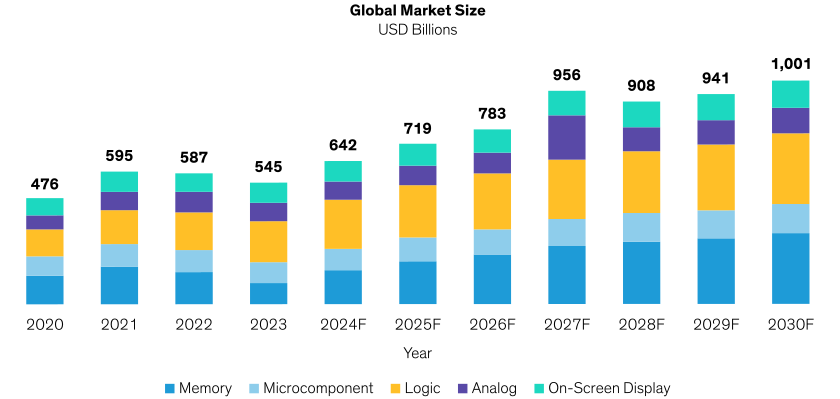
Meanwhile, AI-driven demand for chips is expected to propel the semiconductor industry to a market size of at least $1 trillion by 2030 (Display), with a recent McKinsey analysis putting the industry’s 2030 size at $1.6 trillion and BofA at $2.7 trillion.

Global Semiconductor Market Expected to Top $1 Trillion by 2030

Memory, micro, logic, analog and on-screen display chip demand will all contribute to soaring market revenues.

Historical analysis does not guarantee future results.
As of September 30, 2024
Source: Columbia Business School Climate Knowledge Initiative, company reports, PwC and AllianceBernstein (AB)

While China, Taiwan and Japan remain manufacturing leaders, US production is poised to grow as reshoring accelerates under the CHIPS and Science Act of 2022. 

The Impact of Water Stress on Semiconductor Makers 

As fabrication capacity expands, the semiconductor industry’s global water withdrawal is on track to rise from roughly 260 billion gallons a year today to around 390–455 billion by 2030, and to double by the mid-2030s. Without meaningful mitigation efforts, manufacturers in water-stressed regions could face growing operational and financial risks. The challenge is urgent, as roughly 40% of existing fabrication facilities are based in watersheds either experiencing or prone to severe water stress.  

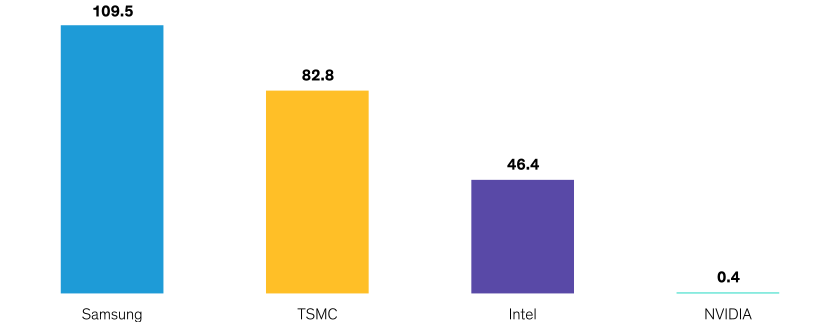
Water demand is already staggering. Taiwan Semiconductor Manufacturing (TSMC), Samsung Electronics and Intel are among the top consumers, with annual withdrawals in the billions of liters (Display). NVIDIA’s direct water footprint is much smaller because it outsources fabrication. However, it’s still vulnerable to associated supply chain risks, in our view. 

Water Use to Make Microchips Is High and Varies by Company
Annual Water Withdrawal by Leading Semiconductor Companies (Billions of Liters)Samsung, TSMC, Intel and NVIDIA will consume the most water for their chip fabrication by far.

Historical analysis does not guarantee future results.
Withdrawal disclosures and methodology vary by company.
As of December 31, 2025
Source: Columbia Business School Climate Knowledge Initiative, company reports and AB

Further, as AI adoption accelerates, rising electricity demand may place additional pressure on water resources in some regions, compounding existing challenges for semiconductor manufacturers. As a result, water stewardship is becoming a differentiator across the semiconductor industry. 

How Chipmakers Address Water Risks 

Whether too much, too little or too contaminated, water risks come in different forms but are inherently local, requiring equally localized solutions. 

In 2021, TSMC faced government-imposed water restrictions during Taiwan’s worst drought in a half century. To sustain operations, the company trucked water to key fabrication centers along with strict conservation controls. Today, it’s investing for long-term resilience at its new operations in the dry American southwest, including a 15-acre water reclamation plant in Arizona to support sustainable growth. 

Samsung Electronics is pursuing a different path, targeting a return to 2021 water-withdrawal levels by 2030. Central to that effort is expanding water reuse by treating and recycling production water, thereby reducing dependence on new water withdrawals. Pilot projects at its Giheung and Hwaseong facilities aim to reuse 120,000 metric tons daily by 2029. 

NVIDIA water consumption appears comparatively small, but it operates a “fabless” business model, outsourcing chip fabrication to partners like TSMC and Samsung. Yet, the underlying water risks remain embedded via its partners. 

Taken together, these examples suggest that managing water risk is becoming a strategic capability rather than a compliance exercise. 

What Strong Water Stewardship Looks Like 

In our view, the companies best positioned for future growth may be those that can adapt their operations and supply chains to local water constraints. Ultimately, strong water stewardship may support better long-term company performance. 

Most investors rely on company disclosures to assess water risk, but disclosures alone rarely tell the full story. We believe that evaluating water resilience requires a broader framework that goes beyond reported metrics. We look for evidence that companies are investing in water-reuse systems, reducing freshwater withdrawals, disclosing meaningful performance metrics, engaging with community stakeholders, understanding local watershed conditions and integrating those considerations into capital-allocation decisions. This deeper analysis can help investors assess whether companies are effectively managing water-related risks and positioning their operations for long-term resilience.

As part of this analysis, we see active engagement* as critical, not only between investors and chipmakers but between the firms and the communities that share their limited water resources. Engagement can help investors distinguish between companies that are proactively managing water risks and those that may be underestimating them. Discussions around reuse targets, reclamation investment, disclosure practices and site-level water planning provide important insight into a company’s ability to navigate future water constraints. 

Water availability and quality are critical inputs to semiconductor manufacturing and, ultimately, profitability. As AI-driven demand accelerates, investors may benefit from looking beyond production growth alone to evaluate whether companies will have the water resources needed to support that growth. As we see it, the industry’s leaders will be those that can secure, manage and diversify water resources most effectively, turning a growing resource challenge into a competitive edge. 

The authors would like to thank Maxwell Lulavy, Responsible Investing Research Analyst at AB, for his significant contributions to the research behind this blog.

*AllianceBernstein (AB) engages issuers where it believes the engagement is in the best financial interest of its clients.

The views expressed herein do not constitute research, investment advice or trade recommendations, do not necessarily represent the views of all AB portfolio-management teams and are subject to change over time.

References to specific securities discussed are for illustrative purposes only and should not to be considered recommendations by AllianceBernstein L.P. It should not be assumed that investments in the securities mentioned have necessarily been or will necessarily be profitable.

Learn more about AB’s approach to responsibility here.

Originally published by Tata Consultancy Services

MUMBAI and NEW YORK, October 27, 2026 /3BL/ – Tata Consultancy Services (TCS) (BSE: 532540, NSE: TCS), a global leader in IT services, consulting and business solutions, has published The Fastest Path to Increased Opportunity: Insights from Digital Inclusion Stakeholders in Chicago, Dallas, Detroit and New York City.

The report is based on insights from TCS’ Digital Empowers’ Collaborating for Connected Futures event series, which convened leaders across industry sectors to examine how coordinated action can help close gaps in digital access and skills, as well as broaden pathways to economic opportunity.

Participants identified early exposure to technology skills, supported by schools, nonprofits, philanthropy and employers, as essential to helping young people prepare for a changing workforce. They also explored urgent needs in their communities and developed collective actions to strengthen workforce readiness, science, technology, engineering and math (STEM) education, and digital inclusion.

The report identifies five key priorities: building transparent, long-term partnerships; shifting workforce programs toward lifelong learning and adaptability; increasing private-sector engagement in workforce pathways; introducing young people to technology skills-development opportunities early; and involving people affected by the digital divide as partners in designing solutions.

It also presents TCS recommendations for cross-sector partners seeking to expand digital opportunity:

  • Expose young people to technology skills early through programs co-designed and co-delivered by schools, nonprofits, philanthropy, and the private sector.
  • Fund the full delivery model, including transportation, meals, hardware, software and trained instructors, to reduce barriers to participation.
  • Design programs to evolve as technology and community needs change.
  • Use asset mapping, shared measurement, and transparent data practices to strengthen coordination and accountability.

To learn more, download the full report.

Visit https://www.tcs.com/who-we-are/worldwide/tcs-na to more about TCS and its work and social impact in North America.

About TCS Empowers

TCS’ flagship corporate social responsibility (CSR) programs and other initiatives conducted under the TCS Empowers initiative are building greater futures by supporting communities and connecting people to opportunities in the digital economy. Through service, innovation, and collective knowledge, TCS is helping create equitable, inclusive pathways for everyone, especially women, youth, and marginalized groups. Follow #TCSEmpowers on social media for more information about CSR at TCS.

About Tata Consultancy Services

Tata Consultancy Services (BSE: 532540, NSE: TCS) is the technology partner of choice for industry-leading organizations worldwide. Since its inception in 1968, TCS has upheld the highest standards of innovation, engineering excellence, and customer service.

It has set an aspiration to become the world’s largest AI-led technology services company and is enabling its clients to transform themselves across the full AI stack, from infrastructure to intelligence.

Rooted in the heritage of the Tata Group, TCS is focused on creating long term value for its clients, its investors, its employees, and the community at large. With a highly skilled workforce spread across 56 countries and 194 service delivery centers across the world, the company has been recognized as a top employer in six continents. With the ability to rapidly apply and scale new technologies, the company has built long-term partnerships with its clients. Many of these relationships have endured into decades and navigated every technology cycle, from mainframes in the 1970s to artificial intelligence today.

TCS sponsors 14 of the world’s most prestigious marathons and endurance events, including the TCS New York City Marathon, TCS London Marathon, Tata Mumbai Marathon, and TCS Sydney Marathon with a focus on promoting health, sustainability, and community empowerment.

TCS generated consolidated revenues of over US $30 billion in the fiscal year ended March 31, 2026.

For more information, visit www.tcs.com.

Follow TCS on LinkedIn | Instagram | YouTube | X.

TCS media contacts:

Corporate Communications & India

Email: corporate.communications@tcs.com

Email: santosh.castelino@tcs.com | Phone: +91 22 67789098

U.S. Email: andrew.corcione@tcs.com | Phone: +1 646 617 8221
North America Corporate Social Responsibility Email: eve.pidgeon@tcs.com | Phone: +1 313 605 1026


###

Every harvest, millions of potatoes begin their journey underground only to lose their value before they even get peeled to become a potato chip. The source of this loss is unexpectedly small: a bruise which affects crop quality, storage life and ultimately farmer income if potatoes have to be discarded as waste. Mostly this bruising occurs during harvesting using complex machines where factors such as speed, soil type, slopes and operator experience can impact the quality of the final crop. Bruising is one of the most persistent and expensive forms of waste in the potato supply chain.

3 people harvesting potatoes

Training as a missing link

The people who operate these harvesters are often seasonal, remote or maybe new to the equipment and so training every year is essential but a challenge to deliver across the thousands of farms and multiple languages of those using harvesting equipment.

“Training operators at scale has long been an issue for the industry but can result in a costly impact if harvesting equipment is not used effectively,” said Frank Nordmann, general manager key accounts and sustainable development at agricultural machinery manufacturer, Grimme.

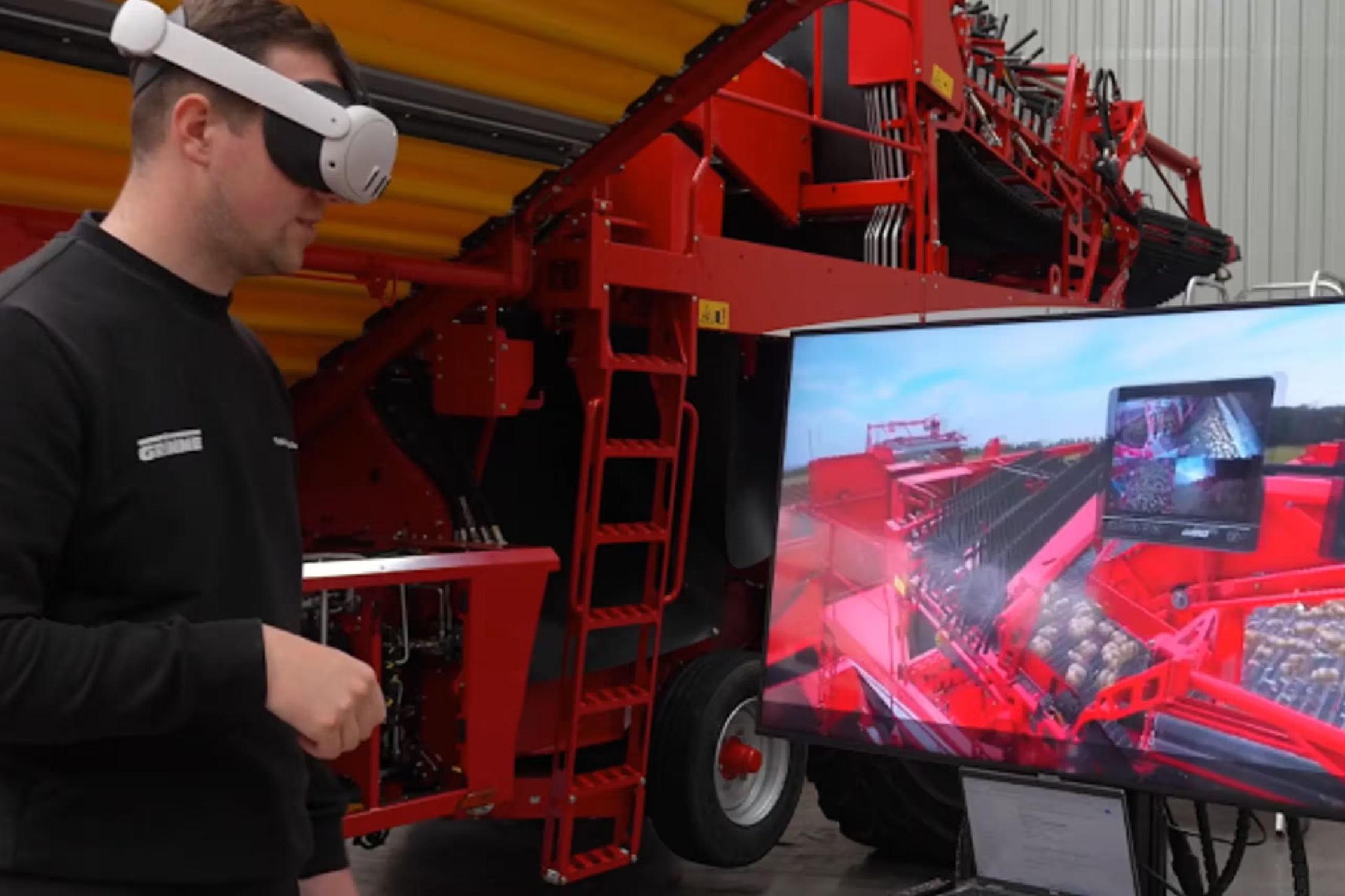
someone with a virtual headset on, and a screen showing their view

Building a harvester inside a farmer headset

Together, PepsiCo and Grimme created a hyper realistic digital twin of a potato harvester that replicates the internal mechanics and settings, enabling operators to learn how to optimize equipment performance through realistic, interactive training. The technology is accessible via virtual reality headset, smartphone, or tablet and can be sent to any farm around the globe. It allows users to virtually walk around the machine, remove panels, experiment with settings that would be impossible — or unsafe — in a real field as well as learning best practice operation in multiple languages.

“This digital approach dramatically expands our ability to support growers globally and improve the amount of quality crop that a farmer can sell,” explained Frank Nordmann.

Bringing a virtual idea to the fields

The collaboration began with pilots in Brazil and Mexico, which assessed bruising levels and operator performance before and after training. The pilots showed that digital twin training delivered an average 87% increase in bruise-free potatoes and a 1.7x reduction in severe bruising helping improve harvest quality and protect yield through enhanced operator performance and machine optimization. The headsets and training have now rolled out to Romania and Poland and the technology was also showcased at PepsiCo’s recent Global Agro University in Germany, where farmers from more than 35 markets were in attendance.

As the technology rolls out, growers supplying PepsiCo will be the first to have access to this training, however, the technology has been made available on a non-exclusive basis so others can also benefit from its development. The impact could also reach far beyond potatoes, helping to establish a change in how operators interact with farming machinery which may help redefine how the agricultural workforce is trained in the decades to come.

“We aim to find solutions to challenges that farmers face every growing season while ensuring we get a sustainable supply of quality potatoes. By pairing Grimme’s engineering expertise with PepsiCo’s agronomy insights, we’ve created a scalable tool that can help improve both crop quality and farmer livelihoods and reduce waste that can impact land use and carbon emissions,” said Rob Meyers, vice president, Global Agriculture at PepsiCo.

This collaboration aims to also enable PepsiCo’s broader pep+ agenda. Reducing loss may mean fewer potatoes need to be grown, stored and transported to produce the same amount of food. This can help reduce water, energy and fertilizer use, while increased yields may also improve farmers’ livelihoods.

someone with a virtual headset on with their hand up

What’s next

As PepsiCo and Grimme learn from the pilot programs, the teams plan to refine the training modules, expand language support and explore how digital twin experiences can help operators adopt best practices faster — so more of each harvest can make it from field to factory.

Ethan Allen reaffirms case for all five Company nominees

ISS notes DGB has not identified an interim CEO candidate

Urges Shareholders to Vote FOR All Five Company Nominees on the BLUE Proxy Card

DANBURY, CT, Oct. 27, 2026 (GLOBE NEWSWIRE) — Ethan Allen Interiors Inc. (“Ethan Allen” or the “Company”) (NYSE: ETD), a leading interior design company, manufacturer and retailer in the home furnishings marketplace, today announced that leading independent proxy advisory firm Institutional Shareholder Services Inc. (“ISS”) has recommended that shareholders vote for a majority of the Company’s nominees and NOT to support DGB Investment’s proposal to replace the Company’s entire Board of Directors (the “Board”) at Ethan Allen’s 2026 Annual Meeting of Stockholders on November 4, 2026.

The Board expressly disagrees with ISS’s recommendation to replace M. Farooq Kathwari and David M. Sable. It continues to recommend all five Company nominees – M. Farooq Kathwari, David M. Sable, Maria Eugenia Casar, Tara I. Stacom and Cynthia Ekberg Tsai – and recommends that shareholders vote “WITHHOLD” on all five DGB nominees on the BLUE proxy card.

“Selecting the next CEO and continuing to drive profitable growth are the Board’s primary focus. We believe retaining our full slate keeps the Board in the hands of directors who are already leading the CEO search, and it provides an orderly transfer of institutional knowledge,” stated Cynthia Ekberg Tsai.

“We believe retaining Mr. Sable’s strategic expertise and independent leadership, together with Mr. Kathwari’s operating knowledge for the handover, provides a stronger basis for the transition than the substitutions recommended by ISS. We urge shareholders to elect our full slate,” said Maria Eugenia Casar.

ISS’s Research

  • Recommends voting for three Ethan Allen directors and two DGB nominees.
  • Questions why all five directors needed to be replaced.
  • Notes limited progress on DGB’s CEO search and no identified interim CEO candidate.

In its evaluation of the proxy contest, ISS underscored that:
“the bar for a control slate is high, and the dissident has not cleared it outright.”

In its evaluation of Ethan Allen’s operating performance ISS states:
“ETD has maintained financial discipline through a debt-free balance sheet, cash generation, and significant capital returns to shareholders.”

ISS also recognized that the Company’s:
“…conservative balance sheet, domestic manufacturing footprint, and vertically integrated business model have supported profitability and financial stability.”

ISS also recommended votes FOR the advisory vote on executive compensation and FOR ratification of the Company’s independent auditors.

Our Plan: An Independent CEO Search and Profitable Growth

  • Independent directors, led by Lead Independent Director David Sable and Corporate Governance, Nominations and Sustainability Committee Chair Cynthia Ekberg Tsai, are running the search with a nationally recognized firm.
  • The Board has committed to announcing the next CEO by June 30, 2027.
  • The next CEO will also join the Board. The CEO and Chair roles will be held separately.
  • Continuity in Board oversight and operating leadership helps maintain coordination across manufacturing, design, retail and delivery during the transition.

DGB’s Plan Adds Transition Risk, Not Value
DGB is seeking to replace all five directors, install an interim CEO, then select a permanent CEO. In the Board’s judgment, that sequence creates the following risks:

  • Two CEO handovers instead of one;
  • Uncertainty in the marketplace;
  • Possible added transition costs and delayed investment decisions; and
  • Disruption to the succession work already underway.

DGB has not shown that replacing every current director would improve results for shareholders.

Strategic Experience for the Decisions Ahead
The Board combines strategic experience in brand and digital commerce, technology, global finance and real estate with Company-specific operating knowledge. Those perspectives are directly relevant to CEO selection, growth priorities and capital allocation. The five Company nominees bring complementary capabilities to those decisions:

  • David M. Sable: Brand, customer strategy and marketing. His leadership at Wunderman, VMLY&R (now known as VML) and Genesis Direct, together with his American Eagle Outfitters board experience, brings an outside view of brand positioning, customer relationships and digital commerce. As Lead Independent Director, his responsibility is to challenge management’s assumptions, assess the next CEO’s strategic priorities and hold leadership accountable for execution and investment returns.
  • Cynthia Ekberg Tsai: Technology, transformation and leadership selection. Having founded and led a software and IT business and worked in financial services, she brings an entrepreneur’s perspective on turning technology into competitive advantage. As Corporate Governance, Nominations and Sustainability Committee chair, she applies that perspective to the CEO selection process.
  • Maria Eugenia Casar: Global finance and capital allocation. Her UN financial leadership, World Food Programme experience and Grupo Bimbo board service bring a perspective on allocating resources across large, complex organizations. As Audit Committee chair, she applies that perspective to evaluating the financial assumptions and resource commitments behind the Company’s strategic choices.
  • Tara I. Stacom: Real estate and financing. Her experience advising corporations on complex real estate and financing decisions brings a capital-productivity lens to the Company’s physical presence, including where expansion, relocation or consolidation can improve returns.
  • M. Farooq Kathwari: Institutional knowledge transfer. The Board seeks his re-election to support the handover of Company knowledge across manufacturing, design, retail and customer relationships to the next generation of leadership. Under the announced transition, he will remain a non-executive director until the 2027 Annual Meeting, when he will leave the Board.

YOUR VOTE IS IMPORTANT!

The Company urges shareholders to elect all five Company nominees to complete the CEO transition with independent oversight, preserve operating continuity and hold new leadership accountable for results. Vote FOR all five Company nominees – M. Farooq Kathwari, David M. Sable, Maria Eugenia Casar, Tara I. Stacom and Cynthia Ekberg Tsai – and WITHHOLD on all five DGB nominees on the BLUE proxy card.

Shareholders can find additional information at www.VoteEthanAllen.com. Please follow the BLUE proxy card instructions to vote by internet, telephone or mail. If you have already voted, you may change your vote by submitting a later-dated valid proxy. Only your latest valid vote will count. For assistance, contact Georgeson LLC toll-free at (888) 717-2572 or ethanallen@georgeson.com.

Forward Looking Statements

This communication contains “forward-looking statements” within the meaning of the Private Securities Litigation Reform Act of 1995, including statements regarding the Company’s strategic and operating priorities, growth initiatives and strategies, technology investments, capital allocation, capital expenditures, CEO succession and expectations regarding the leadership transition. These statements are subject to risks and uncertainties, including those described in Item 1A of the Company’s Annual Report on Form 10-K and in its other filings with the SEC, which could cause actual results to differ materially from those anticipated. Forward-looking statements speak only as of the date made, and the Company undertakes no obligation to update them except as required by law.

About Ethan Allen

Ethan Allen (NYSE: ETD) is a leading interior design destination combining state-of-the-art technology with personal service. Ethan Allen design centers, which represent a mix of Company-operated and independent licensee locations, offer complimentary interior design service and sell a full range of home furnishings, including custom furniture and artisan-crafted accents for every room in the home. Vertically integrated from product design through logistics, the Company manufactures about 75% of its custom-crafted furniture in its own North American manufacturing facilities and has been recognized for product quality and craftsmanship since 1932. Learn more at www.ethanallen.com.

Disclaimer

The Company has neither sought nor obtained the consent from any third party to use any statements or information contained in this press release that have been obtained or derived from statements made or published by such third parties. Any such statements or information should not be viewed as indicating the support of such third parties for the views expressed herein.

Investor Relations Contacts

Ethan Allen Contact
Matt McNulty, Senior Vice President, Chief Financial Officer and Treasurer
IR@ethanallen.com

Investor Contact
Chris Hayden / Bill Fiske, Georgeson LLC
ethanallen@georgeson.com

Media Contact
Phil Denning / Gabriel Hasson, ICR LLC
ETD@icrinc.com

Why it matters

  • Autonomous AI can act faster than humans can intervene
  • Mission environments demand visibility, control and verifiable accountability
  • Calibrated oversight preserves human authority over consequential decisions

A few years ago, I built an agent to route expense approvals. The agent misapplied a rule and nearly auto approved a misfiled purchase.

Thankfully, we caught it in time. Nothing dramatic happened. Nobody got fired. The model had behaved exactly as designed.

But the experience exposed something important: Somebody has to watch the work – trust must be earned, not given.

Fast forward to today, and the same fundamental challenge is playing out in defense and intelligence environments—only the consequences are far greater than a misfiled expense report.

What agentic AI changes in mission environments

Agentic AI, systems that can act with increasing autonomy, is arriving in mission environments faster than many governance frameworks can keep pace. Its prevalence isn’t a mystery, since it offers agents that can hunt for threats across garrisons and forward-deployed networks at machine speed, taking on work that could otherwise consume hours of an analyst’s time.

But that speed also raises the stakes.

Why speed increases the need for accountability

The faster agents can act, the more important it becomes to know what they’re doing, control what they’re allowed to do, and prove why an action was taken.

Speed without accountability can quickly become a liability.

Know. Control. Prove.

Know, control, prove are three powerful words and conditions an agent must meet before it earns the right to act. But to get there, you need an underlying model built on calibrated trust where agents are governed with visibility, limits, and evidence built in from the start.

Here’s what that looks like in practice:

Know
The platform can see every agent operating in its environment: Who built it, what it’s allowed to touch, and the autonomy it earned before it ever takes an action. Identity systems alone do not cover this ground. They confirm who an agent claims to be, but they don’t say what it’s authorized to do. Closing that gap is the foundation everything else depends on.

Control
This is where most governance conversations stop short. Not every agent decision deserves the same scrutiny. A calibrated trust model scores each moment, weighing task familiarity, outcome safety, and reversibility against a threshold. Low-risk, reversible actions execute on their own. High-consequence, hard-to-reverse actions pause for a human.

That is the difference between human-on-the-loop and human-in-the-loop governance.

Human-in-the-loop asks a person to sign off on every decision, which sounds safe until the approval queue becomes a bottleneck. Human-on-the-loop monitors continuously and escalates only the actions that genuinely warrant a second look. For high-volume environments, that approach can scale oversight without turning human review into a bottleneck.

But neither model is sufficient on its own. Architectural limits must sit underneath both, constraining agent behavior before a human is ever asked to weigh in.

Prove
Close the loop. Every decision, human and machine, leaves a hash-chained, tamper-evident record mapped to NIST compliance families. That record is the difference between a receipt and a promise, and it gives an auditor or authorizing official something they can independently verify.
 

Why agentic AI governance cannot wait

Given its ubiquity, power, and potential, organizations should have a vested interest in ensuring agentic AI works. But the promise is not without peril. In a June 2025 forecast, Gartner projected that over 40% of agentic AI projects will be canceled by the end of 2027 due to escalating costs, unclear business value or inadequate risk controls.

The technology tends to work well enough in the demo. But the absence of a governor layer is what can quickly break projects.

What trusted agentic AI means for mission leaders

For the analyst, this means speed without second-guessing every output. For the commander, it means authority stays intact even as machines act faster than any person can track in real time. For the authorizing official, it means evidence instead of assurances.

The organizations that get this right will not be the ones that adopted AI agents first. They will be the ones that can prove, months later, exactly why every action taken was justified.


Key takeaways

  • Agent identities must establish both who they are and what they are authorized to do
  • Oversight should reflect an action’s risk, reversibility and potential consequences
  • Leidos applies visibility, calibrated controls and verifiable evidence to strengthen trust in agentic AI
     

DISCOVER HOW LEIDOS APPROACHES AGENTIC AI GOVERNANCE

/3BL/ – Lenovo has been named to TIME’s World’s Best Companies 2026 list for the first time, ranking no. 51 globally among leading companies worldwide.

The ranking, developed by TIME in partnership with Statista, recognizes top-performing companies around the world based on three primary dimensions: employee satisfaction, revenue growth, and sustainability transparency. Lenovo achieved an overall score of 87.51, with its growth performance categorized as “Very High.”

In addition to these evaluation criteria, TIME noted that Lenovo’s entry to the list was driven by the expansion of the AI server business and the growing demand for physical infrastructure to support AI. This is reflected in Lenovo’s financial results, with fiscal year 2025/2026 being its strongest fiscal year on record, with annual revenue of US$83.1 billion, Lenovo’s AI-related revenue also doubled year-on-year and accounted for 33% of group revenue for the full financial year FY 25/26, underscoring AI as a key growth engine across Lenovo’s business.

Lenovo’s inclusion on the list reflects the company’s continued progress in executing its growth strategy while maintaining a strong focus on employee experience and responsible business practices. The company’s commitment to sustainability also contributed to the recognition. In FY 25/26, Lenovo concluded its first generation of long-term ESG KPIs, which drove progress across its ESG strategy over the past five years. In its latest ESG Report, the company introduced a new set of 2030 ESG KPIs and aspirations to guide the next phase of ESG priorities.

The research project of TIME’s World’s Best Companies 2026 is a comprehensive analysis of corporate performance based on three key dimensions: employee satisfaction, measured through survey responses from more than 200,000 employees worldwide; revenue growth, evaluated using company performance over the past three years; and sustainability transparency, assessed through multiple key performance indicators that collectively form a comprehensive ESG index.

About Lenovo

Lenovo is a US$83 billion revenue global technology powerhouse, ranked #153 in the Fortune Global 500, and serving millions of customers every day in 180 markets. Guided by its vision of “Smarter Technology for All”, Lenovo is executing a Hybrid AI strategy that spans Personal AI – one personal AI, multiple devices; and Enterprise AI – helping customers turn data into insights and value. This strategy is delivered through the Group’s commitment to world-class innovation and a full-stack AI portfolio, including devices (PCs, workstations, smartphones, tablets, accessories), infrastructure solutions (server, storage, edge, high-performance computing and software defined infrastructure), as well as software, solutions, and services. With a global footprint spanning more than 20 research and development locations and a global supply chain that includes more than 30 manufacturing sites across 11 markets, Lenovo is widely recognized for its operational excellence. Lenovo is listed on the Hong Kong stock exchange under Lenovo Group Limited (HKSE: 992) (ADR: LNVGY). Learn more at www.lenovo.com and follow the latest news in our newsroom.

  • EMCITATE is the first and only FDA-approved treatment for peripheral thyrotoxicosis in adults and pediatric patients with MCT8 deficiency in the United States
  • Egetis RareLink™, the dedicated patient support program, provides access assistance, education and care coordination in partnership with PANTHERx® Rare Pharmacy

STOCKHOLM, SWEDEN, Sept. 27, 2026 – (GlobeNewswire) Egetis Therapeutics AB (publ) (“Egetis” or the “Company”) (Nasdaq Stockholm: EGTX), a commercial-stage pharmaceutical company focused on developing and delivering innovative therapies for patients with rare diseases, today announced the commercial availability of EMCITATE® (tiratricol), ahead of anticipated timelines following U.S. Food and Drug Administration (FDA) approval on September 28, 2026.

EMCITATE is indicated for the treatment of peripheral thyrotoxicosis in adults and pediatric patients with monocarboxylate transporter 8 (MCT8) deficiency, also known as Allan-Herndon-Dudley syndrome. It is the first and only FDA-approved treatment for MCT8 deficiency in the United States. EMCITATE is not recommended for the treatment of primary hypothyroidism.

“Launching EMCITATE in the United States ahead of our anticipated timelines marks an important milestone for people living with MCT8 deficiency, their families and everyone who has worked toward bringing an approved treatment to this community,” said Nicklas Westerholm, chief executive officer of Egetis Therapeutics. “Following FDA approval, our focus is now on building on this momentum and helping eligible patients access treatment as quickly as possible. We remain deeply committed to the MCT8 deficiency community and grateful to the patients, families, clinicians, investigators and advocacy organizations that continue to support these efforts.”

MCT8 deficiency is a rare, devastating, life-limiting, X-linked disorder caused by pathogenic mutations in the SLC16A2 gene. These mutations impair the function of MCT8, a critical cell-surface thyroid hormone transporter responsible for thyroid hormone transport in specific cells, including in the brain. The resulting disruption of thyroid hormone signaling leads to severe neurodevelopmental impairment and persistent peripheral thyrotoxicosis. Patients with MCT8 deficiency have a reported median life expectancy of approximately 35 years.

To support the U.S. launch, Egetis has established Egetis RareLink, its dedicated patient support program, in partnership with PANTHERx Rare Pharmacy. The program is designed to help eligible patients, caregivers and health care professionals navigate medication access, education, care coordination and ongoing treatment services.

Through Egetis RareLink, the Company aims to provide dedicated support and help eligible patients access EMCITATE. Patients and caregivers can learn more by calling 1-844-4EGETIS (1-844-434-3847) or go to EMCITATE.com.

About EMCITATE®

EMCITATE (tiratricol) is a thyroid hormone receptor agonist indicated for the treatment of peripheral thyrotoxicosis in adults and pediatric patients with monocarboxylate transporter 8 (MCT8) deficiency (Allan–Herndon–Dudley syndrome).

Limitation of use: EMCITATE is not recommended for the treatment of primary hypothyroidism.

About MCT8 Deficiency

Monocarboxylate transporter 8 (MCT8) deficiency, also known as Allan–Herndon–Dudley syndrome (AHDS), is a rare, devastating, life-limiting, X-linked disorder caused by pathogenic mutations in the SLC16A2 gene. These mutations impair the function of MCT8, a critical cell-surface thyroid hormone transporter responsible for thyroid hormone transport in specific cells, including in the brain. Patients experience insufficient thyroid hormone activity in the central nervous system and excessive exposure to the active thyroid hormone triiodothyronine (T3) in peripheral tissues. This results in severe neurodevelopmental impairment and persistent peripheral thyrotoxicosis.

Elevated T3 concentrations in peripheral tissues can result in a chronic hypermetabolic state affecting multiple organs, including the heart, muscles, liver and kidneys. Clinical manifestations may include failure to thrive, cardiovascular strain, muscle wasting, metabolic imbalance and increased susceptibility to infections. These systemic consequences are believed to contribute significantly to the increased morbidity and premature mortality associated with the disorder. Patients with MCT8 deficiency have a reported median life expectancy of approximately 35 years.

For more information about MCT8 deficiency, visit MCT8deficiency.com or LifewithMCT8deficiency.com.

Important Safety Information

BOXED WARNING: NOT FOR TREATMENT OF OBESITY OR FOR WEIGHT LOSS

Contraindications: EMCITATE is contraindicated in patients with primary hyperthyroidism.

Warnings and precautions

  • Thyrotoxicosis: Signs and symptoms of thyrotoxicosis, including increased heart rate, elevated blood pressure, diarrhea, hyperhidrosis, irritability, insomnia and nightmares, have occurred during treatment initiation and dose titration. Monitor patients and adjust the EMCITATE dose as indicated.
  • Laboratory test interference for T3 measurement: Tiratricol can cross-react with immunoassays for T3, leading to unreliable T3 results and overestimation of T3.

Adverse reactions: The most common adverse reactions (≥5%) are diarrhea, vomiting, rash and hyperhidrosis.

To report suspected adverse reactions, contact Egetis Therapeutics US Inc. at 1-844-4EGETIS (1-844-434-3847) or the FDA at 1-800-FDA-1088 or www.fda.gov/medwatch.

Please see the full Prescribing Information: https://www.egetis.com/wp-content/uploads/emcitate-full-prescribing-information.pdf

About Egetis Therapeutics

Egetis Therapeutics is a commercial-stage pharmaceutical company focused on developing and delivering innovative therapies for patients with rare diseases with significant unmet medical need. Combining scientific and clinical expertise with integrated late-stage development, regulatory and commercial capabilities, and manufacturing expertise, Egetis is committed to delivering treatments and dedicated support to underserved patient communities.

The Company’s lead product, EMCITATE® (tiratricol), is the first and only approved treatment for MCT8 deficiency, a rare and life-shortening genetic disorder, with marketing authorizations in the European Union and the United States.

Headquartered in Stockholm, Sweden, with operations in the U.S. and Europe, Egetis is building a sustainable global rare disease company.

For more information, visit egetis.com and follow the Company on LinkedIn.

About PANTHERx Rare

PANTHERx Rare makes rare disease care more personalized and less overwhelming by focusing on each patient and each therapy. PANTHERx experts develop relationships with patients, prescribers and pharmaceutical partners, serving as trusted advocates to support collaboration and care. Founded in Pittsburgh, Pennsylvania, in 2011, PANTHERx has grown into the largest independent rare pharmacy in the U.S.

PANTHERx is licensed in all 50 states and U.S. territories and was the first national pharmacy to achieve dual rare disease accreditations from the Accreditation Commission for Health Care (ACHC) and the Utilization Review Accreditation Commission (URAC). PANTHERx received the 2026 MMIT Patient Choice Award for patient satisfaction, marking its ninth win.

For more information, visit www.pantherxrare.com.

For further information, please contact:

Nicklas Westerholm, CEO
+46 (0) 733 542 062
nicklas.westerholm@egetis.com

Karl Hård, Head of Investor Relations, Communications & Business Development
+46 (0) 733 011 944
karl.hard@egetis.com

Forward-Looking Statements

This press release contains forward-looking statements within the meaning of applicable securities laws, including statements regarding the commercialization and availability of EMCITATE® (tiratricol) in the United States, the timing and outcome of potential monetization of the Rare Pediatric Disease Priority Review Voucher, the expected capabilities of the Company’s patient access and distribution infrastructure, the anticipated benefits of EMCITATE for patients with MCT8 deficiency, and the Company’s broader strategic plans for the development and commercialization of therapies for rare diseases. Forward-looking statements can generally be identified by words such as “expects,” “anticipates,” “intends,” “believes,” “estimates,” “plans,” “will,” “may,” “could,” “potential,” or similar expressions, although not all forward-looking statements contain these words.
These statements are based on the Company’s current expectations, assumptions, and assessments as of the date of this press release and are subject to risks, uncertainties, and other factors that could cause actual results to differ materially from those expressed or implied. Such factors include, but are not limited to: risks related to the commercial launch and market acceptance of EMCITATE in the United States; the ability to establish and maintain adequate commercial infrastructure, including distribution, patient support, and reimbursement arrangements; the timing and terms of any monetization of the Priority Review Voucher, which is subject to market conditions and the availability of interested purchasers; potential post-marketing requirements or restrictions imposed by the FDA; the ability to maintain regulatory approvals in the United States and the European Union; competition from existing or future therapies; the Company’s ability to secure adequate funding for its operations and commercial activities; and general economic, market, and business conditions.
For a further description of risks and uncertainties that could affect the Company’s business and results, reference is made to the Company’s most recent annual report and other filings with relevant regulatory authorities available at www.egetis.com. The Company undertakes no obligation to publicly update or revise any forward-looking statements, whether as a result of new information, future events, or otherwise, except as required by applicable law or regulation.