
LONDON–(BUSINESS WIRE)– FORM 8.3 PUBLIC OPENING POSITION DISCLOSURE/DEALING DISCLOSURE BY A PERSON WITH INTERESTS IN RELEVANT SECURITIES REPRESENTING 1% OR MORE Rule 8.3 of the Takeover Code (the “Code”) 1. KEY INFORMATION (a) Full name of discloser: Qube Research & Technologies Limited (b) Owner or controller of interests and short positions disclosed, if different from 1(a): The naming of nominee or vehicle companies is insufficient. For a trust, the trustee(s), settlor and beneficiari
Month: September 2026
GENEBRA–(BUSINESS WIRE)–Oral-B, marca de escovas de dentes nº 1 usada e recomendada por dentistas em todo o mundo, anunciou hoje novas evidências que reforçam a superioridade da tecnologia Oral-B iO. Em uma meta-análise de rede independente, revisada por pares e publicada em 2026, que abrangeu 19 estudos clínicos randomizados com mais de 1.300 participantes, a tecnologia oscilatória-rotatória da Oral-B iO foi classificada em primeiro lugar na remoção de placa bacteriana e na redução da gengiv
GINEVRA–(BUSINESS WIRE)–Oral-B, il 1º marchio di spazzolini utilizzato e consigliato dai dentisti di tutto il mondo, ha annunciato oggi la pubblicazione di nuove prove che ribadiscono la superiorità della tecnologia Oral-B iO. In una meta-analisi di rete indipendente condotta nel 2026 e sottoposta a revisione tra pari di 19 studi clinici randomizzati che ha coinvolto più di 1.300 partecipanti, la tecnologia di roto-oscillazione alla base di Oral-B iO si è classificata al 1º posto per la rimoz
LONDON–(BUSINESS WIRE)– FORM 8.3 PUBLIC OPENING POSITION DISCLOSURE/DEALING DISCLOSURE BY A PERSON WITH INTERESTS IN RELEVANT SECURITIES REPRESENTING 1% OR MORE Rule 8.3 of the Takeover Code (the “Code”) 1. KEY INFORMATION (a) Full name of discloser: Qube Research & Technologies Limited (b) Owner or controller of interests and short positions disclosed, if different from 1(a): The naming of nominee or vehicle companies is insufficient. For a trust, the trustee(s), settlor and beneficiari
LIVINGSTON, N.J.–(BUSINESS WIRE)–CoreWeave, Inc. (Nasdaq: CRWV) (“CoreWeave”) today announced its intention to offer, subject to market and other conditions, $3.0 billion aggregate principal amount of its convertible senior notes due 2033 (the “Notes”) in a private offering. CoreWeave also intends to grant the initial purchasers of the Notes an option to purchase, for settlement within a 13-day period beginning on, and including, the date on which the Notes are first issued, up to an addition
LONDON–(BUSINESS WIRE)– FORM 8.3 PUBLIC OPENING POSITION DISCLOSURE/DEALING DISCLOSURE BY A PERSON WITH INTERESTS IN RELEVANT SECURITIES REPRESENTING 1% OR MORE Rule 8.3 of the Takeover Code (the “Code”) 1. KEY INFORMATION (a) Full name of discloser: Qube Research & Technologies Limited (b) Owner or controller of interests and short positions disclosed, if different from 1(a): The naming of nominee or vehicle companies is insufficient. For a trust, the trustee(s), settlor and beneficiari
GENÈVE–(BUSINESS WIRE)–Oral-B, het tandenborstelmerk dat wereldwijd het meest door tandartsen wordt gebruikt en aanbevolen, heeft vandaag nieuwe bewijzen gepresenteerd die de superieure werking van de Oral-B iO-technologie onderstrepen. Uit een onafhankelijke, door vakgenoten beoordeelde netwerk-meta-analyse van 19 gerandomiseerde klinische studies met meer dan 1.300 deelnemers, kwam de oscillerend-roterende technologie van de Oral-B iO naar voren als de nummer 1 voor het verwijderen van tand
BETHESDA, Md., Sept. 17, 2026 (GLOBE NEWSWIRE) — Gain Therapeutics, Inc. (Nasdaq: GANX) (“Gain” or the “Company”), a clinical-stage biotechnology company leading the discovery and development of the next generation of allosteric small molecule therapies, today announced that Gene Mack, President and CEO, will participate in an industry panel and one-on-one meetings at the ROTH Fifth Annual Healthcare Opportunities Conference, held September 29th at the Metropolitan Club in New York, NY.
Presentation Information
Presentation Title: Frontiers in Neuroscience
Date: Tuesday, September 29, 2026
Time: 11:00 a.m. ET
Registered attendees can request one-on-one meetings with Gain management via their ROTH sales representative.
If you are unable to attend the conference and would like to schedule a meeting with Gain management, please contact ir@gaintherapeutics.com.
About Gain Therapeutics, Inc.
Gain Therapeutics, Inc. is a clinical-stage biotechnology company leading the discovery and development of next-generation allosteric therapies. Gain’s lead drug candidate, rexaceract, is currently being evaluated for the treatment of Parkinson’s disease with or without a GBA1 mutation in a Phase 1b clinical trial. Rexaceract has further potential in Gaucher’s disease, dementia with Lewy bodies, and Alzheimer’s disease. Gain has multiple undisclosed preclinical assets targeting lysosomal storage disorders, metabolic diseases, and solid tumors.
Gain’s unique approach enables the discovery of novel allosteric small molecule modulators that can restore or disrupt protein function. Deploying its highly advanced Magellan™ platform, Gain is accelerating drug discovery and unlocking novel disease-modifying treatments for untreatable or difficult-to-treat disorders including neurodegenerative diseases, rare genetic disorders and oncology.
Forward-Looking Statements
This release contains “forward-looking statements” made pursuant to the safe harbor provisions of the Private Securities Litigation Reform Act of 1995. These statements are typically preceded by words such as “believes,” “expects,” “anticipates,” “intends,” “will,” “may,” “should,” or similar expressions. These forward-looking statements reflect management’s current knowledge, assumptions, judgment and expectations regarding future performance or events. Although management believes that the expectations reflected in such statements are reasonable, they give no assurance that such expectations will prove to be correct or that those goals will be achieved, and you should be aware that actual results could differ materially from those contained in the forward-looking statements. Forward-looking statements are subject to a number of risks and uncertainties, including, but not limited to, statements regarding: the development of the Company’s current or future product candidates; expectations regarding the timing of patient enrollment and the completion and timing of results from a Phase 1b clinical study for rexaceract, including any extension studies; the timing of any submissions to the FDA or other regulatory bodies and agencies; the timing of the commencement of the Phase 2 clinical study for rexaceract; the ability for the Company to enroll patients in its planned Phase 2 clinical study for rexaceract; the Company’s ability to replicate positive results from earlier preclinical studies or clinical trials in current or future clinical trials; the Company’s business development activities, strategic collaborations, licensing opportunities and financing activities; the advancement, prioritization and timing of the Company’s pipeline programs, including GT-04686; and the potential therapeutic and clinical benefits of the Company’s product candidates. For a further description of the risks and uncertainties that could cause actual results to differ from those expressed in these forward-looking statements, as well as risks relating to the Company’s business in general, please refer to the Company’s Form 10-K for the year ended December 31, 2025 and other filings made with the SEC. All forward-looking statements are expressly qualified in their entirety by this cautionary notice. You are cautioned not to place undue reliance on any forward-looking statements, which speak only as of the date of this release. We have no obligation, and expressly disclaim any obligation, to update, revise or correct any of the forward-looking statements, whether because of new information, future events or otherwise.
Investors:
Gain Therapeutics, Inc.
Apaar Jammu
Director, Investor Relations and Public Relations
ajammu@gaintherapeutics.com
LifeSci Advisors LLC
Chuck Padala
Managing Director
chuck@lifesciadvisors.com
Media:
Russo Partners LLC
Nic Johnson and Elio Ambrosio
nic.johnson@russopartnersllc.com
elio.ambrosio@russopartnersllc.com
(760) 846-9256

TORONTO, Sept. 17, 2026 (GLOBE NEWSWIRE) — Talisker Resources Ltd. (“Talisker” or the “Company”) (TSX: TSK, OTCQB: TSKFF) is pleased to report results from its final test program completed at the Saskatchewan Research Council (“SRC“), in collaboration with TOMRA Mining and Stacy Freudigmann P.Eng from Canenco Consulting Corp. (“Canenco”). The program evaluated TOMRA’s X-Ray Transmission (“XRT“) sorting technology and TOMRA’s laser sorting technology as part of the Company’s ongoing efforts to optimize the planned sorting circuit for the Bralorne Gold Project.
The test results demonstrated that the XRT sorter alone delivered strong performance by:
- Rejecting 57% to 67% of waste material;
- Increasing gold grades by 2.0x to 2.5x respectively; and
- Recovering 87% to 84% of total contained gold respectively.
The addition of a downstream laser sorter increased overall gold recovery to greater than 95%. However, the additional recovered material was subeconomic. Adding the laser sorter into the sorting circuit would increase the mass of shipped material and dilute the overall grade of the sorted product, reducing the economic benefits of mass rejection during the Company’s Direct Shipping Ore (“DSO”) phase.
As a result of these findings, Talisker has elected to simplify the sorting circuit by removing the laser sorter from the plant design. The revised XRT-only flowsheet is expected to:
- Maximize waste rejection and reduce overall tonnes shipped and processed to reduce transportation costs;
- Significantly increase gold grades;
- Reduce capital equipment and construction costs by approximately $4 million CAD;
- Lower operating costs; and
- Simplify plant design and operation.
The results validate the Company’s strategy of prioritizing mass reduction and grade enhancement to improve the economics of DSO shipments for the Bralorne Gold Project.
Table 1: Test 02 Results, XRT set to maximizing gold upgrade values.
| Feed Grade | XRT Product Grade |
XRT Gold Upgrade |
XRT Gold Recovery |
XRT Waste Rejection |
Cumulative XRT and Laser Product Grade |
Cumulative XRT and Laser Gold Upgrade |
Cumulative XRT and Laser Gold Recoveries |
Cumulative XRT and Laser % Waste Rejection |
| 4.91 g/t Au | 12.5 g/t Au |
2.5x, or 154% increase |
84% | 67% | 8.13 g/t Au |
1.66x, or 66% increase |
94.9% with Laser | 43% |
Table 2: Test 03 Results, XRT set to maximizing gold recoveries.
| Feed Grade | XRT Product Grade |
XRT Gold Upgrade |
XRT Gold Recovery |
XRT Waste Rejection |
Cumulative XRT and Laser Product Grade |
Cumulative XRT and Laser Gold Upgrade |
Cumulative XRT and Laser Gold Recoveries |
Cumulative XRT and Laser Waste Rejection |
| 6.49 g/t Au | 13.1 g/t Au |
2.0x, or 102% increase |
87% | 57% | 8.66 g/t Au |
1.33x, or 33% increase |
>97.8% with Laser | 27% |
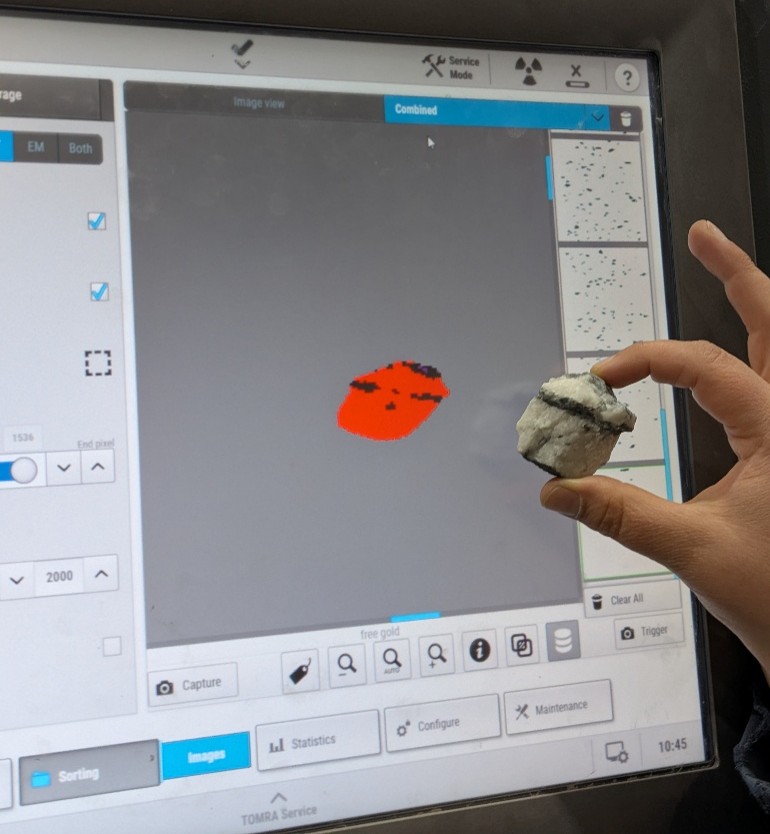
Figure 1: The XRT image above is interpreted as showing quartz as red pixels, sulphides as continuous black pixel patterns, and localized purple pixel clusters that correspond to visible gold. This interpretation is consistent with Bralorne geology, where sulphides occur in continuous bands while gold occurs in discrete, nuggety concentrations, making the purple pixels the most likely indicator of gold mineralization.
Testing Program Overview
The objective of the sorting test program was to evaluate the ability of the XRT sensor-based sorting technology to:
- Reduce the overall mass of mineralized material extracted from the mine by removing subeconomic waste material prior to transportation;
- Increase the average gold grade of shipped material; and
- Lower trucking, shipping and processing costs for the Company’s DSO operations.
Mass reduction of mineralized material is a key component of Talisker’s DSO strategy, enabling the Company to reject subeconomic material prior to shipment to maximize the value of mineralized material delivered to customers.
SRC sorted approximately 5 tonnes of bulk material for dynamic XRT and laser testing. The material was crushed to pass 60 mm and screened into a sortable fraction of >22mm/<60mm and a fines fraction <22 mm. Fines smaller than 22 mm bypass sorting and proceed directly to shipping, while the 22-60 mm fraction is run through the sorters.
The >22 mm/<60 mm size fraction was divided into three independent test batches aimed at optimizing the design and operating strategy of the Bralorne sorting facility.
- Test 01 utilized a cascade sorting approach with multiple XRT sorting stages to evaluate the correlation of gold grade with TOMRA’s sorting algorithms, density thresholds, and the performance of the CONTAIN™ AI software. The results from Test 01 were then used to calibrate the XRT for Tests 02 and 03.
- Tests 02 and 03 assessed operational scenarios using XRT sorting as the primary sorting technology, with rejected material subsequently run through a laser sorter to recover additional quartz vein-hosted gold mineralization.
- Test 02 was configured to maximize gold grade upgrading while maintaining strong recoveries.
- Test 03 was configured to maximize gold recovery while maintaining significant waste rejection.
Understanding Mass Balances and Gold Recoveries
The primary objective of ore sorting is to maximize waste rejection while maintaining strong gold recoveries, thereby reducing the mass of material that must be transported and processed. This is particularly important during the Company’s DSO phase, where economics are driven by shipping the highest-value material possible while minimizing transportation costs. The results of Tests 02 and 03 demonstrated that the XRT sorter captures the majority of high-grade gold contained within the ore, achieving recoveries of 84% to 87% while rejecting 57 – 67% of subeconomic waste. Although the addition of a laser sorter increased total gold recoveries to greater than 95%, the additional recovered material was predominantly subeconomic. As a result, the laser sorter added mass to the XRT sorted product, diluted the overall grade of the sorted product, and reduced the benefits of waste rejection, making the XRT-only configuration the preferred option for the current DSO operating strategy.
The XRT test results demonstrate the potential for XRT sorting to significantly reduce mining dilution at the Bralorne Gold Project. To date, the average true vein width is approximately 0.90 m, while the average width of lateral development faces is approximately 3.30 m. As a result, 70% to 80% of the material mined within a development heading consists of lower-grade vein halo and wall rock material surrounding a high-grade vein core that makes up 20% to 30% of total volume. In the example shown, a 0.51 m wide vein grading 61.0 g/t Au is diluted by surrounding vein halo material grading less than 1.14 g/t Au, reducing the weighted average grade of the face to 9.13 g/t Au across 3.53 m. The XRT sorter is interpreted to selectively recover the dense sulphide-bearing material within the vein core, where gold is primarily concentrated, while rejecting a significant portion of the lower-density, low-grade halo material. This effectively reduces dilution, increases the grade of the sorted product, and improves the efficiency of transporting and processing mineralized material during the DSO phase.
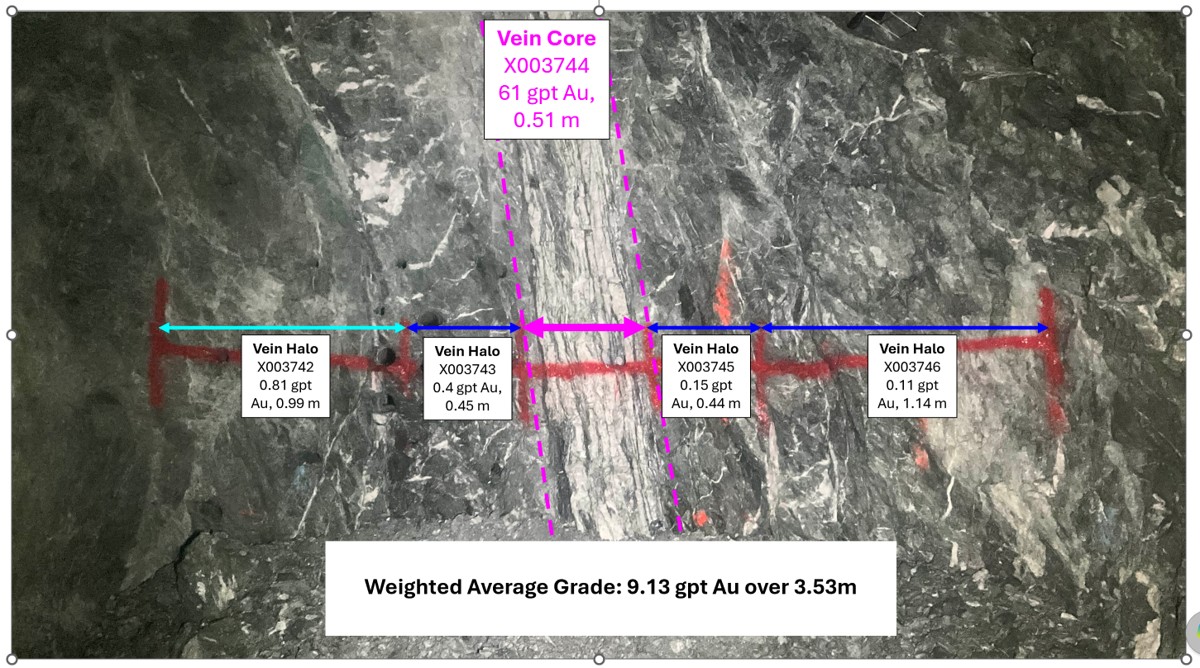
Figure 2: Lateral development face illustrating the impact of dilution on grade. The central quartz vein returned 61.0 g/t Au over a true width of 0.51 m, while the surrounding vein halo material returned low grades of less than 1.14 g/t Au. When the full development width of 3.53 m is considered, the weighted average grade decreases to 9.13 g/t Au, demonstrating the significant impact of dilution from low-grade wall rock and vein halo material. The XRT sorter is interpreted to preferentially reject much of this low-grade vein halo while retaining the high-grade vein core, thereby reducing dilution and enhancing the recovery of dense sulphide-associated gold mineralization.
Economic Implications
The test work demonstrated the potential to reject a significant proportion, 57% to 67% of the sorter feed as waste rock, prior to transportation and processing, thereby reducing crushing, trucking, shipping, and downstream processing costs. The economic benefit of the sorter is two-fold.
- The sorter increases the average gold grade for shipping which has the potential to improve the third-party milling payable,
- While simultaneously reducing the total tonnage requiring transportation and processing.
Based on the test results, the XRT sorter alone achieved the primary objectives of the sorting program by maximizing waste rejection, increasing gold grades, and reducing the mass of material requiring transportation and processing. As a result, Talisker has elected to remove the laser sorter from the initial plant design, reducing capital expenditures by approximately CAD $4 million while simplifying the flowsheet and lowering operating costs. The Company may evaluate the future addition of a scavenger laser sorter should operating conditions, throughput requirements, or economic factors warrant further recovery optimization.
The integration of ore sorting supports Bralorne’s long-term development strategy by significantly reducing the volume of mineralized material requiring downstream transportation and processing. This has the potential to reduce the size, capital intensity, and operating costs of a future on-site milling facility, while providing greater flexibility for phased project development and capital allocation.
Understanding TOMRA’s Technology
The test utilized the TOMRA COM 1200 Tertiary X-ray Transmission (XRT) sorter equipped with a high-resolution X-ray sensor and TOMRA’s CONTAIN™ and OBTAIN ™ AI software. The XRT system scans individual rock particles and analyzes differences in atomic density and internal mineralization characteristics to distinguish mineralized material from waste rock. A key advantage of the XRT sorter is its ability to penetrate and evaluate the entire rock particle rather than relying solely on surface characteristics. When used in conjunction with the CONTAIN™ AI pattern recognition software, the system can identify subtle internal mineralization patterns and make highly accurate sorting decisions. The Bralorne Gold Project is particularly well suited to XRT sorting due to the significant density contrast between high-density sulphide minerals associated with gold mineralization and the lower-density host rock, enabling effective separation of mineralized material from subeconomic waste.
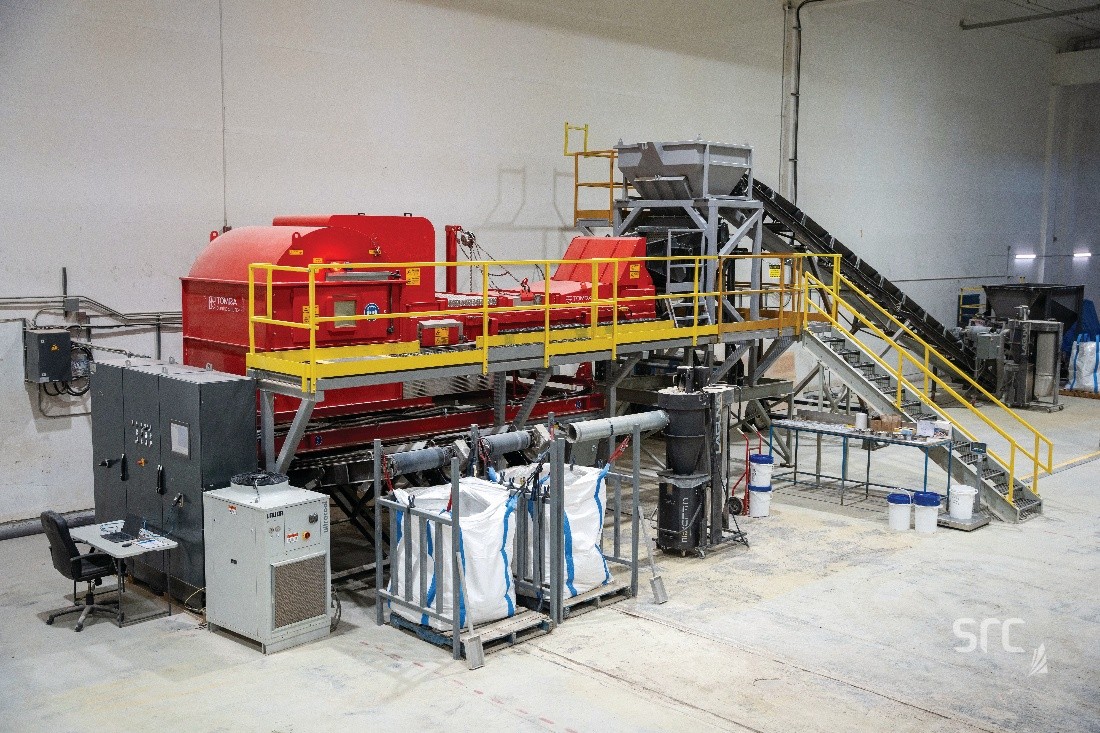
Figure 3: TOMRA COM 1200 Tertiary XRT sorter at the Saskatchewan Research Council. Image courtesy of, and copyright ©, Saskatchewan Research Council (SRC).
The rejected material from the XRT sorter was subsequently processed through the TOMRA PRO Secondary Laser sorter, equipped with advanced laser sensing technology. The laser system scans individual rock particles and analyzes their surface characteristics, including color, texture, and reflectivity, to distinguish between mineralized scattering quartz particles and waste rock. Unlike the XRT sorter, which evaluates the internal characteristics of a rock particle, the Laser sorter is limited to examining surface features and does not penetrate through the rock. The Laser sorter is particularly well suited for identifying quartz vein material exposed on the surface of particles, enabling additional recovery of mineralized material that may not be captured through density-based sorting alone.
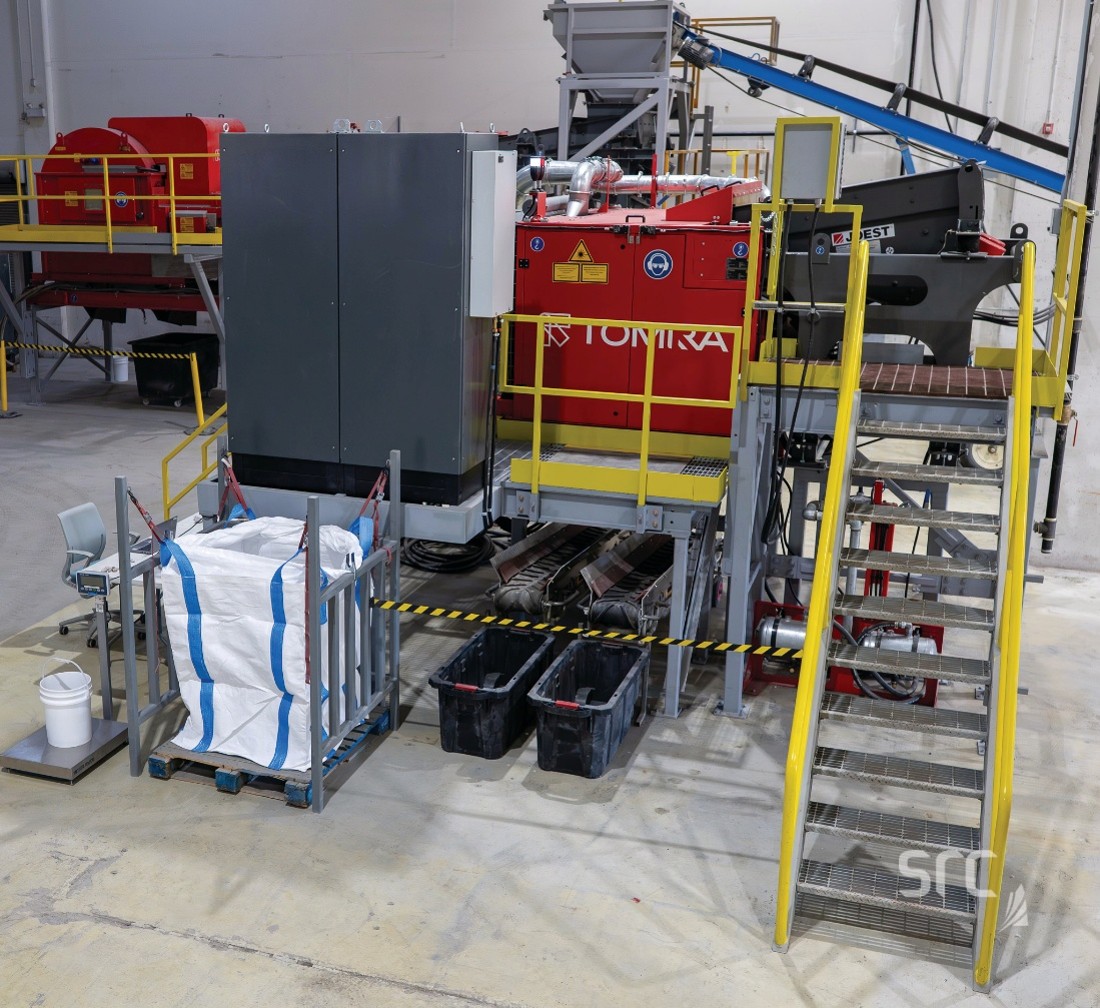
Figure 4: TOMRA PRO Secondary Laser sorter at the Saskatchewan Research Council. Image courtesy of, and copyright ©, Saskatchewan Research Council (SRC).
Stacy Freudigmann, P.Eng. and QP from Canenco Commented, “The XRT results strongly justify the elimination of the laser sorter from the Bralorne Gold Project’s sorting plant and achieves the Company’s objective of significantly reducing the mass for shipping and third-party processing while the Company is in its direct shipping phase.”
Terry Harbort, CEO of Talisker stated, “These results confirm we can achieve substantial waste rejection and significant gold grade increases while maintaining strong recoveries. The ability to eliminate the laser sorter and save approximately $4 million in capital costs, simplify the plant design and operations, and reduce operating costs further strengthens the economics of the Bralorne Gold Project.”
For further information, please contact:
Lindsay Dunlop
Vice President, Investor Relations
lindsay.dunlop@taliskerresources.com
+1 647 274 8975
Qualified Person
The technical information pertaining to metallurgy and sorting technology contained in this news release has been reviewed and approved by Stacy Freudigmann, P.Eng. with Canenco Consulting Corp., who is a Qualified Person as defined under Canadian National Instrument 43-101, Standards of Disclosure for Mineral Projects. Mr. Freudigmann is an independent third-party in accordance with NI 43-101.
The technical information pertaining to geology contained in this news release has been reviewed and approved by Patrick Weaver, P.Geo. Talisker’s Chief Production Geologist who is a Qualified Person as defined under Canadian National Instrument 43-101, Standards of Disclosure for Mineral Projects. Mr. Weaver is not independent of the Company in accordance with NI 43-101.
About TOMRA
TOMRA Mining is a global leader in sensor-based sorting technologies. The company supplies advanced XRT, laser, and AI-enabled sorting systems designed to increase resource efficiency, reduce energy consumption, lower processing costs, and improve mine sustainability through pre-concentration and waste rejection technologies.
About Talisker Resources Ltd.
Talisker (taliskerresources.com) is a junior resource company involved in the exploration and development of gold projects in British Columbia, Canada. Talisker’s flagship asset is the high-grade, fully permitted Bralorne Gold Project where the Company is producing at the Mustang Mine. Talisker projects also include the Ladner Gold Project, an historic high-grade gold mine near Hope, British Columbia, with significant exploration potential, and the Spences Bridge Project, where the Company has a significant landholding in the emerging Spences Bridge Gold Belt, as well as several other early-stage Greenfields projects.
Caution Regarding Forward Looking Statements
Certain statements contained in this press release constitute forward-looking information. These statements relate to future events or future performance. The use of any of the words “could”, “intend”, “expect”, “believe”, “will”, “projected”, “estimated” and similar expressions and statements relating to matters that are not historical facts are intended to identify forward-looking information and are based on Talisker’s current belief or assumptions as to the outcome and timing of such future events. Various assumptions or factors are typically applied in drawing conclusions or making the forecasts or projections set out in forward-looking information. Those assumptions and factors are based on information currently available to Talisker. Although such statements are based on reasonable assumptions of Talisker’s management, there can be no assurance that any conclusions or forecasts will prove to be accurate. In particular, the Company advises that it does not have defined mineral reserves and it has not based its production decision on a feasibility study of mineral reserves demonstrating economic and technical viability, and, as a result, there may be an increased uncertainty of achieving any particular level of recovery of minerals or the cost of such recovery, including increased risks associated with developing a commercially mineable deposit.
Forward looking information involves known and unknown risks, uncertainties and other factors which may cause the actual results, performance, or achievements to be materially different from any future results, performance or achievements expressed or implied by the forward-looking information. Such factors include risks inherent in the exploration, development and operation of mineral deposits, including risks relating to changes in project parameters as plans continue to be redefined, risks relating to variations in grade or recovery rates, risks relating to changes in mineral prices and the worldwide demand for and supply of minerals, risks related to increased competition and current global financial conditions, access and supply risks, reliance on key personnel, operational risks regulatory risks, including risks relating to the acquisition of the necessary licenses and permits, financing, capitalization and liquidity risks, title and environmental risks and risks relating to the failure to receive all requisite shareholder and regulatory approvals. Furthermore, historically, projects that are in production without defined mineral reserves have a much higher risk of economic and technical failure. There is no guarantee that production will proceed as anticipated or at all or that anticipated production costs will be achieved.
The forward-looking information contained in this release is made as of the date hereof, and Talisker is not obligated to update or revise any forward-looking information, whether as a result of new information, future events or otherwise, except as required by applicable securities laws. Because of the risks, uncertainties and assumptions contained herein, investors should not place undue reliance on forward-looking information. The foregoing statements expressly qualify any forward-looking information contained herein.
Photos accompanying this announcement are available at:
https://www.globenewswire.com/NewsRoom/AttachmentNg/45ce18ed-4af0-4ee9-8db1-2e3477569eaf
https://www.globenewswire.com/NewsRoom/AttachmentNg/a1c617b7-f5b6-4263-b8e4-ef6d837f80f4
https://www.globenewswire.com/NewsRoom/AttachmentNg/01336446-b0f1-47b2-a5bf-93acf0ef3f8d
https://www.globenewswire.com/NewsRoom/AttachmentNg/996da112-e98c-4f26-9aca-8270dbc7c148

BOSTON, Sept. 17, 2026 (GLOBE NEWSWIRE) — Tiziana Life Sciences, Ltd. (Nasdaq: TLSA) (“Tiziana” or the “Company”), a biotechnology company developing breakthrough immunomodulation therapies with its lead development candidate, intranasal foralumab, a fully human, anti-CD3 monoclonal antibody, today announced the signing of a Memorandum of Understanding (MOU) with the King Abdullah International Medical Research Center (KAIMRC) of King Saud bin Abdulaziz University for Health Sciences (KSAU-HS), Ministry of National Guard – Health Affairs, and the Foundation for Neurologic Diseases. Under the MOU, the parties intend to collaborate on a clinical trial evaluating a combination of Tiziana’s proprietary intranasal foralumab and existing anti-CD20 therapy in patients with relapsing-remitting multiple sclerosis (RRMS) who are responding poorly to anti-CD20 therapy alone, which could be due to untreated neuroinflammation. In three clinical studies to date, intranasal foralumab has been shown to reduce neuroinflammation.
The MOU was signed by Ivor Elrifi, CEO of Tiziana Life Sciences during an event on the main stage at the Riyadh Global Medical Biotechnology Summit (RGMBS) in Riyadh, Kingdom of Saudi Arabia, on Wednesday, September 16, 2026.
KAIMRC is a biomedical and clinical research center operating under the Ministry of National Guard – Health Affairs that pursues translational research and national research capability in alignment with Saudi Vision 2030 and the National Biotechnology Strategy. The Foundation for Neurologic Diseases is a research organization with recognized expertise in neuroimmunology and multiple sclerosis research.
“This MOU marks an important step in fostering international scientific collaboration in neuroimmunology and immunomodulation research,” said Ivor Elrifi, Chief Executive Officer of Tiziana Life Sciences. “We are pleased to partner with KAIMRC along with the Foundation for Neurologic Diseases to explore opportunities that align with our mission of advancing innovative therapies for neurodegenerative and neuroinflammatory diseases, including a clinical trial of foralumab in combination with anti-CD20 therapy for RRMS patients having suboptimal responses to anti-CD20 treatment alone. This represents an additional Multiple Sclerosis type beyond our ongoing non-active Secondary Progressive MS (na-SPMS) program, and does not change our efforts toward na-SPMS, where the Phase 2 trial remains blinded with results expected in October this year. Signing the agreement at RGMBS in Riyadh underscores the growing global interest in collaborative approaches to address these significant unmet medical needs.”
About Foralumab
Foralumab, a fully human anti-CD3 monoclonal antibody, is a biological drug candidate that has been shown to stimulate T regulatory cells when dosed intranasally. At present, 14 patients with Non-Active Secondary Progressive Multiple Sclerosis (na-SPMS) have been dosed in an open-label intermediate sized Expanded Access (EA) Program (NCT06802328) with either an improvement or stability of disease seen within 6 months in all patients. In addition, intranasal foralumab is currently being studied in a Phase 2a, randomized, double-blind, placebo-controlled, multicenter, dose-ranging trial in patients with non-active secondary progressive multiple sclerosis (NCT06292923), as well as additional Phase 2 trials in AD and MSA.
Intranasal foralumab is the only fully human anti-CD3 monoclonal antibody (mAb) currently in clinical development. Immunomodulation by intranasal foralumab represents a novel avenue for the treatment of neuroinflammatory and neurodegenerative human diseases.[1],[2]
About Tiziana Life Sciences
Tiziana Life Sciences is a clinical-stage biopharmaceutical company developing breakthrough therapies using transformational drug delivery technologies to enable alternative routes of immunotherapy. Tiziana’s innovative intranasal approach has the potential to provide an improvement in efficacy as well as safety and tolerability compared to intravenous (IV) delivery. Tiziana’s lead candidate, intranasal foralumab, which is the only fully human anti-CD3 mAb currently in clinical development, has demonstrated a favorable safety profile and clinical response in patients in studies to date. Tiziana’s technology for alternative routes of immunotherapy has been patented with several applications pending and is expected to allow for broad pipeline applications.
For more information about Tiziana Life Sciences and its innovative pipeline of therapies, please visit www.tizianalifesciences.com.
Forward-Looking Statements
Statements in this press release may be “forward-looking statements” within the meaning of Section 27A of the U.S. Securities Act of 1933, as amended, and Section 21E of the U.S. Securities Exchange Act of 1934, as amended, that concern matters that involve risks and uncertainties that could cause actual results to differ materially from those anticipated or projected in the forward-looking statements. These forward-looking statements are not historical facts but rather are based on the Company’s current expectations, estimates, and projections about its industry; its beliefs; and assumptions. Words such as ‘anticipates,’ ‘expects,’ ‘intends,’ ‘plans,’ ‘believes,’ ‘seeks,’ ‘estimates,’ and similar expressions are intended to identify forward-looking statements. These forward-looking statements reflect the current beliefs and expectations of Tiziana’s management and include statements regarding the closing of the Offering. These statements are not guarantees of future performance and are subject to known and unknown risks, uncertainties, and other factors, some of which are beyond the Company’s control, are difficult to predict, and could cause actual results to differ materially from those expressed or forecasted in the forward-looking statements. The Company cautions security holders and prospective security holders not to place undue reliance on these forward-looking statements, which reflect the view of the Company only as of the date of this announcement. Actual results may differ materially from those indicated by such forward-looking statements as a result of various important factors, including: the uncertainties related to market conditions and other factors described more fully in the section entitled ‘Risk Factors’ in Tiziana’s Annual Report on Form 20-F for the year ended December 31, 2025, and other periodic reports filed with the SEC from time to time. The forward-looking statements made in this announcement relate only to events as of the date on which the statements are made. The Company will not undertake any obligation to release publicly any revisions or updates to these forward-looking statements to reflect events, circumstances, or unanticipated events occurring after the date of this announcement except as required by law or by any appropriate regulatory authority.
For further inquiries:
Tiziana Life Sciences Ltd
Paul Spencer, Business Development, and Investor Relations
+44 (0) 207 495 2379
email: info@tizianalifesciences.com
[1] https://www.pnas.org/doi/10.1073/pnas.2220272120
[2] https://www.pnas.org/doi/10.1073/pnas.2309221120
