Month: August 2026
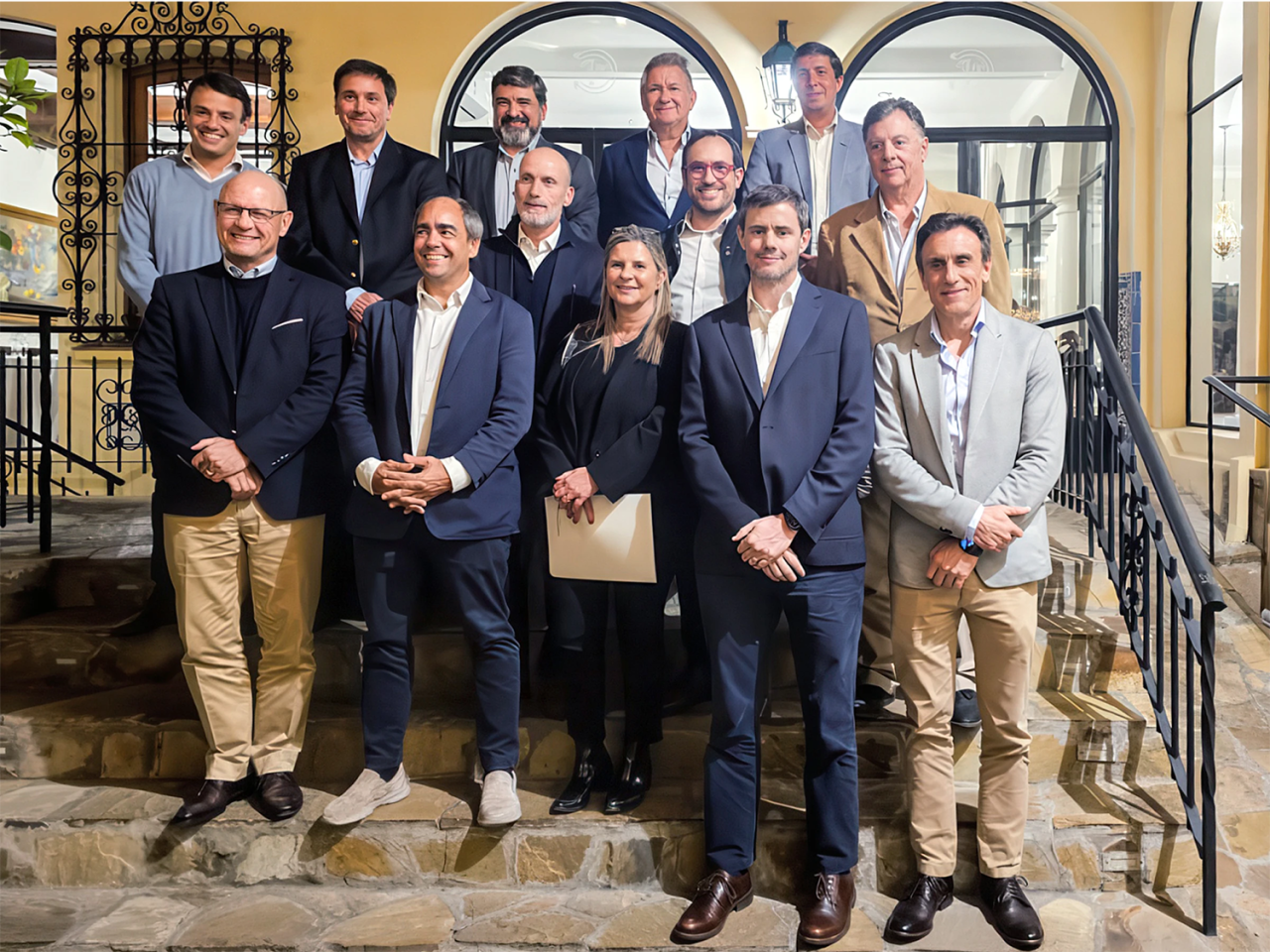
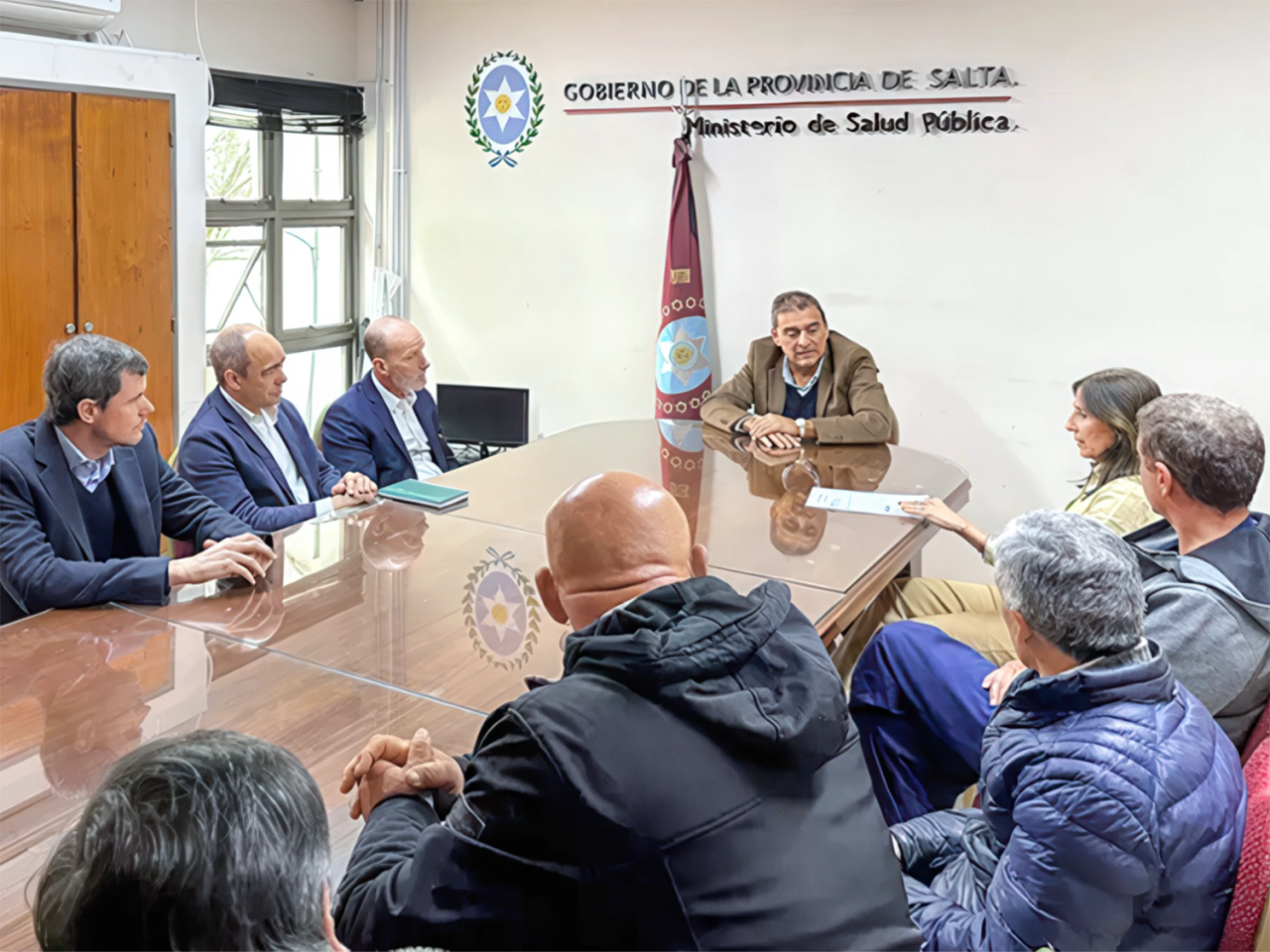
LAKE FOREST, Ill.–(BUSINESS WIRE)–Federal Home Loan Bank of Chicago (FHLBank Chicago) convened a roundtable today with U.S. Rep. Brad Schneider (IL-10), member financial institutions, trade association partners, and industry leaders to discuss important issues affecting the housing finance industry, financial services institutions, and the communities they serve across Illinois’ 10th Congressional District. The event provided a forum for local community banks, credit unions, insurance compani
Sustainability has never sat neatly on the corporate organizational chart. But in the past few years it has begun to drift in a distinct direction: as wide-ranging disclosure expectations give way to specific compliance obligations, the function is more engaged with legal and risk. Two independent datasets this week quantify this development.
G&A and Ropes & Gray have released Side by Side: Sustainability and Legal, based on a survey and interviews at 35 companies. It finds lean teams absorbing expanding compliance duties: of this pool, 39% of sustainability functions now report into legal, and 87% of sustainability leaders said regulation has increased their interactions with legal in the past year. No respondents expected that collaboration to diminish.
The Weinreb Group’s 2026 CSO report, covered by ESG Dive, paints a similar picture. CSOs reporting to legal have climbed from 3% in 2011 to 23%, while those reporting to the CEO have fallen from roughly a third to 14%. The number of CSOs dipped for the first time in 15 years, with headcount growing faster outside the function than inside.
Adding to the regulatory drive behind that shift, EFRAG has opened a consultation running to October 31 on its exposure draft of the CSRD standard for non-EU companies — the last piece of the directive to take effect, per its technical chair. As ESG Today reports, the draft covers impacts only, dropping the risks-and-opportunities reporting EU companies face, and offers a contested “mixed approach” letting groups report impacts either EU-only or globally. EFRAG members have warned that relevant information could be lost, which presents a greenwashing risk especially when it comes to harms that cross borders.
Meanwhile, in the area of convergence and consolidation, the Greenhouse Gas Protocol announced that it and the ISO standards organization will merge their corporate carbon accounting standards into a single co-branded standard. A consultation is planned for 2027. G&A’s Scope 3 and SBTi target-setting teams are tracking the drafts.
We are always watching for signs of whether developments in regulations and frameworks are yielding better information, rather than “fluff.” A University of Chicago Law School working paper covered by Trellis scored more than 15,000 disclosures from 2,100 companies between 1998 and 2023, finding that reporting surged after 2015 while specificity and quantitative content did not follow. One interpretation is that numerical results are getting “harder to find amid a faster-growing layer of narrative.” The authors conclude that for voluntary regimes to deliver on substance, they will need firmer signals of what good disclosure looks like, topic by topic.
Elsewhere: a Nature Sustainability perspective finds that accounting flexibility can swing reported emissions by roughly a factor of two; Singapore proposes ISSB-aligned standards while keeping Scope 3 largely voluntary; and EcoVadis opens its supply chain network to all suppliers
This is just the introduction of G&A’s Sustainability Highlights newsletter this week. Click here to view the full issue.
Key Points
- Marathon Petroleum’s Galveston Bay Refinery received the Owner Recognition Award at the 2026 Industry Business Roundtable Safety Excellence Awards for its leadership in advancing contractor safety.
- The award recognizes asset owners that actively promote contractor safety by nominating high-performing business partners and participating in the contractor safety evaluation process.
- Five contractors nominated by the Galveston Bay refinery were also recognized, including three Best in Class winners, highlighting the refinery’s commitment to safety excellence and collaboration across the Texas Gulf Coast.
August 18, 2026 /3BL/ – Marathon Petroleum’s Galveston Bay Refinery received the at the 2026 Industry Business Roundtable (IBR) Safety Excellence Awards, recognizing the refinery’s leadership in advancing contractor safety through the nomination and evaluation process while reinforcing its commitment to operational excellence.
The Safety Excellence Awards honor contractors and subcontractors across the Texas Gulf Coast that demonstrate outstanding safety performance at an asset owner’s site. The program also recognizes asset owners that play an active role in promoting contractor safety by identifying high-performing business partners and participating in the evaluation process. It also encourages participants to share best practices and safety innovations.
“We’re proud of the culture we’ve built together and the shared commitment that makes achievements like this possible.”
Representing the Galveston Bay Refinery at the awards banquet in May, Brandon Bielamowicz, Maintenance Director, and Brandy Todd, Senior Personal Safety Professional, accepted the award on behalf of Marathon Petroleum.
“Safety is at the core of everything we do,” said Bielamowicz. “This award reflects the dedication of our employees, contractors and business partners who work every day to maintain a safe and reliable operation. We’re proud of the culture we’ve built together and the shared commitment that makes achievements like this possible.”
Each year, IBR evaluates nominees from across the region and honors contractors that exemplify outstanding safety and health performance. As part of the program, asset owners nominate contractors that demonstrate exceptional safety leadership and performance and participate in the evaluation process. For its leadership and active participation, the Galveston Bay Refinery received the Owner Recognition Award. Five contractors nominated by the refinery also received recognition, including three Best in Class winners. The program provides opportunities for industry leaders to exchange ideas and share best practices that strengthen workplace safety across the Texas Gulf Coast.
“For me, safety has always been about people,” said Todd. “It’s about building relationships, earning trust and helping people make decisions that keep themselves and those around them safe. Receiving this award is an honor, and it reflects what can be accomplished when we work together with a shared commitment to safety excellence.”
The AI making the headlines isn’t always the AI making the biggest impact.
Some of AI’s most important applications happen where lives, missions, and critical infrastructure are on the line.
From disaster response to autonomous systems, AI is increasingly being deployed in places where connectivity is unreliable, decisions have to happen in seconds, and sending every piece of data to the cloud simply isn’t practical.
That’s changing more than where AI runs. It’s changing how AI is deployed, managed, and kept operational: what the industry calls MLOps.
Here are five ways edge AI is rewriting the rules
#1 AI can’t afford to wait for the cloud
For years, the cloud has been the default home for AI. But in the real world, waiting for information to travel to a data center and back can cost more than time.
Picture this ️a search-and-rescue drone scanning earthquake debris for survivors. It can’t afford to wait for a signal. It has to see, decide and act on the spot, even if it’s operating without a network connection.
The future of AI isn’t about replacing the cloud. It’s about giving AI the ability to make critical decisions where they’re needed, even when the cloud isn’t.
#2 The smartest AI knows what to ignore
Modern sensors generate an overwhelming amount of information. Pushing all of it across a limited network doesn’t make the decisions better, it can actually bury the one signal that matters.
The smartest AI identifies what’s important, whether that’s an unexpected movement, a vehicle entering an area, or a change in behavior, and prioritizes those insights first.
The result? Faster decisions, less network congestion, and more effective use of limited resources.
#3 If your AI needs a network, it’s not ready
One of the biggest misconceptions about AI is that it’s always connected.
In reality, some of its most valuable applications happen where connectivity is least reliable—remote regions, disaster zones, contested environments.
That’s forcing organizations to rethink how they deploy AI. Instead of assuming the cloud is always available, systems are increasingly designed to continue operating independently and synchronize only when communications allow.
Reliable AI isn’t judged by how well it performs online. It’s judged by how well it performs offline.
#4 One intelligent system isn’t enough anymore
The next generation of AI won’t consist of isolated devices making isolated decisions.
It’s drones, sensors, vehicles and operators working as one coordinated team, sharing only the most critical information and skipping the rest.
That requires intelligent coordination behind the scenes ensuring critical information reaches the right platform at the right time, even when communications are limited or disrupted.
It’s a shift from building smarter devices to building smarter systems.
#5 Resilience is the new measure of AI success
For years, AI progress has been measured in bigger models, more computing power and higher accuracy.
Those metrics still matter, but once AI leaves the lab and enters the real world, another question becomes far more important: Will it still work when conditions aren’t ideal?
That’s why resilient edge AI is becoming a defining capability. Solutions such as Leidos’ Adaptive Edge bring AI directly to sensors and operational platforms, enabling real-time analysis where decisions need to be made.
Combined with the Collaborative Autonomy Framework and Extension (CAFE), critical information can be prioritized and shared across distributed teams, even when bandwidth is constrained or connectivity is disrupted.
As organizations continue investing in AI, success won’t simply be measured by building smarter models. It will be measured by building AI that continues delivering the right insight at the right time, even when conditions are at their toughest.
That’s the future of AI operations, and it’s already happening at the edge.
Key takeaways:
- Modern MLOps depends on intelligent, connected edge operations.
- Adaptive Edge and CAFE enable autonomous AI beyond the cloud.
- Leidos delivers resilient edge AI for real-time mission decisions.
I grew up in the West Texas oil fields, in a part of the country that always felt overlooked. You never forget what it feels like to come from a place that’s treated as an afterthought. It shapes the work I do every day.
When I got into this business three decades ago, the wireless industry looked at rural communities and smaller markets much the same way. Building advanced networks in those areas wasn’t considered worth the investment. I never believed that. The places everyone else overlooks are usually the places where real progress begins.
As the U.S. marks its 250th anniversary, I’ve been reflecting on how this country has moved forward by expanding opportunity.
It’s the same idea that’s shaped T‑Mobile.
T‑Mobile started as a challenger with the belief that Americans deserved better, and we grew into a company that built the first nationwide 5G network. Along the way we learned that when companies actually compete to serve people, people win.
The U.S. has been here before. Railroads connected a growing nation. Electrification rewired how goods were made. The interstate highway system accelerated commerce, and the internet transformed nearly every aspect of modern life.
Connectivity is the infrastructure of this era. It is the foundation for how we work, learn, build businesses, access health care and respond in emergencies. As AI becomes part of daily life, the demand on networks will only grow. Our country’s ability to lead in an AI-powered world will depend on whether these networks can keep up.
That’s why I believe connectivity must be a national priority. Government and the private sector both have a role to play in encouraging investment, protecting competition and making sure access reaches every American community. The future shouldn’t depend on living in the right ZIP code.
Infrastructure is about connecting people. When a hurricane knocks out power, emergency workers need to reach victims. Networks can save lives. That’s why we built ours with a dedicated lane just for first responders, and why we keep pushing to connect places still called dead zones.
It’s also about opportunity. We’ve supported 500 towns through our Hometown Grants program, helped nearly 800 rural schools through Friday Night 5G Lights, and connected millions of students who didn’t have reliable internet at home through Project 10Million.
We’ve also built Live Translation directly into our network, which lets two people who don’t share a language have a conversation in real time. No apps or language packs to download. You just talk, and the network does the rest. I think about how a parent who doesn’t speak English can now communicate with their child’s teacher. A few years ago, that was science fiction. Today it runs on the network in your pocket.
For most people, that’s what AI is: a tool that removes barriers and opens doors. The more these tools become part of everyday life, the more they depend on networks that are fast, reliable and available everywhere.
As that demand increases, the gap between those who have reliable connectivity and those who don’t will only widen. Closing that gap is how the U.S. keeps its edge.
I know what it feels like to come from a place that people assumed wasn’t part of the future. I’ve also seen what happens when someone decides to invest there anyway. Businesses grow, families flourish and the country is stronger for it. The next 250 years for the U.S. should be built on this same idea, and that’s the work in front of us now.
For more information about T‑Mobile, visit T‑Mobile.com. To learn more about America250 and its national commemorative efforts, visit America250.org. For more on T‑Mobile’s preparedness and response capabilities, visit its Emergency Response hub and follow @TMobileNews on X and Instagram.
One of the questions I think about most is how AMD can continue to scale responsibly as our technology reaches more people, industries and applications.
Today, we published the AMD 2025-26 Corporate Responsibility Report, reflecting on progress against our 2020-2025 goals and looking ahead to 2030. The report reinforces an important principle: As AMD grows, our approach to corporate responsibility must scale with the business.
That means embedding responsibility into how we operate, design products, work with suppliers and engage partners, while continually assessing societal and environmental risks and opportunities most relevant to our business.
AMD has grown significantly since 2020, including a global workforce that is roughly 2.5 times larger. At the same time, the rapid expansion of AI and high-performance computing (HPC) is increasing demands on power, land, water, cooling and computing infrastructure. Efficiency and responsible innovation are business imperatives.
AI and advanced computing are helping researchers, businesses and public institutions tackle the world’s most important challenges. Our responsibility is to help expand those benefits while being thoughtful about the resources and systems required to make that growth possible.
Embedding Responsibility into Our Operations
As AMD has scaled, we have invested in systems to conserve resources, support employees and maintain accountability. From 2020 to 2025, the share of electricity attributed to renewable sources increased from 22% to 58%, contributing to a 30% reduction in operational greenhouse gas emissions.
Scaling responsibly is also about our people. We have continued to expand training, mentoring and career development opportunities. In 2025 more than two-thirds of AMD employees participated in employee resource groups, community engagement or volunteerism.
Embedding Responsibility into Our Products
Product design is one of the clearest ways to scale impact. Improvements in computing efficiency can compound across thousands of systems, data centers and workloads, especially as AI infrastructure expands.
Customers need substantially more compute while working within constraints on power, cooling, water and grid capacity. AMD addresses those challenges through innovation across the compute stack, from modular architecture and advanced packaging to optimized networking, systems and software.
From 2020 to 2025, AMD achieved a 38x improvement in energy efficiency for AI training and high-performance computing nodes. Reflective of these gains, AMD technology-powered systems represented on the Green500 list increased significantly from 11 systems on the June 2020 list to 194 on the June 2026 list.
As AI performance increasingly depends on larger clusters of HPC systems, we are working toward a new goal to improve rack-level AI energy efficiency 20x from 2024 to 2030. We have made strong progress with our new AMD Helios™ rackscale system, which you can read more about in our latest goal progress update.
We are also addressing environmental impacts across the technology life cycle. In 2025, expanded product takeback programs enabled AMD to refurbish, repair or recycle more than 768,000 units weighing more than 91 metric tons.
Progress at this scale does not come from one team or one product. The AMD Corporate Power Initiative brings together teams across architecture, silicon, systems, software and applications to pursue efficiency throughout the technology stack. Together, these efforts reflect a broad approach spanning product design, operations, manufacturing and end-of-life management.
Embedding Responsibility into Our Supply Chain
As the business and our product portfolio have grown, so has the complexity of our global supply chain. For a fabless company with outsourced manufacturing, supplier engagement is a critical lever to help strengthen responsible business practices, accelerate climate action and improve resilience across the supply chain.
From 2020 to 2025, the number of AMD manufacturing supplier factories increased by 44%. During that period, we audited 99% of those suppliers for responsible business practices. In 2025, 88% of manufacturing suppliers participated in capacity-building activities, including training related to forced labor and climate targets, and 82% sourced renewable energy.
We are also strengthening material traceability, resilience planning and responsible minerals due diligence. These efforts help improve visibility into the supply chain, identify vulnerabilities earlier and strengthen resilience and responsible business practices.
Delivering Purpose-Driven Innovation
Ultimately, corporate responsibility is about how we improve lives and add long-term value. I am inspired by the reach AMD technology can have when it is put in the hands of researchers, educators and organizations working to solve difficult problems. In 2025, AMD technology donations to more than 800 universities, research institutions and nonprofit organizations drove overall beneficiaries since 2020 to an estimated 104.8 million people through support for education, scientific research and workforce development. In 2025, AMD also pledged $150 million to expand AI education across the United States.
We are already beginning to see the impact. Radiologists are applying advanced computing to improve cancer detection and diagnosis. Researchers are using HPC to advance discovery in medicine, climate science and other fields. Educators are using AMD Learning Labs to expand access to technology and help prepare the workforce of the future.
I am grateful to the AMD teams and partners around the world who help accelerate solutions, strengthen responsible business practices and drive progress at scale. The pace of innovation has never been greater, and neither has the opportunity to apply purpose-built technology to help solve the world’s most complex challenges.
Learn more at www.amd.com/corporateresponsibility