DP World is continuing its support of Vancouver-based nonprofit Working Gear through a three-year commitment aimed at breaking down barriers to employment and strengthening access to opportunity across the Lower Mainland.

Through this commitment, DP World will contribute CAD$35,000 annually to support Working Gear’s Community Internship Program, an initiative that provides participants with hands-on work experience, mentorship, and a living wage as they prepare to enter or re-enter the workforce.

By helping offset approximately 97% of one intern’s wages per year, this funding plays a direct role in ensuring individuals have both the financial stability and practical experience needed to take the next step in their careers.

Removing Barriers, Creating Opportunity

Working Gear has been supporting individuals facing systemic barriers to employment since 2009, providing industry-appropriate clothing, safety gear, and employment supports at no cost.

For many job seekers, something as simple as not having proper workwear can delay, or completely prevent, access to employment. Working Gear exists to bridge that gap, ensuring individuals can show up ready, confident, and equipped.

But the organization’s impact extends beyond gear.

Its Community Internship Program offers a structured pathway to employment: combining paid, living-wage work experience with mentorship and access to professional networks. Participants gain not only practical skills, but also confidence and a sense of belonging in the workforce.

A Workforce in Transition

Canada’s labour market is undergoing a structural shift.

Across industries, from logistics and construction to warehousing, employers continue to face labour shortages, even as many individuals remain underemployed due to systemic barriers. At the same time, immigration is playing an increasingly important role in sustaining economic growth, with newcomers bringing valuable skills but often facing challenges gaining Canadian work experience.

Working Gear operates at the intersection of these trends.

More than half of the individuals the organization serves are newcomers to Canada, many arriving with professional experience but limited access to local networks or job-ready resources.

Programs like the Community Internship Program help close that gap, connecting individuals to real work experience while supporting industries where demand for talent remains high.

A Partnership Built on Shared Values

DP World’s ongoing commitment builds on an existing partnership that goes beyond financial support.

In addition to funding, employees across DP World’s Canadian operations have contributed through clothing and boot drives, as well as volunteering at Working Gear events – providing hands-on support to help programs run effectively.

This combination of funding and engagement reflects a broader approach: investing not just in programs, but in people.

Doug Smith, CEO of DP World in Canada, said: “Canada’s workforce is evolving rapidly, and connecting people to meaningful employment opportunities has never been more important. At DP World, we see how critical access to job-ready talent is to building resilient supply chains and strong communities. Our partnership with Working Gear is about investing in people, helping individuals gain the experience and confidence they need to succeed. By supporting pathways into employment, we’re helping build a more inclusive and sustainable workforce for the future.”

Sarah Beley, Director of Working Gear, said: “At Working Gear, we meet people every day who are ready to work and move forward in their lives, but who just need someone to open a door. This partnership with DP World helps us do that in a deeper and more sustainable way. It gives people the chance to gain real work experience, rebuild confidence, and feel supported while taking those next steps. We’re incredibly grateful for partners who understand that creating opportunity for people strengthens the entire community.”

Investing in Long-Term Impact

For Working Gear, sustained funding supports the continued expansion of programs that remove barriers to employment – whether through providing essential gear, delivering hands-on training, or creating direct pathways into the workforce.

For DP World, the investment reflects a broader commitment to building inclusive, resilient communities – recognizing that access to opportunity is essential to both economic growth and long-term social impact.

As the partnership enters its next phase, the focus remains clear: removing barriers, supporting individuals, and helping more people take meaningful steps toward stable, long-term employment.

Learn more about Working Gear

Learn more about DP World’s impact in Canada

AMSTERDAM, HONG KONG and OAKLAND, Calif., May 19, 2026 /3BL/ – Cascale announces it has convened stakeholders including World Resources Institute (WRI), World Wide Fund for Nature (WWF), and ZDHC to establish an aligned industry definition of Foundational Environmental Performance (FEP). The milestone marks an important step towards industry alignment for baseline environmental management practices expected of all global manufacturing facilities producing consumer goods. Developed through engagement with 80 stakeholders at more than 30 organizations across the value chain, the initiative aims to improve consistency, strengthen comparability, support legal compliance, and reduce environmental risks across supply chains.

“For years, facilities and brands shared the same frustration: too many frameworks and not enough clarity on what actually matters. Foundational Environmental Performance answers that need by delivering a clear, globally aligned baseline for environmental management that can help facilities focus resources where they matter most. Aligning manufacturers, brands, NGOs, and technical experts required two years of difficult conversations and FEP is the result: The industry now has a clear, shared reference point that supports both compliance and continuous improvement at scale.” — Maravillas Rodriguez Zarco, vice president of tools & data, Cascale

“We are honored to have been trusted by stakeholders across the industry to convene this process and help build alignment on an issue that is fundamental to credible environmental performance. The development of Foundational Environmental Performance reflects the power of collaboration. This milestone demonstrates what is possible when manufacturers, brands, NGOs, and technical experts come together around a shared goal of improving environmental outcomes across global supply chains.” — Nikki Wood, director of governance and stakeholder engagement, Cascale

Key Takeaways

  • Cascale convened stakeholders including WRI, WWF, and ZDHC to establish a clear, industry-aligned definition of Foundational Environmental Performance (FEP).
  • FEP addresses gaps in baseline environmental compliance across global manufacturing facilities, and aligns stakeholders to reduce duplication and improve data comparability.
  • Cascale defined a set of foundational questions that establish credible FEP across key impact areas, designed to be practical for facilities with various levels of capacity and maturity.
  • Cascale has introduced structured governance to ensure consistency with industry standards, alignment with regulatory changes, and continuous improvement.

Why FEP is Important

An aligned definition of Foundational Environmental Performance (FEP) was developed to address a fundamental gap: the absence of a clear, unified, industry-aligned definition of what baseline environmental performance should look like. While there is broad agreement that facilities must meet essential environmental management practices, the industry had lacked a consistent, shared understanding, creating reputational, regulatory, and credibility risks for brands, manufacturers, and suppliers, particularly as stakeholder scrutiny increases.

Given its scope, member reach, and stewardship of the Higg Index, which is implemented globally through the Worldly sustainability and supply chain intelligence platform, Cascale was uniquely positioned to convene the industry on a solution. The organization led a multi-phase consultative process that prioritized inclusivity and ensured balanced input from all key stakeholders including Cascale members (through the Higg FEM Strategic Council) and — critically — manufacturers and suppliers, as well as brands, retailers, and nonprofit organizations to shape an industry-aligned definition for FEP.

These consultations resulted in five guiding principles defining the baseline for FEP across all critical areas. Building on this, Cascale convened additional industry stakeholders — including WWF and ZDHC — to establish the FEP question set.

“Clear, consistent definitions are fundamental to driving credible environmental action. By aligning stakeholders around a shared framework for Foundational Environmental Performance, the industry can improve comparability, strengthen decision-making, and unlock more effective strategies to manage environmental risks across value chains.” — Eliot Metzger, director of sustainable business and innovation, World Resources Institute (WRI)

“Defining Foundational Environmental Performance helps ensure that all facilities are meeting a minimum standard to prevent environmental harm. This kind of alignment is essential to safeguarding ecosystems, reducing cumulative impacts across supply chains, and enabling more ambitious progress over time.” — Payal Luthra, global textiles lead, World Wide Fund for Nature (WWF)

“Industry alignment on foundational expectations is critical to advancing sustainable chemical management and reducing environmental risk. We welcome the alignment with ZDHC’s frameworks and appreciate that all Foundational Environmental Performance (FEP) questions reflected in the Higg FEM are in scope for Level 1 of ZDHC Supplier to Zero V2 as foundational requirements. This reinforces consistency and clarity for suppliers working toward improved performance.” — Frank Michel, chief executive officer, ZDHC Foundation

Governance and Next Steps

The FEP question set addresses critical environmental performance areas that are central to sustainability progress in the consumer goods industry. As such, ensuring it is subject to the appropriate governance mechanisms is both a priority and a responsibility for Cascale. The FEP question set will therefore be directly governed by Cascale’s Technical Advisory Council (TAC). This structured approach balances stability and predictability with the need to remain aligned with regulatory changes, industry standards, and stakeholder expectations.

Media Contact: Forster Communications, cascaleforster@forster.co.uk

ABOUT CASCALE

Cascale is the global nonprofit alliance empowering pre-competitive collaboration to combat climate change and support decent work in the consumer goods industry. Formerly known as the Sustainable Apparel Coalition, Cascale stewards and governs the Higg Index frameworks, modules, and methodologies, while Worldly delivers the technology platform through which they are implemented globally. Cascale also recently acquired the Better Buying and Sustainable Furnishings Council tools. Cascale unites over 300 retailers, brands, manufacturers, governments, academics, and NGO/nonprofit affiliates around the globe through one singular vision: To catalyze impact at scale and give back more than we take to the planet and its people.

LinkedIn | Instagram | Facebook | YouTube

SANTA BARBARA, Calif., May 19, 2026 /3BL/ – Ahead of the 2026 Atlantic hurricane season, Direct Relief is strengthening healthcare preparedness across hurricane-prone regions through pre-positioned emergency medical supplies, resilient power infrastructure investments, and regional emergency response partnerships designed to help healthcare providers maintain continuity of care during disasters. 

The announcement comes ahead of the National Oceanic and Atmospheric Administration’s (NOAA) annual hurricane season outlook and the official June 1 start of the Atlantic hurricane season, as healthcare providers across the Southeast, Gulf Coast, Puerto Rico, and the Caribbean prepare for potential disruptions caused by severe weather, prolonged outages, and supply chain interruptions. 

Ahead of hurricane season, Direct Relief is pre-positioning emergency medical supplies stockpiles with more than 70 healthcare providers across the Southeast, Gulf Coast, Puerto Rico, Hawaii, and the Caribbean. 

The emergency stockpiles, known as Hurricane Preparedness Packs, contain medicines and medical supplies commonly needed following disasters, including treatments for diabetes, hypertension, asthma, infections, allergic reactions, and wound care. Each domestic stockpile is designed to support approximately 500 patients for 30 days, while larger international stockpiles can support approximately 3,000 patients over the same period. 

This year, Direct Relief distributed 72 domestic stockpiles across coastal states from Virginia to Texas, as well as Puerto Rico and Hawaii. The organization used FEMA natural hazards risk data to identify areas with heightened vulnerability and expand preparedness coverage into additional coastal communities.

“The most dangerous impacts of a hurricane often begin after the storm passes,” said Craig Redmond, Chief Operating Officer at Direct Relief. “When clinics lose power, supply chains are disrupted, and patients can no longer access medicines or care, communities can face a secondary health crisis that lasts for weeks or months. Preparedness means strengthening healthcare systems before disasters strike so providers can continue caring for patients throughout the emergency.”

Direct Relief also maintains regional emergency medical stockpiles across the Caribbean through partnerships with the Pan American Health Organization (PAHO), including supplies staged in Panama and Barbados to support rapid deployment following hurricanes and other emergencies.

That regional preparedness strategy was activated during Hurricane Melissa in Jamaica in October 2025, when pre-positioned Direct Relief emergency medical supplies staged through PAHO were deployed into affected communities following widespread infrastructure damage.

“Direct Relief’s emergency medical stockpiles have consistently proven to be a timely and effective resource for emergency response operations,” said Dr. Leonardo Hernández, Head of the Emergency Operations Unit at PAHO.

In addition to pre-positioning emergency medical supplies, Direct Relief continues investing in healthcare resilience infrastructure designed to help providers remain operational during prolonged outages and supply chain disruptions. The organization’s most recent investment includes more than $5 million to support resilient power at nine healthcare centers across the state of Florida.

Direct Relief has invested a total of $14.7 million in 39 resilient power projects supporting healthcare providers across the Southeast, Florida, and Puerto Rico. The projects include solar-plus-battery microgrids and backup power systems that help health centers maintain refrigeration for medications, operate essential medical equipment, and continue patient care during prolonged outages.

Across the Caribbean, Direct Relief has partnered with the Organisation of Eastern Caribbean States (OECS) on resilience projects supporting medical oxygen infrastructure, pharmaceutical refrigeration, backup power systems, and mobile medical units.

Direct Relief accepts no government funding, allowing the organization to sustain long-term preparedness and recovery efforts independently of public-sector funding cycles.

SANTA BARBARA, Calif., May 19, 2026 /3BL/ – Ahead of the 2026 Atlantic hurricane season, Direct Relief is strengthening healthcare preparedness across hurricane-prone regions through pre-positioned emergency medical supplies, resilient power infrastructure investments, and regional emergency response partnerships designed to help healthcare providers maintain continuity of care during disasters. 

The announcement comes ahead of the National Oceanic and Atmospheric Administration’s (NOAA) annual hurricane season outlook and the official June 1 start of the Atlantic hurricane season, as healthcare providers across the Southeast, Gulf Coast, Puerto Rico, and the Caribbean prepare for potential disruptions caused by severe weather, prolonged outages, and supply chain interruptions. 

Ahead of hurricane season, Direct Relief is pre-positioning emergency medical supplies stockpiles with more than 70 healthcare providers across the Southeast, Gulf Coast, Puerto Rico, Hawaii, and the Caribbean. 

The emergency stockpiles, known as Hurricane Preparedness Packs, contain medicines and medical supplies commonly needed following disasters, including treatments for diabetes, hypertension, asthma, infections, allergic reactions, and wound care. Each domestic stockpile is designed to support approximately 500 patients for 30 days, while larger international stockpiles can support approximately 3,000 patients over the same period. 

This year, Direct Relief distributed 72 domestic stockpiles across coastal states from Virginia to Texas, as well as Puerto Rico and Hawaii. The organization used FEMA natural hazards risk data to identify areas with heightened vulnerability and expand preparedness coverage into additional coastal communities.

“The most dangerous impacts of a hurricane often begin after the storm passes,” said Craig Redmond, Chief Operating Officer at Direct Relief. “When clinics lose power, supply chains are disrupted, and patients can no longer access medicines or care, communities can face a secondary health crisis that lasts for weeks or months. Preparedness means strengthening healthcare systems before disasters strike so providers can continue caring for patients throughout the emergency.”

Direct Relief also maintains regional emergency medical stockpiles across the Caribbean through partnerships with the Pan American Health Organization (PAHO), including supplies staged in Panama and Barbados to support rapid deployment following hurricanes and other emergencies.

That regional preparedness strategy was activated during Hurricane Melissa in Jamaica in October 2025, when pre-positioned Direct Relief emergency medical supplies staged through PAHO were deployed into affected communities following widespread infrastructure damage.

“Direct Relief’s emergency medical stockpiles have consistently proven to be a timely and effective resource for emergency response operations,” said Dr. Leonardo Hernández, Head of the Emergency Operations Unit at PAHO.

In addition to pre-positioning emergency medical supplies, Direct Relief continues investing in healthcare resilience infrastructure designed to help providers remain operational during prolonged outages and supply chain disruptions. The organization’s most recent investment includes more than $5 million to support resilient power at nine healthcare centers across the state of Florida.

Direct Relief has invested a total of $14.7 million in 39 resilient power projects supporting healthcare providers across the Southeast, Florida, and Puerto Rico. The projects include solar-plus-battery microgrids and backup power systems that help health centers maintain refrigeration for medications, operate essential medical equipment, and continue patient care during prolonged outages.

Across the Caribbean, Direct Relief has partnered with the Organisation of Eastern Caribbean States (OECS) on resilience projects supporting medical oxygen infrastructure, pharmaceutical refrigeration, backup power systems, and mobile medical units.

Direct Relief accepts no government funding, allowing the organization to sustain long-term preparedness and recovery efforts independently of public-sector funding cycles.

NEWARK, N.J., May 19, 2026 /3BL/ – The PSEG Foundation continues its legacy of building thriving communities by inviting New Jersey and Long Island based nonprofits to apply for its 2026 Neighborhood Partners Program (NPP). This year, the program will award $1.2 million to organizations that help families and communities access critical services and resources. Applications for the program will be open from June 1 through June 30, 2026, with grants ranging from $500 to $15,000.

The Neighborhood Partners Program reflects the PSEG Foundation’s ongoing work to care for the communities served by PSEG. This year, funding will prioritize organizations whose programs help families through food assistance, workforce development, support for housing and wraparound support services. Since the program’s inception in 2014, more than $9.8 million in funding has impacted over 825 organizations across New Jersey and Long Island, including $8.9 million invested in New Jersey.

This program has strengthened critical community programs. More than $600,000 has been directed to initiatives addressing food insecurity; over $3.7 million to health and human service organizations; and nearly $2.4 million to programs supporting students through STEAM education, out of school time learning and youth development. In addition, more than $1.2 million has been invested in environmental conservation and stewardship and environmental education.

“At PSEG, caring for our communities means elevating organizations that help people access essential services and navigate everyday challenges,” said Calvin Ledford Jr., President, PSEG Foundation and Director of Corporate Social Responsibility at PSEG. “Through the Neighborhood Partners Program, we’re proud to partner with nonprofits that create meaningful, lasting change in the communities we serve. At a time when many families need support, we are grateful to the organizations that continue to provide care and stability to those in need every day.”

Nonprofits will be selected based upon demonstrated program effectiveness and their ability to advance affordability, community wellbeing, economic empowerment and environmental sustainability.

“For more than a decade, the Neighborhood Partners Program has partnered with nonprofit organizations across New Jersey and Long Island to strengthen care for the communities we serve every day,” said Maria Spina, Senior Manager, PSEG Foundation & Corporate Social Responsibility. “Through consistent support and capacity-building investments, we help trusted local organizations address critical needs from easing the financial burden caused by rising costs of living to expanding access to vital community resources. We see firsthand the meaningful impact these local organizations make in their communities, and we are proud to provide funding to  programs that promote community well-being, economic resilience and long-term opportunity.”

“We are most grateful for our partnership with the PSEG Foundation, as well as the PSEG Payment Assistance teams we work closely with, since we serve as the state’s Home Energy Assistance Hotline. NJ 211 connects New Jersey residents with the help they need, including utility assistance and many other health and human service essentials. Our service aligns extremely well with the PSEG Foundation Neighborhood Partner Program’s commitment to economic empowerment,” said Melissa Acree, Chief Executive Officer of NJ 211. “NJ 211 can connect people to multiple safety net programs that provide relief, but many people are unaware that they can turn to us for help. Thanks to a generous grant from the PSEG Foundation, we were able to increase awareness of NJ 211 by participating in multiple community events and distributing over 5,000 pieces of educational material. The grant also makes rides available to those needing in-person help with their utility assistance applications but have no option for transportation.”

“Through our mission at the Trenton Area Soup Kitchen (TASK), we are committed to ensuring that families across our community have reliable access to nutritious meals and the supportive services they need to build stability and thrive. Support from PSEG and the PSEG Foundation, through the Neighborhood Partners Program, has strengthened critical initiatives like TASK’s community kitchen, food truck and community meal site program,” saidAmy R. Flynn, Chief Executive Officer of TASK. “Together, we are overcoming the barriers that contribute to food insecurity, ensuring that everyone in our community who needs a meal has access to one. This partnership reflects a shared commitment to strengthening our communities, and TASK is grateful to PSEG and the Foundation for investing in the long-term wellbeing of our neighbors in need.”

Organizations interested in applying for the Neighborhood Partners Program can visit the PSEG Foundation website. Grant recipients will be announced on a rolling basis.

The PSEG’s Foundations Mission, Vision and Pillars

The work of the PSEG Foundation extends far beyond the Neighborhood Partners Program, reflecting broader efforts to strengthen resilience and improve quality of life in the communities PSEG serves. Over the past 25 years, the PSEG Foundation has awarded about $138 million to nonprofit and community organizations.

Guided by its vision to be a trusted partner that makes communities better places to live and work, the Foundation invests in nonprofit organizations that deliver measurable impact across New Jersey and Long Island. Its mission is centered on strengthening community resilience through initiatives focused on environmental sustainability, community well-being, disaster recovery, education and economic mobility. The Foundation manages this work with a focus on operational excellence and meaningful community impact.

These efforts are anchored in three core pillars:

  • Community Well-Being
  • Environmental Sustainability
  • Economic Empowerment

Through these pillars, the PSEG Foundation partners with organizations that advance opportunity, support essential services and build long-term community strength. This work includes collaborations with trusted partners such as Sustainable Jersey, Sesame Workshop, the Stevens Institute of Technology and Montclair State University, demonstrating its commitment to innovative, community-focused solutions.

For questions about the NPP or other Foundation programs, please contact CorporateCitizenship@pseg.com.

About PSEG Foundation
The PSEG Foundation, a separate 501(c)(3), that is supported and fully funded by Public Service Enterprise Group (PSEG) (NYSE:PEG), prioritizes investments in promoting community well-being, environmental sustainability and economic empowerment.

About PSEG
Public Service Enterprise Group (PSEG) (NYSE: PEG) is a predominantly regulated infrastructure company operating New Jersey’s largest transmission and distribution utility, serving approximately 2.4 million electric and 1.9 million natural gas customers.  PSEG also owns an independent fleet of 3,758 MW of carbon-free, baseload nuclear power generating units in NJ and PA. PSEG aims to power a future where people use energy more efficiently, and it’s safer and delivered more reliably than ever. PSEG is a member of the S&P 500 Index and has been named to the Dow Jones Best in Class North America Index for 18 consecutive years. PSEG’s businesses include Public Service Electric and Gas Co. (PSE&G), PSEG Power and PSEG Long Island (https://corporate.pseg.com).

NEWARK, N.J., May 19, 2026 /3BL/ – The PSEG Foundation continues its legacy of building thriving communities by inviting New Jersey and Long Island based nonprofits to apply for its 2026 Neighborhood Partners Program (NPP). This year, the program will award $1.2 million to organizations that help families and communities access critical services and resources. Applications for the program will be open from June 1 through June 30, 2026, with grants ranging from $500 to $15,000.

The Neighborhood Partners Program reflects the PSEG Foundation’s ongoing work to care for the communities served by PSEG. This year, funding will prioritize organizations whose programs help families through food assistance, workforce development, support for housing and wraparound support services. Since the program’s inception in 2014, more than $9.8 million in funding has impacted over 825 organizations across New Jersey and Long Island, including $8.9 million invested in New Jersey.

This program has strengthened critical community programs. More than $600,000 has been directed to initiatives addressing food insecurity; over $3.7 million to health and human service organizations; and nearly $2.4 million to programs supporting students through STEAM education, out of school time learning and youth development. In addition, more than $1.2 million has been invested in environmental conservation and stewardship and environmental education.

“At PSEG, caring for our communities means elevating organizations that help people access essential services and navigate everyday challenges,” said Calvin Ledford Jr., President, PSEG Foundation and Director of Corporate Social Responsibility at PSEG. “Through the Neighborhood Partners Program, we’re proud to partner with nonprofits that create meaningful, lasting change in the communities we serve. At a time when many families need support, we are grateful to the organizations that continue to provide care and stability to those in need every day.”

Nonprofits will be selected based upon demonstrated program effectiveness and their ability to advance affordability, community wellbeing, economic empowerment and environmental sustainability.

“For more than a decade, the Neighborhood Partners Program has partnered with nonprofit organizations across New Jersey and Long Island to strengthen care for the communities we serve every day,” said Maria Spina, Senior Manager, PSEG Foundation & Corporate Social Responsibility. “Through consistent support and capacity-building investments, we help trusted local organizations address critical needs from easing the financial burden caused by rising costs of living to expanding access to vital community resources. We see firsthand the meaningful impact these local organizations make in their communities, and we are proud to provide funding to  programs that promote community well-being, economic resilience and long-term opportunity.”

“We are most grateful for our partnership with the PSEG Foundation, as well as the PSEG Payment Assistance teams we work closely with, since we serve as the state’s Home Energy Assistance Hotline. NJ 211 connects New Jersey residents with the help they need, including utility assistance and many other health and human service essentials. Our service aligns extremely well with the PSEG Foundation Neighborhood Partner Program’s commitment to economic empowerment,” said Melissa Acree, Chief Executive Officer of NJ 211. “NJ 211 can connect people to multiple safety net programs that provide relief, but many people are unaware that they can turn to us for help. Thanks to a generous grant from the PSEG Foundation, we were able to increase awareness of NJ 211 by participating in multiple community events and distributing over 5,000 pieces of educational material. The grant also makes rides available to those needing in-person help with their utility assistance applications but have no option for transportation.”

“Through our mission at the Trenton Area Soup Kitchen (TASK), we are committed to ensuring that families across our community have reliable access to nutritious meals and the supportive services they need to build stability and thrive. Support from PSEG and the PSEG Foundation, through the Neighborhood Partners Program, has strengthened critical initiatives like TASK’s community kitchen, food truck and community meal site program,” saidAmy R. Flynn, Chief Executive Officer of TASK. “Together, we are overcoming the barriers that contribute to food insecurity, ensuring that everyone in our community who needs a meal has access to one. This partnership reflects a shared commitment to strengthening our communities, and TASK is grateful to PSEG and the Foundation for investing in the long-term wellbeing of our neighbors in need.”

Organizations interested in applying for the Neighborhood Partners Program can visit the PSEG Foundation website. Grant recipients will be announced on a rolling basis.

The PSEG’s Foundations Mission, Vision and Pillars

The work of the PSEG Foundation extends far beyond the Neighborhood Partners Program, reflecting broader efforts to strengthen resilience and improve quality of life in the communities PSEG serves. Over the past 25 years, the PSEG Foundation has awarded about $138 million to nonprofit and community organizations.

Guided by its vision to be a trusted partner that makes communities better places to live and work, the Foundation invests in nonprofit organizations that deliver measurable impact across New Jersey and Long Island. Its mission is centered on strengthening community resilience through initiatives focused on environmental sustainability, community well-being, disaster recovery, education and economic mobility. The Foundation manages this work with a focus on operational excellence and meaningful community impact.

These efforts are anchored in three core pillars:

  • Community Well-Being
  • Environmental Sustainability
  • Economic Empowerment

Through these pillars, the PSEG Foundation partners with organizations that advance opportunity, support essential services and build long-term community strength. This work includes collaborations with trusted partners such as Sustainable Jersey, Sesame Workshop, the Stevens Institute of Technology and Montclair State University, demonstrating its commitment to innovative, community-focused solutions.

For questions about the NPP or other Foundation programs, please contact CorporateCitizenship@pseg.com.

About PSEG Foundation
The PSEG Foundation, a separate 501(c)(3), that is supported and fully funded by Public Service Enterprise Group (PSEG) (NYSE:PEG), prioritizes investments in promoting community well-being, environmental sustainability and economic empowerment.

About PSEG
Public Service Enterprise Group (PSEG) (NYSE: PEG) is a predominantly regulated infrastructure company operating New Jersey’s largest transmission and distribution utility, serving approximately 2.4 million electric and 1.9 million natural gas customers.  PSEG also owns an independent fleet of 3,758 MW of carbon-free, baseload nuclear power generating units in NJ and PA. PSEG aims to power a future where people use energy more efficiently, and it’s safer and delivered more reliably than ever. PSEG is a member of the S&P 500 Index and has been named to the Dow Jones Best in Class North America Index for 18 consecutive years. PSEG’s businesses include Public Service Electric and Gas Co. (PSE&G), PSEG Power and PSEG Long Island (https://corporate.pseg.com).

Originally published on CVS Health Company Newsroom

WOONSOCKET, R.I., May 19, 2026 /3BL/ – CVS Health® (NYSE: CVS) and WGU today announced a new online pre-pharmacy degree program designed to help address the national need for pharmacists through flexible, affordable education. Developed in collaboration with CVS Health, WGU’s fully online Associate of Science–Health Science (ASHS), Pre-Pharmacy degree program helps CVS Health colleagues complete foundational academic prerequisites at a lower cost than comparable programs. The program supports colleagues pursuing a Doctor of Pharmacy (PharmD) degree and is part of CVS Health’s broader investment in building the next generation of pharmacists.

CVS Health (PRNewsFoto/CVS Health)

“This collaboration expands access to affordable education for our colleagues while strengthening the future pharmacist workforce,” said Lucille Accetta, Chief Pharmacy Officer and Head of CVS Specialty Operations, CVS Health. “By reducing financial barriers and creating clear pathways to pharmacy careers, we’re helping colleagues advance professionally while supporting the long-term needs of the profession.”

Flexible coursework, maximum savings

CVS Health colleagues enrolled in WGU’s ASHS, Pre-Pharmacy degree program complete foundational science, mathematics, and professional communication curriculum designed to prepare students for admission to PharmD programs. With personalized support from a WGU program mentor, colleagues have the flexibility to progress at their own pace while continuing to work.

Colleagues may apply for support through the CVS Health® Enterprise Tuition Assistance Program, administered by EdAssist by Bright Horizons, which offers up to $3,000 in tuition reimbursement per year throughout the duration of the two-year program. With an exclusive tuition rate of $3,989 per six‑month term, participants can complete the program with an out‑of‑pocket cost of $9,956 when they receive the maximum reimbursement amount. The 26-course program is eligible for transfer credits.

Supporting future pharmacists

The program is especially designed for CVS Health colleagues – including pharmacy technicians – seeking a clearer path to becoming pharmacists.

A CVS Health 2025 Rx Report revealed that 40 percent of pharmacy technicians surveyed are interested in becoming pharmacists, and 77 percent of them say that tuition assistance would increase their likelihood of pursuing a career as a pharmacist.

As the nation’s largest employer of pharmacists and pharmacy technicians — spanning community, mail, specialty, and pharmacy benefits — CVS Health supports the next generation of pharmacists through collaborations, tuition assistance, structured internships, training programs and continuing education opportunities, including, a 50 percent tuition discount toward the CVS | Duquesne University Tuition Advantage Program.

“Pharmacists are the most accessible clinicians in any community,” said Ryan Gates, Senior Vice President and Executive Dean, Michael O. Leavitt School of Health, WGU. “This is particularly true in communities that suffer from severe shortages of health care providers. CVS Health sees this reality every day across thousands of their locations. This collaboration gives CVS employees, who have long aspired to become a pharmacist, a real path forward without having to choose between their career and their education. This partnership with CVS is a shining example of how industry and higher-education can work together to solve some of the most urgent and meaningful workforce shortages facing our country.”

CVS Health colleagues can apply for the program, with courses expected to launch in summer 2026.

About CVS Health
CVS Health is a leading health solutions company simplifying health care one person, one family and one community at a time. As of March 31, 2026, the Company had approximately 9,000 retail pharmacy locations, more than 1,000 walk-in and primary care medical clinics and a leading pharmacy benefits manager with approximately 88 million plan members. The Company also serves an estimated more than 37 million people through a broad range of health insurance products and related services. The Company’s integrated model uses personalized, technology driven services to connect people to simply better health, increasing access to quality care, delivering better outcomes, and lowering overall costs.

About WGU
WGU’s mission is to change lives for the better by creating pathways to opportunity. That mission drives lasting impact for individuals and communities while strengthening the talent economy of tomorrow.

Established in 1997 by 19 U.S. governors, the nonprofit was founded on the belief that talent is universal, but opportunity is not, and that education is a powerful catalyst for upward mobility and workforce resilience. Purpose-built as a tech-enabled, competency-based university, WGU expands access to affordable, high-quality education through workforce-aligned programs and pathways that deliver value for students, particularly those not well served by traditional higher education.

By continually reimagining how education is designed, delivered, and accessed, WGU connects talent to opportunity and advances economic mobility for individuals and families. This model prepares learners for in-demand roles and supports a workforce equipped to meet the needs of a rapidly evolving economy. Learn more at wgu.edu.

Media contacts
Shannon Dillon
346-291-7131
Shannon.Dillon@CVSHealth.com

Chris Jones
801-503-6705
Chris.Jones1@wgu.edu

Originally published on CVS Health Company Newsroom

WOONSOCKET, R.I., May 19, 2026 /3BL/ – CVS Health® (NYSE: CVS) and WGU today announced a new online pre-pharmacy degree program designed to help address the national need for pharmacists through flexible, affordable education. Developed in collaboration with CVS Health, WGU’s fully online Associate of Science–Health Science (ASHS), Pre-Pharmacy degree program helps CVS Health colleagues complete foundational academic prerequisites at a lower cost than comparable programs. The program supports colleagues pursuing a Doctor of Pharmacy (PharmD) degree and is part of CVS Health’s broader investment in building the next generation of pharmacists.

CVS Health (PRNewsFoto/CVS Health)

“This collaboration expands access to affordable education for our colleagues while strengthening the future pharmacist workforce,” said Lucille Accetta, Chief Pharmacy Officer and Head of CVS Specialty Operations, CVS Health. “By reducing financial barriers and creating clear pathways to pharmacy careers, we’re helping colleagues advance professionally while supporting the long-term needs of the profession.”

Flexible coursework, maximum savings

CVS Health colleagues enrolled in WGU’s ASHS, Pre-Pharmacy degree program complete foundational science, mathematics, and professional communication curriculum designed to prepare students for admission to PharmD programs. With personalized support from a WGU program mentor, colleagues have the flexibility to progress at their own pace while continuing to work.

Colleagues may apply for support through the CVS Health® Enterprise Tuition Assistance Program, administered by EdAssist by Bright Horizons, which offers up to $3,000 in tuition reimbursement per year throughout the duration of the two-year program. With an exclusive tuition rate of $3,989 per six‑month term, participants can complete the program with an out‑of‑pocket cost of $9,956 when they receive the maximum reimbursement amount. The 26-course program is eligible for transfer credits.

Supporting future pharmacists

The program is especially designed for CVS Health colleagues – including pharmacy technicians – seeking a clearer path to becoming pharmacists.

A CVS Health 2025 Rx Report revealed that 40 percent of pharmacy technicians surveyed are interested in becoming pharmacists, and 77 percent of them say that tuition assistance would increase their likelihood of pursuing a career as a pharmacist.

As the nation’s largest employer of pharmacists and pharmacy technicians — spanning community, mail, specialty, and pharmacy benefits — CVS Health supports the next generation of pharmacists through collaborations, tuition assistance, structured internships, training programs and continuing education opportunities, including, a 50 percent tuition discount toward the CVS | Duquesne University Tuition Advantage Program.

“Pharmacists are the most accessible clinicians in any community,” said Ryan Gates, Senior Vice President and Executive Dean, Michael O. Leavitt School of Health, WGU. “This is particularly true in communities that suffer from severe shortages of health care providers. CVS Health sees this reality every day across thousands of their locations. This collaboration gives CVS employees, who have long aspired to become a pharmacist, a real path forward without having to choose between their career and their education. This partnership with CVS is a shining example of how industry and higher-education can work together to solve some of the most urgent and meaningful workforce shortages facing our country.”

CVS Health colleagues can apply for the program, with courses expected to launch in summer 2026.

About CVS Health
CVS Health is a leading health solutions company simplifying health care one person, one family and one community at a time. As of March 31, 2026, the Company had approximately 9,000 retail pharmacy locations, more than 1,000 walk-in and primary care medical clinics and a leading pharmacy benefits manager with approximately 88 million plan members. The Company also serves an estimated more than 37 million people through a broad range of health insurance products and related services. The Company’s integrated model uses personalized, technology driven services to connect people to simply better health, increasing access to quality care, delivering better outcomes, and lowering overall costs.

About WGU
WGU’s mission is to change lives for the better by creating pathways to opportunity. That mission drives lasting impact for individuals and communities while strengthening the talent economy of tomorrow.

Established in 1997 by 19 U.S. governors, the nonprofit was founded on the belief that talent is universal, but opportunity is not, and that education is a powerful catalyst for upward mobility and workforce resilience. Purpose-built as a tech-enabled, competency-based university, WGU expands access to affordable, high-quality education through workforce-aligned programs and pathways that deliver value for students, particularly those not well served by traditional higher education.

By continually reimagining how education is designed, delivered, and accessed, WGU connects talent to opportunity and advances economic mobility for individuals and families. This model prepares learners for in-demand roles and supports a workforce equipped to meet the needs of a rapidly evolving economy. Learn more at wgu.edu.

Media contacts
Shannon Dillon
346-291-7131
Shannon.Dillon@CVSHealth.com

Chris Jones
801-503-6705
Chris.Jones1@wgu.edu

Patrick O’Connell, CFA| Director—Responsible Investing Portfolio Solutions and Research
John Huang, CFA| Director of Responsible Investments, Data and Technology—Responsibility
Kathleen Dumes, CFA| Senior Investment Strategist

New research connects intensifying natural perils to their future implications for asset classes.

When it comes to measuring our vulnerability to nature’s extremes, investors often lean on past data and simply assume that risks will rise. But new groundbreaking research has removed considerable guesswork, particularly among four key natural hazards facing the world this century.

Global Experts Unite to Predict Natural Hazard Threat Levels

New projections from Columbia Climate School build on its pioneering Natural Hazards Index (NHI), launched in 2016 to assess risk-level exposure from floods, drought and a dozen other extreme events nationwide. In 2023, we partnered with the university on a version 2.0 release, which includes an interactive map of natural hazard exposures for thousands of individual US communities.

2025’s upgrade broadens Columbia’s and AB’s collaboration among leading academic and public institutions, including NASA. Applying the latest weather science, climate research and sophisticated modeling, NHI 3.0 can now project the relative location, trajectory and magnitude of the four natural hazards it tracks at midcentury and end-of-century.

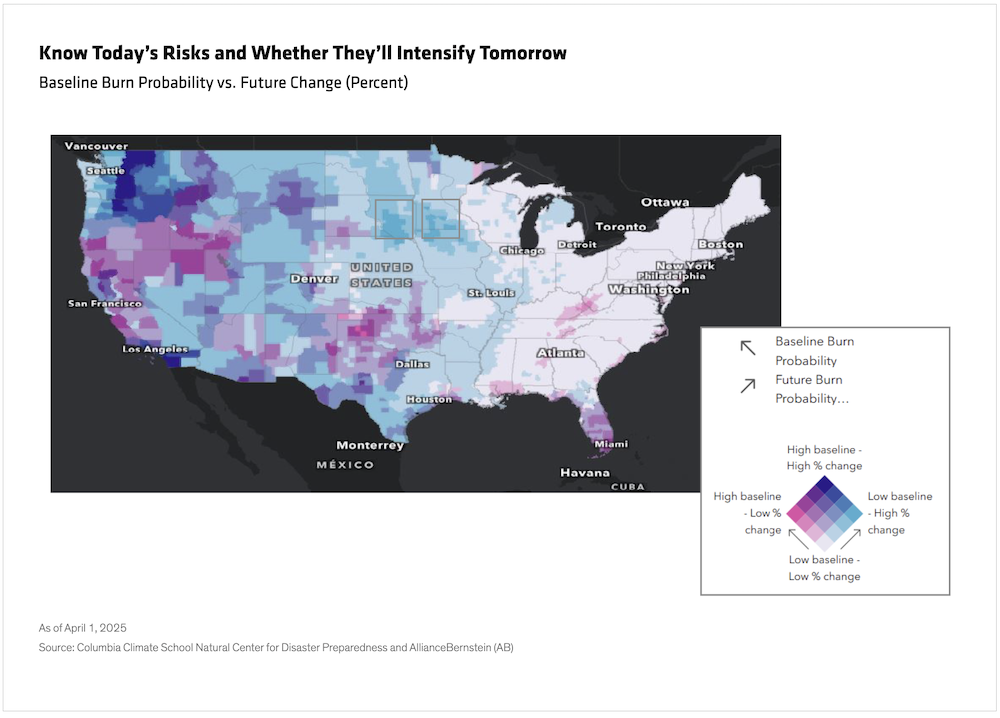
The NHI 3.0 not only tells us the ways a particular hazard has evolved, but also how it’s likely to evolve in the future. Wildfires, for example, have increased in frequency and intensity. New data not only predicts fires to worsen where they’re already commonplace, such as Southern California and Washington State, but also in areas where incidences are currently rare, like Minnesota and South Dakota (Display).

Know Today's Risks and Whether They'll Intensify Tomorrow

Newly forecasted tornado patterns are alarming too, with more outbursts likely stretching beyond the Midwest “alley” and much further east.

The NHI also anticipates where hazards will intersect. Sometimes, a disaster ebbs because of an equally disruptive event. The index shows that Louisiana, for instance, will likely suffer fewer wildfires but ties that to expected more frequent hurricanes, which lead to more flooding.

Tying Natural Hazard Vulnerabilities to Investable Assets

Columbia Climate School’s new data provide essential inputs for planning disaster responses and anticipating hazards’ long-range effects on people, the environment and economies. We believe it also can help investors see better around corners—which is particularly useful as climate change grows more unpredictable and hyperphysical.

With this in mind, we are incorporating key components of NHI 3.0 into our proprietary Physical Hazard Investment Risk (PHIR) tool, which overlays a financial element for each NHI hazard across more than 3,100 US counties. The expanded research now helps PHIR factor future local risk exposures to wildfires, hurricanes, tornadoes and rising sea levels in the US—considered the top four natural threats through 2050.

As an investment tool, the PHIR can assess hazard-risk exposure across municipal bonds and residential mortgage-backed securities. After all, homes, schools, hospitals, power plants and airports are all location specific, which means issuers and lenders are exposed to distinctly local trends in climate change.

Active equity investing can also benefit from the PHIR’s expanded data. Companies of all stripes can be just as exposed to local hazards—if not now, then in the coming decades. A company’s degree of risk could be exponential, since many operate in multiple locations that face elevated risk.

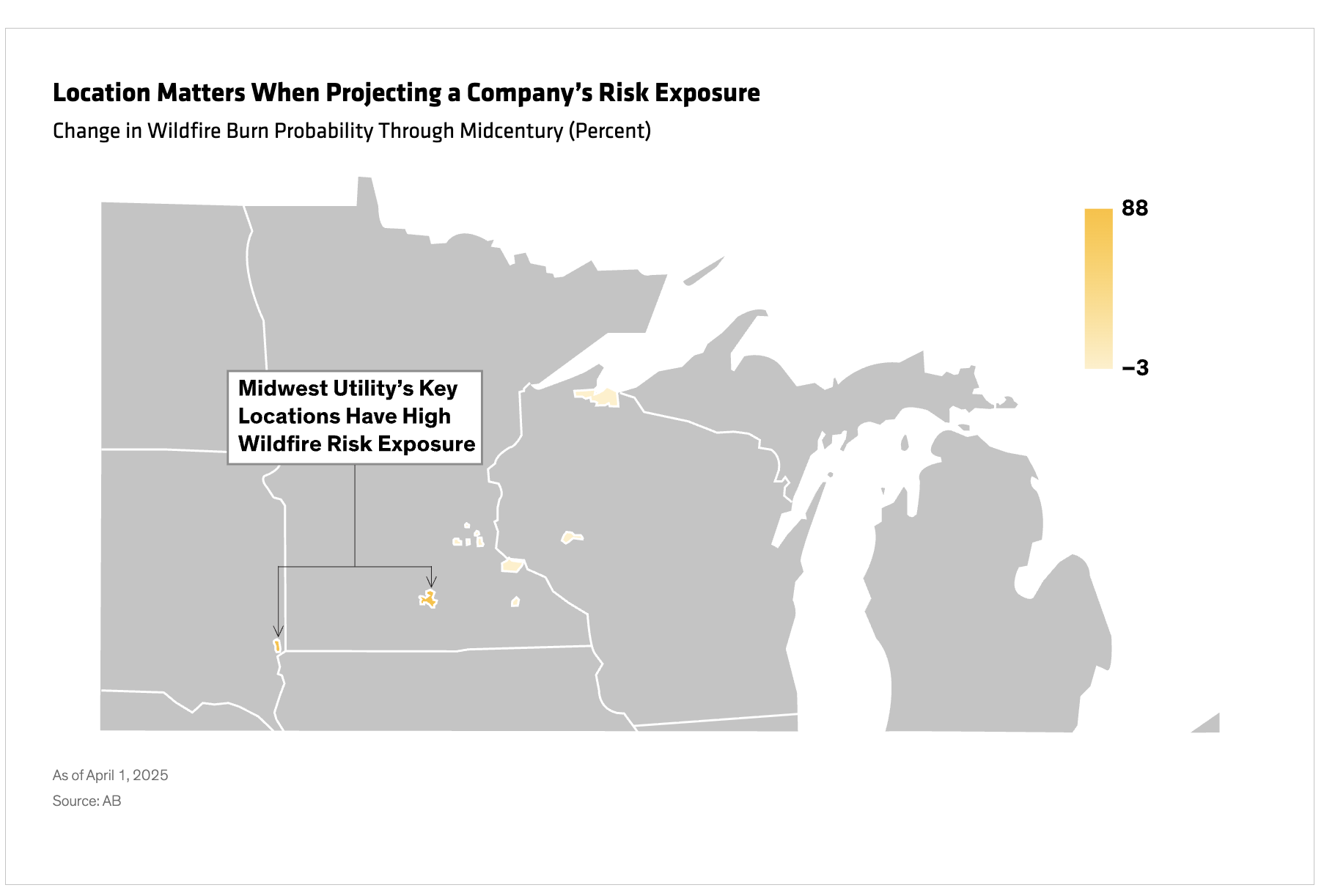
Wildfire projections offer a prime example of how a single company can reveal several risk profiles. A large utility with facilities in Minnesota and South Dakota may be situated in low-risk areas currently. But the wildfire outlook changes dramatically by midcentury. This region shows an increase in wildfire exposure of 88% (Display), a material factor that we believe the company—and those in similar situations—should address. In this case, we engaged the company’s leadership about applying lessons learned from its properties in wildfire-prone Colorado to their Midwest operations.

Location Matters when projecting a company's risk exposure.

The Local Threats Are Clear, but Not Always Observed 

Not all risk scenarios will be as easily navigated. Add the rising threat of higher sea levels, tornadoes and hurricanes, and the future strain on businesses and industries is dire yet actionable. Investors don’t always take notice, however. Our expanded PHIR data set helps identify potentially mispriced investment opportunities where hazard exposure isn’t yet fully factored into market valuations.

Tomorrow’s hazards won’t look like yesterday’s, but they can inform today’s decisions. Locally mapping future natural hazard intensity and addressing its implications will be important steps to dealing with disasters as the century plays out. We think the new predictive analysis will likely save lives and livelihoods. But this forward-looking lens can also help investors understand what natural hazard exposure means for physical assets, while motivating companies and bond issuers to offset such risks on their bottom lines.

The views expressed herein do not constitute research, investment advice or trade recommendations, do not necessarily represent the views of all AB portfolio-management teams and are subject to change over time.

Learn more about AB’s approach to responsibility here.

Patrick O’Connell, CFA| Director—Responsible Investing Portfolio Solutions and Research
John Huang, CFA| Director of Responsible Investments, Data and Technology—Responsibility
Kathleen Dumes, CFA| Senior Investment Strategist

New research connects intensifying natural perils to their future implications for asset classes.

When it comes to measuring our vulnerability to nature’s extremes, investors often lean on past data and simply assume that risks will rise. But new groundbreaking research has removed considerable guesswork, particularly among four key natural hazards facing the world this century.

Global Experts Unite to Predict Natural Hazard Threat Levels

New projections from Columbia Climate School build on its pioneering Natural Hazards Index (NHI), launched in 2016 to assess risk-level exposure from floods, drought and a dozen other extreme events nationwide. In 2023, we partnered with the university on a version 2.0 release, which includes an interactive map of natural hazard exposures for thousands of individual US communities.

2025’s upgrade broadens Columbia’s and AB’s collaboration among leading academic and public institutions, including NASA. Applying the latest weather science, climate research and sophisticated modeling, NHI 3.0 can now project the relative location, trajectory and magnitude of the four natural hazards it tracks at midcentury and end-of-century.

The NHI 3.0 not only tells us the ways a particular hazard has evolved, but also how it’s likely to evolve in the future. Wildfires, for example, have increased in frequency and intensity. New data not only predicts fires to worsen where they’re already commonplace, such as Southern California and Washington State, but also in areas where incidences are currently rare, like Minnesota and South Dakota (Display).

Know Today's Risks and Whether They'll Intensify Tomorrow

Newly forecasted tornado patterns are alarming too, with more outbursts likely stretching beyond the Midwest “alley” and much further east.

The NHI also anticipates where hazards will intersect. Sometimes, a disaster ebbs because of an equally disruptive event. The index shows that Louisiana, for instance, will likely suffer fewer wildfires but ties that to expected more frequent hurricanes, which lead to more flooding.

Tying Natural Hazard Vulnerabilities to Investable Assets

Columbia Climate School’s new data provide essential inputs for planning disaster responses and anticipating hazards’ long-range effects on people, the environment and economies. We believe it also can help investors see better around corners—which is particularly useful as climate change grows more unpredictable and hyperphysical.

With this in mind, we are incorporating key components of NHI 3.0 into our proprietary Physical Hazard Investment Risk (PHIR) tool, which overlays a financial element for each NHI hazard across more than 3,100 US counties. The expanded research now helps PHIR factor future local risk exposures to wildfires, hurricanes, tornadoes and rising sea levels in the US—considered the top four natural threats through 2050.

As an investment tool, the PHIR can assess hazard-risk exposure across municipal bonds and residential mortgage-backed securities. After all, homes, schools, hospitals, power plants and airports are all location specific, which means issuers and lenders are exposed to distinctly local trends in climate change.

Active equity investing can also benefit from the PHIR’s expanded data. Companies of all stripes can be just as exposed to local hazards—if not now, then in the coming decades. A company’s degree of risk could be exponential, since many operate in multiple locations that face elevated risk.

Wildfire projections offer a prime example of how a single company can reveal several risk profiles. A large utility with facilities in Minnesota and South Dakota may be situated in low-risk areas currently. But the wildfire outlook changes dramatically by midcentury. This region shows an increase in wildfire exposure of 88% (Display), a material factor that we believe the company—and those in similar situations—should address. In this case, we engaged the company’s leadership about applying lessons learned from its properties in wildfire-prone Colorado to their Midwest operations.

Location Matters when projecting a company's risk exposure.

The Local Threats Are Clear, but Not Always Observed 

Not all risk scenarios will be as easily navigated. Add the rising threat of higher sea levels, tornadoes and hurricanes, and the future strain on businesses and industries is dire yet actionable. Investors don’t always take notice, however. Our expanded PHIR data set helps identify potentially mispriced investment opportunities where hazard exposure isn’t yet fully factored into market valuations.

Tomorrow’s hazards won’t look like yesterday’s, but they can inform today’s decisions. Locally mapping future natural hazard intensity and addressing its implications will be important steps to dealing with disasters as the century plays out. We think the new predictive analysis will likely save lives and livelihoods. But this forward-looking lens can also help investors understand what natural hazard exposure means for physical assets, while motivating companies and bond issuers to offset such risks on their bottom lines.

The views expressed herein do not constitute research, investment advice or trade recommendations, do not necessarily represent the views of all AB portfolio-management teams and are subject to change over time.

Learn more about AB’s approach to responsibility here.

Privacy Overview

This website uses cookies so that we can provide you with the best user experience possible. Cookie information is stored in your browser and performs functions such as recognising you when you return to our website and helping our team to understand which sections of the website you find most interesting and useful.