Key Takeaways

  • Multinational organisations face growing challenges in maintaining consistent EHS and sustainability programmes across different countries, cultures, and regulatory systems.
  • Local knowledge is essential for interpreting regulations, understanding cultural expectations, and adapting global standards to regional operating environments.
  • International collaboration helps organisations reduce risk, improve compliance, and manage global operations more effectively.
  • Effective cross-border EHS management depends not only on understanding local laws, but also how they are applied and enforced in practice.
  • Strong global collaboration networks help organisations access local expertise, streamline operations, and respond more effectively to changing global risks.


If your organisation operates across borders, consistency is rarely as straightforward as it sounds.

A global policy may look clear on paper, but implementing it across multiple countries, cultures, regulatory systems, and workforces is another challenge entirely. The same environmental, health, safety, and sustainability (EHS&S) programme can be interpreted and experienced very differently depending on where and how it is applied.

For multinational organisations, this creates a growing tension: how do you maintain global standards while adapting to local realities?

That challenge is becoming more pronounced as businesses continue to expand internationally and supply chains become increasingly interconnected. Managing risk, compliance, and operational consistency across those environments requires far more than centralised oversight alone. Organisations must navigate differing regulatory structures, cultural expectations, enforcement approaches, workforce dynamics, and environmental conditions, often simultaneously.

Alex Ferguson, CEO, and Charlotte Buffoni, EHS Practice Director, see these challenges in their work frequently, and agree that local knowledge has become one of the most important differentiators in global business.

As Alex explains, clients today are no longer looking for basic support. “[They expect] a deeper level of services, a deeper level of understanding, but also a much wider footprint.”


Global Standards are Easy to Write but Harder to Apply

Many multinational organisations begin with the right intentions: establish global standards, create consistent expectations, and implement unified EHS and Sustainability programmes across regions.

The difficulty comes in execution.

Charlotte understands that organisations are often trying to achieve “global consistency with a local lens,” adapting programmes to different cultural expectations, languages, regulatory structures, and operational realities while still maintaining the original corporate intent.

Even seemingly universal concepts, such as workplace safety, can vary dramatically depending on local conditions.

“We want our people to be safe at work,” Alex says, paraphrasing a common client concern, “but what does that actually mean in different environments?”

A programme designed for one region may not translate effectively into another without understanding:

  • local enforcement approaches
  • infrastructure limitations
  • workforce expectations
  • communication styles
  • climate and environmental conditions
  • cultural attitudes toward risk and authority

In some countries, regulations are driven nationally. In others, enforcement happens regionally or locally. Guidance that may be treated as best practice in one jurisdiction could carry entirely different expectations somewhere else.

For Alex, context is inseparable from proximity: “Only people working locally can really get that nuance right.”

Charlotte adds that many organisations initially approach international expansion from a compliance perspective alone, only to realise that legislation is just the beginning: “Understanding legislation is only the starting point, the real challenge is interpreting how it applies in practice within a specific country or operating environment.”

That interpretation extends beyond legal requirements into broader cultural and operational realities. Workforce expectations, regulatory attitudes, and communication styles can vary significantly, not just between countries, but even within them. Without local understanding, organisations risk implementing programmes that technically meet requirements while failing to gain traction operationally.


The Cost of Getting it Wrong

When organisations lack local insight, the effects are not always immediately apparent, but they can be significant.

Global programmes can become inconsistent in practice, creating gaps between corporate expectations and day-to-day operations. Compliance efforts may focus too heavily on documentation rather than implementation. Communication barriers can lead to misunderstanding or low engagement among workers. In some cases, organisations may underestimate local risks entirely because they are viewing them through the lens of another region.

Alex points to climate as a clear example of how assumptions can quickly break down across geographies:

“We used to call it global warming, and then it became clear that made everybody think everywhere was going to get warmer. That’s not what happens. Places get wetter, places get colder, places get more extremes and variations.”

Those environmental realities influence everything from infrastructure resilience to worker safety expectations and operational planning.

Cultural complexity adds another layer. In many regions, workforces themselves are highly international, bringing together people with a broad range of lived experiences, expectations, and approaches to work.

“It makes you realise that understanding the culture of a construction project or an infrastructure project in any part of the world is not just about what the local laws and regulations show,” Alex continues. “It’s actually who’s applying … those laws and what cultural lens are they putting on it?”

This is where local knowledge becomes less of a “supporting” factor and more of a business necessity.


Why International Collaboration has Become more Important

As these challenges have grown, international collaboration itself has evolved significantly over the past 25 years.

What began as relatively small professional networks supporting multinational clients has become a far more integrated and sophisticated system. Today, organisations increasingly rely on connected global partnerships to help navigate operational, regulatory, and cultural complexity across regions.

For Antea Group UK, part of the Inogen Alliance, that evolution has been visible firsthand.

Reflecting on the early days of the Alliance, Alex describes it as “quite a small group” compared to today’s globally connected model.

Charlotte adds that growth has accelerated “in many different directions,” not only geographically, but also in the complexity of services and client expectations.

This shift mirrors a broader business reality: EHS and Sustainability are no longer peripheral considerations. They are increasingly tied to operational continuity, reputation, workforce wellbeing, regulatory performance, and long-term business resilience.


Collaboration as a Practical Advantage

When international collaboration works well, its benefits become highly practical.

Organisations entering new markets, whether through acquisition, expansion, or supply chain growth, often face a steep learning curve. Building relationships, understanding regulations, and developing local operational awareness from scratch can take significant time and resources.

According to Alex, one of the biggest advantages of working with vendors and advisors who have established global collaboration networks is that clients “can drop straight into something that’s already working.”

Rather than starting over in each geography, organisations can access existing networks, relationships, and expertise that are rooted in the local environment.

Charlotte notes that clients also value having a single point of contact supported by a broader global network, helping reduce the operational burden of managing multiple consultants and service providers across regions.

In practice, this enables organisations to move faster, reduce risk, and create greater consistency across global operations without losing the local insight needed to make programmes effective.


Relationships Still Matter

Despite advances in technology and global connectivity, both leaders emphasised that international collaboration remains deeply human.

Long-standing relationships create trust, which allows for more open conversations about complex challenges.

As Alex explains, collaborations built over time develop depth and history, creating environments where people understand each other well enough to navigate uncertainty together.

That becomes increasingly important in a world shaped by geopolitical shifts, changing regulations, supply chain disruption, and rapidly evolving expectations around sustainability and worker wellbeing.

For Charlotte, collaboration also creates opportunities for continuous learning and knowledge-sharing across regions and disciplines. As she explains, “participating in global working groups has helped expand both my technical expertise and broader understanding of how organisations approach EHS challenges in different parts of the world.”

These networks, formal and informal alike, allow organisations to respond more quickly to emerging risks, share lessons learned, and adapt to changing conditions in real time.


A More Connected, More Complex Future

As organisations continue to expand internationally, the need for effective cross-border collaboration will only grow.

But success will depend on more than scale alone. It will require organisations to balance global consistency with local adaptability, supported by a deep understanding of regional differences.

Ultimately, effective international collaboration is not simply about having a presence in multiple countries. It is about understanding how people, regulations, environments, and cultures interact, and building the relationships necessary to navigate that complexity successfully.

Or, as Alex reflects: “Knowing that somewhere in the world there’s somebody that’s already done it is incredibly powerful.”

Do you have international operations and want support? Antea Group UK, as part of the Inogen Alliance, is uniquely positioned to help. Get in touch with our team of experts today to continue the conversation and discover how global alignment can strengthen your operations.
Key Takeaways

  • Multinational organisations face growing challenges in maintaining consistent EHS and sustainability programmes across different countries, cultures, and regulatory systems.
  • Local knowledge is essential for interpreting regulations, understanding cultural expectations, and adapting global standards to regional operating environments.
  • International collaboration helps organisations reduce risk, improve compliance, and manage global operations more effectively.
  • Effective cross-border EHS management depends not only on understanding local laws, but also how they are applied and enforced in practice.
  • Strong global collaboration networks help organisations access local expertise, streamline operations, and respond more effectively to changing global risks.


If your organisation operates across borders, consistency is rarely as straightforward as it sounds.

A global policy may look clear on paper, but implementing it across multiple countries, cultures, regulatory systems, and workforces is another challenge entirely. The same environmental, health, safety, and sustainability (EHS&S) programme can be interpreted and experienced very differently depending on where and how it is applied.

For multinational organisations, this creates a growing tension: how do you maintain global standards while adapting to local realities?

That challenge is becoming more pronounced as businesses continue to expand internationally and supply chains become increasingly interconnected. Managing risk, compliance, and operational consistency across those environments requires far more than centralised oversight alone. Organisations must navigate differing regulatory structures, cultural expectations, enforcement approaches, workforce dynamics, and environmental conditions, often simultaneously.

Alex Ferguson, CEO, and Charlotte Buffoni, EHS Practice Director, see these challenges in their work frequently, and agree that local knowledge has become one of the most important differentiators in global business.

As Alex explains, clients today are no longer looking for basic support. “[They expect] a deeper level of services, a deeper level of understanding, but also a much wider footprint.”


Global Standards are Easy to Write but Harder to Apply

Many multinational organisations begin with the right intentions: establish global standards, create consistent expectations, and implement unified EHS and Sustainability programmes across regions.

The difficulty comes in execution.

Charlotte understands that organisations are often trying to achieve “global consistency with a local lens,” adapting programmes to different cultural expectations, languages, regulatory structures, and operational realities while still maintaining the original corporate intent.

Even seemingly universal concepts, such as workplace safety, can vary dramatically depending on local conditions.

“We want our people to be safe at work,” Alex says, paraphrasing a common client concern, “but what does that actually mean in different environments?”

A programme designed for one region may not translate effectively into another without understanding:

  • local enforcement approaches
  • infrastructure limitations
  • workforce expectations
  • communication styles
  • climate and environmental conditions
  • cultural attitudes toward risk and authority

In some countries, regulations are driven nationally. In others, enforcement happens regionally or locally. Guidance that may be treated as best practice in one jurisdiction could carry entirely different expectations somewhere else.

For Alex, context is inseparable from proximity: “Only people working locally can really get that nuance right.”

Charlotte adds that many organisations initially approach international expansion from a compliance perspective alone, only to realise that legislation is just the beginning: “Understanding legislation is only the starting point, the real challenge is interpreting how it applies in practice within a specific country or operating environment.”

That interpretation extends beyond legal requirements into broader cultural and operational realities. Workforce expectations, regulatory attitudes, and communication styles can vary significantly, not just between countries, but even within them. Without local understanding, organisations risk implementing programmes that technically meet requirements while failing to gain traction operationally.


The Cost of Getting it Wrong

When organisations lack local insight, the effects are not always immediately apparent, but they can be significant.

Global programmes can become inconsistent in practice, creating gaps between corporate expectations and day-to-day operations. Compliance efforts may focus too heavily on documentation rather than implementation. Communication barriers can lead to misunderstanding or low engagement among workers. In some cases, organisations may underestimate local risks entirely because they are viewing them through the lens of another region.

Alex points to climate as a clear example of how assumptions can quickly break down across geographies:

“We used to call it global warming, and then it became clear that made everybody think everywhere was going to get warmer. That’s not what happens. Places get wetter, places get colder, places get more extremes and variations.”

Those environmental realities influence everything from infrastructure resilience to worker safety expectations and operational planning.

Cultural complexity adds another layer. In many regions, workforces themselves are highly international, bringing together people with a broad range of lived experiences, expectations, and approaches to work.

“It makes you realise that understanding the culture of a construction project or an infrastructure project in any part of the world is not just about what the local laws and regulations show,” Alex continues. “It’s actually who’s applying … those laws and what cultural lens are they putting on it?”

This is where local knowledge becomes less of a “supporting” factor and more of a business necessity.


Why International Collaboration has Become more Important

As these challenges have grown, international collaboration itself has evolved significantly over the past 25 years.

What began as relatively small professional networks supporting multinational clients has become a far more integrated and sophisticated system. Today, organisations increasingly rely on connected global partnerships to help navigate operational, regulatory, and cultural complexity across regions.

For Antea Group UK, part of the Inogen Alliance, that evolution has been visible firsthand.

Reflecting on the early days of the Alliance, Alex describes it as “quite a small group” compared to today’s globally connected model.

Charlotte adds that growth has accelerated “in many different directions,” not only geographically, but also in the complexity of services and client expectations.

This shift mirrors a broader business reality: EHS and Sustainability are no longer peripheral considerations. They are increasingly tied to operational continuity, reputation, workforce wellbeing, regulatory performance, and long-term business resilience.


Collaboration as a Practical Advantage

When international collaboration works well, its benefits become highly practical.

Organisations entering new markets, whether through acquisition, expansion, or supply chain growth, often face a steep learning curve. Building relationships, understanding regulations, and developing local operational awareness from scratch can take significant time and resources.

According to Alex, one of the biggest advantages of working with vendors and advisors who have established global collaboration networks is that clients “can drop straight into something that’s already working.”

Rather than starting over in each geography, organisations can access existing networks, relationships, and expertise that are rooted in the local environment.

Charlotte notes that clients also value having a single point of contact supported by a broader global network, helping reduce the operational burden of managing multiple consultants and service providers across regions.

In practice, this enables organisations to move faster, reduce risk, and create greater consistency across global operations without losing the local insight needed to make programmes effective.


Relationships Still Matter

Despite advances in technology and global connectivity, both leaders emphasised that international collaboration remains deeply human.

Long-standing relationships create trust, which allows for more open conversations about complex challenges.

As Alex explains, collaborations built over time develop depth and history, creating environments where people understand each other well enough to navigate uncertainty together.

That becomes increasingly important in a world shaped by geopolitical shifts, changing regulations, supply chain disruption, and rapidly evolving expectations around sustainability and worker wellbeing.

For Charlotte, collaboration also creates opportunities for continuous learning and knowledge-sharing across regions and disciplines. As she explains, “participating in global working groups has helped expand both my technical expertise and broader understanding of how organisations approach EHS challenges in different parts of the world.”

These networks, formal and informal alike, allow organisations to respond more quickly to emerging risks, share lessons learned, and adapt to changing conditions in real time.


A More Connected, More Complex Future

As organisations continue to expand internationally, the need for effective cross-border collaboration will only grow.

But success will depend on more than scale alone. It will require organisations to balance global consistency with local adaptability, supported by a deep understanding of regional differences.

Ultimately, effective international collaboration is not simply about having a presence in multiple countries. It is about understanding how people, regulations, environments, and cultures interact, and building the relationships necessary to navigate that complexity successfully.

Or, as Alex reflects: “Knowing that somewhere in the world there’s somebody that’s already done it is incredibly powerful.”

Do you have international operations and want support? Antea Group UK, as part of the Inogen Alliance, is uniquely positioned to help. Get in touch with our team of experts today to continue the conversation and discover how global alignment can strengthen your operations.
Actions – not Offsets – driving absolute emissions down

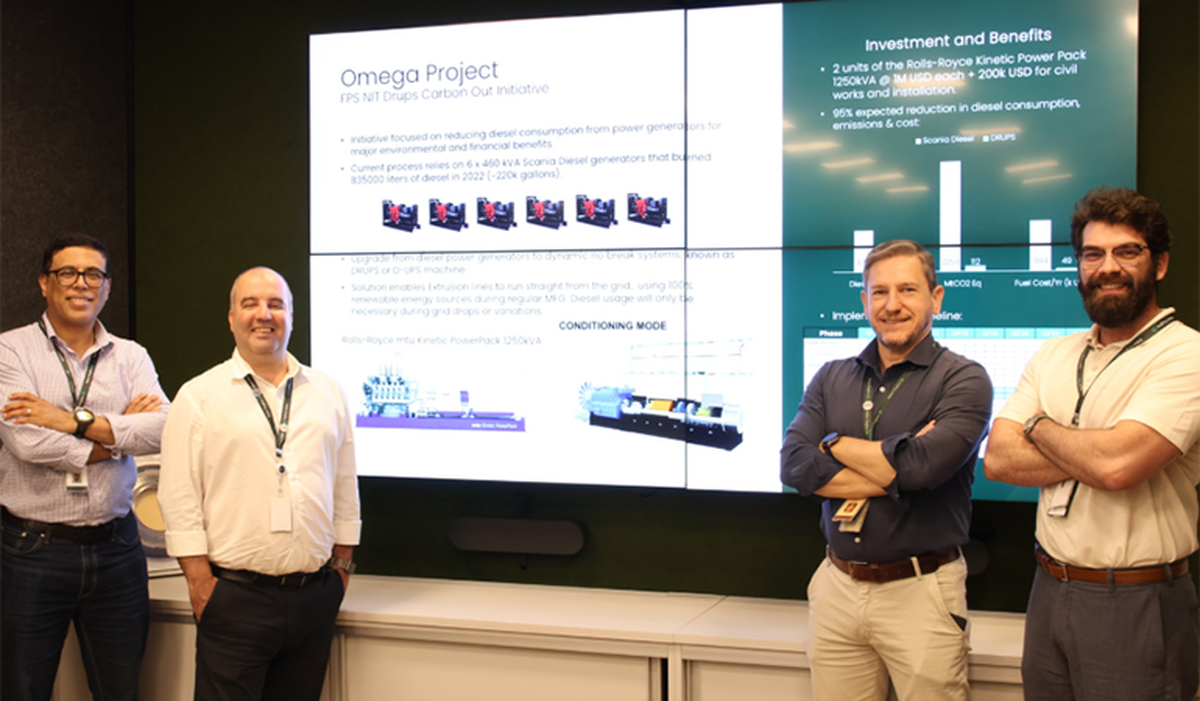
Launched in 2022, Carbon Out is our global employee engagement initiative designed to empower our people to operate sustainably and deliver innovative solutions. Our passionate team, equipped with deep domain knowledge and technical proficiency across various energy sectors, finds innovative ways of reducing both operational and value chain emissions. Through Carbon Out, our people gain access to tools, funding, and resources, enabling them to drive emission reductions throughout our business.

In our 2025 Corporate Sustainability Report, we highlight a range of global projects driven by our employees that reduce our operational emissions, resulting in a change in behaviors and actions that drive long-term change. In this article, we take a closer look at one project in particular, led by our Flexible Pipe Systems team in Brazil, that resulted in savings of US $1million, through operational efficiency.

Spotlight on progress: Cost Out, Carbon Out

A recent Carbon Out initiative that drove significant scope 1 and 2 emissions reduction and saving was driven by our Flexible Pipe Systems team in Niteroi, Brazil. Rather than using traditional diesel generators at the site, the team chose six advanced no-break battery systems designed to store energy from renewable sources. The upgrade enables more reliable, consistent, and continuous power for operations. Additionally, the initiative generated significant cost savings and positive environmental impacts.

By cutting diesel usage, scope 1 site-level emissions were reduced by nearly 95% and an entirely renewable power supply, there was no rise in scope 2 emissions. The project strengthened energy stability and reliability without the risks typically associated with battery‑storage systems.

" "

Our Carbon Out initiative demonstrates how focused action – rather than offsets alone – can deliver meaningful emissions reductions while strengthening operational performance. By equipping our people with the tools, resources, and autonomy to rethink how work gets done, initiatives like this help embed sustainability into day‑to‑day decision‑making across our organization.

For more great examples of our Carbon Out initiative in action, read our 2025 Corporate Sustainability Report to learn more.
 

Actions – not Offsets – driving absolute emissions down

Launched in 2022, Carbon Out is our global employee engagement initiative designed to empower our people to operate sustainably and deliver innovative solutions. Our passionate team, equipped with deep domain knowledge and technical proficiency across various energy sectors, finds innovative ways of reducing both operational and value chain emissions. Through Carbon Out, our people gain access to tools, funding, and resources, enabling them to drive emission reductions throughout our business.

In our 2025 Corporate Sustainability Report, we highlight a range of global projects driven by our employees that reduce our operational emissions, resulting in a change in behaviors and actions that drive long-term change. In this article, we take a closer look at one project in particular, led by our Flexible Pipe Systems team in Brazil, that resulted in savings of US $1million, through operational efficiency.

Spotlight on progress: Cost Out, Carbon Out

A recent Carbon Out initiative that drove significant scope 1 and 2 emissions reduction and saving was driven by our Flexible Pipe Systems team in Niteroi, Brazil. Rather than using traditional diesel generators at the site, the team chose six advanced no-break battery systems designed to store energy from renewable sources. The upgrade enables more reliable, consistent, and continuous power for operations. Additionally, the initiative generated significant cost savings and positive environmental impacts.

By cutting diesel usage, scope 1 site-level emissions were reduced by nearly 95% and an entirely renewable power supply, there was no rise in scope 2 emissions. The project strengthened energy stability and reliability without the risks typically associated with battery‑storage systems.

" "

Our Carbon Out initiative demonstrates how focused action – rather than offsets alone – can deliver meaningful emissions reductions while strengthening operational performance. By equipping our people with the tools, resources, and autonomy to rethink how work gets done, initiatives like this help embed sustainability into day‑to‑day decision‑making across our organization.

For more great examples of our Carbon Out initiative in action, read our 2025 Corporate Sustainability Report to learn more.
 

KeyBank held a grand opening and ribbon cutting for its new, full-service, state-of-the-art branch in North Greenbush, N.Y. The branch is located at 73 Vandenburgh Avenue, near Hudson Valley Community College. Leaders from KeyBank and Rensselaer County attended the celebration.

As part of the grand opening and ribbon cutting ceremony, KeyBank donated $20,000 to Unity House and $10,000 to Live Limitless Refuge Center.

“KeyBank is excited by the opportunity this new branch provides. From HVCC and La Salle Institute to businesses and residential and commercial development, North Greenbush is diverse, evolving and thriving. We look forward to becoming an integral part of this community,” said Erica Choi, KeyBank’s Capital region president and commercial banking leader. “This new location highlights KeyBank’s continued investment in the Capital Region and commitment to working closely with our neighbors, clients and community partners.”

In addition to high-touch banking services, this new state-of-the-art branch offers full-service banking capabilities including touch screen monitors to enhance the client experience. This branch also features a drive-up ATM, two drive-thru lanes and free parking. Longtime banker Jessica Morgans is serving as branch manager at the new location.

“KeyBank’s new branch in North Greenbush is uniquely designed to give our clients a more personal banking experience, with even better access to a full suite of products and services,” said Morgans. “We are excited to bring this more consultative approach to the neighborhood and demonstrate our commitment to helping our clients move forward on their financial journey.”

“The location of this new branch is phenomenal. Right across the street from Hudson Valley Community College in the busy Market 32 plaza,” said Rensselaer County Executive Steve McLaughlin. “I always say it’s a corridor of growth. KeyBank is a great bank with deep roots in the community, and for them to locate here on this piece of land and see it come to life is fantastic.”

In addition to helping individuals and families achieve their financial goals, the new North Greenbush branch is also serving clients seeking to develop and grow businesses in the area.

“We are proud to celebrate KeyBank’s new full-service branch in North Greenbush, a strong investment in our local economy and community,” said Norris Pearson, President & CEO, Rensselaer County Regional Chamber. “Located near Hudson Valley Community College, this new branch reflects the continued growth and vitality of the area while providing residents, students, and businesses with greater access to personalized financial services. KeyBank’s commitment goes beyond banking, as demonstrated by its generous $30,000 in donations to Unity House and Live Limitless Refuge Center. Their support of local nonprofits, businesses, and families shows what true community partnership looks like, and we are excited to welcome them as an even stronger presence in Rensselaer County.”

May 26, 2026 /3BL/ – The agenda is set. Speakers are confirmed. Seats are filling quickly.

If you have been considering attending the PR Daily Conference, now is the time to act.

Join us June 3-5 in Brooklyn for a program focused on the strategies and skills communicators need now.

Across two and a half days, you will gain practical insights on:

  • Navigating a complex and fragmented media landscape
  • Demonstrating the business value of PR
  • Using AI effectively while maintaining authenticity
  • Strengthening relationships with journalists and stakeholders

You will hear from industry leaders, connect with peers and leave with ideas you can put into action immediately.

This is what is working right now in PR.

Use code 3BL to save $500 on your registration.

Register today before space runs out.

Media Contact:
Kimberly Egan
Director of Marketing
Ragan Communications / PR Daily

Read More

For many companies, sustainability has been relegated to its own department — adjacent to the business but rarely embedded in the financial decisions that drive it. That’s changing. Across industries and geographies, sustainability strategy is increasingly being owned, measured, and funded by finance teams. This issue of G&A’s Sustainability Highlights is full of news that demonstrates that shift. The latest developments gathered here also reveal a gap that remains between finance and sustainability: operational readiness for climate change.

We found a vivid example in the apparel sector, with clues for the future of other industries with complex supply chains. As reported by Global Fashion Agenda and Fashion Network, fashion brands are moving sustainability out of marketing departments and into the CFO’s office. Sustainability is becoming a core responsibility for finance directors, as more companies make them responsible for embedding sustainability into financial planning, capital allocation, and supplier contracts.

According to the new reporting, this is because economics demand it. Rising material costs, tightening EU regulations, and shifting consumer expectations are making sustainability a profit and loss (P&L) issue. The fashion industry may be out front on this, but the pattern applies well beyond apparel — any industry with a complex supply chain and regulatory exposure is heading in the same direction.

The scale of sustainability’s shift into finance is quantifiable. PR Newswire reports that EcoVadis currently covers US$2.5 trillion in global procurement spend through its sustainability risk insights platform. In other words, as companies shift from compliance-driven supplier assessments to resilience-led procurement strategies, trillions in purchasing decisions are being filtered through sustainability risk data.

In another development explored below, the financial architecture around carbon is expanding rapidly. ESG Today reports on an international carbon pricing coalition recently launched by China, the EU, and Brazil — three of the world’s largest economies – formalizing cooperation on carbon markets following negotiations at the 2025 UN Climate Change Conference in Brazil. This development builds on one highlighted in our last issue: ICAP data shows 41 active emissions trading systems covering 63% of global GDP. For companies operating across these jurisdictions, carbon is becoming a material financial input.

G&A’s team has published new resources on this evolving landscape, including explainers on the EU’s CBAM and carbon pricing mechanics and a blog on proposed updates to the Greenhouse Gas Protocol, located in the G&A Blog/Research section below.

Amid this momentum, where do gaps remain? Sustainability Magazine covers new CDP analysis showing that many companies are still failing to adequately prepare for extreme weather risk — even those that report through CDP. The disconnect between financial commitment to sustainability and operational readiness for climate impacts remains one of the biggest vulnerabilities in corporate risk management. For companies working through their 2026 CDP response, this is a timely reminder that disclosure without action leaves value on the table. Learn more about G&A’s CDP response support here.

For professionals navigating the broader landscape, this issue also covers NATO backing renewables for energy security, ESG investments on track to hit US $186 trillion by 2035, California’s EPR law facing a potential legal challenge, new EU CBAM rules allowing capped carbon credit deductions, and the UK’s sustainability reporting standards — which G&A also explores in a new blog this week.

This is just the introduction of G&A’s Sustainability Highlights newsletter this week. Click here to view the full issue.

Access to safe water, sanitation, and hygiene (WASH), remains one of the most pressing global sustainability and public health challenges.. While many regions take these services for granted, a significant share of the global population still lives without reliable WASH infrastructure, with serious consequences for public health, environmental quality, and economic wellbeing.

Poor WASH conditions are closely linked to inadequate waste management, environmental degradation, and water quality deterioration. Without access to clean water and sanitation, communities face compounding risks, from waterborne disease to ecosystem collapse.

During a recent webinar hosted by Inogen Alliance, experts from member organizations across Africa and Asia shared real-world solutions to these challenges. Speakers included Emanuele Agostoni (HPC Italy) and Sathya Baskar (Chola MS Risk Services Limited (CMSRS); Moderated by Beatrice Bizzaro (HPC Italy), Global Water Working Group Leader. The session examined both the scale of the problem and what effective, scalable interventions look like in practice. Below are the key takeaways.


Why WASH Remains a Critical Global Priority

Despite significant global progress over the past two decades, WASH gaps persist across both rural and urban contexts, and the consequences are far-reaching:

  • Inadequate sanitation and hygiene infrastructure drives the spread of waterborne diseases and increases mortality, particularly among children.
  • Plastic and solid waste accumulation in drainage systems causes urban flooding, further contaminating water sources and compounding health risks.
  • Climate change is intensifying existing pressures. Droughts reduce drinking water availability, while floods damage sanitation infrastructure and contaminate groundwater.
  • Communities without waste collection services are often left with no alternative but to dispose of waste in local waterways, creating a cycle of environmental and health harm.
  • Plastic blocks drainage systems, contributing to urban flooding and the spread of pathogens.
  • Microplastics contaminate food, water, and air, affecting both human health and local ecosystems.
  • In Abidjan, the lagoon is so saturated with waste that local fisheries have been almost entirely abandoned, devastating the livelihoods of communities that once depended on them.
  • Low-tech and locally maintainable: solutions that do not require specialist imported equipment, ensuring communities can operate and repair them independently.
  • Flood-resistant: equipped with automatic release mechanisms to prevent overload during heavy rainfall events.
  • Economically viable: combining physical infrastructure with on-site sorting facilities that allow recovered material to enter recycling streams.
  • High-value plastics (PET, PE, HDPE) enter mechanical recycling streams and are sold as flakes or granules.
  • Lower-quality plastics can be repurposed into construction materials such as tiles, bricks, and structural elements. This model is already in use in Ivory Coast, where recycled plastic has been used to build over 500 classrooms.
  • Ocean-bound plastic credits, verified through third-party auditing and blockchain technology, allow companies to offset plastic production and help finance ongoing recovery operations.
  • Behavioral change campaigns promoting consistent use of facilities
  • Community awareness programs on the health risks of poor sanitation
  • Strong local government leadership and accountability mechanisms
  • Seawater desalination plants providing hundreds of millions of liters per day, independent of rainfall.
  • Mandatory rainwater harvesting for all buildings, significantly improving groundwater recharge and reducing dependence on external supply.
  • Treated wastewater reuse supplied to industries, reducing freshwater demand and supporting a circular water economy.
  • Emergency water distribution systems including tanker-based supply mechanisms to ensure access for vulnerable communities during drought conditions.
  • Governance and leadership are prerequisites: without policy support and institutional commitment, it is very difficult to attract investment in infrastructure or innovation.
  • Solutions must involve communities from the outset: projects that exclude local stakeholders, including communities, authorities, waste operators, and civil society, are unlikely to succeed in the long term.
  • Behavioral change requires sustained effort: education and awareness must be embedded in programs from the beginning, including at the school level, to create lasting shifts in practice.
  • Economic viability enables sustainability: long-term WASH solutions need viable revenue models, whether through plastic credit markets, material recovery, community-managed water fees, or ESG-linked funding mechanisms.


Addressing WASH is therefore not only a humanitarian priority. It is an environmental, economic, and climate resilience imperative.


Intercepting Plastic Waste to Protect Water Quality

One of the most visible WASH challenges in rapidly urbanizing regions is the accumulation of plastic waste in waterways. Globally, an estimated 14 million tons of plastic enter the oceans every year, with the vast majority transported via rivers and urban drainage canals rather than deposited directly at sea.

In cities like Abidjan, Ivory Coast, this problem reaches a critical scale with a project example shared from HPC Italy. Waste collection rates vary dramatically between municipalities, and overall more than half of all waste goes uncollected through official channels. Much of this ends up in the city’s lagoon system, either through drainage canals or direct dumping, before flowing into the Atlantic Ocean. About 82% of waste reaching the lagoon is conveyed by urban canals during rainfall events.

The consequences extend well beyond pollution:


The Case for Upstream Interception

The most effective strategy for addressing this problem is to intercept waste before it reaches the lagoon, capturing it in canals while it is still concentrated, less contaminated, and more recyclable. Once waste enters the lagoon, it sinks within 48 hours and becomes significantly harder to recover.

Effective intervention systems of this kind are designed around three core principles:

On-site sorting stations serve a dual purpose: maintaining the quality of recyclable material and functioning as community waste drop-off points year-round, including during the dry season.


Turning Waste Into a Resource

A well-designed interception system at a single canal pilot site can capture approximately 3,800 tons of waste per year, of which around 55% is plastic, amounting to more than 2,000 tons annually. Rather than simply removing this material from the environment, the goal is to redirect it into productive use:

Initial investment costs are in the range of 400,000 to 430,000 euros for collection infrastructure and sorting equipment. Operational costs, covering a small full-time team, run in the tens of thousands of euros per year. With material recovery revenue and ESG-linked funding, operations can become self-sustaining over time.


A Replicable Approach

While pilot projects focus on individual canals, the methodology is designed to scale. Cities across Africa, Asia, and Latin America face comparable challenges, and the system can be adapted to different flow conditions and local contexts. The broader ambition is not to solve a single site but to develop a replicable model for reducing plastic leakage into waterways globally.


Scaling WASH Access: Lessons from India

“India’s experience demonstrates how large-scale national programs can rapidly expand access to sanitation and drinking water services.” India’s experience delivering WASH services to a population of 1.4 billion people offers some of the most instructive lessons available anywhere in the world. Over the past decade, the country has achieved extraordinary progress while also confronting the limits of infrastructure-only approaches. Chola MS Risk shared some specific stats and examples.


Progress at Scale


Metric Progress
Rural sanitation coverage 39% (2014) to 95%+ (today)
Toilets constructed Over 100 million
Villages declared open defecation free Over 600,000
Rural households with tap water connections Over 140 million

Despite these gains, significant challenges remain. Around 160 million people still lack basic sanitation. Rapid urbanization is straining wastewater treatment capacity. And contamination from heavy metals and microbial sources continues to affect water quality across multiple regions.


Infrastructure Alone Is Not Enough

The most important lesson from India’s sanitation programs is that infrastructure investment must be accompanied by behavioral and social change to have lasting impact.

The Swachh Bharat Mission (Clean India Mission), launched in 2014, constructed over 100 million household toilets, making it one of the largest sanitation programs in history. “Infrastructure development alone did not guarantee sustained usage, however. The program’s effectiveness depended equally on:

The program has since evolved into ODF Plus (Open Defecation Free Plus), which focuses on sustaining outcomes through solid and liquid waste management, grey water treatment, and long-term facility maintenance.


Community Ownership as the Foundation of Sustainability

The Jal Jeevan Mission, launched in 2019, has rapidly expanded rural tap water access, connecting over 140 million households and growing coverage from around 17% to over 75% of rural homes. A defining feature of this program is its emphasis on decentralized, community-led governance.

The program also emphasizes source sustainability through groundwater recharge and local water resource management.Village water committees, with strong participation from women, are responsible for maintaining infrastructure and ensuring water quality. This model of local ownership has been central to the long-term functionality of the program and is a key reason why systems continue to operate effectively after initial implementation.


Building Urban Resilience: The Chennai Example

Chennai illustrates how cities can respond to water scarcity through a combination of infrastructure innovation and strong policy. Facing recurring drought, variable monsoon rainfall, rapid population growth, and a 2019 “day zero” crisis in which major reservoirs nearly ran dry, the city implemented a range of measures:

Chennai’s experience shows that urban water resilience is not achieved through any single solution. It requires a portfolio of infrastructure investments, policy reforms, and adaptive management working together.


Five Lessons for Global WASH Programs

India’s experience points to principles that apply across geographies and contexts:

1. Strong policy leadership enables rapid scaling of sanitation and water programs.

2. Behavioral change is essential: facilities must be used consistently, not just built.

3. Community participation improves long-term sustainability, accountability, and system performance.

4. Infrastructure innovation, from desalination to wastewater reuse to rainwater harvesting, is critical for managing growing demand under climate pressure.

5. Climate-resilient strategies, including watershed restoration and groundwater recharge, are increasingly essential as variability intensifies.


Common Themes

Although the two case studies addressed different regions and different aspects of the WASH challenge, the same core themes emerged from both:


Practical Steps for Organizations

For companies and organizations active in regions facing WASH challenges, the following priorities stand out:

1. Assess WASH-related risks in your operations and supply chains, particularly regarding water quality, flooding vulnerability, and sanitation infrastructure gaps.

2. Explore funding mechanisms such as ocean-bound plastic credits as both a sustainability commitment and a tool for financing environmental recovery.

3. Support community-led WASH initiatives, as co-design and local ownership are the strongest predictors of long-term project success.

4. Invest in education and behavioral change alongside physical infrastructure, as they are equally important for lasting impact.

5. Engage with global knowledge-sharing networks to access local expertise and replicate proven approaches across geographies.


The Bottom Line

The WASH challenge is vast, but the solutions exist. What is needed is the investment, governance, and community engagement to scale them.

From intercepting plastic in urban waterways to delivering tap water to millions of rural households, meaningful progress is achievable when technical innovation is paired with strong leadership and local ownership.

If you would like to learn more about WASH-related initiatives or explore how Inogen Alliance can support your organization’s sustainability goals, our global network of experts is ready to help.


Inogen Alliance is a global network made up of over 70 of independent local businesses and over 6,000 consultants around the world who can help make your project a success. Our Associates collaborate closely to serve multinational corporations, government agencies, and nonprofit organizations, and we share knowledge and industry experience to provide the highest quality service to our clients. If you want to learn more about how you can work with Inogen Alliance, you can explore our Associates or Contact Us. Watch for more News & Blog updates, listen to our podcast and follow us on LinkedIn.

Originally published by National Park Foundation

The National Park Foundation (NPF) announced today that Subaru of America, Inc. and its retailers donated more than $1.6 million in support of national parks through the 2025 Subaru Share the Love® Event. This donation will help preserve and protect more than 430 national parks across the country.

This is the 13th consecutive year that NPF has partnered with Subaru as a Share the Love® Event national charity partner. Subaru is NPF’s largest corporate partner and has donated over $85 million to NPF since 2013.

During the 2025 Subaru Share the Love® Event, the automaker and its retailers donated a minimum of $300 to charity for every new Subaru vehicle purchased or leased at participating Subaru retailers nationwide. The amount donated to NPF reflects how people everywhere connect through the shared joy of experiencing the outdoors together, creating lasting memories while giving back to national parks across the country.

To learn more about the Subaru Share the Love® Event, please visit https://www.subaru.com/share.


ABOUT THE NATIONAL PARK FOUNDATION

The National Park Foundation works to protect wildlife and park lands, preserve history and culture, educate and engage youth, and connect people everywhere to the wonder of parks. We do it in collaboration with the National Park Service, the park partner community, and with the generous support of donors, without whom our work would not be possible. Learn more at nationalparks.org.

ABOUT SUBARU OF AMERICA, INC.

Subaru of America, Inc. (SOA) is an indirect wholly owned subsidiary of Subaru Corporation of Japan. Headquartered in Camden, N.J., the company markets and distributes Subaru vehicles, parts, and accessories through a network of about 640 retailers across the United States. All Subaru products are manufactured in zero-landfill plants, including Subaru of Indiana Automotive, Inc., the only U.S. automobile manufacturing plant designated a backyard wildlife habitat by the National Wildlife Federation. SOA is guided by the Subaru Love Promise, which is the company’s vision to show love and respect to everyone and to support its communities and customers nationwide. Over the past 20 years, SOA and the SOA Foundation have donated more than $320 million to causes the Subaru family cares about, and its employees have logged over 100,000 volunteer hours. Subaru is dedicated to being More Than a Car Company® and to making the world a better place. For additional information, visit media.subaru.com. Follow us on Facebook, Instagram, LinkedIn, TikTok, and YouTube.

GENEVA, May 26, 2026 /3BL/ – The Tire Industry Project (TIP) announces the opening of registrations for the 2026 Tire Emissions Research Conference, set to take place from 8 to 10 December 2026 at the University of Cambridge, England.

Building on the strong foundations of the previous conferences in Munich, Germany in 2024 and in Boston, USA in 2025, this year’s edition will continue to focus exclusively on discussing scientific research in tire emissions and promoting actionable measures. This sustained focus reflects the growing global attention around tire wear emissions and the belief that progress is best achieved through open knowledge-sharing, multi-stakeholder collaboration, and harmonized scientific methods.

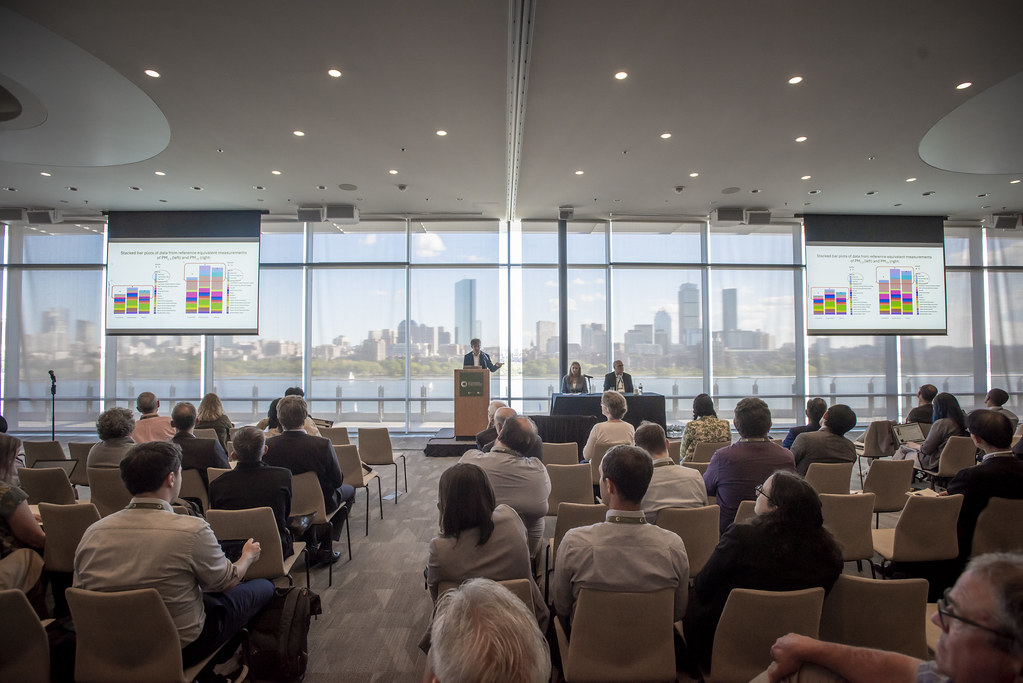
A speaker at the 2025 Tire Emissions Research Conference with Boston skyline in the background


The agenda reflects the full complexity of the challenge:

  • Tire and road emissions generation and characterization (particulates and constituents)
  • Environmental distribution and fate of tire emissions
  • Behavior and impact of tire emissions on the environment
  • Design alternatives
  • Civil engineering measures and environmental practices for mitigation of TRWP and chemicals

The conference brings together the breadth of expertise needed to address these critical topics, convening scientists and practitioners from industry and academia alongside policymakers and experts in environmental and materials science. It creates a forum for the kind of collaborative ideation that generates new insights towards addressing tire and road wear emissions.

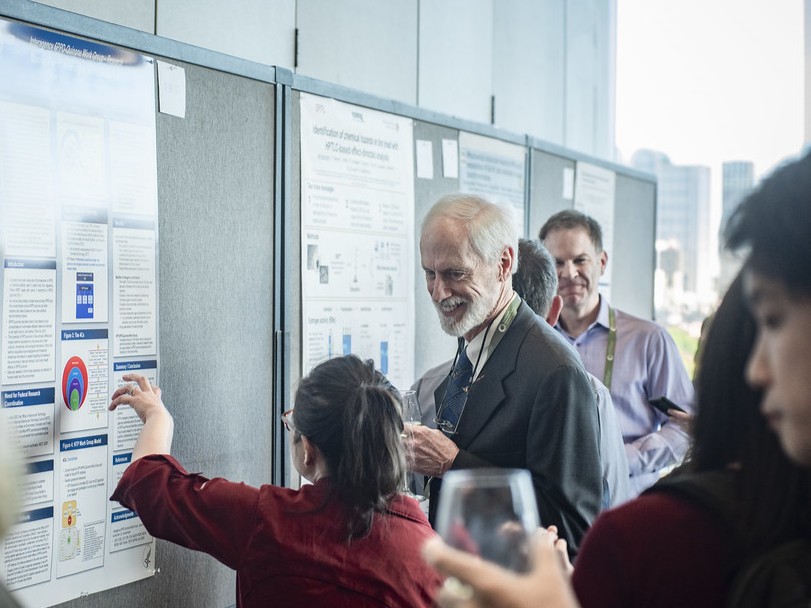
A researcher discusses her poster presentation with an attendee


The conference will be held at Jesus College in the prestigious University of Cambridge, a global center of learning with centuries of scientific excellence. This continues the conference’s tradition of joining forces with world-class institutions such as the Technical University of Munich and the Massachusetts Institute of Technology.

For more information and to register for the 2026 conference, visit the event website.

Researchers and experts in the field are invited to submit their abstracts by 29 May 2026 for an opportunity to be included in the conference program. 

See the photo gallery of the 2025 edition of the conference here: 2025 Tire Emissions Research Conference – Tire Industry Project.

Privacy Overview

This website uses cookies so that we can provide you with the best user experience possible. Cookie information is stored in your browser and performs functions such as recognising you when you return to our website and helping our team to understand which sections of the website you find most interesting and useful.